
Memories Matter
Featured blog Posts

READ THE LATEST POSTS

How to photograph your family heirlooms like a pro
Cataloguing your family heirlooms in a book is a great way to pass down their stories. Here are some tips for capturing incredible images of them, too.
Heirlooms can be unexpected—such as the gorgeous glass doorknobs shown here: “I was born into the bedroom with the glass doorknob and I didn’t leave it until I got married at age 23,” the subject remembers; she uses the object as a jumping-off point for stories from her life in that home (she even took the doorknob with her when the house was sold—a true heirloom). This is an example of a family heirloom photograph that has been styled and arranged in an environment, used as part of a broad family history book.
Whether you have centuries’ worth of expensive heirlooms handed down through generations or a few sentimental objects from a single ancestor, you should consider photographing your heirlooms to preserve their stories and provenance.
An heirloom’s preciousness does not derive from its financial worth, but from its meaning to you. Some of my most treasured heirlooms are valuable only to me—a crocheted blanket my mom made for me, a few shells I gathered on beaches during travels with my grandmother, and a wooden spoon that they both used that I now cook with daily. And yes, I consider each of those worthy of photographing—because they hold stories and love that I want to pass on.
Styling and photographing heirlooms can be as simple or as sophisticated as you’d like, depending upon your skill set and needs. Here are some guiding questions and helpful resources to empower you to photograph your heirlooms like a pro.
Decisions that will guide your heirloom photo shoot
What heirlooms do you want to photograph?
Knowing how many and what types of objects you want to photograph is a necessary first step. Make a list of the objects (some to consider: jewelry, letters, portraits, works of art, family Bibles, furniture, kitchen gear, instruments, clothing, china, military medals or uniforms, firearms, collectibles). Which do you want to photograph?
How will you be using the photos?
The two main ways I utilize images of family heirlooms in my books are
in a straightforward family history catalog, where the heirlooms are the main point of the book; or
in a broad family history book with a narrative focus, where the heirlooms are just one way of revealing a family’s stories.
For a straightforward heirloom catalog, the images need to clearly identify each object, perhaps show them from different angles, and hone in on relevant details. To achieve this:
Photograph each heirloom on the same backdrop. Using a large white foam board, available at any craft store, is an easy, clean option.
Maintain consistent lighting—either natural light from a window (in which case I recommend you schedule your shoots at the same time each day to ensure steady shadows) or artificial lighting (such as from studio lights, a camera flash, or directional light from a lamp). Strive to make each image look like they belong together in the same catalog.
Consider including a ruler or tape measure in some shots to clearly depict an object’s size.

I photographed this hand-turned plate, made by my client’s father, on a clean white background and from various angles, because it was being used in a catalog of family heirlooms. The lack of styling yields not only a timeless image, but a straightforward record of what the objects look like.
For images that will be included within a larger narrative book, you have many more options (and therefore, more choices—and more challenges). Consider:
What is the tone of your book? The design aesthetic? You will want to photograph the objects in a way that complements these.
In what context will the images be shown? This will influence how you style and shoot your heirlooms.
For example, in a recent book telling the story of a Jewish man who fought in the Red Army during World War II, I shot the subject’s military medals on clean white backgrounds, but in a stylized way—at an angle, with strong shadows, so when placed in the page layout they appear to be sitting on the book’s pages; I wanted the awards to stand on their own, visual reminders of the subject’s valor.
For another client, whose book encompassed generations’ worth of family history, I shot various heirlooms in styled settings that fit into the warmer, nostalgic tone of the book—an inherited cast-iron pan was styled with other items in their kitchen during a cooking session, capturing not only the textures of the heirloom, but its familiar use with a passed-down recipe; while a stack of letters that an ancestor had saved was tied beautifully with twine and styled with a handkerchief, floral stems, and one letter open for reading, an invitation into their intimacy.

This styled heirloom photo uses candles and flowers to add dimension and texture, natural lighting for soft shadows, and a simple wooden surface as a warm yet simple backdrop.
Where are the heirlooms?
Logistics can play a major role in how you photograph your family heirlooms. If you are the keeper of them all, then life is easy—skip this question! However, if your heirlooms are divided among various family members, or tucked away in a storage facility or bank vault, you will need a plan of attack.
Can you arrange to have all the heirlooms brought to a central location for one or two days of shooting?
If not, can you enlist the help of a family member at each location to make tackling multi-location shoots easier? Or ‘assign’ photo shoots to a different individual at each location?
How will you achieve consistent lighting across various locations (or change up your visual approach based on location)?
Have you thought of everyplace your heirlooms might be? Consider the homes of other family members; storage facilities, bank vaults or lock boxes; your own attic, basement, shed, closets;
Bonus: heirloom photography resources and ideas
Some easy heirloom image ideas:
Shoot a framed photograph in its environment, instead of scanning the image itself.
Shoot an everyday heirloom (one you use often, such as your grandma’s wooden spoon or your great-uncle’s woodworking plane) while you are using it—your hands and the surroundings will bring life to the object.
Have a collection of items such as baseball cards? Choose one or two representative items to make the center of your photo’s focus, but scatter many of the others around—you don’t need to see every item in a collection to understand its vastness or its value.
Shoot engagement rings on the hands of the wearer or in an elegant velvet ring box.
A few keys to getting great shots:
Remember, the subject is the focal point of the image—any props or backdrops you include should add texture and visual interest, but not distract from the main subject.
The angle you choose to shoot from will impact how the heirloom is seen. I recommend always shooting from a few angles—you might be surprised by which one resonates in the end.
Keep the trim size of the book in mind when shooting your heirlooms, as this may influence the orientation of your photographs.
Go for dimension and layering, but not a cluttered feel, when arranging props and heirlooms for your shoot. A simple dishcloth or ribbon, when styled beautifully, might be enough.
Reflective items such as mirrors and glass can be more difficult to shoot. Search YouTube for a tutorial on how to approach these objects.
“A ‘narrative’ is a little story or subtext that gives the shot its purpose,” prop stylist Robin Zachary writes in her beautiful book, Styling Beyond Instagram. “By combining any given theme and narrative, you can create endless options to give purpose and meaning to your images.” Be creative!
A few of my favorite (affordable) styling resources:
Related reading:
For tips on how to learn more about your family heirlooms, check out this piece in Family Tree Magazine.
For more ideas about preserving the stories behind your family heirlooms, explore the posts below:




Are you weighed down by the stuff of your family’s memories?
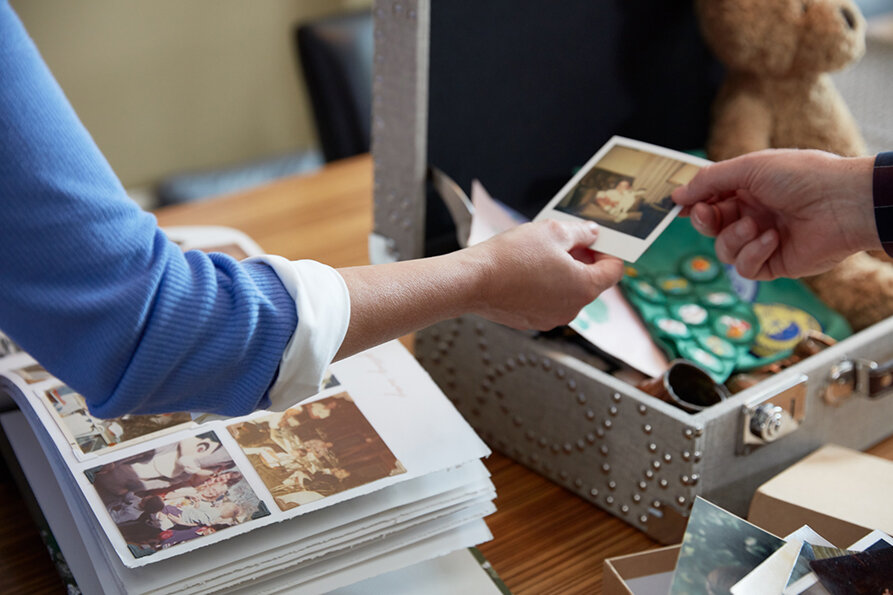
Boxes of old letters, family photos, and mementos from a generation ago can feel like a burden if they’re passed down without context. What to do with them.
That box of sentimental stuff handed down to you would mean a lot more if you knew the stories behind the stuff, wouldn’t it?
Passing along our stories to our children and their children is a valuable endeavor, and in my experience one almost always met with joy and gratitude (even if not immediately, on occasion).
People with whom I have worked to preserve their stories have told me their family members tell them they “love” their life story books, “cherish” them, are “in awe” of them. When sharing their books, my clients have been met with extended hugs, laughter, dancing (“my father shimmied around the kitchen with glee when I showed him what I wrote,” one individual told me), and even tears.
But often it’s not stories that are passed on, but boxes of things laden with sentiment—and without context, those boxes can take on undue weight.
In recent weeks I have met with one person who told me she had a large stack of letters written between her parents during World War II. She knew that they were written in German, and that her father was in a work camp at the time. She didn’t, however, know what was within those letters, as she has never taken the time to have them translated or to read them. And now, she told me, she wasn’t even sure where they were. “But they haunt me,” she said.
Another person I visited told me her mother had recorded a Holocaust testimony with the Shoah Foundation in the 1980s (well, she said “she told Steven Spielberg’s people about her Holocaust experience”). No one in the family knew how to access it. They did not have a copy. They did not know the name of the foundation. Even her mother did not recall what she may have said during that long-ago oral history interview. Certainly the weightiness of the subject matter may have given anyone pause, but to let such a personal history get lost would be a tragedy.
And yet another current client told me, near the end of her project, that an aunt had just randomly stopped by to drop off a scrapbook that had been lovingly crafted by my client’s grandmother. The aunt was moving to another house, found the scrapbook tucked away in a closet, and, knowing my client was interested in her family history, figured she would be a better custodian of the materials. She was fortunate—many people who feel burdened by their ancestors’ things don’t have a family member with such interest to hand them off to.
As I think about these things—about how we can feel burdened by our parents’ things, about how stories can so easily get lost—I feel a bit sad, yes, and also compelled to spread the word.
Do you have sentimental boxes of family mementos you don’t know what to do with?
First, think about who might be the best custodian of your family’s archive.
If there is an obvious family history buff in the family, see if they may want the items. If not, then ask around—you might be surprised to learn a teenager or distant cousin may have a greater interest than you’d expected. The sooner you can pass the items on to someone who will regard them with interest and respect, the better. (Are you this person? I’ve met numerous people who tell me they have no interest in sleuthing through these “old things,” only to be drawn in as I curiously pull photos or war medals out and show interest in what they reveal!)
Second, do what you can to restore context to the things.
Even if you don’t have the time or inclination to write a whole book, consider labeling photos with names, writing mini-histories of heirlooms, and at least telling your kids what you know of the contents of that old box in the basement. Spend an hour or two with a sibling or parent to record your memories of all that stuff—it can be as simple as capturing audio with your phone’s voice recorder. Spare your descendants the burden of passing down an archive of things they know should have meaning, but not why.
Third, let go of guilt.
Perhaps you were the recipient of such a box of “cherished” things that came to you without context or meaning. Sure, that watch may have belonged to one of your grandfathers, or it may have been a flea market find that he never wore but stashed in a box…but you hold onto it along with everything else because you feel you should. This is a rich topic that could warrant a few thousand words (heck, the comments alone on some articles covering this topic are worth a read!), but in my mind, as long as you move forward with intention, it’s okay to let go of things that hold no meaning for you.
Do you have a dusty box of so-called heirlooms, letters, or family photos that were passed down to you without context? What are you going to do with them?
Further reading on how to be a good custodian of your family history:
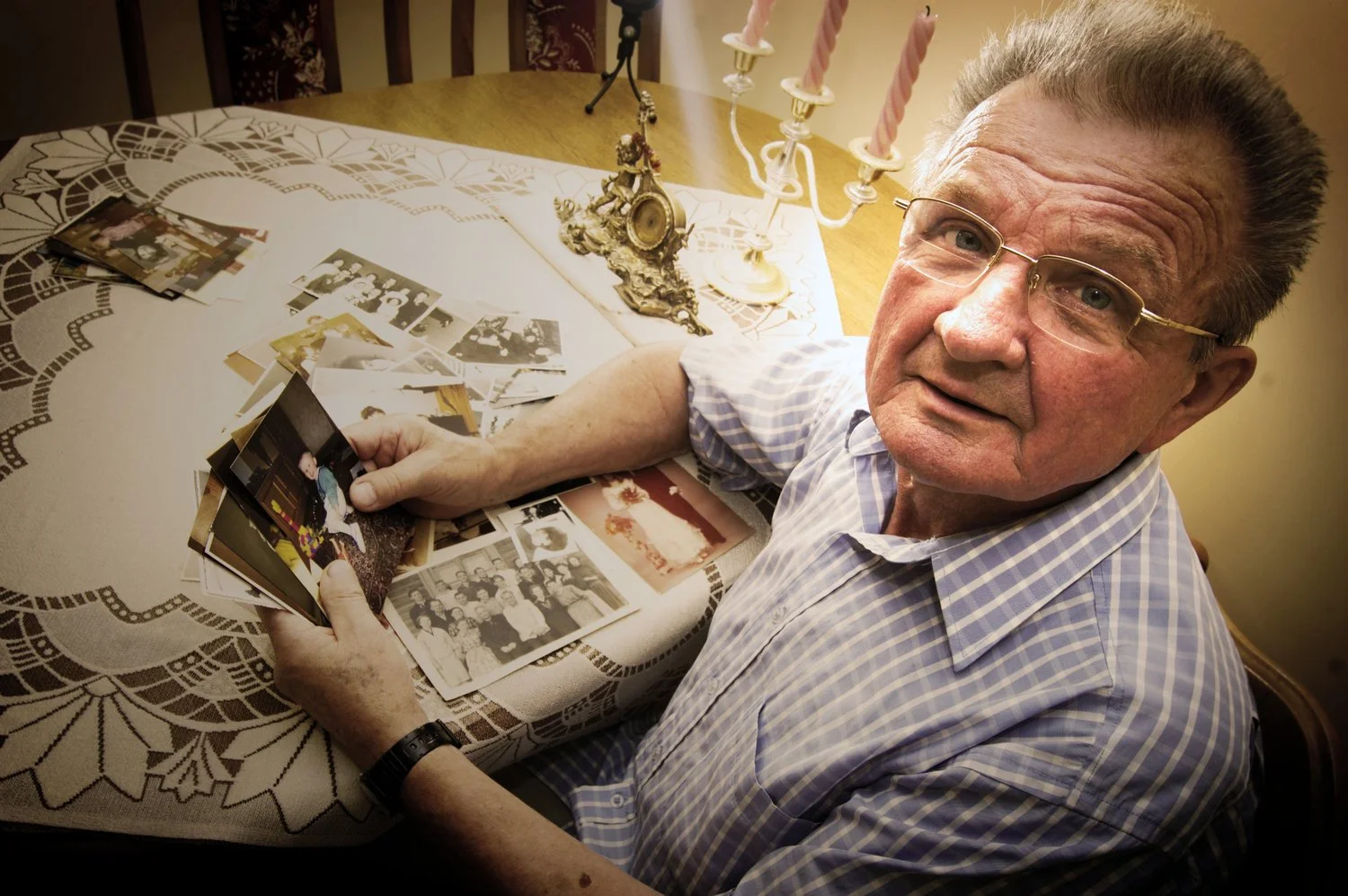




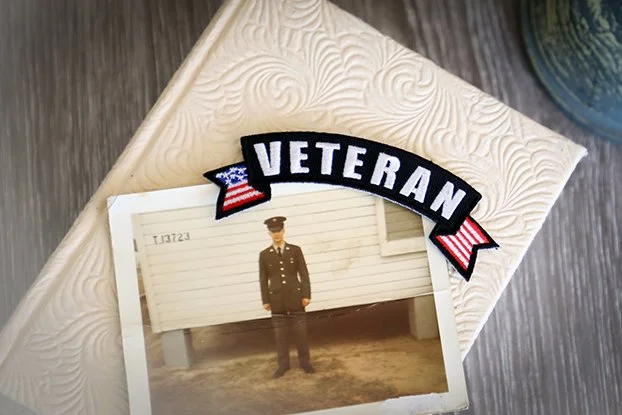







How to preserve the stories behind your family heirlooms
Whether your family heirloom collection consists of generations’ worth of antiques or a handful of sentimental items, catalog them for the next generation.
Photographing your family heirlooms is a first step in preserving their legacy. You can go as basic as snapping a few simple pictures with your phone’s camera or taking the time to style and properly light your heirlooms like I did with this image of my mother’s rosary beads.
So often a family history book has its genesis when a family decides to downsize. The kids are grown and have homes of their own—and they've yet to collect all the things that have been saved in boxes labeled MEMORIES. Going through those things inevitably sparks some pangs: What are we going to do with all this stuff? How can we part with ANY of this? Will the kids even remember what it all means?
The “stuff” holds stories, and it's often those stories we aim to uncover and preserve through personal history interviews—again, usually before donating or tossing much of the stuff…
Sometimes, though, the stuff matters as much as the stories. Just because you plan to hold onto the physical objects (fingers crossed subsequent generations will want to do the same) doesn't mean you shouldn't still capture their stories!
First step: Make an inventory of all the things you consider heirlooms. Next: Prioritize which ones hold the most meaning and begin to capture their history.
Just a few heirlooms?
>> Capture their stories, one heirloom at a time.
Whether you are writing a full-fledged family history or compiling just a few of your favorite personal stories, consider photographing the heirlooms that mean the most to you and writing about them.
Include each object's provenance:
Who owned it first, and who was it passed down to? Write the list in reverse-chronological order, and include years and locations (where the owner lived) whenever possible—these details are gold for any future family historians.
Where was it made/purchased?
Why does it hold meaning?
Do you personally have any special associations with the item (favorite memories, or stories you remember recounted by a grandparent, for instance)?
Lastly, even though you are including a photograph of the heirloom, write a brief description of the object: material (such as an oak cabinet), model (such as of a vintage pistol or a watch), size, etc. This is especially important if you are getting rid of the item or if it becomes separated from this history you are preparing.
Consider recording all of these details in a binder (one sheet per heirloom, stored in clear archival sleeves) or in a recipe box (one index card per heirloom, with a photo and name on the front and details on the back). Other options: Purchase an heirloom journal to capture all the history (I love this one from Hannah Bergen, who also has an heirloom provenance kit), or hire a personal historian to help you put it all in an heirloom book (reach out if interested!).
Loads and loads of artifacts?
>> Create a family heirloom catalog.
Maybe you are cataloguing generations' worth of heirlooms, or maybe you've got a treasure trove of vintage cabinet cards and other photographic heirlooms to make sense of. If you've got more than 20 heirlooms, consider creating a custom index of all of them.
In some ways, this type of project is as straightforward as the previous recommendation: You'll begin by photographing each heirloom (or digitizing your print photos, if you’re dealing with a family photo collection) and recording its provenance in writing. The subsequent steps, though, will elevate this catalog into a family history tool that will be an heirloom unto itself.
First, take your inventory and create categories for your heirlooms to fit into. These will be used to organize the structure of your catalog and to create a useful index for finding heirlooms in various ways, so be as intuitive and descriptive as possible (and know that some heirlooms may fit into multiple categories). Consider creating tags in various categories, such as:
Time period: Civil War Era, 19th Century, 18th Century, 1960s, etc.
Object type: Furniture, Jewelry, Household Object, Photograph, etc.
Owner(s): [names of specific family members who may have at one time had possession of this object]
Value: Sentimental, Financial, Historical
Second, assign tags from each category to every item in your collection. It may be helpful to use a spreadsheet to record all of this data (this is an especially relevant step when dealing with a large number of heirlooms, as you will be able to sort columns by categories or alphabetically—and therefore more easily generate an index).
Third, decide on the broadest categories to create your book architecture—these will be used as de facto chapter headings and will be reflected in your catalog's table of contents. You may want to present your heirlooms based on branches of your family tree, for example (so you may have broad headings of MATERNAL LINE and PATERNAL LINE, then family surnames used to designate chapters within each of those; or instead organize by type of heirlooms, so your chapter titles would derive from those subcategories (Photographs, Furniture, Jewelry, etc.). Choose what makes the most sense for your distinct collection.
Sound like a big undertaking? It is, but if you set parameters early and tackle a few heirlooms per week, it's a project you can complete in a year for even the largest family heirloom collections!
No heirlooms?
>> (I doubt it. Let’s see…)
It's a rare individual who hasn't held onto something of meaning from their childhood or ancestors. Chances are you just wouldn't think of calling those things ‘heirlooms.’
If you hear the word heirloom and think of a dignified mahogany clock or a great-grandmother's passed-down wedding ring, you're right on—that's an heirloom, and Merriam Webster would agree:
1 : a piece of property that descends to the heir as an inseparable part of an inheritance of real property.
But what about the second dictionary definition?
2 : something of special value handed down from one generation to another.
…and who's to say what holds value? You say, that's who. An heirloom in no way needs to be worth a lot of money! Consider these items that I certainly consider heirlooms:
the grease-stained recipe cards my mom saved (including a few of the ones with recipes clipped from old Better Homes & Gardens magazines)
my mom’s wooden spoon, which I use almost daily
my grandfather’s playing cards
my son’s tattered stuffed lion that holds more love and stories than almost any other item from his childhood.
What sentimental items come to mind for you? Once you've gone a nostalgic journey remembering the stories associated with those, consider recording their stories…and calling them heirlooms.
The best graphics to add to your family history book
Beyond family photos: Consider adding vintage maps, family tree charts, and professionally shot images of special heirlooms to your family history book.
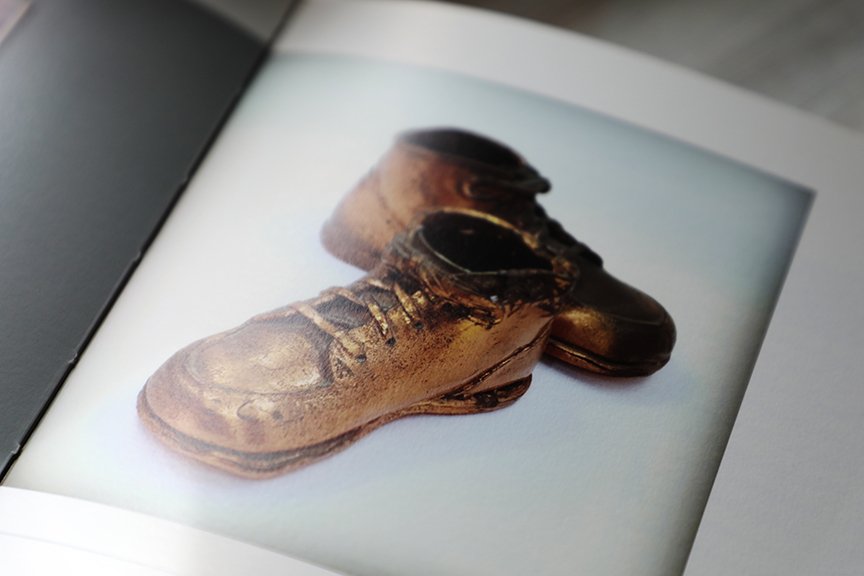
Shooting some of your family’s most treasured heirlooms for your book not only provides beautiful visuals to accompany your stories, it ensures that the details of those heirlooms will get passed on. These happen to be my bronzed baby shoes from 1970.
One of the more fun parts of putting a family history book together can be deciding what to include to visually illustrate your family’s stories.
Your first line of business is to sort photos and memorabilia and digitize it. (Some helpful resources for that include “How to Decide Which Photos to Use in Your Life Story Book” and, if you’re still in the early stages of planning your book, “How to Organize Your Family Archive as a Resource for Your Life Story Book.”)
Once all that’s done, consider these three types of visual media to add color, texture, and graphic appeal—all while helping to tell your stories clearly—to your family history book:
Family tree charts
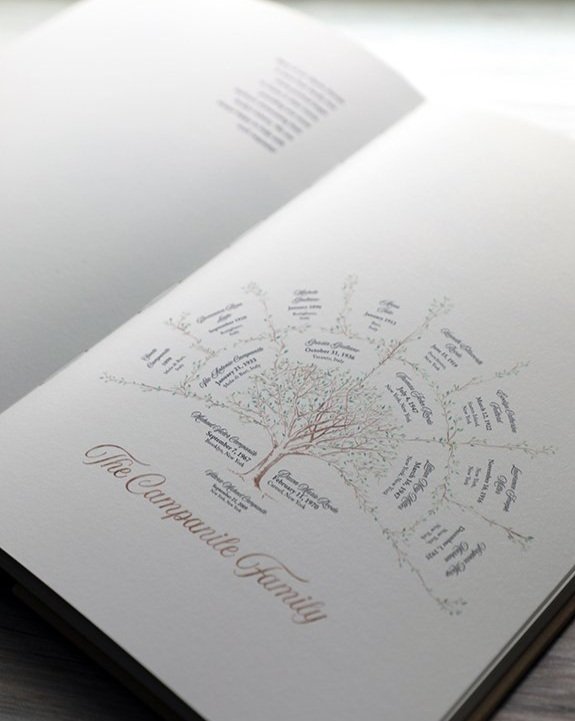
Family tree charts can be a simple ancestor chart such as this one, embellished with an illustrated tree and roots; or they can be extensive all-in-one genealogy documents listing multiple generations, with all relations including ancestors and descendants (the larger a family gets the more challenging it can become to print an all-in-one tree in your book; in that case, multiple graphics of each family line are recommended).
As the steward of your family history, you are abundantly familiar with the names of your ancestors—and, more importantly, of their relationships to you. But consider this: Future readers of your family history book will be separated by generations from their kin, and will not intuitively understand those relationships. A graphic family tree chart provides them with a visual reference that they can easily flip to for confirmation—Yes, that is my two-times great-grandmother!—and clarification—No, Great Uncle Pete was actually on my paternal side!
Search Instagram, Pinterest, and Etsy for “custom family tree” and browse the myriad styles out there. You’ll want to create a family chart that feels consistent with your book’s design (is it modern? traditional? fun?)—so either emulate one you like in your preferred design software, or hire a graphic artist to create one for you. Many designers provide you with a large-scale print to be framed but will also provide a high-resolution digital file for you to include in your book for an extra fee (trust me, it’s worth it!).
Photographs of family heirlooms
No doubt you’ve got some heirlooms sitting around your house that hold meaning (of course they do, otherwise why hold on to them?). Families often pass down the lore behind family heirlooms via good old oral storytelling, and I’m all for that. But to ensure that the provenance of those heirlooms, and the stories they hold, don’t get forgotten as new generations inherit them, it’s key to record their details.
A few notes on heirlooms: The word ‘heirloom’ connotes for many an item of import, and often one of high monetary value (think of Great-Grandfather’s grand piano or your mom’s passed-down diamond engagement ring, for instance). Value can derive from more than money, though (think of the family Bible in which family members have recorded—in their own handwriting—births, marriages, and deaths for more than a century; or the family recipes on grease-stained index cards that are pulled out every holiday).
Make a list of all the heirlooms, big and small, that hold meaning for your family (and remember, some may be kept at the homes of other family members). Then, decide on an approach for preserving their stories.
One idea: Use your smart phone to take clear photos of all the items (some from multiple views), print those out, and write their details on back (include who it originally belonged to and to whom it was passed down; any relevant dates; and bonus points if you also record a narrative remembrance about the heirloom, as well!). Make copies of these for interested family members, and store one in a bank vault or safe location so it’s secure in the long-term.
Another option: Use a high-quality DSLR or hire a professional photographer to get beautiful shots of your heirlooms to include in your family history book. For this use you want to capture photographs with studio lighting (pro-grade lighting set-ups are now easily portable, so photographers can bring them into your home) and that show strong detail. You can either create a full chapter devoted to your heirlooms and their stories, or you can pepper these photos throughout your family history book, including them where relevant (a shot of Grandma’s well-loved wooden spoon near her stories of holiday cooking, perhaps, or a close-up of that third-generation quilt near the ancestor who worked on it).
Using proper lighting and adding props to your family heirlooms help make the resulting photos worthy of inclusion in your heirloom book. How much more boring would these blue glass rosary beads be if they were shot simply from above on a table with your smart phone?
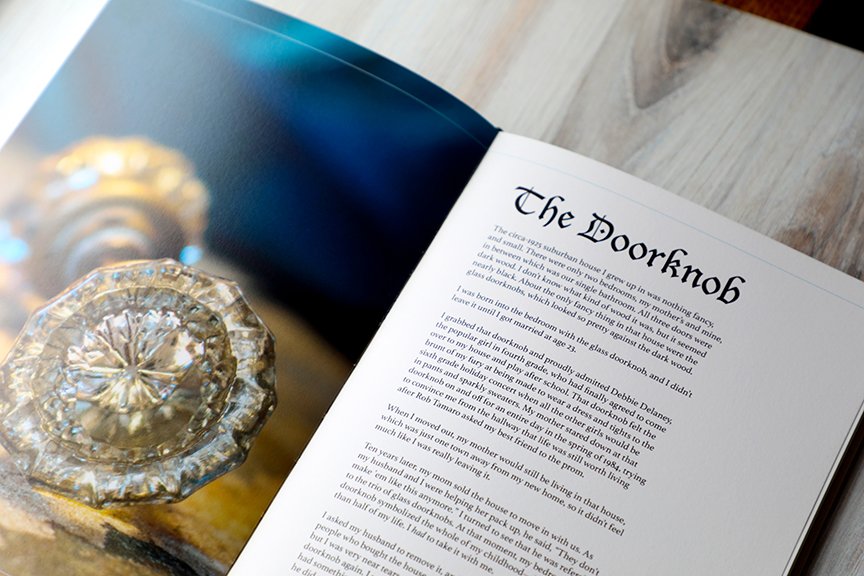
Heirlooms can be unexpected—such as this gorgeous glass doorknobs shown here: “I was born into the bedroom with the glass doorknob and I didn’t leave it until I got married at age 23,” the subject remembers; she uses the object as a jumping-off point for stories from her life in that home (she even took the doorknob with her when the house was sold—a true heirloom).
Historic maps
Reproducing maps within your family history book will help orient readers to the geography of your family and add a wonderfully historic feel to your book. Fair warning, though: While there are numerous resources for finding royalty-free digital maps spanning centuries, you’re in for some intense research to find exactly which map(s) will best illustrate your family history.
This article, “Old Map Collections That Every Family Historian Should Know About,” is one of the most comprehensive and helpful, listing 11 sources for researching vintage map collections.
One of my favorites is the David Rumsey Map Collection, which includes more than 150,000 maps that you can easily download and use. The interface can feel overwhelming, but there are gems to be found, including 1950s road maps from Shell Oil Company and
The Library of Congress map collections home page is a little more straightforward to navigate and has advanced search capabilities. Here you’ll find everything from maps and charts from the time of the American Revolution to fire insurance maps that get granular with street-level details; from WWII military situation maps to railway and other transportation maps.
You can also purchase basic city and country maps from stock photo agencies or freelance illustrators, or scan in maps from your family genealogy archive. Always be sure to check copyright details to ensure you have legal permission to reproduce chosen maps in your book.

An example of a vintage map you might include in your family history book: This one is an 1872 topographical map of Adams, Brown, Highland, Pike, and Scioto Counties in Ohio, originally published by Stedman, Brown & Lyon, Cincinnati, 1872; courtesy of David Rumsey Historical Map Collection. The Rumsey collection allows for downloads of varying sizes so you can ensure you have the highest resolution for printing in your book.















Why not make your own legacy list?
Whether you're downsizing or consciously sorting through your stuff, make a legacy list of items that hold memories—it's a cheat sheet to your family history.
A well-loved donut cutter has been passed through generations of my neighbor’s family—and best of all, they continue to use it and share stories of those who used it before them! An heirloom doesn’t have to be so precious that it sits in a box untouched; those we stitch into the fabric of our lives through regular use are often even more meaningful!
How making a “legacy list” can set stories—and guilt—free
Things can hold memories. But those same things—maybe even more so because they hold memories—can feel like a burden.
Rather than let the stuff of your past overwhelm you—with clutter, with guilt—let’s look at a few ways to take control of the things so you can focus on the stories associated with them.
Have you ever seen the PBS show Legacy List with Matt Paxton? I hadn’t until fairly recently, but I love it! TV promotions describe the series as exploring the hidden treasures within our homes: “As millions of Baby Boomers downsize their own homes or settle the estates of family members, they will discover the most important museum in the world is in their family home.” In each episode Paxton and his expert team of organizers and historians clean through one family’s home with the intent of uncovering the most special things within—what he calls a legacy list.
“A legacy list is really just a list of items that help you tell your family history,” Paxton says.
“Lose the stuff, keep the memories” is a mantra for many downsizers or minimalists, but you don’t have to be either of those things to want to get rid of at least some of your stuff. Consider it a courtesy for the next generation (I speak from experience when I say going through my mother’s things after she died was not an easy task). And think of it, too, as a way to ensure that the things that really matter get preserved, not discarded.
Make your own “legacy list.”
1 - Write your legacy list.
Start with a list of items you think you want to find. Watch the episode of Legacy List below for some inspiration, or think about the following questions to help you identify things that may hold meaning within your house:
Are there items associated with specific family members that help tell their story?
Are there certain items that were used by ancestors that are still functional?
Are there handmade items among your treasures?
Do you have handwritten recipes that have been passed down through generations?
What items, if any, hold historical value, or perhaps help tell the story of the region?
Some examples:
In the episode below, “Home on the Range,” the family matriarch treasures her mother’s early handwritten school notebooks, which symbolize her intelligence and the sacrifice she made of quitting school at the age of 13 to care for her siblings.
Things don’t need to be big or monumental to be imbued with meaning! I, for example, think of my mom every time I bake and use her small offset spatula; and I gave a friend who loves to knit my grandmother’s collection of knitting needles so they would continue to be used with love.
I adore my mother’s chimes, and rather than stow them away in a box, I consider them an everyday heirloom and smile every time I hear their song from my backyard. I also cherish the crocheted blankets she made for me when I was away at college, and the ring I inherited with her birthstone (which I wear often).
2 - Allow yourself to be surprised.
There will be things you “just know” are packed away that you can’t find, and others that you never knew existed. Remind yourself that it’s okay for some things to have gone missing; you can write down your memories associated with them so those are not lost, too, and even search for photos that might represent the items in a more concrete way.
3 - Go beyond finding the things on your legacy list—tell their stories, too.
When Paxton asks the family matriarch why she gets such a sense of comfort from her ancestors’ stuff, she says, “I guess it’s just all a part of me…. I think that if I let go of the stuff, the memories will fade, too.”
“I think that if I let go of the stuff, the memories will fade, too.”
Those memories will fade as time goes on, though, if they are not recorded in some permanent way. With each new generation, the experiences and firsthand memories become further removed.
So grab a pen (or hit “record” on a digital audio or video recorder) and tell those stories! Many pieces may need explanation (how was that plow yoke used? for instance). Some may have important documentation associated with them (a dated certificate of authenticity, for example). But mostly, strive for heartfelt stories (for a recipe—how the smell alone alerted you to the holiday and Poppy’s presence; for a photograph—when it was taken and what the context was…and why it holds a special place in your memory).
And take a lesson from the show: Interview members of every generation to hear about their memories and associations with the items on your family legacy list. As you’ll hear in this episode, even the grandchildren may surprise you with distinct and meaningful memories.
As Paxton reminds viewers, if an item is properly chronicled, it will be cherished forever.
Watch an episode from the recent season of Legacy List with Matt Paxton below, or browse all available episodes on PBS.
The (real) value of your parents’ stuff
When aging parents have lots of stuff, their children often do not want it when they die—but it’s the memories associated with the stuff that makes them heirlooms.
My friend Donna has no space to store the fine china her mother would love to pass on to her. Derek has no desire to display his deceased mother’s antique Chippendale furniture—the mahogany color and elaborate carving don’t mesh with his home’s modern decor—yet he wrangled with guilt and family pressure when he decided to sell it.

I have written before about the Tyranny of the Family Heirloom: Many people simply don’t want to hold on to much of their parents’ “stuff,” but often their “things” may hold memories. When an object from a loved one’s life holds stories, they can become the best heirlooms.
Of course, they still amount to “stuff,” and stuff you very well may not have room for. Discover meaningful ways to preserve the stories behind those items that do hold emotional value before you donate or sell them: the process of remembering, of reflecting on what your parents meant to you while they were alive, is healing and rewarding unto itself, and at the end you will have a family heirloom that is beloved—and takes up less physical space.
It’s the memories of the things that matter, after all.
Why am I revisiting this topic? Because an article in this week’s New York Times reminded me that it is a topic that is not only incredibly relevant now, but that will become even more so in the near future:
“As baby boomers grow older, the volume of unwanted keepsakes and family heirlooms is poised to grow—along with the number of delicate conversations about what to do with them. According to a 2014 United States census report, more than 20 percent of America’s population will be 65 or older by 2030. As these waves of older adults start moving to smaller dwellings, assisted living facilities or retirement homes, they and their kin will have to part with household possessions that the heirs simply don’t want.” —Tim Verde, NY Times, Aug. 18, 2017
Resources for Handling the Things You Inherit
If you are facing the quandary of soon disposing of the beloved things your parents would love for you to inherit, here are a few articles that may be of assistance:
Which heirlooms matter—and which ones are even “heirlooms”? How to determine which items hold dear memories, and how to capture those stories for posterity.
After a death: How to make the process of going through your parent’s photos easier.
Check out Allison Gilbert’s book Passed and Present: Keeping Memories of Loved Ones Alive, which describes 85 practical and innovative ways to remember and celebrate deceased family members, including how to transform their things into meaningful keepsakes.
And read Gilbert’s grief and resilience blog, which is worth a visit for anyone who has lost a loved one, no matter how long ago.
The Healing Power of Remembrance: Memories are the connective tissue that binds one generation to the next, and the active nature of remembering is healing.
Notes from a Funeral: Memories of even the smallest moments, once shared, provide comfort and connection. Stories are a balm to our bruised hearts.

Reflections on What to Do with All that “Stuff”
The comments section of the aforementioned NY Times article is rich with ideas that provoke thought—and are sure to keep this important conversation going. A few of my favorites:
Hasty Pudding
“...what I wish I held onto? [My father’s] journals and other writing. After the pain of grief subsides, it's a way to get to know someone over again. Hasty disposal of many things can lead to regret.” —Andrea
Antidote to Angst
The joy of giving your stuff to people who will really appreciate and use it (after all, the sterling silver fork is still only a fork) while you can still realize the benefit that these folks will receive is, to me, the antidote to the family-related angst... —Sfojeff
Downsize Now
“The best gift you can give your kids is to downsize BEFORE you're too sick to do it, and for the love of God, when your kids say they don't want your stuff, believe them and don't lay on the guilt trip.” —Layla1st
Go Green
“I do not expect my kids to want much of what we have, and this does not hurt my feelings at all.... However, as far as furniture goes, I might remind the younger folks that if they are really as environmentally conscious as they profess to be, they should realize that ‘antiques’ are furniture being recycled and reused.” —Coopmindy
Generations of Junk
“...you’re not only inheriting your parent’s items, you’re taking on everything they received from older generations that they couldn't part with.... Now they’re my problem. I’m 53; I don’t plan to pass on the problem to the next generation.” —Larry
Unnecessary Conversation?
“Ms. Beauregard doesn’t have to keep the Lenox dinnerware, but why does she have to ‘break it to her mother’ that she’s going to get rid of it? What will that accomplish except for causing her mother pain?” —Diane
The Practical Approach
“Just use the china and silver—for everyday use. It doesn't need to sit in a closet.” —Arb
One Millennial’s Perspective
“I donate every month just to clear my clutter because it drives me nuts and I know others my age who do the same. It's just a different mentality. It’s not that we don’t care about memories or treasured items from generations past—we just connect with those memories differently. (In a simpler, less-cluttered, no-storage-unit-required kind of way). :) —Andrea
Verdict?
“Stuff is not memories.You get to keep the latter when you get rid of the former.” —Peter Scanlon
The tyranny of the family heirloom
Maybe it's true that "nobody wants your parents' stuff," but before you donate their things, tell the stories of your family heirlooms, preserving your memories.
“Sorry, Nobody Wants Your Parents’ Stuff,” reads the Forbes headline. The article explores how so much of what we inherit from our parents does not get saved, but rather donated, sold, or trashed.
“If you’re thinking your grown children will gladly accept your parents' items, if only for sentimental reasons, you’re likely in for an unpleasant surprise.”
I get it: Most of us aren’t buying fine china to entertain with, and we don’t want to be weighed down by more stuff. But despite this article’s pessimism (“‘I don’t think there is a future’ for the possessions of our parents’ generation”), I have faith that we can find creative ways to preserve the heirlooms that matter—and still donate most of their STUFF to charity.

So, which heirlooms matter—and which ones are even ‘heirlooms’?
Just because your parents left you everything in their house doesn’t mean you need to keep everything. Or even half. Or any of it. But while you’re assessing their possessions for potential monetary worth, I beg you to spend some time with those things that hold memories.
Consider the historical value (I'm talking family history here) and the sentimental value (and by that, I do not mean feeling guilty that you should hold on to something, but feeling a poignant tug at your heartstrings when you think of a particular item).
Did your father sit in “his chair” to read the newspaper à la Archie Bunker every day? Was that cushioned window seat your mom’s favorite reading nook? Is the painting on the wall an original passed down through generations?
Many of our things are just that—functional things that make our lives comfortable or easier. Many of our things, though, hold stories. Those, in my opinion, are the best heirlooms.
Find treasures to keep as keepsakes.
Pick one or two things (more if you’re sentimental) that hold special meaning for you, and keep them. I recommend choosing items that you can keep close in some way:
a painting, blanket, or piece of furniture that you can incorporate into your home and use on a regular basis;
an item of jewelry, a shawl, or some other accessory that you can wear;
or something practical that your loved one used that you can, too—such as their e-reader, favorite books, or a kitchen appliance.
Having something tangible from your loved one’s life nearby can be consoling, reassuring, even healing.
Give new life to old items, guilt-free.
Do you adore your dad’s chair in theory, but think it’s ugly as sin? Love the idea of cuddling in your grandmother’s sweater, but hate the style and musty smell?
Allison Gilbert had her father’s collection of silk neckties woven into a wall hanging, and her grandmother’s handwritten coffee cake recipe memorialized on an everyday plate. She has made an art form out of transforming our loved ones’ STUFF into something meaningful, and details 85 very specific ways to do so in her book Passed and Present: Keeping Memories of Loved Ones Alive.
It’s the memories of the things that matter, after all.
A thing is only special if we have enlivened it with some special meaning. It is an heirloom when it has a story to tell—and someone (you?) tells it for posterity.
So once you narrow your lost loved one's belongings to those precious items that hold some emotional value, do something with them. Check out Gilbert's book for ideas (there really is something unique to suit everyone's tastes and values, in my opinion) or come up with something on your own.
Whatever you do, let the stories of those things shine through.

In her family history book, Kathleen Rath Smith remembers how her father would always read in “his” chair next to the radio. “When he came in, we got out of that chair!” We used photographs to show her parents' home and surroundings, and Kathleen as narrator recounts the stories of her childhood.
Tell the stories of their stuff.
How can you maintain the specialness your loved one's things convey without inheriting the bulk of all that stuff?
How can you transform their things into cherished family heirlooms?
Take pictures of the items before donating them.
Why not consider having your most special items professionally photographed, whether for an heirloom legacy book or for an impactful wall hanging?
A professional photographer such as The Heirloomist's Shana Novak can turn an artful lens on everyday items, imbuing them with a graphic punch that can be surprisingly emotional. Check out how Bob Woodruff's wife, Lee, turned a pair of her husband's combat boots into a meaningful work of art shot by Novak; or read stories of such seemingly mundane items as a cassette tape, a stuffed bear, and even a set of yellow pencils, brought to life through heirloom photography. The resulting pieces of art preserve your loved one's things visually, and moreover spark conversation so that the stories can be told and retold in the future.
You can now keep these images in remembrance of the loved one you have lost and wish to honor—and unburden yourself of the items themselves.
Don't just capture the stories of your heirlooms, but write them, too.
Whether you jot down memories on an index card and tape it to the back of your photograph or go the extra mile and create an heirloom legacy book from your stories, do tell your stories. We've offered advice on how to use old family photos as memory prompts; so now we thought we'd share examples of how to tell the story of a THING.
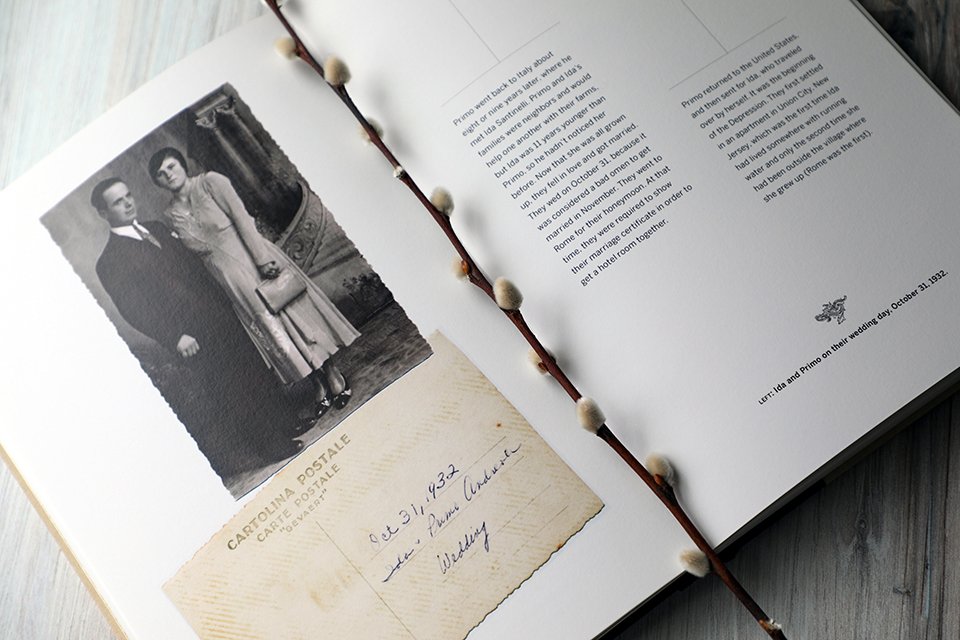
Here are two spreads from two different client books, both works in progress. The stories of these things are short vignettes that add insight into the subject's broader stories, but each can stand alone as a short read that honors their memories and begins to create a unique family legacy.
As you can see, the stories of these heirlooms are not really stories of things at all; rather, they are the stories of those who held, touched, and lived with those things. Your heirlooms' stories are the stories of your loved ones.
What things in your life have a special story to tell? What has a deceased parent or grandparent left you that might lend itself to sharing a wonderful story?
Dawn Roode’s curated roundup for the week of Sept. 23, 2026, is overflowing with recent reads on memoir, life story writing, and family history preservation.