
Memories Matter
Featured blog Posts

READ THE LATEST POSTS

Life Story Links: February 4, 2025
This week’s curated roundup has plenty of recent stories of interest to family historians, personal biographers, memoirists, and memory-keepers of all kinds.
“True memoir emerges like a beast from the gut and the heart, and it’s the writer’s job to tame it, to get to know it, to dance with it—until it becomes a more palpable and ultimately beautiful creature that we feel prepared, if not totally ready, to share with the world.”
—Linda Joy Myers, Ph.D.
Vintage postcard of a well-dressed couple in a row boat on a lakeshore, postmarked 1920, from the personal ephemera collection of Dawn Roode.
Out now…
NEW YORK, NEW YORK
“I lived in their world through the written word, and I felt this piercing, restless, furious longing for other people’s lives.” Read an excerpt (I recommend doing so on your computer or tablet, not a phone) from This Beautiful, Ridiculous City: A Graphic Memoir by Kay Sohini.
VIETNAM: THE WAR THAT CHANGED AMERICA
“‘Sometime this year, you will go crazy, maybe more than once,’ a veteran remembers being told upon arriving in the distant land few had even heard of.” New six-part docuseries leans heavily on personal accounts to tell story of Vietnam War.
HISTORY, ANCESTRY, AND FOOD
Praisesong for The Kitchen Ghosts: Stories and Recipes from Five Generations of Black Country Cooks “was a wonderful rabbit hole of digging into my own familial history through court records and family photographs as well as delving into the history of Appalachia and the history of foodways in the region.”
International Holocaust remembrance
‘WHY SHOULD THEY CARE?’
“One day we are going to be the ancestors that our grandchildren study, so what story do you want them to tell? Hopefully one where we protected our neighbors and not just ourselves. History is important, but only if we let it be a call to action today.”
THE HIDDEN HOLOCAUST PAPERS
Timothy Taylor pieces together his once-prominent German-Jewish family’s story, determined to honor their memory and give voice to those silenced. Through letters, diaries, and artifacts, The Hidden Holocaust Papers explores loss, survival, and the enduring impact of history on future generations. Listen to a preview below, and read how 10,000 pages of documents sent him on a journey through Germany’s dark past.
A TOOLBOX TO UPHOLD THE TRUTH
A new UNESCO report warns that generative AI could distort the historical record of the Holocaust and fuel antisemitism. Their new guide provides pedagogical principles and practical strategies to support teachers and journalists; what you need to know.
A CHOICE: DREAMS OR CONSCIENCE?
“I would ask my mother, ‘Where are they all going?’ She said, ‘They're taking them to the workhouses.’ All of our good friends and some of the children that I played with were disappearing.” An interview with the subject of A Child in Berlin, written by Utah–based personal biographer Rhonda Lauritzen.
The craft of life writing
BEGIN WITH A LIST
Lists as prompts have been in my arsenal for years, and I love this very short post from Beth Kephart with ideas and inspiration on the topic. “The words on your lists are tiny engines. The sentences you write will motor forward, or detour. No one is watching. Write as you wish. Write silly. Write loud. Write plaintive. There’s only one rule: Write you.”
‘THE COBBLER OF MEMORIES’
As AI gets better and more accessible, will there still be a need for in-person story sharing services offered by personal biographers and historians? My take? Yes, of course—and here’s why.
CONNECTING THE DOTS
“Don’t try to force your story into any particular shape. The point is just that you’re working deliberately and charting a path with intention. Some ‘arcs’ are not arcs at all but zig-zags, spirals, reverse arcs, etc.” Bonny Reichert on how to find your memoir’s narrative arc.
...and a few more links
Inspiration for making a junk journal (the next wave of memory-keeping?) from Artifact Uprising, and here, from Popsugar
How to restore and prepare an old family photo album or scrapbook for long-term preservation
“Fires destroyed your family photos. Here are some ways to restore those memories”
Robert Frank’s The Americans is “a historical document and a landmark in American culture.”
Short takes

Life Story Links: June 18, 2024
This one’s worth a bookmark: Thoughts on memoir (limitations, joys, challenges), how and why we preserve our stories for posterity, family history finds & more.
“…writing your life story is not painful, not morbid, and not a sign of vanity. Instead, it is an exercise that will enrich your life and the lives of those who read and learn from it.”
—James R. Hagerty
Vintage photograph of woman picking carrots in Camden County, New Jersey, in October 1938, by Arthur Rothstein, courtesy Farm Security Administration, Office of War Information Photograph Collection Repository, Library of Congress Prints and Photographs Division.
Preserving for posterity
REFRAMING OUR STORIES
“My stories are grounded in grief; they are wrapped up in being widowed young or in my family’s Holocaust survival story,” Rachael Cerrotti writes. In this piece she confronts “certain narratives of self” and offers up inspiring writing prompts connected to three podcast guests with different insights about the stories we tell ourselves—there’s lots of great stuff to digest here!
AN INVITATION TO REMEMBER
I spoke with Melissa Ceria of the thought-provoking podcast The Loss Encounters about discovering the richness of our lives through storytelling. Listen in below, or click here to read a transcript and find more in-depth episodes about what we create from loss. (This short episode was inspired by an autobiographical book Melissa’s father bequeathed to his family.)
EVER AFTER?
“Several companies have emerged in the last few years to develop grief-related technology, where users can interact with an AI version of the deceased—but will that help with grief?”
The craft of life writing
WHAT WE REMEMBER
Last week I wrote about why I chose not to recommend one recent life writing book—and while I don’t mention the book’s title or author, I do share the reasons it didn’t make the grade.
GETTING TO KNOW YOU
Having come from a magazine background, I have a particular affinity for a well-written feature profile, and view the form as a cousin to longer-form biographic writing. In this excerpt from What Makes Sammy Jr. Run?, editor Alex Belth hones in on “the golden age of the celebrity profile.”
CONNECTING THROUGH STORY
CBS Mornings’ David Begnaud interviews Louisiana ghostwriter Olivia Savoie about how one series of client personal history interviews led to a special friendship.
Deep thoughts on memoir and biography
FASCINATION, OBSESSION, INFATUATION…
When the famously elusive Elaine May fails to respond to any of a writer’s pleas for interviews, the would-be biographer, Carrie Courogen, “wondered how a person could have such little interest in or curiosity about the person daring to write the story of their life.”
WRITING AS TEACHER AND FRIEND
“Writing feels inadequate, but it is also how you keep your parents alive—in your own memory at least, which is the best you can do until you can get something published.” Grace Loh Prasad on the memoir that took her more than 20 years to write.
LIMITATIONS OF AUTOBIOGRAPHY
“‘The point of view in a memoir is curious,’ [Jill] Ciment writes. ‘The writer must trick the reader (and herself) into believing that she actually remembers how she felt decades ago. A memoir is closer to historical fiction than it is to biography.’”
THE INHERITED WEIGHT OF EXPERIENCES
“The more we learn about how our body and mind work together to shape our experience, the more we can see that our life story is woven into our biology. It’s not just our body that keeps the score but our very genes.”
Family history, community history
DISCOVERING HER ROOTS
“How odd and surprising it might be, to chance upon a part of your own history on museum walls.” How one woman connected with her family, past and present, through the photographs of two men.
FROM FIRE HAZARDS TO FAMILY TREES
“We create maps to make the unfamiliar familiar. To show us how to get home.” This is a wonderfully interesting look at the history and afterlife of the Sanborn fire insurance maps, which have been reclaimed by historians and genealogists seeking proof of the vanished past.
‘COMMON PEOPLE’S HISTORY’
These four entities act as modern digital archives of personal histories in India, preserving stories as diverse as those covering tattoos and homes, family traditions and family heirlooms, through both images and oral histories.
...and a few more links
“At the Coal Seam of Motherhood”: On writing about our children
Dissecting the pitch deck for startup Kinnect, a new app that aims to preserve family stories
BBC One’s Who Do You Think You Are announces 2024 celebrity subjects.
National History Day keeps pushing students to rigorously examine the past.
Read about the launch of digital legacy platform Please Remember Me Forever.
Short takes
Life Story Links: June 4, 2024
This week’s curated roundup is overflowing with thought-provoking stories about how we preserve our personal histories, memoir tips and recommendations & more.
“Comb through your experiences. Look through a different lens. Walk around a memory, a time period, or a specific event. Interview the memory and jot down questions about it.”
—Rita Sepetys
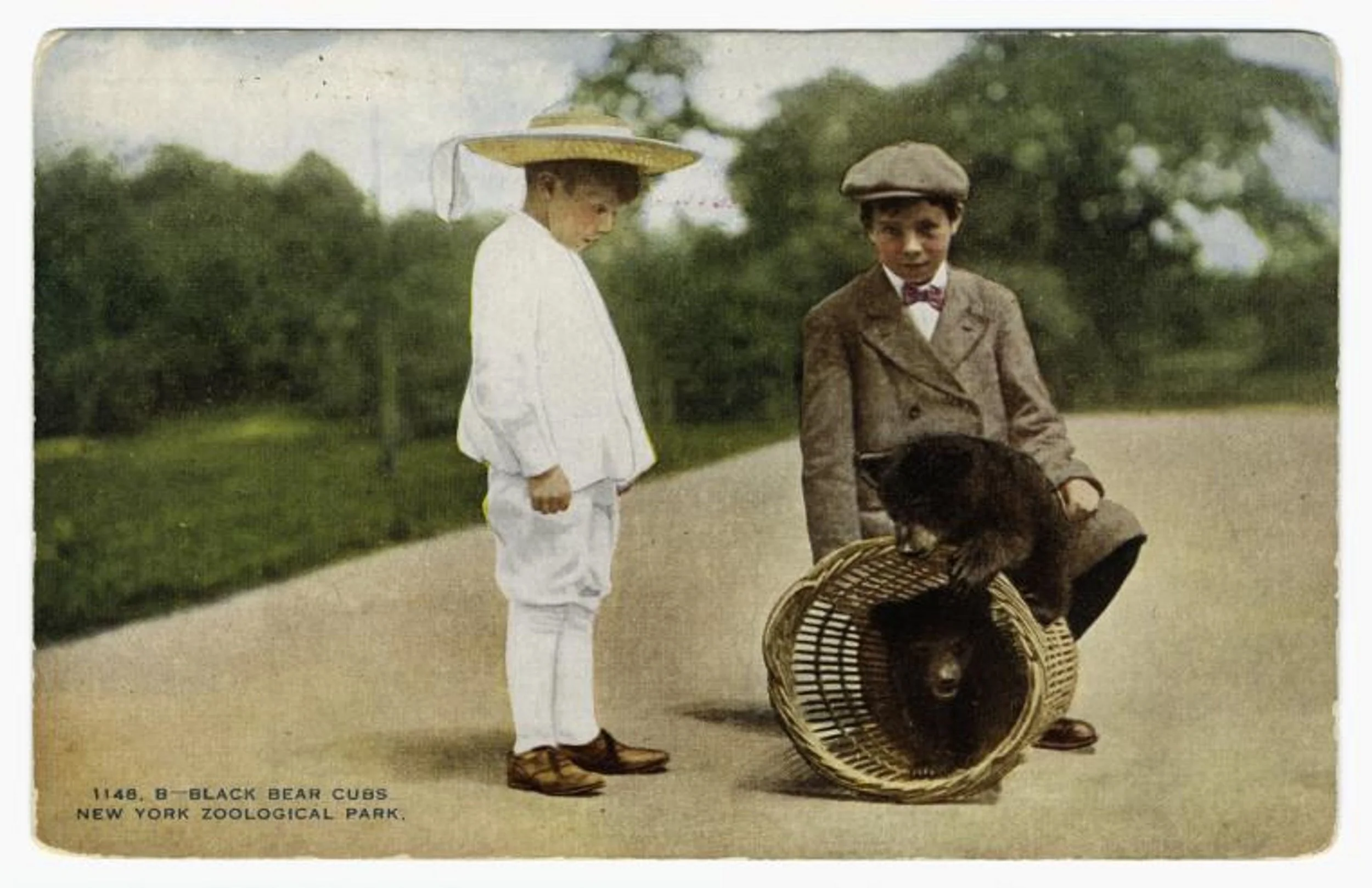
Vintage postcard of black bear cubs from the New York Zoological Park, circa 1914, courtesy of The Miriam and Ira D. Wallach Division of Art, Prints and Photographs: Photography Collection, The New York Public Library Digital Collection.
When our stories overlap
‘IT DEPENDS ON WHO TELLS THE STORY’
Her father “knew how to tell a good story because he grew up in Appalachia, where life is rich with history and the best storytellers are both born and made.” Memoirist Bobi Conn on her family’s long tradition of unreliable narrators and morally gray characters.
NOW OR LATER?
Lilly Dancyger did not let her family read her first memoir before it was published, but she had a very different approach with her second. Here she weighs in on navigating hard (subjective) truths and who you should invite to read your memoir in advance.
A LAYERED NARRATIVE & A STAR TURN
Launching June 5, Pack One Bag is an audio podcast that “tells the epic true story of an Italian family, split apart by love, fascism, and war. Through shocking discoveries—and Stanley Tucci’s artistry—an enthralling personal history comes to life.” Watch the trailer:
How we tell stories
THE CHANGING SHAPE OF NONFICTION
“I was struck then and am struck now...by the notion that confessional writing is subversive.” Christy Moore reviews The Fine Art of Literary Fist-Fighting by Lee Gutkind (the book is subtitled “How a Bunch of Rabble-Rousers, Outsiders, and Ne’er-do-wells Concocted Creative Nonfiction”).
CONVERSATION-BASED STORYTELLING APP
A new app called Autobiographer, which has partnered with Katie Couric to help spread the word, uses “generative AI, voice interfaces, and robust privacy tools” to help individuals preserve their life stories.
Put it in the post
LOVE LETTER
“I like the feeling of knowing that whoever is on the receiving end will smile when they see my letter in their mailbox. That a small slice of me made its way by truck, car, boat, or plane to my receiver’s hands.” Samantha Dion Baker shares some of the most creative letter-writing ideas I’ve ever seen—a joy to scroll through even if she doesn’t inspire you to act!
SEALED FOREVER?
Last week I shared thoughts on the ethics and obligations around reading personal letters that belonged to a deceased family member—I’d love to know, after you read the blog post, how you think you’d react to such a newfound family history bounty!
HISTORICAL CORRESPONDENCE
A letter about harp singing and squirrel stew is one of the primary documents Michael Aday chose to help tell the story of Great Smoky Mountains National Park in his book, Letters from the Smokies. The librarian had 1.4 million records in the park’s archival collection to sift through to help tell its stories.
Memoirs and those who’ve gone before us
THE RESTRICTIONS OF TRADITION
“For Mom and me, visiting our grandmothers was going to be more complicated this time—not just because they were deceased, but because access to graves in Taiwan isn’t straight forward.” Eve J. Chung on tradition, family, and mourning in Taiwan.
GENERATIONAL SHIFTS
Claire Messud’s autobiographically inspired new novel includes characters modeled after late family members. “It was a joy to be with them and to be trying to understand their thoughts. It felt like the opposite of passing judgment.”
THIS WRITING IS ‘AN ACT OF SERVICE’
“Every time I learn something new about a lost loved one, I can’t quite say that it’s like they’re alive again—but man, it’s still a beautiful feeling to discover that there is still more to discover.” Professional speechwriter Chandler Dean provides partly satirical, partly genuine advice for how to write a eulogy.
A MEMOIR HE NEVER THOUGHT HE’D WRITE
Sebastian Junger, whose writing I have long been a fan of, has a new book, In My Time of Dying—a memoir that weaves his journalistic sensibility with his personal experience. Because I plan on reading the book, I have not watched this video, but the hourlong interview looks interesting (find a briefer dive with Anderson Cooper here):
Journalist Sebastian Junger interviewed by Miwa Messer about his new memoir, In My Time of Dying.
Before it’s too late…
GIVE THEM A LITTLE NUDGE
“As I watch my friends grow older and enter new phases of life, I’ve noticed a common thread: Year after year, many of us happen upon questions we wish we’d asked the loved ones who are no longer with us.” Isabel Fattal shares three stories about the power of family stories.
‘I’VE HAD A GOOD LIFE’
“Also known as a pre-funeral or a life celebration, a living funeral is like a unique memorial service held for a person before he or she dies.”
A GRANDFATHER’S WISDOM
In the most recent episode of the podcast Who We Remember, video biographer and host Jamie Yuenger speaks with Liam McCormick about his desire to document the life story of his grandfather and the importance of knowing one’s family history and how it can help make sense of oneself. Watch below, or listen in here.
...and a few more links
California mother helps others cope with loss through new children’s book.
Memoir review: The French Ingredient: Making a Life in Paris, One Lesson at a Time by Jane Bertch
Book review: First Love: Essays on Friendship by Lilly Dancyger
Ta-Nehisi Coates returns to nonfiction and explores the power of stories in upcoming The Message.
How a new biography makes sense of Carolyn Bessette-Kennedy’s short life
Short takes

Life Story Links: May 21, 2024
“Until we make the unconscious conscious, it will direct our lives, and we will call it fate.”
—Carl Jung
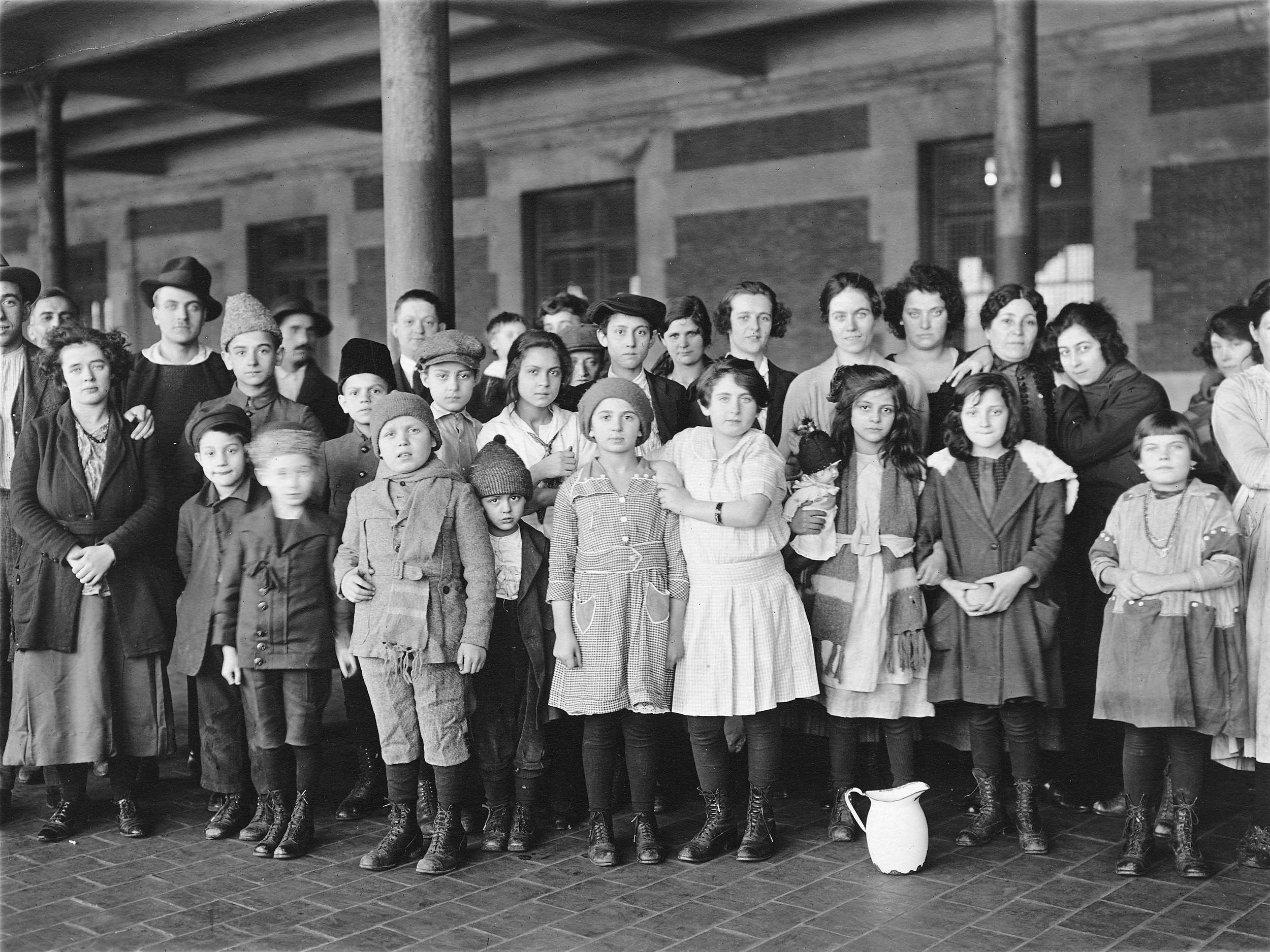
Photograph of female workers gathered outside the Dix Building in New York City, by Lewis Wickes Hine, courtesy of The Miriam and Ira D. Wallach Division of Art, Prints and Photographs: Photography Collection, The New York Public Library Digital Collection.
Memory, memories, and memoir
THE SELF IN RELATIONSHIP
“My father wrote half of me into being, I suppose. My mother wrote the other half.” Jane Wong “on memoir, permission, and the thorny terrain of writing about family.”
TURNING PAGES OF OUR HISTORY
“Perhaps one of the most memorable treasures women of the Civil War passed onto future generations were letters they sent to their husbands. These chronicles of daily life embraced sorrow, joy, fear, and love.”
WHO ARE THEY?
“What if we began our own character development work with this mandate in mind: Tell the stories they told, the lessons they taught, and the mind that has become our own.” Beth Kephart on lessons from Amy Tan.
“THIS IS MY LIFE”
I’m not sure why LitHub is now presenting an excerpt from Working, Studs Terkel’s classic oral history of Americans’ working lives originally published in 2004, but I’m glad they did: Meet Babe, a checker at a supermarket somewhere in America.
WHY FORGETTING IS BENEFICIAL
“‘Memory,’ writes neuroscientist Charan Ranganath in his new book Why We Remember, ‘is much, much more than an archive of the past; it is the prism through which we see ourselves, others, and the world.’”
‘NAMING ONE’S OWN EXPERIENCE’
“Reconciling a writing life with the life of a mother has always felt like an impossible task,” memoirist Emily C. Bloom writes in this look at the legacy of Pearl S. Buck’s The Child Who Never Grew.
What a picture’s worth
THE HEIRLOOMIST
Last week I wrote about a new coffee table book from photographer Shana Novak, aka “The Heirloomist,” in which the stories of the unexpected family heirlooms within “will play your heartstrings like a symphony.”
PAIRING ANNIE ERNAUX WITH PHOTOS
“With photography...there’s this presumption of the ‘truth’ of the camera, which is also an expectation that a writer like Ernaux, who uses the first-person deliberately, comes up against. In her case, the presumption that the first-person is ‘true’ and not fictive.”
DYNAMIC, CROWD-SOURCED ARCHIVE
The nonprofit cultural heritage organization Permanent.org shares details about its public gallery, a “rich collection of public archives” that they say are a celebration of “the power of personal stories and the impact they can have on future generations.”
FINDING THE ‘SOUL THREAD’
Have you ever heard of a legacy doula? Meet Nancy Rose from the Compass Rose Legacy Foundation and hear her thoughts on how exploring one’s own legacy (through words and photos) helps bring wholeness to individual storytellers in this podcast:
Stories told through food
FROM MAMA’S KITCHEN
“Her food was there all my life, part of my most literal sustenance, and yet I took for granted that the meaning and memory baked into everything she produced would always be there.”
HER EXPERIENCE AS A GREEK JEW
Becky Hadeed talks with a Holocaust survivor about her complicated story “of sacrifice, love, and gratitude,” about the long legacy of a good deed, and the enduring comfort of a jar of cookies (in this case, Greek Koulourakia). Listen below:
Short takes

Life Story Links: May 7, 2024
A roundup overflowing with podcasts, videos, and articles on the topics of memoir, life story writing, family history preservation, and family photo legacy.
“Writing, then, was a substitute for myself: if you don't love me, love my writing and love me for my writing. It is also much more: a way of ordering and reordering the chaos of experience.”
—Sylvia Plath
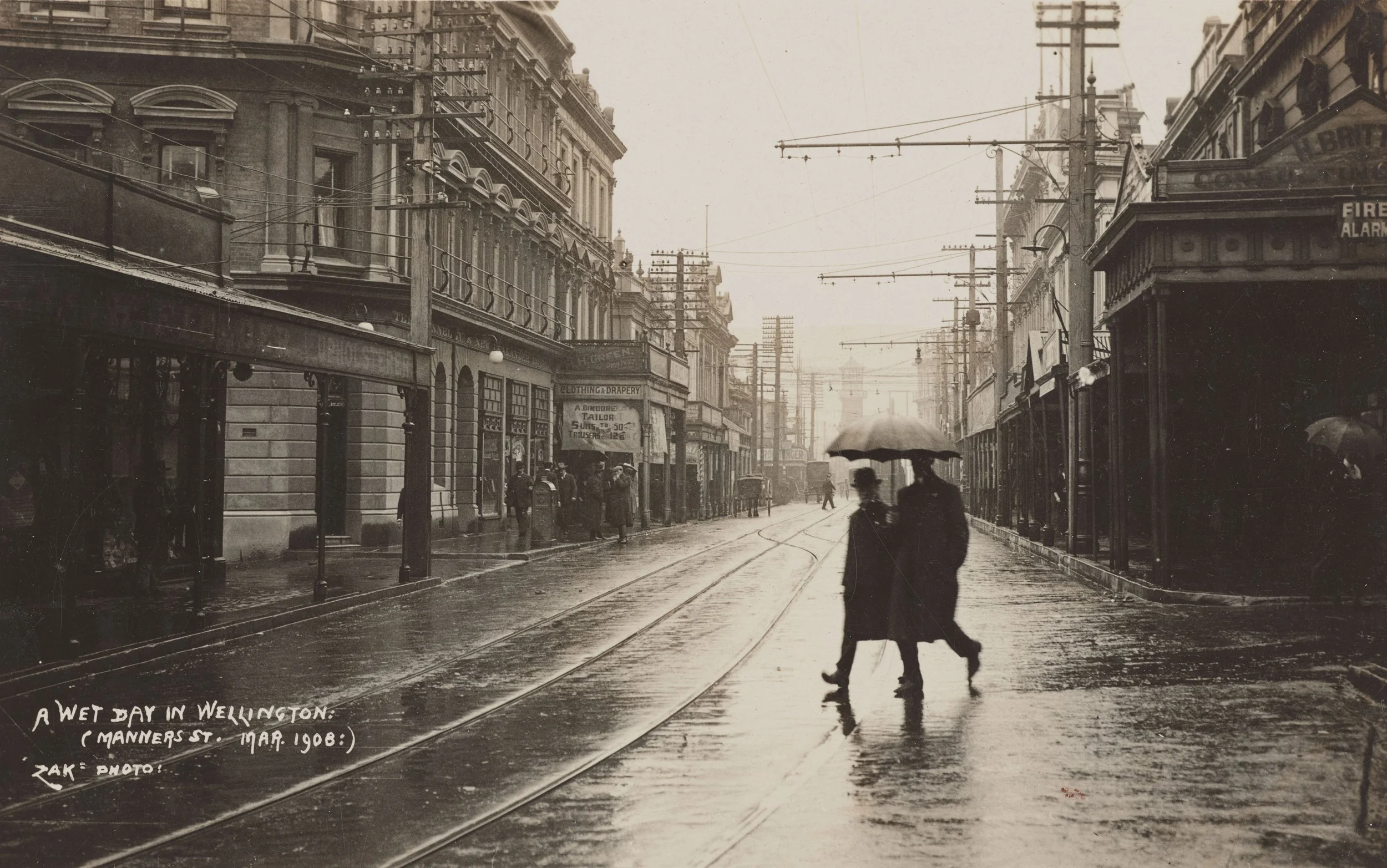
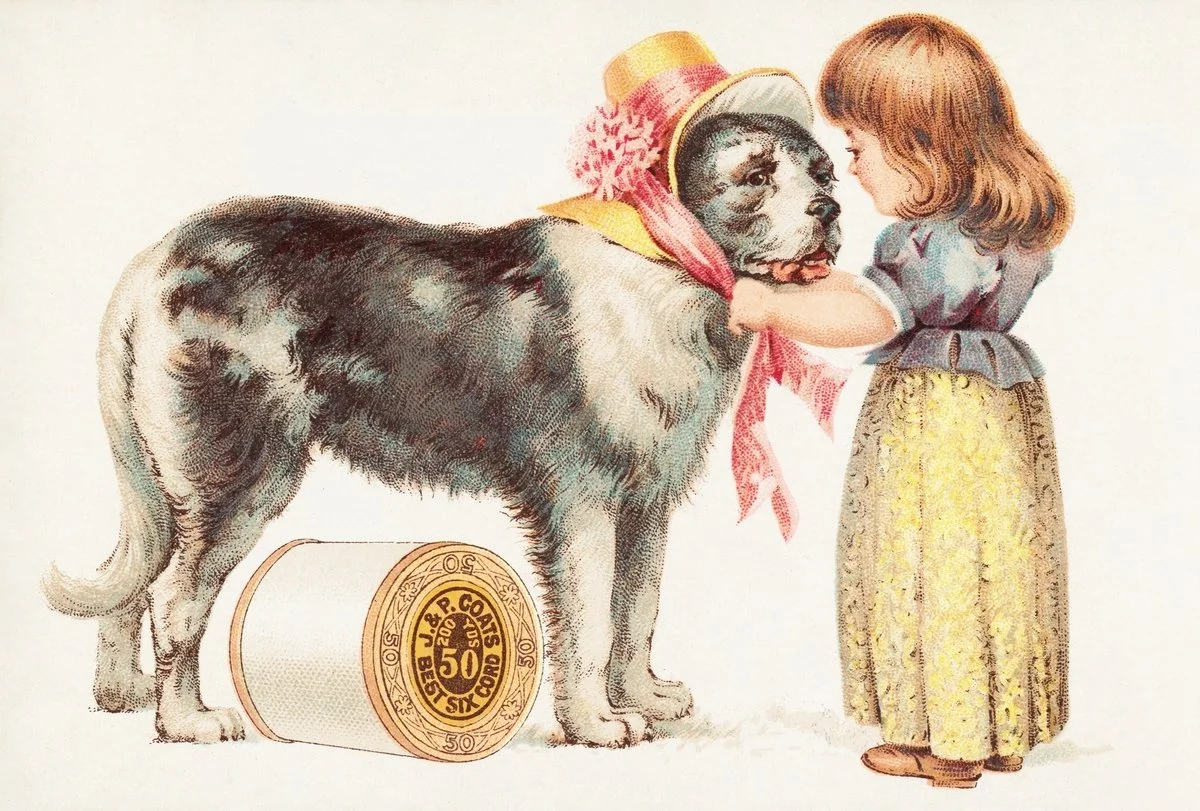
Vintage poster produced between 1936 and 1938 by the Work Projects Administration; image courtesy of the Library of Congress Prints and Photographs Division, Digital Collection. The posters were designed to publicize exhibits, community activities, theatrical productions, and health and educational programs in seventeen states and the District of Columbia between 1936 to 1943.
Pieces of the past
VERSIONS OF ONE’S STORY
“It took me decades merely to infer that my grandfather’s life and character surely included more than the mere few funny stories suggested.” Octogenarian Sydney Lea tries to shape his grandfather’s narrative.
VIRAL TIKTOK BEGAN AT GOODWILL
“April’s decision to bring Lucy’s treat jar home adds another layer to this tale. It’s a testament to the power of empathy, a reminder that the things we cherish tell our stories long after we're gone.”
THE TABLE WAS SET
“It’s such a deeply spiritual, fulfilling thing that I can bring my safta’s memory back to life in this plate of food.” Jennifer Ophir on the very last meal her grandmother cooked for her family.
I SAY: DELETE WITHOUT GUILT…
Last week I wrote about why a recent iPhone ad got my hackles up—preview the ad here, then click through to read why I think having more digital memory isn’t necessarily good for holding onto our memories:
Family history finds
UPCOMING GENEALOGY CONFERENCE
The National Genealogical Society 2024 Virtual Family History Conference, “Expanding Possibilities,” will be held May 16–18. Check out the preliminary program schedule here or visit their website to register.
‘SOMETIMES IT’S NOT SO EASY’
Experts from Ancestry dive deep into how to find the stories behind the names and dates on a family tree and “helping people connect.” Click through to watch this hourlong video with behind-the-scenes tips and tricks:

2,400 GENERATIONS
Archie Moore, a Kamilaroi/Bigambul artist, traced his family tree back 65,000 years—then, in chalk, created an ephemeral artwork that documented that genealogy and won a top prize at the Venice Biennale. Called “kith and kin,” the installation “is a memorial to Indigenous lives lost—but it’s also about global common humanity.” Read more here (“Moore’s ancestral connections—real and imagined—branch out onto the ceiling. The dimly lit gallery becomes a church, a cave, and a classroom”) and watch below:
NEW FROM THE BAREFOOT GENEALOGIST
And last up in the family history world, a new podcast from genealogist Crista Cowan, Stories That Live in Us. “I know that sharing the stories that live in you can change everything,” she says. Listen to the trailer here:
Making memories last—on craft and conversation
STORYTELLING INSPIRATION, PROMPTS, ACTIVITIES
“In between what we expect to happen and what happens, there’s this delicious tension that often lends itself to some amazing true stories.” This month on Storytelling School with The Moth: Expectations vs. Reality.
‘NOSTALGIC APPEAL AND STAYING POWER’
“I’ve always appreciated a nicely curated photo album because the subpar pics rarely make it in. It’s all first class. It requires thought and effort to compile your life’s greatest hits in images.”
‘SMALL MOMENTS MATTER’
I couldn’t choose just one quote to share from this wonderful conversation between Rachael Cerrotti and Micaela Blei, so listen in below as they talk about how personal narratives change with time, how to get comfortable sharing your story on stage, and how memories of their grandmothers brought them together. (Dive even deeper into Micaela’s storytelling here, and read more about the connection between these memoirists here.)
Lives in print
CELEBRATING LIFE THROUGH FOOD
Aimee Nezhukumatathil weaves a personal memoir through food in her new book, Bite by Bite. “Food can be a map toward home, toward memory, toward lineage, her book argues. And with it, she beckons us to explore.”
PERSONAL HISTORY OF AN INTERVIEWING LEGEND
“As Susan Page relates in The Rulebreaker, her compelling, deliciously readable biography of [Barbara] Walters, for Cronkite and the other giants of broadcast journalism, the idea that Walters...would be elevated to TV journalism’s most august position was beyond the pale.”
CHRONICLING THE SIXTIES
“An Unfinished Love Story is, as the title indicates, an account of personal loss. It also turns out to be a reflection on the process of constructing history, suggesting how time, perspective and stories left unwritten can shape our view of the past.”
PRIVATE LIFE, PUBLIC PERSONA
Letter by letter, former N.F.L. player Steve Gleason typed his memoir with his eyes. In A Life Impossible, he shares “the most lacerating and vulnerable times” of his life.
REMEMBERING PAUL AUSTER
I am often advising people on the best way to honor their lost loved ones in print, and I think these two examples of remembrances about the late Paul Auster are wonderful examples: One after the Joe Brainard book I Remember, and the other a life in quotes—both revealing and intimate in different ways.
...and a few more links
Year-long research project imparts personal histories to West Virginia students
In a recent Life Writers Vlog, Patricia Charpentier talks about Alice Sebold’s memoir, Lucky.
“Can memoir help us find our true selves?” asks ghostwriter Pat Pihl
The best autobiographies to entertain and inspire, according to Vogue
TikTok photographer’s powerful photo restorations tell stories of love and culture
“British parents’ peculiar keepsakes: Teeth, locks, and tiny treasures”
Short takes

Life Story Links: April 23, 2024
Personal historian and Modern Heirloom Books founder Dawn Roode curates a bi-weekly selection of what she’s reading and liking—here, for week of April 22, 2024.
“Words that come from the heart enter the heart.”
—the Torah
Vintage poster produced between 1936 and 1938 by the Work Projects Administration; image courtesy of the Library of Congress Prints and Photographs Division, Digital Collection. The posters were designed to publicize exhibits, community activities, theatrical productions, and health and educational programs in seventeen states and the District of Columbia between 1936 to 1943.
Memories, memoir, and more
LIFE AS STORY
“We live in the tribe, in story, in lyric and meter and song that does not end,” Dorothy Allison says. “In story—the ones we share and those we have not yet crafted—we live forever.”
WRITE ON, MY FRIENDS!
Good writing prompts will rid you of blank-page anxiety—and you can easily write your own! Last week I shared five easy steps to drafting a library of personalized memoir prompts.
FAMILY HISTORY PRESERVATION TIPS
In honor of preservation week, Permanent.org shared two posts on intentional, effective memory-keeping: “Gathering & Transferring Your Digital Materials in One Place” and “Tips for Preserving Your Physical Materials.”
LIFE WRITING WISDOM
“This is sacred work, so you should have a bit of fear; otherwise, what are you writing for?” Megan Febuary writes about memoir. Here, the memoir writing checklist she says she could have used years ago.
DRAWING HER WORLD
“The other day one of my boys said to me, after looking at my stack of sketchbooks, ‘Mom, this is a crazy amount of memories… whenever we decide to sit down and look through these, it will take weeks!’” Samantha Dion Baker shares some of her favorite sketchbook pages with thoughts on why they resonate.
CROSSROADS
“Some moments [in our lives] stand out as particularly poignant, ripe for reflection, celebration, and preservation,” legacy filmmaker Jamie Yuenger writes in this piece identifying seven of these times when beginning a legacy project may make great sense.
INVITING FAMILY STORIES
“A kind of genealogical amnesia was eating holes in these family histories as permanently as moths eat holes in the sweaters lovingly knitted by our ancestors.” Elizabeth Keating on the questions we don’t ask our families but should.
Stories, across generations
“FOR VANESSA TO WRITE A BOOK”
“Is that why you left me these stories? You couldn’t give me the love and nurturing I needed, but you could give me this, your version of your life in your hand. You could give me answers, so that with them I could do what I’ve been trying to do for more than fifteen years—‘Para que Vanessa escriba un libro.’”
INTERGENERATIONAL TALE OF A DIVIDED LAND
“While living in Vietnam, my father remained a constant presence in my thoughts, despite our minimal communication. I began to contemplate the concept of the motherland, the land of our ancestors, and think more about the hardships my father had endured to rebuild his life.”
ABUELAS’ INTANGIBLE HERITAGE
A new project from Latinos in Heritage Conservation is transforming research and geodata into rich and engaging StoryMaps to honor and preserve Latine histories, changing the way we remember the past.
On recent memoirs of note
‘PATRIOT’
Before he died in prison, Aleksei Navalny wrote a memoir. It’s coming this fall, and has already been translated into 11 languages, including Russian.
REMEMBERING A DISAPPEARING PAST
“I am looking for the past, I say.” Suzanne Scanlon on the act of ‘walking into the past’ to write her memoir, Committed, and of returning to fact-check her memories, pre-publication.
MATZO BALLS AND MEMORIES
“Joan Nathan has spent her life exploring Jewish culture through recipes. Now in her 80s, her new book is her most personal work yet—excavating her own culinary history.” Listen to the story:
Short takes

Life Story Links: April 9, 2024
This week’s curated roundup for family historians and memory-keepers gathers three weeks’ worth of top-notch writing on the subjects, so bookmark it and dive in.
“A memoir is about ‘the art of memory,’ and part of the art is in the curation.”
—Maggie Smith
Vintage poster produced between 1936 and 1938 by the Work Projects Administration; image courtesy of the Library of Congress Prints and Photographs Division, Digital Collection. The posters were designed to publicize exhibits, community activities, theatrical productions, and health and educational programs in seventeen states and the District of Columbia between 1936 to 1943.
Documenting our lives for posterity
IN THE WAKE OF A GRANDFATHER’S DEMENTIA
“The crippling fear of letting memories pass me by has caused me to over-compensate by over-documenting my life, as if clinging desperately to souvenirs in a futile attempt to escape the cruel bounds of time will stop me from forgetting.”
AN EPISTOLARY FRIENDSHIP
I don’t know anything about the American poets Elizabeth Bishop and Marianne Moore, but I delighted in reading descriptions of their decades–long correspondence in this excerpt from A Chance Meeting: American Encounters by Rachel Cohen.
PORTRAITS OF A NEW REALITY
“They’ve been telling their own story really, I’ve just been holding a camera,” Polly Braden says of the women forced to flee Ukraine in the face of war who she has been photographing for the past two years. “They are safeguarding the next generation of Ukraine.”
WRITING RITUALS
“I always wondered if she knew someone was watching, if there was a tiny performative aspect to the ritual, or if she was just so caught up in her work that she didn’t care that she had illuminated her sacred space.” Mia Manzulli on living next door to Joyce Carol Oates.
Recent memoir writing of note
STIRRING HER LANGUAGE SPIRIT
“I was set apart, and in that distance was a kind of longing, failure, and hollowness. A need for my own stories,” Jamie Figeuroa writes on reclaiming the Spanish language in this excerpt from her new memoir, Mother Island: A Daughter Claims Puerto Rico.
MLK BIOGRAPHER HONORED
The New-York Historical Society awarded its American History Prize to biographer Jonathan Eig, whose King: A Life “presents the civil rights leader as a brilliant, flawed 20th-century ‘founding father.’”
MORE THAN A TRAVEL MEMOIR
“Through writing, I really was able to realize how many experiences I never digested,” Helen Sula says. “I like learning and unlocking a part of myself I wasn’t in touch with before.”
Ways we remember
STORIES BEHIND THE STUFF
Boxes of old letters, family photos, and mementos from a generation ago can feel like a burden if they’re passed down without context. Recently on the blog I shared ideas for what to do with them.
IN DEFENSE OF IMMIGRANT FOOD MEMORIES
“What if all I have of my grandmother now is a gold bracelet in a box that she reluctantly gave me on the eve of my wedding (and often asked for it back) and a handful of memories, some of which I can viscerally taste when I prepare and eat the same food she made for me as a child.”
JOURNALS, NOTEBOOKS & DIARIES
How a diary is distinct from autofiction is one of the many questions Jhumpa Lahiri explored in a recent course she taught at Barnard about the diary as an art form. Here, she shares the reading assignments from that syllabus.
RootsTech recaps and reflections
FAMILY HISTORY FINDS YOU’LL LOVE
The last week of February I traveled to Salt Lake City for my first in-person RootsTech experience. While I’ve got a notebook filled with family history tips and tricks I’ll inevitably share later, for now I have rounded up my four favorite finds from the genealogy conference.
THE RISE OF ARTIFICIAL INTELLIGENCE
If RootsTech 2024 made one thing abundantly clear, it’s that AI’s impact on the family history industry looms large. One recent player: Passagist has announced “an AI-powered biographer designed to document personal life stories.”
LIMITATIONS OF LIFE STORY TECH
‘Digital life story’ tools are invaluable for memory care residents, but “no matter how well-meaning, some tools simply were not user-friendly or they included audiovisual components that overwhelmed some older adults rather than enhance their experience,” a recent study finds.
HOW LOVE AND CONNECTION FUEL MEANING
“While AI and other technology have come a long way, this personal story shows why people recording people in person is irreplaceable,” Rhonda Lauritzen says in the introduction to this two-and-half-minute video on the undeniable power of connection and its place in family history storytelling:
...and a few more links
Two new digital service companies—Inalife and Folklory—help preserve legacies.
Debbie Brodsky on the key to telling your organization’s story on video
Bryan Cranston to narrate Doris Kearns Goodwin’s An Unfinished Love Story
Review of Chicago museum show, “A Little Truth—Fact and Fiction in Family Photography”
Anthony M. Kennedy to reflect on his life and his years on the Supreme Court in two-volume memoir
Short takes

Life Story Links: March 19, 2024
Book design, interview techniques, and life writing tips are a few of the topics in this week’s curated roundup for family history fans and memory-keepers.
“We are our memory, we are that chimerical museum of shifting shapes, that pile of broken mirrors.”
—Jorge Luis Borges
Vintage poster with original artwork by Richard Halls produced circa 1936 by the Work Projects Administration; image courtesy of the Library of Congress Prints and Photographs Division, Digital Collection. The posters were designed to publicize exhibits, community activities, theatrical productions, and health and educational programs in seventeen states and the District of Columbia between 1936 to 1943.
Notes and tips on craft
WHO’S ASKING THE QUESTIONS NOW?
One of media’s most talented and prolific interviewers, David Marchese, has the tables turned as he becomes the interview subject: This piece is worth a read both for the nuggets of interviewing wisdom as well as the embedded links to some great interviews from the NYT archives.
GONE BUT NOT FORGOTTEN
Amidst my current work on four distinct custom tribute books honoring clients’ family members who have passed away, I also shared some tips for anyone who may want to create a memorial book on their own.
WHEN DESIGN IS BAKED INTO CONTENT
“Manuscripts live in authors’ minds and on their computers, but books exist out in the world. No one wants to read your Word doc no matter how beautifully written it is.” A book designer on “the intricacies of literary interior design.”
Family history now
‘GNARLY BRANCHES’ OF HER FAMILY TREE
“My only provenance stems from obsessively researching genealogy. I’m sure the tendency came from growing up with eleven living, blood-related grandparents (parents of parents of parents of parents).” Chris Hardy Thornton on using history as a method of filling in the gaps from what’s passed down.
THE JEWISH HOLIDAY TABLE
“As I asked her about each [dish], I learned of her family’s journey from Spain to the Ottoman Empire to Africa and finally to Israel. I knew immediately that I wanted to preserve her treasure trove of recipes and stories.”
CONNECTION, IDENTITY, WELL-BEING
“The documented effects of genealogical discoveries on emotional well-being, resilience, sense of identity and belonging are taking on new relevance in America’s mental health crisis.” Family history as a public health intervention?
FAMILY HISTORY CONFERENCE HIGHLIGHTS
While I haven’t yet had time to write about my participation at RootsTech 2024 (stay tuned!), Robyn Fivush, Ph.D., director of the Family Narratives Lab at Emory University, shared this thoughtful reflection, including how physical archives can help embody family stories, creating profound connections.
More memoir miscellany
MEMOIR MEMORANDUM
“Our favorites of the year are audacious and moving—they’ll demand your attention, entertain you, and show you new vistas.” The best memoirs of 2024, so far, according to Esquire.
ACCIDENTAL ICON
“Clothes have always helped me tell stories about myself; who I am, who I wish to be. They could be chapters of a memoir.” Read an excerpt from Lyn Slater’s memoir, How to Be Old.
WORTH A THROWBACK READ
In 1996, The New Yorker helped launch Frank McCourt’s writing career by publishing an excerpt from Angela’s Ashes, his (eventual) Pulitzer–winning bestseller. Three years later, the magazine featured the next chapter of McCourt’s story: In honor of St. Patrick’s Day weekend, check out this piece from the archives, “New in Town,” about the first days after his migration to America (I highly recommend clicking “play” to listen to McCourt read the excerpt!).
Short takes
Dawn Roode’s curated roundup for the week of Sept. 23, 2026, is overflowing with recent reads on memoir, life story writing, and family history preservation.