
Memories Matter
Featured blog Posts

READ THE LATEST POSTS
Life Story Links: November 16, 2021
This week's roundup includes a wealth of stories about memoir (both writing and reading), some fun reads about food memories and recipe preservation, and more.
“Stories in families are colossally important. Every family has stories: some funny, some proud, some embarrassing, some shameful. Knowing them is proof of belonging to the family.”
—Salman Rushdie
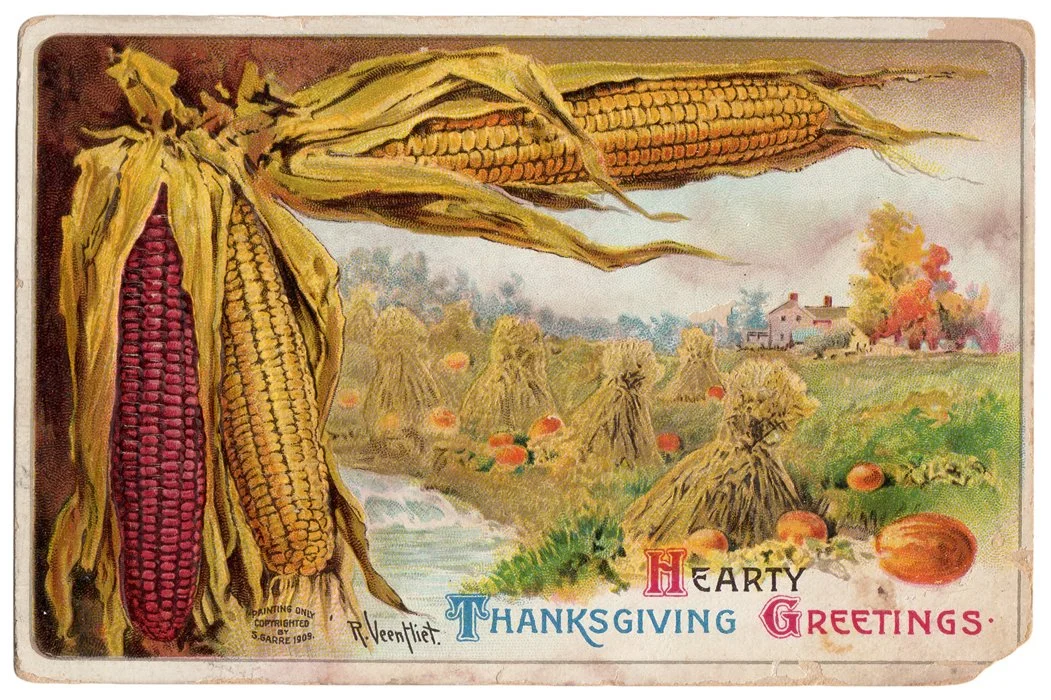
Autumn vibes on a vintage Thanksgiving postcard
Personal Stories on the Page
AN EIGHT-DECADES JOURNAL
“This page, these pages, these volumes are a labyrinth I cannot find my way out of. I have wasted a life in writing them. They are without value. And yet they’ve helped keep me sane,” Claude Fredericks wrote in what The New Yorker calls “the most ambitious diary in history.”
PARALLEL STORIES DIVERGE
One of my favorite memoir writing teachers, Joyce Maynard, remembers her mother and reflects on the once severed, ever-evolving relationship with her sister—the “only other person on Earth to know what it was to have Fredelle Bruser Maynard for her mother.”
THE POWER OF THE EPIGRAPH
“The story of writing my memoir is the story of what the body knows before the conscious mind follows,” Jan Beatty writes in this piece on how two dictionaries helped her define the terms of her adoption memoir.
ESSENTIAL READS FOR WRITERS
The first step in writing your life story book, the most daunting by far, says British Columbia–based personal historian Mali Bain, is creating your “messy first draft.” Here she suggests two books to help guide you through that process.
GAL ABOUT TOWN
“The early chapters [of Patricia Highsmith: Her Diaries and Notebooks, 1941-1995] are special. They comprise one of the most observant and ecstatic accounts I’ve read…about being young and alive in New York City.”
So They Say
CHALLENGING CONVERSATIONS
After years on the road giving presentations and engaging in deep conversations, performer Michael Fosberg—who recommends using personal stories to foster connection—has created seven tools to help foster authentic dialogue surrounding difficult issues of race and identity.
PASSING ON AN HEIRLOOM
“I am keenly aware that younger generations don’t always like the things their elders leave to them,” Hazel Thornton wrote in a letter to her niece. You may be surprised by how her mom’s good silverware was received by that niece.
HEAR HERE
“These stories will continue to evolve as we grow from overviews to deeper and more personal stories, more contextual stories, that move us. As we always say, it’s about the right story at the right time.” Kevin Costner on why he invested in an audio storytelling app.
PRICELESS AUDIO
“I’d really like to just give him a big fat kiss,” says the voice coming through the reel-to-reel tape. That voice belongs to the father of Rep. Dean Phillips—the father he never met because he died in the Vietnam War when Phillips was only six months old. Listen in as the lawmaker describes “one of the great blessings of my life”:
A Feast of Memories
DISHING UP STORIES
“As a fellow who has worked with senior citizens for decades, [Mike] Wallace said he grew to understand just how important it is that family histories be preserved, and he decided to start with his own parents.” Now he offers up 20 questions to use during your own holiday gathering.
FAMILY POTLUCK
Take advantage of your next holiday get-together to start preserving your food heritage with these tips for gathering family, recipes, and memories.
MEMORABLE MEALS
“How do we go about creating spaces for deep human connection around our family table? How do we serve up memories to last a lifetime at our next holiday gathering?” Texas-based video biographer Whitney Myers on honoring the people behind our most memorable get-togethers.
A FIVE-GENERATION TRADITION
“It’s amazing how if you don’t ask your grandparents...what they lived through you don’t hear all these stories.” Becca Gallick-Mitchell shares the story of her great-grandmother’s turkey kreplach and how her grandmother made them—at age seven—the night her mother went into labor.
...and a Few More Links
Sharing personal stories about his wife, journalist Cokie Roberts, was therapeutic during his time of grieving.
Shoah Foundation’s virtual archive was purchased by CSUN Library to preserve history.
“Why depth interviewing is essential to understanding individuals”
Julie McDonald Zander offers a series of questions to help you pay tribute to your parents.
New book tells the story of the invention of Betty Crocker, tracing the personal history of a fictional character many thought was real.
Florida–based personal historian Zoe Morrison gets the story behind one couple’s cuckoo clock collection.
Alan Cumming discusses his new memoir, Baggage.
Short Takes

Family potluck: reminiscing and recipes
If you're not sure who is the keeper of your family's favorite recipes, take advantage of your next holiday gathering to start preserving your food heritage.
Thanksgiving—or Passover, Christmas, or other holidays where extended family gathers in one place—is an optimal time to collect stories and memories via oral history interviews. There needn’t be a lot of pressure: Simply turn on your smart phone’s voice recorder or set up a video camera on a tripod, then forget it’s there...and let the reminiscing begin.

Ask family members about their favorite food memories and record these tasty bits of family history in a heritage cookbook—or simply stash them in a recipe box.
Collecting family recipes is one of those things that’s on many of our “I want to do someday” lists but that can easily slip through the cracks. It always seems like there will be time. But instead of saying “next time,” make it a priority—as well as an enjoyable endeavor!
Invite family members over for brunch one Sunday with the dual intention of visiting and connecting AND sharing recipes. Consider making it a pot-luck get-together and asking each person to bring at least one of their favorite recipes—maybe from childhood, or maybe one that’s part of their current immediate family’s repertoire (we’re always making new traditions, right?!).
This doesn’t have to be an anxiety-inducing project. Follow the few tips below and remember: You’re collecting your family’s food heritage, so you can do so whatever way makes sense for YOU! (Just, well, do it.)
A few tips for getting your family involved in preserving your food heritage:
Make one person (you?) the point person, organizing the day and ensuring that recordings get transcribed and backed up digitally.
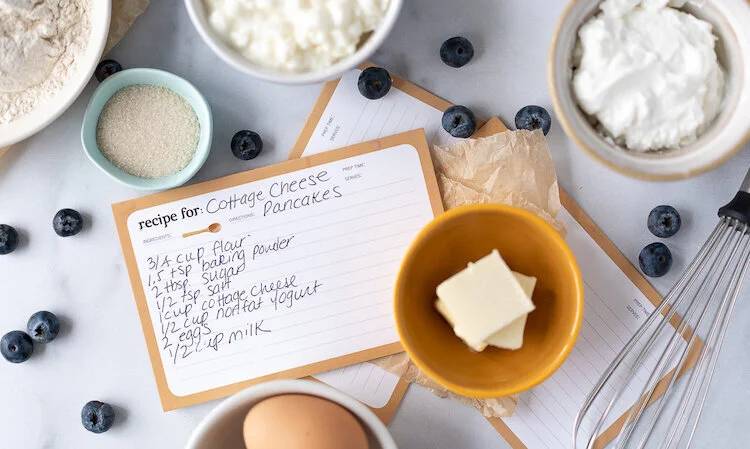
Distribute recipe cards to everyone and ask that they handwrite one of their favorite recipes on the front with accompanying memories on the back.
Use the recipe cards as a jumping-off point for telling longer stories that, when joined together, bring your family history to life.
Designate one or two people as photographers. You may want to collect photographs of the dishes once they’re cooked to accompany the recipes (those can be brought the day of your get-together or collected later), but don’t forget to take pictures of the family interacting around the table or in your home. Food brings people together, after all.
Consider collecting all the recipes and food memories along with a special collection of photos old and new into a heritage cookbook that you can gift to loved ones next year. (Go the DIY route or reach out to us for professional assistance.)
I wonder: What dish will you bring to this family reminiscence potluck?
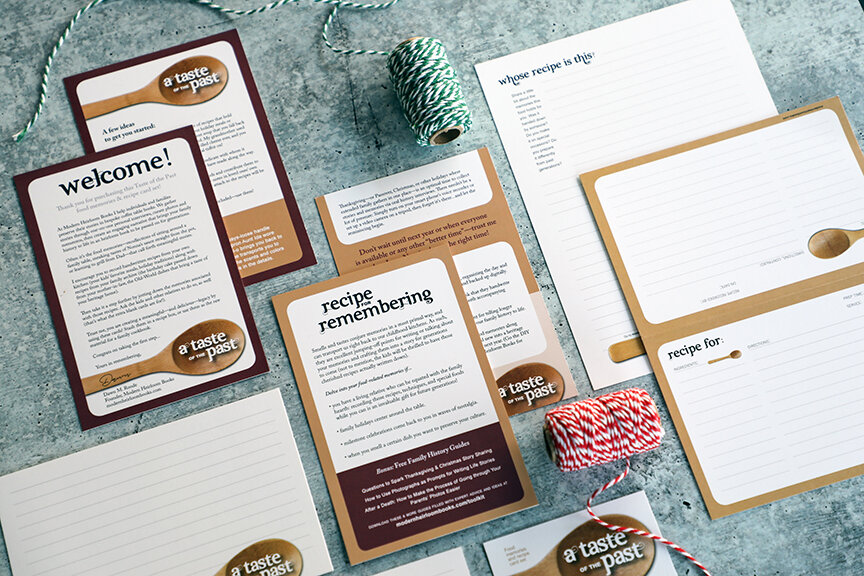
Limited-time SALE on food heritage gift set!
Through the end of November 2021, input code GRATITUDE at checkout for 25% off our Taste of the Past recipe & memory card set (they make a great holiday host gift, too!).
Read more Food Memories blog posts:






Explore more blog posts in these categories:
3 awesome (and easy!) Thanksgiving memory-keeping ideas
Get the whole family involved in saving stories and favorite holiday recipes with these three easy and fun Thanksgiving memory-keeping ideas.

My fingers are crossed that you are able to gather with your loved ones this year in person to celebrate Thanksgiving—to honor your family traditions and find fellowship around the table.
If you would like to use the opportunity to share stories and begin preserving some of your delicious family history, here are three simple Thanksgiving memory-keeping ideas, complete with ways to make them manageable and fun.
Thanksgiving activities that help you preserve bits of your family history
1 - Start a recipe preservation project.

In addition to writing down your family recipes, snap a few photos of a family member cooking the food, of the ingredients (especially unique or hard-to-find ones), and of the finished dish; whether or not you eventually put them into a family cookbook, your family photo archive will be more complete.
Notice I said “start.” Too often we let things we really want to do fall by the wayside because they seem overwhelming. Don't think about creating a heritage cookbook or worry about getting every single recipe your family has ever cooked! Instead, try one of these approaches to put your family on the path to preserving your best recipes:
Why not write down recipes for every dish at this year's Thanksgiving meal? Take a few pictures of prepping the dishes, what they look like when they are finished, and a few of the family around the table enjoying them? When the time eventually comes for you to make a recipe book, you'll have wonderful photos at the ready. And because you are beginning with a finite number of recipes—those for this year's menu only—your task is manageable enough to take on without worry
Make your recipe gathering a group endeavor. Send a blank recipe card (or a digital template for them to print) to every member of your family and ask them to record the recipe for their favorite Thanksgiving dish or meal. Important: Tell them where to return it, and provide a deadline (trust me, you'll never get them back otherwise).
Consider upping the ante and asking not just for a recipe, but for your loved ones to also write up a favorite story associated with that food. It's not just the provenance (that this was Aunt Betty's stuffing, for example) that make a passed-down recipe special, after all—it's the memories and traditions associated with it.
2 - Make a gratitude jar.

A handmade gratitude jar is easy to make and even easier to incorporate into your Thanksgiving festivities—I bet it will become a new tradition.
This one is so easy and it's sure to become your newest Thanksgiving tradition. It can be as basic as handing out pens and small pieces of paper to your guests, asking them to write one specific thing they are grateful for (as well as their name and the date), then storing them all in a mason jar until next year. There are so many ways to soup this one up.
Consider having each participant read theirs aloud, sharing a bit of a story with all those gathered before dropping their paper into the jar.
If your family does this annually, pull out random slips from previous years and share what was recorded—while this is sure to be touching, hopefully it will also prompt even more story sharing and reminiscing together as a family.
Maybe you want to set out construction paper, markers, ribbon, and glue and ask the kids to decorate the jar.
Why not find some autumn-themed paper to record your thanks?
Consider preserving everyone's notes of gratitude as a section in your annual family photo book.
3 - Revisit Thanksgivings past.
Thanksgiving is a great time to interview family members about food heritage, holiday traditions, and favorite childhood memories.
Thanksgiving is a perfect opportunity to interview your mom, dad, or another family elder about their holiday memories, as it's usually a time when generations gather together in one place—and nothing sparks visceral recollections like the smells and flavors of childhood foods!
Like with the recipe preservation project above, it's super-important that you don't get caught up in the idea that this is too big a task to take on. I promise this is something you can do even if your shopping list is long and you plan on getting up at the crack of dawn to get that 15-pound turkey in the oven! A few ways to make a family history project like this practical:
Is there a younger family member or non-chef in the family who might want to take the reins? Ask them to be the ringleader, bringing a list of interview questions designed to elicit Thanksgiving memories; setting up the voice recorder on their phone; and generally ensuring that everyone gets to participate.
If you've got a large clan and the football game's on, too, consider setting up a quiet area especially for brief interviews to happen and be recorded without interruption.
A fun—and efficient!—idea: Designate pairs of people who can interview one another, so you are not burdening one person to handle all the logistics. Two siblings, for instance, may be able to jog one another's memories of shared experiences; and a grandmother might have fun sitting with a grandchild to talk about how times were different “back then.”
Remember, any memory-keeping project you begin this Thanksgiving does not need to be finished by the next morning’s turkey trot. But if you don't start somewhere, your cherished recipes and stories won’t get recorded at all…so hop to it!
Resources to make your Thanksgiving memory-keeping easier
A Taste of the Past: Recipe card set that capture recipes and memories
Free guide: 55 Questions to Spark Thanksgiving Story Sharing
Gift idea: 8 weeks of writing prompts specifically designed to capture food memories
If you'd like to talk about working together to preserve your recipes, stories, and family history in an heirloom book, reach out any time to set up a free half-hour consultation.

Free Printable Thanksgiving Guide
Download this handy e-book with 55 family history questions perfect for Thanksgiving day!

Great gift idea!
Invite a beloved family member to share their stories via inspirational prompts specifically designed to capture food memories—just $15 for 8 weeks of writing prompts!

Life Story Links: April 13, 2021
A curated reading list for memory keepers with recent pieces about the stories of heirlooms and family photos, preserving food memories & connecting generations.
“Don’t be afraid of writing into the heart of what you’re most afraid of. The story of a life lives in what you would rather not admit or say.”
—Kate Christensen

Vintage postcard. Happy spring!
Memory Palace
THE ART OF FORGETTING
“The fragments of experience that do get encoded into long-term memory are then subject to ‘creative editing.’ To remember an event is to reimagine it.” A look at Lisa Genova’s new book, Remember.
LOOKING BACK…
“As we look back on ‘the good old days,’ we need to ask ourselves: Was the past actually as great as we remember it? And what can we learn from all these walks down memory lane?” Is romanticizing the past okay?
STORY TIME
“Grandchildren who come to their grandparents with genuine curiosity will inevitably tap a rich well of stories from their elders.” Last week I wrote about why grandparents are excited to share stories with their grandkids (and how to go about getting them).
Food Memories, Preserved
AN OMNIVOROUS WRITER
In her hybrid memoir-cookbook, The Book of Difficult Fruit: Arguments for the Tart, Tender, and Unruly (with recipes), Kate Lebo explores fruit “as a way to understand her memories of broken hearts and health issues, by giving attention to its messier bits—all with accompanying ways to make jams, smoothies, shrubs, and more.”
SCHMALTZY SALON
Limited spots are available for a short live event on April 20th in which Israeli author Shifra Cornfeld tells a story about her complicated relationship with her father and a quest to discover his past through his love of pecan pie.
The Stories Behind Our Stuff
“WHAT LOSS LOOKS LIKE”
“We couldn’t hold her hand as she left us. But now we had something that represented her at the very end,” Elinor Halligan says of her mother's pendants. Browsing this collection of artifacts—remnants from loved one’s lives, stories collected in the fabric, wood, and stone of things—is an emotional endeavor.
LIFELONG POSSESSIONS NO MORE?
“Isn’t that how this is supposed to work? We pass on possessions that tie the generations together as they move through the family.” Every year or so a major publication tackles the idea that family heirlooms are frequently getting thrown out instead of passed on. This month a Wall Street Journal writers tackles the notion that our kids don’t want our stuff.
The Big Picture
REDISCOVERED CHILDHOOD PORTRAIT
Alice Neel painted two neighborhood boys in her studio in the 1960s, but the finished painting was never seen by them. Decades later, the sole surviving brother saw his likeness hanging in the Met.
PHOTO INHERITANCE
Feeling burdened by all your old family photos? Many people think giving them to the kids now is a great idea—but then stress about how to split them up. Mollie Bartelt, a photo estate planner, has some tips in the video below.
And for families where the parents didn’t divvy up those photos among the kids already, going through boxes and meaningful mementos after the death of a parent can be challenging. Download this free guide for expert—and compassionate—guidance.
The Business of Personal History
MONEY MATTERS
Rhonda Lauritzen of Evalogue Life gets real with an in-depth conversation about what life story professionals do (and should) charge for their services, and why sometimes we do a project “just for love”:
...and a Few More Links
“Everybody's stories matter”: New Haven Museum collects accounts of pandemic life
Filmmaker weaves decades’ worth of home movie footage into film to create “an indelible portrait of a family separated by incarceration.”
Tips for keeping a memorable travel journal
In the Oscar-nominated documentary short A Concerto Is a Conversation, composer Kris Bowers' family lineage is traced through discussions with his 91-year-old grandfather, Horace.
Inspired by a similar project at Columbia University, Bowdoin Moments seeks to create “a living autobiography.”
A review of Wife|Daughter|Self: A Memoir in Essays by Beth Kephart
Short Takes

Life Story Links: October 13, 2020
A roundup of recent stories for anyone interested in life story preservation, memoir writing, and personal history—this one’s got a little of everything.
“When a story is told, it is not forgotten. It becomes something else, a memory of who we were; the hope of what we can become.”
—Tatiana de Rosnay, Sarah’s Key

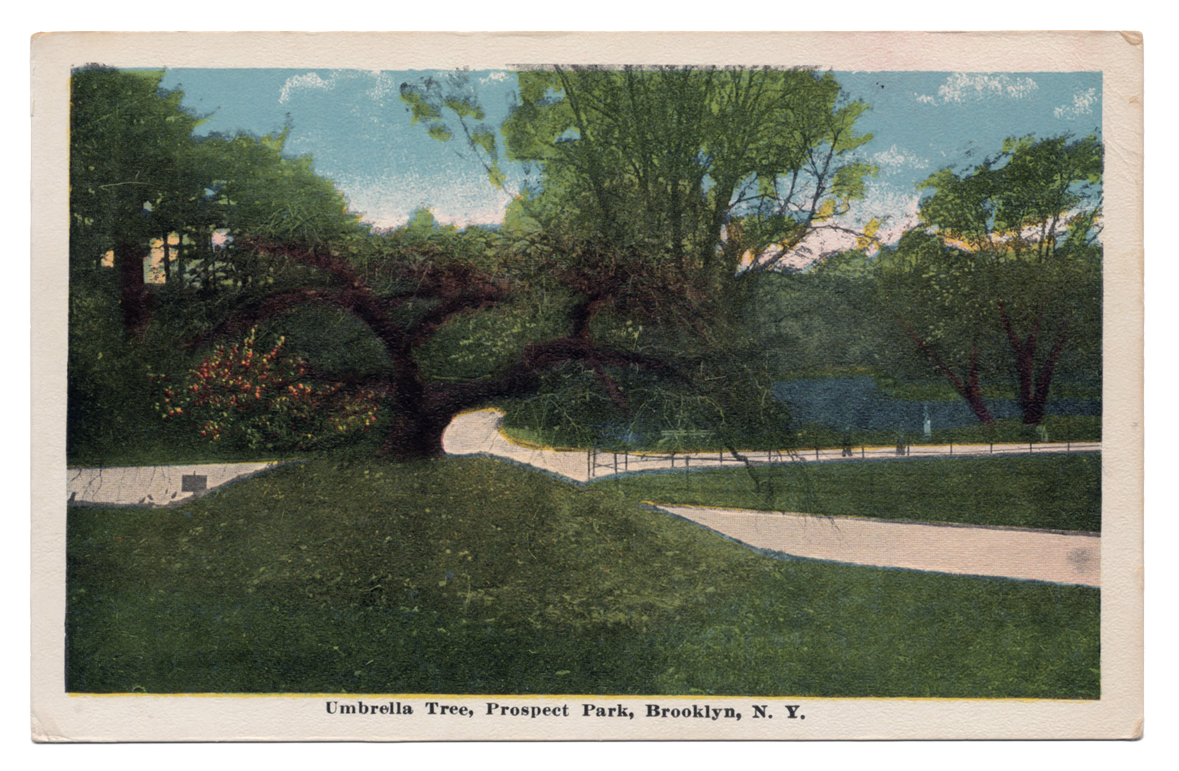
Vintage postcard (1907-1918) depicting Forest Avenue in the Bronx, New York, courtesy The Miriam and Ira D. Wallach Division of Art, Prints and Photographs: Picture Collection, The New York Public Library Digital Collection.
Of Hearth and Home
WHAT WE COOKED
“Someday I imagine having grandchildren...and I imagined them asking me, ‘Mimi’ (or whatever they might call me), ‘what did you do during the quarantine?’ And I thought there ought to be something better to say than, ‘Watched Netflix and ate popcorn.’ ” Sam Sifton on (not yet) keeping a Covid food journal.
A MOST UNUSUAL CELEBRATION?
Musings on Thanksgiving, togetherness, and making (and preserving) holiday memories this year... How will you manifest gratitude and spend the day in 2020?
WELCOME HOME
“How do you create a storied home when your family's story is just beginning in it?” Kim Winslow on using your family’s new home as a canvas for family storytelling.
Keeping Track…
NEW APP FOR RECORDING MEMORIES
“The mounting death toll from coronavirus led innovator and entrepreneur Yehuda Hecht to ponder the regret many are feeling at not having paid more attention to the stories of parents, grandparents, and other loved ones.” So he created a family history app, SelfieBook, to help people record the stories of their lives.
SEALED FOR LATER
“While many of us would rather forget 2020, we’re living through a historic moment that we may eventually want to remember.” A brief guide to making a 2020 pandemic time capsule.
Telling Our Stories
EXCAVATING OTHER PEOPLE’S LIVES
Biographer Robert D. Richardson believed “life-writing should be gripping, vivid, and intense, while giving a sense of the person’s daily existence that ‘links the reader’s life with the subject’s.’”
“THIS THING CALLED LIFE”
“I didn’t quit Prince, I just quit writing about him or hanging around his world. I still don’t know if I was brave or an idiot to walk away from the only real scoop rock and roll had to offer in those days,” Neal Karlen writes in this excerpt from his new book.
CHROMOSOMAL BREADCRUMBS
“My mother must have known long before I figured it out that motherhood is, at its core, a series of unanswered letters. Some tucked into envelopes. Others tucked into our cells,” Amory Rowe Salem writes in this first-person piece on breast cancer and family.
COMMUNITY & CONVERSATION
When her town went into lockdown, 60-year-old Jinny Savolainen wanted to do something meaningful with her time—so she began interviewing neighbors, which, she says, “gave me a sense of purpose and meaning that I badly needed.”
Oh, Personal History!
THIS BIZ OF OURS
Bethesda–based personal historian Pat McNees updates a 2008 article on the business of personal history, including what types of projects connote “personal history,” and how to find a market for such work.
BACK TO BASICS
Many folks want to preserve their life stories for the next generation but don’t know where to start. Here are three steps to finding the best personal historian to help (including, ahem, a note on what a personal historian is).
...and a Few More Links
First photos of enslaved people raise many questions about the ethics of viewing.
“The honor was all mine,” reporter says of telling this spy’s story.
Auschwitz survivor and memoirist Ruth Klüger has died.
Read the September/October issue of Archival Outlook.
A new season of Finding Your Roots with Henry Louis Gates, Jr., returns October 13.
Short Takes
Thanksgiving 2020: A most unusual time to celebrate
The way we gather and celebrate Thanksgiving this year will be impacted by the pandemic. May you find gratitude and connection while staying healthy.

How will your Thanksgiving celebration be impacted by the pandemic—will you have a smaller get-together, forgo travel, or connect virtually? I hope that however you observe the holiday this year, that you are able to feel real gratitude and find connection with loved ones.
What will Thanksgiving look like this year?
With smaller families who have remained in a Covid bubble, maybe your Thanksgiving will not be much different from previous years.
What about for larger families spread far and wide who usually use the holiday as a time to get together in one big group? Or families who are caring for a sick family member? In most parts of the country gathering inside in large groups without masks is still not recommended—and well, it’s kind of tough to eat turkey with a mask on.
I don’t know about you, but I am all “Zoomed” out. Don’t get me wrong—I am grateful for technology that allows us to connect, to hear one another’s laughs and continue our jobs. After a while, though, the allure of the screen dims and we crave hugs and touches and the buzz of energy in a shared space. And I think if I have to watch Great Aunt Constance pull her pumpkin pie from the oven over my computer screen without getting to savor the scent, I just might skip the holiday altogether.
This isn’t a post where I share “5 ways to make Thanksgiving special during a pandemic” or prescribe “ways to express your gratitude during a Covid-19 Thanksgiving.”
No, it’s a post where I ask, with genuine curiosity: What will your Thanksgiving look like? Have you thought about finding ways to connect virtually that don’t feel so…virtual?
How do I envision my own Thanksgiving?
For me, perhaps I will focus on the gratitude part of Thanksgiving, which often gets lost in the stuffing-and-cranberries food mayhem. Maybe I’ll write about all that I am grateful for; maybe I’ll talk about it with my son and husband. Maybe I’ll meditate on the unforeseen blessings this pandemic has manifested for many of us.
Maybe I’ll also focus on the celebration of the fall harvest—it’s always been my favorite time of year, after all, so maybe no matter the weather I will get outside for a walk at the very least, a sunset hike if I can swing it. Maybe I will create a new dish inspired by the autumn bounty at my local farmer’s market—and maybe it will make it onto the menu of future Thanksgivings when everyone can be present around one table again.
Maybe I’ll feel sad at the nature of our celebration. Or maybe I’ll revel in the closeness of my immediate (very small) family.
What I know for sure is that no matter what, Thanksgiving will be different this year.
I may not get as many hugs, but there will most likely be more leftovers in my fridge. And there is much—so very much—that I am grateful for.
Making Thanksgiving memories last
I will definitely be writing about this Thanksgiving after all the desserts are cleared, as part of my family history archive. I’ll ask my son to, as well, and though I may get an eye roll before he does so, I have no doubt his reflections will be thoughtful (and matter to him in years to come).
Will you join me in writing about your Thanksgiving experiences this year, whether it’s simply for your eyes only in your bedside journal or for inclusion in a life story book down the road?
If you prefer to revel in Thanksgivings past, you may want to use these Thanksgiving-inspired oral history questions as writing prompts rather than as interview questions this year. Or if you’re up for a Zoom call that’s slightly more purposeful than watching the Cowboys game together from your separate couches, consider interviewing a loved one—and no, I don’t mean asking them every question on the list, but rather picking two or three of your favorites and spending some time reminiscing together. Now that’s some socially-distanced Thanksgiving togetherness I can get behind!
Remembering
Thanksgivings Past
Use this list of 55 questions as writing prompts or to interview a loved one about their holiday memories.
What will your Thanksgiving look like this year?
38 questions to prompt food memories
Use these food-themed family history questions as conversation starters or writing prompts to capture your cherished food memories for the next generation.

In a previous post we outlined the four basic steps to begin preserving your food memories. After you have gathered recipes and photographs, the real fun begins: the remembering. The story sharing. And the cooking.
If you’re ready to begin capturing the stories that make up your food heritage, hurray! I recommend you start by hosting a family get-together (in person or virtually during these socially distanced times). Set a simple menu—one that includes some of your family’s favorite comfort foods and, most definitely, dessert—and an agenda: to talk about the foods and the holiday feasts and the kitchen antics that make you laugh, smile, and drool.
Memories flow when you’re all reminiscing together (“Remember that time…?”), and the communal feeling around a family dinner table adds to the story sharing appeal.
Print out the questions below (you can download a printable guide here) and pass it around the table. Or select your 10 favorite questions and write them on index cards before the get-together; then people can pick from your deck of cards to get the conversation going.
If your family is not as into the project as you are, or if you prefer to work alone, consider the questions writing prompts instead of conversation starters—it doesn’t matter how you gather your food stories, simply that you do.
Food-themed family history questions
THE KITCHEN OF YOUR CHILDHOOD
How was cooking in your home (either growing up or when you were raising your family) similar to or different from other families in your neighborhood?
What do you remember about holidays and special events?
Describe the kitchen of your childhood: what color were the walls? was it small or big? was there a window, and what was the view? what were the smells? the sounds? were the pots and pans hung on hooks or hidden in a cabinet? was there a pantry filled with…? did you do anything other than cook there—gather with friends, do your homework, talk on the telephone?
What are some of your earliest food memories?
What are some of your favorite food memories?
What are some of your funniest food memories?
Were there any foods you hated but were forced to eat as a kid? (Did you eat them or sneak scraps to the dog?)
What did you talk about around the dinner table when you were growing up? What about now?
What did your mother (or the primary cook in your family) wear when cooking? An apron? A house coat over her work clothes? A sauce-stained sweatshirt?
Were there any comfort foods from your childhood that hold a special place in your heart—in other words, what was your family’s “chicken soup” for the soul?
Did you have a regular day of the week for take-out food (such as pizza Fridays or, a more recent example, taco Tuesdays)? If so, what was your to-go restaurant of choice?
What did you snack on when you were little?
Were you ever a picky eater? Describe when, and if/how you got over it.

Free Guide: Preserving Your Food Memories
Download this free printable guide that include all the family history questions in this post as well as bonus tips for preserving your family food heritage.
ALL GROWN UP
How did you learn to cook?
Who taught you some of your most important kitchen lessons? Tell me about them.
What were your experiences making some of your first dishes?
What cooking triumphs (or disasters) stand out in your memory?
How has cooking changed for you over the years?
What foods always cheer you up?
What meal do you most often cook for those you love?
What junk food is your guilty pleasure?
The way we cook at different stages of our life can be revealing. Do you remember the dishes you relied on when you first went out on your own? Did you cook at all during college? If not, do any celebratory meals or meals cooked by a visiting parent stand out in your memory? How did cooking change after you had children? When they got to be teenagers? When you went back to work?
If you moved away from your home, are there any foods that you would miss that are indigenous to the area or especially well-made in the region?
Do you eat for comfort, for health, for enjoyment? Talk a little bit about your relationship with food over the years.
Do you remember the first time you tasted the cuisine of a seemingly exotic culture? What was it, and did you like it? What were the circumstances?
Do you have one or more cookbooks you return to again and again? Have the chefs you admire changed over the years?
HERITAGE RECIPES
What are your oldest recipes and where did they come from?
What are some of your family’s unique food traditions?
Are there recipes that particularly represent your family’s culture, religion, or regional background? Do you know how to cook them?
Are there any recipes in your family that seem unusual or unique?
Is there a recipe you wish you had gotten from an ancestor but that was never written down? What memories does it hold for you? Have you tried (successfully or not) to recreate it?
Do you have handwritten recipes from your parents and grandparents, and if so, where do you keep them?
FAMILY & FOOD
Who are/were the best cooks in the family? Tell me about them.
What family dishes would you miss the most if you never tasted them again?
Who sat/sits at the head of your table, and is it a position of honor?
Do you say grace before eating, and if so, is there a particular prayer or approach to what is said (e.g., something you’re each grateful for, something nice you did that day, etc.)?
How were birthdays celebrated in your family? Did you have the same cake every year, or something new? Was it homemade or store bought? Did you put an extra candle on the cake for good luck?
What other food traditions do you uphold (or have you abandoned from your childhood)?
Do you enjoy entertaining large groups of people around food? What types of celebrations? What kind of host are you?

Read more about preserving your food memories
4 steps to begin preserving your food memories
Knowing your family’s recipes are preserved for the next generation is reassuring. Adding stories and photos, too, brings your food heritage to life. Start here.
This past year I have gotten a lot of feedback asking for more content to help you preserve your food memories.
I wonder if it’s a sign of the times—we’ve all been homebound for much longer stretches during this pandemic (many of us even made our own sourdough starter and baked bread from scratch!)—or if it’s just that, as I say often, the memories that take place in our childhood kitchens are powerful and persistent. All it takes, after all, is one whiff of sauce simmering on the stove, or a tiny taste of cookie dough, to transport us right back in time.
Either way, I’ve planned a series of posts to get you started with saving your own food memories. First up: Four overarching steps to put you on the right path:
1 - Consider: How do you want to preserve your food memories?
It’s wonderful to have a stash of grease-stained, handwritten recipes in a drawer in your home. But it’s even better to know that those recipes are preserved no matter what.
By digitizing your recipes (they can be scans of the handwritten cards or typewritten transcripts) you not only ensure they last for generations, but you can more easily share them with loved ones far and wide.
Our two favorite ways to preserve your recipes and food memories are:
In a book (of course!). Include both recipes and, at least for some of the foods, the stories and memories associated with them. You can go a DIY route or hire us to create a professional heritage cookbook for your family.
In a recipe box. Consider attaching photos and stories to your recipes and storing them together in a vintage recipe box.

A cookbook personalized just for your family could include a mix of recipes, stories, and images.

While some of your recipes may be handwritten on recipe cards, others may be scattered; look within the pages of cookbooks, in your siblings’ collections, and on your computer and phone apps.
2 - Gather recipes.
Even if you’re an incredibly organized person, chances are you’ve got some recipes in a drawer, some on the computer, and others in your head (perhaps those are the most important to write down!).
Make a list of everywhere you think your recipes reside, then tackle gathering them all in one place.
Two tips: Ask your loved ones which recipes you should include (you might be surprised what your kids ask for!), and then call your siblings and parents to solicit recipes from them, too. The more complete your collection, the better!
3 - Add pictures.
Do you have photos of Grandma in her kitchen, or Poppa pulling the turkey out of the oven on Thanksgiving?
Go on a treasure hunt to find as many food-related photos as you can. Then, digitize them with an app such as Google PhotoScan or hire a professional to scan them so you ensure you don’t lose them (and so you can use them in a printed book if you wish). Make sure to scour your phone scroll for recent images, too.
Also consider hiring a professional photographer to capture a cooking session in your home kitchen. I can recommend photographers across the country, so don’t hesitate to ask me for recommendations. You can include handed-down cast-iron pots, serving dishes, and other family heirlooms in the shoot to make it even more special.

Photos—especially those taken in your home kitchen—help bring stories in a family cookbook to life.

Gathering together around the dinner table (and your favorite family foods, of course!) is a great way to share memories to include in your heritage cookbook.
4 - Find the stories.
For your most-often-cooked foods, traditional fare, and family favorites, write about the memories associated with each of them.
Be specific: Mention the cast-iron pan with the always-loose handle that Bubbe cooked his eggs in. The apron Aunt Ida wore only on Passover. How cherry Jell-o brings you back to your childhood, and the aroma of anise transports you to Brooklyn at Easter. Details, details—the scents and colors and textures...the truth of the story lies in the details.
One fun way to capture these stories is to host a family get-together with the express purpose of reminiscing (over dinner, of course!). Designate someone to take notes, and set up a couple of voice recorders (your smart phone is fine) around the room to get the stories. Oh, and take some pictures while you’re at it.
In an upcoming blog post we will share a list of questions to prompt food memories, which you can use either as writing prompts or as conversation starters during your get-together. Sign up for our newsletter to be sure you don’t miss it!
Want to read food stories from others for a little tasty inspiration?
Check these out:
Billee’s “Famous” Foods
Gramma Billee kept a jar for bacon drippings on her stove; she used it liberally and kept it full. She knew everyone’s favorite foods and provided them—often. Click here to read Billee’s “Famous” Foods.
Mom’s Spaghetti & meatballs
Red sauce ran in her grandmother's blood, and every family member would one day memorize her beloved recipe. Peek into a family kitchen, and a mother's heart. Click here to read Mom’s Spaghetti & Meatballs.
POP’S PIE
Is a grandfather’s love the missing ingredient to the best key lime pie? A young mother delves into memories of the treats her beloved Pop made just for her. Click here to read Pop’s Pie.
Dawn Roode’s curated roundup for the week of Sept. 23, 2026, is overflowing with recent reads on memoir, life story writing, and family history preservation.