
Memories Matter
Featured blog Posts

READ THE LATEST POSTS
Life Story Links: July 12, 2022
Personal historian Dawn Roode’s curated roundup of stories of interest to family historians includes first-person reads plus tips for life story preservation.
“Take nourishment from good stories…. Because it’s the art of the storyteller that reminds us that there is not just one single answer to human dilemmas.”
—Gianrico Carofiglio
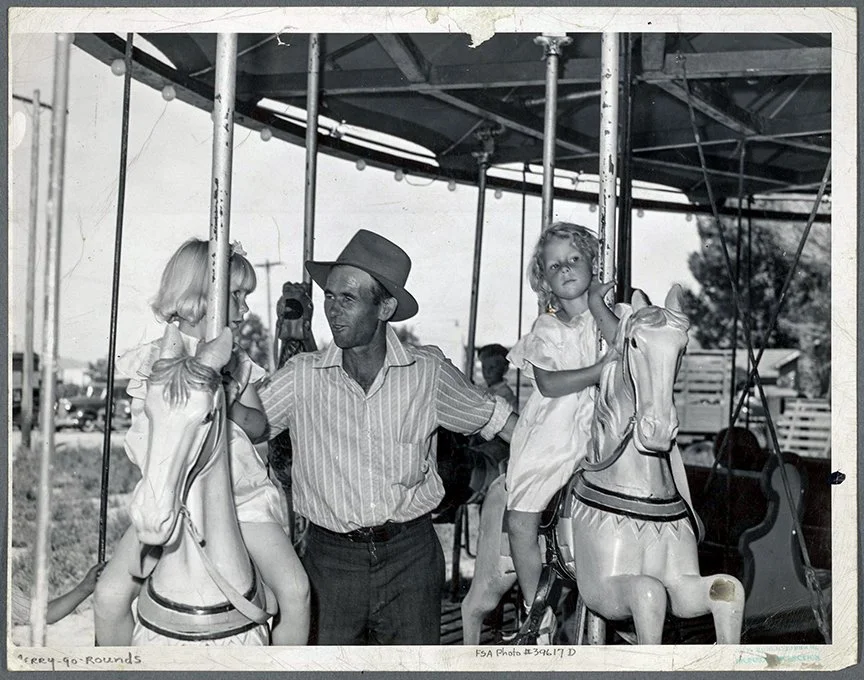
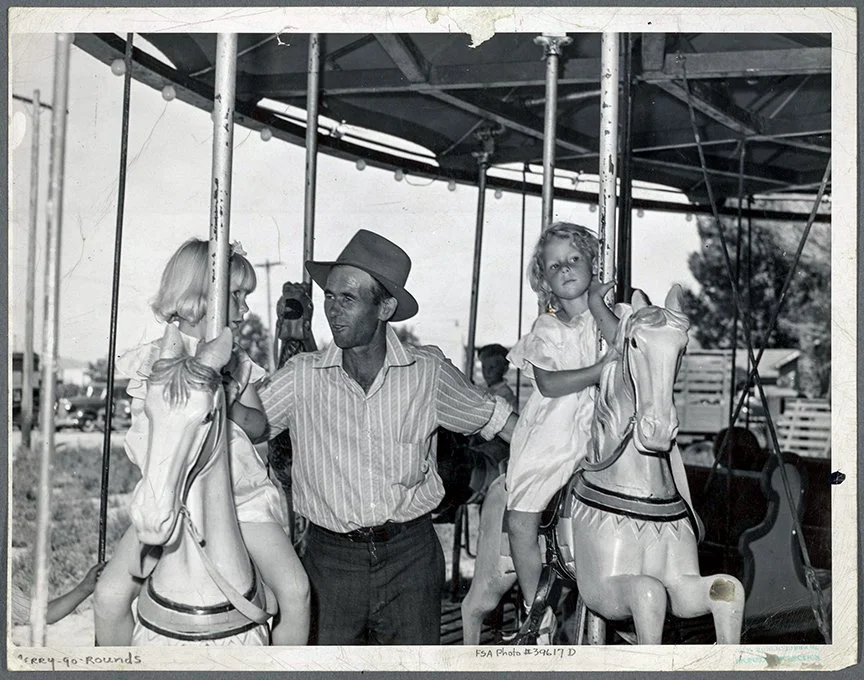
Vintage photo of a father with his daughters on a merry-go-round during the Fourth of July carnival in Vale, Oregon, in 1941. Photograph by Russell Lee for the Farm Security Administration, courtesy of The Miriam and Ira D. Wallach Division of Art, Prints and Photographs: Photography Collection, The New York Public Library Digital Collections.
Pro tips for diy family history preservation
AND NOW, VISUAL STORYTELLING
When the writing of a memoir is finished (hurray!), the next step is gathering photographs to include in your printed book. Last week I shared my top tips for picking the best images to include in your life story book.
FOOD STORIES, GATHERED
“One of the best ideas for a family reunion is to make a family cookbook that documents all the family recipes (and recipe rivalries!) in one place.” Here, top tips on how to tackle your family cookbook together.
WRITING YOUR TRUTH
“When you include people besides you in your story (how can you not?), someone will not like what you write about them. They will call you liar. I don’t think that should stop you.” Vanessa Mártir on the complicated nature of writing about family.
Stories through stuff
FAMILY HISTORY CONNECTIONS
“I don’t see my great-grandfather’s imprisonment as a stain on the family, like ink spilled on the fabric of the baby quilt his daughter would go on to make for me,” writes Megan St. Marie, an Amherst, Massachusetts–based personal historian in this piece inspired by a family heirloom.
HUMAN STORIES TOLD THROUGH OBJECTS
“A young child’s diary, a favorite doll, a cookbook of family recipes, a report card, a Torah scroll smuggled to the United States, and a silver spoon found among the rubble at a concentration camp”—these are among the 750 artifacts accompanied by first-person testimonies in an expansive new permanent exhibition at the Museum of Jewish Heritage in Lower Manhattan.
HIS ABSTRACT ART IS HIS LEGACY
A neighbor was curious about George Westren and learned more about him after his death. Now he is helping cement the artist’s legacy by preserving—and showing—his artwork.
Recommended first person reads
AN UNEXPECTED ENCOUNTER
The few vintage images are as alluring as the words in this recounting of the downtown icon Michele Saunders’ “accidental getaway” with a literary legend James Baldwin.
“IT’S ALL ABOUT YEARNING”
“You look back through a reverse crystal ball at all the hoopla, sometimes not even believing you were there in that time... No time to sleep. No idea that you would someday grow old and no longer be the headline.” Susie Kaufman on nostalgia.
Stories and history
WRITERS PROJECT
Bookmark this collection to visit again and again: Contemporary writers reflect on 25 voices from the archives of The Atlantic—adding valuable context and linking to original stories that reflect a belief that ideas can change the world.
(JUST?) FAMILY LORE
“For a short time, our family’s history is the world’s history.” Chicago–based personal historian Nora Kerr on looking beyond the surface meaning of your family legends.
...and a few more links
Short takes
Life Story Links: June 14, 2022
This week's curated reading list for memory-keepers and family historians includes lots on saving and sharing a family legacy—and why it matters—plus, new memoir.
“He who digs into the past would know that barely a millionth of a second divides the past from the future..”
—Eugenio Montale
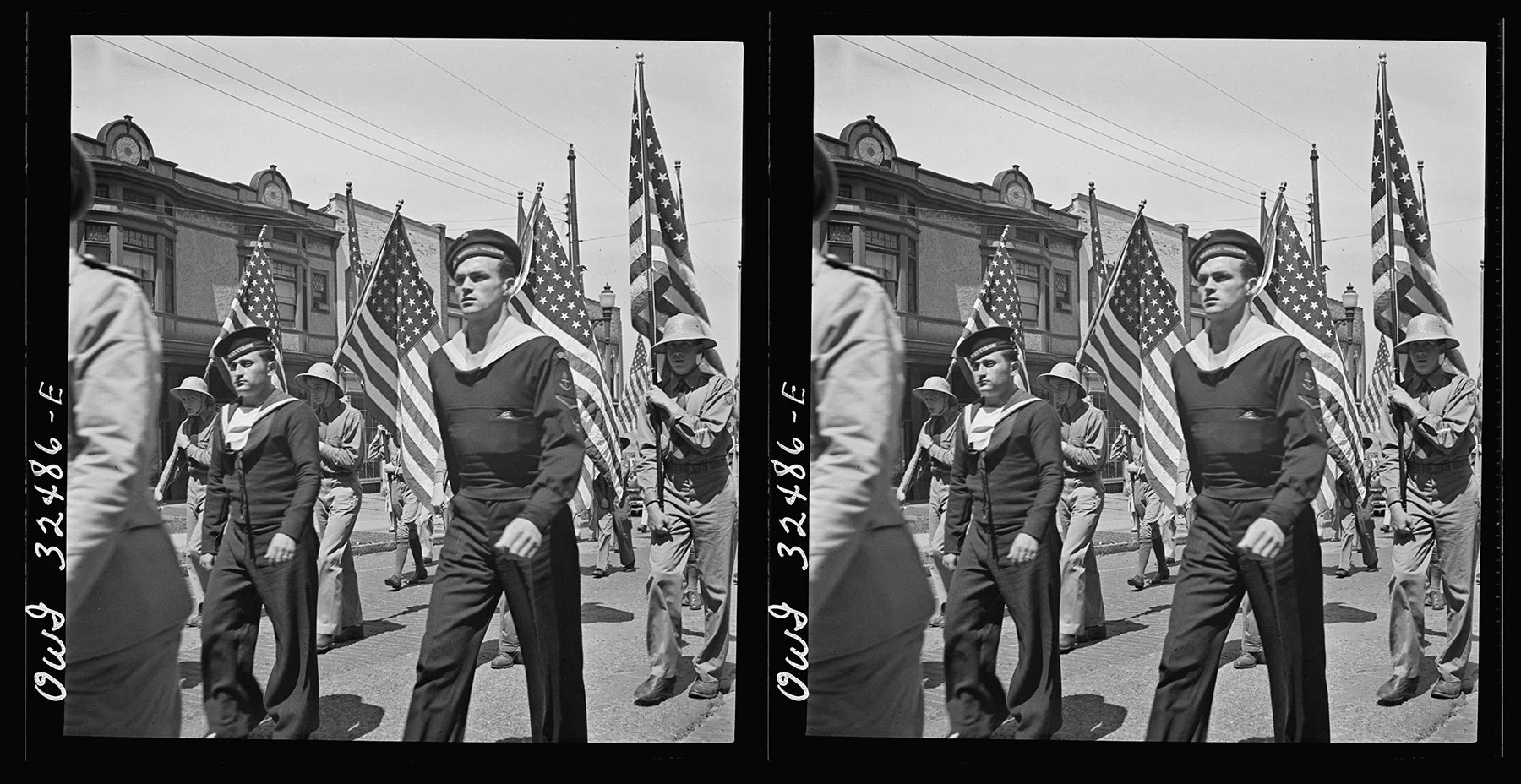
United Nations Heroes marching in the Flag Day parade during United Nations week in Oswego, New York, in June 1943. Photographed by Marjory Collins for the Office of War Information; courtesy of the Library of Congress Prints and Photographs Division Digital Collection.
What we capture
AVOIDABLE REGRETS
Nearly half of Americans in a recent poll regret not recording or documenting conversations with loved ones who have died; and many people (44 percent) wish others would record or document conversations they have to preserve memories.
SO, LET’S START RECORDING!
In light of the above-mentioned poll, I put together some resources to make it easier for anyone to record conversations and gather stories from loved ones—so we can begin to see an upward trend in legacy preservation…and avoid regrets.
Our families, our stories
YOUR STORY, OR THEIRS?
“How do I write about social workers who harmed a child I love? How do I write about her mother? What do I owe them on the page?” Sarah Sentilles wrestles with the notion of writing about others in memoir.
MEMORIES OF THE POGROMS
“Grandma eventually came to learn that the only way I would fall asleep was by listening to the soft sound of her voice as she described in detail her early childhood in Russia.” A childhood interest in stories becomes a lifelong search for legacy—then, a book.
LEARNING TO LIVE WITH GHOSTS
The Korean tradition of jesa, or memorializing ancestors, helped Joseph Han understand that “our loved ones’ memories and histories suffuse our world and continue to shape our lives long after they have departed.”
BEDTIME STORY
“I am speaking to an audience of one, who happens to be the book’s foremost subject, my 74-year-old father, Joe, or Daddy as Northern Irish naming conventions insist he must be addressed.” Séamas O'Reilly on reading his memoir to his father.
WHAT CONTRADICTION?
On the latest episode of Schmaltzy, a podcast that explores the intersection of Jewish identity and food, Hillary Reinsberg shares stories about the distinctly German-Jewish way of doing things at her grandparents’ New York home:
The power of narrative exploration
CONFESSIONAL WRITING, REFINED
“Melissa Febos’s recent essay collection shows us not only how to capture the difficult, intimate details of our lives in writing, but why we should.” Adam Dalva on the necessity of creative confession.
THE STORY WE WRITE FOR OURSELF
“Will you take some chapters from your family’s history and courageously edit and fit them into the vision for your life’s purpose? Will you dare to write completely new chapters based on your true passions and desires?”
NARRATIVE MEDICINE IN PRACTICE
Read an excerpt from The Healing Power of Storytelling: Using Personal Narrative to Navigate Illness, Trauma, and Loss by Annie Brewster with Rachel Zimmerman, and listen to an interview with the author and Here & Now host Robin Young:
SLAVERY’S LEGACY: ORAL HISTORY PROJECT
“This kind of oral history project has never been done before. Many will, for the first time, hear the voices and memories of people whose personal experiences are still inextricably tied to racial slavery, the transatlantic slave trade, and colonialism.”
...and a few more links
New memoir of Chris Blackwell, founder of Island Records, reflects on helping bring the music of Bob Marley, U2 and Grace Jones to the world.
A one-page “Empathy Interview Guide” from Stanford d.School
On the True Stories Well Told blog: “10 Minutes to Death” by Marg Sumner
Short takes
Dawn Roode’s curated roundup for the week of Sept. 23, 2026, is overflowing with recent reads on memoir, life story writing, and family history preservation.