
Memories Matter
Featured blog Posts

READ THE LATEST POSTS
Life Story Links: October 4, 2022
Curated just for you: Recent stories on the craft of life writing, memories held in objects, legacy building, new memoir, and honoring loved ones after death.
“Clearly, the most joyous outcome of the life review process is that you really do treat your past as history, you appreciate your triumphs, and the misery becomes part of the context of your life, not the focus.”
—Linda Feldman
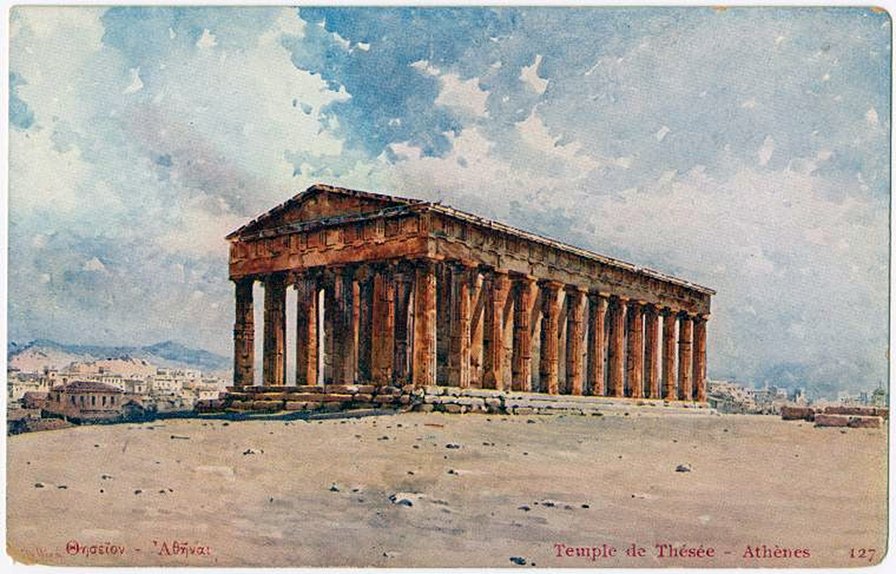
Vintage postcard depicting the “Temple de Thésée, Athènes,” courtesy of the Miriam and Ira D. Wallach Division of Art, Prints and Photographs: Picture Collection, The New York Public Library Digital Collections.
Aftermath
RELEASE
“Nowhere in the five boroughs was distant enough: If the subway could get me there, I might wake one night from an Ambien-induced sleep to find myself stabbing Mom repeatedly.” Rachel Cline’s naked essay in Dorothy Parker’s Ashes.
ABUELA’S STORIES
“When I’m writing, I close my eyes and my grandmother’s voice comes to me: ‘Each one of us is responsible for keeping history alive.’ ” Armando Lucas Correa’s grandmother’s stories about Cuba inspired him to write.
LOSS, GRIEF, LEGACY
While packing up the apartment of his late mother, Gloria Vanderbilt, journalist Anderson Cooper begins recording his experiences. In the resulting podcast, he explores how we find meaning in the things our loved ones leave behind, how we navigate grief, and how to live on after loss—with laughter, and with love. Here’s a preview:“
Words last: A kind of legacy
“AS LONG AS YOU READ US, WE’RE NOT DEAD”
As author Terry Pratchett’s dementia became prohibitive, his assistant’s role grew to amanuensis, to “keeper of the anecdotes,” and he finished the biographical book that Pratchett had begun, A Life With Footnotes.
“WOMAN WITHOUT SHAME”
“I wanted to understand my father, a man who served in the Second World War without understanding or speaking English. If you don’t write a story like that down, it’ll be like it never happened. He doesn’t have Ken Burns trying to tell his story.” Sandra Cisneros, who calls Studs Terkel her ‘literary ancestor,’ in conversation.
LETTING THE STORY MARINATE
“For [my new memoir], Beautiful Country, I spent three years (and one might say, most of my life) thinking about the book, researching through my diary and retracing my steps, and processing how I wanted to write it.”
The stuff of memories
SARTORIAL STORIES
“Most of the clothes I’ve saved in my closet cannot be recycled physically; they hang there as aide-mémoire to a life.” Julia Reed on the memories woven into well-worn clothes.
THE TRAPPER KEEPER GENERATION
“When I was interviewing people about their school supplies, I was really asking how they felt about themselves during their vulnerable adolescence.” An iconic binder elicits strong memories and visceral responses for these writers.
UNIVERSITY ARCHIVE
“Lucky for us, Hemingway was a pack rat. He saved everything from bullfight tickets and bar bills to a list of rejected story titles written on a piece of cardboard.” A new collection at Penn State provides insight into the author’s writing process and his personal life from childhood onward.
Crafting our stories
WRITE YOUR LIFE
Last week I shared an iterative life writing prompt that gets your pen moving and delivers a trove of future ideas for your memoir. Bonus: It’s a fun one!
“EVERYONE’S GOT A STORY IN THEM”
“Many of us regret not asking our parents and grandparents more about their lives while we had the chance, but I’ve yet to come across anyone who has regretted writing their story.” The Guardian reports on a boom in the personal history industry.
AN INTENTIONAL JOURNEY
“Writing about myself and reading what I wrote to strangers changed me. Or, did it reveal me?” Barbara McCarthy on how taking a guided autobiography course was a significant turning point in her life.
UNEXPECTED TEACHERS
“Those early lessons I got on craft—from likely and unlikely sources—have stayed with me through every essay, every editing job, every student manuscript, and through to writing my memoir.”
...and a few more links
Pieces of history: Urgent effort to preserve thousands of pairs of children’s shoes at Auschwitz
Solito is a personal story of immigration that sheds light on the universal.
A glimpse at early Cormac McCarthy interviews that were recently discovered.
Two new grief-tinged memoirs of male platonic love and loss.
Search for a Hebrew cookbook was “part of a lifetime of connecting with his roots through food.”
Short takes
Life Story Links: April 19, 2022
If you're into family history, memoir, and memory-keeping, you'll want to check out this week's list of stories hand-picked by personal historian Dawn Roode.
“As for how to actually organize your memoir, my final advice is, again, think small. Tackle your life in easily manageable chunks. Don’t visualize the finished product, the grand edifice you have vowed to construct. That will only make you anxious.”
—William Zinsser
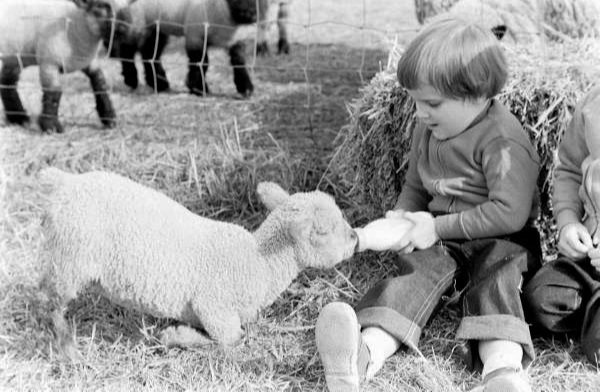
Vintage black and white photograph of a young girl in Illinois, spring 1962, by Francis Miller for Life magazine, © Time Inc.
History in our homes…
SUGGESTED INTERVIEW QUESTIONS
Mali Bain, a custom publisher in British Columbia, shares ten open-ended questions to ask in a family interview session so you may “naturally follow up on ideas without struggling to find a suitable next question or getting lost in brain fog.”
BEST PRACTICES
Before any family history interviews can begin, there’s a little prep involved. Read how professional oral historians set the stage for effective storytelling and secure saving.
THE FAMILY KNOWLEDGE GAP
A new survey from Ancestry.com found that while more than half (53%) of Americans can’t name all four grandparents, 66 percent of respondents said they want to learn more about their family history and over half (51%) want stories about when their ancestors were young.
“THE ITEM IS THE VEHICLE TO THE STORY”
“I can say this firmly: Along with your stories, your family members are going to want some of your possessions. They just might not be the ones you'd expect.” Matt Paxton on the sometimes surprising stuff of legacy.
HER GRANDFATHER’S STORIES
“He had taken to telling his grandchildren many, many stories. Unfortunately, at that time, we brushed it off, even choosing not to sit with him at restaurants, so that he would not ‘bore us’ with yet another story. But here we were—confronted, for the first time, by death. This protector, this legend and all his stories had a deadline.”
MAKING TIME
Think you’re too busy to write about your life? Think again. Here are three easy ways to make memoir writing more approachable—and more efficient, so you can finally fit it into your busy schedule.
HER UKRAINIAN HISTORY
In light of recent world events, StoryCorps looked into their online archive to explore Ukrainian voices recorded with their interview app. Here’s one:
…and history in a broader sense
LEGACY OF SILENCE
“A society can forget on a mass scale, not when the government imposes amnesia as a political project, but when people refuse to look within—to dig into the messy and complex family biographies that turn memory into a landmine, and forgetting into a psychological salve.” A compelling piece about historical reconciliation and one man’s discovery of a lynching in his family.
JEWISH BEACON HISTORY WALK
In researching the origins of the first and only synagogue in Beacon, New York, historian Anna Brady Marcus and her team uncovered a rich history of Jewish enterprise in the town. To coincide with its centennial, they have released a digital walking tour derived from a rich catalog of oral history interviews.
What we keep
OTHER WRITER’S WORDS
“If keeping a journal would be a way to look in the mirror and make an honest appraisal of myself, keeping a commonplace book is more like looking at myself out of the corner of my eye.”
PHONE PHOTOS
“You’re you, and your pictures are yours, and what you bring to a photograph is not separate from it.” So when attempting to curate your digital gallery, “scroll your roll, and find the pictures that please your eye and touch your heart and stir your feelings because you’re you”—and keep those.
DO YOU NAME YOUR POSSESSIONS?
“Some researchers believe that people write a biography of themselves with things, that our life stories aren’t complete without the items that matter to us”—but do we really need to name those things?
THE WELTY COLLECTION
A trove of letters from Eudora Welty’s family that has been made newly available to the public provides insight about the author’s parents; her siblings and their families; her grandmother and great grandmother and their children.
IS THAT GRANDMA?
How fun to follow the lost-and-found journey of a family photo album via this Twitter thread (click through to read the full thread):
Personal essays of note
WHOSE STORY IS IT?
“Day had written his family history after conducting archival research and reading the relevant sociocultural experts; I wrote mine after growing up in my family.” Tad Friend on a relationship reconsidered by reading between the lines.
KNOWING NIRVANA’S FRONTMAN
“‘Who put these fingerprints on my imagination?’ Elvis Costello once sang. I didn’t want someone else’s fingerprints on my memories [of Kurt Cobain],” Michael Azerrad writes in this New Yorker personal history column.
AN IMPULSE TO CONNECT
In this personal essay on Oldster, Robert Burke Warren recalls an impromptu visit he made to his estranged grandparents at 19. He writes of connection and gratitude and “compassion delayed.”
In the books
BACKDOOR MEMOIRS
“When writers get away from what’s going on inside their head, they just might see their own life in a new light and find something universal in the personal”: nine nonfiction authors who set out to investigate the outside world and ended up finding themselves.
BOOK REVIEW OF NOTE
“Ancestor Trouble represents decades of research into genealogic records, genetic science, and the cultural history of ‘ancestor hunger’ and reverence—as well as [Maud] Newton’s own coming to terms with how to face and honor her family history,” reads a review on NPR. This one in the NYT describes “the preoccupation of the entire book” as “the periphrastic construction of identity itself.”
...and a few more links
Read an excerpt from Osman Yousefzada’s memoir, The Go-Between: A Portrait of Growing Up Between Different Worlds
Austin–based video biographer Whitney Myers is profiled in this regional magazine Q&A.
A life documented: Winkfield, an enslaved man in colonial Virginia
Tech startup uses artificial intelligence to enliven family photographs.
The unique challenge of designing a book by incarcerated writers
Ohio mother and son pen personal history book about mom’s memories of living through Nazi-occupied France.
What the New York Public Library is doing to save the sounds of the early 20th century.
How to save time with these eight translation tools for genealogy.
Short Takes
Dawn Roode’s curated roundup for the week of Sept. 23, 2026, is overflowing with recent reads on memoir, life story writing, and family history preservation.