
Memories Matter
Featured blog Posts
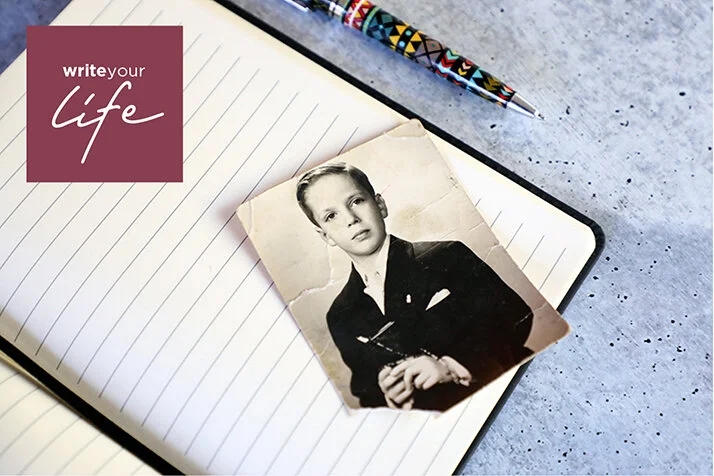


READ THE LATEST POSTS
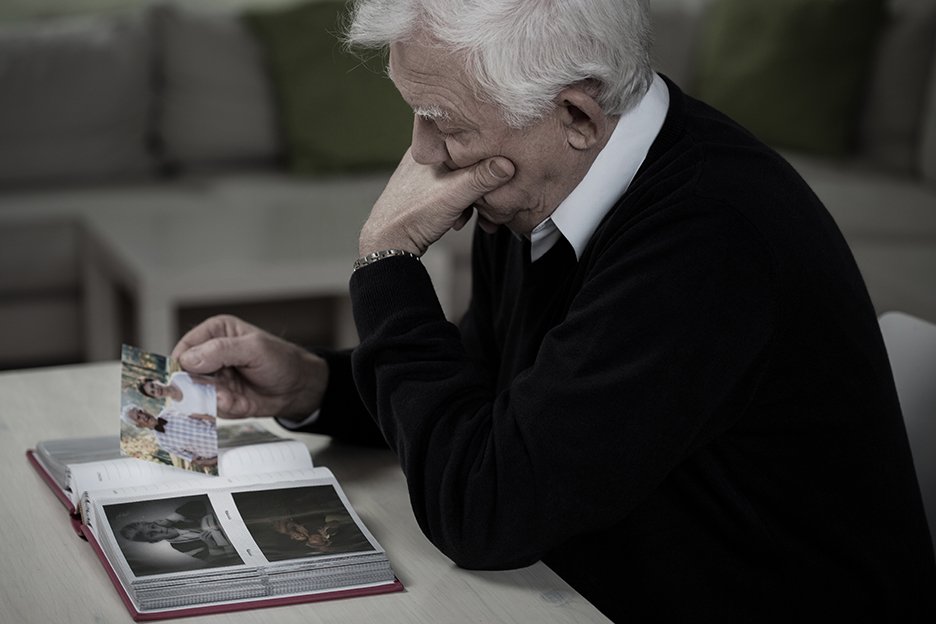
Americans regret not recording stories of their loved ones—don’t be one of them.
Recording loved ones' stories is important to most Americans, and yet not even half of us have done so. Here, resources to make memory-keeping easier.
A recent poll of more than 6,000 Americans showed that only one in three Americans has recorded or documented a conversation with a loved one in order to preserve their memory of them.
Nearly half of those polled say they regret not doing so with someone who has died.
These stats sadden me, a devoted storyteller whose mission is to help as many people as possible preserve their own memories—and those of loved ones—for the next generations. While it saddens me, though, it doesn’t surprise me.
Why am I not surprised?
Why am I not surprised that so few people have taken the initiative to record stories from their loved ones? Well, first of all, it’s easy (so easy!) to take for granted that those we love will always be there. We don’t want to think about a time when they won’t—and preserving their stories for the future seems to somehow bring that notion to the fore.
Moreover, for many people recording stories seems like a daunting task: Won’t it take too long? What questions would I ask? How would I record the conversations? What would I do with them afterwards?
For some, telling their own stories seems vain (it’s not). Still others think they have no stories to tell—or that no one would care to hear them (again, not likely; I haven’t met a person yet who didn’t have some amazing stories inside them—and everyone underestimates how their stories will be received by loved ones).
So, no, I am not surprised that 59 percent of Americans have not recorded conversations with a loved one. But I do see change on the horizon.
Rays of hope
“Maybe it’s the younger generation’s familiarity with technology...that makes this task more approachable—obvious, even.”
I see a glimmer of hope amidst these poll results, too: Younger respondents were by far the most likely to have said “yes, I have recorded a conversation of a loved one in order to preserve my memory of them.” While only about a quarter of folks aged 45-65 have recorded a loved one’s stories, 44 percent of those 18-to-29 have, and 42 percent of those 30-44. Not quite double the older participants, but almost!
Maybe it’s the younger generation’s familiarity with technology and their engrained habit of recording so many things in their daily lives, that makes this task more approachable—obvious, even.
Or perhaps it’s millennials’ well-documented love of nostalgia.
Whatever the reason, the trend is on the upswing: More younger members in American families are recording conversations with loved ones!
Resources for recording your own family stories
Are your ready to hop on the memory-keeping bandwagon and record a conversation with a loved one? Let’s work together to bring these numbers up—to make story preservation an everyday thing that, dare we day, a majority of Americans not only strive to do, but really DO!
A wonderful thing that will happen along the way if we indeed begin to record our personal histories? We’ll all have fewer regrets.
In order to help with your DIY story gathering, here are some time-tested resources that I offer to you for free—please don’t download them unless you plan to put them to use 😉
FREE E-BOOK DOWNLOADS
HELPFUL ARTICLES FOR RECORDING YOUR LOVED ONE’S STORIES














The little book that every aspiring memoirist should read
Introducing the two-word writing prompt guaranteed to keep your memories and your pen flowing, plus the book by Joe Brainard that inspired it: “I remember...”.

The little book that could: I Remember by Joe Brainard is a cult classic and a favorite of aspiring memoirists and memory keepers.
Buy this book now: I Remember by Joe Brainard.
(I don’t suggest borrowing it from the library, because you will want to pull it out next week, in five years, when you’re staring at a blank computer screen or journal page; it’s a tiny book, so it won’t take up too much space on your bookshelf, after all.)
This book is a delight to read. And this book holds the key to writer’s block.
Brainard’s memories, recounted in a stream-of-consciousness fashion, are short and pointed, often mere phrases or single sentences, occasionally a brief paragraph, each beginning “I remember...”:
“I remember the only time I ever saw my mother cry. I was eating apricot pie.
“I remember how much I cried seeing South Pacific (the movie) three times.
“I remember how good a glass of water can taste after a dish of ice cream.
“I remember when I got a five-year pin for not missing a single morning of Sunday School for five years. (Methodist.)”
As Ron Padgett writes in the book’s afterword, “Few people can read this book and not feel like grabbing a pencil to start writing their own parallel versions.” Indeed. “It is one of the few literary forms that even non-literary people can use.”
The two-word prompt that never fails
Like many before me, I was first introduced to Joe Brainard’s book in a weekend writing workshop with memoirist Dani Shapiro. She read some snippets out loud and I was immediately enlivened. Our assignment: to write nonstop for 10 minutes, finishing the sentence “I remember…” over and over with no concern for chronology or connectedness.
As she describes, “When I give that exercise at retreats, I look out from where I’m sitting at a sea of people, and not one of them hesitates. Those are extremely evocative words.”
“I remember.”
Those are the words Shapiro calls evocative.
And they are the words that form her (and my) favorite writing prompt: “I remember…” is a steadfast prompt, an old friend that can be pulled out and used often, always to new effect.
As Padgett writes, “Even the smallest [memory] can exert a mysterious tug, and when it is clearly recalled it can release a flood of other memories.”
Your turn: Start writing using the prompt “I remember…”
“Memory is just this storage locker of incredibly rich material and we often can’t get at it when we’re trying to remember something or thinking in some chronological way or straining and reaching,” Shapiro said on an episode of her now defunct Facebook Series, “Office Hours.”
“Where we can really get to it is on the page, following the line of words, and allowing associations to pile one on top of the other.”
So, grab a pen and start writing.
don’t discriminate against memories that seem meaningless or small
don’t worry about making connections between one memory and another
don’t stop until your 10 minutes are up.
Some remembrances will be short and specific. Here are two of mine:
“I remember patent leather black shoes with one scuff on the toe.”
“I remember drinking Diet Coke nonstop when I worked at Vogue. My production assistants swore I needed an IV drip of caffeine. One of them berated me for buying cups of ice from the bodega for a dollar.”
Other remembrances will be more profound, perhaps longer, such as this one from Brainard:
“I remember having a friend overnight, and lots of giggling after the lights are out. And seemingly long silences followed by ’Are you asleep yet?’ and, sometimes, some pretty serious discussions about God and Life.”
Let your mind wander—no restrictions—and your pen will follow. You’ll be surprised by what bubbles up.
“People almost invariably find memories that they didn’t know that they had,” Shapiro said in an interview with Marie Forleo about this exercise.
“We don’t tell ourselves stories in our heads. We have these disparate memories that don’t connect. And when we allow them to be associative and to bounce one off the next, it creates all sorts of interesting material.”
Who should give this writing prompt a try?
Personally, I think the simple phrase “I remember…” as a springboard for writing has universal appeal. It’s fun, it’s alluring, and it’s easy.
It may be especially beneficial for certain people, though.
This writing exercise is good for:
helping you open the floodgates of memory when you feel stuck
warming up at the beginning of a writing session—putting pen to paper and having a relatively easy task (simply finishing the sentence “I remember…”)
brainstorming memories: Without the pressure of remembering something specific, your list will inevitably be diverse and surprising—providing fodder for a future memoir or personal essay.
So if you’d like to discover the power of short reminiscence, and emulate it to create your own list of prompts for future development, well, I Remember is the book for you..
Note: This is an unsolicited review of a book I purchased at full price. I did not receive any compensation or free products in exchange, and any endorsements within this post are my own.
Affiliate disclosure: As an Amazon Associate, we may earn commissions from qualifying purchases from Amazon.com.
P.S. I’d love to hear some of your reflections. What are a few of your favorite things you wrote using the writing prompt “I remember…”? Share in the comments or shoot me an email!

Who will tell your life story?
No one will tell your life stories but you. Start small by saving family photos & preserving stories so you create a lasting, meaningful legacy, one step at a time.

Chances are, nobody will. That is, unless you tell your story.
May is Personal History Month: a time to raise awareness about the importance of preserving our own stories, of recording memories and family history in a way that can be accessed—and appreciated—by our future generations.
Perhaps it’s obvious that your memories and stories matter. But be honest: What have you done to preserve them? Have you taken the first step to ensuring your legacy?
Even the family memory keeper needs help.
I have always been the memory-keeper in my family. Even as a young child I took pictures at every party or outing, crafted scrapbooks with meticulously handwritten captions, and have kept journals with varying levels of commitment throughout my life (beginning with a little lock-and-key Holly Hobbie diary).
But over the years my gathered ephemera took on the weight of “stuff” as I moved from college dorm to a barely-there Manhattan apartment to a Brooklyn brownstone with just one closet. With an ambivalent heart during one streak of “practicality,” I tossed my childhood diaries and stacks of letters. I even removed many of the things I had once carefully arranged in those scrapbooks, opting to pile them into a shoebox that fit more easily into my limited storage space instead.
Necessary, perhaps, but shortsighted nonetheless. I certainly don’t advocate saving every little thing (oh, how minimalism appeals!), but my point is this: Even for a devoted, lifelong memory keeper such as me, many of the things that trigger memories—and prompt the stories that make up our lives—get lost along the way.
And as our lives become more and more entrenched in the digital realm, artifacts of our youth—of the milestones and life transitions and the special moments—get buried deeper and deeper in the digital abyss.
Start saving your stories, one at a time.
It can be daunting to think of writing (or even telling!) your life story. So don’t.
Start saving your stories, one at a time. For now, at least, forget about culling all those boxes of old family photos from the attic. Don’t stress about fleshing out your family tree.
Just start small:

1 - Save your family photos.
Begin setting aside the best few photographs from each major life event—or from any small yet joyful moment in a ‘regular’ day. (It doesn’t have to be a monumental moment to be worth remembering; some of my favorite memories are of the everyday variety!) Make sure to record the details, too: who, what, where, when. Put them in a digital image’s metadata (it’s easier than you think) or write captions on the back of your printed pictures.
2 - Share one story.
What’s the one story Grandpa tells every time the family gathers at Thanksgiving? Or the story your kids always beg you to re-tell at bedtime? Is there a childhood adventure you think of often that you’ve never shared with your kids? Whether it’s a story so often cited that it’s become family lore or a brand new gem, if you don’t proactively record it, it will be forgotten. It pains me to type that last sentence, but let’s face it: The oral history traditions of our ancestors have long since fallen by the wayside, and it’s up to each of us to preserve our own personal histories.
3 - Do something special with that story.
Did you hit “record” on your smart phone when you told your one story? Did you type it up? However you chose to capture your story, take it one step further and make something with it—then share it. I’ve got a few easy and unique ideas for you in an upcoming blog post, but for starters, why not have dinner with a few loved ones who would appreciate the story, and share it again? (It’s my experience that once the story-sharing starts, it’s contagious—and that always makes for a joy-filled get-together full of reminiscing!)
Your one story might turn into “Chapter One.”
The reason for starting small is to avoid being paralyzed by the overwhelming possibility of telling your WHOLE story. The irony of starting small is that, more often than not, one story becomes two, and two becomes four. You get the idea: Stories multiply quickly.
In honor of Personal History Month, why not take the first step in preserving your memories? Follow the simple three-step plan above, and get in the storytelling spirit!
Are you doubtful that you’ve got any stories worth telling? Check out this list of reasons why your story—yes yours!—matters. And read this, too.
Trust me, your stories convey your values, forge connections with loved ones, and contribute to your family history. Your stories are a most meaningful legacy.
Your stories—even just “Chapter One”—matter. But you must tell them.