
Memories Matter
Featured blog Posts

READ THE LATEST POSTS

Genealogists reveal why your stories matter
The most memorable quotes and takeaways from family history experts Amy Johnson Crow, Curt B. Witcher, Scott Fisher, and Janet Hovorka at RootsTech 2019.
I wasn’t at RootsTech 2019 last month, but I did take advantage of the free videos that were available for live streaming during the event and are accessible even now on the RootsTech website.
Since we’re all about life stories and personal history around here, I decided to offer up a few of my favorite takeaways related to those topics from four speakers. If they whet your appetite for more, you can always watch the full videos of these speakers and discover others focused on genealogical research, DNA testing, and online record searches.
From Why and How to Put Yourself into Your Family History
AMY JOHNSON CROW
Favorite quotes from Amy Johnson Crow, a Certified Genealogist with more than 20 years of experience helping people discover their family's history:
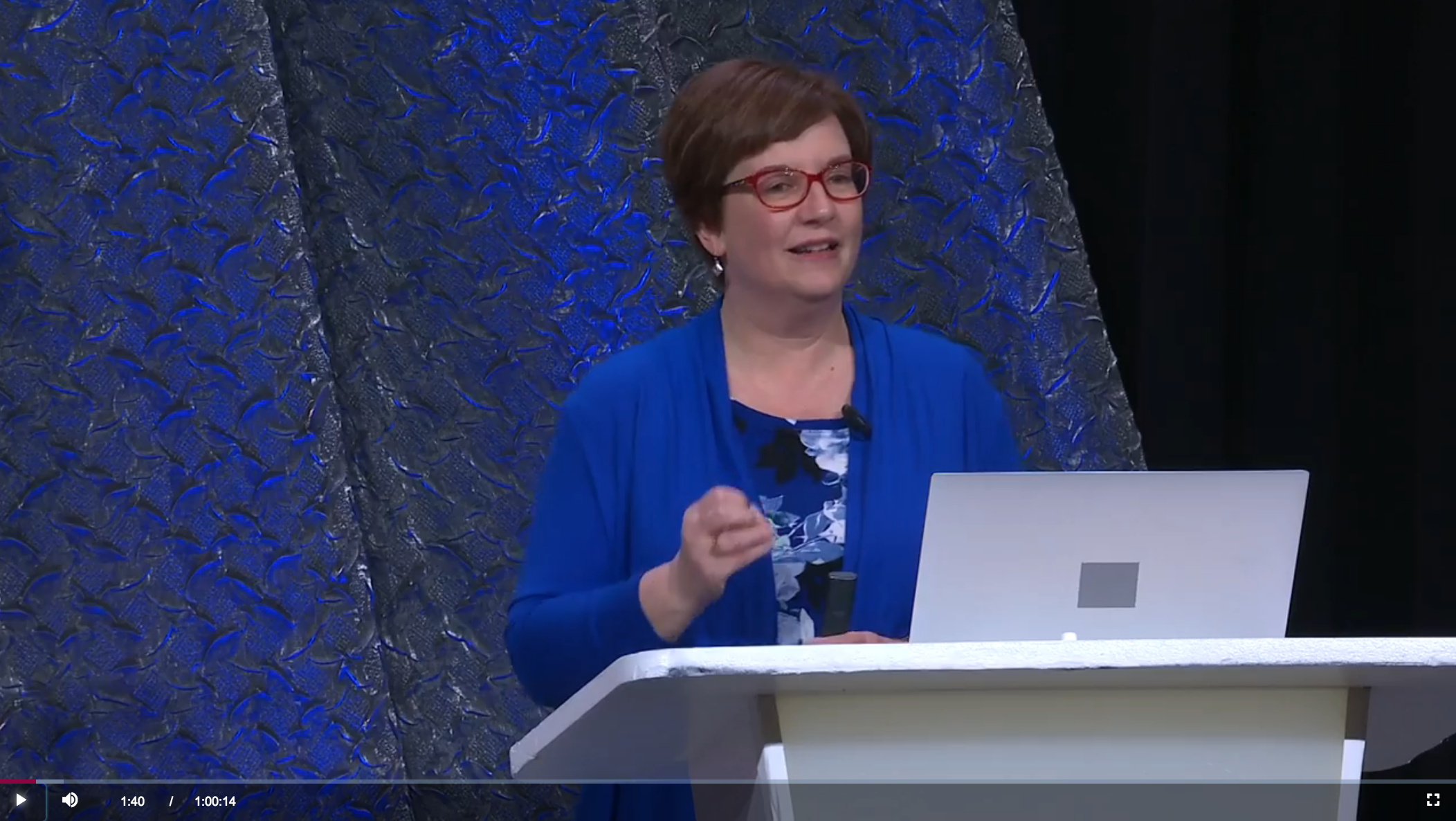
Author and speaker Amy Johnson Crow presenting at RootsTech 2019
“When we consider recording our own stories, we think of memoirs that we have read… And when we think about writing our own stories, well, if we’re thinking of something like Angela’s Ashes or Little House on the Prairie, our first reaction might be, well, I’m not famous. Why should I record my story?”
I’ve got a whole list of reasons you should record your story, as does Amy:
“Think about how thrilled you would be if you found a diary from one of your ancestors. Or a letter from one of your ancestors.”
(Even if it described an ordinary day doing ordinary things, like a trip to the market!)
“I think that you would treasure that letter because it would be insight into the life of that ancestor, told by that ancestor.”
Indeed!
“So why do we think that future generations, oh they won’t care about me!? We already know that we care about what happened in the past. We need to be the ancestors to our descendants that we wish our ancestors were. We need to record more of our stories like we wish that they did.”
Can I get an amen?!
“Don’t get hung up on the format, because really, any format will do. … You have to record the story—that’s the important thing. You can figure out the preservation later. You have to tell the story before you can preserve it. And truly, a story isn’t a story until it’s been told.”
So, tell your stories! And remember:
“It doesn’t have to be overwhelming. It doesn’t have to be about all the big things in your life. There is no story that is too small to be recorded.”
CURT B. WITCHER
Highlights from Curt B. Witcher, Genealogy Center Manager at Allen County Public Library in Fort Wayne, Indiana:

Genealogy expert Curt B. Witcher during his presentation at RootsTech 2019
“Family history is the pursuit of, and the presentation of, and the preservation of our stories.”
“The grand and the big and the exciting and the wonderful—that’s not it. It’s the point in time, and the person in time, and how it relates to us.”
After reiterating some of what Amy Johnson Crow spoke about, Curt transitioned to talking about the science behind story and why it is so important:
“Experiencing story alters our neurological processes.”
He is not a scientist, but he is eager to shed light on how amazing much of the science behind story really is—from triggering the release of cortisol (which commands our attention) to the eventual release of oxytocin (which he says “makes us more receptive to empathy, to caring”). If you are interested in this, I suggest watching Curt’s entire portion of the video, which begins at the 20-minute mark.
Want happy children?
“Family story is critical to all of us being better human beings, but especially for younger people as their brains are being developed.”
“Stories, psychologists and scientists tell us, are strong predictors of a child’s happiness. The more stories, the better adjusted, the better a child will grow and be welcomed and welcoming. How can we not think that this is important?”
Is there anyone among us who does not?!
SCOTT FISHER
And lastly, the best tidbit of advice from Scott Fisher, host of podcast Extreme Genes, America’s Family History Show, who spoke concretely about how to turn oneself into a family history reporter:
“Do not answer questions for your subject. If they’re taking a long pause, let them think. Don’t be afraid of the silence.”
Ah, yes, be patient, and listen generously!
From Heirloom, Documentation, or Junk: What to Keep or Toss
Janet Hovorka
Memorable moments from Janet Hovorka, genealogy coach and development director for Family ChartMasters:

Genealogy coach Janet Hovorka speaking at RootsTech 2019.
“When you keep everything, it might be overwhelming to the next generation… After your passing, your family could throw everything out just because they’re overwhelmed.”
Imagine?!
Janet offers up six concrete questions to ask yourself about your family history stuff in trying to decide whether (and how) to save it or to toss it. If this is something you are facing, whether due to the recent loss of a loved one or to the ever-expanding hoards of your own family history documentation, then definitely give her video your full attention.
Here, though, a few golden nuggets:
“A family heirloom is only as valuable as the story that comes with it.”
Can I get another amen?
“An heirloom can only go down one line, really. But documentation, especially digitally, can be spread over the whole family.”
But remember:
“Digital materials can be more fragile than a set of china… You could be creating a Digital Dark Age in your family.” (caps mine ; )
Excellent advice:
“Think about a digital will, especially if you want to preserve you own life.”
Families, please hear what Janet says:
“In my opinion, one of the most important things to do is to teach your children and vest them in [your family history] now…. Tell them the stories. Vest them in those heirlooms and those documents. A family that is vested in those things is going to preserve them.”
Because…
“Never in the history of the world have we been so disjointed and so anxious… We move away from our ancestors more than families ever have. We don’t grow up at grandma’s knees anymore.”
Facebook and FaceTime may bring us closer to far-flung relatives, but it’s no substitute for in person togetherness and for regular story sharing—especially of the impromptu kind.
“Talk to the next generation.”
Please.
“As you study the span of a life, you learn that everybody has a little bit of hero and a little bit of scoundrel in them.”
Which part of your story will you tell first, I wonder…?





Experience RootsTech 2019 from the Comfort of Home
RootsTech 2019 offers opportunities for accessing the family history conference from home. Highlights, and how to get the most from your virtual experience.

RootsTech 2019 takes place in Salt Lake City, February 27–March 2, 2019—but if you can’t make it to Utah, you can experience much of the family history conference virtually.
Discover Your Story, Discover Yourself
“Discover Your Story. Discover Yourself.” So reads much of the literature promoting this year’s RootsTech conference. And while a majority of sessions focus on nitty-gritty genealogical exploration, there is plenty to learn about storytelling, family history interviews, and preservation of those stories through technology.
RootsTech is billed as “a global family history event where people of all ages learn to discover, share, and celebrate their family connections across generations through technology.” And while there is much that can be experienced only at the Salt Palace Convention Center—such as the hundreds of exhibitors in the expo hall, one-on-one mentoring opportunities, and the serendipity of new connections forged through in-person meetings—the RootsTech team has provided ample opportunity for experiencing the event from the comfort of your home.
Free Streaming Schedule: Highlights
A full streaming schedule for RootsTech 2019 includes a detailed list of keynote speakers (including Diahan Southard and Kenyatta Berry) as well as breakout sessions that will be made available live during the conference.
Here are my top picks for those interested in family history storytelling and memory preservation:
Hear Them Sing! Social History and Family Narrative
11:00am GMT/ 1pm EST , Wednesday, February 27
Join Rebecca Whitman Koford as she discusses how the addition of social history enhances family narratives and clarifies the songs of our ancestors. She will discuss how to contextualize ancestors’ lives with social history research and use it to inspire others to want to know more about those who have passed.
“Jumping the Broom,” Oil, Inheritance, and African American Marriage in the South
3:00pm, Thursday, February 28
Kenyatta Berry will cover the tradition of jumping the broom, the informal marriage ceremony for the enslaved. Kenyatta will also share the story of her paternal ancestors in Arkansas and East Texas, as well as her methodology to uncover their pasts.
Why and How to Put Yourself into Your Family History
8:00am GMT / 10AM EST, Friday, March 1
In family history, it’s easy to overlook ourselves and the generations we know because we don’t feel like history! But you are a part of your family history. In this Power Hour, Curt Witcher, senior manager of the Genealogy Center, will show you why putting yourself into your family history is so important (along with the science to back it up). Amy Johnson Crow, author and host of the Generations Cafe podcast, will show you how you can include yourself without getting overwhelmed. Scott Fisher, host of the Extreme Genes radio show, will show you interview techniques to get more (and better) stories.
Trace the Story of Immigrant Ancestors in 3 Steps
8:00am GMT / 10AM EST, Saturday, March 2
Susan R. Miller, D. Joshua Taylor, and Frederick Wertz explore 3 key steps to unlocking the story of your immigrant ancestors with the New York Genealogical and Biographical Society.
Personally, I’ll also be watching a few of the other sessions, including The Silent Language of the Stones: Reading Gravestones through Symbols and Carvings on March 2nd (ancient symbols have always intrigued me!) and, if I have time, actress Patricia Heaton’s main stage keynote.
Which sessions have you placed in your own calendar?
The RootsTech Virtual Pass
In addition to the free live streaming detailed above, RootsTech also offers a paid option for a Virtual Pass that grants access to exclusive recorded sessions on demand. The videos will be edited (not available to stream live) and accessible for one full year beginning about two weeks after the conference has ended.
Considering my own recent road blocks uncovering my maternal line’s German roots, I am likely to spring for the $129 Virtual Pass; there are two breakout sessions included in the schedule that speak directly to German genealogy help.
One of the 18 genealogy sessions included in the Virtual Pass may be of particular interest to family history storytellers:
20 Hacks for Interviewing Almost Anyone, and Getting a Good Story
Have you ever gone to interview someone and could not get them to talk? Are they video shy? Are they reluctant to share? Do they have memory loss? Is their story a difficult one to tell? Personal historian Karen Morgan and speech-language pathologist Joanna Liddell share tips for quickly building a rapport with your subject. You will learn how to prepare for the interview, maximize the environment, put your subject at ease, use story prompts, listen actively, handle difficult topics, and discover how the role of an audience affects the stories the subject tells.
Check out the full schedule of Virtual Pass videos here.
I am not affiliated with RootsTech in any way. This roundup is intended as a recommendation based on my own insights and experiences for likeminded family history storytellers.
Dawn Roode’s curated roundup for the week of Sept. 23, 2026, is overflowing with recent reads on memoir, life story writing, and family history preservation.