
Memories Matter
Featured blog Posts


READ THE LATEST POSTS

Life Story Links: September 24, 2019
We've got help on your life story writing journey, reasons to tell your stories at all, and some moving examples of first person writing to inspire you.
“…though I try to grip the memories, they blur and shift with time. It seems that the more I take them out to look at them, the more I alter them by looking.”
—Laura Kennedy
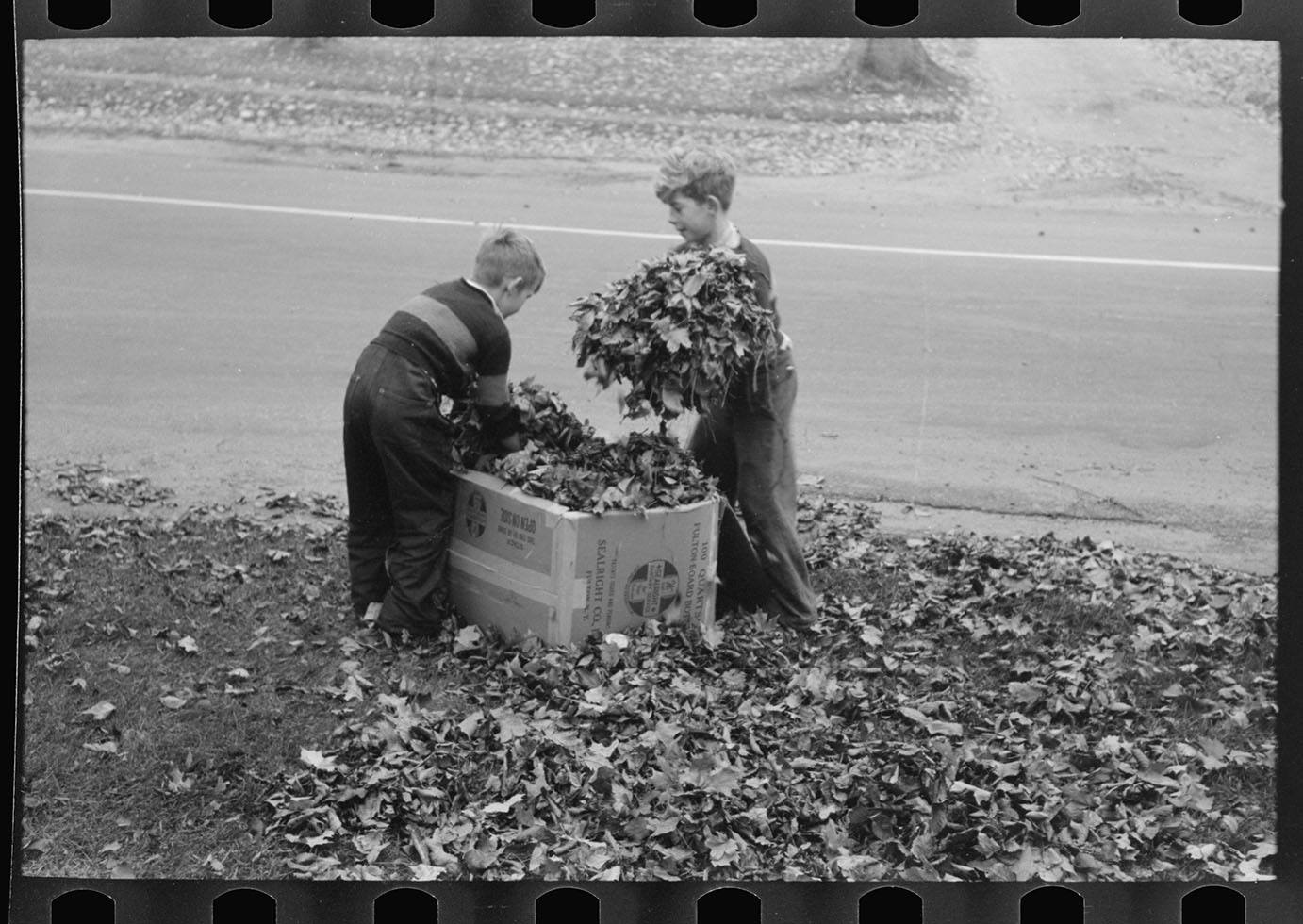
Boys gathering leaves, front lawn in Bradford, Vermont, October 1939. Photograph by Lee Russell, courtesy Office of War Information, Library of Congress.
Writing, and Revealing, Our True Selves
YOURSELF AS CHARACTER
Nicole Breit looks "at ways you can nurture the split between person and persona, and learn a few tricks to develop yourself as a character on the page” when writing memoir.
ILLUSTRATED JOURNAL
From the Amazon description of Journey, a book of visual and literary prompts: “It is a place where private dreams and musings, stories, and sketches come to life—and an ideal gift for those who wish to explore and then record their memories and dreams.”
THE MYTH OF DISINTEREST
When an acquaintance told me that her grown kids have no interest in listening to stories about her formative years and life experiences, I was compelled to revisit this topic once more: Your grown kids may not “care” about your stories now, but they will one day. They will.
WHAT NOW?
Are you stuck with your life story writing? “It’s not the lack of time. It’s not clutter. You don’t have ‘writer’s block.’ It’s probably that you just don’t know what to do next,” writes Alison Taylor of Pictures and Stories in Utah. She responds with some clear, actionable next steps to short-circuit your procrastination tendencies.
Reminders of Times Gone By
IMBUED WITH MEMORIES
"I didn’t want my grandfather’s things to just be another box of stuff. If you don’t pass these stories on, they get lost.” Five families talk about objects they could never part with—heirlooms they have cherished and preserved—because they hold meaning beyond their physical worth.
AS TOLD TO, FOOD EDITION
“Whatever else we put on the table, rice and shoyu was always the linchpin. We had it for dinner every single night of my childhood. It’s intimately tied to my sense of home.” Sanae Yamada on how returning to the foods of her childhood grounds her.
GERMAN PHOTOGRAPHY ARCHIVE
German culture minister looks into creating a central institution charged with archiving and sharing the country’s photographic cultural heritage to secure “the visual memory of our society.”
Celebrating Love
“WE GATHER HERE TODAY…”
At the book launch for one of her memoir clients, Nancy West was struck by how the gathering had all the best aspects of a memorial service: rich details about the person's life, loving tributes from his closest friends and family members. But there was one key difference—he was present to take part in it.
BUBBE DAYS
“I do want [my granddaughter] to remember me, not specific events so much as my presence. I want her to know that I helped care for her, comfort her and celebrate her. That I was there, a part of her life, and loved her ferociously,” Paula Span writes in this thoughtful piece about what our grandchildren will—and won’t—remember about us.
THAT TIME HE SHAVED MY LEGS…
Wisconsin–based Sarah White, who has been leading life writing groups since 2004, created “True Stories Well Told“ as a place to highlight stories of real life. Recently she shared her own sample of object writing, a piece of flash memoir she wrote guided by the prompt, “What is your earliest memory of your longest love partner?”
WAVING GOODBYE
Maria Rivas shares a remembrance of her mom, who was “strong in everything",” with StoryCorps Legacy, a project that gives people with life-threatening illnesses the chance to record their story, and their loved ones a chance to remember. Listen in:
...and a Few More Links
Google Photos hops on the memories bandwagon.
What indigenous stories can teach a new generation of farmers
'A Photo Album of Ireland' exhibit offers insights into personal histories.
Congrats to NYC–based Remarkable Life Memoirs on turning three!
Short Takes


Life Story Links: September 11, 2019
The art and craft of memoir, a most unlikely family heirloom, audio life story preservation, and more reads from the world of personal and family history.
“Like a mosaic, we all contribute the broken shards of our memories to a larger picture that, while imperfect, creates a beautiful whole life.”
—Julia Shaw

Books…
THE ART AND CRAFT OF MEMOIR
In Juncture Notes’ first quarterly magazine, founders Beth Kephart and William Sulit present “Art: Honoring the Life” (a look at writerly approaches to persistent memoir concerns) and “Craft: Try This on for Size” (showcasing an exemplary text and a related writing prompt).
THE BOOK OF PRINCE
Prince rejected the list of co-writers recommended by his publisher, opting instead to work with a Brooklyn writer who had yet to author a book. Dan Piepenbring on the process of becoming the iconic musician’s memoir collaborator.
…and Beyond
PLACES IN THE HEART
The studio that turned out to be a family heirloom: When a New Orleans native goes apartment hunting in New York City, she happens upon a place where her mother lived in the 1970s.
VIRTUAL LEGACY?
“Where [the Hereafter app] differs...is that we’re not actually trying to recreate the dead person to reanimate them through technology.... It really is a high-tech interactive sharing of oral history.”
FAMILY HISTORIAN GIFT IDEAS
I haven’t had this much fun curating a blog post in quite some time! After keeping notes on family-history finds over the course of the last year, I put together a buying guide that includes my favorite high-end gifts for genealogy buffs as well as a few smaller presents to consider.
HEAR, HEAR
On the most recent episode of The Life Story Coach podcast, Amy Woods Butler talks with personal historian Gloria Nussbaum about why and how she captures clients’ voices and stories on audio recordings.
NEVER FORGET
On this 18th anniversary of 9/11, take some time to read first person accounts of survivors and first responders in the stories section curated by The Voices of September 11. “They are a record of the confusion and courage, the unity and loss, that make up our collective memory of that day”.
...and a Few More Links
Storytelling in healthcare is a two-way street.
Free “Talk of a Lifetime” activity guides, including family tree and recipe activities, as well as a guide for involving the grandkids in your story sharing.
6 Google search tips for genealogy to help you find your ancestors
“Americans” photographer Robert Frank, who died this week, advocated for “less art and more truth” in his and others’ creative work.
Short Takes

Life Story Links: August 26, 2019
A curated selection of first-person reads to inspire your own storytelling (or just sit back and enjoy!) plus memoir recommendations & life story writing tips.
“Be the silence that listens.”
—Tara Broch

Photographed for LIFE magazine. ©Time Inc.
First Person Reads to Inspire
SLICES OF LIFE
I have read the Metropolitan Diary in the New York Times for decades, finding comfort and humor in the ultra-short episodes of city life chronicled there. Why share here? Scroll down to “Near Macy’s, 1989” to read a 242-word slice of life and tell me: Don’t you wish all our parents would recount such memories?
CONVERSATIONS, LOVE
“She seemed to enjoy these interviews… I wanted it all—everything I might want to ask her—but wouldn’t be able to. And I wanted to be anywhere but in the ER for the seventh time.” In a piece that resonated deeply with me, Melissa Berman recalls what was said, and not said, between her and her beloved aunt as they approached her final year.
TRANSLATING A CHILDHOOD
“I will never speak the language of Alejandro’s loss...nor will he learn the language of my grief... We can only ask how the other pronounces their pain.” Brittani Sonnenberg writes lyrically about finding oneself—and belonging—in a life lived across five countries.
Tips & Recommendations
WHERE THE HEART IS
Susan Hood of NYC–based Remarkable Life Memoirs offers up six thought-provoking memoirs exploring the idea of home and having one’s own personal space.
THE FAMILY TABLE
As I have been immersed in the design and production of a set of heritage recipe cards (with ample space for memories, of course—stay tuned!), I decided to share a few tips for easily capturing food memories.
GO PRO?
“It’s a question we ask ourselves often, whether we need a haircut, a birthday cake, or a fresh coat of paint on the house: Should I do it myself, or hire a professional?” Olive Lowe of Life Stories by Liv in Phoenix offers up four solid reasons why you might consider hiring a pro to help you preserve your most precious memories.
RETIREMENT AS FRESH START
One of the authors Carol McClaren works with at Arizona–based Unique Life Stories began his writing career while on a cruise with his wife—“because if I didn't,” he says, “I'd explode!”
...and a Few More Links
A list to bookmark: The top 25 films that explore memory
LitHub’s Fall 2019 previews of memoir (including the anticipated Blood by Allison Moorer), biography (including a sweeping new bio of Susan Sontag), and history books
Photographer explores the fractured identity of second-generation members of the Chinese diaspora
Short Takes

Life Story Links: August 13, 2019
A wealth of first-person writing that probes the depths of self-reflection and identity, plus pieces on family history surprises, the art of interviewing & more.
“…being your own story means you can always choose the tone. It also means that you can invent the language to say who you are and what you mean…. From my point of view, which is that of a storyteller, I see your life as already artful, waiting, just waiting and ready for you to make it art."
—Toni Morrison, “Be Your Own Story,” Wellesley College commencement speech, 2004

In a photograph from the new book Buried (Catfish Press, 2019; Vira Rama, Charles Fox), the Rama family at the Chonburi Transit Center, leaving their refugee camp in Thailand. Learn more below.
Stories of Us
BURIED, UNBURIED
“Rama watched as his mother dug a hole under their small wooden hut just large enough for the bag of photos. He didn’t ask questions as she hid the traces of their middle-class life under a pile of banana leaves.” The unique journey of one family’s story of survival under the Khmer Rouge, Buried.
TOWARDS CHINATOWN
“By losing my relationship to Cantonese, what have I lost in my relationship with my parents?” Faced with the possibility of losing of her mother, Melissa Hung contemplates another loss—of her mother tongue.
SHARED HISTORIES AND DEFINING STRUGGLES
“We have history books that talk about wealthy politicians who were generally male, and generally white patricians, but we have all these other stories and we’re acknowledging their importance. The story is shifting to show that we all have something to add to the pot,” Thomas Allen Harris says in an interview about the premiere of Family Pictures USA on PBS.
ON MOM’S BOOKSHELVES
“I held those books so many times, their authors and titles were imprinted in my mind before I ever knew their importance,” Angelique Stevens writes in “The Books That Bear the Weight of the Living.”
REMEMBERING PRIMO LEVI
The Holocaust writer, born 100 years ago, managed to survive Auschwitz by chance. The Italian Jewish chemist then went on to write invaluable autobiographical accounts of life in the Nazi concentration camps and of displaced people after World War II. Through quotes and thoughtful analysis, one historian ponders the questions Levi’s writing continues to present us with.
How & Why We Share
TRANSCRIPTION HELP NEEDED
The Library of Congress is looking for volunteer assistants to transcribe 16,000 documents from suffragists—would you like to help? If you prefer to type the words of What Whitman, Susan B. Anthony, or Civil War soldiers, browse their other crowdsource campaigns.
MASTER INTERVIEWER, INTERVIEWED
“I still structure my interviews by trying to get people to lay out plot, beat by beat, even if the stories are very small.” Ira Glass on narrative storytelling and who he would prefer not to interview.
GRASPING MORTALITY
“The process of bringing coherence to one’s life story is what psychologist Dan McAdams calls creating a ‘narrative identity.’ People get better at identifying important life themes as they age, and those who are able to find the positive amid the negative are generally more satisfied with life,” Dhruv Khullar, M.D., writes in this exploration of what really matters to patients nearing end of life.
THE GOOD, THE BAD, AND THE UGLY
“[I] dare you not to be moved when you meet your ancestors!” Texas–based Allison Peacock of Family History Detectives writes in this piece on the traumas—and delights—that are often discovered as part of the genealogical journey.
...and a Few More Links
Finding connection at Ellis Island through a bit of Armenian graffiti
I combined all the free resources offered by Modern Heirloom Books in one handy toolkit. What other advice would you like to see added?
Brandon Shimoda on seeking ancestral connections through photos of his grandfather in a Japanese internment camp
From email to precious photos: passing on your digital assets
The benefits of dipping into the blog archives of Denis Ledoux’s The Memoir Network
Registration is open for the ASJA 2019 DC Writers Conference, with sessions on essay writing, the art of the interview, and marketing through podcasts.
Entrepreneur spotlight: Kinetic Legacy
Join the free virtual bookclub from the National Association of Memoir Writers this Thursday, August 15: a conversation with Beth Ricanati, author of Braided: A Journey of a Thousand Challahs.
Short Takes
Life Story Links: July 30, 2019
A memoir with a distinctive format, why the stories of yesterday matter today, life story writing advice, recommendations for first person reads, and more.
“So, why do we need memoir? In this world, and in our country—where so many of us feel a lack of connection, where the challenges seem so large—writers who dare to tell the brutal, honest truth about their humanity offer us a gift....They remind us that we are more alike than different. They make us feel less alone.”
—Liz Scott

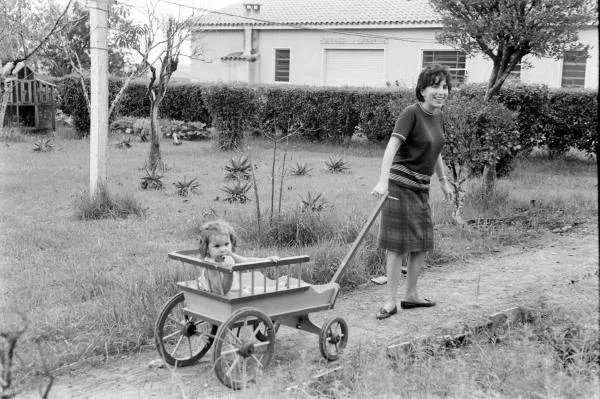
La Plata, Uruguay, 1964. Photograph by Leonard Mccombe for LIFE magazine. ©Time Inc.
Connections with the Past
RESCUED TWICE
“There’s a Yiddish concept called the ‘Di Goldene Keite,’ which talks about the historical link that ties each generation to the next. We are responsible for transmitting and preserving this heritage.” The archive that survived the Holocaust and a 2019 terrorist attack.
THE FLAVORS OF FAMILY FOLKLORE
“This master sauce could be perpetuated for generations—an irreplaceable family recipe. The DNA of meals past would be infused into each meal. You could literally eat what your grandmother ate,” Grace Hwang Lynch writes in this piece exploring genetics, food memories, and immigrant identity.
SEPARATE BUT EQUAL
In his new memoir, Aleksandar Hemon relates his family’s large encounters with history and their smaller everyday concerns in two separate narratives, packaged together in one book (just flip it over to read the next). One reviewer called it “a writer’s testament to the act of storytelling, the art of writing and the impulse, to paraphrase Joan Didion, to tell stories in order to live, to make sense, to survive.”
HISTORY REPEATS
“As leaders of organizations entrusted to tell the story of new Americans, we share a belief that our national identity is best understood and appreciated through the stories of yesterday’s immigrants whose lives have shaped our history.” Three guardians of history coauthor an op-ed on how America and the immigrant experience are intrinsically linked.
Writing and Relics
A SENSE OF AN ENDING
“The tricky thing about writing an ending for a memoir is that if you’re still alive to tell the story, it’s not really over yet.... So how do you end the story if you’re still living in its aftershocks?” Lilly Dancyger helps you write towards a resolution
UNEASY CONVERSATIONS
Why is it sometimes easier to talk about our life experiences with a stranger? Last week I wrote about how to get a reluctant storyteller to genuinely open up about his or her past.
SCRAPBOOKS, SHARED MEMORIES
“I think I should look at these albums on a regular basis as a necessary temperature check. They remind me how we only record what matters. Nary a page has a photo of an e-mail message or task list.”
PICTURES OF THE PAST
From the streets of Detroit to the shores of Southwest Florida and the farm fields of North Carolina, Family Pictures, USA, looks at family photo albums as an integral part of our social and cultural history. Premieres Monday August 12 on PBS (check local listings):
“MY DARLING MATEY”
Bruce Summers of Virginia–based Summoose Tales reflects on one of his earliest personal history collaborations, the story of a man and woman, half a world apart, and the barn that brought them together.
Recommended First-Person Stories
LIGHT THERAPY
“Before Tom died, when I pulled into the driveway, a glow from the den meant he was there in his favorite space... His warm hug welcomed me home. After his death, I could not bear arriving to a house in darkness,” Helen Collins Sitler writes in this touching flash-fiction piece.
OVER THE MOON
I simply adore the interplay in the back-and-forth between this couple, wed for 70 years, as they speak about how they met as kids and developed an undying love and affection for one another:
HISTORY, BIG AND SMALL
“What are some of the funny little connections you have to historic moments in the larger context?” Carol McLaren of Unique Life Stories in Arizona, wonders in this recounting of an impromptu dinner and story swap about the Apollo 11 moon landing.
...and a Few More Links
A roundup of writers on the topic of why we write memoir
“You’ve Told that Story 100 Times. Please Stop.”
Lucette Lagnado, whose memoirs epitomized “the art of reported memory,” dies.
A historian looks back at the legacy of slavery in her home state, incorporating personal history along the way.
Photographer captures the love of elderly couples who've been together for decades.
A wedding-day gift that will undoubtedly become the couple’s first family heirloom.
Short Takes

Life Story Links: July 15, 2019
Memoir suggestions to inspire your own autobiographical writing, business-building courses, and lots of first-person pieces that reveal the powers of story.
“We tend to be preoccupied by the present, with one eye cocked on the future. But history, after all, isn’t really about the past. Our history is about who we are right now and where, as a society, we’re headed (just as an obituary isn’t about death but about a life).”
—Sam Roberts

Noah Garland with his sons and some of their families. Southern Appalachian Project near Barbourville, Knox County, Kentucky, November 1940. Photographed by Marion Post Wolcott, courtesy U.S. Farm Security Administration.
Turn the Page
READING LIST
Memoir reading suggestions to inspire your own vignette-style life story writing, from Annie Dillard and Kelly Corrigan to Robert Fulghum and Sandra Cisneros.
BOOKS FOR THE AGES
“Books are a portal to our personal histories. Pick up a worn copy of a childhood favorite and you might be transported to the warmth of a parent’s arms or a beanbag chair in a first-grade classroom or a library in your hometown. Avid readers could build autobiographies around their favorite books...” With that, the team at the Washington Post has developed a fabulous list of what to read at every age, from one to 100.
MUST-READ MEMOIRS
The New York Times’s book critics select the 50 best memoirs of the past 50 years. Cool feature: Click the asterisks throughout the article to create your own list of must-read books. Do your favorites make the list?
Continuing Education
THE ART OF EDITING
Patricia Charpentier’s Orlando–based Writing Your Life hosted its first live webinar, The Art of Editing, on June 8. Catch a replay of the educational 90-minute webinar here.
RESCUING HISTORY
Personal historian Mary Voell's 16-week online course The Making of a Family Historian provides a framework and tools to organize and research family history before beginning your autobiographical writing.
True Stories Uniquely Told
TWO SISTERS, ONE MEMOIR
“Recently two sisters in their seventies asked if I could help them write a joint memoir,” Massachusetts–based personal historian Nancy West says. Though they lived in the same household, the sisters had substantively different childhood experiences, making the exploration of their shared past that much more fascinating.
PERSONALIZING IMPERSONAL RECORDS
Thor Ringler has run the My Life, My Story program at the the William S. Middleton Memorial Veterans Hospital in Madison, Wisconsin, since 2013. In that time the program has recorded life stories of more than 2,000 veterans—and placed the short biographies in each vet's' electronic medical record.
IMMIGRANT FORGER
“At almost the exact moment my family left Warsaw for the long trip across Europe to Antwerp and a ship to America, a second group started the trip as well, this one carrying forged visas and passports with the names of my family members,” Kenneth D. Ackerman writes in this investigation into the “the immigrant forger” Joseph Rubinsky.
THE ACHES AND PAINS OF MEMOIR
“The risk of nonfiction is that people are like ‘I know everything about you,’ and I’m like no, you just know this fun house mirrored projection of the people in my life through one lens, which is mine.” T Kira Madden, Roxanne Gay, and other memoirists on the dialogue around their writing.
THIS IS MY BRAVE
After chronicling her challenges of living with mental illness while raising two young children, and striking a chord with many people, Jennifer Marshall morphed her blog into a powerful nonprofit that uses storytelling as a tool for healing.
Time for Headphones
PODCAST, PERSPECTIVE
Believable is a podcast from Narratively “about how our stories define who we are.” Each episode “dives into a personal, eye-opening story where narratives conflict, and different perspectives about the truth collide.” In this episode, a woman’s struggle to corroborate her own life:
EXTENDING YOUR REACH
Listen to Lettice Stuart discuss incorporating public speaking into your personal history business marketing plan on the latest episode of Amy Woods Butlers’ The Life Story Coach podcast.
...and a Few More Links
Preserving your legacy of love before it’s too late
Focus on historical photography: the Daguerreotype
The blogger quietly preserving Maryland’s culinary history
A practicing psychologist on why we need memoirs
Short Takes

Life Story Links: June 25, 2019
The value of attaching stories to our stuff, ways to organize your memories around the artifacts of your life, and a moving eulogy honoring Gloria Vanderbilt.
“In writing, the big things in life are best illustrated by their small details. A recent widow struggling with the clasp of her charm bracelet for the first time since the death of her husband illustrates, illuminates and focuses in on grief. Go small and explode life’s large themes.”
—Marion Roach Smith

Boys just returned from hunting, Knox County, Kentucky, circa 1940. Photographed by Marion Post Wolcott, courtesy U.S. Farm Security Administration.
Lost & Found
MORE THAN STUFF
“If we want our family heirlooms and objects to have stories, then we must attach the story to them,” Kim Winslow writes. See how she does just that with a simple bench passed down from her husband’s mother.
FOUND PHOTOGRAPHS, MEMORIES GONE FERAL
Every photograph is “a marker, the living trace of a human who may otherwise survive only as a census entry, or not even that. We cannot discern their accompanying stories, and we can’t do anything for them.” The (missing) stories behind other people’s photos.
140,000 VHS TAPES
“This was not just a story about an archive, but a chance to use the archive to tell a story of the complicated person Marion [Roach] was,” filmmaker Matt Wolf says of his documentary Recorder: The Marion Stokes Project. I missed the screenings in NYC and Montclair, New Jersey, but hope to catch one soon.
After a Death
GRIEF VALLEY
“As much as I miss my dad (and I do miss him terribly) I miss the me that he knew, too. I grieve the loss of our shared story,” John Pavolovitz writes. When someone you love dies, you lose a part of yourself, too: “You lose the part of you that only they knew. You lose some of your story.”
GOODBYE TO AN ICON
Almost immediately after the news broke that Gloria Vanderbilt had passed away on June 17, tributes began pouring in on social media. Her son Anderson Cooper, with whom she wrote a revealing memoir, took to the air for this moving eulogy:
Ways In
TIMED WRITING EXERCISE
By limiting oneself in word count and time allotted for writing, undertaking any life story project becomes both more urgent and more relaxed. How to write a 300-word autobiographical vignette in 30 minutes.
CALL FOR SUBMISSIONS
Do you have a story about a time you were literally lost—maybe on a winding back road, in a sprawling city, or inside a cavernous building? Or maybe you were metaphorically lost, unsure of your life's direction, until that one moment or one person changed everything. Submit your writing to Hippocampus by Sept. 15, 2019, to be considered for their “Lost” themed issue.
OBJECT LESSONS
“Imagine telling your own story, your autobiography, around the artifacts of your life—your first trike, wagon and bicycle followed by the automobiles you owned…or other objects that are unique to your life”: Ideas for storytelling using objects as markers of time.
...and a Few More Links
He couldn’t talk about what he saw in WWII, so he painted it.
Memoir review: My Father Left Me Ireland
Check out the new website for Personal Historians Northeast Network.
Short Takes

Life Story Links: June 11, 2019
Storytelling in unexpected places, piecing together personal WWII histories, plus writing prompts, Scrivener notes, and curating our own legacies.
“I thought everything you wrote had to be about England; nobody ever told me you could write about growing up in Ireland.”
—Frank McCourt
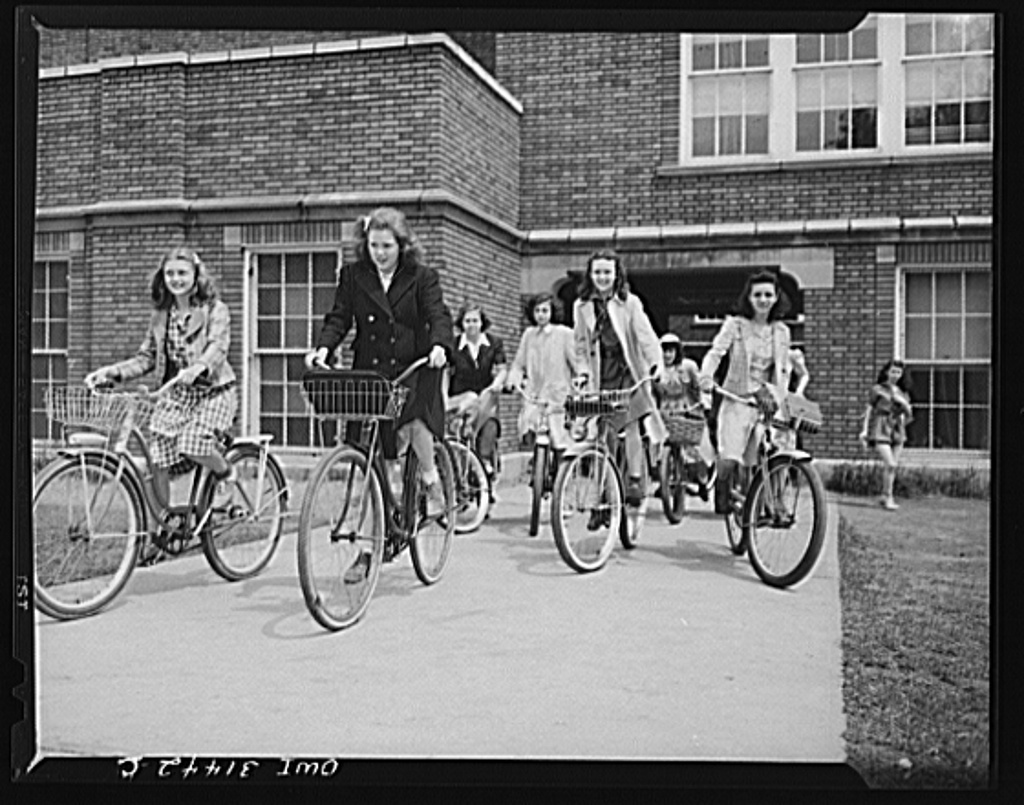
Schenectady, New York, June 1943. Photograph by Philip Bonn, courtesy Library of Congress Prints & Photographs Division.
What We Leave Behind
A MEANINGFUL LEGACY
“It’s easy to leave the house, the car, the money, the boxes of pictures,” Sarasota–based personal historian Curt Werner says. “But it’s much harder to leave pieces of yourself.”
MATTERS OF THE HEART
“I was looking for pictures that had the power to turn bitter memories into sweet. Images that said, ‘I love you more than anything.’ Images that whispered, ‘I can’t express how sorry I am to leave you.’” Mary Bergstrom curates her legacy while decorating a new home.
THE (DIGITAL) PIECES OF A LIFE
“If the only way to preserve her memories was to put together the pieces of her digital life, then we had to hack into her online accounts.” Historian Leslie Berlin recounts her desperation to break into her mother’s phone after she died.
Process of Discovery
A SCRIVENER WORKFLOW
Sarah White, whose First Person Productions is based in Madison, Wisconsin, describes her conversion from an occasional Scrivener user to a devotee who finds it “highly useful in finding the best structure for long-form writing projects.”
THE SELF-INTERVIEW
How interviewing yourself (follow-up questions and all!) can be a useful writing exercise for generating life story vignettes.
FILLING IN THE GAPS OF WWII VETERANS
“Those lauded as the Greatest Generation might just as easily be called the Quietest”—leaving family members to wish they had asked more, and to attempt to recreate their loved ones’ stories through a vast archive of war papers.
ONE FAMILY’S NUCLEAR HISTORY
“Never one to talk directly about his role as a pilot in the Second World War, my grandfather instead told my siblings and I scraps of his story that I would eventually stitch together into an incomplete whole,” Tyler Mills writes.
Storytelling in Unexpected Places
OFF THE CHARTS
“There is research that suggests when caregivers know their patients better, those patients have improved health outcomes.” See how personal storytelling is filling the gaps between patients and staff at VA hospitals.
DEPT. OF STORYTELLING
The city of Detroit has hired a Chief Storyteller. You heard that right—and with a team of storytellers on board, The Neighborhoods has become a platform that shares locals' stories and aims to change the traditional narrative surrounding the place they call home.
...and a Few More Links
Do you have (or need?) a writer’s will?
Some research suggests that events in our lives can affect the development of our children and perhaps even grandchildren.
Unique documentary series follows group of schoolchildren over six decades.
Have you listened to episodes from the new season of the StoryCorps podcast?
D-Day vet bonds with 9-year-old through the magic of music.
If you are interested in learning more about a family member who served in WWII, explore this Research a Veteran Guide.
New York State substitutes for the lost 1890 census
Short Takes