
Memories Matter
Featured blog Posts


READ THE LATEST POSTS
Life Story Links: October 4, 2022
Curated just for you: Recent stories on the craft of life writing, memories held in objects, legacy building, new memoir, and honoring loved ones after death.
“Clearly, the most joyous outcome of the life review process is that you really do treat your past as history, you appreciate your triumphs, and the misery becomes part of the context of your life, not the focus.”
—Linda Feldman
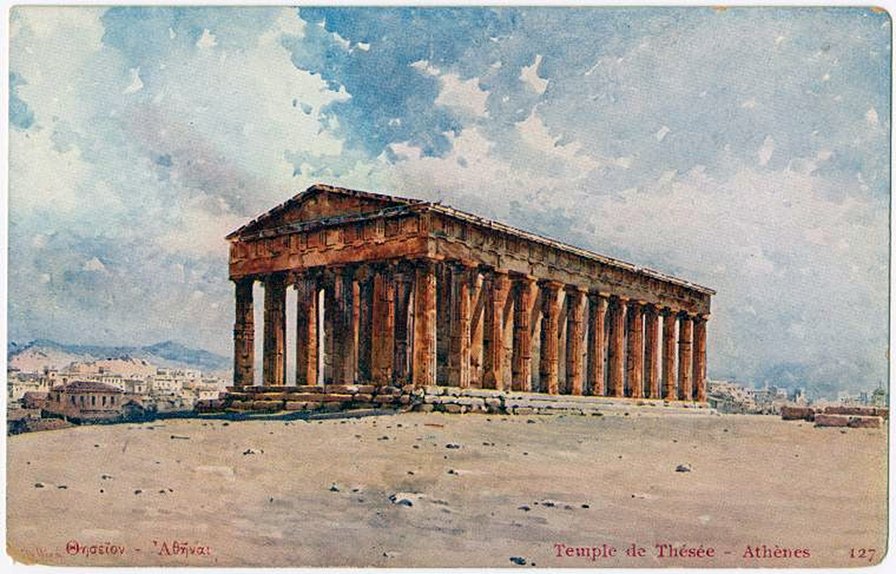
Vintage postcard depicting the “Temple de Thésée, Athènes,” courtesy of the Miriam and Ira D. Wallach Division of Art, Prints and Photographs: Picture Collection, The New York Public Library Digital Collections.
Aftermath
RELEASE
“Nowhere in the five boroughs was distant enough: If the subway could get me there, I might wake one night from an Ambien-induced sleep to find myself stabbing Mom repeatedly.” Rachel Cline’s naked essay in Dorothy Parker’s Ashes.
ABUELA’S STORIES
“When I’m writing, I close my eyes and my grandmother’s voice comes to me: ‘Each one of us is responsible for keeping history alive.’ ” Armando Lucas Correa’s grandmother’s stories about Cuba inspired him to write.
LOSS, GRIEF, LEGACY
While packing up the apartment of his late mother, Gloria Vanderbilt, journalist Anderson Cooper begins recording his experiences. In the resulting podcast, he explores how we find meaning in the things our loved ones leave behind, how we navigate grief, and how to live on after loss—with laughter, and with love. Here’s a preview:“
Words last: A kind of legacy
“AS LONG AS YOU READ US, WE’RE NOT DEAD”
As author Terry Pratchett’s dementia became prohibitive, his assistant’s role grew to amanuensis, to “keeper of the anecdotes,” and he finished the biographical book that Pratchett had begun, A Life With Footnotes.
“WOMAN WITHOUT SHAME”
“I wanted to understand my father, a man who served in the Second World War without understanding or speaking English. If you don’t write a story like that down, it’ll be like it never happened. He doesn’t have Ken Burns trying to tell his story.” Sandra Cisneros, who calls Studs Terkel her ‘literary ancestor,’ in conversation.
LETTING THE STORY MARINATE
“For [my new memoir], Beautiful Country, I spent three years (and one might say, most of my life) thinking about the book, researching through my diary and retracing my steps, and processing how I wanted to write it.”
The stuff of memories
SARTORIAL STORIES
“Most of the clothes I’ve saved in my closet cannot be recycled physically; they hang there as aide-mémoire to a life.” Julia Reed on the memories woven into well-worn clothes.
THE TRAPPER KEEPER GENERATION
“When I was interviewing people about their school supplies, I was really asking how they felt about themselves during their vulnerable adolescence.” An iconic binder elicits strong memories and visceral responses for these writers.
UNIVERSITY ARCHIVE
“Lucky for us, Hemingway was a pack rat. He saved everything from bullfight tickets and bar bills to a list of rejected story titles written on a piece of cardboard.” A new collection at Penn State provides insight into the author’s writing process and his personal life from childhood onward.
Crafting our stories
WRITE YOUR LIFE
Last week I shared an iterative life writing prompt that gets your pen moving and delivers a trove of future ideas for your memoir. Bonus: It’s a fun one!
“EVERYONE’S GOT A STORY IN THEM”
“Many of us regret not asking our parents and grandparents more about their lives while we had the chance, but I’ve yet to come across anyone who has regretted writing their story.” The Guardian reports on a boom in the personal history industry.
AN INTENTIONAL JOURNEY
“Writing about myself and reading what I wrote to strangers changed me. Or, did it reveal me?” Barbara McCarthy on how taking a guided autobiography course was a significant turning point in her life.
UNEXPECTED TEACHERS
“Those early lessons I got on craft—from likely and unlikely sources—have stayed with me through every essay, every editing job, every student manuscript, and through to writing my memoir.”
...and a few more links
Pieces of history: Urgent effort to preserve thousands of pairs of children’s shoes at Auschwitz
Solito is a personal story of immigration that sheds light on the universal.
A glimpse at early Cormac McCarthy interviews that were recently discovered.
Two new grief-tinged memoirs of male platonic love and loss.
Search for a Hebrew cookbook was “part of a lifetime of connecting with his roots through food.”
Short takes


Life Story Links: September 20, 2022
This week's roundup includes plenty of memoir writing—both first-person pieces and guidance—plus photo archive help and family history media recommendations.
“I believe that the urge to examine life lies at the heart of writing. Engaging in this kind of close examination is enormously difficult—but can be enormously rewarding.”
—Alan Gelb

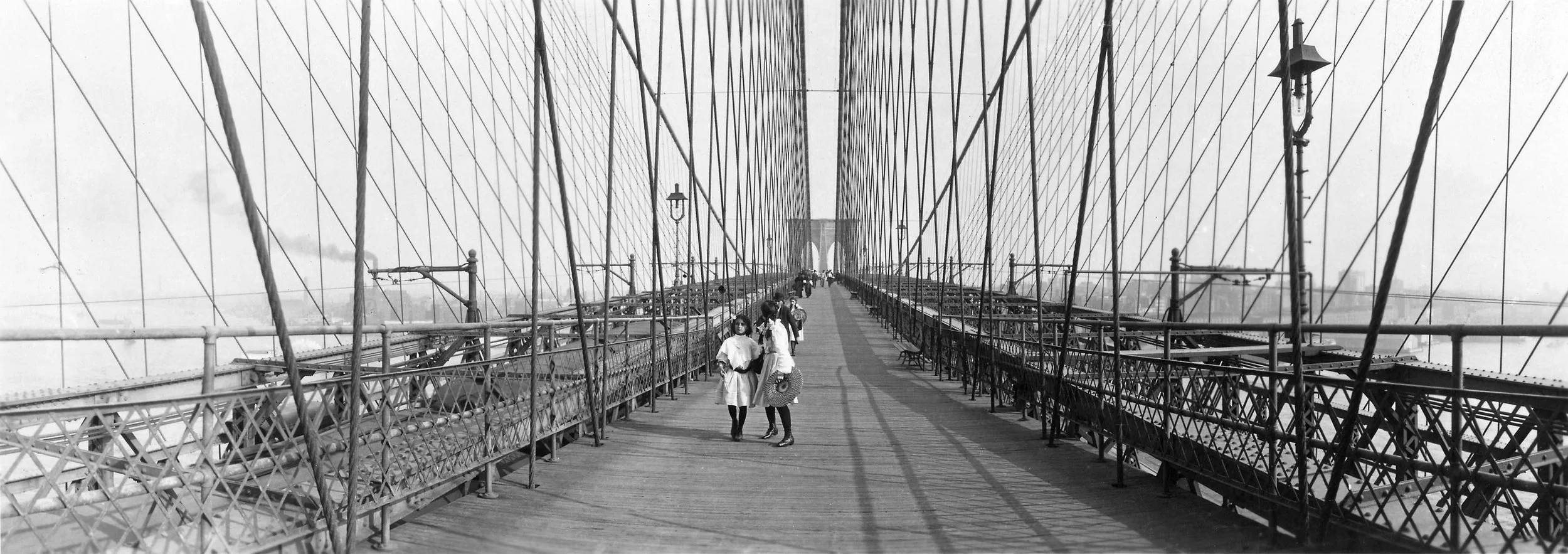
Vintage photo of three children in New York City taken some time between 1940-1979 by Morris Huberland, courtesy of the Miriam and Ira D. Wallach Division of Art, Prints and Photographs: Photography Collection, The New York Public Library.
Recording angels
LISTENING TO OUR PAST
In each episode of The Memory Generation, host Rachael Cerrotti converses thoughtfully with someone “about what it means to inherit memories and the power of passing stories from one generation to the next.”
A LIVING EULOGY
“‘Mom, we’re gonna do this differently,’ began my second son, Jason. ‘You know how there is always a eulogy at a funeral? A lot of great things are said. We don’t want to wait until you are dead for obvious reasons.’”
HER STORIES, HER HEIRLOOM
“I came to think of Stella as a modern-day Scheherazade who left me hanging, week to week, as she talked me through the story of her youth.” Michael Frank, author of a book that sits atop my to-be-read pile, One Hundred Saturdays, on the importance—and challenges—of oral history.
Writing our lives
SHIFTS, PAUSES, AND JUXTAPOSITIONS
“Narrative pacing addresses the overall speed of storytelling; emotional pacing addresses the impact of events and their associated emotions throughout the narrative.” Aggie Stewart shares lessons on writing a trauma memoir.
READING LIST
Last week I reviewed To Write the Past, a supportive companion for thoughtful memoirists that promises “to hearten and embolden those who pick it up to set their memories and musings on the page.”
“THROUGH THE LENS OF STORYTELLING”
“As you comb through your memories for storytelling fodder, lean into the uncomfortable and the outright embarrassing.” Artistic director of The Moth, Catherine Burns, is interviewed about what makes a good story.
AWAKENING THE EMERGING WRITER
Of the terrain she covers in her forthcoming book, You, The Story: A Writer’s Guide to Craft Through Memory, YA author Ruta Sepetys says: “It is more about the interior landscape. And through that we all have a story. A day is a story. A year is a story. A life is a story.”
ILLUMINATING HISTORY
“In life as it’s lived, there is no obvious plot; the arc of the past is visible only in hindsight. But in historical fiction, the aim is to capture a story, so fidelity to literal facts and timelines is not always the goal.” In the wake of Queen Elizabeth II’s death, an interesting look at the genre of historical fiction.
“BOY”
It doesn’t go without saying that a songwriter will be a talented memoir writer, but this essay, excerpted from his book Surrender: 40 Songs, One Story, shows Bono has earned his life story bona fides.
Managing your family archive
DROWNING IN A SEA OF PAPERS?
This three-step guide from Family Tree magazine promises to yield a “lean, well-curated family history collection” and includes a handy, printable checklist. to help determine which of your family papers to keep and which to toss.
PICTURE THIS
Albuquerque–based genealogist and photo organizer Hazel Thornton shares her take on the popular photo digitization app Photomyne, clearly demonstrating how knowing what scanning method to choose is all about knowing your end goals.
The big short
WORLDS AWAY
Sometimes all you need for a meaningful remembrance is two minutes, as evidenced by this slice-of-life narrative from sisters recalling growing up in their parents’ Hollywood laundry business:
SMALL BUT MIGHTY
The New York Times offers up a guide for their Tiny Memoir Contest (which runs until October 12, 2022), “How to Write a 100-Word Narrative”: “Step-by-step directions for telling a meaningful, interesting and short true story from your life.” Comment—and experiment—here.
A GAME OF STORIES
Storytelling nonprofit The Moth has added a card deck inspired by themes from their live storytelling shows and workshops—orchestrate your own story slam, or use “the story prompts to encourage lively conversation at your next dinner party or family gathering.”
Beyond family history
RECKONING WITH FAMILY HISTORY IN MEMOIR
“These books uniquely tackle the subject of ancestral legacy, leading readers into social and historical questions as one way of understanding the personal past.” Juliet Patterson suggests eight books that investigate family history with imagination.
STORIES OF HER ANCESTORS
What began as a chapter in Mali Bain’s master’s thesis ended up being a five-year journey to extensively research her own family history and connections to colonization in Canada. Now the British Columbia–based personal historian’s book is available in print or as an e-book.
CONNECTING PAST AND PRESENT
“Once again, [Ken] Burns and company have made history come to life — and reminded us that our life, right now, is indeed history in the making.” The U.S. and the Holocaust premiers September 18.
...and a few more links
The art of questioning: simple tips for conducting interviews from the Audio Transcription Center
Commentary by MTSU Professor Larry Burriss: Will your digital family photos be viewable 20 years from now?
“Change the way we listen”: a TEDTalk from Lifestorian Emma Fulenwider
Australia’s archivist on preserving the nation’s official memories
Short takes
Life Story Links: September 6, 2022
Your curated reading list: Kick off September with an array of stories about family history tools, memoir writing tips, and more storytelling inspiration.
“In writing the memoir I had a chance to try to encompass the whirling aspects of my flickering self, to unite my past and present selves, to express a fuller self than I could with my friends and family. Since, with each person we know, we are partial.”
—Sara Mansfield Taber
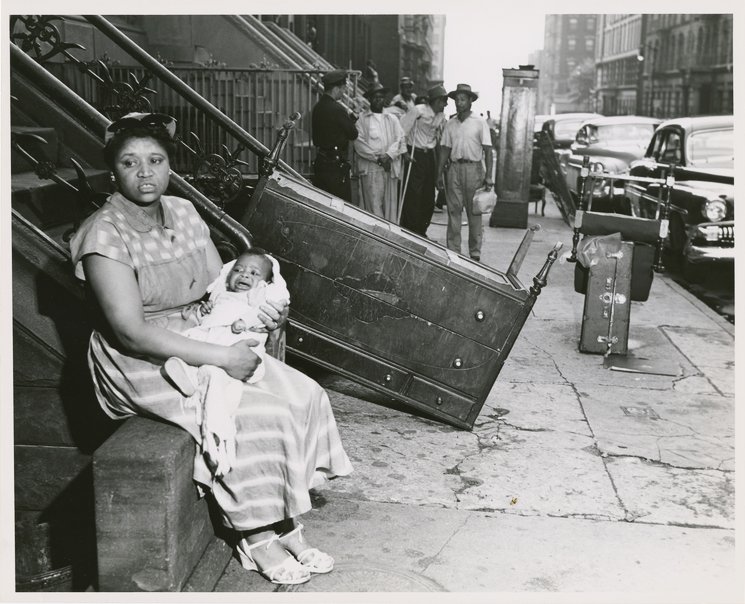
Vintage photo of a woman holding a baby outside of a building from which they had been evicted, Harlem, New York, 1954. Photograph courtesy of the Schomburg Center for Research in Black Culture, Photographs and Prints Division, The New York Public Library Digital Collections.
Family history tools
MAPPING A LIFE
“I started using her iPad to take her to the address of her childhood home in Huntington, Indiana…. Her memories spilled out about people, places, events,” Wisconsin–based personal historian Sarah White recalls in this piece about a newly available app called LifeMapping.
ESSENTIAL FAMILY HISTORY RESOURCE
In her review of Nearby History: Exploring the Past Around You, New Jersey–based genealogist Lorraine Arnold says the book’s progressive, actionable steps are conducive to eliminating that feeling of overwhelm when faced with a large family history project.
Our stories, our selves
ON BIOGRAPHY
“Even when a writer and her subject never meet, excavating a life can uncover hidden truths.” Emma Sarappo on what biography reveals—and how picking a subject can be “like picking a roommate.”
“THE BLESSING OF FEELING LIKE I KNOW WHO I AM”
Upon TV producer David Milch’s diagnosis of Alzheimers in 2019, his family members began “recording his personal remembrances and reaching out to others for stories that could stimulate [his] memories, all in the service of creating Life’s Work,” Milch’s memoir, out this month.
DON’T WAIT, MEMOIRIST!
Last week I wrote about why now is the right time to begin writing about your life—and why you should ignore the naysayers.
MOURNING A GUARDIAN OF MEMORY
“This is my responsibility and my privilege—to be custodian of their memories, to be able to pass their stories on to the next generation.” Phillip Maisel, pioneer of video testimonies at the Melbourne Holocaust Museum, has died.
‘YOU’RE BREAKING MY HEART’
“I am queer, a lesbian, or something, born in 1977 to a young, midwestern mom on welfare and no father. In 2002, I wore orange, my grandma’s favorite color, and brushed her hair as morphine quieted the cancer. The years leading up to this, I tried to come out. But I didn’t.” Read this short, powerful autobiographical essay by Chrys Tobey.
‘I NEVER LOOKED UP’
Holocaust survivor Tova Friedman’s new memoir reflects on life as The Daughter of Auschwitz. Listen in as she speaks with NPR’s Scott Simon (9-minute audio):
...and a few more links
“You’ve Probably Seen Yourself in Your Memories”: Remembering your life in the third person
Asking the right questions to develop primary source literacy
How to list divorced and remarried family members on a family tree chart
A posthumous memoir of actor Michael K. Williams is published.
“This is not a tennis story. This is a human story”—check out McEnroe documentary
Book review: To Fall in Love, Drink This: A Wine Writer’s Memoir
Short takes

Life Story Links: August 23, 2022
This week's curated reading list for family historians, memoirists, and memory-keepers of all kinds includes great learning opportunities and a film recommendation.
“Talk to those older generations. We sometimes dismiss that—we say, ‘Oh Grandma, she’s told the same story twenty times.’ Give her a prompt. Say ‘Grandma, what do you remember about shoes?’ … then the narration starts happening. Then the stories start happening.”
—Lisa Elzey
Vintage photo of a Regal movie theater in Southside, Chicago, April 1941. Photograph by Russell Lee, originally for the Office of War Information, courtesy of The Library of Congress Prints and Photographs Division Digital Collection.
In memorium
AN NBA LEGEND’S OBIT
““If he was out dining and got approached by someone asking for his signature, [Bill] Russell’s usual response was to instead ask the person to join him at the table to have a conversation about life. The autograph-seekers almost always declined. Oh, the stories they missed.” Here, photos help tell his personal history.
SHOOTING FOR THE STARS
StoryCorps mourns the passing of Nichelle Nichols, a Black American actress best known for her portrayal of Nyota Uhura in Star Trek. “Her career showed people of all races a future of possibility. Among those she inspired was a young Ronald E. McNair, who became the second Black person to enter space”:
EXPLORER OF AMERICA’S PAST
David McCullough, who said he thought of writing history as an art form, died last week. His obituary tells some of his story. “People often ask me if I’m working on a book,” he once said. “That’s not how I feel. I feel like I work in a book.”
The art—and value—of legacy-making
LET’S FLIP THE SCRIPT
It’s a common but wrong assumption that we’ve all heard as personal historians—that telling one's own stories is “narcissistic” or “self-centered.” Recently I wrote about why, in reality, it is an act of generosity.
THE CRAFT OF PERSONAL STORYTELLING
Storytelling School with The Moth is in session with a story about family and home told by Mariam Bazeed: Watch her story performance, then learn about the principles of ‘show don't tell’ and setting up ‘the world as it was.’
PRO BOOK DESIGN TIPS
Family photos aren’t the only images worth including in your family history or personal life story book. Consider including maps, family tree charts, and beautifully styled shots of your family heirlooms to elevate your book.
First person reads worth your time
WEAVING HIS PARENTS’ LIVES INTO A NARRATIVE
“My parents’ American addresses are a history of friendships and acquaintances: a spare room in someone’s attic, visits to family friends whom they’d heard about but never actually met, a summer job in a small town a few hours away, an opportunity in an unfamiliar, emerging field.”
TRUE STORY, WELL TOLD
“‘We are hearty buggers!’ Jane yelled to the sky.” Wisconsin–based personal historian Sarah White writes this slice-of-life reminiscence about weathering a storm—with tumblers of wine and the comfort of fire—with a friend.
“DON’T DESCRIBE IT, REMEMBER IT”
“A lovely day… I wish it meant something to me, but I am here for the wrong reason, and Venice is like a travel film through which I sit, impatient, waiting for something important.” Mavis Gallant was a dedicated diarist for 55 years; here, take a peek into passages from 1954.
WRITING THE TRUTH
“None of us, other than time-travelers and clairvoyants, can know the future, and most of us have difficulty making sense of our past.” William Dameron on why he wrote his memoir despite discouragement.
In conversation: asking, listening, making space
THE MEMORY GENERATION
“I’m really interested through The Memory Generation of saying, how do we make the past more present in our present? And in what ways might we do that in a shared experience with others?” oral historian Stephen D. Smith says of the podcast he co-created with Rachael Cerrotti. Find the latest episode here.
PERSONAL HISTORY Q&A
“Experienced personal historians combine the expertise of active listening, archiving of artifacts, genealogy, narrative writing, ghost-writing, book production, self-publishing, and more,” reads the introduction to this fun and informative interview with Connecticut–based professional Sarah Merrill.
TIME IS A COMMODITY
“I thought I had time to sit across a table from him and share stories. We had only ever skimmed the surface. We never had really captured his narrative the way I wanted to know it. Yet here we were, boarding an airplane to meet him at his final resting place instead.”
THE MAGIC OF STORY
“I can’t wait to foist this book on everyone,” Anne Lamott says of Between the Listening and the Telling: How Stories Can Save Us, a new book by Mark Yaconelli. Listen in as they discuss the transformational nature of stories:
Tokens of memory
WAYS OF LOOKING AT FAMILY
Maud Newton, author of Ancestor Troubles, says that many old family photos fed into her “obsession with ancestors.” Here she discusses visual inspirations for her memoir, including two specific old photos and a will bequeathing 12 slaves.
STEPPING INSIDE A PHOTOGRAPH
Musician Kevin Morby talks about how photography inspired his latest album, how he found ways to immerse himself in the memories of family, friends, and famous people, and how those memories became songs.
PUBLIC ACCESS
“The name of the game for any archive is to preserve and make available.” How the St. Louis Kaplan Feldman Holocaust Museum is making every Holocaust story, memory, and artifact in their collection sharable.
Looking back, finding meaning
A PORTAL BETWEEN TWO ERAS
Three Minutes: A Lengthening explores “the ways in which moving images can bring the past into the present, connecting us with human beings whose time on Earth was brutally cut short.” Watch the trailer:
THE MEMORY METAVERSE
“While studies suggest that traditional reminiscence therapy can significantly improve the well-being of older people, V.R. has the potential to make it more immersive and impactful. By putting on a headset, Mr. Faulkner could walk along the virtual Cliffs of Moher in western Ireland, just as he’d done with his wife several years earlier.”
“A MAP FOR THE MISSING”
“How do we fill spaces when there are deaths in our lives, or when we have people in our lives who don’t give us the answers, or who don’t give us the clarity that we’re looking for?” An interview with Belinda Huijuan Tang, who turned to fiction to help fill in the gaps in her own family history.
...and a few more links
Tuesday, September 6, 2022: “Researchers Remember” virtual book talk
A librarian collects all the things left in books, from love letters to old photos
Tips for parents on how to use family photos to encourage kids’ storytelling
Beth Kephart launches new series of Zoom webinars, “The Story of You”
Family business origin stories and the power of nostalgia
Short takes

Life Story Links: July 26, 2022
Personal historian Dawn Roode reads a lot about memoir, personal history, and memory-keeping—and she curates it every other week for family historians like you.
“If you don’t see that your story matters, chances are no one else will either. So even though it isn’t always easy, it’s important for you to find the strength to share your truth. Because the world needs to hear it.”
—Michelle Obama
What we pass down
FAMILY PICTURES
“Most photographs you come across have stories—you just don’t know them. I actually believe that the more that’s known about what a photograph shows, the more likely it is to survive.” Michael Johnston on the secret art of the family photo.
A MATRIARCH’S LEGACY
“This is the story of an heirloom that isn’t.” How a portrait of Jill Lepore’s Italian grandmother was lost and found and passed on to a new generation.
Memoir explorations
STUCK, FOR NOW
Last week I wrote about how I have been struggling with my own memoir writing, plus a three-step plan for a reset so I—and others struggling with project overwhelm—can get back on track.
QUESTIONS OF DESCENT
When the results of a DNA test change the family tree: Two new memoirs probe stories of uprooted identities, family origins, and uncovered secrets.
A KALEIDOSCOPE INTO A LIFE
“Memoir is always, it seems to me, a mix of power and vulnerability. You have the power of claiming the story and of claiming your interpretation of every part of it. And yet you are exposing.” Memoirist Margo Jefferson in conversation about the form.
WEAVING STORIES, UNRAVELING LEGACIES
When researching her ancestry in Colombia proves futile, Ingrid Rojas Contreras “relies instead on oral history, ultimately embracing its messy, unverifiable and disjointed nature” to write her memoir.
NARRATIVE MEDICINE
“These young doctors needed to tell their stories to one another. To process the significance of what they were doing every day, to reckon with the feelings that they were coming home with every night.” Jerome Groopman on Jay Wellons’s memoir, All That Moves Us, and why storytelling is part of being a good doctor.
Preserving pieces of the past
FADING FROM LIVING MEMORY
“You don’t need to tell people the entire narrative of the Holocaust, you just need the story of one victim to pass on with love.” Now is a “critical time” in preserving memories of Shoah’s survivors.
SECRET INGREDIENTS: PARIKA AND MEMORIES
“It’s the sweet burden of my origins and the everlasting loving memories of my grandmothers” that inspire Tibor Rosenstein, a Holocaust survivor, to preserve the legacy of Jewish-Hungarian cuisine in Budapest.
THE FUTURE OF THE PAST
An array of new artificial intelligence tools and memory-preservation programs “might change the way we collect history”—are they creepy or cool?
...and a few more links
Language, Please is “a living resource for all journalists and storytellers seeking to thoughtfully cover evolving social, cultural and identity related issues.”
A rare look at postwar Korea emerges from long-lost photos
Guidelines for writers giving feedback on work that discusses personal trauma
“Who Do You Think You Are?” has returned with new episodes on NBC.
Short Takes
Life Story Links: July 12, 2022
Personal historian Dawn Roode’s curated roundup of stories of interest to family historians includes first-person reads plus tips for life story preservation.
“Take nourishment from good stories…. Because it’s the art of the storyteller that reminds us that there is not just one single answer to human dilemmas.”
—Gianrico Carofiglio
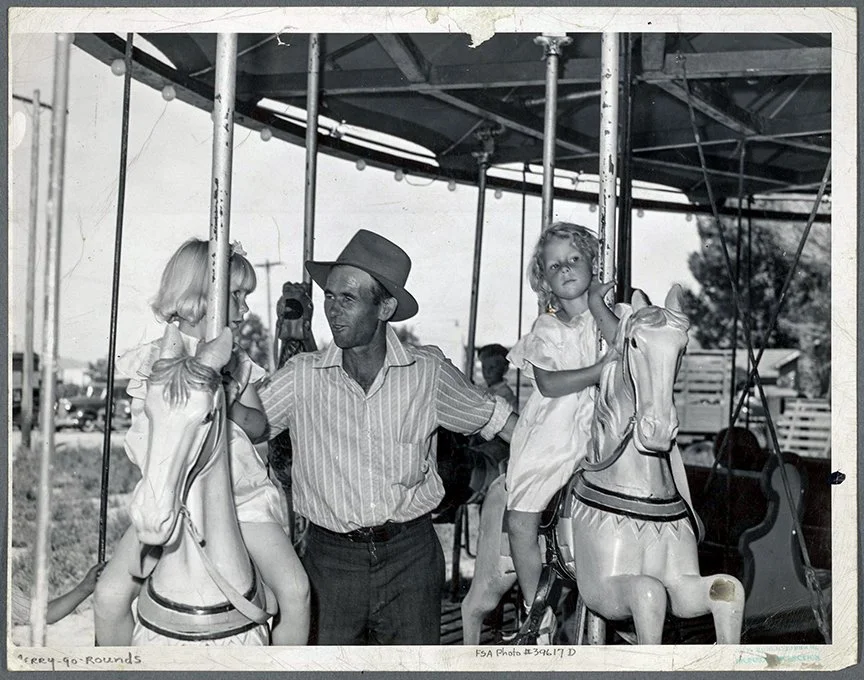
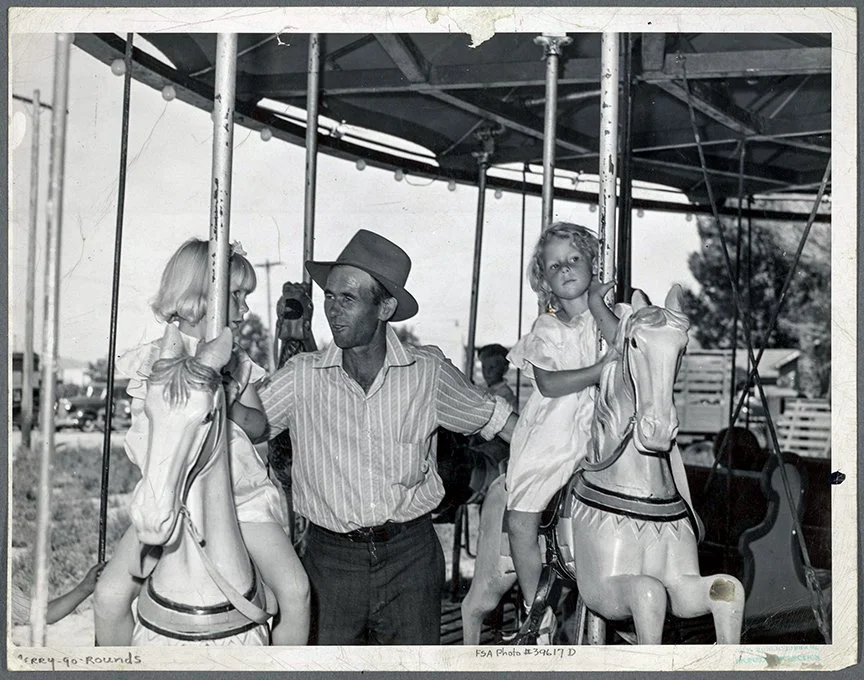
Vintage photo of a father with his daughters on a merry-go-round during the Fourth of July carnival in Vale, Oregon, in 1941. Photograph by Russell Lee for the Farm Security Administration, courtesy of The Miriam and Ira D. Wallach Division of Art, Prints and Photographs: Photography Collection, The New York Public Library Digital Collections.
Pro tips for diy family history preservation
AND NOW, VISUAL STORYTELLING
When the writing of a memoir is finished (hurray!), the next step is gathering photographs to include in your printed book. Last week I shared my top tips for picking the best images to include in your life story book.
FOOD STORIES, GATHERED
“One of the best ideas for a family reunion is to make a family cookbook that documents all the family recipes (and recipe rivalries!) in one place.” Here, top tips on how to tackle your family cookbook together.
WRITING YOUR TRUTH
“When you include people besides you in your story (how can you not?), someone will not like what you write about them. They will call you liar. I don’t think that should stop you.” Vanessa Mártir on the complicated nature of writing about family.
Stories through stuff
FAMILY HISTORY CONNECTIONS
“I don’t see my great-grandfather’s imprisonment as a stain on the family, like ink spilled on the fabric of the baby quilt his daughter would go on to make for me,” writes Megan St. Marie, an Amherst, Massachusetts–based personal historian in this piece inspired by a family heirloom.
HUMAN STORIES TOLD THROUGH OBJECTS
“A young child’s diary, a favorite doll, a cookbook of family recipes, a report card, a Torah scroll smuggled to the United States, and a silver spoon found among the rubble at a concentration camp”—these are among the 750 artifacts accompanied by first-person testimonies in an expansive new permanent exhibition at the Museum of Jewish Heritage in Lower Manhattan.
HIS ABSTRACT ART IS HIS LEGACY
A neighbor was curious about George Westren and learned more about him after his death. Now he is helping cement the artist’s legacy by preserving—and showing—his artwork.
Recommended first person reads
AN UNEXPECTED ENCOUNTER
The few vintage images are as alluring as the words in this recounting of the downtown icon Michele Saunders’ “accidental getaway” with a literary legend James Baldwin.
“IT’S ALL ABOUT YEARNING”
“You look back through a reverse crystal ball at all the hoopla, sometimes not even believing you were there in that time... No time to sleep. No idea that you would someday grow old and no longer be the headline.” Susie Kaufman on nostalgia.
Stories and history
WRITERS PROJECT
Bookmark this collection to visit again and again: Contemporary writers reflect on 25 voices from the archives of The Atlantic—adding valuable context and linking to original stories that reflect a belief that ideas can change the world.
(JUST?) FAMILY LORE
“For a short time, our family’s history is the world’s history.” Chicago–based personal historian Nora Kerr on looking beyond the surface meaning of your family legends.
...and a few more links
Short takes

Life Story Links: June 28, 2022
Personal historian Dawn Roode curates a bi-weekly roundup of stories of interest to memory-keepers and memoirists. This week includes a rich array of pieces.
“To be courageous enough to look at the truth of our lives through our remembered experience is to be changed by it.”
—Padma Lakshmi
Vintage postcard, issued between 1898–1931, portraying a moonlit Palm Beach in Florida. Image courtesy of the The Miriam and Ira D. Wallach Division of Art, Prints, and Photographs: Photography Collection, The New York Public Library Digital Collections.
Honoring our fathers
“HE REMAINS UNSEEN”
“My father represents the salt of the earth, blue-collar brother…the kind of Black man whose life doesn’t make the headlines for either shooting hoops or shooting bullets, for breaking out or breaking in,” the Rev. Raphael Warnock writes in this essay adapted from his new memoir.
OH CAPTAIN, MY CAPTAIN
“This boat, where my dad had taught me some of life’s biggest lessons, was my responsibility now. Preserving his boat felt like preserving him.” A love letter from writer Elizabeth Bernstein to her dad, a year after his passing.
A FEW FATHER’S DAY CLASSICS
In honor of Father’s Day, The New Yorker editor David Remnick identified a few of his favorite Personal History columns about dads, and I assure you they’re worth a read: Check out these classics by Michael Chabon, Zadie Smith, and David Sedaris.
A FATHER, CLOAKED IN SECRETS
”My father worked for the ——. His legacy is invisible. He could never talk about his life.” In 16 graphic panels, Sophia Glock reveals a poignant story about writing a memoir and worrying what her father would think.
Black family history—success despite challenges
HEIRLOOMS CARRY FAMILY HISTORY
“For many Black families, kinship bonds have endured through an enlarged definition of the term heirloom that includes everyday items that have come to serve as carriers of tradition and vessels of inheritance.” Explore this photo gallery that weaves “stories of kinship and care across generations.”
LOST AND FOUND
Her family’s story, starting with an African girl on a slave ship, was almost lost—but an old photo with a handwritten annotation on the back led the writer to an elderly aunt who had history to share. Now, “as it is in every generation, it’s up to young people today to preserve what our ancestors and elders gathered.”
MORE THAN A PAPER TRAIL
Handwritten notes in an heirloom Bible became the centerpiece of a search for one Black family’s personal history. This video traces the family’s quest for history—and how the Bible ended up at the Smithsonian.
Miscellaneous storytelling and legacy
MOMENTS OF RECOGNITION
“It’s easy to take for granted the power of sharing a story, especially a personal one.” Readers of a columnist’s personal recollection react with stories of their own lost loved ones, a nod to the power of connection.
COMMUNICATING LOVE
“Knowing that we’re all going to die, what do we want our lives to be about? How do we want to be remembered? And how do we spend whatever time we have left?” A father defines his legacy, recording his stories before he died.
TASTY READS
Last week I wrote about three food memoirs I love that aren’t written by chefs—but that are inspiring examples of using food memories to weave a personal narrative that resonates.
COMPELLING CONVERSATION
San Francisco–based video biographer April Bell talks about vulnerability, the power of story to heal and to affect change, and creating the space to listen in this podcast episode:
...and a few more links
A new neural filter from Adobe Photoshop aims to make photo restoration easier.
Tips for how to preserve memorabilia from a professional organizer
How sculptor Anne Truitt made an art of documenting her life
Lexington, Kentucky, to digitize historical records of enslaved people of the 1700s
Short takes
Life Story Links: June 14, 2022
This week's curated reading list for memory-keepers and family historians includes lots on saving and sharing a family legacy—and why it matters—plus, new memoir.
“He who digs into the past would know that barely a millionth of a second divides the past from the future..”
—Eugenio Montale
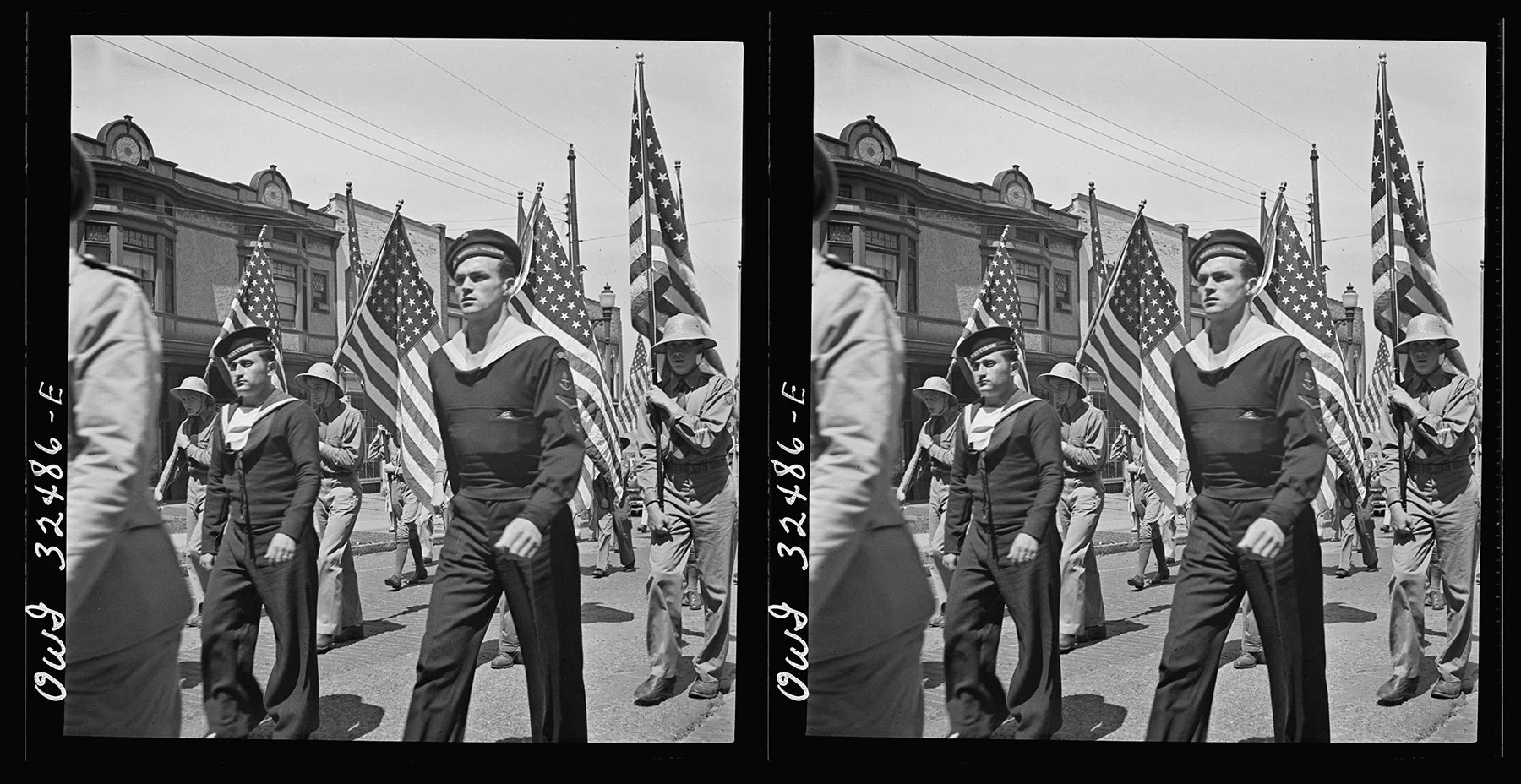
United Nations Heroes marching in the Flag Day parade during United Nations week in Oswego, New York, in June 1943. Photographed by Marjory Collins for the Office of War Information; courtesy of the Library of Congress Prints and Photographs Division Digital Collection.
What we capture
AVOIDABLE REGRETS
Nearly half of Americans in a recent poll regret not recording or documenting conversations with loved ones who have died; and many people (44 percent) wish others would record or document conversations they have to preserve memories.
SO, LET’S START RECORDING!
In light of the above-mentioned poll, I put together some resources to make it easier for anyone to record conversations and gather stories from loved ones—so we can begin to see an upward trend in legacy preservation…and avoid regrets.
Our families, our stories
YOUR STORY, OR THEIRS?
“How do I write about social workers who harmed a child I love? How do I write about her mother? What do I owe them on the page?” Sarah Sentilles wrestles with the notion of writing about others in memoir.
MEMORIES OF THE POGROMS
“Grandma eventually came to learn that the only way I would fall asleep was by listening to the soft sound of her voice as she described in detail her early childhood in Russia.” A childhood interest in stories becomes a lifelong search for legacy—then, a book.
LEARNING TO LIVE WITH GHOSTS
The Korean tradition of jesa, or memorializing ancestors, helped Joseph Han understand that “our loved ones’ memories and histories suffuse our world and continue to shape our lives long after they have departed.”
BEDTIME STORY
“I am speaking to an audience of one, who happens to be the book’s foremost subject, my 74-year-old father, Joe, or Daddy as Northern Irish naming conventions insist he must be addressed.” Séamas O'Reilly on reading his memoir to his father.
WHAT CONTRADICTION?
On the latest episode of Schmaltzy, a podcast that explores the intersection of Jewish identity and food, Hillary Reinsberg shares stories about the distinctly German-Jewish way of doing things at her grandparents’ New York home:
The power of narrative exploration
CONFESSIONAL WRITING, REFINED
“Melissa Febos’s recent essay collection shows us not only how to capture the difficult, intimate details of our lives in writing, but why we should.” Adam Dalva on the necessity of creative confession.
THE STORY WE WRITE FOR OURSELF
“Will you take some chapters from your family’s history and courageously edit and fit them into the vision for your life’s purpose? Will you dare to write completely new chapters based on your true passions and desires?”
NARRATIVE MEDICINE IN PRACTICE
Read an excerpt from The Healing Power of Storytelling: Using Personal Narrative to Navigate Illness, Trauma, and Loss by Annie Brewster with Rachel Zimmerman, and listen to an interview with the author and Here & Now host Robin Young:
SLAVERY’S LEGACY: ORAL HISTORY PROJECT
“This kind of oral history project has never been done before. Many will, for the first time, hear the voices and memories of people whose personal experiences are still inextricably tied to racial slavery, the transatlantic slave trade, and colonialism.”
...and a few more links
New memoir of Chris Blackwell, founder of Island Records, reflects on helping bring the music of Bob Marley, U2 and Grace Jones to the world.
A one-page “Empathy Interview Guide” from Stanford d.School
On the True Stories Well Told blog: “10 Minutes to Death” by Marg Sumner
Short takes