
Memories Matter
Featured blog Posts


READ THE LATEST POSTS

Life Story Links: April 9, 2024
This week’s curated roundup for family historians and memory-keepers gathers three weeks’ worth of top-notch writing on the subjects, so bookmark it and dive in.
“A memoir is about ‘the art of memory,’ and part of the art is in the curation.”
—Maggie Smith
Vintage poster produced between 1936 and 1938 by the Work Projects Administration; image courtesy of the Library of Congress Prints and Photographs Division, Digital Collection. The posters were designed to publicize exhibits, community activities, theatrical productions, and health and educational programs in seventeen states and the District of Columbia between 1936 to 1943.
Documenting our lives for posterity
IN THE WAKE OF A GRANDFATHER’S DEMENTIA
“The crippling fear of letting memories pass me by has caused me to over-compensate by over-documenting my life, as if clinging desperately to souvenirs in a futile attempt to escape the cruel bounds of time will stop me from forgetting.”
AN EPISTOLARY FRIENDSHIP
I don’t know anything about the American poets Elizabeth Bishop and Marianne Moore, but I delighted in reading descriptions of their decades–long correspondence in this excerpt from A Chance Meeting: American Encounters by Rachel Cohen.
PORTRAITS OF A NEW REALITY
“They’ve been telling their own story really, I’ve just been holding a camera,” Polly Braden says of the women forced to flee Ukraine in the face of war who she has been photographing for the past two years. “They are safeguarding the next generation of Ukraine.”
WRITING RITUALS
“I always wondered if she knew someone was watching, if there was a tiny performative aspect to the ritual, or if she was just so caught up in her work that she didn’t care that she had illuminated her sacred space.” Mia Manzulli on living next door to Joyce Carol Oates.
Recent memoir writing of note
STIRRING HER LANGUAGE SPIRIT
“I was set apart, and in that distance was a kind of longing, failure, and hollowness. A need for my own stories,” Jamie Figeuroa writes on reclaiming the Spanish language in this excerpt from her new memoir, Mother Island: A Daughter Claims Puerto Rico.
MLK BIOGRAPHER HONORED
The New-York Historical Society awarded its American History Prize to biographer Jonathan Eig, whose King: A Life “presents the civil rights leader as a brilliant, flawed 20th-century ‘founding father.’”
MORE THAN A TRAVEL MEMOIR
“Through writing, I really was able to realize how many experiences I never digested,” Helen Sula says. “I like learning and unlocking a part of myself I wasn’t in touch with before.”
Ways we remember
STORIES BEHIND THE STUFF
Boxes of old letters, family photos, and mementos from a generation ago can feel like a burden if they’re passed down without context. Recently on the blog I shared ideas for what to do with them.
IN DEFENSE OF IMMIGRANT FOOD MEMORIES
“What if all I have of my grandmother now is a gold bracelet in a box that she reluctantly gave me on the eve of my wedding (and often asked for it back) and a handful of memories, some of which I can viscerally taste when I prepare and eat the same food she made for me as a child.”
JOURNALS, NOTEBOOKS & DIARIES
How a diary is distinct from autofiction is one of the many questions Jhumpa Lahiri explored in a recent course she taught at Barnard about the diary as an art form. Here, she shares the reading assignments from that syllabus.
RootsTech recaps and reflections
FAMILY HISTORY FINDS YOU’LL LOVE
The last week of February I traveled to Salt Lake City for my first in-person RootsTech experience. While I’ve got a notebook filled with family history tips and tricks I’ll inevitably share later, for now I have rounded up my four favorite finds from the genealogy conference.
THE RISE OF ARTIFICIAL INTELLIGENCE
If RootsTech 2024 made one thing abundantly clear, it’s that AI’s impact on the family history industry looms large. One recent player: Passagist has announced “an AI-powered biographer designed to document personal life stories.”
LIMITATIONS OF LIFE STORY TECH
‘Digital life story’ tools are invaluable for memory care residents, but “no matter how well-meaning, some tools simply were not user-friendly or they included audiovisual components that overwhelmed some older adults rather than enhance their experience,” a recent study finds.
HOW LOVE AND CONNECTION FUEL MEANING
“While AI and other technology have come a long way, this personal story shows why people recording people in person is irreplaceable,” Rhonda Lauritzen says in the introduction to this two-and-half-minute video on the undeniable power of connection and its place in family history storytelling:
...and a few more links
Two new digital service companies—Inalife and Folklory—help preserve legacies.
Debbie Brodsky on the key to telling your organization’s story on video
Bryan Cranston to narrate Doris Kearns Goodwin’s An Unfinished Love Story
Review of Chicago museum show, “A Little Truth—Fact and Fiction in Family Photography”
Anthony M. Kennedy to reflect on his life and his years on the Supreme Court in two-volume memoir
Short takes


Life Story Links: March 19, 2024
Book design, interview techniques, and life writing tips are a few of the topics in this week’s curated roundup for family history fans and memory-keepers.
“We are our memory, we are that chimerical museum of shifting shapes, that pile of broken mirrors.”
—Jorge Luis Borges
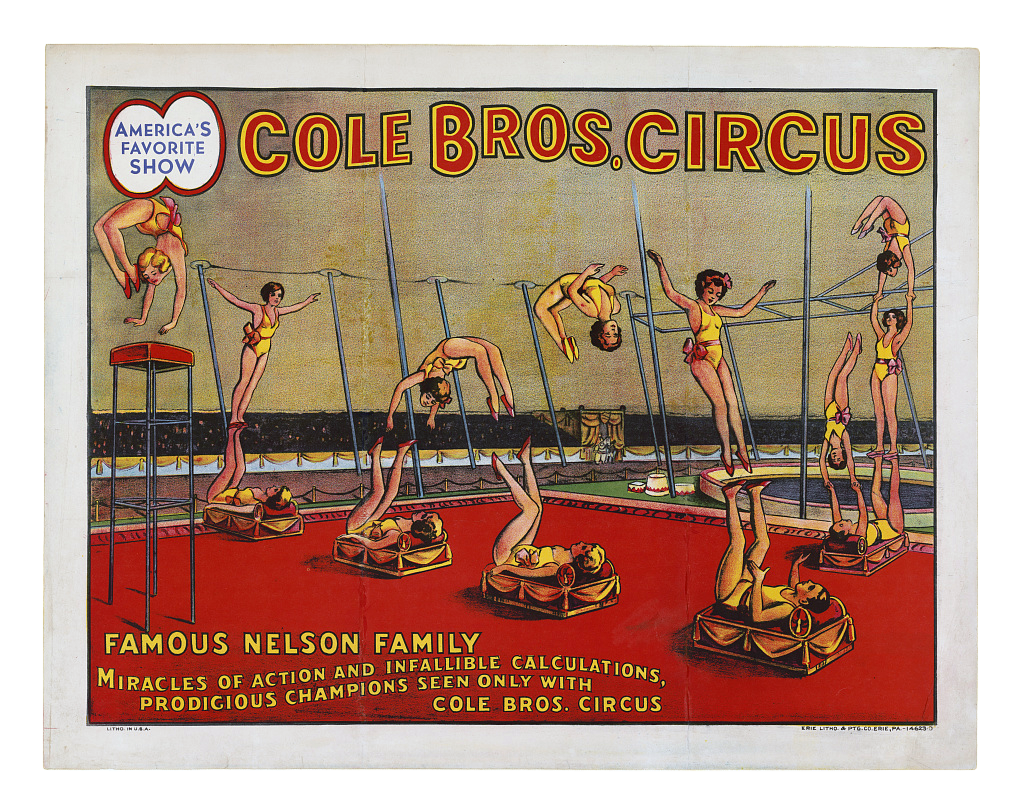
Vintage poster with original artwork by Richard Halls produced circa 1936 by the Work Projects Administration; image courtesy of the Library of Congress Prints and Photographs Division, Digital Collection. The posters were designed to publicize exhibits, community activities, theatrical productions, and health and educational programs in seventeen states and the District of Columbia between 1936 to 1943.
Notes and tips on craft
WHO’S ASKING THE QUESTIONS NOW?
One of media’s most talented and prolific interviewers, David Marchese, has the tables turned as he becomes the interview subject: This piece is worth a read both for the nuggets of interviewing wisdom as well as the embedded links to some great interviews from the NYT archives.
GONE BUT NOT FORGOTTEN
Amidst my current work on four distinct custom tribute books honoring clients’ family members who have passed away, I also shared some tips for anyone who may want to create a memorial book on their own.
WHEN DESIGN IS BAKED INTO CONTENT
“Manuscripts live in authors’ minds and on their computers, but books exist out in the world. No one wants to read your Word doc no matter how beautifully written it is.” A book designer on “the intricacies of literary interior design.”
Family history now
‘GNARLY BRANCHES’ OF HER FAMILY TREE
“My only provenance stems from obsessively researching genealogy. I’m sure the tendency came from growing up with eleven living, blood-related grandparents (parents of parents of parents of parents).” Chris Hardy Thornton on using history as a method of filling in the gaps from what’s passed down.
THE JEWISH HOLIDAY TABLE
“As I asked her about each [dish], I learned of her family’s journey from Spain to the Ottoman Empire to Africa and finally to Israel. I knew immediately that I wanted to preserve her treasure trove of recipes and stories.”
CONNECTION, IDENTITY, WELL-BEING
“The documented effects of genealogical discoveries on emotional well-being, resilience, sense of identity and belonging are taking on new relevance in America’s mental health crisis.” Family history as a public health intervention?
FAMILY HISTORY CONFERENCE HIGHLIGHTS
While I haven’t yet had time to write about my participation at RootsTech 2024 (stay tuned!), Robyn Fivush, Ph.D., director of the Family Narratives Lab at Emory University, shared this thoughtful reflection, including how physical archives can help embody family stories, creating profound connections.
More memoir miscellany
MEMOIR MEMORANDUM
“Our favorites of the year are audacious and moving—they’ll demand your attention, entertain you, and show you new vistas.” The best memoirs of 2024, so far, according to Esquire.
ACCIDENTAL ICON
“Clothes have always helped me tell stories about myself; who I am, who I wish to be. They could be chapters of a memoir.” Read an excerpt from Lyn Slater’s memoir, How to Be Old.
WORTH A THROWBACK READ
In 1996, The New Yorker helped launch Frank McCourt’s writing career by publishing an excerpt from Angela’s Ashes, his (eventual) Pulitzer–winning bestseller. Three years later, the magazine featured the next chapter of McCourt’s story: In honor of St. Patrick’s Day weekend, check out this piece from the archives, “New in Town,” about the first days after his migration to America (I highly recommend clicking “play” to listen to McCourt read the excerpt!).
Short takes

Life Story Links: March 5, 2024
From first person stories on loss to craft essays on life writing and memoir, this week’s roundup is a another thoughtful collection for personal historians.
“I want to explore what it means not to know, not to ever be able to know. Life is dead ends, conflict, dissonance, gaps, great clouds of confusion and misunderstanding. Do I tell a story, or do I tell you how it feels to have only the remains of one? The first is certainly a better story. But the second is better history. Which do I really want?.”
—Sallie Tisdale
Vintage poster with original artwork by Frank S. Nicholson produced some time between 1941-1943 by the Work Projects Administration; image courtesy of the Library of Congress Prints and Photographs Division, Digital Collection. The posters were designed to publicize exhibits, community activities, theatrical productions, and health and educational programs in seventeen states and the District of Columbia between 1936 to 1943.
Reflecting on loss
FIRST PERSON, BEAUTIFULLY
“What if I had told my father a real goodbye? What if I had told everyone the truth? What if I had let people see me cry?” Emily Ziff Griffin writes about missing her father’s funeral as a teenager.
WHAT THEY SAID
“My father remained in a coma after I arrived in Patna. And then he died. If my father had been conscious, I suspect he would have a lot to tell me.” Amitava Kumar on finding solace in the words of others.
Memoir miscellany
THE THOUGHT THAT COUNTS?
Last week I wrote about why I turned down an offer from a mainstream publisher to write a memory prompts journal—and what I recommend instead of a fill-in-the-blank life story book.
ON VOICE AND VISION
“I have spent a lot of time imagining my daughter someday reading the book, and a lot of emotional energy reminding myself that I can’t know what she will think of it.” Leslie Jamison, author of the new memoir Splinters, in conversation about her writing process.
Personal stories make history
NO BOX TO CHECK
“I never check the ‘white’ box. I understand why it exists, historically and logistically, but I have never identified as a white person.” Will the 2030 census reflect those who fall under a Middle Eastern and North African category differently?
LIVING HERITAGE
For decades, UNESCO has been on a quest to save the world’s intangible heritage—everything from Ukrainian borscht to Jamaican reggae. But what does it mean to “safeguard” living culture?
VOICES, STORIES, HISTORY
“One mother recalls a lost son’s parting words at Auschwitz: ‘Mom, you’ll see, we’ll meet again.’” U.S. Holocaust Memorial Museum gets trove of intimate stories of loss and survival.
...and a few more links
Short takes

Life Story Links: February 20, 2024
This week’s curated roundup has recent stories of interest to memoirists, family history lovers, life story writers, and memory-keepers of all kinds.
“Perhaps what I know about beautiful endings is that the arc of a story is only what we choose to focus the lens on—in real life the narrative goes on and on and on. An ending looks beautiful because we choose that specific moment to end it.”
—Jami Nakamura Lin
Vintage poster with original artwork by Edward T. Grigware produced some time between 1941-1943 by the Work Projects Administration; image courtesy of the Library of Congress Prints and Photographs Division, Digital Collection. The posters were designed to publicize exhibits, community activities, theatrical productions, and health and educational programs in seventeen states and the District of Columbia between 1936 to 1943.
Writing our lives: Process, support, and ideas
CAN YOU EXHAUST INEXHAUSTABLE MEMORY?
“In an epigraph of her own invention, [Annie Ernaux] says: ‘If I don’t write things down, they haven’t been carried to completion, they have only been lived.’” A thoughtful exploration of “writing toward the unachievable whole.”
LOOKING FOR A CRAFT BOOK?
I distilled years’ worth of reading to share what I consider to be the five essential books about life writing—find mini reviews, recommendations of which book is right for whom, and author credentials.
THE MESS IS THE STORY
“So many ‘transformation’ stories fail to connect because they skip from chaos to revelation with barely a pause to acknowledge the blood, sweat and tears involved in the in-between.” Here, ideas for untangling the mess of life to make some narrative sense of it.
THE CHOICES SHE MADE
“Had the story evolved over the years and become part of the narrative of his life, one he genuinely believed was true because he had told it so many times?” How does one choose a narrative strategy? One biographer takes us through her process.
CALL FOR PITCHES
The folks at Narratively have announced a new collaboration with Creative Nonfiction magazine, and to kick off their partnership, they are seeking pitches for (paid) contributions to a special series, “The Art of Narrative Storytelling.”
GET READY FOR A MONTH OF WRITING!
The writing prompts in this video from Family Tree magazine are not your average family history questions—rather, they’re ideas for creatively bringing your genealogy to narrative life:
TRUTH AND SELF-DISCOVERY
Patricia Pihl, a personal historian based in western New York, looks at two memoirs that base their themes on discovering a formative belief is untrue, and how this shaped the authors’ identities.
Let’s hear from the writers themselves
A JOYCEAN LEGACY
“In April 2014, a lawyer friend asked if I might consider ghostwriting a memoir for a client he described as a difficult man.” Several candidates had already been rejected. “The client’s reputation didn’t so much precede him as ride out like a pillaging army.”
THE AGES HE’S BEEN
“I am happy that I’ve survived mentally and physically. I can look back at the obstacles I had to deal with and confront during my life and appreciate that I overcame them.” Alfred J. Lakritz, author of the memoir Adieu, responds to the Oldster questionnaire.
A MEMOIR OF TRANSITION
When Lucy Sante “began to transition in her 60s, she saw a lifetime of experiences in a new light.” A look at how her new memoir, I Heard Her Call My Name, is both more elliptical and more honest than her first, The Factory of Facts, written as Luc Sante.
...and a few more links
Navigating digital legacy: understanding and setting up legacy contacts
Leonardo’s ‘magic upscaler’ is an AI tool that can boost the resolution of any photo.
What if uncovering the stories of your ancestral past began the path toward ancestral healing?
109-year-old survivor of 1921 Tulsa Race Massacre writes memoir.
Short takes

Life Story Links: February 6, 2024
This week’s curated roundup is overflowing with informative podcasts, videos, and stories about memoir, life writing, legacy film, and how memory works.
“Sometimes it feels like each poem I write is a draft of The Poem I’m trying to write—that singular, golden, impossibly definitive poem. The one poem I’m trying to live. Or the one life I’m trying to write.”
—Maggie Smith
Vintage poster with original artwork by Richard Halls produced by the Work Projects Administration circa 1938; image courtesy of the Library of Congress Prints and Photographs Division, Digital Collection. The posters were designed to publicize exhibits, community activities, theatrical productions, and health and educational programs in seventeen states and the District of Columbia between 1936 to 1943.
On writing our lives
LIFE STORY INNOVATIONS & PRACTICE
The current issue of The International Journal of Reminiscence and Life Review contains a number of interesting papers, including a special section, “The Healing Power of Storytelling.” Two worth checking out:
KICKSTARTING YOUR WRITING LIFE
“It was such a loss for me, to know that I had the opportunity to ask questions and I didn’t,” Patricia Charpentier says in this video introduction to writing about your life.
IT’S ALL MATERIAL
“In a certain sense it goes to the heart of who we are as writers: why she is a novelist and I a memoirist. Now that I find interesting.” Vivian Gornick on Lore Segal.
CRAFTING A LOVING TRIBUTE
After a prospective client asked if I had a series of memory prompts specifically geared to help him write about his wife, I crafted these questions to help anyone honor their partner and tell the story of their relationship.
TOP GHOSTS DISH
Joel Stein sat down with six of the top ghostwriters in the celebrity memoir business to learn “about the curious craft of ghostwriting and the types of personalities drawn to help famous people tell their life stories.”
In search of the past
MISSING PERSONS
“The most representative thing about my family was not the small farm, the nightly saying of the Rosary, or the close community of neighbours … but the fact that most of its members lived elsewhere.” On a grandmother’s secrets and a search for broader truths.
ADOPTION, ACCESS, AND IDENTITY
“Late at night, in my childhood room, questions haunted me: Where did I come from? Why was I adopted? Who was my original family?” This writer says she could have gone to prison for what she did to find her birth parents.
TASTES OF THE PAST
Many “cultures live in the diaspora, in cracks and crevices of oral histories, of old folded scraps of paper, of recipes. I’ve found that food has the best clues.” Historians on bringing “dead recipes” back to life.
LOST STORIES
“I mean, you go to any antique shop and you are going to find family photographs… It’s amazing the stuff that families don’t want.” How once meaningful keepsakes end up in estate sales.
“AN INTRICATE MOSAIC”
“Holding a handwritten letter from a grandparent, reading their words, and feeling the texture of the paper can be a profoundly emotional experience. Personal archives bring the past into the present.” Margot Note on preserving history and memory in archives.
IDENTITIES BUILT ON SHIFTING SAND
“Our memories form the bedrock of who we are. Those recollections, in turn, are built on one very simple assumption: This happened. But things are not quite so simple.” A leading memory researcher explains how to make precious moments last.
For your listening pleasure
INSIGHTS FROM A TOP MEMOIRIST
In this wide-ranging discussion, award-winning author Dani Shapiro discusses striving towards the universal in memoir, writing a book without an outline, and how she had to slow down the rush of storytelling in her bestselling memoir Inheritance because she was living the tale as she was writing it:
A COUNTRY BOY AT HEART
Fans of Finding Your Roots will recognize Henry Louis Gates Jr.’s smarts and sense of humor, but I am willing to bet you haven’t heard his storytelling skills shine like they do in this interview with Dax Shepard:
LEGACY IN THE FACE OF DEATH
On this episode of Inside Photo Organizing podcast, professional photo manager Sharon Wunder talks about how her cancer diagnosis shifted her thinking about the idea of legacy, and about how she approaches preserving memories that are not accompanied by photos; I recommend starting at the 7:13 mark:
PROMPTING POWERFUL STORYTELLING
“This is not about ego, about being big and great, but rather, about being of service, and of understanding your place in the larger story. Trained interviewers draw people out of their shells and get people talking in story,” Jamie Yuenger, founder of StoryKeep, says in this video, which is part of a larger series called Legacy Lens:
...and a few more links
What does it take for a writer to achieve sentiment without sentimentality?
New demographic report sheds light on exactly how many Jewish Holocaust survivors are still living.
King Charles’s biographer on the moment Charles learned he was King.
Landscapes of Resistance trailer and review: “an enigmatic meditation on a life marked by Auschwitz”
Personal histories: a “trend of publishing them for a wider audience is catching on in India”
Short takes






Life Story Links: January 23, 2024
In this week’s curated roundup: how to have a legacy mindset, how documenting our lives does (or does not) help us remember, and ways to honor lost loved ones.
“I started to believe that writing is humanity distilled into ink.”
—Diana Chao
Vintage poster with original artwork by Anthony Velonis produced by the Work Projects Administration circa 1939; image courtesy of the Library of Congress Prints and Photographs Division, Digital Collection. The posters were designed to publicize exhibits, community activities, theatrical productions, and health and educational programs in seventeen states and the District of Columbia between 1936 to 1943.
On preservation, life stories, and legacy
OVERSHARERS ANONYMOUS
“Writing is how I understand life,” bestselling memoirist Dolly Alderton, author of Everything I know About Love, says. And yet, she swears she’ll never write another book about herself.
CAN OUR ARCHIVES HELP US REMEMBER BETTER?
“But how exactly does documenting our lives impact how we live and remember them?” Listen in to a robust conversation about the gaps in how we record things and how we remember them, from The Atlantic:
HOW WILL YOU BE REMEMBERED?
“When we think in terms of legacy, we’re really trying to use our imagination to think far beyond our own individual existence.” Katherine Kam on how to adopt a legacy mindset.
FAMILY SECRETS, REVEALED
Recent advice from the NYT Ethicist columnist—about the burden of newly discovered genealogy information from a DNA test—is being hotly debated in the comments (more than 500 to date). Dig in for some fascinating back-and-forth.
Remembering those who have gone
KEEPING MEMORIES ALIVE
This young Irish entrepreneur uses gravestone plaques with QR codes to help families celebrate the memory of their lost loved ones (even pets).
GENEROSITY IN GRIEF
A single short conversation with one of my clients revealed a few truths that I have witnessed over and over again during my years creating books to memorialize our lost loved ones.
“MEMORY’S COMPOUND OF EMBELLISHMENT AND REALITY”
Robert Glück’s About Ed—which draws on the subject’s notes, audio clips, diaries, and dream journals—“is a literary monument that harnesses memoir’s emotional honesty while indulging fiction’s stylistic latitude,” writes a reviewer.
Short takes

Life Story Links: January 9, 2024
Our first curated roundup of 2024 is overflowing with recent stories of interest to life story and memoir writers, family history lovers, and memory-keepers.
“We are all virtuoso novelists…[who] try to make all of our material cohere into a single good story. And that story is our autobiography. The chief fictional character at the centre of that autobiography is one’s self.”
―Daniel Dennett
Vintage postcard celebrating the new year (“Bonne Année”) courtesy The Miriam and Ira D. Wallach Division of Art, Prints, and Photographs: Picture Collection, The New York Public Library Digital Collections.
Spaces, stuff, and story
IMAGINED IMAGES
“For Maria Mavropoulou, growing up without a family archive interrupted her sense of belonging, leaving her with the haunting sensation that something was always missing. Rather than accept this lack, she turned to AI to fill in the gaps.”
“DECORATING IS AUTOBIOGRAPHY”
“How do you memorialize the people you loved and lost? Object by object, the CNN anchor is finding out,” reads the intro to this peek inside Anderson Cooper’s home—and how he decides what to keep and, by extension, what to remember.
PACK YOUR MEMORIES
“Reminding people that sentimental belongings—whether a photograph, a figurine, or an item of clothing—matter too could be a small stride toward helping them recover emotionally after a disaster.” Why we should think about adding a meaningful supplement to our disaster kit.
THE DETRITUS OF DAILY DOINGS
“As the blank dates of a new year accrue the granular minutia of our day-to-day stuff, week after week, month after month, the datebook morphs into a retrospective collage that’s as messy as life itself.” A writer on the stories held within her decades’ worth of personal datebooks.
Memoir behind-the-scenes
WHEN SOMEONE ELSE’S STORY RESONATES
“When I write, I’m carrying so much care inside of me. I’m not writing to feel more alone, I’m writing to connect further to all the people who have loved me.”
REVISIONS AND REFLECTIONS
The September 11 tragedy was a major inspiration for Catherine Underhill Fitzpatrick’s memoir. When beta readers and her editor asked her to go deeper into how that time impacted her life, she listened.
A WOMEN’S HISTORY
Emma Southon says her book A Rome of One’s Own “is a history of individuals, because, to quote Svetlana Alexievich, ‘this miniature expanse: one person, the individual. It’s where everything really happens.’”
JOURNEY OF SELF-DISCOVERY
“The most compelling stories involve a teller amid discovery. Discovery of self. Discovery of new ideas. Discovery of community.” This lesson from The Moth Storytelling School focuses on how discovery plays a role in crafting a story.
Finding yourself in a family history
WHOSE SCRIPT ARE YOU IN?
From movies to novels to our own family history, “as we access the character in that story, we access ourselves in our own stories.” From Psychology Today, thoughts on the healing power of storytelling.
A QUESTION OF LEGACY
“Some of my ancestors had money, and some held awful beliefs. I set out to investigate what I once stood to inherit,” David Owen writes in this piece exploring varied stories from his extensive family history.
FROM WRITER TO CURATOR
“My interest in my grandmother's story has always been about being curious how our own stories change as life unfolds. This moment in history could not be a better example of that,” Rachael Cerrotti said about adapting her book, We Share the Same Sky, for an exhibit currently on view at the Florida Holocaust Museum.
...and a few more links
A look at Liz Cheney’s memoir, which skyrocketed to the top of the bestseller list upon release.
Former Boston Herald reporter to write the life of Marvelous Marvin Hagler
Invite your loved ones into your family history research at your next get-together.
“Mandela: The Official Exhibition” chronicles the leader’s personal journey with unseen items.
Short takes

Life Story Links: December 12, 2023
Personal historian Dawn Roode’s biweekly curated roundup includes stories of interest to memoir writers and readers, family history fans, and life story lovers.
“It’s significant that whenever we think about people saving letters, we think of them tied up with a ribbon.”
—Brittany Snow & Jasper Guest, September Letters: Finding Strength and Connection in Sharing Our Stories
Vintage poster promoting winter tourism in New York, with original illustration by Jack Rivolta, produced by the Work Projects Administration; image courtesy of the Library of Congress Prints and Photographs Division, Digital Collection. The posters were designed to publicize exhibits, community activities, theatrical productions, and health and educational programs in seventeen states and the District of Columbia between 1936 to 1943.
Memories, memoir and unique histories
“HOW DOES IT WORK?”
After launching an annual subscription of Write Your Life memory prompts, I got some questions about how the program works—so I compiled a list of answers.
WHAT IT MEANS TO BE A PERSON
“The beauty of memoir is its resistance to confinement: We contain multitudes, so our methods of introspection must, too. This year’s best memoirs perfectly showcase such variety.”
ETHICS, CONSENT, AND TELLING FAMILY STORIES
When weaving first person narrative into a reported piece, award-winning journalist Jennifer Senior says to “take nothing for granted and fact-check your own memory. We are really unreliable narrators.... You want to tape record conversations with your mother, for instance, and rely heavily on archival material when there is material.”
USING SKELETAL REMAINS TO TELL STORIES
“Archaeologists from the University of Cambridge have compiled a series of ‘bone biographies’ that shed new light on residents of medieval Cambridge. The project’s website, called After the Plague, chronicles the lives of 16 ordinary individuals who lived between the 11th and 15th centuries.”
OUR STORIES CHANGE IN THE RETELLING
“The way I talk about an event to my mother is not the same as how I talk about it to a friend, for example. Writing this book was a little frightening, in that it felt like now this would be the definitive version,” memoirist Jami Nakamura Lin says in an interview.
Short takes