
Memories Matter
Featured blog Posts

READ THE LATEST POSTS

The spirit of scrapbooking, elevated
While scrapbooking & personal history share a goal of preserving family memories, key differences include the approach to storytelling and the finished products.
When I was a kid I kept a scrapbook. It was filled with headlines either written in bubble letters or cut out from magazines to accompany photos and mementos of my school achievements, family milestones, and vacations. It was a labor of love, and even from the age of about seven I was conscious of actively creating something tangible to honor my experiences and soon-to-be memories.
These days the practice of scrapbooking has gone high-tech, with ready-to-download digital templates and easy-to-use book-making software. It’s big business. But the underlying motivation is still the same.
“Our mission is all about celebrating the vibrant and colorful threads of life...be it the joy of a wedding or a beautifully lucid moment with a parent or spouse suffering dementia,” says John Falle, owner of scrapbooking behemoth Creative Memories. “All are worth sharing, remembering, cherishing. What we do matters. A lot!”
Scrapbookers are often the de facto family historians in their circle. They are concerned with preserving memories, and ensuring that memories accompany photographs.
Occasionally, when I briefly introduce myself to new people who ask what I do, they jump to the conclusion that what I do is create scrapbooks for people. In a sense, yes…but in most ways, no.

A page from my mother’s amateur yet heartfelt scrapbook, including her school report cards from the 1950s.
How are personal history books different from scrapbooks?
Ah, let me count the ways…
Immediate vs. Reflective
Scrapbooking is often done on a regular basis, be it weekly or monthly, yielding a continuous flow of memories, generally chronological. Even when memories are shared thematically, they are usually done so in real time, not looking back from a distance.
Personal history is usually undertaken in a reflective way, an individual looking back on the currents of their life from a vantage point of age and experience. A personal historian such as myself helps discover the narrative threads that weave the story together, revealing meaning and layers of depth.
DIY vs. Bespoke
Scrapbooking is a DIY endeavor. Although people often engage in scrapbooking communally (whether through clubs or within a family or group of friends), the memories flow from one person’s mind onto the page.
Personal history is usually done in conjunction with a professional storyteller. We may call ourselves personal historians, personal biographers, editors, ghostwriters, or memoir coaches. No matter the name, though, we have in common the goal of helping clients dive deeper into their memories. Through one-on-one interviews and guided reminiscence, we empower individuals to tap into their experiences and illuminate their journeys.
Finished Products
With the advent of digital scrapbooking, the design and output of scrapbooks has become more and more sophisticated. Scrapbooks tend to be dominated not only by photographs but the inclusion of ephemera such as menus, place cards, and tickets, bits and baubles that add texture and a sense of nostalgia to the bearer’s memories. They are often output on home printers or saved to a digital scrapbook that continues to evolve.
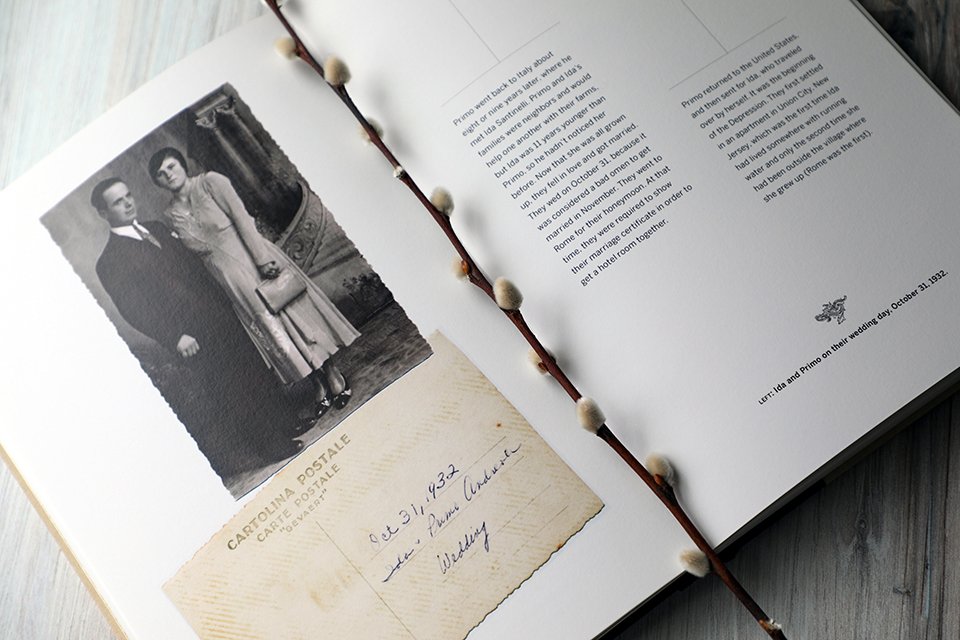
While mementos of the same kind may be included in personal history books, they are design elements that help set a tone for a particular time period or life experience, and do not typically dominate a layout. Heirloom books created by personal biographers (also referred to as family history books, personal memoirs or personal histories, and life story books) are most often designed akin to a narrative book, with a table of contents, foot lines and folios, and the like, and are traditionally printed and bound.

Images and reproductions of mementos are used as design elements in personal history books, just as they are in scrapbooks, but the focus is on refined storytelling, and the final product is a professionally bound book designed to stand the test of time.
How are personal history books similar to scrapbooks?
The journey is as important as the end product. Story sharing can be healing or cathartic; it can help us identify patterns and change our life narrative even as we are living it. It is a gift to be heard, as well as to bear witness to another’s life stories.
Memories and family stories are valued enough to preserve for the next generation. Both a scrapbooker and a family biographer can undoubtedly envision their children (and maybe their children’s children) sitting on a couch flipping through the pages of a book, listening to an elder share their stories and create family lore.
If you enjoy scrapbooking, does that mean personal history is (or is not) a good idea for you?
If you are a scrapbooker, we share a nostalgic soul and genuine respect for the past. And, if you are a scrapbooker, you have already taken steps to preserve your memories (congrats!).
You are a scrapbooker who has a need for a personal historian if:
You want to capture stories of another family member besides yourself, and you don’t have time or inclination to interview that family member and help them curate their photographs.
You want to use your years’ worth of scrapbooks as memory prompts for telling a more cohesive story and preserving it professionally.
Does this describe you? Consider reaching out to me to see how we might be able to work together to take your scrapbook(s) to the next level, for you or for a loved one.

Are my memories of my mother gone?
As the tenth anniversary of losing my mom approaches, I have been caught up in thoughts of the past—but where are those vivid memories that once flooded me?

Me and my mom in the front yard of our Putnam Lake, New York, home, June 1971
Lately I have been having a recurring dream. It’s not a good dream, and it haunts me throughout my days. Have I lost all memories of my mother?, I wonder. I awake not knowing, searching, afraid. Of course I haven’t lost them all…but my fears are real, grounded in my reality that I have no one in my life to talk to regularly—deeply—about this most special person in my life.
Usually I share advice-driven stories on this blog. I decided, instead, to share some recent writing I did about my mom, and my experience of grief, here. Why? Because I think personal stories connect us. Because I think the grieving process, while unique to each of us, is also universal in many ways.
And because too often I hear the words, “What stories do I have to tell that matter?”
And while everyone—truly, everyone—has stories to tell, sometimes it’s the stories we can’t tell that may resonate; the ones we have to search for, feel rather than see, that come forth. Just because I am not relating specific details of memories of my mother in this passage, it was worthwhile for me to write—cathartic, yes, but helpful too on my path to remembering yet more, and honoring my experience as it is being lived, right now.
Soon I will share a post about ways to access and trigger our memories in an effort to write meaningful memoir. But for now, as the tenth anniversary of my mother’s death approaches, I offer up this most personal (and brief) piece as an example of what may result when we focus on our experience of, well, not remembering.
Losing Her, Again
It is not reconstructed memory or exaggerated legacy to say that there are no superlatives great enough to convey my love for my mother. She was my role model, best friend, hero, and champion. My daily phone call. My witness.
Lately, I can’t remember her.
I want movie reels.
I want to see my mom lunging toward me for a hug, leaning back into a belly laugh that could go on for minutes. Pulling groceries out of the trunk of her brown Mazda, closing her eyes as I drive across a bridge. Smelling daisies in the kitchen, back-to-school shopping at Petrie’s five-and-ten. Playing kickball in the front yard in Brewster, making quiche in my galley kitchen in Brooklyn. I want to see Lillian Roode, here. Somewhere.
If my memories are silent films, that’s okay. Hearing her voice would bring me to tears, joyful tears; but seeing her in motion—well, maybe I could touch her, if I just reached far enough.
After she passed away I was feverish with intent.
I wrote her eulogy over the course of a fews hours in the middle of the night, between sessions breastfeeding my three-month-old son, in a nondescript motel room lit only by the glow of my laptop. I was hungry for stories of her—stories I had not yet heard that would shine a light on her soul, stories I had heard so many times they had become lore. The new kept her alive, the old brought comfort amidst the knowledge that she was, indeed, not alive.
At her wake, I listened to all that friends and families offered up, though I heard very little; I was present that day in body, not spirit.
Months later I would surrender to my insomnia and reach for the ornate journal I never wrote in for fear my musings would not live up to the grandeur of the leather-bound book, and I would write and write and write, hardly pausing for breath: bulleted lists in barely legible handwriting enumerating every single little memory I had of her. I wanted them all. When I would pause to think and memories did not wash over me immediately, I felt unworthy. Of my grief, of my happiness, of her belief in me.
Some nights I wrote the same memories I had scratched out the previous evening. No matter; I was desperate to not forget. My neat, deliberate script turned into sprawl as I raced to recover my dreams, convinced as I was that they held secrets of her in the beyond, glimpses of the memories I couldn’t access on demand.
Where did they go, my memories?
I have no one in my life who shares my familial grief, no one who knew my mother for the length of time that I have and who misses her the way I do. No one in my life with whom to reminisce, swap stories, or get lost in laughter.
I want to cry.
I want to occasionally swim in my grief. To allow myself to fill that hole inside me with buoyant water and float amidst my memories. To invite another in to see my mother’s reflection alongside me, to recognize her in me, and to find her somewhere in the void.
If not occasionally, perhaps once.
But.
The hole is there. The memories, the tears, are not.
Where did they go?

Think your grown kids don’t care about your stories?
Ever tried to talk about your childhood with your grown kids only to be met with a lack of interest? They might not care now, but they will one day—I promise.

I was recently chatting with another local entrepreneur about our businesses. Her interest was piqued by a life story book sample I had in tow, and she was clearly drawn to the idea of preserving her stories.
Fast-forward two weeks, when I bump into her again: “I was talking about what you do with my 24-year-old daughter. She clearly had no interest in learning anything more about me or her father—she just doesn’t care.” As she said this, there was a look of barely concealed anguish on her face, her body folding in on itself.
Oh, my.
Of course this isn’t the first time I have heard such a sentiment. Many people with whom I speak tell me that their kids—even adult children with families of their own—could not care less about their family history.
“If they cared, they would ask me what my childhood was like.”
“I’ve tried to tell my kids about what it was like to move here from China, but they barely listen.”
“Are you kidding? Of course I don’t talk about my past with my kids.”
The thing is: They might not care now, but they will someday.
How do I know? Because I have heard the regrets of too many. Folks who wish they had asked the questions, heard the stories, witnessed their parents as people beyond ‘mother’ and ‘father’—before it was too late.
Let me ask you this: Are there things you wish you knew about your own parents? That you wish you had been able to ask them before they passed away?
Now: Did you care about those things when you were in your twenties?
If you put yourself in your grown kids’ shoes, you’ll see that their lack of “care” about your past—about your experiences and wisdom—is because they haven’t learned to care yet. They take for granted that you’ll be there when…when they need something, and when they eventually want to talk (and listen). They are in the midst of forming their own lives, focused on the “me,” not, ahem, on you.
You get that, right? It doesn’t mean they don’t care; it means they don’t care to pay attention just yet.
Your stories are the gift they don’t yet know they want.
Whether you begin writing anecdotes in a question-a-day journal or sit down with a personal historian such as myself, please do something to share your stories for posterity.
Don’t let your kids have regrets.
Still not convinced your stories will matter one day?
Browse the posts below to explore why it’s so crucial to preserve your life stories now for the next generation.






Best high-end gifts for family history lovers
Looking for a special gift for a family history lover? From heritage trips to legacy books, these luxury finds will surprise & delight any genealogy buff, guaranteed.
A web search for “family history gifts” yields a lot of kitschy tchotchkes and nonfiction books galore, but what if you want to get something extra-special for the family genealogy buff? I’ve rounded up a few of my favorite ideas, from customized, framed family trees to personalized life story books.
Consider gifting one of these family history–themed items to a loved one for their birthday or a holiday, or add one of the more luxurious choices (like an exclusive travel packages to your ancestral home) to your family’s wish-list and let everyone chip in!
7 Great Genealogy Gifts
1 - Custom Family Tree
Okay, maybe the plastic tubs of newspaper clippings and document copies aren’t exactly HGTV-ready, but every genealogy-loving soul should have at least one family tree framed and on display—why not gift them with one that’ll knock their socks off?
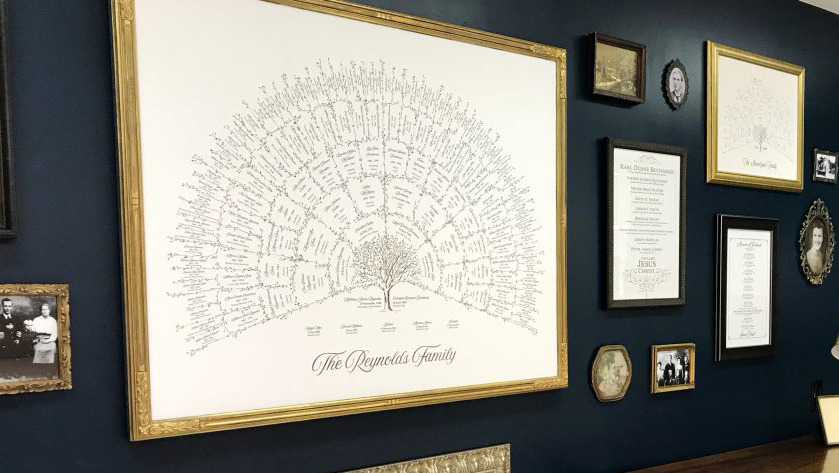
For those with a traditional bent, I opt for the ancestor trees from Branches Art, which pair nature-derived colors with illustrated trees (you know, the kind with actual leaves).

And for those who gravitate more to modern styles, I recommend I Chart You, whose heritage charts are minimal and clean—and can be downloaded in high resolution for your own use or printed (check out the gold foil on white option) and framed.
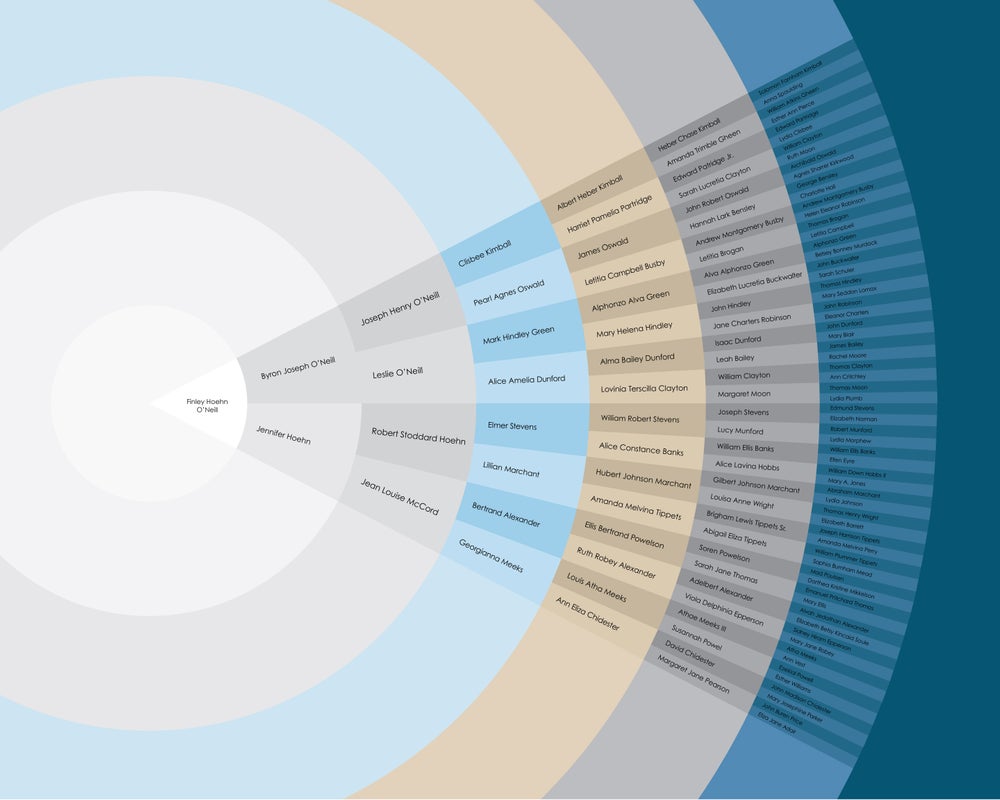
Want a major pop of color? My Tree and Me offers unique modern designs, as well, with choices that would fit particularly nicely in a child’s room or a cool office space.
Now those handwritten pedigree charts that are seemingly always in-progress can stay out of sight while the family names get museum-quality treatment.
I Chart You
Branches Art
My Tree and Me
2 - External Hard Drive
While the paper-hoarding tendencies of family historians cannot be denied, more and more research is being conducted online, and digital backup of documents is a must. One can never have too many external hard drives for archiving and research on the go.
If you’re the technical one in the family, select a disk you think would be best for your loved one. If, on the other hand, your family history–loving friend is particular about things (ahem, most genealogist types, ahem, are), I would suggest getting them a gift card to the Apple Store or Amazon, where EHD options abound.
3 - Heritage Travel Tour
Ever wonder what your grandparents’ hometown in Puglia was like? Whether you want to sample the cuisine your ancestors ate, gaze out from the harbor from which they immigrated, or tour a bunch of sites that dot your genealogical map, consider booking a customized trip to explore your family origins. Ancestry ProGenealogists offers genealogy cruises as well as guided heritage tours; and Classic Journeys will customize an ancestral trip whether you have a little or a whole lot of family history info to go on—seek origins, explore the world, feel connected like never before!
4 - Professional Genealogist Services
At some point in every family historian’s journey they will hit the proverbial brick wall. There may be no more viable “hint” leaves on ancestry.com, conflicting information on one line of ancestors, or seemingly no place to start in researching another line. A professional genealogist can help locate documents in foreign countries, resolve discrepancies in research, or trace your roots back for generations. Discover how to choose the right genealogist for you with advice from Legacy Tree Genealogists, and search the Association of Professional Genealogists for someone near you.
Legacy Tree Genealogists
association of professional genealogists
5 - Gift Certificate for a Personal History Interview
Is there someone in the family who has stories to tell and then some (you know, your favorite family dinner guest!)? Or a loved one who you know has experienced life to the fullest but who sits quietly listening to everyone else? Let them know how much they are valued by gifting them with a few hours of personal history interviews.
Their first reaction might very well be, “What stories have I got to share?!”—but I say with confidence that everyone’s memories matter, and an experienced personal historian will help not only set the subject at ease and draw those stories forth, but help shape them and find a meaningful narrative thread.
Please don’t be among the regretful who wish they had asked questions of their loved ones only after it’s too late.

Don’t worry too much about what to do with the interview material (I craft heirloom coffee table books from my clients’ stories, but I have colleagues and friends who specialize in audio clips and video biographies, too). For now, find a personal historian who makes you feel comfortable, then get those stories flowing—and feel secure in knowing they are preserved for posterity. Did I mention this one’s as much a gift to YOU as it is to your recipient?
Modern Heirloom Books - Gift Certificates
6 - Photo Organizer Services
Too often we don’t think about what will become of the boxes and devices full of family photos until someone dies, and then the emotions and overwhelming volume of stuff to deal with can cloud our judgment. Buy your parents a package with a photo organizer, who will help sort, purge, digitize, and memorialize the photos that mean so much to your family. It’s worthwhile to contract a professional for this time-consuming and important endeavor.
Find a professional photo organizer near you in this national directory.
The Photo Organizers
A few more (lower-priced) gift ideas for the family history lover in your life:
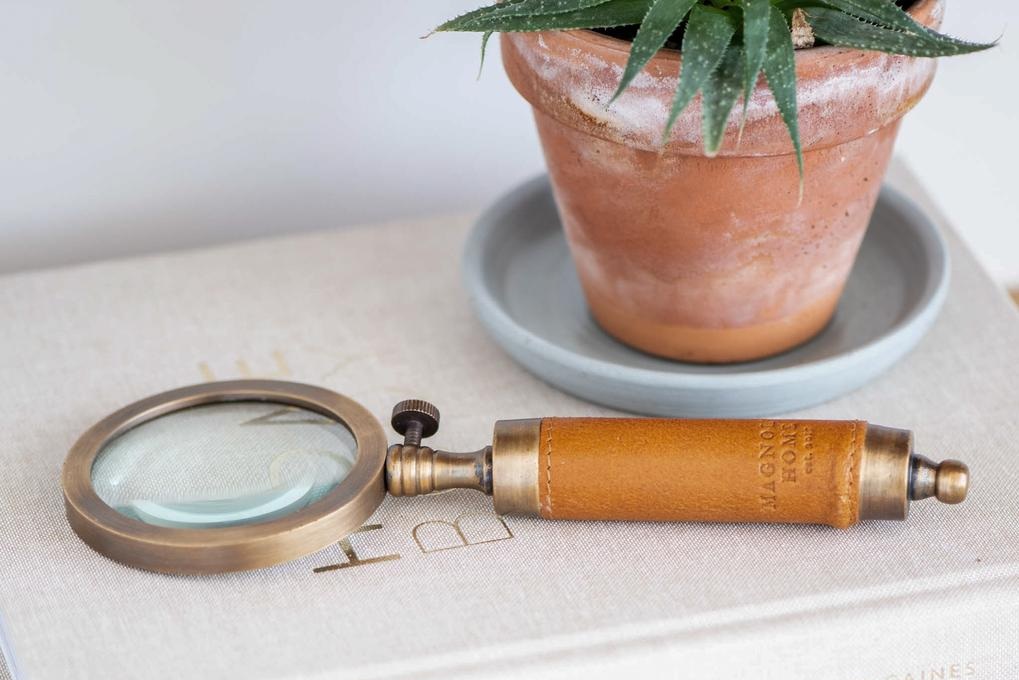
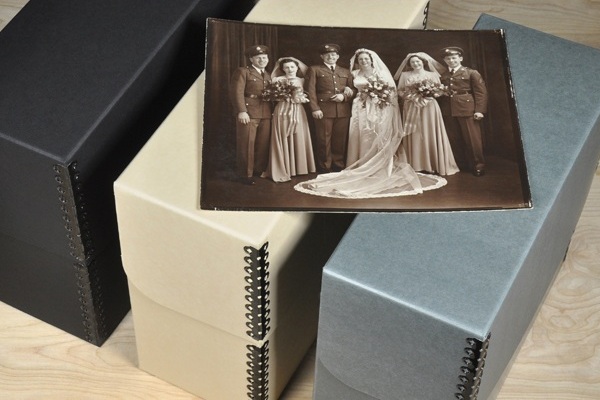
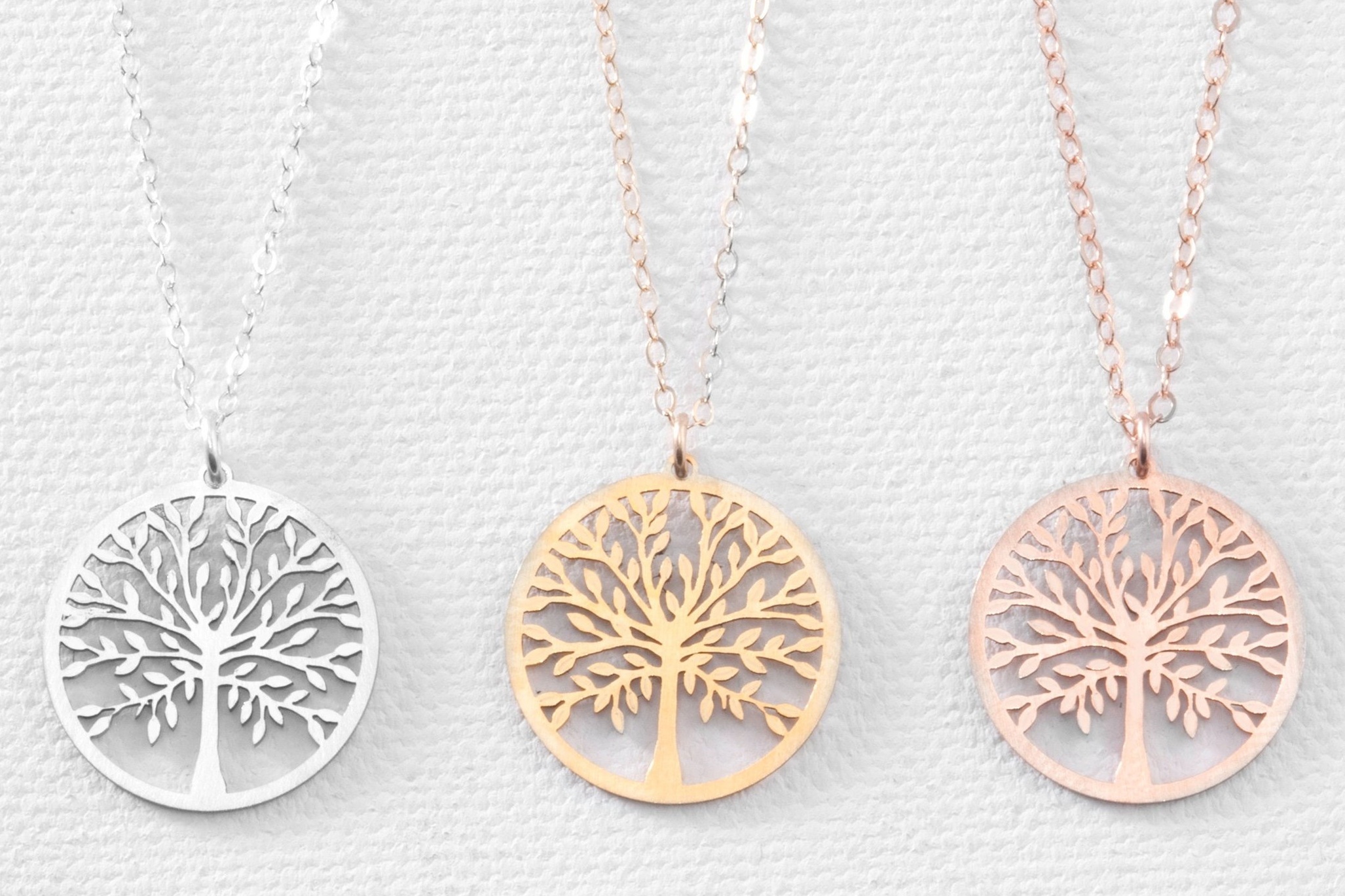
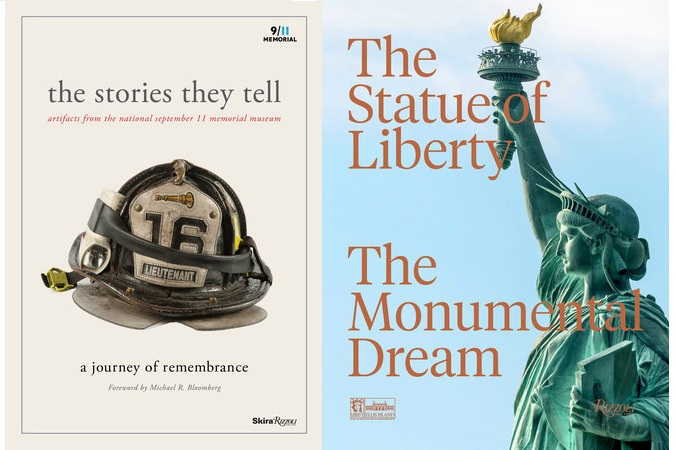
What’s your favorite? Do you have any other unique gift ideas for the family history lover in your family?

When a parent doesn’t want to talk about their past
Why it's sometimes easier to talk about our life experiences with a stranger, and how to get a reluctant storyteller to genuinely open up about his or her past.

I hear it often—different words, varying specifics, but always the same underlying message:
“His war years were so painful that they are buried deep.”
“My dad’s childhood was unbearable, so it’s a part of his life he would rather not revisit.”
“My mom refuses to talk about her own father; I assume he was not a very nice person.”
Implied: “My parent will never talk about the past.”
But I wonder: Have you ever asked?
I don’t mean a passing remark about how he/she never speaks about their childhood. I mean asking, in a forthright manner, if they would share the stories of their past. Have you ever asked?
Why it’s sometimes easier to talk to a stranger
I recently heard a story about an elderly gentleman who launched into stories of how his father was an abusive alcoholic: This gentleman spoke without reservation, in depth, and at length. He was speaking to a fellow professional personal historian who had been hired by the gentleman’s grown children.
At the end of two hours of sharing his painful experiences, he indicated that his children would not want to know about any of this.
“They specifically told me they would like to know about your father,” she responded. “Why do you think they aren’t interested?”
“Because they never once asked,” he said.
This man’s children had made it clear that they thought their father would never open up about his own dad. Had they ever asked him, though?
Chances are, they may have made passing remarks about their father’s difficult childhood. Perhaps they treaded lightly because they knew it was difficult terrain. Maybe they asked, but their dad assumed they wouldn’t want the whole messy story.
When family members are the ones trying to capture stories of the past, assumptions can unintentionally impede the way. Consider some of the negative assumptions that may arise when family members interview their elders:
My kids think they want to know, but the reality will be too painful for them to hear.
I can’t imagine my daughter will want to know any more than the basics of my childhood.
I don’t want my son to have negative impressions of his grandfather.
Conversely, when an outsider—whether it be a biographer or a caregiver—asks, the storyteller may feel welcomed in a different way. The assumptions are more positive:
I have been invited to speak. This person wants to know my stories!
This person has no preconceived notions about who I am—I start with a clean slate.
How to get stories from a (seemingly) reluctant storyteller
If you would like to ask your parents or grandparents questions about difficult periods from their past, here are a few tips to generate open conversation:
First ask if they would be willing to speak about the specific topic. Clearly express your genuine interest, stressing how learning more about your loved one’s past will help you understand them (and maybe even your own childhood) better.
Indicate further why you are interested: Would you like to shed light on your great-grandparents or other individuals further up the family tree? Are you seeking examples of resilience to fuel your own growth? Are you simply curious about this person whom you love beyond compare, wishing to know them as a person in their own right and not just in relation to you (as your mother, say)?
Don’t merely hear; listen. Hearing is a passive act; sounds come to us and are received. Listening, on the other hand, is an active endeavor. Pay attention to what your family member is saying. Make eye contact, ask follow-up questions, feel empathy. It is okay to begin from a list of prewritten questions if you go into the interview with an open mind, letting the conversation twist and turn with the currents.
Be prepared to be surprised. Beware those nasty assumptions again! You have undoubtedly constructed a narrative around the unknown portions of your relative’s life. Chances are that any storyline you have imagined may be far from the truth. Be willing to listen openly and, most critically, without judgment.
Reserve judgment. Yes, this one’s worth repeating. Listening to your loved one’s stories is a privilege. They are trusting you with precious memories. They are making themselves vulnerable. Reward that trust by engaging with them genuinely, bearing witness to their life, and seeing them sans judgment.
When a professional is the way to go
If you are uncomfortable trying to glean stories that you think your parents or grandparents may be uneasy speaking about, consider hiring a personal biographer to conduct interviews. Reach out to see how we could work together to preserve your family legacy.
Related reading coming in future blog posts:
Why It’s Important to Capture Difficult Family Stories
Providing Examples of Resilience to the Next Generation

6 tips for choosing the best family photos to use as writing prompts
Family photos can be useful tools to jog memories and call forth stories. We share how to determine which images will elicit the best family stories.
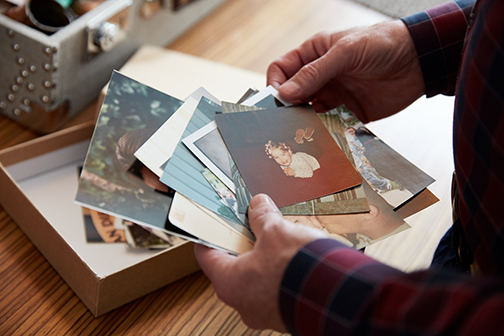
There are no rules for how to choose a photo that will be effective as a biographical writing prompt, but we can offer a few guidelines for the types of images that often elicit storytelling that is deeper and more meaningful than a mere identifying caption.
That’s the goal, after all: To use a photo as a starting point for your storytelling—as a jumping off point for memories, a touchstone for emotions, a lead-in to a narrative from your life.
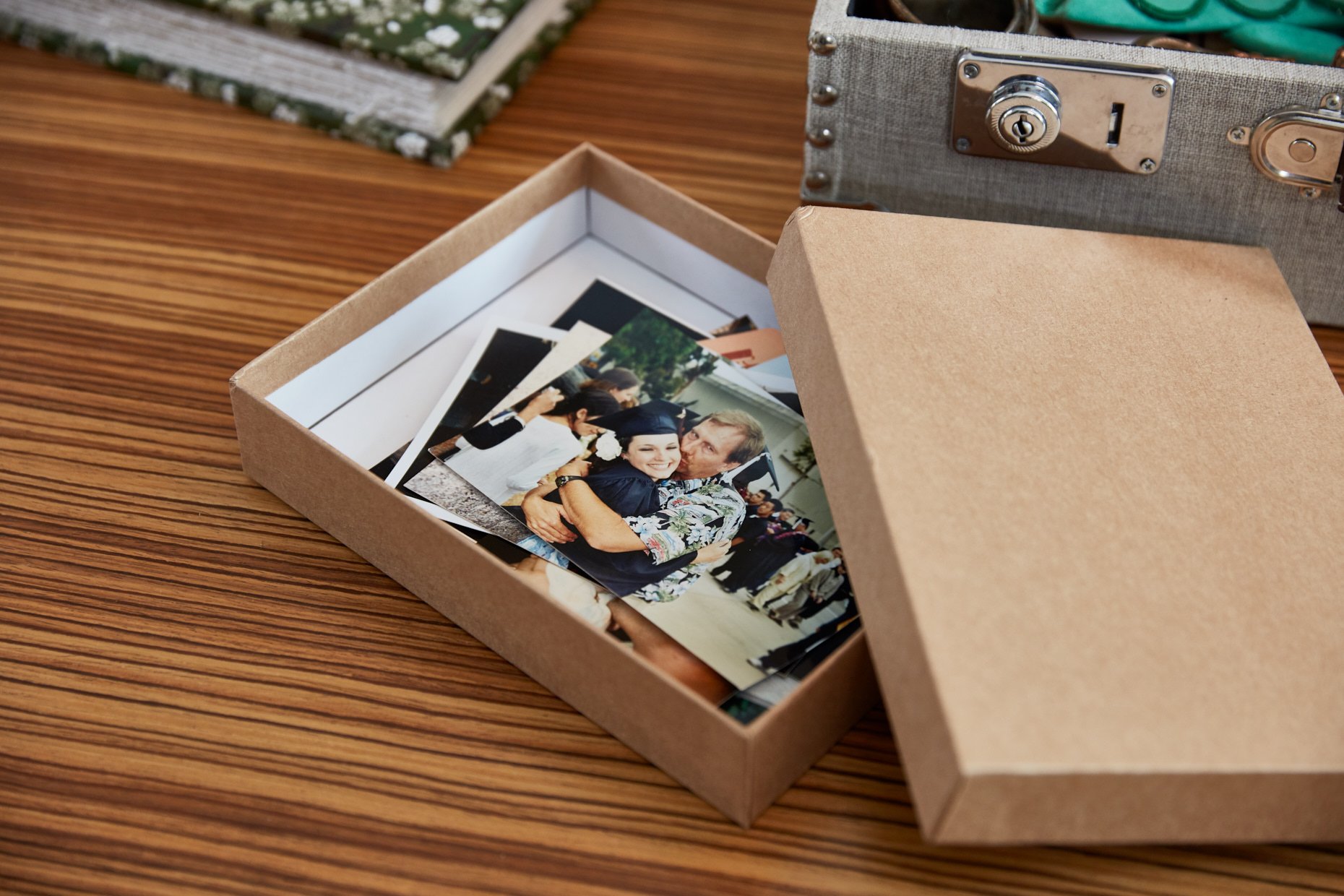
So get out your old family photo albums or that dusty box of print photographs from the basement! Then…
Step One: Choose 10-20 pictures to start with.
Begin randomly looking at photos.
Rather than focusing on those that are frame-worthy, look for photos that elicit a strong feeling from the viewer (you, or the family member from whom you would like to capture stories).
Set aside 10-20 images that stopped you in your tracks in number two (even if you stopped to wonder about the image as opposed to reliving memories as a result of looking at it; sometimes it’s the mysteries behind a photo that draw forth particularly revelatory stories).
Now it’s time to choose a photo with which to begin your reminiscing. Whether you are using the photo as a writing prompt or as a vehicle to jump-start conversation in a personal history interview, the following suggestions will be helpful in selecting images that lead to substantial storytelling.
“Photos reveal themselves in layers,” Maureen Taylor (aka ‘The Photo Detective’) writes on her blog. “You study the clues and talk to family but every time you look at it or show it off to family you might learn something new. One thing leads to another.”
Step Two: Determine if the photo is story-worthy,
Ask yourself if the photo you are holding does any of the following six things—and if the answer to one or more of them is yes, then you’ve got yourself a winner. Set it aside and make sure it’s on hand the next time you want to delve into some family history writing!

The photo invokes an emotional response.
Do you feel a rush of excitement or a flush of scarlet creep up your face when you first spy the picture? It may make you feel anguish or sorrow, pride or exasperation, abundant joy or abiding love—the key is, it makes you feel.
If a family photo has such a visceral effect on you, this will be most fruitful for writing its story.
“Photographs are about one specific second, but they can also be about the future,” Beth Kephart writes in The Quest for Truth. “Photographs can operate as metaphor and counterweight, as tease and opposition, as the other half of a parenthesis.”
That photo that moves you is a doorway to your past that is clearly connected to your present in some way. Explore why you feel the way you do, and how this feeling fits into your life then and now. Provide context for your feelings; set the scene.
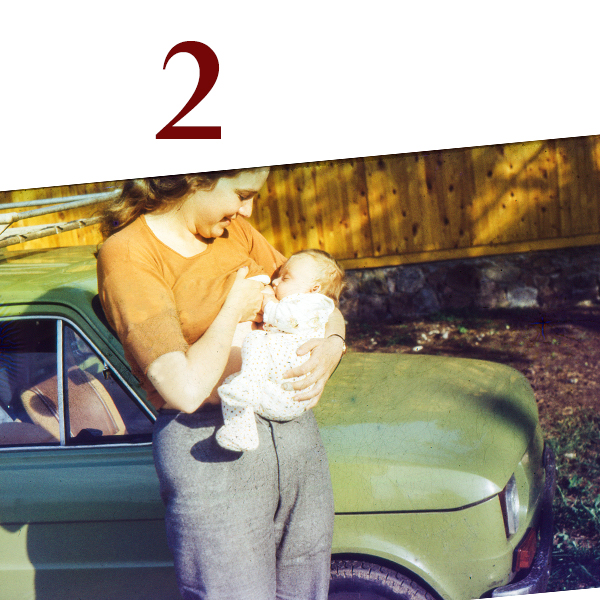
The picture tells a visual story.
Sometimes a picture itself already reveals a story: If the who, what, where, when, and why (or most of those) are apparent just from looking at the photo, then it’s likely a good candidate for embellishing upon. Of course, it’s ideal to choose images whose stories matter to you in some way.
The snapshot of this woman breastfeeding certainly tells a story about who she was as a mother—and if the mores of the time period and the town are known, and her character as well, then the storyteller can dive deep. A grown child looking at this image might use it as a jumping-off point for talking about their relationship over the years; or perhaps how their mom was part of a strong line of women before her; maybe she was only able to have one child, or 10, or only girls…
A photo is a moment in time, but on the periphery are details that help make up its narrative. What photo would have been shot just before this one? Just after? What’s in the frame? What (and notably who) is not in the frame? By starting with a picture whose story seems readily available, we can develop depth by asking such probing questions and tapping our memories for more.

Details draw your attention.
Your facial expression at the time the picture was snapped. The pattern of your grandmother’s well-worn house dress. A missing button on your dad’s shirt, or the papers falling from his briefcase. The water stain on the bedroom wallpaper. If some detail in a photo draws your eye again and again, there is more to be probed.
What does the detail begin to tell you? What beyond the frame of the photo—on that day, or a decade before or after the photo was taken—makes you focus on it? By taking the time to meditate upon all that the detail calls forth in your mind, you will reveal a greater meaning to this photo than could ever be revealed upon initial inspection.
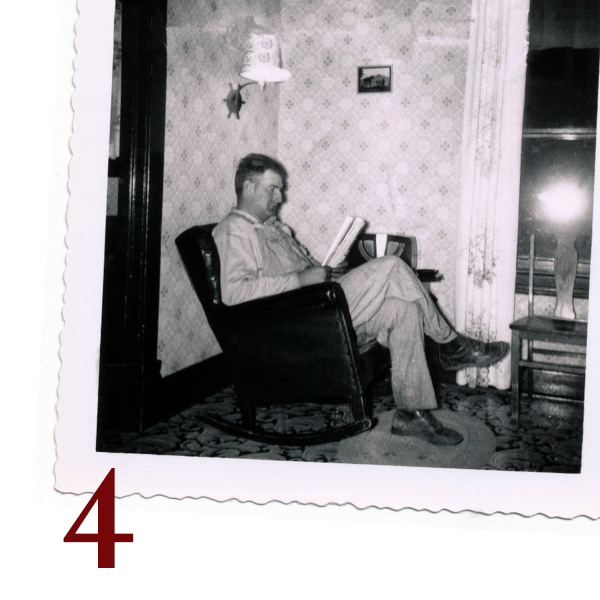
The photo portrays part of the subject’s everyday world.
My favorite type of modern family pictures could be described as documentary family photography: people in their natural environment, doing what they do every day. (Check out talented photographer Jen Grima’s work for inspiration.) I love capturing our routine family narrative this way because the resulting photos are so evocative of time and place, and they set us in scenes that are real and personal, uniquely ours.
Many old family photos do so less consciously, perhaps, but the impact is the same. We are drawn to such pictures because they reveal what our or our ancestor’s life was like back then. So if a snapshot of your aunt holding you while she’s hanging the laundry crosses your path, use it to tell a story. If you find a picture of grandpa reading in his favorite recliner, dad trimming the hedges at your childhood home, or your baby crawling amidst the messy remnants of Christmas wrapping paper, use them all—find their stories.

The image intrigues you.
Is it a curious shot? Out of the ordinary for your family or for the time period? Is someone missing who you would have expected to be present in that scene?
If it makes you wonder, then it very well may lead to a worthwhile story. Perhaps you end up asking for relatives’ input to get to the bottom of your intrigue, or maybe in lieu of concrete answers you surmise the story behind the old photo, thereby revealing a narrative of your own in relation to the photo. Chances are, whatever your approach the resulting observations will be as alluring to the next person as the original photograph was to you.
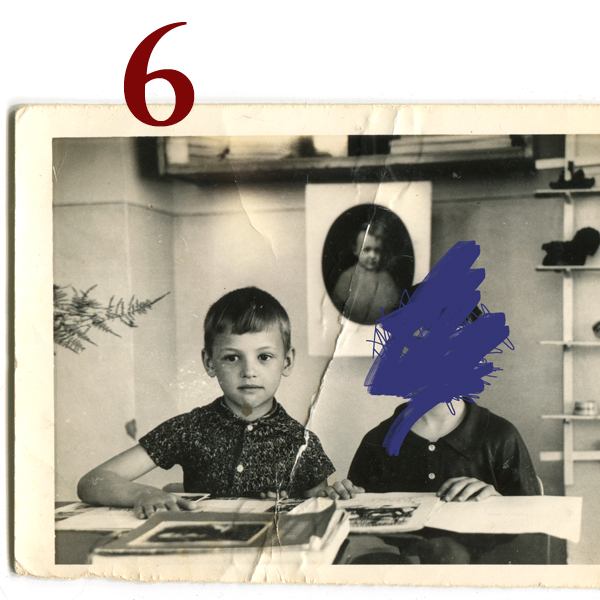
The physical print tells its own story.
My grandmother had a tendency to hold a grudge, so it was not too surprising to find among her things photos that had an individual literally cut out of the scene (or crossed out with ballpoint pen). Now there’s a story to be revealed! The same could be said for pictures that have been torn, damaged by flood or fire, or found tucked away in a book.
Sometimes getting to the story behind the photo is as fun—and constructive—as getting to the story that resides within it.
Step 3: Start sharing your stories.
Read more about how to use old family photos as biographical writing prompts—we’re talking nitty-gritty advice, from where to begin after looking at the photo to how to capture your memories.
Download the advice in a handy printer-friendly booklet here, entitled “How to Use Photographs as Prompts for Writing Life Stories.”
Explore more intense self-reflective writing prompts in Beth Kephart’s memoir writing workbook.
Once you’ve written your first life story vignette, consider doing something special with it—we’ve got five easy ideas.

Genealogists reveal why your stories matter
The most memorable quotes and takeaways from family history experts Amy Johnson Crow, Curt B. Witcher, Scott Fisher, and Janet Hovorka at RootsTech 2019.
I wasn’t at RootsTech 2019 last month, but I did take advantage of the free videos that were available for live streaming during the event and are accessible even now on the RootsTech website.
Since we’re all about life stories and personal history around here, I decided to offer up a few of my favorite takeaways related to those topics from four speakers. If they whet your appetite for more, you can always watch the full videos of these speakers and discover others focused on genealogical research, DNA testing, and online record searches.
From Why and How to Put Yourself into Your Family History
AMY JOHNSON CROW
Favorite quotes from Amy Johnson Crow, a Certified Genealogist with more than 20 years of experience helping people discover their family's history:
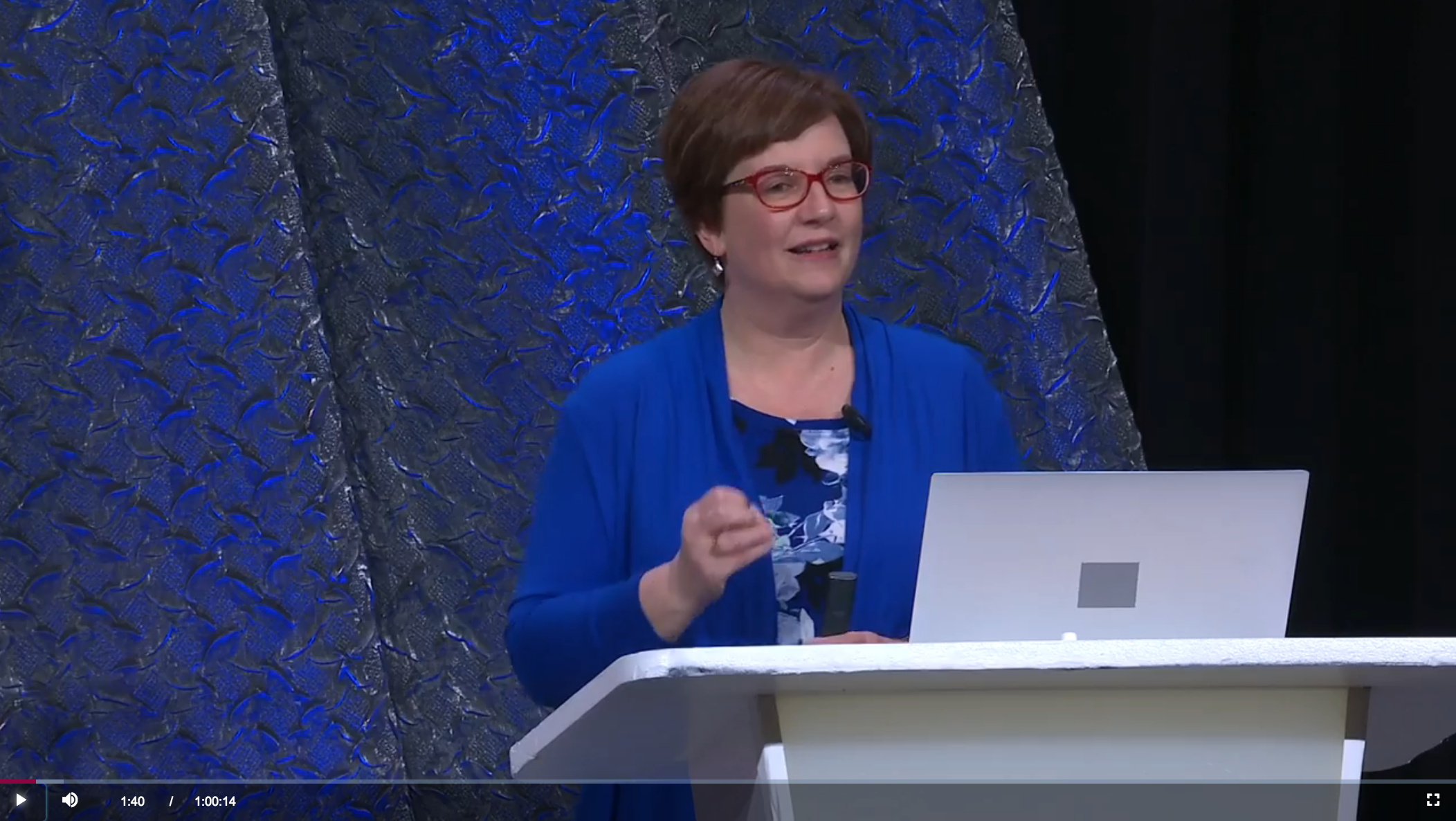
Author and speaker Amy Johnson Crow presenting at RootsTech 2019
“When we consider recording our own stories, we think of memoirs that we have read… And when we think about writing our own stories, well, if we’re thinking of something like Angela’s Ashes or Little House on the Prairie, our first reaction might be, well, I’m not famous. Why should I record my story?”
I’ve got a whole list of reasons you should record your story, as does Amy:
“Think about how thrilled you would be if you found a diary from one of your ancestors. Or a letter from one of your ancestors.”
(Even if it described an ordinary day doing ordinary things, like a trip to the market!)
“I think that you would treasure that letter because it would be insight into the life of that ancestor, told by that ancestor.”
Indeed!
“So why do we think that future generations, oh they won’t care about me!? We already know that we care about what happened in the past. We need to be the ancestors to our descendants that we wish our ancestors were. We need to record more of our stories like we wish that they did.”
Can I get an amen?!
“Don’t get hung up on the format, because really, any format will do. … You have to record the story—that’s the important thing. You can figure out the preservation later. You have to tell the story before you can preserve it. And truly, a story isn’t a story until it’s been told.”
So, tell your stories! And remember:
“It doesn’t have to be overwhelming. It doesn’t have to be about all the big things in your life. There is no story that is too small to be recorded.”
CURT B. WITCHER
Highlights from Curt B. Witcher, Genealogy Center Manager at Allen County Public Library in Fort Wayne, Indiana:

Genealogy expert Curt B. Witcher during his presentation at RootsTech 2019
“Family history is the pursuit of, and the presentation of, and the preservation of our stories.”
“The grand and the big and the exciting and the wonderful—that’s not it. It’s the point in time, and the person in time, and how it relates to us.”
After reiterating some of what Amy Johnson Crow spoke about, Curt transitioned to talking about the science behind story and why it is so important:
“Experiencing story alters our neurological processes.”
He is not a scientist, but he is eager to shed light on how amazing much of the science behind story really is—from triggering the release of cortisol (which commands our attention) to the eventual release of oxytocin (which he says “makes us more receptive to empathy, to caring”). If you are interested in this, I suggest watching Curt’s entire portion of the video, which begins at the 20-minute mark.
Want happy children?
“Family story is critical to all of us being better human beings, but especially for younger people as their brains are being developed.”
“Stories, psychologists and scientists tell us, are strong predictors of a child’s happiness. The more stories, the better adjusted, the better a child will grow and be welcomed and welcoming. How can we not think that this is important?”
Is there anyone among us who does not?!
SCOTT FISHER
And lastly, the best tidbit of advice from Scott Fisher, host of podcast Extreme Genes, America’s Family History Show, who spoke concretely about how to turn oneself into a family history reporter:
“Do not answer questions for your subject. If they’re taking a long pause, let them think. Don’t be afraid of the silence.”
Ah, yes, be patient, and listen generously!
From Heirloom, Documentation, or Junk: What to Keep or Toss
Janet Hovorka
Memorable moments from Janet Hovorka, genealogy coach and development director for Family ChartMasters:

Genealogy coach Janet Hovorka speaking at RootsTech 2019.
“When you keep everything, it might be overwhelming to the next generation… After your passing, your family could throw everything out just because they’re overwhelmed.”
Imagine?!
Janet offers up six concrete questions to ask yourself about your family history stuff in trying to decide whether (and how) to save it or to toss it. If this is something you are facing, whether due to the recent loss of a loved one or to the ever-expanding hoards of your own family history documentation, then definitely give her video your full attention.
Here, though, a few golden nuggets:
“A family heirloom is only as valuable as the story that comes with it.”
Can I get another amen?
“An heirloom can only go down one line, really. But documentation, especially digitally, can be spread over the whole family.”
But remember:
“Digital materials can be more fragile than a set of china… You could be creating a Digital Dark Age in your family.” (caps mine ; )
Excellent advice:
“Think about a digital will, especially if you want to preserve you own life.”
Families, please hear what Janet says:
“In my opinion, one of the most important things to do is to teach your children and vest them in [your family history] now…. Tell them the stories. Vest them in those heirlooms and those documents. A family that is vested in those things is going to preserve them.”
Because…
“Never in the history of the world have we been so disjointed and so anxious… We move away from our ancestors more than families ever have. We don’t grow up at grandma’s knees anymore.”
Facebook and FaceTime may bring us closer to far-flung relatives, but it’s no substitute for in person togetherness and for regular story sharing—especially of the impromptu kind.
“Talk to the next generation.”
Please.
“As you study the span of a life, you learn that everybody has a little bit of hero and a little bit of scoundrel in them.”
Which part of your story will you tell first, I wonder…?
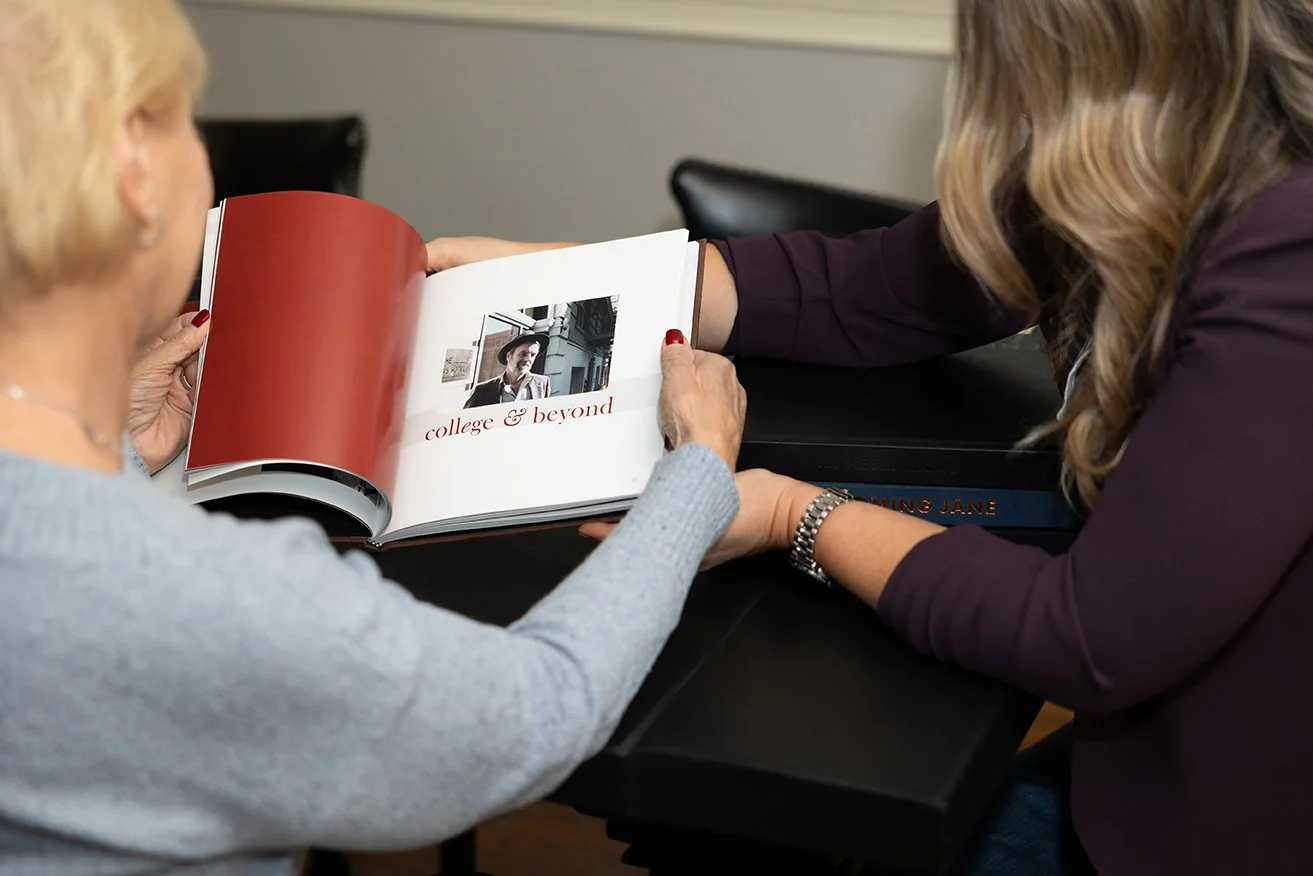
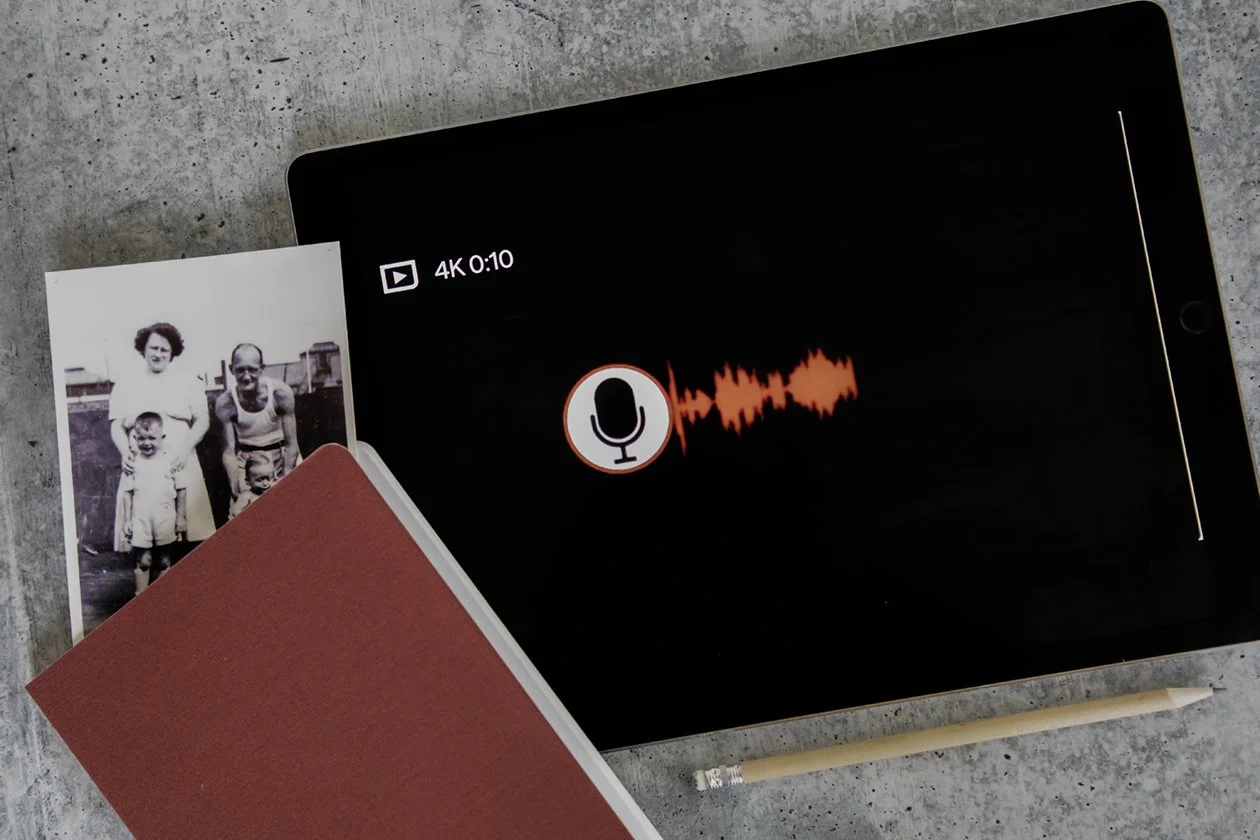





Sharing is good
Print and share your family photos with loved ones. Besides generating conversation, you will spark joy, find genealogy clues, and discover even more treasures.
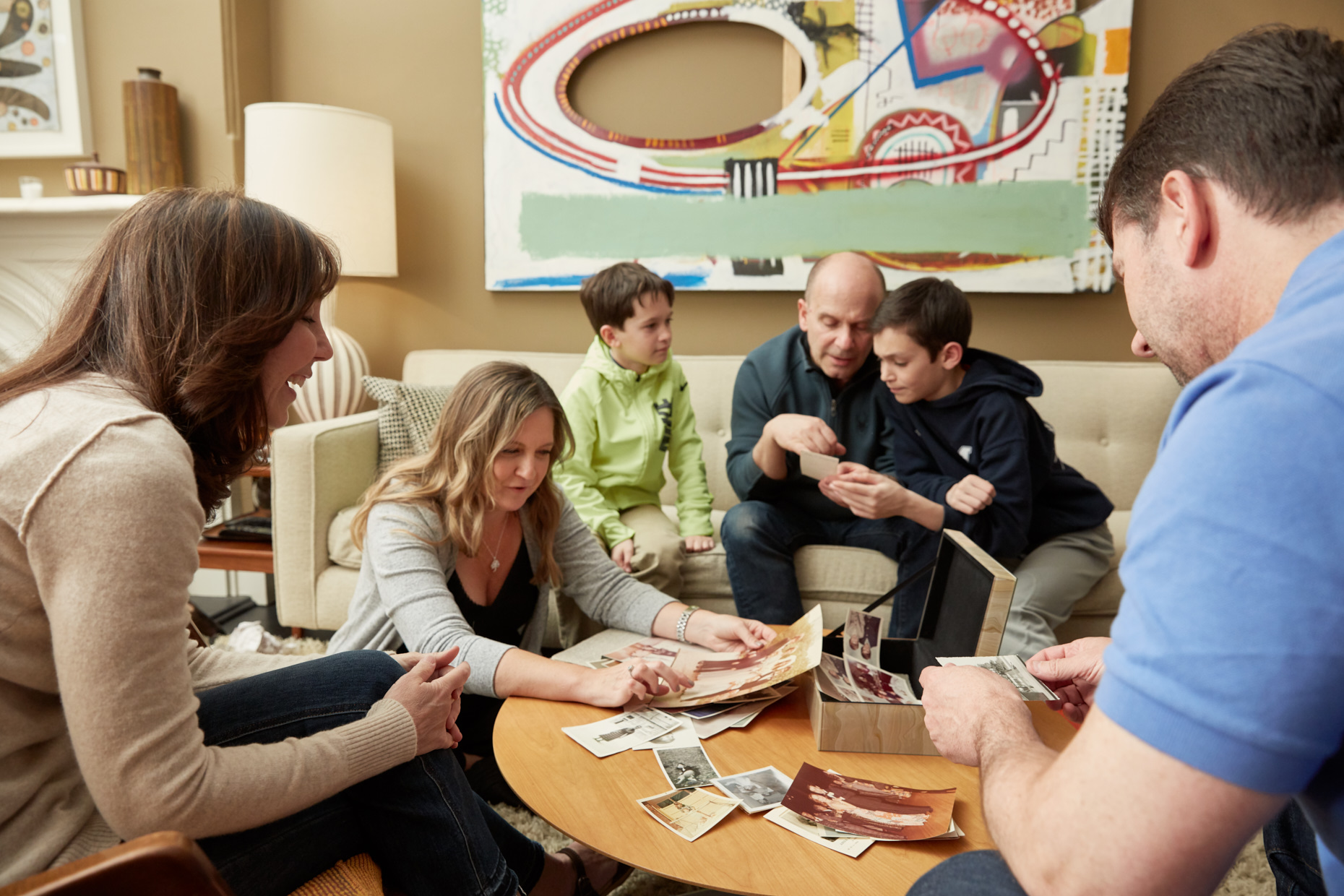
“Sharing is good.“ This childhood lesson is applicable in all areas of life, of course, but today I want to encourage sharing of your family photos.
It’s been written about ad nauseum in recent years: Our digital photo scrolls are out of control…we need to stop taking so many pictures and live in the moment…we never print our pictures anymore.
While I agree wholeheartedly with each of these lamentable statements, it’s the lack of printed photos that troubles me most—specifically, the sense of connection and excitement that gets lost when we neglect to print our photos, and share them in person.
In person, I say.
It’s temporarily gratifying to get lots of likes on an Instagram share, to see heart emojis galore on your Facebook post. But the joy that results from sharing a memory in person—well, that simply can’t compare.
Why You Should Share Your Photos
A family photo holds a story. It is a font of memories, frozen in one still frame.
Amazingly enough, the story shifts with each participant: Your mom, maybe, who took the photo, remembers things just a bit differently than you do; and your sister, a few years older, recalls things from an entirely different perspective. What about your baby brother, who only saw this photo—and heard its associated stories—years later?
Like all stories derived from memories, truth is subjective. And while a photo seems to capture a scene exactly as it happened, well, that’s subjective, too. Can you say “conversation starter”?!
So besides sparking conversation, why should you share your photos—and your photo memories—with loved ones? Here are three compelling reasons:
1 - You share, they share.
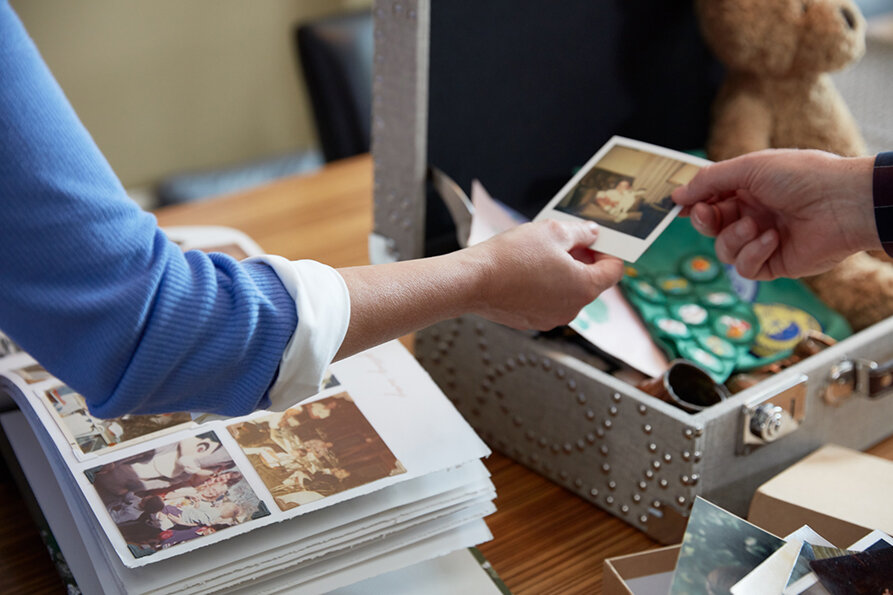
It’s contagious. You show someone an old photo from your childhood, and they reciprocate with a shot they had in a drawer somewhere. You pull out your dad’s old scrapbook filled with family photos from his youth to spark conversation with your parents, and they reveal they have two more stored in the basement.
Sharing what you have encourages family members to share some of their own family treasures, too—and what could be better than that?
2 - You might learn something.
From a name scribbled on the back of an old photographic print or a comment made in passing by a family member to whom you are showing your photos, you just may discover something new: details or backstory that enrich your own experience of the picture; or perhaps a surname or location that helps with a genealogical search.
Just because your family elders have not shared such info before doesn’t mean they don’t know it—too often I hear, “Well, no one ever asked me.” So show…and ask!
3 - You’ll feel darn good.
Sharing the joy and love associated with your favorite family photos makes that joy grow. You get that altruistic benefit that comes from sharing of yourself—witnessing another’s enjoyment, and feeling your own heart swell.








Dawn Roode’s curated roundup for the week of Sept. 23, 2026, is overflowing with recent reads on memoir, life story writing, and family history preservation.