
Memories Matter
Featured blog Posts

READ THE LATEST POSTS
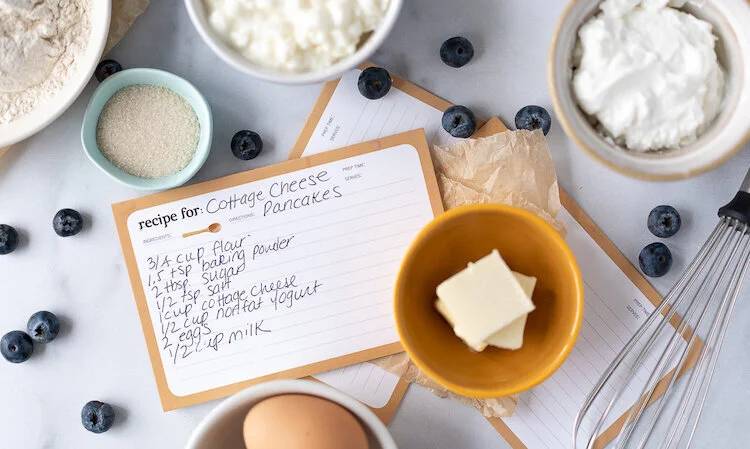
4 steps to begin preserving your food memories
Knowing your family’s recipes are preserved for the next generation is reassuring. Adding stories and photos, too, brings your food heritage to life. Start here.
This past year I have gotten a lot of feedback asking for more content to help you preserve your food memories.
I wonder if it’s a sign of the times—we’ve all been homebound for much longer stretches during this pandemic (many of us even made our own sourdough starter and baked bread from scratch!)—or if it’s just that, as I say often, the memories that take place in our childhood kitchens are powerful and persistent. All it takes, after all, is one whiff of sauce simmering on the stove, or a tiny taste of cookie dough, to transport us right back in time.
Either way, I’ve planned a series of posts to get you started with saving your own food memories. First up: Four overarching steps to put you on the right path:
1 - Consider: How do you want to preserve your food memories?
It’s wonderful to have a stash of grease-stained, handwritten recipes in a drawer in your home. But it’s even better to know that those recipes are preserved no matter what.
By digitizing your recipes (they can be scans of the handwritten cards or typewritten transcripts) you not only ensure they last for generations, but you can more easily share them with loved ones far and wide.
Our two favorite ways to preserve your recipes and food memories are:
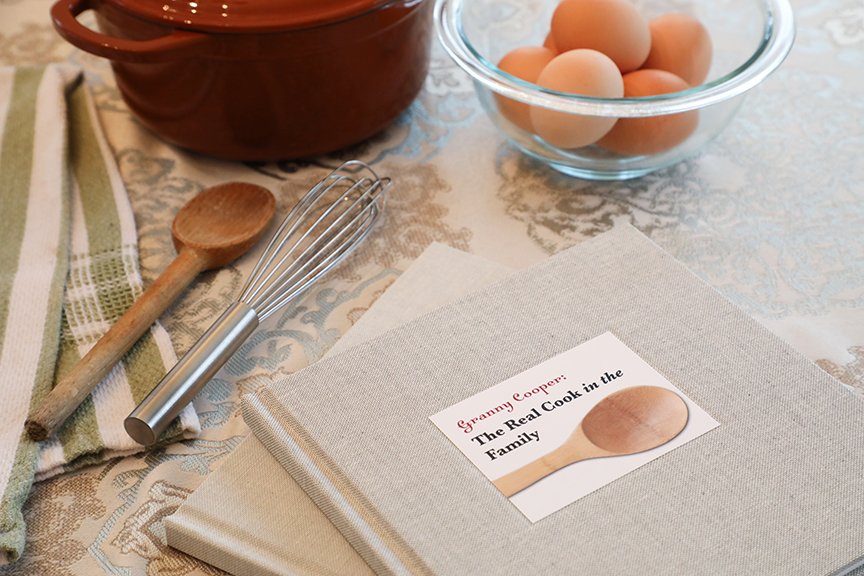
In a book (of course!). Include both recipes and, at least for some of the foods, the stories and memories associated with them. You can go a DIY route or hire us to create a professional heritage cookbook for your family.
In a recipe box. Consider attaching photos and stories to your recipes and storing them together in a vintage recipe box.

A cookbook personalized just for your family could include a mix of recipes, stories, and images.

While some of your recipes may be handwritten on recipe cards, others may be scattered; look within the pages of cookbooks, in your siblings’ collections, and on your computer and phone apps.
2 - Gather recipes.
Even if you’re an incredibly organized person, chances are you’ve got some recipes in a drawer, some on the computer, and others in your head (perhaps those are the most important to write down!).
Make a list of everywhere you think your recipes reside, then tackle gathering them all in one place.
Two tips: Ask your loved ones which recipes you should include (you might be surprised what your kids ask for!), and then call your siblings and parents to solicit recipes from them, too. The more complete your collection, the better!
3 - Add pictures.
Do you have photos of Grandma in her kitchen, or Poppa pulling the turkey out of the oven on Thanksgiving?
Go on a treasure hunt to find as many food-related photos as you can. Then, digitize them with an app such as Google PhotoScan or hire a professional to scan them so you ensure you don’t lose them (and so you can use them in a printed book if you wish). Make sure to scour your phone scroll for recent images, too.
Also consider hiring a professional photographer to capture a cooking session in your home kitchen. I can recommend photographers across the country, so don’t hesitate to ask me for recommendations. You can include handed-down cast-iron pots, serving dishes, and other family heirlooms in the shoot to make it even more special.

Photos—especially those taken in your home kitchen—help bring stories in a family cookbook to life.

Gathering together around the dinner table (and your favorite family foods, of course!) is a great way to share memories to include in your heritage cookbook.
4 - Find the stories.
For your most-often-cooked foods, traditional fare, and family favorites, write about the memories associated with each of them.
Be specific: Mention the cast-iron pan with the always-loose handle that Bubbe cooked his eggs in. The apron Aunt Ida wore only on Passover. How cherry Jell-o brings you back to your childhood, and the aroma of anise transports you to Brooklyn at Easter. Details, details—the scents and colors and textures...the truth of the story lies in the details.
One fun way to capture these stories is to host a family get-together with the express purpose of reminiscing (over dinner, of course!). Designate someone to take notes, and set up a couple of voice recorders (your smart phone is fine) around the room to get the stories. Oh, and take some pictures while you’re at it.
In an upcoming blog post we will share a list of questions to prompt food memories, which you can use either as writing prompts or as conversation starters during your get-together. Sign up for our newsletter to be sure you don’t miss it!
Want to read food stories from others for a little tasty inspiration?
Check these out:
Billee’s “Famous” Foods
Gramma Billee kept a jar for bacon drippings on her stove; she used it liberally and kept it full. She knew everyone’s favorite foods and provided them—often. Click here to read Billee’s “Famous” Foods.
Mom’s Spaghetti & meatballs
Red sauce ran in her grandmother's blood, and every family member would one day memorize her beloved recipe. Peek into a family kitchen, and a mother's heart. Click here to read Mom’s Spaghetti & Meatballs.
POP’S PIE
Is a grandfather’s love the missing ingredient to the best key lime pie? A young mother delves into memories of the treats her beloved Pop made just for her. Click here to read Pop’s Pie.

“Stories through the vessel of cherished food memories”
Meet the story- and food-loving host behind the inspiring podcast The Storied Recipe, then click on a few of my favorite episodes for a taste of her interviews.

On The Storied Recipe podcast host Becky Hadeed, pictured, invites guests to share their stories through the vessel of cherished food memories.
Podcast recommendation: The Storied Recipe
If you look at the Instagram feed for The Storied Recipe you’ll be excused for thinking that the founder is simply a food photographer. Becky Hadeed is, of course, a photographer who turns her lens (rather gloriously) to food, but she is so much more, and at the heart of all she does is a bone-deep respect for story.
On The Storied Recipe podcast, Becky begins each episode with a few words describing her mission: Giving a platform for her guests to “share their stories through the vessel of cherished food memories,” thereby inviting us all to “honor those that have loved us through their cooking.”
And there’s the attraction for me, as you can imagine! I have written often about the power of smells and tastes to conjure memories, to transport us back to our childhood kitchens. If someone is a reluctant storyteller, it’s often their food memories that get them going.
Becky’s conversations with her podcast guests are fairly wide-ranging, but they somehow always circle back to food stories and a cherished recipe (which Becky cooks herself and photographs in her garage studio).
It’s not surprising, either, that my favorite episodes highlight stories from “everyday people” who happen to light up with the telling of their food memories. Whereas we would expect a chef or a cookbook author to be inspired by the foods of their past, it’s the regular folks talking about their family members and the tastes of their childhood that are often most inspiring.
The person behind the podcast
Becky posits that her love of story came before food, but it’s a close call.
“I always say that reading was my first love, because when I used to go to the library or open a new book (and I opened hundreds every year, as a child), I got the same feeling of happy butterflies that I got when I saw a crush! Reading gave me comfort and insight and a way to occupy my mind.”
She says she’s always seen “individual stories as the best way to make sense of history and the world.” As with so many of us, that belief likely started with tales told by her grandparents, who resided next door to Becky when she was growing up, as well as her great-grandmother, who lived to 103. Becky loved hearing stories of their lives and asking them for more—and more!—detail. “So this idea that personal story is the best way to learn about culture and heritage and history was just...it was so obvious to me.”
Becky is a naturally curious soul who still seems surprised when someone expresses gratitude for her openness. People have often told her how “they found themselves sharing things with me that they never shared with anyone else,” she says.
Listen to a few of her podcast episodes and you’ll see why: Becky is what I call a generous listener. Her questions spring from a well of both genuine curiosity and openhearted respect. In today’s world (as I know all too well from my own experience as a personal historian), giving someone our full attention and asking questions that convey real, engaged interest—well, it’s all too rare.
And because Becky’s love for food runs parallel to her love for story—and because her photography began to shine a light on food—it was only natural that her podcast allow guests to tell their stories through the lens of food. She says she feels those same butterflies that she gets while reading when she is in the kitchen, “when I figure out how to put together all the random things I have in my fridge, when I see the light falling on the carrots I'm chopping, or when I see a new recipe I want to try.”
The gift of cherished food memories
“What I really want to do is to take meaningful photographs of food for people that celebrate the relationships in their lives,” Becky says.
That means more often than not the foods Becky cooks and photographs are humble fare that remind a guest of mom, grandpa, the homeland, or childhood. Sure, there’s a complex recipe here and a vaulted dish there, but there are also basic tea cakes and beloved street food.
Becky’s own go-to food memory is like that. It bestows comfort and a return to a simpler time—and, as Becky says, it “proves that it’s the story and the people that really matter.”
“My mom is an excellent cook—she’s really the best cook I know. But that special memory I go back to the very most came from my grandmother, who wasn't a cook at all. She always made me root beer floats. Just ice cream and root beer, that's it. I drank them through her silver (real silver) iced tea straws. They were delicious and made me happy.”
When Becky’s grandmother died, Becky inherited her silver (and uses it in her food photography still). “In fact, I'm drinking an iced coffee through one of those straws right this minute,” she tells me.
That straw holds stories for Becky, and continues to make her feel happy. And it’s the inherited cake pans, the passed-down recipes handwritten on index cards, and the familial food knowledge that Becky hopes to get her guests talking about—the little (often surprising) things that make them happy.
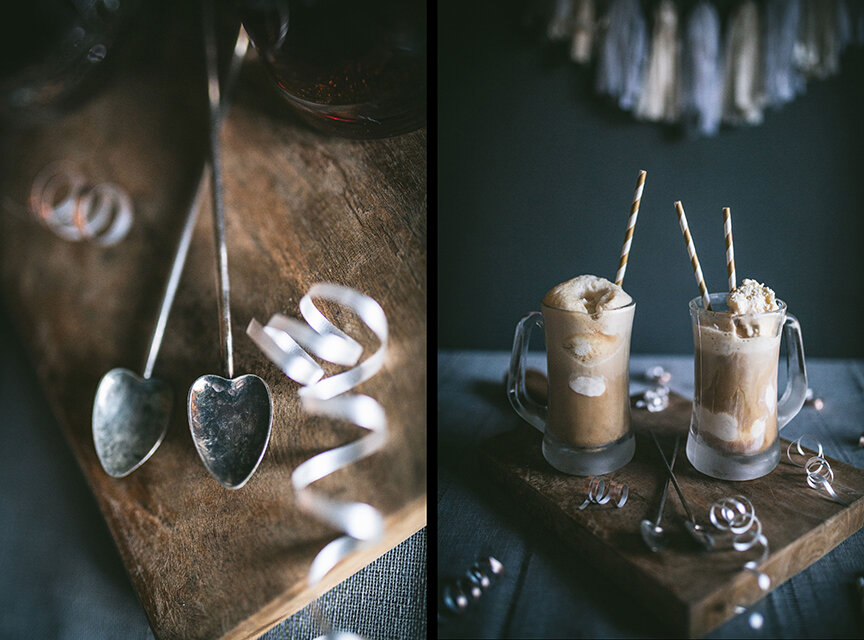
The silver spoons Becky inherited from her grandmother and a couple of root beer floats were the subject of some of Becky”s earliest food photography. “They were delicious and made me happy,” she says of the treats her grandmother made for her as a child.
Are you Becky’s dream guest?
If you’ve got a treasured food memory you’d like to share, consider applying to be a guest; you just might turn out to be on my next favorite episode.
“The beauty is in the mundane,” Becky says. “It’s the everyday people whose stories are not told over and over again that hold the real wisdom and beauty.”
“Time and time again, I've gotten on the phone with a regular person and we've talked for hours (!) about their grandmother or their father and I get off in tears, so in awe of this person's fortitude and love,” she says.
On the other end of the spectrum, if you know a chef or a high-profile foodie who tells captivating tales around the dinner table, why not turn them on to the podcast? Maybe they’ll want to share their untold food inspirations, too. (Rahul Mandel, wanna dish? Becky says she’d love to hear about Bangladesh and your mom and about so much more than your (fabulous) cakes!)
Favorite episodes, free download & related links
My favorite episodes of The Storied Recipe podcast:
“Food is very emotional.”
Selina Göldi on the soul of a place, how cooking in the French countryside helps her reconnect with the instinctual aspect of cooking, “the map of her childhood landscape” in Switzerland, and entertaining with her whole “heart and body and soul.” Oh, and a recipe for a German no-bake layered cake that her grandmother and mom prepared for celebrations.

“They would always forget to put something in.”
Becky speaks to her longtime friends Robert and Lisa amidst lots of laughter, musings on what exactly is pudding? (no real conclusions drawn), memories of stirring the Christmas pudding for good luck, and how much whiskey to pour in, give or take. (Sorry, this family recipe’s a secret.)

“I found my entire family in a Ukranian village.”
American-born Lydia on the power of calling herself “Piotr’s granddaughter,” discovering the foods of her childhood on a foreign table, and trading shots of homemade vodka with a dying woman. Oh, and a recipe for (a lot!) of varynyky (otherwise known as pierogis).

Seth Greenberg: Lessons from an Iconic NYC Bakery and Laura Clark: Thanksgiving in Italy are two more of my favorite episodes.

Freebie I know you’ll love:
The DIY Storied Recipe Book, which you can print at home, creates space for you to preserve your recipes and the stories behind them.

The Storied Recipe Instagram feed:

After a recent account hack, Becky lost thousands of followers, so the feed is still building; you’ll get a taste of her food photography as well as updates about new podcast episodes.
All food photographs by Becky Hadeed, courtesy The Storied Recipe.
Related reading:
Check out more podcast recommendations for life storytellers, creative entrepreneurs, oral historians, and anyone who loves a captivating first person story.
Read more posts with first-person food memories and tips for preserving your own.
Our A Taste of the Past recipe card set pairs nicely with a bottle of burgundy—a most thoughtful hostess gift or a little homespun comfort for yourself anytime.
What about YOUR Food Memories?
Care to preserve your own food memories—or a whole bunch of your life stories with a few luscious food memories thrown in? I’d be honored to interview you for a book of your own. Reach out to see how we can work together!

Most thoughtful holiday host gift
Just in time for Thanksgiving: A Taste of the Past, a family history recipe card set for preserving not only family recipes, but the stories behind them.
My go-to host gift for dinner parties is a nice bottle of wine, something to be enjoyed communally around the table, hopefully over interesting conversation. I admit, though, it’s not the most original of ideas.
These days I upped my giving game, and I invite you to do the same: This A Taste of the Past recipe card set pairs nicely with that bottle of burgundy!
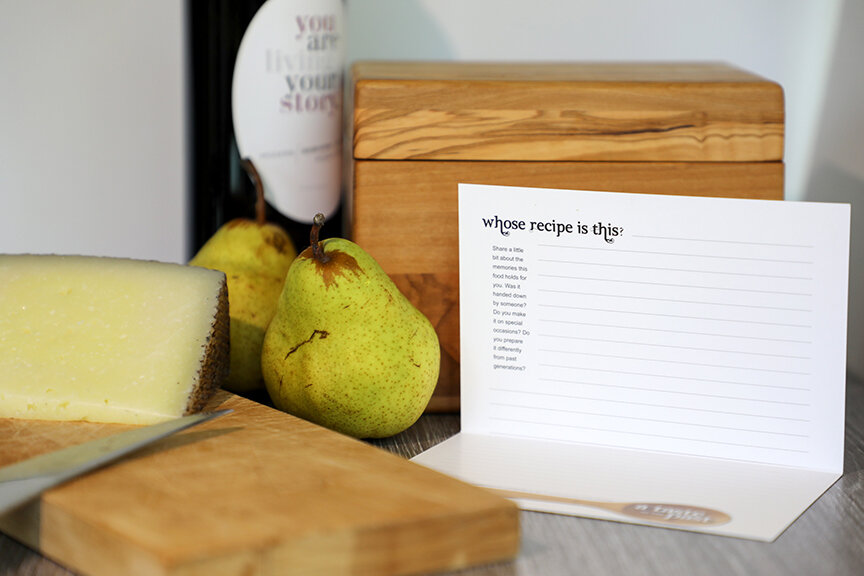
Introducing…
A Taste of the Past recipe card set
I cherish the few recipe cards I have in my mother’s and grandmother’s handwriting. The grease stains add a patina of love, and the crossed-out changes (organic butter instead of margarine?) tell a story of time passing.
But what if they could tell a fuller story? What if the waves of nostalgia that wash over you when you smell Nonna’s Sunday sauce simmering on the stove could be preserved, too?
Well, of course, those precious food memories can be preserved—and this unique recipe card set allows you to do so right alongside your recipes.
This recipe card set encourages you to tell the tales of your food memories and to record your family’s favorite recipes in the very same place, essentially creating a living heirloom that can be passed on and enjoyed for generations.
The cards, which when folded measure 4x6 inches and fit in most standard recipe boxes, include one side on which to write a dish’s ingredients and preparation instructions, and a reverse side for you to record memories associated with the dish. Is it a traditional holiday meal that your family has cooked for decades? Is it a new twist on a childhood favorite?
This family history themed recipe card set is the perfect place to record Mommy’s foolproof tahdig secret (patience!), Grandpa’s grilling guidance, and your own generation’s current favorites.
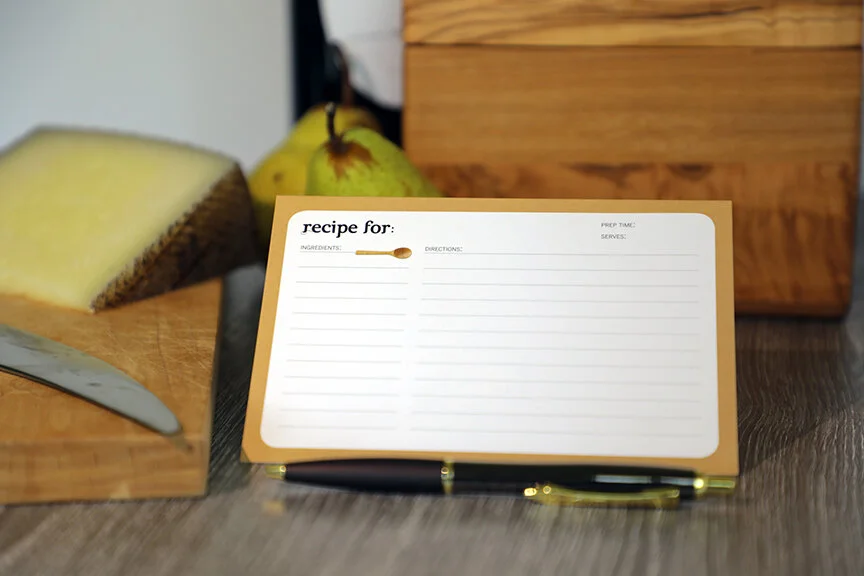
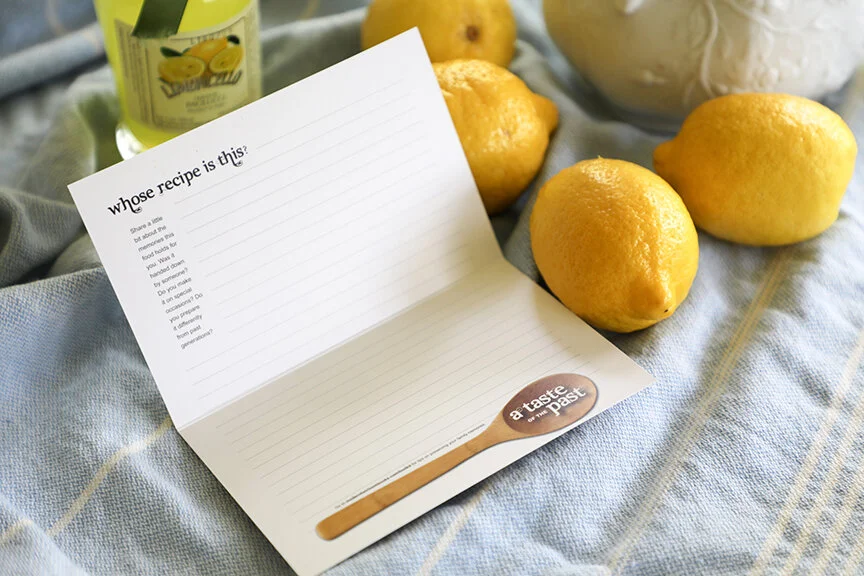
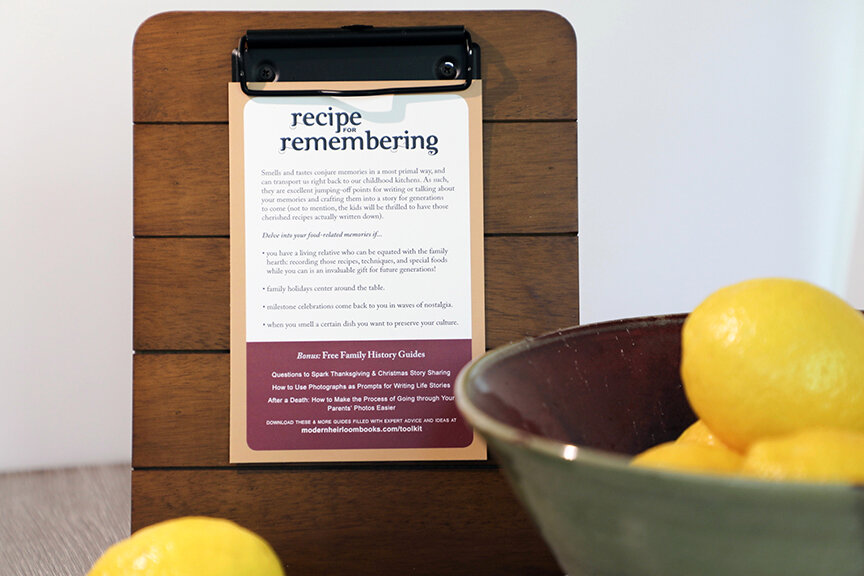
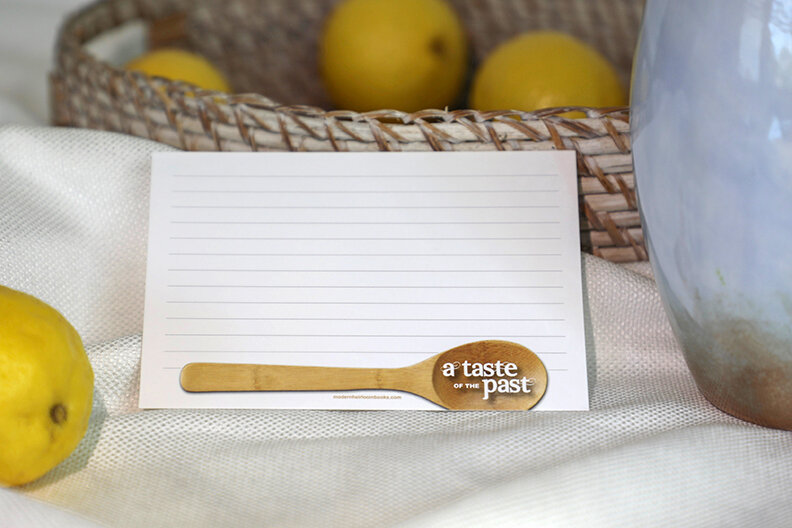
Included…
Bonus tips & ideas for capturing food memories
In addition to the recipe/memory cards, there are four bonus pages of easy tips and tricks for
getting your family members involved in recording recipes and family stories,
what types of dishes and memories to include, and
how to most effectively encapsulate your stories in written form.
there’s still time…
Thanksgiving delivery within reach!
If you’re in the Northern New Jersey area, I'd love to meet you to hand-deliver a set of these cards (and hear how you plan to use them!!)—DM me on Instagram or send me a quick note!!
For everyone else, the recipe card set is available for shipping now, and I’ve made sure to launch the product just in time for Thanksgiving gifting (they make a thoughtful stocking stuffer in December, too!). Click the image below for full product details, or add it to you cart directly.
I can’t wait to see the memories and family recipes you capture on these cards—I hope you will share!!

Recipe for remembering
Our food memories—sneaking tastes of Nonna’s sauce from the pot, learning to grill ribs from Dad—are worth preserving. Ideas to easily capture stories & recipes.

Ever have a friend drop by your house unannounced and drool over the smell of your simple chicken soup? Have you ever craved a gooey peanut butter sandwich after a bike ride with your kids? When foods remind us of the past—especially fond memories from childhood—we find comfort and more than a little inspiration for revisiting those times.
When I am interviewing a client for a life story book, often it’s their food memories—recollections of sitting around a family table, sneaking tastes of Nonna’s sauce straight from the pot, or learning to grill from Dad—that call forth meaningful stories.
How about you?
Preserving your food memories
I encourage you to record handwritten recipes from your own kitchen (your kids’ favorite meals, holiday traditions) along with recipes from your family archive (the birthday cake passed down from your mother-in-law, the Old-World dishes that bring a taste of your heritage home).
Then take it a step further by jotting down the memories associated with those recipes. Ask the kids and other relatives to do so, as well (everyone has their favorites, no doubt, and it’s fun when memories overlap!).
Trust me, you are creating a meaningful—and delicious—legacy! Stash the cards in a recipe box, or use them as the raw material for a family cookbook.
A few ideas to get you started:
Grab a piece of note paper and jot down a list of recipes that hold meaning for your family. Don’t think just about holiday meals or complicated dishes—even that three-ingredient dish that you fall back on during busy weeknights should be included. My grandmother used mayo instead of butter to cook up the best grilled cheese ever, and you can be sure I’m passing that simple but critical tidbit on!
If the recipe was handed down by a relative, indicate with whom it originated, and any tweaks subsequent cooks have made along the way.
Consider asking family members to fill in cards and contribute them to your collection. It’s always wonderful to have notes in loved ones’ own handwriting, and reading the memories they attach to the recipes will be a tasty bonus.
Be specific.
Mention the cast-iron pan with the always-loose handle that Bubbe cooked his eggs in. The apron Aunt Ida wore only on Thanksgiving. How cherry Jell-o brings you back to your childhood, and the aroma of anise transports you to Brooklyn at Easter.
Details, details—the scents and colors and textures...the truth of the story lies in the details.

Want memory & writing prompts sent weekly?
Our 8-week Food Memories course provides expert writing guidance & thoughtful prompts to spark your memories, delivered straight to your phone—for just $15.





75 Questions to spark Christmas story sharing
Family history questions for Christmas: 75 open-ended, specific interview questions to elicit powerful memories & stories from the older generation.
Christmas and Hanukkah—or other holidays where extended family gathers in one place—is an optimal time to gather stories and memories via oral history interviews. There needn't be a lot of pressure: Simply turn on your smart phone’s voice recorder or set up a video camera on a tripod, then forget it’s there...and begin reminiscing.
The important thing is that you relax and let the stories flow. Don’t wait until next year or when everyone is available or any other “better time”—trust me when I say: Now is always the right time!

When family gathers at Christmas, use the opportunity to share stories and memories of days gone by—trust me, it’s as entertaining as it is valuable!
Personal history interview questions: Christmas edition
Use these questions merely as a guide or to give you ideas for questions of your own. The key to any good personal history interview is listening—so ask follow-up questions that genuinely interest you, and let the stories take their own paths...that is usually when the magic ensues!
FOOD
Is there a dish you always associate with Christmas Eve or Christmas day Do you know who has the recipe, and who originally cooked it for your family?
Did you or your family make cookies or other special desserts to share with neighbors during the holiday season? What about leaving food for Santa—and his reindeer?
Are there any foods, from the holiday season or year-round, that remind you of your heritage?
Did your parents make you eat anything you absolutely hated?
What food(s) do you associate with comfort? With the onset of winter?
Who made the cakes for birthdays in your home?
Do you recall any massive failures at cooking—a horrible dinner, burnt pie, missing ingredients?
Who taught you how to cook?
TRADITION
Did you hang Christmas stockings? By a fireplace, or somewhere else? Were they filled by Santa? Do you have any favorite memories of stocking stuffers?
Did anyone in your family or neighborhood dress up as Santa? Did you know it was them? Have you or anyone else in your family continued that tradition of playing Santa—and if so, how does it make you feel?
What traditions do you most fondly recall from your childhood?
Are there certain traditions that have persisted for generations in your family?
What traditions have you begun anew with your own nuclear family?
Is there a memorable gift you have given someone?
What is the best gift you have ever received?
ANTICIPATION
What time did you wake up on Christmas morning? Was it earlier than your parents? Did they make you wait before starting the festivities?
Do you recall the feeling of anticipation on Christmas Eve?
What other times in your life do you recall similar feelings of anticipation?
GIFTS
Did you (and your siblings/family members) want to rush through the gift giving? Was there a sense of order and gratitude opening gifts, or was it wrapping-paper mayhem?
Did you ever look for or find evidence of Santa?
Were there ever times when hardship made gift giving at the holidays challenging? How did that make you feel? Do you have a story from that time, or a lesson learned?
How were gifts wrapped?
Did you help pick out gifts for those you loved, or was it strictly a parent thing?
What types of gifts or cards can you recall having made by hand
as a child?
Do you remember how you felt when you discovered the truth about Santa? How old were you?
What is your most magical Christmas memory?
RELIGION
What religion, if any, is your family? Were you devout? Members of a congregation?
Was your church or temple community a central part of your life?
Did you go to church on Christmas morning? Midnight mass?
What memories of you have of those times?
Did/do you pray?
Are you spiritual? How does that manifest itself in your life?
HUGS
Was your family very affectionate? Describe how they showed love, or if you wished there was more physical affection.
Are you a hugger? How does it make you feel?
Who in your family gives/gave the best bear hugs? What is/was that person like?
Did you cuddle with your parents? Do you cuddle with your own children? Grandchildren? What does it mean to you?
Did you write letters to Santa? If so, where did you mail them? Did you ever hear back from the North Pole?
Do you recall getting Christmas cards during the holiday season?
Did your family draft a holiday letter (many people keep these as part of their family history archive—did you save any of them)?
SNOW
Where did you live when you were growing up? Did you generally have a white Christmas?
Do you remember the first time you saw snow?
What was your favorite snowtime activity—sledding (or did you have a toboggan?), making snow angels, snow balls fights? Or how about ice skating? Shoveling?
Do you recall snow days from school? Listening to the radio for announcements, or waiting for a parent to wake you up? How did you occupy yourself on snow days?
Did you build snowmen? What would you use for the nose and eyes?
HOME
What smells remind you of your childhood home?
What makes you feel most at home now, as an adult?
How do you describe home?
What was the address of your favorite home? Why was it your favorite?
Have you ever visited a home from long ago—how did it make you feel?
Did you move often while you were growing up? Did that affect your personality or self-esteem?

Free Christmas Questions Guide
Download all 75 questions in a handy printable booklet!

Give the most unique holiday gift!
Cherished memories last a lifetime—and beyond, if you preserve them.
55 Questions to spark Thanksgiving story sharing
Family history questions for Thanksgiving: 55 open-ended, specific interview questions to elicit powerful memories & stories from the older generation.
Thanksgiving—or other holidays where extended family gathers in one place—is an optimal time to gather stories and memories via oral history interviews. There needn't be a lot of pressure: Simply turn on your smart phone’s voice recorder or set up a video camera on a tripod, then forget it’s there...and begin reminiscing.
The important thing is that you relax and let the stories flow. Don’t wait until next year or when everyone is available or any other “better time”—trust me when I say: Now is always the right time!

Crouch family Thanksgiving, 1940, Ledyard, Connecticut. Photographs by Jack Delano (Library of Congress).
Personal history interview questions: Thanksgiving edition
Use these questions merely as a guide or to give you ideas for questions of your own. The key to any good personal history interview is listening—so ask follow-up questions that genuinely interest you, and let the stories take their own paths...that is usually when the magic ensues!
FOOD
Is there a dish you always associate with Thanksgiving? Do you know who has the recipe, and who originally cooked it for your family?
Did your parents make you eat anything you absolutely hated?
What food(s) do you associate with comfort? With the onset of the school year?
Who made the cakes for birthdays in your home?
Do you recall any massive failures at cooking—a horrible dinner, burnt pie, missing ingredients?
Who taught you how to cook?
TRADITION
What traditions do you most fondly recall from your childhood?
Are there certain traditions that have persisted for generations in your family?
What traditions have you begun anew with your own nuclear family?
Is there a memorable gift you have given someone?
What is the best gift you have ever received?
LAUGHS
Was there ever a moment where you laughed uncontrollably?
Whose laughter do you find heartwarmingly contagious?
Who in the family tells the best jokes?
LESSONS
Do you recall a time you failed in a big way? Can you share the story of how you felt, who comforted you, what you learned? Did that failure hinder you from taking chances in the future, or embolden you in any way?
Do you remember lessons your grandparents taught you?
How were you punished as a child?
Is there a fear you have that you have never been able to overcome?
LOVE
Who was your first love?
Do you remember the first time you said “I love you” to someone who was not part of your family?
How would you describe the love you received from your parents?
Was your grandparents’ or great-grandparents’ love different in any way from that of your parents’?
FANDOM
What teams do you root for?
Did you ever tailgate at a football game?
Did you play sports growing up? Were you a team captain?
Do you remember any big wins? Any big losses?
Are/were there any big rivalries among family members and team loyalties?
HOME
What do you remember most about your childhood home?
Where did you do your homework when you were a kid?
Did you have a secret hiding place in your home?
Did you ever move from one home to another? What was that like?
Was there another place you considered a “home away from home”?
Were there any comforts from your childhood that you translated into all your adult homes?
Did you play outside after school? What was it like being a kid in your neighborhood?
SCHOOL
Did you have a favorite teacher as a kid?
What were your favorite years in school? Why?
What did it say about you in your high school yearbook?
Did you have a childhood dream about what you wanted to do with your life? Do you ever think about it now?
Do you remember drills during school (depending upon age of interviewee, could refer to duck and cover drills during war, fire drills, etc.)
What subjects were you good at? Which ones were more challenging for you?
What kind of grades did you get?
Did you belong to any clubs? Go to dances?
What were some challenges from your school years, particularly ones that made you a stronger or more compassionate person?
Describe your family legacy with regard to education—who was the first to go to college; have any of you attended the same schools; etc.

Free Thanksgiving Questions Guide
Download all 55 questions in a handy printable booklet!
Explore related posts:
This blog was originally posted on November 18, 2018.














4 Ways to give thanks through story sharing
Encourage guests at your Thanksgiving gathering to share memories in addition to gratitude with these four ideas for holiday family history story sharing.
Sandwiched between the uber-commercial Halloween season and the begins-too-soon “December” holiday rush lies a quieter American holiday, Thanksgiving. It’s always been one of my favorites, and not merely because I love leftover stuffing.
Thanksgiving appeals to me on a visceral level: home-cooked food, family gathered around a table, tradition, laughter, and love. My family never got “dressed up” for Thanksgiving—it was a comfortable holiday, one where we reveled in being together and lingering…over the food, over football, and especially, over stories. Even for families who may not share stories regularly around the dinner table, Thanksgiving lends itself to some good old-fashioned reminiscence.

Giving Thanks—and Telling Tales
Do you have a tradition of going around the table and naming something you are each thankful for? This focus on gratitude is a hallmark of Thanksgiving—and one which we can build upon to crate new traditions that not only help us enjoy the day together, but cement a family legacy that will endure well into the future.
Here are a few ideas to turn your tradition of “giving thanks” into something even more lasting:
1 - Go around the table twice.
On the first go-round, each person shares something for which they are grateful. On the second go-round, each person shares a favorite memory from a holiday past. Designate one person to record the storytelling session, whether using the microphone feature on your smart phone or setting up a video camera on a tripod at the head of the table. Be sure to encourage questions and follow-up stories—often that is where the magic lies. I guarantee there will be few lulls in your dinner conversation!
2 - Formulate a family health portrait.
Personalize your healthcare by sharing your family health history and tracking illness from one generation to the next. Participate in Family Health History Day (the same day as Thanksgiving) and use the Surgeon General’s health portrait tool to talk about, and write down, your family's health history to help ensure a longer, healthier future together.
3 - Play show-and-tell over dessert.
In lieu of asking guests to bring a pot-luck dish, invite them instead to pack a meaningful item that reminds them of their childhood. Like that vintage Hess toy truck Grandpa keeps on the mantle, or the grease-stained, handwritten recipe Aunt Ginny pulls out every Christmas. Set up an area to photograph their heirlooms, and record the stories behind them over pumpkin pie.
4 - Make a paper trail.
Books, documents such as old Passports and birth certificates, scrapbooks, boxes of old photos—there are lots of papers that hold bits and pieces of family history, but usually they are scattered among homes of various family members near and far. Take the first step in cataloging your family archive by polling all the guests at your Thanksgiving gathering to see what they may have; we’ve even created this handy inventory worksheet for you to keep track of it all. Then, when you’ve got more time, you can begin digging into your family history in earnest—with a plan.
Thanksgiving Family History Resources & Links
Consider participating in StoryCorps’ Great Thanksgiving Listen.
Download our free guide: 55 Questions to Spark Thanksgiving Story Sharing.
Use a family tree form to keep genealogical information organized.
Download this pedigree chart to record information you get from family members.
A genealogy correspondence log helps keep track of which people you've talked to and which people you still need to contact.
Let the kids plan their interviews with family members using a simple oral history worksheet like this one.
“Billee’s ‘Famous’ Foods”
Gramma Billee kept a jar for bacon drippings on her stove; she used it liberally and kept it full. She knew everyone’s favorite foods and provided them—often.
Gramma Billee kept a jar for bacon drippings on her stove; she used it liberally and kept it full. But one of the most important ingredients she cooked with was intention: She knew everyone’s favorite foods and provided them. Often. Decades later, her granddaughter shares remembrance and recipes so that Billee’s descendants may nourish their own families with her “famous” foods.
As I have written about before, tastes conjure memories in a most primal way, and can transport us right back to our childhood kitchens. As such, they are excellent jumping-off points for writing or talking about your memories and crafting them into a story for generations to come (not to mention, the kids will be thrilled to have those cherished recipes actually written down).
In this latest contribution in our series, A Taste of the Past, we are treated to one family’s “famous” foods, as skillfully and lovingly prepared by Gramma Billee—and now, her descendants.
A Taste of the Past
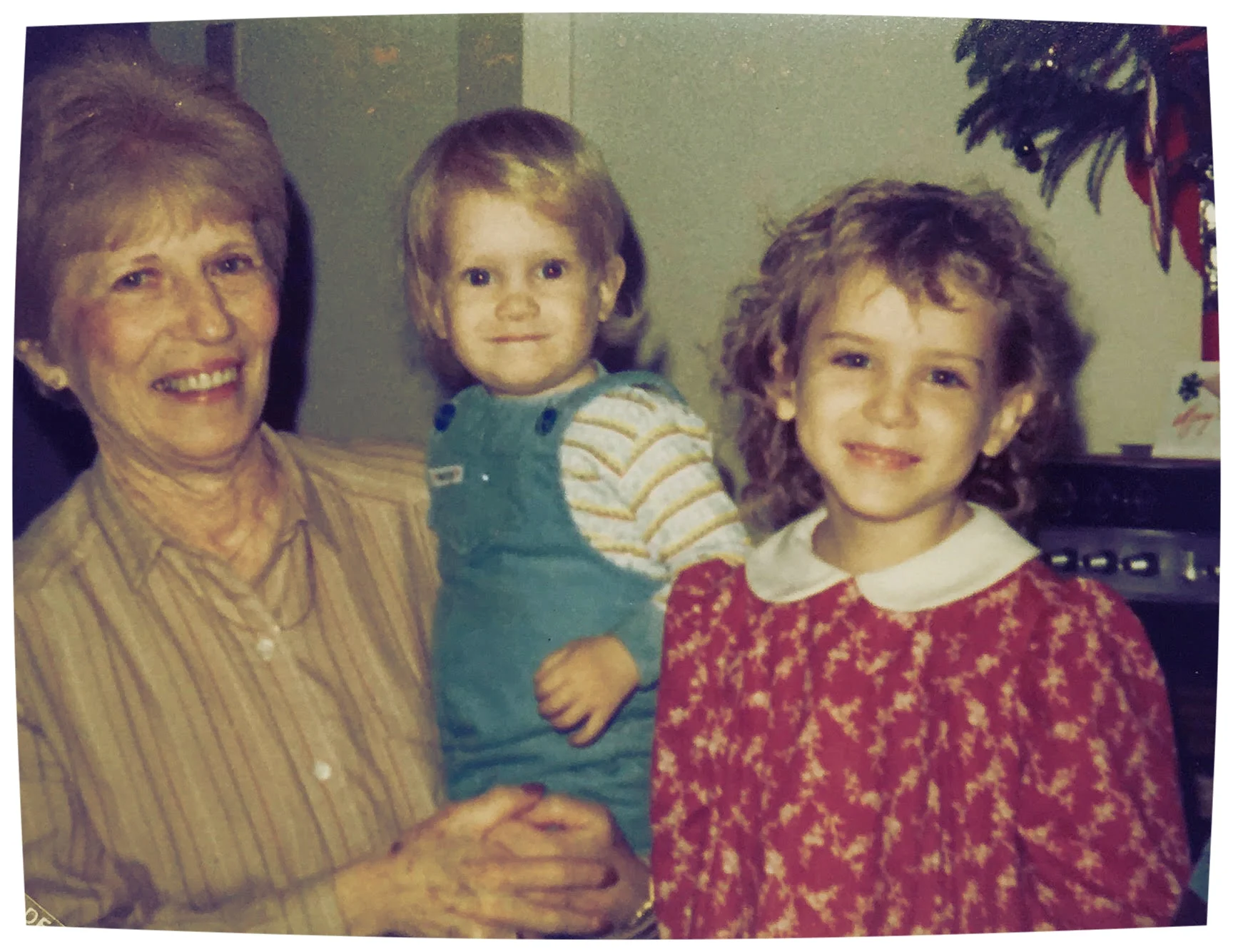
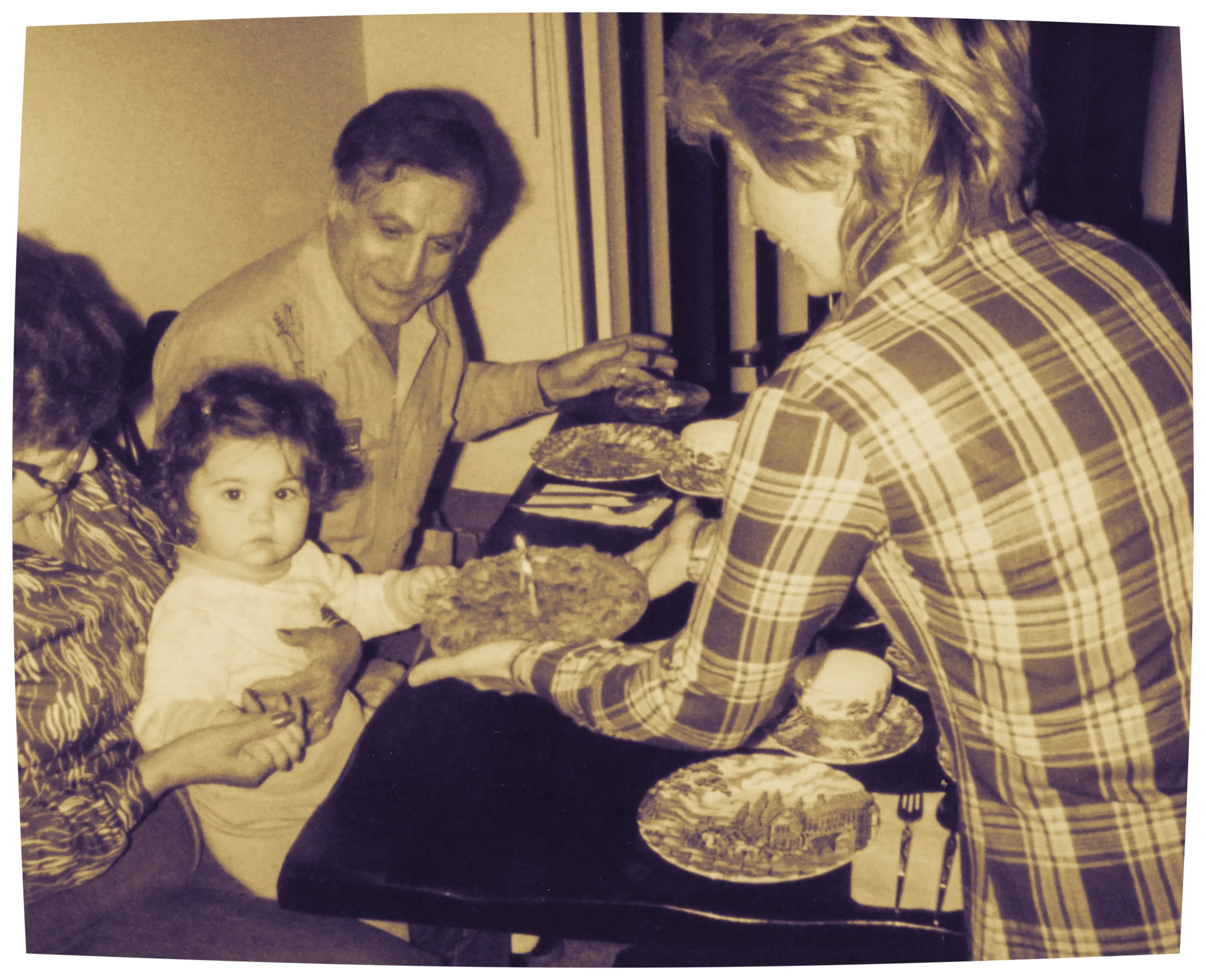
Gramma Billee, the writer's baby brother, and the writer as a little girl, 1982
Billee’s “Famous” Foods
By Melissa Finlay
I visited my grandmother Billee in person for the last time when she was 90 years old. I spent several days interviewing her, recording her memories and anything else she wanted to leave for posterity. She told me plenty of stories about her life and details about our ancestry, but she most wanted me to record her recipes, to pass her food legacy on to her grandchildren and great-grandchildren. Her recipes were close to her heart, full of memories of friends and family, and preciously held knowledge of who loved which food the most.
Stories of struggle, and hope
While I recorded her recipes, I was the fortunate recipient of my grandmother’s stories, as each dish sparked memories anew.
Billee’s dishes were famous among everyone who knew her. Her recipes came to be referred to as “Billee’s Famous Enchiladas,” “Billee’s Famous Cherry Pie,” “Billee’s Famous Hummingbird Cake,” even “Billee’s Famous Hot Cocoa.” Not that her dishes were necessarily original—she liked to collect recipes from newspapers, magazines, and friends—it’s just that she made them so well, and shared them so generously. She cooked for family get-togethers. She brought overflowing platters to church potlucks and work parties (I think they may have held extra work parties to score more of her foods!). Billee knew everyone’s food favorites, and provided them.
Her life wasn’t always full of ample food, though. During the Great Depression, Billee’s father struggled to find work and her mother suffered from serious health problems. Billee’s maternal grandparents stepped in to help the family get through these lean years.
Billee recalled walking with her younger sister to their grandparents’ corner grocery store each morning on the way to school. Her grandmother gave them each a “store lunch” to take with them. After school, Billee returned to the store to work for a few hours to repay her grandparents’ generosity.
Billee’s own young family moved from Oklahoma City, Oklahoma, to Lake Jackson, Texas, on the Gulf of Mexico, in the mid-1950s. Here she learned how to cook with seafood, not as a premium ingredient but as an affordable protein to feed her growing children. When Billee was widowed at 47, she struggled financially while training to enter the workforce. She did her best to nourish herself and her youngest son during this difficult time.
A granddaughter’s perspective
By the time I came on the scene, Gramma Billee had a steady career and an active social life. She was constantly in the kitchen. As I watched her cook, I asked her plenty of questions. She answered every one, but never invited me to pitch in; she did the gourmet cooking and baking herself. She was the master! Cinnamon rolls filled with pecans and raisins. Shrimp quiche. Stuffed mushrooms. Tender brisket. Squash casserole. Molasses cookies. Pie, pie, and more pie.
When I was a child, her dishes always seemed luxurious to me—indulgent even. She used copious amounts of seafood, avocados, cream, pecans, butter, and shortening, ingredients not commonly used at my home. Billee kept a jar for bacon drippings on her stove; she used it liberally and kept it full. Dessert was a standard course on her menus. Yet, for all her decadent cooking, she always watched her own portions and remained slender throughout her life.
Gramma Billee introduced me to many new southern foods. I knew if Gramma made it, it would be delicious, so I tried every strange new thing she offered me. I loved so many! Billee made the only liver and venison I would ever eat, the texture and flavor superb with bacon and onions. Shrimp Victoria became a favorite with tender, succulent shrimp swimming in a rich sour cream gravy. Gramma knew it was my favorite, and made it for me often. I enjoyed the crunchy, salty bites of her fried okra. I can still recall the smells of apricot fried pies bubbling in the cast iron skillet. Nothing, however, could tempt my sweet tooth more than Billee's sweet-tart cherry pie.
I have begun to record the recipes for many of grandmother Billee’s “famous” offerings, transcribing her hand-written (often butter-stained) notes for other members of the extended family. So that her grandchildren and great-grandchildren can choose a favorite dish. So they can make it often and think of her. So her nourishing legacy can live on.
Recipes from Billee’s repertoire
I will start by sharing my favorite dishes that she made “just for me” every time I visited. These dishes still bring me the comfort of being with my gramma every time I eat them.
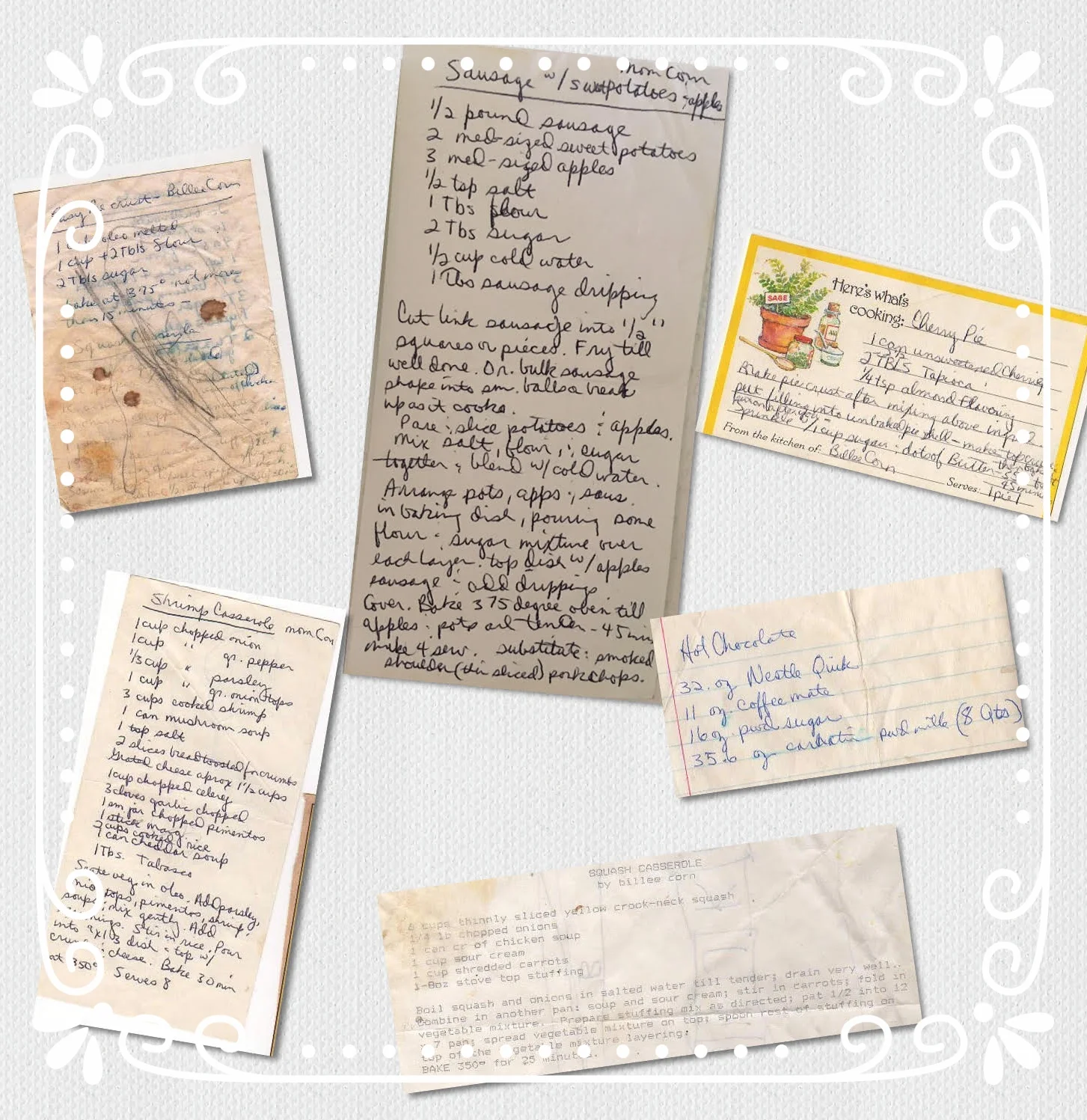
An array of Billee’s handwritten recipes—well-loved and well-used, all!
Shrimp Victoria
1 pound shrimp, peeled and de-veined
½ pound mushrooms, cleaned and sliced
1 onion, diced
2 cloves garlic, minced
½ cube of real butter
1 tub of sour cream
Salt, to taste
Red pepper, to taste
Sauté onion and garlic in butter until softened. Add mushrooms and spices and sauté until soft. Add shrimp and sauté until just pink. Take off the heat and stir in half the sour cream. When dished up over a hot bed of rice or egg noodles, top with a dollop of sour cream. Serve with a salad and a nice loaf of French bread.
Orange-Avocado Salad
1 medium head lettuce, torn, about 6 cups
1 small cucumber, thinly sliced
1 avocado, peeled and sliced
One 11-oz. can mandarin oranges
2 tablespoons sliced green onions
In large salad bowl, combine lettuce, cucumber, avocado, oranges, and onion. Just before serving, pour on dressing and toss.
For dressing:
½ teaspoon grated orange peel
¼ cup orange juice
½ cup salad oil
2 tablespoons sugar
2 tablespoons red wine vinegar
1 tablespoons lemon juice
¼ teaspoon salt
Combine all ingredients in screw-top jar. Cover tightly and shake well.
Cherry Pie
1 can unsweetened cherries
2 tablespoons tapioca
¼ teaspoon almond extract
Mix above ingredients and let rest while making pie crust.
For easy pie crust (makes two crusts, top and bottom):
1 cube oleo, melted (Gramma’s name for shortening)
1 cup + 2 tablespoons flour
2 tablespoons sugar
Mix ingredients until they form a soft ball. Roll, and form half in pie plate.
Pour cherry filling into unbaked pie shell. Sprinkle filling with 1 cup sugar, generous dots of butter. Place top crust over filling. Bake at 350 degrees for 45 minutes.
Melissa Finlay is an avid genealogist, a garden guru, a homeschooler, mama to 7, and wife to the love of her happily-ever-after. She and her husband recently created an app, Little Family Tree, to introduce children to their family history.
Dawn Roode’s curated roundup for the week of Sept. 23, 2026, is overflowing with recent reads on memoir, life story writing, and family history preservation.