
Memories Matter
Featured blog Posts


READ THE LATEST POSTS

Life Story Links: August 13, 2019
A wealth of first-person writing that probes the depths of self-reflection and identity, plus pieces on family history surprises, the art of interviewing & more.
“…being your own story means you can always choose the tone. It also means that you can invent the language to say who you are and what you mean…. From my point of view, which is that of a storyteller, I see your life as already artful, waiting, just waiting and ready for you to make it art."
—Toni Morrison, “Be Your Own Story,” Wellesley College commencement speech, 2004

In a photograph from the new book Buried (Catfish Press, 2019; Vira Rama, Charles Fox), the Rama family at the Chonburi Transit Center, leaving their refugee camp in Thailand. Learn more below.
Stories of Us
BURIED, UNBURIED
“Rama watched as his mother dug a hole under their small wooden hut just large enough for the bag of photos. He didn’t ask questions as she hid the traces of their middle-class life under a pile of banana leaves.” The unique journey of one family’s story of survival under the Khmer Rouge, Buried.
TOWARDS CHINATOWN
“By losing my relationship to Cantonese, what have I lost in my relationship with my parents?” Faced with the possibility of losing of her mother, Melissa Hung contemplates another loss—of her mother tongue.
SHARED HISTORIES AND DEFINING STRUGGLES
“We have history books that talk about wealthy politicians who were generally male, and generally white patricians, but we have all these other stories and we’re acknowledging their importance. The story is shifting to show that we all have something to add to the pot,” Thomas Allen Harris says in an interview about the premiere of Family Pictures USA on PBS.
ON MOM’S BOOKSHELVES
“I held those books so many times, their authors and titles were imprinted in my mind before I ever knew their importance,” Angelique Stevens writes in “The Books That Bear the Weight of the Living.”
REMEMBERING PRIMO LEVI
The Holocaust writer, born 100 years ago, managed to survive Auschwitz by chance. The Italian Jewish chemist then went on to write invaluable autobiographical accounts of life in the Nazi concentration camps and of displaced people after World War II. Through quotes and thoughtful analysis, one historian ponders the questions Levi’s writing continues to present us with.
How & Why We Share
TRANSCRIPTION HELP NEEDED
The Library of Congress is looking for volunteer assistants to transcribe 16,000 documents from suffragists—would you like to help? If you prefer to type the words of What Whitman, Susan B. Anthony, or Civil War soldiers, browse their other crowdsource campaigns.
MASTER INTERVIEWER, INTERVIEWED
“I still structure my interviews by trying to get people to lay out plot, beat by beat, even if the stories are very small.” Ira Glass on narrative storytelling and who he would prefer not to interview.
GRASPING MORTALITY
“The process of bringing coherence to one’s life story is what psychologist Dan McAdams calls creating a ‘narrative identity.’ People get better at identifying important life themes as they age, and those who are able to find the positive amid the negative are generally more satisfied with life,” Dhruv Khullar, M.D., writes in this exploration of what really matters to patients nearing end of life.
THE GOOD, THE BAD, AND THE UGLY
“[I] dare you not to be moved when you meet your ancestors!” Texas–based Allison Peacock of Family History Detectives writes in this piece on the traumas—and delights—that are often discovered as part of the genealogical journey.
...and a Few More Links
Finding connection at Ellis Island through a bit of Armenian graffiti
I combined all the free resources offered by Modern Heirloom Books in one handy toolkit. What other advice would you like to see added?
Brandon Shimoda on seeking ancestral connections through photos of his grandfather in a Japanese internment camp
From email to precious photos: passing on your digital assets
The benefits of dipping into the blog archives of Denis Ledoux’s The Memoir Network
Registration is open for the ASJA 2019 DC Writers Conference, with sessions on essay writing, the art of the interview, and marketing through podcasts.
Entrepreneur spotlight: Kinetic Legacy
Join the free virtual bookclub from the National Association of Memoir Writers this Thursday, August 15: a conversation with Beth Ricanati, author of Braided: A Journey of a Thousand Challahs.
Short Takes


Announcing new resources toolkit
Discover family history, life story writing, and photo management guides in our Toolkit, where you can download free resources to help you preserve your legacy.
We have offered a variety of free resources over the years, but they have never before been presented in one convenient place.
Now all of our free guides can be browsed on our Toolkit page, easily found in the footer of the Modern Heirloom Books website in case you forget to bookmark it 😉

Our guides offer up some of our best advice on the topics of memory-keeping, engaging in family history, preserving (and finding the stories within) family photos, and writing about your life, among others.
We will undoubtedly add to these resources in the coming months. So:
What topics would you like to see covered?
What challenges are you facing in your efforts to preserve family stories?
Would you prefer more writing prompts or oral history questions?
I look forward to hearing from you, and as always, feel free to ask anything in the comments section of the blog!
Life Story Links: July 30, 2019
A memoir with a distinctive format, why the stories of yesterday matter today, life story writing advice, recommendations for first person reads, and more.
“So, why do we need memoir? In this world, and in our country—where so many of us feel a lack of connection, where the challenges seem so large—writers who dare to tell the brutal, honest truth about their humanity offer us a gift....They remind us that we are more alike than different. They make us feel less alone.”
—Liz Scott

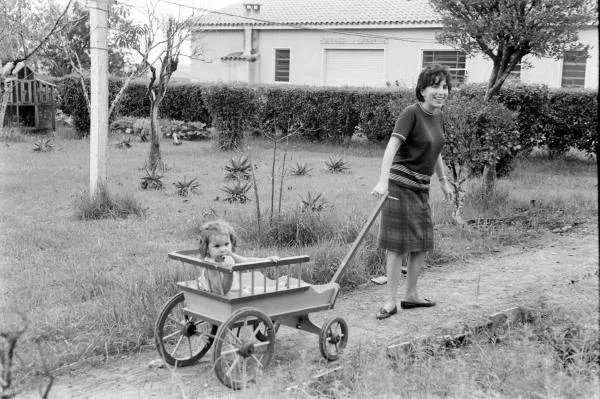
La Plata, Uruguay, 1964. Photograph by Leonard Mccombe for LIFE magazine. ©Time Inc.
Connections with the Past
RESCUED TWICE
“There’s a Yiddish concept called the ‘Di Goldene Keite,’ which talks about the historical link that ties each generation to the next. We are responsible for transmitting and preserving this heritage.” The archive that survived the Holocaust and a 2019 terrorist attack.
THE FLAVORS OF FAMILY FOLKLORE
“This master sauce could be perpetuated for generations—an irreplaceable family recipe. The DNA of meals past would be infused into each meal. You could literally eat what your grandmother ate,” Grace Hwang Lynch writes in this piece exploring genetics, food memories, and immigrant identity.
SEPARATE BUT EQUAL
In his new memoir, Aleksandar Hemon relates his family’s large encounters with history and their smaller everyday concerns in two separate narratives, packaged together in one book (just flip it over to read the next). One reviewer called it “a writer’s testament to the act of storytelling, the art of writing and the impulse, to paraphrase Joan Didion, to tell stories in order to live, to make sense, to survive.”
HISTORY REPEATS
“As leaders of organizations entrusted to tell the story of new Americans, we share a belief that our national identity is best understood and appreciated through the stories of yesterday’s immigrants whose lives have shaped our history.” Three guardians of history coauthor an op-ed on how America and the immigrant experience are intrinsically linked.
Writing and Relics
A SENSE OF AN ENDING
“The tricky thing about writing an ending for a memoir is that if you’re still alive to tell the story, it’s not really over yet.... So how do you end the story if you’re still living in its aftershocks?” Lilly Dancyger helps you write towards a resolution
UNEASY CONVERSATIONS
Why is it sometimes easier to talk about our life experiences with a stranger? Last week I wrote about how to get a reluctant storyteller to genuinely open up about his or her past.
SCRAPBOOKS, SHARED MEMORIES
“I think I should look at these albums on a regular basis as a necessary temperature check. They remind me how we only record what matters. Nary a page has a photo of an e-mail message or task list.”
PICTURES OF THE PAST
From the streets of Detroit to the shores of Southwest Florida and the farm fields of North Carolina, Family Pictures, USA, looks at family photo albums as an integral part of our social and cultural history. Premieres Monday August 12 on PBS (check local listings):
“MY DARLING MATEY”
Bruce Summers of Virginia–based Summoose Tales reflects on one of his earliest personal history collaborations, the story of a man and woman, half a world apart, and the barn that brought them together.
Recommended First-Person Stories
LIGHT THERAPY
“Before Tom died, when I pulled into the driveway, a glow from the den meant he was there in his favorite space... His warm hug welcomed me home. After his death, I could not bear arriving to a house in darkness,” Helen Collins Sitler writes in this touching flash-fiction piece.
OVER THE MOON
I simply adore the interplay in the back-and-forth between this couple, wed for 70 years, as they speak about how they met as kids and developed an undying love and affection for one another:
HISTORY, BIG AND SMALL
“What are some of the funny little connections you have to historic moments in the larger context?” Carol McLaren of Unique Life Stories in Arizona, wonders in this recounting of an impromptu dinner and story swap about the Apollo 11 moon landing.
...and a Few More Links
A roundup of writers on the topic of why we write memoir
“You’ve Told that Story 100 Times. Please Stop.”
Lucette Lagnado, whose memoirs epitomized “the art of reported memory,” dies.
A historian looks back at the legacy of slavery in her home state, incorporating personal history along the way.
Photographer captures the love of elderly couples who've been together for decades.
A wedding-day gift that will undoubtedly become the couple’s first family heirloom.
Short Takes

The ultimate wedding day groom gift
Searching for a groom gift beyond the traditional watch or cufflinks? Surprise him with an heirloom book expressing your love and gratitude—meaningful, unique.

Bound with love
Decided to exchange presents on the day of your wedding but now wondering what the heck could possibly live up to your love for your soon-to-be spouse?
Go above and beyond the go-to watch gift with a one-of-a-kind heirloom book that spells out your love—and gratitude—for your groom.
We have taken the idea of a meaningful groom gift to new heights with this luxury book offering. Through a 90-minute in-person interview, I will help you find the words and sentiments to shape your love story, then craft an elegant extended letter to your groom. Your words, your photos, elevated into a gift destined to become your first family heirloom.

“To my love”
Designed with your style in mind and finished with the most exquisite materials, this is the ultimate gift for the one you love—guaranteed to make him feel connected to you on this momentous occasion. (Oh, and did we mention that the big reveal will make for some of the most emotionally beautiful wedding day photos, too?!).
Whether you are an over-the-top emoter or a reserved bride unsure how to express your feelings, we will help you craft your words to best express your joy and gratitude for this next chapter of your life—and for the man you have chosen to share it with.
Your wedding day is once-in-a-lifetime, the start of the next chapter of your lives together—so why not set the tone early with a gift that is as personal as it gets?
Groom gift details
Modern Heirloom Books’ “To My Groom” offering:
is the most personal wedding day gift you could give.
combines photos from your lives together—even a handful of childhood photos of you both—with the words you would like to say.
is the best way to express all that you feel, from gratitude and joy to love and awe, from the littlest things you love about him (that his socks almost always make it into the laundry bin?) to the most profound (that he was willing to move across the globe for your job!).
sets a thoughtful tone for your special day.
ensures your wedding day gift exchange photos will be beyond compare!
is destined to become your first family heirloom.
Time frame:
Depending upon the book materials you choose, the process could take from one to three months to complete. Don’t worry, though—your time commitment is minimal (one 90-minute interview plus an hour or so gathering photos). Rush orders available (fee applies).
Wedding planning is hectic and time-consuming; creating this gift for your groom is sure to be an enjoyable respite from the chaos—and will remind you of why you have chosen this path in the first place!

Learn more about our Ultimate Groom Gift
Learn more about this offering—including cost, time frame, and possible themes—on our Ultimate Groom Gift product page.
Get even more details on our Groom Gift FAQ page.
Set up a consultation to speak with me about your ideas and see how we might work together.
P.S.
Of course this book can be created for anyone! From bride to groom, groom to groom—from you to the partner whom you adore. I am an open-hearted listener adept at helping clients get to the essence of their feelings—and expressing them beautifully. Who do you love?

When a parent doesn’t want to talk about their past
Why it's sometimes easier to talk about our life experiences with a stranger, and how to get a reluctant storyteller to genuinely open up about his or her past.

I hear it often—different words, varying specifics, but always the same underlying message:
“His war years were so painful that they are buried deep.”
“My dad’s childhood was unbearable, so it’s a part of his life he would rather not revisit.”
“My mom refuses to talk about her own father; I assume he was not a very nice person.”
Implied: “My parent will never talk about the past.”
But I wonder: Have you ever asked?
I don’t mean a passing remark about how he/she never speaks about their childhood. I mean asking, in a forthright manner, if they would share the stories of their past. Have you ever asked?
Why it’s sometimes easier to talk to a stranger
I recently heard a story about an elderly gentleman who launched into stories of how his father was an abusive alcoholic: This gentleman spoke without reservation, in depth, and at length. He was speaking to a fellow professional personal historian who had been hired by the gentleman’s grown children.
At the end of two hours of sharing his painful experiences, he indicated that his children would not want to know about any of this.
“They specifically told me they would like to know about your father,” she responded. “Why do you think they aren’t interested?”
“Because they never once asked,” he said.
This man’s children had made it clear that they thought their father would never open up about his own dad. Had they ever asked him, though?
Chances are, they may have made passing remarks about their father’s difficult childhood. Perhaps they treaded lightly because they knew it was difficult terrain. Maybe they asked, but their dad assumed they wouldn’t want the whole messy story.
When family members are the ones trying to capture stories of the past, assumptions can unintentionally impede the way. Consider some of the negative assumptions that may arise when family members interview their elders:
My kids think they want to know, but the reality will be too painful for them to hear.
I can’t imagine my daughter will want to know any more than the basics of my childhood.
I don’t want my son to have negative impressions of his grandfather.
Conversely, when an outsider—whether it be a biographer or a caregiver—asks, the storyteller may feel welcomed in a different way. The assumptions are more positive:
I have been invited to speak. This person wants to know my stories!
This person has no preconceived notions about who I am—I start with a clean slate.
How to get stories from a (seemingly) reluctant storyteller
If you would like to ask your parents or grandparents questions about difficult periods from their past, here are a few tips to generate open conversation:
First ask if they would be willing to speak about the specific topic. Clearly express your genuine interest, stressing how learning more about your loved one’s past will help you understand them (and maybe even your own childhood) better.
Indicate further why you are interested: Would you like to shed light on your great-grandparents or other individuals further up the family tree? Are you seeking examples of resilience to fuel your own growth? Are you simply curious about this person whom you love beyond compare, wishing to know them as a person in their own right and not just in relation to you (as your mother, say)?
Don’t merely hear; listen. Hearing is a passive act; sounds come to us and are received. Listening, on the other hand, is an active endeavor. Pay attention to what your family member is saying. Make eye contact, ask follow-up questions, feel empathy. It is okay to begin from a list of prewritten questions if you go into the interview with an open mind, letting the conversation twist and turn with the currents.
Be prepared to be surprised. Beware those nasty assumptions again! You have undoubtedly constructed a narrative around the unknown portions of your relative’s life. Chances are that any storyline you have imagined may be far from the truth. Be willing to listen openly and, most critically, without judgment.
Reserve judgment. Yes, this one’s worth repeating. Listening to your loved one’s stories is a privilege. They are trusting you with precious memories. They are making themselves vulnerable. Reward that trust by engaging with them genuinely, bearing witness to their life, and seeing them sans judgment.
When a professional is the way to go
If you are uncomfortable trying to glean stories that you think your parents or grandparents may be uneasy speaking about, consider hiring a personal biographer to conduct interviews. Reach out to see how we could work together to preserve your family legacy.
Related reading coming in future blog posts:
Why It’s Important to Capture Difficult Family Stories
Providing Examples of Resilience to the Next Generation

Life Story Links: July 15, 2019
Memoir suggestions to inspire your own autobiographical writing, business-building courses, and lots of first-person pieces that reveal the powers of story.
“We tend to be preoccupied by the present, with one eye cocked on the future. But history, after all, isn’t really about the past. Our history is about who we are right now and where, as a society, we’re headed (just as an obituary isn’t about death but about a life).”
—Sam Roberts

Noah Garland with his sons and some of their families. Southern Appalachian Project near Barbourville, Knox County, Kentucky, November 1940. Photographed by Marion Post Wolcott, courtesy U.S. Farm Security Administration.
Turn the Page
READING LIST
Memoir reading suggestions to inspire your own vignette-style life story writing, from Annie Dillard and Kelly Corrigan to Robert Fulghum and Sandra Cisneros.
BOOKS FOR THE AGES
“Books are a portal to our personal histories. Pick up a worn copy of a childhood favorite and you might be transported to the warmth of a parent’s arms or a beanbag chair in a first-grade classroom or a library in your hometown. Avid readers could build autobiographies around their favorite books...” With that, the team at the Washington Post has developed a fabulous list of what to read at every age, from one to 100.
MUST-READ MEMOIRS
The New York Times’s book critics select the 50 best memoirs of the past 50 years. Cool feature: Click the asterisks throughout the article to create your own list of must-read books. Do your favorites make the list?
Continuing Education
THE ART OF EDITING
Patricia Charpentier’s Orlando–based Writing Your Life hosted its first live webinar, The Art of Editing, on June 8. Catch a replay of the educational 90-minute webinar here.
RESCUING HISTORY
Personal historian Mary Voell's 16-week online course The Making of a Family Historian provides a framework and tools to organize and research family history before beginning your autobiographical writing.
True Stories Uniquely Told
TWO SISTERS, ONE MEMOIR
“Recently two sisters in their seventies asked if I could help them write a joint memoir,” Massachusetts–based personal historian Nancy West says. Though they lived in the same household, the sisters had substantively different childhood experiences, making the exploration of their shared past that much more fascinating.
PERSONALIZING IMPERSONAL RECORDS
Thor Ringler has run the My Life, My Story program at the the William S. Middleton Memorial Veterans Hospital in Madison, Wisconsin, since 2013. In that time the program has recorded life stories of more than 2,000 veterans—and placed the short biographies in each vet's' electronic medical record.
IMMIGRANT FORGER
“At almost the exact moment my family left Warsaw for the long trip across Europe to Antwerp and a ship to America, a second group started the trip as well, this one carrying forged visas and passports with the names of my family members,” Kenneth D. Ackerman writes in this investigation into the “the immigrant forger” Joseph Rubinsky.
THE ACHES AND PAINS OF MEMOIR
“The risk of nonfiction is that people are like ‘I know everything about you,’ and I’m like no, you just know this fun house mirrored projection of the people in my life through one lens, which is mine.” T Kira Madden, Roxanne Gay, and other memoirists on the dialogue around their writing.
THIS IS MY BRAVE
After chronicling her challenges of living with mental illness while raising two young children, and striking a chord with many people, Jennifer Marshall morphed her blog into a powerful nonprofit that uses storytelling as a tool for healing.
Time for Headphones
PODCAST, PERSPECTIVE
Believable is a podcast from Narratively “about how our stories define who we are.” Each episode “dives into a personal, eye-opening story where narratives conflict, and different perspectives about the truth collide.” In this episode, a woman’s struggle to corroborate her own life:
EXTENDING YOUR REACH
Listen to Lettice Stuart discuss incorporating public speaking into your personal history business marketing plan on the latest episode of Amy Woods Butlers’ The Life Story Coach podcast.
...and a Few More Links
Preserving your legacy of love before it’s too late
Focus on historical photography: the Daguerreotype
The blogger quietly preserving Maryland’s culinary history
A practicing psychologist on why we need memoirs
Short Takes
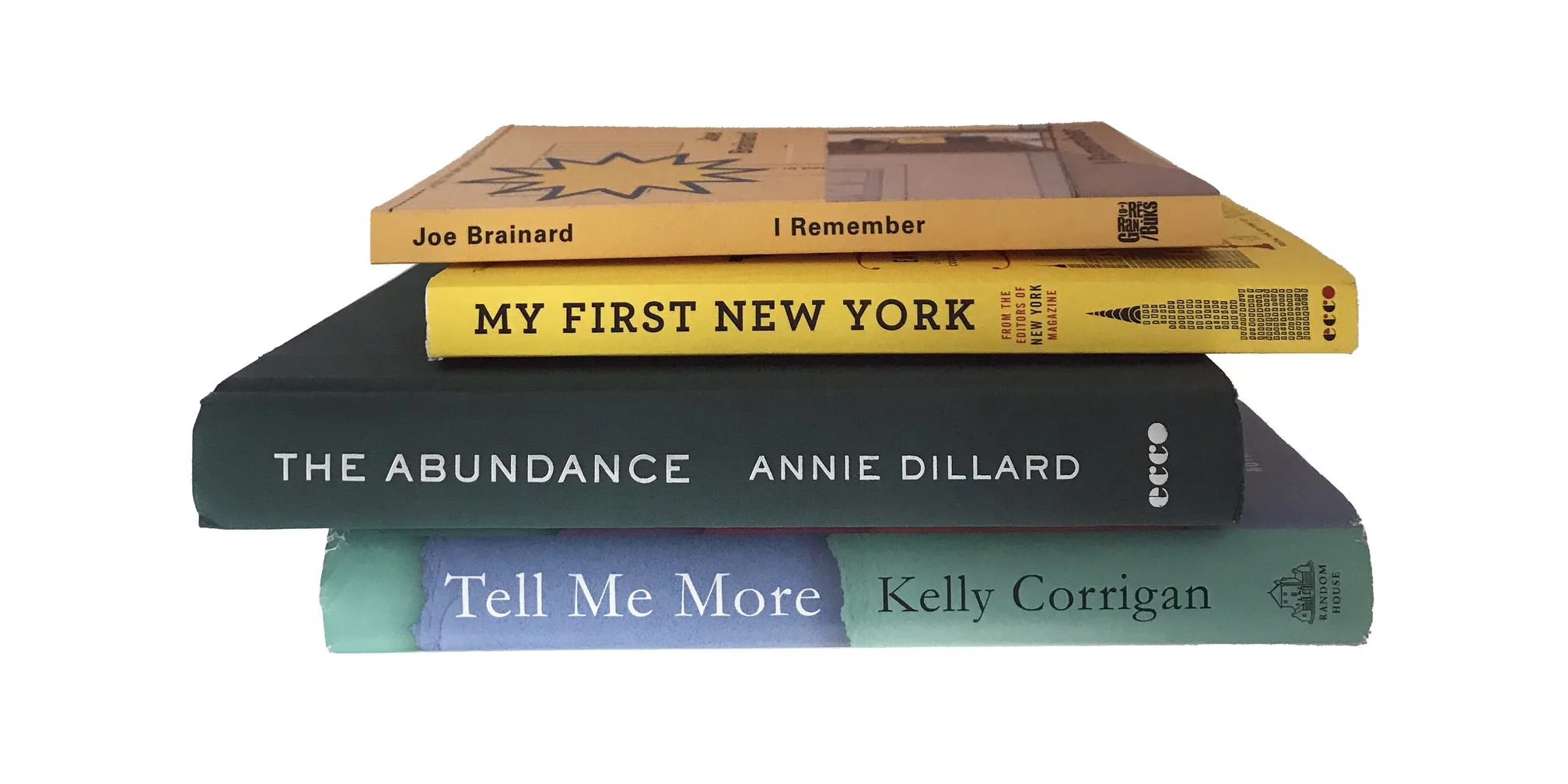
The vignette: What to read to be inspired
Memoir reading suggestions to inspire your own vignette-style life story writing, from Annie Dillard and Kelly Corrigan to Robert Fulghum and Sandra Cisneros.

Reading memoir in the format in which you would like to write is an effective way to internalize style and discover what may and may not work for you.
Here are a few titles that, in my opinion, utilize vignette-style writing to its fullest potential.
Vignette-Style Autobiographical Writing
The Abundance: Narrative Essays Old and New
(2016) by Annie Dillard
The entry titled “Jokes” is a fine example of writing from family experience that feels particular and universal at the same time; even without a true narrative arc, Dillard develops her parents into real characters and paints a picture of her home that makes the reader feel a welcome guest.
Tell Me More
(2018) by Kelly Corrigan
Read this joy-filled, sensitive memoir not because it is vignette-driven (it is not) but because it very likely started out that way. Corrigan—who has been called “the voice of her generation” by O: The Oprah Magazine and “the poet laureate of the ordinary” by HuffPost—beautifully weaves 12 stories together to create a book that says plenty about her life, and ours. Consider Corrigan’s book a goal to strive for in terms of using life experience to convey something beyond yourself, and of editing stories so they transform into a whole that is greater than its parts.
My First New York: Early Adventures in the Big City
(2010) from the editors of New York magazine
This compendium of candid accounts from various luminaries puts New York City on the map in an entirely new and wholly personal way. Each vignette (called “small, glittering essays” by the LA Times) is an exquisite example of capturing a slice of life via an interview (translated for the book into as-told-to pieces), an approach anyone can try simply by speaking into your phone’s voice recorder and transcribing—and editing—later.
I Remember
(1975) by Joe Brainard
Dani Shapiro introduced me to this tiny gem during a memoir writing workshop a few years back, and I have recommended it countless times since. Brainard’s memories, recounted in a stream-of-consciousness fashion, are short and pointed, often mere phrases or single sentences, occasionally a brief paragraph, each beginning “I remember...”. Read this book to discover the power of short reminiscence, and emulate it to create your own list of prompts for future development.
Finding Inspiration in Fiction
The House on Mango Street
(1984) by Sandra Cisneros
This a great fictional model for vignette-style of writing. The book is a series of sketches and vignettes written in rich, poetic prose that together form a loose narrative about the author’s Chicano childhood. The vignettes add up, as Cisneros has written, “to tell one big story, each story contributing to the whole—like beads in a necklace.” Told in first person, the book reads like a true autobiographical exploration. Her language is lush and figurative, offering us a glimpse into her world without much editorial exposition.
Discovering Voice
All I Really Need to Know I Learned in Kindergarten
(1986) by Robert Fulghum
Robert Fulghum, whose eight nonfiction books all rose to the top of the New York Times Bestseller List, refers to his writing as “stories, observations, and affirmations.” His books are filled with anecdotes, wit, and wisdom around everyday experiences and life-changing transitions.
He says his “writing usually begins as journal entries—notes to myself—lines of verbal perspectives drawn from walking around and stopping at intersections as I move camp each year.” Fulghum says he molds his raw ideas into stories by sharing them aloud with a walking companion, thereby “editing” his stories as he goes. “In time, the stories and reflections migrate into book form,” he writes. “Even so, please keep in mind that I think of what I’m doing as writing letters and postcards to friends, always ending with the unspoken tag line: ‘Wish you were here.’”
Two more of Fulghum's titles to check out for inspiration for using a casual voice to capture vignettes that resonate:
What on Earth Have I Done? (2007)
It Was on Fire When I Lay Down on It (1989)
Related Reading on Vignettes
In “How to Write a Good Story in 800 Words or Less” you’ll find writing tips and, more importantly, one of the best examples of how powerful brief character writing can be, a 145-word piece by Meyer Berger.
Check out our Vignettes Writing Prompts series:
Learn how to use family photographs as writing prompts, and how to choose the best photos to use.
If you’d like memory and writing prompts delivered to your phone weekly, sign up for our short—affordable!)—Write Your Life courses.
Affiliate disclosure: As an Amazon Associate, we may earn commissions from qualifying purchases from Amazon.com.

FREE Writing Prompts Guide
Get all our life story vignette writing prompts in one easy-to-read printable guide!

Life Story Links: June 25, 2019
The value of attaching stories to our stuff, ways to organize your memories around the artifacts of your life, and a moving eulogy honoring Gloria Vanderbilt.
“In writing, the big things in life are best illustrated by their small details. A recent widow struggling with the clasp of her charm bracelet for the first time since the death of her husband illustrates, illuminates and focuses in on grief. Go small and explode life’s large themes.”
—Marion Roach Smith

Boys just returned from hunting, Knox County, Kentucky, circa 1940. Photographed by Marion Post Wolcott, courtesy U.S. Farm Security Administration.
Lost & Found
MORE THAN STUFF
“If we want our family heirlooms and objects to have stories, then we must attach the story to them,” Kim Winslow writes. See how she does just that with a simple bench passed down from her husband’s mother.
FOUND PHOTOGRAPHS, MEMORIES GONE FERAL
Every photograph is “a marker, the living trace of a human who may otherwise survive only as a census entry, or not even that. We cannot discern their accompanying stories, and we can’t do anything for them.” The (missing) stories behind other people’s photos.
140,000 VHS TAPES
“This was not just a story about an archive, but a chance to use the archive to tell a story of the complicated person Marion [Roach] was,” filmmaker Matt Wolf says of his documentary Recorder: The Marion Stokes Project. I missed the screenings in NYC and Montclair, New Jersey, but hope to catch one soon.
After a Death
GRIEF VALLEY
“As much as I miss my dad (and I do miss him terribly) I miss the me that he knew, too. I grieve the loss of our shared story,” John Pavolovitz writes. When someone you love dies, you lose a part of yourself, too: “You lose the part of you that only they knew. You lose some of your story.”
GOODBYE TO AN ICON
Almost immediately after the news broke that Gloria Vanderbilt had passed away on June 17, tributes began pouring in on social media. Her son Anderson Cooper, with whom she wrote a revealing memoir, took to the air for this moving eulogy:
Ways In
TIMED WRITING EXERCISE
By limiting oneself in word count and time allotted for writing, undertaking any life story project becomes both more urgent and more relaxed. How to write a 300-word autobiographical vignette in 30 minutes.
CALL FOR SUBMISSIONS
Do you have a story about a time you were literally lost—maybe on a winding back road, in a sprawling city, or inside a cavernous building? Or maybe you were metaphorically lost, unsure of your life's direction, until that one moment or one person changed everything. Submit your writing to Hippocampus by Sept. 15, 2019, to be considered for their “Lost” themed issue.
OBJECT LESSONS
“Imagine telling your own story, your autobiography, around the artifacts of your life—your first trike, wagon and bicycle followed by the automobiles you owned…or other objects that are unique to your life”: Ideas for storytelling using objects as markers of time.
...and a Few More Links
He couldn’t talk about what he saw in WWII, so he painted it.
Memoir review: My Father Left Me Ireland
Check out the new website for Personal Historians Northeast Network.
Short Takes