
Memories Matter
Featured blog Posts

READ THE LATEST POSTS
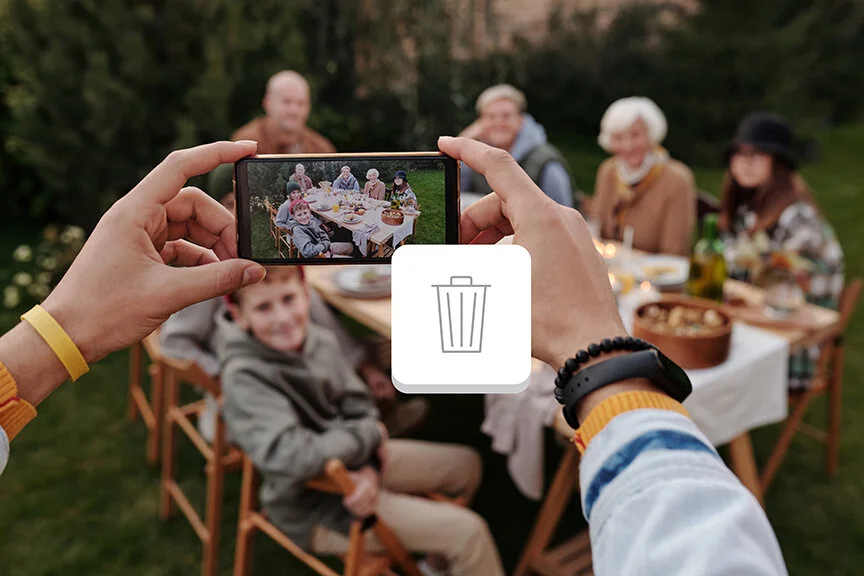
Think YOUR KIDS would never throw away your cherished photos? I wouldn’t be so sure...
Imagine: Your treasured family photos, one day thrown in the trash—by your own kids?! Here, the secret to ensuring your photo memories live on.

I know you didn’t snap all those family pictures just for them to end up in the trash…did you?
What would you grab first if your house were on fire?
Your family photos, if you’re anything like most Americans, would be somewhere atop your theoretical list.
We value those old albums passed down from our parents. We cherish the letters Gram tied with a ribbon from when Pops was at war.
But you know what? Those family mementos of old were typically part of small collections, often curated into albums or stored neatly in a single box. In other words, easy to move—and inviting to go through on occasion.
What of your own photos? Are they curated? (Doubtful.) Is the collection in one place? (Yeah, right.) Is it accessible—emotionally accessible, not easy to reach on a shelf? (Oh, you don’t even understand this question?)
Allow me to explain: If your photos number in the thousands, exist across multiple social media platforms and devices, and finding one image that holds meaning poses a challenge—well, that’s not an emotionally accessible family archive.
What does make for an inviting family photo collection?
Your descendants will be more likely to hold on to your photos if:
they can find ones that matter to them
they know who is in the pictures
the stories behind the photos are evident
they are not overwhelmed by the sheer volume and disarray of the photo collection.
I write often about finding the stories behind our family photos, and I believe those stories are what make those photos valuable in the first place.
There are plenty of approaches to whittling down our photo collections, from Marie Kondo minimalism to genealogy purists’ detailed preservation. And I’m more than happy to connect you with a professional photo organizer who can take on the grunt work for you according to your own values.
But I urge you to go beyond mere organization. Paring down and labeling your collection will certainly go far in making your collection valuable to your kids. Adding stories and curating your collection to convey meaning, however, will make your family photo collection invaluable to them.

Would you like to learn more about how we can work together to preserve the stories behind your photos? Please schedule a time for a free 30-minute consultation.
Would you rather begin such a project on your own? I’ve got some resources for that, too:
free download
Grab your free copy of this helpful guide chock-full of tips and ideas for writing the stories behind your favorite family photos.
recommended read
Your memories live in your head and heart, but family photos, heirlooms, and mementos sure do call those memories forth—here’s how to use them to help you begin to create a life story book.
advanced techniques
Interested in paring down your family photos? Photographers call this process culling, and I’ve put together some best practices for culling your family photo collection with intention.
Life Story Links: July 30, 2019
A memoir with a distinctive format, why the stories of yesterday matter today, life story writing advice, recommendations for first person reads, and more.
“So, why do we need memoir? In this world, and in our country—where so many of us feel a lack of connection, where the challenges seem so large—writers who dare to tell the brutal, honest truth about their humanity offer us a gift....They remind us that we are more alike than different. They make us feel less alone.”
—Liz Scott

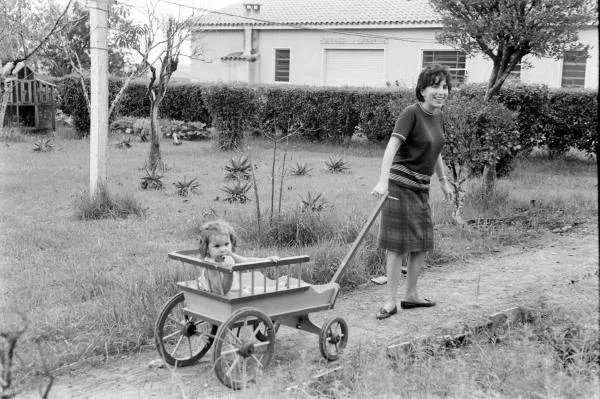
La Plata, Uruguay, 1964. Photograph by Leonard Mccombe for LIFE magazine. ©Time Inc.
Connections with the Past
RESCUED TWICE
“There’s a Yiddish concept called the ‘Di Goldene Keite,’ which talks about the historical link that ties each generation to the next. We are responsible for transmitting and preserving this heritage.” The archive that survived the Holocaust and a 2019 terrorist attack.
THE FLAVORS OF FAMILY FOLKLORE
“This master sauce could be perpetuated for generations—an irreplaceable family recipe. The DNA of meals past would be infused into each meal. You could literally eat what your grandmother ate,” Grace Hwang Lynch writes in this piece exploring genetics, food memories, and immigrant identity.
SEPARATE BUT EQUAL
In his new memoir, Aleksandar Hemon relates his family’s large encounters with history and their smaller everyday concerns in two separate narratives, packaged together in one book (just flip it over to read the next). One reviewer called it “a writer’s testament to the act of storytelling, the art of writing and the impulse, to paraphrase Joan Didion, to tell stories in order to live, to make sense, to survive.”
HISTORY REPEATS
“As leaders of organizations entrusted to tell the story of new Americans, we share a belief that our national identity is best understood and appreciated through the stories of yesterday’s immigrants whose lives have shaped our history.” Three guardians of history coauthor an op-ed on how America and the immigrant experience are intrinsically linked.
Writing and Relics
A SENSE OF AN ENDING
“The tricky thing about writing an ending for a memoir is that if you’re still alive to tell the story, it’s not really over yet.... So how do you end the story if you’re still living in its aftershocks?” Lilly Dancyger helps you write towards a resolution
UNEASY CONVERSATIONS
Why is it sometimes easier to talk about our life experiences with a stranger? Last week I wrote about how to get a reluctant storyteller to genuinely open up about his or her past.
SCRAPBOOKS, SHARED MEMORIES
“I think I should look at these albums on a regular basis as a necessary temperature check. They remind me how we only record what matters. Nary a page has a photo of an e-mail message or task list.”
PICTURES OF THE PAST
From the streets of Detroit to the shores of Southwest Florida and the farm fields of North Carolina, Family Pictures, USA, looks at family photo albums as an integral part of our social and cultural history. Premieres Monday August 12 on PBS (check local listings):
“MY DARLING MATEY”
Bruce Summers of Virginia–based Summoose Tales reflects on one of his earliest personal history collaborations, the story of a man and woman, half a world apart, and the barn that brought them together.
Recommended First-Person Stories
LIGHT THERAPY
“Before Tom died, when I pulled into the driveway, a glow from the den meant he was there in his favorite space... His warm hug welcomed me home. After his death, I could not bear arriving to a house in darkness,” Helen Collins Sitler writes in this touching flash-fiction piece.
OVER THE MOON
I simply adore the interplay in the back-and-forth between this couple, wed for 70 years, as they speak about how they met as kids and developed an undying love and affection for one another:
HISTORY, BIG AND SMALL
“What are some of the funny little connections you have to historic moments in the larger context?” Carol McLaren of Unique Life Stories in Arizona, wonders in this recounting of an impromptu dinner and story swap about the Apollo 11 moon landing.
...and a Few More Links
A roundup of writers on the topic of why we write memoir
“You’ve Told that Story 100 Times. Please Stop.”
Lucette Lagnado, whose memoirs epitomized “the art of reported memory,” dies.
A historian looks back at the legacy of slavery in her home state, incorporating personal history along the way.
Photographer captures the love of elderly couples who've been together for decades.
A wedding-day gift that will undoubtedly become the couple’s first family heirloom.
Short Takes

Sharing is good
Print and share your family photos with loved ones. Besides generating conversation, you will spark joy, find genealogy clues, and discover even more treasures.
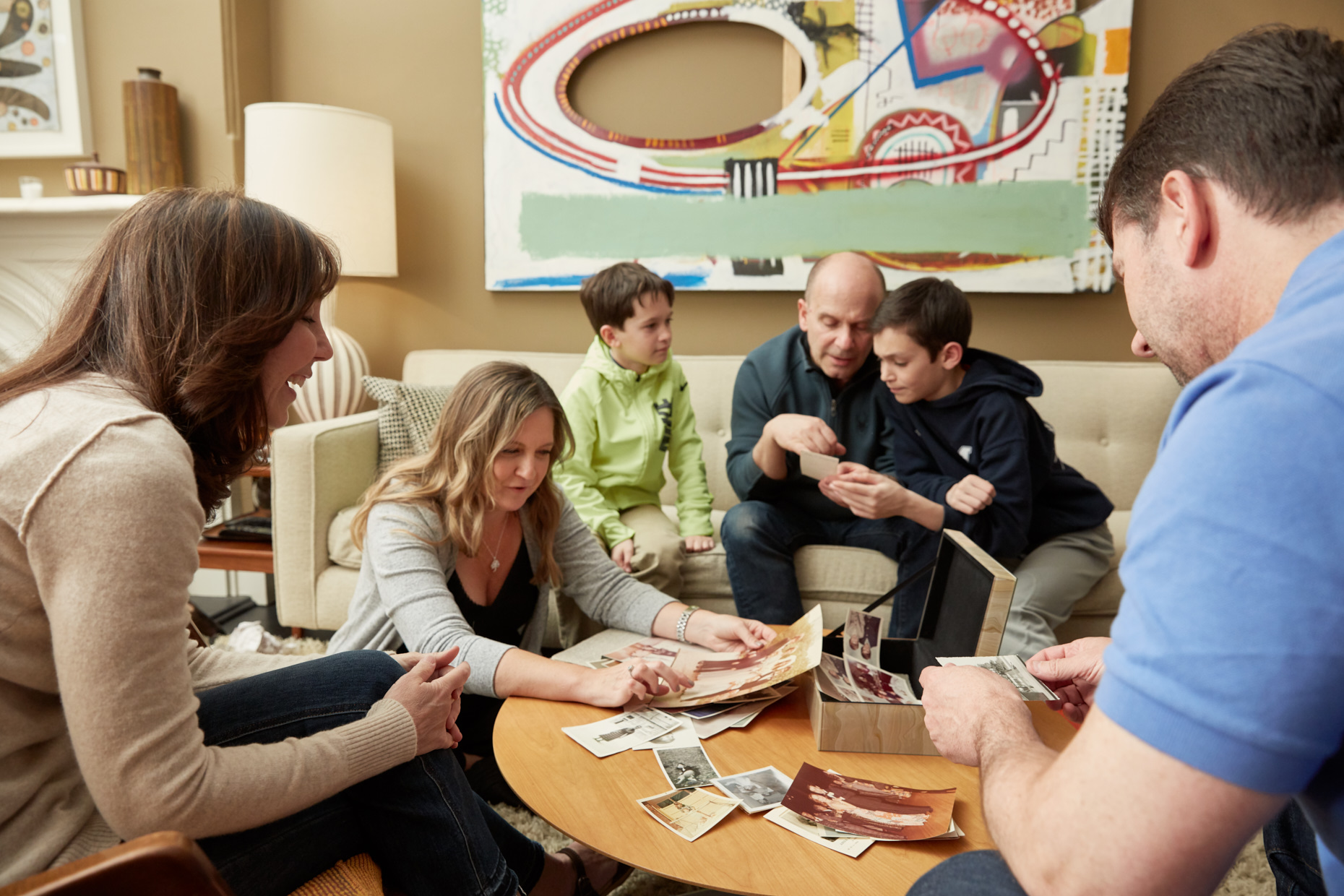
“Sharing is good.“ This childhood lesson is applicable in all areas of life, of course, but today I want to encourage sharing of your family photos.
It’s been written about ad nauseum in recent years: Our digital photo scrolls are out of control…we need to stop taking so many pictures and live in the moment…we never print our pictures anymore.
While I agree wholeheartedly with each of these lamentable statements, it’s the lack of printed photos that troubles me most—specifically, the sense of connection and excitement that gets lost when we neglect to print our photos, and share them in person.
In person, I say.
It’s temporarily gratifying to get lots of likes on an Instagram share, to see heart emojis galore on your Facebook post. But the joy that results from sharing a memory in person—well, that simply can’t compare.
Why You Should Share Your Photos
A family photo holds a story. It is a font of memories, frozen in one still frame.
Amazingly enough, the story shifts with each participant: Your mom, maybe, who took the photo, remembers things just a bit differently than you do; and your sister, a few years older, recalls things from an entirely different perspective. What about your baby brother, who only saw this photo—and heard its associated stories—years later?
Like all stories derived from memories, truth is subjective. And while a photo seems to capture a scene exactly as it happened, well, that’s subjective, too. Can you say “conversation starter”?!
So besides sparking conversation, why should you share your photos—and your photo memories—with loved ones? Here are three compelling reasons:
1 - You share, they share.
It’s contagious. You show someone an old photo from your childhood, and they reciprocate with a shot they had in a drawer somewhere. You pull out your dad’s old scrapbook filled with family photos from his youth to spark conversation with your parents, and they reveal they have two more stored in the basement.
Sharing what you have encourages family members to share some of their own family treasures, too—and what could be better than that?
2 - You might learn something.
From a name scribbled on the back of an old photographic print or a comment made in passing by a family member to whom you are showing your photos, you just may discover something new: details or backstory that enrich your own experience of the picture; or perhaps a surname or location that helps with a genealogical search.
Just because your family elders have not shared such info before doesn’t mean they don’t know it—too often I hear, “Well, no one ever asked me.” So show…and ask!
3 - You’ll feel darn good.
Sharing the joy and love associated with your favorite family photos makes that joy grow. You get that altruistic benefit that comes from sharing of yourself—witnessing another’s enjoyment, and feeling your own heart swell.




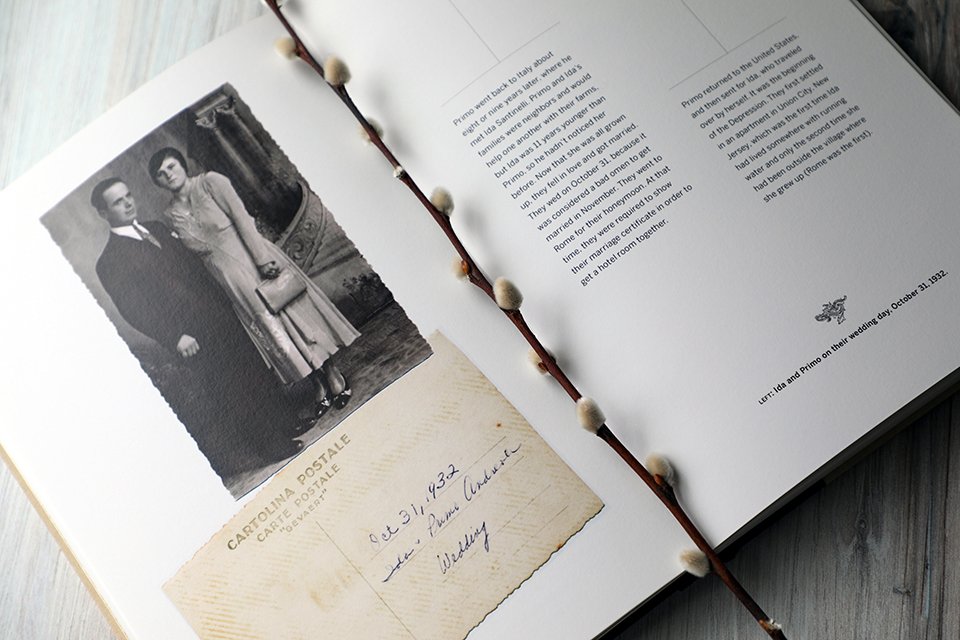




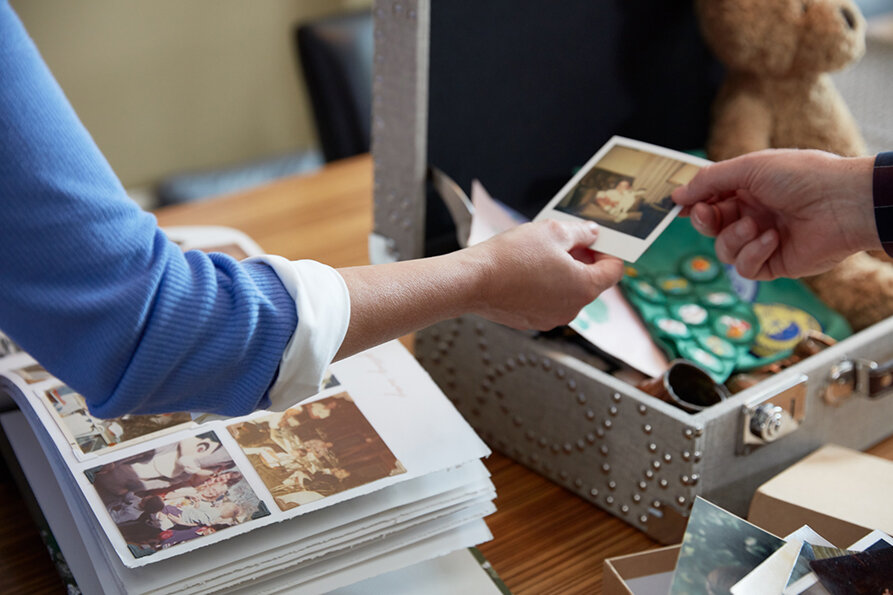

A tendency toward nostalgia
Rediscovering an old family photo album in her closet prompts Modern Heirloom Books’ founder to reflect on the lasting appeal & transformative power of nostalgia.
When I was in sixth grade, my new English teacher gave us an assignment to create an acrostic from our first name; each letter was meant to be an adjective describing ourselves for the class. I don’t recall what I chose for three of the letters, but I remember being especially challenged by the “N.” When I mentioned to my teacher that I was thinking of using “nostalgic,” she chided me that someone my age most certainly could not be nostalgic. I felt belittled and foolish, and despite my reservations, I wrote, simply—boringly—“neat.”
It’s funny what stays with us over time. I never forgot this episode from middle school, and I occasionally wonder, why? Mostly I think it was a lesson to go with my gut. Even then I knew that I was right, and that I should have written “nostalgic” on that paper; I have long prided myself in the years since as someone who trusts my instincts almost to a fault.
When I consider this memory alongside another one that stuck with me—a minor event that made a big impression—I am sure, too, that it reflects a real dread of having missed opportunities. A time when I didn’t act, or didn’t follow my gut, is a bad thing in my mind. I never want to miss out on something because I was scared or lazy or simply didn’t act quickly enough.
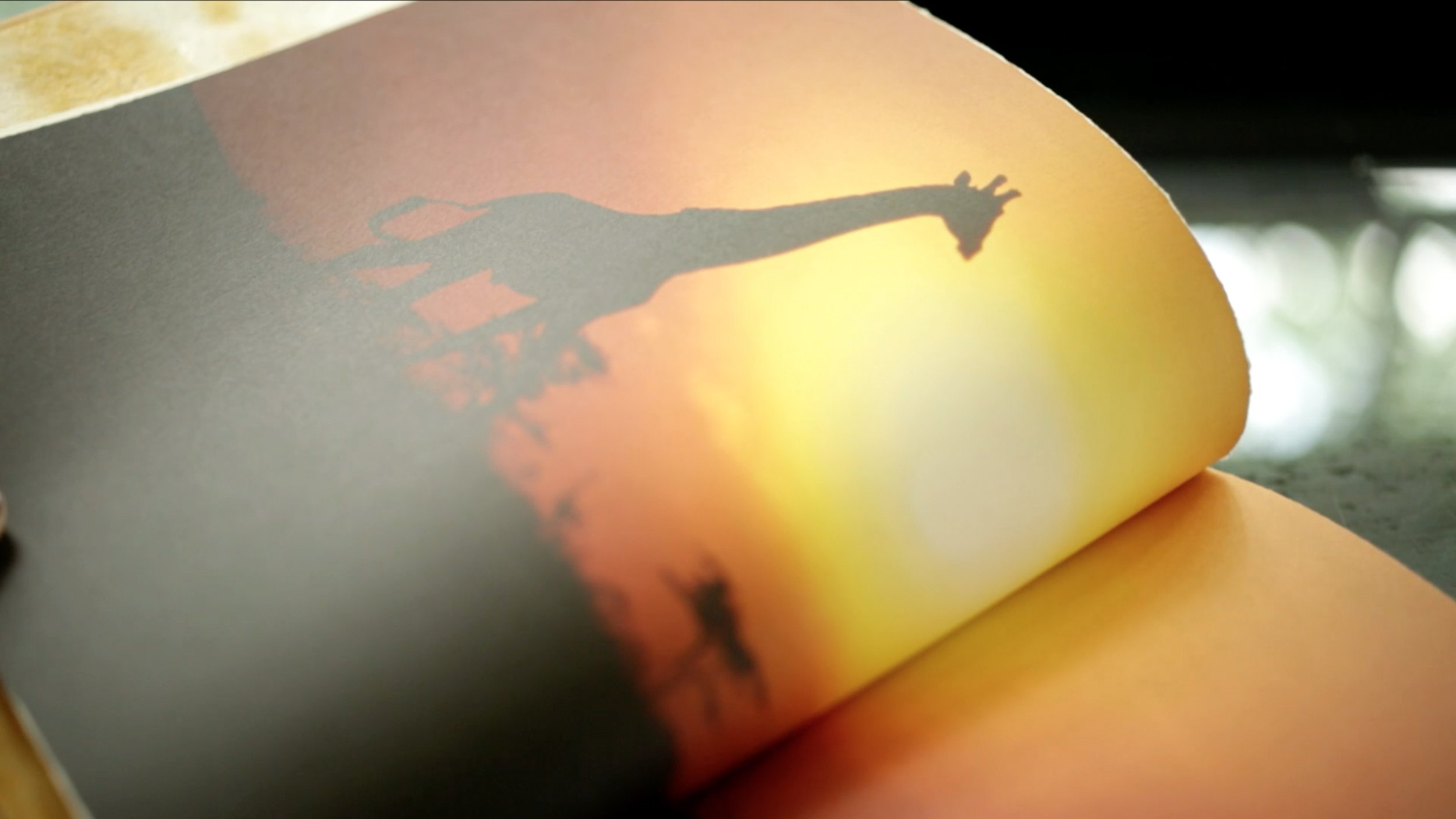
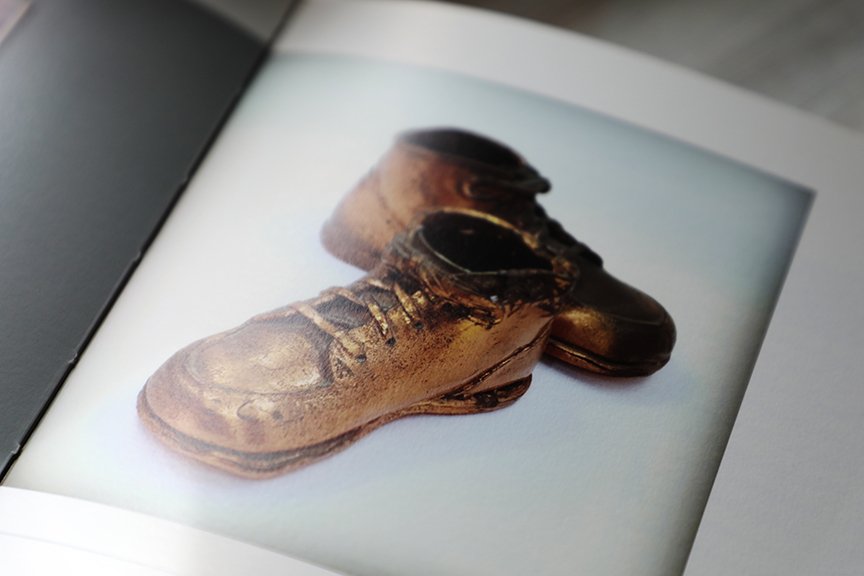
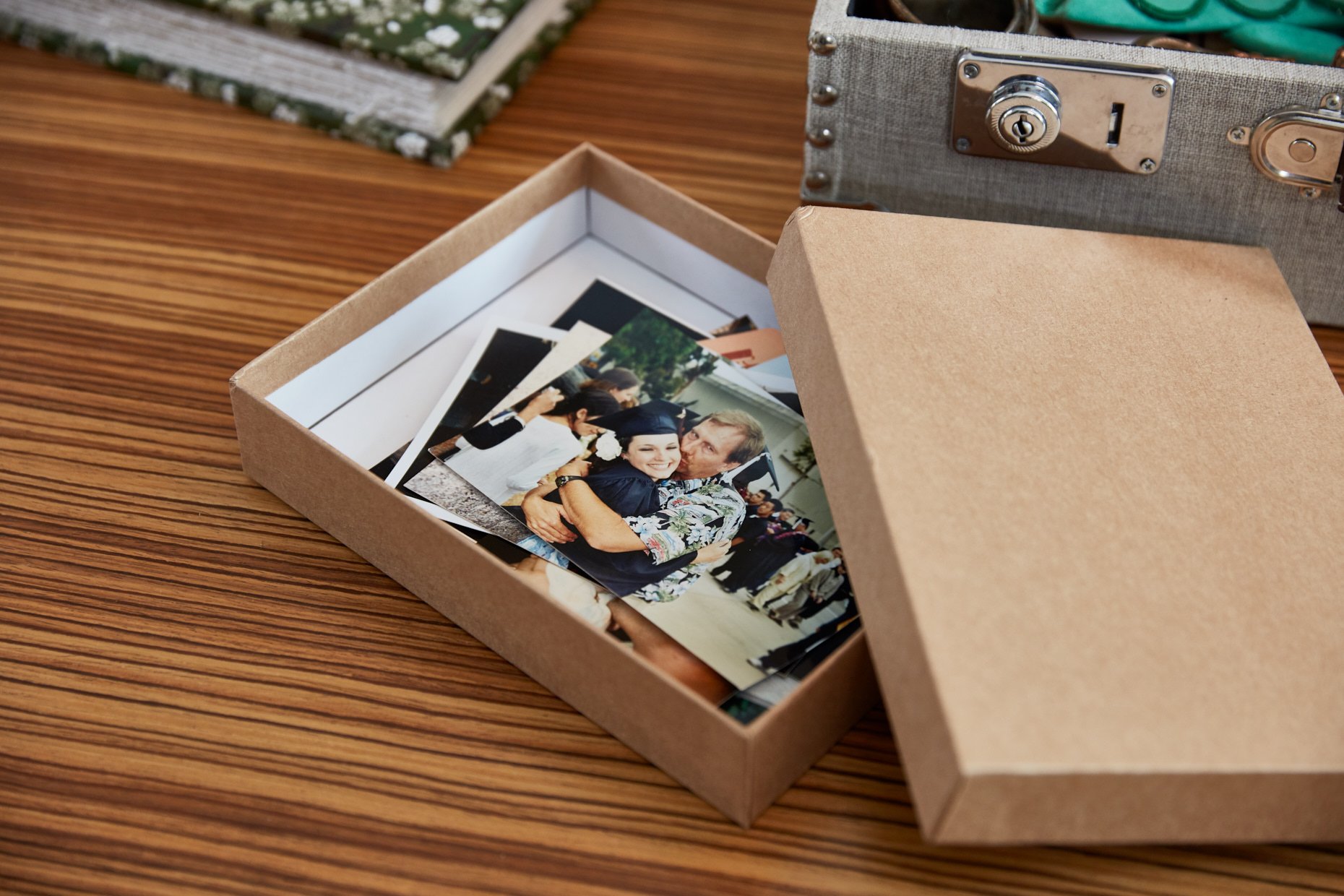
Today, though, I remembered this incident for a different reason. In cleaning out a cabinet to make room for some of my son’s Christmas loot, I came across an old-fashioned photo album that I had put together when I was about 14. It is a small, linen-covered album. Each page is separated by a thin sheet of textured tissue paper, making turning the pages feel like you are unveiling something precious. And indeed, even as a teenager, I knew how precious the photos within were.

I had bought the book with my babysitting money, and collected the photos from my mom’s and grandmother’s messy boxes. It seemed important to me to curate the images carefully, to select those that were visually appealing and that captured moments in our lives that we would one day want to recollect.
All these years later, it is a serendipitous pleasure to rediscover the images I chose. They are not displayed chronologically or thematically, but all together they do convey a loose story of sorts, a story of the everyday joys of our close-knit family.

These days I spend my time helping people not only to curate their family photos, but to discover and capture the stories behind them. To preserve the memories in a way that is both visually compelling and that strikes an emotional chord.

It is heartening to know that the nostalgia I have long felt serves a purpose—and that, in my unexpected role as entrepreneur, I am following a path that is not only central to who I am, but is wonderfully, enchantingly restorative.

It is a privilege that I get to hear your stories, and to capture them for posterity. If you are interested in beginning such a journey with me, please reach out to see how we can work together to create a family heirloom that will encourage story sharing for years to come!

Related Reading:

#Legacy Links: June 10 - Photographs, Memory, and Life Lessons
This week's top 4 legacy links all focus in some way on the enduring power of photography—the power to connect us with the past, to inspire, and my favorite, to reveal stories and truths.
Our top 4 #legacy links for the week ending Friday, June 10, 2016
1 - Families photographed with images of their descendants make a powerful connection to past.
A photography exhibit, on view until tomorrow at El Tejar del Mellizo community center in Seville, Spain, presents photographs of the living descendants of those who lost their lives during the Spanish Civil War. Organized by the Our Memory Association, “DNA of Memory—Graves from the Franco Regime” features photographs by more than 30 Spanish artists. The images capture descendants carrying photographs of relatives killed at the beginning of the Civil War, and they are more provocative and moving than I could have imagined. If you don't happen to be in Seville tomorrow (!!), I urge you to click on the photo below to view the various photographs on HuffPo.
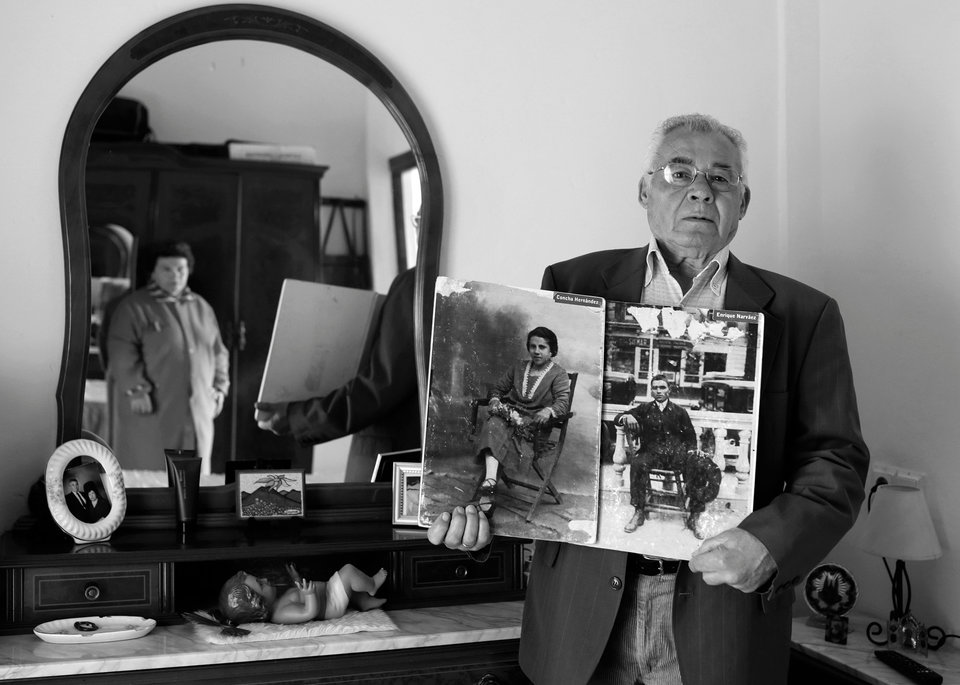
In a photo from the "DNA of Memory" exhibit, Narvaez Hernandez holds up photos of his parents, Enrique Narvaez Borrego and Concepcion Hernandez Garcia, who both died in Marchena, Seville, when Hernandez was 3 years old. Photo by Javier Diaz, courtesy Our Memory Association
2 - How a personal quest to find family resemblances turned into something more.
This one's not new, but somehow I missed it when it made the viral rounds last year. See what fellow personal historian Rachael Rifkin discovers when she undertakes a unique experiment to recreate eight photos of her relatives. Her musings on the nature of descendancy are as enticing as her photo recreations.
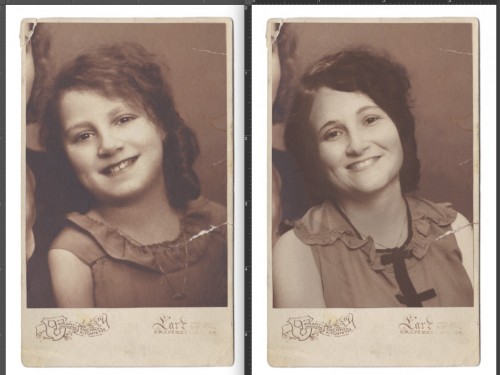
According to a family tree, Rifkin's cousin Ibolia, left, died at Auschwitz in 1944. Rifkin estimates this picture is from sometime in the 1930s. Image courtesy Life Stories Today
3 - One decade, one family, one photographer: This is a photo book I am looking forward to.
Thanks, Family Search, for bringing this one to our attention. Photographer Thomas Holton's book The Lams of Ludlow Street \, which chronicles one family through 13 years' worth of photographs, will be published next month.
"As Mr. Holton got to know the family, the project became more personal. He would pick up the children from school. He visited the Lams’ relatives in Hong Kong and China. When he married, Cindy was his flower girl,"
writes Annie Correal in the New York Times article. Make sure to click through the accompanying slideshow!
4 - What happens when a suitcase of photos sends her on the storytelling adventure of a lifetime.
In the vein of "Finding Vivian Maier," a North Carolina woman hit the found photos jackpot when she discovered a suitcase full of one man's life effects, including photos, letters, and other ephemera—and then began a journey of discovery as she sought to uncover the stories his things revealed. Her site is wonder to behold.

Read an introduction to her photographic treasure hunt on the ever-interesting Save Family Photos:
"Handling these seemingly random artifacts serves as a constant reminder that the sometimes cryptic, occasionally awkward, and often amusing snippets of the past were once as alive and vital to their creators as my own emails, journals and vacation photos are to me."
Dawn Roode’s curated roundup for the week of Sept. 23, 2026, is overflowing with recent reads on memoir, life story writing, and family history preservation.