
Memories Matter
Featured blog Posts


READ THE LATEST POSTS
Life Story Links: January 29, 2019
Holocaust Remembrance Day prompts compelling first-person accounts; new memoir from Dani Shapiro; and two films that take life story narrative to new levels.
“If you’ve remembered something very well—a fight, a kiss, a plane ride, a certain stranger— there’s a reason. Keep writing until you figure out the significance of your most vivid memories.”
—Kelly Corrigan
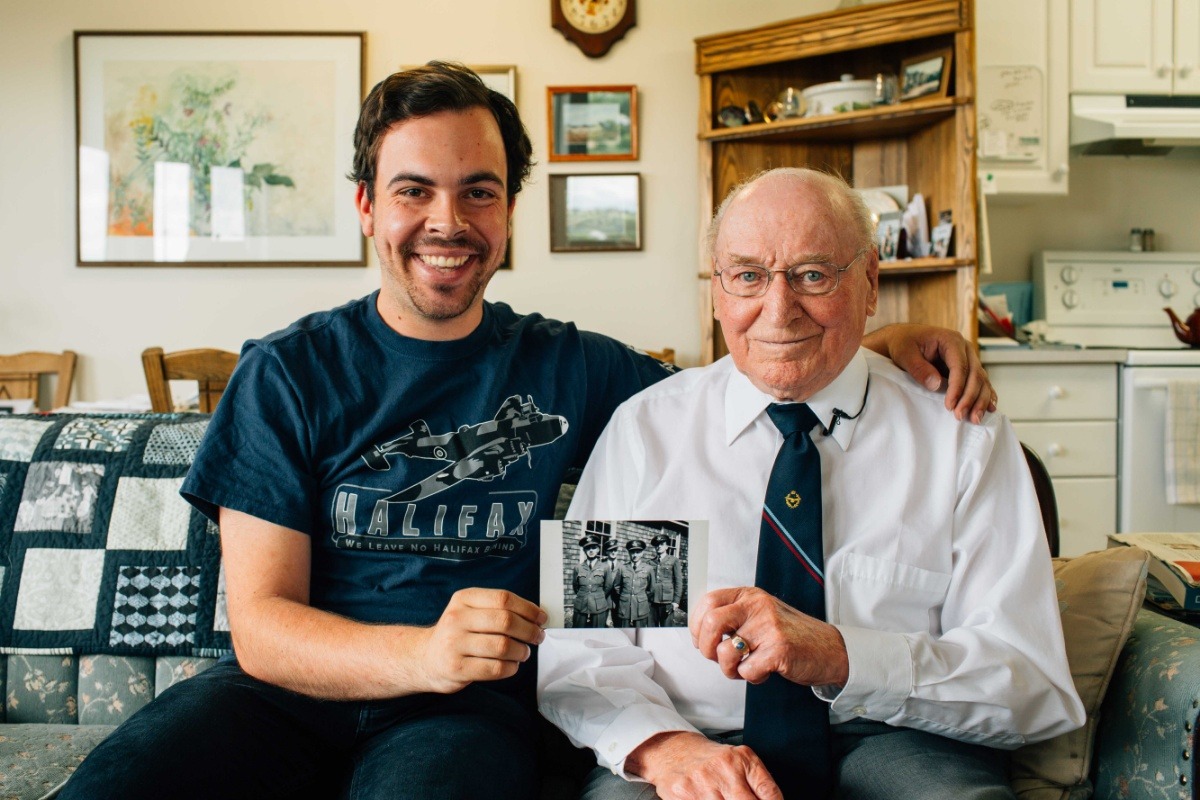
“Very few of these veterans have ever been filmed before,” says documentarian Eric Brunt. “Many have not even shared their experiences with their families.” Learn more about his oral history project, Last Ones Standing, below.
In Their Own Words
FIGHTING FOR HER FATHER
Short autobiographical writing at its best: beautiful, poignant, familiar…and utterly specific. Read award-winning author and memoir teacher Beth Kephart’s recent piece for Catapult, “Here If You Need Me.”
DANI SHAPIRO, AGAIN
“It turns out it is possible to live an entire life—even an examined life, to the degree that I had relentlessly examined mine—and still not know the truth of oneself,” Dani Shapiro writes in her fifth and latest memoir, Inheritance: A Memoir of Genealogy, Paternity, and Love. Listen to her talk to Diane Rehm about how a DNA test uncovered a life-altering secret, and read about her identity-exploring journey here.
DRIVING THROUGH HIS DUTCH HERITAGE
Bruce Summers, Washington, DC–area personal historian at Summoose Tales, digs into his family roots by traveling in the footsteps of his third-great-grandfather.
LAST ONES STANDING
Canadian Eric Brunt has been traveling across Canada in a small van since May 2018. His goal: To interview as many surviving WWII veterans as possible for a documentary, Last Ones Standing. Follow his Instagram account for regular updates from the road, and consider contributing on his GoFundMe page to help underwrite this worthy endeavor.
Your Stories, Your Way
STORYTELLING SPARKS
From sharing food memories to creating a travel journal, from chronicling a life well lived to bringing a longtime family vacation home to life, here are six specific ideas for life story books.
STORY SHARING APPS
If you and your family members are more inclined to take action with tech tools as opposed to pen and paper to preserve your memories, here are my top picks for digital story sharing services.
FROM FAMILY LETTERS TO MULTIGENERATIONAL EPIC
New York–based Remarkable Life Memoirs shares an “exit interview” with writer Michael Barrie, with whom they worked on the recently completed book, How We Got Here: The Barrie Family in America, which spans centuries and continents to tell the complex story of his forebears.
History, Both Personal & Global
BEYOND MLK’S LEGACY
Des Moines–based writer Larry Lehmer rounds up five stories related to black heritage, personal history, and memoir that he found to be most compelling last week.
COMMISSIONING FAMILY HISTORY RESEARCH
“I don’t feel my parents did a very good job of explaining my family history to me,” WebMD founder Jeff Arnold tells a New York Times reporter in a piece looking at generationally wealthy families documenting their past. “I have four children, so explaining to them their roots was an important box I wanted to check.”
ARCHIVISTS AS ACTIVISTS
One clandestine group in the Warsaw Ghetto vowed to defeat Nazi lies and propaganda not with guns or fists but with pen and paper. And they did. Their story is told in the documentary Who Will Write Our History. Read a review of this “vital and sobering” film, and see why some are critical of the re-stagings that bring (unnecessary?) added drama to the testimony.
...and a Few More Links
Self-proclaimed “Old Coots” offer life advice at farmers market
How photography became the ‘dominant form of recording the world’
John McPhee’s new book, The Patch, has been called “a covert memoir.”
Consider studying Reminiscence & Life Review in this online course from University of Wisconsin Superior.
Dip into stories of survivors in honor of Holocaust Remembrance Day.
Learn about James Michael’s new book, Tell Your Story and Save the World.
Discover the meaning and history behind your last name.
Short Takes



Is digital story sharing for you?
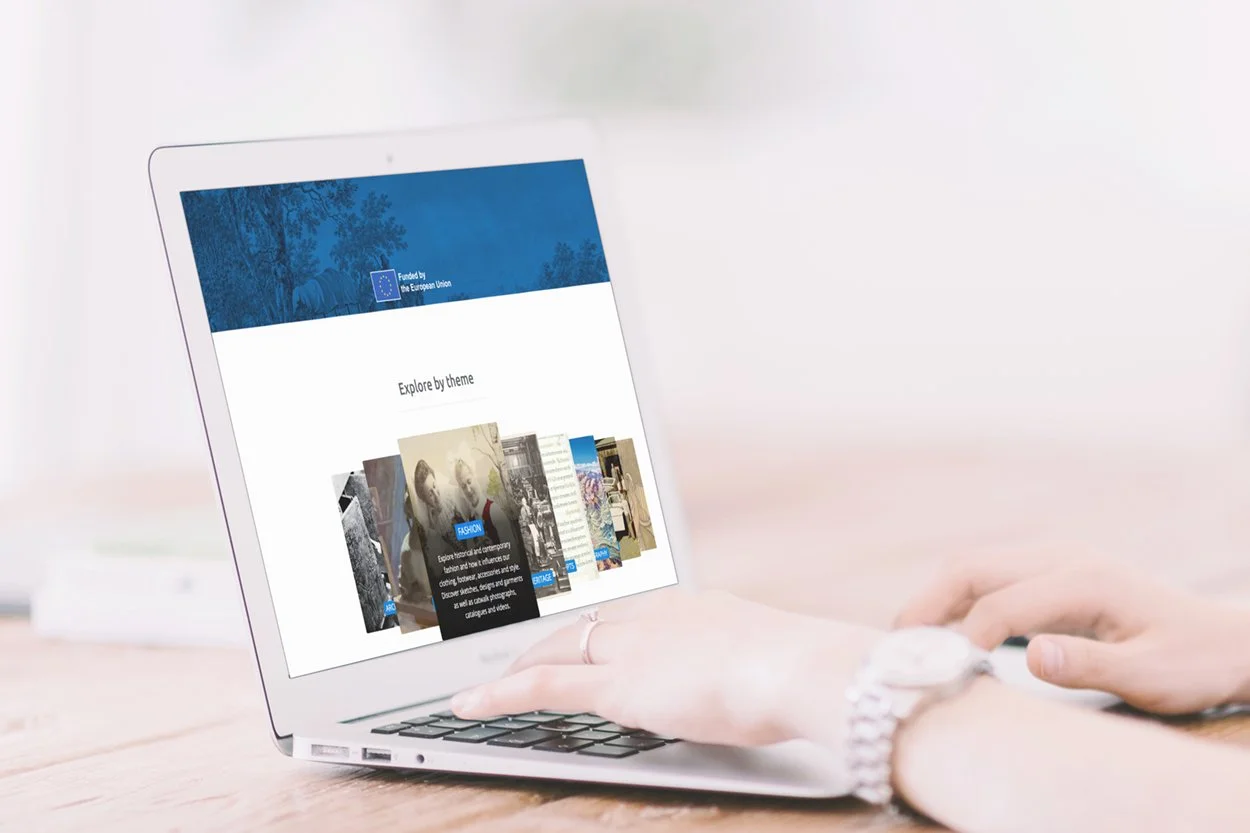
Want to record family stories? “There’s an app for that!” Undoubtedly, there is—but which one is right for you? My top picks for digital story sharing services

Want to record family stories? “There’s an app for that!” Undoubtedly, there is—but will you use it, or will it sit unopened on the last page of your device’s scroll?
If you and your family members are more inclined to take action with tech tools as opposed to pen and paper, here are my top picks for digital story sharing services:
StoryWorth
Who it’s right for:
Connected grandparents, multi-generational families separated by distance
How it works:
With a StoryWorth subscription, users are emailed once a week with prompts to answer a question based on their life experiences. The array of questions is vast and evocative, though users may always choose to answer a question they themselves craft.
Pros:
When a reply is input, answers are emailed to a preset list of people—so, as many family members and friends as you want to designate may receive your stories.
It’s a lot easier to type than it is to write things out longhand (remember those days?!), so users are more likely to get into a rhythm answering questions regularly online than they might otherwise be with an old-fashioned memory-prompt journal.
For individuals who may not have a computer or email address, or for whom typing may be difficult, StoryWorth also offers an audio plan with stories recorded over the phone (some restrictions apply).
Cons:
At the end of the year StoryWorth automatically crafts a black-and-white book of memories based on the subscriber’s responses—and while that’s great in theory (I’m all about preserving memories in a book, after all), there is no room for editing, personalization, or revision.
Also check out:
Two similar apps that are still in beta but look promising are Life Mapping (which “maps” your path through life) and iRememba (leave your legacy via “digital time capsules”).
Family Search Memories App
who it’s right for:
Genealogy fans & family historians
how it works:
Your family historian may already be registered on Family Search, but are they familiar with the Memories features? Users may upload photos, stories, documents, and audio recordings that add depth to the names on their family tree.

The Family Search Memories app displays stories in a gallery view, as shown, or in a list view to make finding specific entries easier.
pros:
The Family Search Memories app allows you to capture priceless family moments through photos and voice recordings on your phone, even when you don't have Internet access.
Family history is truly brought to life—and promises to genuinely capture the next generation’s imagination—when pictures and details exist, not just data and documents.
cons:
While FamilySearch vows to “store your precious moments free forever,” the fact remains that it is a business, and businesses—especially tech businesses—can change (or cease to exist) over time. (Don’t let this app or “the Cloud” be your only means of storing your photos and stories, please.)
Regular Old Email
WHO it’s right for:
The less tech-savvy elders in your family, or those who might prefer to write but are hampered by arthritis or other physical debilitations
how it works:
The art of letter-writing may be dead, but that doesn’t mean long-term correspondence need be, as well. Begin a regular correspondence with a loved one that goes beyond cat memes and dinner dates: Set some ground rules (“let’s explore your past, Mom,” or “I’d love to know more about your college and war years, Dad”) and timeline (at least once per week, perhaps) and start sharing notes.
I was especially inspired by journalist Anderson Cooper, who undertook a year-long extended email conversation with his mother that resulted in a book—and that tapped into, as Cooper said, “not the mundane details, but the things that really matter, her experiences that I didn’t know about or fully understand…”
pros:
No subscription or monetary commitment is necessary. All you need is an email address and access to a computer (available at most local libraries if one is not accessible at home).
It can be easier to delve into difficult or emotional topics when not face-to-face with a loved one. And since correspondents may take some time to review what they have typed, they can be thoughtful about their story sharing.
We have become accustomed to typing, and can pour out our thoughts much more quickly than if we were writing on paper—so conversations may go longer, deeper, more quickly.
cons:
There is a disconnect when reading rather than hearing, and tone or inflection is lost on a screen. Participants must get to know one another’s writing style—and understand that sometimes an actual conversation should ensue to clear up any confusion or hurt feelings.
You may accrue a wonderful catalog of communications through an email correspondence, but the onus is on you to do something to preserve what you have gathered. Don’t let the stories—and the love and understanding that ensues—languish; contact us to help you turn your memories into an heirloom book, or consider simply printing them out (with dates) for the next generation to read and learn from.






Life Story Links: December 11, 2018
Fine examples of first-person storytelling to inspire your own life story writing, plus wisdom on reminiscence & a look at the legacy of Pearl Harbor survivors.
“I do not understand how memory works, I say, how we think we remember things that never happened and how we can forget the things that have. I want to know what I would find if I unspooled my memories and laid them out against my mother’s and my grandmother’s. I imagine the textures and seams of our competing recollections; I imagine them synthesizing to form a richer whole.”
—Crystal Hana Kim

1st Grade Twins on Swings, 1963. Photograph by Yale Joel for LIFE magazine. ©Time Inc.
First Person Reads
EATING TO AMERICA
“When I wanted to have a family just like everyone else’s I could slide into a booth at Pizza Hut and in the darkly lit restaurant my odd family could almost pass for a mom and a dad and two kids, and maybe even American ones, as long as we whispered,” writes Naz Riahi in this delicious read.
CUTS AND QUESTIONS
“He ran his hands through his hair inspecting just like he had inspected my sewing at age seven, my planting at age twelve, and my oil change at age fifteen,” writes Yollotl Lopez in her tribute to eight years of hair cutting—and loving ritual—with her father.
SCENES FROM A LIFE
In “The Proposal and the Purse,” personal historian Deborah Wilbrink relays scenes from an almost-relationship. Her first-person vignette, hosted on Sarah White’s True Stories Well Told site, is indicative of the type of writing Sarah teaches in her flash memoir classes.
Remembrance, Reminiscence & Legacy
CELEBRATING HANUKKAH WITH STORIES
“Unless people intentionally take the time to ask questions, we often don’t get to hear the stories of our elders,” says Rabbi Susan Goldberg, who designates Hanukkah as an optimal time to ask those questions.
PEARL HARBOR MEMORIAL
For the first time, there were no survivors of the USS Arizona at the annual ceremonies marking the December 7, 1941, attack on Pearl Harbor. “It wasn't the pages of a book—it was your life. It was your mother, your brother. It was your house going up in flames in bombings.” Memories that survivors have carried for so long live on in oral histories.
CONFERENCE TAKEAWAYS
In my latest post I share thoughts from the 2018 International Reminiscence & Life Review Conference including compelling anecdotal evidence on the value of reminiscence work, research challenges, and the shifting nature of autobiographical memory.
...and a Few More Links
The best reviewed memoirs and biographies of 2018
How millennial parents are reinventing the family photo album
“If you want to write a great book, hire a scribe.”
The StoryCatcher app has been updated.
Short Takes

Life Story Links: November 27, 2018
Louis Armstrong’s personal archives, WWI stories passed through generations, and plenty of process talk including using Scrivener and reviving stalled memoirs.
“We all practice the craft of autobiography in our inner conversations with ourselves about the meaning of our experience, and those conversations, no matter what language we use, are fundamentally theological or philosophical. Though only a handful of us set about writing down the results and publishing them for others to read, we are all autobiographers.”
—Jill Ker Conway

Louis Armstrong and his wife Lucille in the den of their Corona, Queens, New York home; the jazz legend’s archives are now available online. PHOTO courtesy of Louis Armstrong Archive.
Stories Worth Sharing
LOUIS ARMSTRONG ARCHIVES
From handwritten playlists of his musical inspiration to scrapbooks of his life as it was lived (and as it was recorded in the newspapers), Louis Armstrong was a careful (and thorough) documentarian of his life. Now the full archives are accessible online.
VETERANS’ STORIES
In “The War Stories Their Families Never Forgot,” the New York Times collects memories of readers’ relatives who had a role in World War I—and the submissions are, unexpectedly, often uplifting.
THE ATTIC OF HISTORY
Sir Peter Jackson says he would be happy if his new war film inspires people to go rummaging around in their attics for old photos and letters, keen to piece together tales about grandfathers and ancient uncles who served in the first World War.
On People and Process
“TELL ME ABOUT YOURSELF”
Terry Gross, considered by many to be a master interviewer, offers insights into how to talk to people. “As an interviewer, Ms. Gross’s goal is to find out how her subject became who they are; as a conversationalist, make that goal your own.”
SYSTEM TALK
In her latest podcast episode, Amy Woods Butler, aka The Life Story Coach, describes how she goes from interview transcript to book draft, including how Scrivener fits into her process.
A PROFESSIONAL’S PERSPECTIVE
About half Nancy West’s memoir clients are people who previously attempted writing their memoirs themselves. “They bogged down in telling very specific stories perfectly and comprehensively,” she says, “whereas I work like a journalist: facts first, then flesh it out.”
...and a Few More Links
Is deleting Facebook deleting your memories?
Ann Curry’s We’ll Meet Again returns to television.
Mickey Mouse gets the “life story” treatment on his 90th birthday.
New study shows our brains prioritize memories that are useful in making future decisions.
Short Takes

Life Story Links: November 12, 2018
Mid-story memoir sag, storyboarding as a writing tool, questions to spark Thanksgiving story sharing, and more of interest to family historians & memory-keepers
“Curiosity is a muscle. Questions are exercise.”
—M. Diane McCormick

1956. Photograph by Grey Villet for LIFE magazine. ©Time Inc.
Thoughts on Memoir…
THE LIBERATION OF MEMOIR
Beth Kephart celebrates Abigail Thomas, whose work, she says, laid the foundation for memoirists everywhere to set aside “perfect” in pursuit of authentic.
MID-STORY SAG
“Nearly all memoir writers hit a point where they ask: What is this thing about? Where did I think I was going with this story?” writes Lisa Dale Norton in her prescriptive piece about how to avoid mid-story memoir sag.
YOUR STORY, YOUR WAY
“Let people find out how interesting you are through your own words, not when your children tell stories about you because you’re gone,” urges Massachusetts–based personal historian Nancy West.
…and Sharing Stories Out Loud
FAMILY HISTORY MATTERS
In this podcast, Heidi Druckemiller suggests that the story of your past can help you to discover your family’s unique values, shape its moral purpose, and direct its strategic decision-making.
HOLIDAY HISTORIES
This week I wrote about four ways to encourage guests at your family gathering to share memories in addition to gratitude, plus offered up 55 Questions to spark Thanksgiving story sharing.
NEXT GEN
Cider Spoon Stories offers a workbook for kids that guides them through the oral storytelling process, helping them to capture in their own words the stories of family members and friends
...and a Few More Links
Humanity has direct memories of events that occurred 10 millennia ago.
Check out the slides from M. Diane McCormick’s Hippocamp 2018 presentation, “The Art of Interviewing: The Deep Dive for the Telling Detail.”
Using storyboarding to help know what to emphasize and what to cut from your biographical writing
Google and YouTube team up with StoryCorps to tell veterans’ stories.
Short Takes
Life Story Links: October 29, 2018
Plenty of first person and personal history reading, from stories of survival told through artifacts of memory to veteran experiences that honor and connect.
“Love is so short, forgetting so long.”
—Pablo Neruda

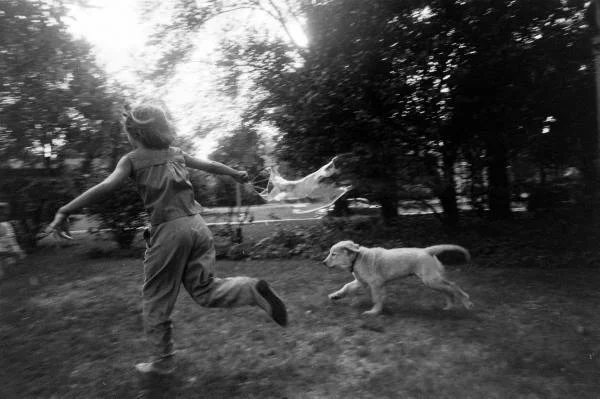
Kid's Bubble-Blowing Toy, 1959. Photograph by Stan Wayman for LIFE magazine. ©Time Inc.
Seeing Is Believing
OBJECT. IMAGE. MEMORY.
“A photo album, a china set, a teddy bear—even the most quotidian of artifacts—all resonate with special poignancy when associated with stories of persecution and loss,” Julia M. Klein writes of a Skokie, IL, museum exhibition called “Stories of Survival.”
BLURRY IS BEAUTIFUL
Blurry photos are often the first to get deleted from your film scroll—but photographer Yan Palmer offers up another perspective.
FILM REVIEW
I finally found time to screen the 2012 documentary Stories We Tell, and I recommend it as much for the dramatic exploration of one family's narrative as for the questions it raises about the malleability of truth.
Life Stories, Listening & Telling
#THEGREATLISTEN
In its 15th year StoryCorps continues to “create a culture of listening that echoes across the nation.” Resources compiled for its annual Great Thanksgiving Listen include a Great Questions List and Interview Planning Worksheet.
“THE ROLLING NOW”
Sarah White of Madison–based First Person Productions shares a short essay she calls an experiment in “The Rolling Now,” a structural technique described as "like rocking back and forth between past and present."
A LIVING TRIBUTE
The new National Veterans Memorial and Museum in Columbus, Ohio, which opened October 27, highlights personal stories of veterans from all branches of the military to inspire, honor, and connect.
CONFESSIONAL STORYTELLING
“I used to reassure prospective clients that they could simply leave out any personal stories that were too difficult to tell, says Massachusetts–based personal historian Nancy West. “But the more people share with me, the more I begin to think that nothing is too difficult for clients to share, once they become comfortable with the process.”
...and a Few More Links
The earliest memory in the first person testimonies of The HistoryMakers dates to the 1700s.
Kickstart your family history project with this November 14 webinar from archivist Margot Note.
In The Library of Congress’s new National Screening Room you can watch hundreds of hours of cinematic history for free, with films from 1890-1999.
Town & Country: “From Gates to Rockefeller, Wealthy Families Hire Personal Historians to Preserve Their Legacy”
Short Takes

Life Story Links: October 17, 2018
Stories on staying curious including a conversation starter card deck & ideas for family interviews, plus digging into family history via photos and stories.

PHOTO: Wallenda Family Album Picture, 1962. Photographed by Robert W. Kelley for LIFE magazine. ©Time Inc.
“Here’s the deal. The human soul doesn’t want to be advised or fixed or saved. It simply wants to be witnessed—to be seen, heard, and companioned exactly as it is.”
—Parker J. Palmer
Stay Curious
AGING IN NYC
A longtime social worker and photographer turns his lens on seniors out and about in the Big Apple, and his interest invites stories from all walks of life.
STORY CATCHER CONVERSATION STARTERS
A holiday gift idea, perhaps? Tree of Life Legacies’ April Bell has introduced the Life Legacy Card Deck with 52 prompts for values-based storytelling.
LET’S TALK
Conducting family interviews is a great way to gather the stories of family elders and preserve family history for the next generation—here, four ideas to get you going.
Digging in to Family History
THE ONLY TRUE STORY
“Humans love stories, and genealogy is essentially a gradual reading of the grandest, most compelling story of all time,” Roman Kraft writes in his ode to discovering family history.
ONE BOX AT A TIME
Denise Levenick, aka The Family Curator, describes how to use “the parking lot system” to organize old photos in your family collection.
BBC’S “FAMILY FOOTSTEPS”
An Ulster-Scots family goes on a journey back in time to discover what life was like for their ancestors at the turn of the 19th century.
YOUR HISTORY…OR YOU’RE HISTORY?
“With both of my parents gone it is getting much harder to collect the stories from their lives,” writes Jay Lenkersdorfer in a local newspaper column. “Each memory is perishable and should be treated as though it will soon expire...”
...and a Few More Links
A new website aims to build a database of music that's effective at triggering memories for dementia patients.
Storytelling as a form of healing
An in-depth review of Kiese Laymon’s “startlingly open” and “raw” new memoir, Heavy
Short Takes

Life Story Links: October 2, 2018
A roundup chock-full of life story stuff, from sharing painful memories to honoring a mother's legacy, plus pro tips on talking about money & managing workflows.
“Music does a lot of things for a lot of people. It’s transporting, for sure. It can take you right back, years back, to the very moment certain things happened in your life. It’s uplifting, it’s encouraging, it’s strengthening.”
—Aretha Franklin
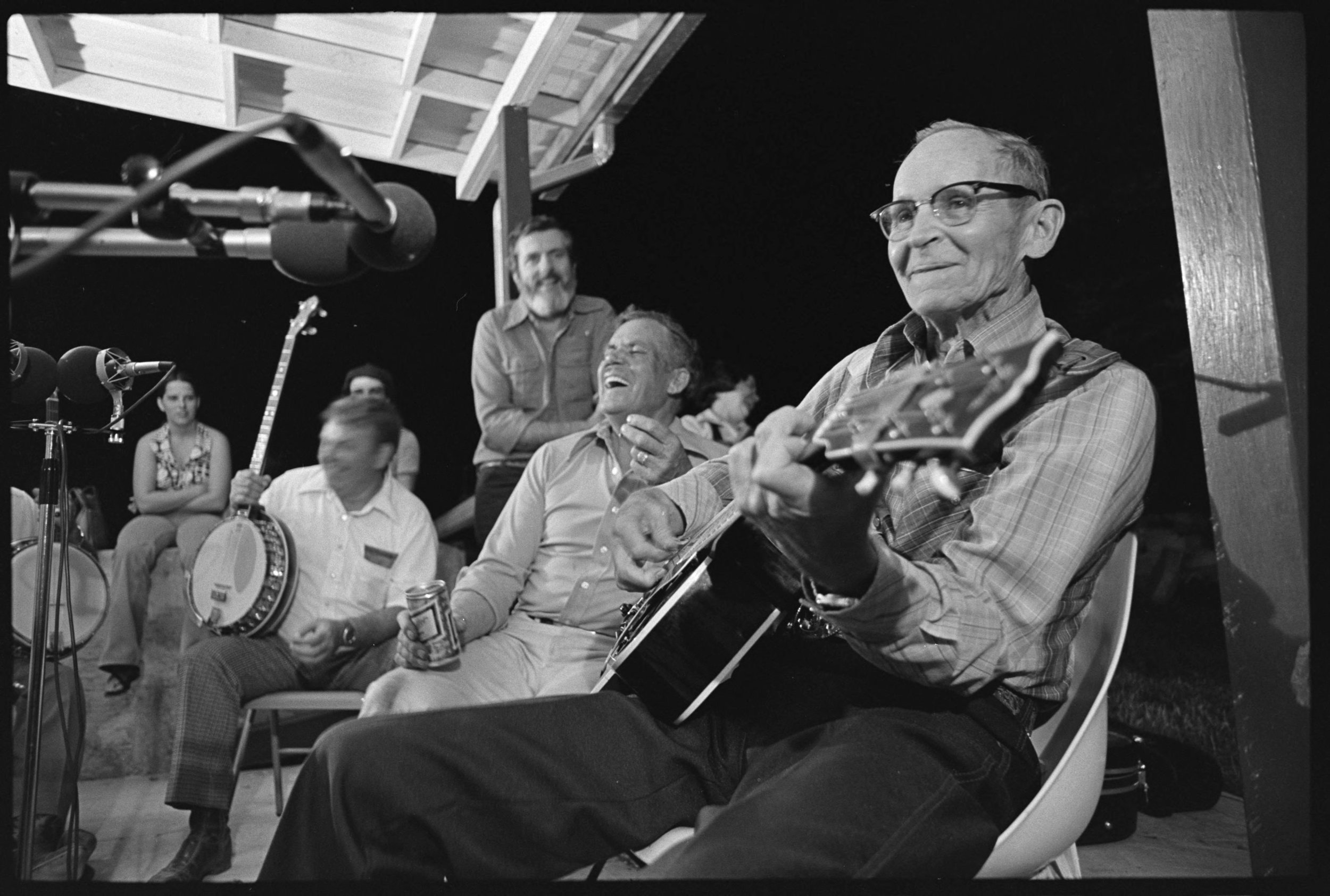
PHOTOGRAPH: Old time fiddling at Bernie Rasmussen's in Polson, Montana, July 22, 1979, from the Montana Folklife Survey collection at the Library of Congress.
Battle Scars
BRUISES AND ALL
“I understand that sharing difficult experiences is decidedly not for everyone,” writes Chicago–based personal historian Betsy Storm. “But nobody can underestimate the power of such stories to lift others up from their own tender and painful places.”
THE RELUCTANT INTERVIEWEE
This week I review the 1996 documentary Nobody’s Business, in which Alan Berliner interviews his (rather pugnacious!) father about family history. You’ll laugh and you’ll cringe at their father-son interplay.
On the Front Lines of History
OBJECT LESSONS
Check out Your Story Our Story, a national project exploring American immigration and migration through a crowd-sourced collection of stories about everyday objects of personal significance.
MOON MAN
Neil Armstrong’s personal papers land at Purdue, his alma mater, including approximately 70,000 pages of fan mail, which Armstrong continued to receive from around the world for years after he landed on the moon. (Archivists: Imagine the time it took to catalog this “finding guide” to the collection!)
Memories that Matter
IN REMEMBRANCE OF 朱苏勤
“She knew only two people who speak English fluently—myself and my father. Not able to tell her story herself, I want to use my voice to tell it for her,” writes Li Jin in “Saying Goodbye to My Grandmother.”
AN APP FOR THAT?
In the hope that preserving “one memory at a time” is less daunting for some than writing a “life story,” I explored digital story sharing services in my latest guest post for The Photo Organizers.
STORIES OF OUR STUFF
In What We Keep, 150 people share touching stories behind their most prized possessions. Read three excerpts here, and listen to co-author Bill Shapiro talk about how things become imbued with memories and meaning.
Pro Tips
UNFORESEEN CONSEQUENCES
Massachusetts–based personal historian Nancy West offers suggestions for looking at your life through a thematic lens. As she writes, “You might be surprised to find out that your life story has governing themes that go well beyond a simple linear list of dates and places.”
THAT (DREADED?) MONEY CONVERSATION
“Life story work is ‘heart-driven’ work, and like other service-oriented professions, it attracts people who may not feel comfortable with the money-making side of their business,” says Amy Woods Butler, founder of the Story Scribe in Kansas City. In the latest episode of her podcast she talks with educator and memoirist Sarah White about money matters.
...and a Few More Links
Is the ‘real you’ a myth? A medical take on the nature of memory
Museum educator discovers unexpected family ties to the place he works.
You don’t have to travel to D.C. or peruse 838 miles of shelves to visit the Library of Congress.
For life story professionals interested in creating efficient systems, download this free guide for creative entrepreneurs on Systems, Automation & Workflow (full disclosure: I authored one of the articles!).
A helpful and thorough comparison of print on-demand services
Short Takes