Memories Matter
Featured blog Posts


READ THE LATEST POSTS
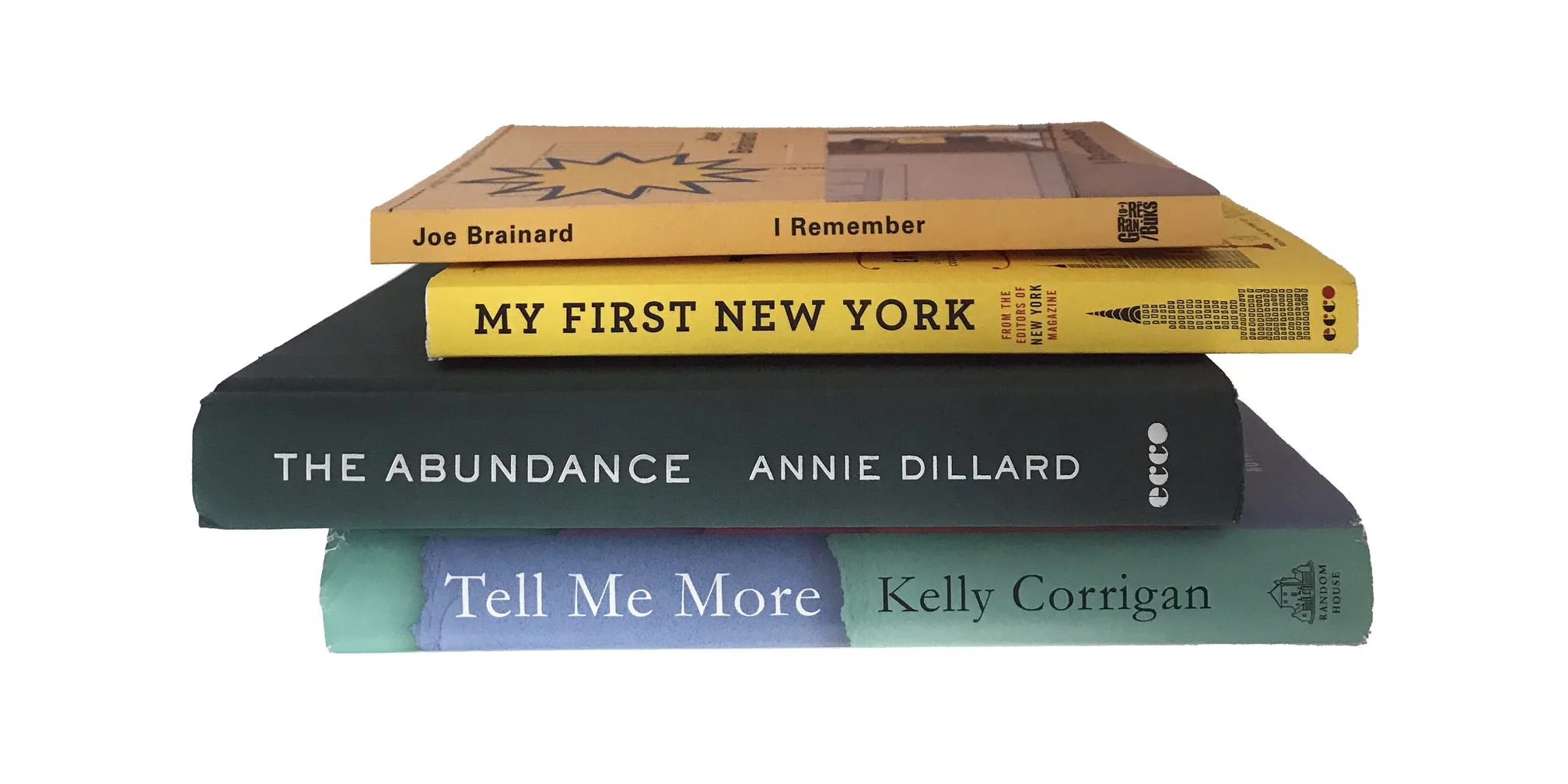
The vignette: What to read to be inspired
Memoir reading suggestions to inspire your own vignette-style life story writing, from Annie Dillard and Kelly Corrigan to Robert Fulghum and Sandra Cisneros.

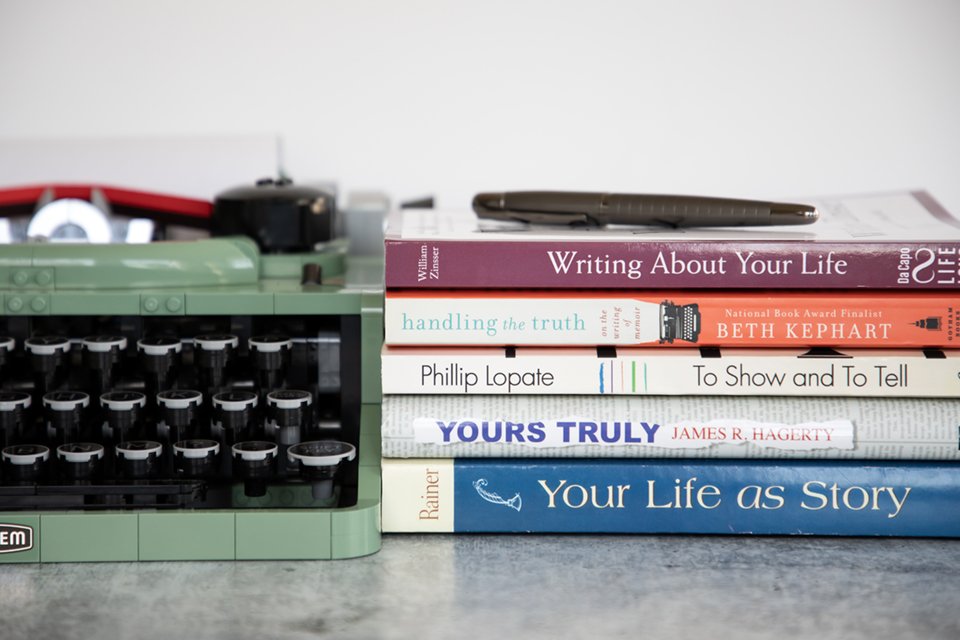
Reading memoir in the format in which you would like to write is an effective way to internalize style and discover what may and may not work for you.
Here are a few titles that, in my opinion, utilize vignette-style writing to its fullest potential.
Vignette-Style Autobiographical Writing
The Abundance: Narrative Essays Old and New
(2016) by Annie Dillard
The entry titled “Jokes” is a fine example of writing from family experience that feels particular and universal at the same time; even without a true narrative arc, Dillard develops her parents into real characters and paints a picture of her home that makes the reader feel a welcome guest.
Tell Me More
(2018) by Kelly Corrigan
Read this joy-filled, sensitive memoir not because it is vignette-driven (it is not) but because it very likely started out that way. Corrigan—who has been called “the voice of her generation” by O: The Oprah Magazine and “the poet laureate of the ordinary” by HuffPost—beautifully weaves 12 stories together to create a book that says plenty about her life, and ours. Consider Corrigan’s book a goal to strive for in terms of using life experience to convey something beyond yourself, and of editing stories so they transform into a whole that is greater than its parts.
My First New York: Early Adventures in the Big City
(2010) from the editors of New York magazine
This compendium of candid accounts from various luminaries puts New York City on the map in an entirely new and wholly personal way. Each vignette (called “small, glittering essays” by the LA Times) is an exquisite example of capturing a slice of life via an interview (translated for the book into as-told-to pieces), an approach anyone can try simply by speaking into your phone’s voice recorder and transcribing—and editing—later.
I Remember
(1975) by Joe Brainard
Dani Shapiro introduced me to this tiny gem during a memoir writing workshop a few years back, and I have recommended it countless times since. Brainard’s memories, recounted in a stream-of-consciousness fashion, are short and pointed, often mere phrases or single sentences, occasionally a brief paragraph, each beginning “I remember...”. Read this book to discover the power of short reminiscence, and emulate it to create your own list of prompts for future development.
Finding Inspiration in Fiction
The House on Mango Street
(1984) by Sandra Cisneros
This a great fictional model for vignette-style of writing. The book is a series of sketches and vignettes written in rich, poetic prose that together form a loose narrative about the author’s Chicano childhood. The vignettes add up, as Cisneros has written, “to tell one big story, each story contributing to the whole—like beads in a necklace.” Told in first person, the book reads like a true autobiographical exploration. Her language is lush and figurative, offering us a glimpse into her world without much editorial exposition.
Discovering Voice
All I Really Need to Know I Learned in Kindergarten
(1986) by Robert Fulghum
Robert Fulghum, whose eight nonfiction books all rose to the top of the New York Times Bestseller List, refers to his writing as “stories, observations, and affirmations.” His books are filled with anecdotes, wit, and wisdom around everyday experiences and life-changing transitions.
He says his “writing usually begins as journal entries—notes to myself—lines of verbal perspectives drawn from walking around and stopping at intersections as I move camp each year.” Fulghum says he molds his raw ideas into stories by sharing them aloud with a walking companion, thereby “editing” his stories as he goes. “In time, the stories and reflections migrate into book form,” he writes. “Even so, please keep in mind that I think of what I’m doing as writing letters and postcards to friends, always ending with the unspoken tag line: ‘Wish you were here.’”
Two more of Fulghum's titles to check out for inspiration for using a casual voice to capture vignettes that resonate:
What on Earth Have I Done? (2007)
It Was on Fire When I Lay Down on It (1989)
Related Reading on Vignettes
In “How to Write a Good Story in 800 Words or Less” you’ll find writing tips and, more importantly, one of the best examples of how powerful brief character writing can be, a 145-word piece by Meyer Berger.
Check out our Vignettes Writing Prompts series:
Learn how to use family photographs as writing prompts, and how to choose the best photos to use.
If you’d like memory and writing prompts delivered to your phone weekly, sign up for our short—affordable!)—Write Your Life courses.
Affiliate disclosure: As an Amazon Associate, we may earn commissions from qualifying purchases from Amazon.com.
FREE Writing Prompts Guide
Get all our life story vignette writing prompts in one easy-to-read printable guide!

Writing prompts for life story vignettes: 300 words in 30 minutes
By limiting oneself in word count and time allotted for writing, undertaking any life story project becomes both more urgent and more relaxed. Ready, set, write!
Our first two parts of this series, Writing Prompts for Life Story Vignettes, offered up ideas for writing from the senses and a how-to for conducting a thoughtful self-interview. Here in Part Three, we provide a simple step-by-step plan for a timed writing exercise, along with three specific idea prompts to get you started.

300 Words in 30 Minutes, Step by Step
1 - set a timer for 30 minutes
2 - Begin writing on one of these topics:
Create a literary snapshot of someone close to you: a parent, friend, teacher, someone you love…
Think of a turning point in your life and imagine you had made a different choice (not going to college, telling your secret, becoming a parent)…
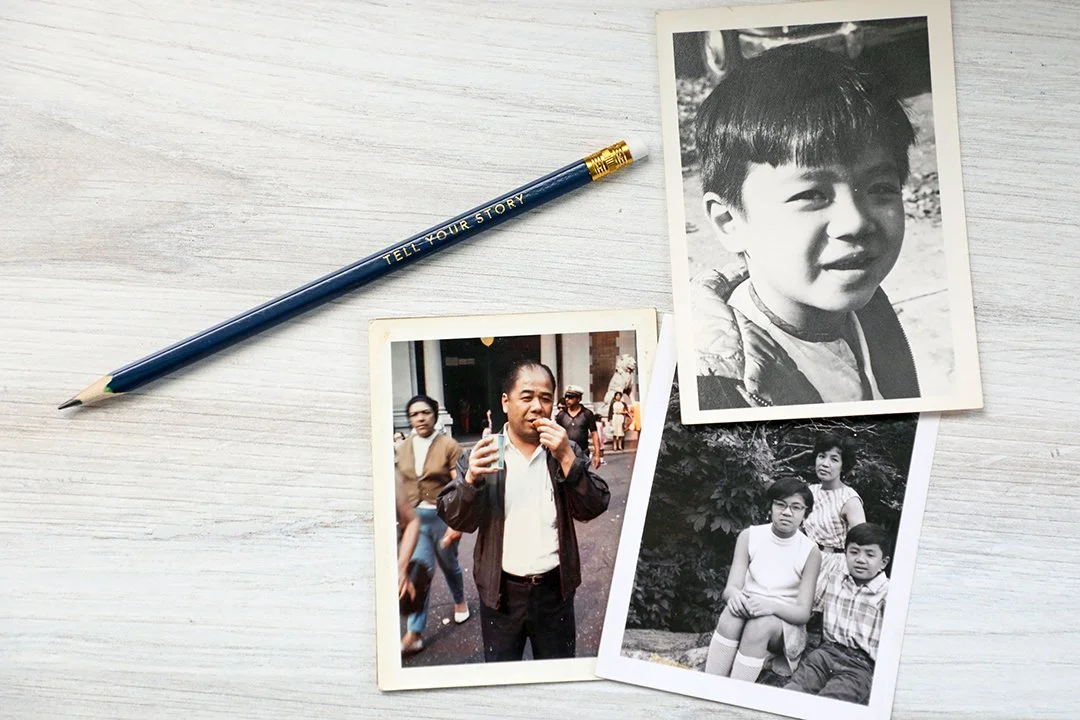
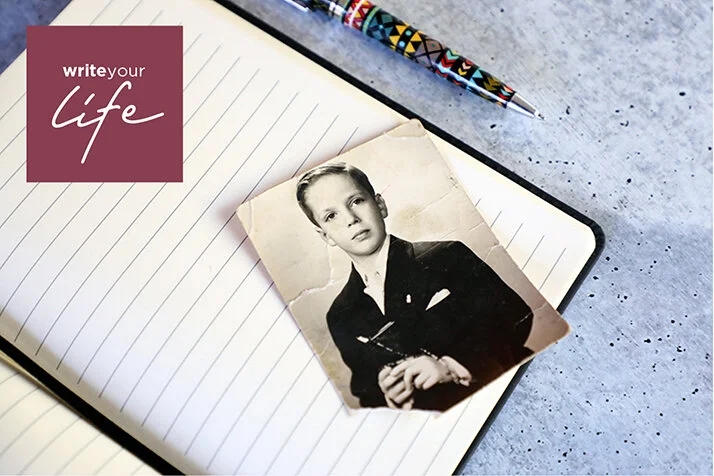
Write a vignette about an old family photograph in which you are pictured. What is the story of the moment in time captured in the photo—and what is just beyond the frame? What happened just after it was taken?
Whatever writing prompt you choose, try to include striking images that give readers a strong sense of what you see, hear, and feel about your subject.
3 - wait
Let your vignette sit for at least four days to give you some distance. Reread it.
4 - do a word count and edit
Too short? If your vignette is shorter than 300 words, add to your story (by fleshing out details or drawing emotional conclusions) until it reaches this goal.
Too long? If your vignette is longer than 300 words, edit the story down, aiming for a brevity that is crisply focused and conveys some essential truth.
The Value of a Timed Writing Exercise
“The hours we spend talking about writing is time we don’t spend actually doing it,” Stephen King asserts in On Writing: A Memoir of the Craft.
By giving ourselves a time limit, we feel both the urgency to begin (before time runs out!) and a sense of relief that an end is indeed in sight (what’s a half hour, after all, in the scheme of things?).
That urgency in turn inspires us to write from the heart, in our own voice (forget about sounding polished or overthinking things)…to just write.
Find more of our life story vignette writing advice:


Download Free Writing Prompts Guide
Get all our life story vignette writing prompts in one easy-to-read printable guide!

Memory & writing prompts sent weekly to your phone
Short courses for anyone who wants to write about their life—just $15 for 8 weeks of guidance & inspiration!
Writing prompts for life story vignettes: self interview
In Part Two of our Life Story Vignettes Writing Prompts series, guidance on conducting a probing self interview as an entry point to your stories and memories.
In Part One of our Life Story Vignettes Writing Prompts series, we offered five specific exercises for writing about your memories by using all of your senses. Today in Part Two we give you guidance on conducting a self interview as an entry point to your stories.

Getting to Know You
An oft-recommended exercise for first-time novelists is to “interview” their main characters: Imagine these fictional beings sitting before you, answering a list of questions of your making. By getting to know them, the thinking goes, the writer will be able to flesh out multi-dimensional characters with back-story, quirks and all.
Well, you are the main character of any memoir writing you take on. You know yourself, of course, but it’s a rare soul who sees himself objectively, or who looks upon herself with clear eyes.
So imagine you have been invited to sit across from Barbara Walters. You’re in a cushiony chair, glass of water within reach, ready to take on the tough questions. Ms. Walters, as you presumably know, is well known for making her guests cry, laugh, and gush as they open up about things they rarely if ever have discussed.
Preparing Your Questions
This is one occasion where I will not be offering up suggestions for questions! You must play the role of interviewer and interviewee here.
Be sure to ask the tough questions.
Ask follow-ups!
Probe beyond one-word answers.
Be thorough, asking questions about your past, present, and future.
Think about what you wish people knew about you—and consider answering those questions you wish people perhaps didn’t know, too. Open yourself up to the possibilities.
Generating your list of questions is as challenging a part of this writing assignment as answering those questions will be. Consider this: If you were a journalist about to conduct an interview with somebody famous, you would do your research first, and craft questions to shed light on some of the things you discovered.
Do the same for yourself. Record a list of milestones, big decisions from your life, and key relationships that might be worthwhile to explore. At least some of your questions should develop from here.
You might even consider including some questions that you truly don’t know the answer to yet—questions that will spur you to real introspection, and result in interesting answers that will no doubt prove fruitful for more in-depth exploration in writing.
Proceeding with Your “Interview”
Unless you are a Robin Williams wannabe, chances are you are not going to role-play both characters in this pseudo interview (if you do, please videotape and share—I’d love to see it!). Rather, you have two obvious choices:
Read your questions aloud to yourself, then answer aloud, recording your self-interview with a recording app on your smart phone or with a traditional mini-cassette recorder.
Benefit of this approach: It is often easier to talk at length than to write, and this method is more apt to retain your colloquialisms and the flavor of your voice.
Drawback: If you are going to use this as part of further writing, you will need to transcribe the recording to have it in print.Type, or write, your answers following each question.
Benefit of this approach: Writing something longhand is itself a contemplative act, and doing so here allows for periodic pauses for thinking and crafting your response. That thoughtfulness may result in answers that go deeper than if you were conversationally speaking them aloud.
Drawback: This approach can take longer, or may feel slightly intimidating to someone who does not consider him or herself a writer.
I don’t particularly recommend having a friend or loved one interview you for this exercise (though it is an approach I generally do suggest for family history preservation). Part of the value of this writing prompt is its privacy and striving for depth, and its aim to get you to share things you might not feel comfortable sharing under normal circumstances.
What Comes Next?
As with many generative writing exercises, I recommend setting aside your self-interview answers for a week or so before doing anything else with them. Once that emotional distance is achieved, then you might:
use your interview to write a longer vignette exploring one answer that was surprising to you (or revealing, or maddening, or…)
use the themes within to create a template for how to approach a larger life story project
discover questions that yielded only the beginning of an answer; if, upon rereading your answer, you feel the need to expound, then this may be a topic rife for your attention
determine which questions prompted you to share more than you expected, then (a) consider asking similar questions of a family member to capture their stories; or (b) think about going even further—what would chapter two of your answer be?
Find more tips for writing life story vignettes:
Download FREE Writing Prompts
Get all our valuable memoir-themed vignette writing prompts in one handy, printable guide!
Memory & writing prompts sent weekly to your phone
Short courses for anyone who wants to write about their life—just $15 for 8 weeks of guidance & inspiration!
Writing prompts for life story vignettes: Using the senses
In Part One of our Life Story Vignettes Writing Prompts series, we offer five specific exercises for writing about your memories by engaging all your senses.
When the daunting task of writing a major autobiographical work is broken into chunks, the writing becomes easier to manage. Guided prompts help rediscover lost memories.
In a previous post I introduced the concept of vignettes, and discussed why I think they are an ideal starting point for any life story writer. Today I would like to dive a little deeper and offer you specific writing exercises to help you get started.

Some General Guidance for Writing Vignettes
I recommend keeping a list of ideas in a notebook: Jot down memories that come to you unbidden, people you would like to recall, moments from your life you would like to revisit. Write phrases and visuals that may jog your memory later—Poppy’s red Cadillac, fishing at Johnny’s lake, the first time I wore red lipstick.
Be specific. Be sensual (the smell of the fish, if that comes to you; the tacky feel of the lipstick, perhaps).
And when you need a little inspiration beyond your list of memories, try using one of the following prompts designed to get the memories—and your words—flowing.
sensory prompt 1
allure of a stranger
Go somewhere you can people watch: the mall, a park, the library. Sit in silence and watch. What do you see? Does someone catch your attention? Think: What is it about this person that ...
... seems familiar?
... scares you?
... moves you?
... feels trustworthy?
Imagine yourself sitting down comfortably with this individual over coffee. You can ask one question which leads them to share a story from their past—but you must answer the same question for them.
Write: Imagine yourself speaking directly to this individual, sharing your story and perhaps your reason for sharing and how it makes you feel (is it something you have never told anyone before? that scares you? that makes you proud? joyful?).
sensory prompt 2
power of music
Listen to your favorite album or song. Immerse yourself in it, avoiding other distracting activities while listening.
Write: Where does the music take you? Are you transported to a different time or place? Describe the scene, how you feel. How do different songs connect to different parts of your life?
sensory prompt 3
a room with you
Think of a room where you spent a lot of time as a child, a teenager, or even recently as an adult. Nothing monumental need have happened here; it is simply a place you have stayed, often. Think about the room: What do you see? Smell? Feel? Is there an object you touch? Is there someone with you—or in the next room?
Write: Describe this place in as much vivid detail as you can. Be specific, using all of your senses. Continue to explore who you were while in this place: Why were you there? Did you want to be there or someplace else? How did you feel? Would you return there if you could?
If you have chosen the right location, your writing will develop from external setting to a sense of internal place.
sensory prompt 4
show & tale
Choose an object from your life and write about it. Of course, what you choose will determine the course of your storytelling.
Think inside the box:
a piece of jewelry
something from your kitchen
a talisman/lucky charm
a trophy
your camera
a handwritten recipe
…and outside the box:
a tattoo
your curly hair
an old car
a tree from your childhood yard
Write: Imagine yourself touching the object, and describe that sensory experience. Tell the story of your object, weaving yourself into the story and finding the meaning and significance of the role this object has played in your life or a loved one’s life.
sensory prompt 5
taste of the past
Think of a time when someone you loved cooked for you. Perhaps it was a holiday gathering, or more likely it was an ordinary day—cookies during after-school homework, say, or breakfast before a family road trip. Close your eyes and try to conjure the smells and tastes of the food, and use them as a gateway into your memories.
Write: Start not with the food, but with your loved one, and describe the scene: the cooking, the discussion, the background noise and plans for the day. What was your loved one wearing? How did they make you feel? Were you aware that the act of cooking for you was an act of love? Have you made this food for someone?
Your FREE Writing Prompts Guide
Get all our life story vignette writing prompts in one handy, printable guide (and yes, it’s free!).
Read More Vignette Writing Tips
This is the first in a four-part series on how to begin writing your life stories with short, evocative vignettes.
Explore the other posts in this series:
PART 2: Writing Prompts for Life Story Vignettes: Self Interview
PART 3: Writing Prompts for Life Story Vignettes: 300 Words in 30 Minutes
And if you}re interested in beginning a larger life story project to preserve your stories for the next generation, start here: How to Plan a Life Story Book in 3 Simple Steps.
Want weekly memory & writing prompts?
Short courses for anyone who wants to write about their life—just $15 for 8 weeks of guidance & inspiration!















How to use short vignettes to create a mosaic of your life
How the best life story vignettes are powerful ways to capture your past, and why writing short pieces from your memories is a smart way to begin your memoir.
While most of my clients share their stories in a series of one-on-one personal interviews (which we then transcribe and edit into a larger narrative), some have already written—or are trying to write—their memoir. It’s usually when they are stuck that they seek our help, but it’s my goal to empower everyone to be able to write their life stories for the next generation, whatever route you take.
Since one of the most debilitating fears I hear is, “How would I even begin to tell my story?!” I often advise: Start anywhere—just start small.

“What is a vignette?”
vignette (noun)
vi·gnette | \ vin-ˈyet , vēn-\
a : a short descriptive literary sketch
b : a brief incident or scene (as in a play or movie)
A vignette is a recollection of a memory or an episode from your life told evocatively. It is a snapshot of a moment.
You may describe it in your own voice, or using dialogue reconstructed as best as your memory allows, using language to recreate your sensory experience—what did you smell, how was the light, what textures might you have touched?
“Vignettes are tiny essays, story placards, postcards of injustice, single-image stories, little wisps of big ideas,” Tamara Pearson writes in Red Wedge Magazine.
The best life story vignettes transport the reader to the scene and elicit reactions—feelings.
There are two primary reasons I encourage people (non-writers, particularly) to begin with a vignette:
It is a lot less intimidating to write one scene than “the story of your life.” And any writer will tell you: Just write. The words will not begin flowing unless you start.
If you don’t have to worry about traditional story structure—beginning, middle, end; plot, conflict, resolution—the writing process becomes more straightforward.
So don’t worry about story structure and especially, don’t think about the BOOK. Simply think about your memories.
“How do I create a life mosaic from a series of vignettes?”
Assembling shorter pieces into an extended work is more than copying and pasting the vignettes together in one document. It’s more, indeed, than even thematically grouping them.
Editing the stories, finding the narrative in order to group the vignettes for impact and cohesion, revisiting and embellishing some and discarding others—all of these tasks should come on the heels of writing.
While I have referred to the resulting narrative of assembled vignettes as a mosaic, Tristine Rainer, director of the Center for Autobiographic Studies in California, calls it a quilt. “When you follow the quilt model of assembling a work, you spontaneously write and collect pieces that seem to you thematically related. As you proceed, a pattern or story begins to link the pieces. Certain areas will easily cluster, but you won’t have the whole picture until it is all in place.”
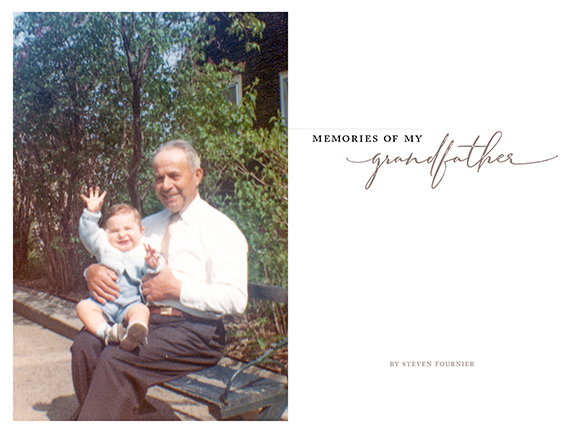
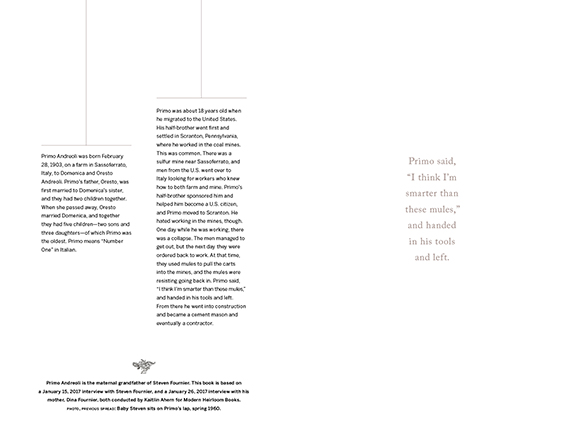
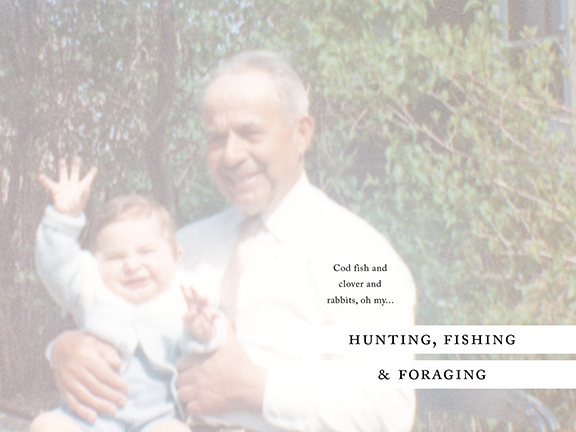
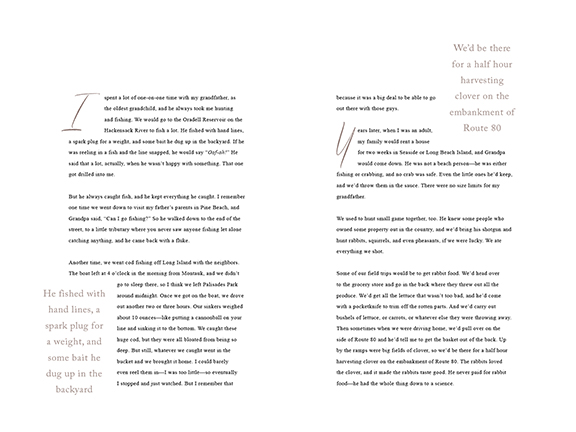
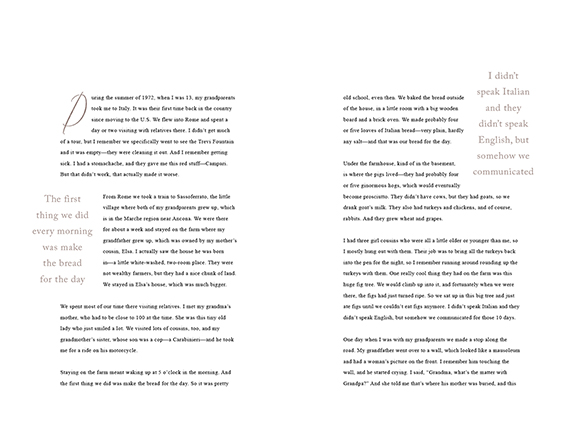
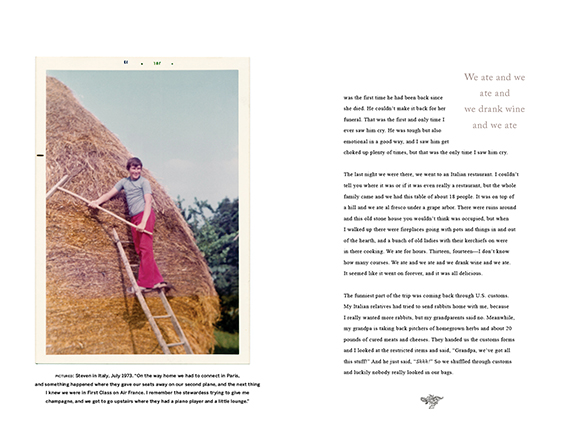
Additionally, I prefer to enhance the written words with photographs that help bring them to life—that allow readers multiple entry points to engage with the text. Imagine a coffee table book about the Civil War sitting beside a 1,000-page tome void of any pictures—which would you pick up? Even if the stories of my ancestor were highlighted in each of these books, I would undoubtedly look at the coffee table book first.
How material is presented makes it more (or less) accessible, and I take the viewpoint that you are writing these stories so they will be read (ideally, often). So let’s invite people in! Taking the time to design a mosaic of these stories cohesively—and beautifully—ensures that they will live on. That your legacy will be recounted and woven into the fabric of your progeny’s lives.
“What if I can’t get past writing the vignettes?”
When you have written a series of vignettes from your life, you will have created a wonderful legacy for generations to come. If taking the next steps seems daunting, consider hiring us to edit, compose, and package your stories into a cohesive heirloom book.
Even if you’re not ready for that, though, remember, as Lois Daniel asserts in How to Write Your Own Life Story: “You may be able to enhance your stories by the way you arrange and connect them, but you can’t diminish them, so move ahead with confidence.”
And no matter what, share your stories with those you love—please.
Check out more in-depth posts on memoir-style vignette writing
Here is some helpful content to help you get down to the nitty-gritty of writing your life stories. Check out our writing prompts series and explore more on memoir and life story writing, starting here:
Memory & writing prompts sent weekly to your phone
Short courses for anyone who wants to write about their life—just $15 for 8 weeks of guidance & inspiration!
Get FREE Writing Prompts Guide
All our vignette writing prompts in one easy-to-read, printable guide!

6 tips for choosing the best family photos to use as writing prompts
Family photos can be useful tools to jog memories and call forth stories. We share how to determine which images will elicit the best family stories.
There are no rules for how to choose a photo that will be effective as a biographical writing prompt, but we can offer a few guidelines for the types of images that often elicit storytelling that is deeper and more meaningful than a mere identifying caption.
That’s the goal, after all: To use a photo as a starting point for your storytelling—as a jumping off point for memories, a touchstone for emotions, a lead-in to a narrative from your life.
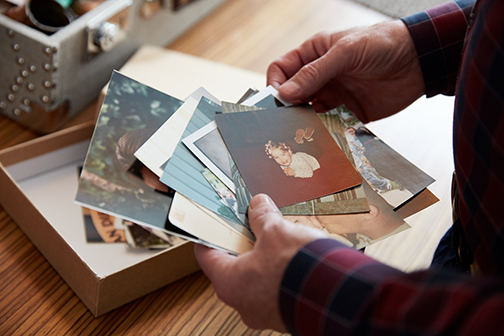
So get out your old family photo albums or that dusty box of print photographs from the basement! Then…
Step One: Choose 10-20 pictures to start with.
Begin randomly looking at photos.
Rather than focusing on those that are frame-worthy, look for photos that elicit a strong feeling from the viewer (you, or the family member from whom you would like to capture stories).
Set aside 10-20 images that stopped you in your tracks in number two (even if you stopped to wonder about the image as opposed to reliving memories as a result of looking at it; sometimes it’s the mysteries behind a photo that draw forth particularly revelatory stories).
Now it’s time to choose a photo with which to begin your reminiscing. Whether you are using the photo as a writing prompt or as a vehicle to jump-start conversation in a personal history interview, the following suggestions will be helpful in selecting images that lead to substantial storytelling.
“Photos reveal themselves in layers,” Maureen Taylor (aka ‘The Photo Detective’) writes on her blog. “You study the clues and talk to family but every time you look at it or show it off to family you might learn something new. One thing leads to another.”
Step Two: Determine if the photo is story-worthy,
Ask yourself if the photo you are holding does any of the following six things—and if the answer to one or more of them is yes, then you’ve got yourself a winner. Set it aside and make sure it’s on hand the next time you want to delve into some family history writing!

The photo invokes an emotional response.
Do you feel a rush of excitement or a flush of scarlet creep up your face when you first spy the picture? It may make you feel anguish or sorrow, pride or exasperation, abundant joy or abiding love—the key is, it makes you feel.
If a family photo has such a visceral effect on you, this will be most fruitful for writing its story.
“Photographs are about one specific second, but they can also be about the future,” Beth Kephart writes in The Quest for Truth. “Photographs can operate as metaphor and counterweight, as tease and opposition, as the other half of a parenthesis.”
That photo that moves you is a doorway to your past that is clearly connected to your present in some way. Explore why you feel the way you do, and how this feeling fits into your life then and now. Provide context for your feelings; set the scene.
The picture tells a visual story.
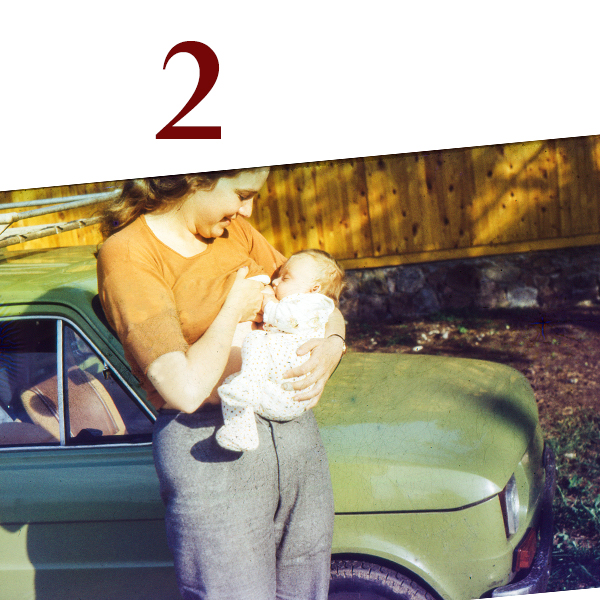
Sometimes a picture itself already reveals a story: If the who, what, where, when, and why (or most of those) are apparent just from looking at the photo, then it’s likely a good candidate for embellishing upon. Of course, it’s ideal to choose images whose stories matter to you in some way.
The snapshot of this woman breastfeeding certainly tells a story about who she was as a mother—and if the mores of the time period and the town are known, and her character as well, then the storyteller can dive deep. A grown child looking at this image might use it as a jumping-off point for talking about their relationship over the years; or perhaps how their mom was part of a strong line of women before her; maybe she was only able to have one child, or 10, or only girls…
A photo is a moment in time, but on the periphery are details that help make up its narrative. What photo would have been shot just before this one? Just after? What’s in the frame? What (and notably who) is not in the frame? By starting with a picture whose story seems readily available, we can develop depth by asking such probing questions and tapping our memories for more.

Details draw your attention.
Your facial expression at the time the picture was snapped. The pattern of your grandmother’s well-worn house dress. A missing button on your dad’s shirt, or the papers falling from his briefcase. The water stain on the bedroom wallpaper. If some detail in a photo draws your eye again and again, there is more to be probed.
What does the detail begin to tell you? What beyond the frame of the photo—on that day, or a decade before or after the photo was taken—makes you focus on it? By taking the time to meditate upon all that the detail calls forth in your mind, you will reveal a greater meaning to this photo than could ever be revealed upon initial inspection.
The photo portrays part of the subject’s everyday world.
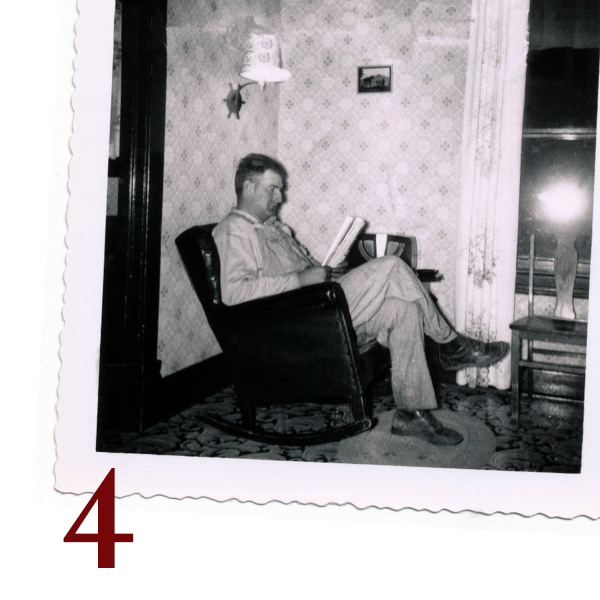
My favorite type of modern family pictures could be described as documentary family photography: people in their natural environment, doing what they do every day. (Check out talented photographer Jen Grima’s work for inspiration.) I love capturing our routine family narrative this way because the resulting photos are so evocative of time and place, and they set us in scenes that are real and personal, uniquely ours.
Many old family photos do so less consciously, perhaps, but the impact is the same. We are drawn to such pictures because they reveal what our or our ancestor’s life was like back then. So if a snapshot of your aunt holding you while she’s hanging the laundry crosses your path, use it to tell a story. If you find a picture of grandpa reading in his favorite recliner, dad trimming the hedges at your childhood home, or your baby crawling amidst the messy remnants of Christmas wrapping paper, use them all—find their stories.

The image intrigues you.
Is it a curious shot? Out of the ordinary for your family or for the time period? Is someone missing who you would have expected to be present in that scene?
If it makes you wonder, then it very well may lead to a worthwhile story. Perhaps you end up asking for relatives’ input to get to the bottom of your intrigue, or maybe in lieu of concrete answers you surmise the story behind the old photo, thereby revealing a narrative of your own in relation to the photo. Chances are, whatever your approach the resulting observations will be as alluring to the next person as the original photograph was to you.
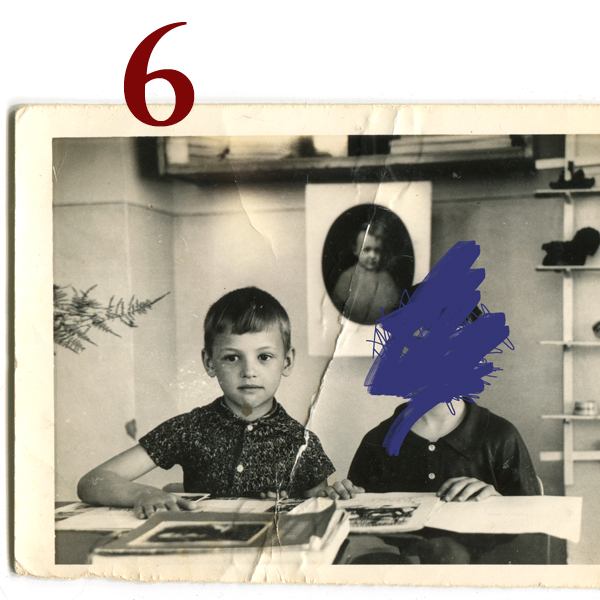
The physical print tells its own story.
My grandmother had a tendency to hold a grudge, so it was not too surprising to find among her things photos that had an individual literally cut out of the scene (or crossed out with ballpoint pen). Now there’s a story to be revealed! The same could be said for pictures that have been torn, damaged by flood or fire, or found tucked away in a book.
Sometimes getting to the story behind the photo is as fun—and constructive—as getting to the story that resides within it.
Step 3: Start sharing your stories.
Read more about how to use old family photos as biographical writing prompts—we’re talking nitty-gritty advice, from where to begin after looking at the photo to how to capture your memories.
Download the advice in a handy printer-friendly booklet here, entitled “How to Use Photographs as Prompts for Writing Life Stories.”
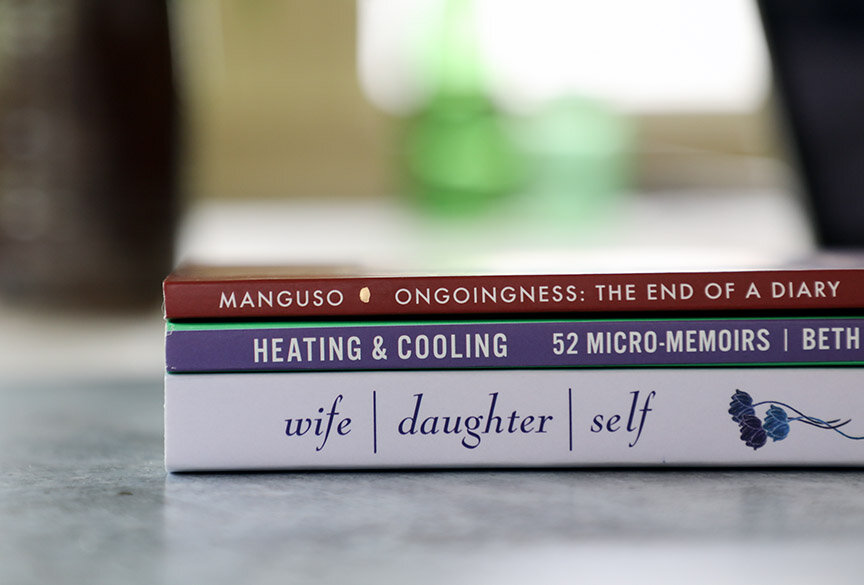
Explore more intense self-reflective writing prompts in Beth Kephart’s memoir writing workbook.
Once you’ve written your first life story vignette, consider doing something special with it—we’ve got five easy ideas.

3 Must-listen podcast recommendations for life story lovers
Each of these powerful podcasts comes in at under an hour: Listening recommendations on memoir, narrative structure, family secrets, writing prompts, and more.
If only there were more time in a week to listen to all the podcasts I would like to! As a former journalist who often bemoans the state of media these days, I find respite and refuge and inspiration in the podcast arena, where interviews are often in-depth and surprising, and where there is plenty of content aimed at lovers of memoir, life story, and family history.
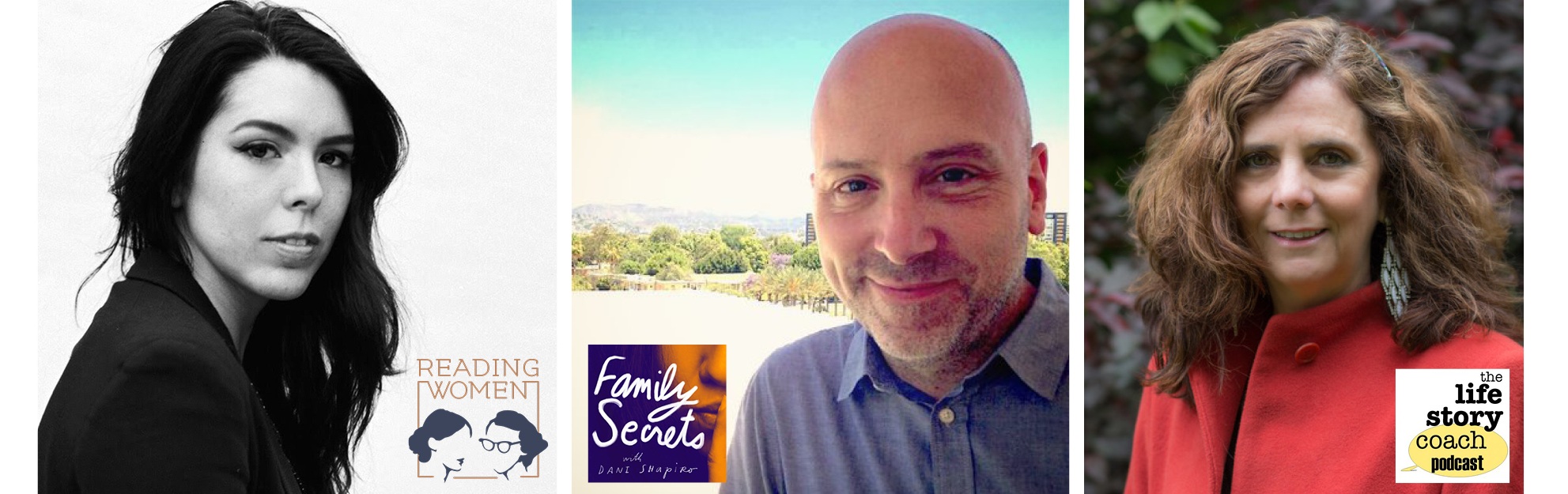
Here are a handful of my favorites in recent weeks—I hope you give them a listen, and please let me know your own favorites in the comments so I can add them to my playlist!
Click on the numbered links below to go straight to that review:
Steve Lickteig on Dani Shapiro’s Family Secrets podcast (41 minutes)
T Kira Madden on the Reading Women podcast (40 minutes)
Beth Kephart on The Life Story Coach podcast (46 minutes)
An Open Secret Revealed
On Dani Shapiro’s Family Secrets podcast, Steve Lickteig talks CANDIDLY about the secret of his own identity that not only his family, but an entire small Kansas town, kept from him. As a child, he was told that he was adopted. But that didn't turn out to be entirely true, or even half of the story.
“There is a real power in crafting a truthful narrative—or at least as truthful as you can make it, your emotional truth,” Steve Lickteig tells Dani Shapiro in this episode of her new Family Secrets podcast. As a longtime fan of Shapiro (Hourglass will always be among my favorite memoirs), I’ve listened to all of the Family Secrets episodes. And while I absolutely suggest subscribing, I will say that her talk with Lickteig is the one that lingered longest with me—and which would make a wonderful introduction to the series for a first-time listener.
Lickteig is a journalist himself, and perhaps it is his deep rootedness in storytelling that makes his conversation with Shapiro so resonant; he is articulate and thoughtful, conscious of creating a narrative out of his family history that enlightens something greater than his own perspective.
Listen to the full episode at left, or head over to the Family Secrets page to hear more from the likes of guests Debbie Millman, Jane Mintz, and Jim Graham.
During Shapiro’s interview with Lickteig he recalls his occasional unease (and simultaneous journalistic pride) at the way he comes across in his 2011 documentary Open Secret, which explores in depth the stories he shares on the podcast. He says the film portrays him in ways that are at times unflattering, but yet true to his experience.
Open Secret is described as Lickteig’s “20-year search for who his real birth parents were; why a whole town kept the truth from him; and how his family's tumultuous history revolves around the hidden lives of two unconventional women.” I haven’t watched the film yet, but indeed, it’s on my watch list.
An Unconventional and Evocative Memoir
T Kira Madden, author of Long Live the Tribe of Fatherless Girls, talks about owning her story with Kendra Winchester and Autumn Privett on the Reading Women podcast.
Topics of conversation include:
getting permission—or not—from her family members to write about them
discovering the form that would best suit her narrative, from weaving a linear thread through disparate stories and ways of storytelling to creating the skeleton that would support her memoir structurally
how reading The Chronology of Water by Lidia Yuknavitch gave her permission to allow “form and content to play with each other,” and to tell her stories in a nonlinear way
how to separate herself from her memoir
the ways in which we inherit parts of our parents’ identities (“understanding myself meant understanding more about my mother and understanding more about my father”)
how the “memory loop [she] was caught in for years” transformed into memoir
I was immediately drawn to Madden’s book when she described it alternatively as a “funky memoir” and “scattered essays that make up my life so far.” It is so much more than a coming of age tale, and trust me, those “scattered” pieces are woven together meaningfully.
“The honesty and vividness with which Madden writes and the tightly controlled structure she utilizes only emphasize the fact that Long Live the Tribe of Fatherless Girls is a deeply compassionate book, though not an apologetic one,” Ilana Masad writes in a review for NPR. “In baring the bad and ugly alongside the good, Madden has succeeded in creating a mirror of larger concerns, even as her own story is achingly specific and personal.”
Give the full 40-minute interview a listen here, or visit the Reading Women podcast page for show notes.
This was my introduction to Reading Women, and I will undoubtedly be listening to more. A couple that are in my listening queue are a discussion of Kindred by Octavie E. Butler and Homegoing by Yaa Gyasi (I recently read Kindred and highly recommend it for history lovers especially) and, of course, their exploration of memoir from last September.
The Questions We Ask
Award-winning memoirist and memoir writing teacher Beth Kephart introduces Amy Woods Butler’s Life Story Coach listeners to ways we can help others write memoirs that matter.
When I sat down to listen to this conversation between memoirist Beth Kephart and life storyteller Amy Woods Butler, I had no idea that I had indirectly introduced them…but how happy I am that I did!
Kephart has fed my writing soul for years; I have personally relished her fiction, endorsed—and continue to use—her writing workbook, and forward her newsletter to friends often. I imagine this less-than-an-hour interview with Kephart will entice you to want to hear more.
In this The Life Story Coach session recorded in 2019, Kephart and Butler hit upon topics including:
the wide variety of her experience teaching memoir and writing memoir
“getting to our stories in sideways fashion”
the power of contextualized and unexpected writing prompts
why she is drawn to memoirs with “that scenic, atmospheric detail-rich quality”
the gap between one’s spoken word and written word
and the Juncture newsletter, where Kephart explores topics such as what makes a memoirist approachable, interviews current memoir writers, and includes reader book recommendations, as well.
If you’d like to hear more of Beth Kephart’s writing wisdom over the years, here are three older podcast interviews with her you may enjoy:
“I’ve written memoir in the quest to answer very specific questions,” Kephart tells Dan Gottlieb in a wide-ranging conversation about the therapeutic value of memoir (also with a social psychologist) and how she helps others learn to tell their own stories. She talks about what memoir is not, and how to get to what it is and should be for each of us.
You can also listen to Kephart speak about Handling the Truth here, and hear her in conversation with Dani Shapiro about her latest memoir Inheritance (which inspired the Family Secrets podcast referenced above!) here.
What podcasts are you listening to—specifically those having to do with memoir, storytelling, and oral history, or any that have just captivated you?

Conjuring epiphanies
A wistful look at how my affinity for epiphanies led me to become the founder of Modern Heirloom Books—and how “moments of being” transform our heirloom books.

Every Modern Heirloom Book tells a story. Biographical, but not a biography; memoir-like, but not a memoir. Rather, a poetic narrative and photo arc that hones in on experiences and emotions, beauty, and memory. A story that makes you feel, and that invites your loved ones to remember with you.
Before deciding to call this company by the descriptive name Modern Heirloom, I strongly considered Epiphany Books. While I clearly left that name in the dust, the background behind it is telling, and encapsulates my approach to creating personalized treasures especially for you. So for our blog today, a little #ThrowbackThursday look at how my affinity for epiphanies led me to become the founder of Modern Heirloom Books.
noun epiph·a·ny \i-ˈpi-fə-nē\
a (1) : a usually sudden manifestation or perception of the essential nature or meaning of something (2) : an intuitive grasp of reality through something (as an event) usually simple and striking (3) : an illuminating discovery, realization, or disclosure
b : a revealing scene or moment [Merriam Webster]
c : “moments of being” [Virginia Woolf]
How “Moments of Being” Transform our Books
I have had little epiphanies my whole life—moments when something profound has seemed crystalline. A glimpse of the meaning of life while rounding the corner in downtown Manhattan. A whisper of some long-forgotten truth while showering.
But by their very nature epiphanies are fleeting. I could never fully grasp what I had known in those moments, no less articulate it for another. Yet I was better for having experienced them.
Memories can come to us in similar ways—conjured by a smell, the glance of a stranger on the street. And they can disappear as quickly.
The books we create from your own life material, like poetry, give physical form to memory. In the hopes that you—and those who come after you—may continue to have “moments of being.”
My Own Personal Epiphany
I relished working in the magazine industry for more than 20 years. My experience at some of the world’s top fashion and lifestyle titles helped me cultivate a keen eye for beautiful detail, an ear for an exquisite phrase. I honed my ability to edit and curate. I told stories to the masses.
As the publishing landscape evolved, so did our way of consuming our own personal media.
More than 200,000 photos are uploaded to Facebook every minute. We shoot everything from what we eat to makeup-free selfies daily. Our pictures are everywhere; and they are nowhere. Never have we needed editors more than now.
And, somewhere along the line, I had a personal epiphany: I wanted to help tell stories, but no longer on a mass scale—I wanted to help you tell your story. Beautifully, professionally, meaningfully. Uniquely.
Related Reading
The Next Chapter in Our Story
I recount my journey from national magazines to bespoke life story books, and introduce a new signature product line of books.
a tendency towards nostalgia
Rediscovering an old family photo album in my closet prompted me to reflect on the lasting appeal & transformative power of nostalgia.