Memories Matter
Featured blog Posts


READ THE LATEST POSTS
How to use short vignettes to create a mosaic of your life
How the best life story vignettes are powerful ways to capture your past, and why writing short pieces from your memories is a smart way to begin your memoir.
While most of my clients share their stories in a series of one-on-one personal interviews (which we then transcribe and edit into a larger narrative), some have already written—or are trying to write—their memoir. It’s usually when they are stuck that they seek our help, but it’s my goal to empower everyone to be able to write their life stories for the next generation, whatever route you take.
Since one of the most debilitating fears I hear is, “How would I even begin to tell my story?!” I often advise: Start anywhere—just start small.

“What is a vignette?”
vignette (noun)
vi·gnette | \ vin-ˈyet , vēn-\
a : a short descriptive literary sketch
b : a brief incident or scene (as in a play or movie)
A vignette is a recollection of a memory or an episode from your life told evocatively. It is a snapshot of a moment.
You may describe it in your own voice, or using dialogue reconstructed as best as your memory allows, using language to recreate your sensory experience—what did you smell, how was the light, what textures might you have touched?
“Vignettes are tiny essays, story placards, postcards of injustice, single-image stories, little wisps of big ideas,” Tamara Pearson writes in Red Wedge Magazine.
The best life story vignettes transport the reader to the scene and elicit reactions—feelings.
There are two primary reasons I encourage people (non-writers, particularly) to begin with a vignette:
It is a lot less intimidating to write one scene than “the story of your life.” And any writer will tell you: Just write. The words will not begin flowing unless you start.
If you don’t have to worry about traditional story structure—beginning, middle, end; plot, conflict, resolution—the writing process becomes more straightforward.
So don’t worry about story structure and especially, don’t think about the BOOK. Simply think about your memories.
“How do I create a life mosaic from a series of vignettes?”
Assembling shorter pieces into an extended work is more than copying and pasting the vignettes together in one document. It’s more, indeed, than even thematically grouping them.
Editing the stories, finding the narrative in order to group the vignettes for impact and cohesion, revisiting and embellishing some and discarding others—all of these tasks should come on the heels of writing.
While I have referred to the resulting narrative of assembled vignettes as a mosaic, Tristine Rainer, director of the Center for Autobiographic Studies in California, calls it a quilt. “When you follow the quilt model of assembling a work, you spontaneously write and collect pieces that seem to you thematically related. As you proceed, a pattern or story begins to link the pieces. Certain areas will easily cluster, but you won’t have the whole picture until it is all in place.”
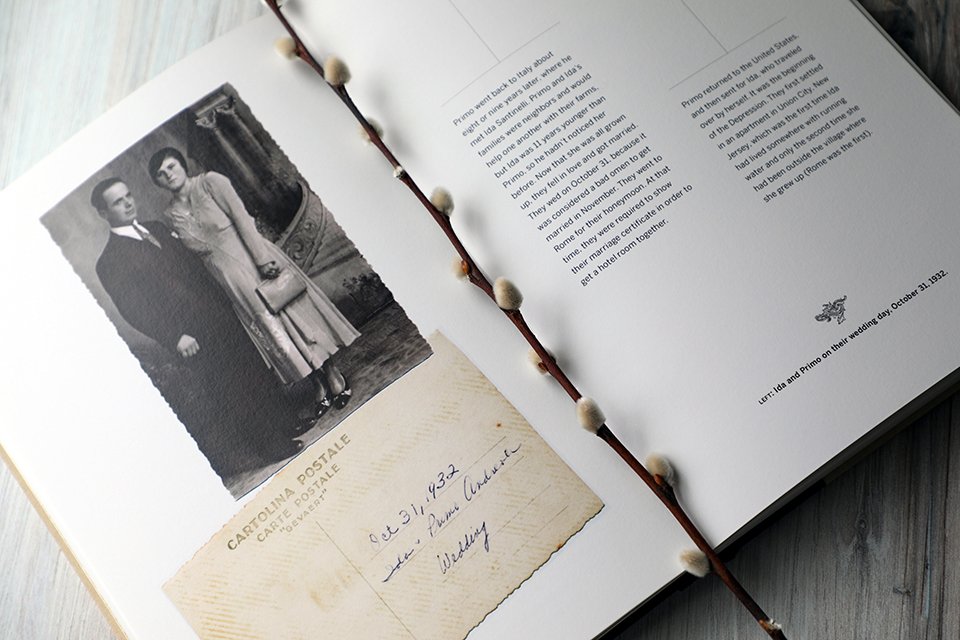
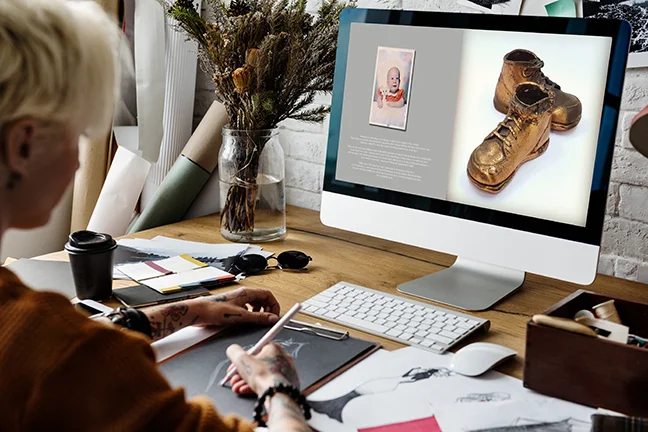
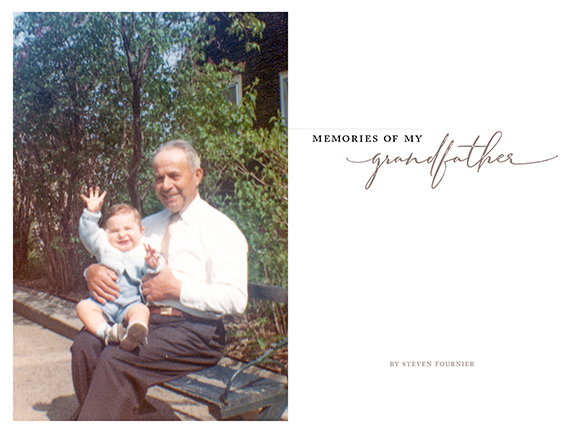
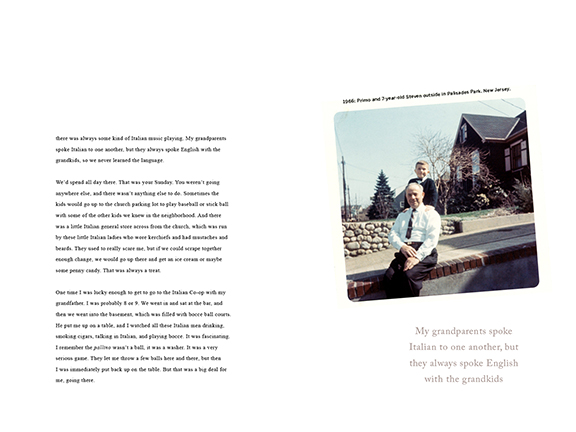
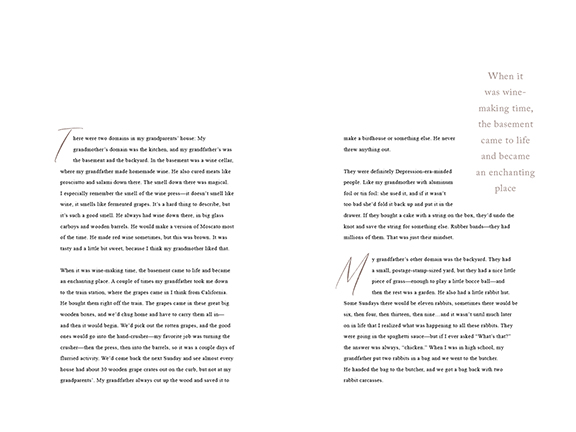
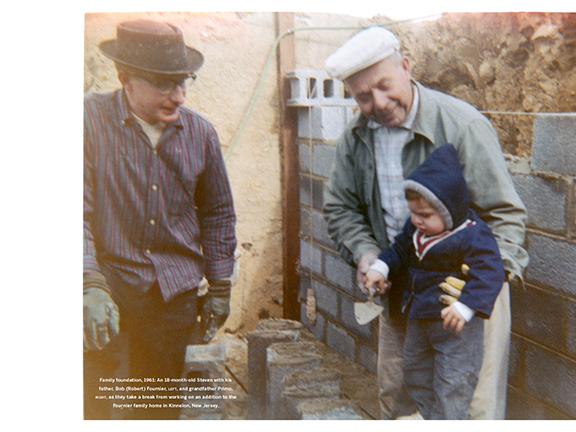
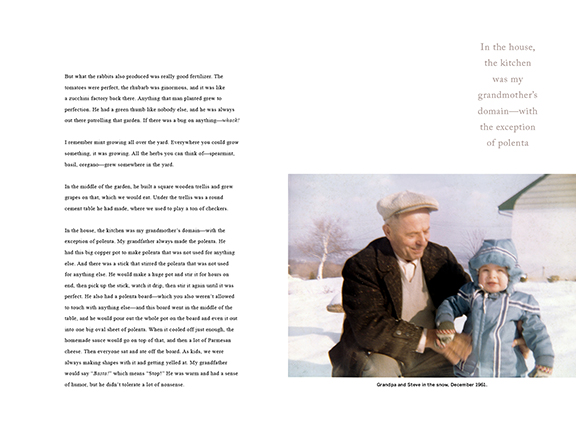
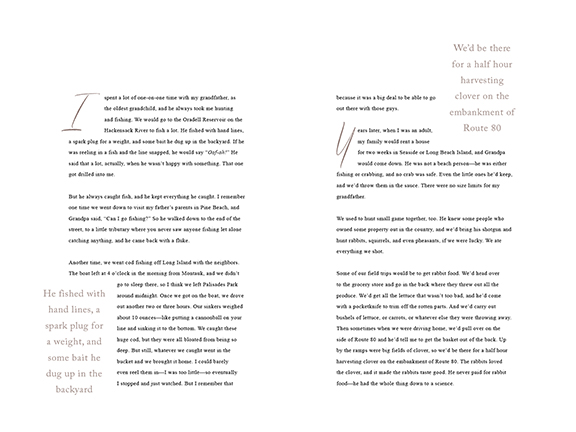
Additionally, I prefer to enhance the written words with photographs that help bring them to life—that allow readers multiple entry points to engage with the text. Imagine a coffee table book about the Civil War sitting beside a 1,000-page tome void of any pictures—which would you pick up? Even if the stories of my ancestor were highlighted in each of these books, I would undoubtedly look at the coffee table book first.
How material is presented makes it more (or less) accessible, and I take the viewpoint that you are writing these stories so they will be read (ideally, often). So let’s invite people in! Taking the time to design a mosaic of these stories cohesively—and beautifully—ensures that they will live on. That your legacy will be recounted and woven into the fabric of your progeny’s lives.
“What if I can’t get past writing the vignettes?”
When you have written a series of vignettes from your life, you will have created a wonderful legacy for generations to come. If taking the next steps seems daunting, consider hiring us to edit, compose, and package your stories into a cohesive heirloom book.
Even if you’re not ready for that, though, remember, as Lois Daniel asserts in How to Write Your Own Life Story: “You may be able to enhance your stories by the way you arrange and connect them, but you can’t diminish them, so move ahead with confidence.”
And no matter what, share your stories with those you love—please.
Check out more in-depth posts on memoir-style vignette writing
Here is some helpful content to help you get down to the nitty-gritty of writing your life stories. Check out our writing prompts series and explore more on memoir and life story writing, starting here:

Memory & writing prompts sent weekly to your phone
Short courses for anyone who wants to write about their life—just $15 for 8 weeks of guidance & inspiration!
Get FREE Writing Prompts Guide
All our vignette writing prompts in one easy-to-read, printable guide!

6 tips for choosing the best family photos to use as writing prompts
Family photos can be useful tools to jog memories and call forth stories. We share how to determine which images will elicit the best family stories.
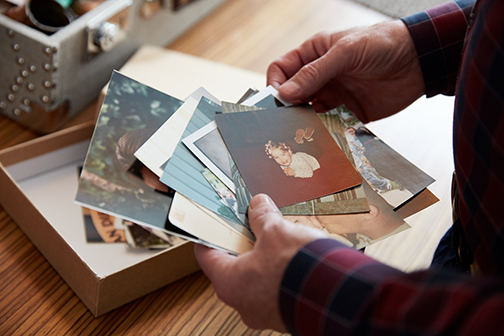
There are no rules for how to choose a photo that will be effective as a biographical writing prompt, but we can offer a few guidelines for the types of images that often elicit storytelling that is deeper and more meaningful than a mere identifying caption.
That’s the goal, after all: To use a photo as a starting point for your storytelling—as a jumping off point for memories, a touchstone for emotions, a lead-in to a narrative from your life.
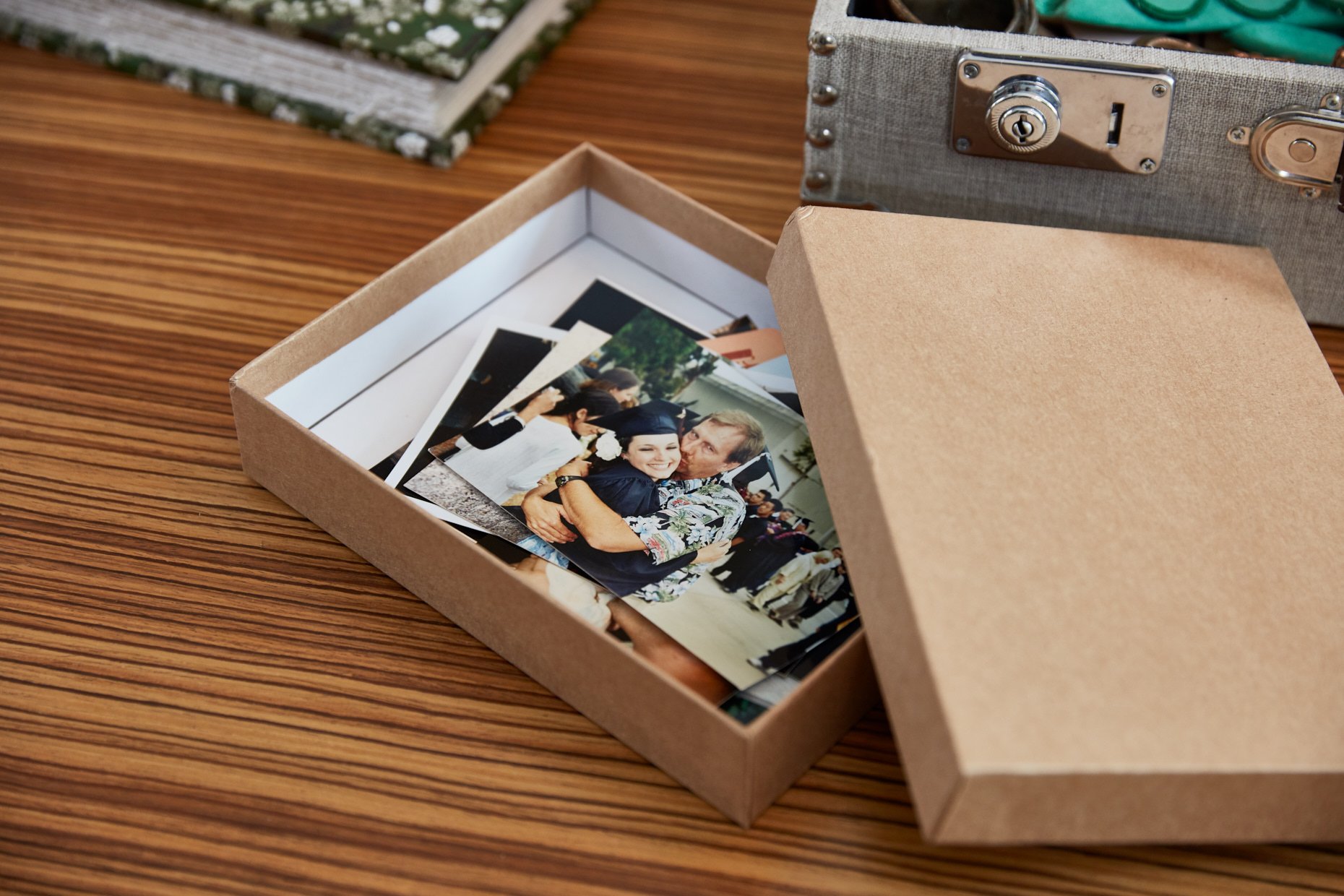
So get out your old family photo albums or that dusty box of print photographs from the basement! Then…
Step One: Choose 10-20 pictures to start with.
Begin randomly looking at photos.
Rather than focusing on those that are frame-worthy, look for photos that elicit a strong feeling from the viewer (you, or the family member from whom you would like to capture stories).
Set aside 10-20 images that stopped you in your tracks in number two (even if you stopped to wonder about the image as opposed to reliving memories as a result of looking at it; sometimes it’s the mysteries behind a photo that draw forth particularly revelatory stories).
Now it’s time to choose a photo with which to begin your reminiscing. Whether you are using the photo as a writing prompt or as a vehicle to jump-start conversation in a personal history interview, the following suggestions will be helpful in selecting images that lead to substantial storytelling.
“Photos reveal themselves in layers,” Maureen Taylor (aka ‘The Photo Detective’) writes on her blog. “You study the clues and talk to family but every time you look at it or show it off to family you might learn something new. One thing leads to another.”
Step Two: Determine if the photo is story-worthy,
Ask yourself if the photo you are holding does any of the following six things—and if the answer to one or more of them is yes, then you’ve got yourself a winner. Set it aside and make sure it’s on hand the next time you want to delve into some family history writing!

The photo invokes an emotional response.
Do you feel a rush of excitement or a flush of scarlet creep up your face when you first spy the picture? It may make you feel anguish or sorrow, pride or exasperation, abundant joy or abiding love—the key is, it makes you feel.
If a family photo has such a visceral effect on you, this will be most fruitful for writing its story.
“Photographs are about one specific second, but they can also be about the future,” Beth Kephart writes in The Quest for Truth. “Photographs can operate as metaphor and counterweight, as tease and opposition, as the other half of a parenthesis.”
That photo that moves you is a doorway to your past that is clearly connected to your present in some way. Explore why you feel the way you do, and how this feeling fits into your life then and now. Provide context for your feelings; set the scene.
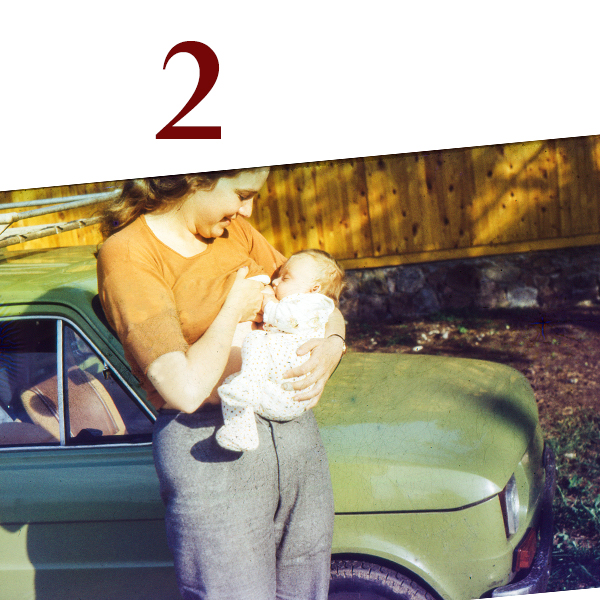
The picture tells a visual story.
Sometimes a picture itself already reveals a story: If the who, what, where, when, and why (or most of those) are apparent just from looking at the photo, then it’s likely a good candidate for embellishing upon. Of course, it’s ideal to choose images whose stories matter to you in some way.
The snapshot of this woman breastfeeding certainly tells a story about who she was as a mother—and if the mores of the time period and the town are known, and her character as well, then the storyteller can dive deep. A grown child looking at this image might use it as a jumping-off point for talking about their relationship over the years; or perhaps how their mom was part of a strong line of women before her; maybe she was only able to have one child, or 10, or only girls…
A photo is a moment in time, but on the periphery are details that help make up its narrative. What photo would have been shot just before this one? Just after? What’s in the frame? What (and notably who) is not in the frame? By starting with a picture whose story seems readily available, we can develop depth by asking such probing questions and tapping our memories for more.

Details draw your attention.
Your facial expression at the time the picture was snapped. The pattern of your grandmother’s well-worn house dress. A missing button on your dad’s shirt, or the papers falling from his briefcase. The water stain on the bedroom wallpaper. If some detail in a photo draws your eye again and again, there is more to be probed.
What does the detail begin to tell you? What beyond the frame of the photo—on that day, or a decade before or after the photo was taken—makes you focus on it? By taking the time to meditate upon all that the detail calls forth in your mind, you will reveal a greater meaning to this photo than could ever be revealed upon initial inspection.
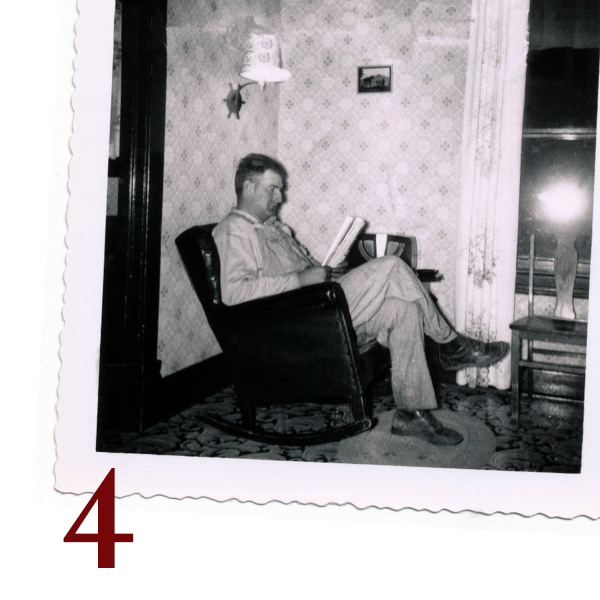
The photo portrays part of the subject’s everyday world.
My favorite type of modern family pictures could be described as documentary family photography: people in their natural environment, doing what they do every day. (Check out talented photographer Jen Grima’s work for inspiration.) I love capturing our routine family narrative this way because the resulting photos are so evocative of time and place, and they set us in scenes that are real and personal, uniquely ours.
Many old family photos do so less consciously, perhaps, but the impact is the same. We are drawn to such pictures because they reveal what our or our ancestor’s life was like back then. So if a snapshot of your aunt holding you while she’s hanging the laundry crosses your path, use it to tell a story. If you find a picture of grandpa reading in his favorite recliner, dad trimming the hedges at your childhood home, or your baby crawling amidst the messy remnants of Christmas wrapping paper, use them all—find their stories.

The image intrigues you.
Is it a curious shot? Out of the ordinary for your family or for the time period? Is someone missing who you would have expected to be present in that scene?
If it makes you wonder, then it very well may lead to a worthwhile story. Perhaps you end up asking for relatives’ input to get to the bottom of your intrigue, or maybe in lieu of concrete answers you surmise the story behind the old photo, thereby revealing a narrative of your own in relation to the photo. Chances are, whatever your approach the resulting observations will be as alluring to the next person as the original photograph was to you.
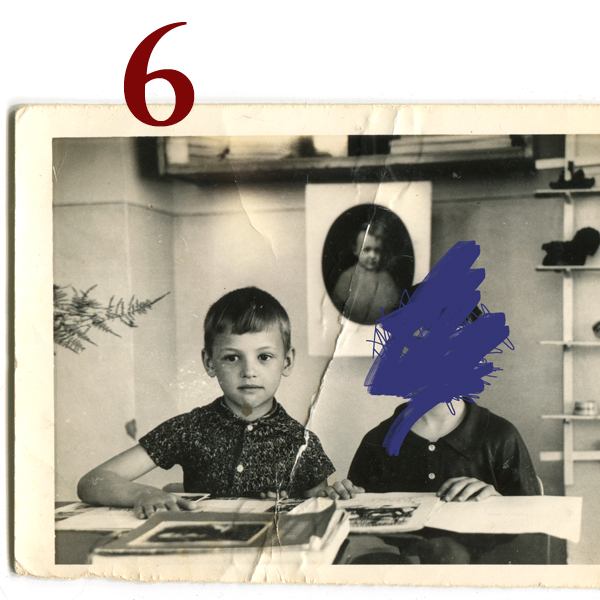
The physical print tells its own story.
My grandmother had a tendency to hold a grudge, so it was not too surprising to find among her things photos that had an individual literally cut out of the scene (or crossed out with ballpoint pen). Now there’s a story to be revealed! The same could be said for pictures that have been torn, damaged by flood or fire, or found tucked away in a book.
Sometimes getting to the story behind the photo is as fun—and constructive—as getting to the story that resides within it.
Step 3: Start sharing your stories.
Read more about how to use old family photos as biographical writing prompts—we’re talking nitty-gritty advice, from where to begin after looking at the photo to how to capture your memories.
Download the advice in a handy printer-friendly booklet here, entitled “How to Use Photographs as Prompts for Writing Life Stories.”
Explore more intense self-reflective writing prompts in Beth Kephart’s memoir writing workbook.
Once you’ve written your first life story vignette, consider doing something special with it—we’ve got five easy ideas.

Life Story Links: April 8, 2019
Preserving traumatic histories from Holocaust and American slavery, memories both remembered and forgotten by individuals with dementia, and more memoir reads.
“There is a real power in crafting a truthful narrative—or at least as truthful as you can make it, your emotional truth.”
—Steve Lickteig

Wkkeken, Southern Weekend, August 1951. Photograph by Lisa Larson for LIFE magazine. ©Time Inc.
The Power of the Past
A TRAUMATIC LEGACY
"Because our home lives are so influential on who we become...the question isn’t whether children of [Holocaust] survivors are psychologically affected by their family’s Holocaust experiences—it’s who will be and when,” Adam Kovac writes in this perceptive piece exploring how grandchildren of survivors grapple with their own psychological wounds.
FAMILY HISTORY HIGHLIGHTS
Last week I offered up the most memorable quotes and takeaways from family history experts at RootsTech 2019, including why and how to put yourself into your family history and curating (or tossing?) family heirlooms and documents.
STUFF, AND MORE STUFF
“We used to hold on to letters, tickets and playbills to remind us of the past,” writes Peter Funt in a short NYT opinion piece entitled “Does Anyone Collect Old Emails?” It's worth a read, certainly, but it's the 407 reader comments that reveal the most insight and range of opinions on the perceived value of all that ephemera.
THE RACE TO ARCHIVE SLAVERY RECORDS
For the true history of slavery to survive and be told, the original evidence must be preserved, and protected. The Enslaved project aims to gather research about historic slavery in one searchable digital hub, due to go online in 2020; currently, "much of that information has only been in books or museums, or scattered in corners of the Internet in different languages, hidden behind broken links."
Amidst the Forgetting
GRANDMA’S DEMENTIA
"While Grandma’s brain let go of many of her memories, her heart held on to some of the dearest ones," such as the birthdays of all 20 of her grandchildren and dates with her not-yet husband. She seemed to forget, however, her disapproval of same-sex marriages (and resulting estrangement from her gay daughter).
ONE LAST TIME
“What could have been a desperately sad visit that December—one filled with the painful realization that his time was coming to an end—instead became a precious opportunity to allow my father-in-law just a few minutes to soak in the life he had when life was good,” Karen Bender of Virginia–based Leaves of Your Life writes.
MOTHER AND SON, TIME AND MEMORY
Artist, son, caregiver Tony Luciani went on a voyage of discovery with his nonagenarian mother: The photographic project that changed both of their lives, MAMMA In the Meantime, “looks at her frailty, delves into her dementia and the angst she feels about being old now. But it also speaks about life, love, endurance, and will power. It talks about the love a mother and child have in sharing moments too quickly vanishing,” Luciani says in the book, which is available for purchase.
Remembering, Writing & Recording
CRAFT AND QUESTIONS
Nicole Breit calls writers questers. "Setting out to draft a new tale, we begin an archetypal hero’s journey. What initiates the quest are questions—about the memories that haunt us, no matter how many years have passed," she writes.
A PLACE TO SHARE
A podcasting studio in Hobart, Indiana is inviting people to come record their family histories and life stories using the professional audio equipment for a nominal fee; they also have a team who can visit people off-site who might be in assisted living or unable to drive. "You can sit and listen to family stories when growing up, but this a permanent record and memento," says a founder of The River Project, as it is called.
FORGET-ME-NOT
On the latest episode of The Life Story Coach podcast, Amy Butler interviews New Zealand life story writer Christine Norton on how she expanded her company by taking on business licensees.
First Person Reads
AIR: A RADIO ANTHOLOGY
Hippocampus has released the first of its The Way Things Were series, a line of anthologies that celebrate the things we miss, the things we long for—this one all about radio. ”From first jobs in small town stations to listening to baseball games with grandpa, the 20+ essays take place across the decades in studios of all sizes, in homes, in cars, and, really, wherever the airwaves take us.” Forthcoming titles will celebrate diners, small town newspapers, and mom and pop stores.
WHAT’S IN A NAME?
“Now I love it when people ask me how to say my name right, because, hearing it said out of someone else’s mouth makes me feel real,” Rebecca Tamás writes for Granta. “Like a TV being tuned through static that finally lands on a crisp, clear image. Ah, there I am.”
...and a Few More Links
Is the Writing from the Heart memoir workshop (starting tomorrow!) right for you?
How the “genealogies in Genesis show us the impact one life can have on that of another”
A columnist on “the good ole days” and how we never know they are that when they’re happening
Nine facts about your memory you’ll want to know
Best memory journal apps for Android
Read an excerpt from Valerie Jarrett’s new memoir, Finding My Voice: My Journey to the West Wing and the Path Forward.
On the real-time thrill of reading a writer’s diary
Just released: Questions I Am Asked about the Holocaust by Auschwitz survivor Hedi Fried
Short Takes
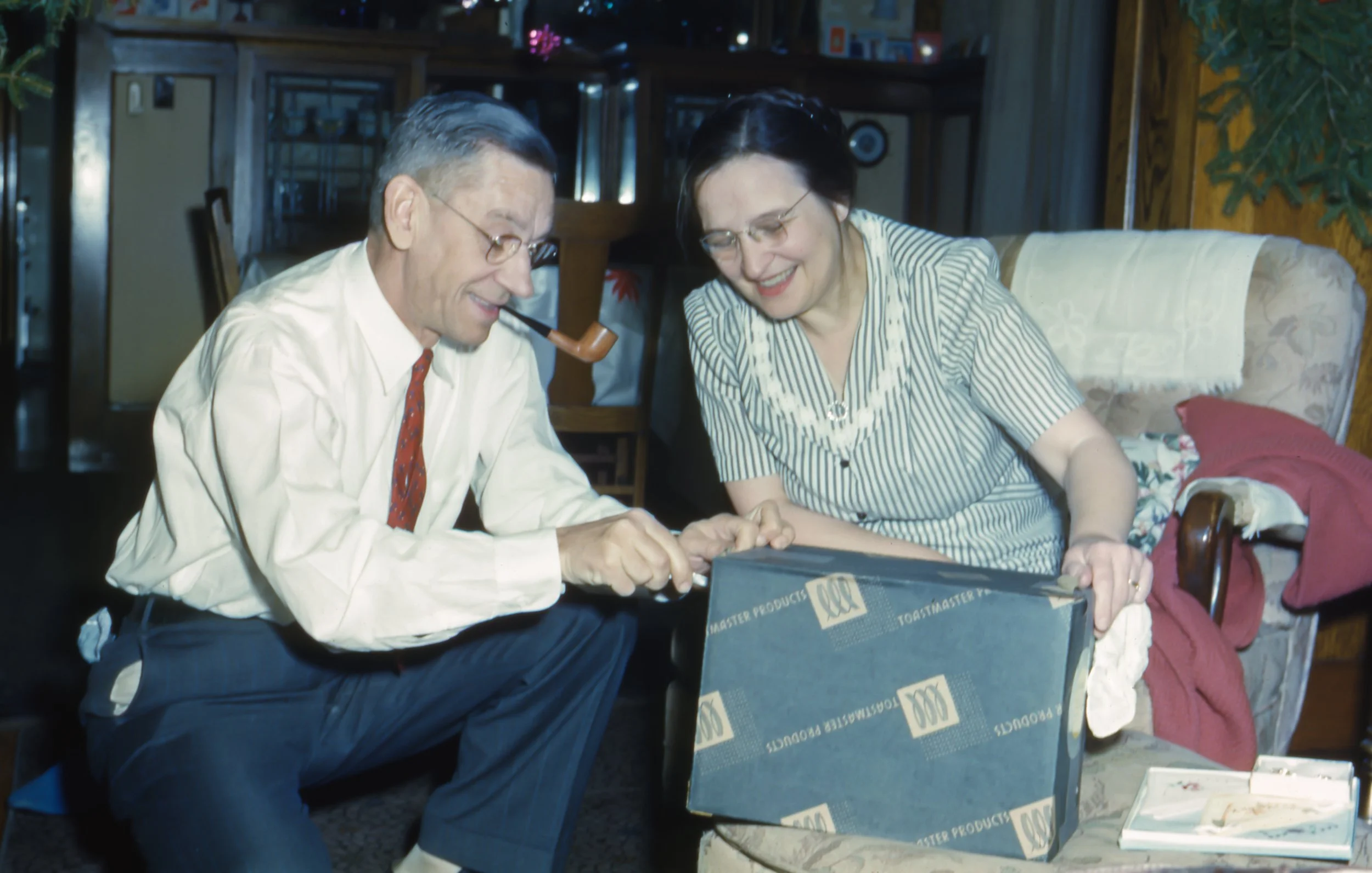


Genealogists reveal why your stories matter
The most memorable quotes and takeaways from family history experts Amy Johnson Crow, Curt B. Witcher, Scott Fisher, and Janet Hovorka at RootsTech 2019.
I wasn’t at RootsTech 2019 last month, but I did take advantage of the free videos that were available for live streaming during the event and are accessible even now on the RootsTech website.
Since we’re all about life stories and personal history around here, I decided to offer up a few of my favorite takeaways related to those topics from four speakers. If they whet your appetite for more, you can always watch the full videos of these speakers and discover others focused on genealogical research, DNA testing, and online record searches.
From Why and How to Put Yourself into Your Family History
AMY JOHNSON CROW
Favorite quotes from Amy Johnson Crow, a Certified Genealogist with more than 20 years of experience helping people discover their family's history:
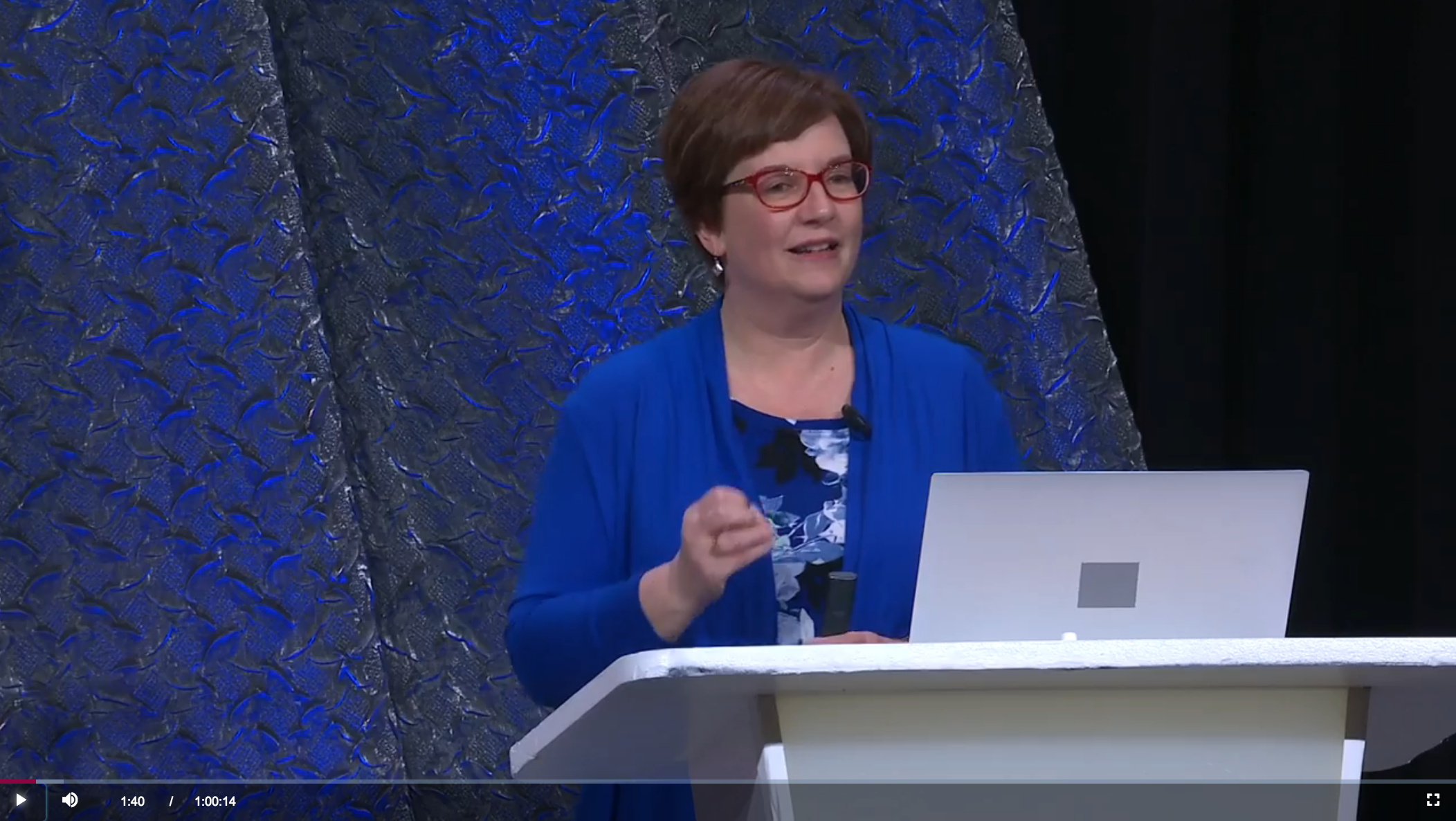
Author and speaker Amy Johnson Crow presenting at RootsTech 2019
“When we consider recording our own stories, we think of memoirs that we have read… And when we think about writing our own stories, well, if we’re thinking of something like Angela’s Ashes or Little House on the Prairie, our first reaction might be, well, I’m not famous. Why should I record my story?”
I’ve got a whole list of reasons you should record your story, as does Amy:
“Think about how thrilled you would be if you found a diary from one of your ancestors. Or a letter from one of your ancestors.”
(Even if it described an ordinary day doing ordinary things, like a trip to the market!)
“I think that you would treasure that letter because it would be insight into the life of that ancestor, told by that ancestor.”
Indeed!
“So why do we think that future generations, oh they won’t care about me!? We already know that we care about what happened in the past. We need to be the ancestors to our descendants that we wish our ancestors were. We need to record more of our stories like we wish that they did.”
Can I get an amen?!
“Don’t get hung up on the format, because really, any format will do. … You have to record the story—that’s the important thing. You can figure out the preservation later. You have to tell the story before you can preserve it. And truly, a story isn’t a story until it’s been told.”
So, tell your stories! And remember:
“It doesn’t have to be overwhelming. It doesn’t have to be about all the big things in your life. There is no story that is too small to be recorded.”
CURT B. WITCHER
Highlights from Curt B. Witcher, Genealogy Center Manager at Allen County Public Library in Fort Wayne, Indiana:

Genealogy expert Curt B. Witcher during his presentation at RootsTech 2019
“Family history is the pursuit of, and the presentation of, and the preservation of our stories.”
“The grand and the big and the exciting and the wonderful—that’s not it. It’s the point in time, and the person in time, and how it relates to us.”
After reiterating some of what Amy Johnson Crow spoke about, Curt transitioned to talking about the science behind story and why it is so important:
“Experiencing story alters our neurological processes.”
He is not a scientist, but he is eager to shed light on how amazing much of the science behind story really is—from triggering the release of cortisol (which commands our attention) to the eventual release of oxytocin (which he says “makes us more receptive to empathy, to caring”). If you are interested in this, I suggest watching Curt’s entire portion of the video, which begins at the 20-minute mark.
Want happy children?
“Family story is critical to all of us being better human beings, but especially for younger people as their brains are being developed.”
“Stories, psychologists and scientists tell us, are strong predictors of a child’s happiness. The more stories, the better adjusted, the better a child will grow and be welcomed and welcoming. How can we not think that this is important?”
Is there anyone among us who does not?!
SCOTT FISHER
And lastly, the best tidbit of advice from Scott Fisher, host of podcast Extreme Genes, America’s Family History Show, who spoke concretely about how to turn oneself into a family history reporter:
“Do not answer questions for your subject. If they’re taking a long pause, let them think. Don’t be afraid of the silence.”
Ah, yes, be patient, and listen generously!
From Heirloom, Documentation, or Junk: What to Keep or Toss
Janet Hovorka
Memorable moments from Janet Hovorka, genealogy coach and development director for Family ChartMasters:

Genealogy coach Janet Hovorka speaking at RootsTech 2019.
“When you keep everything, it might be overwhelming to the next generation… After your passing, your family could throw everything out just because they’re overwhelmed.”
Imagine?!
Janet offers up six concrete questions to ask yourself about your family history stuff in trying to decide whether (and how) to save it or to toss it. If this is something you are facing, whether due to the recent loss of a loved one or to the ever-expanding hoards of your own family history documentation, then definitely give her video your full attention.
Here, though, a few golden nuggets:
“A family heirloom is only as valuable as the story that comes with it.”
Can I get another amen?
“An heirloom can only go down one line, really. But documentation, especially digitally, can be spread over the whole family.”
But remember:
“Digital materials can be more fragile than a set of china… You could be creating a Digital Dark Age in your family.” (caps mine ; )
Excellent advice:
“Think about a digital will, especially if you want to preserve you own life.”
Families, please hear what Janet says:
“In my opinion, one of the most important things to do is to teach your children and vest them in [your family history] now…. Tell them the stories. Vest them in those heirlooms and those documents. A family that is vested in those things is going to preserve them.”
Because…
“Never in the history of the world have we been so disjointed and so anxious… We move away from our ancestors more than families ever have. We don’t grow up at grandma’s knees anymore.”
Facebook and FaceTime may bring us closer to far-flung relatives, but it’s no substitute for in person togetherness and for regular story sharing—especially of the impromptu kind.
“Talk to the next generation.”
Please.
“As you study the span of a life, you learn that everybody has a little bit of hero and a little bit of scoundrel in them.”
Which part of your story will you tell first, I wonder…?






Life Story Links: March 26, 2019
The symbiotic relationship between photography and memory; veteran voices and immigrant storytellers; plus lots of life story & family history audio treasures.
“Of course I have no right whatsoever to write down the truth about my life, involving as it naturally does the lives of so many other people, but I do so urged by the necessity of truth-telling, because there is no living soul who knows the complete truth; here, may be one who knows a section; and there, one who knows another section: but to the whole picture not one is initiated.”
—Vita Sackville-West

Writer Vita Sackville-West, a prolific diarist and letter writer, circa 1940
Past and Present
AMERICAN STORIES
In Search of Our Roots by Henry Louis Gates Jr. traces how 19 African Americans reclaimed their past. “All of us have ancestries defined at turns by people on the move—people with far more complicated arcs than might first appear in straight lines of descent,” he writes.
ACCESSING PAINFUL MEMORIES
“Once writing the book became the most important and life-affirming thing I could do, my nightly dreams provided me with the vivid memories that propelled me forward,” writes Holocaust survivor Max Eisen. “I was not aware of how cathartic an experience it would be.”
VETERAN VOICES
A debate about the utility and appropriateness of sharing the experiences of war has been waging over at The Havok Journal. In this three-part series writers contemplate what happens if silence becomes the story of your life; the reality of healing through sharing; and the possibility that you don’t get the chance to “work through” traumatic experiences.
THE AUDACITY OF STORYTELLERS
“If I believe that my own existence matters, I am even more confident that each of us has stories that matter,” Mary Ann Thomas writes in a piece exploring how as a nurse and writer, she works toward a culture of care.
Hear, Hear
FOR YOUR LISTENING PLEASURE
Last week I recommended three recent must-listen podcasts about memoir, narrative structure, family secrets, writing prompts, and more—and with each weighing in at under an hour, they’re easy to fit into your schedule.
AUDIO TREASURES
The Library of Congress has added 25 “audio treasures” to its National Recording Registry, including music from Jay-Z and Neil Diamond as well as a 1968 speech by Robert F. Kennedy. The oldest recordings on the list are the earliest-known recordings of Yiddish songs, made between 1901 and 1905. All of the audio treasures in the collection are available to listen to for free at the National Jukebox.
MEMORIES ON CASSETTE
Leora Troper of Portland-based Artisan Memoirs shares a brief post about why and how to digitize family stories that are currently stored on cassette tapes.
VOICES & GESTURES
In the video below, Steve Trainor of Remember Your Life Video in Hampton, Illinois, shares his enthusiasm for personal history with a local television reporter and gets to the heart of why capturing family stories now is of utmost importance. Kudos, Steve!
Photography & Memory
CAPTURING ‘OLD NEW YORK’
“My work is fueled by a sense of loss and nostalgia foretold,” Dimitri Mellos says of his photography project Chinatown. "The act of photographing affords me the illusory comfort that I am preserving a few bits and pieces of what life in this vibrant immigrant community has been like, in a form impervious to the passage of time.”
PHOTO CHAOS
Stumped for what to get someone you love this Mother’s Day or Father’s Day? “One of the greatest gifts that you can give to a parent is to help them to update and organize their treasure trove of photos," suggests Amy Blankson, who offers five steps to guide you through the process.
PHOTOGRAPHIC JOURNEY INTO PAST
“The sheer abundance of mementos, spilling from mobile photo galleries, bestows significance upon ordinary moments,” Veeksha Vagmita writes in this short meditation upon the nature of how memory is impacted by our photographic history, from tattered old albums to present-day phone scrolls.
TOUCH POINTS FOR INDIVIDUALS WITH MENTAL LOSS
“Touch the screen and a memory appears”: The free My House of Memories app has been designed for, and with, people living with dementia and their caregivers. It features historical photographs intended to spark meaningful conversation (personal photographs can be uploaded, as well).
Memoir Love
INSTRUCTIONAL MEMOIR, ANYONE?
”Are you a skilled cook or teacher or technician with a personal story underlying your expertise?" asks Massachusetts-based personal historian Nancy West. Consider combining a retelling of your life with information about how to do something, offering useful instructions that the reader might be able to apply directly to his or her own life.
BOOKTUBE WITH OBAMA
“It’s harder to hate up close. So let’s let each other in a bit more,” Michelle Obama says in this 10-minute interview about her bestselling memoir.
...and a Few More Links
A list to bookmark: The top 25 films that explore memory
Read the March/April issue of Hippocampus Magazine.
Sandra Day O’Connor and Alzheimer’s: a personal story
Social media sites are designed for sharing, not archiving.
Psychological counselor in India develops seven-step storytelling therapy.
An ode to (Australian) family history indexes
What will happen to our cloud-based keepsakes? A millennial’s take
Short Takes

3 Must-listen podcast recommendations for life story lovers
Each of these powerful podcasts comes in at under an hour: Listening recommendations on memoir, narrative structure, family secrets, writing prompts, and more.
If only there were more time in a week to listen to all the podcasts I would like to! As a former journalist who often bemoans the state of media these days, I find respite and refuge and inspiration in the podcast arena, where interviews are often in-depth and surprising, and where there is plenty of content aimed at lovers of memoir, life story, and family history.
Here are a handful of my favorites in recent weeks—I hope you give them a listen, and please let me know your own favorites in the comments so I can add them to my playlist!
Click on the numbered links below to go straight to that review:
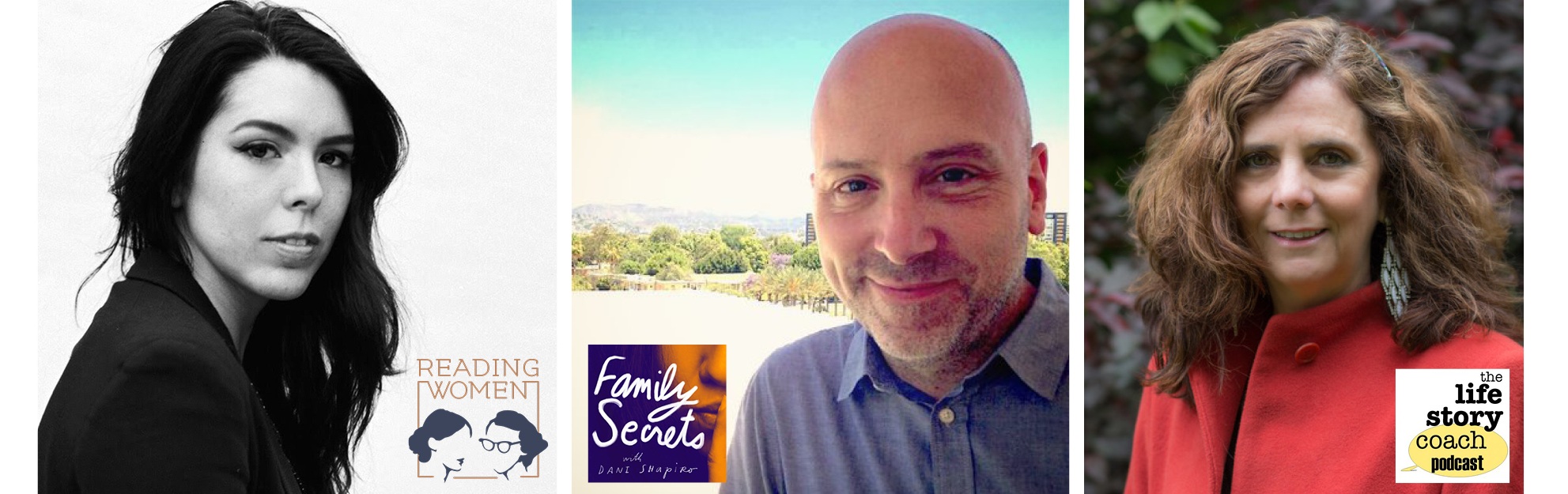
Steve Lickteig on Dani Shapiro’s Family Secrets podcast (41 minutes)
T Kira Madden on the Reading Women podcast (40 minutes)
Beth Kephart on The Life Story Coach podcast (46 minutes)
An Open Secret Revealed
On Dani Shapiro’s Family Secrets podcast, Steve Lickteig talks CANDIDLY about the secret of his own identity that not only his family, but an entire small Kansas town, kept from him. As a child, he was told that he was adopted. But that didn't turn out to be entirely true, or even half of the story.
“There is a real power in crafting a truthful narrative—or at least as truthful as you can make it, your emotional truth,” Steve Lickteig tells Dani Shapiro in this episode of her new Family Secrets podcast. As a longtime fan of Shapiro (Hourglass will always be among my favorite memoirs), I’ve listened to all of the Family Secrets episodes. And while I absolutely suggest subscribing, I will say that her talk with Lickteig is the one that lingered longest with me—and which would make a wonderful introduction to the series for a first-time listener.
Lickteig is a journalist himself, and perhaps it is his deep rootedness in storytelling that makes his conversation with Shapiro so resonant; he is articulate and thoughtful, conscious of creating a narrative out of his family history that enlightens something greater than his own perspective.
Listen to the full episode at left, or head over to the Family Secrets page to hear more from the likes of guests Debbie Millman, Jane Mintz, and Jim Graham.
During Shapiro’s interview with Lickteig he recalls his occasional unease (and simultaneous journalistic pride) at the way he comes across in his 2011 documentary Open Secret, which explores in depth the stories he shares on the podcast. He says the film portrays him in ways that are at times unflattering, but yet true to his experience.
Open Secret is described as Lickteig’s “20-year search for who his real birth parents were; why a whole town kept the truth from him; and how his family's tumultuous history revolves around the hidden lives of two unconventional women.” I haven’t watched the film yet, but indeed, it’s on my watch list.
An Unconventional and Evocative Memoir
T Kira Madden, author of Long Live the Tribe of Fatherless Girls, talks about owning her story with Kendra Winchester and Autumn Privett on the Reading Women podcast.
Topics of conversation include:
getting permission—or not—from her family members to write about them
discovering the form that would best suit her narrative, from weaving a linear thread through disparate stories and ways of storytelling to creating the skeleton that would support her memoir structurally
how reading The Chronology of Water by Lidia Yuknavitch gave her permission to allow “form and content to play with each other,” and to tell her stories in a nonlinear way
how to separate herself from her memoir
the ways in which we inherit parts of our parents’ identities (“understanding myself meant understanding more about my mother and understanding more about my father”)
how the “memory loop [she] was caught in for years” transformed into memoir
I was immediately drawn to Madden’s book when she described it alternatively as a “funky memoir” and “scattered essays that make up my life so far.” It is so much more than a coming of age tale, and trust me, those “scattered” pieces are woven together meaningfully.
“The honesty and vividness with which Madden writes and the tightly controlled structure she utilizes only emphasize the fact that Long Live the Tribe of Fatherless Girls is a deeply compassionate book, though not an apologetic one,” Ilana Masad writes in a review for NPR. “In baring the bad and ugly alongside the good, Madden has succeeded in creating a mirror of larger concerns, even as her own story is achingly specific and personal.”
Give the full 40-minute interview a listen here, or visit the Reading Women podcast page for show notes.
This was my introduction to Reading Women, and I will undoubtedly be listening to more. A couple that are in my listening queue are a discussion of Kindred by Octavie E. Butler and Homegoing by Yaa Gyasi (I recently read Kindred and highly recommend it for history lovers especially) and, of course, their exploration of memoir from last September.
The Questions We Ask
Award-winning memoirist and memoir writing teacher Beth Kephart introduces Amy Woods Butler’s Life Story Coach listeners to ways we can help others write memoirs that matter.
When I sat down to listen to this conversation between memoirist Beth Kephart and life storyteller Amy Woods Butler, I had no idea that I had indirectly introduced them…but how happy I am that I did!
Kephart has fed my writing soul for years; I have personally relished her fiction, endorsed—and continue to use—her writing workbook, and forward her newsletter to friends often. I imagine this less-than-an-hour interview with Kephart will entice you to want to hear more.
In this The Life Story Coach session recorded in 2019, Kephart and Butler hit upon topics including:
the wide variety of her experience teaching memoir and writing memoir
“getting to our stories in sideways fashion”
the power of contextualized and unexpected writing prompts
why she is drawn to memoirs with “that scenic, atmospheric detail-rich quality”
the gap between one’s spoken word and written word
and the Juncture newsletter, where Kephart explores topics such as what makes a memoirist approachable, interviews current memoir writers, and includes reader book recommendations, as well.
If you’d like to hear more of Beth Kephart’s writing wisdom over the years, here are three older podcast interviews with her you may enjoy:
“I’ve written memoir in the quest to answer very specific questions,” Kephart tells Dan Gottlieb in a wide-ranging conversation about the therapeutic value of memoir (also with a social psychologist) and how she helps others learn to tell their own stories. She talks about what memoir is not, and how to get to what it is and should be for each of us.
You can also listen to Kephart speak about Handling the Truth here, and hear her in conversation with Dani Shapiro about her latest memoir Inheritance (which inspired the Family Secrets podcast referenced above!) here.
What podcasts are you listening to—specifically those having to do with memoir, storytelling, and oral history, or any that have just captivated you?

Life Story Links: March 11, 2019
An array of topics, from how to curate family heirlooms and photos to group biography recommendations and a son's loving personal history interview with his mom.
“I wish I had realized that family history is a perishable commodity. It disappears with time, as memories fade, and as loved ones pass on. I wish I had known that the most important aspect of family history is preserving a record of the present for the future.”
—Gordon B. Hinckley

Out of the Boxes
AMONG THE RESIDUE
This book was discovered among the papers not sent to the author’s literary archive in Oxford. "Its yellow and curling title page announced Really and Truly: A Book of Literary Confessions." And inside…the handwritten opinions of the owner’s grandmother, as well as those of Virginia Woolf and Rebecca West.
PRESS PRINT
In last week’s post “Sharing Is Good” I implore everyone to print—and share—family photos. Why? Because besides generating conversation, you will spark joy, find genealogy clues, and discover even more treasures.
CURATE KEEPSAKES LIKE A PRO
“Family curators have been organizing and saving family history for a lot longer than Marie Kondo has been teaching people how to discover joy in decluttering,” observes The Family Curator. "Trends. They come. They go. I’m happy to report that family heirlooms aren’t dead yet."
Storytelling, Your Way
GROUP BIOGRAPHIES
Carolyn Burke’s Foursome is a group biography that interweaves the lives of Alfred Stieglitz, Georgia O’Keeffe, Paul Strand, and Rebecca Salsbury. Here she shares five books that inspired, spurred, or otherwise helped her to think of writing group biography.
GREAT GRANDMOTHER’S GENEROSITY
Personal history varies from family history in myriad ways, though they often do (and should!) complement one another. Here is an example of piecing together a family narrative from documents, a worthwhile step in sharing genealogical research. Just imagine, though, if the people had recorded their own stories—how much richer the narrative would be!
“HAPPY VERY EASY”
“My parents are getting older and even though I have a good relationship with my mom…I’ve never had a super-deep conversation with her,” Kane says. Here he asks her 11 intimate questions “before it’s too late,” and the resulting video, full of playful banter and deeply moving moments, is a wonderful example of how effective—and relatively easy—at-home video interviews can be.
Opportunities Knock
THE LONGEVITY ECONOMY
“According to AARP, the economic activity of Americans 50+ is the equivalent of the third largest economy in the world.” Personal history is one of four career opportunities in the field of aging explored in a recent Forbes article.
SEEKING SUBMISSIONS
Madison, Wisconsin–based personal historian and educator Sarah White publishes first person stories on her blog True Stories Well Told. “Short, true, and diverse in genre—a reminiscence, a reflection on your writing process, a book review, a question—it's all welcome for consideration,” she says.
Voices Carry
“MAMA’S LAST PICNIC”
Margaret-Ann Allison, who would have been 83 years old today, shared a remembrance of “Mama’s Last Picnic” with NPR, where broadcasters were “so charmed by her soft southern accent that they asked her to read it aloud on the air.” While we can’t hear her honeyed voice, we can read it here, as shared by her daughter.
“WHERE THE TROUBLE STARTED”
A traumatic experience changes the course of a girl’s life, and eventually resides deep in a box in her mind. But, she writes from a distance of decades, “it does not belong in a tucked away box like a dark and dirty secret I can’t touch.” Saidee Sonnenberg tries to make sense of experience through writing.
VALUE OF LIFE REVIEW
”What it does when you go back and review your life”—by really digging in, getting to know your parents and their motivations and their parents’ motivations—is it leads you to empathy, Jane Fonda says during this brief interview where she revisits the writing of her memoir and memories of her mother.
...and a Few More Links
Untold story of the Warsaw ghetto: Who Will Write Our History
Help students become oral historians with these complete lesson plans from The Tenement Museum.
Taylor Swift says nostalgia inspires songs: “I love preserving memories”
“Oldtimers, tell your stories. Youngins, start asking.”
Fun tool: What book was the bestseller the year you were born?
See if the StoryCorps Mobile Tour is coming near you.
Short Takes

Sharing is good
Print and share your family photos with loved ones. Besides generating conversation, you will spark joy, find genealogy clues, and discover even more treasures.
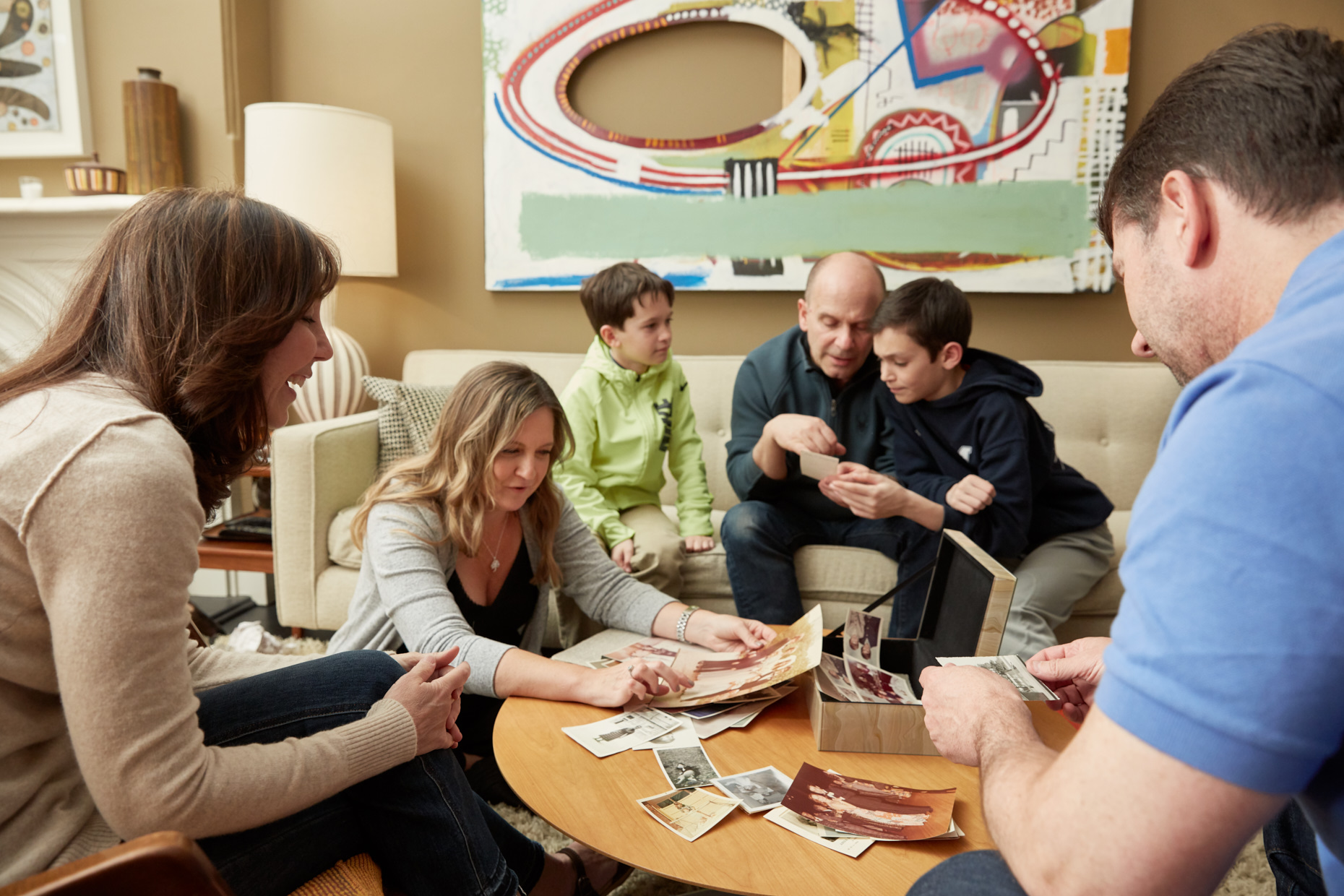
“Sharing is good.“ This childhood lesson is applicable in all areas of life, of course, but today I want to encourage sharing of your family photos.
It’s been written about ad nauseum in recent years: Our digital photo scrolls are out of control…we need to stop taking so many pictures and live in the moment…we never print our pictures anymore.
While I agree wholeheartedly with each of these lamentable statements, it’s the lack of printed photos that troubles me most—specifically, the sense of connection and excitement that gets lost when we neglect to print our photos, and share them in person.
In person, I say.
It’s temporarily gratifying to get lots of likes on an Instagram share, to see heart emojis galore on your Facebook post. But the joy that results from sharing a memory in person—well, that simply can’t compare.
Why You Should Share Your Photos
A family photo holds a story. It is a font of memories, frozen in one still frame.
Amazingly enough, the story shifts with each participant: Your mom, maybe, who took the photo, remembers things just a bit differently than you do; and your sister, a few years older, recalls things from an entirely different perspective. What about your baby brother, who only saw this photo—and heard its associated stories—years later?
Like all stories derived from memories, truth is subjective. And while a photo seems to capture a scene exactly as it happened, well, that’s subjective, too. Can you say “conversation starter”?!
So besides sparking conversation, why should you share your photos—and your photo memories—with loved ones? Here are three compelling reasons:
1 - You share, they share.
It’s contagious. You show someone an old photo from your childhood, and they reciprocate with a shot they had in a drawer somewhere. You pull out your dad’s old scrapbook filled with family photos from his youth to spark conversation with your parents, and they reveal they have two more stored in the basement.
Sharing what you have encourages family members to share some of their own family treasures, too—and what could be better than that?
2 - You might learn something.
From a name scribbled on the back of an old photographic print or a comment made in passing by a family member to whom you are showing your photos, you just may discover something new: details or backstory that enrich your own experience of the picture; or perhaps a surname or location that helps with a genealogical search.
Just because your family elders have not shared such info before doesn’t mean they don’t know it—too often I hear, “Well, no one ever asked me.” So show…and ask!
3 - You’ll feel darn good.
Sharing the joy and love associated with your favorite family photos makes that joy grow. You get that altruistic benefit that comes from sharing of yourself—witnessing another’s enjoyment, and feeling your own heart swell.