
Memories Matter
Featured blog Posts

READ THE LATEST POSTS

Life Story Links: November 19, 2019
A wealth of personal history news, from immigrant memoirs to Thanksgiving story sharing, from archives of the past to the value of writing and remembering.
How
Do I
Listen to others?
As if everyone were my Master
Speaking to me
His
Cherished
Last
Words.
—Hafiz, “How Do I Listen”
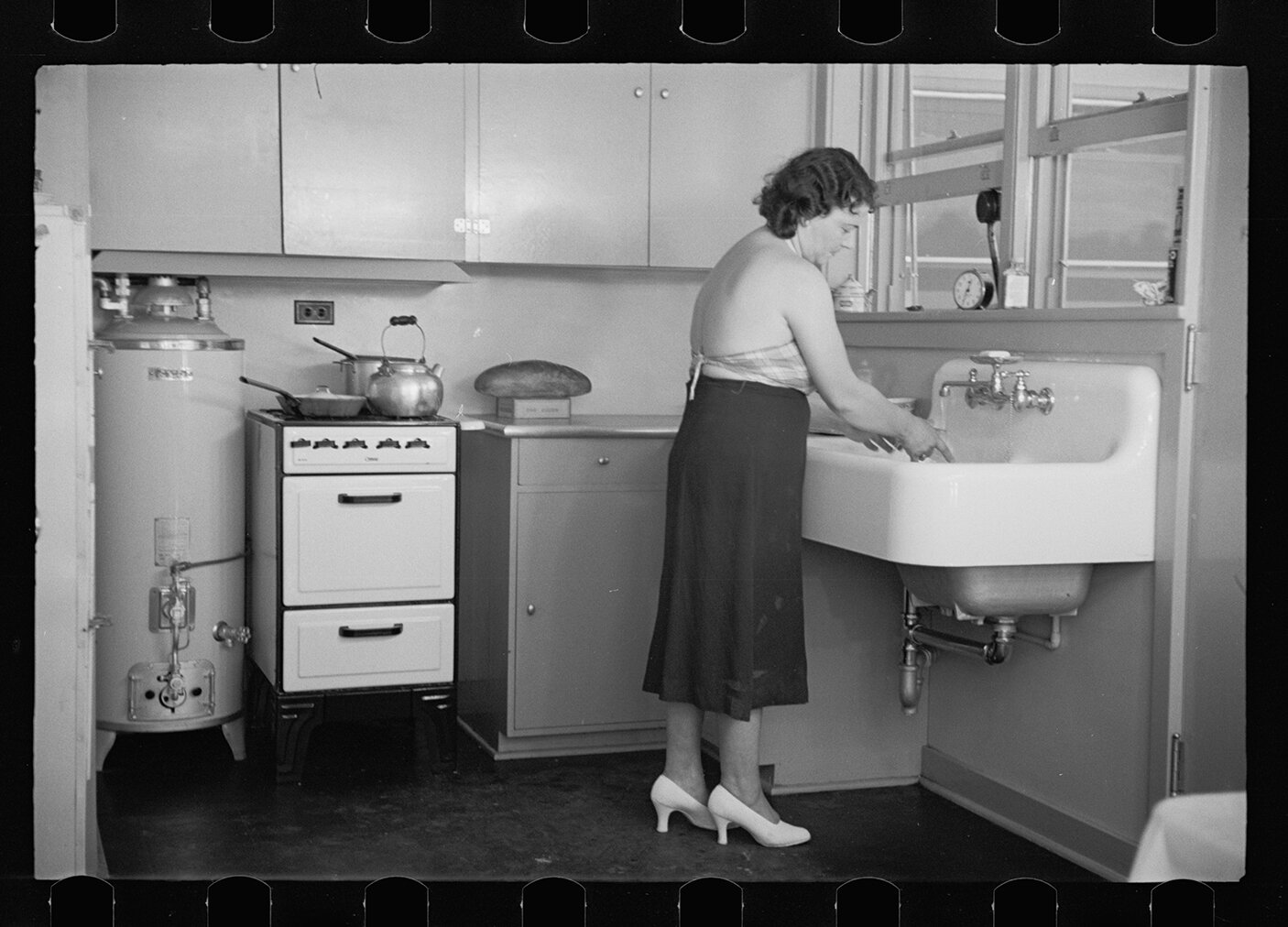
In the kitchen, Hightstown, New Jersey, 1938. Photographed by Dorothea Lange, Russell Lee, Carl Mydans, Arthur Rothstein for the Farm Security Administration. Photo courtesy Library of Congress.
Pass the Gravy, Tell a Tale
#THEGREATLISTEN 2019
Since 2015 when The Great Thanksgiving Listen was launched, thousands of Americans have recorded 100,000+ interviews, providing families with a priceless record of a loved one’s story for future generations to listen to and learn from. StoryCorps offers resources to help individuals and educators transform the holidays into a time of intergenerational sharing.
FOOD MEMORIES, PRESERVED
Launched in time for Thanksgiving host(ess) gift giving, these recipe card sets encourage families to record not only the ingredients and prep instructions for their favorite foods, but the stories behind them, as well.
A Case for Storytelling
GETTING RELATIVES TALKING
In “We’re Losing Generations of Family History Because We Don’t Share Our Stories,” California–based ghostwriter Rachael Rifkin shares her expertise for how to get kids, siblings, and parents talking.
FAMILY LORE
“Telling family stories about crazy Uncle Joe or other eccentric relatives is a favorite pastime when families gather for the holidays. But will squirming children or Instagram-obsessed teens bother to listen?” Yes, says research—and the impact is undeniably positive.
WRITING TO COPE
In The Lost Kitchen, an Alzheimer’s caregiver, Miriam Green, preserves memories of her mother through recipes and reflections. Green turned to writing, including recording family recipes, as a coping mechanism, and learned to enjoy “the present moments spent together.”
Preserving the Past, Uniquely
AN ARCHIVE OF CURIOSITIES & WONDERS
The Public Domain Review is “rocketing the oddities of the past into the present,” including galleries of historical artifacts and images as well as essays putting the various bits of ephemera it spotlights into context. A new book of collected essays is available for pre-order, too.
SAFEGUARDING FRAGILE MEMORY
In anticipation of seeing a screening of Who Will Write Our History at the 92nd Street Y tonight, I began reading up on the film and discovered a most unique historical treasure trove: UNESCO’s “Memory of the World,” which aims to preserve the documentary heritage of the world as a symbol of the collective memory of humanity (the 60,000 pages of eyewitness documentation of the Holocaust known as the Oyneg Shabes, on which the aforementioned film was based, is part of UNESCO’s archive).
HEIRLOOM ARTS
Portland–based personal historian Lisa Kagan announces a winter art workshop for women to “explore what resilience and renewal mean to you in the context of your personal journey.”
Recommended First Person Reads
MINE EYES HAVE SEEN…
“I started to wonder if I could ever give language to my grandmother’s memories across the generations between us. I began to doubt whether I could make my words bring to life all that she has seen, when I have never seen these things with my own eyes,” Julie Moon writes in this legacy-seeking piece.
FIRST IMPRESSIONS
Deirdre Bair, Samuel Beckett's biographer of record, recalls her first (long-delayed) meeting with the notoriously private author in this essay that makes me want to know more about their professional relationship over the next seven years; guess I’ll be checking out her latest book, Parisian Lives, which promises to “reveal secrets of the biographical art.” Listen to a brief excerpt from the audio book here:
ARTISAN OF WORDS
“We weave narratives as we weave cloth, and our words for them are bound together: text and textile share the same Latin root, textus, ‘that which is woven’,” Esther Rutter writes in “Making.”
...and a Few More Links
Eight inspiring immigrant memoirs from Celadon Books
California Camp Fire remembrance book shares “unified experience” of community.
Story Terrace relives their favorite revelations from TV’s Who Do You Think You Are?.
A family, a house, a city: The Yellow House, Sarah Broom’s memoir of New Orleans
Lest We Forget: Keep Their Stories Alive preserves WWI treasures and memories for a British digital archive.
Holocaust survivor and Oscar-winning producer of Schindler’s List dies at 87
Short Takes

Most thoughtful holiday host gift
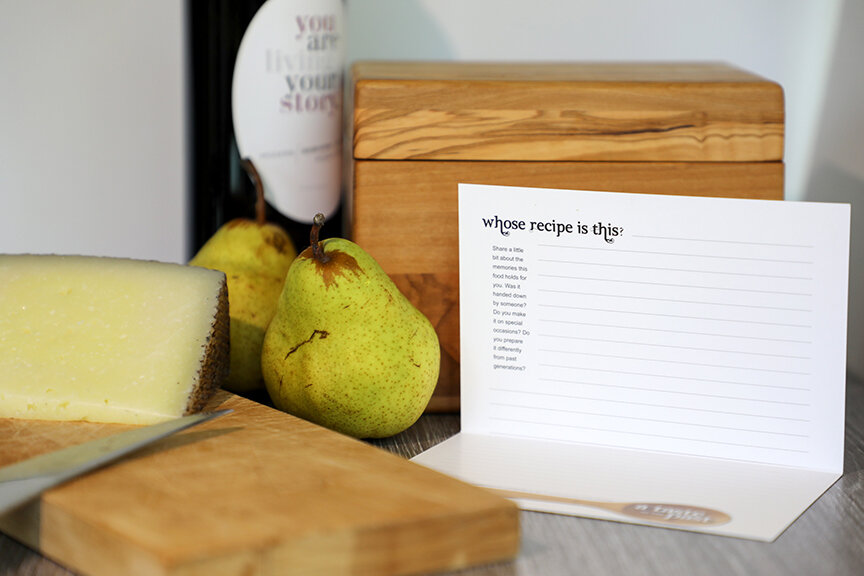
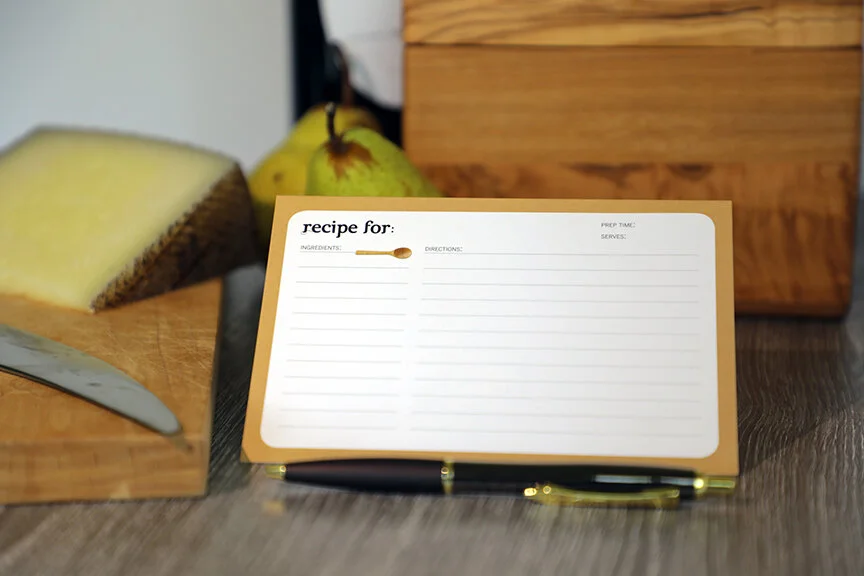
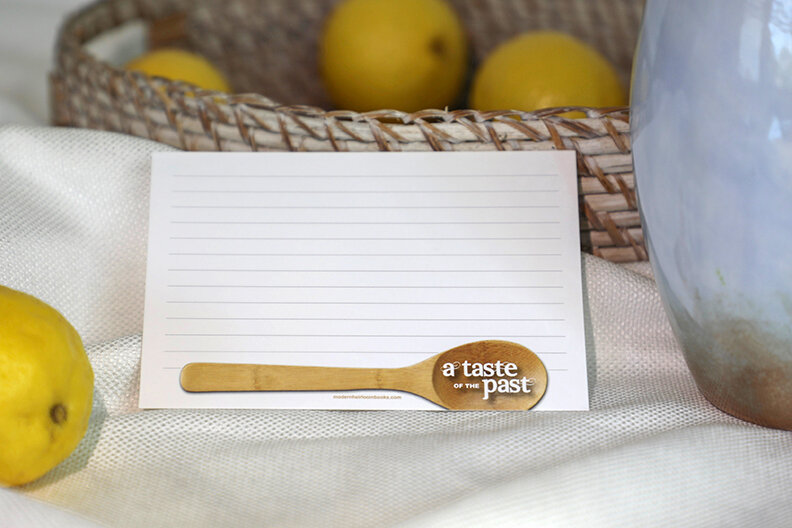
Just in time for Thanksgiving: A Taste of the Past, a family history recipe card set for preserving not only family recipes, but the stories behind them.
My go-to host gift for dinner parties is a nice bottle of wine, something to be enjoyed communally around the table, hopefully over interesting conversation. I admit, though, it’s not the most original of ideas.
These days I upped my giving game, and I invite you to do the same: This A Taste of the Past recipe card set pairs nicely with that bottle of burgundy!
Introducing…
A Taste of the Past recipe card set
I cherish the few recipe cards I have in my mother’s and grandmother’s handwriting. The grease stains add a patina of love, and the crossed-out changes (organic butter instead of margarine?) tell a story of time passing.
But what if they could tell a fuller story? What if the waves of nostalgia that wash over you when you smell Nonna’s Sunday sauce simmering on the stove could be preserved, too?
Well, of course, those precious food memories can be preserved—and this unique recipe card set allows you to do so right alongside your recipes.
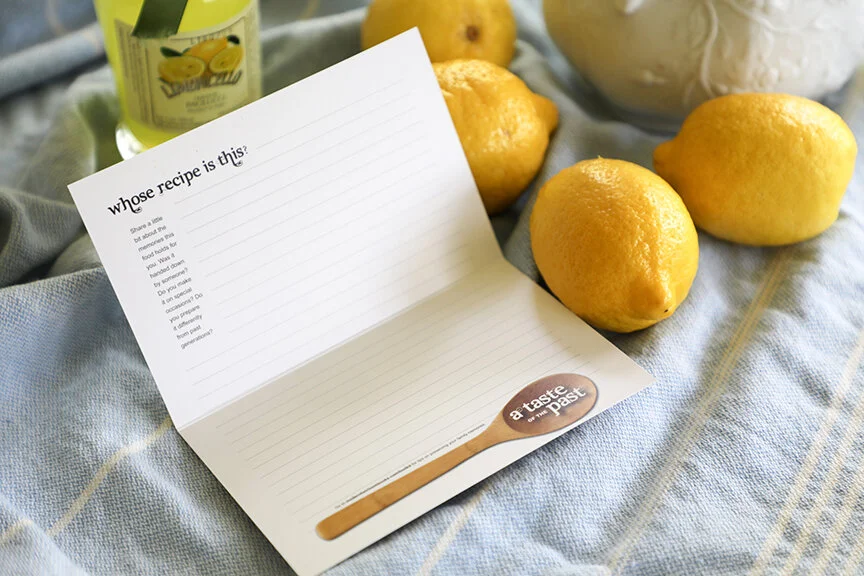
This recipe card set encourages you to tell the tales of your food memories and to record your family’s favorite recipes in the very same place, essentially creating a living heirloom that can be passed on and enjoyed for generations.
The cards, which when folded measure 4x6 inches and fit in most standard recipe boxes, include one side on which to write a dish’s ingredients and preparation instructions, and a reverse side for you to record memories associated with the dish. Is it a traditional holiday meal that your family has cooked for decades? Is it a new twist on a childhood favorite?
This family history themed recipe card set is the perfect place to record Mommy’s foolproof tahdig secret (patience!), Grandpa’s grilling guidance, and your own generation’s current favorites.
Included…
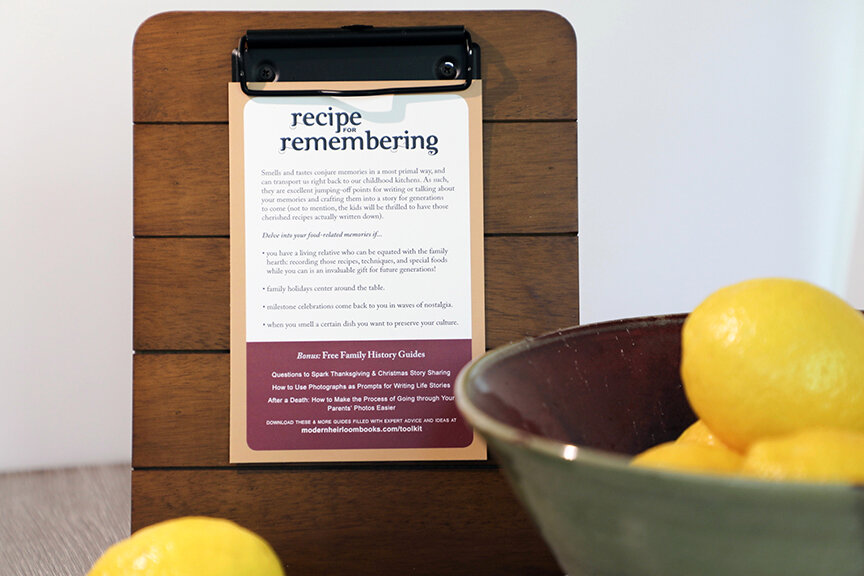
Bonus tips & ideas for capturing food memories
In addition to the recipe/memory cards, there are four bonus pages of easy tips and tricks for
getting your family members involved in recording recipes and family stories,
what types of dishes and memories to include, and
how to most effectively encapsulate your stories in written form.
there’s still time…
Thanksgiving delivery within reach!
If you’re in the Northern New Jersey area, I'd love to meet you to hand-deliver a set of these cards (and hear how you plan to use them!!)—DM me on Instagram or send me a quick note!!
For everyone else, the recipe card set is available for shipping now, and I’ve made sure to launch the product just in time for Thanksgiving gifting (they make a thoughtful stocking stuffer in December, too!). Click the image below for full product details, or add it to you cart directly.
I can’t wait to see the memories and family recipes you capture on these cards—I hope you will share!!

Life Story Links: November 5, 2019
A virtual tour of what's worth reading this week about memoir, family history writing, and life story preservation, including how language impacts meaning.
“This has always been one of the cardinal problems of biography: to what extent can or should one tell the truth—and what, indeed, is the truth about any of us?”
—Iris Origo

Children playing on a front lawn in Washington, D.C., September 1935. Photographed by Carl Mydans, courtesy Office of War Information, Overseas Picture Division, via Library of Congress.
Foods of the Soul
THE LAST LAUGH
Over at The Family Narrative Project, Kim Winslow shares some flavorful tidbits from a relative’s repertoire—just remember to imagine Nana’s heavy Brooklyn accent, too.
“A CATHARTIC DINNER PARTY”
“Food can be such a lovely way into the heart of a story…. There's something about the sensory memories that really can pull us back into our childhood, or things we ate in times of celebration, or times of grief,” says Natalie Eve Garrett, editor of Eat Joy: Stories & Comfort Food from 31 Celebrated Writers, a book of personal essays, each paired with the “gift” of an associated recipe.
Matters of Memoir…
AN END-OF-YEAR-LIST TO BOOKMARK
Did your favorite make the cut in this list of the best memoirs of the past decade? I found my next few reads on the list, and enjoyed the critics’ comments on what distinguished each one.
MOTHER TONGUE
“It was my way of saying, ‘Yes, I know I’m married to English now, but Spanish was my first love.’” Reyna Grande on translating her own memoir into Spanish.
…Matters of Memory
VR REMINISCENCE THERAPY
When an eldercare team used Google Earth and virtual reality technology to ‘bring’ a patient with dementia back to her hometown in Sweden, the results were extraordinary: “She lit up with joy. She was smiling and pointing at the images. She started talking in her native language as she was touring us through the building.”
LIKE A SCRAPBOOK?
When I describe what I do to new friends, there is almost inevitably an excited reaction of, “How great, I never heard of that!” followed by genuine interest and lots of questions. One of the most common misassumptions is that I create photo books or scrapbooks for folks—so I decided to tackle that in last week’s blog post.
BLACK IN THE DAY
“The documentation of everyday moments and rituals led by Black British photographers allows us to look into the communities across the UK in a way that centers just being, rather than aiming to appease a white, mainstream gaze that often projects its own ideas of Blackness.”
All Is Not Lost
RADICAL EULOGY
“I have chosen to honor my family but also to honor my own experience as well—reconciling our differences and needs,” poet Diana Khoi Nguyen says about writing about her grief in the aftermath of her brother’s suicide.
SLAVERY, THE ORIGINAL IDENTITY THEFT
“To honor the memory, sacrifice, and very being of our ancestors, we say their name.” One woman feels called by her forebears to unearth her African American origins. Follow her journey.
...and a Few More Links
An excerpt from Still Here: The Madcap, Nervy, Singular Life of Elaine Stritch
Holocaust Museum honors Westchester woman whose documentary tells of grandfather’s survival
Shining a light on book arts in DC
Kinship is celebrating New York History Month with a discount on their NY genealogy books.
Patricia Highsmith’s private diaries to be published as a book
Cookbooks as memoir-like “souvenirs of experience”
Short Takes

The spirit of scrapbooking, elevated
While scrapbooking & personal history share a goal of preserving family memories, key differences include the approach to storytelling and the finished products.
When I was a kid I kept a scrapbook. It was filled with headlines either written in bubble letters or cut out from magazines to accompany photos and mementos of my school achievements, family milestones, and vacations. It was a labor of love, and even from the age of about seven I was conscious of actively creating something tangible to honor my experiences and soon-to-be memories.
These days the practice of scrapbooking has gone high-tech, with ready-to-download digital templates and easy-to-use book-making software. It’s big business. But the underlying motivation is still the same.
“Our mission is all about celebrating the vibrant and colorful threads of life...be it the joy of a wedding or a beautifully lucid moment with a parent or spouse suffering dementia,” says John Falle, owner of scrapbooking behemoth Creative Memories. “All are worth sharing, remembering, cherishing. What we do matters. A lot!”
Scrapbookers are often the de facto family historians in their circle. They are concerned with preserving memories, and ensuring that memories accompany photographs.
Occasionally, when I briefly introduce myself to new people who ask what I do, they jump to the conclusion that what I do is create scrapbooks for people. In a sense, yes…but in most ways, no.

A page from my mother’s amateur yet heartfelt scrapbook, including her school report cards from the 1950s.
How are personal history books different from scrapbooks?
Ah, let me count the ways…
Immediate vs. Reflective
Scrapbooking is often done on a regular basis, be it weekly or monthly, yielding a continuous flow of memories, generally chronological. Even when memories are shared thematically, they are usually done so in real time, not looking back from a distance.
Personal history is usually undertaken in a reflective way, an individual looking back on the currents of their life from a vantage point of age and experience. A personal historian such as myself helps discover the narrative threads that weave the story together, revealing meaning and layers of depth.
DIY vs. Bespoke
Scrapbooking is a DIY endeavor. Although people often engage in scrapbooking communally (whether through clubs or within a family or group of friends), the memories flow from one person’s mind onto the page.
Personal history is usually done in conjunction with a professional storyteller. We may call ourselves personal historians, personal biographers, editors, ghostwriters, or memoir coaches. No matter the name, though, we have in common the goal of helping clients dive deeper into their memories. Through one-on-one interviews and guided reminiscence, we empower individuals to tap into their experiences and illuminate their journeys.
Finished Products
With the advent of digital scrapbooking, the design and output of scrapbooks has become more and more sophisticated. Scrapbooks tend to be dominated not only by photographs but the inclusion of ephemera such as menus, place cards, and tickets, bits and baubles that add texture and a sense of nostalgia to the bearer’s memories. They are often output on home printers or saved to a digital scrapbook that continues to evolve.
While mementos of the same kind may be included in personal history books, they are design elements that help set a tone for a particular time period or life experience, and do not typically dominate a layout. Heirloom books created by personal biographers (also referred to as family history books, personal memoirs or personal histories, and life story books) are most often designed akin to a narrative book, with a table of contents, foot lines and folios, and the like, and are traditionally printed and bound.

Images and reproductions of mementos are used as design elements in personal history books, just as they are in scrapbooks, but the focus is on refined storytelling, and the final product is a professionally bound book designed to stand the test of time.
How are personal history books similar to scrapbooks?
The journey is as important as the end product. Story sharing can be healing or cathartic; it can help us identify patterns and change our life narrative even as we are living it. It is a gift to be heard, as well as to bear witness to another’s life stories.
Memories and family stories are valued enough to preserve for the next generation. Both a scrapbooker and a family biographer can undoubtedly envision their children (and maybe their children’s children) sitting on a couch flipping through the pages of a book, listening to an elder share their stories and create family lore.
If you enjoy scrapbooking, does that mean personal history is (or is not) a good idea for you?
If you are a scrapbooker, we share a nostalgic soul and genuine respect for the past. And, if you are a scrapbooker, you have already taken steps to preserve your memories (congrats!).
You are a scrapbooker who has a need for a personal historian if:
You want to capture stories of another family member besides yourself, and you don’t have time or inclination to interview that family member and help them curate their photographs.
You want to use your years’ worth of scrapbooks as memory prompts for telling a more cohesive story and preserving it professionally.
Does this describe you? Consider reaching out to me to see how we might be able to work together to take your scrapbook(s) to the next level, for you or for a loved one.

Life Story Links: October 23, 2019
Best practices for preserving family history materials, nuances of memoir writing, the value of connection, and stories transported through time and letters.
“Stories of grief, stories of war, stories of love and loss and heartbreak, they’ve all been told. There is no new story under the sun. But every single telling of a story is its own individual snowflake of a story, always.”
—Dani Shapiro

Photograph by Toni Frissell: Five Women, originally published in Vogue, August 1935, courtesy Library of Congress Prints and Photographs Division.
Connecting the Past…
“DEAR FRIEND,” BERLIN, 1934
Lisa Lombardi O’Reilly, a personal historian in Carpinteria, California, discovered an old pen pal letter her grandmother had stashed away, and in it a glimpse into how history touches us all.
ARCHIVING YOUR FAMILY HISTORY
As a presenter at the Virtual Genealogy 2019 Conference (coming to your computer or mobile device November 1–3) Denise May Levenick will discuss best practices in caring for your family photos, papers, and memorabilia in “Preserving the Past: Archiving and Digitizing Your Family Keepsakes.”
…and Our Present
THE TRUTH ABOUT ANY OF US
“We can hang mirrors, as Virginia Woolf advised, at every corner—we can look at our subject’s face at every angle and in every light.... But never, never, can we see enough,” Iris Origo muses about the nature of biography and truth in this excerpt from Images and Shadows: Part of a Life.
RX FOR CONNECTION
Preoccupied with the idea of "the loneliness epidemic," I have been immersing myself in media that prompts genuine connection. Here, a few book and podcast recommendations to inspire face-to-face communication.
FROM THE BEYOND
“Parents tell their children complicating facts in dribs and drabs, if at all. Sometimes, they do so judiciously, meaning they’re ready for the ensuing questions a disquieting bit of family history will stir.” Oscar Villalon on the many ghosts we call family.
...and a Few More Links
Nnedi Okorafor on narrating her memoir
Elton John’s new memoir, simply entitled Me, is called ““hilariously self-lacerating.”
In the recently re-opened MoMA, home movies take center stage in “Private Lives Public Spaces.”
When real-life people and details inform a “fictional” narrative
Short Takes

Piercing the “loneliness epidemic” with genuine connection
Preoccupied with the idea of "the loneliness epidemic," I have been immersing myself in media that prompts genuine connection, including books and podcasts.
“Most people don’t listen with the intent to understand; they listen with the intent to reply.”
—Stephen Covey
I am preoccupied with the idea that we are losing connections with one another—genuine, human connections that result from authentic interactions, curiosity, and actual prolonged attention.
Somehow the phrase “loneliness epidemic” had eluded me—that is, until last week, when I heard or read the phrase in multiple places in quick succession. Hearing it—and the conversations that the idea sparked—make me think that, certainly, there is something to be concerned about.

I had the pleasure of seeing Ron Howard (bottom right) interview longtime film producing partner Brian Grazer (bottom left) about his latest book, Face to Face, at the 92nd Street Y in Manhattan last month. See a replay video here.. Read more about the book below.
The Power of Connecting
Did you know that more than half of all Americans identify as “lonely”? Have you ever felt isolated, despite being “connected” to hundreds of Facebook friends and followed by countless more on Instagram?
It seems to me that the days when people pick up the phone just to chat indefinitely are gone. Ever-present cell phones, caller ID, and our overly-busy lives have relegated phone conversations, often, to transactions—quick convos to arrange meetings or elaborate on a text. Sure, perhaps that’s a generalization, but an impromptu poll of friends and acquaintances bears this out. The oft-cited exception: Many adults, blessedly, still speak on the phone regularly and at length to their parents.
The thread that binds the many “solutions” to our loneliness epidemic? Connection, pure and simple.
Recommendations to Inspire In-Person Connection
I know that for many, particularly elderly individuals who live on their own, finding people with whom to connect is a daunting challenge. But for many of us, we are not connecting deeply even with those with whom we live.
This is not a prescriptive post, but if you are feeling similarly, you might want to explore the idea further with a few of these books and podcasts. While they may not provide a genuine in-person connection, they will inspire and offer up a likeminded community of souls in search of regular connection!
And while it may take a few minutes to gather up your courage to dial the phone, consider reaching out to someone you love just because—no quick question needing an answer, no appointment needing to be made, just a genuine desire to listen and connect. You’ll be giving both of you a beautiful gift.
BOOK
Face to Face: The Art of Human Connection by Brian Grazer (Simon & Schuster, 2019)
Brian Grazer (the prolific, award-winning film and TV producer) has written a book on the subject of connecting, Face to Face: The Art of Human Connection. “I would venture to say,” he writes, “that people today are starving for genuine relationships, a sense of belonging, and the feeling of being known and understood.”
I see this every day in my personal life and my business. Certainly, I myself feel lonely at times and crave deeper conversation on a regular basis, and I hear this echoed in networking groups, among fellow parents cheering our kids along the sidelines, and even in the media.
In his latest book, Grazer offers up anecdotes from his impressive film career as he makes connections across the globe. He is an engaging storyteller and especially in tune with his ability to bridge divides, and to listen to others with purpose and genuine attention. He argues that we are missing an essential piece of the human experience, and that “disrupting your comfort zone can lead to the most unexpectedly beautiful connections in our lives…. If I’m not stepping outside my comfort zone—as often as possible—then I’m holding myself back from opportunities to learn, grow, and see the world differently through the eyes of others.”
All it takes, Grazer says, is the “curiosity and courage to initiate engagement with another human being, and the willingness to listen and learn with an open mind.”
PODCAST SERIES
Meaningful Conversations with Maria Shriver
From the description for this new podcast series: “Through intimate, thought-provoking conversations with friends and other individuals she respects and admires, Maria dives into issues like love, pain, forgiveness, gratitude, family, faith, connection, loneliness, the art of self-reinvention, and more to inspire you to reflect on your own life and have more meaningful conversations with the people you love.”
That’s the rub, in my opinion: Listening in on her intimate conversations makes me want to have more of my own.
Pick one that intrigues you, or just listen to an episode at random to discover something entirely new: She discusses family life, evolving as a person, and friendship with Rob Lowe; radical kinship with Father Greg Boyle; the power of vulnerability with Brené Brown; and how to build meaningful relationships—and the value of simply being present—with Hoda Kotbe. The beauty of Shriver’s series, I feel, is the level of intimacy she establishes early (many guests are her friends, but for those who are not, Shriver’s clear desire to connect and listen sans judgment sets a tone conducive to sharing).
PODCAST EPISODE
The Time Ferris Show: Lisa Ling — Exploring Subcultures, Learning to Feel, and Changing Perception (#388)
“It requires time and energy to get invested in other people’s stories, but I do in my heart of hearts believe that you emerge a better and smarter human as a result of taking that time,” Lisa Ling says in the episode, which spans a wide range of topics including her career in television journalism, her personal relationship with her mother (and how it was transformed when they traveled together to Taiwan), her favorite books, and so much more.
Ling describes how her traditional Asian-American family wasn’t particularly communicative, and that it wasn’t until she began to ask her mother questions about her youth that they began to speak about emotions and genuinely connect. Ferriss asks what Lisa did to lay the groundwork that allowed her mother to finally share her story for the first time, and they both urge listeners who have difficult relationships with their parents to similarly connect.
Learning more about her mother’s childhood and backstory and sharing intimate moments with her “ignited this empathy thing,” as Ling describes, and has valuably informed her approach to storytelling—and fundamentally improved her quality of life.
What are you reading, watching, or listening to that might help others spark conversation and connection?

Life Story Links: October 8, 2019
Lots about memories, from how we may forget to how we craft them on a page; plus family history, family artifacts, and family foods that hold meaning.
“Every man’s memory is his private literature.”
—Aldous Huxley

Ellen Cantor’s “Prior Pleasures” series of double-exposure photographs (no Photoshop involved!) “explores memory and preservation of the past while ensuring the creation of a visual legacy for the next generation. The books photographed for this series are the ones I have carried with me since childhood,” she describes. Photograph by Ellen Cantor. Learn more in “Seeing Double” below.
Putting Memories into Words
COMFORT FOOD
From alfredo sauce from scratch to a thoroughly gussied up mac-and-cheese from the blue box, Carmen Maria Machado uses the foods that warmed her in the homes that she traversed to walk us through her twenties.
THE AUTHOR WHO DIDN’T CARE TO BE REMEMBERED
In this excerpt from Shadow Archives, a look at the curious case of African American writer Ann Petry—who “embarked on a shred-and-burn campaign” of her journals, letters, and book drafts—and the ways in which we scour those precious remaining archives nonetheless looking for glimpses of her life and motivations.
ALL THAT HAS BEEN FORGOTTEN
My job as a personal historian was ignited by a tribute book I made in honor of my mom after she died, and I regularly help others spark memories that may seem elusive. And yet: I have been haunted by the notion that all the memories of my own mother are…gone.
WHEN MEMORIES MEET THE PAGE
“I had written down just what my client had told me about his aunt. So why did reading the chapter move him to tears?” wonders Massachusetts–based personal historian Nancy West. “Because seeing words on a page is somehow more profound than simply telling the story.”
Pieces of Our Collective Past
IS THAT…?
“Family artifacts hold all kinds of genealogical evidence waiting to be found and added to our ancestors’ stories,” writes Denise May Levenick, aka The Family Curator. Imagine her shock when she encountered a piece of her own family history at a flea market.
HISTORY MADE PERSONAL
Lonnie G. Bunch III, named Secretary of the Smithsonian Institution in June, describes five artifacts from the vast collections that hold deep personal meaning for him, and that reflect significant pieces of our nation’s history.
SEEING DOUBLE
“I document the artifacts of the past to enrich the present,” still life photographer Ellen Cantor says. “I am interested in reimagining the family photo album and objects that hold personal histories in order to explore the distillation and persistence of memory.” Read about her multiple-exposure series exploring the pleasures of childhood reading, and head over to her website to browse some of her other work, including Family and Visual DNA.
...and a Few More Links
Washington State Parks is collecting oral and written histories of Mount St. Helens’ 1980 eruption.
The Family Narrative Project is offering a recipe storybook online course.
Story Corps. seeks support.
Short Takes

Are my memories of my mother gone?
As the tenth anniversary of losing my mom approaches, I have been caught up in thoughts of the past—but where are those vivid memories that once flooded me?

Me and my mom in the front yard of our Putnam Lake, New York, home, June 1971
Lately I have been having a recurring dream. It’s not a good dream, and it haunts me throughout my days. Have I lost all memories of my mother?, I wonder. I awake not knowing, searching, afraid. Of course I haven’t lost them all…but my fears are real, grounded in my reality that I have no one in my life to talk to regularly—deeply—about this most special person in my life.
Usually I share advice-driven stories on this blog. I decided, instead, to share some recent writing I did about my mom, and my experience of grief, here. Why? Because I think personal stories connect us. Because I think the grieving process, while unique to each of us, is also universal in many ways.
And because too often I hear the words, “What stories do I have to tell that matter?”
And while everyone—truly, everyone—has stories to tell, sometimes it’s the stories we can’t tell that may resonate; the ones we have to search for, feel rather than see, that come forth. Just because I am not relating specific details of memories of my mother in this passage, it was worthwhile for me to write—cathartic, yes, but helpful too on my path to remembering yet more, and honoring my experience as it is being lived, right now.
Soon I will share a post about ways to access and trigger our memories in an effort to write meaningful memoir. But for now, as the tenth anniversary of my mother’s death approaches, I offer up this most personal (and brief) piece as an example of what may result when we focus on our experience of, well, not remembering.
Losing Her, Again
It is not reconstructed memory or exaggerated legacy to say that there are no superlatives great enough to convey my love for my mother. She was my role model, best friend, hero, and champion. My daily phone call. My witness.
Lately, I can’t remember her.
I want movie reels.
I want to see my mom lunging toward me for a hug, leaning back into a belly laugh that could go on for minutes. Pulling groceries out of the trunk of her brown Mazda, closing her eyes as I drive across a bridge. Smelling daisies in the kitchen, back-to-school shopping at Petrie’s five-and-ten. Playing kickball in the front yard in Brewster, making quiche in my galley kitchen in Brooklyn. I want to see Lillian Roode, here. Somewhere.
If my memories are silent films, that’s okay. Hearing her voice would bring me to tears, joyful tears; but seeing her in motion—well, maybe I could touch her, if I just reached far enough.
After she passed away I was feverish with intent.
I wrote her eulogy over the course of a fews hours in the middle of the night, between sessions breastfeeding my three-month-old son, in a nondescript motel room lit only by the glow of my laptop. I was hungry for stories of her—stories I had not yet heard that would shine a light on her soul, stories I had heard so many times they had become lore. The new kept her alive, the old brought comfort amidst the knowledge that she was, indeed, not alive.
At her wake, I listened to all that friends and families offered up, though I heard very little; I was present that day in body, not spirit.
Months later I would surrender to my insomnia and reach for the ornate journal I never wrote in for fear my musings would not live up to the grandeur of the leather-bound book, and I would write and write and write, hardly pausing for breath: bulleted lists in barely legible handwriting enumerating every single little memory I had of her. I wanted them all. When I would pause to think and memories did not wash over me immediately, I felt unworthy. Of my grief, of my happiness, of her belief in me.
Some nights I wrote the same memories I had scratched out the previous evening. No matter; I was desperate to not forget. My neat, deliberate script turned into sprawl as I raced to recover my dreams, convinced as I was that they held secrets of her in the beyond, glimpses of the memories I couldn’t access on demand.
Where did they go, my memories?
I have no one in my life who shares my familial grief, no one who knew my mother for the length of time that I have and who misses her the way I do. No one in my life with whom to reminisce, swap stories, or get lost in laughter.
I want to cry.
I want to occasionally swim in my grief. To allow myself to fill that hole inside me with buoyant water and float amidst my memories. To invite another in to see my mother’s reflection alongside me, to recognize her in me, and to find her somewhere in the void.
If not occasionally, perhaps once.
But.
The hole is there. The memories, the tears, are not.
Where did they go?
Dawn Roode’s curated roundup for the week of Sept. 23, 2026, is overflowing with recent reads on memoir, life story writing, and family history preservation.