
Memories Matter
Featured blog Posts

READ THE LATEST POSTS

Life Story Links: July 15, 2025
Dawn Roode’s curated roundup for the week of July 15, 2025, includes recent stories of interest to personal historians, preservationists, and family history fans.
“Memory is the treasury and guardian of all things.”
—Cicero
Photograph by George W. Ackerman (1884-1962): “Farmer reading his farm paper,” Coryell County, Texas, September 1931. 1998 print from the original negative. Records of the Extension Service. Courtesy Picturing the Century Exhibition, National Archives.
Ways we remember
ON YIZKOR BOOKS
“They would pool their memories, knowledge and financial resources to put together these potluck books.... They were an internal form of monument and memory, keeping a connection to a place they couldn’t go back to.”
WOULD YOU WANT THIS?
“Despite near-consensus that memory has a physical basis, neuroscientists are split on whether we might someday be able to extract memories from a preserved brain or upload them into a computer.”
LETTERS FROM THE PAST
“My parents didn’t think that they would be here 50 years later to retrieve it with us. So it’s pretty special to know that their voices [are] in there that I haven’t heard in a long time.” The ‘world’s largest’ time capsule opened after 50 years.
Presentation matters
SIMPLY TIMELESS
“A book that captures your legacy should be designed with longevity in mind, so it remains engaging and accessible for generations.” Last week I made a case for classic book design.
MULTIMEDIA, GLOBAL STORYTELLING INITIATIVE
“The Last Ones is not a museum. It's not a textbook. It’s a movement—one that meets history where it lives: in the hearts and words of the [Holocaust] survivors who are still here, and in the eyes of the next generation who must carry their memory forward.... The organization has also developed a first-of-its-kind geo-located mobile app. Walk through Warsaw, Paris, or Berlin, and one's phone will light up with the testimony of a survivor who lived on that very street. It's memory, mapped.”
Writing our lives
SHE WROTE THE MEMOIR HER FATHER COULDN’T
“Even in the delirium-addled days before his death, my father continued to urge me to ‘write the book’ about his life.... I understood that he wanted to be honored and remembered, for his life to have had meaning, to leave a lasting trace upon this earth.”
FROM PAGE TO…?
“Rather than destroying them or sealing them up, I think I’d appoint my best friend, Lizzie, to be the arbiter and curator of my journals’ afterlife.” Suleika Jaouad shares her journaling routine.
THE UNEASY WORK OF REMEMBERING
“Remembering and forgetting are not so much actions as forces that everyone must negotiate. One might try to foster conditions for remembrance—take photographs, keep a journal, stash relics—but forgetfulness sets its own obscure terms.”
...and a few more links
Facebook is asking to use Meta AI on photos in your camera roll you haven’t yet shared.
UK-based documentarian aims to preserve priceless memories with Family Legacy Films business.
A nostalgic look back at what it was like waiting for your first roll of film to be developed.
The July 2025 edition of the GAB Gazette from the Birren Center for Autobiographical Studies
Read an excerpt from Frontier: A Memoir and a Ghost Story by Erica Stern.
New Haven launches Memory Lab to help community preserve and digitize family history.
Two fabulous visual aids derived from a roundtable about family history and legacy.
Short takes

Life Story Links: July 1, 2025
Dawn Roode’s curated roundup for the week of July 1, 2025, includes recent stories of interest to personal historians, preservationists, and family history fans.
“I believe something I was told by my grandmother…. She insisted that the best daubes were cooked in her oldest casseroles, because…only a clay pot can keep the memory of the love the cook put into it when preparing the dish.”
—Potter Philippe Beltrando
Vintage postcard depicting a black-and-white photograph of a family walking along a beachfront, early 1900s, from the personal ephemera collection of Dawn Roode.
Writing about our own lives…
THE MESSY MIDDLE
“You start out with excitement and fervor—blank pages are feverishly filled with stories about your life. But what can you do when your memoir momentum wanes?” Last week I shared three simple strategies for pushing through and regaining focus.
DINNER IS SERVED
“So many family stories begin in the kitchen. So many lives are shaped by what is baked, served, talked about, talked over.” Beth Kephart shares some favorite passages and an iterative writing prompt inspired by the family table.
ON FINDING THEIR VOICES
On a panel at the Festival of Literary Diversity, three memoir writers from different walks of life discussed having difficult conversations in a constructive way, and how telling personal stories creates empathy at large.
…and reading about the lives of others
EXPERIMENTAL MEMOIR
The Möbius Book by Catherine Lacey is actually two books: “One is a novella with a hint of murder mystery. Start from the opposite side, flipping upside down...and you’ll find the other: a memoir of breakup and friendship during the pandemic.”
DESIGNING FOR WOMEN’S REAL LIVES
The New York Historical’s installation “Rationing Fashion: Claire McCardell’s Wartime Innovation”—pockets! hoodies!—(through September 14, 2025) coincides with a new biography of the influential designer.
THREE KIDS, THREE PASTS
How incorporating multiple perspectives to explore shared memory can craft a complex family story: The author of Girls with Long Shadows explores shared memories and divergent recollections.
‘AFRAID OF REVEALING MYSELF’
“Much has been written about us, whispered about us, wondered about us. So I’ll just start at the beginning and let the story unfold.” If you hit a paywall for this excerpt from Barry Diller’s new memoir, listen in here as he speaks about why he chose to finally write about his life:
Ensuring our stories are not lost to time
OUR FRAGILE DIGITAL MEMORY
“It is becoming more understood that archives, archiving, and preservation are a choice, a duty, and not something that just happens like the tides.” We’re making more data than ever. What can—and should—we save for future generations?
PRESERVING PERSONAL HISTORIES
“The American LGBTQ+ Museum met with queer elders, there was one concern that was expressed again and again: that their lives—and their stories—would be forgotten”—and the Queer Legacies Project was born.
HER LIFE STORY IS A JOURNEY THROUGH HISTORY
During an interview, this 109-year-old Holocaust survivor described her escape from Vilna during the war; when she was forced to separate from her son “she wrote him a letter and stuffed it in his baby bottle in case she didn’t survive.”
In pictures
MORE PHOTOS ≠ STRONGER MEMORIES
“Our memory is not faithful. It’s tied up with who you are and your story making throughout your life. It’s your autobiography.” Taking thousands of pictures on our phones means never losing a moment—but it’s also complicating how our minds shape our memories.
LONGHAND & LOVELY
I have long been a fan of sketchbook artist Samantha Dion Baker, and in this handwritten post she reveals that her new book, Draw Your Adventures, has a special section all about sharing memories by mail while you travel—I can’t wait!
THE FUTURE OF FAMILY MEMORY
“The extinction of the photo album represents more than nostalgia for outdated technology—it reflects genuine concerns about how technological change affects fundamental human needs for meaning-making, family bonding, and historical continuity.”
Miscellaneous
HOW TO WRITE—AND NOT WRITE—HISTORY
“Philosophers and theorists think, read, talk, and write about ideas. Historians unearth and reconstruct the past. They get their hands dirty going through archives.” On Alasdair MacIntyre’s ideas about objectivity and the writing of history.
A HEALTHY DOSE OF NARRATIVE MEDICINE
“In concept, Airway is like the Moth—ordinary people telling everyday stories—but with all the vérité drama of HBO Max’s scripted E.R. show ‘The Pitt.’”
PEERING BACK
“I have my diaries of that time; I recorded every day of my life during that year of travel. I can go back to them of course, but sometimes I like to test my memory”: a wonderfully thoughtful piece from Rachael Cerrotti on personal history, love, life, the weight of the world, and the importance of play.
BEYOND FOUNDER STORIES
StoryKeep founder Jamie Yuenger was a recent guest on the Talking Billions podcast, delving into why wealthy families need to explore their stories and the idea of legacy as emotional infrastructure—listen in:
...and a few more links
Scientists are working on a new way to shrink photo files so they can be saved inside DNA.
One AI copyright lawsuit: Training AI tools on copyrighted works is deemed “fair use.”
Claire Foy dives into personal history on Who Do You Think You Are?
Thousands of newly digitized images show Oregon life in the 1900s.
New podcast shares British veterans’ stories from Berlin Airlift mission.
Universal Publishing CEO Jody Gerson joins board of Ancestry.
Heritage project preserves personal histories of Irish women.
Short takes

Life Story Links: June 17, 2025
Dawn Roode’s curated roundup for the week of June 7, 2025, includes recent stories of interest to personal historians, preservationists, and family history fans.
“People who make an effort to listen—and respond in ways that support rather than shift the conversation—end up collecting stories the way other people might collect stamps, shells, or coins.”
—Kate Murphy, You’re Not Listening
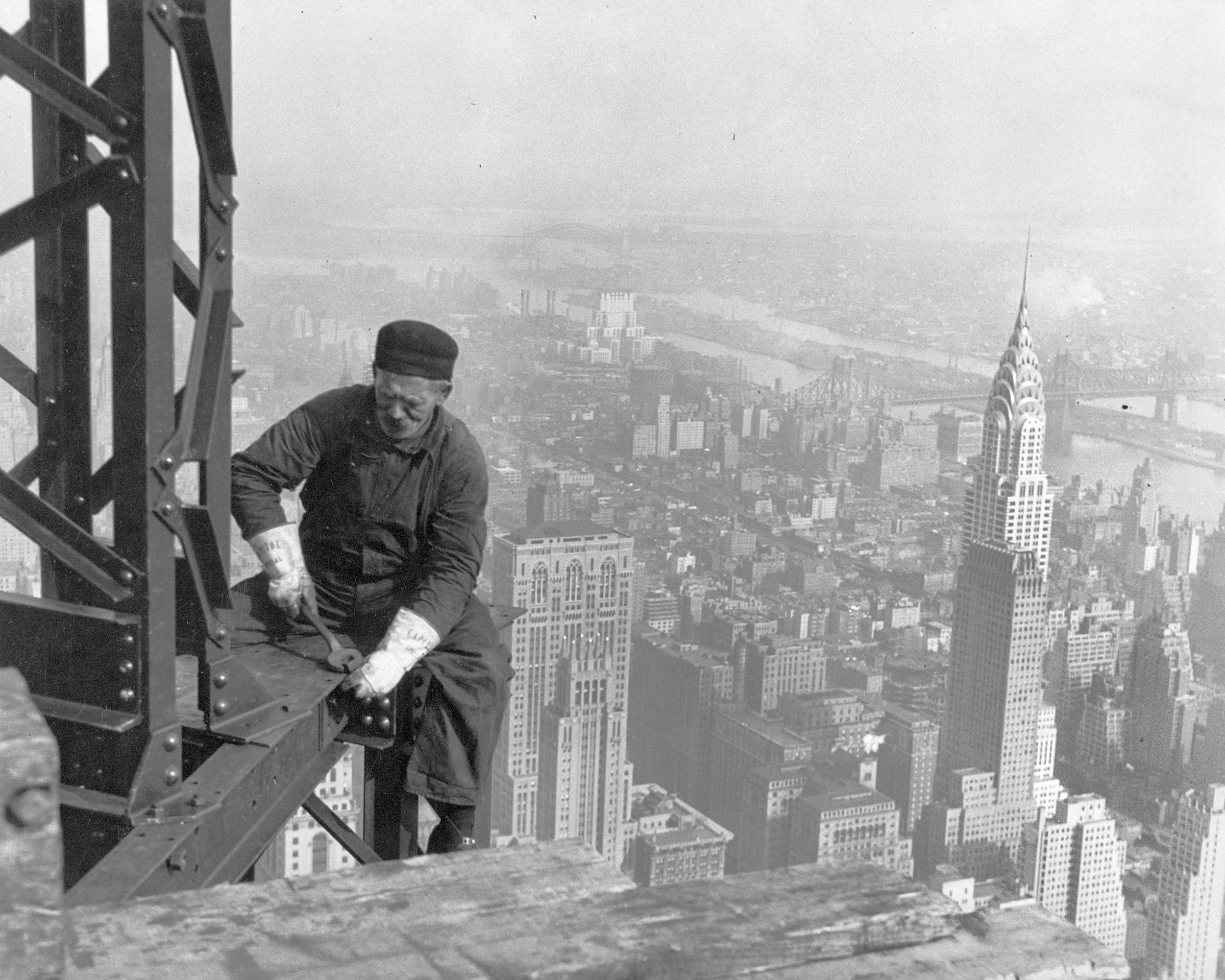
Vintage postcard depicting the New York World’s Fair of 1939 as seen from the Empire State Building in New York City, from the personal ephemera collection of Dawn Roode.
Memories made tangible
TO KEEP OR NOT TO KEEP?
“Both of our parents had died earlier that year, within weeks of each other.... It felt that every object we picked up was imbued with a memory of them, and we struggled to sort them into our neatly labeled boxes.”
FAMILY HEIRLOOMS, DOCUMENTED
Whether you have centuries’ worth of expensive heirlooms handed down through generations or a few sentimental objects from a single ancestor, you should consider photographing your heirlooms to preserve their stories and provenance.
EARLY AMERICAN PHOTOGRAPHY
“The collection is just filled with the everyday stories of people,” Rosenheim tells the Guardian. “I don’t think painting can touch that.” The New Art: American Photography, 1839-1910 is on view at the Metropolitan Museum of Art in New York City through July 20, 2025.
HERITAGE, HISTORY, AND MILESTONES
A “culture and heritage venue” called The Story in Durham, a county in North East England, celebrates one year of being “the gateway to County Durham’s past” as well as “its important role in our present and future too.”
Reading—and writing—our life stories
MAGIC OF MEMOIR
“Memoir invites us into that subtle listening to what our soul wants to explore.” Linda Joy Myers on the transformative power of writing to “the end.”
OH NO!
An egregious typo on the spine of Jeff Hiller’s new memoir, Actress of a Certain Age, inspired this piece with tips from a book editor on ensuring the same thing never happens to you.
AGAINST ERASURE
“I’ve been making room for all the stories that were thrown to the bottom of the ocean, made to drown. Bit by bit I’ve been bringing them to the shore, drying them off, and sharing with those around me the great tale of my great-great-grandfather, Jefferson Lewis Edmonds.”
A MEMOIR BY GEOFF DYER
“Homework records the kinds of memories we all have—first sip of beer, first fight, first sexual encounter—but also the vividly remembered oddities, like the summer afternoon when the children in Dyer’s neighborhood played on the street with a beach ball until it popped. The important fades so quickly and the trivial turns out to be unforgettable” …maybe with too much detail?
SHAPING HIS VOICE
In a recent conversation, Jonathan Capehart spoke candidly about the emotional labor of telling his own story and what it means to show up, unapologetically, in a world that hasn’t always made space for him.
HARD-TO-TALK-ABOUT SUBJECTS
What kinds of questions should you not ask in an interview? What are the reasons to set a timer mid-interview? When should you leave a sensitive topic alone, and when should you press for more? Utah–based personal historian Rhonda Lauritzen shares tips in this recent podcast episode:
TAKING INSPIRATION FROM MEMOIRS
“Memoirs are a good reminder that people have countless interesting stories to tell about their lives," Bill Gates wrote as he introduced his summer reading list for 2025, which is all about memoirs.
...and a few more links
How to plan for what happens to your digital legacy when you die
How to write an obituary that captures the essence of a once-lived life.
Yiyun Li’s unsparing memoir of life after two sons’ suicides
IQ121 app launches to manage and safely store essential life documents and digital assets.
A new video game is inspired by photo albums and scrapbooking.
The first known photograph took at least eight hours to capture.
Finding creative freedom in the fusion of fiction and biography
Short takes

Life Story Links: June 3, 2025
Dawn Roode’s curated roundup for the week of June 2, 2025, includes recent stories of interest to personal historians, preservationists, and family history fans.
“You are the landlord of your own soul. Let the words, the memories, the imaginings pour white-hot onto the page. You can decide later what they are, what they might become, and when it is time to show them to someone else.”
—Pat Schneider, Writing Alone and with Others
Vintage postcard depicting a black-and-white photograph of children on the shore at an Asbury, Park, New Jersey, beach, postmarked 1933, from the personal ephemera collection of Dawn Roode.
Writing comes and goes
‘THE SILENCE KEEPS ITS COUNSEL’
“I’d hoped I could find words, or they would find me, to share my thoughts about life, memories, and spirit during this period of mourning after my son’s death,” Linda Joy Myers writes. “I discovered I couldn’t rush anything. I sat with no words longer than I ever have in my life, and now they are returning.”
WHEN STORIES SURFACE
“Some moments in life are so powerful, they don’t just mark time—they open a doorway to our memories and to how to live more fully in the present.” Sacred Stories’ Whitney Myers on the power of life transitions to invite reflection.
GOALS: WRITE EVERY DAY
“Every time I showed up to write, there was always something to say if I listened for it. The problem was that I ‘thought’ before I acted, and felt ‘fear’ before the freedom that came in trying.”
The stories of our lives
CREATING A FAMILY ORAL HISTORY
“As a new mother herself, [Nicole Wong] realized she’d become ‘the person who holds the information now’—and that time was of the essence to capture it from her parents.” The author’s quest to learn Mahjong from her parents’ generation turned into a deep exploration of family history—and here, her experience is used as a jumping-off point for valuable guidance on interviewing your family members like an oral historian.
PRESERVE YOUR FAMILY HISTORY LIKE AN ARCHIVIST
“You never know what will have value in 50 years, or what will help be evidence to fill in pieces of a puzzle later on.” KQED spoke to experts on how to best preserve family documents, digitize records, and how best to connect with organizations who may be interested in your personal archives.
REMEMBERING THE FALLEN, ANY TIME
Memorial Day may be passed, but I hope you’ll be inspired by these three ways to honor the legacy of someone who died in service, whether or not you have a family member who served and died for their country.
Miscellany
FRIEND—AND BIOGRAPHER
“In composing his biography, the wonderfully titled Peace Is a Shy Thing, Vernon appears to have tracked down most every individual who crossed paths with [Tim] O’Brien and had an interesting anecdote to tell.”
USING TECH TO STAY CONNECTED
Discover when and how to use digital tools with someone who has dementia, what types of tech can stimulate storytelling and memory, how to record and preserve family history and legacy, and more in the following conversation:
...and a few more links
“Memoir, memory, truth, and fiction mix it up in the ‘Taj Mahal’”
Palliative and hospice care experts about what they’ve learned from their patients.
planning ahead for the large digital legacy you will leave behind
MyHeritage and ScanCafe partner to digitize and preserve family memories.
As Google Photos turns 10, it now hosts more than 9 trillion photos and videos…
…plus, 10 ways (some new) to celebrate a decade of memories through the app.
Short takes

Life Story Links: May 20, 2025
Dawn Roode’s curated roundup for the week of May 20, 2025, includes recent stories of interest to personal historians, preservationists, and family history fans.
“As a bird must sing, it’s your human nature to tell your story.”
—Tristine Rainer
Vintage postcard depicting a black-and-white photograph of German performers circa early 1900s, from the personal ephemera collection of Dawn Roode.
Our lives, our stories
THE PUZZLE OF YOUR LIFE
Last week I wrote about writing towards your memoir. “Write, then write some more; read, analyze, tweak; then write some more. Then, as you begin to uncover patterns, you can MAKE something of what you have written.”
LEGACY PLANNING
“Nostalgia has its place. But if you're aiming for cohesion, belonging, and wise stewardship in your family’s future, story isn’t just a nice-to-have. It’s strategic.”
GENEALOGY: SIDEWAYS STRATEGY
“Because living relatives possess what dead ancestors cannot give you: context, stories, photos, and artifacts that bring your family history to life. This is how you transform genealogy from a sterile collection of facts into a vibrant family narrative.”
CREATIVE NONFICTION MASTER
“There is no higher praise for a work of factual writing than to say that it reads like a John McPhee book.” Read an excerpt from Looking for a Story by Noel Rubinton by Peter Hessler (May 2025, Princeton University Press).
The family history we feel and seek
THREADS OF TIME
“As the world has changed, so has my family story. Not the facts or the bones of the narrative arc, but the meaning made and the memories I lean upon. And, more importantly for the shape of the story, as the world has changed, so have I—the narrator.”
‘THE END IS THE BEGINNING’
“I relied on memory, lived experience, stories my mother, my sisters, or other relatives or friends told me about my mother and her family before I was born, photos, scrapbooks, and research to evoke the milieu of my mother’s life.”
‘HIDDEN IN PLAIN SIGHT’
“From childhood, Julie Brill struggled to understand how her father survived as a young Jewish boy in Belgrade; in her memoir, she recounts how through exacting research, a bit of luck, and three emotional trips to Serbia, she returned to her father a small part of what the Nazis stole: his own family history.”
GENERATIONAL TRAUMA
“My grandmother, Nina, had always described her rural western-Ukrainian childhood in romantic terms. I would sit for hours in her Chicago kitchen while she told stories about the old farm, how every beet, potato, onion, and egg came from the family’s garden.”
A PERSONAL HISTORY OF HER MOTHER
Writing the book “raised the bar” on the empathy this writer felt for her mother as she understood the milieu her mother lived in and discovered the aspects that shaped her mother in the early years of her life.
‘FEEDING GHOSTS’
“The point at which I felt I had accomplished what I set out to do with this story was when, for the first time, my mother told me that she understood how much I loved her,” Tessa Hulls says of her Pulitzer-winning graphic memoir.
The past, in pictures
‘A PRICELESS INHERITANCE’
Curators in Memphis have begun the painstaking process of saving a trove of 75,000 photographs that capture middle- and working-class life. It will take years—maybe even decades—to complete.
JEWISH WWII VETERANS
“I grew up listening to their stories and perhaps this is why ever since I became a war photographer, I didn’t just want to photograph wars, but also the veterans who had fought in previous ones.” He captures their personal histories, too.
CHRONICLING OUR LIVES—INSTANTLY
The upcoming doc Mr. Polaroid tells the little-known story of the man behind the camera, a Harvard dropout named Edwin Land. Over a half century ago, before the smartphone, Land was dreaming up “a camera that you would use as often as your pencil or your eyeglasses.”
IN DEFENSE OF SOUVENIRS
“The Japanese have a word for when an object stirs a memory—natsukashii.” Physical keepsakes, whether priceless or prosaic, can be the most meaningful mementoes of a trip—here are 10 visually interesting ones.
...and a few more links
The pressure of ‘making memories’—is it the scourge of modern parenting?
Photographer captures the lives—and spirit—of immigrant moms in a striking and unexpected way.
New collection from Assouline is inspired by treasured family heirlooms.
“My grandfather was a Nazi executioner at Auschwitz—and I had no idea until 7th grade history class”
“A new biography of Mark Twain doesn’t have much of what made him great”
Short takes

Life Story Links: May 6, 2025
Dawn Roode’s curated roundup for the week of May 6, 2025, includes recent stories of interest to personal historians, preservationists, and family history fans.
“This isn’t a tell-all because some of what I’m telling you is what I don’t know. I’m offering the absences, too—the spaces I know aren’t empty, but I can’t see what’s inside them. Like the white spaces between stanzas in a poem: What is unspoken, unwritten there? How do we read those silences?”
—Maggie Smith, You Could Make This Place Beautiful
Vintage postcard depicting a faded photograph of two daisies postmarked from Bari, Italy, in 1906, from the personal ephemera collection of Dawn Roode.
Between generations
A SURPRISE ORAL HISTORY
“I was impressed that my father put this project together with such care, resurfacing stories my family had long repressed. I was also dumbfounded that he somehow had zero follow-up questions when my uncle said he was ‘attacked by Malaysian pirates.’”
TIME CAPSULE
“Imagine opening a letter from your younger self, a glimpse into the dreams and anxieties of a fifth-grader. That's exactly what happened to a group of graduating seniors.”
SHARING, OR OVERSHARING?
“I share my life on social media; I share my life in my newsletter; now, I’ve shared my life in my book. [My son] is a massive part of my life, and because of this, for the first time in my decades of public oversharing, I have a reason to censor.” Arianna Rebolini on writing about your kid in memoir.
Our own personal histories
WHAT’S STOPPING YOU?
“I’m scared,” the prospective client told me immediately after calling me about undertaking a personal history project. So we delved into their why—and their fears. Then I decided to share some of these common anxieties…and how to alleviate them.
MEMORY MAPPING
Florida–based life writing teacher Patricia Charpentier invites you to sketch your childhood street and the layout of your home, labeling everything you can remember. As you create your map, old memories might float to the surface.
Fighting for the future
REQUIRING EXTRAORDINARY EFFORTS
“Whoever controls the archives controls history.” A look at why it is important for Ukraine to work on protecting and preserving archival collections during wartime.
HIGHLIGHTING—AND HONORING—MILITARY STORIES
“It was hearing their life story—it humanizes people. It’s easy to label people and put them in boxes, but we all have a story, we all have lessons, we all have so much value to give.” Retired Air Force vet’s podcast shares hero stories.
...and a few more links
The Memory Box, Charlotte’s Big Surprise—a new children’s book that tackles loved ones’ memory loss
Read an excerpt from Dirty Kitchen: A Memoir of Food and Family by Jill Damatac.
Presenting thw 2025 Pulitzer Prize winners, including those in Memoir and Biography.
Read an excerpt from the new biography Dickens the Enchanter by Peter Conrad.
Short takes

Life Story Links: April 22, 2025
Dawn Roode’s curated roundup for the week of April 22, 2025, includes great recent reads on memoir, family history, life story writing, and legacy preservation.
“There’s basically an element of fiction in everything you remember. Imagination and memory are almost the same brain processes. When I write fiction, I know that I'm using a bunch of lies that I've made up to create some form of truth. When I write a memoir, I'm using true elements to create something that will always be somehow fictionalized.”
—Isabel Allende
Vintage postcard depicting an illustration of The Museum of Natural History in New York City, circa 1920, from the personal ephemera collection of Dawn Roode.
Our own stories…
WHAT WE REMEMBER
“It can be intensely rewarding to remember more of your life, but it takes time; if you don’t have time, you don’t experience the rewards, and so you become less inclined to prioritize the enlivening of your own past.”
FROM REFLECTION LAGOON TO FAMILY GATHERING PLACE
“Memories are bridges to the past, guiding us in understanding who we are and shaping where we’re headed,” film biographer and StoryKeep founder Jamie Yuenger shares at the “Remembrance Island” stop on the wonderfully imaginative voyage of reflection mapped out here (it’s worth the trip!).
A GUIDE TO THE ART OF JOURNALING
“Journaling as a process is utterly alchemizing, with practical applications in every area of one’s life and work. The journal is like a chrysalis: the container of your goopiest, most unformed self.” Read an excerpt from The Book of Alchemy by Suleika Jaouad, releasing this month…
…Then get a glimpse into Jaouad’s first intimate book event: “I began to feel relaxed and grounded, amused by what I was remembering and delighted by the way my memories led to other long-forgotten memories.... Journaling with these lovely humans was a resounding reminder of how soul-soothing and expansive it is to spend time on the page.”
WHAT HAPPENS TO OUR JOURNALS WHEN WE’RE GONE?
Would Joan Didion have wanted the world to see her notes on therapy? Readers can decide when Notes to John, which shows the writer grappling with guilt and vulnerability, is published next week. I pondered the question of what to do with one’s journals a while back, too.
Our family’s stories…
ECHOES THROUGH TIME
“That document you’re staring at? They touched it. Their hands were there. Their hopes were fresh. Their future— your past—was unwritten.” Why you feel connected to ancestors you’ve never met.
BE A FAMILY HISTORY DETECTIVE
There’s way more to family history than clicking on digital hints and scouring online genealogy sites. Last week, I shared three ideas for tracking family history clues IRL.
FINDING HIS ROOTS
As his hit PBS series Finding Your Roots closes its 11th season, the Emmy-nominated historian and celebrity genealogist Henry Louis Gates, Jr., explores his own family history.
‘I SEEK A KIND PERSON’
“Julian Borger’s haunting, revelatory book exists in the shadow of a parent who, like many survivors, spoke little about his past. Part of Borger’s task is to illuminate that anguishing tension between forgetting and remembering.”
In pictures
AN ODE TO VERNACULAR PHOTOGRAPHY
A family photo taken in 1950s Cape Town mirrors another from 1970s Kyoto or 1930s Rome. They are fragments of a collective memory, silent witnesses to what it means to live—to love, to grow, to remember.”
THE GIRL IN THE MIDDLE
“With her name in hand, I found her story—buried deep in legal files, memoirs, government records, and fading family memories.” Historian Martha A. Sandweiss on the history held within a single photograph.
Short takes

Life Story Links: April 8, 2025
With three weeks’ worth of news, the curated roundup for April 8, 2025, is overflowing with great reads on memoir, family history, and life story preservation.
“There is an ancient Zulu greeting: Sawubona. It literally means, ‘I see you.’ Sawubona implies, ‘I know you. I recognize your worth, passions, pain, strengths, weaknesses, and life experiences.’ Isn’t that the goal of every human interaction?”
—Gina Vild
Vintage postcard with handwritten note addressed to a recipient in Winchendon, Massachusetts, postmarked from New York City in 1906, from the personal ephemera collection of Dawn Roode.
On telling our own stories
HOW GHOSTWRITERS CAN HELP
“It is truly a special moment when someone else accurately and authentically captures our own life.... Such is the mission of a ghostwriter, offering catharsis to an author while giving readers a gripping story to read.”
CLOSE—BUT NOT TOO CLOSE
In a recent post I shared two questions to ask yourself to determine if you have enough emotional distance (and why you need it) to write about your life.
BUT DOES IT MOVE THE STORY FORWARD?
“Revenge writing in memoir is never, ever a good, or valid, creative intention.” Elissa Altman shares the three questions she asks herself before writing about someone who has harmed her.
WHO LISTENS TO YOU?
“More than one interview subject has teared up and needed to pause once they get going during our interview sessions—once it dawns on them that I am not going to interrupt them, and that I am listening intently.”
WE’RE ALL STORY KEEPERS
“Whether it’s a 90-second video or a three-page story or a full book, really the core of it is, How did life change you?” says personal biographer and ghostwriter Rhonda Lauritzen in this recent TV interview.
Memoir miscellany
‘FOLLOW YOUR MIND’
“I vote for letting everything tumbleweed together over multiple drafts and editing on the printed page (edit, print, edit, print) and recording out loud to see if it’s working.” Diane Mehta on writing her new memoir-in-essays.
PIECES OF A LIFE, RECLAIMED
“When I got to the end of the memoir, I realized the story I’d written wasn’t the one I’d intended to write,” Samina Ali says. “What emerged as well was a full-throated love letter to the vital act of storytelling.”
BEYOND DOCUMENTING EXPERIENCES
“This is memoir braided with interview, feminist journalism, dreamscapes, and the occasional excellent recipe,” Ariel Gore shares in an interview. “It’s about how a diagnosis becomes part of your story but doesn’t have to be your whole story.”
TRACING FAMILY MIGRATION
“There are so many choices to be made when we set out to tell the stories of others based on documents and interviews.” In conversation with Caroline Topperman, author of the hybrid memoir Your Roots Cast a Shadow.
LOST, FOUND, KEPT
“I have learned through my long writing practice to trust my voice. It’s the wisest part of me and I always listen to it, particularly in my early drafts when I’m excavating for the truth.”
A MEMOIR OF BODIES AND BORDERS
“In the realm of records, her trace has always been slight. Born without a birth certificate in the days of British rule, her name was first written in 1955,” Sarah Aziza writes of her grandmother. And of her father: “With before locked away, he did not see his life as aftermath.”
TALKS WITH BUBBE
“I’ve seen the way one small nugget can lead to another, and just how much of a world can live within a single detail. I’ve really learned that from listening to [my grandmother] and how she tells her stories, seeing what details stay with her.” Listen in as Marion Roach Smith talks with Brooke Randel about writing her new memoir:
The historic record, memory, and research
ARCHIVES OF ARCHIVES
In the wake of the firing of “the head of the National Archives and Records Administration,...whose motto is ‘the written word endures,’” librarians and guerrilla archivists are trying to save our country’s history.
PHOTOGRAPHIC LEGACY
“Editor and New Yorker Reuel Golden had the pleasure of diving into the Atlantic archives” for the retrospective coffee table book 75 Years of Atlantic Records from Taschen.
FROM ASHES TO ART
“It’s better than anything I could have salvaged. This is something that comes only from a place of love.” Seventeen artists around the country help California wildfire victims preserve memories through custom home drawings:
LAYER UPON LAYER…
“What is the obligation of the people who came after—those who survive the survivors—who carry the story, who carry the residual trauma and haunted memories of their families?” For years, her friend’s father asked her to recount his childhood escape from the Nazis. Why did it take this journalist so long?
Finding the past
THE PERFECTLY IMPERFECT WAYS WE REMEMBER
In Memory Lane, two psychologists lay out the vagaries of how we remember, proposing that “memory is like a Lego tower, built from the ground up, broken down, put away and rebuilt each time it’s called to mind.”
MORE ON EPISODIC MEMORY
One of the co-authors of that book was recently interviewed on the following podcast: “If somebody’s memory doesn’t accord with yours, they’re not necessarily lying. They might be mistaken, or you might be mistaken.”
...and (a lot!) more links
This fragile handwritten autobiography was mended for posterity.
Yes, happy memoirs do exist—here, some recommendations from Patricia Charpentier.
A short, fun peek at how a mixtape fits into one family archive.
The process used to uncover fragile fragments from centuries past, plus an even more detailed account here
66% of Americans say they use photos to feel closer to their loved ones.
New research: Brain scans confirm babies form memories, challenging long-held beliefs.
“What would it mean for society if we harnessed DNA to store everything forever?”
“As children, they fled the Nazis alone; newly found papers tell their story.”
Reflecting on the healing power of storytelling: “reparative journalism” discussion guide
Short takes
Dawn Roode’s curated roundup for the week of Sept. 23, 2026, is overflowing with recent reads on memoir, life story writing, and family history preservation.