
Memories Matter
Featured blog Posts

READ THE LATEST POSTS

56 essential questions to ask your parents to capture their personal history
Don’t wait until it’s too late—have meaningful conversations with your parents about their past with questions designed to spark memories and make story sharing easy.
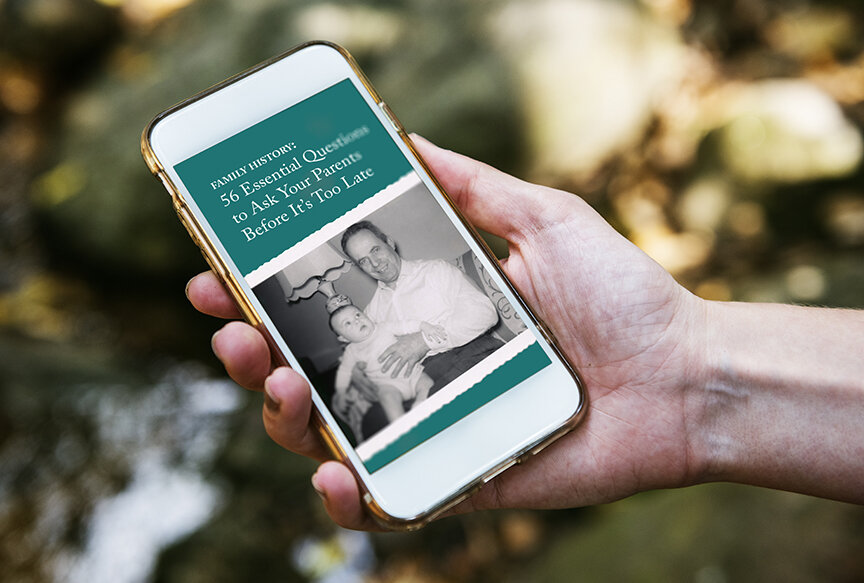
If you’re reading this, congratulations—you’re on your way to a most enjoyable and important journey! Who are you interviewing? A parent? Grandparent? Beloved aunt or uncle? Whomever it is, clearly their stories matter to you, and I am thrilled to be able to help you capture them through an oral history interview.
Print out this guide or use it as inspiration to develop your own list of topics and questions for your loved ones. I’ve got three key tips at the bottom of this post to help ensure that you capture these important family stories successfully, and I am always here as a resource to help guide you on your journey. Whether I can one day help you turn your stories into an heirloom book or help you get the ball rolling on a DIY project, my message to you is this:
Start now. Don’t wait. I can recount too many tales of people telling me “I wish I had asked my father…” that it saddens me deeply. It is my mission to convey a sense of urgency to everyone. Perhaps you have a little extra time on your hands right now… Please, ask your parents and grandparents the questions that matter now, before it’s too late.
Family history interview questions
Childhood & Family Life
Describe the home you grew up in.
What were you like as a child?
Do you have memories of what your parents said you were like as a baby?
What was a typical day like in your family when you were little?
How does your family tend to show their love for one another—through physical affection including hugs and kisses, gift giving, reaffirming through saying “I love you” or some other phrase, etc.?
What would you say makes your family unique from other families?
What did you do when you were bored as a child?
If you had to create a family motto, what would it be?
How did you feel about school, and what type of student were you?
Did you have a best friend, and if so, how did that relationship play out over the course of your life?
When you were little, what did you answer to the question: “What do you want to be when you grow up?”
What were you like as a teenager?
Food Memories
What meals would be in your family’s cookbook—the foods that make you feel nostalgic for your childhood or for home?
What are your oldest recipes and where did they come from?
What smells transport you to this day right back to your childhood?
Who are/were the best cooks in the family? Tell me about them.
What family dishes would you miss the most if you never tasted them again?
If cooking and food were an integral part of your subject’s life, explore 20 more food-themed questions here.
Life Transitions & Milestones
Tell me about your experience…
…deciding where to go to college
…pursuing your career
…getting married
…getting drafted into the war
…serving in the military
…becoming a mother/father/grandparent
…falling in love for the first time
Tell me about your first job.
Did anyone ever throw you a surprise party?
How did you feel on your wedding day? What memories of that day stand out for you?
What can you tell me about the first time you experienced loss? Who died? Did you go to the funeral? How old were you? How did it effect your outlook on life?
Decisions & Lessons
What is the best decision you ever made?
What is a memorable time you have failed, and how did you recover from that experience?
What lessons(s) do you most recall learning from your parents? Grandparents?
Did you have a favorite teacher in grade school, or another role model who had a major impact on your life?
Can you share about any hardships (in history, such as the Depression or a war, or in their personal life, such as a divorce or unemployment) that you experienced in your life, and how you survived/thrived/coped?
Tell me about a significant time you said “no.”
Do you have any regrets? (Encourage elaboration here; sometimes a prolonged silence is the best invitation to speak.)
Traditions
What holiday did you most look forward to while you were growing up?
What were some of the traditions your family observed related to that holiday?
Do you have any family traditions that have been passed down for generations in your family?
Does religion hold a strong place in your family? (If “yes,” there are a variety of follow-up questions to ask to pursue this thread!)
What is the most memorable gift you have ever received? Given?
Are there any specific family heirlooms you inherited? Why do they hold meaning for you?
How are/were birthdays celebrated throughout your life?
In what ways have you/your family kept your culture alive (through language. foods, cultural traditions, for example)?
Fun & Games
What songs have held special meaning to you over the years?
Who was the trickster in your family?
Do you have any funny stories from your past?
What’s your favorite family story to recount around the dinner table?
Did you play sports growing up, and if so, what were those experiences like?
What was the main form of entertainment in your family when you were a kid (board games, listening to the radio, playing music/singing, reading books, putting on shows, etc.)?
Describe what family vacations were like, and if there were any destinations that you traveled to often?
Tell me about a time you were incredibly embarrassed.
Big-Picture Questions
What values would you like to pass down to the younger generations of your family?
How did you learn resilience?
What would you tell your 20-year-old self?
What would you like your legacy to be?
Are there any questions you wish you had asked your own parents?
3 keys to capturing the best stories
Ask open-ended questions.
Sometimes simply planting the seed of a memory yields the most thoughtful and meaningful stories. “Yes” or “no” questions do not promote conversation, so avoid them in favor of questions that help set the scene (“remember when…”) or probe your subject’s personal history in unique ways (“imagine if ________ hadn’t happened…” or “what about _______ do you wish you remembered better?”).
Consider this a conversation more than an interview.
Listen generously, ask follow-up questions, and let your interview subject go off on tangents that yield interesting stories and prompt unexpected memories. Your goal should be to get the most meaningful stories from your loved one, and if that means waiting another day to discuss what you thought today’s topic was, then so be it!
Ensure successful preservation.
Use more than one way of recording your interview. If you are using a voice recorder, use two. Ensure your subject feels comfortable, that the environment is quiet, and that the recording device is close enough to capture their voice. Find more specific tips (including equipment recommendations and even more family history–themed questions) in this guide from the Smithsonian Center for Folklife and Cultural Heritage.
More free resources
Visit my Resources Toolkit to for more free downloads, including lists of questions to spark Thanksgiving and Christmas story sharing; a guide on how to use family photos as prompts for writing life stories; plus more tips for writing about your life in short vignettes.
Get inspired to preserve your family stories







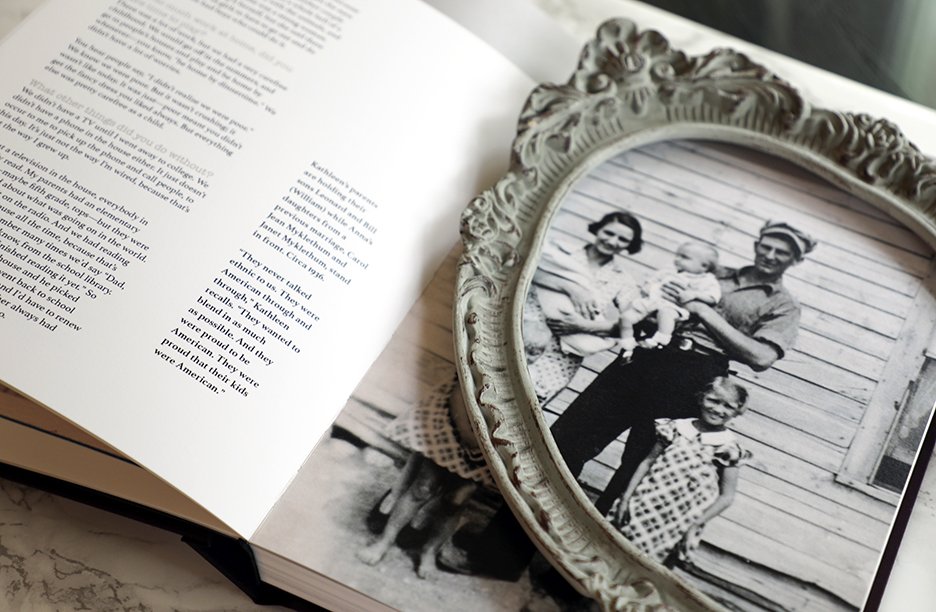

When a parent doesn’t want to talk about their past
Why it's sometimes easier to talk about our life experiences with a stranger, and how to get a reluctant storyteller to genuinely open up about his or her past.

I hear it often—different words, varying specifics, but always the same underlying message:
“His war years were so painful that they are buried deep.”
“My dad’s childhood was unbearable, so it’s a part of his life he would rather not revisit.”
“My mom refuses to talk about her own father; I assume he was not a very nice person.”
Implied: “My parent will never talk about the past.”
But I wonder: Have you ever asked?
I don’t mean a passing remark about how he/she never speaks about their childhood. I mean asking, in a forthright manner, if they would share the stories of their past. Have you ever asked?
Why it’s sometimes easier to talk to a stranger
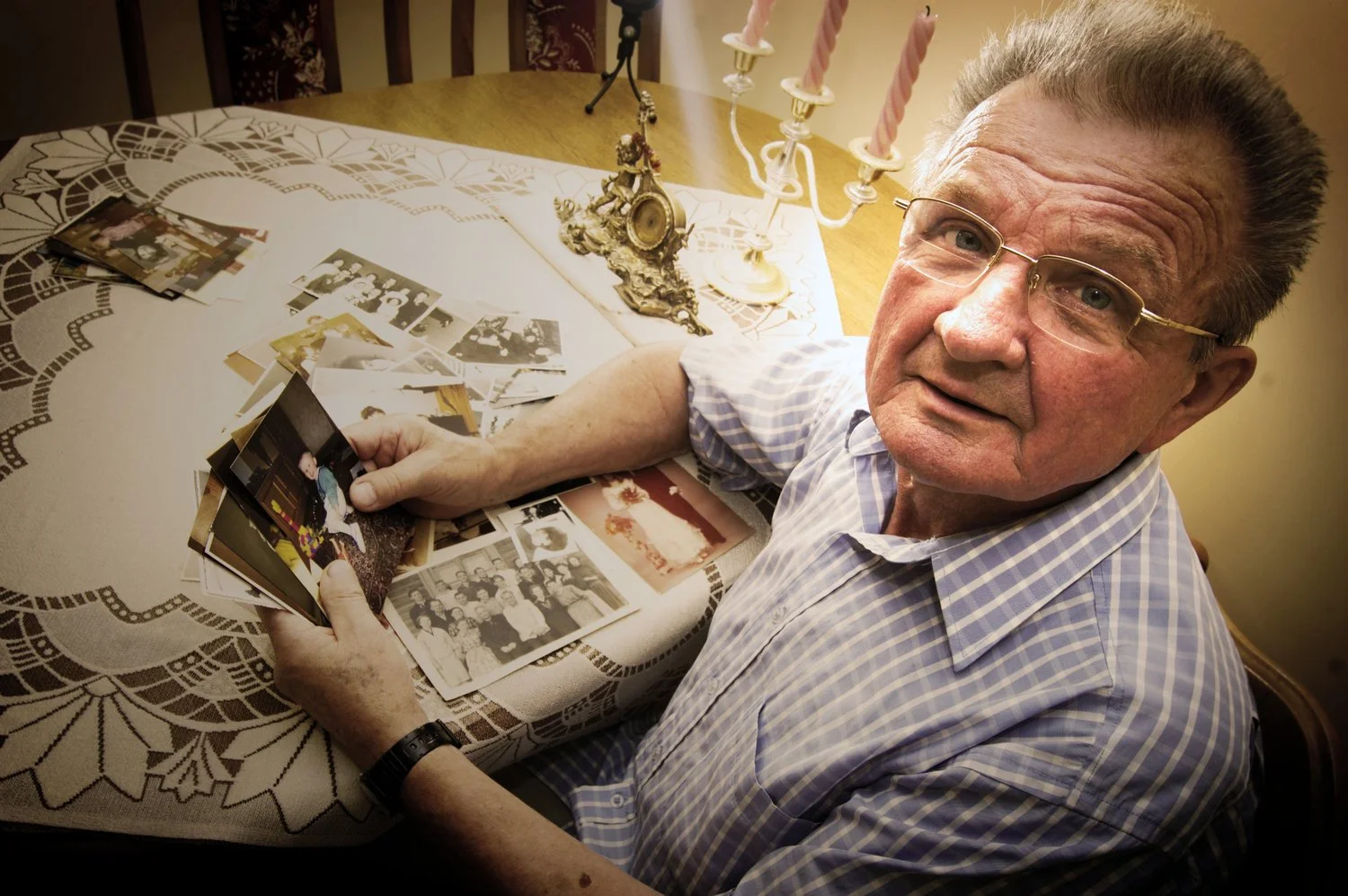
I recently heard a story about an elderly gentleman who launched into stories of how his father was an abusive alcoholic: This gentleman spoke without reservation, in depth, and at length. He was speaking to a fellow professional personal historian who had been hired by the gentleman’s grown children.
At the end of two hours of sharing his painful experiences, he indicated that his children would not want to know about any of this.
“They specifically told me they would like to know about your father,” she responded. “Why do you think they aren’t interested?”
“Because they never once asked,” he said.
This man’s children had made it clear that they thought their father would never open up about his own dad. Had they ever asked him, though?
Chances are, they may have made passing remarks about their father’s difficult childhood. Perhaps they treaded lightly because they knew it was difficult terrain. Maybe they asked, but their dad assumed they wouldn’t want the whole messy story.
When family members are the ones trying to capture stories of the past, assumptions can unintentionally impede the way. Consider some of the negative assumptions that may arise when family members interview their elders:
My kids think they want to know, but the reality will be too painful for them to hear.
I can’t imagine my daughter will want to know any more than the basics of my childhood.
I don’t want my son to have negative impressions of his grandfather.
Conversely, when an outsider—whether it be a biographer or a caregiver—asks, the storyteller may feel welcomed in a different way. The assumptions are more positive:
I have been invited to speak. This person wants to know my stories!
This person has no preconceived notions about who I am—I start with a clean slate.
How to get stories from a (seemingly) reluctant storyteller
If you would like to ask your parents or grandparents questions about difficult periods from their past, here are a few tips to generate open conversation:
First ask if they would be willing to speak about the specific topic. Clearly express your genuine interest, stressing how learning more about your loved one’s past will help you understand them (and maybe even your own childhood) better.
Indicate further why you are interested: Would you like to shed light on your great-grandparents or other individuals further up the family tree? Are you seeking examples of resilience to fuel your own growth? Are you simply curious about this person whom you love beyond compare, wishing to know them as a person in their own right and not just in relation to you (as your mother, say)?
Don’t merely hear; listen. Hearing is a passive act; sounds come to us and are received. Listening, on the other hand, is an active endeavor. Pay attention to what your family member is saying. Make eye contact, ask follow-up questions, feel empathy. It is okay to begin from a list of prewritten questions if you go into the interview with an open mind, letting the conversation twist and turn with the currents.
Be prepared to be surprised. Beware those nasty assumptions again! You have undoubtedly constructed a narrative around the unknown portions of your relative’s life. Chances are that any storyline you have imagined may be far from the truth. Be willing to listen openly and, most critically, without judgment.
Reserve judgment. Yes, this one’s worth repeating. Listening to your loved one’s stories is a privilege. They are trusting you with precious memories. They are making themselves vulnerable. Reward that trust by engaging with them genuinely, bearing witness to their life, and seeing them sans judgment.
When a professional is the way to go
If you are uncomfortable trying to glean stories that you think your parents or grandparents may be uneasy speaking about, consider hiring a personal biographer to conduct interviews. Reach out to see how we could work together to preserve your family legacy.
Related reading coming in future blog posts:
Why It’s Important to Capture Difficult Family Stories
Providing Examples of Resilience to the Next Generation

75 Questions to spark Christmas story sharing
Family history questions for Christmas: 75 open-ended, specific interview questions to elicit powerful memories & stories from the older generation.
Christmas and Hanukkah—or other holidays where extended family gathers in one place—is an optimal time to gather stories and memories via oral history interviews. There needn't be a lot of pressure: Simply turn on your smart phone’s voice recorder or set up a video camera on a tripod, then forget it’s there...and begin reminiscing.
The important thing is that you relax and let the stories flow. Don’t wait until next year or when everyone is available or any other “better time”—trust me when I say: Now is always the right time!

When family gathers at Christmas, use the opportunity to share stories and memories of days gone by—trust me, it’s as entertaining as it is valuable!
Personal history interview questions: Christmas edition
Use these questions merely as a guide or to give you ideas for questions of your own. The key to any good personal history interview is listening—so ask follow-up questions that genuinely interest you, and let the stories take their own paths...that is usually when the magic ensues!
FOOD
Is there a dish you always associate with Christmas Eve or Christmas day Do you know who has the recipe, and who originally cooked it for your family?
Did you or your family make cookies or other special desserts to share with neighbors during the holiday season? What about leaving food for Santa—and his reindeer?
Are there any foods, from the holiday season or year-round, that remind you of your heritage?
Did your parents make you eat anything you absolutely hated?
What food(s) do you associate with comfort? With the onset of winter?
Who made the cakes for birthdays in your home?
Do you recall any massive failures at cooking—a horrible dinner, burnt pie, missing ingredients?
Who taught you how to cook?
TRADITION
Did you hang Christmas stockings? By a fireplace, or somewhere else? Were they filled by Santa? Do you have any favorite memories of stocking stuffers?
Did anyone in your family or neighborhood dress up as Santa? Did you know it was them? Have you or anyone else in your family continued that tradition of playing Santa—and if so, how does it make you feel?
What traditions do you most fondly recall from your childhood?
Are there certain traditions that have persisted for generations in your family?
What traditions have you begun anew with your own nuclear family?
Is there a memorable gift you have given someone?
What is the best gift you have ever received?
ANTICIPATION
What time did you wake up on Christmas morning? Was it earlier than your parents? Did they make you wait before starting the festivities?
Do you recall the feeling of anticipation on Christmas Eve?
What other times in your life do you recall similar feelings of anticipation?
GIFTS
Did you (and your siblings/family members) want to rush through the gift giving? Was there a sense of order and gratitude opening gifts, or was it wrapping-paper mayhem?
Did you ever look for or find evidence of Santa?
Were there ever times when hardship made gift giving at the holidays challenging? How did that make you feel? Do you have a story from that time, or a lesson learned?
How were gifts wrapped?
Did you help pick out gifts for those you loved, or was it strictly a parent thing?
What types of gifts or cards can you recall having made by hand
as a child?
Do you remember how you felt when you discovered the truth about Santa? How old were you?
What is your most magical Christmas memory?
RELIGION
What religion, if any, is your family? Were you devout? Members of a congregation?
Was your church or temple community a central part of your life?
Did you go to church on Christmas morning? Midnight mass?
What memories of you have of those times?
Did/do you pray?
Are you spiritual? How does that manifest itself in your life?
HUGS
Was your family very affectionate? Describe how they showed love, or if you wished there was more physical affection.
Are you a hugger? How does it make you feel?
Who in your family gives/gave the best bear hugs? What is/was that person like?
Did you cuddle with your parents? Do you cuddle with your own children? Grandchildren? What does it mean to you?
Did you write letters to Santa? If so, where did you mail them? Did you ever hear back from the North Pole?
Do you recall getting Christmas cards during the holiday season?
Did your family draft a holiday letter (many people keep these as part of their family history archive—did you save any of them)?
SNOW
Where did you live when you were growing up? Did you generally have a white Christmas?
Do you remember the first time you saw snow?
What was your favorite snowtime activity—sledding (or did you have a toboggan?), making snow angels, snow balls fights? Or how about ice skating? Shoveling?
Do you recall snow days from school? Listening to the radio for announcements, or waiting for a parent to wake you up? How did you occupy yourself on snow days?
Did you build snowmen? What would you use for the nose and eyes?
HOME
What smells remind you of your childhood home?
What makes you feel most at home now, as an adult?
How do you describe home?
What was the address of your favorite home? Why was it your favorite?
Have you ever visited a home from long ago—how did it make you feel?
Did you move often while you were growing up? Did that affect your personality or self-esteem?

Free Christmas Questions Guide
Download all 75 questions in a handy printable booklet!

Give the most unique holiday gift!
Cherished memories last a lifetime—and beyond, if you preserve them.

“Nobody ever asked me before”
Thoughts from the 2018 International Reminiscence & Life Review Conference including research challenges, anecdotal evidence, and autobiographical memory.
Thoughts on Reminiscence and Life Review
I recently attended the 2018 International Reminiscence and Life Review Conference in Boston, where researchers and practitioners presented an abundance of new information, much of it evidence-based, about the value of life review.
And while the data is certainly thought-provoking, it was the personal (subjective) narratives of those in attendance that I found most inspiring—and reflective of my own experience.
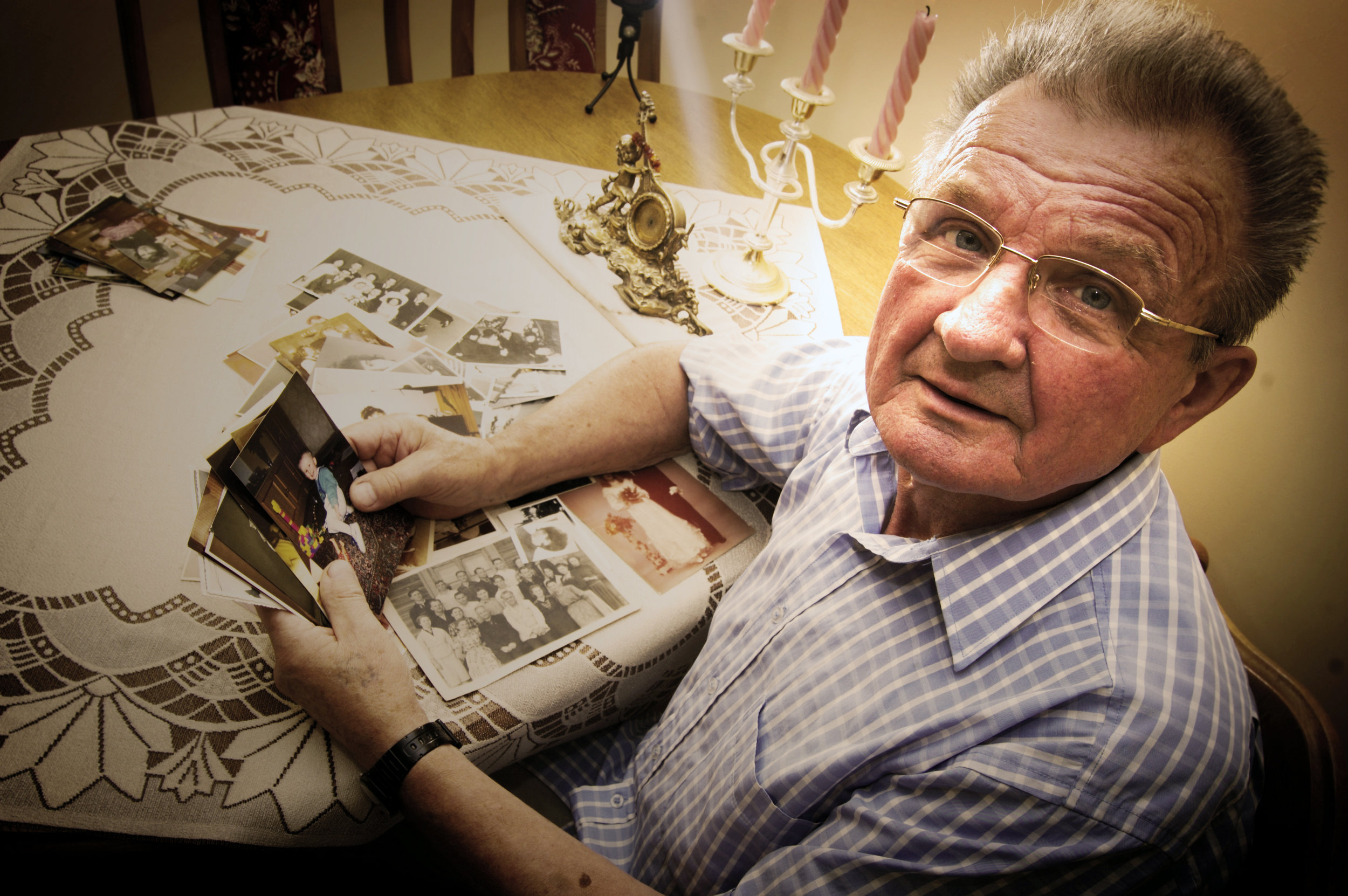
The Limits of Reminiscence Research
I am not a medical or scientific researcher. I was impressed nonetheless with the efforts of researchers to quantify how reminiscence can help individuals with dementia or mild cognitive impairment, for instance, or patients with symptoms of depression.
At a time when one of the world’s largest pharmaceutical companies has halted research into finding new drugs to treat Alzheimer’s disease, more money is currently being spent to research the impact of reminiscence and life review on patients with mild dementia or cognitive impairment than any other non-pharmacological intervention, according to Pam Schweitzer, MBE, founder of the European Reminiscence Network.
Anecdotal evidence of reminiscence’s value mounts and flourishes and is shared at a conference such as this, and the circle of telling and recognition and telling of similar experiences is not only affirming, but exciting. Yet the overarching theme was how to find ways to conduct more effective randomized control trials that yield compelling results.
I will leave the studies and scientific quest for data to the experts (and follow their results with great anticipation!). In the meantime, I am heartened by their stories.
Wisdom, Takeaways & Tips from the Conference
There is power in the asking.
During a presentation chock-full of study names and journal links, what stayed with me days later was a five-word quote: “Nobody ever asked me before.”
In a 2004 paper describing her research into facilitating reminiscence and learning about the life experiences of older African-Americans, Juliette Shellman, Ph.D., APHN-BC, designated this as one of five major themes to emerge. “Nobody ever asked me before.”
In my mind, this quote could be attributed to any one of us—any age, any race, religion, or background. It is a recurring theme in my own work, and one of the reasons I find conducting personal history interviews so rewarding: Because once someone does ask, what comes forth from the subject is, well, everything.
I know the power of being a compassionate, open-hearted, and curious listener—do you? Try asking a loved one to tell you some of their story. What ensues will be as much a gift for them as it will be for you.
What helps spark memories in patients with dementia works as well with…everyone.
“Allow time, listen well, and reflect back what people say to encourage and support them,” Pam Schweitzer said.
“Speak slowly.” Be clear, and listen attentively.
“Use multi-sensory stimulation.” Show old photos, play favorite songs, spark memories through the senses, not just through spoken words.
Yes, these approaches are proven to help guide and support individuals with mild cognitive impairment on their journey of remembering, and we must be especially cognizant of them when conducting interviews with those individuals. Don’t forget, though: These techniques are effective, thankfully, with anyone.
Find tips for engaging in an informal life review interview here.
We all place a premium on our memories.
Most people intentionally create memory aids—scrapbooks or drawers filled with ticket stubs and souvenirs; diaries that chronicle our lives and search for meaning in our experiences. Our devices filled to brimming with family photos (often numbering in the thousands) are perhaps the clearest evidence of documenting our memories.
In today’s technological age, which kinds of memories are we documenting—and how accessible are they? Do these physical reminders (often lost in that long device scroll) extend or alter our autobiographical memory?
These questions were the basis of a lively discussion about how we regard, preserve, and honor our memories as they are catalogued on social media. Apps have proliferated in recent years to help us recollect all that we have posted and shared: The Museum of Me, My Social Book, and After Me among them.
Many of these apps mine personal data from Facebook, Instagram, and other social media platforms to create an (auto)biography. The idea sounds nice, but often the “memories” they present are a superficial, even distorted, representation of the self. Random memories from social media do not equal biography, nor do they, in my opinion, often aid in a search for meaning amidst our memories, for our social media is inherently biased toward positive experiences.
An automated biography is indeed not autobiography in the true sense.
The questions that will continue to interest me are: How do our digital and internal memories interact with one another? Does taking a picture interfere with the quality of an individual memory?
And, as a personal historian, editor, and memory-keeper myself, I will always regard memories as most meaningful when they lead to contemplation. Reminiscence in the truest sense should help us clarify our thinking about the turning points in our life, and enrich the meaning of our life story.
Social media will continue to provides us with important touchstones in our memory-keeping. And all these apps that aim (not always successfully) to “curate” our memories and create a “legacy,” if nothing else, prove to me that collectively, we yearn for reminders of our past and value our memories.
But when it comes to creating—telling, writing, sharing—our life stories, personal reminiscence and curation is still the gold standard.
Related Reading
Efficacy of life review and reminiscence interventions for different target groups, and successful intervention methods, per a 2006 research study
An introduction to narrative medicine: How stories nourish empathy

55 Questions to spark Thanksgiving story sharing
Family history questions for Thanksgiving: 55 open-ended, specific interview questions to elicit powerful memories & stories from the older generation.
Thanksgiving—or other holidays where extended family gathers in one place—is an optimal time to gather stories and memories via oral history interviews. There needn't be a lot of pressure: Simply turn on your smart phone’s voice recorder or set up a video camera on a tripod, then forget it’s there...and begin reminiscing.
The important thing is that you relax and let the stories flow. Don’t wait until next year or when everyone is available or any other “better time”—trust me when I say: Now is always the right time!

Crouch family Thanksgiving, 1940, Ledyard, Connecticut. Photographs by Jack Delano (Library of Congress).
Personal history interview questions: Thanksgiving edition
Use these questions merely as a guide or to give you ideas for questions of your own. The key to any good personal history interview is listening—so ask follow-up questions that genuinely interest you, and let the stories take their own paths...that is usually when the magic ensues!
FOOD
Is there a dish you always associate with Thanksgiving? Do you know who has the recipe, and who originally cooked it for your family?
Did your parents make you eat anything you absolutely hated?
What food(s) do you associate with comfort? With the onset of the school year?
Who made the cakes for birthdays in your home?
Do you recall any massive failures at cooking—a horrible dinner, burnt pie, missing ingredients?
Who taught you how to cook?
TRADITION
What traditions do you most fondly recall from your childhood?
Are there certain traditions that have persisted for generations in your family?
What traditions have you begun anew with your own nuclear family?
Is there a memorable gift you have given someone?
What is the best gift you have ever received?
LAUGHS
Was there ever a moment where you laughed uncontrollably?
Whose laughter do you find heartwarmingly contagious?
Who in the family tells the best jokes?
LESSONS
Do you recall a time you failed in a big way? Can you share the story of how you felt, who comforted you, what you learned? Did that failure hinder you from taking chances in the future, or embolden you in any way?
Do you remember lessons your grandparents taught you?
How were you punished as a child?
Is there a fear you have that you have never been able to overcome?
LOVE
Who was your first love?
Do you remember the first time you said “I love you” to someone who was not part of your family?
How would you describe the love you received from your parents?
Was your grandparents’ or great-grandparents’ love different in any way from that of your parents’?
FANDOM
What teams do you root for?
Did you ever tailgate at a football game?
Did you play sports growing up? Were you a team captain?
Do you remember any big wins? Any big losses?
Are/were there any big rivalries among family members and team loyalties?
HOME
What do you remember most about your childhood home?
Where did you do your homework when you were a kid?
Did you have a secret hiding place in your home?
Did you ever move from one home to another? What was that like?
Was there another place you considered a “home away from home”?
Were there any comforts from your childhood that you translated into all your adult homes?
Did you play outside after school? What was it like being a kid in your neighborhood?
SCHOOL
Did you have a favorite teacher as a kid?
What were your favorite years in school? Why?
What did it say about you in your high school yearbook?
Did you have a childhood dream about what you wanted to do with your life? Do you ever think about it now?
Do you remember drills during school (depending upon age of interviewee, could refer to duck and cover drills during war, fire drills, etc.)
What subjects were you good at? Which ones were more challenging for you?
What kind of grades did you get?
Did you belong to any clubs? Go to dances?
What were some challenges from your school years, particularly ones that made you a stronger or more compassionate person?
Describe your family legacy with regard to education—who was the first to go to college; have any of you attended the same schools; etc.

Free Thanksgiving Questions Guide
Download all 55 questions in a handy printable booklet!
Explore related posts:
This blog was originally posted on November 18, 2018.














4 ideas for family interviews
Conducting family interviews is a great way to gather the stories of family elders and preserve family history for the next generation. Here are a few tips.

The next time your parents are around (Thanksgiving, perhaps?) why not have your children interview them about their lives?
I come back to this quote from William Zinsser again and again for its poignancy and power:
“One of the saddest sentences I know is ‘I wish I had asked my mother about that.’ ”
How does that make you feel? If you have lost your parent(s) or other elders in your family, it can be like a punch to the gut. If, on the other hand, older family members are still around, I hope it creates a sense of urgency in you—to wonder about their personal history, to ask questions and, most importantly, to engage in meaningful conversation about the past.
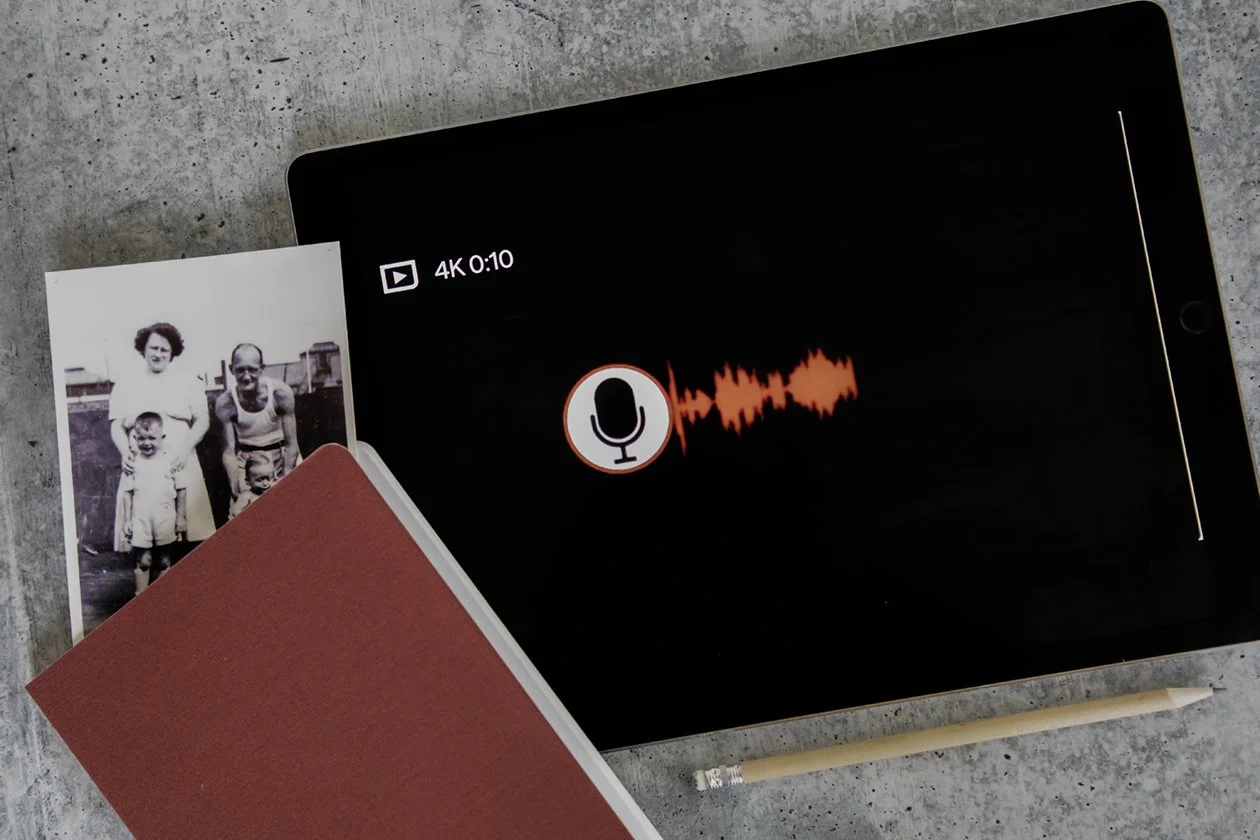
I suggest recording these conversations—perhaps to transcribe later for use in a book, or perhaps to be edited down so your children’s children can hear snippets of their ancestors’ stories in their own words. There are plenty of digital recording apps out there; just don’t forget to use two different recording methods to ensure those memories are, in fact, captured (trust me, technical errors happen…and the feeling of losing those stories, well, it’s not good).
Which interview approach is right for you?
1 - group interviews
For families with multiple generations or family members who see each other only infrequently, group interview sessions during holiday get-togethers can be a fun and fruitful process. How to fit them in amidst all the holiday preparations, though? Some ideas:
After Thanksgiving dessert, keep the coffee flowing and the cookies on hand, but make a voice recorder the new table centerpiece. Share your purpose with your family (“I love hearing our family stories, and want to make sure we capture them for the future”), then ask for volunteers to begin the storytelling.
Do you have family members spending the night after a holiday celebration? Send someone out for bagels the next morning, and turn brunch into a reminiscence session. Keep it casual but focused to get the best stories out of your guests.
At a family reunion or other big gathering, set aside a room specifically for story gathering. Either designate one person as the ringleader (if you have a de facto family historian in your family, this will be right up their alley) or pair people together who you think will have meaningful conversations. Make a list of topics on a white board (or put them on slips of paper for guests to pick, à la charades) and give out time slots for the interview sessions. There is a fair amount of upfront organization involved here, but once the ball is rolling it’s fairly easy to maintain momentum.
2 - kids interviewing grandparents
Setting up “official” interviews with grandparents is a wonderful home-schooling or scouting project for tweens and teens. Have them ask grandparents to gather a few favorite photos in advance to use to help get the conversation flowing. You just might be surprised how many stories are revealed that even you had never heard before (there’s just something about sharing with the grandkids!!).
3 - regular conversation dates
Consider visiting with a close relative regularly to gather stories—perhaps bi-weekly coffee chats or monthly pot-luck dinners, each with a theme (think childhood adventures, momentous decisions, the war years, becoming a parent, etc.). I wish my mother were still alive for me to have such dates with her!
If you have a relative in assisted living, for example, such “interview” sessions may help with their self-esteem and general attitude, as well as giving you both something to focus on rather than day-to-day drudgery.
Keep the pressure off by maintaining a conversational tone throughout your get-togethers. While you are indeed trying to elicit memorable stories, the time together should itself be enjoyable.
4 - telling your own stories
Maybe YOU are the one who wants your stories captured? If you are not a writer, see if there is someone in your circle who might sit with you to converse. It might seem like a good idea to turn on a tape recorder and just start talking, though my experience indicates that having an interested listener—someone nodding or smiling, asking follow-up questions—is a compelling motivator!
If your child or a close friend is unable to fulfill this role, you can always set up a session with a personal historian such as myself (I consider it a privilege to listen to your stories!).
Sharing stories is an endeavor with immediate value, bringing joy to the participants and connecting family members more closely.
I would implore you to go a step further, too, and do something with your stories to ensure they are around for the next generation.
Imagine if your own grandparents had left you such a treasure?
related reading:
A good conversation begins with good questions.
Best practices for recording family history interviews at home
3 easy ways to get your parents’ stories
Meet the man who said he had no stories—until he had an absorbed listener, that is!

3 unexpected places to discover great life story questions
While there are lots of lists of family history questions on the web, here are 3 places to find unexpected questions that lead to meaningful life story writing.

There are abundant resources online and in libraries for family history questions. You know the kind I mean: checklists of all the possible questions you can ask the grandparents, military veterans, immigrants, distant cousins. One of my recent favorites is the #52Stories project from Family Search, which provides 52 prompts for capturing one brief story about your life every week, hopefully motivating you to begin shaping your family’s intergenerational narrative.
But if you’re in the market for more thought-provoking conversation starters—deeper questions that you can ask relatives or yourself on your journey of documenting your life stories—then we’ve got three unexpected resources for you. The questions included in these recommendations are often provocative, occasionally off the wall, and always open-ended to encourage a full, meaningful answer using the subject’s own experience and feelings.
The Best Questions Yield the Best Answers
If you select questions thoughtfully, you’re sure to get revealing answers. Whether you choose to use those answers to inform writing your own memoir, as episodic stories in a personal history book, or merely as a means of self-development or family bonding, you’re guaranteed to learn something new about yourself in the process!
1 - Gravitas: The Little Box of Big Questions
Gravitas is a powerhouse of thought-provoking questions. This parlor game of sorts engages “players” in conversation with questions that call for reflection yet can be dealt with in a thoughtful or a more lighthearted manner. While the goal of the game is ostensibly to declare a philosopher king of the occasion, the real value in this “Little Box of Big Questions” is to get everyone offering thoughts on life’s big questions as a way of discovering who we really are and how we have lived.

Here is a sampling of the prompts (there are 429 questions in the box), designed to spark meaningful conversation and profound insights.
What takes your breath away?
What is your gold standard for a good friend?
How do you ‘carpe diem’?
Describe the gap between life as you imagined it and life as it is.
How do you practice kindness?
When they say you have to work hard at love, what do they mean?
And a few less profound options to keep the banter flowing—questions that could as easily invite surprising insights and wisdom as they could a punchline:
If we are what we eat, who are you?
When does the fun stop?
What is the best thing you have ever found?
They say that Seinfeld is a TV series about nothing. Any ideas for an episode?
Who would you like to eavesdrop on?
2 - Know Yourself: Cards for Self-Exploration
This small box of 60 prompt cards is less about conversation with others, like the Gravitas questions above, but rather about conversation with oneself. They delve straight into big-picture, deep ideas and often read like prototypical “head shrink” questions—but when approached with an open mind and a truly self-aware lens, these prompts can undoubtedly help us understand ourselves better.
Some of the questions in the Know Yourself box are clearly intended for private introspection, such as “What things would deeply alarm your loved ones if they knew them about you?” and “What are you currently lying to certain people around you about?”

Many of them, though, are wonderful prescriptions for prolonged thought or writing assignments that will yield worthwhile insights:
When do you cry or want to cry (as an adult)?
What did you learn about relationships from your parents?
List everything you are worried about, from the very large to the very small.
And some, well, simply invite interesting answers:
What are you trying to say through your clothes?
If a really kind person wanted to praise me, they’d say… If a really tough person assessed me, they’d say…
Name three works of art (music, literature, and visual art/architecture) that mean a lot to you.
I recommend consulting these questions if you are an aspiring memoirist or avid journaler who wants to be challenged to explore who you are, or just a curious soul craving a gentle nudge towards deeper self-reflection.
The cards are produced by The School of Life, who bills itself as “a global organization dedicated to developing emotional intelligence [applying] psychology, philosophy, and culture to everyday life.” Visit their site for a treasure trove of resources to enlighten and entertain. And if you decide to check out their Confessions Game—“a series of questions around career, sex, money, relationships, family, gently inviting everyone to share important bits of themselves in an intimate and playful atmosphere”—please let me know what you think, particularly if the questions might be helpful for memory-keepers and life story writers, too!
3 - If… (Questions for the Game of Life)
Writing one’s life stories requires not just looking towards the past, but also looking towards the future. It is our hopes and dreams and the life we imagine for ourselves that define us as much as the paths we have already taken—and preserving those thoughts for future generations is a worthwhile endeavor.
“Fantasies are what inspire us all; to work, marry, raise families, create, improve our world…. We imagine in order to learn, to understand, to strive, to attempt, to predict, to avoid, to correct, to describe, to solve,” write the authors of If: (Questions for the Game of Life) (Villard 1995). As you may have guessed, every question in this book begins with the word “if.”

Perhaps some of these questions lean towards the cliché (there are plenty of the if-you-could-dine-with-anyone-from-history variety), but that in no way diminishes from their purpose: to spark your imagination, and to provide glimpses into your personality and life. It is their accessibility, and their ability to make you step outside your everyday worries, that make them worthwhile.
These are a few of the questions that, in my opinion, go beyond the expected and provide impetus for life-story writing or conversation geared toward meaningful reminiscence:
If your plane were about to crash and you had time to write one quick note, to whom would you write, and what would you say?
If you could, in retrospect, change one thing about your childhood, what would it be?
If you could discover that something you thought was true was actually false, what would you wish it to be?
If you could gain total memory of one year of your life so far, which year would you pick?
If is a book that can be tucked away in your car’s glove compartment to make long road trips bearable, or it is a book that can be stashed in your bedside stand for instant journaling inspiration.
And now, some questions for YOU.
What is the one question that you find always elicits interesting stories?
If you could have asked one question of a deceased family member, what would you have asked, and to whom?
What other sources of interesting questions are in your repertoire? Books, websites, podcasts?
Please share your thoughts in the comments below—I’d love to hear from you!
Related Reading:
Who Will Tell Your Life Story? It can be daunting to think of writing (or even telling!) your life story. So don’t. Start saving your stories, one at a time.
35 Questions to Ask to Prompt Memories of a Lost Loved One
How to Use Photographs as Prompts for Writing Life Stories
Dawn Roode’s curated roundup for the week of Sept. 23, 2026, is overflowing with recent reads on memoir, life story writing, and family history preservation.