
Memories Matter
Featured blog Posts


READ THE LATEST POSTS

How to create your own life writing prompts
Good writing prompts will rid you of blank-page anxiety—and you can easily write your own! Here, 5 steps to drafting a library of personalized memoir prompts.
Taking some time to intentionally create a list of writing prompts that are personalized to your own experience will save you time (and headaches!) later.
Every writer starts with a blank page. Some are just more intimidated by that sea of paper white (or the blinking cursor on your computer screen) than others. Perhaps the best writing advice, proffered so often I am not sure who to attribute it to, is to simply start—even if that means dragging your pen across the page in squiggles until a word forms in your head.
But good writing prompts are a prescription for blank-page anxiety.
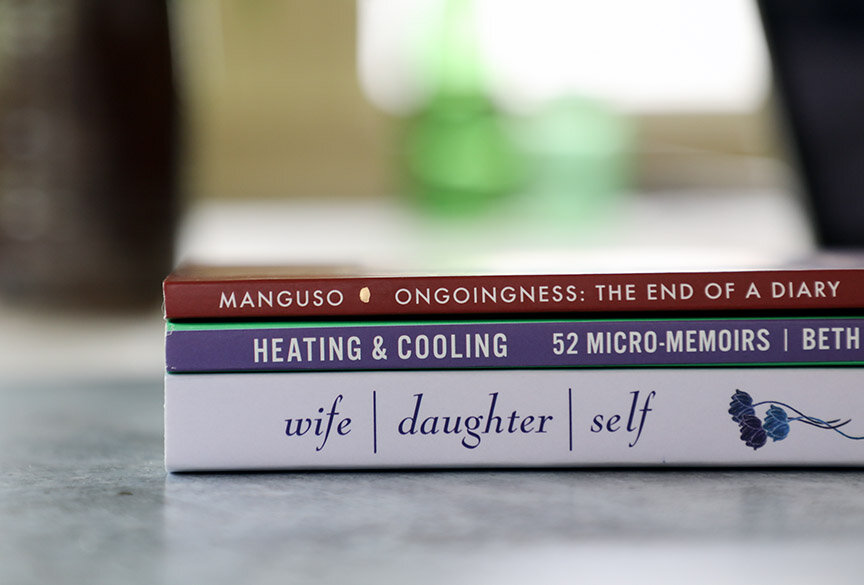
There are plenty of places to find good writing prompts, from writing groups (a great place to find supportive community around your writing) to craft books (this workbook from Beth Kephart is one of my faves), from email subscriptions (I offer a full-year of prompts called Write Your Life) to blog posts (here is an example from Jericho Writers, and here is an old reliable on my blog).
You can create your own memory prompts, too. It’s easy, as long as you set aside some time to be thoughtful and jot them down.
5 steps to drafting your own library of life writing prompts
Brainstorm
Ever since my seventh grade English class where I learned about brainstorming, it’s been the most powerful tool in my workplace arsenal. (I say “workplace,” but truly, brainstorming has been helpful in every area of my life—and I swear I learned not just to write in this teacher’s class, but to really think—so thanks, Mr. Lorusso!). Grab a piece of paper or open up a blank document on your computer, set a timer for five minutes, and write down every single thing you think may be fodder for future writing about your life. Do not edit yourself, and try to write continually—no pauses. This is not the time for filtering yourself. Be creative, get sloppy, and surprise yourself.
Wait a week.
Trust me, the emotional and cognitive distance will be helpful.
It’s time to curate.
Give your brainstorming document a read. Do you spot any themes? Any nuggets that surprise or delight you in their specificity or their mere presence? Your goal is to extract phrases and themes that will prompt writing down the road. Create a list of bullet points, and if possible, nest them under subheadings designating various themes. These don’t need to be overly fleshed out, just specific enough for them to spark YOUR memory and get you thinking.
Assess the writing prompts that you generated.
Did you fill a page or more with ideas for future writing? If so, I recommend you break them down into priorities, and create a basic plan for tackling them. (Another fun option that works for people who like things a little more loosy-goosy, like me: Skip this step and simply keep your curated list of prompts on hand—then, when you sit down to write, you can begin writing in response to whichever one stirs your memories at the moment!)
If the results of your brainstorming session were less than impressive, you may want to give it a go another time after taking a walk in nature (it really helps!). Or tap into these other ways to generate life writing prompts for yourself:
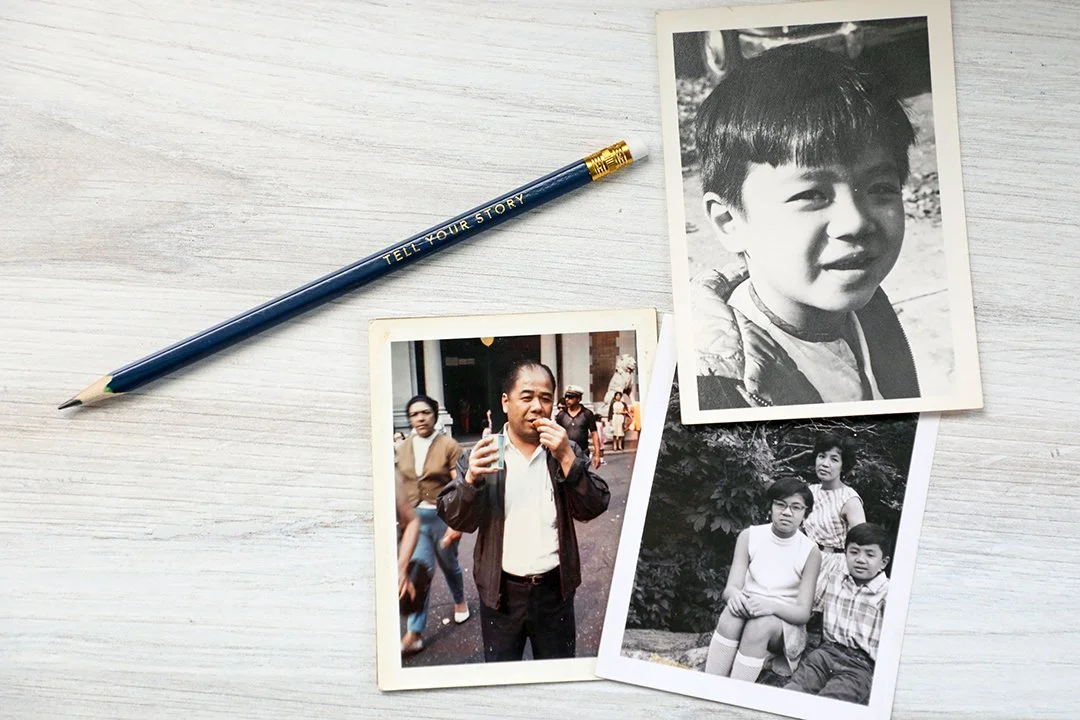
Go through your family photo archive to select pictures that jog your memories. Here’s some advice on how to best use those family photos as writing prompts.
Perhaps you need more structure than a freewheeling brainstorm session provides: Try this life timeline exercise to come up with memory prompts.
And if you prefer simple, straightforward questions to respond to in your writing, check out this free guide with essential family history questions. There are enough questions to keep you busy for a long time!






























Writing prompts for life story vignettes: 300 words in 30 minutes
By limiting oneself in word count and time allotted for writing, undertaking any life story project becomes both more urgent and more relaxed. Ready, set, write!
Our first two parts of this series, Writing Prompts for Life Story Vignettes, offered up ideas for writing from the senses and a how-to for conducting a thoughtful self-interview. Here in Part Three, we provide a simple step-by-step plan for a timed writing exercise, along with three specific idea prompts to get you started.

300 Words in 30 Minutes, Step by Step
1 - set a timer for 30 minutes
2 - Begin writing on one of these topics:
Create a literary snapshot of someone close to you: a parent, friend, teacher, someone you love…
Think of a turning point in your life and imagine you had made a different choice (not going to college, telling your secret, becoming a parent)…
Write a vignette about an old family photograph in which you are pictured. What is the story of the moment in time captured in the photo—and what is just beyond the frame? What happened just after it was taken?
Whatever writing prompt you choose, try to include striking images that give readers a strong sense of what you see, hear, and feel about your subject.
3 - wait
Let your vignette sit for at least four days to give you some distance. Reread it.
4 - do a word count and edit
Too short? If your vignette is shorter than 300 words, add to your story (by fleshing out details or drawing emotional conclusions) until it reaches this goal.
Too long? If your vignette is longer than 300 words, edit the story down, aiming for a brevity that is crisply focused and conveys some essential truth.
The Value of a Timed Writing Exercise
“The hours we spend talking about writing is time we don’t spend actually doing it,” Stephen King asserts in On Writing: A Memoir of the Craft.
By giving ourselves a time limit, we feel both the urgency to begin (before time runs out!) and a sense of relief that an end is indeed in sight (what’s a half hour, after all, in the scheme of things?).
That urgency in turn inspires us to write from the heart, in our own voice (forget about sounding polished or overthinking things)…to just write.
Find more of our life story vignette writing advice:


Download Free Writing Prompts Guide
Get all our life story vignette writing prompts in one easy-to-read printable guide!

Memory & writing prompts sent weekly to your phone
Short courses for anyone who wants to write about their life—just $15 for 8 weeks of guidance & inspiration!

3 unexpected places to discover great life story questions
While there are lots of lists of family history questions on the web, here are 3 places to find unexpected questions that lead to meaningful life story writing.

There are abundant resources online and in libraries for family history questions. You know the kind I mean: checklists of all the possible questions you can ask the grandparents, military veterans, immigrants, distant cousins. One of my recent favorites is the #52Stories project from Family Search, which provides 52 prompts for capturing one brief story about your life every week, hopefully motivating you to begin shaping your family’s intergenerational narrative.
But if you’re in the market for more thought-provoking conversation starters—deeper questions that you can ask relatives or yourself on your journey of documenting your life stories—then we’ve got three unexpected resources for you. The questions included in these recommendations are often provocative, occasionally off the wall, and always open-ended to encourage a full, meaningful answer using the subject’s own experience and feelings.
The Best Questions Yield the Best Answers
If you select questions thoughtfully, you’re sure to get revealing answers. Whether you choose to use those answers to inform writing your own memoir, as episodic stories in a personal history book, or merely as a means of self-development or family bonding, you’re guaranteed to learn something new about yourself in the process!
1 - Gravitas: The Little Box of Big Questions
Gravitas is a powerhouse of thought-provoking questions. This parlor game of sorts engages “players” in conversation with questions that call for reflection yet can be dealt with in a thoughtful or a more lighthearted manner. While the goal of the game is ostensibly to declare a philosopher king of the occasion, the real value in this “Little Box of Big Questions” is to get everyone offering thoughts on life’s big questions as a way of discovering who we really are and how we have lived.

Here is a sampling of the prompts (there are 429 questions in the box), designed to spark meaningful conversation and profound insights.
What takes your breath away?
What is your gold standard for a good friend?
How do you ‘carpe diem’?
Describe the gap between life as you imagined it and life as it is.
How do you practice kindness?
When they say you have to work hard at love, what do they mean?
And a few less profound options to keep the banter flowing—questions that could as easily invite surprising insights and wisdom as they could a punchline:
If we are what we eat, who are you?
When does the fun stop?
What is the best thing you have ever found?
They say that Seinfeld is a TV series about nothing. Any ideas for an episode?
Who would you like to eavesdrop on?
2 - Know Yourself: Cards for Self-Exploration
This small box of 60 prompt cards is less about conversation with others, like the Gravitas questions above, but rather about conversation with oneself. They delve straight into big-picture, deep ideas and often read like prototypical “head shrink” questions—but when approached with an open mind and a truly self-aware lens, these prompts can undoubtedly help us understand ourselves better.
Some of the questions in the Know Yourself box are clearly intended for private introspection, such as “What things would deeply alarm your loved ones if they knew them about you?” and “What are you currently lying to certain people around you about?”

Many of them, though, are wonderful prescriptions for prolonged thought or writing assignments that will yield worthwhile insights:
When do you cry or want to cry (as an adult)?
What did you learn about relationships from your parents?
List everything you are worried about, from the very large to the very small.
And some, well, simply invite interesting answers:
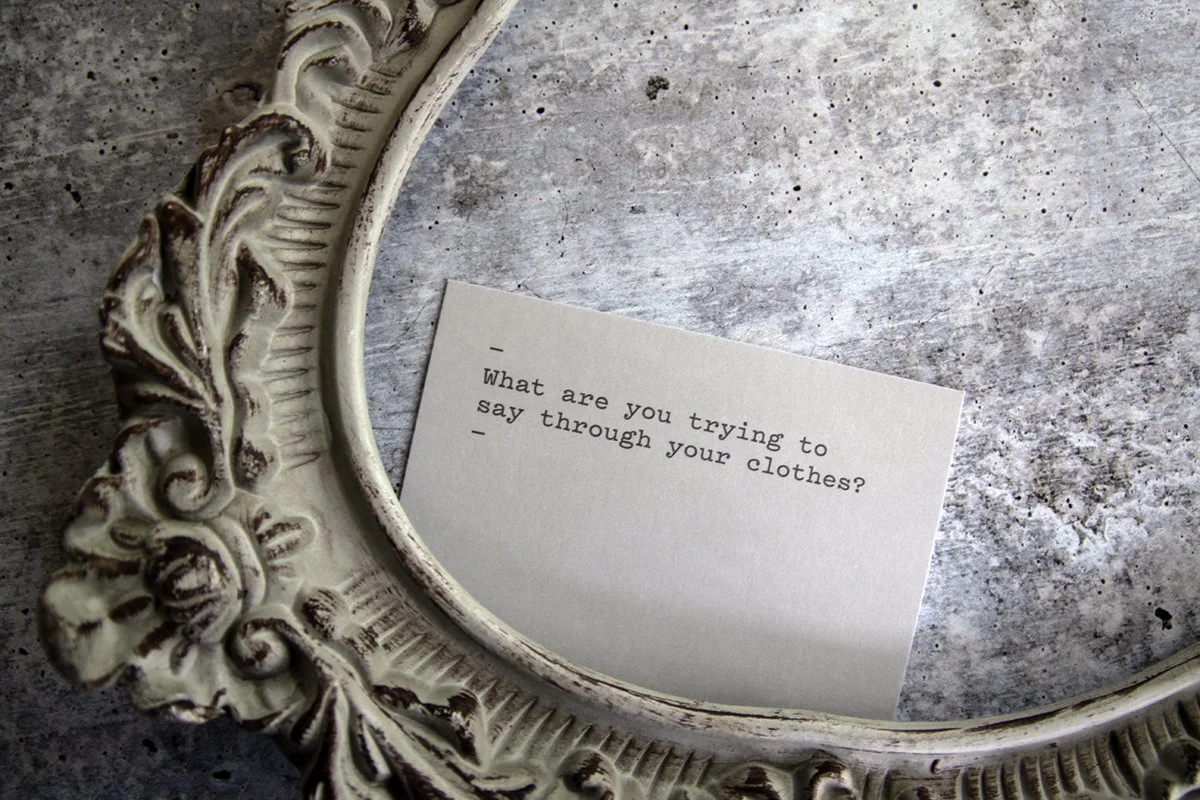
What are you trying to say through your clothes?
If a really kind person wanted to praise me, they’d say… If a really tough person assessed me, they’d say…
Name three works of art (music, literature, and visual art/architecture) that mean a lot to you.
I recommend consulting these questions if you are an aspiring memoirist or avid journaler who wants to be challenged to explore who you are, or just a curious soul craving a gentle nudge towards deeper self-reflection.
The cards are produced by The School of Life, who bills itself as “a global organization dedicated to developing emotional intelligence [applying] psychology, philosophy, and culture to everyday life.” Visit their site for a treasure trove of resources to enlighten and entertain. And if you decide to check out their Confessions Game—“a series of questions around career, sex, money, relationships, family, gently inviting everyone to share important bits of themselves in an intimate and playful atmosphere”—please let me know what you think, particularly if the questions might be helpful for memory-keepers and life story writers, too!
3 - If… (Questions for the Game of Life)
Writing one’s life stories requires not just looking towards the past, but also looking towards the future. It is our hopes and dreams and the life we imagine for ourselves that define us as much as the paths we have already taken—and preserving those thoughts for future generations is a worthwhile endeavor.
“Fantasies are what inspire us all; to work, marry, raise families, create, improve our world…. We imagine in order to learn, to understand, to strive, to attempt, to predict, to avoid, to correct, to describe, to solve,” write the authors of If: (Questions for the Game of Life) (Villard 1995). As you may have guessed, every question in this book begins with the word “if.”

Perhaps some of these questions lean towards the cliché (there are plenty of the if-you-could-dine-with-anyone-from-history variety), but that in no way diminishes from their purpose: to spark your imagination, and to provide glimpses into your personality and life. It is their accessibility, and their ability to make you step outside your everyday worries, that make them worthwhile.
These are a few of the questions that, in my opinion, go beyond the expected and provide impetus for life-story writing or conversation geared toward meaningful reminiscence:
If your plane were about to crash and you had time to write one quick note, to whom would you write, and what would you say?
If you could, in retrospect, change one thing about your childhood, what would it be?
If you could discover that something you thought was true was actually false, what would you wish it to be?
If you could gain total memory of one year of your life so far, which year would you pick?
If is a book that can be tucked away in your car’s glove compartment to make long road trips bearable, or it is a book that can be stashed in your bedside stand for instant journaling inspiration.
And now, some questions for YOU.
What is the one question that you find always elicits interesting stories?
If you could have asked one question of a deceased family member, what would you have asked, and to whom?
What other sources of interesting questions are in your repertoire? Books, websites, podcasts?
Please share your thoughts in the comments below—I’d love to hear from you!
Related Reading:
Who Will Tell Your Life Story? It can be daunting to think of writing (or even telling!) your life story. So don’t. Start saving your stories, one at a time.
35 Questions to Ask to Prompt Memories of a Lost Loved One
How to Use Photographs as Prompts for Writing Life Stories