Memories Matter
Featured blog Posts
READ THE LATEST POSTS
38 questions to prompt food memories
Use these food-themed family history questions as conversation starters or writing prompts to capture your cherished food memories for the next generation.
In a previous post we outlined the four basic steps to begin preserving your food memories. After you have gathered recipes and photographs, the real fun begins: the remembering. The story sharing. And the cooking.
If you’re ready to begin capturing the stories that make up your food heritage, hurray! I recommend you start by hosting a family get-together (in person or virtually during these socially distanced times). Set a simple menu—one that includes some of your family’s favorite comfort foods and, most definitely, dessert—and an agenda: to talk about the foods and the holiday feasts and the kitchen antics that make you laugh, smile, and drool.
Memories flow when you’re all reminiscing together (“Remember that time…?”), and the communal feeling around a family dinner table adds to the story sharing appeal.
Print out the questions below (you can download a printable guide here) and pass it around the table. Or select your 10 favorite questions and write them on index cards before the get-together; then people can pick from your deck of cards to get the conversation going.
If your family is not as into the project as you are, or if you prefer to work alone, consider the questions writing prompts instead of conversation starters—it doesn’t matter how you gather your food stories, simply that you do.
Food-themed family history questions
THE KITCHEN OF YOUR CHILDHOOD
How was cooking in your home (either growing up or when you were raising your family) similar to or different from other families in your neighborhood?
What do you remember about holidays and special events?
Describe the kitchen of your childhood: what color were the walls? was it small or big? was there a window, and what was the view? what were the smells? the sounds? were the pots and pans hung on hooks or hidden in a cabinet? was there a pantry filled with…? did you do anything other than cook there—gather with friends, do your homework, talk on the telephone?
What are some of your earliest food memories?
What are some of your favorite food memories?
What are some of your funniest food memories?
Were there any foods you hated but were forced to eat as a kid? (Did you eat them or sneak scraps to the dog?)
What did you talk about around the dinner table when you were growing up? What about now?
What did your mother (or the primary cook in your family) wear when cooking? An apron? A house coat over her work clothes? A sauce-stained sweatshirt?
Were there any comfort foods from your childhood that hold a special place in your heart—in other words, what was your family’s “chicken soup” for the soul?
Did you have a regular day of the week for take-out food (such as pizza Fridays or, a more recent example, taco Tuesdays)? If so, what was your to-go restaurant of choice?
What did you snack on when you were little?
Were you ever a picky eater? Describe when, and if/how you got over it.
Free Guide: Preserving Your Food Memories
Download this free printable guide that include all the family history questions in this post as well as bonus tips for preserving your family food heritage.
ALL GROWN UP
How did you learn to cook?
Who taught you some of your most important kitchen lessons? Tell me about them.
What were your experiences making some of your first dishes?
What cooking triumphs (or disasters) stand out in your memory?
How has cooking changed for you over the years?
What foods always cheer you up?
What meal do you most often cook for those you love?
What junk food is your guilty pleasure?
The way we cook at different stages of our life can be revealing. Do you remember the dishes you relied on when you first went out on your own? Did you cook at all during college? If not, do any celebratory meals or meals cooked by a visiting parent stand out in your memory? How did cooking change after you had children? When they got to be teenagers? When you went back to work?
If you moved away from your home, are there any foods that you would miss that are indigenous to the area or especially well-made in the region?
Do you eat for comfort, for health, for enjoyment? Talk a little bit about your relationship with food over the years.
Do you remember the first time you tasted the cuisine of a seemingly exotic culture? What was it, and did you like it? What were the circumstances?
Do you have one or more cookbooks you return to again and again? Have the chefs you admire changed over the years?
HERITAGE RECIPES
What are your oldest recipes and where did they come from?
What are some of your family’s unique food traditions?
Are there recipes that particularly represent your family’s culture, religion, or regional background? Do you know how to cook them?
Are there any recipes in your family that seem unusual or unique?
Is there a recipe you wish you had gotten from an ancestor but that was never written down? What memories does it hold for you? Have you tried (successfully or not) to recreate it?
Do you have handwritten recipes from your parents and grandparents, and if so, where do you keep them?
FAMILY & FOOD
Who are/were the best cooks in the family? Tell me about them.
What family dishes would you miss the most if you never tasted them again?
Who sat/sits at the head of your table, and is it a position of honor?
Do you say grace before eating, and if so, is there a particular prayer or approach to what is said (e.g., something you’re each grateful for, something nice you did that day, etc.)?
How were birthdays celebrated in your family? Did you have the same cake every year, or something new? Was it homemade or store bought? Did you put an extra candle on the cake for good luck?
What other food traditions do you uphold (or have you abandoned from your childhood)?
Do you enjoy entertaining large groups of people around food? What types of celebrations? What kind of host are you?
Read more about preserving your food memories
4 steps to begin preserving your food memories
Knowing your family’s recipes are preserved for the next generation is reassuring. Adding stories and photos, too, brings your food heritage to life. Start here.
This past year I have gotten a lot of feedback asking for more content to help you preserve your food memories.
I wonder if it’s a sign of the times—we’ve all been homebound for much longer stretches during this pandemic (many of us even made our own sourdough starter and baked bread from scratch!)—or if it’s just that, as I say often, the memories that take place in our childhood kitchens are powerful and persistent. All it takes, after all, is one whiff of sauce simmering on the stove, or a tiny taste of cookie dough, to transport us right back in time.
Either way, I’ve planned a series of posts to get you started with saving your own food memories. First up: Four overarching steps to put you on the right path:
1 - Consider: How do you want to preserve your food memories?
It’s wonderful to have a stash of grease-stained, handwritten recipes in a drawer in your home. But it’s even better to know that those recipes are preserved no matter what.
By digitizing your recipes (they can be scans of the handwritten cards or typewritten transcripts) you not only ensure they last for generations, but you can more easily share them with loved ones far and wide.
Our two favorite ways to preserve your recipes and food memories are:
In a book (of course!). Include both recipes and, at least for some of the foods, the stories and memories associated with them. You can go a DIY route or hire us to create a professional heritage cookbook for your family.
In a recipe box. Consider attaching photos and stories to your recipes and storing them together in a vintage recipe box.
A cookbook personalized just for your family could include a mix of recipes, stories, and images.
While some of your recipes may be handwritten on recipe cards, others may be scattered; look within the pages of cookbooks, in your siblings’ collections, and on your computer and phone apps.
2 - Gather recipes.
Even if you’re an incredibly organized person, chances are you’ve got some recipes in a drawer, some on the computer, and others in your head (perhaps those are the most important to write down!).
Make a list of everywhere you think your recipes reside, then tackle gathering them all in one place.
Two tips: Ask your loved ones which recipes you should include (you might be surprised what your kids ask for!), and then call your siblings and parents to solicit recipes from them, too. The more complete your collection, the better!
3 - Add pictures.
Do you have photos of Grandma in her kitchen, or Poppa pulling the turkey out of the oven on Thanksgiving?
Go on a treasure hunt to find as many food-related photos as you can. Then, digitize them with an app such as Google PhotoScan or hire a professional to scan them so you ensure you don’t lose them (and so you can use them in a printed book if you wish). Make sure to scour your phone scroll for recent images, too.
Also consider hiring a professional photographer to capture a cooking session in your home kitchen. I can recommend photographers across the country, so don’t hesitate to ask me for recommendations. You can include handed-down cast-iron pots, serving dishes, and other family heirlooms in the shoot to make it even more special.
Photos—especially those taken in your home kitchen—help bring stories in a family cookbook to life.
Gathering together around the dinner table (and your favorite family foods, of course!) is a great way to share memories to include in your heritage cookbook.
4 - Find the stories.
For your most-often-cooked foods, traditional fare, and family favorites, write about the memories associated with each of them.
Be specific: Mention the cast-iron pan with the always-loose handle that Bubbe cooked his eggs in. The apron Aunt Ida wore only on Passover. How cherry Jell-o brings you back to your childhood, and the aroma of anise transports you to Brooklyn at Easter. Details, details—the scents and colors and textures...the truth of the story lies in the details.
One fun way to capture these stories is to host a family get-together with the express purpose of reminiscing (over dinner, of course!). Designate someone to take notes, and set up a couple of voice recorders (your smart phone is fine) around the room to get the stories. Oh, and take some pictures while you’re at it.
In an upcoming blog post we will share a list of questions to prompt food memories, which you can use either as writing prompts or as conversation starters during your get-together. Sign up for our newsletter to be sure you don’t miss it!
Want to read food stories from others for a little tasty inspiration?
Check these out:
Billee’s “Famous” Foods
Gramma Billee kept a jar for bacon drippings on her stove; she used it liberally and kept it full. She knew everyone’s favorite foods and provided them—often. Click here to read Billee’s “Famous” Foods.
Mom’s Spaghetti & meatballs
Red sauce ran in her grandmother's blood, and every family member would one day memorize her beloved recipe. Peek into a family kitchen, and a mother's heart. Click here to read Mom’s Spaghetti & Meatballs.
POP’S PIE
Is a grandfather’s love the missing ingredient to the best key lime pie? A young mother delves into memories of the treats her beloved Pop made just for her. Click here to read Pop’s Pie.
Most thoughtful holiday host gift
Just in time for Thanksgiving: A Taste of the Past, a family history recipe card set for preserving not only family recipes, but the stories behind them.
My go-to host gift for dinner parties is a nice bottle of wine, something to be enjoyed communally around the table, hopefully over interesting conversation. I admit, though, it’s not the most original of ideas.
These days I upped my giving game, and I invite you to do the same: This A Taste of the Past recipe card set pairs nicely with that bottle of burgundy!
Introducing…
A Taste of the Past recipe card set
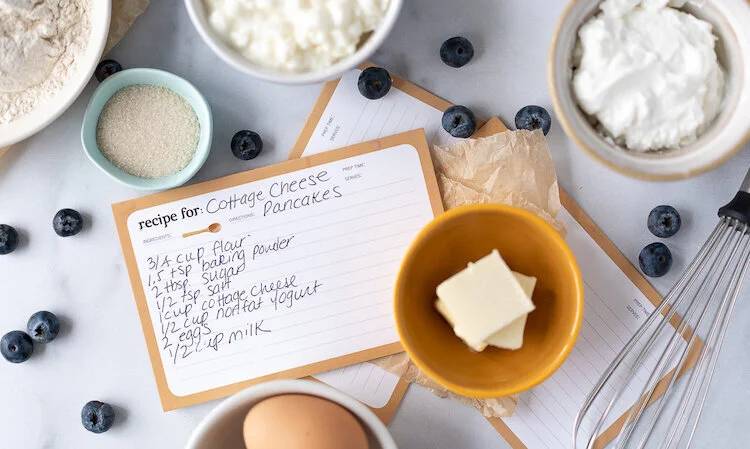
I cherish the few recipe cards I have in my mother’s and grandmother’s handwriting. The grease stains add a patina of love, and the crossed-out changes (organic butter instead of margarine?) tell a story of time passing.
But what if they could tell a fuller story? What if the waves of nostalgia that wash over you when you smell Nonna’s Sunday sauce simmering on the stove could be preserved, too?
Well, of course, those precious food memories can be preserved—and this unique recipe card set allows you to do so right alongside your recipes.
This recipe card set encourages you to tell the tales of your food memories and to record your family’s favorite recipes in the very same place, essentially creating a living heirloom that can be passed on and enjoyed for generations.
The cards, which when folded measure 4x6 inches and fit in most standard recipe boxes, include one side on which to write a dish’s ingredients and preparation instructions, and a reverse side for you to record memories associated with the dish. Is it a traditional holiday meal that your family has cooked for decades? Is it a new twist on a childhood favorite?
This family history themed recipe card set is the perfect place to record Mommy’s foolproof tahdig secret (patience!), Grandpa’s grilling guidance, and your own generation’s current favorites.
Included…
Bonus tips & ideas for capturing food memories
In addition to the recipe/memory cards, there are four bonus pages of easy tips and tricks for
getting your family members involved in recording recipes and family stories,
what types of dishes and memories to include, and
how to most effectively encapsulate your stories in written form.
there’s still time…
Thanksgiving delivery within reach!
If you’re in the Northern New Jersey area, I'd love to meet you to hand-deliver a set of these cards (and hear how you plan to use them!!)—DM me on Instagram or send me a quick note!!
For everyone else, the recipe card set is available for shipping now, and I’ve made sure to launch the product just in time for Thanksgiving gifting (they make a thoughtful stocking stuffer in December, too!). Click the image below for full product details, or add it to you cart directly.
I can’t wait to see the memories and family recipes you capture on these cards—I hope you will share!!
A taste of the past
Smells and tastes conjure memories in a most primal way, and can transport us right back to our childhood kitchens. Our recipe for preserving your food stories.
Smells and tastes conjure memories in a most primal way, and can transport us right back to our childhood kitchens. As such, they are excellent jumping-off points for writing or talking about your memories and crafting them into a story for generations to come (not to mention, the kids will be thrilled to have those cherished recipes actually written down).
Delve into your food-related memories if...
you have a living relative who can be equated with the family hearth: recording those recipes, techniques, & special foods while you can is an invaluable gift for future generations
family holidays center around the table
milestone celebrations come back to you in waves every time you smell a certain dish
you want to preserve your culture
Foods Stir the Memory
On Tuesday we will be launching a new series of posts, A Taste of the Past, in which food plays a starring role, leading us down a path of reminiscence and reflection.
In the first contribution, Christine Mugnolo recalls her grandfather's singular key lime pie: Why can't she recreate it just so?
“It’s been about 14 years, and I still cannot get it just right. I make the pie once or twice a year; it’s my special time with him. No TV, no one else in the room...just the two of us.”
In another post, Kaitlin Ahern pays tribute to her mom’s spaghetti and meatballs, and you'll raise a glass with her to toast the memory of a mother gone too soon (and I guarantee you'll be uncorking a bottle of red, picking some basil from the garden, and putting on a pot of red sauce yourself—and, if all goes well, you'll be conversing around the dinner table about your own favorite handed-down recipes).
In “Billie’s Famous Foods,” Melissa Finlay recalls how her Gramma kept a jar for bacon drippings on her stove, used it liberally, and kept it full. “She knew everyone’s favorite foods and provided them—often.”
I hope these and other upcoming stories will inspire you to want to record your own memories. When you've gathered enough, or decide you'd like our professional help in recording them for posterity, an heirloom book is the perfect place to preserve them.
Related Reading:
If the idea of bottling memories of your ancestors' foods appeals, you might also want to check out:
Grandma's Project ("Sharing the World's Most Delicious Heritage"), in which filmmakers from around the globe cook with their grandmothers—and elicit evocative stories of the past along the way
Dinner: A Love Story, a so-much-more-than-a-blog compendium of recipes, kids' lunch ideas, and more from book author Jenny Rosenstrach; she occasionally hones in on the power of food as love, too, such as in these three lovely posts: Sense Memories (her husband's recollections of the birth of their first child and chicken salad, not necessarily in that order); The Napkin Note (about her mom and lunchbox missives); and Absolute Value (about her dad, Oyster Bar, and chocolate marzipan bars)
The Dinner Party, a glorious, long-time-coming community of mostly 20- and 30-somethings who've each experienced significant loss, who get together over potluck dinners to talk about the ways in which it continues to affect their lives and how to thrive in #LifeAfterLoss—an inspiring, real-life example of the power of a shared meal to heal and create community, even (maybe especially) after the death of a loved one.
Learn about our Write Your Life course, providing memory prompts, writing guidance and a dose of inspiration to anyone who wants to preserve their stories now.