
Memories Matter
Featured blog Posts
READ THE LATEST POSTS
Preserving audio and video interviews: from recording to storytelling
Learn how to record, transcribe, and store interviews with care. Tips on consent, ethics, and turning audio or video conversations into lasting family stories.
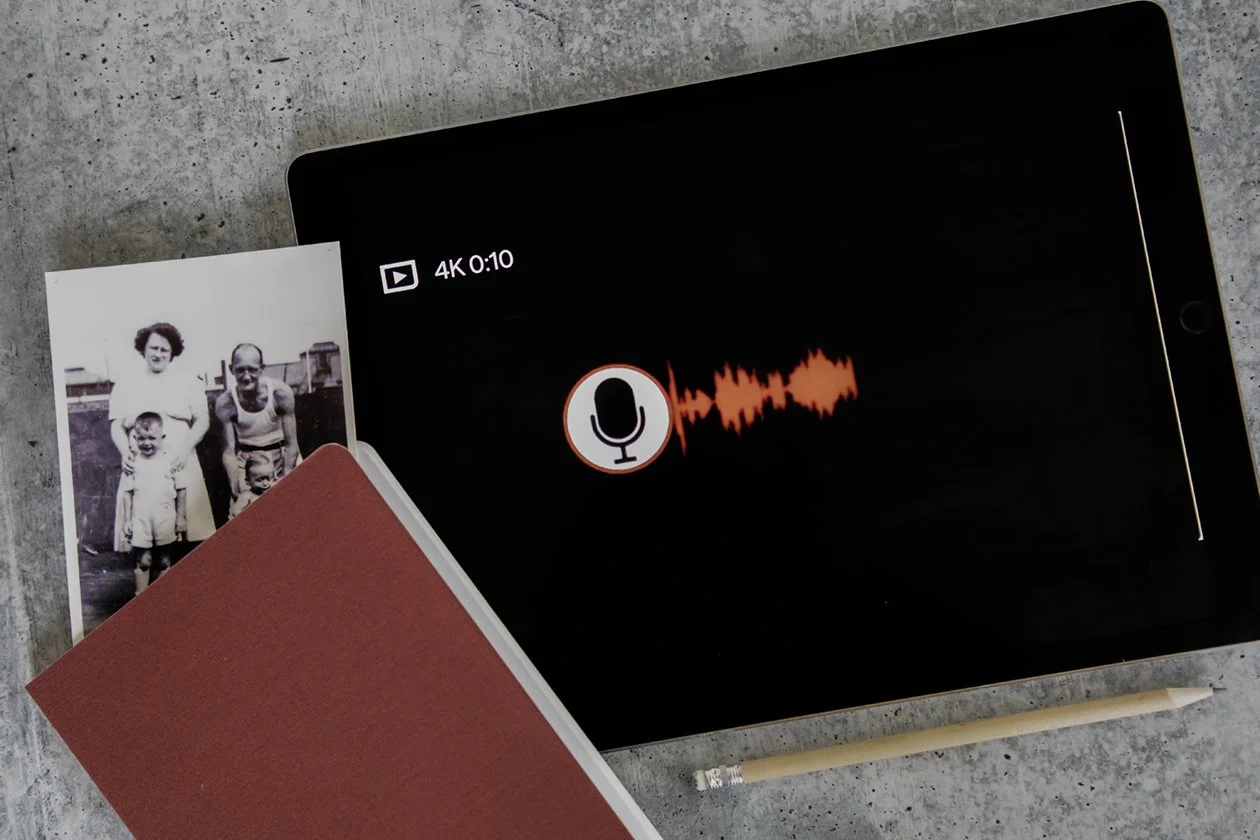
Recording a family history interview is as simple as using a voice recorder on a device such as a tablet or smart phone.
When someone trusts you with their memories—when they sit down in front of a microphone or camera and share their story—you’re holding something precious. But recording a great interview is only the first step. How you handle that recording afterward—from transcription to storage to storytelling—determines whether those memories will endure for years or disappear with a crashed hard drive.
At Modern Heirloom Books, I’ve learned that preserving interviews is as much about care as it is about craft. It’s about listening well, recording responsibly, and treating people’s stories with the respect they deserve.
Best practices for recording family history interviews
1. Recording with intention
The technical setup doesn’t have to be fancy, but it does have to be thoughtful.
Choose a quiet space. Avoid kitchens (appliances hum) and large echoey rooms. Soft furnishings, like curtains or carpets, help absorb sound.
Test before you begin. Record 20 seconds of conversation, then play it back. Adjust mic distance, reduce background noise, and double-check your battery or storage levels.
Back up immediately. Save the file to at least two locations—ideally an external drive and a cloud-based service. Name the file clearly (for example: Interview_MiriamRosen_2025-02-10).
Get permission in writing. Always explain how the recording will be used, and have participants consent—especially important for projects you plan to publish or share.
2. Working with older participants
Many of the most meaningful stories come from older generations—but that also means being sensitive to energy, comfort, and pacing.
Keep sessions short. One hour is usually enough. Fatigue affects memory recall.
Be patient with pauses. Silence often signals deep thought; don’t rush to fill it.
Bring visual prompts. A photo, newspaper clipping, or memento can help unlock memories.
Check the environment. Good lighting, a comfortable chair, and room temperature matter more than you think.
3. Ethical considerations and consent
When you record someone’s story, you become its steward. Handle that role with transparency.
Explain purpose and scope. Let them know whether the recording is for personal use, publication, or archival storage.
Clarify ownership. If possible, have a signed release stating who retains rights to the recording. (At Modern Heirloom Books, the storyteller always does.)
Honor boundaries. If someone asks for a section to be edited or omitted later, do it—no questions asked.
Protect privacy. Store sensitive recordings securely, and think carefully before sharing publicly.
4. Transcribing the conversation
Transcription is where the raw story begins to take shape. While automated tools like Otter.ai, Descript, Zoom, or ChatGPT can help, always review manually to correct errors—especially names, dates, and emotional nuance.
A few tips:
Timestamp key moments. It’s helpful when you later want to pull quotes.
Note tone and pauses. A soft laugh or a long silence can carry emotional weight.
Respect voice. Don’t over-edit for grammar; people’s natural rhythms make transcripts human.
Read aloud. If you’re planning to turn the interview into a narrative piece, read the transcript out loud. You’ll hear the music of their speech—and know which parts to keep verbatim.
5. Storing for the long term
Digital storage is fragile. Protecting your files now ensures they’ll still exist when future generations go looking.
Triple backup. Keep at least one local copy (external hard drive) and two cloud-based backups (like Google Drive and Dropbox, or an archival service such as Backblaze).
Name files consistently. Use clear labels: Lastname_Firstname_Interview_Date.
Store metadata. Keep a simple spreadsheet noting who was interviewed, when, by whom, and where. If you want to go a step further, include key phrases (many transcription software programs now use AI to help with this).
Create a preservation plan. Every few years, check your file formats and transfer them to updated storage—don’t leave them on aging technology. I recommend adding an annual reminder in your calendar for this task, as it’s otherwise likely to fall by the wayside.
6. Turning transcripts into stories
Once transcribed, interviews become rich material for narrative. But they shouldn’t be copied wholesale. Instead:
Look for patterns. Repeated phrases, values, or memories often form a natural thread.
Preserve voice. Keep their expressions and rhythms, even if you edit for flow.
Add historical context. Ground their experiences in time and place—what was happening around them.
Share drafts when possible. Let the storyteller (or their family) review before publishing; it builds trust and ensures accuracy.
Resources for further guidance
If you’d like to explore best practices in oral history and ethical recording, these organizations are invaluable:
StoryCorps
Promotes everyday storytelling and provides interview guides and consent templates.
The Oral History Association
Offers ethical standards, equipment advice, and transcription guidelines.
Library of Congress Veterans History Project
Excellent resource for interviewing veterans and preserving recordings for posterity.
Smithsonian Folklife & Oral History Guide
Comprehensive handbook on oral history methods and cultural respect.
Preserving a recorded story is both a privilege and a responsibility. Technology gives us incredible tools—but it’s the human care behind them that matters most.
When you record a voice, you’re capturing not just sound but presence: the laughter between sentences, the breath before a memory, the emotion carried in a pause. Those moments are what future generations will remember—not just what was said, but who was speaking.
Up next…
Once your interview is recorded and safely stored, the next step is bringing it to life. In Part Two, I share three creative ways to transform a raw conversation into a lasting family story.











Double the fun: Interviewing Grandma & Grandpa together
Sitting both of your grandparents down together for a family storytelling session can be fun—but it’ll yield the best results if you follow these simple tips.
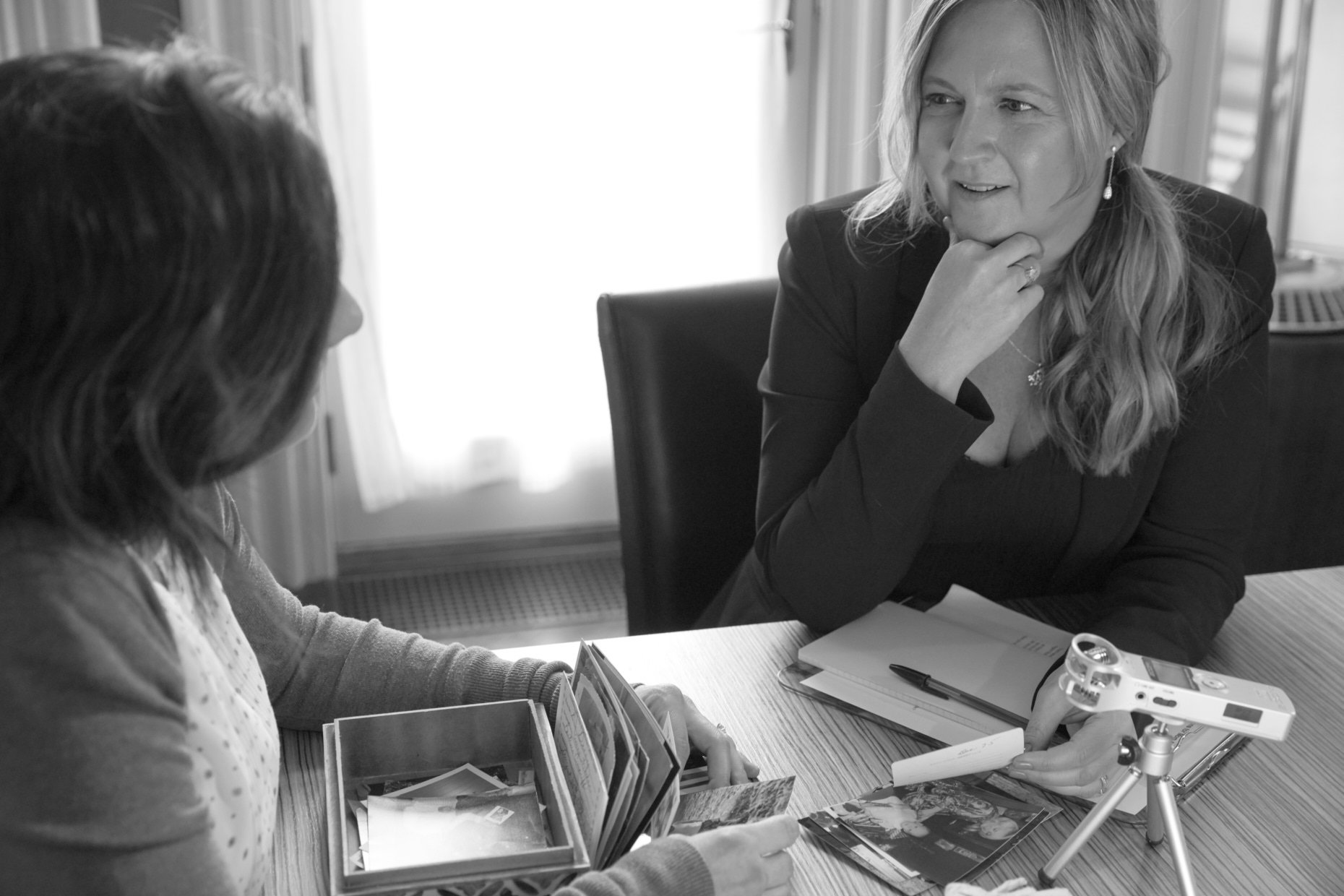
Conducting family history interviews with a couple such as your grandparents or parents can be a fun endeavor if you ask the right questions.
I am always thrilled when I hear you have a plan not just to interview one family elder, but to gather stories from multiple relatives. One of the most common goals is to interview a couple—perhaps it’s your parents, or one set or the other of your grandparents. If that’s on the agenda, you may be wondering: Can I interview them together?
Short answer: Yes, you can interview two people together.
Here, though, is a longer answer with tips for when this dual interview approach works best, and when it’s better to stick to conversing with one person at a time.
When dual interviews are okay
It’s absolutely okay—fun, even—to conduct joint interview sessions, especially with couples who have been together for a long time. If you plan to interview your grandparents on both sides of your family, for instance, invite your maternal grandmother and grandfather to sit down together for the first interview session. This will take advantage of their storytelling dynamic to get them excited about sharing.
If you are concerned that your family members may talk over one another, let them—at least for a bit. Their banter is likely the product of years together, and capturing it on film (if you are recording video) or in audio (if are using a voice recorder) is an accurate representation of how they interact. Imagine years from now listening in and thinking, “Oh, that’s so him!!” If you can’t follow the progress of their storytelling because they are interrupting or speaking at the same time, gently prod one or the other to take the lead, then ask a follow-up of their partner after.
A couple’s shared history can be explored in a joint interview: Ask questions that apply to their time together (their marriage, children, and holidays, for example), but save questions about their individual histories for their solo interviews.
Once that first interview session is transcribed, highlight sections that resonate but that you’d like to hear more about, and develop your questions for the next individual interviews from this transcript—it will help guide you on what to ask.
When joint interviews aren’t the best option
I would not recommend conducting all of your interviews in this fashion, with more than one subject at once, as it often prohibits one person from diving deep into their stories.
Maybe dad gets quieter when mom is around; it could be deference, or simply habit. He may think she is a better storyteller than he is, so he lets her take the lead. I guarantee you he has something substantive—or funny, or clarifying—to add, though, and he may just be more likely to do so in a one-on-one setting.
Other times dual interviews are not ideal:
If the couple’s relationship is strained or difficult.
If one person is hearing impaired.
If you are wanting to explore more about their personal histories rather than their shared family history.
When interviews must be conducted remotely.
If you’re only planning on conducting one interview (you’ll get better—deeper, thoughtful—answers during a one-on-one interview).
Preparing for your family history interviews
Whether you choose to begin with a joint interview session or not, you’ll want to be prepared with the right questions and optimal equipment. Here are a few resources that should help:
interview questions
Use this set of family history interview questions as a basis for forming your own list.
Pick an opening question that will set the right tone for your interview.
Interview setup




THE KID KIT: Everything you need to interview your grandparents
This 20-page FREE e-book is designed for kids 8 and over (and we mean way over!). Get ready to start connecting…
Best practices for recording family history interviews at home
Steal these best practices from professional oral historians to make your next family history interview a success, plus how to set the stage for great stories.
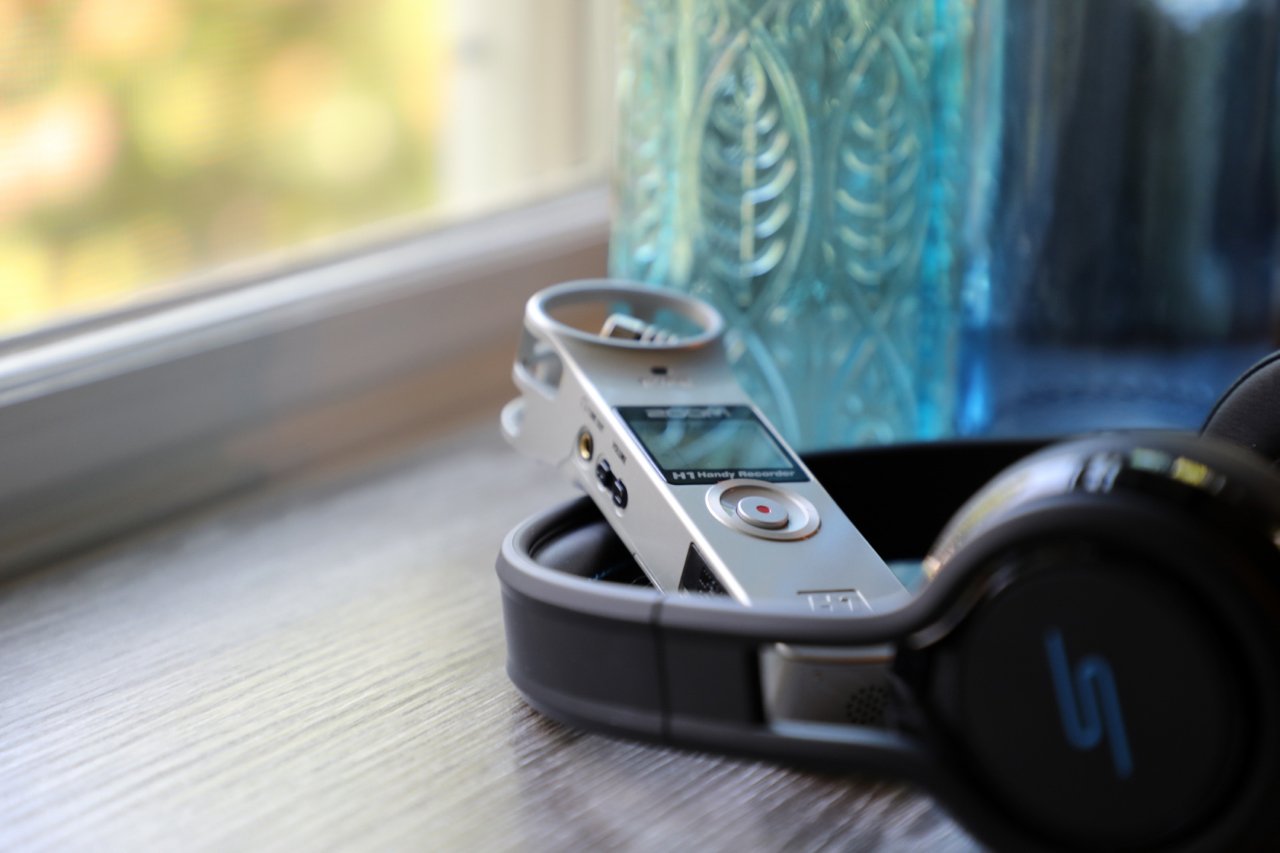
You need minimal equipment to interview a family member at home, like this Zoom recorder on a mini tripod.
I applaud you for wanting to capture your family history through in-person interviews with your loved ones! Preserving their stories—and their voices—is a gift for the next generation, but also a gift for those you plan to interview (trust me when I say it is a rare thing to be given 100-percent attention and the freedom to share…and be witnessed).
In order to ensure that you capture stories in the best and most secure way possible, please follow these simple practices that are used by professional oral historians around the world.
Do your best to create a recording-friendly environment.
No matter what kind of recording device you are using, any background noise and interference will have a deleterious effect on your final product. Choose a quiet location in the home or office where you are conducting the interview—away from heating or air-conditioning vents, a humming refrigerator, or windows overlooking noisy streets. Ask others who may be in the vicinity to either leave or be mindful of staying quiet. Additionally, ensure that your interview subject is comfortable—consider temperature, seating, and have a glass of water on hand, and try to situate yourself so you have direct eye contact with your family member.
Use multiple recording devices.
Always, always hit “record” on at least two devices. That may mean a professional mini digital recorder plus an app on your smart phone, or perhaps a DSLR capturing video plus a basic audio recorder. I do recommend sticking with digital recordings rather than old-fashioned analog cassette tapes, which are more cumbersome to convert and transfer to your computer.
Begin recording with an identifying statement.
Say out loud who is present (spell names), the date, and where you are. For instance: “This is Dawn Roode interviewing my grandmother, Virginia Miller—V-I-R-G-I-N-I-A, M-I-L-L-E-R, on this March 22, 2022, at my home in Brooklyn, New York.” Alternatively, you can introduce yourself, and then ask each individual you are interviewing to say and spell their own names. This may feel unnecessarily formal, but it’s critical.
Once the interview is complete, secure your recordings.
Immediately download the digital recordings, name them, and save in more than one place. The sooner you do these things, the better. I can’t tell you how many times I have thought I would remember what such-and-such recording on my phone is, only to press ‘play’ and have no recollection of the interview details.
Beyond these standard procedural points, here are three tips for setting the stage for a truly substantive and fruitful interview:

Consider your list of questions a framework, not a bible.
Preparation can be incredibly valuable—knowing, for instance, that your grandfather is a WWII veteran and asking informed questions about his service is both respectful and smart. So do come into the interview with a list of interview questions you’d like to ask. That said, be willing to stray from the set list should the need arise. Maybe, in the above example, your grandfather is unwilling to speak about his time at war—you may want to gently ask him why, or see if there is any aspect of his military life that he is willing to talk about; if not, be prepared to go in another direction. Alternatively, maybe one of your questions elicits such rich storytelling that you stick to follow-ups and veer in an entirely unexpected direction, allowing your interview subject to steer the conversation. If your storyteller gets animated—sitting at the edge of her seat or raising her voice and laughing as she recounts her memories—that’s a good sign that the stories she is sharing are good ones, and there are likely more in this vein!
Embrace silences.
Human nature is to keep a conversation going—so when there is a silence, we tend to jump in either with our reaction or with another question. But do your best to refrain from this; allow a pause to grow. In that interim your subject is thinking, and some of their best stories are likely to come from this. And don’t worry when the pause does not yield something great—simply ask a follow-up if you think there’s more to the story, or move on to the next question. The more comfortable you become with sitting in the silence, the more comfortable your storyteller will feel to keep going.
Bring some memory prompts.
Old family photos, scrapbooks, or journals are excellent vehicles for storing up memories and getting your interview subject to open up. While I find such totems to be helpful with everyone, they come in especially handy when your interview subject is reluctant or less than enthusiastic about participating.
A few more resources you may find helpful to prepare for your family history interview

Download this free Kid Kit e-book; while it is specifically geared to youngsters interviewing their grandparents, the historical timeline is a nice cheat sheet for any age.
How to be a good storyteller if you are the subject of a family history interview
Get 56 essential family history questions to ask your elders.
Special circumstances: Oral history interview questions for particular subject groups
If you are interviewing people who are trauma survivors or part of a distinct population, these resources may help:
MILITARY VETERANS
Oral history instructions and sample interview questions for vets from the Veterans Project of the National Archives
TRAUMA SURVIVORS
Navigating life review interviews with survivors of trauma
HOLOCAUST SURVIVORS
Oral history interview guidelines from United States Holocaust Memorial Museum
HOSPICE PATIENTS
My 3 favorite opening questions to get a personal history interview going
Planning to conduct a personal history interview with a family member? Here are three effective first questions that guarantee their stories will flow freely.
Your subject is excited and comfortable, and you're tasked with interviewing them to capture their memories for posterity. So, what is the first question you ask them?
There are myriad ways to kick off a personal history interview, of course, but here are three of my favorite first questions, along with a little cheat sheet of which question is right in which circumstance.
opening question no. 1
“Please tell me the story of your life in 15 minutes.”
Asking someone to summarize the overall arc of their life—as if they are talking to someone they have never met—invites introspection and a focus on turning points. Bruce Feiler opened the hundreds of interviews he conducted for his book, Life Is in the Transitions, with this very question. It's open-ended nature allows for answers to take many shapes, and the time limit forces subjects to hone in on key chapters and moments that have given their life meaning.
I think this is a great opening question when you are planning to conduct multiple interviews over an extended time period, as it helps to set the scene—as well as expectations of what topics may be forthcoming. Subsequent questions will invite memories of more specific episodes and emotions from the subject's life, and as an interviewer you can help guide the conversation so that bigger themes can be discerned.
Who this question is best for:
A family elder who is being encouraged to share their stories by their kids or grandkids.
What it may yield:
Thoughtful recollections of the most impactful times in one's life.
opening question no. 2
“What is your favorite memory of all time?”
There are many people who would respond to this question with a blank stare (I am probably one of them). I don't relish choosing my favorite, well…anything; and as my family's longtime memory-keeper, I have too many stories at my fingertips to choose just one.
But every family has that reticent storyteller—you know, the ones who say, “Aw, my life isn't interesting enough to talk about,” or, “What stories? My life has been just like everyone else's!” And for those individuals, I am willing to bet this question gets them going. Why? First, its nostalgic focus on a happy time is irresistible. And second, it's not asking for a time that was "interesting" or "meaningful," just fun or joyful—and chances are, some memory will spring to the surface pretty quickly.
This question is a great option for that consummate storyteller in your clan, too—the one who's recounted tidbits from his life around the dinner table for years, the one who the grandkids gravitate to for a cheeky yarn. Why? Because chances are they'll have a fully wrought story on the tip of their tongue. You may have heard it before, but this time—well, this time you'll be hitting "record" to capture it for eternity.
The best part of this opening question? Your interview subject may not be able to stop at just one story (and isn't that your end goal, after all?!).
Who this question is best for:
A reluctant interview subject OR your family's born storyteller (yup, these seem like opposite ends of the spectrum, but the lighthearted nature of this question will work wonders in both instances!).
What it may yield:
Full-blown stories with rich sense details—and the allure of continued story sharing.
opening question no. 3
“Where would you like to begin?”
I find this question especially helpful when interviewing someone who has been thinking about their life story project for a long time. Maybe they wanted to write their memoir but didn't consider themselves a writer; or perhaps they were simply overwhelmed by all that a life story project entails and never started out of fear. Whatever their reasons, a subject who is not only willing but eager to record their legacy likely has plenty of stories brewing—they've probably imagined this conversation many times.
So inviting your subject to identify a starting point for storytelling allows them to dive in with gusto, to get out into the world all that's been simmering inside of them as they've been anticipating this project. As their interviewer it is your responsibility to listen carefully and gauge why they may have wanted to start “there,” then ask probing and insightful follow-up questions to guide them in rounding out their life story and ascribing underlying meaning to their experiences.
This opening question has the potential to yield a lot of shallow memories—meaning, a semblance of a list of memories from throughout the person's life. Use the transcript from this interview session as a planning tool for subsequent sessions—you'll have an outline of memories to probe, and will be able to ask questions to get to the deeper stories that hold real meaning.
Who this question is best for:
A person who has wanted to tell their life stories for a long time but is just now beginning.
What it may yield:
Lots of fodder for future interviews!
Your thoughts?
I'd love to hear from you:
What questions do you ask first in your family history interviews? (I hear, “What is your earliest memory?” a lot, but am curious to know why folks think this is ideal.)
Are there any interviewers whose opening questions strike you as especially effective? (I love, for example, how memoirist and podcast host Dani Shapiro typically kicks off her Family Secrets interviews: “Can you tell me about the landscape of your childhood?” As many of her guests are writers, their answers are often beautiful, both forthright and poetic.)
Special circumstances: Oral history interview questions for particular subject groups
If you are interviewing people who are trauma or Holocaust survivors, these resources may help:
trauma survivors
holocaust survivors
military veterans
Oral history instructions and sample interview questions for vets from the Veterans Project of the National Archives
hospice patients













38 questions to prompt food memories
Use these food-themed family history questions as conversation starters or writing prompts to capture your cherished food memories for the next generation.

In a previous post we outlined the four basic steps to begin preserving your food memories. After you have gathered recipes and photographs, the real fun begins: the remembering. The story sharing. And the cooking.
If you’re ready to begin capturing the stories that make up your food heritage, hurray! I recommend you start by hosting a family get-together (in person or virtually during these socially distanced times). Set a simple menu—one that includes some of your family’s favorite comfort foods and, most definitely, dessert—and an agenda: to talk about the foods and the holiday feasts and the kitchen antics that make you laugh, smile, and drool.
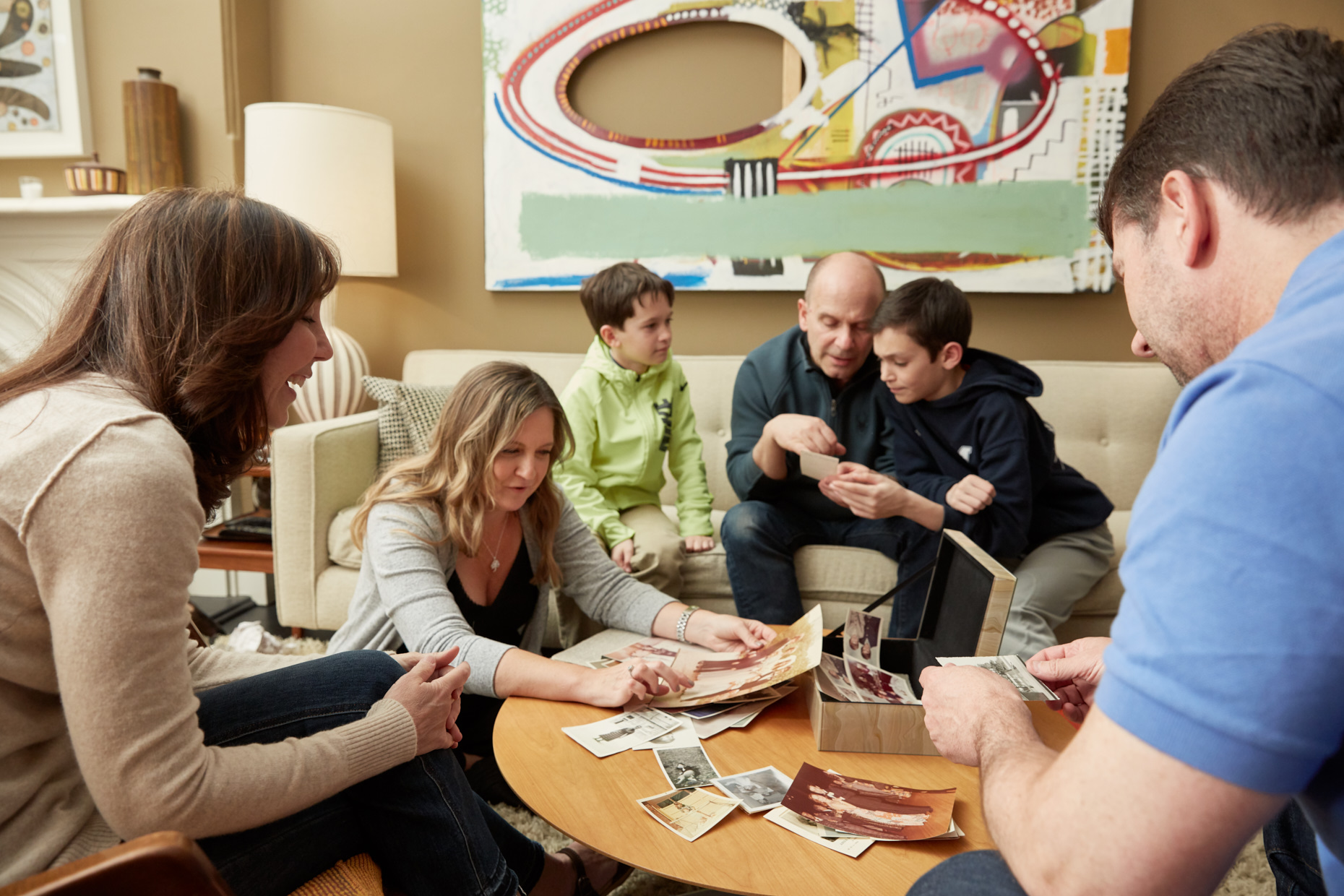
Memories flow when you’re all reminiscing together (“Remember that time…?”), and the communal feeling around a family dinner table adds to the story sharing appeal.
Print out the questions below (you can download a printable guide here) and pass it around the table. Or select your 10 favorite questions and write them on index cards before the get-together; then people can pick from your deck of cards to get the conversation going.
If your family is not as into the project as you are, or if you prefer to work alone, consider the questions writing prompts instead of conversation starters—it doesn’t matter how you gather your food stories, simply that you do.
Food-themed family history questions
THE KITCHEN OF YOUR CHILDHOOD
How was cooking in your home (either growing up or when you were raising your family) similar to or different from other families in your neighborhood?
What do you remember about holidays and special events?
Describe the kitchen of your childhood: what color were the walls? was it small or big? was there a window, and what was the view? what were the smells? the sounds? were the pots and pans hung on hooks or hidden in a cabinet? was there a pantry filled with…? did you do anything other than cook there—gather with friends, do your homework, talk on the telephone?
What are some of your earliest food memories?
What are some of your favorite food memories?
What are some of your funniest food memories?
Were there any foods you hated but were forced to eat as a kid? (Did you eat them or sneak scraps to the dog?)
What did you talk about around the dinner table when you were growing up? What about now?
What did your mother (or the primary cook in your family) wear when cooking? An apron? A house coat over her work clothes? A sauce-stained sweatshirt?
Were there any comfort foods from your childhood that hold a special place in your heart—in other words, what was your family’s “chicken soup” for the soul?
Did you have a regular day of the week for take-out food (such as pizza Fridays or, a more recent example, taco Tuesdays)? If so, what was your to-go restaurant of choice?
What did you snack on when you were little?
Were you ever a picky eater? Describe when, and if/how you got over it.

Free Guide: Preserving Your Food Memories
Download this free printable guide that include all the family history questions in this post as well as bonus tips for preserving your family food heritage.
ALL GROWN UP
How did you learn to cook?
Who taught you some of your most important kitchen lessons? Tell me about them.
What were your experiences making some of your first dishes?
What cooking triumphs (or disasters) stand out in your memory?
How has cooking changed for you over the years?
What foods always cheer you up?
What meal do you most often cook for those you love?
What junk food is your guilty pleasure?
The way we cook at different stages of our life can be revealing. Do you remember the dishes you relied on when you first went out on your own? Did you cook at all during college? If not, do any celebratory meals or meals cooked by a visiting parent stand out in your memory? How did cooking change after you had children? When they got to be teenagers? When you went back to work?
If you moved away from your home, are there any foods that you would miss that are indigenous to the area or especially well-made in the region?
Do you eat for comfort, for health, for enjoyment? Talk a little bit about your relationship with food over the years.
Do you remember the first time you tasted the cuisine of a seemingly exotic culture? What was it, and did you like it? What were the circumstances?
Do you have one or more cookbooks you return to again and again? Have the chefs you admire changed over the years?
HERITAGE RECIPES
What are your oldest recipes and where did they come from?
What are some of your family’s unique food traditions?
Are there recipes that particularly represent your family’s culture, religion, or regional background? Do you know how to cook them?
Are there any recipes in your family that seem unusual or unique?
Is there a recipe you wish you had gotten from an ancestor but that was never written down? What memories does it hold for you? Have you tried (successfully or not) to recreate it?
Do you have handwritten recipes from your parents and grandparents, and if so, where do you keep them?
FAMILY & FOOD
Who are/were the best cooks in the family? Tell me about them.
What family dishes would you miss the most if you never tasted them again?
Who sat/sits at the head of your table, and is it a position of honor?
Do you say grace before eating, and if so, is there a particular prayer or approach to what is said (e.g., something you’re each grateful for, something nice you did that day, etc.)?
How were birthdays celebrated in your family? Did you have the same cake every year, or something new? Was it homemade or store bought? Did you put an extra candle on the cake for good luck?
What other food traditions do you uphold (or have you abandoned from your childhood)?
Do you enjoy entertaining large groups of people around food? What types of celebrations? What kind of host are you?

Read more about preserving your food memories
Young and old, together at last
Even as families come together, many are still social distancing from family elders. Connect grandkids & grandparents with these cross-generational questions.
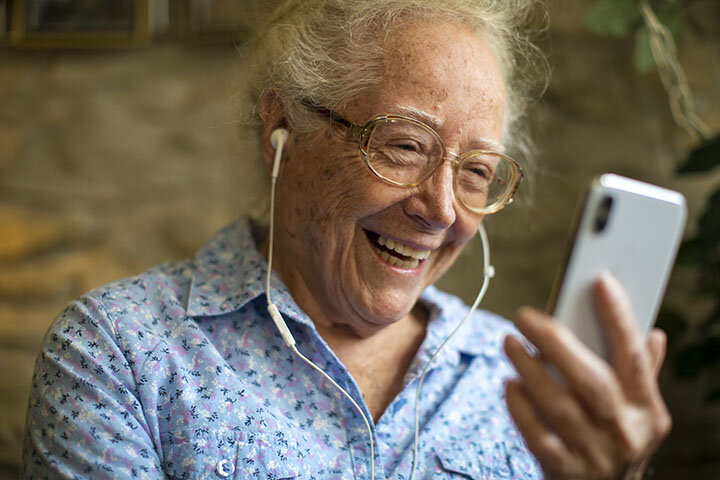
Whether separated by Covid or simply distant living arrangements, grandparents and their precious grandkids can still connect meaningfully using screens.
I’ve seen a lot of heart-swelling posts on Facebook this week showing grandkids hugging their Bubbes and Grans for the first time in months.
This whole social distancing thing has been hard on all of us, not least the generations bookending our own lives. So those hugs feel even more special and those laughs sound even more joyful when our kids and our parents are reunited after weeks on end of communicating exclusively over Zoom.
But the risk of Covid-19 persists, and many of us are continuing to take precautions (and even social distance) with older family members.
That doesn’t have to mean awkward FaceTime silences or quick escapes by the littlest in your family (even my 10-year-old has a tough time focusing on virtual conversations for more than a few minutes!).
Get them talking—really talking!
Early on in the pandemic, I worked with my son to create The Kid Kit: Everything You Need to Interview the Grandparents. We experimented with how to distribute it and whether it should become a new (paid) product before realizing: We want everyone to have this!
So we spread the word via bloggers and social media, and the response was overwhelming. I feel humbled and grateful that so many of you have downloaded this free resource, and even more psyched when you share success stories with me.
Have you gotten your Kid Kit yet? 5 reasons you should:
There are 45 family history questions that include light-hearted fare as well as thought-provoking conversation starters—something for every mood.
It includes three fun bonus activities that can easily be done “together apart.”
Bonus interview recording tips were added last-minute to make the guide even more useful during this historical time we are living through.
A fun graphic, historical timeline teaches the kids at the same time it provides more memory prompts for the grandparents.
There are even ideas for what to do post-interview, so you can be sure this valuable family history is preserved (and that the relationship between your kids and your parents continues to be nourished).

These questions can be used in person, too, you know.
While I am spreading the news now in the hopes that these questions will be a great way for kids to bond with their grandparents during the pandemic, OF COURSE everything in the kit can be completed in person, too.
Won't you please:
tell a friend about how easy it is to sign up
share your stories with me of how the interviews go (seriously, I live for this stuff!).
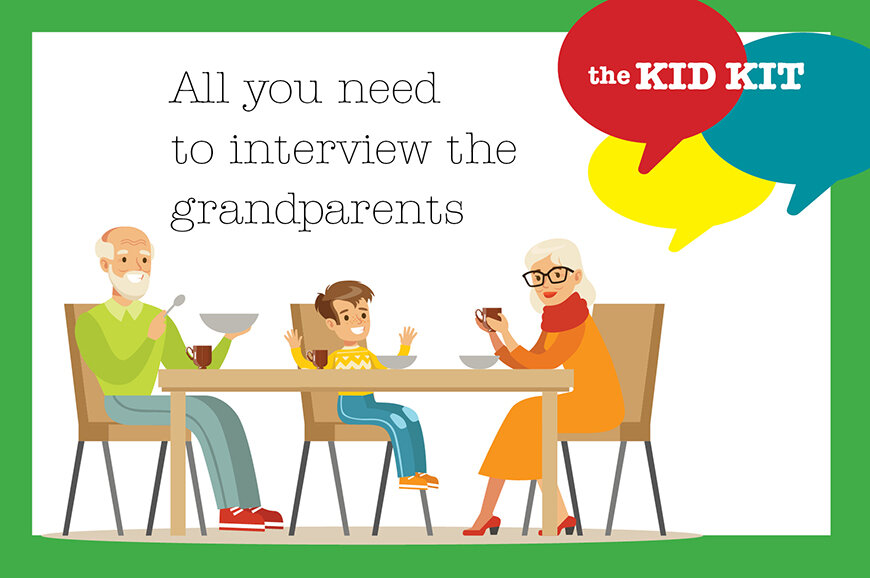
FREE RESOURCE: Questions, Activities & More
Get your kids talking—really talking—to your parents. They’ll get stories even YOU’VE never heard!
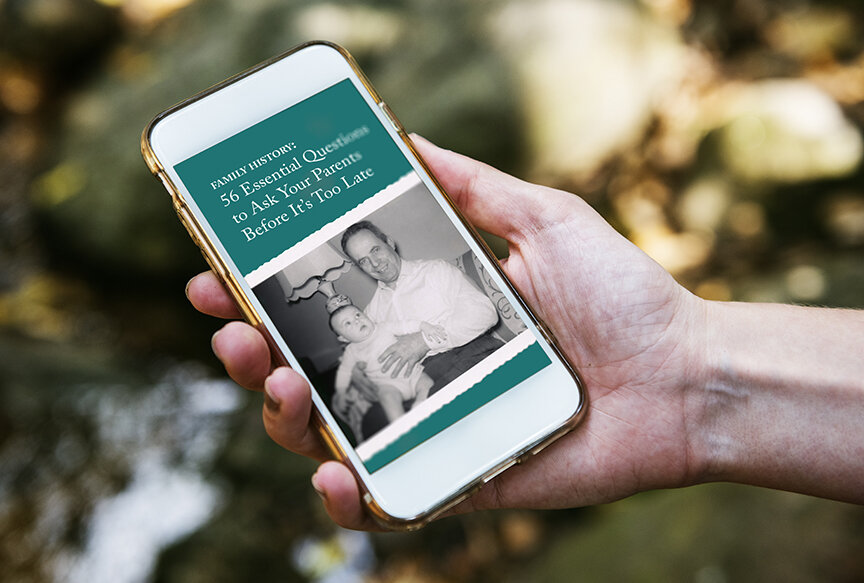
56 essential questions to ask your parents to capture their personal history
Don’t wait until it’s too late—have meaningful conversations with your parents about their past with questions designed to spark memories and make story sharing easy.
If you’re reading this, congratulations—you’re on your way to a most enjoyable and important journey! Who are you interviewing? A parent? Grandparent? Beloved aunt or uncle? Whomever it is, clearly their stories matter to you, and I am thrilled to be able to help you capture them through an oral history interview.
Print out this guide or use it as inspiration to develop your own list of topics and questions for your loved ones. I’ve got three key tips at the bottom of this post to help ensure that you capture these important family stories successfully, and I am always here as a resource to help guide you on your journey. Whether I can one day help you turn your stories into an heirloom book or help you get the ball rolling on a DIY project, my message to you is this:
Start now. Don’t wait. I can recount too many tales of people telling me “I wish I had asked my father…” that it saddens me deeply. It is my mission to convey a sense of urgency to everyone. Perhaps you have a little extra time on your hands right now… Please, ask your parents and grandparents the questions that matter now, before it’s too late.
Family history interview questions
Childhood & Family Life
Describe the home you grew up in.
What were you like as a child?
Do you have memories of what your parents said you were like as a baby?
What was a typical day like in your family when you were little?
How does your family tend to show their love for one another—through physical affection including hugs and kisses, gift giving, reaffirming through saying “I love you” or some other phrase, etc.?
What would you say makes your family unique from other families?
What did you do when you were bored as a child?
If you had to create a family motto, what would it be?
How did you feel about school, and what type of student were you?
Did you have a best friend, and if so, how did that relationship play out over the course of your life?
When you were little, what did you answer to the question: “What do you want to be when you grow up?”
What were you like as a teenager?
Food Memories
What meals would be in your family’s cookbook—the foods that make you feel nostalgic for your childhood or for home?
What are your oldest recipes and where did they come from?
What smells transport you to this day right back to your childhood?
Who are/were the best cooks in the family? Tell me about them.
What family dishes would you miss the most if you never tasted them again?
If cooking and food were an integral part of your subject’s life, explore 20 more food-themed questions here.
Life Transitions & Milestones
Tell me about your experience…
…deciding where to go to college
…pursuing your career
…getting married
…getting drafted into the war
…serving in the military
…becoming a mother/father/grandparent
…falling in love for the first time
Tell me about your first job.
Did anyone ever throw you a surprise party?
How did you feel on your wedding day? What memories of that day stand out for you?
What can you tell me about the first time you experienced loss? Who died? Did you go to the funeral? How old were you? How did it effect your outlook on life?
Decisions & Lessons
What is the best decision you ever made?
What is a memorable time you have failed, and how did you recover from that experience?
What lessons(s) do you most recall learning from your parents? Grandparents?
Did you have a favorite teacher in grade school, or another role model who had a major impact on your life?
Can you share about any hardships (in history, such as the Depression or a war, or in their personal life, such as a divorce or unemployment) that you experienced in your life, and how you survived/thrived/coped?
Tell me about a significant time you said “no.”
Do you have any regrets? (Encourage elaboration here; sometimes a prolonged silence is the best invitation to speak.)
Traditions
What holiday did you most look forward to while you were growing up?
What were some of the traditions your family observed related to that holiday?
Do you have any family traditions that have been passed down for generations in your family?
Does religion hold a strong place in your family? (If “yes,” there are a variety of follow-up questions to ask to pursue this thread!)
What is the most memorable gift you have ever received? Given?
Are there any specific family heirlooms you inherited? Why do they hold meaning for you?
How are/were birthdays celebrated throughout your life?
In what ways have you/your family kept your culture alive (through language. foods, cultural traditions, for example)?
Fun & Games
What songs have held special meaning to you over the years?
Who was the trickster in your family?
Do you have any funny stories from your past?
What’s your favorite family story to recount around the dinner table?
Did you play sports growing up, and if so, what were those experiences like?
What was the main form of entertainment in your family when you were a kid (board games, listening to the radio, playing music/singing, reading books, putting on shows, etc.)?
Describe what family vacations were like, and if there were any destinations that you traveled to often?
Tell me about a time you were incredibly embarrassed.
Big-Picture Questions
What values would you like to pass down to the younger generations of your family?
How did you learn resilience?
What would you tell your 20-year-old self?
What would you like your legacy to be?
Are there any questions you wish you had asked your own parents?
3 keys to capturing the best stories
Ask open-ended questions.
Sometimes simply planting the seed of a memory yields the most thoughtful and meaningful stories. “Yes” or “no” questions do not promote conversation, so avoid them in favor of questions that help set the scene (“remember when…”) or probe your subject’s personal history in unique ways (“imagine if ________ hadn’t happened…” or “what about _______ do you wish you remembered better?”).
Consider this a conversation more than an interview.
Listen generously, ask follow-up questions, and let your interview subject go off on tangents that yield interesting stories and prompt unexpected memories. Your goal should be to get the most meaningful stories from your loved one, and if that means waiting another day to discuss what you thought today’s topic was, then so be it!
Ensure successful preservation.
Use more than one way of recording your interview. If you are using a voice recorder, use two. Ensure your subject feels comfortable, that the environment is quiet, and that the recording device is close enough to capture their voice. Find more specific tips (including equipment recommendations and even more family history–themed questions) in this guide from the Smithsonian Center for Folklife and Cultural Heritage.
More free resources
Visit my Resources Toolkit to for more free downloads, including lists of questions to spark Thanksgiving and Christmas story sharing; a guide on how to use family photos as prompts for writing life stories; plus more tips for writing about your life in short vignettes.
Get inspired to preserve your family stories





Life Story Links: January 29, 2019
Holocaust Remembrance Day prompts compelling first-person accounts; new memoir from Dani Shapiro; and two films that take life story narrative to new levels.
“If you’ve remembered something very well—a fight, a kiss, a plane ride, a certain stranger— there’s a reason. Keep writing until you figure out the significance of your most vivid memories.”
—Kelly Corrigan
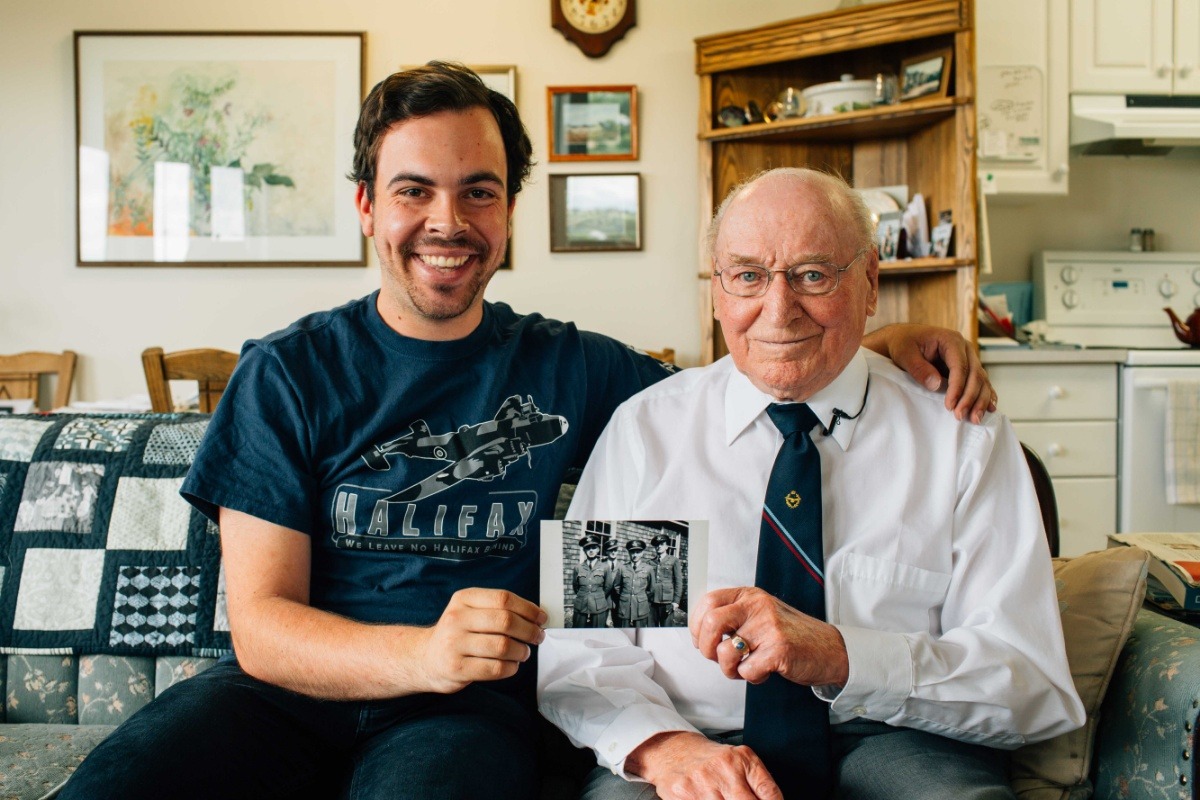
“Very few of these veterans have ever been filmed before,” says documentarian Eric Brunt. “Many have not even shared their experiences with their families.” Learn more about his oral history project, Last Ones Standing, below.
In Their Own Words
FIGHTING FOR HER FATHER
Short autobiographical writing at its best: beautiful, poignant, familiar…and utterly specific. Read award-winning author and memoir teacher Beth Kephart’s recent piece for Catapult, “Here If You Need Me.”
DANI SHAPIRO, AGAIN
“It turns out it is possible to live an entire life—even an examined life, to the degree that I had relentlessly examined mine—and still not know the truth of oneself,” Dani Shapiro writes in her fifth and latest memoir, Inheritance: A Memoir of Genealogy, Paternity, and Love. Listen to her talk to Diane Rehm about how a DNA test uncovered a life-altering secret, and read about her identity-exploring journey here.
DRIVING THROUGH HIS DUTCH HERITAGE
Bruce Summers, Washington, DC–area personal historian at Summoose Tales, digs into his family roots by traveling in the footsteps of his third-great-grandfather.
LAST ONES STANDING
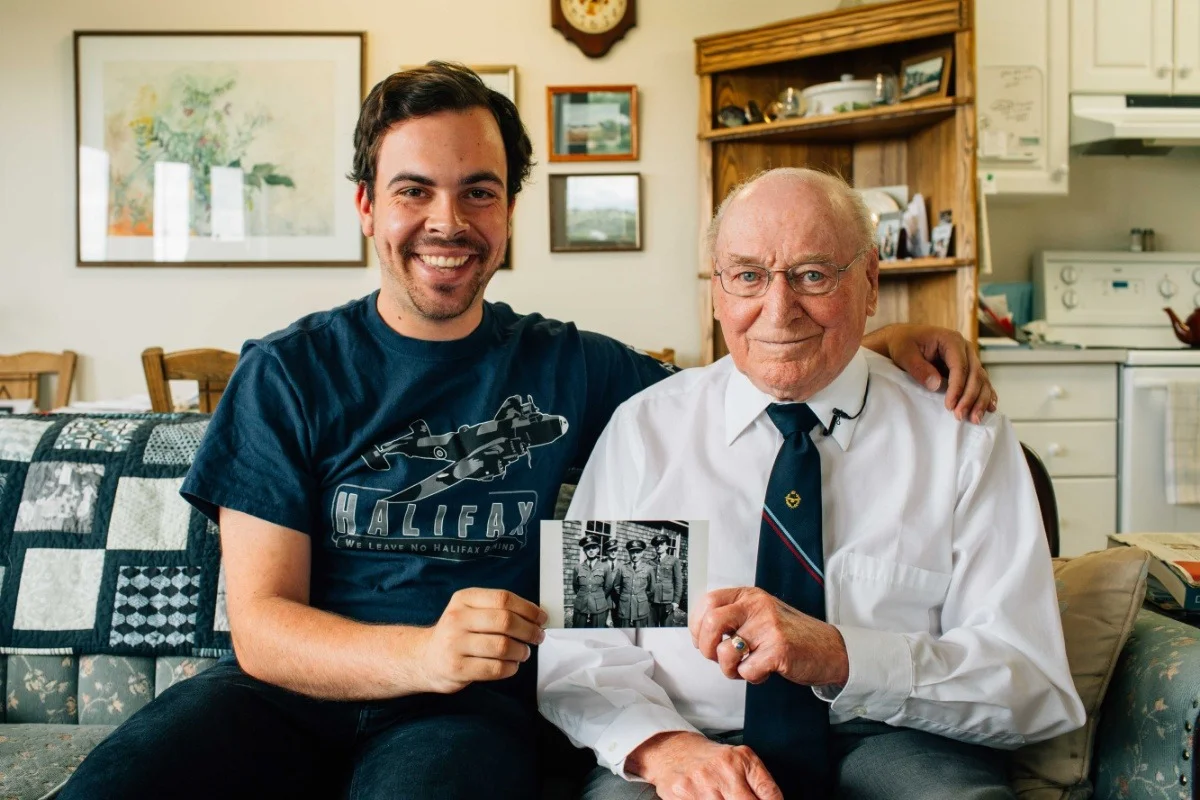
Canadian Eric Brunt has been traveling across Canada in a small van since May 2018. His goal: To interview as many surviving WWII veterans as possible for a documentary, Last Ones Standing. Follow his Instagram account for regular updates from the road, and consider contributing on his GoFundMe page to help underwrite this worthy endeavor.
Your Stories, Your Way
STORYTELLING SPARKS
From sharing food memories to creating a travel journal, from chronicling a life well lived to bringing a longtime family vacation home to life, here are six specific ideas for life story books.
STORY SHARING APPS
If you and your family members are more inclined to take action with tech tools as opposed to pen and paper to preserve your memories, here are my top picks for digital story sharing services.
FROM FAMILY LETTERS TO MULTIGENERATIONAL EPIC
New York–based Remarkable Life Memoirs shares an “exit interview” with writer Michael Barrie, with whom they worked on the recently completed book, How We Got Here: The Barrie Family in America, which spans centuries and continents to tell the complex story of his forebears.
History, Both Personal & Global
BEYOND MLK’S LEGACY
Des Moines–based writer Larry Lehmer rounds up five stories related to black heritage, personal history, and memoir that he found to be most compelling last week.
COMMISSIONING FAMILY HISTORY RESEARCH
“I don’t feel my parents did a very good job of explaining my family history to me,” WebMD founder Jeff Arnold tells a New York Times reporter in a piece looking at generationally wealthy families documenting their past. “I have four children, so explaining to them their roots was an important box I wanted to check.”
ARCHIVISTS AS ACTIVISTS
One clandestine group in the Warsaw Ghetto vowed to defeat Nazi lies and propaganda not with guns or fists but with pen and paper. And they did. Their story is told in the documentary Who Will Write Our History. Read a review of this “vital and sobering” film, and see why some are critical of the re-stagings that bring (unnecessary?) added drama to the testimony.
...and a Few More Links
Self-proclaimed “Old Coots” offer life advice at farmers market
How photography became the ‘dominant form of recording the world’
John McPhee’s new book, The Patch, has been called “a covert memoir.”
Consider studying Reminiscence & Life Review in this online course from University of Wisconsin Superior.
Dip into stories of survivors in honor of Holocaust Remembrance Day.
Learn about James Michael’s new book, Tell Your Story and Save the World.
Discover the meaning and history behind your last name.
Short Takes
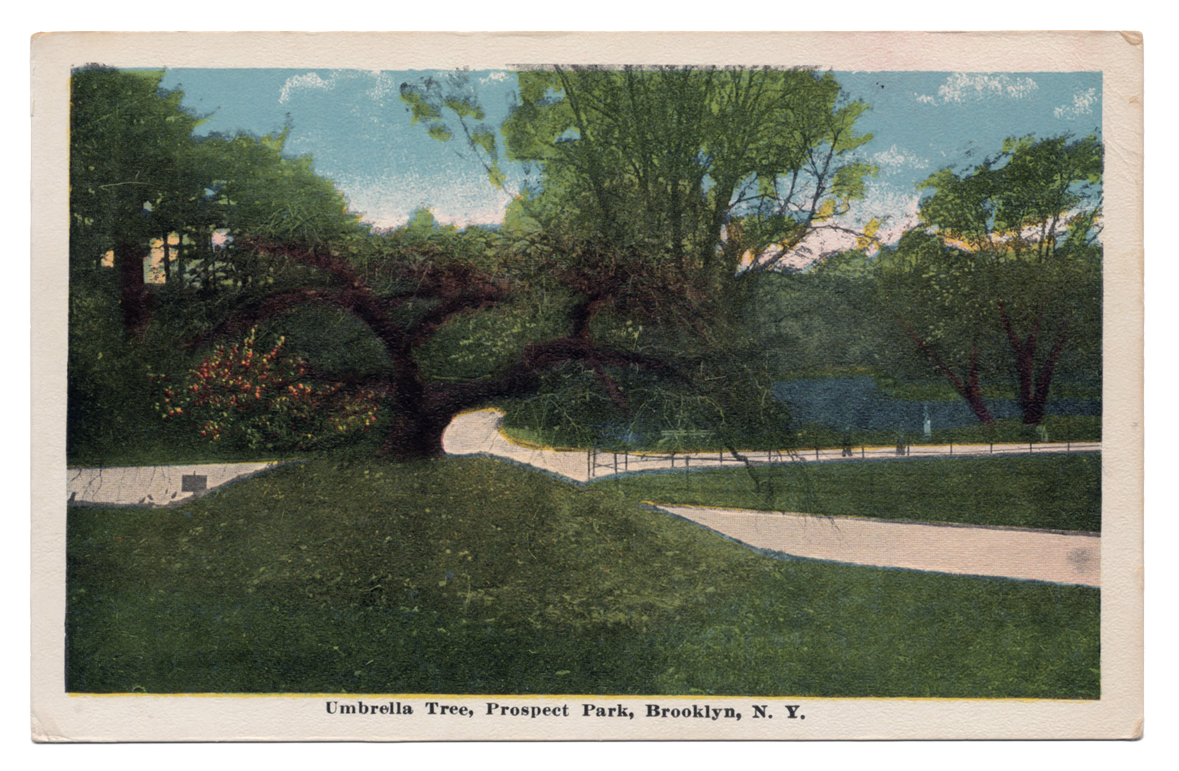
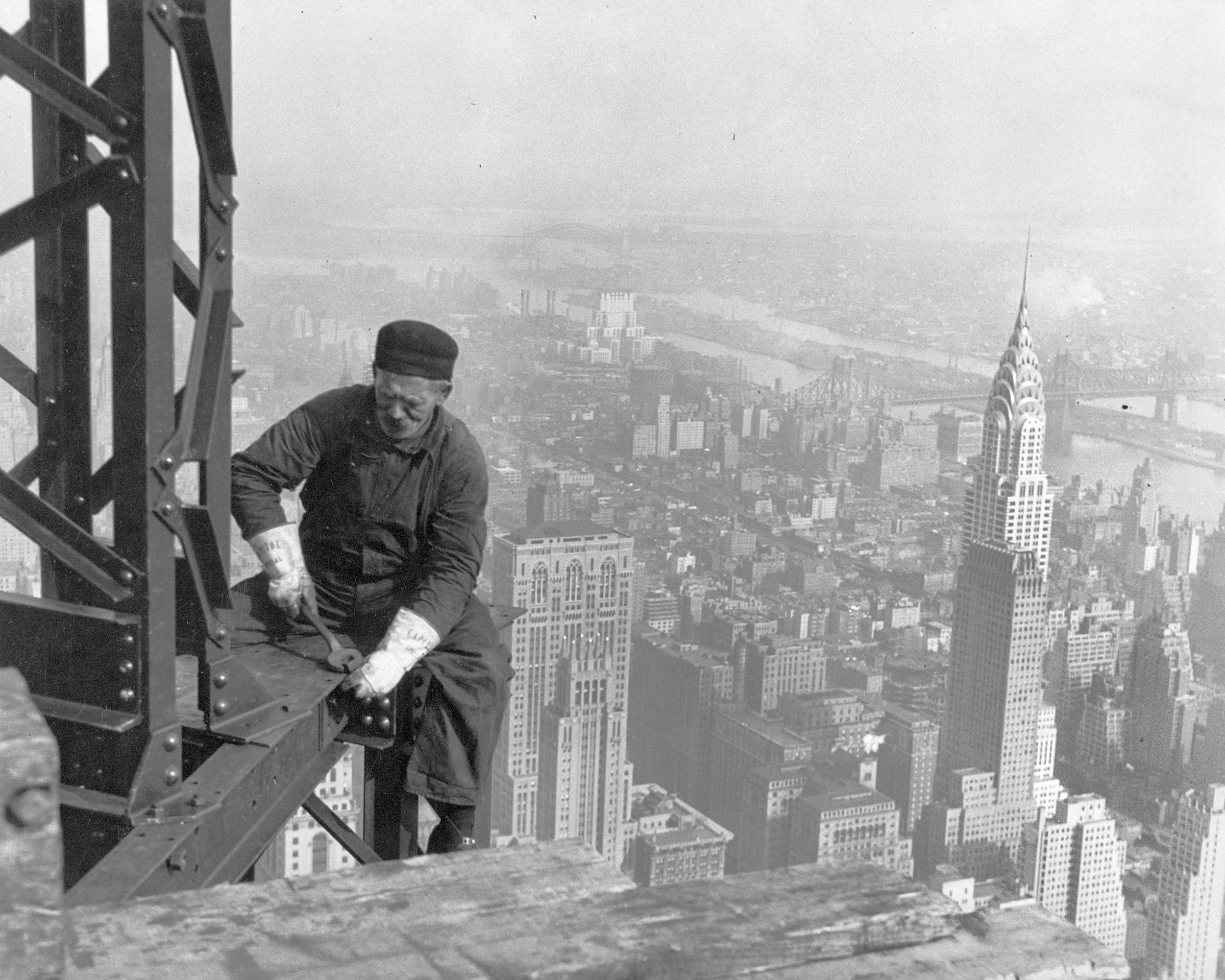
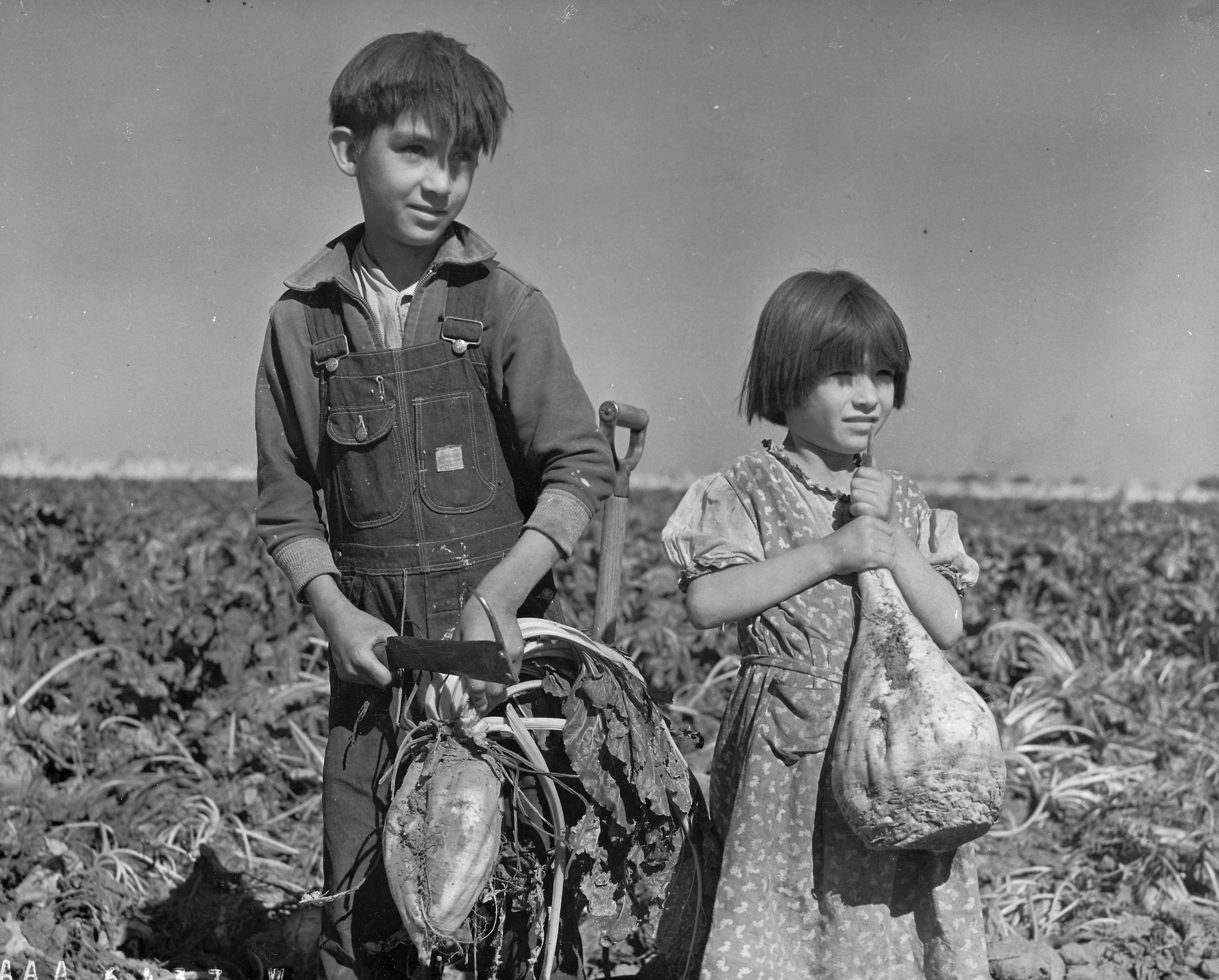
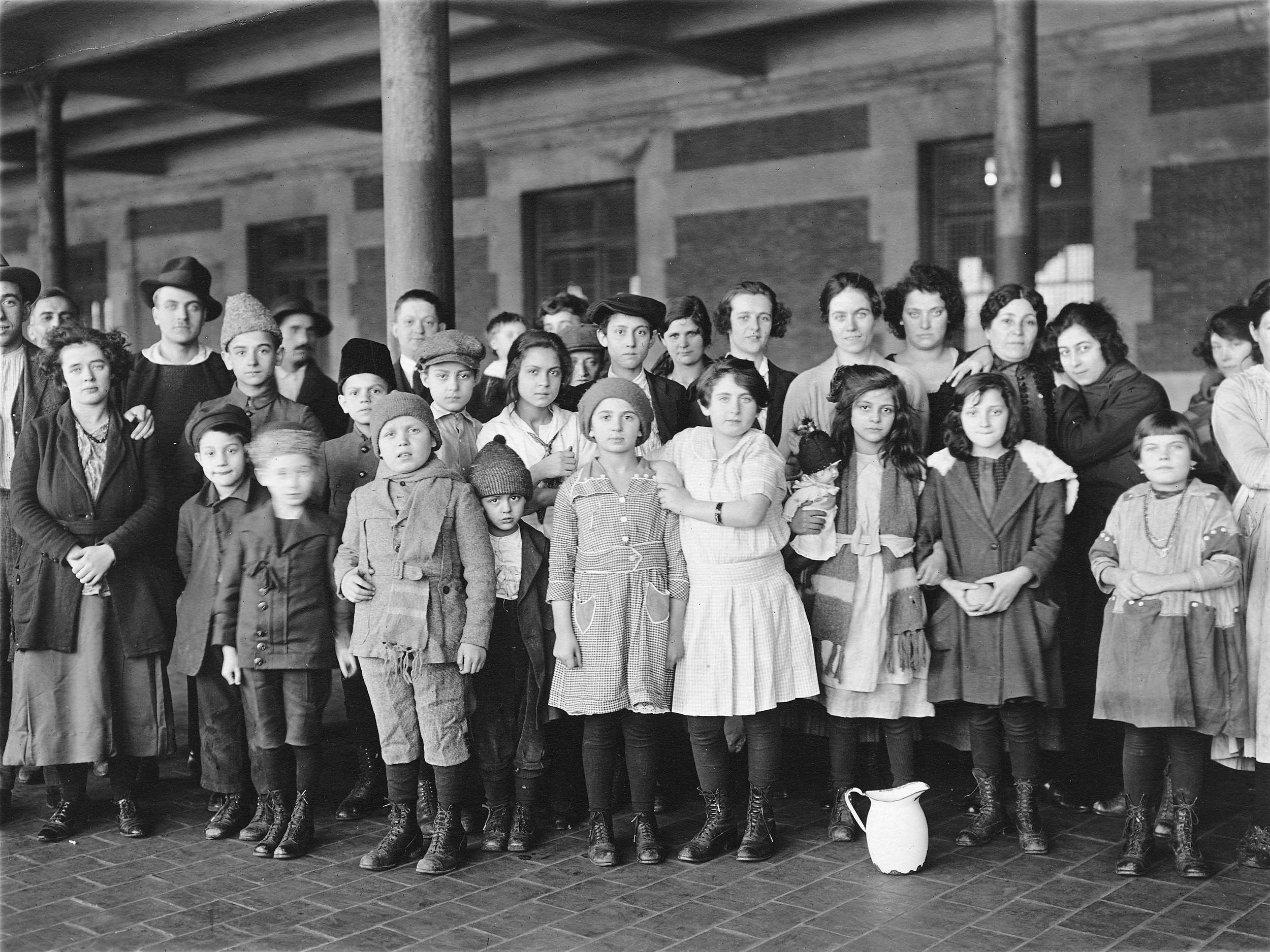
Dawn Roode’s curated roundup for the week of Sept. 23, 2026, is overflowing with recent reads on memoir, life story writing, and family history preservation.