
Memories Matter
Featured blog Posts


READ THE LATEST POSTS

Storytelling hack: Talk, don’t write.
Do you want to write your memoir but don't consider yourself a writer? Don't worry, there's another—easier—way to preserve them. Speak your life stories aloud.
Telling your stories out loud and recording them is a great option if you want to preserve your personal history but don’t feel comfortable writing.
Have you thought about writing your life story—but then refrained because you don’t think you’re a good enough writer?
I’ve got three important things to say to you:
You are good enough.
Sure, you may want to take a virtual writing course or hire a memoir coach to help you improve your writing, or read one of these valuable books with life writing guidance. But know this: You don’t have to. You don’t need to strive to write a bestseller; rather, focus on reflecting back on your experiences, finding the lessons, the love, the joy, and the hardships, and sharing them with those you love. Whatever you write will be more than good enough—for you (you do know that writing your memoir is beneficial for YOU, right?), and for any family members you would like to leave your stories to. So write on—please!
Don’t change your voice.
Your memoir should sound like you: the way you talk, the way you weave a tale. It should reflect your values and your experiences. “There’s power in allowing yourself to be known and heard, in owning your unique story, in using your authentic voice,” Michelle Obama has written. “And there’s grace in being willing to know and hear others.” So don’t focus on sounding writerly or clever, and don’t edit out those colloquial phrases you say often. Focus instead on being authentic and truthful, and allowing yourself to be vulnerable as you tell your stories.
Drop your pen and pick up a recorder.
The blank page before you is just a vehicle. If you are paralyzed by the thought of writing your life stories, drop your pen (or step away from your keyboard) and instead begin recording your stories out loud. All you need is the voice recorder app on your smart phone or a digital recorder, a quiet space, and some time. I recommend either brainstorming a list of memories or creating a life timeline beforehand, so you can reference these and feel inspired to tell your tales. Then hit “record” and start talking. Maybe do this once a week, or every morning (setting some kind of regular schedule will help you finish one day!). Down the road you can transcribe these oral histories and maybe edit them into something more cohesive and inspiring. But for now all you need to do is (a) get started and (b) keep talking!
“Story is the umbilical cord that connects us to the past, present, and future. Family,” Terry Tempest Williams says. “Story is a relationship between the teller and the listener, a responsibility…. Story is an affirmation of our ties to one another.”
Your story, moreover, is a gift.
I’m sure you’ve heard the expression “done is better than perfect,” and oh how applicable that is here! Whether you write your stories or speak into a recorder, the end result will be a gift to your family. One day in the future, one of your descendants will read your words and be grateful you took the time to preserve them. How powerful is that?















The simple reason your life story project never gets finished
Got a life story writing project that you've wanted to do for a long time that's just not getting done? How setting a deadline may be the key to completion.
Setting a deadline for your life story writing project will help you get it done rather than languishing on your to do list.
You’ve thought about getting your stories down on paper for years. You’ve made a list of pivotal moments throughout your life that you’d like to write about. Maybe you’ve gone through your photo collection and set aside some favorite pictures to use as part of your storytelling. Perhaps you’ve even written the first few chapters.
And yet, that journal you bought especially for this life story project sits neglected on your nightstand. Why?
“I seem to have lost my passion for it.”
“I don’t always know what to write about on any given day, so I end up staring at a blank page before abandoning it for Netflix.”
“I thought I’d have the time, but I really don’t.”
“It seems like too big an undertaking—I can’t imagine ever finishing.”
You know what these are, don’t you? They’re not real reasons—not legitimate ones that should stop you from completing your family history or legacy project, anyway. They’re symptoms of the real problem.
So, what’s the real problem? You don’t have a deadline (or a plan).
Don’t believe me that setting a deadline will spur you into action and get you on the road to completion? Research backs me up (as does two decades of personal experience as a managing editor at monthly magazines!).
How to set a realistic deadline for your life story project
Having a deadline forces you to think about the steps it will take to complete your goal. So, to meet that goal:
Make a broad-strokes plan.
Define your finished project—is it a book with photos, a journal covering a specific time period, or an oral history that delves into pivotal moments in your life? Be specific, so you know exactly what you are working towards.
Set mini-goals.
If you know you want to write only about your years in the military, for example, create a list of steps to get you there (make a timeline; denote key themes and stories you want to cover; gather photos and other mementos to use as memory prompts; write one story per week).
Create a schedule that works for you.
Maybe it’s writing one story per week, like in the example above. Or maybe it’s more aggressive: Write for one hour every morning. Don’t be so liberal that your project promises to take all year. As Tim Ferriss describes in his bestselling book The 4-Hour Workweek, “If I give you a week to complete the same task, it's six days of making a mountain out of a molehill. If I give you two months, God forbid, it becomes a mental monster. The end product of the shorter deadline is almost inevitably of equal or higher quality due to greater focus.”
Understand your lifestyle and your ideal work times (are you energetic after your morning cup of coffee, or wonderfully reflective and calm enough to write on Sundays after church, for instance?) and designate the best times for YOU to devote to this project. By being thoughtful about when you’ll be most productive—and eager—to tackle your life stories, you are setting yourself up for success.
Use the info gathered above to write down a schedule.
This may seem like a lot of work just to come up with a deadline for your life story book, but you’re not going for any deadline, but a reasonable, achievable one. So, if you jotted down that you want to write about 12 pivotal moments from your life, and you’ve decided to write on Sunday mornings, block out 12 weeks’ worth of Sundays to write. What date does that bring you to? WRITE THIS DOWN on a calendar or create a bulleted list of target dates and tasks to complete. Writing it down helps it become real for you—and gives you a way to hold yourself accountable.
How to finish your life story book by your deadline
Without having a task master checking in on you periodically, it can still be challenging to finish the life story project you started, even with a deadline. Keep these things in mind to help you stay on track:
Consider asking a friend or family member to help hold you accountable.
Tell someone you love and trust about your life story project—and ask them to follow up with occasional check-ins. Declaring your goal out loud holds great power on its own; adding someone else into the mix, well, adds a little external pressure, too!
Let go of perfectionism.
“Make meeting the big deadline—not achieving perfection—the ultimate goal. Voilà. You’re making no guarantees of quality, but perhaps your work can be improved later,” Phyllis Korkki writes in this piece in the New York Times celebrating the power of deadlines.
And remember: You don’t have to do everything you want as part of this one project! Maybe your FIRST project—complete with plan and deadline—is to get your stories down. Then, when you’ve got the satisfaction of completing that project (congratulations!!), you set another goal—with corresponding plan and deadline—to edit those into a book.
Don’t let one slip-up derail your whole project.
Did you skip an entire week of writing? Did you ignore your project while caring for a sick child or vacationing in Mexico? Life happens. And you deserve a break. Consider scheduling vacation breaks into your plan. But when they happen out of the blue, don’t get too down on yourself. Adjust your deadlines accordingly and get back to it!
Make sure to WRITE DOWN (or adjust in your digital calendar) the new dates you’re due to complete your project so you continue to have an accurate date to work towards (there’s nothing worse than keeping the original dates in your schedule and constantly feeling like you’ve let yourself down—forget that!!).
Seek help for those aspects of the project you hate or feel overly challenged by.
If you don’t like writing, record your memories orally; you can always pay someone to transcribe the audio recording later.
If you can’t recall as much as you expected, enlist a family member to sit down to reminisce with you; take notes during your conversation for later reference.
And if you get your stories down but have no idea how to progress to a printed heirloom book, consider reaching out to me or another personal historian to get you to the next step—it’s what we do!
By the way: It takes incredible commitment and vision to even begin writing down your life stories—so kudos to you for taking steps to not only start, but to finish your personal legacy project!!


Most anticipated memoir & craft books of 2022
Personal historian Dawn Roode of Modern Heirloom Books lists her most anticipated books of 2022 for fans of memoir and the craft of writing. Mark your faves!
Normally when I write about books it’s because I have read them and am recommending them for some specific reason (such as these books to help you with your life writing). Today, however, I am offering up a list of books that are forthcoming this year and that are on my radar. I thought you might like to check them out, too, and pre-order any that pique your interest.
Life writing, craft, and memory-keeping books
Who knows if the list for this first theme of books—about writing memoir and preserving legacies—will grow as the year goes on. For now, these are the three nonfiction titles I am anticipating in 2022. If you’re in the market for more books on how to write your stories, writing and memory prompts, and more craft-themed books, check out my reviews of current titles here.
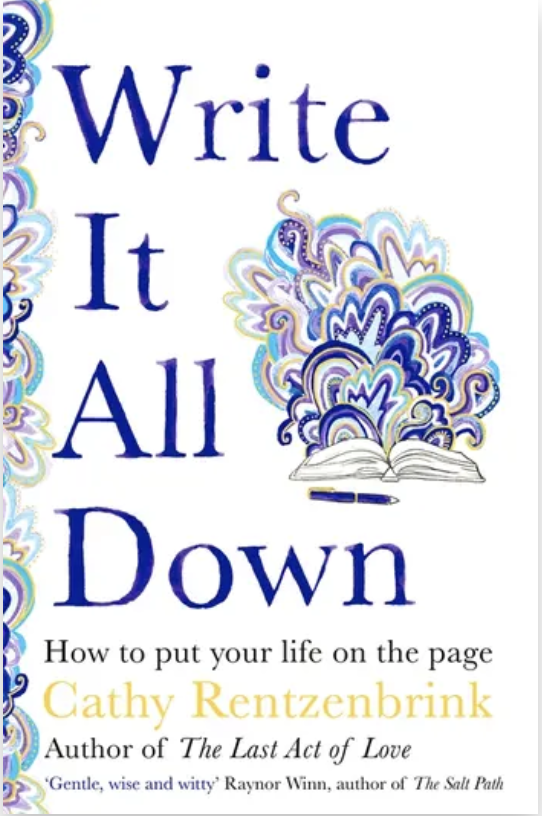
Write It All Down: How to Put Your Life on the Page
By Cathy Rentzenbrink (Pan Macmillan; January 2022)
From the publisher: “Why do we want to write and what stops us? How do we fight the worry that no-one will care what we have to say? What can we do to overcome the obstacles in our way? … Intertwined with reflections and exercises, Write It All Down is at once an intimate conversation and an invitation to share your story.”
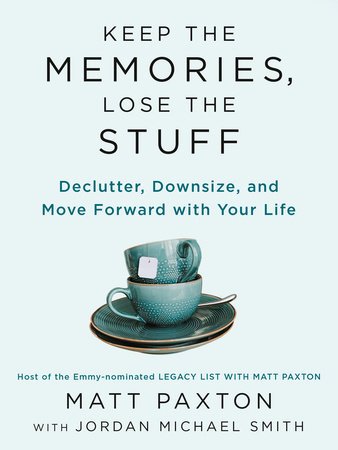
Keep the Memories, Lose the Stuff
By Matt Paxton (Portfolio; February 8)
From the publisher: “America’s top cleaning expert and star of the hit series Legacy List with Matt Paxton distills his fail-proof approach to decluttering and downsizing. Your boxes of photos, family’s china, and even the kids’ height charts aren’t just stuff; they’re attached to a lifetime of memories—and letting them go can be scary. With empathy, expertise, and humor, Keep the Memories, Lose the Stuff helps you sift through years of clutter, let go of what no longer serves you, and identify the items worth keeping so that you can focus on living in the present.”
This is a topic near and dear to my heart (see my free guide “After a Death: How to Make the Process of Going through Your Parents’ Photos Easier”), and I look forward to seeing how Paxton shares his wisdom. A favorite bit of personal historian advice with respect to sorting through your stuff: Take high-quality photographs of items that hold meaning but perhaps take up too much space or no longer feel relevant to your life; this way you can write about why these heirlooms mattered to you (and your family), where and when they originated, etc.—then, after preserving their history, you can give them away without unnecessary guilt.
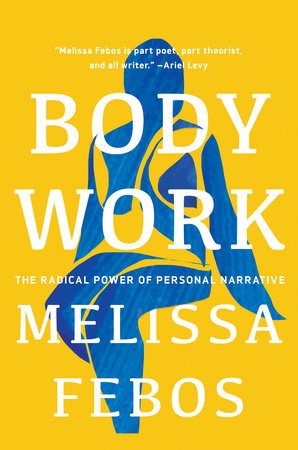
Body Work: The Radical Power of Personal Narrative
By Melissa Febos (Catapult; March 15, 2022)
“If I could do cartwheels, I would have cartwheeled across the room when I learned that the brilliant Melissa Febos is gifting us with a memoir craft book,” writes one reviewer on LitHub.
From the publisher: “How might we go about capturing on the page the relationships that have formed us? How do we write about our bodies, their desires and traumas? What does it mean for an author’s way of writing, or living, to be dismissed as ‘navel-gazing’—or else hailed as ‘so brave, so raw’? And to whom, in the end, do our most intimate stories belong? … Melissa Febos has created a captivating guide to the writing life, and a brilliantly unusual exploration of subjectivity, privacy, and the power of divulgence.”

How to Tell a Story: The Essential Guide to Memorable Storytelling from The Moth
By The Moth, Meg Bowles, Catherine Burns, Jenifer Hixson, Sarah Austin Jenness (April 26, 2022)
I’ve never been drawn to going up onstage to share my stories at a mic, but I am a frequent guest at story slams and Moth main stage performances (migrating to their storytelling podcast during the pandemic)—and I have always marveled at how well the coaching works. Seriously, introverted writers and self-declared non-performers shine when they’re telling their stories for The Moth, and often that can be attributed to having workshopped their material with a team of educators who help develop and shape their stories. Goals? “To hook us in. Make us care about you… [and] conclude as a different person.”
So of course I’m invested in reading their new book that promises to share “secrets of their time-honed process and [use] examples from notable and beloved storytellers,...[and to help you] mine your memories for your best stories.” Everyone has a story to share, so why not share it well?
Biography & Memoir
I firmly believe that reading memoir—good memoir, truthful and well-structured memoir—is a bridge to writing memoir. So beyond the mere sensory pleasure of reading any of the below suggestions, if you are someone who regularly writes about your life or has aspirations to pen your own memoir, take notes when you come across something especially compelling. Does the author employ dialogue to great effect? How do they weave the past and the present? How to they convey universal meaning from singular personal experiences?
My regular readers will know I have an affinity for memoirs told in shorter snippets—often referred to as vignettes—and I am especially eager to read the following from the list below, all examples of the memoir-in-essays form: Bomb Shelter: Love, Time, and Other Explosives by Mary Laura Philpott (April); The Crane Wife: A Memoir in Essays by CJ Hauser (July); and Crying in the Bathroom by Erika L. Sánchez (July).

Lost & Found: A Memoir
By Kathryn Schulz (Random House; January 11, 2022)
Named one of the most anticipated books of the year by The New York Times, Oprah Daily, The Washington Post, and others, Lost & Found is undoubtedly one of the most awaited books of 2022.
Eighteen months before the author’s father died, she met the woman she would marry. In Lost & Found, according to the publisher, “she weaves the stories of those relationships into a brilliant exploration of how all our lives are shaped by loss and discovery—from the maddening disappearance of everyday objects to the sweeping devastations of war, pandemic, and natural disaster; from finding new planets to falling in love.”
“Three very different American families form the heart of Lost & Found: the one that made Schulz’s father, a charming, brilliant, absentminded Jewish refugee; the one that made her partner, an equally brilliant farmer’s daughter and devout Christian; and the one she herself makes through marriage.”
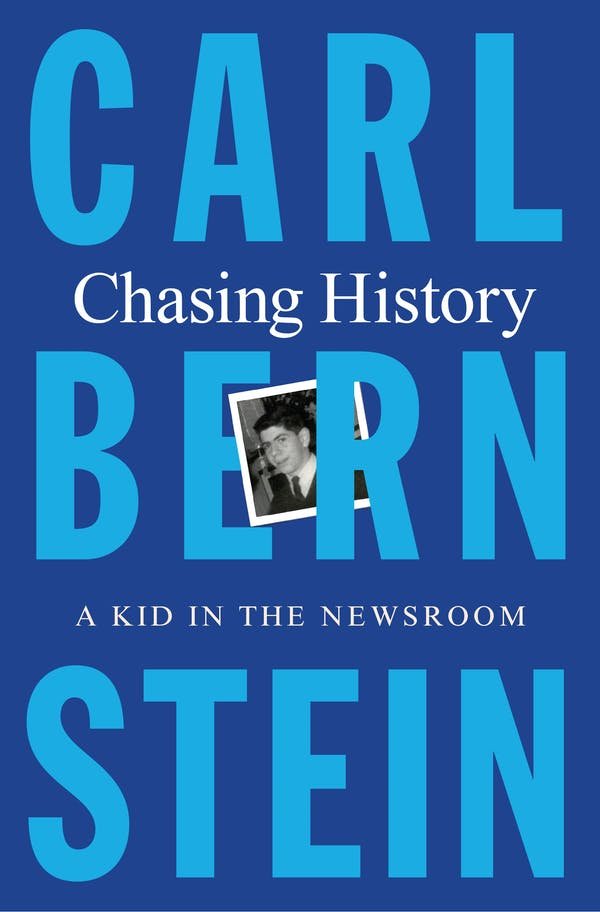
Chasing History: A Kid in the Newsroom
By Carl Bernstein (Henry Holt; January 11, 2022)
According to the publisher, in this book “Carl Bernstein, the Pulitzer Prize-winning coauthor of All the President’s Men and pioneer of investigative journalism, recalls his beginnings as an audacious teenage newspaper reporter in the nation’s capital—a winning tale of scrapes, gumshoeing, and American bedlam.” As a huge fan of the Alan Pakula–directed film and a former magazine editor myself, I am so on board for this account from one of journalism’s most iconic personalities.
Here’s Bernstein on first entering the newsroom of the Washington Evening Star as a high schooler: “The door by which I had entered was at the end of a dim, quiet corridor of the sort you would find in any ordinary place of business. The door through which Rudy Kauffmann now led me opened into another universe. People were shouting. Typewriters clattered and chinged. Beneath my feet, I could feel the rumble of the presses…. In my whole life I had never heard such glorious chaos or seen such purposeful commotion as I now beheld in that newsroom. By the time I had walked from one end to the other, I knew that I wanted to be a newspaperman.” Read an excerpt from Chasing History here.
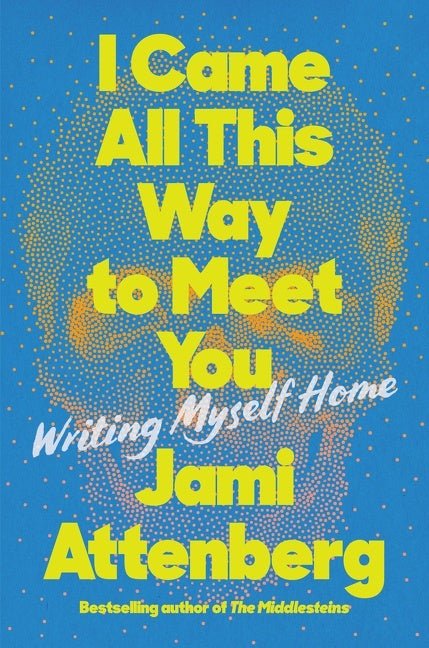
I Came All This Way to Meet You: Writing Myself Home
By Jami Attenberg (Ecco; January 11, 2022)
In her first memoir, acclaimed author “Jami Attenberg—described as a ‘master of modern fiction’ (Entertainment Weekly) and the ‘poet laureate of difficult families’ (Kirkus Reviews)—reveals the defining moments that pushed her to create a life, and voice, she could claim for herself,” shares the publisher. “What does it take to devote oneself to art? What does it mean to own one’s ideas? What does the world look like for a woman moving solo through it?”
In a review for Vogue, Jessie Heyman opines, “Her newest is an episodic collection of Attenberg’s life—her cross-country travels, debilitating injuries, bad plane rides, bad boyfriends—which are all told through her signature intimate and humorous style. But it’s her writing on her own work I found particularly revealing. ‘I became a fiction writer in the first place because stories are a beautiful place to hide,’ she writes.”

Aurelia, Aurélia
By Kathryn Davis (Graywolf; March 1, 2022)
From the publisher: “Kathryn Davis’s hypnotic new book is a meditation on the way imagination shapes life, and how life, as it moves forward, shapes imagination. At its center is the death of her husband, Eric. The book unfolds as a study of their marriage, its deep joys and stinging frustrations; it is also a book about time, the inexorable events that determine beginnings and endings.”
“She writes about being a teenager, trying on identities like clothes, and about being in late middle age, resolutely someone, and yet still wondering, still trying on the other clothes, even while liking her own,” notes a LitHub review.
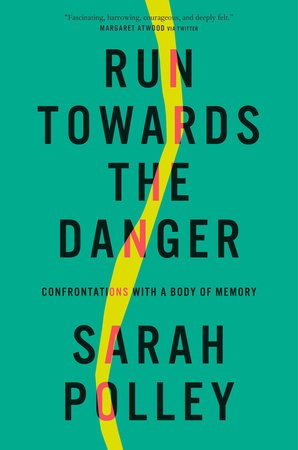
Run Towards the Danger: Confrontations with a Body of Memory
By Sarah Polley (Penguin Press; March 1, 2022)
“These are the most dangerous stories of my life,” Sarah Polley writes in her new memoir. “The ones I have avoided, the ones I haven’t told, the ones that have kept me awake on countless nights. As these stories found echoes in my adult life, and then went another, better way than they did in childhood, they became lighter and easier to carry.”
Polley, an Oscar nominated screenwriter, director, and actor, shares six essays, “each one [capturing] a piece of [her] life as she remembers it, while at the same time examining the fallibility of memory, the mutability of reality in the mind, and the possibility of experiencing the past anew, as the person she is now but was not then,” describes the publisher.
If you haven’t seen Polley’s 2012 film Stories We Tell, it too explores the vagaries of truth and the intersection of the past and present, and I highly recommend it (read my review here), perhaps as a prelude to her memoir.

In Love: A Memoir of Love and Loss
By Amy Bloom (Random House; March 8, 2022)
From one of my all-time favorite writers, Amy Bloom (I still recall discovering her book of stories Come to Me the year after I graduated college and knowing I would buy anything she wrote thereafter), this new memoir explores the period of time she accompanied her husband, Brian, through the final days of his life. After a diagnosis of early-onset Alzheimer’s, the pair begin a heartrending journey of finding a way that Brian can end his life with dignity.
“Most poignant are the intimate moments they share as they make the most of their last days together,” reads the starred review in Publisher’s Weekly. “As [Bloom] writes, ‘I imagine that Brian feels as alone as I do but I can tell he isn’t as afraid.’ The result is a stunning portrayal of how love can reveal itself in life’s most difficult moments.”

Ancestor Trouble: A Reckoning and a Reconciliation
By Maud Newton (Random House; March 29, 2022)
“I never expected to become interested in genealogy,” Maud Newton writes in this 2014 Harper’s cover story that led to her book deal. “When I did, slowly at first and then in great gusts of extreme obsession, I thought I owed the fascination to my mom, a natural storyteller descended from a collection of idiosyncratic Texans. One of her granddads was a strident Dallas socialist; the other killed a man with a hay hook. Her father, Robert Bruce, is said to have been married thirteen times to twelve women.”
According to the publisher, “Maud researched her genealogy…and sought family secrets through her DNA. But immersed in census archives and cousin matches, she yearned for deeper truths…. Searching, moving, and inspiring, Ancestor Trouble is one writer’s attempt to use genealogy—a once-niche hobby that has grown into a multi-billion-dollar industry—to expose the secrets and contradictions of her own ancestors, and to argue for the transformational possibilities that reckoning with our ancestors offers all of us.”

The Unwritten Book: An Investigation
By Samantha Hunt (FSG; April 5, 2022)
More reviews than I can count recommend this book to me. A few, to entice:
“Like a trunk in the attic, The Unwritten Book offers up the most extraordinary, eclectic, and heart-wrenching insights, historical facts, stories, and advice on how to live closer to the dead…. I feel more alive and wiser for having read it,” declares author Cathy Park Hong.
From Rumaan Alam: “The Unwritten Book is a disobedient work—not quite memoir (even as the author interrogates her own life); not quite philosophy (though with much to say on art, faith, ethics, and more); not quite classifiable.”
And from LitHub: ”Fueled by the discovery of her father’s unfinished manuscript, Samantha Hunt is on the hunt (sorry) for clues about all that is left unsaid. Part literary criticism, part memoir, part family history, this new book explores the things that have a hold on us. I, for one, am ready to be haunted by Samantha Hunt once again.”
“Each chapter gathers subjects that haunt: dead people, the forest, the towering library of all those books we’ll never have time to read or write,” notes the publisher. “Through literary criticism, family history, history, and memoir…Hunt explores questions of motherhood, hoarding, legacies of addiction, grief, how we insulate ourselves from the past, how we misinterpret the world.”

Left on Tenth: A Second Chance at Life: A Memoir
By Delia Ephron (Little Brown; April 12, 2022)
Time magazine calls Left on Tenth “a heart-wrenching tale of second chances at life and love” for author and screenwriter Delia Ephron, who chronicles her (often hilarious, always vulnerable) journey of falling in love again after the death of her husband. “But this was not a rom-com: four months later she was diagnosed with AML, a fierce leukemia.”

Bomb Shelter: Love, Time, and Other Explosives: A Memoir in Essays
By Mary Laura Philpott (Atria Books; April 12, 2022)
In this memoir in essays, Philpott sets out to “illuminate what it means to move through life with a soul made of equal parts anxiety and optimism (and while she’s at it, to ponder the mysteries of backyard turtles and the challenges of spatchcocking a turkey),” according to the publisher. “Philpott returns in her distinctive voice to explore our protective instincts, the ways we continue to grow up long after we’re grown, and the limits—both tragic and hilarious—of the human body and mind.”
One Off the Shelf reviewer highlighted this memorable line from Philpott’s book, which makes me even more eager to read it: “I keep trying to make sense of my life by stacking stories upon stories upon stories.” Indeed, don’t we all.
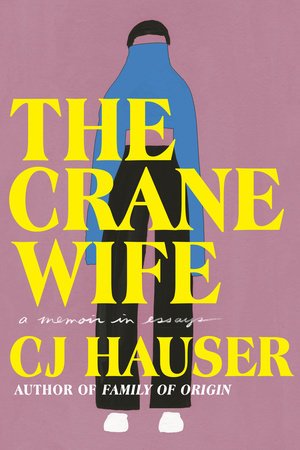
The Crane Wife: A Memoir in Essays
By CJ Hauser (Doubleday; July 12, 2022)
“I think I was afraid that if I called off my wedding I was going to ruin myself. That doing it would disfigure the story of my life in some irredeemable way, CJ Hauser wrote in The Paris Review essay, also called “The Crane Wife.”
“What I understood on the other side of my decision,” she wrote, “on the gulf, was that there was no such thing as ruining yourself. There are ways to be wounded and ways to survive those wounds, but no one can survive denying their own needs.”
From the publisher: In The Crane Wife, CJ Hauser “writes about friends and lovers, blood family and chosen family, and asks what more expansive definitions of love might offer us all. Told with the late-night barstool directness of your wisest, most bighearted friend, [this] is a book for everyone whose life doesn’t look the way they thought it would; for everyone learning to find joy in the not-knowing; for everyone trying, if sometimes failing, to build a new sort of life story, a new sort of family, a new sort of home, to live in.”
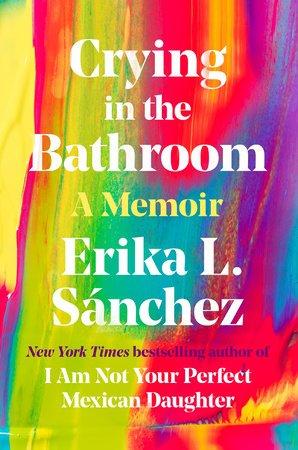
Crying in the Bathroom: A Memoir
By Erika L. Sánchez (Viking; July 12, 2022)
From the New York Times bestselling author of I Am Not Your Perfect Mexican Daughter comes an utterly original memoir-in-essays that promises to be as deeply moving as it is hilarious.
From the publisher’s page: “In these essays, Sánchez writes about everything from sex to white feminism to debilitating depression, revealing an interior life rich with ideas, self-awareness, and perception. Raunchy, insightful, unapologetic, and brutally honest, Crying in the Bathroom is Sánchez at her best—a book that will make you feel that post-confessional high that comes from talking for hours with your best friend.” I’m in.
As yet untitled MEMOIR of Paul Newman
(Knopf; Autumn 2022)
With the hope of debunking the numerous unsolicited biographies about Paul Newman over the years, the actor and philanthropist began recording his life story through oral history interviews with friend Stewart Stern in 1986 (“I should probably at least make some truthful self-examination so the unsolicited biographies wouldn’t be considered as gospel,” he reportedly told Stern).
According to the publisher, the “result is a portrait of the actor in full, from his early days to his years in the Navy, from his start in Hollywood to his rise to stardom, and with an intimate glimpse of his family life.
I met Newman when I volunteered to help set up his first camp, the Hole in the Wall Gang Camp in Ashford, Connecticut, when I was a senior in high school, and was in awe of his selfless nature (and wonderfully mischievous sense of humor), so I especially look forward to hearing stories from his life in his own words.
Diaries & journals

Gathering Blossoms Under Fire: The Journals of Alice Walker, 1965-2000
Edited by Valerie Boyd (Simon & Schuster; April 12, 2022)
From the publisher: “In an unvarnished and singular voice, [Alice Walker] explores an astonishing array of events: marching in Mississippi with other foot soldiers of the Civil Rights Movement, led by Martin Luther King, Jr.; her marriage to a Jewish lawyer, defying laws that barred interracial marriage in the 1960s South; an early miscarriage; writing her first novel; the trials and triumphs of the Women’s Movement; erotic encounters and enduring relationships; the ancestral visits that led her to write The Color Purple; winning the Pulitzer Prize; being admired and maligned, sometimes in equal measure, for her work and her activism; and burying her mother. A powerful blend of Walker’s personal life with political events, this revealing collection offers rare insight into a literary legend.”

The Diaries of Franz Kafka
Translated by Ross Benjamin (Schocken; December 6, 2022)
This new translation of Kafka’s handwritten diaries dating from 1909 to 1923, according to the publisher, contains “accounts of daily events, reflections, observations, literary sketches, drafts of letters, accounts of dreams, as well as finished stories. This volume makes available for the first time in English a comprehensive reconstruction of the diary entries and provides substantial new content, including details, names, literary works, and passages of a sexual nature that were omitted from previous publications. By faithfully reproducing the diaries' distinctive—and often surprisingly unpolished—writing in Kafka's notebooks, translator Ross Benjamin brings to light not only the author's use of the diaries for literary experimentation and private self-expression, but also their value as a work of art in themselves.”
Other memoir & biography titles to look out for in 2022
The Beauty of Dusk: On Vision Lost and Found by Frank Bruni (Avid Reader Press/Simon & Schuster; March 1, 2022)
I Was Better Last Night by Harvey Fierstein (Knopf; March 1, 2022)
Easy Beauty: A Memoir by Chloé Cooper Jones (Avid Reader Press/Simon & Schuster; April 5, 2022)
Happy-Go-Lucky by David Sedaris (Little, Brown and Company; May 31, 2022)
Affiliate disclosure: As an Amazon Associate, we may earn commissions from qualifying purchases from Amazon.com.





Two unexpected writing prompts about family
These two writing prompts about family—and what it means to you—may be just the ticket to more thoughtful storytelling and personal meaning-making.
“Families are united more by mutual stories—of love and pain and adventure—than by biology. ‘Do you remember when . . .’ bonds people together far more than shared chromosomes . . . a family knows itself to be a family through its shared stories.”
—Daniel Taylor
definition:
family*
1 : a group of people who are related to each other
2 : a group of persons of common ancestry : CLAN
3 : a group of people united by certain convictions or a common affiliation : FELLOWSHIP
There are plenty of official definitions of the word family in the dictionary, many of them self-referential, most of them rooted in cultural norms of another time (“the basic unit in society traditionally consisting of two parents rearing their children,” for instance).
Here's the thing, though: The idea of family—what family means to you, who belongs to your family—is as personal as it gets. And yet…it's not something many of us think about, is it?
We may sit down to do some family history work—clicking on those green hints in Ancestry, sending away for land deeds and marriage certificates—and the assumption is we're discovering our family. Kin. But is that the extent of it?
More and more these days genealogy efforts may yield surprising results, especially since DNA entered the picture: a father who isn't biologically a father; a daughter who was raised as an only child only to learn she was the product of a sperm donation…and that she has 18 half-siblings by blood. How might these individuals rethink who their family is (and isn't)?
Moreover, the idea of family has evolved over time, and for some, their “chosen family” may play a more significant role in their life than blood relatives do. What is a “chosen family”? According to the SAGE Encyclopedia of Marriage, Family, and Couples Counseling, “Chosen families are nonbiological kinship bonds, whether legally recognized or not, deliberately chosen for the purpose of mutual support and love.” I have plenty of friends whose chosen family is their world.
You needn’t have made a shocking discovery through DNA or chosen a group of friends as your primary family, however, to have something important to say on the matter of what family means to you. Even in the most traditional of families, some relationships hold more weight than others. And what we derive from family—support, inspiration, pressure, trauma, love, fun, stability—can run the gamut, and have a profound impact on our notion of self.
So while documenting our family history is essential, so too is stepping back to ask ourselves a few questions about our family—in fact, it may be just the ticket to more thoughtful storytelling and meaning-making. Are you ready?
Writing prompts to yield deeper family history stories
Consider both of these questions, grab a journal or your laptop, and start writing.
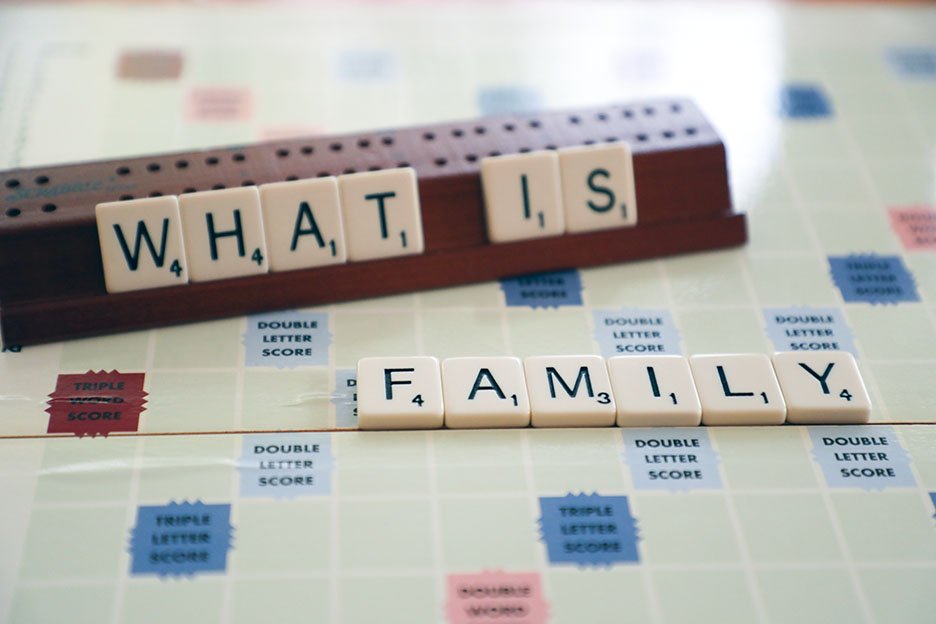
What does the word ‘family’ mean to you?
Who is your family?
You're not writing for publication here. Rather, you're ruminating. Finding meaning through your writing.
And remember: Your responses to these prompts could be wildly different today than tomorrow, and that's okay.
How you answer these questions is revealing. Your own definition of “family” is foundational to how you discuss your personal history. How you regard past experiences may shift once you become more aware of your vision of your family (and where you fit into it).
What will you do with the writing that results from these prompts? A couple of ideas:
Think about your answers and integrate them into your own life narrative. You are the narrator of your own story, and writing about themes such as what family means to you is a path to self-discovery. As Sara Aird has written about storytelling and identity: “The final stage of writing yourself into existence will be accepting who it is you are finding, believing that who you are creating is real and true and worthy.”
Use your initial writing as fodder for more refined life writing. Was there a surprising nugget in there? Or perhaps you gained clarity on an overarching theme in your life story? Writing about your own life necessarily covers family ground; hopefully thinking deeply about questions of who and what family means to you will allow you to delve even deeper into your own personal stories.
* definitions from Merriam-Webster Dictionary


Explore more blog posts in these categories:
Three writers use vignettes to craft moving memoirs
Memoirs by Sarah Manguso, Beth Ann Fennelly, and Beth Kephart each weave together short narratives to create evocative, textured self-portraits of the writers.
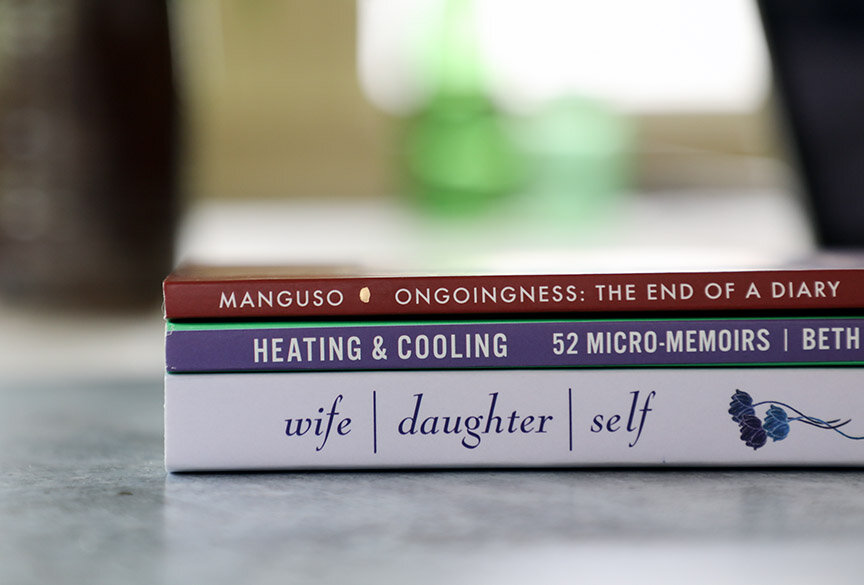
I have written often about using vignettes to tell the stories of your life, and I feel strongly that reading works by others to inspire your own writing is a humbling and essential practice. The three books that follow have one big thing in common: The writers weave together fragments—called alternatively essays, micro-memoirs, and meditations—to create a multi-faceted self-portrait. I recommend reading each of these to get a sense of just how powerful and evocative it can be to craft your memoir…vignette by vignette.
memoir in vignettes no. 1
Ongoingness: The End of a Diary
Ongoingness: The End of a Diary by Sarah Manguso (Graywolf Press, 2015) is a series of meditations on the author’s compulsion to keep a continuous diary. She writes early in the book, “From the beginning, I knew the diary wasn’t working, but I couldn’t stop writing. I couldn’t think of any other way to avoid getting lost in time.”
Manguso recalls a time in childhood when she didn’t yet need a diary because “I wasn’t yet aware of how much I was forgetting.” That’s at the heart of it here—the fear of losing memories, of losing pieces of oneself. So she records, she memorializes, and she fights the forgetting…until she has a child of her own, that is. And in Ongoingness, she explores the “welcome amnesia,” as the book jacket calls it, of the next chapter of her life.
Some of Manguso’s insights and observations are elliptical in nature: She circles back to them once and again, each time drawing more or new or different meaning from the same experience. Her prose is crystalline. Her insights are resonant.

Ongoingness: The End of a Diary by Sarah Manguso is a fine example of:
how everyday moments deserve primacy in our writing
how paying attention to details—select, apropos details—can elevate the personal to the universal
how memory is malleable and often elusive—and how, even then, we can mine truth from it in our writing
how “brief” does not mean “lacking”
memoir in vignettes no. 2
Heating & Cooling: 52 Micro-Memoirs
Heating & Cooling: 52 Micro-Memoirs by Beth Ann Fennelly (W.W. Norton & Co., 2017) is another sleek volume that brings the writer to life through what she calls “micro-memoirs” and what I would refer to as “vignettes.”
Don't be fooled: The autobiographical vignettes in Heating & Cooling were not randomly gathered from the author's journals; rather, they were thoughtfully woven together. There is a fine balance between entries that delve into deep waters and ones that skim lightly along the surface. There is a rhythm not only to the words, but to the pieces themselves (which range in length from a single sentence to six pages). There is a layering of themes and a range of moods, a sense of both evocative poetry and direct truth-telling.
Consider reading this book twice: Once, read a vignette or two every night (Ann Patchett calls each entry a “perfect pearl of memory,” and indeed they are worthy of relishing morsel by morsel); then, binge-read the book in one sitting (it's just over a hundred pages, after all, and I promise you the layered themes I mentioned will be all the more apparent to you this way).

Heating & Cooling: 52 Micro-Memoirs by Beth Ann Fennelly is a great example of:
making every word count (Daniel Wallace said, “Every sentence in this book could be sent to the Smithsonian Institution in case future readers want to know what a great sentence looks like.)
how to use humor effectively in your memoir writing
how to curate and compile telling moments from a life to reveal broader themes—and delight the reader
how to be wonderfully vulnerable and alive in your writing
how to construct a book of vignettes that build upon one another and all together draw a richly textured portrait of the writer
memoir in vignettes no. 3
Wife | Daughter | Self: A Memoir in Essays
Ah, perhaps my favorite of the bunch here, Beth Kephart's latest memoir, Wife | Daughter | Self (Forest Avenue Press, 2021) is a book to be savored. And for those of us who open to the first page with the intent of inspiring our own writing, how lucky we are that Kephart has included notes on how she created it in a thoughtful postscript. To wit:
"I write parts whose purpose is to find their way into an implicating whole, the choreography of the thing being the thing, the adjacencies and half sums. The rain that won't come answered, pages later, by the rain that will. The dead communicating with the living.”
Or:
"…the aggregation of parts that constitute this memoir reflect my belief that truth is not continuous, that stories live in the seams, that we remember in bursts and find wisdom in the juxtaposed…”
Kephart is a perpetual seeker of truth—of her truth, of the universal truth; she is on a quest for meaning, and it is through writing that she is most often able to find it. Does she find herself, though—the "self" in the title of this memoir? Do we as readers find her?
We glimpse her, we feel her, we intuit and recognize and yearn for her in the push and pull of her words. We find her in the seams (oh, how I love this notion: that “stories live in the seams,” as Kephart writes and teaches and ultimately manifests in this memoir). We are left to find traces of her and to piece together a fragmented whole ourselves—a whole I envision as a mobile made of shimmering stained-glass mosaics, blowing in the wind, simultaneously reflecting and catching the sun. We know her, even if perhaps we can't summarize who she is in words.
"If you asked about my process, I'd say music,” Kephart writes in the addendum. And there it is: While we are caught up in the music of her life, of her writing, then her craftsmanship—her cognizance of form and her attention to weaving fragments together so they convey more than the sum of their parts—all of that is invisible to us as readers. Beautifully, conspicuously invisible.

Wife | Daughter | Self: A Memoir in Essays by Beth Kephart is a stellar example of:
how to orchestrate a symphony from otherwise disjointed notes
how to carefully choose and weave details so that they become "telling details"
how to write towards truth, allowing the journey of writing to become part of the story; as Kephart says, “the truth is in the trying”
how “writing the same story twice is to puzzle out dimensions”
how considering yourself in relation to others—"Father's daughter. Husband's wife. Son's mother."—can be a gateway to finding oneself, period.

Download Free Writing Prompts Guide
Get all our life story vignette writing prompts in one easy-to-read printable guide!
Discover more posts to help with writing vignettes about your life




Affiliate disclosure: As an Amazon Associate, we may earn commissions from qualifying purchases from Amazon.com.

Two things no one tells you about writing your own story
Writing about your life can be hard—but it’s still worth the effort. (Oh, and you’re wrong that your family members don’t care about your personal history).
Are you thinking about writing your memoir? Or conducting family history interviews with a loved one? Maybe you're just beginning a regular journaling practice. However you plan to tell your stories, first: Congratulations! You are embarking on a most wonderful journey. Second: There are a couple of things you might not have yet considered.
Read on for these relevant—and hopefully encouraging—things you might want to know about telling your own story.
1 - Telling your own story can be hard.
Okay, so maybe this one doesn't seem so encouraging. But I mean for it to be.
Consider this: You sit down with your favorite Starbucks brew and your laptop eager to begin writing your memoir. And…nothing. That blank screen can seem intimidating, and even more so—you have lived a BIG life, so where the heck do you start?
Knowing that the task ahead will likely seem daunting—even to the point of paralysis—can empower you: Start small. Don't think about writing your whole life story, but rather about writing a single life story. Even better—don't even start with writing sentences! I am a big fan of brainstorming memories and ideas before beginning any real writing, so make a list. (I am willing to bet that you’ll begin scribbling lots and lots of thoughts about one of those memories--there always seems to be a kernel of the past that surprises and delights us with its specificity!).
Once you get going, you may encounter another difficulty: How do you share a painful memory? Should you even relate stories of struggle or failure? (Answer: YES! Those stories are revelatory, and they have contributed to who you are today.) The best advice I can give is to be gentle with yourself; remember that no one but you needs to read your first (or second, or even your final) draft; and that, more than anything else writing your stories is about finding meaning in the life you are living--and what better way to do that than to look back at what you have overcome?
“Your life story has a power all its own,” write the authors of Where to Go from Here. “Once you document your life and realize all that you have been through, survived, and accomplished, you can't help but have a fresh view of your worth.” Amen to that.
Make your storytelling easier.
Here are a few resources to help you get past the “hard” part of writing your life stories:
2 - Your family might not seem to care…but they will.
It can be a deflating feeling to offer to tell your kids about your childhood only to have them roll their eyes before returning their attention to the smart phone in their hand. But ask yourself this: Were you an avid listener when Gramps began regaling you with tales of walking uphill both ways to school? It’s a rare thing for the younger generation to pay much heed to the personal history of the older generation. But hear this: One day those stories will be precious to those very youngsters who could not care less now.
I talk about regrets all too often, because I hear about them all too often: from clients who WISH they had asked their parents for their stories, from friends who WISH they had written down the oft-told reminiscences of their parents before the details got fuzzy. So while you think your adult kids don’t care about your life experiences (they haven’t asked you, after all), they WILL care one day—and you can save them from having any regrets by preserving your stories now, knowing they will be welcomed--even cherished--one day.
Write in spite of the fact that you think your kids don’t care—because YOU know in your heart that one day, they will...a lot. (Trust me on this, okay?)
Get your family involved.
Find fun ways to engage your family with your stories:

How to create a life timeline for your memoir writing project
Writing a life timeline is an integral task in any life story project. Here are three simple steps to creating yours, plus thoughts on why a timeline is useful.
A life timeline can be a handy tool for memoirists and memory-keepers of all kinds. It will help orient you in time when writing or sharing stories orally, and it will provide essential prompts for stirring your memories and allowing you to delve into your past.
Why are we creating this life timeline?
A life timeline can be a helpful tool when embarking on a memoir or life story project. Not only will the timeline help you orient yourself in time over the course of your life while you are writing, it will highlight key moments in your life that are likely worth exploring.
What is worth noting on a timeline? Well, transitions are key—moments when your life took a different turn, for better or for worse. Moments of revelation should be included. And moments of change—firsts, departures, milestones. What we’re looking for, really, are autobiographical occasions.
“An autobiographical occasion is any moment when we are encouraged or obliged to reimagine who we are,” Bruce Feiler writes in Life Is in the Transitions. “It’s a narrative event, when our existing life story is altered or redirected in some way, forcing us to revisit our preexisting identity and modify it for our life going forward.”
How to begin crafting a life timeline for your memoir or personal history book

1: Brainstorm a list of important moments and events in your life.
According to neuroscientist Lisa Genova, our brains are designed to recall what is surprising and new; what is emotional; and what is meaningful—so let’s begin with those! Here is an effective approach for determining the major life events that may lend themselves well to helping you find meaning and write about your journey:
Start with major life events.
Consider:
your birth
spiritual milestones such as bar/bat mitzvah, Confirmation, or religious conversion
graduating (high school, college, graduate school)
moving to a new city or country
marriage
divorce
becoming a parent
becoming a grandparent
becoming a citizen
losing a parent
becoming a caregiver for a family member or loved one
Make a list of important “firsts.”
Include “firsts” that had some impact on your life, whether they changed your world view, fulfilled a dream, or became the first of many (the first article you wrote may be relevant if you became a journalist, for example).
first job
first love
first home you owned
first time you traveled outside the country
first time you failed
first time you voted
first time you lost someone you loved
Make a list of times you felt most emotional in your life.
What made you feel alone—or less alone?
What made you feel confident, empowered?
What made you feel sad? Despondent?
Consider times that your emotions dominated your days—excitement over your engagement, perhaps, or persistent grief after a parent passed.
Know that some (even all) of these entries on your list may be duplicates. That’s okay—you are reiterating for yourself that these life events are in fact fodder for your personal history.
Include addresses for all your homes.
(Nothing to explain here—just having those addresses is both a memory marker for you and will one day supply important family history information for your descendants.)

2. highlight all the items on your list that seem worthy of inclusion on a timeline of your life.
Don’t do this step the same day you have been brainstorming your list—you need a little mental distance from it to assess what makes the most sense to keep. I suggest waiting a couple of days or more, then grabbing a highlighter and marking the things you’ve written that feel most germane. You’re looking for plot twists in your life, for decisions or moments of change (again, for “autobiographical occasions”).
Don’t discount seemingly minor things if they make you feel something upon reflection; maybe buying your first car seems trivial, for instance, but if it gave you a sense of freedom at a time when you were feeling caged in or alone, then, well…do you see how this isn’t “little” to you?
And remember: You’re going to hold onto this list, so you can always come back later to some of the things you aren’t highlighting now. Your purpose here is to set priorities: Those milestones you highlight now should be among the first you write about (or talk about, if you are capturing your stories via an audio recorder). And maybe they are the ones you include on a graphic timeline of your life, should you want to include such a helpful visual key in your book (yes, one day all of this may end up in a book!).

3. Add dates wherever possible.
Particularly for the highlighted items on your list, go back and add dates. This may take some research, so start with the low-hanging fruit—your birthday, your kids’ birthdays, a wedding date. Then start digging: Pull out an old resume for work-related milestones; find prayer cards from funerals for the dates you lost loved ones. Give a sibling or parent a call to see if they can help fill in any blanks.
If you have an actual date, use it, otherwise years—or even a span of years—will suffice to place the milestones of your life on a continuum.
I recommend creating a “final” list by putting all the highlighted items from your original list in chronological order. This will become a working cheat sheet for you for the remainder of your life story project!
Congratulations! You’ve got a timeline of the most meaningful moments in your life. I hope you will use it to guide you on your journey of remembering, and of capturing your life stories for yourself and for the generations to come.
Read more in this series for step-by-step help in starting your life story project
The little book that every aspiring memoirist should read
Introducing the two-word writing prompt guaranteed to keep your memories and your pen flowing, plus the book by Joe Brainard that inspired it: “I remember...”.

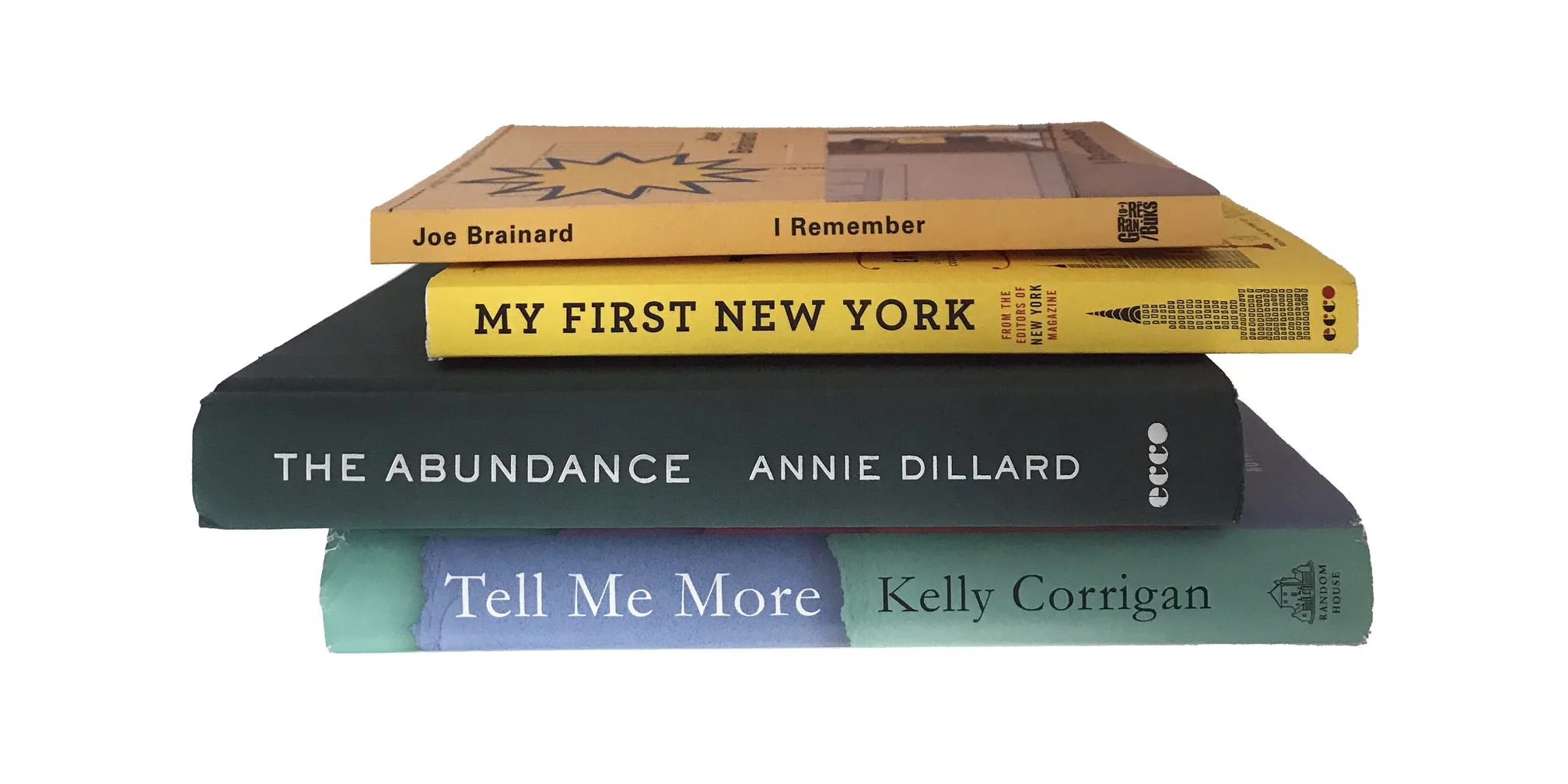
The little book that could: I Remember by Joe Brainard is a cult classic and a favorite of aspiring memoirists and memory keepers.
Buy this book now: I Remember by Joe Brainard.
(I don’t suggest borrowing it from the library, because you will want to pull it out next week, in five years, when you’re staring at a blank computer screen or journal page; it’s a tiny book, so it won’t take up too much space on your bookshelf, after all.)
This book is a delight to read. And this book holds the key to writer’s block.
Brainard’s memories, recounted in a stream-of-consciousness fashion, are short and pointed, often mere phrases or single sentences, occasionally a brief paragraph, each beginning “I remember...”:
“I remember the only time I ever saw my mother cry. I was eating apricot pie.
“I remember how much I cried seeing South Pacific (the movie) three times.
“I remember how good a glass of water can taste after a dish of ice cream.
“I remember when I got a five-year pin for not missing a single morning of Sunday School for five years. (Methodist.)”
As Ron Padgett writes in the book’s afterword, “Few people can read this book and not feel like grabbing a pencil to start writing their own parallel versions.” Indeed. “It is one of the few literary forms that even non-literary people can use.”
The two-word prompt that never fails
Like many before me, I was first introduced to Joe Brainard’s book in a weekend writing workshop with memoirist Dani Shapiro. She read some snippets out loud and I was immediately enlivened. Our assignment: to write nonstop for 10 minutes, finishing the sentence “I remember…” over and over with no concern for chronology or connectedness.
As she describes, “When I give that exercise at retreats, I look out from where I’m sitting at a sea of people, and not one of them hesitates. Those are extremely evocative words.”
“I remember.”
Those are the words Shapiro calls evocative.
And they are the words that form her (and my) favorite writing prompt: “I remember…” is a steadfast prompt, an old friend that can be pulled out and used often, always to new effect.
As Padgett writes, “Even the smallest [memory] can exert a mysterious tug, and when it is clearly recalled it can release a flood of other memories.”
Your turn: Start writing using the prompt “I remember…”
“Memory is just this storage locker of incredibly rich material and we often can’t get at it when we’re trying to remember something or thinking in some chronological way or straining and reaching,” Shapiro said on an episode of her now defunct Facebook Series, “Office Hours.”
“Where we can really get to it is on the page, following the line of words, and allowing associations to pile one on top of the other.”
So, grab a pen and start writing.
don’t discriminate against memories that seem meaningless or small
don’t worry about making connections between one memory and another
don’t stop until your 10 minutes are up.
Some remembrances will be short and specific. Here are two of mine:
“I remember patent leather black shoes with one scuff on the toe.”
“I remember drinking Diet Coke nonstop when I worked at Vogue. My production assistants swore I needed an IV drip of caffeine. One of them berated me for buying cups of ice from the bodega for a dollar.”
Other remembrances will be more profound, perhaps longer, such as this one from Brainard:
“I remember having a friend overnight, and lots of giggling after the lights are out. And seemingly long silences followed by ’Are you asleep yet?’ and, sometimes, some pretty serious discussions about God and Life.”
Let your mind wander—no restrictions—and your pen will follow. You’ll be surprised by what bubbles up.
“People almost invariably find memories that they didn’t know that they had,” Shapiro said in an interview with Marie Forleo about this exercise.
“We don’t tell ourselves stories in our heads. We have these disparate memories that don’t connect. And when we allow them to be associative and to bounce one off the next, it creates all sorts of interesting material.”
Who should give this writing prompt a try?
Personally, I think the simple phrase “I remember…” as a springboard for writing has universal appeal. It’s fun, it’s alluring, and it’s easy.
It may be especially beneficial for certain people, though.
This writing exercise is good for:
helping you open the floodgates of memory when you feel stuck
warming up at the beginning of a writing session—putting pen to paper and having a relatively easy task (simply finishing the sentence “I remember…”)
brainstorming memories: Without the pressure of remembering something specific, your list will inevitably be diverse and surprising—providing fodder for a future memoir or personal essay.
So if you’d like to discover the power of short reminiscence, and emulate it to create your own list of prompts for future development, well, I Remember is the book for you..
Note: This is an unsolicited review of a book I purchased at full price. I did not receive any compensation or free products in exchange, and any endorsements within this post are my own.
Affiliate disclosure: As an Amazon Associate, we may earn commissions from qualifying purchases from Amazon.com.
P.S. I’d love to hear some of your reflections. What are a few of your favorite things you wrote using the writing prompt “I remember…”? Share in the comments or shoot me an email!