
Memories Matter
Featured blog Posts


READ THE LATEST POSTS

75 Questions to spark Christmas story sharing
Family history questions for Christmas: 75 open-ended, specific interview questions to elicit powerful memories & stories from the older generation.
Christmas and Hanukkah—or other holidays where extended family gathers in one place—is an optimal time to gather stories and memories via oral history interviews. There needn't be a lot of pressure: Simply turn on your smart phone’s voice recorder or set up a video camera on a tripod, then forget it’s there...and begin reminiscing.
The important thing is that you relax and let the stories flow. Don’t wait until next year or when everyone is available or any other “better time”—trust me when I say: Now is always the right time!

When family gathers at Christmas, use the opportunity to share stories and memories of days gone by—trust me, it’s as entertaining as it is valuable!
Personal history interview questions: Christmas edition
Use these questions merely as a guide or to give you ideas for questions of your own. The key to any good personal history interview is listening—so ask follow-up questions that genuinely interest you, and let the stories take their own paths...that is usually when the magic ensues!
FOOD
Is there a dish you always associate with Christmas Eve or Christmas day Do you know who has the recipe, and who originally cooked it for your family?
Did you or your family make cookies or other special desserts to share with neighbors during the holiday season? What about leaving food for Santa—and his reindeer?
Are there any foods, from the holiday season or year-round, that remind you of your heritage?
Did your parents make you eat anything you absolutely hated?
What food(s) do you associate with comfort? With the onset of winter?
Who made the cakes for birthdays in your home?
Do you recall any massive failures at cooking—a horrible dinner, burnt pie, missing ingredients?
Who taught you how to cook?
TRADITION
Did you hang Christmas stockings? By a fireplace, or somewhere else? Were they filled by Santa? Do you have any favorite memories of stocking stuffers?
Did anyone in your family or neighborhood dress up as Santa? Did you know it was them? Have you or anyone else in your family continued that tradition of playing Santa—and if so, how does it make you feel?
What traditions do you most fondly recall from your childhood?
Are there certain traditions that have persisted for generations in your family?
What traditions have you begun anew with your own nuclear family?
Is there a memorable gift you have given someone?
What is the best gift you have ever received?
ANTICIPATION
What time did you wake up on Christmas morning? Was it earlier than your parents? Did they make you wait before starting the festivities?
Do you recall the feeling of anticipation on Christmas Eve?
What other times in your life do you recall similar feelings of anticipation?
GIFTS
Did you (and your siblings/family members) want to rush through the gift giving? Was there a sense of order and gratitude opening gifts, or was it wrapping-paper mayhem?
Did you ever look for or find evidence of Santa?
Were there ever times when hardship made gift giving at the holidays challenging? How did that make you feel? Do you have a story from that time, or a lesson learned?
How were gifts wrapped?
Did you help pick out gifts for those you loved, or was it strictly a parent thing?
What types of gifts or cards can you recall having made by hand
as a child?
Do you remember how you felt when you discovered the truth about Santa? How old were you?
What is your most magical Christmas memory?
RELIGION
What religion, if any, is your family? Were you devout? Members of a congregation?
Was your church or temple community a central part of your life?
Did you go to church on Christmas morning? Midnight mass?
What memories of you have of those times?
Did/do you pray?
Are you spiritual? How does that manifest itself in your life?
HUGS
Was your family very affectionate? Describe how they showed love, or if you wished there was more physical affection.
Are you a hugger? How does it make you feel?
Who in your family gives/gave the best bear hugs? What is/was that person like?
Did you cuddle with your parents? Do you cuddle with your own children? Grandchildren? What does it mean to you?
Did you write letters to Santa? If so, where did you mail them? Did you ever hear back from the North Pole?
Do you recall getting Christmas cards during the holiday season?
Did your family draft a holiday letter (many people keep these as part of their family history archive—did you save any of them)?
SNOW
Where did you live when you were growing up? Did you generally have a white Christmas?
Do you remember the first time you saw snow?
What was your favorite snowtime activity—sledding (or did you have a toboggan?), making snow angels, snow balls fights? Or how about ice skating? Shoveling?
Do you recall snow days from school? Listening to the radio for announcements, or waiting for a parent to wake you up? How did you occupy yourself on snow days?
Did you build snowmen? What would you use for the nose and eyes?
HOME
What smells remind you of your childhood home?
What makes you feel most at home now, as an adult?
How do you describe home?
What was the address of your favorite home? Why was it your favorite?
Have you ever visited a home from long ago—how did it make you feel?
Did you move often while you were growing up? Did that affect your personality or self-esteem?

Free Christmas Questions Guide
Download all 75 questions in a handy printable booklet!

Give the most unique holiday gift!
Cherished memories last a lifetime—and beyond, if you preserve them.
Life Story Links: December 11, 2018
Fine examples of first-person storytelling to inspire your own life story writing, plus wisdom on reminiscence & a look at the legacy of Pearl Harbor survivors.
“I do not understand how memory works, I say, how we think we remember things that never happened and how we can forget the things that have. I want to know what I would find if I unspooled my memories and laid them out against my mother’s and my grandmother’s. I imagine the textures and seams of our competing recollections; I imagine them synthesizing to form a richer whole.”
—Crystal Hana Kim

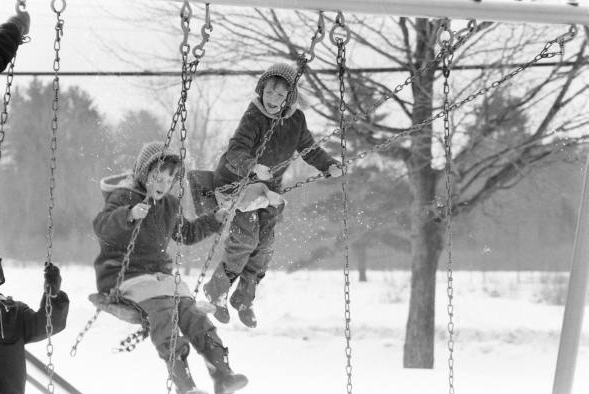
1st Grade Twins on Swings, 1963. Photograph by Yale Joel for LIFE magazine. ©Time Inc.
First Person Reads
EATING TO AMERICA
“When I wanted to have a family just like everyone else’s I could slide into a booth at Pizza Hut and in the darkly lit restaurant my odd family could almost pass for a mom and a dad and two kids, and maybe even American ones, as long as we whispered,” writes Naz Riahi in this delicious read.
CUTS AND QUESTIONS
“He ran his hands through his hair inspecting just like he had inspected my sewing at age seven, my planting at age twelve, and my oil change at age fifteen,” writes Yollotl Lopez in her tribute to eight years of hair cutting—and loving ritual—with her father.
SCENES FROM A LIFE
In “The Proposal and the Purse,” personal historian Deborah Wilbrink relays scenes from an almost-relationship. Her first-person vignette, hosted on Sarah White’s True Stories Well Told site, is indicative of the type of writing Sarah teaches in her flash memoir classes.
Remembrance, Reminiscence & Legacy
CELEBRATING HANUKKAH WITH STORIES
“Unless people intentionally take the time to ask questions, we often don’t get to hear the stories of our elders,” says Rabbi Susan Goldberg, who designates Hanukkah as an optimal time to ask those questions.
PEARL HARBOR MEMORIAL
For the first time, there were no survivors of the USS Arizona at the annual ceremonies marking the December 7, 1941, attack on Pearl Harbor. “It wasn't the pages of a book—it was your life. It was your mother, your brother. It was your house going up in flames in bombings.” Memories that survivors have carried for so long live on in oral histories.
CONFERENCE TAKEAWAYS
In my latest post I share thoughts from the 2018 International Reminiscence & Life Review Conference including compelling anecdotal evidence on the value of reminiscence work, research challenges, and the shifting nature of autobiographical memory.
...and a Few More Links
The best reviewed memoirs and biographies of 2018
How millennial parents are reinventing the family photo album
“If you want to write a great book, hire a scribe.”
The StoryCatcher app has been updated.
Short Takes


“Nobody ever asked me before”
Thoughts from the 2018 International Reminiscence & Life Review Conference including research challenges, anecdotal evidence, and autobiographical memory.
Thoughts on Reminiscence and Life Review
I recently attended the 2018 International Reminiscence and Life Review Conference in Boston, where researchers and practitioners presented an abundance of new information, much of it evidence-based, about the value of life review.
And while the data is certainly thought-provoking, it was the personal (subjective) narratives of those in attendance that I found most inspiring—and reflective of my own experience.
The Limits of Reminiscence Research
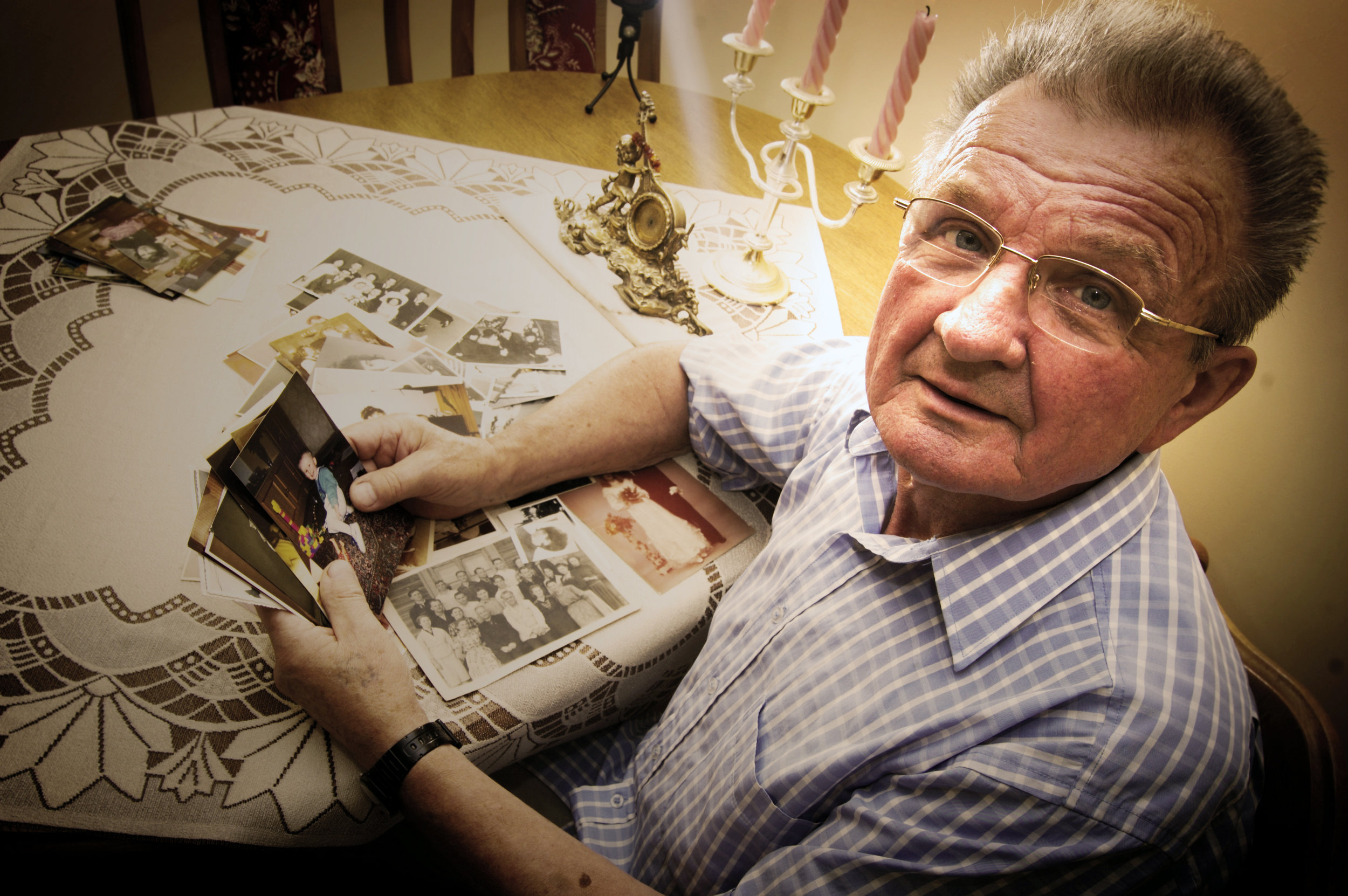
I am not a medical or scientific researcher. I was impressed nonetheless with the efforts of researchers to quantify how reminiscence can help individuals with dementia or mild cognitive impairment, for instance, or patients with symptoms of depression.
At a time when one of the world’s largest pharmaceutical companies has halted research into finding new drugs to treat Alzheimer’s disease, more money is currently being spent to research the impact of reminiscence and life review on patients with mild dementia or cognitive impairment than any other non-pharmacological intervention, according to Pam Schweitzer, MBE, founder of the European Reminiscence Network.
Anecdotal evidence of reminiscence’s value mounts and flourishes and is shared at a conference such as this, and the circle of telling and recognition and telling of similar experiences is not only affirming, but exciting. Yet the overarching theme was how to find ways to conduct more effective randomized control trials that yield compelling results.
I will leave the studies and scientific quest for data to the experts (and follow their results with great anticipation!). In the meantime, I am heartened by their stories.
Wisdom, Takeaways & Tips from the Conference
There is power in the asking.
During a presentation chock-full of study names and journal links, what stayed with me days later was a five-word quote: “Nobody ever asked me before.”
In a 2004 paper describing her research into facilitating reminiscence and learning about the life experiences of older African-Americans, Juliette Shellman, Ph.D., APHN-BC, designated this as one of five major themes to emerge. “Nobody ever asked me before.”
In my mind, this quote could be attributed to any one of us—any age, any race, religion, or background. It is a recurring theme in my own work, and one of the reasons I find conducting personal history interviews so rewarding: Because once someone does ask, what comes forth from the subject is, well, everything.
I know the power of being a compassionate, open-hearted, and curious listener—do you? Try asking a loved one to tell you some of their story. What ensues will be as much a gift for them as it will be for you.
What helps spark memories in patients with dementia works as well with…everyone.
“Allow time, listen well, and reflect back what people say to encourage and support them,” Pam Schweitzer said.
“Speak slowly.” Be clear, and listen attentively.
“Use multi-sensory stimulation.” Show old photos, play favorite songs, spark memories through the senses, not just through spoken words.
Yes, these approaches are proven to help guide and support individuals with mild cognitive impairment on their journey of remembering, and we must be especially cognizant of them when conducting interviews with those individuals. Don’t forget, though: These techniques are effective, thankfully, with anyone.
Find tips for engaging in an informal life review interview here.
We all place a premium on our memories.
Most people intentionally create memory aids—scrapbooks or drawers filled with ticket stubs and souvenirs; diaries that chronicle our lives and search for meaning in our experiences. Our devices filled to brimming with family photos (often numbering in the thousands) are perhaps the clearest evidence of documenting our memories.
In today’s technological age, which kinds of memories are we documenting—and how accessible are they? Do these physical reminders (often lost in that long device scroll) extend or alter our autobiographical memory?
These questions were the basis of a lively discussion about how we regard, preserve, and honor our memories as they are catalogued on social media. Apps have proliferated in recent years to help us recollect all that we have posted and shared: The Museum of Me, My Social Book, and After Me among them.
Many of these apps mine personal data from Facebook, Instagram, and other social media platforms to create an (auto)biography. The idea sounds nice, but often the “memories” they present are a superficial, even distorted, representation of the self. Random memories from social media do not equal biography, nor do they, in my opinion, often aid in a search for meaning amidst our memories, for our social media is inherently biased toward positive experiences.
An automated biography is indeed not autobiography in the true sense.
The questions that will continue to interest me are: How do our digital and internal memories interact with one another? Does taking a picture interfere with the quality of an individual memory?
And, as a personal historian, editor, and memory-keeper myself, I will always regard memories as most meaningful when they lead to contemplation. Reminiscence in the truest sense should help us clarify our thinking about the turning points in our life, and enrich the meaning of our life story.
Social media will continue to provides us with important touchstones in our memory-keeping. And all these apps that aim (not always successfully) to “curate” our memories and create a “legacy,” if nothing else, prove to me that collectively, we yearn for reminders of our past and value our memories.
But when it comes to creating—telling, writing, sharing—our life stories, personal reminiscence and curation is still the gold standard.
Related Reading
Efficacy of life review and reminiscence interventions for different target groups, and successful intervention methods, per a 2006 research study
An introduction to narrative medicine: How stories nourish empathy

Life Story Links: November 27, 2018
Louis Armstrong’s personal archives, WWI stories passed through generations, and plenty of process talk including using Scrivener and reviving stalled memoirs.
“We all practice the craft of autobiography in our inner conversations with ourselves about the meaning of our experience, and those conversations, no matter what language we use, are fundamentally theological or philosophical. Though only a handful of us set about writing down the results and publishing them for others to read, we are all autobiographers.”
—Jill Ker Conway

Louis Armstrong and his wife Lucille in the den of their Corona, Queens, New York home; the jazz legend’s archives are now available online. PHOTO courtesy of Louis Armstrong Archive.
Stories Worth Sharing
LOUIS ARMSTRONG ARCHIVES
From handwritten playlists of his musical inspiration to scrapbooks of his life as it was lived (and as it was recorded in the newspapers), Louis Armstrong was a careful (and thorough) documentarian of his life. Now the full archives are accessible online.
VETERANS’ STORIES
In “The War Stories Their Families Never Forgot,” the New York Times collects memories of readers’ relatives who had a role in World War I—and the submissions are, unexpectedly, often uplifting.
THE ATTIC OF HISTORY
Sir Peter Jackson says he would be happy if his new war film inspires people to go rummaging around in their attics for old photos and letters, keen to piece together tales about grandfathers and ancient uncles who served in the first World War.
On People and Process
“TELL ME ABOUT YOURSELF”
Terry Gross, considered by many to be a master interviewer, offers insights into how to talk to people. “As an interviewer, Ms. Gross’s goal is to find out how her subject became who they are; as a conversationalist, make that goal your own.”
SYSTEM TALK
In her latest podcast episode, Amy Woods Butler, aka The Life Story Coach, describes how she goes from interview transcript to book draft, including how Scrivener fits into her process.
A PROFESSIONAL’S PERSPECTIVE
About half Nancy West’s memoir clients are people who previously attempted writing their memoirs themselves. “They bogged down in telling very specific stories perfectly and comprehensively,” she says, “whereas I work like a journalist: facts first, then flesh it out.”
...and a Few More Links
Is deleting Facebook deleting your memories?
Ann Curry’s We’ll Meet Again returns to television.
Mickey Mouse gets the “life story” treatment on his 90th birthday.
New study shows our brains prioritize memories that are useful in making future decisions.
Short Takes

55 Questions to spark Thanksgiving story sharing
Family history questions for Thanksgiving: 55 open-ended, specific interview questions to elicit powerful memories & stories from the older generation.
Thanksgiving—or other holidays where extended family gathers in one place—is an optimal time to gather stories and memories via oral history interviews. There needn't be a lot of pressure: Simply turn on your smart phone’s voice recorder or set up a video camera on a tripod, then forget it’s there...and begin reminiscing.
The important thing is that you relax and let the stories flow. Don’t wait until next year or when everyone is available or any other “better time”—trust me when I say: Now is always the right time!

Crouch family Thanksgiving, 1940, Ledyard, Connecticut. Photographs by Jack Delano (Library of Congress).
Personal history interview questions: Thanksgiving edition
Use these questions merely as a guide or to give you ideas for questions of your own. The key to any good personal history interview is listening—so ask follow-up questions that genuinely interest you, and let the stories take their own paths...that is usually when the magic ensues!
FOOD
Is there a dish you always associate with Thanksgiving? Do you know who has the recipe, and who originally cooked it for your family?
Did your parents make you eat anything you absolutely hated?
What food(s) do you associate with comfort? With the onset of the school year?
Who made the cakes for birthdays in your home?
Do you recall any massive failures at cooking—a horrible dinner, burnt pie, missing ingredients?
Who taught you how to cook?
TRADITION
What traditions do you most fondly recall from your childhood?
Are there certain traditions that have persisted for generations in your family?
What traditions have you begun anew with your own nuclear family?
Is there a memorable gift you have given someone?
What is the best gift you have ever received?
LAUGHS
Was there ever a moment where you laughed uncontrollably?
Whose laughter do you find heartwarmingly contagious?
Who in the family tells the best jokes?
LESSONS
Do you recall a time you failed in a big way? Can you share the story of how you felt, who comforted you, what you learned? Did that failure hinder you from taking chances in the future, or embolden you in any way?
Do you remember lessons your grandparents taught you?
How were you punished as a child?
Is there a fear you have that you have never been able to overcome?
LOVE
Who was your first love?
Do you remember the first time you said “I love you” to someone who was not part of your family?
How would you describe the love you received from your parents?
Was your grandparents’ or great-grandparents’ love different in any way from that of your parents’?
FANDOM
What teams do you root for?
Did you ever tailgate at a football game?
Did you play sports growing up? Were you a team captain?
Do you remember any big wins? Any big losses?
Are/were there any big rivalries among family members and team loyalties?
HOME
What do you remember most about your childhood home?
Where did you do your homework when you were a kid?
Did you have a secret hiding place in your home?
Did you ever move from one home to another? What was that like?
Was there another place you considered a “home away from home”?
Were there any comforts from your childhood that you translated into all your adult homes?
Did you play outside after school? What was it like being a kid in your neighborhood?
SCHOOL
Did you have a favorite teacher as a kid?
What were your favorite years in school? Why?
What did it say about you in your high school yearbook?
Did you have a childhood dream about what you wanted to do with your life? Do you ever think about it now?
Do you remember drills during school (depending upon age of interviewee, could refer to duck and cover drills during war, fire drills, etc.)
What subjects were you good at? Which ones were more challenging for you?
What kind of grades did you get?
Did you belong to any clubs? Go to dances?
What were some challenges from your school years, particularly ones that made you a stronger or more compassionate person?
Describe your family legacy with regard to education—who was the first to go to college; have any of you attended the same schools; etc.

Free Thanksgiving Questions Guide
Download all 55 questions in a handy printable booklet!
Explore related posts:
This blog was originally posted on November 18, 2018.












Life Story Links: November 12, 2018
Mid-story memoir sag, storyboarding as a writing tool, questions to spark Thanksgiving story sharing, and more of interest to family historians & memory-keepers
“Curiosity is a muscle. Questions are exercise.”
—M. Diane McCormick

1956. Photograph by Grey Villet for LIFE magazine. ©Time Inc.
Thoughts on Memoir…
THE LIBERATION OF MEMOIR
Beth Kephart celebrates Abigail Thomas, whose work, she says, laid the foundation for memoirists everywhere to set aside “perfect” in pursuit of authentic.
MID-STORY SAG
“Nearly all memoir writers hit a point where they ask: What is this thing about? Where did I think I was going with this story?” writes Lisa Dale Norton in her prescriptive piece about how to avoid mid-story memoir sag.
YOUR STORY, YOUR WAY
“Let people find out how interesting you are through your own words, not when your children tell stories about you because you’re gone,” urges Massachusetts–based personal historian Nancy West.
…and Sharing Stories Out Loud
FAMILY HISTORY MATTERS
In this podcast, Heidi Druckemiller suggests that the story of your past can help you to discover your family’s unique values, shape its moral purpose, and direct its strategic decision-making.
HOLIDAY HISTORIES
This week I wrote about four ways to encourage guests at your family gathering to share memories in addition to gratitude, plus offered up 55 Questions to spark Thanksgiving story sharing.
NEXT GEN
Cider Spoon Stories offers a workbook for kids that guides them through the oral storytelling process, helping them to capture in their own words the stories of family members and friends
...and a Few More Links
Humanity has direct memories of events that occurred 10 millennia ago.
Check out the slides from M. Diane McCormick’s Hippocamp 2018 presentation, “The Art of Interviewing: The Deep Dive for the Telling Detail.”
Using storyboarding to help know what to emphasize and what to cut from your biographical writing
Google and YouTube team up with StoryCorps to tell veterans’ stories.
Short Takes

4 Ways to give thanks through story sharing
Encourage guests at your Thanksgiving gathering to share memories in addition to gratitude with these four ideas for holiday family history story sharing.
Sandwiched between the uber-commercial Halloween season and the begins-too-soon “December” holiday rush lies a quieter American holiday, Thanksgiving. It’s always been one of my favorites, and not merely because I love leftover stuffing.
Thanksgiving appeals to me on a visceral level: home-cooked food, family gathered around a table, tradition, laughter, and love. My family never got “dressed up” for Thanksgiving—it was a comfortable holiday, one where we reveled in being together and lingering…over the food, over football, and especially, over stories. Even for families who may not share stories regularly around the dinner table, Thanksgiving lends itself to some good old-fashioned reminiscence.

Giving Thanks—and Telling Tales
Do you have a tradition of going around the table and naming something you are each thankful for? This focus on gratitude is a hallmark of Thanksgiving—and one which we can build upon to crate new traditions that not only help us enjoy the day together, but cement a family legacy that will endure well into the future.
Here are a few ideas to turn your tradition of “giving thanks” into something even more lasting:
1 - Go around the table twice.
On the first go-round, each person shares something for which they are grateful. On the second go-round, each person shares a favorite memory from a holiday past. Designate one person to record the storytelling session, whether using the microphone feature on your smart phone or setting up a video camera on a tripod at the head of the table. Be sure to encourage questions and follow-up stories—often that is where the magic lies. I guarantee there will be few lulls in your dinner conversation!
2 - Formulate a family health portrait.
Personalize your healthcare by sharing your family health history and tracking illness from one generation to the next. Participate in Family Health History Day (the same day as Thanksgiving) and use the Surgeon General’s health portrait tool to talk about, and write down, your family's health history to help ensure a longer, healthier future together.
3 - Play show-and-tell over dessert.
In lieu of asking guests to bring a pot-luck dish, invite them instead to pack a meaningful item that reminds them of their childhood. Like that vintage Hess toy truck Grandpa keeps on the mantle, or the grease-stained, handwritten recipe Aunt Ginny pulls out every Christmas. Set up an area to photograph their heirlooms, and record the stories behind them over pumpkin pie.
4 - Make a paper trail.
Books, documents such as old Passports and birth certificates, scrapbooks, boxes of old photos—there are lots of papers that hold bits and pieces of family history, but usually they are scattered among homes of various family members near and far. Take the first step in cataloging your family archive by polling all the guests at your Thanksgiving gathering to see what they may have; we’ve even created this handy inventory worksheet for you to keep track of it all. Then, when you’ve got more time, you can begin digging into your family history in earnest—with a plan.
Thanksgiving Family History Resources & Links
Consider participating in StoryCorps’ Great Thanksgiving Listen.
Download our free guide: 55 Questions to Spark Thanksgiving Story Sharing.
Use a family tree form to keep genealogical information organized.
Download this pedigree chart to record information you get from family members.
A genealogy correspondence log helps keep track of which people you've talked to and which people you still need to contact.
Let the kids plan their interviews with family members using a simple oral history worksheet like this one.
Life Story Links: October 29, 2018
Plenty of first person and personal history reading, from stories of survival told through artifacts of memory to veteran experiences that honor and connect.
“Love is so short, forgetting so long.”
—Pablo Neruda

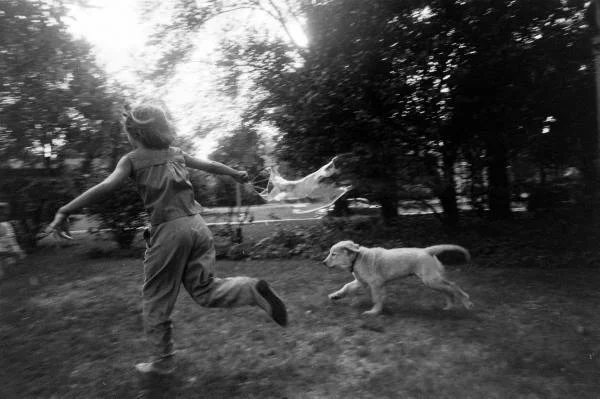
Kid's Bubble-Blowing Toy, 1959. Photograph by Stan Wayman for LIFE magazine. ©Time Inc.
Seeing Is Believing
OBJECT. IMAGE. MEMORY.
“A photo album, a china set, a teddy bear—even the most quotidian of artifacts—all resonate with special poignancy when associated with stories of persecution and loss,” Julia M. Klein writes of a Skokie, IL, museum exhibition called “Stories of Survival.”
BLURRY IS BEAUTIFUL
Blurry photos are often the first to get deleted from your film scroll—but photographer Yan Palmer offers up another perspective.
FILM REVIEW
I finally found time to screen the 2012 documentary Stories We Tell, and I recommend it as much for the dramatic exploration of one family's narrative as for the questions it raises about the malleability of truth.
Life Stories, Listening & Telling
#THEGREATLISTEN
In its 15th year StoryCorps continues to “create a culture of listening that echoes across the nation.” Resources compiled for its annual Great Thanksgiving Listen include a Great Questions List and Interview Planning Worksheet.
“THE ROLLING NOW”
Sarah White of Madison–based First Person Productions shares a short essay she calls an experiment in “The Rolling Now,” a structural technique described as "like rocking back and forth between past and present."
A LIVING TRIBUTE
The new National Veterans Memorial and Museum in Columbus, Ohio, which opened October 27, highlights personal stories of veterans from all branches of the military to inspire, honor, and connect.
CONFESSIONAL STORYTELLING
“I used to reassure prospective clients that they could simply leave out any personal stories that were too difficult to tell, says Massachusetts–based personal historian Nancy West. “But the more people share with me, the more I begin to think that nothing is too difficult for clients to share, once they become comfortable with the process.”
...and a Few More Links
The earliest memory in the first person testimonies of The HistoryMakers dates to the 1700s.
Kickstart your family history project with this November 14 webinar from archivist Margot Note.
In The Library of Congress’s new National Screening Room you can watch hundreds of hours of cinematic history for free, with films from 1890-1999.
Town & Country: “From Gates to Rockefeller, Wealthy Families Hire Personal Historians to Preserve Their Legacy”
Short Takes