
Memories Matter
Featured blog Posts


READ THE LATEST POSTS

All your Write Your Life questions answered
Wondering if 52 weeks of memory prompts will help YOU write about your life at last? Here, answers to the most commonly asked questions about Write Your Life.
Are you wondering if our 52 weeks of memory prompts are the right choice to help you or a family member write about your life at last? Read on for answers to all your questions.
Recently I announced the launch of an annual email subscription of memory and writing prompts called Write Your Life. I have been humbled by your interest, and have learned a lot from the questions people have been asking me via email and Instagram DM. As a result, I have created a FAQ page all about Write Your Life, and have expanded that here to include two more questions I received just yesterday.
If you’ve still got questions, please leave them in the comments and I will respond asap!
Frequently asked questions about the Write Your Life annual subscription
Are the writing prompts in Write Your Life difficult?
No! The prompts in this subscription are carefully curated so they spark memories in a fun way. They are open-ended, which means that every person can interpret them in their own unique fashion; it also means that one prompt might spark so many memories that it inspires multiple stories over many days of writing. We have included tips from writing experts to make the process as smooth as possible for you, but we encourage you to write the way you talk. It’s all about capturing your memories, not writing a bestseller.
How much does Write Your Life cost?
A one year subscription (52 weeks of curated prompts) costs $132, with an introductory rate of just $99 through the end of 2023. Subscribe to our newsletter to be alerted to occasional discount codes or sales.
Do I do my writing online/via email?
No, to keep things as simple and straightforward as possible, YOU choose how you record your stories. There is no app or other software needed for Write Your Life.
Many people handwrite their stories. We recommend a journal dedicated just for this purpose or a loose-leaf binder where you can arrange things to your liking and easily edit.
Other people type their stories on a computer (our fingers can usually work a keyboard faster than we can write). In this case, I recommend creating one document that you update each time you write (don’t forget to back it up to the cloud or to an external hard drive so you don’t lose your precious memories!).
And for some, who don’t prefer to write at all, speaking their stories into a voice recorder (such as the one on most smart phones) is the most convenient option; those digital recordings can be easily shared with loved ones via email, and transcribed with AI software so you ultimately have a written version of your memories, too.
How long will the writing take each week?
As little or as long as you like. Participants may choose to write brief answers that aim to succinctly share your memories, in which case you may spend as little as 45 minutes on a single prompt and create something of value. Or you may wish to luxuriate in the process, spending an intentional hour on the “remembering” portion of the prompts, for example, then writing a little each day, revising and editing to create a polished family history story by the end of the week. Some questions may resonate more than others, too, so one week’s prompt may take longer to write about than another.
What if I can’t stay on schedule?
While we send you a prompt every week, we understand that life can get in the way of even the best intentions—vacations, work, family engagements, even laziness can interrupt your flow. Don’t stress. Simply print out the prompts you have missed—there’s a beautifully designed page to download in every email for this very purpose—and return to it later, when you have more time. The goal is to regularly capture your memories, not to militantly keep to an arbitrary schedule. The best time to start is now, and the best time to finish is…when you can!
Can I pause my subscription at any time?
Unfortunately, we do not currently have that capability. See above on what to do if you fall behind.
Do I have to read the free e-book that accompanies my subscription?
Of course not. You can skip the book and hit the ground running as soon as your first prompt arrives. The e-book, which is delivered two days after your subscription begins, has some helpful tips on how to prepare for your life writing journey, how to sound authentic on the page, and more. It’s 26 pages of goodness, but it’s not required reading!
What types of themes will be covered in my Write Your Life subscription?
Most themes last a few weeks, with prompts within each theme to inspire your writing. Over the course of the year, themes will include: Childhood; Food; Identity; Life Transitions; Fun & Favorites; Lessons, Values & Legacy; plus a handful of creative themes to wrap things up.
I’m buying Write Your Life now as a gift for someone else. How do I make sure the emails don’t start coming to them right away?
If you know when you would like the emails to start (the week after someone’s birthday, for example), then you can specify that date in the form when you make your purchase; their subscription will begin on the date you specify. If you are not sure, then I would recommend buying a gift certificate and letting your recipient sign up when they are ready to begin.
Will I get a printed book at the end of the year?
Unlike some other services out there, Write Your Life does not create a book from your writing. There are two key reasons for this:
The quality of those books is not really great, and the business model those huge companies have is not sustainable for a small business such as Modern Heirloom Books.
I want you to focus on really getting your memories down—being thoughtful about your answers, and enjoying the journey of remembering. Your family members won’t care about the format, they’ll be thrilled that your stories were recorded at all!
I will give you ideas for creating a book or other keepsake at the end of your writing, I promise. And if you’re not the DIY type but want your stories and photos designed in an heirloom book, you might consider hiring us to design your book…but that’s not for everyone, and it’s NOT necessary!
How else does Write Your Life differ from StoryWorth and those other services?
Those services provide family history questions that are valuable and interesting, certainly (I provide FREE guides with many such questions, too). The prompts in Write Your Life are different—they are open-ended memory prompts designed to get you thinking, and to find meaning in your experiences. Each email will include specific sparks to help jog your memory, and writing tips to make the process seamless. All the guidance is based on my decades of experience as a personal historian, interviewer, writer, and editor—distilled so you can make the most of your time.
How do I subscribe?
WHAT if I have more questions?
Pop your question in the comments field below and I will reply when I can!















Life Story Links: November 28, 2023
This week's curated roundup is small but mighty, with reflections and advice from personal historians and a look at recent celebrity memoirs of note.
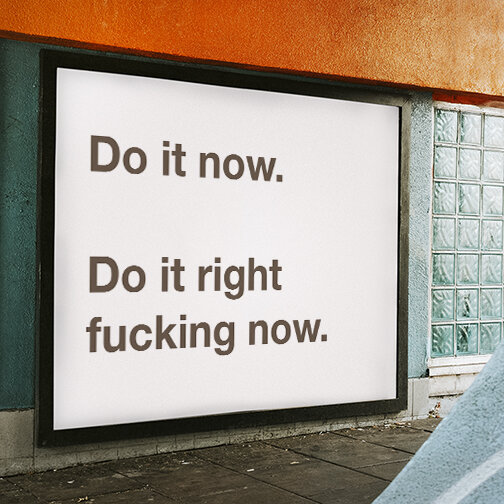
“I hope you will go out and let stories, that is life, happen to you, and that you will work with these stories from your life—not someone else’s life—water them with your blood and tears and your laughter till they bloom, till you yourself burst into bloom. That is the work. The only work.”
―Clarissa Pinkola Estés, Women Who Run With the Wolves
Vintage poster produced by the Work Projects Administration; image courtesy of the Library of Congress Prints and Photographs Division, Digital Collection. The posters were designed to publicize exhibits, community activities, theatrical productions, and health and educational programs in seventeen states and the District of Columbia between 1936 to 1943.
From personal historians…
WHO WAS SHE, REALLY?
Personal historian Marjorie Turner Hollman’s interest in her great-great grandmother—sparked by caches of letters and a crazy quilt in her family’s possession—“turned into a 30+ year quest to piece together the context and events that surrounded a remarkable woman we never really knew.”
THE REVELATORY SURPRISE OF LIFE WRITING
“You may think you are writing about your life for your family—to honor your ancestors, to give a gift to your descendants. But the truth is deeper. You’ll see.”
SOUND MATTERS
Filmmaker Debbie Mintz Brodsky provides tips for turning an audio recording of a family history interview into a compelling video using photos and videos to bring the stories to life.
A YEAR TO REMEMBER
Yesterday I launched a new offering on my website, a year of memory and writing prompts called Write Your Life, and announced an introductory rate on the blog. This has been a labor of love for me and I am excited to finally share!
HONORING MEMENTOS LIKE A MINIMALIST
“I’ve personally helped hundreds of clients whittle down their mementos and treasures into a handful of airtight waterproof bins, which is certainly an improvement, but also kind of a sad end goal.”
A GRANDSON’S INTEREST
“On her piano, between images of her children, grandchildren, and great-grandchildren, is a small cutout photograph of her older sister, Irena, who disappeared eighty years ago. Why hadn’t I ever asked her who that was?” In the film Nina & Irena, a Holocaust survivor breaks her silence after 80 years.(This companion resource facilitates discussions at home or in the classroom.)
…to public figures
CO-OPTING THEIR NARRATIVES
“The [celebrity] memoir offers more than salacious gossip and a jumpstart to waning careers: an opportunity for women defined by their images to finally speak.”
WHO, WHAT, WHERE?
Barbra Streisand’s new memoir—clocking in at a hefty 966 pages—doesn’t have an index (so no skipping to the juicy parts!). That is, until now: Uber-fan Andrew Hopf created an admirably thorough index himself.
...and a few more links
“Why You Maybe Shouldn’t Write a Memoir,” in which the author proceeds to poo-poo “I-talk”
Kindred Tales launches AI transcription services to assist with creation of keepsake memoirs
The Moth and Uncommon Goods have partnered on a few storytelling gift items.
Charles Scribner III on three generations in the book business
Short takes


A year’s worth of memory prompts to help you write your life
Every week you’ll get themed prompts to stir your memories, tips to write your stories with ease, and more! A unique gift for your loved one (or yourself)!
Have you decided you want to subscribe? Click here to purchase our annual Write Your Life email subscription for just $99!
I am thrilled to announce that my Write Your Life annual subscription is now live and available to purchase at an introductory discounted rate!
For years I have offered curated family history questions for free (and that hasn’t changed!). These free guides offer up questions that can be used to conduct family history interviews with loved ones OR as memory prompts to guide your personal writing. If you aren’t yet familiar, I am referring to:
I’ve also got a unique guide designed especially to empower kids to interview their grandparents, one of my favorite resources to date, for just $5.
These free (and almost-free 😉) resources offer a wealth of ideas for anyone interested in preserving their stories—so why would I create something new and expect people to pay for it? While I am committed to sharing complimentary DIY tips and ideas for legacy preservation, I wanted to provide something a little more robust: something giftable (!!), approachable yet chock-full of value, and easy yet rich with potential.
What a Write Your Life subscription offers
The Write Your Life annual subscription offers a full year of weekly emails for anyone who wants to write about their life (even if the longest thing you’ve ever written is your signature!).
There are a gazillion courses to learn the nuts and bolts of memoir writing. This is not one of them. Here the participant will dive right in—to finding their memories and writing their stories.
Every week you (or your gift recipient) will get:
prompts to spark memories in a specific theme
specific (enjoyable!) writing assignments
concrete tips to improve writing and stay on track
…and a dose of inspiration.
PLUS, a bonus printable sheet so you can revisit your prompts any time.
The annual subscription—normally $132, but on sale now for $99—kicks off with six weeks of Childhood Memories prompts, followed by prompts for Food Memories; the third theme explores Life Transitions. From there you will move into themes including Identity; Fun & Favorites; Lessons, Values & Legacy; plus more creative themes to continue exploring your memories.
We’re talking 52 weeks of open-ended memory prompts!
How are Write Your Life prompts different from the free family history questions?
Here’s a quick rundown of how a paid annual Write Your Life subscription compares to the free family history guides on my site, so you can decide which might be right for you:
WRITE YOUR LIFE SUBSCRIPTION
✔ Subscription is tailored specifically to WRITING your memories, rather than family history interviews.
✔ Prompts are delivered weekly to your in-box, helping you maintain a regular memory-keeping practice.
✔ Prompts and questions are open-ended. (Open-ended writing prompts are both inspiring and able to be used multiple times—so if one theme really resonates for you, print your “assignment” and save it to use again!)
✔ Prompts are probing, encouraging you to go beyond surface memories to finding meaning.
✔ Each email includes a simple but relevant writing tip.
✔ Each email includes an inspirational quote on that week’s topic.
✔ Every prompt is beautifully designed as a printable page to add to your personal library.
FREE GUIDES
✔ Guide is tailored specifically to FAMILY HISTORY INTERVIEWS, rather than writing your memories.
✔ Questions are beautifully designed as a printable guide to add to your personal library.
✘ There are no weekly emails, so no accountability, and no help creating a regular memory-keeping practice.
✘ Prompts and questions are NOT open-ended.
✘ Prompts are straightforward rather than probing, encouraging fun memories but maybe not overly thoughtful responses.
✘ There are no writing tips or inspirational ideas to supplement prompts.
Why a Write Your Life subscription makes a thoughtful gift
What could be as meaningful as inviting someone you love to share their stories?! Buying a year’s worth of memory and writing prompts for a family member tells them you value their legacy. That you want to learn more about them. Hear their stories. Connect more deeply.
It’s a great gift idea for the person in your life who is challenging to buy for—but for whom you want to get something truly special.
It’s also a unique way to create something extraordinary for your loved ones—buy YOURSELF a subscription, write about your life, and share what you write with them!! (Don’t you wish someone had gifted you such a legacy?)
How to get your limited-time discounted rate
Through the end of the year I am offering the Write Your Life Annual Subscription for just $99 (regularly $129). There is no discount code needed, and no limit to how many you can buy (gift it to multiple family members, why don’t you?).
More memory-keeping gift ideas


Our recipe card set goes above and beyond capturing ingredients and cooking instructions for your family’s favorite foods. Open the cards to reveal space to record your memories of these foods!
Is it a recipe handed down through generations on your mom’s side? Was it your child’s go-to meal as a toddler? Does the smell remind you of Thanksgivings past, Nanna’s kitchen, or early memories in a special home?
Preserve your family recipes and all the precious stories they call forth.

This 20-page guide is chock-full of good things to help you get your kids involved in capturing stories from their grandparents!
Designed especially for kids ages 8 and up (and we mean way up—you’re never too old to embark on a conversation with your loved ones!), the e-book includes:
• 45 family history questions
• 3 fun bonus activities
• interview recording tips
• historical timeline
• ideas for what to do post-interview
Once you purchase, you will receive a link to download your Kid Kit.
“It was more for me than anyone else—what a surprise”
You may think you are writing about your life for your family—to honor your ancestors, to give a gift to your descendants. But the truth is deeper. You’ll see.
Have you ever considered that writing about your life might be as much a gift for yourself as for your family?
Last week I met with a client with whom I have worked for almost two years. She first came to me having endeavored to write her life story. After writing a few short chapters, she was having difficulty staying on track and writing in a way she hoped would be engaging for her grandchildren. I worked first as her memoir coach, then as her editor, and now we have seen her stories all the way through production—on that day last week, we were reviewing the final draft of her beautifully designed book one last time before sending it off to be printed.
The previous time we met, to go over her first draft proof, my client expressed doubts. She was feeling ambivalent about having told her story at all. Would her grandchildren ever care? Would her grown sons even want to read it? What if she offended someone? Was the effort narcissistic?
That wasn’t the first time I had heard her express reluctance around the telling of her stories. As her memoir coach I did more than provide writing assignments and feedback; I was also a sounding board for how she should frame her stories, yes, but also for the reservations that cropped up during the process. And you know what? I had been there before. So many of my clients experience this rollercoaster of emotions around writing their life.
Each time this client and I had a talk about the value—or perceived lack of value—around writing her stories, we would circle back to her initial goals: wanting to tell the stories of her life both to create a legacy around her parents’ fortitude and resilience during the Holocaust years and beyond (to honor her ancestors), and to provide touchstones for her grandchildren, who might one day find wisdom in her own lived experience (a gift to her descendants). She always resumed her writing with renewed vigor. She had tapped into both the gravity and the joy of writing about one’s life.
During this particular meeting, though, my client became aware of something I had known all along: That examining and writing about her life was as much a gift to herself as to her family. She smiled at me and grasped my hand across the table: “Do you know what?” she whispered. “All of this, it was more for me than anyone else.” I sat quietly, smiling at her revelation. “What a surprise that was for me!” she added.
And here’s the thing: I can repeat this over and over when talking to a prospective client; I can write about it till the cows come home, as they say. But no one really gets it (or believes me) when I tell them that writing about their life is a gift they can give to themselves. That it is healing. Revelatory. Fulfilling.
So together we focus on the other why’s—honoring those who came before, and sharing with those who come after. We create legacy and family history and write FOR our loved ones.
And then, almost always, a surprise…that the process was worthwhile even if it was just for THEM.
Related reading

Life Story Links: November 14, 2023
From biography and memoir recommendations to explorations of memory, truth, and family history, this week’s curated roundup has diverse and rich reads.
“We must acquiesce to our experience and our gift to transform experience into meaning. You tell me your story, I’ll tell you mine.”
—Patricia Hampl, I Could Tell You Stories
Vintage poster with original artwork by Alexander Dux promoting tourism, June 1939, produced by the Work Projects Administration; image courtesy of the Library of Congress Prints and Photographs Division, Digital Collection. The posters were designed to publicize exhibits, community activities, theatrical productions, and health and educational programs in seventeen states and the District of Columbia between 1936 to 1943.
Their stories, in print
A NEW LOOK AT KING WHO ABDICATED
A new bio of King Edward VIII weaves together his own writing, interviews, and diary entries from his original ghostwriter to form “an extraordinary new portrait of one of the most famous characters in modern royal history.”
AN ICON TELLS ALL
My Name Is Barbra, Ms. Streisand’s long-awaited (and rather enormous) autobiography, doesn’t have an index, but a writer for the NYT has teased out “the best bits.” Oh, and the audio book (read by the author) clocks in at a mere 48 hours.
What becomes of our memories
‘OBSESSIVE, DIARISTIC RUMINATION’
“But what I did understand then was that [reading her journals] was an incredible honor, perhaps even a trespass, which came with a responsibility.” Anne Liu Kellor on keeping (a giant chest full of) journals.
REMEMBER WHEN…?
Last week I offered up a few ideas for how to remember intentionally, rather than letting social media sites such as Facebook or the Photos app on your phone be your only source of “memories.”
IT’S IN THE TELLING
“I wanted to see what the local newspaper reported about my grandfather’s act of bravery in preventing a lynching.” How two versions of a family story sparked a writer’s quest for truth.
Personal history, public access
ACCESS TO AFRICAN AMERICAN HISTORY
“What reduced me to tears was the fact that my great-great-grandmother had spent 60 cents on two “baker tins,” more than the payment she received for an entire day’s work.” How a researcher discovered some of her own history at the National Archives, and an introduction to a project to make Freedmen’s Bureau records available to the broader public.
UNSEALED AT LAST
Unopened love letters in Britain’s archives are “a treasure trove bearing intimate details about romance and daily life in mid-18th-century France.”
20 YEARS IN…
In this podcast episode, StoryCorps goes back to the organization’s early days, including the challenges of building a recording booth in Grand Central Terminal, and follows up with participants from the first-ever radio story they broadcast on NPR:
INTERACTIVE MAP OF MEDIEVAL MURDERS
“While historical records have increasingly been digitized, Ms. Swarthout said that online archives were not always easy to use...[but] tools like the murder map are a fresh way to synthesize large amounts of old information. ‘It’s just very fun to go through.’”
...and a few more links
Short takes

Are you ever intentional about your memories?
We all get a happy feeling when a “memory” pops up on a social feed on our phone. Just remember that you have access to ALL your memories ANY time you want!
Are you ever intentional about your memories? I don't mean doing something to preserve them (yes, I talk a lot about that, I know!), but simply visiting with them?
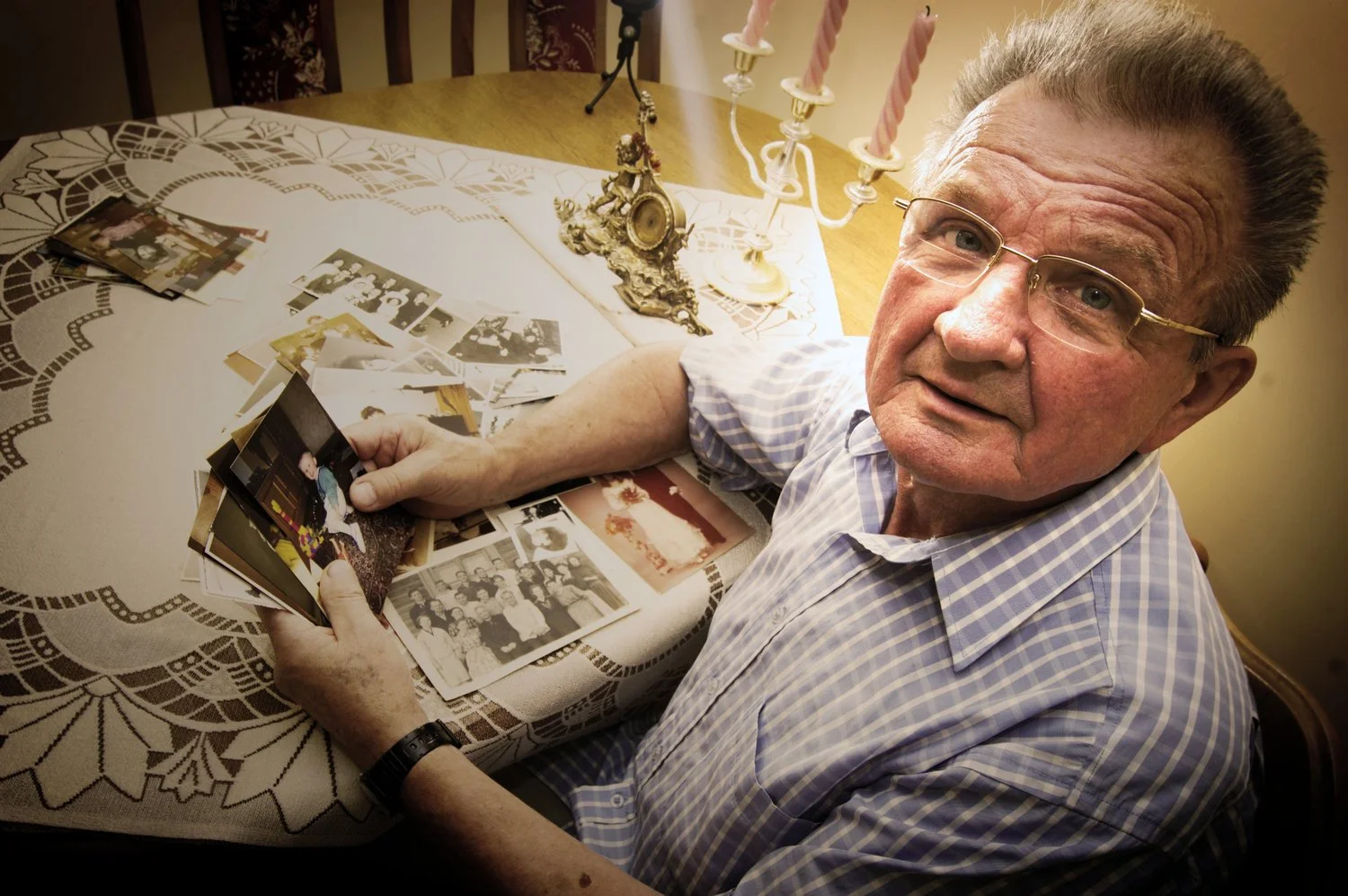
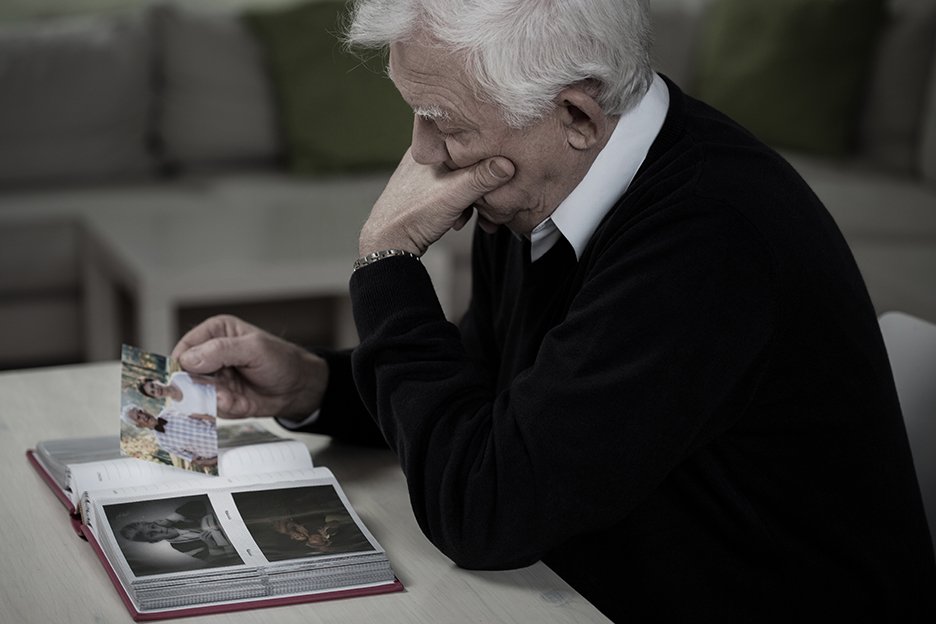
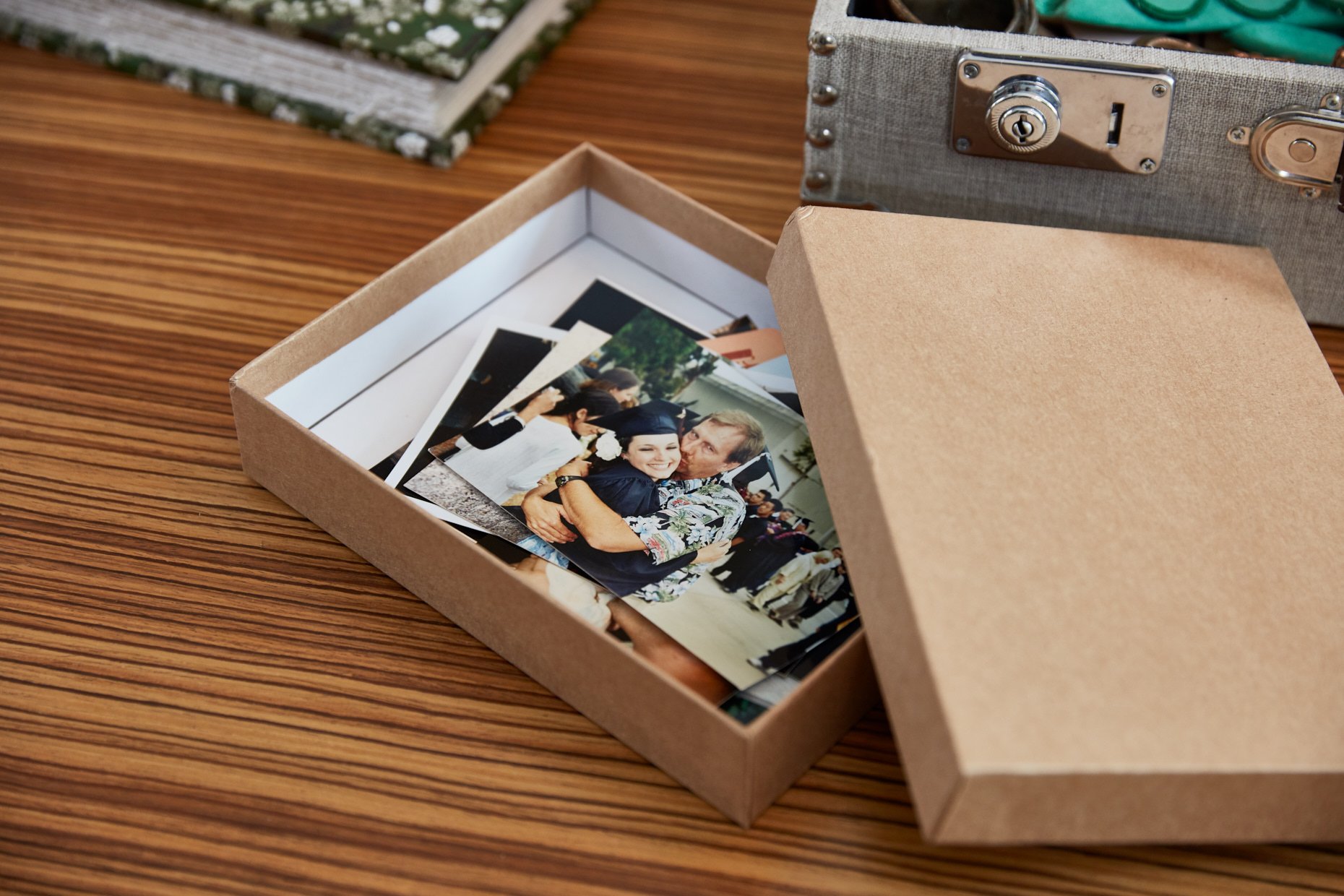
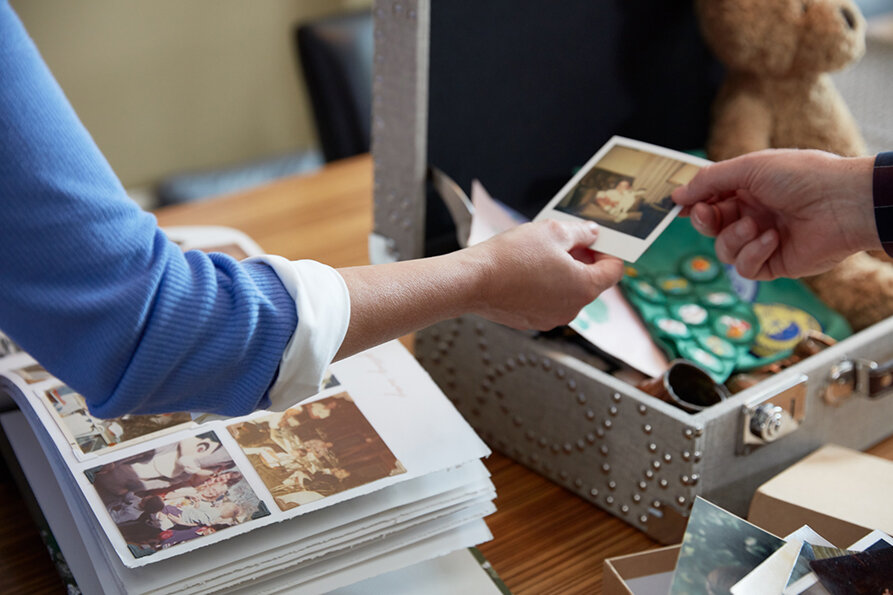
The easiest way may be to open an old photo album to a random page and allow yourself to be transported back in time. I find it's often easiest to do this when we are thinking about someone we love—our child(ren), our parents, our significant others, our dear friends. Why not visit some of your own (singular) memories, too? Does a picture of toddler you jumping into a pool bring back feelings of freedom and summer joy? Does a high school yearbook photo make you feel vulnerable and on the verge of your life? How about a shot of professional you at the podium—are you overcome by a feeling of pride, or perhaps compassion for the person you were?
Memories shouldn’t be things we are reminded of by Facebook or Google or Apple Photos (don't get me wrong, those are fun...but your memories aren’t all housed on your computer!!). Memories should be moments we can return to whenever we want, whether by flipping to a page in a photo book or by popping some cookies in the oven and being transported by the smell.
Savoring happy memories may be significant for one’s ability to cope with stress, potentially promoting better decision-making and wellbeing, according to one study; and other research shows that “intentional activities that boost positive emotions” include remembrance of positive autobiographical memories.
So—there are mental health reasons for reminiscing, for sure. But even if sitting with your memories just gave you a temporary mood boost, wouldn’t it be worth doing for that alone? I don’t know about you, but finding a few minutes to simply smile and feel nostalgic is a welcome gift to myself on any given day!
So I challenge you:
Can you pull out an old photo today and indulge in some intentional remembrance?
Can you pick up the phone to tell a loved one you were remembering “that time we…” [fill in the blank]?
Can you find five minutes to journal about a happy childhood memory (or pull out an old diary and revisit some random day from your past)?
Can you stare into space and conjure a memory from a particular time in your child’s life? (As a parent of a teenager I find that waiting in car pick-up lines is an opportune time for such intentional remembering; walking in nature or while doing the dishes are other great options!)
Can you show your child a photo from years ago and share a story or two?
I know you CAN do any of these things, the question is really: WILL you? No pressure to DO anything with your memories…just sit with them and visit a while 🤗
What are you remembering...?
















Life Story Links: October 31, 2023
Today’s curated roundup includes some great family history finds, thought-provoking reads about truth and fact in memoir, plus life writing ideas and prompts.
“Are you there? Can you hear what I have to
tell you? Our lives are finite—and yet…Look
at the way they preserve themselves.”
—Judith Kitchen, The Circus Train
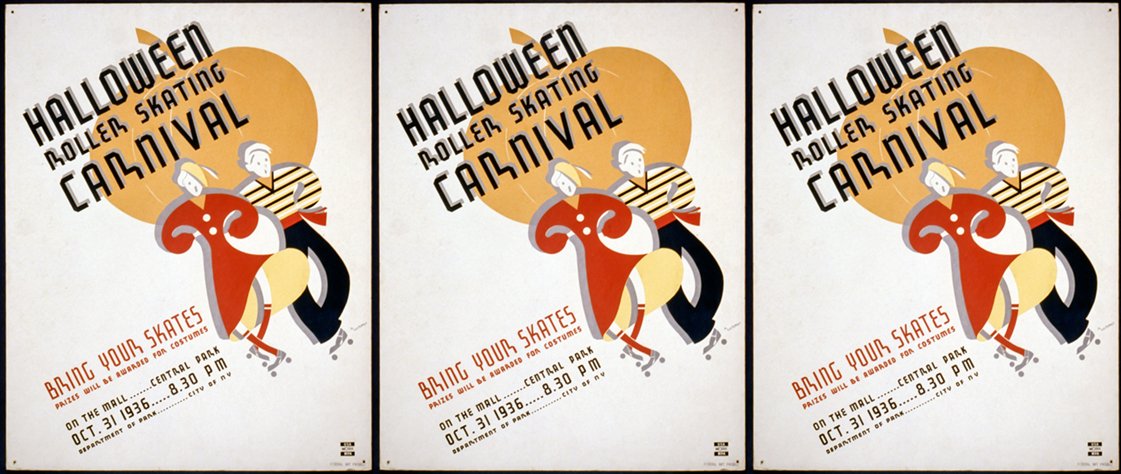
Vintage poster with original artwork by Martin Weitzman announcing a roller skating carnival in New York City’s Central Park, October 1936, produced by the Work Projects Administration; image courtesy of the Library of Congress Prints and Photographs Division, Digital Collection. The posters were designed to publicize exhibits, community activities, theatrical productions, and health and educational programs in seventeen states and the District of Columbia between 1936 to 1943.
Towards truth in memoir
MERE BELIEF?
“And so we mold our pasts into a story that may bear little resemblance to the genuine mess of actual life. When I write from memory, am I writing a history or a story? Isn’t it both?” A fascinating look at the sliiperiness of memory, by Sallie Tisdale.
CONTRADICTIONS IN MEMOIR
“As time goes by, we may find ourselves further removed from one kind of truth (what it was) but edging ever closer to another (what it means).” On why it matters how we tell the story of Sinead O’Connor.
WHAT WE TELL, WHAT WE HIDE
“It becomes part of the work of the writer and of the artist to expose the humanness of our stories to light, to air, as a way to transcend and move beyond what binds us, often generationally, to silence.” Elissa Altman on writing, permission, and the certainty of our stories.
What we write about
LESSONS FROM A CHILDHOOD IN A CHINESE RESTAURANT
“Like a welcoming restaurant server, [Curtis Chin] invites the reader to share in digestible bites of memories from childhood up through college graduation. Instead of chapters, anecdotes are dished out in menu sections such as ‘appetizers and soups,’ ‘rice and noodles’ and ‘main entrees.’”
LIFE WRITING INSPIRATION
Last week I shared ways to discover life writing prompts all around you, so the glaring white of a blank journal page doesn’t interrupt your regular journaling practice.
Family history finds
AN AMERICAN PUZZLE
Census categories for race and ethnicity have shaped how the nation sees itself. This graphic-heavy, meticulously reported piece looks at how they have changed over the last 230 years.
WHAT TO SAVE, WHAT TO TOSS
What do you save from the pile of old journals, pedigree charts, group sheets, loose papers and books of remembrance? How Swedish death cleaning can help you declutter your family history documents.
ONCE UPON A CAMERA
Thousands of historical New England photos destined for the trash were saved by a photographer who painstakingly restored the glass plate slides and donated the archive to the UMass Amherst Library.
...and a few more links
Reconstructing memory in Alexandria Canchola’s “Yours to Keep” art exhibit
Curtis Chin on the challenge and freedom of speaking your story aloud
Shoah Foundation to collect and preserve testimonies from survivors of Oct. 7 Hamas attack on Israel
“Images on our phones have changed the way we make our collective memories.”
Short takes

Discover life writing journal prompts all around you!
Sometimes all it takes to get unstuck with your personal writing is paying attention. Here are some easy (fun) ways to come up with journal writing prompts.

I recently felt called to indulge in a journal a little more special than what I usually write in, and bought this handmade beauty from BINDbyBIND, a partnership between memoirist (and now bookmaker) Beth Kephart and her artist husband, William Sulit.
Sometimes the stark whiteness of a blank journal page can be paralyzing. Our desire may be there to journal regularly, but the inspiration isn’t always as close to hand.
I have toyed with the idea of creating a prompt-a-day guide with a life writing prompt for every day of the year, and who knows, that may one day still come to fruition. For now, though, I rely heavily on serendipity to guide my own journal writing. I try to stay conscious of discovering ideas throughout my day. A few recent prompts have come from situations as unexpected as:
a sloppy note I had handwritten on a scrap of paper while still barely awake after an especially vivid dream
an experience of a fictional character in a novel I was reading; I had never had the same experience, but the emotions that arose for the character evoked a strong response from me…later resulting in a fruitful journaling exploration.
a feeling of déjà vu—this sensation of having been somewhere or done something before has intrigued me since I was a young girl, and whenever I feel it acutely, I like to dig in (when I remember to) on the page.
Can you imagine yourself, also, coming up with some interesting writing prompts simply by paying attention to what’s going on around you?
A front view of the hand-bound journal pictured above; I was drawn to the colors (yellow, my mom’s favorite, and blue, mine) and am using this journal just for thoughts on that relationship. Do you have journals set aside for certain types of writing?
Other reliable places to find writing inspiration are:
from looking at old family photos (even if a distinct memory does not surface, some catalyzing feeling almost inevitably will)
relying on a book such as Beth Kephart’s Tell the Truth. Make It Matter.
As I wrote previously: “The prompts and exercises within are wonderfully original, expertly crafted, and simultaneously pointed and open-ended enough to have you furiously filling in those blank pages with purpose.”using your own life timeline to prompt recollections worth writing about.
while not necessarily their intended purpose, decks of conversation cards can often provide out-of-the-box journaling ideas, from lighthearted and fun to profound and thought-provoking; I’ve been sharing some of my favorites on occasion on Instagram, such as this one:






Learn about our Write Your Life course, providing memory prompts, writing guidance and a dose of inspiration to anyone who wants to preserve their stories now.