
Memories Matter
Featured blog Posts

READ THE LATEST POSTS

Life Story Links: April 27, 2021
For memory-keepers: A curated collection of recent stories about memoir (reviews & first person excerpts) and family history (as preserved through narrative).
“In guided autobiography, we encourage the use of metaphors; in the case of major branching points in life, we ask, ‘If your life is like a river, what caused it to flow in the directions it did?’”
—James Birren

Today, April 27, is National Tell a Story Day. This vintage photograph by Russell Lee shows the wife of a Farm Security Administration client reading to her son, April 1939. Image courtesy Library of Congress Digital Archive.
Exploring Family History Through Narrative
“THE WHOLE STORY“
“Listen to the songs your ancestors sing to you. Be mindful of the songs you sing to others.” The 2021 UCSF Last Lecture, delivered by Peter Chin-Hong, MD, encouraged exploring one’s personal history in order to find one’s true voice.
HERITAGE, QUESTIONS, STORIES
“We can’t tell the full story without each other.” Two women researched slavery in their family, but what they discovered held different meaning for each.
FORGING MEANING FROM TOUGH TIMES
“Survival becomes a pivotal point in our story that needs to be preserved. It is the part of our story that reminds us what we are capable of, what we can endure, and what we overcame.” Lisa Lombardi O’Reilly on “the times that remind.”
“DEAR FAMILY…”
Collected letters from Australian and New Zealand soldiers “held a sense of mana in the families, keeping the memory alive of someone that, in some cases, had died over a 100 years ago.”
MY GRANDMOTHER, THE SPY
“I was going through her things and found myself staring at a letter that I had seen in childhood and I didn't really understand. It had to do with some sort of covert work she had done for the British.” In a new podcast Enid Zentelis shares the story of her grandmother, who she learned was a WWII spy:

Click the image for a 3-minute video about Enid Zentelis’s mission to learn the truth about her late grandmother, a Hungarian-Jewish Holocaust survivor—and a spy. “I wondered how I could serve my grandmother’s story, and simultaneously communicate the effects of generational trauma; the way some family members succumb to it, and the way others turned it into a source of strength and determination,” Zentelis says.
Recommended First Person Reads
LOW COUNTRY LEGENDS
“Were those really the voices of loved ones long gone who called out my name in subway cars and expensive restaurants and while I brushed my teeth?” J. Nicole Jones on familiar ghosts and family legacies.
CROSSING BORDERS
“‘Berlin? Seriously?’ my Jewish friends marveled. If you want to bring conversation to a halt at your local Purim carnival, try mentioning that you’re relocating to the city where the Gestapo was headquartered.” Laura Moser on moving to the neighborhood where her grandfather lived before fleeing the Nazis.
LIFE IN THE DARK CITY
“When you are forty-three in New York City, raising children, you have already lost the New York that mattered to you at age twenty-three. The loss I am talking about is something else entirely.” Emily Raboteau on pandemic NYC.
THEIR STORIES ARE OUR STORIES
“Our stories are even richer and more complicated than we sometimes realize, especially stories that are the most familiar to us, the stories that have been passed down.” Menachem Kaiser in conversation about the ever-evolving nature of Holocaust memory and storytelling.
WRITING THROUGH GRIEF
“I wanted to write that person, share her writings, immortalize her in a small way—she who had not been able to author her legacy.” Maryanne O'Hara on turning to personal writing in the wake of her daughter’s death.
Hodgepodge
STORIES UNTOLD
“My life is not interesting enough” and “it’s too self-centered to write my memoir” top the list of reasons I hear for not writing about one’s life. Click to read about why I think these reasons are bunk.
FOUR MEMOIRS WITH REMARKABLY DIFFERENT APPROACHES
The University of Pennsylvania’s alumni magazine turns its attention to the writing lives of four of its cohorts including stories about “middle school memories, meditations on motherhood, a prismatic accounting of the self, and a long life well and furiously lived.”
AN ARCHIVAL PROJECT IN THE AGE OF COVID-19
In “Portraits of an Epicenter: NYC in Lockdown,” a group of creative college students share photo essays and written reflections of living through the pandemic. “Although the city was unified in this experience, no two experiences of the lockdown were the same.”
HONOR HER STORY
Mali Bain, a personal historian in British Columbia, Canada, says she has been inspired by her clients’ unique ideas for Mother’s Day gifts. Here, she shares a few of them.
Virtual Events that May Interest You
April 30: First conference of International Institute for Reminiscence and Life Review at its new home, UCONN School of Nursing
May 1: Virtual (paid) workshop: “The Power of a Legacy Letter and How to Write One”
May 19: Storykeep presents a free live webinar to acquaint you with private podcasting, a new tool for documenting and sharing family narratives and connecting family across generations.
...and a Few More Links
Short Takes

“I wish I knew”
The Wall Street Journal reports that a growing number of adult children are interested in hearing more of their parents' stories. Are you among them?
A recent article in The Wall Street Journal, “The Questions You Wish You Had Asked Your Parents,” cites a growing interest in people wanting to know more of their family stories.
The uptick in awareness of story preservation is attributed to the rise in home DNA kits, the popularity of family history via sites such as Ancestry, and the younger generation’s comfort level with documenting every aspect of their lives: “Younger people are more transparent and used to telling the story of their own lives, often online for many to see, and expect it from others,” writes Clare Ansberry.

This recent article in The Wall Street Journal indicates that more and more families are realizing the value of preserving their stories.
All of this is no doubt accurate, and I do find millennials in particular curious about their parents’ lives before parenthood and even nostalgic about their own childhoods.
But I would argue that this interest in our collective family history is nothing new—at least, not when talking about family history in terms of stories.
While finding distant DNA cousins is indeed new, wanting to know more about our parents’ lives is not. Unfortunately, all too often people don’t recognize that desire until it’s too late.
I’ve written before about how it may seem like your grown kids don’t care about learning about your life—but that in fact, they merely don’t care to pay attention just yet. And that’s the key here: We either need to get the younger generations to realize the urgency in capturing their elders’ stories, or convince the older generations that not only do their stories matter, but that they will be treasured by their family when they are gone.
Is story preservation a new trend?
The message of that WSJ article is that, apparently, both of these things are happening—changes are afoot that are opening our eyes to the need—and value and desire—for documenting our family stories.
I hope this is the case. I know personal historians such as myself and those quoted in the article are making every effort to spread the word and stress the importance of preserving our legacies.
I’m not convinced, though, that enough people are on board.
I hope that more and more people begin to see the value in asking their parents about their lives before parenthood.
I hope that more and more people realize that now is the time to begin asking—not later, not when it’s more convenient or they’re less busy.
I hope that more and more family elders acknowledge that their lives have been interesting, that the paths they have taken hold lessons for the next generation, and that their stories matter.
Most of all, I hope that you FEEL the urgency and take the first step toward preserving your family’s stories for posterity.
Avoid having to say, “I wish I knew.”
If you’re a DIY’er, consider writing about your life or interviewing your family members.
If you would like to explore how working with a personal historian can make the process easier and yield a more professional product, please reach out to chat.
What I know: I still hear from far too many people about the regrets they have: not asking their parents about their lives until it is too late; until dementia has crept in, or their parents have passed.
It is my mission to help people have no regrets. Won’t you join me in this mission?
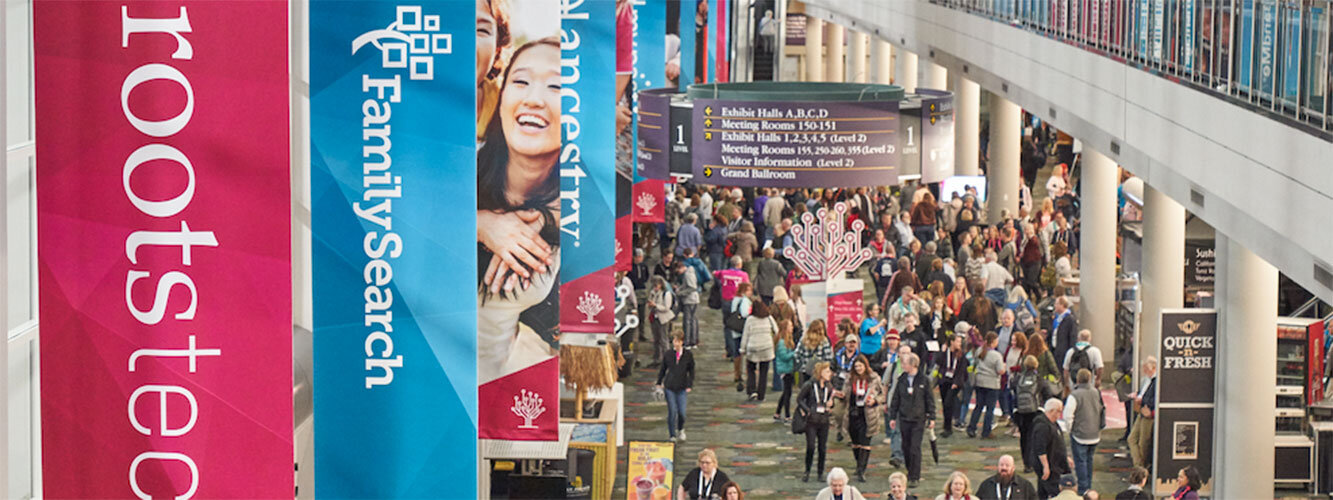
Experience the ultimate family history conference virtually
Watch recorded sessions from RootsTech 2020, the premier genealogy conference, from home: recommendations for family history storytelling videos and more.
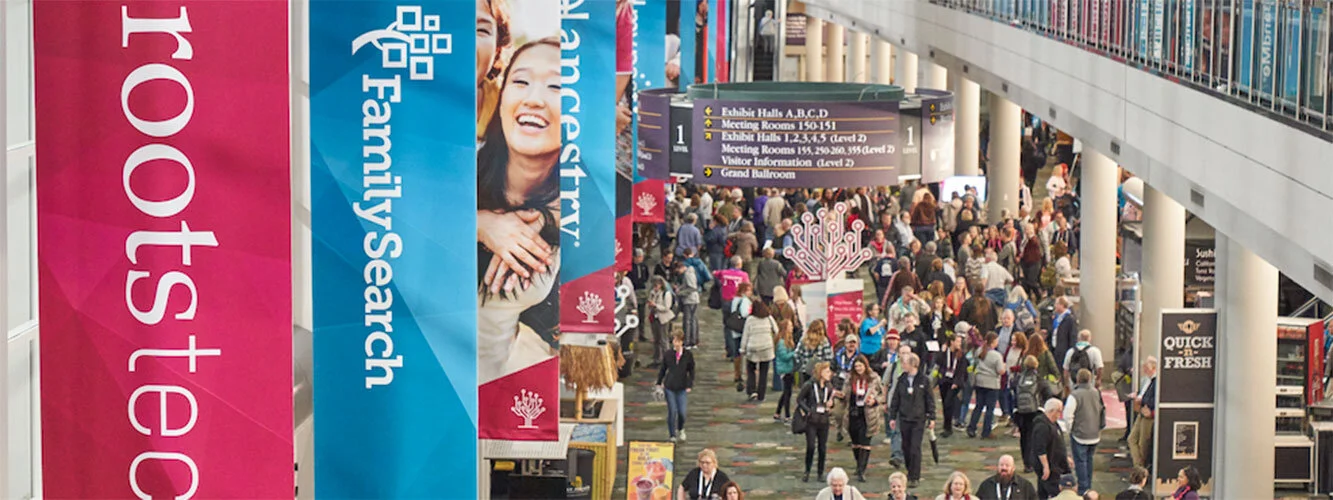
RootsTech is the premier family history conference in the world, drawing more than 30,000 people to Salt Lake City, Utah, annually.
This year marks the genealogy conference’s tenth anniversary, and it continues to draw photo organizers, storytellers, and family historians. The shared goal: To help us discover and celebrate our stories.
“Discover the story of you” virtually
If, like me, you can’t make it to Salt Lake City February 26-29, there are a few ways to benefit from RootsTech from the comfort of your home.
This year’s Virtual Pass includes 30 sessions, up from 18 last year, and many of them will appeal to personal historians and aspiring life story writers.
The virtual pass costs $129 and gives you access to the 30 sessions on demand, so you can watch them on your computer, tablet, or smart phone any time (and more than once, should you wish). Expect them to be available 15–20 days following the end of the conference.
A few highlights for storytellers and family history writers:
Oral History for Beginners: Interviewing Is Key
Presenters: Rachel Trotter, Rhonda Lauritzen
The gist: Asking the right questions is the best way to get started telling your own story or that of someone you love, but sometimes it can be the biggest stumbling block. This class will go over the basics of interviewing. Easy and practical tips will also be shared on the best recording and transcription methods. Presenters will role-play practical application of the interview process and what to do if things don’t go as planned.
Report for Duty: Find Stories of Veteran Ancestors
Presenters: Lindsay Fulton, David Lambert, Melanie McComb
The gist: Finding the stories of the veterans in your family is a way to connect with and honor their memory and military service. In this session NEHGS experts will provide you with the tools, tips, and strategies for learning about your ancestors who served in the Civil War, World War I, and World War II.
Gathering the Life Stories of Living Generations
Presenters: Deborah Abbott, Sunny Morton, Jay Newton-Small
The gist: Capturing the memories of living loved ones is a unique opportunity. It’s not genealogy research and it’s not your personal history; it’s what lies between. There’s a delicate balance between truth-discovering and managing family relationships. This session will offer different perspectives on how to capture these life histories and also different ways you can share them.
Engaging the Family in Telling Your Family Story
Presenters: Nicole Dyer, Jana Greenhalgh, Olivia Jewell
The gist: Presenters (three busy moms with a passion for genealogy) explore modern tools that will make it fun to engage family members of all ages in the process of gathering and telling your family story in creative ways.
Other classes included in the Virtual Pass subscription focus on:
DNA testing;
genealogical records challenges;
family history best practices, tips, and tools;
and specific heritage research, including for families descended from Germany, France, Scandinavia, Africa, England, and Ireland.
Browse the full list of Virtual Pass class offerings here on the RootsTech website.
Dip into the video archives
Many past sessions are available to watch free of charge, as well, including some keynotes and educational sessions. Bookmark the RootsTech video archive page so you can listen in at your convenience, or explore a few sessions I recommended last year if you are interested in family history storytelling.
You can also explore videos by topic, such as family heirlooms, technology, and genealogy.
I am not affiliated with RootsTech in any way. This roundup is intended as a recommendation based on my own insights and experiences for likeminded family history storytellers.

Life Story Links: January 6, 2020
The healing value of storytelling, how memories may be magnified during holidays, plus more delicious food memories and time travel, family history–style.
“This packrat has learned that what the next generation will value most is not what we owned but the evidence of who we were and the tales of how we loved. In the end, it's the family stories that are worth the storage.”
—Ellen Goodman

“My mother Hilary, aunts Kay and Peggie, and my grandmother Hilda. In those days people dressed up for outings!” wrote Richard Bridgland of this photograph taken at Stonehenge in 1932. Photo courtesy of Richard Bridgland/English Heritage. Read about an exhibition of family photos taken at the Stonehenge, below.
On the Menu: Memories
THE STORY OF A FAMILY, THROUGH FOOD
“My heritage lives in my stomach,” Catherine Lanser writes in “Instructions to the Past,” an ode to two slim, spiral-bound recipe books she inherited from her mother.
“AND THEN, I BAKE.”
Although she can find instructions for any holiday cookie online, Chicago writer Donna Vickroy prefers to pull out her mother’s handwritten—threadbare, dough-stained—recipes each Christmas. “Often, as I’m mixing, I tear up knowing that she was thinking of me when she grabbed pen and paper to write down these very words—butter, flour, enjoy.”
FOOD RITUAL & RECONNECTING
Sharing a family meal can help those with dementia connect. “A good meal made with love can draw out a person with dementia and bring them real joy…even if they've completely gotten to the point where they may not have that connection to the family story."
AN OVER-THE-TOP FOODIE HOLIDAY
Personal historian Sarah White remembers being a newcomer to her husband-to-be’s annual Christmas Eve feast—where family, friends, antipasti, and desserts proliferated amidst the Venetian splendor of his relative’s “Jungle Room.” Bonus: Auntie Mary’s grustali recipe.
It’s in the Telling
THE NAKED TRUTH
“Truth in life doesn’t automatically morph into truth on the page. And living people don’t necessarily come to life in print. It takes creativity—hence the term “creative non-fiction.”” Blake Morrison on how to write a memoir.
YOURS TO TELL
“A story can only be a story if it is told.” College sophomore Trinity Bland shares compelling reasons why her fellow students at San Diego State University should in fact share their personal stories.
CALLED TO SERVICE
“There are fascinating stories all around us, if only we ask,” prompts Maryland–based personal historian Pat McNess, and here she asks a lifelong friend about his time in the Navy.
HEALING EXCHANGES
“We play an integral role in saving history and recognizing the healing power of having one’s story recorded,” Wisconsin–based personal historian Mary Voell writes in this piece about the healing benefits of storytelling.
THE HOSPICE HEART
“Being present for and receiving a life story is one of the great gifts of [hospice] work,” writes Gabrielle Elise Jimenez. “When we are witnesses with presence and clarity...these snapshots and stories become gifts to us and create opportunities for healing...”
Time Travel,Family History–Style
STONEHENGE SNAPSHOTS
The oldest known family photo of Stonehenge dates to 1875, and can be seen on display with other pictures of the ancient stone circle in England, like the one above, at the visitor center through August 2020. If you have one to add to the collection, or would just like to browse the fun photos, click here.
‘THE SURVIVORS’
“Going back through my family’s history has deepened my awe for my grandparents and has given me a broader, more complex understanding of their experience...and the obligation that falls on each of us to uphold that heritage going forward.” On inherited trauma, and writing memoir.
Ringing in 2020
A JOY-FILLED COMMUNION
On the Eve of the December holidays I wrote about how the season can be difficult for those of us missing a loved one—but truly, this message is an ever-green one: Remembering our lost loved ones—out loud, with others who knew them—is a balm to the soul.
THE GIFT OF LEGACY
Tell someone, unequivocally, that they matter to you: By gifting them a chance to tell their stories, to preserve their past, to be heard and validated, you are letting them know that they matter—that they will be remembered.
NEW YEAR, NEW MEMORIES
Two resolutions guaranteed to bring joy to you and others—no low-carb diets or Fitbit tracking in sight!
RETROMANIA
“Every corner of social media seems to be using nostalgia to emotionally manipulate us, beaming us something warm and fuzzy on a cold, shiny screen.” Do we have a nostalgia fixation?
...and a Few More Links
Auschwitz survivor wonders: Was she the reason he was alive today?
Personal historian Gloria Nussbaum interviewed for Northwest50Plus magazine.
Google Photos launches private photo messenger.
Using Snapchat and Instagram as self-curated memory books
Scanner recommendations for digitizing old family photos
Short Takes

Life Story Links: October 8, 2019
Lots about memories, from how we may forget to how we craft them on a page; plus family history, family artifacts, and family foods that hold meaning.
“Every man’s memory is his private literature.”
—Aldous Huxley

Ellen Cantor’s “Prior Pleasures” series of double-exposure photographs (no Photoshop involved!) “explores memory and preservation of the past while ensuring the creation of a visual legacy for the next generation. The books photographed for this series are the ones I have carried with me since childhood,” she describes. Photograph by Ellen Cantor. Learn more in “Seeing Double” below.
Putting Memories into Words
COMFORT FOOD
From alfredo sauce from scratch to a thoroughly gussied up mac-and-cheese from the blue box, Carmen Maria Machado uses the foods that warmed her in the homes that she traversed to walk us through her twenties.
THE AUTHOR WHO DIDN’T CARE TO BE REMEMBERED
In this excerpt from Shadow Archives, a look at the curious case of African American writer Ann Petry—who “embarked on a shred-and-burn campaign” of her journals, letters, and book drafts—and the ways in which we scour those precious remaining archives nonetheless looking for glimpses of her life and motivations.
ALL THAT HAS BEEN FORGOTTEN
My job as a personal historian was ignited by a tribute book I made in honor of my mom after she died, and I regularly help others spark memories that may seem elusive. And yet: I have been haunted by the notion that all the memories of my own mother are…gone.
WHEN MEMORIES MEET THE PAGE
“I had written down just what my client had told me about his aunt. So why did reading the chapter move him to tears?” wonders Massachusetts–based personal historian Nancy West. “Because seeing words on a page is somehow more profound than simply telling the story.”
Pieces of Our Collective Past
IS THAT…?
“Family artifacts hold all kinds of genealogical evidence waiting to be found and added to our ancestors’ stories,” writes Denise May Levenick, aka The Family Curator. Imagine her shock when she encountered a piece of her own family history at a flea market.
HISTORY MADE PERSONAL
Lonnie G. Bunch III, named Secretary of the Smithsonian Institution in June, describes five artifacts from the vast collections that hold deep personal meaning for him, and that reflect significant pieces of our nation’s history.
SEEING DOUBLE
“I document the artifacts of the past to enrich the present,” still life photographer Ellen Cantor says. “I am interested in reimagining the family photo album and objects that hold personal histories in order to explore the distillation and persistence of memory.” Read about her multiple-exposure series exploring the pleasures of childhood reading, and head over to her website to browse some of her other work, including Family and Visual DNA.
...and a Few More Links
Washington State Parks is collecting oral and written histories of Mount St. Helens’ 1980 eruption.
The Family Narrative Project is offering a recipe storybook online course.
Story Corps. seeks support.
Short Takes

Think your grown kids don’t care about your stories?
Ever tried to talk about your childhood with your grown kids only to be met with a lack of interest? They might not care now, but they will one day—I promise.

I was recently chatting with another local entrepreneur about our businesses. Her interest was piqued by a life story book sample I had in tow, and she was clearly drawn to the idea of preserving her stories.
Fast-forward two weeks, when I bump into her again: “I was talking about what you do with my 24-year-old daughter. She clearly had no interest in learning anything more about me or her father—she just doesn’t care.” As she said this, there was a look of barely concealed anguish on her face, her body folding in on itself.
Oh, my.
Of course this isn’t the first time I have heard such a sentiment. Many people with whom I speak tell me that their kids—even adult children with families of their own—could not care less about their family history.
“If they cared, they would ask me what my childhood was like.”
“I’ve tried to tell my kids about what it was like to move here from China, but they barely listen.”
“Are you kidding? Of course I don’t talk about my past with my kids.”
The thing is: They might not care now, but they will someday.
How do I know? Because I have heard the regrets of too many. Folks who wish they had asked the questions, heard the stories, witnessed their parents as people beyond ‘mother’ and ‘father’—before it was too late.
Let me ask you this: Are there things you wish you knew about your own parents? That you wish you had been able to ask them before they passed away?
Now: Did you care about those things when you were in your twenties?
If you put yourself in your grown kids’ shoes, you’ll see that their lack of “care” about your past—about your experiences and wisdom—is because they haven’t learned to care yet. They take for granted that you’ll be there when…when they need something, and when they eventually want to talk (and listen). They are in the midst of forming their own lives, focused on the “me,” not, ahem, on you.
You get that, right? It doesn’t mean they don’t care; it means they don’t care to pay attention just yet.
Your stories are the gift they don’t yet know they want.
Whether you begin writing anecdotes in a question-a-day journal or sit down with a personal historian such as myself, please do something to share your stories for posterity.
Don’t let your kids have regrets.
Still not convinced your stories will matter one day?
Browse the posts below to explore why it’s so crucial to preserve your life stories now for the next generation.






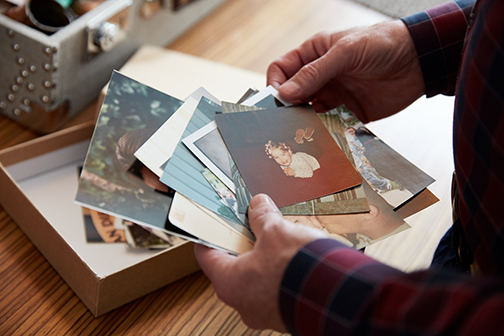
6 tips for choosing the best family photos to use as writing prompts
Family photos can be useful tools to jog memories and call forth stories. We share how to determine which images will elicit the best family stories.
There are no rules for how to choose a photo that will be effective as a biographical writing prompt, but we can offer a few guidelines for the types of images that often elicit storytelling that is deeper and more meaningful than a mere identifying caption.
That’s the goal, after all: To use a photo as a starting point for your storytelling—as a jumping off point for memories, a touchstone for emotions, a lead-in to a narrative from your life.
So get out your old family photo albums or that dusty box of print photographs from the basement! Then…
Step One: Choose 10-20 pictures to start with.
Begin randomly looking at photos.
Rather than focusing on those that are frame-worthy, look for photos that elicit a strong feeling from the viewer (you, or the family member from whom you would like to capture stories).
Set aside 10-20 images that stopped you in your tracks in number two (even if you stopped to wonder about the image as opposed to reliving memories as a result of looking at it; sometimes it’s the mysteries behind a photo that draw forth particularly revelatory stories).
Now it’s time to choose a photo with which to begin your reminiscing. Whether you are using the photo as a writing prompt or as a vehicle to jump-start conversation in a personal history interview, the following suggestions will be helpful in selecting images that lead to substantial storytelling.
“Photos reveal themselves in layers,” Maureen Taylor (aka ‘The Photo Detective’) writes on her blog. “You study the clues and talk to family but every time you look at it or show it off to family you might learn something new. One thing leads to another.”
Step Two: Determine if the photo is story-worthy,
Ask yourself if the photo you are holding does any of the following six things—and if the answer to one or more of them is yes, then you’ve got yourself a winner. Set it aside and make sure it’s on hand the next time you want to delve into some family history writing!

The photo invokes an emotional response.
Do you feel a rush of excitement or a flush of scarlet creep up your face when you first spy the picture? It may make you feel anguish or sorrow, pride or exasperation, abundant joy or abiding love—the key is, it makes you feel.
If a family photo has such a visceral effect on you, this will be most fruitful for writing its story.
“Photographs are about one specific second, but they can also be about the future,” Beth Kephart writes in The Quest for Truth. “Photographs can operate as metaphor and counterweight, as tease and opposition, as the other half of a parenthesis.”
That photo that moves you is a doorway to your past that is clearly connected to your present in some way. Explore why you feel the way you do, and how this feeling fits into your life then and now. Provide context for your feelings; set the scene.
The picture tells a visual story.
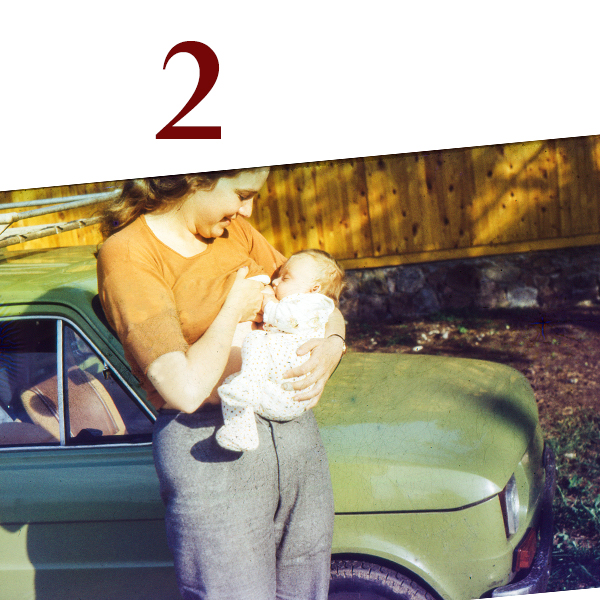
Sometimes a picture itself already reveals a story: If the who, what, where, when, and why (or most of those) are apparent just from looking at the photo, then it’s likely a good candidate for embellishing upon. Of course, it’s ideal to choose images whose stories matter to you in some way.
The snapshot of this woman breastfeeding certainly tells a story about who she was as a mother—and if the mores of the time period and the town are known, and her character as well, then the storyteller can dive deep. A grown child looking at this image might use it as a jumping-off point for talking about their relationship over the years; or perhaps how their mom was part of a strong line of women before her; maybe she was only able to have one child, or 10, or only girls…
A photo is a moment in time, but on the periphery are details that help make up its narrative. What photo would have been shot just before this one? Just after? What’s in the frame? What (and notably who) is not in the frame? By starting with a picture whose story seems readily available, we can develop depth by asking such probing questions and tapping our memories for more.

Details draw your attention.
Your facial expression at the time the picture was snapped. The pattern of your grandmother’s well-worn house dress. A missing button on your dad’s shirt, or the papers falling from his briefcase. The water stain on the bedroom wallpaper. If some detail in a photo draws your eye again and again, there is more to be probed.
What does the detail begin to tell you? What beyond the frame of the photo—on that day, or a decade before or after the photo was taken—makes you focus on it? By taking the time to meditate upon all that the detail calls forth in your mind, you will reveal a greater meaning to this photo than could ever be revealed upon initial inspection.
The photo portrays part of the subject’s everyday world.
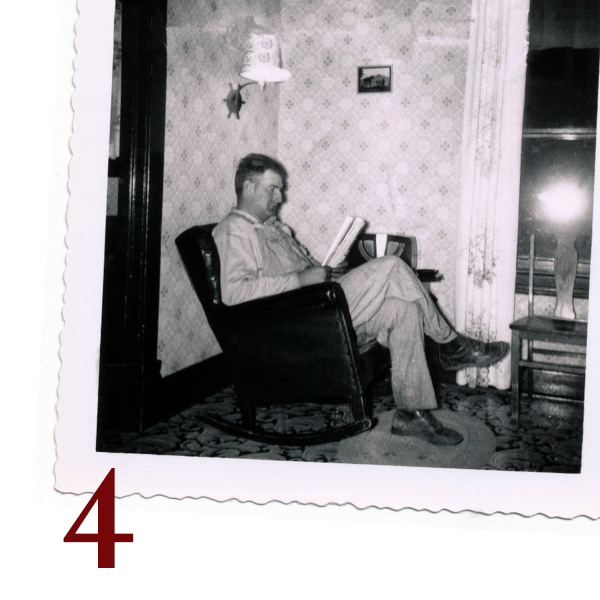
My favorite type of modern family pictures could be described as documentary family photography: people in their natural environment, doing what they do every day. (Check out talented photographer Jen Grima’s work for inspiration.) I love capturing our routine family narrative this way because the resulting photos are so evocative of time and place, and they set us in scenes that are real and personal, uniquely ours.
Many old family photos do so less consciously, perhaps, but the impact is the same. We are drawn to such pictures because they reveal what our or our ancestor’s life was like back then. So if a snapshot of your aunt holding you while she’s hanging the laundry crosses your path, use it to tell a story. If you find a picture of grandpa reading in his favorite recliner, dad trimming the hedges at your childhood home, or your baby crawling amidst the messy remnants of Christmas wrapping paper, use them all—find their stories.

The image intrigues you.
Is it a curious shot? Out of the ordinary for your family or for the time period? Is someone missing who you would have expected to be present in that scene?
If it makes you wonder, then it very well may lead to a worthwhile story. Perhaps you end up asking for relatives’ input to get to the bottom of your intrigue, or maybe in lieu of concrete answers you surmise the story behind the old photo, thereby revealing a narrative of your own in relation to the photo. Chances are, whatever your approach the resulting observations will be as alluring to the next person as the original photograph was to you.
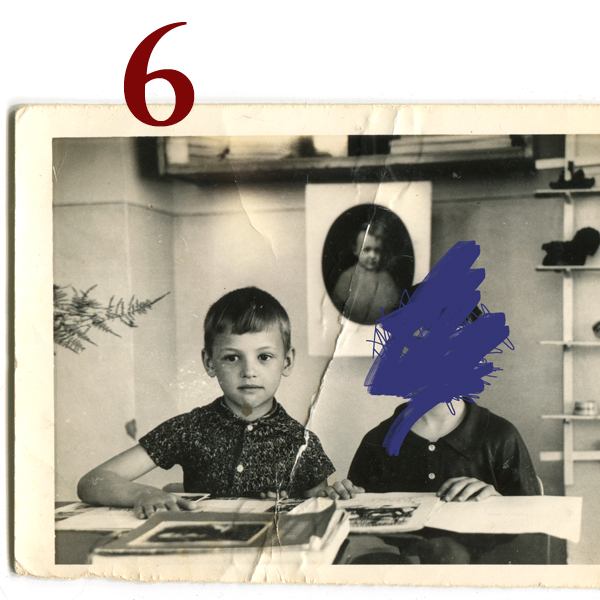
The physical print tells its own story.
My grandmother had a tendency to hold a grudge, so it was not too surprising to find among her things photos that had an individual literally cut out of the scene (or crossed out with ballpoint pen). Now there’s a story to be revealed! The same could be said for pictures that have been torn, damaged by flood or fire, or found tucked away in a book.
Sometimes getting to the story behind the photo is as fun—and constructive—as getting to the story that resides within it.
Step 3: Start sharing your stories.
Read more about how to use old family photos as biographical writing prompts—we’re talking nitty-gritty advice, from where to begin after looking at the photo to how to capture your memories.
Download the advice in a handy printer-friendly booklet here, entitled “How to Use Photographs as Prompts for Writing Life Stories.”
Explore more intense self-reflective writing prompts in Beth Kephart’s memoir writing workbook.
Once you’ve written your first life story vignette, consider doing something special with it—we’ve got five easy ideas.

Genealogists reveal why your stories matter
The most memorable quotes and takeaways from family history experts Amy Johnson Crow, Curt B. Witcher, Scott Fisher, and Janet Hovorka at RootsTech 2019.
I wasn’t at RootsTech 2019 last month, but I did take advantage of the free videos that were available for live streaming during the event and are accessible even now on the RootsTech website.
Since we’re all about life stories and personal history around here, I decided to offer up a few of my favorite takeaways related to those topics from four speakers. If they whet your appetite for more, you can always watch the full videos of these speakers and discover others focused on genealogical research, DNA testing, and online record searches.
From Why and How to Put Yourself into Your Family History
AMY JOHNSON CROW
Favorite quotes from Amy Johnson Crow, a Certified Genealogist with more than 20 years of experience helping people discover their family's history:
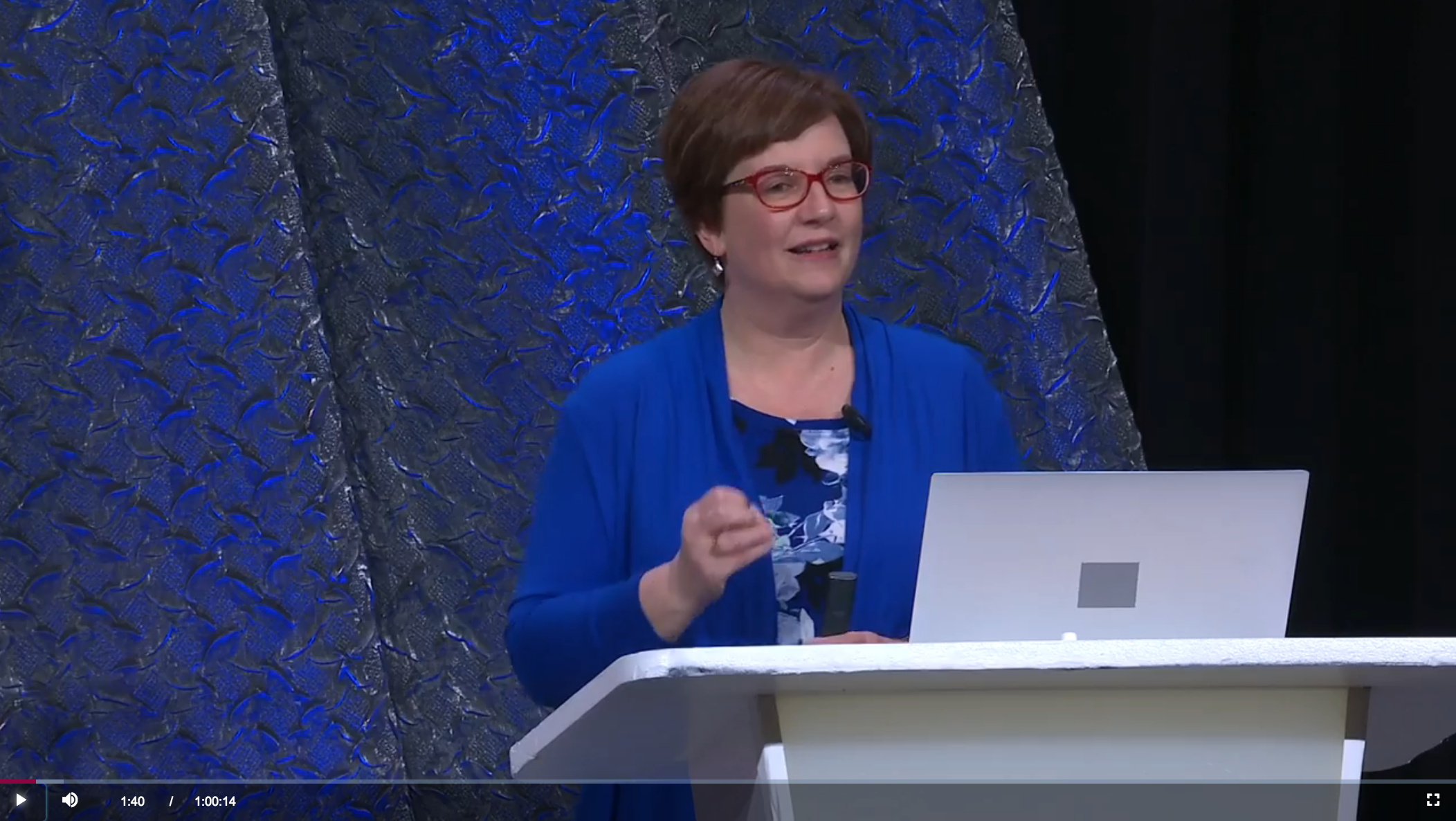
Author and speaker Amy Johnson Crow presenting at RootsTech 2019
“When we consider recording our own stories, we think of memoirs that we have read… And when we think about writing our own stories, well, if we’re thinking of something like Angela’s Ashes or Little House on the Prairie, our first reaction might be, well, I’m not famous. Why should I record my story?”
I’ve got a whole list of reasons you should record your story, as does Amy:
“Think about how thrilled you would be if you found a diary from one of your ancestors. Or a letter from one of your ancestors.”
(Even if it described an ordinary day doing ordinary things, like a trip to the market!)
“I think that you would treasure that letter because it would be insight into the life of that ancestor, told by that ancestor.”
Indeed!
“So why do we think that future generations, oh they won’t care about me!? We already know that we care about what happened in the past. We need to be the ancestors to our descendants that we wish our ancestors were. We need to record more of our stories like we wish that they did.”
Can I get an amen?!
“Don’t get hung up on the format, because really, any format will do. … You have to record the story—that’s the important thing. You can figure out the preservation later. You have to tell the story before you can preserve it. And truly, a story isn’t a story until it’s been told.”
So, tell your stories! And remember:
“It doesn’t have to be overwhelming. It doesn’t have to be about all the big things in your life. There is no story that is too small to be recorded.”
CURT B. WITCHER
Highlights from Curt B. Witcher, Genealogy Center Manager at Allen County Public Library in Fort Wayne, Indiana:

Genealogy expert Curt B. Witcher during his presentation at RootsTech 2019
“Family history is the pursuit of, and the presentation of, and the preservation of our stories.”
“The grand and the big and the exciting and the wonderful—that’s not it. It’s the point in time, and the person in time, and how it relates to us.”
After reiterating some of what Amy Johnson Crow spoke about, Curt transitioned to talking about the science behind story and why it is so important:
“Experiencing story alters our neurological processes.”
He is not a scientist, but he is eager to shed light on how amazing much of the science behind story really is—from triggering the release of cortisol (which commands our attention) to the eventual release of oxytocin (which he says “makes us more receptive to empathy, to caring”). If you are interested in this, I suggest watching Curt’s entire portion of the video, which begins at the 20-minute mark.
Want happy children?
“Family story is critical to all of us being better human beings, but especially for younger people as their brains are being developed.”
“Stories, psychologists and scientists tell us, are strong predictors of a child’s happiness. The more stories, the better adjusted, the better a child will grow and be welcomed and welcoming. How can we not think that this is important?”
Is there anyone among us who does not?!
SCOTT FISHER
And lastly, the best tidbit of advice from Scott Fisher, host of podcast Extreme Genes, America’s Family History Show, who spoke concretely about how to turn oneself into a family history reporter:
“Do not answer questions for your subject. If they’re taking a long pause, let them think. Don’t be afraid of the silence.”
Ah, yes, be patient, and listen generously!
From Heirloom, Documentation, or Junk: What to Keep or Toss
Janet Hovorka
Memorable moments from Janet Hovorka, genealogy coach and development director for Family ChartMasters:

Genealogy coach Janet Hovorka speaking at RootsTech 2019.
“When you keep everything, it might be overwhelming to the next generation… After your passing, your family could throw everything out just because they’re overwhelmed.”
Imagine?!
Janet offers up six concrete questions to ask yourself about your family history stuff in trying to decide whether (and how) to save it or to toss it. If this is something you are facing, whether due to the recent loss of a loved one or to the ever-expanding hoards of your own family history documentation, then definitely give her video your full attention.
Here, though, a few golden nuggets:
“A family heirloom is only as valuable as the story that comes with it.”
Can I get another amen?
“An heirloom can only go down one line, really. But documentation, especially digitally, can be spread over the whole family.”
But remember:
“Digital materials can be more fragile than a set of china… You could be creating a Digital Dark Age in your family.” (caps mine ; )
Excellent advice:
“Think about a digital will, especially if you want to preserve you own life.”
Families, please hear what Janet says:
“In my opinion, one of the most important things to do is to teach your children and vest them in [your family history] now…. Tell them the stories. Vest them in those heirlooms and those documents. A family that is vested in those things is going to preserve them.”
Because…
“Never in the history of the world have we been so disjointed and so anxious… We move away from our ancestors more than families ever have. We don’t grow up at grandma’s knees anymore.”
Facebook and FaceTime may bring us closer to far-flung relatives, but it’s no substitute for in person togetherness and for regular story sharing—especially of the impromptu kind.
“Talk to the next generation.”
Please.
“As you study the span of a life, you learn that everybody has a little bit of hero and a little bit of scoundrel in them.”
Which part of your story will you tell first, I wonder…?



Dawn Roode’s curated roundup for the week of Sept. 23, 2026, is overflowing with recent reads on memoir, life story writing, and family history preservation.