
Memories Matter
Featured blog Posts

READ THE LATEST POSTS

Do you keep a writing ideas notebook?
Writer’s block can happen to the best of us. This simple idea—keeping a notebook of self-generated writing prompts—will keep your memoir ideas flowing.
So you finally find a stretch of uninterrupted time to write…and when you sit down, you draw a blank. Has that ever happened to you? This simple idea—keeping a notebook of self-generated writing prompts—will keep your ideas flowing.
I share a lot of writing prompts on the blog and in my annual course, and I’ve even written about how you can generate your own writing prompts. But I understand how—somehow!!—it never seems like a writing prompt is at the ready when you need it, right?
There’s an incredibly simple solution: Keep an ideas notebook. Don’t be fussy! Jot down a note the moment an idea bubbles to the surface on whatever you have handy—a napkin, a Post-it, the back of a receipt—then tape or staple these into your notebook. (Pick up a cheap lined notebook kids use for school so it doesn’t feel too precious to approach in this haphazard way!)
What kind of ideas am I talking about, you’re wondering? Anything that may jumpstart your memories or get your pen moving. Here are some real-world examples from my own life:
As I run errands, I hear a song from my childhood on the car radio. I am flooded with memories and emotions. At a stop light, I snap a picture of the song name on the dashboard with my phone. That alone will be prompt enough to get me writing when I’m in the mood.
Watching a movie with my family, a character’s reaction or words give me a strong sense of deja vu. Why? With no time to consider it, I text myself a short phrase to remind me of this feeling. Maybe one day it will be worth writing about (maybe I’ll even rewatch the movie to bring me back emotionally).
I wake up from a dream and in that half-awake state I reach for the notebook I leave on my night stand to scribble a few words so I don’t forget. (Never—not once, and I’ve tried many, many times—have I merely told myself in that moment to remember the dream….and then actually remembered it later.) Dreams can provoke some surprising writing!
Here’s a common scenario for me: Listening to a podcast, I hear something that resonates and feels like it was drawn from my own life. I grab a piece of paper and jot down the time stamp and episode name. Nothing else is needed, but a word or two about the theme of the conversation may be helpful. When I’m staring down a blank page, I can listen in to that select part of the conversation to get my creative juices stirring again.
Other things you might find yourself taping into that ideas notebook? Fortune cookie slips. Magazine articles. Quotes from friends. Random handwritten memories. People you want to call (trust me, sometimes the best way into a story of your own is to ask someone else for their version). A letter from a friend. A page from a datebook.
You get the idea, yes?
For me, the messier this ideas notebook is, the more inviting I find it! So what if pieces of paper stick out the sides, or if the notebook bulges unevenly?! That just means there are treasures awaiting—self-made prompts you know will move you, because you felt the stirrings already.
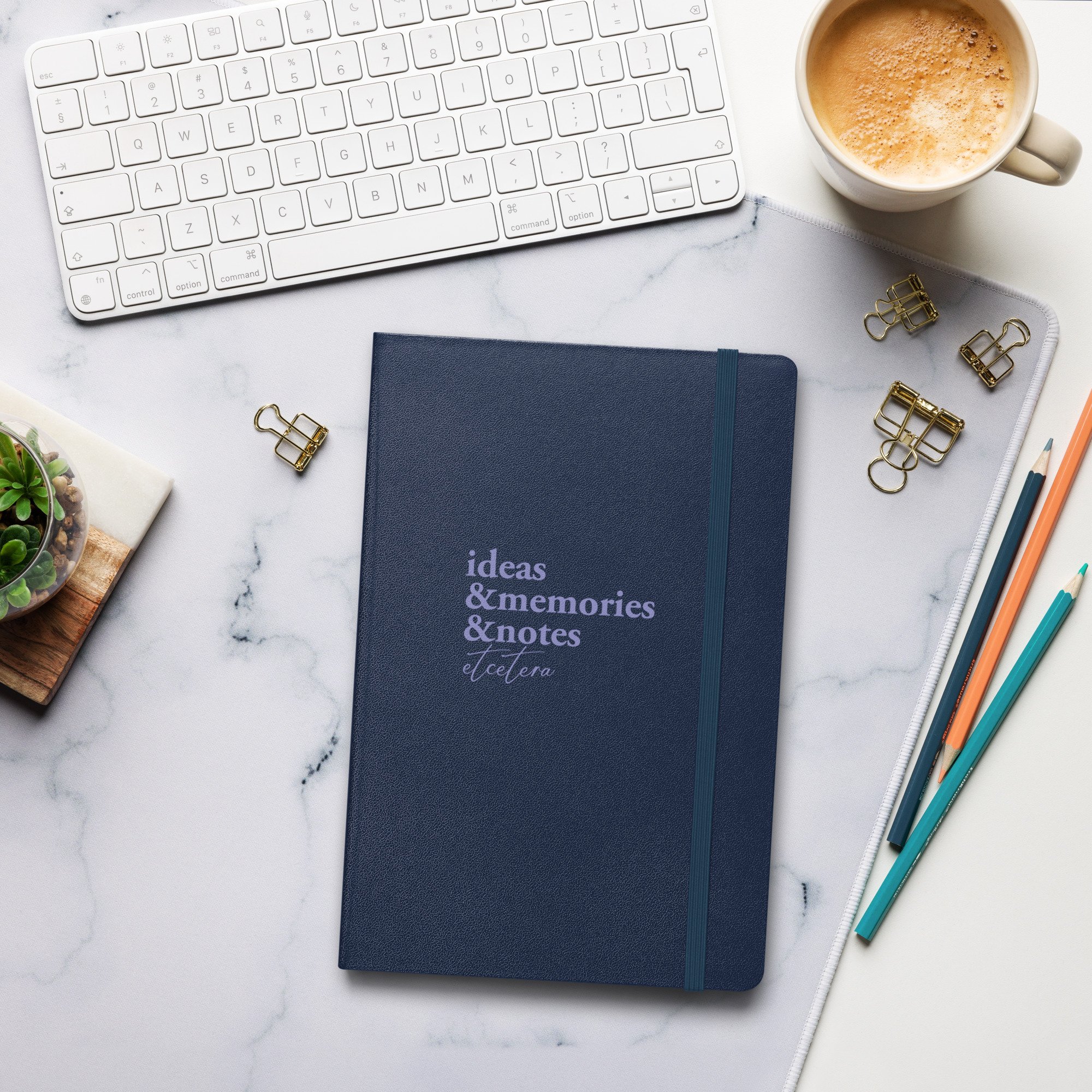
How about this one?
If your kid’s half-used, spiral-bound notebook isn’t up to par (it’s what I used all last year, haha!), check out this one I’ve designed just for you.



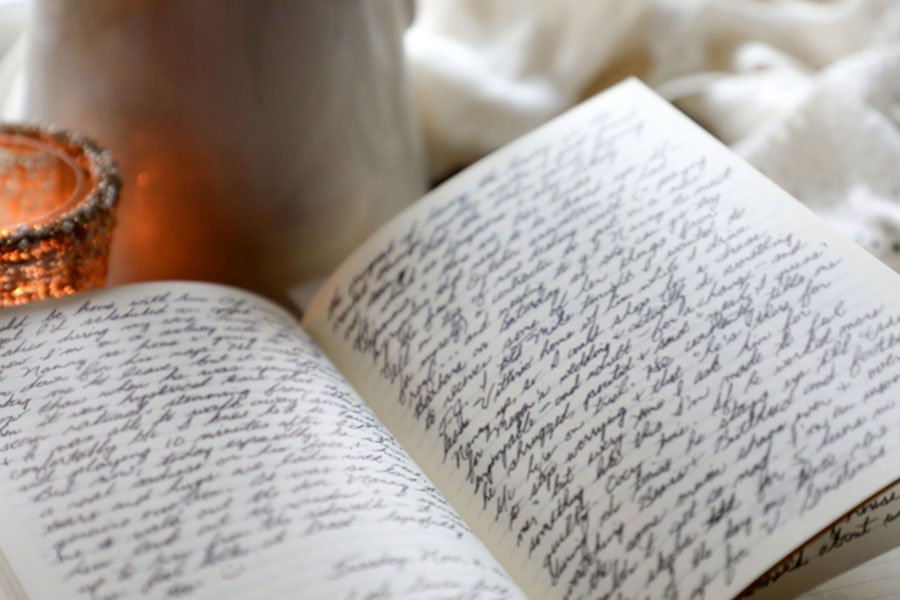
What should I do with my journals?
Have you ever thought about what will happen to your diaries—who will read them, how you may one day use them? Join me as I consider this profound question.

So many factors come into play when considering whether to save or destroy your personal journals. What’s your thinking?
As an off-and-on journaler since young adulthood, there are two main things that stop me from being consistent with my journaling: finding time, and wondering what on earth I should do with them after they are written.
The first challenge—time—is fairly easily addressable. I have tried gratitude journals or other short memory-keeping prompts that can be completed in just 10 to 15 minutes with great success. I also firmly believe that we make time for what matters to us—so if keeping a diary can make its way atop your priority list, chances are you can squeeze it into even the busiest schedule.
But that second question troubles me more.
The case for destroying my journals upon completion?
A personal journal has value, in my opinion, because it is a place where we can be our unfettered selves—free from the constraints of worrying about what other people will think, or worrying about the quality of that writing. A diary is a place to be vulnerable, even to work out problems through the very act of writing about them.
Are they something I envision other people reading? No.
At times I have formatted my journal as an ongoing correspondence with my deceased mom. It helps orient me, feel like I am speaking to someone rather than sending messages out into the ether, and imagine a compassionate soul receiving my words. Perhaps if she were still alive I could envision her actually reading them. But, well, I wouldn’t want anyone else to read them.
Which poses a dilemma if I ever want to use those diaries as a touchstone for future memoir writing, as so many life writers do (and as I often recommend!). Because if I hold onto them, someone else may find them. If I hold onto them, someone else will certainly discover them when I am gone.
Let me be clear: It’s not like I am writing anything awful in those journals. On the contrary, the types of things I share—the overwrought emotions and unprocessed (often reactionary) thoughts—are likely universal in many ways. But they’re not necessarily how I want to be remembered. It’s why at some point in my 30s I destroyed my diaries from my teen years (I am ashamed now to say how dreadfully embarrassed I felt upon rereading them as an adult—I hadn’t yet learned to be compassionate with my former selves). I am still not even sure if I am happy or regretful of that decision to get rid of those angsty handwritten pages.
In the introduction to A Writer’s Diary, the collected journals of Virginia Woolf, Woolf’s husband writes:
“At the best and even unexpurgated, diaries give a distorted or one-sided portrait of the writer, because, as Virginia Woolf herself remarks somewhere in these diaries, one gets into the habit of recording one particular kind of mood—irritation or misery, say—and of not writing one’s diary when one is feeling the opposite. The portrait is therefore from the start unbalanced…”
…a fairly adequate description of why I don’t intend my diaries to be read by anyone other than me.
When I ponder the question of whether to save or destroy my journals, though, I sometimes come to the conclusion that I should save them, but that I should write with an audience of my child or future descendants in mind. That’s certainly what some famous diarists have done. But, as Joan Didion wrote in the essay “On Keeping a Notebook”:
“…our notebooks give us away, for however dutifully we record what we see around us, the common denominator of all we see is always, transparently, shamelessly, the implacable ‘I.’ We are not talking here about the kind of notebook that is patently for public consumption, a structural conceit for binding together a series of graceful pensées; we are talking about something private, about bits of the mind’s string too short to use, an indiscriminate and erratic assemblage with meaning only for its maker.”
Ah, so much fodder for thought, and yet I reach no conclusions—“to save or to destroy my journals” still exists as an unanswered question for me.
Where do you stand on this?
The case for saving our journals
Of the many reasons one might have for keeping a journal, here are a few that, in my opinion, merit their safekeeping:
keeping a journal as an autobiographical record
Whether as a tool for future memoir writing or as a piece of your legacy you pass down to loved ones as is, a journal can be an important piece of your personal history to preserve. Read this post for a specific writing prompt that will yield fodder for your autobiographical writing.
keeping a journal as a personal record
Such personal writing can be a valuable resource for you to look back on later in life. They can help you to remember important events, to track your progress, and to reflect on your thoughts and feelings. Read a thought-provoking exploration of what it means to write memoir as a tool for self-understanding (“like a good therapist”) in this old New York Times article.
keeping a journal as a source of inspiration
Perhaps you plan to use your journal as a source of inspiration for your writing, art, or music. They can also help you to come up with new ideas for projects or to solve creative problems. Read these thoughtful reflections from The Marginalian by Maria Popova on celebrated writers and their ideas about the creative benefits of keeping a diary (there are, unsurprisingly, conflicting notions on whether or not to keep said diaries!).
Ultimately, the decision of what to do with your journals is up to you. There is no right or wrong answer, and the best option for you will depend on your individual circumstances and preferences. That said, I would absolutely love to hear what you think about this! Please share in the comments—I promise to reply and get a conversation going.


















Artful memory-keeping ideas from the world of sketch journaling
If writing about your life isn't for you, how about drawing it? Ideas for using a sketch journal to capture your memories, plus the book that will inspire you.
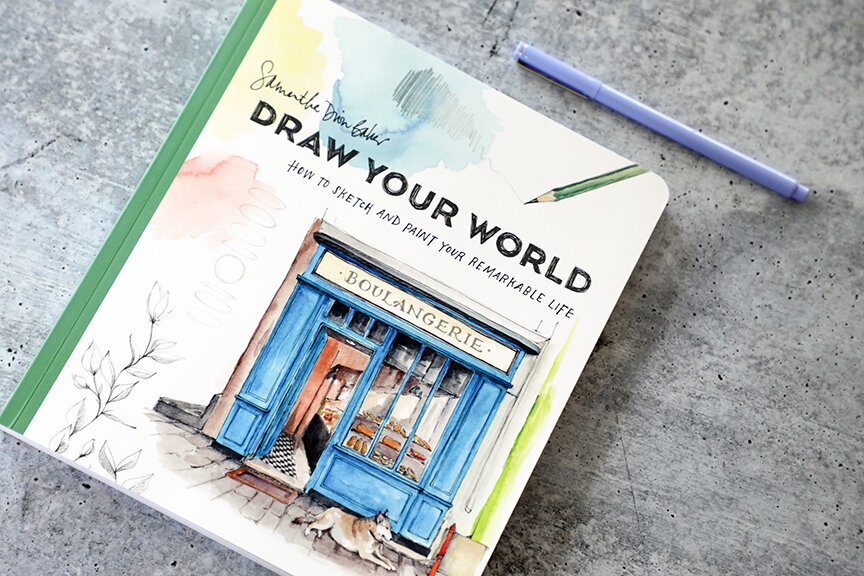
Have you ever thought of keeping a sketch journal? If the idea piques your interest, then Samantha Dion Baker's new book is a must-read. If you've never even heard of a sketch journal—but think that adding some colorful visuals to your handwritten journal might be a fun new idea—then this book is a great read for you, as well.
Draw Your World: How to Sketch and Paint Your Remarkable Life is filled with vibrant pages from the author's own art journals (inspiration in its own right) coupled with reflections on how her journal-keeping journey has evolved over time. Better yet: Baker offers up specific journaling prompts to help you put pencils and paintbrushes to paper.
Sketch-journaling as memory-keeping
"My entire art-making practice has evolved into a memory-tracking practice,” the Brooklyn–based mom and artist writes. Indeed, she sketches everything in her always-at-hand journals, from her morning coffee and the dog sitting across from her while she drinks it to a fabulous bag spotted on the subway during her commute. Why record the seemingly mundane? Well, paying attention to the present so acutely is a form of meditation, Baker has said; and from my perspective, honoring our daily routines—how we live the bulk of our lives—is equally as important as capturing milestone moments such as birthdays and graduations.
"A sad day, a happy day, a milestone day, a holiday, a sick day—all of these days are filled with tiny moments that, when drawn or written about, will help transport me back,” Baker wrote in her first book, Draw Your Day. "It is fun for me to capture the life of a working mom living in New York City by writing down all of the things I manage to do in one day. " These drawing can invoke sense memories later on—when you look back at that lip gloss you used every day for two years, you'll not only remember the color but the smell and feel of it, too.
Art-inspired ideas for capturing the memories that matter most to you
Samantha Dion Baker is all about honoring the present and the past. In addition to the “bits of the ordinary” that she includes on most every journal page, she suggests striving to capture ideas and emotions. And while, certainly, she provides specific technical advice and tips for what tools you'll need to begin a sketch journaling practice, she stresses that anyone—even a non-artist—can undertake to capture memories through art. “Drawing your world is accessible to anyone compelled to translate the outside world onto a flat surface,” she writes.
The full pages shown from her travel journals in Draw Your World are especially inspiring, as they weave together written observations, sketched remembrances, and tiny details that create such a vibrant and emotional picture of days spent in places from Iceland to Brooklyn. “When we travel,” Baker writes, “my practice becomes more of a family affair, and the artwork and recorded memories in my journal are a gift to all of us as we look at them later on, bringing us back to those precious moments.”
I love her idea of gluing hotel envelopes from family trips right into your sketch journal and stashing receipts, ticket stubs, and other vacation ephemera in there (scrapbook inspired, for sure, but what a surprise when discovering that dimensional element within a two-dimensional journal!).
A few other prompts that I think are relevant for memory-keepers of all kinds:
Present-tense, or ongoing:
every year on your child's birthday, draw a portrait of them (if that's too intimidating, draw some of their favorite things or quote something they've said that year)
celebrate a lost loved one through art
draw souvenirs or scenes from your vacations
Past-tense, or reflective:
"Think back to your happiest moments, jot them down in a notebook, and then create abstract paintings titled as those memories,” Baker suggests.
If your recall your first car, draw it (you can search online for reference photos if you don't have a picture of your own), then—my favorite part!—“record any adventures and road trips you remember in it."
What other ideas come to mind for you? A fair number of family history interview prompts could easily translate into sketch journaling ideas—consider drawing your grandmother in the kitchen, or painting the pie she made for you as a child that never failed to bring a smile; or sketch out what you wore—and carried in your bag—on the first day at a big new job. The possibilities are endless!

A few squares from the Instagram feed of Samantha Dion Baker showing sketches from her journals, where she captures both details from her everyday life and bigger moments from vacations and family milestones.
Get inspired by Samantha Dion Baker:
Follow her Instagram feed, where she shares vibrant pages and sketches from her journals.
Buy her first book, Draw Your Day: An Inspiring Guide to Keeping a Sketch Journal, for an introduction to art journaling and inspiration to pay attention: “Let the small pages of your sketch journal become a personal lens, a way to organize and creatively make sense of the world around you.”
Pick up a copy of her most recent book, Draw Your World: How to Sketch and Paint Your Remarkable Life, for a more expansive way to approach your sketch journaling (and to see how the author’s personal pages have evolved over time).
Up next for the artist and author: Draw Your Day for Kids! This book will include sketch pages for young readers to record their memories and feelings, and will become an original keepsake as they grow up (oh, how I love THAT!).
Note: This is an unsolicited review of a book I purchased at full price. I did not receive any compensation or free products in exchange, and any endorsements within this post are my own.
Affiliate disclosure: As an Amazon Associate, we may earn commissions from qualifying purchases from Amazon.com.











Storytelling isn’t just good for the soul—it’s good for your health, too.
Did you know that listening to and sharing stories can help us live longer, happier lives? Discover three impactful ways to bring storytelling into your life.

Here are three ways to incorporate storytelling into your life to reap proven health benefits:
1 - Listen to some entertaining stories.

Can listening to a podcast really be good for your health? If it’s sharing a good story—and by good I mean that it’s relatable, engaging, and yearns toward the universal—then, heck yeah, it can.
Doctors explain it this way (well, I’ve simplified it greatly!):
We hear, “Once upon a time…” and, first, our heart rate increases as our attention is piqued.
Then, as the story begins to unfold, a chemical change happens—our brains release oxytocin, a hormone that causes us to really care about the people involved. Oxytocin helps us to feel bonded, and enhances our feelings of empathy.
According to studies, that release can also lower blood pressure, ease gastrointestinal distress, and even promote wound healing and suppress inflammation.
So the physical effect of listening to a good story goes well beyond leaning in to hear better!
And there’s more: Stories positively impact our mental health.
Researchers have found that seniors suffering from dementia who participate in community-based story sharing programs, sometimes referred to as reminiscence therapy, have improved cognitive function. You know what else? They report being happier.
An interesting finding? It doesn’t matter if the story we hear is happy, sad, or dramatic, as long as we’re engaged!
Two of my favorite places to get stories in bite-size pieces:
StoryCorps home page, for their animated interview clips, which always tug at my heartstrings
2 - Write about a challenging time in your life to help you make some sense of it.

When bad things happen, we need to find ways to fit them into the stories we have told ourselves about our lives. Journaling is one powerful way to do this.
“Storytelling allows us to take life events that are exceptional, unforeseen, or otherwise out of the ordinary and domesticate them into meaningful, manageable chapters in the ongoing arc of our lives. This act of integration,” Bruce Feiler writes in Life Is in the Transitions, “is storytelling’s greatest gift.”
Have you recently divorced your partner? Lost your job? Are you feeling undermined at work or lost at home? Have you suffered trauma in your past? Or are you just feeling a little “off”?
No matter how big or small your challenge, writing about it with intent—to reflect and find meaning—will undoubtedly be helpful. It’s why so many psychologists recommend the practice to patients working through a difficult experience.
What does the data say? Journaling helps improve well-being after traumatic and stressful events, according to a study from Cambridge University. A host of other research enumerates the benefits of expressive writing, as well, from coping more effectively with stress to improved memory function, from helping us make better decisions to accurately naming our feelings.
What do people say? Simply put, it makes us feel better. Journaling can be cathartic, sense-making, calming. By creating a coherent narrative out of something that was experienced mostly through emotions before—anger, sadness, outrage—we can make sense out of the chaos of our lives.
A few tips to get started writing about painful experiences:
Choose one challenging life event or theme to write about more than once. On day one, free-write—jot down impressions and emotions, and allow your pain to flow through your pen. On day two (a week or so later), try to construct a story about your experience; and during a subsequent writing session, probe for meaning. You might want to try writing a letter to your younger self, or imagining what a compassionate friend might say in response to your narrative. If these writing suggestions do not resonate, check out the writing prompts in this article specifically designed to help individuals cope with symptoms of PTSD.
Be gentle with yourself. While writing may bring clarity, it will also drum up some difficult feelings. Consider reaching out to a supportive friend or therapist if the process becomes overwhelming.
Find gratitude. Even in the most challenging circumstances we may find “silver linings.” Write about something you have learned or gained through your journal practice. Try to be conscious of any healing that is happening along the way.
3 - Ask someone you love to tell you stories from their life.

It’s so easy to get into a rut of routine conversation with our loved ones. Next time, skip the quick text asking, “How was your day,” and instead invite more meaningful conversation.
An eight-decade Harvard study found that those with deeper social connections live longer. “The surprising finding is that our relationships and how happy we are in our relationships has a powerful influence on our health,” said Robert Waldinger, director of the study.
According to an article in The Harvard Gazette, “Several studies found that people’s level of satisfaction with their relationships at age 50 was a better predictor of physical health than their cholesterol levels were.”
Relationships, it would seem, are a key ingredient to our well-being, especially as we age.
And intergenerational connection—that between, say a grandparent and a grandchild—may have even greater health benefits.
As Marc Freedman, author of How to Live Forever: The Enduring Power of Connecting the Generations, writes, “an accumulating body of research on purpose, generativity, relationships, and face-to-face contact suggests that engagement with others that flows down the generational chain may well make you healthier, happier, and possibly longer-lived.”
A few ideas for having deeper conversations with your family elders:
Pick one or two questions from a list of family history interview questions to spark some story sharing. And be a good listener: Ask follow-up questions, make eye contact (if you are physically present together or on video chat), and provide a safe space for reflection.
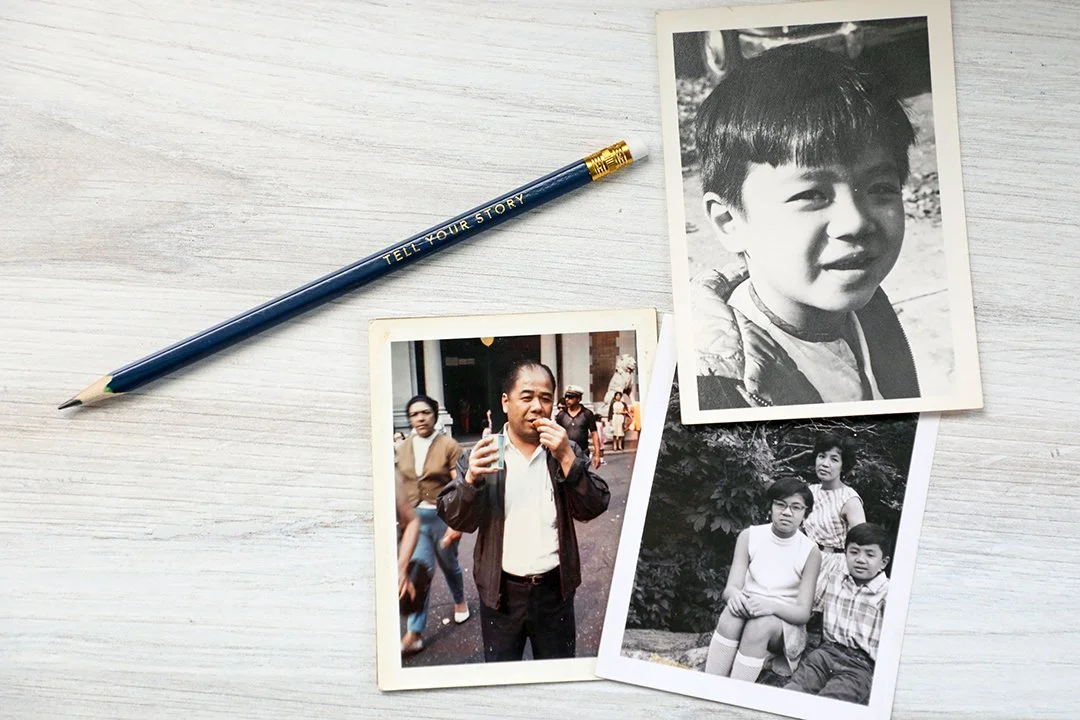
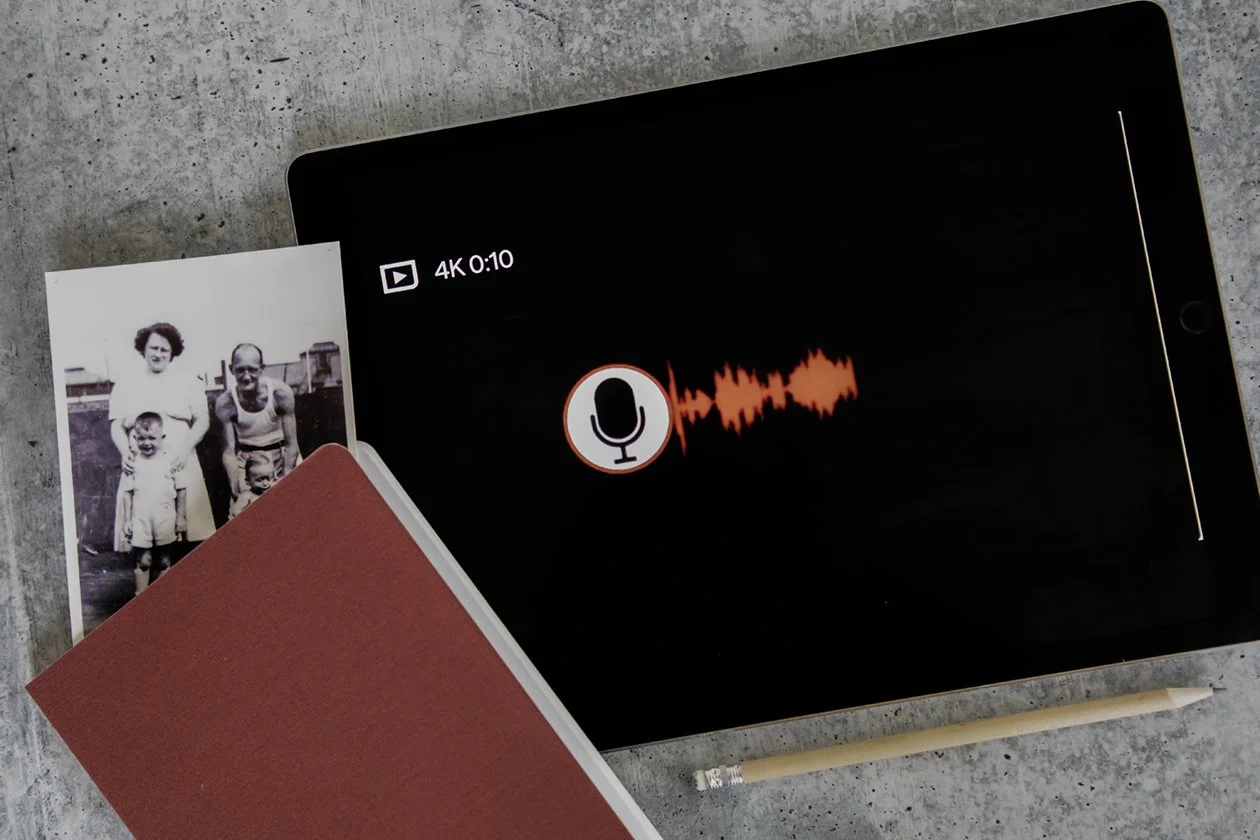
Grab an old family photo to use as a memory prompt and ask your loved one to tell you about a time from their childhood (or yours!).
Go deep: Ask them thought-provoking questions that are usually relegated to philosophy books these days. How do you want to be remembered? What do you wish you knew when you were 20 years old? What has been the great joy of your life?
My biggest wish for you? That you will do one or more of these suggestions not just once, but that you will make them a part of the fabric of your—even healthier!—life.
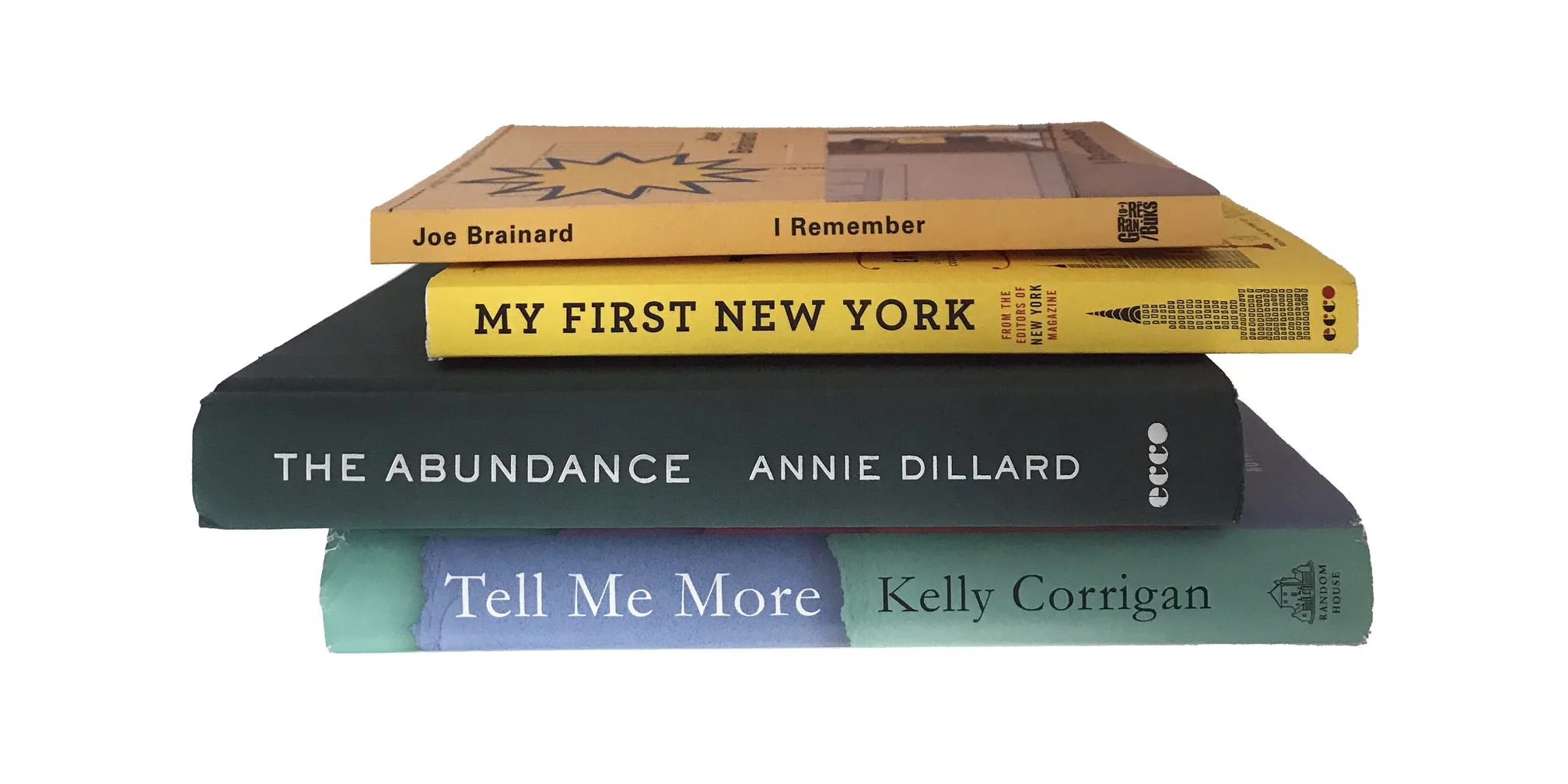
Dawn Roode’s curated roundup for the week of Sept. 23, 2026, is overflowing with recent reads on memoir, life story writing, and family history preservation.