
Memories Matter
Featured blog Posts

READ THE LATEST POSTS

A coffee table book about quirky heirlooms? Yes, please!
Shana Novak photographed 100 personal keepsakes and shares the heartfelt stories behind each in her beautiful new coffee table book, “The Heirloomist.”
The latest addition to my own coffee table: this warm-and-fuzzy, beautifully photographed book from Shana Novak, The Heirloomist: 100 Treasures and the Stories They Tell (Chronicle Books, April 2024).
Back in 2016, when Modern Heirloom Books was yet a newborn baby, I was working on one of my first big projects—a retrospective of a family-owned film company that was celebrating 30 years in business. It was an in-depth undertaking, with multiple interviews with the founder and a series of interviews with a handful of other players in the company’s history. One of the most fun aspects of the initial research was first watching a bunch of their early footage, then getting to explore the basement archive of the physical media that held the original films. Having spanned three decades, their stash of films covered a whole landscape of moviemaking technology—formats included 35mm, 16mm, 2-inch video, 1-inch video, three-quarter-inch video, VHS, DV, DV-Cam, HDV, Beta, Beta SP, Digi-Beta, DVC-Pro, DVC-ProHD, XD-Cam, and on…and on. So, of course I wanted to photograph some of them for the book—a little visual timeline, if you will.
The photographer I tapped to capture these images was experienced in both editorial and commercial work, and we were connected through our tenure in national magazines—and her personal brand, The Heirloomist, was in many ways, like Modern Heirloom Books, a newborn business baby at the time. I adored her clean and creative approach to photographing things, but more so was drawn to her instinctive sense that she was photographing the stories behind the things. That’s what mattered to me, and it’s what mattered to her, too.

A spread from an heirloom book I created in 2016 celebrating the 30th anniversary of a family-run business—it shows an old film canister photographed by Shana Novak for the project. For this client, their films help tell their story, and the striking visuals help bring that story to vivid life.
I have been thrilled to watch from the sidelines as Shana Novak (aka The Heirloomist) has turned her love of quirky heirlooms and photography not only into a thriving business, but now, into a beautiful coffee table book from Chronicle! The Heirloomist: 100 Treasures and the Stories They Tell (Chronicle, April 2024), as you can no doubt tell from the subtitle, is a book after my own heart.
“The definition of heirloom, in my family, is clearly open to interpretation,” Shana writes in the book’s introduction (I won’t give away exactly what she is talking about—you’ll have to pick up a copy of the book for yourself).
And it’s that element of surprise that I love most about the book. Sure, there are what some might consider ‘traditional’ heirlooms within (think jewelry and baby shoes, for instance) but it’s the unexpected items—and the personal stories attached to them—that resonate with me.
“It’s garbage to anyone else but me,” one subject says about a fork—yes, a fork—that she treasures…with good reason, as the brief, vulnerable story accompanying the photograph of the fork attests. There are wonderfully touching, funny, and warm stories about heirlooms as idiosyncratic as a twenty-something-year-old Etch-a-Sketch (perhaps my favorite heirloom in the book) and a Styrofoam cup.
Memories are attached to these things, memories that those who hold onto the objects cherish—and through the majesty of her photography, Shana honors those memories in a most unique and lasting way.
Some of the treasures in The Heirloomist are expensive, and some are worth nothing from a monetary perspective. “But all are priceless, precisely because their stories will play your heartstrings like a symphony,” Shana writes. Indeed, they will.
For anyone who loves stories, I recommend this book.
For anyone who loves photography, I recommend this book.
And for anyone who might want some inspiration around telling the stories of your own family’s unique heirlooms, I highly recommend this book.
What (unique, unexpected) heirlooms are stashed in your family archive?
Note: This is an unsolicited review of a book I purchased at full price. I did not receive any compensation or free products in exchange, and any endorsements within this post are my own.

More Modern Heirloom inspiration: Heirlooms can be unexpected—such as the gorgeous glass doorknobs on this spread: “I was born into the bedroom with the glass doorknob and I didn’t leave it until I got married at age 23,” the subject remembers; she uses the object as a jumping-off point for stories from her life in that home (she even took the doorknob with her when the house was sold—a true heirloom). Read more about interesting graphics to consider adding to your family history book here.
















Are you weighed down by the stuff of your family’s memories?
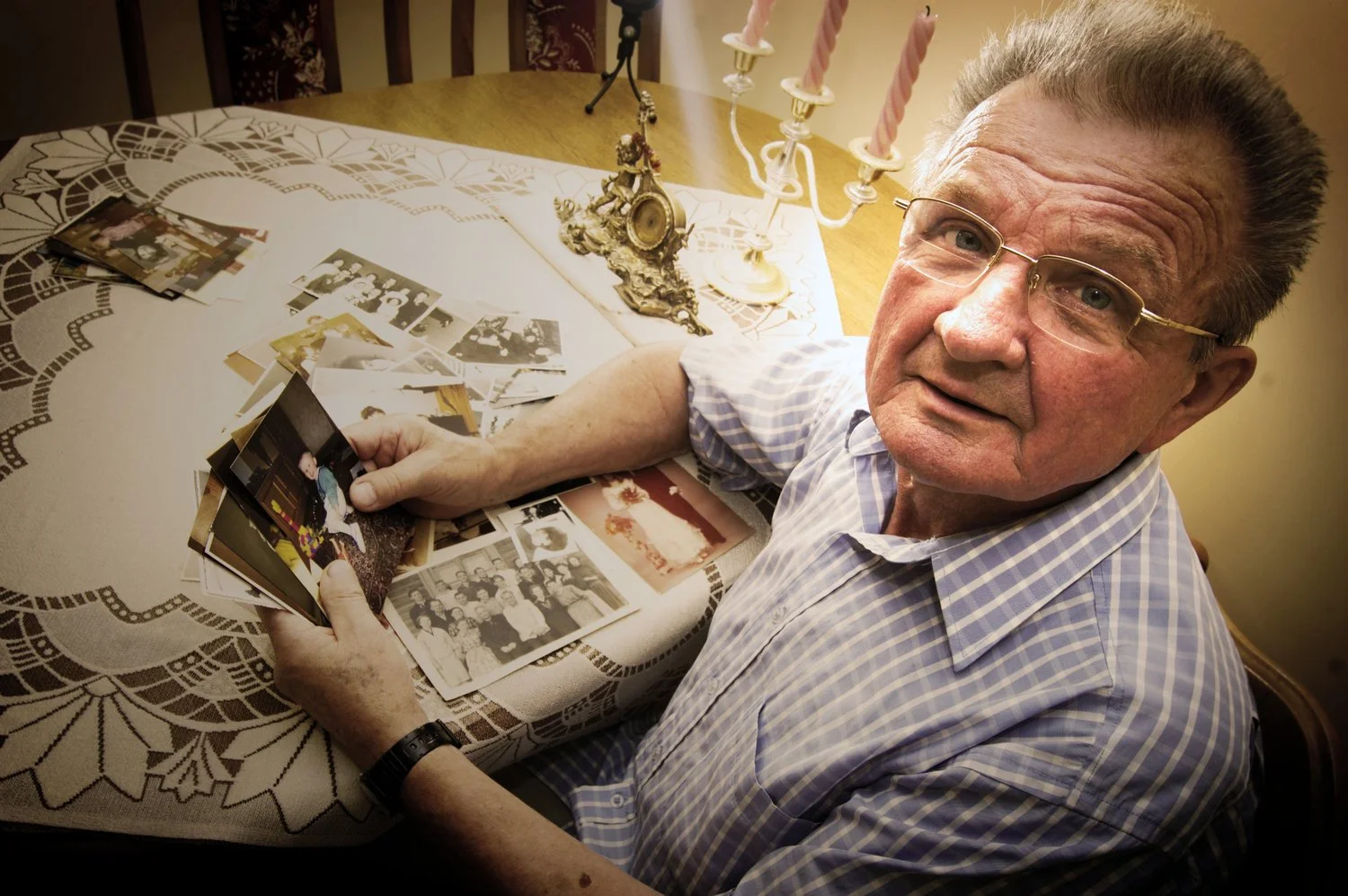
Boxes of old letters, family photos, and mementos from a generation ago can feel like a burden if they’re passed down without context. What to do with them.
That box of sentimental stuff handed down to you would mean a lot more if you knew the stories behind the stuff, wouldn’t it?
Passing along our stories to our children and their children is a valuable endeavor, and in my experience one almost always met with joy and gratitude (even if not immediately, on occasion).
People with whom I have worked to preserve their stories have told me their family members tell them they “love” their life story books, “cherish” them, are “in awe” of them. When sharing their books, my clients have been met with extended hugs, laughter, dancing (“my father shimmied around the kitchen with glee when I showed him what I wrote,” one individual told me), and even tears.
But often it’s not stories that are passed on, but boxes of things laden with sentiment—and without context, those boxes can take on undue weight.
In recent weeks I have met with one person who told me she had a large stack of letters written between her parents during World War II. She knew that they were written in German, and that her father was in a work camp at the time. She didn’t, however, know what was within those letters, as she has never taken the time to have them translated or to read them. And now, she told me, she wasn’t even sure where they were. “But they haunt me,” she said.
Another person I visited told me her mother had recorded a Holocaust testimony with the Shoah Foundation in the 1980s (well, she said “she told Steven Spielberg’s people about her Holocaust experience”). No one in the family knew how to access it. They did not have a copy. They did not know the name of the foundation. Even her mother did not recall what she may have said during that long-ago oral history interview. Certainly the weightiness of the subject matter may have given anyone pause, but to let such a personal history get lost would be a tragedy.
And yet another current client told me, near the end of her project, that an aunt had just randomly stopped by to drop off a scrapbook that had been lovingly crafted by my client’s grandmother. The aunt was moving to another house, found the scrapbook tucked away in a closet, and, knowing my client was interested in her family history, figured she would be a better custodian of the materials. She was fortunate—many people who feel burdened by their ancestors’ things don’t have a family member with such interest to hand them off to.
As I think about these things—about how we can feel burdened by our parents’ things, about how stories can so easily get lost—I feel a bit sad, yes, and also compelled to spread the word.
Do you have sentimental boxes of family mementos you don’t know what to do with?
First, think about who might be the best custodian of your family’s archive.
If there is an obvious family history buff in the family, see if they may want the items. If not, then ask around—you might be surprised to learn a teenager or distant cousin may have a greater interest than you’d expected. The sooner you can pass the items on to someone who will regard them with interest and respect, the better. (Are you this person? I’ve met numerous people who tell me they have no interest in sleuthing through these “old things,” only to be drawn in as I curiously pull photos or war medals out and show interest in what they reveal!)
Second, do what you can to restore context to the things.
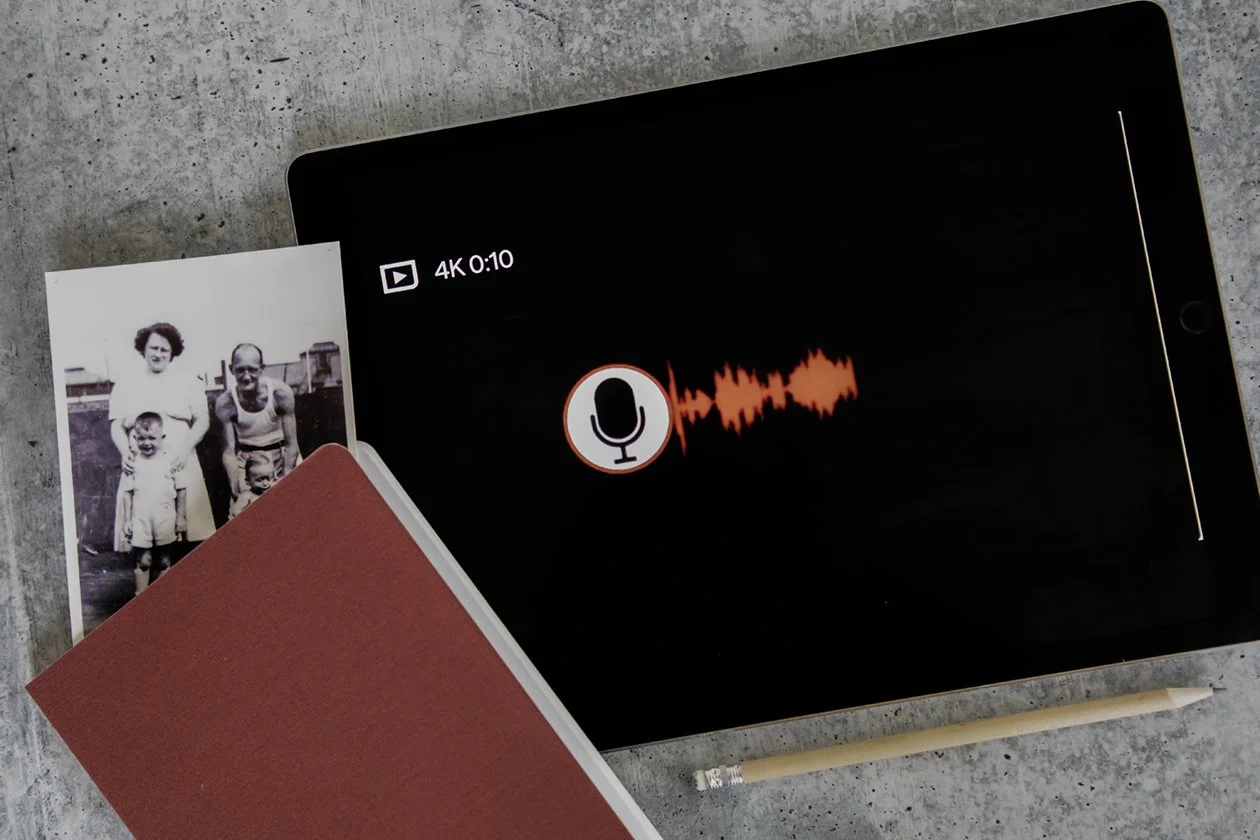
Even if you don’t have the time or inclination to write a whole book, consider labeling photos with names, writing mini-histories of heirlooms, and at least telling your kids what you know of the contents of that old box in the basement. Spend an hour or two with a sibling or parent to record your memories of all that stuff—it can be as simple as capturing audio with your phone’s voice recorder. Spare your descendants the burden of passing down an archive of things they know should have meaning, but not why.
Third, let go of guilt.
Perhaps you were the recipient of such a box of “cherished” things that came to you without context or meaning. Sure, that watch may have belonged to one of your grandfathers, or it may have been a flea market find that he never wore but stashed in a box…but you hold onto it along with everything else because you feel you should. This is a rich topic that could warrant a few thousand words (heck, the comments alone on some articles covering this topic are worth a read!), but in my mind, as long as you move forward with intention, it’s okay to let go of things that hold no meaning for you.
Do you have a dusty box of so-called heirlooms, letters, or family photos that were passed down to you without context? What are you going to do with them?
Further reading on how to be a good custodian of your family history:












How to preserve the stories behind your family heirlooms
Whether your family heirloom collection consists of generations’ worth of antiques or a handful of sentimental items, catalog them for the next generation.
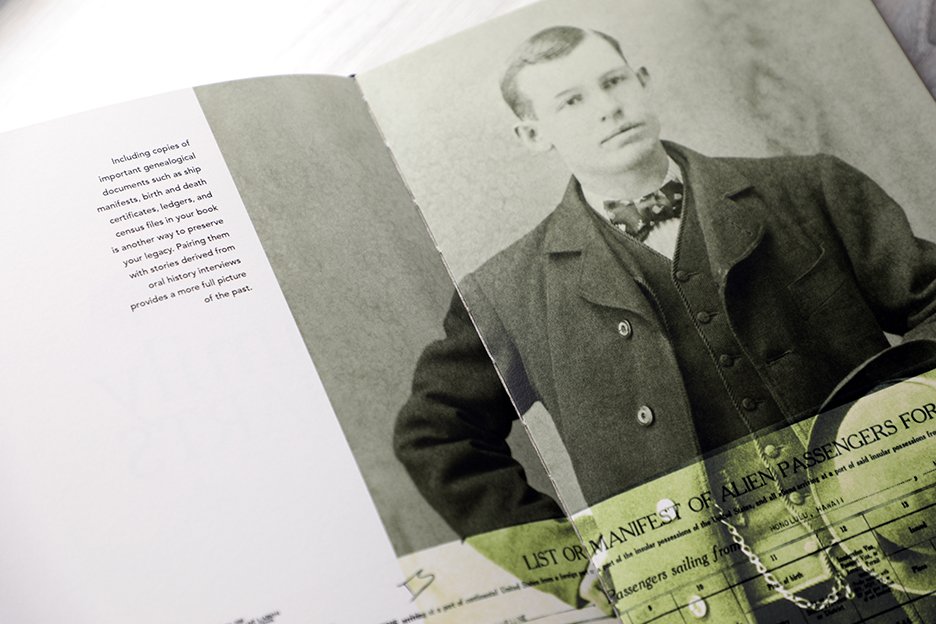
Photographing your family heirlooms is a first step in preserving their legacy. You can go as basic as snapping a few simple pictures with your phone’s camera or taking the time to style and properly light your heirlooms like I did with this image of my mother’s rosary beads.
So often a family history book has its genesis when a family decides to downsize. The kids are grown and have homes of their own—and they've yet to collect all the things that have been saved in boxes labeled MEMORIES. Going through those things inevitably sparks some pangs: What are we going to do with all this stuff? How can we part with ANY of this? Will the kids even remember what it all means?
The “stuff” holds stories, and it's often those stories we aim to uncover and preserve through personal history interviews—again, usually before donating or tossing much of the stuff…
Sometimes, though, the stuff matters as much as the stories. Just because you plan to hold onto the physical objects (fingers crossed subsequent generations will want to do the same) doesn't mean you shouldn't still capture their stories!
First step: Make an inventory of all the things you consider heirlooms. Next: Prioritize which ones hold the most meaning and begin to capture their history.
Just a few heirlooms?
>> Capture their stories, one heirloom at a time.
Whether you are writing a full-fledged family history or compiling just a few of your favorite personal stories, consider photographing the heirlooms that mean the most to you and writing about them.
Include each object's provenance:
Who owned it first, and who was it passed down to? Write the list in reverse-chronological order, and include years and locations (where the owner lived) whenever possible—these details are gold for any future family historians.
Where was it made/purchased?
Why does it hold meaning?
Do you personally have any special associations with the item (favorite memories, or stories you remember recounted by a grandparent, for instance)?
Lastly, even though you are including a photograph of the heirloom, write a brief description of the object: material (such as an oak cabinet), model (such as of a vintage pistol or a watch), size, etc. This is especially important if you are getting rid of the item or if it becomes separated from this history you are preparing.
Consider recording all of these details in a binder (one sheet per heirloom, stored in clear archival sleeves) or in a recipe box (one index card per heirloom, with a photo and name on the front and details on the back). Other options: Purchase an heirloom journal to capture all the history (I love this one from Hannah Bergen, who also has an heirloom provenance kit), or hire a personal historian to help you put it all in an heirloom book (reach out if interested!).
Loads and loads of artifacts?
>> Create a family heirloom catalog.
Maybe you are cataloguing generations' worth of heirlooms, or maybe you've got a treasure trove of vintage cabinet cards and other photographic heirlooms to make sense of. If you've got more than 20 heirlooms, consider creating a custom index of all of them.
In some ways, this type of project is as straightforward as the previous recommendation: You'll begin by photographing each heirloom (or digitizing your print photos, if you’re dealing with a family photo collection) and recording its provenance in writing. The subsequent steps, though, will elevate this catalog into a family history tool that will be an heirloom unto itself.
First, take your inventory and create categories for your heirlooms to fit into. These will be used to organize the structure of your catalog and to create a useful index for finding heirlooms in various ways, so be as intuitive and descriptive as possible (and know that some heirlooms may fit into multiple categories). Consider creating tags in various categories, such as:
Time period: Civil War Era, 19th Century, 18th Century, 1960s, etc.
Object type: Furniture, Jewelry, Household Object, Photograph, etc.
Owner(s): [names of specific family members who may have at one time had possession of this object]
Value: Sentimental, Financial, Historical
Second, assign tags from each category to every item in your collection. It may be helpful to use a spreadsheet to record all of this data (this is an especially relevant step when dealing with a large number of heirlooms, as you will be able to sort columns by categories or alphabetically—and therefore more easily generate an index).
Third, decide on the broadest categories to create your book architecture—these will be used as de facto chapter headings and will be reflected in your catalog's table of contents. You may want to present your heirlooms based on branches of your family tree, for example (so you may have broad headings of MATERNAL LINE and PATERNAL LINE, then family surnames used to designate chapters within each of those; or instead organize by type of heirlooms, so your chapter titles would derive from those subcategories (Photographs, Furniture, Jewelry, etc.). Choose what makes the most sense for your distinct collection.
Sound like a big undertaking? It is, but if you set parameters early and tackle a few heirlooms per week, it's a project you can complete in a year for even the largest family heirloom collections!
No heirlooms?
>> (I doubt it. Let’s see…)
It's a rare individual who hasn't held onto something of meaning from their childhood or ancestors. Chances are you just wouldn't think of calling those things ‘heirlooms.’
If you hear the word heirloom and think of a dignified mahogany clock or a great-grandmother's passed-down wedding ring, you're right on—that's an heirloom, and Merriam Webster would agree:
1 : a piece of property that descends to the heir as an inseparable part of an inheritance of real property.
But what about the second dictionary definition?
2 : something of special value handed down from one generation to another.
…and who's to say what holds value? You say, that's who. An heirloom in no way needs to be worth a lot of money! Consider these items that I certainly consider heirlooms:
the grease-stained recipe cards my mom saved (including a few of the ones with recipes clipped from old Better Homes & Gardens magazines)
my mom’s wooden spoon, which I use almost daily
my grandfather’s playing cards
my son’s tattered stuffed lion that holds more love and stories than almost any other item from his childhood.
What sentimental items come to mind for you? Once you've gone a nostalgic journey remembering the stories associated with those, consider recording their stories…and calling them heirlooms.


Why not make your own legacy list?
Whether you're downsizing or consciously sorting through your stuff, make a legacy list of items that hold memories—it's a cheat sheet to your family history.
A well-loved donut cutter has been passed through generations of my neighbor’s family—and best of all, they continue to use it and share stories of those who used it before them! An heirloom doesn’t have to be so precious that it sits in a box untouched; those we stitch into the fabric of our lives through regular use are often even more meaningful!
How making a “legacy list” can set stories—and guilt—free
Things can hold memories. But those same things—maybe even more so because they hold memories—can feel like a burden.
Rather than let the stuff of your past overwhelm you—with clutter, with guilt—let’s look at a few ways to take control of the things so you can focus on the stories associated with them.
Have you ever seen the PBS show Legacy List with Matt Paxton? I hadn’t until fairly recently, but I love it! TV promotions describe the series as exploring the hidden treasures within our homes: “As millions of Baby Boomers downsize their own homes or settle the estates of family members, they will discover the most important museum in the world is in their family home.” In each episode Paxton and his expert team of organizers and historians clean through one family’s home with the intent of uncovering the most special things within—what he calls a legacy list.
“A legacy list is really just a list of items that help you tell your family history,” Paxton says.
“Lose the stuff, keep the memories” is a mantra for many downsizers or minimalists, but you don’t have to be either of those things to want to get rid of at least some of your stuff. Consider it a courtesy for the next generation (I speak from experience when I say going through my mother’s things after she died was not an easy task). And think of it, too, as a way to ensure that the things that really matter get preserved, not discarded.
Make your own “legacy list.”
1 - Write your legacy list.
Start with a list of items you think you want to find. Watch the episode of Legacy List below for some inspiration, or think about the following questions to help you identify things that may hold meaning within your house:
Are there items associated with specific family members that help tell their story?
Are there certain items that were used by ancestors that are still functional?
Are there handmade items among your treasures?
Do you have handwritten recipes that have been passed down through generations?
What items, if any, hold historical value, or perhaps help tell the story of the region?
Some examples:
In the episode below, “Home on the Range,” the family matriarch treasures her mother’s early handwritten school notebooks, which symbolize her intelligence and the sacrifice she made of quitting school at the age of 13 to care for her siblings.
Things don’t need to be big or monumental to be imbued with meaning! I, for example, think of my mom every time I bake and use her small offset spatula; and I gave a friend who loves to knit my grandmother’s collection of knitting needles so they would continue to be used with love.
I adore my mother’s chimes, and rather than stow them away in a box, I consider them an everyday heirloom and smile every time I hear their song from my backyard. I also cherish the crocheted blankets she made for me when I was away at college, and the ring I inherited with her birthstone (which I wear often).
2 - Allow yourself to be surprised.
There will be things you “just know” are packed away that you can’t find, and others that you never knew existed. Remind yourself that it’s okay for some things to have gone missing; you can write down your memories associated with them so those are not lost, too, and even search for photos that might represent the items in a more concrete way.
3 - Go beyond finding the things on your legacy list—tell their stories, too.
When Paxton asks the family matriarch why she gets such a sense of comfort from her ancestors’ stuff, she says, “I guess it’s just all a part of me…. I think that if I let go of the stuff, the memories will fade, too.”
“I think that if I let go of the stuff, the memories will fade, too.”
Those memories will fade as time goes on, though, if they are not recorded in some permanent way. With each new generation, the experiences and firsthand memories become further removed.
So grab a pen (or hit “record” on a digital audio or video recorder) and tell those stories! Many pieces may need explanation (how was that plow yoke used? for instance). Some may have important documentation associated with them (a dated certificate of authenticity, for example). But mostly, strive for heartfelt stories (for a recipe—how the smell alone alerted you to the holiday and Poppy’s presence; for a photograph—when it was taken and what the context was…and why it holds a special place in your memory).
And take a lesson from the show: Interview members of every generation to hear about their memories and associations with the items on your family legacy list. As you’ll hear in this episode, even the grandchildren may surprise you with distinct and meaningful memories.
As Paxton reminds viewers, if an item is properly chronicled, it will be cherished forever.
Watch an episode from the recent season of Legacy List with Matt Paxton below, or browse all available episodes on PBS.
Life Story Links: March 15, 2022
This week's curated reading list for memory-keepers and family historians includes plenty of craft advice as well as first-person stories to inspire your own.
“Here’s the thing: The book that will most change your life is the one you write.”
—Seth Godin
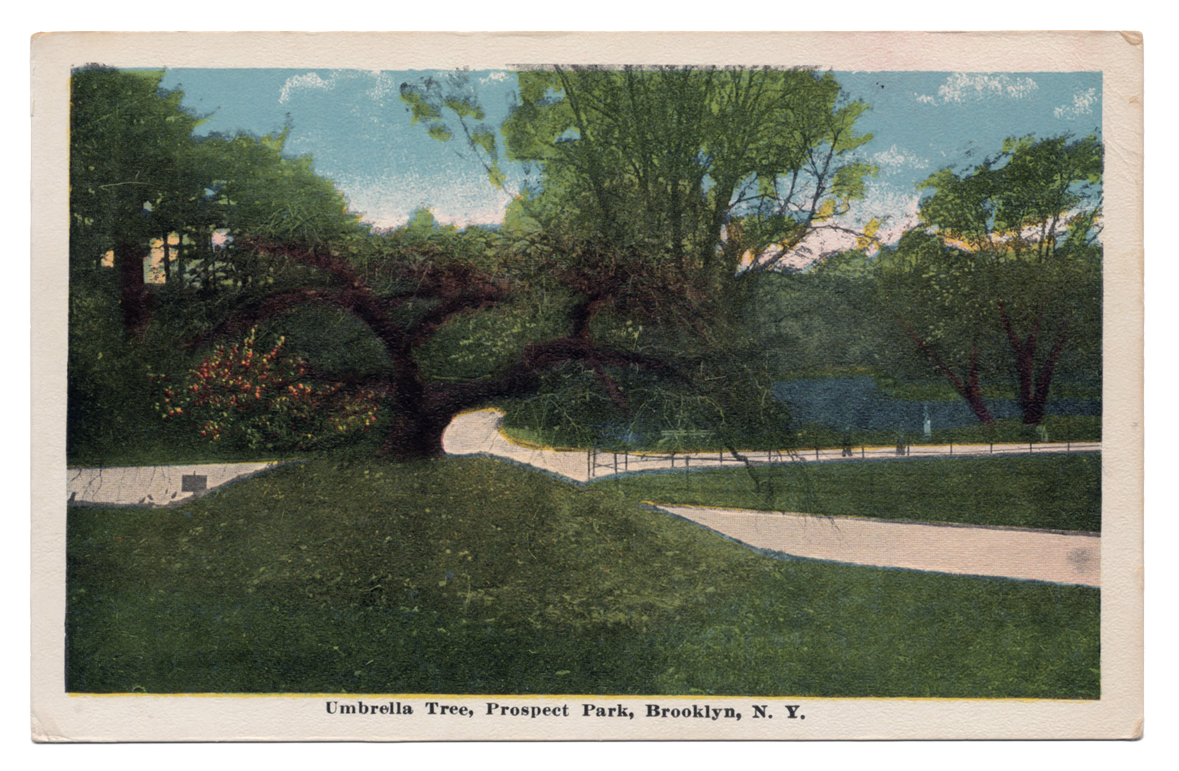
In honor of St. Patrick’s Day this week, a vintage shamrock postcard with “Scenes from dear old Ireland”
When Things Hold History
WHAT’S LEFT BEHIND
Following a brief meditation on legacy from The Isolation Journals founder Suleika Jaouad, Joy Juliet Bullen writes about how a childhood photo with her father prompted more than memories.; plus, a writing prompt.
HER HOME IS LIKE A MUSEUM
“Each piece needs a chance to sing its own song,” says the Staten Island schoolteacher who has collected more than 20,000 artifacts, now up for auction, that “tells the whole saga of African American history.”
LOVE LETTERS
“As I age, I have a newfound appreciation for recognizing that my grandparents and the elders in my family have led complete and full lives that I will never fully understand or really know about.” How a newfound stash of love letters from his parents gave him a glimpse of who they were before him.
TASTY RELICS OF ANOTHER TIME
“Slowly, I’ve accepted that my recipe book is not a work in progress but an artifact, which contains hints and scraps of my former self.” Charlotte Mendelson on her “beautiful, delusional recipe book.”
A DELIBERATE PROCESS
“Professional home organizers are reporting a spike in calls from older customers asking for help sorting through their belongings, seeking to dole out the heirlooms and sentimental items and toss the excess.” (As always on such pieces, many of the 800+ comments are worth a read, too.)
“CURATING TANGIBLE PHOTOS”
“I hope to build an album like my grandmother’s, one that shares my history. That proves I was here, and I lived.”
First Person Stories You’ll Want to Read
UNCOVERING FAMILY STORIES, AT LAST
“Poppy could make muscles that I could not crush; Grandma only ever cooked and cleaned and kvetched.” But Noah Lederman’s grandmother held many Holocaust stories herself—why had he never realized?
WELCOME HOME, HARRIET
“I have often remarked that I didn’t go into medicine to simply bear witness, but the work has a way of forcing you to do just that.” How her grandmother’s loss made this geriatrician think differently about preparing people for death.
AUTHORITY FIGURES
“My dad and I aren’t sure how I knew so much when I was that young,” Elizabeth Cooper writes about the intersection of her mother’s extramarital affairs and her own shameful feelings around sex in this moving piece.
Personal History in Action
REMINISCENCE THERAPY AND DEMENTIA
How to create a memory kit for a loved one with dementia: “The point of the exercise is not only to help a loved one remember and improve cognitive function but also to help the senior engage in conversation and feel like a valued participant in the discussion.”
WAR, POLITICS, SACRIFICE
In light of recent events in Ukraine, Rhonda Lauritzen turns to thoughts of conflict—specifically, how to write about our own experiences of hardship and war, and why we should consider the impact world events had on our ancestors.
Elements of Style
STYLE AND SUBSTANCE
Last week I wrote about why the presentation of your life story book does indeed matter, for the Biographers Guild of Greater New York; and, on my own site, how adding photo captions can elevate your family photo book to family heirloom.
MYSELF, ANONYMOUSLY
“Good ghostwriters are invisible, giving away our best lines without leaving a trace of ourselves.” Caroline Cala Donofrio shares lessons learned from interviewing celebrities for their ghostwritten books.
Author, Author
DICKENS, 1851
“A captivating entertainer, Dickens sought to make life as enchanting as a show,” reads this New Yorker piece that takes a look at a new “slow biography” of the author from Robert Douglas-Fairhurst
GETTIN HER DUE
“I found such a deep, personal connection with Zora’s life and journey. I felt compelled to help people everywhere learn about her.” Meet the scholar who shares the life and legacy of Zora Neale Hurston through storytelling.
A WIDOW’S LEGACY
Read this enticing excerpt from a new biography of Mary Welsh Hemingway, the journalist who became Ernest Hemingway's fourth wife.
...and a Few More Links
A new book and traveling exhibition highlight the work of Mississippi photographer O.N. Pruitt, which expose harsh reality of the Jim Crow South.
Study shows that viewing nostalgic images from childhood reduces pain perception.
A “magical place” inspires a memory book worthy of gift-giving
A look at new family history technology and keynote messages shared at RootsTech 2022
Are young people hoarding photos so they don’t lose memories?
10 best off-the-shelf memory books for grandparents to tell their family stories
Short Takes
Life Story Links: January 18, 2022
Our curated roundup is back, filled to the brim with stories you'll want to bookmark: on memoir (reading and writing), preservation, family history & more.
“A writer—and, I believe, generally all persons—must think that whatever happens to him or her is a resource. All things have been given to us for a purpose, and an artist must feel this more intensely. All that happens to us, including our humiliations, our misfortunes, our embarrassments, all is given to us as raw material, as clay, so that we may shape our art.”
—Jorge Luis Borges
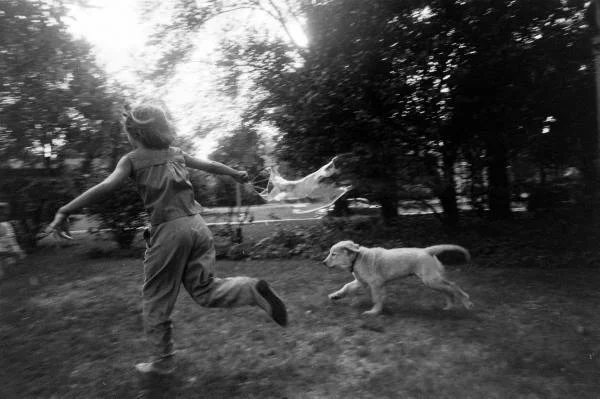
Vintage photo of a young girl in Franklin Township, New Jersey, February 1936, by Carl Mydans for the U.S. Resettlement Administration. Photograph courtesy of Library of Congress Prints and Photographs Division Digital Collection.
First-person stories & memoir recommendations
THE POWER OF RECLAIMING HER NAME
After a wave of racism, her husband challenged her to reclaim her Asian name as a way to be proud of who she is. Marian Chia-Ming Liu re-introduces herself—and shares meaning behind all four parts of her name.
WHAT TO READ THIS YEAR
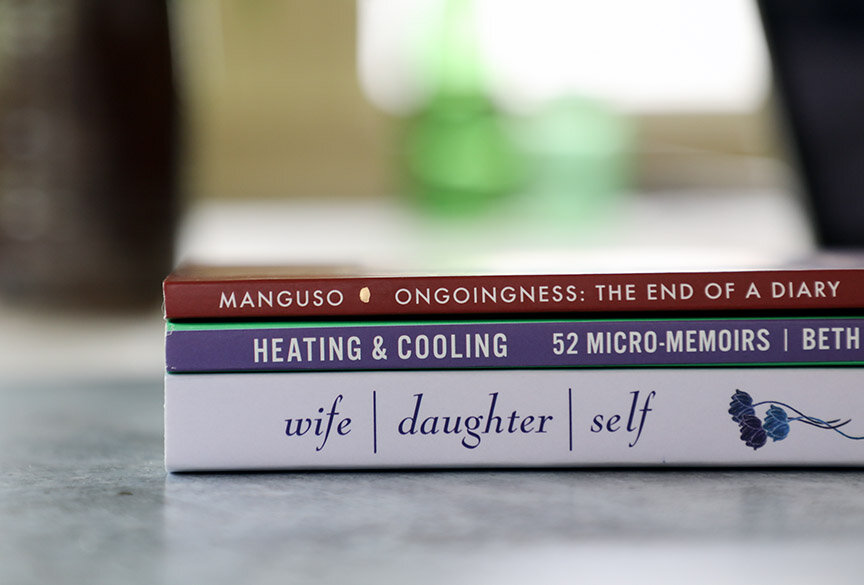
I compiled a list of my most anticipated books of 2022 in the categories of memoir, letters and journals, and the craft of writing. Which ones will make it onto your bookshelf?
ON SURVIVAL
“This memoir, [Mala’s Cat], rescued from obscurity by the efforts of Mala Kacenberg’s five children, should be read and cherished as a new, vital document of a history that must never be allowed to vanish.”
THE TASK OF REMEMBERING
“The premise of much of Clifton’s work is that memory persists even in the absence of words, details, and all of the trappings of what we know as ‘history.’” A thoughtful examination of poet Lucille Clifton’s 1976 memoir, Generations, which has been reissued.
TWO TO CHECK
A Chicago Tribune reviewer names a pair of memoirs about fresh starts—Lost & Found by Kathryn Schulz and I Came All This Way to Meet You by Jami Attenberg—not only as two of the best books of 2022, but as “the product manuals for two authors, and ultimately, tangentially, for yourself.”
One story at a time
PRESERVING A VIVID LEGACY
“Even though there is a trove of letters between this man and his daughter, they demand a lot of research to provide context and explanation,” Washington–based personal historian Nancy Burkhalter describes of the process behind a recent biography.
BRIDGING DIVIDES
“It’s going to take a lot of stories to bring this country together,” 60 Minutes reporter Norah O'Donnell says to Dave Isay, founder of One Small Step, a StoryCorps. offshoot that pairs people from opposing political views for conversations about their lives, not their beliefs.
UNCOVERING STORIES FROM SLAVE SHIPWRECKS
“Through these ships, we could bring lost stories up from the depths and back into collective memory.” National Geographic dives into the untold history of the Transatlantic slave trade with its new podcast, “Into the Depths,” launching January 27.
LIFE LESSONS
“For those who make it to old old age, there remains the challenge: How do you make a full and meaningful life when you can’t do so many of the things you once did? At the end of life, what turns out to really matter, and what is just noise?” NYT reporter John Leland reflects on a series he did following a group of the oldest New Yorkers—over seven years and 21 articles.
Writing about our lives—why, how, when
BRINGING VOICE TO ANCESTOR’S HISTORICAL NARRATIVE
“I loved my time in the archives. The tedium of transcription alternated with a quickening heartbeat that came with a new discovery.” Sally Merriam Wait’s journal “passed through seven matriarchal descendants before it came my way,” says Mary Tribble, who found kinship with her fourth great-grandmother.
3 WAYS TO TELL A PHOTO STORY
Modern memory-keeping doesn’t have to be time-consuming, but it should be meaningful. Here are three simple and elegant ideas for preserving the story behind one favorite photo (with the hope that it will be the first of many!).
PUTTING LIFE ON THE PAGE
BBC Woman’s Hour host Emma Barnett is joined by psychotherapist Julia Samuel and authors Arifa Akbar, Cathy Rentzenbrink, and Ann Patchett to talk about why so many of us want to put our lives on the page: What stops us, what gets in the way, and is it always a good idea? Listen in below:
Finding family history
INVENTORY OF ARTIFACTS
After a lengthy effort, artifacts from collections in Lithuania and New York that document Yiddish culture in Eastern Europe before World War II will be accessible to scholars and others.
CHIMING IN
“I had set about surrounding myself with heirlooms and other objects connected to my heritage to inform and inspire my efforts to guide others in their memoirs and family-history work,” Megan St. Marie writes of the clock she placed in her Massachusetts office.
KEEP THE STORIES, LOSE THE STUFF?
“Watching the moving men removing bookcases and boxes, my life flashed by like a film running in reverse—whole epochs were excavated and carried out.” Wisconsin–based personal historian Sarah White on giving safe passage to belongings as she takes a step toward downsizing.
“THEIR STUFF, OUR STORIES”
“Our hearts aren’t accountants.” Martie McNabb of Show & Tales, Karen Hyatt of EstatePros, and Before I Die New Mexico festival organizer Gail Rubin delve into the stories behind our stuff in this engaging video:
Experts share knowledge
MAKING A PLAN
New York City–based archivist Margot Note talks to host Rick Brewer on the Let’s Reminisce podcast about creating family archives and making sense of all that gathered family information. Listen in:
SELF PORTRAITURE: YOU ON THE PAGE
What does it mean to write memoir, to engage in the personal, and to quest for universal truths and telling details in your life writing? Listen in (and take notes!) as writer and teacher Beth Kephart shares wisdom and writing prompts:
TAMING PHOTO CHAOS
NYC–based photo organizer Marci Brennan speaks to the host of the Anywhereist podcast about the nitty-gritty of getting your family photo archive under control—and there’s a helpful list of resources here, as well. Surprising tip: Many people should delete about 80 percent (!!) of their digital photos to preserve a meaningful legacy.
...and a few more links
Register for free RootsTech 2022, which will be held March 3-5, 2022.
24 writers help publish a book about living in Alexandria during segregation.
How Kenneth Branagh’s family left turmoil in Belfast
Biographer discusses the life of explorer Ernest Shackleton
Massachusetts–based personal historian Megan St. Marie explores her Acadian heritage through two objects she holds dear.
Soldier’s WWII letter to his mother delivered after 76 years
“Succession star Brian Cox spares no one—including himself—in his new memoir.”
Short Takes
Life Story Links: October 18, 2021
A curated collection of recent stories about the power of telling our stories, recent memoir reviews, and how things can be imbued with special memories.
“Memoirs are the backstairs of history.”
—George Meredith
Children at a Halloween party in Osage Farms, Missouri, October 1939. Photograph by Arthur Rothstein, courtesy Library of Congress Prints and Photographs Division.
In the Books
MEMOIRS IN PIECES
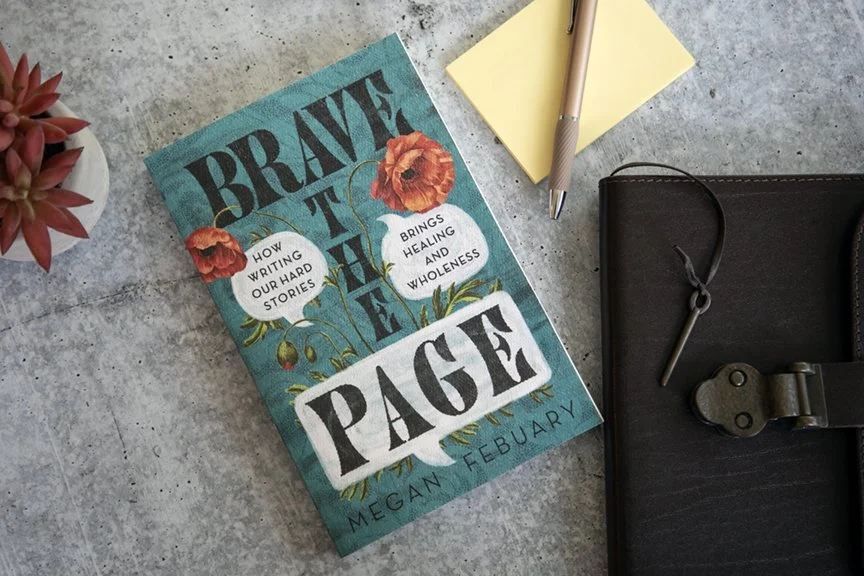
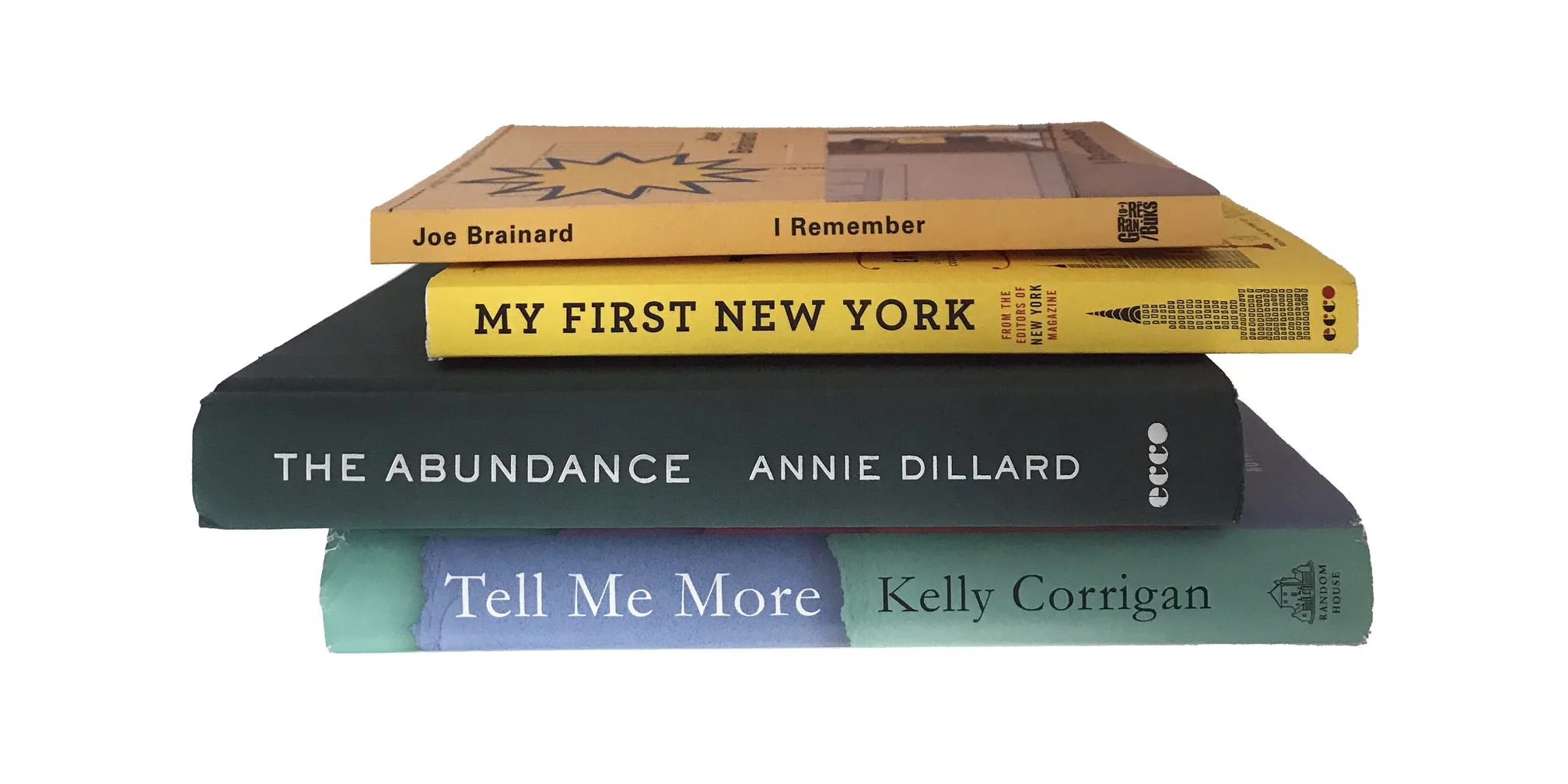
Reading works by others to inspire our own writing is a humbling and essential practice. Last week I reviewed three books that use shorter vignettes to create a compelling portrait of the writers—I hope they inspire YOU!
TUCCI TIME
Actor and memoirist Stanley Tucci “traces his love of food to his family. His mother, an excellent cook, would send him to school with sandwiches made from the previous night’s eggplant parmigiana, while he jealously eyed his friends’ peanut butter and jelly sandwiches.” Read an excerpt here.
SHOWBIZ LIVES OF YORE
Hollywood veterans Ron and Clint Howard were inspired to co-author their new memoir, The Boys: A Memoir of Hollywood and Family, when they were going through old family photos while preparing for their father’s memorial service:
Artifacts from the Past
HANDKNIT HEIRLOOM, STITCHED WITH LOVE
“‘You know what's in here?’ I blurted out to the shipping clerk—even though I could see he was busy and cranky and probably aching for his shift to be over. ‘I'm sending a family heirloom to my grandson in Europe. It’s my mother’s handknit sweater so he can give it to his child, my first great-grandchild!’”
THE LEGACY WE LEAVE
“We have all heard the saying, ‘success leaves clues.’ Speak of your successes and failures as a means of providing perspective to those who will ride on their ancestor’s coattails in the century ahead.” On leaving not just a financial legacy, but a legacy of meaning.
THAT OLD-SCHOOL VOICEMAIL
“I have an archive of everlasting audio that allows me to experience whatever memory I want, as many times as I want to. My loved ones’ voices will always be with me. Ready to be tapped on. Ready to make certain that I am never alone.” How her phone’s most annoying feature saved her life.
Transformative Words & Memories
“THE POWER OF BOOKS TO CHANGE LIVES”
“For me, telling and writing my story over and over was a part of healing,” memoirist Mondiant Dogon says of revealing his stories during two- or three-hour interview sessions with his cowriter Jenna Krajeski.
JOURNALING FOR ANXIETY
“When people use writing to express themselves, Dr. Wright said, they ‘increase emotional regulation, clarify life goals, find meaning, and give voice to feelings, which can help construct a meaningful story.’”
“HE DIED AMONG HIS MEMORIES”
“In one email he reminded us of what his grandmother whispered every time she kissed him goodbye: ‘Sciaddu miu’—Sicilian for ‘my breath.’’ Gina Rae La Cerva revisits her grandfather’s recipes along with her Sicilian heritage.
THE ETHICS OF ARTISTIC APPROPRIATION
“[With] a growing interest, in some publishing circles, in ‘own voices’ and ‘lived experience’…a premium is placed on authors’ personal familiarity with the worlds they summon. There’s a corresponding sense that the person who inhabited a story in real life should get the first crack at fictionalizing it.” If you’ve followed the controversy surrounding the “Bad Art Friend,” then this is a rather arresting read.
...and a Few More Links
The 10 best biographies of 2021 according to Barnes & Noble
How on earth do you distill an entire life in one single photo book?
Man works to preserve photos his father shot of Pakistan’s people in the era of the country’s founding
Virtual book talk: “How Yiddish Changed America and How America Changed Yiddish”
An excerpt of In the Weeds: Around the World and Behind the Scenes with Anthony Bourdain by Tom Vitale.
Short Takes
Life Story Links: September 21, 2021
From memories out of the box (the boxes in your attic, that is) to the craft of writing memoir, this week's curated roundup has plenty to inspire and instruct.
“When you write your family history, be a recording angel and record everything your descendants might want to know.”
—William Zinsser
Vintage photo of Mr. and Mrs. Harold Garrity and family at home in Yonkers, New York, circa 1942, photographed by Arthur Rothstein.
Stories from Life
HISTORY THROUGH A PERSONAL LENS
“I don’t know if the horse had died or simply fainted with heat exhaustion. The peddler was slapping the horse in the face, yelling and cursing at the stricken animal in a futile attempt to force it to stand up.” Scenes from the Great Depression in NYC through the eyes of a boy.
DELVING INTO THE PAST
“The people from my past became like characters…. I found a lot of information that shows how people in my family tree thought alike. We would have been like best friends had we grown up at the same time.” On building a family legacy.
FINDGING HEMINGWAY
“Interweaving his eventful biography—a life lived at the ultimately treacherous nexus of art, fame, and celebrity—with carefully selected excerpts from his iconic short stories, novels, and non-fiction, the [now-streaming] series reveals the brilliant, ambitious, charismatic, and complicated man behind the myth, and the art he created.”
“In order to have something new to write, he had to have something new to live.” This panel discussion, “Hemingway and Biography,” happened back in May but I only just discovered it and thought others might be interested, as well.
The Craft of Memoir
OUT OF THE DARK
“So when you write about your life, don’t skip over the hard parts. What would be the point? Who would you be fooling? Yourself? Oh please.” Abigail Thomas asserts that vulnerability is a memoirist’s strength.
TALKING ABOUT TOURETTE’S
Salt Lake City–based personal historian Elizabeth Thomas offers up a few tips for memoirists who want to address a physical disability in their writing, using recent book The World's Strongest Librarian by Josh Hanagarne as a model.
Memories Out of the Box
THE VOICE OF THINGS
“I found that going through my accumulations became an ongoing encounter with everyone I’ve been on the way to whoever I am now,” Sven Birkirts writes in this meditation on why we keep what we keep.
PHOTO LEGACY
“Long after I’m gone, and my son becomes the steward of our family stories, these photos will remain. They will live on. They will speak across generations, saying, ‘I was here. I mattered to someone. I left a legacy of love. I helped start your story.’” Rachel LaCour Niesen on leaving a legacy of love.
YOUR LIFE IN 30 THINGS
Listen in as Martie McNabb discusses a community challenge she recently launched around choosing 30 objects that can tell your life story—and why so many people have trouble discerning which sentimental items to keep and which to get rid of:
In the Books
DRAW YOUR LIFE
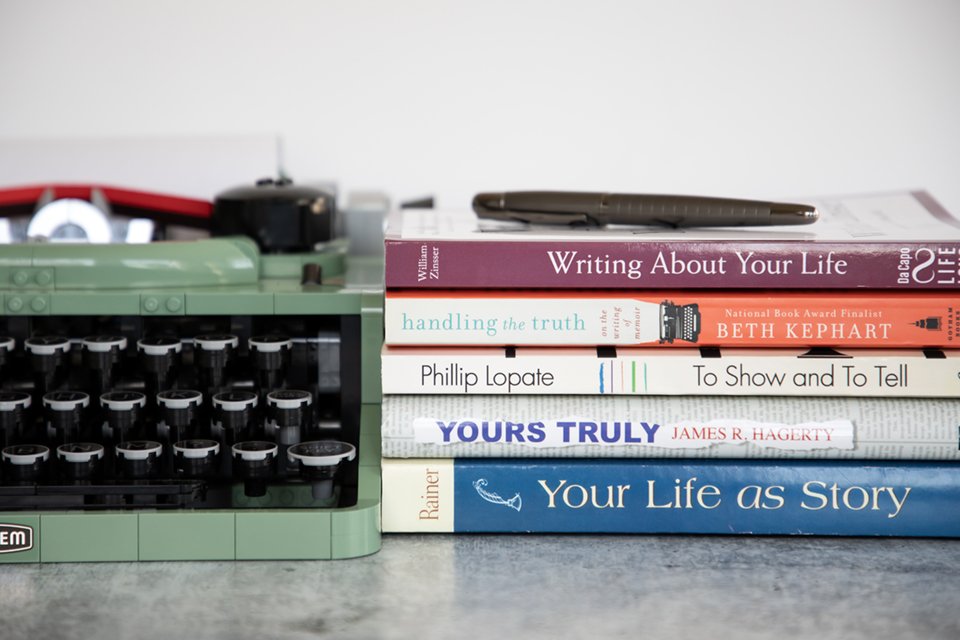
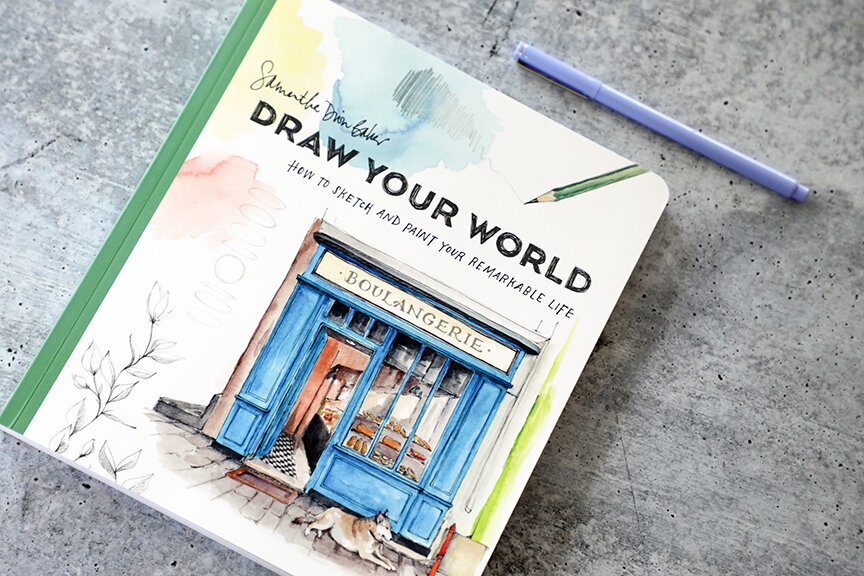
Last week I shared some artful memory-keeping ideas from the world of sketch journaling plus the books to help you begin to draw your life, no pressure.
ONE-HOUR INTERVIEW = 5,000-WORD CHAPTER
“I realized that if writing was not my strong point, it didn’t make much sense to start with it, over-invest, and become frustrated with a behavior I personally found hard to do.” Barry O’Reilly on working with a writing partner.
...and a Few More Links
Journalist Ron Steinman shares memories of helping his Vietnamese family resettle in Maryland after the Vietnam War, and makes parallels to the plight of Afghan refugees today.
Ancestry corrals three leaders from tech world to help grow business.
On getting past writer’s block (and the kitchen table as hub for story sharing)
Short Takes
Dawn Roode’s curated roundup for the week of Sept. 23, 2026, is overflowing with recent reads on memoir, life story writing, and family history preservation.