
Memories Matter
Featured blog Posts

READ THE LATEST POSTS

“To be continued…”: When breaking up a family history interview is wise
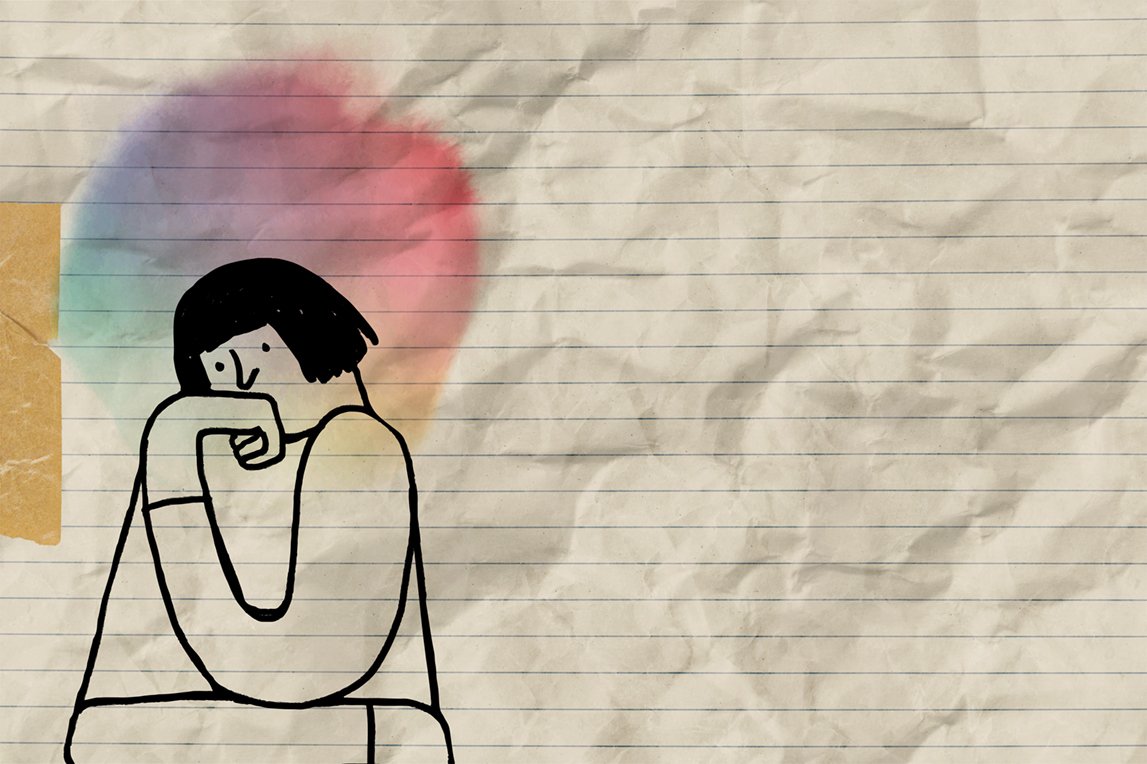
There are a variety of reasons—including traumatic memories—when pausing a personal history interview is the best course of action. Give in to the silence if...
There are many times when it’s good to hit the proverbial pause button during a personal history interview—you can always pick up the topic during another session.
I was in a meeting with fellow personal historians recently when we got on the topic of helping our clients discuss challenging times during their personal history interviews. There was so much wisdom in that (Zoom) room and one thing I jotted down was a simple phrase: “To be continued…”.
In this case, we were talking about a son wanting to hear about specific—difficult—times in his mom’s life: These were things she didn’t talk about with her family, but that certainly contributed to her identity and outlook on life. It’s understandable that he would want to learn more about his mother’s experiences. But—and this is a big “but”—when my fellow personal historian brought up this topic during an interview session, the person answering questions only went so far before getting quiet. Was it too awful to probe? Was the subject paralyzed by bad memories associated with the experiences? Did she even want to “go there”?
As trained personal historians, my colleagues and I are accustomed to giving people space—space to formulate answers, to think, to spend time exploring memories and being heard; it is a sacred space. Often moments of quiet during an interview will lead to meaningful and surprising stories. But sometimes, well, they won’t—sometimes, those extended silences may go nowhere. And that is 100-percent okay.
And sometimes, those silences are productive in another way: A seed has been planted via the question, and that seed needs time to germinate. Hence, that phrase I took note of: “To be continued…”.
Saying those words out loud either at the end of an interview or after a pregnant pause in the midst of an interview gives the subject time and space. The words are a recognition of the fact that, yes, we can continue this topic another time. That, yes, it’s okay to give it some breathing room. And that, no, we don’t need to finish this conversation right now.
Remember, though, that it’s not only a probe of traumatic experiences that may necessitate those words, “to be continued.” You may want to turn the conversation towards something lighter and more fruitful during a personal history interview in other circumstances, too. Here are a few instances where hitting the proverbial pause button on your interview (or at least on a topic that ends in a prolonged silence) can be beneficial:
Decide to resume discussion of a topic in a subsequent family history interview when:
the interview subject feels like exploring the current topic (whether involving trauma or otherwise) is too emotional, too difficult, or too uncomfortable
the interview subject would like to consult with a family member to check details on a sensitive memory or story
the interview subject is feeling tired
the interview subject has expressed that they would like to think about how to approach the topic
the topic being discussed could reveal things that negatively impact a loved one or other individual (in this case, be sure to reiterate that anything that comes up during the interview can be removed later, whether from an edited recording, a transcript, or a book).
One other thing worth noting: All of the above reasons for breaking up a personal history interview involve some form of challenge, but there’s another strong reason for resuming conversation again later—quite simply, because every time we tell a story, new aspects of our memories may come to the fore. So each new telling of a story may add texture, details, meaning. “No memory is ever alone,” Louis L’Amour wrote, “it’s at the end of a trail of memories, a dozen trails that each have their own associations.” So take one trail today, another tomorrow. Give your subject space. Let them know it’s more than okay for your conversation “to be continued…”.







Leave a legacy that is a blessing to your descendants
Your legacy is more than the assets you leave behind—much more. Here, three ways to leave a personal legacy that has a positive impact on your loved ones.
Happy memories. An example of a life well lived. A model of resilience. A set of values to guide one’s choices. An inheritance of service to others. Of gratitude. Faith. Love.
These are the things of a meaningful legacy.
For your legacy is more than merely the finances and property you leave behind. So much more, in fact. Your legacy is not something you leave for your family and friends; your legacy is something you leave in them.
3 ways to leave a meaningful legacy
This isn’t a blueprint for your life, just a few suggestions for leaving a legacy that has a positive impact on the loved ones you leave behind.
“Thoughtful focus on legacy not only brings meaning and context to our daily lives, but it also allows us to create and pass down a rich, multi-dimensional view of our lives to future generations,” my personal history colleague Clémence Scouten has written. I couldn’t have said it better!
So, here are three ways you can begin to preserve your legacy for those you love:
1 - Curate the stuff of your life now, so they don’t have to do it later.
Going through my mother’s belongings after she died was one of the hardest things I have ever done. Virtually everything I touched in her home held memories, and the weighty decision of what to keep and what to get rid of overwhelmed me in my grief. I was thoughtful (some might say overly thoughtful) about these decisions, but what if your descendants don’t have the time or inclination to be so discerning when the time comes to go through your stuff?
Make it easy for them:
Purge things from your closets and storage rooms that you don’t use (a gift to yourself now, too—you’ll feel lighter, I promise!).
Organize and digitize old photographs and mementos. There are professionals who can help with this, if it seems like too much; reach out and I can refer someone to you in you area.
Photograph heirlooms and write up their stories on an index card attached to the back of each print: How old is it? Who did it belong to before you? Why is it special? (And remember, an heirloom is such because you say it is, not because it would sell well in an antique store—that well-loved stuffy your son clung to as a baby or your mom’s grease-stained, handwritten recipes are as heirloom-worthy as a string of pearls!).
Consider getting rid of “heirlooms” that either don’t bring you joy or that make you feel heavy or resentful. That rifle used by your Confederate ancestor in the Civil War? If it makes you feel bad, you don’t have to hold onto it; photograph it, write its story, then pass it on to a museum or other institution that can honor its history in context. Or that bulky piece of furniture that has been in your family for generations but that has no place in your home? Maybe refinish it, or ask your kids now if they like it—if so, sure, save it for them; but if they say ‘no,’ don’t hold onto it out of obligation, and don’t pass that sense of obligation (and guilt) onto them!
2 - Preserve your stories to inspire and guide them.
Have you ever wished you knew more about your grandparents’ lives? Heck, how about your parents’ lives? Be a good steward of your own family history and get those stories down! You have many choices for how to preserve your personal history:
Write your life stories. If you enjoy writing and have the time, by all means consider writing your memoir. Find resources for how to get started writing your life here.
Speak—and record—your stories. For many people, it’s easier to tell their stories out loud than to write them. Consider using some family history questions to guide you in your storytelling, or ask a family member to sit and interview you (having a compassionate and curious listener is incredibly helpful in eliciting meaningful stories). Remember: Hit “record” on your smart phone app to ensure you have captured everything. Find a helpful step-by-step guide to how to record your life stories here.
Hire a personal historian to help capture your legacy. There are those of us, like me, who specialize in turning the materials from our interviews into heirloom books; and there are colleagues of mine who produce video biographies or even audio snippets of your life. Why hire a professional? Perhaps you want to ensure the highest standards of your project, or maybe you are simply overwhelmed by the idea of where to even start, no less finish, such an endeavor. Or maybe you recognize that having someone to receive your stories—to bear witness, to engage with—can be invaluable. As Mark Yaconelli writes, “Each of us wants to catch the birdsong of our own life, but often we need a listener to score the melody, to sing it back to us, to help us whistle forth our own merry tune.” Amen.
3 - Live a life well-lived.
There are entire books, podcasts, and films made about how exactly to live a life well-lived, so I am certainly not going to sum up this idea here in a few words. I will say this, though:
Live with intention. Follow the path that feels authentic and right to you. And please, be gentle with yourself. You don’t want to live to create a legacy, of course, but remember that the WAY you live your life will be your legacy.
In closing, I would like to leave you with a few words from Rabbi Steve Leder, whose book For You When I Am Gone: Twenty Essential Questions to Tell a Life Story I highly recommend. He writes, “Let us leave words for those we love in order that we may journey with them long after we are gone, and let it not take imminent death for us to find those words and craft a more meaningful legacy.”
And: “We cannot learn from a story no one has ever told us.”
So, tell yours, won’t you?














The best graphics to add to your family history book
Beyond family photos: Consider adding vintage maps, family tree charts, and professionally shot images of special heirlooms to your family history book.
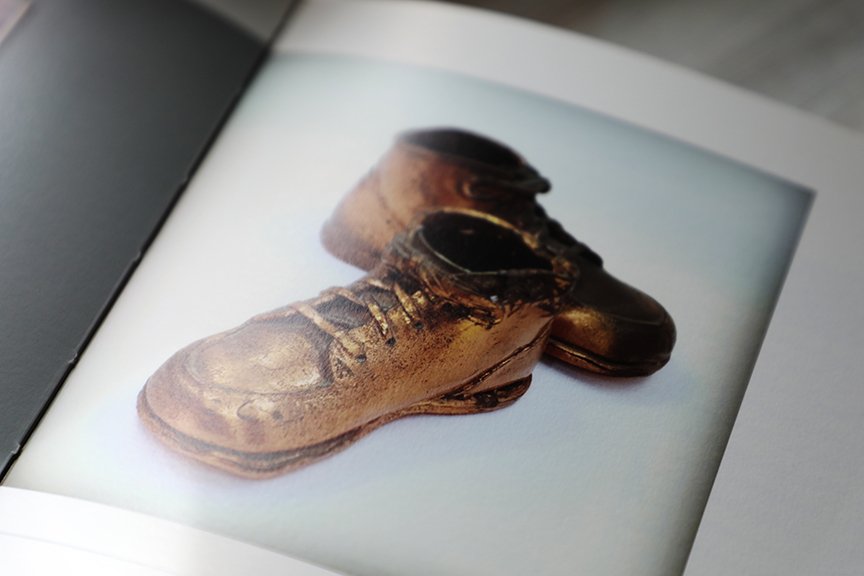
Shooting some of your family’s most treasured heirlooms for your book not only provides beautiful visuals to accompany your stories, it ensures that the details of those heirlooms will get passed on. These happen to be my bronzed baby shoes from 1970.
One of the more fun parts of putting a family history book together can be deciding what to include to visually illustrate your family’s stories.
Your first line of business is to sort photos and memorabilia and digitize it. (Some helpful resources for that include “How to Decide Which Photos to Use in Your Life Story Book” and, if you’re still in the early stages of planning your book, “How to Organize Your Family Archive as a Resource for Your Life Story Book.”)
Once all that’s done, consider these three types of visual media to add color, texture, and graphic appeal—all while helping to tell your stories clearly—to your family history book:
Family tree charts
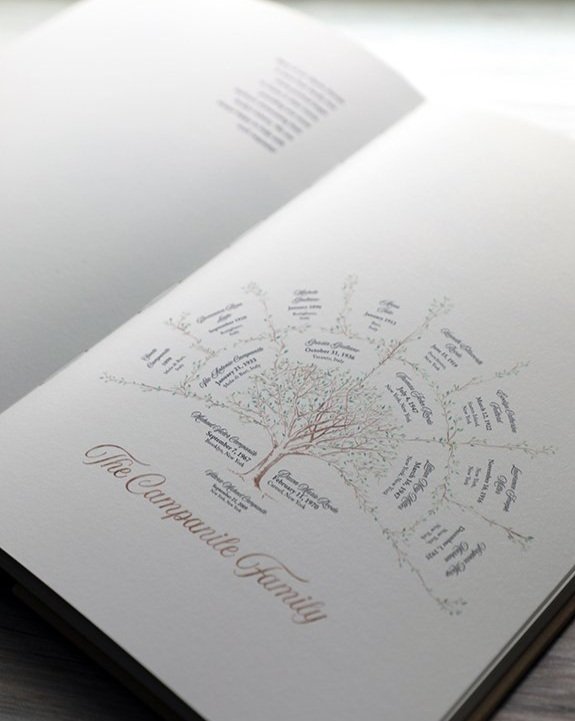
Family tree charts can be a simple ancestor chart such as this one, embellished with an illustrated tree and roots; or they can be extensive all-in-one genealogy documents listing multiple generations, with all relations including ancestors and descendants (the larger a family gets the more challenging it can become to print an all-in-one tree in your book; in that case, multiple graphics of each family line are recommended).
As the steward of your family history, you are abundantly familiar with the names of your ancestors—and, more importantly, of their relationships to you. But consider this: Future readers of your family history book will be separated by generations from their kin, and will not intuitively understand those relationships. A graphic family tree chart provides them with a visual reference that they can easily flip to for confirmation—Yes, that is my two-times great-grandmother!—and clarification—No, Great Uncle Pete was actually on my paternal side!
Search Instagram, Pinterest, and Etsy for “custom family tree” and browse the myriad styles out there. You’ll want to create a family chart that feels consistent with your book’s design (is it modern? traditional? fun?)—so either emulate one you like in your preferred design software, or hire a graphic artist to create one for you. Many designers provide you with a large-scale print to be framed but will also provide a high-resolution digital file for you to include in your book for an extra fee (trust me, it’s worth it!).
Photographs of family heirlooms
No doubt you’ve got some heirlooms sitting around your house that hold meaning (of course they do, otherwise why hold on to them?). Families often pass down the lore behind family heirlooms via good old oral storytelling, and I’m all for that. But to ensure that the provenance of those heirlooms, and the stories they hold, don’t get forgotten as new generations inherit them, it’s key to record their details.
A few notes on heirlooms: The word ‘heirloom’ connotes for many an item of import, and often one of high monetary value (think of Great-Grandfather’s grand piano or your mom’s passed-down diamond engagement ring, for instance). Value can derive from more than money, though (think of the family Bible in which family members have recorded—in their own handwriting—births, marriages, and deaths for more than a century; or the family recipes on grease-stained index cards that are pulled out every holiday).
Make a list of all the heirlooms, big and small, that hold meaning for your family (and remember, some may be kept at the homes of other family members). Then, decide on an approach for preserving their stories.
One idea: Use your smart phone to take clear photos of all the items (some from multiple views), print those out, and write their details on back (include who it originally belonged to and to whom it was passed down; any relevant dates; and bonus points if you also record a narrative remembrance about the heirloom, as well!). Make copies of these for interested family members, and store one in a bank vault or safe location so it’s secure in the long-term.
Another option: Use a high-quality DSLR or hire a professional photographer to get beautiful shots of your heirlooms to include in your family history book. For this use you want to capture photographs with studio lighting (pro-grade lighting set-ups are now easily portable, so photographers can bring them into your home) and that show strong detail. You can either create a full chapter devoted to your heirlooms and their stories, or you can pepper these photos throughout your family history book, including them where relevant (a shot of Grandma’s well-loved wooden spoon near her stories of holiday cooking, perhaps, or a close-up of that third-generation quilt near the ancestor who worked on it).
Using proper lighting and adding props to your family heirlooms help make the resulting photos worthy of inclusion in your heirloom book. How much more boring would these blue glass rosary beads be if they were shot simply from above on a table with your smart phone?
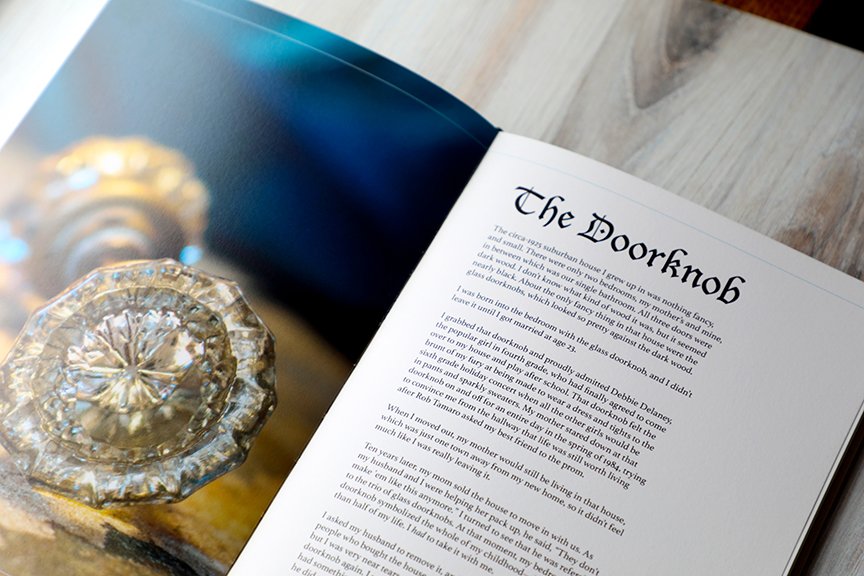
Heirlooms can be unexpected—such as this gorgeous glass doorknobs shown here: “I was born into the bedroom with the glass doorknob and I didn’t leave it until I got married at age 23,” the subject remembers; she uses the object as a jumping-off point for stories from her life in that home (she even took the doorknob with her when the house was sold—a true heirloom).
Historic maps
Reproducing maps within your family history book will help orient readers to the geography of your family and add a wonderfully historic feel to your book. Fair warning, though: While there are numerous resources for finding royalty-free digital maps spanning centuries, you’re in for some intense research to find exactly which map(s) will best illustrate your family history.
This article, “Old Map Collections That Every Family Historian Should Know About,” is one of the most comprehensive and helpful, listing 11 sources for researching vintage map collections.
One of my favorites is the David Rumsey Map Collection, which includes more than 150,000 maps that you can easily download and use. The interface can feel overwhelming, but there are gems to be found, including 1950s road maps from Shell Oil Company and
The Library of Congress map collections home page is a little more straightforward to navigate and has advanced search capabilities. Here you’ll find everything from maps and charts from the time of the American Revolution to fire insurance maps that get granular with street-level details; from WWII military situation maps to railway and other transportation maps.
You can also purchase basic city and country maps from stock photo agencies or freelance illustrators, or scan in maps from your family genealogy archive. Always be sure to check copyright details to ensure you have legal permission to reproduce chosen maps in your book.

An example of a vintage map you might include in your family history book: This one is an 1872 topographical map of Adams, Brown, Highland, Pike, and Scioto Counties in Ohio, originally published by Stedman, Brown & Lyon, Cincinnati, 1872; courtesy of David Rumsey Historical Map Collection. The Rumsey collection allows for downloads of varying sizes so you can ensure you have the highest resolution for printing in your book.

























On the ever-changing nature of our stories: In conversation with Rachael Cerrotti
Our memories are anything but fixed—and when stories are passed down to a new generation, their malleability, their meaning, and their impact change, too.
“It’s the best part of storytelling for me, that it’s never going to stay the same.”
—Rachael Cerrotti
Memoirist and host of the podcast “We Share the Same Sky,” Rachael Cerrotti
Rachael Cerrotti knew her grandmother Hana’s story when she was growing up. Hana, or Mutti, as she was called by her loved ones, was a Holocaust survivor. She visited schools to share her testimony with young students. She spoke with Rachael about her past.
But stories have chapters, and they are received differently by different people at different times in their lives. Stories can be told one way to a group of students, and another to a young, devoted granddaughter. Those same stories may take on an entirely new mien when handwritten in a private journal, captured in the moment with no distance for reflection.
What is Hana Dubová’s story, then?
Well, of course, there isn’t just one.
Rachael—a granddaughter, photojournalist, podcast host, and author—has explored her grandmother’s story faithfully. During her college years, cognizant of the fact that Hana was getting older, Rachael began getting together regularly with her grandmother, recording their conversations along the way. After Hana passed away in 2010, Rachael says she spent the first half of her twenties on her bedroom floor in Boston, going through Hana’s diaries and the rich archive she left behind. She would eventually retrace her grandmother’s footsteps, traveling through Europe and getting to know, intimately, those who knew Hana and her story. As Stephen D. Smith, executive director of the USC Shoah Foundation, writes in the foreword to Rachael’s book, We Share the Same Sky, “She made her grandmother’s homes and hiding places her homes, her places to hide.”
I have recommended We Share the Same Sky in a formal review and gifted the book to friends; I have extolled the podcast—a must-listen for anyone who values stories and family; and recently I was fortunate enough to chat with Rachael about the (inevitable, frustrating, and beautiful) flexibility of memory.
The same stories may hold different meaning for us at different times in our life.
“The story has grown up as I have grown up,” Rachael writes in the preface to We Share the Same Sky.
While Rachael gradually reveals Hana’s story to us, she also weaves in her own perspective and life changes, making for a poignant and powerful meditation on the meaning of inherited trauma and the elasticity of memory. She writes to her grandmother: “Your diaries and letters are the literature of your past, and each tells a slightly different story. I read and reread your stories as if they were fables, modern-day fairy tales that are constantly changing meaning. Every time I open to a familiar page, I read the words in a new way.” And isn’t that the nature of all family stories?
Often I talk about the enduring value of our stories: When we hear stories from family members about their experiences, we usually ruminate longest over the ones that feel the most familiar to us. Rachael echoes this during our conversation, admitting that if she is one day blessed with being a mother and a grandmother, she will most certainly see her grandmother’s stories in a new light again with each milestone.
When Rachael revisited her grandmother’s testimony after her husband’s death, she found new meaning, new depth there: “It was guidance and it was permission and it was warmth, and the words just carried everything within it,” she said.
“I think we're all drawn to stories that impact us in some ways and that feel relevant,” she said.
“We all kind of hold onto the stories that we need to hear, and I think a lot of us dig into our past trying to reckon with something or to try to understand ourselves better,” Rachael said. “Realizing that our memories are malleable gives us some ownership over them, different than just being resigned to them.”
Beyond fact-checking: Our narratives hold truths, even when they are contradictory.
While We Share the Same Sky is based on Rachel’s own experiences and research during her immersive travels as well as her grandmother’s personal writing, she did not turn to libraries or historical records to fact-check her grandmother’s stories (except for instances when an occasional age or date did not cohere).

“What I was always drawn to was the stories we tell ourselves and the stories we tell our kin, and those have nothing to do with the archives,” she told me.
In the book, she writes: “There are cracks in all our memories; sometimes they are exposed by our own inconsistencies, sometimes they are challenged by other people’s perspectives, and sometimes they change with time.”
Indeed, have you ever reread an old diary entry only to wonder, Did I really write that? Or even, Did I really feel that? Has the way you have told a single important story—say, coming out of the closet as a teen, or emigrating to a new country—changed over time? With time comes perspective, and with perspective comes a new way of regarding our experiences. Each telling of our stories reveals new truths.
“Stories do not have to be stuck in time,” Rachael said. “There are so many versions of stories that can all contradict each other and still all be truthful.”
Our ancestors’ stories become our stories.
One of the things that drew me to Rachael’s body of work, I told her, was how she deftly wove Hana’s story into the fabric of her own. Stephen Smith recognized this, too, writing: “What Rachael seemed to know is that her jumbled identity was not a godforsaken hand-me-down but a tapestry of individual stitches that needed to be understood to appreciate the whole. As you read this book, you will see each of those colorful stitches painfully embroidered into her life one by one.”
“Originally this was a story of people that had passed away,” Rachael told me. “This was a story of history. And then getting to meet all these people and having them meet my curiosity where it was at—that was this invitation to keep coming back.”
“These relationships don’t stop because you’ve stopped writing the story,” she said. “The story doesn’t end because you send it in to the publisher. That’s that chapter, and that’s okay.”
Hana’s life has informed and shaped her granddaughter’s. And Rachael has honored Hana’s legacy by revealing the nuances and truths in her diaries, and by encountering—and re-integrating—her stories again and again. In the epilogue, she writes directly to Mutti:
“I have completely lost myself in your story, creating for myself an experience out of each of your retellings. What started as a simple family history project has become this web of community. When I pull a thread in one part of the world, the story in another place changes. Your memories have become my landmarks, the symbols of my own past.”
Each of us is writing our own narrative, transitioning from one chapter to the next, weaving our ancestors’ stories into our own. I hope you will read We Share the Same Sky with this in mind, and—as Rachel hopes, as well—inspire conversation and story sharing between not just grandmothers and granddaughters, but among generations of your own family.
Discover Rachael Cerrotti’s work
Listen to her podcast of the same name.
Follow her on Instagram for updates on her life, upcoming appearances, and future endeavors.
And perhaps most exciting, Rachael is launching a new podcast this week, called The Memory Generation, subtitled “Conversations about our memories.”





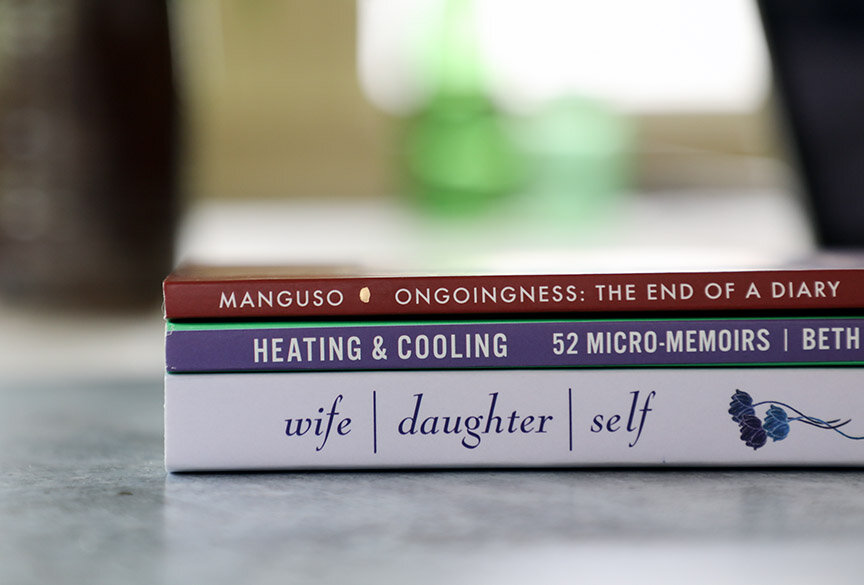
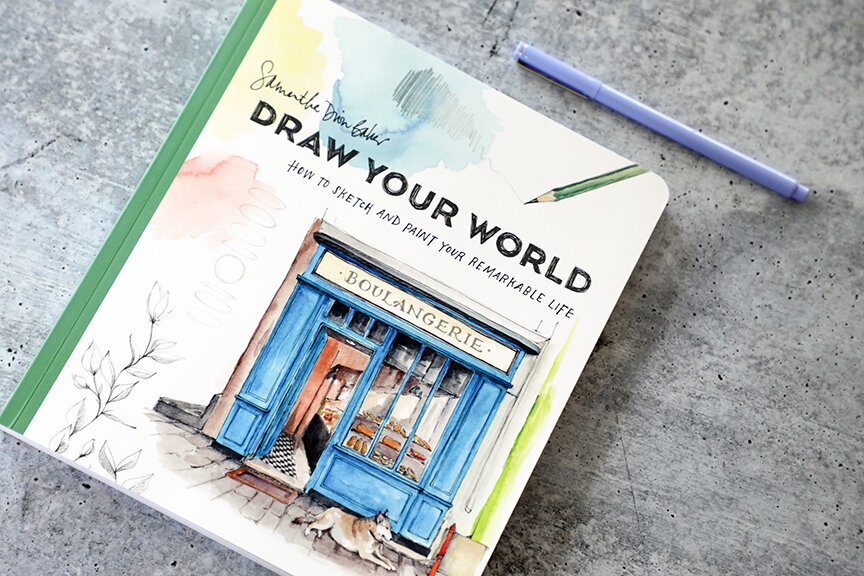


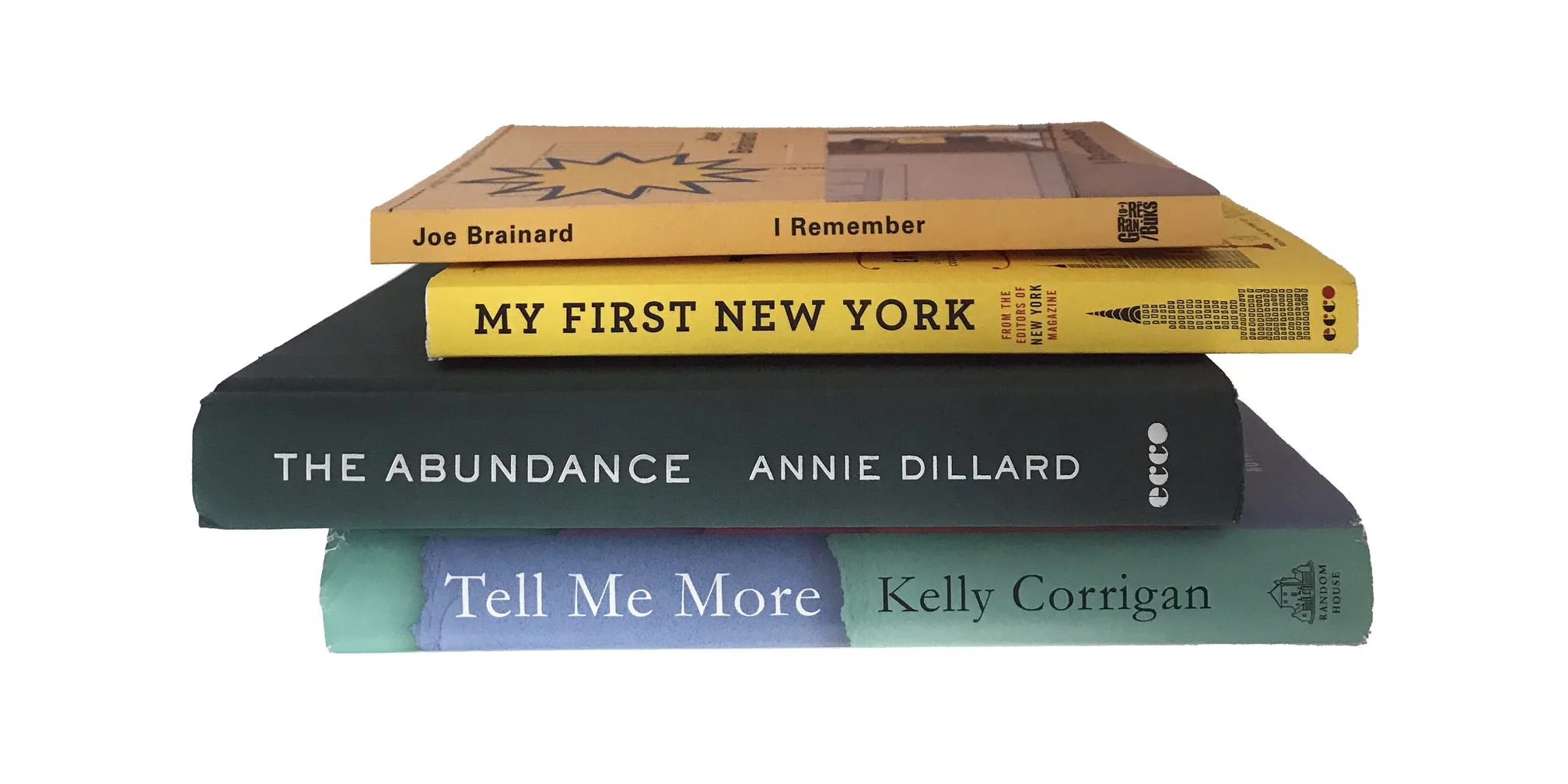


Affiliate disclosure: As an Amazon Associate, we may earn commissions from qualifying purchases from Amazon.com.
Double the fun: Interviewing Grandma & Grandpa together
Sitting both of your grandparents down together for a family storytelling session can be fun—but it’ll yield the best results if you follow these simple tips.
Conducting family history interviews with a couple such as your grandparents or parents can be a fun endeavor if you ask the right questions.
I am always thrilled when I hear you have a plan not just to interview one family elder, but to gather stories from multiple relatives. One of the most common goals is to interview a couple—perhaps it’s your parents, or one set or the other of your grandparents. If that’s on the agenda, you may be wondering: Can I interview them together?
Short answer: Yes, you can interview two people together.
Here, though, is a longer answer with tips for when this dual interview approach works best, and when it’s better to stick to conversing with one person at a time.
When dual interviews are okay
It’s absolutely okay—fun, even—to conduct joint interview sessions, especially with couples who have been together for a long time. If you plan to interview your grandparents on both sides of your family, for instance, invite your maternal grandmother and grandfather to sit down together for the first interview session. This will take advantage of their storytelling dynamic to get them excited about sharing.
If you are concerned that your family members may talk over one another, let them—at least for a bit. Their banter is likely the product of years together, and capturing it on film (if you are recording video) or in audio (if are using a voice recorder) is an accurate representation of how they interact. Imagine years from now listening in and thinking, “Oh, that’s so him!!” If you can’t follow the progress of their storytelling because they are interrupting or speaking at the same time, gently prod one or the other to take the lead, then ask a follow-up of their partner after.
A couple’s shared history can be explored in a joint interview: Ask questions that apply to their time together (their marriage, children, and holidays, for example), but save questions about their individual histories for their solo interviews.
Once that first interview session is transcribed, highlight sections that resonate but that you’d like to hear more about, and develop your questions for the next individual interviews from this transcript—it will help guide you on what to ask.
When joint interviews aren’t the best option
I would not recommend conducting all of your interviews in this fashion, with more than one subject at once, as it often prohibits one person from diving deep into their stories.
Maybe dad gets quieter when mom is around; it could be deference, or simply habit. He may think she is a better storyteller than he is, so he lets her take the lead. I guarantee you he has something substantive—or funny, or clarifying—to add, though, and he may just be more likely to do so in a one-on-one setting.
Other times dual interviews are not ideal:
If the couple’s relationship is strained or difficult.
If one person is hearing impaired.
If you are wanting to explore more about their personal histories rather than their shared family history.
When interviews must be conducted remotely.
If you’re only planning on conducting one interview (you’ll get better—deeper, thoughtful—answers during a one-on-one interview).
Preparing for your family history interviews
Whether you choose to begin with a joint interview session or not, you’ll want to be prepared with the right questions and optimal equipment. Here are a few resources that should help:
interview questions
Use this set of family history interview questions as a basis for forming your own list.
Pick an opening question that will set the right tone for your interview.
Interview setup


THE KID KIT: Everything you need to interview your grandparents
This 20-page FREE e-book is designed for kids 8 and over (and we mean way over!). Get ready to start connecting…
Best practices for recording family history interviews at home
Steal these best practices from professional oral historians to make your next family history interview a success, plus how to set the stage for great stories.
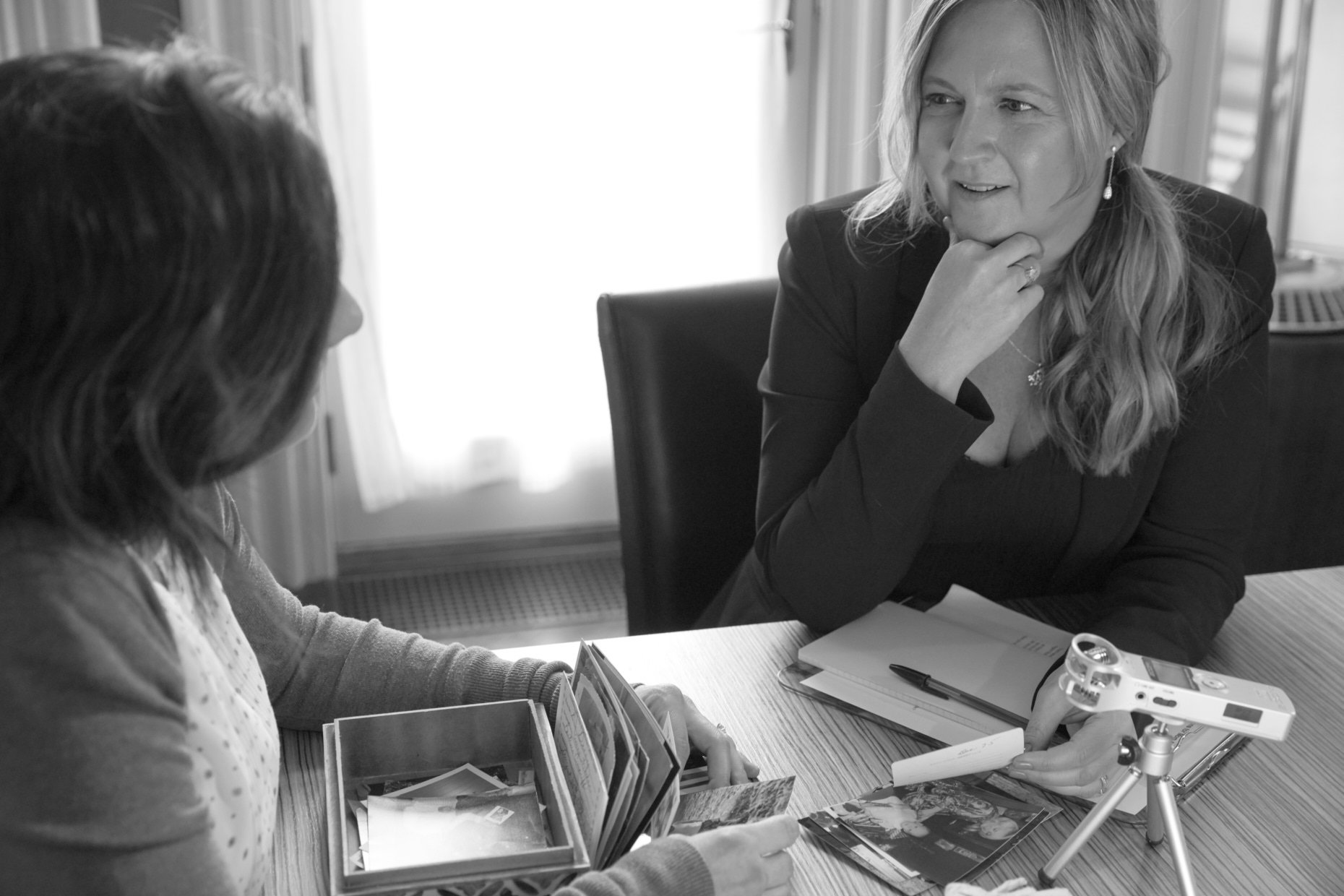
You need minimal equipment to interview a family member at home, like this Zoom recorder on a mini tripod.
I applaud you for wanting to capture your family history through in-person interviews with your loved ones! Preserving their stories—and their voices—is a gift for the next generation, but also a gift for those you plan to interview (trust me when I say it is a rare thing to be given 100-percent attention and the freedom to share…and be witnessed).
In order to ensure that you capture stories in the best and most secure way possible, please follow these simple practices that are used by professional oral historians around the world.
Do your best to create a recording-friendly environment.
No matter what kind of recording device you are using, any background noise and interference will have a deleterious effect on your final product. Choose a quiet location in the home or office where you are conducting the interview—away from heating or air-conditioning vents, a humming refrigerator, or windows overlooking noisy streets. Ask others who may be in the vicinity to either leave or be mindful of staying quiet. Additionally, ensure that your interview subject is comfortable—consider temperature, seating, and have a glass of water on hand, and try to situate yourself so you have direct eye contact with your family member.
Use multiple recording devices.
Always, always hit “record” on at least two devices. That may mean a professional mini digital recorder plus an app on your smart phone, or perhaps a DSLR capturing video plus a basic audio recorder. I do recommend sticking with digital recordings rather than old-fashioned analog cassette tapes, which are more cumbersome to convert and transfer to your computer.
Begin recording with an identifying statement.
Say out loud who is present (spell names), the date, and where you are. For instance: “This is Dawn Roode interviewing my grandmother, Virginia Miller—V-I-R-G-I-N-I-A, M-I-L-L-E-R, on this March 22, 2022, at my home in Brooklyn, New York.” Alternatively, you can introduce yourself, and then ask each individual you are interviewing to say and spell their own names. This may feel unnecessarily formal, but it’s critical.
Once the interview is complete, secure your recordings.
Immediately download the digital recordings, name them, and save in more than one place. The sooner you do these things, the better. I can’t tell you how many times I have thought I would remember what such-and-such recording on my phone is, only to press ‘play’ and have no recollection of the interview details.
Beyond these standard procedural points, here are three tips for setting the stage for a truly substantive and fruitful interview:

Consider your list of questions a framework, not a bible.
Preparation can be incredibly valuable—knowing, for instance, that your grandfather is a WWII veteran and asking informed questions about his service is both respectful and smart. So do come into the interview with a list of interview questions you’d like to ask. That said, be willing to stray from the set list should the need arise. Maybe, in the above example, your grandfather is unwilling to speak about his time at war—you may want to gently ask him why, or see if there is any aspect of his military life that he is willing to talk about; if not, be prepared to go in another direction. Alternatively, maybe one of your questions elicits such rich storytelling that you stick to follow-ups and veer in an entirely unexpected direction, allowing your interview subject to steer the conversation. If your storyteller gets animated—sitting at the edge of her seat or raising her voice and laughing as she recounts her memories—that’s a good sign that the stories she is sharing are good ones, and there are likely more in this vein!
Embrace silences.
Human nature is to keep a conversation going—so when there is a silence, we tend to jump in either with our reaction or with another question. But do your best to refrain from this; allow a pause to grow. In that interim your subject is thinking, and some of their best stories are likely to come from this. And don’t worry when the pause does not yield something great—simply ask a follow-up if you think there’s more to the story, or move on to the next question. The more comfortable you become with sitting in the silence, the more comfortable your storyteller will feel to keep going.
Bring some memory prompts.
Old family photos, scrapbooks, or journals are excellent vehicles for storing up memories and getting your interview subject to open up. While I find such totems to be helpful with everyone, they come in especially handy when your interview subject is reluctant or less than enthusiastic about participating.
A few more resources you may find helpful to prepare for your family history interview

Download this free Kid Kit e-book; while it is specifically geared to youngsters interviewing their grandparents, the historical timeline is a nice cheat sheet for any age.
How to be a good storyteller if you are the subject of a family history interview
Get 56 essential family history questions to ask your elders.
Special circumstances: Oral history interview questions for particular subject groups
If you are interviewing people who are trauma survivors or part of a distinct population, these resources may help:
MILITARY VETERANS
Oral history instructions and sample interview questions for vets from the Veterans Project of the National Archives
TRAUMA SURVIVORS
Navigating life review interviews with survivors of trauma
HOLOCAUST SURVIVORS
Oral history interview guidelines from United States Holocaust Memorial Museum
HOSPICE PATIENTS

Why not make your own legacy list?
Whether you're downsizing or consciously sorting through your stuff, make a legacy list of items that hold memories—it's a cheat sheet to your family history.
A well-loved donut cutter has been passed through generations of my neighbor’s family—and best of all, they continue to use it and share stories of those who used it before them! An heirloom doesn’t have to be so precious that it sits in a box untouched; those we stitch into the fabric of our lives through regular use are often even more meaningful!
How making a “legacy list” can set stories—and guilt—free
Things can hold memories. But those same things—maybe even more so because they hold memories—can feel like a burden.
Rather than let the stuff of your past overwhelm you—with clutter, with guilt—let’s look at a few ways to take control of the things so you can focus on the stories associated with them.
Have you ever seen the PBS show Legacy List with Matt Paxton? I hadn’t until fairly recently, but I love it! TV promotions describe the series as exploring the hidden treasures within our homes: “As millions of Baby Boomers downsize their own homes or settle the estates of family members, they will discover the most important museum in the world is in their family home.” In each episode Paxton and his expert team of organizers and historians clean through one family’s home with the intent of uncovering the most special things within—what he calls a legacy list.
“A legacy list is really just a list of items that help you tell your family history,” Paxton says.
“Lose the stuff, keep the memories” is a mantra for many downsizers or minimalists, but you don’t have to be either of those things to want to get rid of at least some of your stuff. Consider it a courtesy for the next generation (I speak from experience when I say going through my mother’s things after she died was not an easy task). And think of it, too, as a way to ensure that the things that really matter get preserved, not discarded.
Make your own “legacy list.”
1 - Write your legacy list.
Start with a list of items you think you want to find. Watch the episode of Legacy List below for some inspiration, or think about the following questions to help you identify things that may hold meaning within your house:
Are there items associated with specific family members that help tell their story?
Are there certain items that were used by ancestors that are still functional?
Are there handmade items among your treasures?
Do you have handwritten recipes that have been passed down through generations?
What items, if any, hold historical value, or perhaps help tell the story of the region?
Some examples:
In the episode below, “Home on the Range,” the family matriarch treasures her mother’s early handwritten school notebooks, which symbolize her intelligence and the sacrifice she made of quitting school at the age of 13 to care for her siblings.
Things don’t need to be big or monumental to be imbued with meaning! I, for example, think of my mom every time I bake and use her small offset spatula; and I gave a friend who loves to knit my grandmother’s collection of knitting needles so they would continue to be used with love.
I adore my mother’s chimes, and rather than stow them away in a box, I consider them an everyday heirloom and smile every time I hear their song from my backyard. I also cherish the crocheted blankets she made for me when I was away at college, and the ring I inherited with her birthstone (which I wear often).
2 - Allow yourself to be surprised.
There will be things you “just know” are packed away that you can’t find, and others that you never knew existed. Remind yourself that it’s okay for some things to have gone missing; you can write down your memories associated with them so those are not lost, too, and even search for photos that might represent the items in a more concrete way.
3 - Go beyond finding the things on your legacy list—tell their stories, too.
When Paxton asks the family matriarch why she gets such a sense of comfort from her ancestors’ stuff, she says, “I guess it’s just all a part of me…. I think that if I let go of the stuff, the memories will fade, too.”
“I think that if I let go of the stuff, the memories will fade, too.”
Those memories will fade as time goes on, though, if they are not recorded in some permanent way. With each new generation, the experiences and firsthand memories become further removed.
So grab a pen (or hit “record” on a digital audio or video recorder) and tell those stories! Many pieces may need explanation (how was that plow yoke used? for instance). Some may have important documentation associated with them (a dated certificate of authenticity, for example). But mostly, strive for heartfelt stories (for a recipe—how the smell alone alerted you to the holiday and Poppy’s presence; for a photograph—when it was taken and what the context was…and why it holds a special place in your memory).
And take a lesson from the show: Interview members of every generation to hear about their memories and associations with the items on your family legacy list. As you’ll hear in this episode, even the grandchildren may surprise you with distinct and meaningful memories.
As Paxton reminds viewers, if an item is properly chronicled, it will be cherished forever.
Watch an episode from the recent season of Legacy List with Matt Paxton below, or browse all available episodes on PBS.


14 Best RootsTech sessions for family storytellers in 2022
Here are my top picks for RootsTech 2022 sessions teaching about family storytelling and photo legacy. They’re all free, and you've got a year to watch!
Why waste time browsing through hundreds of session descriptions? If you’re interested in learning about preserving and sharing family stories and photos at RootsTech 2022, then look no further and bookmark this page—I’ve curated the best options for family story keepers below.
Again this year, RootsTech, the largest family history conference in the world, will be held virtually—and free of charge. That means there is a wealth of stuff you can access for free! But trust me when I say diving into the menu of seminars and finding exactly what you want can be challenging.
There are 22 family history topics covered in the RootsTech array of class sessions and keynotes in 2022, from technology to travel, from historical records to DNA. While of course all kinds of genealogy topics may be of interest to you, I am honing in on the best that’s on offer on the topic of storytelling.
Of the hundreds (!!) of results that RootsTech dishes out on the storytelling track, here are my favorites—and those I think you may most benefit from.
Bookmark this page and come back to those that interest you when you have time—for while the conference officially runs from March 3-5, most of the content will be available on the website for a full year.
RootsTech 2022 sessions on family storytelling and sharing

Telling Your Stories & Making Connections
1 - Workshop: Start Telling Your Own and Family Stories
“Writing about your memories doesn't have to be an arduous task. In this workshop, we'll complete fun brainstorming exercises to develop family story ideas. Because stories beget stories, we'll also have opportunities to exchange ideas.” Sounds like a session that will be both informative and participatory—that’s my kind of class.
Presenter: Laura Hedgecock is president GeneaBloggers and author of Memories of Me: A Complete Guide to Telling and Sharing the Stories of Your Life.
2 - Stories for Your Family History: How to Tell a Good Family Story
“Learn family storytelling tips that will help others enjoy your stories as much as you do,” describes the course description. Remember: Your own personal narrative is part of your ongoing family history, so it’s important to document your stories for the next generation—hopefully this session will get you started!
Presenter: Sunny J. Morton, author of Story of My Life: A Workbook for Preserving Your Legacy.
3 - Easy Family History Video Stories
If you’re like me and the idea of shooting and editing a video intimidates you, then this course looks like it’s for us. The description promises to cover a storyboarding technique to help with planning as well as simple tools for combining photos, audio, video clips, and music. “This class will use a case study of creating a video story from an inherited World War I wallet. It was created with post cards, voice narration, and other memorabilia.”
Presenter: Rhonda Gaye Lauritzen is a professional biographer and founder of Evalogue.Life.
4 - Create a Family History WordPress Blog
“Blogging is a great way to share family history, family stories, photographs, documents, and more. This short video teaches you how to set up a WordPress blog, how to invite family members to join, how to upload content, and how to make the site private,” reads the session description. Salina will also provide examples of other family history sites for inspiration.
Presenter: Rhonda Chadwick is author of Secrets from the Stacks and teaches family historians and genealogists how to create a family archive for long-term preservation.
Sharing Difficult Stories
5 - Researching and Writing About Skeletons in the Family History Closet
“We all have them: ancestor stories that tend to be hushed up: illegitimate children, desertion, abuse, mental illness, etc. How do we discover the facts and what do we do when our family history research uncovers something unexpected? Recording these kinds of details can be difficult. We’ll explore ways to tell our ancestor’s story with integrity and kindness.”
Presenter: Diana Elder is a professional genealogist, author of Research Like a Pro: A Genealogist’s Guide, cohost of the Research Like a Pro Genealogy Podcast.
6 - Handling Sensitive Subjects in Family Storytelling and Autobiography
“Writing life stories containing adversity can heal and inspire, but we must navigate the danger zones carefully. These include handling different versions of the truth, unreliable memories, abuse, difficult family history, and unflattering details. Learn how to process your story in a safe environment versus when to share with others. This class will provide practical guidance so you will know how to approach sticky questions. Guidance includes: empathy, a mindset of grappling, self-care, and a focus on transformation. These tools can turn the hardest topics in your personal story or family history into lessons of growth. If you approach writing your memoir, life story, autobiography, or family history with care, your words can be a source of strength and healing. The reward is greater insight and stories that will inspire others.”
Presenter: Rhonda Gaye Lauritzen is a professional biographer and founder of Evalogue.Life.
7 - How to Handle Sensitive Topics in Family History
“This presentation examines the ways in which we present our family stories and considers those ancestors whose lives we may deliberately or unintentionally be misrepresenting and why. It discusses why it is important to present a rounded portrait of our families, the good, the bad, the ugly and the marginalized. The potential impact of telling unbalanced stories on current family members will be considered. There will also be suggestions for handling difficult material in a sensitive manner.” The syllabus includes notations on slavery, disability, mental illness, prostitution, and criminals.
Presenter: Janet Few is a community and family historian and lecturer.
Evaluating Family Stories
8 - Is Your Family Folklore Fact or Fiction?
“This presentation helps people understand, it is okay to find out if their family folklore is true.”Using two personal case studies, Pratt shows how to search for clues, where to find information, and how to discreetly share your findings with family.
Presenter: Virginia M. Pratt currently works as a Wiki content project coordinator for FamilySearch.
RootsTech 2022 Sessions on Your Family Photo Legacy

managing your photo archive
9 - Best Foot Forward: Preserving Ancestors' Photos
“Tracking down our ancestors’ photos, documents, and stories can be a treasure hunt with huge rewards,” reads the description for this two-part course from presenters Maureen Taylor and Nancy Lora Desmond. “The images and details we create during our lifetime will be equally impactful to generations down the road.”
In part one, they focus on what materials to digitize, how to properly handle physical artifacts such as photos and documents, options and tips for digitizing materials, smart ways to name files, and how/where to store the materials to ensure long-term preservation. Part two delves into options and tips for storing digitized files, best practices for structuring folders, how to tag details as portable metadata, and why that matters.
This session is suitable for anyone who wants to tackle a DIY family album project or sort and preserve their photo library for the next generation; syllabus indicates course is geared toward beginners.
Presenters: Maureen Taylor, a.k.a. The Photo Detective, is a family historian who focuses on photographs, digital albums, and photo restoration platforms. Nancy Desmond is chief memory officer and co-founder of MemoryWeb, a photo organizing site that makes capturing metadata easy for family historians.
RootsTech Sessions 2022 introducing you to apps and technologies to help preserve your family history stories

10 - Food Heritage
Want to preserve your family’s food stories? Learn about Fareloom, an app designed to help you engage, gather, share, and preserving your own recipes, food stories, and traditions.
11 - Oral History Markers
Want to add audio stories to your family photo books? Check out Audiostickers—their QR codes connect to cloud storage for capturing your oral stories.
12 - Hard Drives
Do you store your digital photos, genealogy documents, and other family history files on an external hard drive? Tech guru Andy Klein describes failure rates of hard drives and introduces cloud storage as an option.
13 - Family Heirlooms
Interested in preserving the stories behind your favorite keepsakes and family heirlooms? Check out GenerationStory, a free app designed especially for archiving such stories.
14 - Family Newsletter
Ever considered creating a family newsletter? Get inspired by presenter Kylie Zhong, who talks about her daughters’ experience interviewing relatives and sharing their stories in a monthly newsletter.
15 - Photographing Journals
ShotBox, a mini portable lightbox photo studio, offers up a tutorial on photographing journals and other bound materials such as books and photo albums.
Honorable mentions
While I have chosen to highlight the sessions above—for their in-depth content and quality presenters—there were a number of shorter or duplicative sessions that may still be of interesest that I wanted to put forth. So here are honorable mentions in many of the family history categories we’ve already covered (who knows, perhaps you’ll find sessions in here that are treasures to you!):
Storytelling
Let Me Tell You a Story: Helping Children Make Connections by presenter Susan H. Porter.
Write Your Family Stories (in 30 Minutes or Less) by presenter Brenda Hudson, a journal facilitator and author of Story by Story: 15 Projects to Write Your Family Legacy
How to Draw Closer to Our Ancestors by presenter Cameron Briggs.
Using Family Stories, Pictures and Keepsakes to Connect Us to Our Ancestors by presenter H. Wallace Goddard.
Documenting an Ancestor by presenter Seema Kenney, an experienced software instructor and a professional genealogist.
Roots for Kids: Sharing Family Stories by presenter Susan Provost Beller, a teacher and author of history books for children.
Creative Journaling for Busy Parents by presenter Kandis Lake, a mom of three and a hobbyist family historian.
Preserve your Legacy in a Simple Word Document Memory Book by presenter Rhonda Chadwick, author of Secrets from the Stacks.
Capturing the Stories of our Families and Communities: A Youth Project by presenter Byron Holdiman, a genealogy librarian and teacher.
Evaluating Family Stories
Why Your Story Matters by presenter Devin Ashby, a global outreach manager for FamilySearch.
Photo Legacy
From a Box in the Closet to a Treasured Family Heirloom (two-parts) by presenter Sara Cochran, a full-time professional genealogist with over twenty-five years of research experience.
Organizing Your Photo Legacy by presenter Cathi Nelson, founder of the professional organization The Photo Managers.
Liven Up Ancestors’ Histories with a Variety of Photos to Engage All Generations by presenter Jean Naisbitt
Organized to Capture Stories: Photos as Triggers for Family Storytelling by presenters from Ponga, photo organization software often used to capture research, crowdsource stories, and curate family legacies.
Family Photographs and a Sense of Belonging by presenter Janet Few, a family and community historian and lecturer.
Remember, RootsTech 2022 is free and virtual—all you need to do is register to gain access to all the great sessions above and many more in so many additional genealogy categories. Happy learning!