
Memories Matter
Featured blog Posts


READ THE LATEST POSTS

Book recommendation: “Life Is in the Transitions,” by Bruce Feiler
Bruce Feiler's latest book, Life Is in the Transitions, offers up a helpful toolkit for dealing with life's curveballs through a lens of storytelling.

Bruce Feiler’s new book, Life Is in the Transitions: Mastering Change at Any Age, was released July 14, 2020 from Penguin Press.
If you are into family history at all, chances are you’ve heard of Bruce Feiler. He is one of the most-oft quoted experts on the power of storytelling in genealogy circles. After his article “The Stories that Bind Us” went viral in 2013, Feiler went on to author a book that dove deeper into the topic and headline the 2016 RootsTech conference.
Feiler calls himself a “lifestorian,” and his current book goes far in legitimizing that title.
This month he released Life Is in the Transitions, a book based not only on research from past psychological and university studies, but on a trove of data he collected himself over the course of three years when he roamed the country (all 50 states, in fact) interviewing people about their lives.
Not just any old meandering, curiosity-fueled interview, either, but what Feiler calls the “Life Story Interview,” based on narrative studies pioneer Dan McAdams’s template, modified for his purpose today: “My goal is to understand how we all live now—how we navigate the transitions, disruptions, and reinventions in our lives in a way that allows us to live with meaning, balance, and joy.”
Feiler includes the interview template in the final pages of the book, and this, to me, is one of the most valuable extras he provides.
For as someone who interviews people for a living—helping you discover and articulate your own stories, and ultimately guiding you to find the meaning within your experiences—the straightforward yet flexible form of the Life Story Interview provides me with another way to do just that. Also: It gives YOU the tools you need to have enlightening and meaningful conversations with family members (something that both Feiler and I hope you do!).
I read the book with two different agendas:
One, as Feiler hoped: to better understand how to weather the myriad transitions we face in our modern lives, not only philosophically, but practically—to discover a toolkit for handling the changes and coming out (often better for it) on the other side.
Two, as a personal historian: to find more proof, more relatable anecdotal and data-driven evidence, that crafting and sharing our own personal narratives can be healing, productive, and best of all, meaning-making.
And yes, I got this and more from my reading.
Why You Should Read this Book
1 - As a Tool for Your Own Discovery
Feiler’s premise is simple: We are no longer living in a straight line with predictable milestones shaping our lives. Rather, we are bombarded by changes (more often, and at varying times).
“We experience life as a complex swirl of celebrations, setbacks, triumphs, and rebirths across the full span of our years,” Feiler writes. And yet, all of our coping mechanisms are based on this outdated notion of life as a single forward trajectory.
Moreover, our expectations of life are based in this same idea. If we correct that—if we can instead expect the nonlinear life trajectory as normal, even inevitable—we’ll be much happier, Feiler posits. “Trained to expect that our lives will unfold in a predictable series of stately life chapters, we’re confused when those chapters come faster and faster, frequently out of order, often one on top of the other.”
A cursory reading of Life Is in the Transitions goes far in letting us know that we’re not alone in our nonlinear experience of life; a deeper reading provides myriad opportunities for self-reflection as well as strategic approaches for navigating all those curveballs life is sure to yet throw our way.
And considering we’re all in the midst of what Feiler refers to as a “lifequake” as we navigate the Covid-19 pandemic, what could be timelier?
2 - as a source for some inspirational human stories
It’s easy to get lost in the mini-narratives of people’s lives that Feiler includes throughout the book: they’re placed in certain chapters to illustrate certain tenets of Feiler’s newly proposed paradigm of life transitions; but they’re also simply enjoyable to read, relatable even as they tell of one-of-a-kind scenarios. None of the transitions that are described in these stories are straightforward or simple—but they are real and compelling, and in the end, quite inspirational.
3 - as motivation for talking to your family about their stories.
“We have become a generation of unstorytellers… We need to return to the campfire. And we can. It’s as simple as saying to someone, Tell me the story of your life. And when they’re finished, say, I’d like to tell you mine.”
I could not agree more, and with Bruce’s easy-to-follow Life Story Questions on hand, I hope you will too!

A Few of My Favorite Quotes from the Book
“Lives are made up of memories, but when those memories remain episodic and disconnected, their impact dissipates.”
“Storytelling allows us to take life events that are exceptional, unforeseen, or otherwise out of the ordinary and domesticate them into meaningful, manageable chapters in the ongoing arc of our lives. This act of integration is storytelling’s greatest gift. It conventionalizes the unconventional. It transforms the untellable into a tale.”
“Everybody has a story, and not always the story the listener or teller expects to hear. The sharing is what brings out the surprise.”
“Transitions are autobiographical occasions.”
“Stories stitch us to one another, knit generation to generation, embolden us to take risks to improve our lives when things seem most unhopeful.”
Note: This is an unsolicited review of a book I purchased at full price. I did not receive any compensation or free products in exchange, and any endorsements within this post are my own.
Affiliate disclosure: As an Amazon Associate, we may earn commissions from qualifying purchases from Amazon.com.
Related Reading
Listen to an interview with Bruce Feiler on dealing with life-altering transitions (NPR).
Read the Kirkus review: “An unusual self-help book, of particular use to those contemplating writing a memoir or otherwise revisiting their past.”










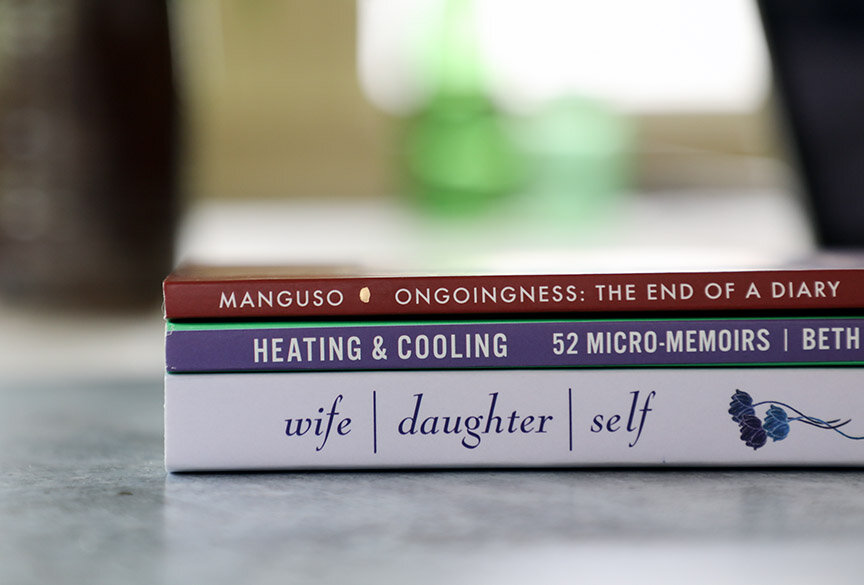
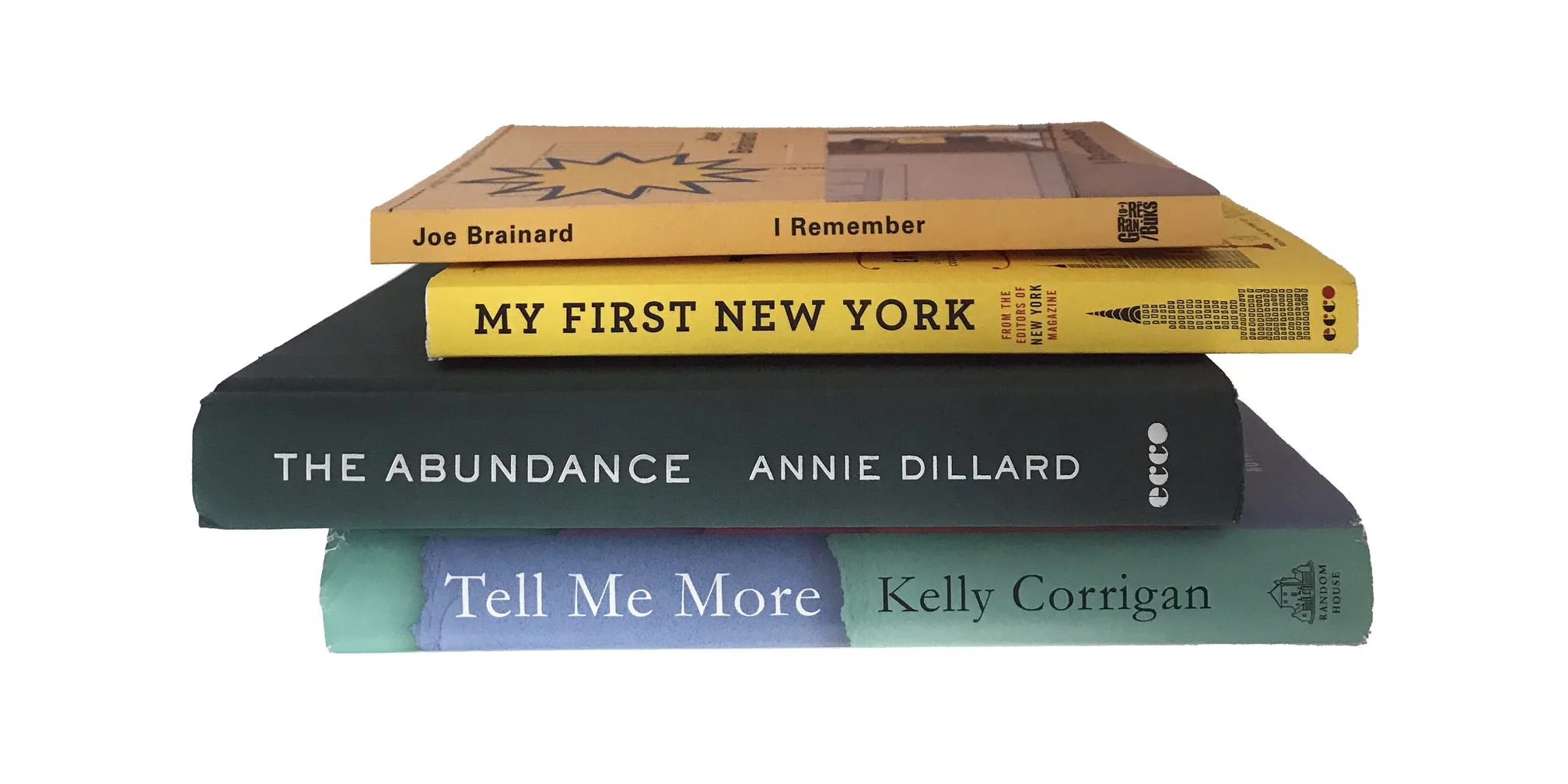


Have you read Life Is in the Transitions? I’d love to know what you think. Share one of your own favorite quotes, lessons, or insights in the comments, won’t you?

Life Story Links: July 28, 2020
Lots about memoir (writing and reading), free learning opportunities, the complexities of family history, and, of course, recommended first-person reads.
“I will always believe that storytelling matters, that glimpses of lives different than ours—whether they come through images or stories—have the potential to change us by opening the world to us and fostering compassion. We are so much better when we listen to each other.”
—Vikki Reich

With professional baseball’s opening day pushed back from March 26 to July 23, our national pastime is getting a late start this year due to Covid-19. This vintage photo celebrates the Negro National League Champions of 1935, the Pittsburgh Crawfords. Photograph courtesy Schomburg Center for Research in Black Culture, Photographs and Prints Division, The New York Public Library Digital Collections.
On Craft
THE BUILDING BLOCKS OF MEMOIR
“It was really rewarding when my 60-year-old Italian mother-in-law, who I adore, said she saw herself in parts of the book. We’re completely different, and yet, my narrative joined us.” Davon Loeb, author of the lyrical memoir The In-Betweens, addresses the idea of finding universality in individual stories and filling in the gaps of his memories without fictionalizing.
WHERE TO BEGIN?
It's important to focus your life story writing on themes that both hold real meaning for you and that you feel will resonate with your family. Last week I wrote about how to identify impactful themes for your memoir.
“THINK SPECIFIC, THINK SMALL”
“One of the most common concerns we hear from prospective clients is that first-person writing seems intimidating, maybe even overwhelming. And one of our most common responses is to break a project down into bite-size pieces,” Samantha Shubert of NYC–based Remarkable Life Memoirs advises.
Time-Sensitive Offerings
GRIEF IN THE SEASON OF COVID
The workshop series “Remembering Our Loved Ones During an Unprecedented Time” from author and grief expert Allison Gilbert continues tonight at 8pm ET with a session discussing ways to meaningfully organize your family photos; and on August 4 with a topic of clearing clutter while staying connected to heirlooms that hold stories.
LIKE HIDDEN CAPTIONS
Learn best practices for adding metadata to photos so your pictures are tagged with names, dates, and other identifying info that make it easier for you to find them when you need them (and so future generations will know who's in the pictures, too). This one-hour class is free for now ($49 value).
LIMITED FREE SHOWING
The Public Theater’s The Line, a documentary-style play, is available to watch free until August 4, 2020: Crafted from firsthand interviews with medical first responders during the COVID-19 pandemic, The Line stars Lorraine Toussaint, Alison Pill, John Ortiz and other actors who bring their stories to life. I highly recommend finding the time to view this original work by Jessica Blank and Erik Jensen which has been called “immediate and urgent” and “stinging with truth.”

Lorraine Toussaint in The Line, available to view free on The Public Theater’s YouTube channel through August 4. Actors speak directly to the camera using words captured from interviews with real-life first responders to powerful effect.
Family History Finds
A CAPTIVE AUDIENCE DURING COVID
The ranks of amateur genealogists have grown during the coronavirus pandemic, and they’re boring their sheltered relatives, reports the Wall Street Journal. “Genealogy is boring. But everyone loves a good story and family history is filled with very good stories.” Personal historians suggest focusing on the scandals you unearth to drum up interest.
WRITE IT OUT
You never know how recording your own story will impact others, but you can always know that your story is important—it matters!” This short blog from RootsTech offers up ideas for journaling during hard times.
PHOTO MEMORIES
Seeing her precious family photo, damaged in Hurricane Harvey, now fully restored and framed, one woman declared that maybe “I can be restored back to new,” too. Watch students working with Adobe’s “The Future Is Yours” program return lost memories to their owners in the moving video below. (While this recording is two years old now, I am sharing (a) because it’s refreshingly inspiring to see pre-pandemic hugs and (b) because you can volunteer for the ongoing program to help others.)
First Person Stories that Resonate
BLACK AND WHITE
“When I told my father I was going to marry Jake he said, ‘If you marry that man you will never set foot in this house again.’” Mixed-race couples from four generations in Britain tell their stories.
HISTORY REMEMBERED
Only about two percent of the men and women who served in the American armed forces from 1941 to 1945 are still alive. This piece gathers stories from participants in some of World War II’s most iconic moments, including from the only surviving witness of the German surrender signing.
In the Telling
WHOSE AUTHENTICITY?
“What I know for sure is that in order to create new ways of being, Native peoples must reclaim and revalidate the truth in our stories,” Taylor Hensel writes in this piece on indigenous ways of being and the idea of narrative as power.
THE IMMEDIACY OF THE MOMENT
“The velocity of my mother’s death and my distance from it all feel like a death in brackets. There is no touch, no contact, no final conversations, no holding the hand of the dying.” Jennifer Spitzer on losing her mother to Covid-19 and reading Virginia Woolf.
UNEXPECTED ENCOUNTER
“I was in Italy, having lunch with friends, and one of them brought out a volume of Borges stories—he happened to be reading them. I said, ‘Let me tell you about my travels with Borges through the highlands of Scotland,’” Jay Parini writes. His friend told him to write a book; Borges and Me: An Encounter comes out in August.
A POET TURNS HER HAND TO MEMOIR
“I took with me what I had cultivated all those years: mute avoidance of my past, silence and willed amnesia buried deep in me like a root.” Natasha Trethewey on the seven-year process of writing her mother's story in Memorial Drive: A Daughter’s Memoir.
...and a Few More Links
How to curate your family photo slideshows like a professional photo editor
Alex Trebek “has written a memoir of consummate caginess.”
Creative tributes in place of a traditional memorial service
Autobiographical writing prompt: the story of everyday things
We’re all field workers in the effort to document the (many) happenings of this year.
Local newspaper turns the spotlight on Massachusetts–based family history film company Second Avenue Video.
Maryland–based personal historian Pat McNees offers up an anti-racism reading list.
On learning to decipher her father’s past in Nazi Germany, and the nuances of family history
Short Takes


Jump around! Jump around!
You haven’t lived in a straight line, have you? Ditch your chronological storytelling and instead, jump around. Tips for developing impactful themes for your memoir.

Has the path of your life been one straight line? Yeah, didn’t think so—so why not jump around in time in your memoir for a more compelling read?
A straight line might be the shortest route between two points, but our lives meander and double-back. We haven’t lived in straight lines, so why should a story of our life make it appear so?
You might tell me about your life summarily—an outline quickly sketched. That’s “like the blueprint of a house waiting to be built, the most important details merely suggested by its basic lines,” writes Erica Bauermeister in one of my favorite novels.
What you might say in a single sentence—“we got married, had kids, and lived in that house until my wife died”—holds endless moments waiting to be explored: a lifetime in a string of 14 words.
But if you’re not going to tell your life chronologically—in a straight line—then where the heck do you begin?
Narrowing down themes for a life story book
Rarely do I think it’s a good idea to approach a life story book as a full chronological account of a life. That approach reminds me of history tomes about past presidents, for instance—books that go down like medicine, rather than enjoyable (and enlightening) reads.
Instead, approach your storytelling in smaller bites. One approach I often recommend is writing shorter vignettes and weaving them into a broader tapestry about your life. But even if you prefer a longer narrative in memoir form, it is important to focus on themes that both hold real meaning for you and that you feel will resonate with your family.
In order to narrow down those themes (one of the integral steps in plotting out your life story project), some initial brainstorming is in order.
Writing about one aspect of your life
If you know you want to hone in on a very specific chapter of your life for your book, here are two ways to approach that:
Broken up in chunks of time
A Slice of Life Portrait - remembering a day in the life or one pivotal year in your adolescence, for instance; while this time period is chosen for its thematic resonance, it fits neatly into a specific period of time.
A Discrete Time Period - the war years, your time spent in a certain home, your years in medical school, your months of being homeless, to name a few ideas
Broken up in themes
For example:
Strong Women in the Smythe Clan
Our Family’s Military History
The Annual Road Trips of Our Childhood
Irish Cooking in the O’Sullivan Homes
Four Generations of Stanford Grads
No idea where to start?
It’s more likely that there is not one chapter of your life that you know with certainty that you want to write about. If that describes you, you’re in for an exciting journey of discovery.
EXERCISE 1:
Brainstorm your memories.
Brew a cup of tea or pour some wine and get comfortable: It’s time to let your mind wander back in time to brainstorm—and by that I mean: write down your thoughts willy-nilly, with no concern for order or worth, no editing as you go.
Begin writing your memories via phrases—
that time Marcy broke her leg when we were hiking
the day I found out I didn’t get into Harvard
Nonna’s Sunday sauce
Johnny’s laugh
the Maple Street tree fort
I recommend setting a timer for 20 minutes for this exercise. It’s really about doing a brain dump and seeing what comes to mind first.
These memories may serve as writing or interview prompts later, but for now they are useful in looking for patterns. Did many of your memories fall within the context of lessons learned? Or take place at your childhood home? Did one influential person from your life come up again and again?
If you see repeated themes, those may be ones you want to explore for your book.
If you do not, then hold onto this page for use as memory prompts later, and move onto the next step.
EXERCISE 2:
Interview yourself about important chapters of your life.
Some questions to ask yourself:
What have been the major turning points in my life?
What are the most impactful decisions I have ever made?
Are there times of struggle that serve as examples of resilience, or that hold other lessons?
What are the most joyful times of my life?
What is my biggest personal success? Professional?
What has been my most memorable failure?
What have been the most challenging times of my life?
Is there anything about my career or vocation that is worth telling?
Who had the most impact on me growing up? As an adult? What did I learn from them?
What values do I most want to pass on to the next generation—and are there certain stories that exemplify those values?
What you want is to uncover moments of impact. Portions of your life that hold lessons. That shaped you. That are an integral part of your personal narrative.
You might be surprised by some of your answers. Be open and vulnerable when doing this exercise—allow yourself to remember painful times and regrets, not just happy times; even if these are not at the top of your conscious mind most days, the experiences shaped you and likely hold meaning.
This exercise is similar to one I conduct with my clients during pre-interviews. During this conversation we are exploring life themes and milestones, and determining what stories to explore more deeply, what memories to mine for lessons.
When working together, it would be my job—as someone distanced from your experiences and trained as an observant listener—to suggest possible approaches to your book. If that’s something you would like to explore, please drop me a line. I’d love to chat, and a quick (no pressure) 30-minute conversation usually does the trick.
If, on the other hand, you’d like to continue working on your life story book yourself, I recommend setting aside the pages from these two exercises for a couple of weeks. Then revisit them with a fresh perspective. That little bit of emotional distance can do wonders for helping you be more objective in narrowing down what topics to explore.
No matter what, I hope you give yourself the freedom to express yourself without filters during this exploratory period. It’s not the time to edit—or to judge. Be gentle with yourself, and be open-minded (and open-hearted). Your stories deserve to be told—you might as well be telling the right ones!
In a previous post I wrote about how to break down a life story book project into three broad steps.
Now that you’ve learned how to narrow down themes for your memoir project, find out about the remaining two steps:
Organize your family archive as a resource for sparking memories.






Life Story Links: July 14, 2020
This week's reading: Finding humanity and connection via story sharing; archiving your family papers; and a plethora of first-person narratives worth your time.
“Families are united more by mutual stories—of love and pain and adventure—than by biology. ‘Do you remember when …’ bonds people together far more than shared chromosomes…a family knows itself to be a family through its shared stories.”
—Daniel Taylor

Board games play a starring role in many of our Covid diaries. This vintage photo shows the Herbster youngsters in Elizabeth, New Jersey, circa 1941. Photograph courtesy United States Office for Emergency Management, courtesy Library of Congress.
Finding Humanity & Connection via Story Sharing
HERITAGE, NOT HATE
When his family gathered after a funeral to share stories, a young Andrew Taylor-Troutman made sure to stay within earshot. “Stories are some of the best prayers,” he writes in this column in which he argues for heritage, not hate: “As a white person, I have the ability to be selective about Southern history. I could focus only upon my personal history." Alas, he does not.
“CAN I ASK YOU A QUESTION, BUBBE?”
Last week I wrote about a free guide I created with my 10-year-old son at the beginning of the pandemic, reiterating that kids can—and should—connect with grandparents intentionally, even after a loosening on social distancing guidance allows them hugs (and the ability to take one another for granted likely sinks back in).
EMPOWERING KIDS
“One thing that we have learned from decades of research in The Family Narratives Lab at Emory University is that family stories provide a foundation for feeling emotionally safe and secure for children,” Robyn Fivush, Ph.D., writes in this piece on how family stories can help us cope during the Covid-19 crisis.
Behind-the-Scenes Glimpses
A DAY IN THE LIFE
Are you working from home, too? Join Samantha Shubert of New York–based Remarkable Life Memoirs as she strives to achieve work/life balance—complete with ghostwriting, Zoom meetings, and (of course) a lot of coffee.
SHOW & TALES
“It’s like Antiques Roadshow meets The Moth,” Martie McNabb says of her signature story sharing events, dubbed Show & Tales. See how she helps other legacy professionals, and how she continues to “be of service” during the pandemic with virtual live events.
FULL CIRCLE MOMENT
StoryCorps’ recent animated video short, “My Aunties” (watch it below) documents one man’s experience of the AIDS crisis. Peek behind the scenes as the illustrator shares a glimpse of how the subject’s story intersects with his own.
First Person Stories Worth Hearing
BEEF STROGANOFF
“I have a Carl Reiner story that I hold very dear to me. I figured I'd share it today, on the day of his passing, because I hope it will bring some other people some joy the way it does me,” Matthew Rosenberg wrote on Twitter. Read the full story thread here—if you’re anything like me, it’ll bring you some joy, too, just as Rosenberg intended.
A LIFE STOLEN
John Hardy was seven years old when he witnessed his uncle kill a prominent white plantation owner in self-defense in 1925 Louisiana. Decades later, as the last family member with firsthand knowledge, he was interviewed to memorialize his account. Read about this story of racial injustice and resilience here.
ODE TO THE DADS
Los Angeles–based oral historian Ellie Kahn collected a few of her favorite stories about fathers to celebrate Father’s Day for the Jewish Journal.
FAMILY MYTHOLOGY
“I will likely never know which parts of Africa my ancestors were taken from.... But some accident of history gave me a last name that's actually pretty uncommon—one that I could use to track down a small part of my family's history.” Read part one of Leah Donnella’s ancestry story here, then click below to listen in as she gets to the bottom of her grandfather’s mysterious origin story.
Passing on Family History
SILENCES DOWN THE LINE
“In 2000, the way people got bad news wasn’t so different than how they got it back in 1929 when my great-grandmother was confined to a hospital bed.” Rachel Beanland on some of her family’s secrets, and why hiding them isn’t necessarily a kindness.
YOUR FAMILY ARCHIVE
“It is hard to know what of your family’s ‘archives’ to digitize, what to hold onto, what to get rid of, or even how to get started doing any of these things,” Philadelphia–based personal historian Clémence Scouten writes in this “ultimate guide” to archiving your family collection.
...and a Few More Links
The Mandela effect: how groups of people can all remember the wrong thing
FamilyScrybe has released its second issue of articles by and for family history researchers.
A fun oral history of Truman Capote’s legendary Black and White Ball
The souvenirs of everyday life provide a head-start on your memoir.
Short Takes
Young and old, together at last
Even as families come together, many are still social distancing from family elders. Connect grandkids & grandparents with these cross-generational questions.
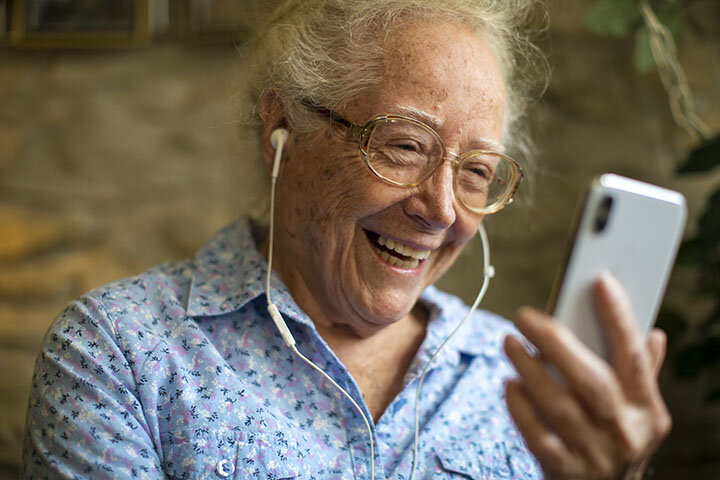
Whether separated by Covid or simply distant living arrangements, grandparents and their precious grandkids can still connect meaningfully using screens.
I’ve seen a lot of heart-swelling posts on Facebook this week showing grandkids hugging their Bubbes and Grans for the first time in months.
This whole social distancing thing has been hard on all of us, not least the generations bookending our own lives. So those hugs feel even more special and those laughs sound even more joyful when our kids and our parents are reunited after weeks on end of communicating exclusively over Zoom.
But the risk of Covid-19 persists, and many of us are continuing to take precautions (and even social distance) with older family members.
That doesn’t have to mean awkward FaceTime silences or quick escapes by the littlest in your family (even my 10-year-old has a tough time focusing on virtual conversations for more than a few minutes!).
Get them talking—really talking!
Early on in the pandemic, I worked with my son to create The Kid Kit: Everything You Need to Interview the Grandparents. We experimented with how to distribute it and whether it should become a new (paid) product before realizing: We want everyone to have this!
So we spread the word via bloggers and social media, and the response was overwhelming. I feel humbled and grateful that so many of you have downloaded this free resource, and even more psyched when you share success stories with me.
Have you gotten your Kid Kit yet? 5 reasons you should:
There are 45 family history questions that include light-hearted fare as well as thought-provoking conversation starters—something for every mood.
It includes three fun bonus activities that can easily be done “together apart.”
Bonus interview recording tips were added last-minute to make the guide even more useful during this historical time we are living through.
A fun graphic, historical timeline teaches the kids at the same time it provides more memory prompts for the grandparents.
There are even ideas for what to do post-interview, so you can be sure this valuable family history is preserved (and that the relationship between your kids and your parents continues to be nourished).
These questions can be used in person, too, you know.
While I am spreading the news now in the hopes that these questions will be a great way for kids to bond with their grandparents during the pandemic, OF COURSE everything in the kit can be completed in person, too.
Won't you please:
tell a friend about how easy it is to sign up
share your stories with me of how the interviews go (seriously, I live for this stuff!).
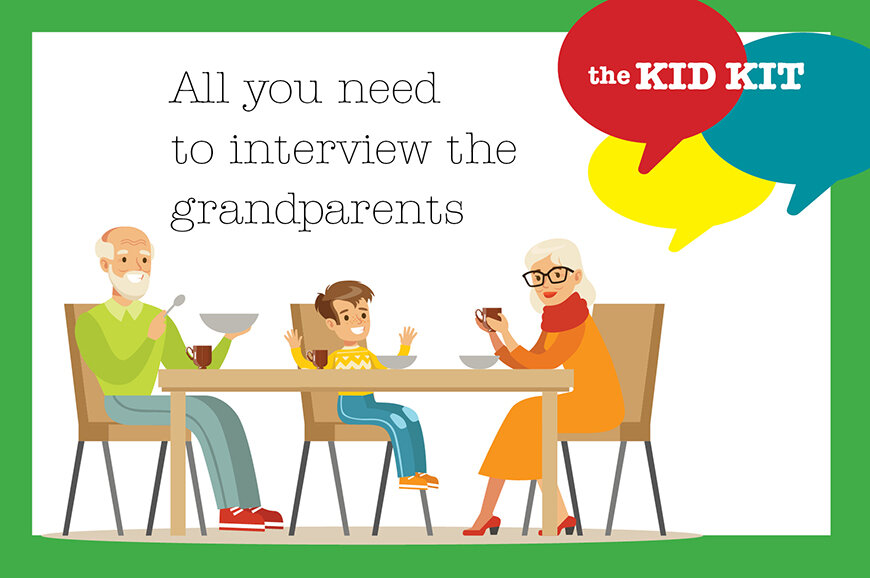
FREE RESOURCE: Questions, Activities & More
Get your kids talking—really talking—to your parents. They’ll get stories even YOU’VE never heard!





Life Story Links: June 30, 2020
Lots about letters (the old-fashioned kind—handwritten & stamped), plus the future of family history, communicating with our elders, and mini first-person reads.
“To acknowledge our ancestors means we are aware that we did not make ourselves…We remember them because it is an easy thing to forget: that we are not the first to suffer, rebel, fight, love, and die.”
—Alice Walker

Vintage postcard of a beach scene of the past (social distancing was clearly not SOP of the day!). “Beach Scene Along Woodland Beach, Staten Island, N.Y.” Courtesy Irma and Paul Milstein Division of United States History, Local History and Genealogy, The New York Public Library.
Our Lives, Our Stories
WHAT TESTIMONY CARRIES
“There were these families around the world where my grandmother’s survival had essentially become folklore in their families, the way that her survival had become folklore in my life,” says Rachael Cerrotti, co-producer of the arresting podcast We Share the Same Sky, in this exploration of “The Power of Testimony in a Digital Age” from USC Shoah Foundation.
OUT OF THE CLOSET
Hey memories—come out, come out, wherever you are! Last week I wrote about how to use family photos, heirlooms, and the "stuff" of your past to elicit memories and chronicle the stories of your life.
GENEALOGICAL TREASURE TROVE
“A funeral is, among many highly emotional things, an opportunity to consecrate someone’s life as historical fact, and to commit that truth to the public record.” A new archive digitizes more than a century of Black American funeral programs, including lives lived from before the Civil War to today.
“INDEPENDENT LIVING”
“On March 15, the assisted living facility where my mother lives went into lockdown to attempt to prevent the spread of Covid-19,” writes personal historian Sarah White, who describes herself as a member of a cohort of daughters who are lifelines to the world for these elders. “For nearly everyone, that lifeline was severed that day in March. I am still allowed in: What I see is breaking my heart.”
THE FUTURE OF FAMILY HISTORY
From an article in the latest issue of the New York Researcher: “A fundamental shift from collecting names and dates to gathering stories over the past decade appears to be here to stay…” Indeed.
In Letters
THE AGE OF PROPER CORRESPONDENCE
“Each day when the mail carrier arrives, I find myself longing for a surprise letter—a big, juicy one,” Dwight Garner writes. “I do trade big, juicy emails with some people in my life, but receiving them isn’t quite the same as slitting open a letter, taking it to a big chair and settling in for the 20 minutes it takes to devour it.”
“I THOUGHT I KNEW THEM”
How much does anyone ever know about the experiences that shaped our parents? As Nancy Barnes rummages through letters her parents wrote to one another in the earliest years of their courtship, she ponders this. “My mother’s handwriting is bold and loopy, almost wild—quite unlike the neat orderly hand I knew all my life.”
AN ENCHANTING ENCOUNTER
“Sometimes I take out your letters & verses, dear friend, and...rejoice in the rare sparkles of light,” Thomas Wentworth Higginson wrote to Emily Dickinson. This book excerpt captures their first face-to-face meeting after eight years of letter writing.
...and a Few More Links
Australian storytelling project helps participants re-imagine their past and invent new ways to see their stories.
Personal Historians NW group has recorded an estimated 500 “slices of life” among them.
Short Takes
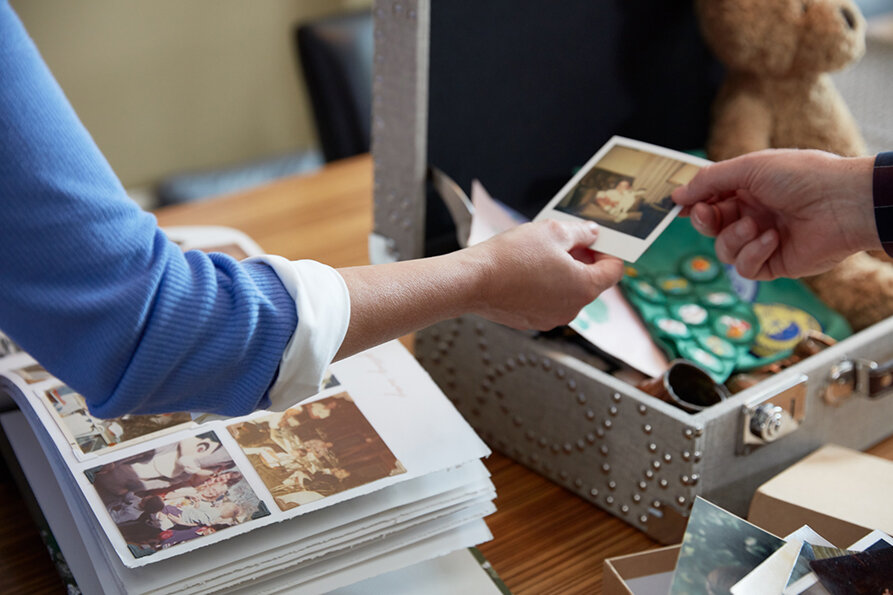
Hey, memories! Come out of the closet, will you?
Your memories live in your head and heart, but family photos, heirlooms & mementos sure do call those memories forth—how to use them towards a life story book.

Sorting through your family archive for items for your life story book should be more strategic than organizing everything for posterity.
One of the first steps in any life story project is to begin to gather all the stuff in your family archive.
By that I mean photos, journals, letters, and mementos—the stuff of your life.
Finding and inventorying these items will help you in two ways:
as a tool for helping you prioritize and determine what is worth saving and what can be tossed—and how to plan for tackling the archive as a (separate) organization and preservation project.
as a resource for finding those items that will help tell your stories visually for your life story book project.
That second one is what we are focused on here!
How to organize your family archive as a resource for your life story book
Ready to get started? Using this free chart or a digital spreadsheet, make a list of everywhere your items live.
Remember: This is a guide to preparing your archive specifically as a resource for your life story book! That means yes, you should be focused on items that you want to include visually in your book, but also items that simply spark memories.
What is included in your family archive?
A Family Archive Checklist
physical family photos in boxes, albums, and frames
digital family photos on phones, computers, old disks, social media accounts, and external hard drives
family papers, including genealogy documentation, birth and death certificates, etc.
letters, journals, and diaries
mementos such as ticket stubs, postcards, report cards, scrapbook ephemera
physical family heirlooms such as inherited china, heritage furniture, passed-down jewelry
Finding inspiration and raw material
Back to using your archive as a reference for your life story book: Consider all of the items in your family archive to be raw materials that you can both find inspiration in and use to help tell your stories. A few ways to mine your family archive for this project:
Resources for remembering
Use specific family photos to jog your memories about your childhood.
Use letters and journals to help you recall details and emotions of recorded experiences.
Pull out tickets stubs and other mementos that hold the most meaning and make you feel something strong—they’ll likely be fodder for compelling stories if they hold that much sway.
Consider your genealogical files to be fact-checking resources for names, dates, and relationships that may be fuzzy in your memory.
Materials to reproduce in your book
Photograph family heirlooms so they can be accompanied by their stories in your book, so years from now they won’t be some dusty relics but heirlooms with a storied pedigree.
Select key old photos to digitize for inclusion in your book: Pictures help bring your words to life, but they must be chosen wisely.
Perhaps your handwritten journals evoke your teen years or capture a particularly emotional period in your life: Consider reproducing a key page or paragraphs throughout your book if you think they will add texture and a visual touchstone.
At this point, you should be most concerned with identifying and locating those items that you feel will be most useful to you in your life story project. Make a separate list, and pull out those materials to have on hand. Consider this a separate collection specifically gathered to help you tell your life story.
“When you have finished your appraisal, you’ll be left with a collection of the best and most significant artifacts,” archivist Margot Note writes. “Because you’ll be focusing on the collections that have the most value, you’ll be able to concentrate your efforts on what is most meaningful to you.” Indeed.
Keeping your curated archive on hand
Now that you have a tighter collection of photos, journals, and mementos set aside specifically for your life story project, keep them on hand—as well as the bulk of your family archive that you designated in the beginning.
Just because you set aside a photo initially doesn’t mean it will be the best for spurring memories later on; you may end up going back to those boxes to find another shot, or flipping through a different journal to discover a later recollection.
Be gentle with yourself. There’s no “getting it right”—this is a journey of discovery! Try to be strategic and deliberate while sorting your family archive, and understand that it’s all too easy to get lost in memories and nostalgia while trying to organize. When you realize that’s happening, steer yourself back to the task at hand, and remember: All of this is to provide you with the opportunity to reflect purposefully later on.

Printable Inventory Form
Download our free printable to help you keep track of all your life story project’s visual assets, from family photos to ticket stubs and journals—it’s easy-peasy.
Related reading
I will link to parts two and three in this series when they are posted:
You might also be interested in:
Tackling your whole archive?
If you would like to tackle getting your archive under control, I highly recommend purchasing archivist Margot Note’s book Creating Family Archives: A Step-by-Step Guide to Saving Your Memories for Future Generations. She’ll walk you through how to handle your materials, the best supplies, to buy, and ways to display and share your personal archives. Keep in mind: This is usually a big (and sprawling) project that takes some time to complete, but it is well worth your effort (especially if you have children; as I have written about before, leaving them a mess of family mementos is usually more of a burden than a welcome gift).

Life Story Links: June 16, 2020
Our things hold stories, our stories hold meaning, and black stories matter as much as ever; plus pieces on how to plan a life story book & write a legacy letter.
“There are years that ask questions and years that answer.”
—Zora Neale Hurston

Civil rights marchers carrying banner reading “We March with Selma” lead the way as 15,000 parade in Harlem, March 1965. Photograph by Stanley Wolfson for World Telegram & Sun, courtesy Library of Congress Prints and Photographs Division.
The Thing about Our Things
TREASURE IN THE ATTIC
Sheltering in place has given some families extra time to explore long forgotten spaces in their homes—as well as the proximate family history. “Every time we find something I get to hear so many stories. I haven’t been recording them, but I should.”
DISCOVERING HERITAGE THROUGH FAMILY PHOTOS
“My grandmother explained to me the stories behind each photo, from the people in it to what was going on in the world the day it was taken. I wasn’t sure what I was more impressed with: how sharp her memory was or how well she had managed to keep so many photos from the past organized.”
LISTEN IN
“Sharing the story of the ‘things’ in our lives can help us share the past with our family,” Maureen Taylor says in her introduction to a podcast episode with guest Martie McNabb, founder of Show and Tales. My favorite thing she talks about: the difference between storytelling and “story sharing.”
Expert Tips
THREE-STEP PLAN
It’s not a simple thing to undertake a life story project, but it needn’t be overly complicated, either. Last week I shared three steps to make your life story book project proceed as efficiently and smoothly as possible.
LIFE LESSONS
A legacy letter, also known as an ethical will, is “a way to soul-search what I want the rest of my footprint to look like. What do I stand for?”
Black Stories Matter
#SHAREBLACKSTORIES
“It wasn’t until the beginning of high school that my dad started opening up to me about his experience as a black man living in America,” Rylee shares on Instagram, which is proving to be a force for sharing Black stories right now.
BLACK MOTHERHOOD IN SLEEPLESS TIMES
“As he sleeps his mouth moves as if he is still nursing, still tethered to me. I look at his perfect face, watch his mouth dance, and try not to think this is the safest he will ever be,” Idrissa Simmonds-Nastili writes in this powerful piece on (so much more than) sleep-training her baby.
STORY SNIPPET
“Dad, why do you take me to protests so much?” Two minutes and thirty-nine seconds of love and respect and conversation between a father and son in Mississippi:
ONE VOICE
“The most damaging day came when my son, at 11 years of age, had his drone picked up by a gust of wind, and deposited into the fenced back yard of a neighbor down the street,” Heather Stewman writes in this personal story of encountering racism in everyday life.
WITNESSES TO HISTORY
”Black photographers have been documenting the nationwide protests in a way that amounts to telling ‘our own history in real time,’ said Brooklyn, N.Y.-based commercial photographer Mark Clennon, ‘because our parents, and grandparents never really had a chance to have their voices heard.’”
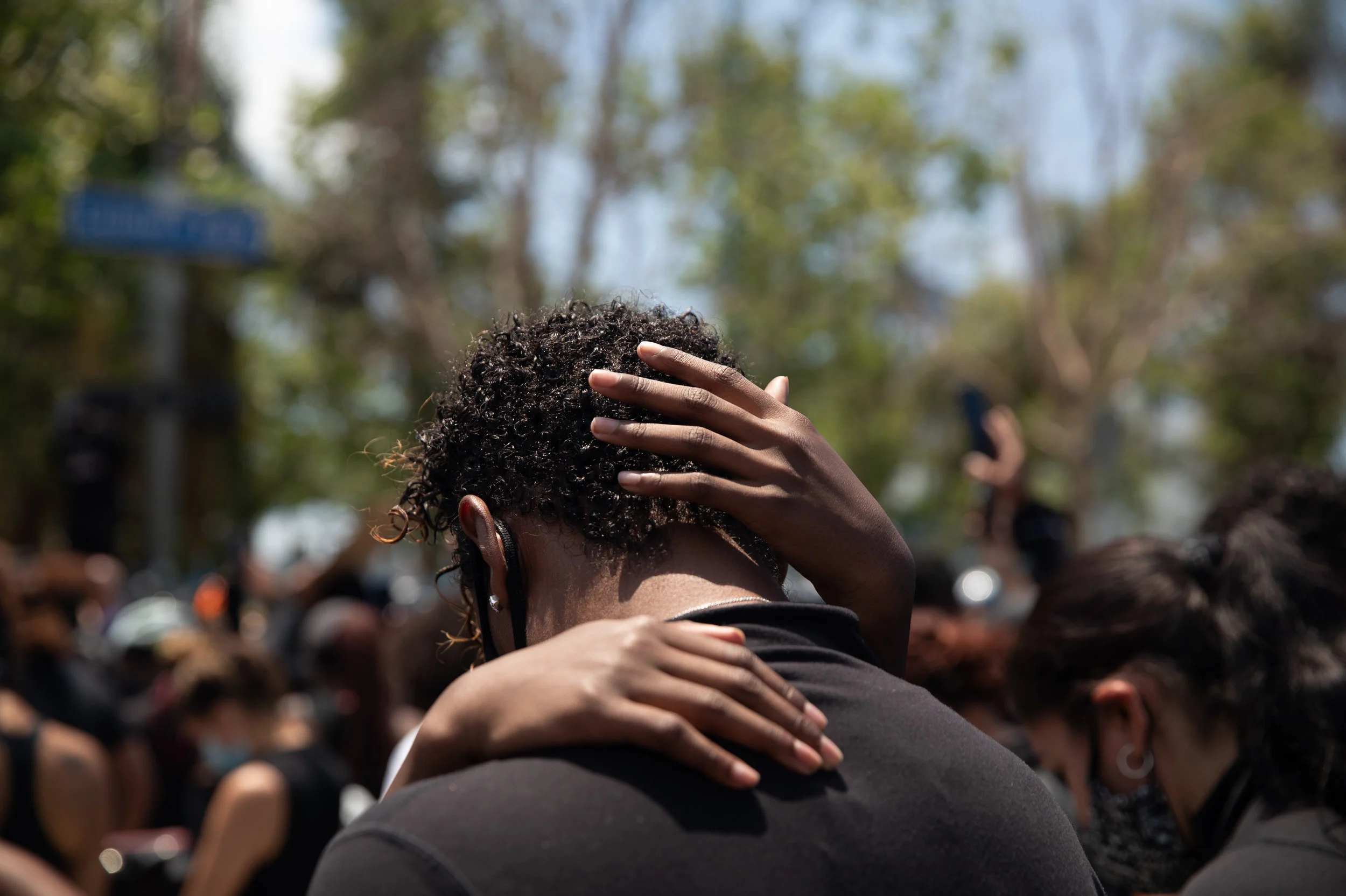
Photograph by Alexis Hunley of a parent and child sharing a tender moment during a protest against police brutality in Los Angeles on June 6. NPR shares a series of impactful photographs from eight black photographers along with commentary on their experiences. (Click photo or link above to read full story.)
HISTORICAL TRAUMA
“[An] individual’s parents or grandparents may have stories about how their own relatives survived the Jim Crow era, narratives that were marked by terror and fear of the white community.” Mirel Zaman explains inherited trauma.
Dose of Inspiration
“REMEMBER YOU ARE ALL PEOPLE AND ALL PEOPLE ARE YOU”
“Remember the sky that you were born under, / know each of the star’s stories…” A friend recently shared with me this 1983 poem, “Remember” by poet laureate Joy Harjo, and I want to share it with you—it feels oh-so-right for this season.
TOO MUCH MEMORY, OR NOT ENOUGH?
“At first, my desire to remember was formidable, but ultimately harmless… I had lost what I loved and with each detail I unearthed, I felt like I was regaining it,” Angela Rose Brussel writes in this meditation on grieving in the digital afterlife.
...and a Few More Links
Zadie Smith wrote an entire essay collection in lockdown.
Court records “provide amazing window into past”
Is Ball Four the greatest baseball memoir ever written?
Short Takes