
Memories Matter
Featured blog Posts

READ THE LATEST POSTS

3 lessons I re-learned during the pandemic
This ongoing pandemic has challenged some long-held beliefs—including that personal history interviews must be done in person (nay!). Wisdom from adversity...
We are living through history as this pandemic continues to ebb and flow and wreak havoc on what we consider normal. Some of my long-held beliefs have been challenged, particularly around my personal history work.
I am a hugger.
I’ve been elated when at the close of a book project a client reaches in for a hug—usually, they pull back, considering the potential impropriety of hugging someone they are paying for a project, before realizing that I quickly leaned in to accept that hug, propriety be damned.
The kind of work I do with my clients is personal, often intimate. We develop a mutual trust and affinity during the interview process. A hug often seems like a natural development, especially at such a celebratory moment as finishing a book.
During this pandemic, though, hugs have been in short supply beyond my immediate family. I made an exception over the summer of 2020 to hug a friend who had lost her husband, and another when I was tackled by my young, adorable, equally hug-addicted niece when I was delivering Christmas presents to her home. Those exceptions fortified me, even if they were a calculated risk.
With more people getting vaccinated, we have perhaps restored our comfort level for hugs and mask-less gatherings, but news of variants and Covid continuing to spread in pockets of our country has me wondering if (when?) we may be going back to social distancing.
Two years ago, like at the beginning of this pandemic, I would have been worried for both my business and our collective well-being. Now, though, I know we can not only survive, but thrive—if we are careful, and if we tap into this wisdom:
1 - Human connection transcends technology.
Before Covid, I thought doing in-person interviews was essential. Since then I have realized that people want to connect in any form, and with everyone getting more comfortable with technology, remote interviews CAN indeed work.
I learned that as an interviewer, I simply need to be more intentional about setting the stage for trust—maybe a little more chitchat at the outset to establish my subject's comfort level before diving right into deep questions, for example. That's something that happens naturally during in-person interviews—when I enter someone's home, and during setup of my recorders and other equipment. On Zoom or FaceTime, though, that easing-in period may take a bit longer, an effort that's well worth it for promoting real, intimate exchange during the interview.
Any parent knows that there's a reason talking to your kid (especially your tween or teenager) in a car can be a smart approach: When no eye contact is needed, someone may feel more free to share difficult things—and feel less judged. This carries forth during phone interviews or even video chats, where even though we can see one another direct eye contact is almost impossible. It's amazing what we can feel comfortable enough to share with our interviewer, essentially a stranger, when not looking directly into each other's eyes.
2 - Sometimes it takes tragedy to make us realize what's really important.
We all think we want to get meaningful gifts for our loved ones’ birthdays, but somehow we default to the cool new thing we saw at the store (random), or the thing that's easy and quick to ship from Amazon (lazy), or maybe the gift card to the place we know they frequent (unoriginal). During the pandemic, people FELT what it was like to be kept from our loved ones; we began to take our relationships a little less for granted—and dug deep to come up with gifts that really expressed our love.
Before I had my business I always encouraged experiential gifts: Please, take my son to the zoo! Please, arrange an escape room outing for me and you together! And while I still think shared experiences make incredible gifts, I also root for legacy books of one kind or another—these combine an experience (yes, getting interviewed about your life is an AMAZING experience!) with a cherished heirloom. Our most popular offering during the past year and a half has been a celebratory tribute book for milestone birthdays—a book filled with heartfelt stories about the subject, a book that never fails to bring an exclamation of, “This is the best thing I've ever gotten!” I hope beyond measure that this trend toward expressive gift giving continues long after social distancing ends.
3 - No matter what, I will always want hugs.
Yep, I re-learned during this time that I will forever be a hugger. I also saw anew how some of my family members were glad to not have to hug their greetings—and I have been respecting their wish for distance ever since, waving from across the room or patting them on the back as a form of hello. It's all about paying attention, really—a great approach to life that helps us live in the moment, catalog memories for future writing or recollection, and better honor those in our lives. That's a pandemic lesson I am grateful for.
What have you learned during this strangest of times?






Life Story Links: August 24, 2021
A curated collection of recent stories about writing—and reading—memoir, creating lasting legacies, and telling family stories in engaging, truthful ways.
“A writer—and, I believe, generally all persons—must think that whatever happens to him or her is a resource. All things have been given to us for a purpose, and an artist must feel this more intensely. All that happens to us, including our humiliations, our misfortunes, our embarrassments, all is given to us as raw material, as clay, so that we may shape our art.”
—Jorge Luis Borges
Vintage postcard of Trinity Church in Boston, 1899. Photograph courtesy of The Miriam and Ira D. Wallach Division of Art, Prints and Photographs: Photography Collection, The New York Public Library Digital Collections, 1898-1931.
Conversations Worth Having
JOURNEY TOGETHER
A memoir should be a conversation, not a monologue, Beth Kephart opines in this excerpt from her latest craft book, We Are the Words: The Master Memoir Class. “Find a place for a ‘we’ inside your pages. Step down from the stage. Lower the lights. Mingle with the audience.”
INTERVIEW SUBJECTS, GET READY!
Know someone who is about to be interviewed about their life? Share these six tips for getting comfortable with the idea of stepping up to the mic and telling great stories.
Behind the Memoirs
WHEN GUILT, GRIEF, AND SHAME COLLIDE
“I’m revealing major flaws about myself that I’m going to get judged for, but that’s what makes a story interesting,” memoirist Rachel Michelberg tells Marion Roach Smith on the QWERTY podcast. “I wrote it because it was my truth, and there was shame at the time, but there isn’t shame anymore.”
“WE SHARE THE SAME SKY”
“‘I had so much of my grandmother’s stuff that I probably could have written a biography of her life without ever leaving my bedroom,’ said [Rachael] Cerrotti, while sitting in her apartment in Portland. ‘But I wanted to hear the language, see the landscape, and explore what it all meant in my life.’” (I am completely engrossed in this the memoir right now, fyi!)
GUIDE TO GRIEVING
“It wasn’t even a year since my father had died, I hadn’t completed my Jewish mourning cycles and rituals, I was still a raw and cracked egg, and this book was born amidst my half-cooked grief.” Merissa Nathan Gerson on writing her grief in Forget Prayers, Bring Cake.
‘REMEMBERINGS’ OF A SINGER-SONGWRITER
“Early on, [Sinéad O’Connor] realizes, ‘In real life you aren’t allowed to say you’re angry but in music you can say anything.’ It turns out that she thought real life and music were the same thing.”
THE MORRIS SISTERS
“It didn’t take me long to realize that for women who were so famous within my family, there didn’t seem to be much written about them in the world.” Julie Klam on tracking down the truth and telling the story of her notable relatives.
Creating Legacies
PRESERVING HER FATHER’S PHOTO LEGACY
“I am so proud of my father’s body of work and the fact that his legacy will now live on in perpetuity…. Also, this legacy will no longer be my responsibility. For that, I am greatly relieved.” Houston–based video biographer Stefani Elkort Twyford prepares and ships off her father’s photo archive, with pride and a twinge of sadness.
HONORING A QUIETLY JOYFUL SOUL
While most people visit StoryCorps to interview a loved one, Libby Stroik recorded memories of her grandfather on her own, as his memories were fading. “If I could ask him something now I think I would probably ask him what his secret was,” she said, “cause he always seemed so grateful for living.”
HIDDEN HISTORY
How Vancouver–based personal historian Mali Bain went from a box of photos and ephemera to a richly researched book about the uncle her client never met.
Video Inspiration
LIFE INSPIRES ART
“Dear son, Charles wrote on the last page of the journal, ‘I hope this book is somewhat helpful to you. Please forgive me for the poor handwriting and grammar. I tried to finish this book before I was deployed to Iraq. It has to be something special to you.’” The upcoming movie A Journal for Jordan, due out in December and based on a true story, was inspired by this original New York Times article by Dana Canedy and the 200-page father’s journal her partner wrote for their son. Here’s a preview of the film:
A NEW CHANNEL FOR FAMILY STORYTELLING
Jamie Yuenger, who has long produced legacy videos for families as founder of StoryKeep, is now offering private podcasting as another medium for story sharing and preservation. Here she gives a brief intro to the concept:
...and a Few More Links
North Carolina documentarian aims to preserve family histories with video heirlooms.
How blockchain could have saved the Library of Alexandria (and what it can do for future historical preservation)
Netflix’s Misha and the Wolves is “as much about storytelling as it is about the Holocaust.”
Why Billie Jean King finally took control of her own story
Short Takes

How to be a good storyteller if you are the subject of a family history interview
Have you been invited by a family member to be interviewed about your life? Don't worry—these tips will help you get comfy & be the best storyteller you can be.

Over the years I have offered up a plethora of family history interview questions and resources, including tips for being an effective interviewer and active listener—but it occurred to me only recently that I've never talked about how to be a good storyteller.
There are some people who are inherently comfortable sharing their stories. For others, though, being the center of attention is scary. Even if you don't feel like you need to give a command performance, you may have reservations about your ability to remember, how engaging you will be, or even if you will delve into painful memories.
Here are six tips for getting comfortable with the idea of stepping up to the mic and telling great stories from your personal and family history.
1 - Take a beat to think when you need it.
(And if your interviewer is not comfortable sitting with that silence, directly ask for the time).
We have become accustomed to watching celebrities answer questions in quick soundbites, and it seems like their recall is beyond compare. But remember: They've prepared for their interview (often with the help of publicity handlers), and what you are seeing has been edited down (there are no doubt outtakes where the celeb muffed his words or drew a blank). The questions you are being asked about your life, whether from childhood or your more recent past, likely require a little thought before answering. So don't feel bad about thinking for a moment or two before answering. Ultimately you will be able to weave a better story and access more meaningful insights if you don't always dive right in with an answer.
2 - If your interviewer is revisiting a question you’ve already answered, go with it.
Yes, I am saying answer the same question again…
The first time around is about “collecting ideas, memories, and materials, and of increasing sensitization to the major issues of life,” James Birren, a pioneer in the field of guided autobiography, has written. It's worthwhile to go through your stories and recollections a second time “to elaborate on details and examine the same life story from an expanded, more enlightened perspective.” Every telling of the same story yields new information—possibly new memories that have bubbled to the surface, and possibly newly integrated meaning you have drawn from the experiences since the last time you recalled it. So go down that road, even if you feel like you've been there before! Depending upon the anticipated outcome of your interviews (book, video, audio recording) you will always be able to edit stories to avoid repetition and benefit from multiple tellings by weaving them together.
3 - If you can’t recall details of an event or person, focus on emotions.
The way someone or something made you feel is relevant.
Especially when asked to talk about memories from your childhood, there's a good chance that details may elude you. I have a nephew who remembers full scenes from the time he was three (really, even without photographs to reference), but that's the exception, not the rule. But just because you can't remember if a celebration took place at Grandma's or your Aunt Mary’s house, or whether the family station wagon was red or green, chances are that you will remember how you felt during the party or riding in that car. Allow yourself to answer questions from a place of feelings: Use phrases like, “I remember feeling…” or “When I think of that time I get all…” Tap into your emotions and your stories will follow.
4 - If a question doesn’t jog your memories, skip it. (Really!)
No details, no emotions…nothing? It's okay to tell your interviewer, “Let's move on.” There's no shame in not having an answer to any question at all.
5 - Be gentle with yourself—no judgment, period.
Speaking of shame…that's an emotion we don't want you to feel during your interview. Sure, it's okay—good, even—to talk about shame you may have felt in the past and what made you feel that way; stories of moving beyond shame are incredibly powerful both for you as a storyteller (exploring your experiences in the form of a story can be healing), and also for your descendants (what better way for them to relate to you and feel empowered than by hearing a story of you overcoming something?). That said, it's important for you not to judge your past selves during the interview.
Be accepting of all the iterations of you. Be gentle with yourself. (When I am interviewing someone who begins to seem like they are judging themselves too harshly, I will ask them something like, “Knowing what you know now, what would you tell your 17-year-old self?” When they look at themselves from such a distance, it often gives them perspective that allows them to be more understanding of their choices…even seemingly foolish ones!)
6 - Be open—open-hearted, open-minded, open to trusting your listener.
In addition to being gentle with yourself, open yourself to going down paths that surprise you during the interview. If you are being interviewed by a perceptive listener, they may ask follow-up questions that bewilder or surprise you. Ponder their questions and try to give thoughtful and honest answers. By trusting both your interviewer and yourself, you create an opportunity for your story sharing to go beyond mere entertainment into the realm of meaning-making. “Opening ourselves is where story begins. We write with open hands, and not with fists,” memoir teacher Beth Kephart has said; we speak, not only write, our truths from this place.

Get your free guide of Essential Family History questions
All the best family history interview questions to capture their (or your!) stories, presented in a beautiful printable guide
Ready to begin? If you’ve already got your family history interview planned, kudos to you—I hope these tips will help you have a comfortable and fruitful storytelling session! If you’re still in the planning (or dreaming) stage, browse the posts below to find some helpful lists of interview questions, and, PLEASE, get a time on your calendar to sit down to remember—it’s something I promise you won’t regret.


Life Story Links: August 9, 2021
A bi-weekly roundup focused on ideas and practical tips for preserving your legacy, writing about your life, and reading memoir and biography as inspiration.
“I had already planned the journey back. During quiet afternoons I spread maps onto the floor and searched out possible routes to Ceylon. But it was only in the midst of this party, among my closest friends, that I realized I would be traveling back to the family I had grown from—those relations from my parents’ generation who stood in my memory like frozen opera. I wanted to touch them into words.”
—Michael Ondaatje, Running in the Family
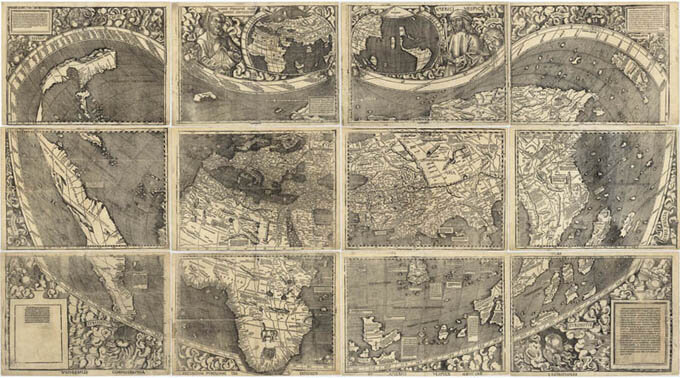
A little “on this day in history” trivia: On August 3, 1492, Christopher Columbus set sail for the New World. It is commonly believed that his contemporaries feared he would sail off the edge of the Earth, but the fact is that 15-century Europeans did not believe the Earth to be flat. This reproduction of a 1507 world map by Martin Waldseemuller (image courtesy of Library of Congress) is the first to label America and show it as a separate land mass.
What’s New in Memoir & Biography
FORWARD GLANCE TO POSTERITY
American writer Shirley Jackson “fully expected her correspondence to be published one day. (She implored her parents to save everything she wrote to them.)” This newly collected collection of her letters covers a range of quotidian concerns as well as her experience making a living as a writer while raising four children.
BY QIAN JULIE WANG
“Searing and unforgettable, Beautiful Country is an essential American story about a family fracturing under the weight of invisibility, and a girl coming of age in the shadows, who never stops seeking the light.”
AN EXPANSIVE BIOGRAPHY
“Even at the end of this extraordinarily intimate book, Mildred remains somewhat of an enigma. ‘Despite her wish to remain invisible,’ Donner writes, ‘she left a trail for us to follow.’” Why All the Frequent Troubles of Our Days is “a remarkable work of family history.”
HAPPY-GO-LUCKY
“‘Who are you?’ I want to ask the gentle gnome in front of me. ‘And what have you done with Lou Sedaris?’” A new personal essay by David Sedaris charms and intrigues.
Storytelling Miscellany
OPENING QUESTIONS
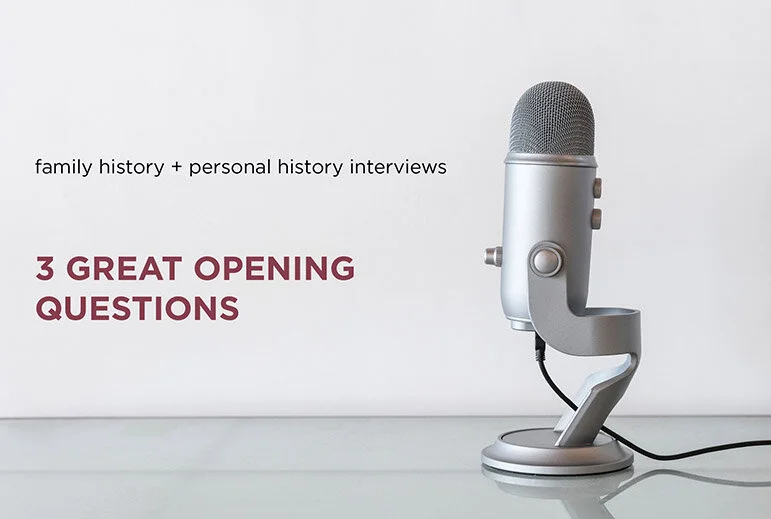
Last week I wrote about my three favorite questions to start a personal history interview with, and when to use each to initiate free-flowing and interesting family stories.
VISUALIZING FORGOTTEN STORIES
“Are women real keepers of our past? … How important in the context of collective memory is personal history, and should it be part of the school textbook? Is it possible that the carefully listened story will teach us sensitivity and openness to other people?” Questions raised by the Art & Memory exhibit based on oral histories of Polish women’s wartime memories.
FROM SUITCASE TO THE CLOUD
A new advertising campaign for cloud storage provider Dropbox portrays the company as a trusted partner for storing—and sharing—our most cherished digital mementos. Here’s a clip:
Learning from Memoir Masters
ANNE LAMOTT, UNCENSORED
“Now, we all love stories about ourselves, right? That’s what the tribal storyteller tells. And that’s what people like about my stories, because they’re the stuff in me that I know is universal and holds up a mirror to them.” Anne Lamott in conversation with Tim Ferriss about “the really real,” the writing life, and so much more.
BETH KEPHART, REFLECTIVE
Through teaching memoir, Beth Kephart has explored “how it feels to go unseen, how the fear creeps in when our stories keep their distance, how it is essential, always, to live with purpose so that we might write with meaning.”
Leaving a Legacy
ETHICAL WILLS
“You might make the mistake of believing you are in control of your legacy, when it is largely determined by the people who have been influenced by you in some way.” Massachusetts–based personal historian Susan Turnbull offers two-hour ethical will workshops.
INHERITING STORIES—AND RESPONSIBILITY
As the generation that experienced the world’s first atomic attack fades away, Hiroshima is training younger volunteers to share the experiences of nuclear survivors. The memory keepers, called denshosha, spend three years learning to tell a survivor’s story as the survivor wants it told.
LIFE WRITING AS RESPONSIBILITY
“Without stories imparted from grandmother to mother, to son to daughter, our DNA is as sterile as computer code, a raw set commands with no context.” A co-founder of Biograph on preserving generational wealth through intergenerational storytelling.
...and a Few More Links
Book publishing cost calculator: What to expect to pay for everything from manuscript editing to promotion
“Don’t be afraid to tell your stories. The world will be better because you tell them.”
Google Photos releases a memories widget for Android.
Show-and-tell for grownups in Toronto
Tips for how to make photography help, not harm, your memories
A list of things millenial kids might actually want to inherit from their parents (hint: they all involve family memories!)
Short Takes
My 3 favorite opening questions to get a personal history interview going
Planning to conduct a personal history interview with a family member? Here are three effective first questions that guarantee their stories will flow freely.
Your subject is excited and comfortable, and you're tasked with interviewing them to capture their memories for posterity. So, what is the first question you ask them?
There are myriad ways to kick off a personal history interview, of course, but here are three of my favorite first questions, along with a little cheat sheet of which question is right in which circumstance.
opening question no. 1
“Please tell me the story of your life in 15 minutes.”
Asking someone to summarize the overall arc of their life—as if they are talking to someone they have never met—invites introspection and a focus on turning points. Bruce Feiler opened the hundreds of interviews he conducted for his book, Life Is in the Transitions, with this very question. It's open-ended nature allows for answers to take many shapes, and the time limit forces subjects to hone in on key chapters and moments that have given their life meaning.
I think this is a great opening question when you are planning to conduct multiple interviews over an extended time period, as it helps to set the scene—as well as expectations of what topics may be forthcoming. Subsequent questions will invite memories of more specific episodes and emotions from the subject's life, and as an interviewer you can help guide the conversation so that bigger themes can be discerned.
Who this question is best for:
A family elder who is being encouraged to share their stories by their kids or grandkids.
What it may yield:
Thoughtful recollections of the most impactful times in one's life.
opening question no. 2
“What is your favorite memory of all time?”
There are many people who would respond to this question with a blank stare (I am probably one of them). I don't relish choosing my favorite, well…anything; and as my family's longtime memory-keeper, I have too many stories at my fingertips to choose just one.
But every family has that reticent storyteller—you know, the ones who say, “Aw, my life isn't interesting enough to talk about,” or, “What stories? My life has been just like everyone else's!” And for those individuals, I am willing to bet this question gets them going. Why? First, its nostalgic focus on a happy time is irresistible. And second, it's not asking for a time that was "interesting" or "meaningful," just fun or joyful—and chances are, some memory will spring to the surface pretty quickly.
This question is a great option for that consummate storyteller in your clan, too—the one who's recounted tidbits from his life around the dinner table for years, the one who the grandkids gravitate to for a cheeky yarn. Why? Because chances are they'll have a fully wrought story on the tip of their tongue. You may have heard it before, but this time—well, this time you'll be hitting "record" to capture it for eternity.
The best part of this opening question? Your interview subject may not be able to stop at just one story (and isn't that your end goal, after all?!).
Who this question is best for:
A reluctant interview subject OR your family's born storyteller (yup, these seem like opposite ends of the spectrum, but the lighthearted nature of this question will work wonders in both instances!).
What it may yield:
Full-blown stories with rich sense details—and the allure of continued story sharing.
opening question no. 3
“Where would you like to begin?”
I find this question especially helpful when interviewing someone who has been thinking about their life story project for a long time. Maybe they wanted to write their memoir but didn't consider themselves a writer; or perhaps they were simply overwhelmed by all that a life story project entails and never started out of fear. Whatever their reasons, a subject who is not only willing but eager to record their legacy likely has plenty of stories brewing—they've probably imagined this conversation many times.
So inviting your subject to identify a starting point for storytelling allows them to dive in with gusto, to get out into the world all that's been simmering inside of them as they've been anticipating this project. As their interviewer it is your responsibility to listen carefully and gauge why they may have wanted to start “there,” then ask probing and insightful follow-up questions to guide them in rounding out their life story and ascribing underlying meaning to their experiences.
This opening question has the potential to yield a lot of shallow memories—meaning, a semblance of a list of memories from throughout the person's life. Use the transcript from this interview session as a planning tool for subsequent sessions—you'll have an outline of memories to probe, and will be able to ask questions to get to the deeper stories that hold real meaning.
Who this question is best for:
A person who has wanted to tell their life stories for a long time but is just now beginning.
What it may yield:
Lots of fodder for future interviews!
Your thoughts?
I'd love to hear from you:
What questions do you ask first in your family history interviews? (I hear, “What is your earliest memory?” a lot, but am curious to know why folks think this is ideal.)
Are there any interviewers whose opening questions strike you as especially effective? (I love, for example, how memoirist and podcast host Dani Shapiro typically kicks off her Family Secrets interviews: “Can you tell me about the landscape of your childhood?” As many of her guests are writers, their answers are often beautiful, both forthright and poetic.)
Special circumstances: Oral history interview questions for particular subject groups
If you are interviewing people who are trauma or Holocaust survivors, these resources may help:
trauma survivors
holocaust survivors
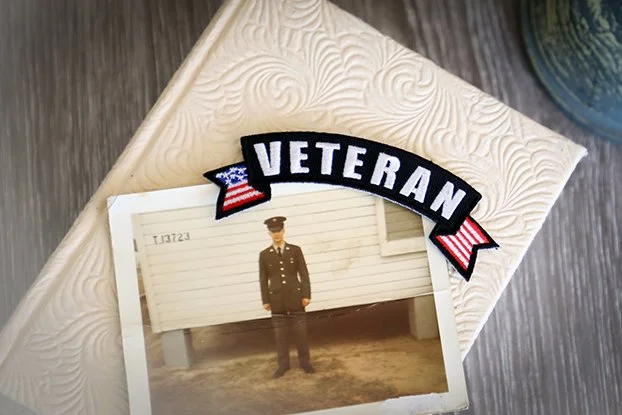
military veterans
Oral history instructions and sample interview questions for vets from the Veterans Project of the National Archives
hospice patients
















Life Story Links: July 27, 2021
An array of reads for memory-keepers of all kinds including great autobiographical writing, thoughts on what we remember, and the stories within our heirlooms.
“If any one faculty of our nature may be called more wonderful than the rest, I do think it is memory. There seems something more sneakingly incomprehensible in the powers, the failures, the inequalities of memory, than in any other of our intelligences. The memory is sometimes so retentive, so serviceable, so obedient; at others, so bewildered and so weak; and at others again, so tyrannic, so beyond control! We are to be sure a miracle every way—but our powers of recollecting and of forgetting, do seem peculiarly past finding out.”
—Jane Austen’s Fanny Price, Mansfield Park
Vintage postcard, “Two of a Kind” (1898 - 1931), courtesy The Miriam and Ira D. Wallach Division of Art, Prints and Photographs: Photography Collection, The New York Public Library Digital Collection.
Recent Autobiographical Writing Worth Your Time
“A VERY GOOD LIAR”
“My mother is home from the hospital after being sick, and I want to stay close to her. It is a beautiful day outside, but I would rather be here, inside with her, than outside playing. I am seven, in the second grade.”
RECOLLECTIONS OF HER MOTHER
“Years later, while staring out my Brooklyn apartment window, [my mother] said with genuine bafflement, ‘I assumed you kids would be exactly like me. It horrified me that you weren’t. You were a separate narrative.’” Bex O’Brian on her wildly permissive mother.
A BRIEF HISTORY OF AN APOLLO MISSION WALK
“Pulling a two-wheeled, rickshaw-like contraption for their tools and rock samples, they set out confident that they knew just where the crater was—‘right over that way,’ as Mitchell put it.” A captivating third-person look at what it was like to walk on the moon in the summer of 1971.
On Film
A RECORD OF PIONEER LIFE
Lora Webb Nichols created an intimate record of Wyoming in the early twentieth century including what “might be the largest photographic record of this era and region in existence.” Browse not only her photographs but also transcripts of her diaries (1897-1907) and an unfinished manuscript for her memoir, I Remember, via the American Heritage Center.
ONE MAN’S QUEST FOR HAPPINESS
Filmmaker Morgan Neville, who “specializes in unknotting the real story from the public narrative,” says it was helpful that he never met the subject of his most recent documentary, Anthony Bourdain.
What Gets Remembered
LET THE MEMORIES BEGIN
After months in lockdown, we all seem keen to “make memories”—memories that “will become, we hope, stories we will tell and retell, cherished flashbacks that will become part of our personal history.” But can we really ‘make’ them?
TELL YOUR STORIES, IN SPITE OF IT ALL
Two things no one tells you about writing your own story: that it can be really hard (but it’s still worth the effort), and that your family members might not care (but they will, one day)
Heartfelt Possessions Hold Memories
A PRICELESS MEMORY BANK
“While a picture may be worth a thousand words, a captioned photograph is worth at least double that.” Ally Bunbury on the comfort to be found in memories and remembering.
THE BOOK OF OUIDA
“I felt a bit of her soul attached to those objects, talismans that would make me feel like I was closer to her,” HGTV star Erin Napier says of her grandmother’s things. But it was finding her Mammaw’s handwritten recipes that was the real family treasure.
ARTIFACT, RESTORED
“An amateur genealogist, he cared less about preserving the Book of Psalms…than the family history—the first of it penned by his great-great-great-great-grandmother.” A man’s 250-year-old family Bible is brought back to life—and good for another century.
USED WITH LOVE
“Not only do heirlooms matter more when they have a story, but they are treasured when we associate them with love,” writes Elizabeth Thomas, a personal historian based in Salt Lake City. How to continue infusing those objects with love? Use them, of course!
...and a Few More Links
Prince Harry to publish memoir next year that he calls “wholly truthful.”
Family History Library reopens after long pandemic closure.
Library's vintage postcard collection is a timeline of Phoenix history.
Archivists at the University of Michigan-Flint campus hope to write history books from the perspective of “real” people.
Memoir review: Crossing the River: Seven Stories that Saved My Life by Carol Smith
Personal history gift ideas for celebrating the trailblazing women in your life
Short Takes

Two things no one tells you about writing your own story
Writing about your life can be hard—but it’s still worth the effort. (Oh, and you’re wrong that your family members don’t care about your personal history).
Are you thinking about writing your memoir? Or conducting family history interviews with a loved one? Maybe you're just beginning a regular journaling practice. However you plan to tell your stories, first: Congratulations! You are embarking on a most wonderful journey. Second: There are a couple of things you might not have yet considered.
Read on for these relevant—and hopefully encouraging—things you might want to know about telling your own story.
1 - Telling your own story can be hard.
Okay, so maybe this one doesn't seem so encouraging. But I mean for it to be.
Consider this: You sit down with your favorite Starbucks brew and your laptop eager to begin writing your memoir. And…nothing. That blank screen can seem intimidating, and even more so—you have lived a BIG life, so where the heck do you start?
Knowing that the task ahead will likely seem daunting—even to the point of paralysis—can empower you: Start small. Don't think about writing your whole life story, but rather about writing a single life story. Even better—don't even start with writing sentences! I am a big fan of brainstorming memories and ideas before beginning any real writing, so make a list. (I am willing to bet that you’ll begin scribbling lots and lots of thoughts about one of those memories--there always seems to be a kernel of the past that surprises and delights us with its specificity!).
Once you get going, you may encounter another difficulty: How do you share a painful memory? Should you even relate stories of struggle or failure? (Answer: YES! Those stories are revelatory, and they have contributed to who you are today.) The best advice I can give is to be gentle with yourself; remember that no one but you needs to read your first (or second, or even your final) draft; and that, more than anything else writing your stories is about finding meaning in the life you are living--and what better way to do that than to look back at what you have overcome?
“Your life story has a power all its own,” write the authors of Where to Go from Here. “Once you document your life and realize all that you have been through, survived, and accomplished, you can't help but have a fresh view of your worth.” Amen to that.
Make your storytelling easier.
Here are a few resources to help you get past the “hard” part of writing your life stories:
2 - Your family might not seem to care…but they will.
It can be a deflating feeling to offer to tell your kids about your childhood only to have them roll their eyes before returning their attention to the smart phone in their hand. But ask yourself this: Were you an avid listener when Gramps began regaling you with tales of walking uphill both ways to school? It’s a rare thing for the younger generation to pay much heed to the personal history of the older generation. But hear this: One day those stories will be precious to those very youngsters who could not care less now.
I talk about regrets all too often, because I hear about them all too often: from clients who WISH they had asked their parents for their stories, from friends who WISH they had written down the oft-told reminiscences of their parents before the details got fuzzy. So while you think your adult kids don’t care about your life experiences (they haven’t asked you, after all), they WILL care one day—and you can save them from having any regrets by preserving your stories now, knowing they will be welcomed--even cherished--one day.
Write in spite of the fact that you think your kids don’t care—because YOU know in your heart that one day, they will...a lot. (Trust me on this, okay?)
Get your family involved.
Find fun ways to engage your family with your stories:














How to create a life timeline for your memoir writing project
Writing a life timeline is an integral task in any life story project. Here are three simple steps to creating yours, plus thoughts on why a timeline is useful.
A life timeline can be a handy tool for memoirists and memory-keepers of all kinds. It will help orient you in time when writing or sharing stories orally, and it will provide essential prompts for stirring your memories and allowing you to delve into your past.
Why are we creating this life timeline?
A life timeline can be a helpful tool when embarking on a memoir or life story project. Not only will the timeline help you orient yourself in time over the course of your life while you are writing, it will highlight key moments in your life that are likely worth exploring.
What is worth noting on a timeline? Well, transitions are key—moments when your life took a different turn, for better or for worse. Moments of revelation should be included. And moments of change—firsts, departures, milestones. What we’re looking for, really, are autobiographical occasions.
“An autobiographical occasion is any moment when we are encouraged or obliged to reimagine who we are,” Bruce Feiler writes in Life Is in the Transitions. “It’s a narrative event, when our existing life story is altered or redirected in some way, forcing us to revisit our preexisting identity and modify it for our life going forward.”
How to begin crafting a life timeline for your memoir or personal history book

1: Brainstorm a list of important moments and events in your life.
According to neuroscientist Lisa Genova, our brains are designed to recall what is surprising and new; what is emotional; and what is meaningful—so let’s begin with those! Here is an effective approach for determining the major life events that may lend themselves well to helping you find meaning and write about your journey:
Start with major life events.
Consider:
your birth
spiritual milestones such as bar/bat mitzvah, Confirmation, or religious conversion
graduating (high school, college, graduate school)
moving to a new city or country
marriage
divorce
becoming a parent
becoming a grandparent
becoming a citizen
losing a parent
becoming a caregiver for a family member or loved one
Make a list of important “firsts.”
Include “firsts” that had some impact on your life, whether they changed your world view, fulfilled a dream, or became the first of many (the first article you wrote may be relevant if you became a journalist, for example).
first job
first love
first home you owned
first time you traveled outside the country
first time you failed
first time you voted
first time you lost someone you loved
Make a list of times you felt most emotional in your life.
What made you feel alone—or less alone?
What made you feel confident, empowered?
What made you feel sad? Despondent?
Consider times that your emotions dominated your days—excitement over your engagement, perhaps, or persistent grief after a parent passed.
Know that some (even all) of these entries on your list may be duplicates. That’s okay—you are reiterating for yourself that these life events are in fact fodder for your personal history.
Include addresses for all your homes.
(Nothing to explain here—just having those addresses is both a memory marker for you and will one day supply important family history information for your descendants.)

2. highlight all the items on your list that seem worthy of inclusion on a timeline of your life.
Don’t do this step the same day you have been brainstorming your list—you need a little mental distance from it to assess what makes the most sense to keep. I suggest waiting a couple of days or more, then grabbing a highlighter and marking the things you’ve written that feel most germane. You’re looking for plot twists in your life, for decisions or moments of change (again, for “autobiographical occasions”).
Don’t discount seemingly minor things if they make you feel something upon reflection; maybe buying your first car seems trivial, for instance, but if it gave you a sense of freedom at a time when you were feeling caged in or alone, then, well…do you see how this isn’t “little” to you?
And remember: You’re going to hold onto this list, so you can always come back later to some of the things you aren’t highlighting now. Your purpose here is to set priorities: Those milestones you highlight now should be among the first you write about (or talk about, if you are capturing your stories via an audio recorder). And maybe they are the ones you include on a graphic timeline of your life, should you want to include such a helpful visual key in your book (yes, one day all of this may end up in a book!).

3. Add dates wherever possible.
Particularly for the highlighted items on your list, go back and add dates. This may take some research, so start with the low-hanging fruit—your birthday, your kids’ birthdays, a wedding date. Then start digging: Pull out an old resume for work-related milestones; find prayer cards from funerals for the dates you lost loved ones. Give a sibling or parent a call to see if they can help fill in any blanks.
If you have an actual date, use it, otherwise years—or even a span of years—will suffice to place the milestones of your life on a continuum.
I recommend creating a “final” list by putting all the highlighted items from your original list in chronological order. This will become a working cheat sheet for you for the remainder of your life story project!
Congratulations! You’ve got a timeline of the most meaningful moments in your life. I hope you will use it to guide you on your journey of remembering, and of capturing your life stories for yourself and for the generations to come.