
Memories Matter
Featured blog Posts


READ THE LATEST POSTS

“It was more for me than anyone else—what a surprise”
You may think you are writing about your life for your family—to honor your ancestors, to give a gift to your descendants. But the truth is deeper. You’ll see.
Have you ever considered that writing about your life might be as much a gift for yourself as for your family?
Last week I met with a client with whom I have worked for almost two years. She first came to me having endeavored to write her life story. After writing a few short chapters, she was having difficulty staying on track and writing in a way she hoped would be engaging for her grandchildren. I worked first as her memoir coach, then as her editor, and now we have seen her stories all the way through production—on that day last week, we were reviewing the final draft of her beautifully designed book one last time before sending it off to be printed.
The previous time we met, to go over her first draft proof, my client expressed doubts. She was feeling ambivalent about having told her story at all. Would her grandchildren ever care? Would her grown sons even want to read it? What if she offended someone? Was the effort narcissistic?
That wasn’t the first time I had heard her express reluctance around the telling of her stories. As her memoir coach I did more than provide writing assignments and feedback; I was also a sounding board for how she should frame her stories, yes, but also for the reservations that cropped up during the process. And you know what? I had been there before. So many of my clients experience this rollercoaster of emotions around writing their life.
Each time this client and I had a talk about the value—or perceived lack of value—around writing her stories, we would circle back to her initial goals: wanting to tell the stories of her life both to create a legacy around her parents’ fortitude and resilience during the Holocaust years and beyond (to honor her ancestors), and to provide touchstones for her grandchildren, who might one day find wisdom in her own lived experience (a gift to her descendants). She always resumed her writing with renewed vigor. She had tapped into both the gravity and the joy of writing about one’s life.
During this particular meeting, though, my client became aware of something I had known all along: That examining and writing about her life was as much a gift to herself as to her family. She smiled at me and grasped my hand across the table: “Do you know what?” she whispered. “All of this, it was more for me than anyone else.” I sat quietly, smiling at her revelation. “What a surprise that was for me!” she added.
And here’s the thing: I can repeat this over and over when talking to a prospective client; I can write about it till the cows come home, as they say. But no one really gets it (or believes me) when I tell them that writing about their life is a gift they can give to themselves. That it is healing. Revelatory. Fulfilling.
So together we focus on the other why’s—honoring those who came before, and sharing with those who come after. We create legacy and family history and write FOR our loved ones.
And then, almost always, a surprise…that the process was worthwhile even if it was just for THEM.
Related reading













Life Story Links: November 14, 2023
From biography and memoir recommendations to explorations of memory, truth, and family history, this week’s curated roundup has diverse and rich reads.
“We must acquiesce to our experience and our gift to transform experience into meaning. You tell me your story, I’ll tell you mine.”
—Patricia Hampl, I Could Tell You Stories
Vintage poster with original artwork by Alexander Dux promoting tourism, June 1939, produced by the Work Projects Administration; image courtesy of the Library of Congress Prints and Photographs Division, Digital Collection. The posters were designed to publicize exhibits, community activities, theatrical productions, and health and educational programs in seventeen states and the District of Columbia between 1936 to 1943.
Their stories, in print
A NEW LOOK AT KING WHO ABDICATED
A new bio of King Edward VIII weaves together his own writing, interviews, and diary entries from his original ghostwriter to form “an extraordinary new portrait of one of the most famous characters in modern royal history.”
AN ICON TELLS ALL
My Name Is Barbra, Ms. Streisand’s long-awaited (and rather enormous) autobiography, doesn’t have an index, but a writer for the NYT has teased out “the best bits.” Oh, and the audio book (read by the author) clocks in at a mere 48 hours.
What becomes of our memories
‘OBSESSIVE, DIARISTIC RUMINATION’
“But what I did understand then was that [reading her journals] was an incredible honor, perhaps even a trespass, which came with a responsibility.” Anne Liu Kellor on keeping (a giant chest full of) journals.
REMEMBER WHEN…?
Last week I offered up a few ideas for how to remember intentionally, rather than letting social media sites such as Facebook or the Photos app on your phone be your only source of “memories.”
IT’S IN THE TELLING
“I wanted to see what the local newspaper reported about my grandfather’s act of bravery in preventing a lynching.” How two versions of a family story sparked a writer’s quest for truth.
Personal history, public access
ACCESS TO AFRICAN AMERICAN HISTORY
“What reduced me to tears was the fact that my great-great-grandmother had spent 60 cents on two “baker tins,” more than the payment she received for an entire day’s work.” How a researcher discovered some of her own history at the National Archives, and an introduction to a project to make Freedmen’s Bureau records available to the broader public.
UNSEALED AT LAST
Unopened love letters in Britain’s archives are “a treasure trove bearing intimate details about romance and daily life in mid-18th-century France.”
20 YEARS IN…
In this podcast episode, StoryCorps goes back to the organization’s early days, including the challenges of building a recording booth in Grand Central Terminal, and follows up with participants from the first-ever radio story they broadcast on NPR:
INTERACTIVE MAP OF MEDIEVAL MURDERS
“While historical records have increasingly been digitized, Ms. Swarthout said that online archives were not always easy to use...[but] tools like the murder map are a fresh way to synthesize large amounts of old information. ‘It’s just very fun to go through.’”
...and a few more links
Short takes


Are you ever intentional about your memories?
We all get a happy feeling when a “memory” pops up on a social feed on our phone. Just remember that you have access to ALL your memories ANY time you want!
Are you ever intentional about your memories? I don't mean doing something to preserve them (yes, I talk a lot about that, I know!), but simply visiting with them?
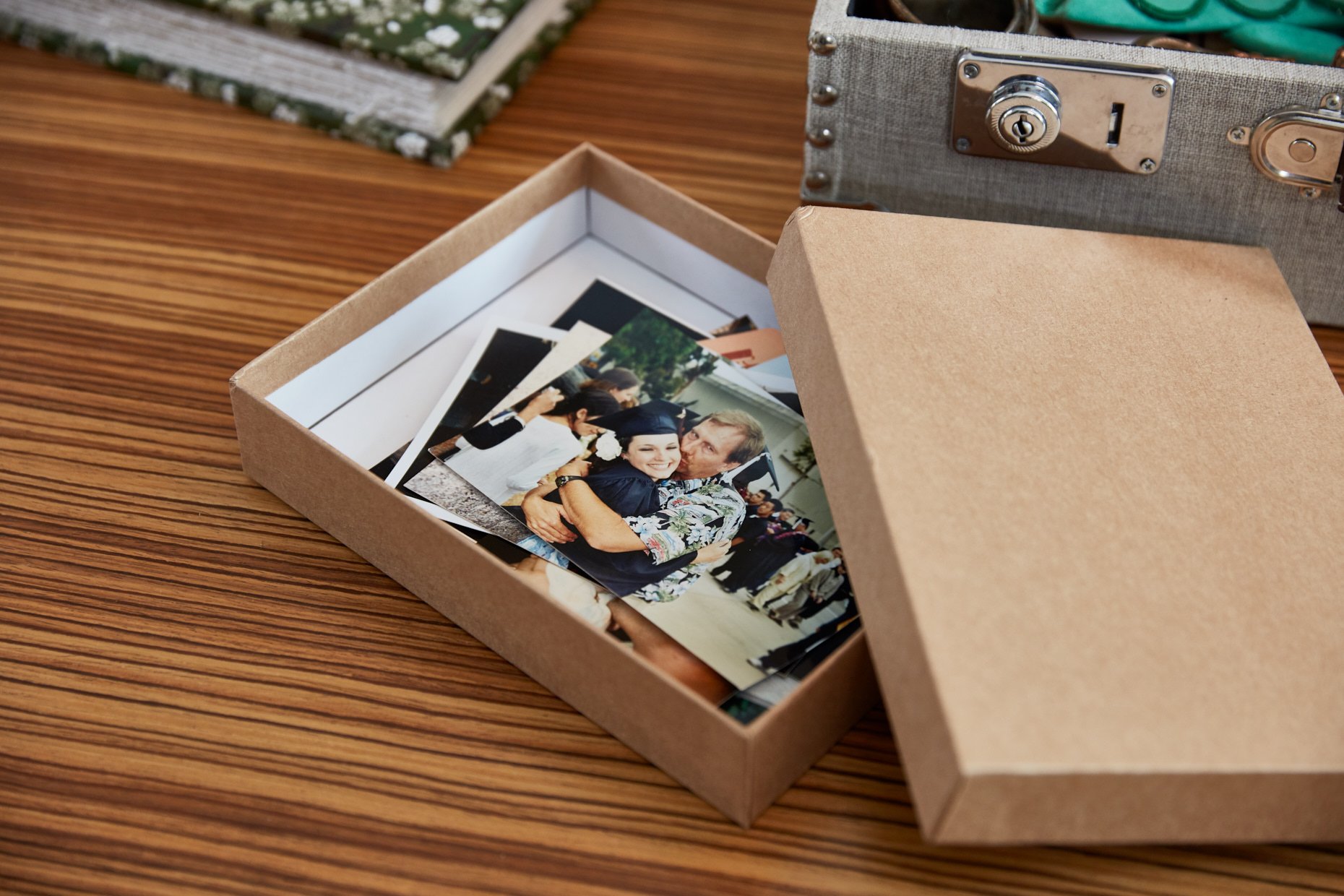
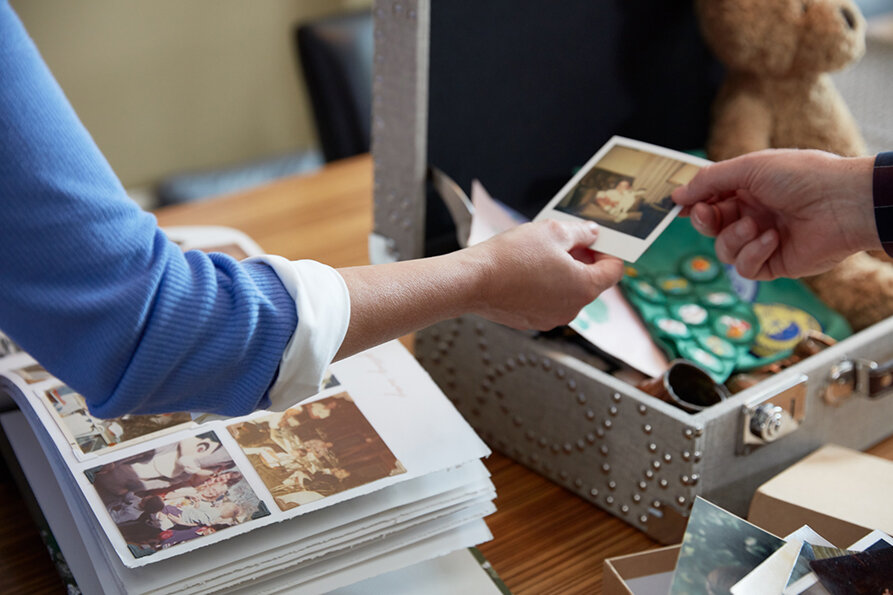
The easiest way may be to open an old photo album to a random page and allow yourself to be transported back in time. I find it's often easiest to do this when we are thinking about someone we love—our child(ren), our parents, our significant others, our dear friends. Why not visit some of your own (singular) memories, too? Does a picture of toddler you jumping into a pool bring back feelings of freedom and summer joy? Does a high school yearbook photo make you feel vulnerable and on the verge of your life? How about a shot of professional you at the podium—are you overcome by a feeling of pride, or perhaps compassion for the person you were?
Memories shouldn’t be things we are reminded of by Facebook or Google or Apple Photos (don't get me wrong, those are fun...but your memories aren’t all housed on your computer!!). Memories should be moments we can return to whenever we want, whether by flipping to a page in a photo book or by popping some cookies in the oven and being transported by the smell.
Savoring happy memories may be significant for one’s ability to cope with stress, potentially promoting better decision-making and wellbeing, according to one study; and other research shows that “intentional activities that boost positive emotions” include remembrance of positive autobiographical memories.
So—there are mental health reasons for reminiscing, for sure. But even if sitting with your memories just gave you a temporary mood boost, wouldn’t it be worth doing for that alone? I don’t know about you, but finding a few minutes to simply smile and feel nostalgic is a welcome gift to myself on any given day!
So I challenge you:
Can you pull out an old photo today and indulge in some intentional remembrance?
Can you pick up the phone to tell a loved one you were remembering “that time we…” [fill in the blank]?
Can you find five minutes to journal about a happy childhood memory (or pull out an old diary and revisit some random day from your past)?
Can you stare into space and conjure a memory from a particular time in your child’s life? (As a parent of a teenager I find that waiting in car pick-up lines is an opportune time for such intentional remembering; walking in nature or while doing the dishes are other great options!)
Can you show your child a photo from years ago and share a story or two?
I know you CAN do any of these things, the question is really: WILL you? No pressure to DO anything with your memories…just sit with them and visit a while 🤗
What are you remembering...?















Life Story Links: October 31, 2023
Today’s curated roundup includes some great family history finds, thought-provoking reads about truth and fact in memoir, plus life writing ideas and prompts.
“Are you there? Can you hear what I have to
tell you? Our lives are finite—and yet…Look
at the way they preserve themselves.”
—Judith Kitchen, The Circus Train
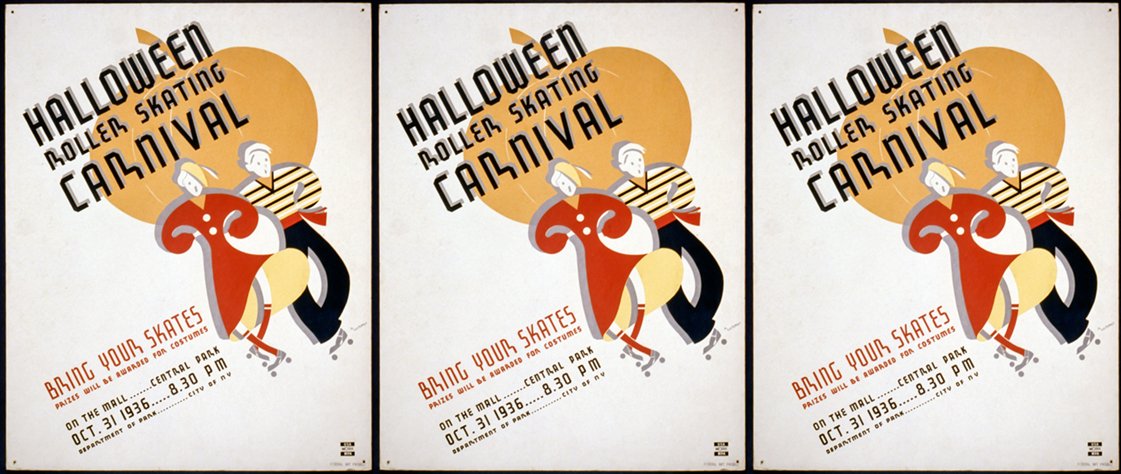
Vintage poster with original artwork by Martin Weitzman announcing a roller skating carnival in New York City’s Central Park, October 1936, produced by the Work Projects Administration; image courtesy of the Library of Congress Prints and Photographs Division, Digital Collection. The posters were designed to publicize exhibits, community activities, theatrical productions, and health and educational programs in seventeen states and the District of Columbia between 1936 to 1943.
Towards truth in memoir
MERE BELIEF?
“And so we mold our pasts into a story that may bear little resemblance to the genuine mess of actual life. When I write from memory, am I writing a history or a story? Isn’t it both?” A fascinating look at the sliiperiness of memory, by Sallie Tisdale.
CONTRADICTIONS IN MEMOIR
“As time goes by, we may find ourselves further removed from one kind of truth (what it was) but edging ever closer to another (what it means).” On why it matters how we tell the story of Sinead O’Connor.
WHAT WE TELL, WHAT WE HIDE
“It becomes part of the work of the writer and of the artist to expose the humanness of our stories to light, to air, as a way to transcend and move beyond what binds us, often generationally, to silence.” Elissa Altman on writing, permission, and the certainty of our stories.
What we write about
LESSONS FROM A CHILDHOOD IN A CHINESE RESTAURANT
“Like a welcoming restaurant server, [Curtis Chin] invites the reader to share in digestible bites of memories from childhood up through college graduation. Instead of chapters, anecdotes are dished out in menu sections such as ‘appetizers and soups,’ ‘rice and noodles’ and ‘main entrees.’”
LIFE WRITING INSPIRATION
Last week I shared ways to discover life writing prompts all around you, so the glaring white of a blank journal page doesn’t interrupt your regular journaling practice.
Family history finds
AN AMERICAN PUZZLE
Census categories for race and ethnicity have shaped how the nation sees itself. This graphic-heavy, meticulously reported piece looks at how they have changed over the last 230 years.
WHAT TO SAVE, WHAT TO TOSS
What do you save from the pile of old journals, pedigree charts, group sheets, loose papers and books of remembrance? How Swedish death cleaning can help you declutter your family history documents.
ONCE UPON A CAMERA
Thousands of historical New England photos destined for the trash were saved by a photographer who painstakingly restored the glass plate slides and donated the archive to the UMass Amherst Library.
...and a few more links
Reconstructing memory in Alexandria Canchola’s “Yours to Keep” art exhibit
Curtis Chin on the challenge and freedom of speaking your story aloud
Shoah Foundation to collect and preserve testimonies from survivors of Oct. 7 Hamas attack on Israel
“Images on our phones have changed the way we make our collective memories.”
Short takes

Discover life writing journal prompts all around you!
Sometimes all it takes to get unstuck with your personal writing is paying attention. Here are some easy (fun) ways to come up with journal writing prompts.

I recently felt called to indulge in a journal a little more special than what I usually write in, and bought this handmade beauty from BINDbyBIND, a partnership between memoirist (and now bookmaker) Beth Kephart and her artist husband, William Sulit.
Sometimes the stark whiteness of a blank journal page can be paralyzing. Our desire may be there to journal regularly, but the inspiration isn’t always as close to hand.
I have toyed with the idea of creating a prompt-a-day guide with a life writing prompt for every day of the year, and who knows, that may one day still come to fruition. For now, though, I rely heavily on serendipity to guide my own journal writing. I try to stay conscious of discovering ideas throughout my day. A few recent prompts have come from situations as unexpected as:
a sloppy note I had handwritten on a scrap of paper while still barely awake after an especially vivid dream
an experience of a fictional character in a novel I was reading; I had never had the same experience, but the emotions that arose for the character evoked a strong response from me…later resulting in a fruitful journaling exploration.
a feeling of déjà vu—this sensation of having been somewhere or done something before has intrigued me since I was a young girl, and whenever I feel it acutely, I like to dig in (when I remember to) on the page.
Can you imagine yourself, also, coming up with some interesting writing prompts simply by paying attention to what’s going on around you?
A front view of the hand-bound journal pictured above; I was drawn to the colors (yellow, my mom’s favorite, and blue, mine) and am using this journal just for thoughts on that relationship. Do you have journals set aside for certain types of writing?
Other reliable places to find writing inspiration are:
from looking at old family photos (even if a distinct memory does not surface, some catalyzing feeling almost inevitably will)
relying on a book such as Beth Kephart’s Tell the Truth. Make It Matter.
As I wrote previously: “The prompts and exercises within are wonderfully original, expertly crafted, and simultaneously pointed and open-ended enough to have you furiously filling in those blank pages with purpose.”using your own life timeline to prompt recollections worth writing about.
while not necessarily their intended purpose, decks of conversation cards can often provide out-of-the-box journaling ideas, from lighthearted and fun to profound and thought-provoking; I’ve been sharing some of my favorites on occasion on Instagram, such as this one:







Life Story Links: October 17, 2023
This week’s roundup is rich with in-depth looks at how we process memories and make stories, why personal writing matters, memoir recommendations and excerpts.
“Readers never get it all. They get some of all of it. Everything I write is true. But I don’t write about everything true. I shape, I cut, I feint and dodge; I want to get to something that is uniquely mine, and at the same time ours, too.”
—Dominique Browning
Vintage poster produced in 1939 by the Work Projects Administration; image courtesy of the Library of Congress Prints and Photographs Division, Digital Collection. The posters were designed to publicize exhibits, community activities, theatrical productions, and health and educational programs in seventeen states and the District of Columbia between 1936 to 1943.
Way more than memories
VOICE AND IDENTITY
“As I read back my words I feel the slipperiness of time, the way a memoir is a snapshot that pins us to moments in our lives and the way that time rolls ceaselessly.” Freda Love Smith on the difficulty of narrating her own memoir.
STORYTELLING AND DEMENTIA
StoryKeep’s Jamie Yuenger “explores the profound impact of using storytelling as a therapeutic tool for people with early-stage dementia, highlighting the use of images, music, and story prompts to bring back cherished memories.”
A CHANCE TO SPEAK
“I have since realized that the real power of memoir is that through the process of writing, the writer learns to own their story, and to find authority in its telling.” Memoirist Lily Dunn on the aftermath of writing about fathers.
STORIES ABOUT HERSELF
“In all this writing and thinking and talking...I am trying to look beneath the stories that so many others have told me and perhaps uncover some truths about my childhood, always hoping to make sense of it so I can make sense of myself.”
THE STUFF THAT HOLDS MEANING
Our homes have soul—they have stories to tell!—says Erin Napier, author of the new book Heirloom Rooms. She brought her grandmother’s buttermilk biscuit bowl to GMA to illustrate how our loved ones’ items can help keep them close:
Mining our stories
WRITING, MEANING-MAKING
“The mapping of my experiences to a narrative has led me to a new emotional plane more than once.” Minda Honey reflects on the catharsis of writing about sex in memoir.
UNPACKING THE TRUTH
“I wanted to really examine the story of who I am, and how I came to be, and how this fact of my conception actually impacted the way that I've dealt with truth and shame throughout my entire life,” Kerry Washington says about her new memoir, Thicker Than Water.
‘UNFINISHED’
“It occurs to me that perhaps I linger because there is something about a liminal space and time that gives me more pleasure than actually getting through to the other side.” Ruminations from Lyn Slater on her “How To Be Old” blog.
HOW TO REMEMBER?
“For a couple of days before I began writing, I just let what memories that I had of my early life [come],” Patrick Stewart says of accessing his memories for his new memoir. “By opening up those doors, things trickled and then ended up flooding in.”
Current biography & life story offerings
‘I DON’T WANT TO BE ERASED’
“In the months, then weeks, before his death, Reed fretted about his legacy, worrying that time would erase him.” Read an excerpt from the new biography Lou Reed: The King of New York.
AN ESSENTIAL AMERICAN STORY
“As a documentarian, part of my job is to really, before I use my camera, [is to] make sure that I really understand where they come from and what is their tragedy or what is their life.” Raoul Peck’s new documentary examines one family’s attempts to hold on to property they’ve owned for over 100 years.
CELEBRATING MEMORIES
Reba McEntire calls her new book/album combo “a medley [that] is, after all, not just a cookbook, a photo album or a narrative of my life. It’s a melange of everything.”
Short takes

The index card solution to family history preservation
Want to organize your family history archive? This cheap, convenient solution is a great way to record your stories until you’re ready to move them into a book.
Don’t worry, you won’t need a library’s worth of card catalog drawers for your family history records—a simple recipe box (or two) should do!
I’m all about books—I’ve got stacks of them all over my office, my bedroom, my kitchen; I turn to them for escape and for knowledge, for catharsis and for fun; and I write, edit, and design books for a living. But I know that sometimes creating a book may not be the best choice for a specific memory-keeping challenge. That’s where recipe card boxes come in.
Over the many years I have been advising clients on how to turn their family stories into lasting legacy books, I have found a few common occasions when the time is simply not right (yet!) to commit to book publication. In the three scenarios that follow, I suggest buying a simple recipe card box and some blank index cards that will fit within—then using those (easily changeable, inexpensive, convenient) cards to record your stories until you’re ready to move them into a book. (Oh, and even if you find you never get to that ‘ready’ stage, you’ll still have preserved a great deal of your family history in an accessible format…and who knows, someone in the next generation just may take up the challenge of continuing your research and one day creating an heirloom book!)
Three memory-keeping occasions when recipe cards (a.k.a., index cards) are a great tool:
MEMORIES
You want to capture memories for your children in real time.
Are you regularly sharing tidbits about your new baby on Facebook or Instagram? Do you tell stories about your grade-schooler to your mom during weekly phone calls? Do you wish you had created annual family albums for your kids’ earlier years, but never found the time? It’s never too late to start recording family memories—and it’s easiest when you write those micro memories down as they happen!
How to record family memories in a recipe box:
Keep a pen and a stash of blank recipe cards in convenient locations—your bag, your bedroom nightstand, a kitchen drawer—so that they’re always on hand when you need them.
When your child says something laugh-out-loud funny or wise beyond their years, when they achieve something they’re proud of or try something new, jot it down on a card. Be especially conscious of capturing catch-phrases that characterize a certain age, or things that make you smile every.single.time!
If you have a tendency to share these things in real time on your Instagram stories or other social media platform, take a screenshot of the shared memory, print it out, and tape onto a blank index card.
Whenever you can, make physical prints of favorite photos: Ideally, print them at the same size as your index cards so they can be stored behind the memory card it goes with, or print smaller and adhere to a card with a handwritten memory on the reverse.
Use dividers to label months and year, or perhaps have a divider for each of your children—whatever organizational system makes the most sense for you.
Consider asking your kid(s) to contribute something once in a while—maybe they write how they’re feeling on the first day of every school year, or what they hope for on each birthday. Preserving their handwriting in this way is priceless!
Future uses: These memory cards will become not only a cherished family heirloom, but they’ll be resources for you to easily create meaningful gifts in years to come—think a photo montage at their high school graduation, or a memory book on the occasion of their wedding. You may want to use them as memory prompts for YOU to write a book one day, or maybe you’ll digitize them for yourself then tie a ribbon around the box to gift to your child when they buy their first home!
HEIRLOOMS
You want to record the stories of your heirlooms, but can’t undertake a big new project.
Instead, jot down a list of all the heirlooms you hold dear, then tackle writing down their provenance one by one when you have time. That first index card will be like a checklist (that you can add to any time you want!). Each subsequent card will include
a photo of the heirloom
a physical description
who it belonged to (including originally and over the years)
approximate year it came into your family
any associated stories or details that make it meaningful.
You may end up writing about one heirloom per month, or completing a flurry of them at once and then not again for a while—go at your own pace!
Future uses: You may want to one day design a book of all your heirlooms (or have a professional book designer create one for you), in which case you’ll have everything you need in one place. Alternately, as you downsize or simply gift items to loved ones and friends, you may hand them the card that goes with their heirloom—voilà, origin story complete.
RECIPES
You are working towards a heritage cookbook—‘towards’ being the operative word.
Sure, this one may seem obvious (recipe cards in a recipe box!!)…but I encourage you to be more intentional than one might normally be when jotting down recipes. You may recognize your mom’s scribbles, or your grandmother’s shorthand, but the next generation may not. As you cook each recipe, look over what’s written and ask yourself:
Is each ingredient amount clear?
Is cook time accurate?
Have I changed something since I originally began cooking this?
Do we always use a certain brand of an ingredient?
Are there other things worth noting—that you often double the recipe and freeze half, say, or that It can be modified if using fresh rather than canned vegetables?
Examples: Grandma may have used shortening, Mom preferred margarine, and you now use butter; “cook until browned” is only helpful if you have a general idea of cook time, so be more explicit for future recipe readers—“cook approximately 20 minutes, until browned”; “syrup” may obviously denote dark maple syrup to you, but being specific is the key to a foolproof recipe.
A few tips for recipe testing:
I recommend having a single divider in your box—the ones in front have not yet been tested (and marked up), while the ones in back have been.
It can be helpful to cook the recipes with another family member or friend who isn’t familiar with the process to make sure you answer questions that can crop up. (Bonus? Way more fun!)
Definitely write down more than just the recipe—include that “this was Jennifer’s favorite lunch in kindergarten” or that “we’ve been baking this bread every Easter since 1896.” Capturing the stories behind your family’s favorite foods will make this box/eventual cookbook all the more special!
Future uses: You can easily copy recipe cards to gift to your kids when they move out, or compile them in a heritage cookbook that’s professionally printed and bound and distribute among family members.

One instance where I thought index cards might be useful but have since changed my mind: for organizing genealogy materials. Whether you are in the early stages of your genealogy research or just addicted to learning more and more about your ancestors’ lives, every family historian knows their work is never done. It’s the most common reason I hear for why people aren’t ready to create a family history book. I get it! But while using an index card filing system may seem like an elegant solution to organizing lots of changing data, the cards’ small size is too restrictive. Click here for some expert guidance on organizing your genealogical information, click here for some best practices, and click here for ways you CAN use index cards as a handy reference for your ancestry research.







Life Story Links: October 3, 2023
From an audio memoir serialized as a podcast to hybrid memoirs worth reading, this week's curated roundup is rich with family history, memory-keeping and more.
“Your diaries and letters are the literature of your past, and each tells a slightly different story. I read and reread your stories as if they were fables, modern-day fairy tales that are constantly changing meaning. Every time I open to a familiar page, I read the words in a new way.”
—Rachael Cerrotti
Vintage poster produced in 1940 by the Work Projects Administration; image courtesy of the Library of Congress Prints and Photographs Division, Digital Collection. The posters were designed to publicize exhibits, community activities, theatrical productions, and health and educational programs in seventeen states and the District of Columbia between 1936 to 1943.
A favorite theme: The power of story
HOW STORIES CAN SAVE US
“The practice of storytelling, particularly when sharing the real stories from our own living, tethers us to what matters most—our families, our friends, nature, the hearts we carry, the wondrous mystery of life itself,” Mark Yaconelli says.
CRAFTING STRONG PERSONAL ESSAYS
NYU writing professor Estelle Erasmus says “every story has a situation (the external), but the underlying story and its emotional implications are what elevate a story and take it to another level.”
ON COMPASSIONATE LISTENING
“I feel like the world is very loud and people tend to talk over one another, but if we were to just sit across from each other and listen to each other’s stories, I think there would be a lot more empathy, love, and compassion,” says Katie Cheesman, who teaches a course about how to film your loved one’s life story.
Memoir recommendations & explorations
WHEN FORMAT INFORMS MEANING
“Creativity, playfulness, and craft are evident in the memoir’s format, shape, and language,” one reviewer writes of Jennifer Lang’s “memoir-in-miniature,” Places We Left Behind.
‘AN UNPARALLELED PERSONAL TIME CAPSULE OF THE ’60S’
Doris Kearns Goodwin’s new book, An Unfinished Love Story, is a “combination of memoir, history and biography; Goodwin was inspired in part by the couple's looking through hundreds of boxes of letters, diaries and other papers.”
A PEEK BEHIND THE SCENES
“Stuart Gordon’s memoir details the cult horror director’s monster creations, his family life, and his passion for grand storytelling...[and how] his own life had enough twists, turns, and serendipitous encounters to be its own film.”
TASTY INSPIRATION
Last week I scoured my bookshelves to recommend three books (not new, but definitely noteworthy) that will inspire you to create your own hybrid cookbook combining your food stories with family recipes.
Listen up!
MISSING PIECE OF YOUR ESTATE PLAN?
Susan Turnbull, a Massachusetts–based speaker, discusses the history of ethical wills and why she was drawn to helping others create them on this episode of the Ebb and Flow podcast from UBS:
TELLING YOUR STORIES WITHOUT APOLOGY
In the below episode of the Freelance Writing Direct podcast, author Allison Hong Merrill talks about how she wrote about her real life struggles without shame, and offers advice on how to protect the privacy of those you write about. (Another episode you may like: the host chats with the editorial director of Narratively.)
‘A MUSICAL DIARY’
“‘Alive and Well Enough’ is an audio adventure of an accidental artist who one day looked up and realized he had a sense of humor, a passion for writing and stories to tell.” Jeff Daniels’s audio memoir is exclusive to Audible.
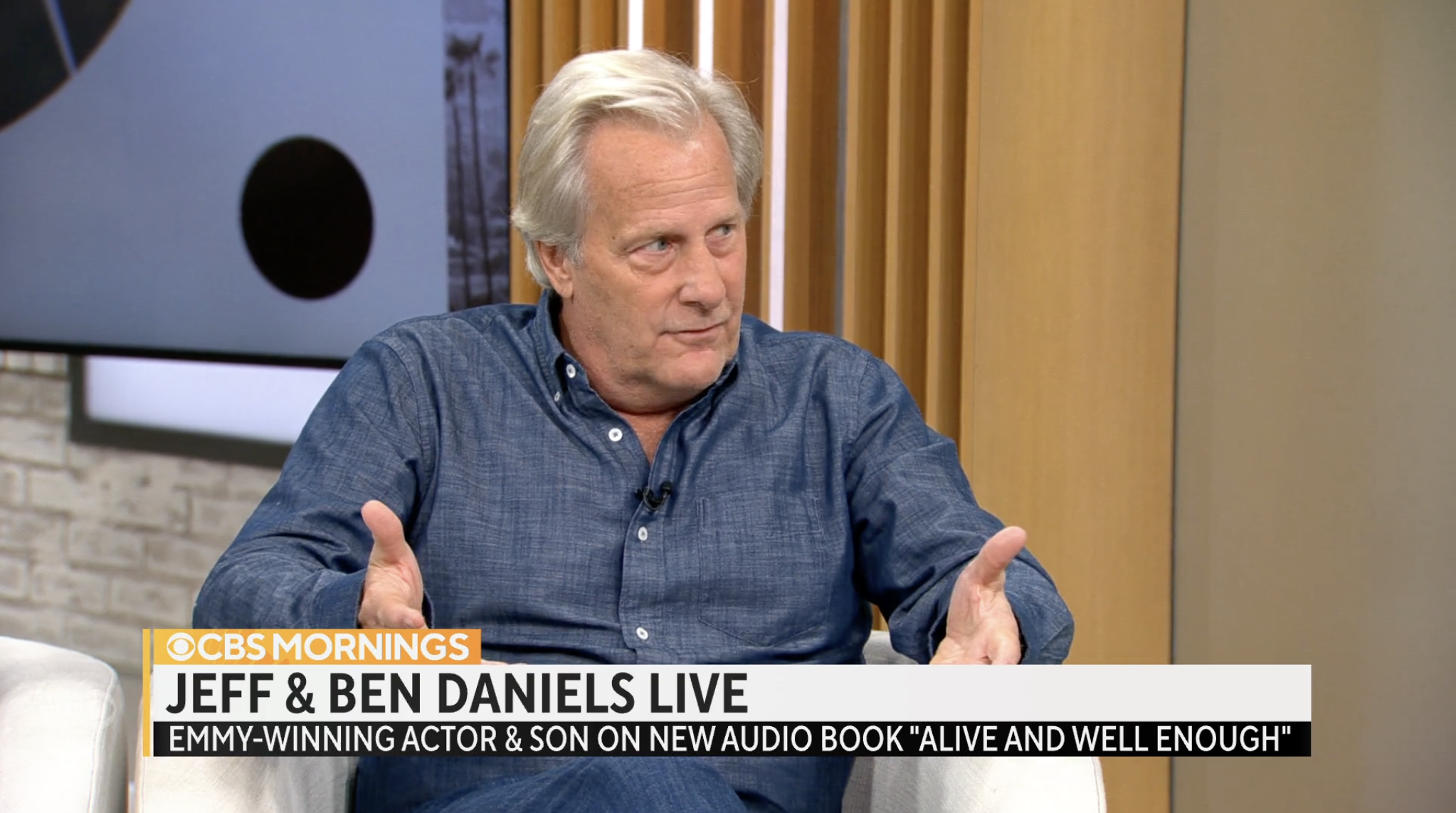
Emmy-winning actor Jeff Daniels and his son Ben Daniels join "CBS Mornings" to discuss their latest collaboration, an audio memoir titled "Alive and Well Enough."
Miscellaneous
ARTIFACTS FROM A POET’S ORDINARY LIFE
A public database of more than 8,000 of Emily Dickinson’s family objects recently went live. Read the winding story of how this treasure trove was saved; it includes things as varied as letters and poems to travel souvenirs and cooking utensils.
A STORY CONTINUING TO UNFOLD…
Amidst a trove of genealogy info that comprises more than 3,000 ancestors, Utah–based personal historian Rhonda Lauritzen discovered a fascinating story of one of them—her 9th great-grandmother who was hanged during the Salem witch trials—then went on to visit the location where her story unfolded.
Short takes