
Memories Matter
Featured blog Posts

READ THE LATEST POSTS

3 books to inspire your own family cookbook
These three titles—two hybrid cookbooks and one genealogical look at preserving food memories—dish up lots of inspiration for making your own family cookbook.
These books by Gena Philibert-Ortega, Gwyneth Paltrow, and Rachael Ray are not only brimming with recipes you’ll want to try, but they can serve as incredible inspiration for ways to approach making your OWN hybrid family history/cookbook.
Whenever I share photos of family cookbooks or food heritage projects, I get a tremendous response—“I wish I had thought to do that before my mom passed,” “Oh, I HAVE to do this!!!” or, on occasion, more reluctant feedback such as “I would have no idea where to begin.”
Well, I’ve shared plenty in recent months about how to approach making your own heritage cookbook, including, most notably, an easy-to-follow 10-step plan for making a DIY (heirloom-worthy) cookbook, plus 3 surprising ways to elevate your family cookbook.
Now I thought I’d share some fun inspiration—books you can either buy or check out from your local library that guarantee to provide some, ahem, food for thought! These aren’t new books, just ones I’ve collected over time that, to me, epitomize great storytelling in beautiful formats in the food genre.
What follows are three book recommendations—two hybrid cookbooks and one genealogical look at preserving food memories—that I think you’ll love, too. Let me know which ones inspire you, and how!

“Rachael Ray 50: Memories and Meals from a Sweet and Savory Life” by Rachael Ray

Why you’ll be inspired:
With 25 essays depicting Rachael Ray’s personal life plus 125 recipes handpicked to correspond to her favorite memories, this book is a prime example of what a heritage cookbook can be. From vignettes about childhood movie night and special occasion dinners at NYC’s Mamma Leone’s all the way to moments with her famous friends and how she got to Carnegie Hall, the chef used her milestone fiftieth birthday as a spark to take stock.
“This is not a memoir,” she writes. “It’s a series of recollections, a scrapbook of my life so far.” Lots of those recollections are accompanied by recipes, sure, though “other episodes in the book have nothing to do with food, but they remain important ingredients that have helped give my life its particular flavor.” (Can you hear me cheering?!)
This book is stunningly bound and printed on matte paper with elegantly simple graphic section openers and an abundance of images, including nostalgic childhood photos as well as the expected styled food photos.
Fun quotes:
“I was marked to be in a kitchen when I burnt my finger on an industrial stove at age two.”
“I think I’m a nurturing person but I have resigned myself to the role of cooking vegetables rather than growing them. Upstate my husband is the farmer. I can pick the stuff, and prepare it, but I’m not allowed near it when it’s growing.”
My favorite recipe:
Carbonara (a classic done the authentic way!)
Buy or Learn More:
Rachael Ray 50: Memories and Meals from a Sweet and Savory Life by Rachael Ray (2019, Ballantine)
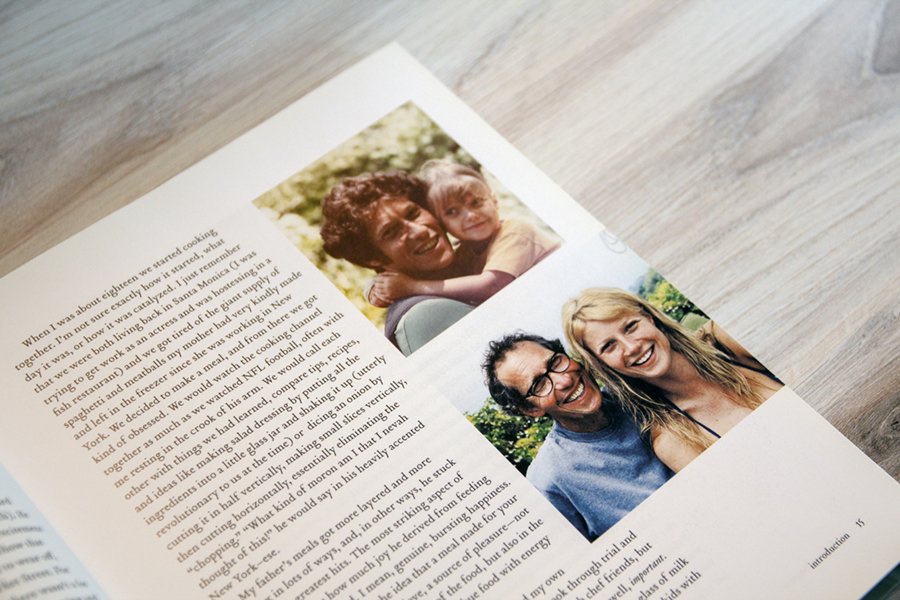
“My Father’s Daughter: Delicious, Easy Recipes Celebrating Family & Togetherness” by Gwyneth Paltrow

Why you’ll be inspired:
Long before she was crowned a lifestyle guru, actress Gwyneth Paltrow shared her journey of what friend and foreword author Mario Batali calls “blossoming as a mom cook” in this cookbook–cum–celebration. A self-proclaimed foodie (if you can find it, her PBS series Spain…On the Road Again is worth watching!), Gwyneth’s approach in this very personal title is familiar and laidback.
While there are lots of (mostly) healthy recipes in its pages, this book is truly a love letter to Gwyneth’s father. “I always feel closest to my father, who was the love of my life until his death in 2002, when I am in the kitchen,” she writes. “I can still hear him over my shoulder, heckling me, telling me to be careful with my knife, moaning with pleasure over a bite of something in the way only a Jew from Long Island can, his shoulders doing most of the talking. I will never forget how concentrated he looked in the kitchen, it almost looked like a grimace or a frown if you didn’t know him. He practiced incredible care and precision when he was preparing food. It was as if the deliciousness of the food would convey the love he felt in direct proportion.”
When I think of—and prepare—the foods my own mother cooked for me, her love comes through, even all these years after her passing. And I can almost guarantee there’s someone in your life whose food you equate with love. Flip through the pages of this cookbook to see how a minimal amount of text can introduce each recipe in a meaningful way—all it take is a paragraph to explain why a food matters to you, who it reminds you of, or what memories it calls forth!—and how even the simplest of dishes is worthy of inclusion (like Gwyneth’s four-ingredient, no-cook bruschetta).
Fun quotes:
“Unlike my daddy, who back in the day thought Oreos and a glass of milk were snack worthy, I became a bit obsessed with providing my kids with healthy, unprocessed foods.”
“This book is meant to channel the ethos of my father by sharing the greatest gifts that he imparted to me. Invest in what’s real. Clean as you go. Drink while you cook. Make it fun. It doesn’t have to be complicated. It will be what it will be.”
Favorite recipe:
Chicken & Dumplings
Buy or Learn More:
My Father’s Daughter: Delicious, Easy Recipes Celebrating Family & Togetherness by Gwyneth Paltrow (2011, Grand Central Publishing)

“From the Family Kitchen: Discover Your Food Heritage and Preserve Favorite Recipes” by Gena Philibert-Ortega
Why you’ll be inspired:
This book is like a primer for family historians who want to preserve their food heritage. Unlike the above titles, the author is not cataloguing her own family foods, but rather she is tapping her expertise as a longtime genealogy teacher. Philibert-Ortega offers up a menu heavy on history and how-to, with just a few (historical) recipes thrown in, and a keepsake recipe journal section meant to be filled in with your own handwritten recipes.
You won’t find luscious food photography or colorful coffee-table book design in this tome, but you will find lots of nitty-gritty insights on why documenting your family’s food heritage matters—and tips for doing it thoughtfully. Chapters include social history (including looks at food throughout time as well as how food traditions vary by region) and deep dives into historical recipes (from deciphering old food terms to discovering vintage advice among old “recipes”).
One of the author’s central themes is that exploring our own family food heritage is an effective way to learn more about our female ancestors: “The stories of women’s lives must be told by more than the government or institutional records they left behind. Their history is best expressed through the traditions, stories, and artifacts that were part of their lives.” Including, of course, their recipes.
Fun quotes:
“One day in the not-too-distant future, your children or grandchildren will be wishing they had the recipe for their favorite special dish you made every holiday because it reminds them of you…”
“Help your family get a glimpse into their ancestors’ lives by researching what food was available to your ancestors and the price of that food.”
Recipe least likely to try:
It’s a tie: Jell-O Cheese Loaf and Imitation Pattie de Foie Gras
buy or learn more:
From the Family Kitchen: Discover Your Food Heritage and Preserve Favorite Recipes by Gena Philibert-Ortega (2012, Family Tree Books)
Note: This is an unsolicited review of books I purchased at full price. I did not receive any compensation or free products in exchange, and any endorsements within this post are my own.


















Life Story Links: September 19, 2023
This week’s curated roundup includes deep thoughts on first-person storytelling, helpful tips for family history preservation, and lots of new biography recs.
“It’s deeds, not tombstones, that are the true monuments of us as people.”
—Tom Vartabedian
Vintage poster with original artwork by B. Lassen produced by the Work Projects Administration; image courtesy of the Library of Congress Prints and Photographs Division, Digital Collection. The posters were designed to publicize exhibits, community activities, theatrical productions, and health and educational programs in seventeen states and the District of Columbia between 1936 to 1943.
The power of our stories
CONNECT THROUGH STORY
Here’s an idea everyone—even self-declared family history haters—will like: Skip the libraries and research documents and pick up the phone, instead: How wonderfully enjoyable conversations can put you on the path to preservation.
GRANNY CALLED HERSELF AN ‘OPEN BOOK’
“Although I beseeched her for new stories, I didn’t expect them, because I’d spent hundreds of hours with Granny and knew her well. Or so I thought.” How Louisiana–based Olivia Savoie turned a love of life stories into a career.
RETURNING TO A HALLOWED SITE
“For a long time, I didn’t want to share my 9/11 experience because I was humbled by the experiences of others. But after I wrote my memoir, so many people told me that they had seen themselves in a story that was distinctively mine.”
OUR ANCESTORS’ ‘WHERE’
This free webinar from Utah–based biographer Rhonda Lauritzen, sponsored by MyHeritage, hones in on the power of place, guiding researchers through a series of steps to find the history of buildings and places.
SELF DISCOVERY THROUGH WRITING
“It’s both mystical and humiliating how your novel can know things before you yourself know them.” James Frankie Thomas on discovering his trans identity while writing fiction.
More than pictures
THE JOY OF REDISCOVERY
“My dad and mom were sort of the glue for the whole family. Now, these photos replace some of the glue that has gone away.” Some fun peeks inside how digitizing family photo archives can unlock memories.
A SECURITY EXPERT’S PERSPECTIVE
“Photos themselves are treasure troves of data.” Usually we think of this as a positive (mining our archives for family history details, for example), but there are plenty of privacy issues to consider when sharing family photos, too.
Reading & listening recommendations
REAL-LIFE WARTIME MYSTERY
Ever since reading Ruth Sepetys’s book You: The Story, I have noticed more and more novels informed by real family history. Case in point: In Nineteen Steps, Millie Bobby Brown elaborates on a story told to her by her grandmother.
LESSONS IN LOOKING
The Light Room “is not quite memoir, not quite an experimental novel, but a text that synthesizes multiple ways of looking at the same thing, [incorporating] Zambreno’s affinity for research and notebooking.” Thoughts on first-person writing, thinking of yourself as a character, and the idea of documentation.
‘WHAT IT WAS LIKE’
In this “rather extraordinary public love letter to her own family,” Ursula K. Le Guin reads a personal essay she wrote years before about the illegal abortion she had in 1950 while studying at Radcliffe. For those who gravitate to writing to preserve their stories, this video, below, is a wonderful example of hybrid storytelling. Read an insightful introduction to the piece by Le Guin’s daughters.
CHANGING OF THE GUARD
In an exclusive excerpt from the forthcoming biography Romney: A Reckoning, written by McKay Coppins based on extensive interviews, the senator Mitch Romney reveals what drove him to retire; plus, six takeaways from the book.
TEXAS AND HIM
“In Larry McMurtry: A Life, a new biography by Tracy Daugherty, the...[subject] emerges as a perpetually ambivalent figure, one who eventually became a part of the mythology that he insisted he was attempting to dismantle.” Read an excerpt here.
GENEALOGY FOR JUSTICE
The Family History Detectives podcast is an inside look at the use of genetic genealogy to reveal hidden truths, solve mysteries, and bring justice. Forensic investigative genetic genealogist Allison Peacock co-hosts with producer Adam Nurre. Binge multiple episodes here, and listen to a trailer below:
Short takes
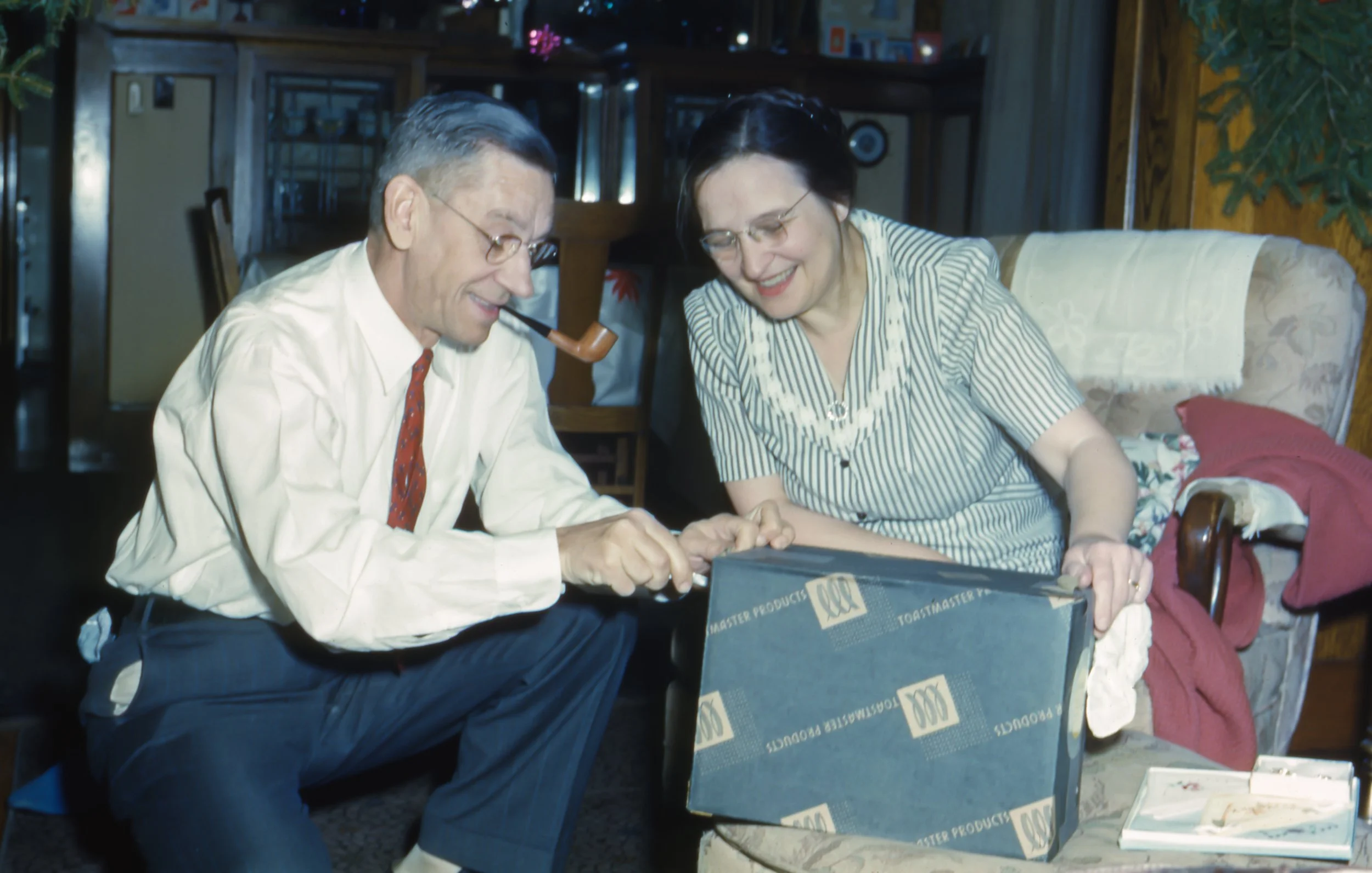


One phone call at a time: Family history in disguise
No interest in family history? What if I told you there would be no research involved, no libraries, no family trees—just spoken stories? From mom, from dad?
Having intentional phone conversations with a loved one is a fun and meaningful way to begin to document your family history.
There are people who love spending hours at a time buried deep in the archives of a town’s historical society, scrolling old microfiches at the library, and refining their web search terms relentlessly to uncover a single detail about an ancestor they’ve never met. And then there are people who, well, don’t.
If you fall in the ‘don’t love that’ camp, does that mean you’re a family history hater? No!! Decisively, the answer is “no!”
Do you laugh at stories your dad tells about his childhood? Do you get a funny, nostalgic feeling in your tummy when someone pulls out an old photo album overflowing with memories? Do you hope to one day be able to make your Nana’s lasagna as good as she does? Yes? Of course, you answered “yes!”
There are two big parts to a family’s history—the way-back history detailing your ancestors’ names, birth dates, and (hopefully) their stories, gotten through research (chances are you haven’t met most of these folks); and the current family history of you and your kin, gotten through first-person accounts (from living relatives). Looking back and reconnecting with our roots through research has great power, and I wholly advocate for recording your ancestry in this way (watch an episode of Finding Your Roots on PBS to see just how moving it can be!). But if you’re not into sleuthing, or you simply don’t have the time, you can still focus on recording your CURRENT family history.
Why? Well, for one thing, you’ll be handing a gift to your children and their children: the family history of their closest relatives for them to learn from, to be inspired by, and maybe, to build upon (who knows, that research-loving gene may have skipped a generation!). For another thing, you’ll be doing this for YOU: to take some time to intentionally reflect on the journey you have taken to becoming who you are; to better get to know your parents and grandparents so you can see them as individuals (with all the heartbreak, love, challenges, and joys that come with that); and to cement meaningful connections with your loved ones.
And guess what? It’s as easy as picking up the phone and talking. Sure, you can get together and chat over cups of tea, or talk about family stories in group settings, too, but purposefully devoting an entire hourlong phone call to sharing family history is better. It allows you to easily schedule these talks regularly and ensure you have enough time for story gathering. It allows two people—a questioner and a storyteller—to really tune in to one another, and to go deep. It allows for easy audio recording.
An unexpected bonus of having these family history talks on the phone? Sometimes it’s easier to be vulnerable and share of ourselves when we aren’t looking anyone in the eye. Have you ever heard that old advice to talk to your teen when you’re driving together in a car? It’s the same idea. Sitting side-by-side rather than across from someone (or, in this case, on opposite ends of a phone connection) feels nonthreatening—no facial expressions to hint at judgment or reaction of any kind. So, yup, even if you’re calling from a smart phone, skip the Face Time and simply hit the digits for an audio call.
How to conduct family history interviews over the phone
Think you might like to start having some family history conversations with a loved one? Here are a few simple steps to put you on the path to easily recording your legacy:
Decide whom you will interview first.
Mom? Dad? A grandparent or sibling? I recommend choosing someone who you know will be receptive, who you know has great foundational family stories, or who you are worried may have limited time left (they may be impacted by dementia, for instance, or simply be getting older).
Tell this person what you want to do.
“I’d like to have weekly/monthly/bimonthly phone conversations with you where I interview you about your memories.” Stress that there’s no pressure to ‘perform,’ and share your reasons for wanting to embark on this family history project.
Create a list of themes you’d like to discuss with your family member.
Ideally, each hourlong phone call will have a central theme—for instance, childhood, career, family recipes, traditions, military service, home, love stories, lessons learned, etc. Ask them in advance what things they’d most like to share, and tailor the early part of your list to what excites them. You may want to ask your subject to create a life timeline in advance of your first phone call.
Prepare, or don’t prepare.
You may want to use this list of family history questions to guide your conversations, or create a list of your own according to each talk’s theme. Definitely tell your subject what you’ll be talking about so they have time to let memories simmer, or even dig up relevant photos or letters before you talk. But don’t go crazy with preparation. Ask open-ended questions, listen generously, invite stories, and prompt more with insightful follow-up questions, and you’re guaranteed to gather stories worth saving!
Record your conversations (twice).
Use two methods to record the audio of your family history talks. You can use a paid service such as TapeACall (bonus: you get accurate transcriptions) to capture sound. Other ways to record audio: Use the phone call option in Google Meet or Zoom to host your call (they each have recording options); or simply put your phone on speaker and hit “record” on the recording app on two devices (your computer and an iPad, for example).
There are a host of things you can do with your family history once it’s recorded, but know this: The most important part is ensuring you capture it in the first place!
I am fairly certain that once you finish your family history calls with Mom, you’ll want to (a) keep talking to her on the regular (that bond is forever!) and (b) start up a new cycle of calls with Dad, Grandma, Grandpop…you get the idea.
More easy ways to gather family history stories from your living relatives:

Life Story Links: September 5, 2023
On the heels of the holiday weekend and waning days of summer, this week’s curated roundup is short but rich: Get your dose of personal history news and tips.
“Writing memoir is one way to explore how you became the person you are and the story of how you got from here to there. Believe me, it’s a good story.”
—Abigail Thomas
Vintage poster promoting literacy produced by the Work Projects Administration; image courtesy of the Library of Congress Prints and Photographs Division, Digital Collection. The posters were designed to publicize exhibits, community activities, theatrical productions, and health and educational programs in seventeen states and the District of Columbia between 1936 to 1943.
Legacies in film
MOVING PICTURES
After watching the British TV show After Life with Ricky Gervais, Montreal–based personal historian Iris Wagner reflected on the enduring impact of videos from departed loved ones.
KEEPER OF STORIES
Texas–based legacy filmmaker Clinton Haby says he approaches his work “with a mindset that it’s sacred, and that future generations are going to want to be consuming this so that they understand where they come from.” Listen in as he talks to podcast host Willie Downs about video storytelling and creating bridges across generations.:
HISTORICAL SELECTIVITY & NARRATIVE
How “two small but potent nonfiction forebears”—documentary films that probe the life and times of those who worked on the original atomic bomb—compare to the blockbuster film by Christopher Nolan, Oppenheimer.
Memories made permanent
HOME SWEET HOME
Did you ever go on a family vacation and plan to make a travel memory book…then never get to it? Last week I shared my top three tips for things to do when you return home to set you up for memory-keeping success later—even if ‘later’ takes a while to come!
LIGHTENING THE LOAD OF FAMILY HEIRLOOMS
“What if we skip the proverbial guilt trip we create by unloading our stuff on our family, intentionally or not, and instead make a plan that will allow everyone to enjoy a trip down memory lane instead?”
THE ACCIDENTAL MEMOIR
“My mother always told us to bring back stories from wherever we went, and the Bronx—what I call the ‘no B.S.’ borough—taught me not to be full of crap, nor full of myself,” says Peter Quinn, author of the memoir Cross Bronx: A Writing Life.
Short takes
How to create a vacation photo book or travel journal: Part 2
You've just returned from a family trip and know you want to make a travel memory book—just not right now! Follow these easy steps so you'll be ready later.
Organizing photos before you sit down to design your travel memory book will make life soooooo much easier!
Recently I shared Part One of this two-part blog about how to create a vacation photo book or travel journal, in which I shared tips for things you could do during your trip to make your memory-keeping project easier later. Here, in Part Two, I am sharing ways you can streamline your book creation after your trip.
Taking these steps will ensure that when you finally sit down to write and design your travel memory book, you’ll have everything you need conveniently at hand.
Do these things shortly after you return from your vacation to set you up for bookmaking success:
1 - Consolidate all your photos in one place.
Download all photos from smart phones and cameras and collect them in one digital space. I use a solid-state external hard drive that I back up regularly to the cloud for this purpose.
Here is a simple folder structure that works great for organizing vacation photos:
01 DAY 1 - Arrive in Rome
02 DAY 2 - Drive to Pienza + Easter dinner
03 DAY 3 - Winery tour + Tuscany exploration
04 DAY 4 - Vespas in Chianti
…etc.
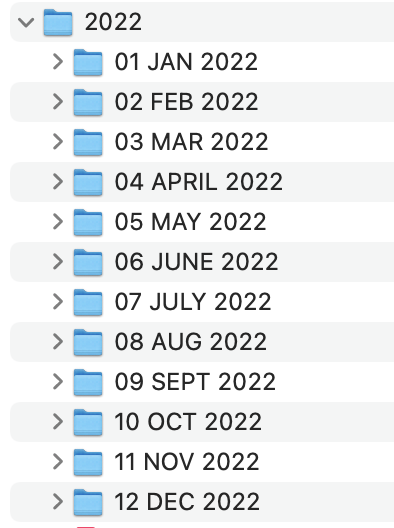
The two-digit introductory numbers at the start of each folder name ensure that the folders will stay in the correct order. I do something similar when organizing photos for my annual photo books:
01 JAN 2023
02 FEB 2023
03 MAR 2023
…etc.
Then, within each of these folders, you can organize your photos into subfolders by theme or subject.
You may also want to create separate folders for images you download from each family member’s phone—that way you can quickly scan for duplicates and know who took each shot. (I recommend gathering these images from everyone’s phone shortly after you return from your vacation—while you may save all those pictures indefinitely, other family members may be more keen to free up digital space, and you don’t want to risk losing their pictures!)
Seem like a lot of work? Trust me, using a smart digital filing system to organize your photos in advance of making your book is way easier than trying to find photos amidst the thousand you took WHILE you are creating that book (a nightmare!!).
2 - Select your favorite photos.
For this one, I generally suggest waiting at least two or three weeks before reviewing your photos with an eye for curation. This emotional and temporal distance will give you a better perspective and allow you to more easily cut photos from your book and select the ones that best tell the story you’d like to tell.
How you mark favorites will depend upon how you store your photos. You may be starring your faves in software such as Google Photos or Lightroom. If you are physically moving your selected digital photos into a folder on your computer, I recommend creating a folder within each thematic folder called OUTTAKES and moving photos you are NOT using there. That way your photo organization system is still in place. And it’s way easier to eliminate photos as you go than to know immediately which images qualify as must-haves!
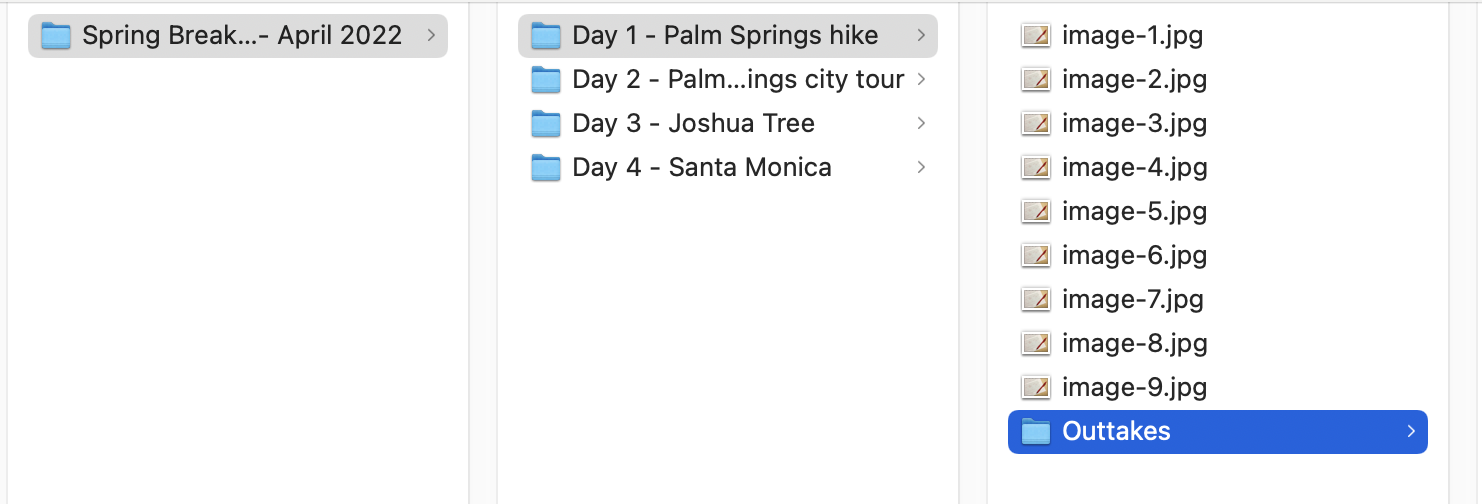
Don’t stress about this step. Focus on:
choosing the best shot from the multiple you have taken of each part of your trip
giving yourself options for later—who knows, you may want that horizontal shot to be enlarged across a whole spread…but then again, the vertical version may be just right as a section opener!
finding a balance of personality-driven photos (your kids grimacing over a plate of vegetables at your preferred restaurant, say) with gorgeous scenery; of candid shots with stiff posed ones; of color with black-and-white
choosing photos that make you smile and that trigger your memories.
3 - Photograph or scan ephemera or souvenirs.
All those ticket stubs, maps, and random notes that you collected on your travels? Now’s the time to go through them with an eye for what will look good on the page and add visual interest to your photo book.
A ticket stub from a museum that has a Michelangelo sculpture printed on it is much more appealing than an unidentified stub with just text. A train ticket that shows your mileage traveled across Europe is far more compelling than one that simply lists a destination. A receipt that shows the ridiculously cheap price you paid a local villager in the Philippines for your sisal bag may be worthy of inclusion, but forget about most receipts in general.
I recommend scanning all of your paper souvenirs on a flatbed scanner (many home printers with a photocopying function can also scan nowadays, too). Set your parameters to scan full-color, 300dpi, at 100-percent size—this way, you’ll most likely avoid pesky moire patterns when scanning pre-printed materials, and when you place them in your design software, they will run at their actual size (if you create shadows beneath these images, the tickets or other ephemera will look like they are sitting atop your photo book pages, a very cool effect!).
If you don’t have access to a scanner, there are plenty of smart phone apps that can do the job of capturing these small items for print. Check out Google Photo Scan or Photomyne; these free apps enable you to use your phone’s camera to “scan” your souvenirs for use in your travel journal.
Yay! You’re ready to gather all those notes you took while on vacation (which we talked about in Part 1) and sit down to begin creating your travel book. Whether you choose to print photos to place in a good old photo album (my favorite smaller-size ones are from Project Memory, while great larger, archival photo albums are available from Kolo) or design and print a more full-fledged travel book (with written memories and reflections, of course!), you’ve now got everything you need to begin…and finish…your vacation memory book. Happy travels!!
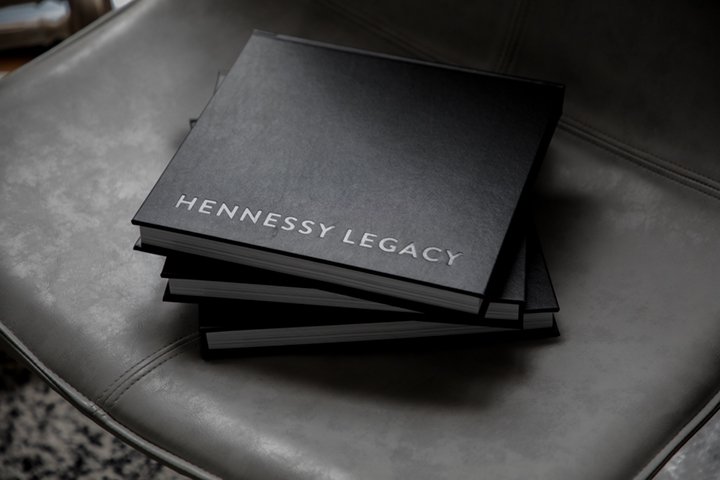
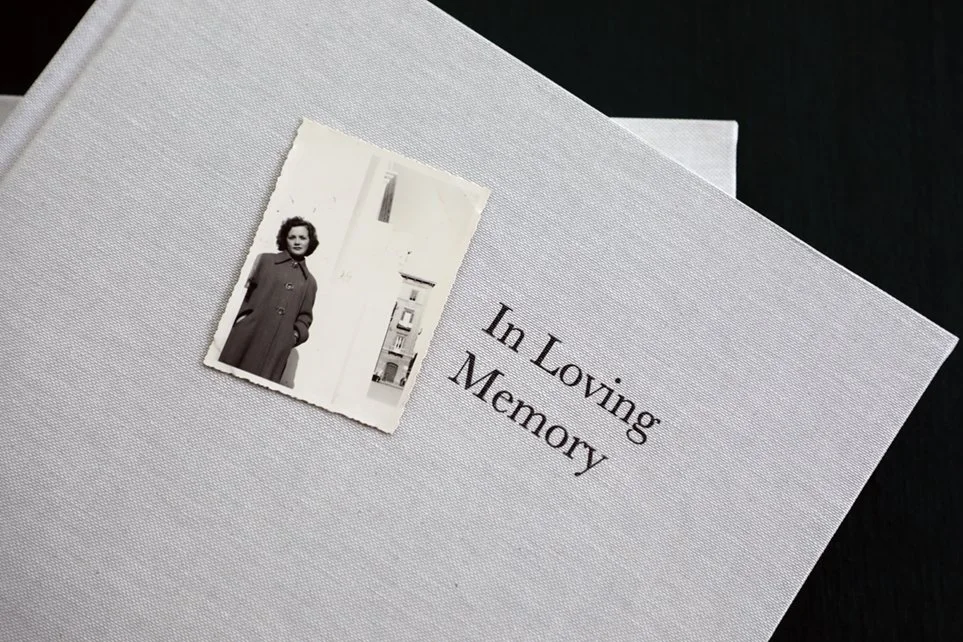
If you prefer to hand over your keepsakes, photos, and travel journal to have a travel book professionally produced, please reach out to see how we could work together.



















Life Story Links: August 22, 2023
In this week's curated roundup for family historians and memory-keepers: pieces on the craft of life writing, new memoir reviews, and ancestors’ artifacts.
“It’s the human imperative, this piecing together of a life. And so, word by word, we lay down our tracks.”
—Dani Shapiro
Vintage poster with original artwork by Earl Kerkam produced some time between 1941-1943 by the Work Projects Administration; image courtesy of the Library of Congress Prints and Photographs Division, Digital Collection. The posters were designed to publicize exhibits, community activities, theatrical productions, and health and educational programs in seventeen states and the District of Columbia between 1936 to 1943.
Narrative framing
WRITING PAST PAIN
How do you share your story without hurting others? Megan February, a trauma-informed book coach, offers up eight important things to consider when writing about your life.
‘RE-STORYING INTERVENTION’
“The way that people tell their life story shapes how meaningful their lives feel.” New research finds that there are psychological benefits to reframing your life as a Hero’s Journey.
GREETINGS FROM…
Last week I shared the first in a two-part series about making memory books from family vacations—starting with the top three things to do during your travels to set you up for travelogue success later.
Things that last
ANCESTORS’ ARTIFACTS
“People don’t give native cultures much credit for their oral processes. When science goes in and verifies something we’ve been talking about for thousands of years, they’re shocked we’ve held onto that history.”
NOTE DISCOVERED IN WALL
“Her letter, a whisper from the past, became a symphony that harmonized generations, reminding us all that our words, even from the tender hands of a 14-year-old, can ripple across time to touch hearts we’ve never known.”
THINGS WE KEEP
“Sharing out loud with others keeps the memories alive, passes on the history, and enables people from all walks of life to build connections and consider their own part in our collective human story.” Meet Martie McNabb, the founder of Show & Tales story-sharing gatherings.
LOVE IN THE TIME OF ALZHEIMER’S
“I’m someone that has come here to help you remember who Augusto Góngora was,” Paulina Urrutia tells her husband in the Chilean documentery The Eternal Memory, called “loving, lyrical,” and “intimate” by reviewers. Read an interview with the film’s director here, and see a trailer below:
DIGITAL GHOSTS
“Estate lawyers have long encouraged clients to account for their digital property, but no one has come up with an emotional road map for the burden of inheriting these things.”
ANALOG TO DIGITAL
“Converting [family slides] into accessible digital media launched me on a journey back to my own childhood and the pasts of my parents, grandparents, and great-grandparents. That, in turn, is giving me a better understanding of how I became me.”
Writing…and reading…our lives
ON FIRST-PERSON WRITING
“And we all change. Stories need nothing else. All you have to add is paper.” For a droll take on the idea of writing about oneself, read this short piece by Rhik Samadder subtitled “What I learned teaching life-writing lessons.”
WRITING FROM AND INTO MEMORIES
“I would save almost everything, the Swedish death cleaners be damned, because these boxes were my inheritance, the stuff out of which my novels are made: old photographs and letters, unanswered questions, ticket stubs, report cards, the unremarkable detritus of ordinary human lives.”
‘A MEMOIR IN EIGHT ARGUMENTS’
“Although I’ve tried to own the fault entirely...I don’t think that take tells the whole story either.” In this excerpt from his new memoir, Chinese Prodigal, David Shih reflects on missing his father’s death.
‘FIRST AUTHORITATIVE BIOGRAPHY’ OF AUGUST WILSON
“If you were interviewing him, you would walk away thinking, ‘I’m the best interviewer in the world!’ Because all he did was talk and tell you these fabulous stories, with these great punchlines and lessons.”
REWRITING HER NARRATIVE
Listen in as successful ghostwriter Lara Love Hardin, author of the new memoir The Many Lives of Mama Love, talks about “her downward spiral from soccer mom to opioid addict to jailhouse shot-caller and her unlikely comeback”:
Short takes
How to create a vacation photo book or travel journal: Part 1
Want to make creating a travel book easy when you return from your family vacation? Follow these steps for easier—and elevated—post-trip memory-keeping.
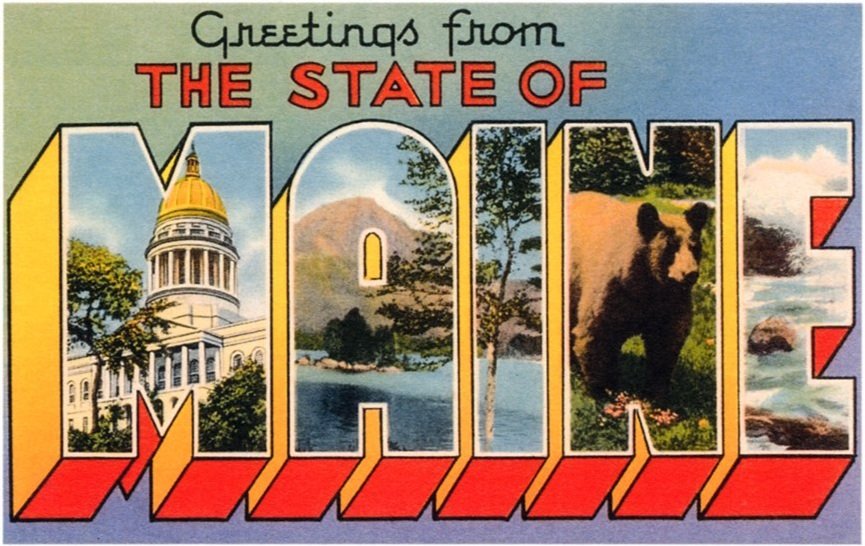
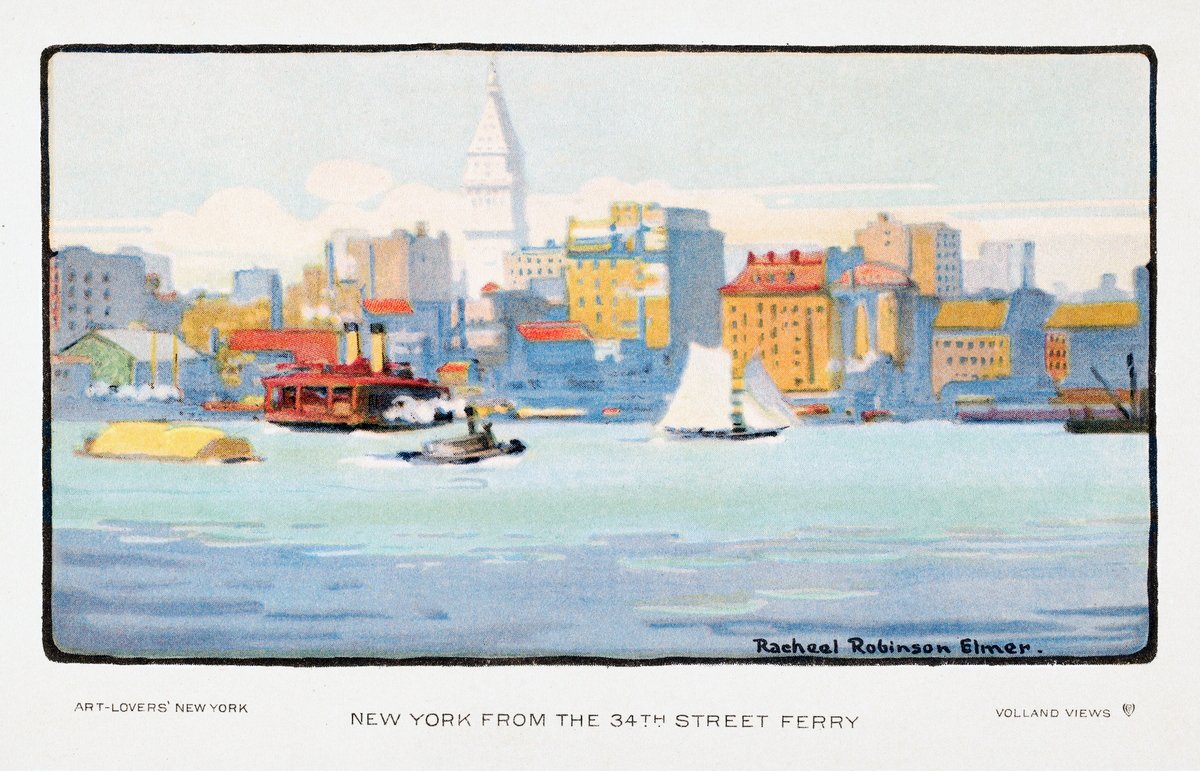
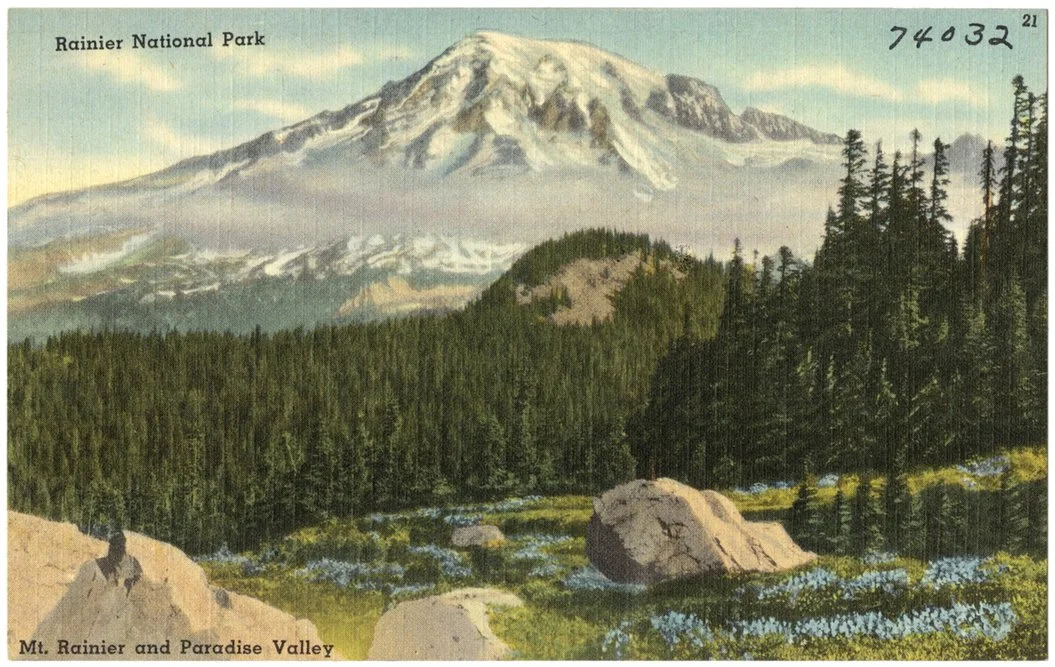
Postcards are waning in popularity, but you may still find some cool vintage or artistic designs on your travels that would make great additions to your travelogue.
Do you have the best of memory-keeping intentions when you travel, only to find your photos stranded on social media and your collected souvenirs stuffed away in a box? No—don’t let that happen to you! Follow these simple steps to help you gather all the right elements during your trip so you can easily put together a photo book or travel journal when you get back home. A little planning goes a long way.
Do these things during your trip to make creating your travel memory book a cinch later:
1 - Take notes over the course of your travels.
By ‘notes’ I mean anything that will help you tell the story of your trip (in the moment you can’t imagine ever forgetting a single detail, but I promise you will!). A few possible notes include:
reference photos—as you head into a venue or city, snap a reference picture of a sign that will orient you as to your location later
handwritten jottings—of everything from tour guide names to the restaurant your family fell in love with
printed ephemera—anything from the article you tore out of the in-flight magazine to a hotel brochure or museum ticket; you won’t necessarily keep all of these, but you will use them to fill in details when writing about your trip later.
a thorough travelogue—not everyone will want to do this (I admit I often have good intentions and then never get to it, especially since I became a mother), but writing about your trip in a journal as it happens can be not only a wonderful way to reflect on your time in a place but also to preserve memories to revisit later.

If I hadn’t snapped a photo of a nearby street sign before I took this shot of dramatic light on a picturesque church, I would never have known what Tuscany town this was from!
2 - Collect some items to add local texture to your book later.

Travel passes, museum ticket stubs, and other ephemera from your trip can be fun additions to your memory book when used in moderation.
There’s no need to buy a hundred postcards or tchotchkes, but selecting a few items that you can scan or photograph when you get home will add great visual interest to your travel book. Some favorite items I have collected on various family trips include:
matchbooks (especially from favorite restaurants or hotels)
stickers (especially these days, sticker designs are often way cooler than postcards!)
simple vendor bags (sometimes a shopping bag or even a small paper bag a vendor slips your gum into may have interesting graphics, like one I got in Florence with a fleur-de-lis pattern)
vintage postcards (I try to buy one of those “Greetings from…” postcards in every city I visit, but they’re getting harder and harder to find; I do seek out illustrated postcards, though, as they often have an artistic or nostalgic vibe I like)
local maps (I’m talking both the kitschy maps marking destinations of interest to tourists as well as beautifully rendered ones often sold in shops)
3 - Take unexpected photographs, too.
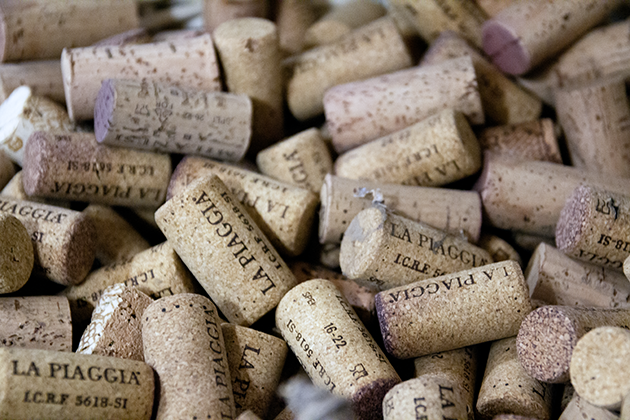
Yes, of course snap the famous landmarks and get some group shots of your family posing in beautiful locales, but remember to also take pictures of less expected details, such as:

Detail photographs can add wonderful personality to the pages of your travel book. This bin of corks caught my attention on a winery tour not only because they have great texture, but because they say the name of the winery. And these cacti in bronzed shoes in Montepulciano—well, they’re just fun!
candid photos of your traveling party
fun selfies when the mood strikes
photo booth strips—admittedly, I am a sucker for these nostalgic gems which invite goofy faces and extreme togetherness (ever tried to squeeze more than four people into one of those booths?!)
details, details, details—on my recent Italy trip, for instance, I aimed my camera at wonderfully whimsical street art in both Florence and Rome; ancient bricks and walkways (ah, what texture!!); wrought-iron filigree designs; and even a few t-shirt slogans that resonated.
In Part Two I share next steps: what to do with all your photos, ticket stubs, and travel notes upon your return to make book creation a cinch!
If you’d rather hand over all your travel goodies to have your travel memory book professionally produced, please reach out to see how we can work together.

Life Story Links: August 7, 2023
This week: interesting takes on how we interpret our memories, capturing the stories of our family heirlooms, and challenges of writing memoir and biography.
“Telling our stories to someone who is really listening offers us the experience of being seen, of being felt—as in, I feel you. I feel your heart. Can you feel mine? Can you feel the warmth of my caring?”
—Anne Lamott
Vintage poster produced in 1936 or 1937 by the Work Projects Administration; image courtesy of the Library of Congress Prints and Photographs Division, Digital Collection. The posters were designed to publicize exhibits, community activities, theatrical productions, and health and educational programs in seventeen states and the District of Columbia between 1936 to 1943.
More stories of our stuff
GIVE VOICE TO YOUR HEIRLOOMS
Last week I wrote about how to capture and preserve the stories behind your family heirlooms, whether you’ve got just a few sentimental items or a house full of passed-down jewelry and valuable antiques.
12,795 POSSESSIONS!
“Now that there is the book, everything can catch fire and at least I will have this reminder that it existed, that it was there.” Meet the woman who photographed every single thing she owns.
Memoirists & biographers speak
ON WRITING, DISCOVERY & DREAMS
“Write to expand your understanding of, and connection to, the world we live in; write to expand your understanding of, and connection to, yourself.” A short but lovely interview with memoirist and memoir teacher Beth Kephart.
ONE BIOGRAPHER’S QUEST
On a recent episode of the podcast A Life in Biography, host Carl Rollyson (author of Biography: A User’s Guide) talks to fellow biographer Marsha Gordon about researching, writing, and publishing her new book. Listen here:
Memories and memoir
THE PAST THROUGH THE LENS OF THE PRESENT
“Memoir should not be subject to rigorous, journalistic lie-detecting. The stories may be true but rarely are they factual.” Darcey Gohring on telling the emotional truth in our life writing.
TIME AND MEMORY
“What we remember tends to be distinctive, emotionally loaded, and deemed worthy of processing and reflecting upon.... Our memories are centered on our life stories and what affected us personally the most.” What about pandemic memories?
EDITING FOR CLARITY & LONGEVITY
Three things every family historian should do during the editing process to ensure that their research and family stories are understood and appreciated by their readers—even 20 years from now.
LIFELONG GIFTS
Want to create a new family heirloom or tradition? The folks at Fatherly recommend checking out a Reddit thread of sentimental gifts to help level-up your gift-giving.
Historical riches
10 MILLION NAMES PROJECT
“All Americans, Black Americans and white Americans, have parts of the puzzle in their pockets or in their homes or in their attics or their closets. Bring those forth, whether they’re old letters or diaries or plantation ledgers.”
DUTCH HOLOCAUST AUTHOR DIES AT 103
“In many interviews [Marga Minco] gave over the years, she always said the reason that she wrote about her family was that she wanted them to be remembered for longer than they lived.”
Short takes