Memories Matter
Featured blog Posts

READ THE LATEST POSTS

Storytelling hack: Talk, don’t write.
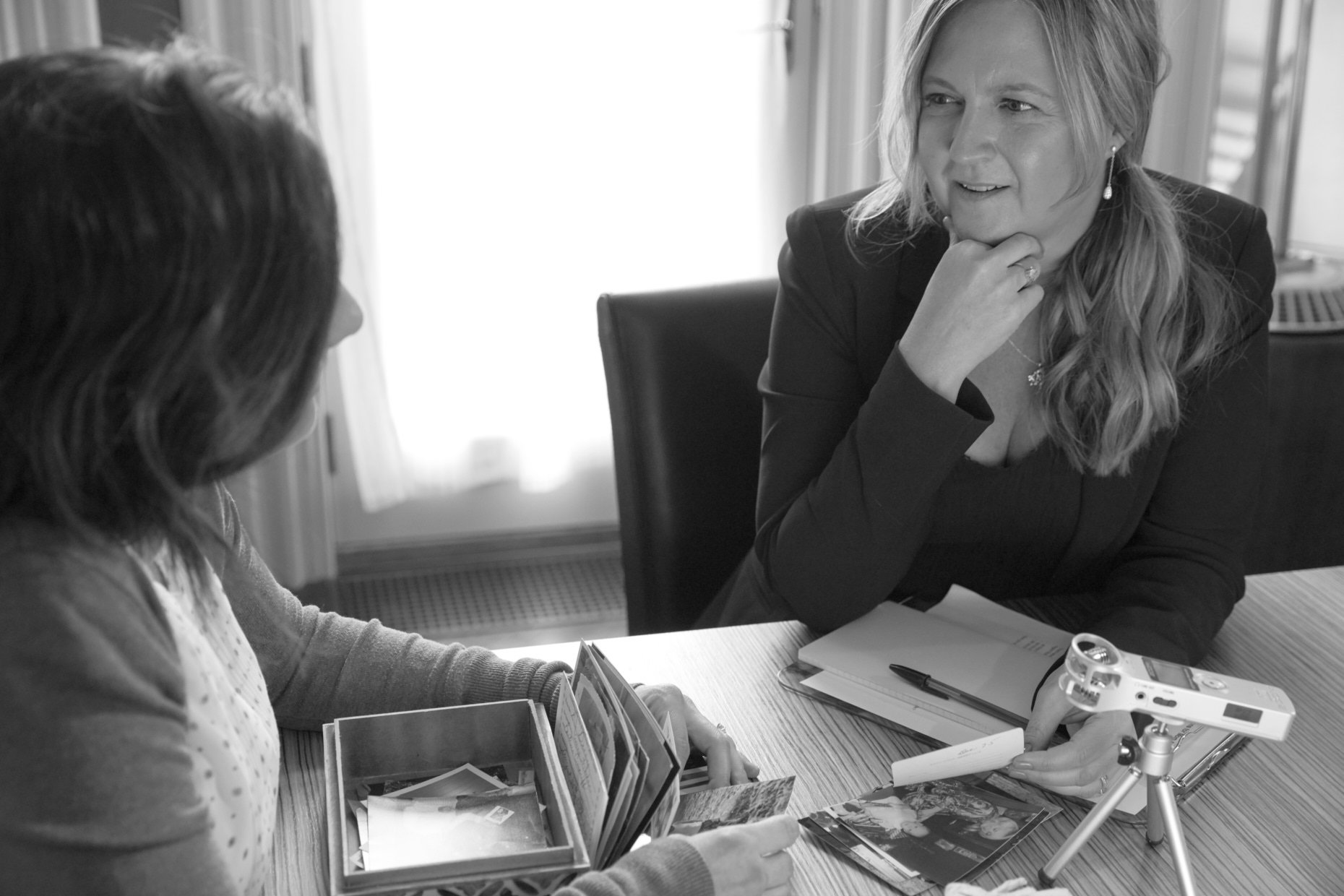
Do you want to write your memoir but don't consider yourself a writer? Don't worry, there's another—easier—way to preserve them. Speak your life stories aloud.
Telling your stories out loud and recording them is a great option if you want to preserve your personal history but don’t feel comfortable writing.
Have you thought about writing your life story—but then refrained because you don’t think you’re a good enough writer?
I’ve got three important things to say to you:
You are good enough.
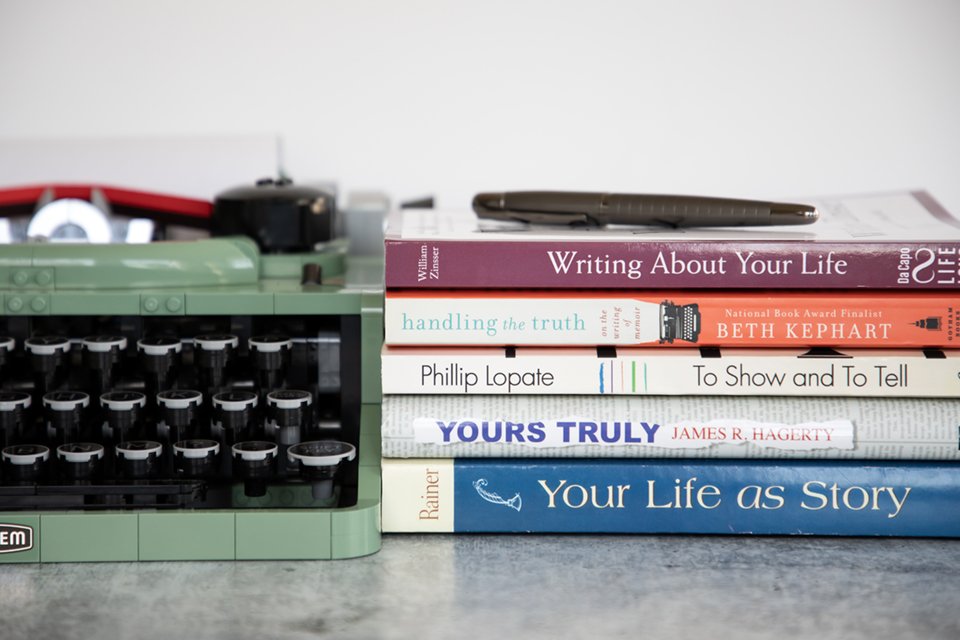
Sure, you may want to take a virtual writing course or hire a memoir coach to help you improve your writing, or read one of these valuable books with life writing guidance. But know this: You don’t have to. You don’t need to strive to write a bestseller; rather, focus on reflecting back on your experiences, finding the lessons, the love, the joy, and the hardships, and sharing them with those you love. Whatever you write will be more than good enough—for you (you do know that writing your memoir is beneficial for YOU, right?), and for any family members you would like to leave your stories to. So write on—please!
Don’t change your voice.
Your memoir should sound like you: the way you talk, the way you weave a tale. It should reflect your values and your experiences. “There’s power in allowing yourself to be known and heard, in owning your unique story, in using your authentic voice,” Michelle Obama has written. “And there’s grace in being willing to know and hear others.” So don’t focus on sounding writerly or clever, and don’t edit out those colloquial phrases you say often. Focus instead on being authentic and truthful, and allowing yourself to be vulnerable as you tell your stories.
Drop your pen and pick up a recorder.
The blank page before you is just a vehicle. If you are paralyzed by the thought of writing your life stories, drop your pen (or step away from your keyboard) and instead begin recording your stories out loud. All you need is the voice recorder app on your smart phone or a digital recorder, a quiet space, and some time. I recommend either brainstorming a list of memories or creating a life timeline beforehand, so you can reference these and feel inspired to tell your tales. Then hit “record” and start talking. Maybe do this once a week, or every morning (setting some kind of regular schedule will help you finish one day!). Down the road you can transcribe these oral histories and maybe edit them into something more cohesive and inspiring. But for now all you need to do is (a) get started and (b) keep talking!
“Story is the umbilical cord that connects us to the past, present, and future. Family,” Terry Tempest Williams says. “Story is a relationship between the teller and the listener, a responsibility…. Story is an affirmation of our ties to one another.”
Your story, moreover, is a gift.
I’m sure you’ve heard the expression “done is better than perfect,” and oh how applicable that is here! Whether you write your stories or speak into a recorder, the end result will be a gift to your family. One day in the future, one of your descendants will read your words and be grateful you took the time to preserve them. How powerful is that?


















Today: “I don’t care.” Tomorrow: “That was life-changing.”
Family stories have enduring value. Some you share now may not be relevant enough for your kids to care. But one day they will see themselves in your stories.
Your granddaughter is too young to really listen to or understand some of your stories right now—but one day she may need to hear them, to be nourished by the lessons and comforted by your shared experiences.
“I never knew any of this stuff about you, Mom,” the daughter of one of my clients said after reading her life story book.
From a family member of another client: “When I lost my job this year during the pandemic, I had a niggling sensation that my grandmother had gone through something similar. Then I remembered: I read about her experience in her book.”
“When we hear stories from family members about their experiences, we usually ruminate longest over the ones that feel the most familiar to us.”
When we hear stories from family members about their experiences, we usually ruminate longest over the ones that feel the most familiar to us.
If I am engaged to be married, perhaps I linger over my mom’s retelling of how she and my dad met. If I’ve just had a child myself, I’ll undoubtedly read with great interest the tales of their experiences parenting me and my siblings.
Some stories will feel foreign upon first reading. Your grandmother describing life in Brooklyn during the Depression; your grandfather recalling what if felt like to return from the Great War and no longer have a purpose. Even your parent losing a job when they least expected it—that is, until that story becomes relevant to your own experience, too.
Family stories have enduring value
Life transitions are some of the strongest fodder for memoir and personal history specifically because they bring about change—and change stirs all kinds of feelings and fears.
Transitions are the plot twists in our lives. And when they are unexpected, and they are happening to us right now, we feel unmoored.
But imagine if we had access to a story about the time our dad went through something almost exactly the same. He, too, felt unmoored. He, too, had no way of knowing how this transition in his life would play out.
Then 30 years later, he reflected about that time—his experiences, his feelings, the lessons he may have learned—and his stories made their way into a book. A book that now sits on a bookshelf in your living room.
While you may have flipped through that book a dozen times before, you want to reread it now. You crave remembering how his story turned out. It has a newfound relevance for you, and as such, it means so much more to encounter it at this time in your life.
“Transitions are the plot twists in our lives. And when they are unexpected, and they are happening to us right now, we feel unmoored.”
“In former times, knowledge was passed down from father to son and from grandparents to grandchildren,” Gianluigi Quentin has written. “Today, the focus is so concentrated on the future that there is a disregard for many of the important lessons of the past. This is why it is important that we elders write our memoirs—so that younger generations can learn from our experiences.”
Indeed, this is also why some stories will matter more in 10 years than they seem to right now: because our loved ones encounter them when they need them.
The stories of our modern lives—of transitions and ups and downs—“should tell us that the best way to respond to a period of personal upheaval—the close of one story, the end of one dream—is to push through the darkness, paddle through the torrents, persevere through the woods,” Bruce Feiler writes. “And to know: We’re not alone.”
What better way to let your descendants know they are not alone than to preserve your stories for them to learn from?












The simple reason your life story project never gets finished
Got a life story writing project that you've wanted to do for a long time that's just not getting done? How setting a deadline may be the key to completion.
Setting a deadline for your life story writing project will help you get it done rather than languishing on your to do list.
You’ve thought about getting your stories down on paper for years. You’ve made a list of pivotal moments throughout your life that you’d like to write about. Maybe you’ve gone through your photo collection and set aside some favorite pictures to use as part of your storytelling. Perhaps you’ve even written the first few chapters.
And yet, that journal you bought especially for this life story project sits neglected on your nightstand. Why?
“I seem to have lost my passion for it.”
“I don’t always know what to write about on any given day, so I end up staring at a blank page before abandoning it for Netflix.”
“I thought I’d have the time, but I really don’t.”
“It seems like too big an undertaking—I can’t imagine ever finishing.”
You know what these are, don’t you? They’re not real reasons—not legitimate ones that should stop you from completing your family history or legacy project, anyway. They’re symptoms of the real problem.
So, what’s the real problem? You don’t have a deadline (or a plan).
Don’t believe me that setting a deadline will spur you into action and get you on the road to completion? Research backs me up (as does two decades of personal experience as a managing editor at monthly magazines!).
How to set a realistic deadline for your life story project
Having a deadline forces you to think about the steps it will take to complete your goal. So, to meet that goal:
Make a broad-strokes plan.
Define your finished project—is it a book with photos, a journal covering a specific time period, or an oral history that delves into pivotal moments in your life? Be specific, so you know exactly what you are working towards.
Set mini-goals.
If you know you want to write only about your years in the military, for example, create a list of steps to get you there (make a timeline; denote key themes and stories you want to cover; gather photos and other mementos to use as memory prompts; write one story per week).
Create a schedule that works for you.
Maybe it’s writing one story per week, like in the example above. Or maybe it’s more aggressive: Write for one hour every morning. Don’t be so liberal that your project promises to take all year. As Tim Ferriss describes in his bestselling book The 4-Hour Workweek, “If I give you a week to complete the same task, it's six days of making a mountain out of a molehill. If I give you two months, God forbid, it becomes a mental monster. The end product of the shorter deadline is almost inevitably of equal or higher quality due to greater focus.”
Understand your lifestyle and your ideal work times (are you energetic after your morning cup of coffee, or wonderfully reflective and calm enough to write on Sundays after church, for instance?) and designate the best times for YOU to devote to this project. By being thoughtful about when you’ll be most productive—and eager—to tackle your life stories, you are setting yourself up for success.
Use the info gathered above to write down a schedule.
This may seem like a lot of work just to come up with a deadline for your life story book, but you’re not going for any deadline, but a reasonable, achievable one. So, if you jotted down that you want to write about 12 pivotal moments from your life, and you’ve decided to write on Sunday mornings, block out 12 weeks’ worth of Sundays to write. What date does that bring you to? WRITE THIS DOWN on a calendar or create a bulleted list of target dates and tasks to complete. Writing it down helps it become real for you—and gives you a way to hold yourself accountable.
How to finish your life story book by your deadline
Without having a task master checking in on you periodically, it can still be challenging to finish the life story project you started, even with a deadline. Keep these things in mind to help you stay on track:
Consider asking a friend or family member to help hold you accountable.
Tell someone you love and trust about your life story project—and ask them to follow up with occasional check-ins. Declaring your goal out loud holds great power on its own; adding someone else into the mix, well, adds a little external pressure, too!
Let go of perfectionism.
“Make meeting the big deadline—not achieving perfection—the ultimate goal. Voilà. You’re making no guarantees of quality, but perhaps your work can be improved later,” Phyllis Korkki writes in this piece in the New York Times celebrating the power of deadlines.
And remember: You don’t have to do everything you want as part of this one project! Maybe your FIRST project—complete with plan and deadline—is to get your stories down. Then, when you’ve got the satisfaction of completing that project (congratulations!!), you set another goal—with corresponding plan and deadline—to edit those into a book.
Don’t let one slip-up derail your whole project.
Did you skip an entire week of writing? Did you ignore your project while caring for a sick child or vacationing in Mexico? Life happens. And you deserve a break. Consider scheduling vacation breaks into your plan. But when they happen out of the blue, don’t get too down on yourself. Adjust your deadlines accordingly and get back to it!
Make sure to WRITE DOWN (or adjust in your digital calendar) the new dates you’re due to complete your project so you continue to have an accurate date to work towards (there’s nothing worse than keeping the original dates in your schedule and constantly feeling like you’ve let yourself down—forget that!!).
Seek help for those aspects of the project you hate or feel overly challenged by.
If you don’t like writing, record your memories orally; you can always pay someone to transcribe the audio recording later.
If you can’t recall as much as you expected, enlist a family member to sit down to reminisce with you; take notes during your conversation for later reference.
And if you get your stories down but have no idea how to progress to a printed heirloom book, consider reaching out to me or another personal historian to get you to the next step—it’s what we do!
By the way: It takes incredible commitment and vision to even begin writing down your life stories—so kudos to you for taking steps to not only start, but to finish your personal legacy project!!



Two unexpected writing prompts about family
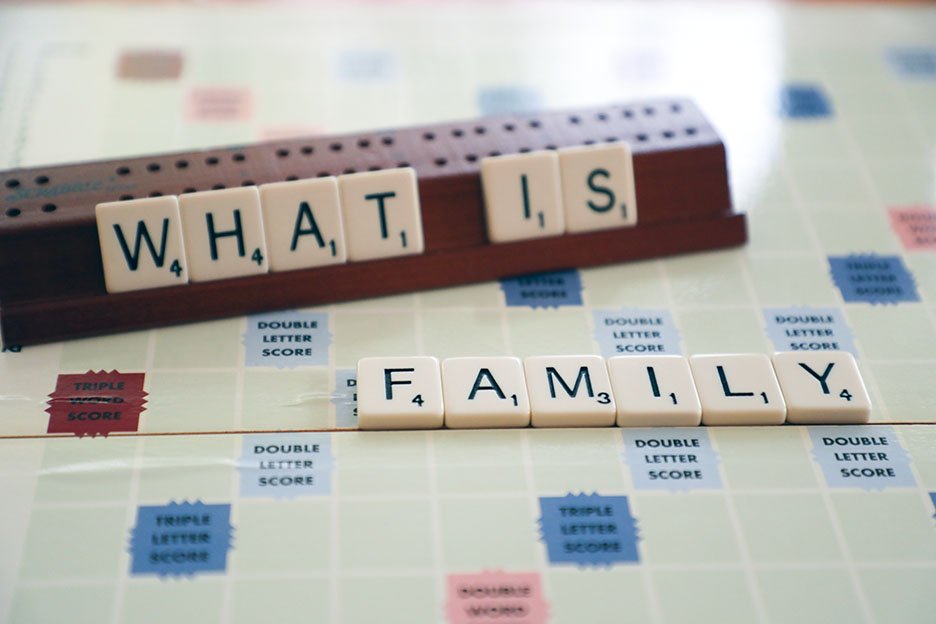
These two writing prompts about family—and what it means to you—may be just the ticket to more thoughtful storytelling and personal meaning-making.
“Families are united more by mutual stories—of love and pain and adventure—than by biology. ‘Do you remember when . . .’ bonds people together far more than shared chromosomes . . . a family knows itself to be a family through its shared stories.”
—Daniel Taylor
definition:
family*
1 : a group of people who are related to each other
2 : a group of persons of common ancestry : CLAN
3 : a group of people united by certain convictions or a common affiliation : FELLOWSHIP
There are plenty of official definitions of the word family in the dictionary, many of them self-referential, most of them rooted in cultural norms of another time (“the basic unit in society traditionally consisting of two parents rearing their children,” for instance).
Here's the thing, though: The idea of family—what family means to you, who belongs to your family—is as personal as it gets. And yet…it's not something many of us think about, is it?
We may sit down to do some family history work—clicking on those green hints in Ancestry, sending away for land deeds and marriage certificates—and the assumption is we're discovering our family. Kin. But is that the extent of it?
More and more these days genealogy efforts may yield surprising results, especially since DNA entered the picture: a father who isn't biologically a father; a daughter who was raised as an only child only to learn she was the product of a sperm donation…and that she has 18 half-siblings by blood. How might these individuals rethink who their family is (and isn't)?
Moreover, the idea of family has evolved over time, and for some, their “chosen family” may play a more significant role in their life than blood relatives do. What is a “chosen family”? According to the SAGE Encyclopedia of Marriage, Family, and Couples Counseling, “Chosen families are nonbiological kinship bonds, whether legally recognized or not, deliberately chosen for the purpose of mutual support and love.” I have plenty of friends whose chosen family is their world.
You needn’t have made a shocking discovery through DNA or chosen a group of friends as your primary family, however, to have something important to say on the matter of what family means to you. Even in the most traditional of families, some relationships hold more weight than others. And what we derive from family—support, inspiration, pressure, trauma, love, fun, stability—can run the gamut, and have a profound impact on our notion of self.
So while documenting our family history is essential, so too is stepping back to ask ourselves a few questions about our family—in fact, it may be just the ticket to more thoughtful storytelling and meaning-making. Are you ready?
Writing prompts to yield deeper family history stories
Consider both of these questions, grab a journal or your laptop, and start writing.
What does the word ‘family’ mean to you?
Who is your family?
You're not writing for publication here. Rather, you're ruminating. Finding meaning through your writing.
And remember: Your responses to these prompts could be wildly different today than tomorrow, and that's okay.
How you answer these questions is revealing. Your own definition of “family” is foundational to how you discuss your personal history. How you regard past experiences may shift once you become more aware of your vision of your family (and where you fit into it).
What will you do with the writing that results from these prompts? A couple of ideas:
Think about your answers and integrate them into your own life narrative. You are the narrator of your own story, and writing about themes such as what family means to you is a path to self-discovery. As Sara Aird has written about storytelling and identity: “The final stage of writing yourself into existence will be accepting who it is you are finding, believing that who you are creating is real and true and worthy.”
Use your initial writing as fodder for more refined life writing. Was there a surprising nugget in there? Or perhaps you gained clarity on an overarching theme in your life story? Writing about your own life necessarily covers family ground; hopefully thinking deeply about questions of who and what family means to you will allow you to delve even deeper into your own personal stories.
* definitions from Merriam-Webster Dictionary


Explore more blog posts in these categories:

Family potluck: reminiscing and recipes
If you're not sure who is the keeper of your family's favorite recipes, take advantage of your next holiday gathering to start preserving your food heritage.
Thanksgiving—or Passover, Christmas, or other holidays where extended family gathers in one place—is an optimal time to collect stories and memories via oral history interviews. There needn’t be a lot of pressure: Simply turn on your smart phone’s voice recorder or set up a video camera on a tripod, then forget it’s there...and let the reminiscing begin.

Ask family members about their favorite food memories and record these tasty bits of family history in a heritage cookbook—or simply stash them in a recipe box.
Collecting family recipes is one of those things that’s on many of our “I want to do someday” lists but that can easily slip through the cracks. It always seems like there will be time. But instead of saying “next time,” make it a priority—as well as an enjoyable endeavor!
Invite family members over for brunch one Sunday with the dual intention of visiting and connecting AND sharing recipes. Consider making it a pot-luck get-together and asking each person to bring at least one of their favorite recipes—maybe from childhood, or maybe one that’s part of their current immediate family’s repertoire (we’re always making new traditions, right?!).
This doesn’t have to be an anxiety-inducing project. Follow the few tips below and remember: You’re collecting your family’s food heritage, so you can do so whatever way makes sense for YOU! (Just, well, do it.)
A few tips for getting your family involved in preserving your food heritage:
Make one person (you?) the point person, organizing the day and ensuring that recordings get transcribed and backed up digitally.
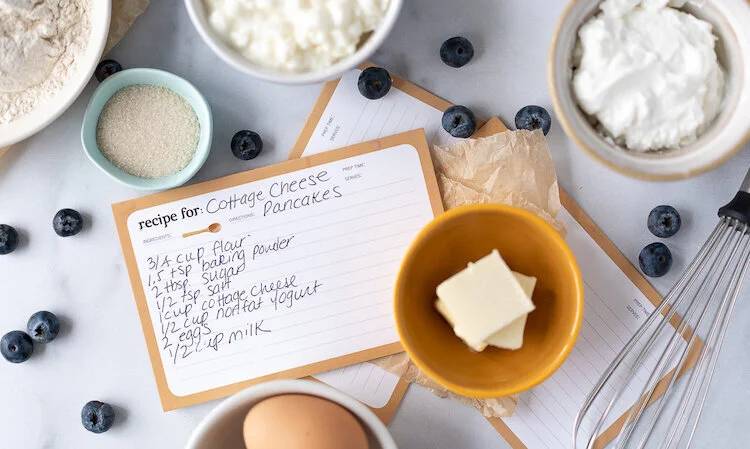
Distribute recipe cards to everyone and ask that they handwrite one of their favorite recipes on the front with accompanying memories on the back.
Use the recipe cards as a jumping-off point for telling longer stories that, when joined together, bring your family history to life.
Designate one or two people as photographers. You may want to collect photographs of the dishes once they’re cooked to accompany the recipes (those can be brought the day of your get-together or collected later), but don’t forget to take pictures of the family interacting around the table or in your home. Food brings people together, after all.
Consider collecting all the recipes and food memories along with a special collection of photos old and new into a heritage cookbook that you can gift to loved ones next year. (Go the DIY route or reach out to us for professional assistance.)
I wonder: What dish will you bring to this family reminiscence potluck?
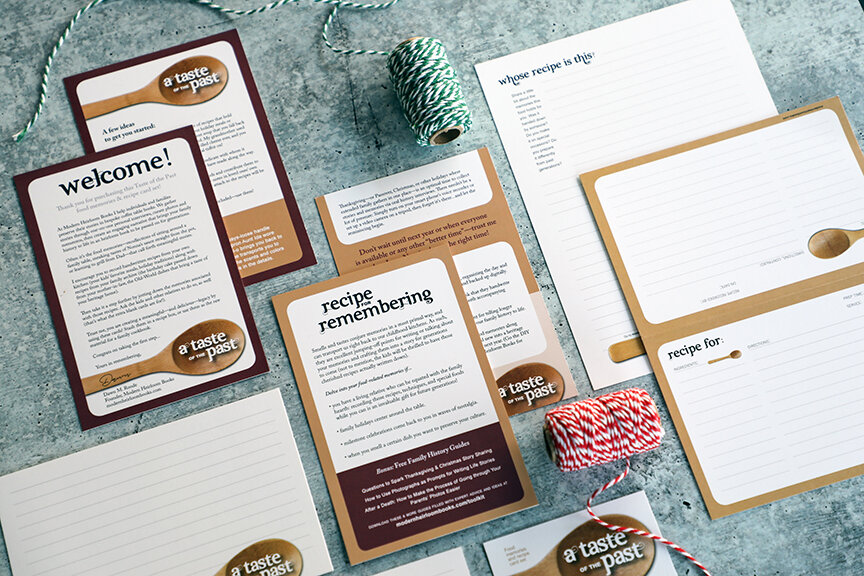
Limited-time SALE on food heritage gift set!
Through the end of November 2021, input code GRATITUDE at checkout for 25% off our Taste of the Past recipe & memory card set (they make a great holiday host gift, too!).
Read more Food Memories blog posts:






Explore more blog posts in these categories:
3 awesome (and easy!) Thanksgiving memory-keeping ideas
Get the whole family involved in saving stories and favorite holiday recipes with these three easy and fun Thanksgiving memory-keeping ideas.

My fingers are crossed that you are able to gather with your loved ones this year in person to celebrate Thanksgiving—to honor your family traditions and find fellowship around the table.
If you would like to use the opportunity to share stories and begin preserving some of your delicious family history, here are three simple Thanksgiving memory-keeping ideas, complete with ways to make them manageable and fun.
Thanksgiving activities that help you preserve bits of your family history
1 - Start a recipe preservation project.

In addition to writing down your family recipes, snap a few photos of a family member cooking the food, of the ingredients (especially unique or hard-to-find ones), and of the finished dish; whether or not you eventually put them into a family cookbook, your family photo archive will be more complete.
Notice I said “start.” Too often we let things we really want to do fall by the wayside because they seem overwhelming. Don't think about creating a heritage cookbook or worry about getting every single recipe your family has ever cooked! Instead, try one of these approaches to put your family on the path to preserving your best recipes:
Why not write down recipes for every dish at this year's Thanksgiving meal? Take a few pictures of prepping the dishes, what they look like when they are finished, and a few of the family around the table enjoying them? When the time eventually comes for you to make a recipe book, you'll have wonderful photos at the ready. And because you are beginning with a finite number of recipes—those for this year's menu only—your task is manageable enough to take on without worry
Make your recipe gathering a group endeavor. Send a blank recipe card (or a digital template for them to print) to every member of your family and ask them to record the recipe for their favorite Thanksgiving dish or meal. Important: Tell them where to return it, and provide a deadline (trust me, you'll never get them back otherwise).
Consider upping the ante and asking not just for a recipe, but for your loved ones to also write up a favorite story associated with that food. It's not just the provenance (that this was Aunt Betty's stuffing, for example) that make a passed-down recipe special, after all—it's the memories and traditions associated with it.
2 - Make a gratitude jar.

A handmade gratitude jar is easy to make and even easier to incorporate into your Thanksgiving festivities—I bet it will become a new tradition.
This one is so easy and it's sure to become your newest Thanksgiving tradition. It can be as basic as handing out pens and small pieces of paper to your guests, asking them to write one specific thing they are grateful for (as well as their name and the date), then storing them all in a mason jar until next year. There are so many ways to soup this one up.
Consider having each participant read theirs aloud, sharing a bit of a story with all those gathered before dropping their paper into the jar.
If your family does this annually, pull out random slips from previous years and share what was recorded—while this is sure to be touching, hopefully it will also prompt even more story sharing and reminiscing together as a family.
Maybe you want to set out construction paper, markers, ribbon, and glue and ask the kids to decorate the jar.
Why not find some autumn-themed paper to record your thanks?
Consider preserving everyone's notes of gratitude as a section in your annual family photo book.
3 - Revisit Thanksgivings past.
Thanksgiving is a great time to interview family members about food heritage, holiday traditions, and favorite childhood memories.
Thanksgiving is a perfect opportunity to interview your mom, dad, or another family elder about their holiday memories, as it's usually a time when generations gather together in one place—and nothing sparks visceral recollections like the smells and flavors of childhood foods!
Like with the recipe preservation project above, it's super-important that you don't get caught up in the idea that this is too big a task to take on. I promise this is something you can do even if your shopping list is long and you plan on getting up at the crack of dawn to get that 15-pound turkey in the oven! A few ways to make a family history project like this practical:
Is there a younger family member or non-chef in the family who might want to take the reins? Ask them to be the ringleader, bringing a list of interview questions designed to elicit Thanksgiving memories; setting up the voice recorder on their phone; and generally ensuring that everyone gets to participate.
If you've got a large clan and the football game's on, too, consider setting up a quiet area especially for brief interviews to happen and be recorded without interruption.
A fun—and efficient!—idea: Designate pairs of people who can interview one another, so you are not burdening one person to handle all the logistics. Two siblings, for instance, may be able to jog one another's memories of shared experiences; and a grandmother might have fun sitting with a grandchild to talk about how times were different “back then.”
Remember, any memory-keeping project you begin this Thanksgiving does not need to be finished by the next morning’s turkey trot. But if you don't start somewhere, your cherished recipes and stories won’t get recorded at all…so hop to it!
Resources to make your Thanksgiving memory-keeping easier
A Taste of the Past: Recipe card set that capture recipes and memories
Free guide: 55 Questions to Spark Thanksgiving Story Sharing
Gift idea: 8 weeks of writing prompts specifically designed to capture food memories
If you'd like to talk about working together to preserve your recipes, stories, and family history in an heirloom book, reach out any time to set up a free half-hour consultation.

Free Printable Thanksgiving Guide
Download this handy e-book with 55 family history questions perfect for Thanksgiving day!

Great gift idea!
Invite a beloved family member to share their stories via inspirational prompts specifically designed to capture food memories—just $15 for 8 weeks of writing prompts!

How to be a good storyteller if you are the subject of a family history interview
Have you been invited by a family member to be interviewed about your life? Don't worry—these tips will help you get comfy & be the best storyteller you can be.

Over the years I have offered up a plethora of family history interview questions and resources, including tips for being an effective interviewer and active listener—but it occurred to me only recently that I've never talked about how to be a good storyteller.
There are some people who are inherently comfortable sharing their stories. For others, though, being the center of attention is scary. Even if you don't feel like you need to give a command performance, you may have reservations about your ability to remember, how engaging you will be, or even if you will delve into painful memories.
Here are six tips for getting comfortable with the idea of stepping up to the mic and telling great stories from your personal and family history.
1 - Take a beat to think when you need it.
(And if your interviewer is not comfortable sitting with that silence, directly ask for the time).
We have become accustomed to watching celebrities answer questions in quick soundbites, and it seems like their recall is beyond compare. But remember: They've prepared for their interview (often with the help of publicity handlers), and what you are seeing has been edited down (there are no doubt outtakes where the celeb muffed his words or drew a blank). The questions you are being asked about your life, whether from childhood or your more recent past, likely require a little thought before answering. So don't feel bad about thinking for a moment or two before answering. Ultimately you will be able to weave a better story and access more meaningful insights if you don't always dive right in with an answer.
2 - If your interviewer is revisiting a question you’ve already answered, go with it.
Yes, I am saying answer the same question again…
The first time around is about “collecting ideas, memories, and materials, and of increasing sensitization to the major issues of life,” James Birren, a pioneer in the field of guided autobiography, has written. It's worthwhile to go through your stories and recollections a second time “to elaborate on details and examine the same life story from an expanded, more enlightened perspective.” Every telling of the same story yields new information—possibly new memories that have bubbled to the surface, and possibly newly integrated meaning you have drawn from the experiences since the last time you recalled it. So go down that road, even if you feel like you've been there before! Depending upon the anticipated outcome of your interviews (book, video, audio recording) you will always be able to edit stories to avoid repetition and benefit from multiple tellings by weaving them together.
3 - If you can’t recall details of an event or person, focus on emotions.
The way someone or something made you feel is relevant.
Especially when asked to talk about memories from your childhood, there's a good chance that details may elude you. I have a nephew who remembers full scenes from the time he was three (really, even without photographs to reference), but that's the exception, not the rule. But just because you can't remember if a celebration took place at Grandma's or your Aunt Mary’s house, or whether the family station wagon was red or green, chances are that you will remember how you felt during the party or riding in that car. Allow yourself to answer questions from a place of feelings: Use phrases like, “I remember feeling…” or “When I think of that time I get all…” Tap into your emotions and your stories will follow.
4 - If a question doesn’t jog your memories, skip it. (Really!)
No details, no emotions…nothing? It's okay to tell your interviewer, “Let's move on.” There's no shame in not having an answer to any question at all.
5 - Be gentle with yourself—no judgment, period.
Speaking of shame…that's an emotion we don't want you to feel during your interview. Sure, it's okay—good, even—to talk about shame you may have felt in the past and what made you feel that way; stories of moving beyond shame are incredibly powerful both for you as a storyteller (exploring your experiences in the form of a story can be healing), and also for your descendants (what better way for them to relate to you and feel empowered than by hearing a story of you overcoming something?). That said, it's important for you not to judge your past selves during the interview.
Be accepting of all the iterations of you. Be gentle with yourself. (When I am interviewing someone who begins to seem like they are judging themselves too harshly, I will ask them something like, “Knowing what you know now, what would you tell your 17-year-old self?” When they look at themselves from such a distance, it often gives them perspective that allows them to be more understanding of their choices…even seemingly foolish ones!)
6 - Be open—open-hearted, open-minded, open to trusting your listener.
In addition to being gentle with yourself, open yourself to going down paths that surprise you during the interview. If you are being interviewed by a perceptive listener, they may ask follow-up questions that bewilder or surprise you. Ponder their questions and try to give thoughtful and honest answers. By trusting both your interviewer and yourself, you create an opportunity for your story sharing to go beyond mere entertainment into the realm of meaning-making. “Opening ourselves is where story begins. We write with open hands, and not with fists,” memoir teacher Beth Kephart has said; we speak, not only write, our truths from this place.

Get your free guide of Essential Family History questions
All the best family history interview questions to capture their (or your!) stories, presented in a beautiful printable guide
Ready to begin? If you’ve already got your family history interview planned, kudos to you—I hope these tips will help you have a comfortable and fruitful storytelling session! If you’re still in the planning (or dreaming) stage, browse the posts below to find some helpful lists of interview questions, and, PLEASE, get a time on your calendar to sit down to remember—it’s something I promise you won’t regret.


My 3 favorite opening questions to get a personal history interview going
Planning to conduct a personal history interview with a family member? Here are three effective first questions that guarantee their stories will flow freely.
Your subject is excited and comfortable, and you're tasked with interviewing them to capture their memories for posterity. So, what is the first question you ask them?
There are myriad ways to kick off a personal history interview, of course, but here are three of my favorite first questions, along with a little cheat sheet of which question is right in which circumstance.
opening question no. 1
“Please tell me the story of your life in 15 minutes.”
Asking someone to summarize the overall arc of their life—as if they are talking to someone they have never met—invites introspection and a focus on turning points. Bruce Feiler opened the hundreds of interviews he conducted for his book, Life Is in the Transitions, with this very question. It's open-ended nature allows for answers to take many shapes, and the time limit forces subjects to hone in on key chapters and moments that have given their life meaning.
I think this is a great opening question when you are planning to conduct multiple interviews over an extended time period, as it helps to set the scene—as well as expectations of what topics may be forthcoming. Subsequent questions will invite memories of more specific episodes and emotions from the subject's life, and as an interviewer you can help guide the conversation so that bigger themes can be discerned.
Who this question is best for:
A family elder who is being encouraged to share their stories by their kids or grandkids.
What it may yield:
Thoughtful recollections of the most impactful times in one's life.
opening question no. 2
“What is your favorite memory of all time?”
There are many people who would respond to this question with a blank stare (I am probably one of them). I don't relish choosing my favorite, well…anything; and as my family's longtime memory-keeper, I have too many stories at my fingertips to choose just one.
But every family has that reticent storyteller—you know, the ones who say, “Aw, my life isn't interesting enough to talk about,” or, “What stories? My life has been just like everyone else's!” And for those individuals, I am willing to bet this question gets them going. Why? First, its nostalgic focus on a happy time is irresistible. And second, it's not asking for a time that was "interesting" or "meaningful," just fun or joyful—and chances are, some memory will spring to the surface pretty quickly.
This question is a great option for that consummate storyteller in your clan, too—the one who's recounted tidbits from his life around the dinner table for years, the one who the grandkids gravitate to for a cheeky yarn. Why? Because chances are they'll have a fully wrought story on the tip of their tongue. You may have heard it before, but this time—well, this time you'll be hitting "record" to capture it for eternity.
The best part of this opening question? Your interview subject may not be able to stop at just one story (and isn't that your end goal, after all?!).
Who this question is best for:
A reluctant interview subject OR your family's born storyteller (yup, these seem like opposite ends of the spectrum, but the lighthearted nature of this question will work wonders in both instances!).
What it may yield:
Full-blown stories with rich sense details—and the allure of continued story sharing.
opening question no. 3
“Where would you like to begin?”
I find this question especially helpful when interviewing someone who has been thinking about their life story project for a long time. Maybe they wanted to write their memoir but didn't consider themselves a writer; or perhaps they were simply overwhelmed by all that a life story project entails and never started out of fear. Whatever their reasons, a subject who is not only willing but eager to record their legacy likely has plenty of stories brewing—they've probably imagined this conversation many times.
So inviting your subject to identify a starting point for storytelling allows them to dive in with gusto, to get out into the world all that's been simmering inside of them as they've been anticipating this project. As their interviewer it is your responsibility to listen carefully and gauge why they may have wanted to start “there,” then ask probing and insightful follow-up questions to guide them in rounding out their life story and ascribing underlying meaning to their experiences.
This opening question has the potential to yield a lot of shallow memories—meaning, a semblance of a list of memories from throughout the person's life. Use the transcript from this interview session as a planning tool for subsequent sessions—you'll have an outline of memories to probe, and will be able to ask questions to get to the deeper stories that hold real meaning.
Who this question is best for:
A person who has wanted to tell their life stories for a long time but is just now beginning.
What it may yield:
Lots of fodder for future interviews!
Your thoughts?
I'd love to hear from you:
What questions do you ask first in your family history interviews? (I hear, “What is your earliest memory?” a lot, but am curious to know why folks think this is ideal.)
Are there any interviewers whose opening questions strike you as especially effective? (I love, for example, how memoirist and podcast host Dani Shapiro typically kicks off her Family Secrets interviews: “Can you tell me about the landscape of your childhood?” As many of her guests are writers, their answers are often beautiful, both forthright and poetic.)
Special circumstances: Oral history interview questions for particular subject groups
If you are interviewing people who are trauma or Holocaust survivors, these resources may help:
trauma survivors
holocaust survivors
military veterans
Oral history instructions and sample interview questions for vets from the Veterans Project of the National Archives
hospice patients