
Memories Matter
Featured blog Posts

READ THE LATEST POSTS

Your mom’s turning 70 and you STILL don’t know what to get her?
When you want to cap off a milestone birthday party with a most meaningful gift, consider an heirloom birthday tribute book oozing with love and memories.

Even if you can’t be together on her birthday (due to Covid or any other reason), family members can contribute from all over to create a tribute book honoring your mom on her milestone birthday.
I created tribute books to celebrate milestone birthdays of three well-loved, incredible women last month. One was the wife of my client, who was turning 80, and the couple lives in North Carolina. The other two were moms of separate clients, both celebrating their 60th birthdays and closer to my home in New Jersey.
While they were singular books with different design styles and wildly different approaches to the tributes within, the books had a few integral things in common:
They oozed with love for the recipients.
They told stories and shared remembrances that made me, a stranger, feel like I wanted to meet these folks!
They elicited happy tears—each one, from the gifter and the gifted.
I can’t convey how thrilled I feel when I get feedback like I did from these clients. Tribute books for happy occasions—milestone birthdays and anniversaries, bar and bat mitzvahs, weddings—are such a joy to create, and the joy they engender in those who receive them is beyond compare.

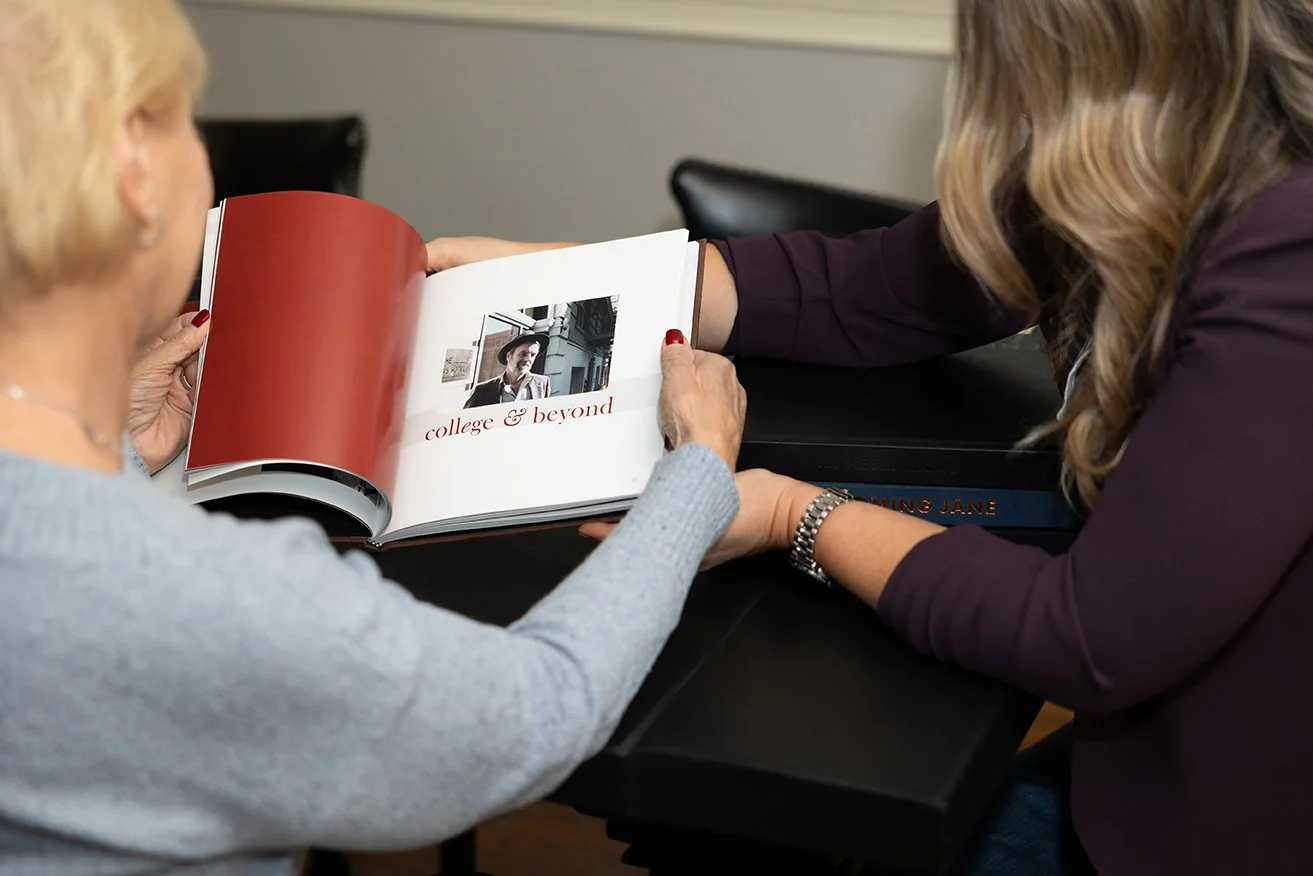
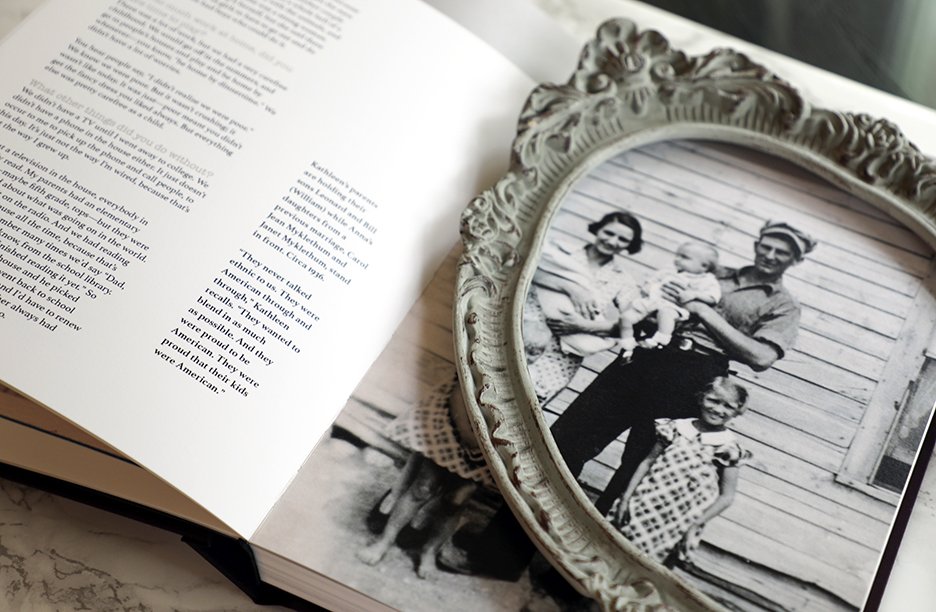
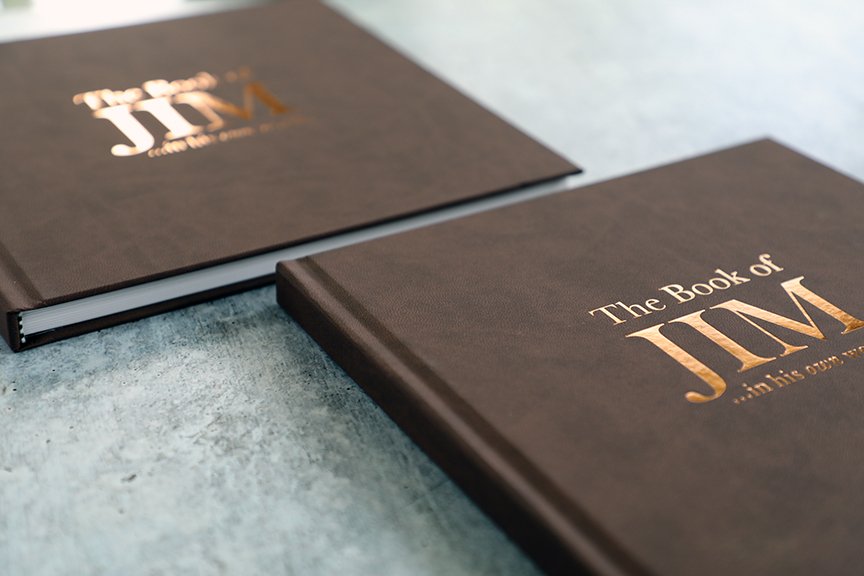
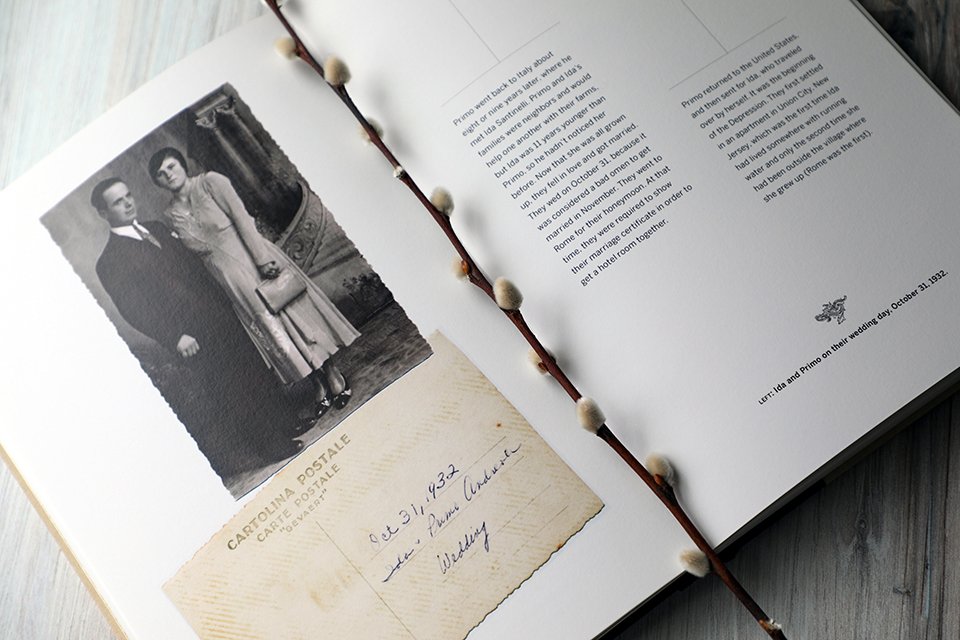
What to get for the person who has everything? A beautiful bespoke tribute book, of course! This is a page from a recent book gifted to a woman on her 80th birthday.
The nitty gritty of creating a tribute gift book
I am always honored and privileged to help my clients gather, organize, and express their tributes for their honoree. And my clients are always a little shocked at how much can go into the process (you think Uncle Ernie will be the last to reply, but he sends his narrative in on day one…but then 10 others are missing, late, or incomplete, two others are missing photos, three others are illegible, and 24 others have photos way too small to reproduce in print!!).
Leaving the logistics to a professional ensures that
you don’t have to be bothered with nagging follow-ups
you don’t have to check and recheck photo resolution
you don’t have to give guidance on what to write and how to optimize images
you don’t have to sit in front of a computer screen for hours designing your book
you don’t have to worry that the book won’t print just-right.
All you have to do is take credit when you wrap and give the book to your loved one!

“Ann was ecstatic and we all had to fight back tears…
…watching her flip through the book.
We all hope we can pass something of value on to family and friends. The tribute book did just that for her. She shows the book off to whoever comes in the house.
You went far above and beyond anything that I could have ever imagined.” —Terry C.
Why tribute books are so popular right now
We’ve all been in that situation: We need a special gift for that someone who seems to have everything; but nothing seems special—or unique—enough.
A tribute book telling your loved one just how much they mean to you—and to your tribe—could not be more unique. The messages within are one-of-a-kind. And when crafted in an heirloom book, they become a welcome addition to your family history archive.
When most of our doorstep deliveries are for essential items and we continue to get excited about in-stock toilet paper; when we have spent more time physically separated from family members due to Covid-19 than we ever could have imagined; and when so many of us are getting back in touch with those things that matter most to us—family, connection, a sense of home and security—a gift from the heart resonates more than ever.
I always recommend (and ask for) experiential gifts—traveling together, an outing to the theater or a local garden, a family hike. Those are gifts that mean something, that spark memories and affection. But when a physical gift is in order—when you want to cap off the big birthday party with a memorable unveiling, and when you want to show—really show—your loved one HOW and WHY they are loved—then why not consider a tribute book?
Reach out to see how we can work together to bring your project to life. All it takes is a half-hour phone chat—no pressure, just some questions to help me understand what type of book you envision—and you could be on your way to giving the best gift you’ve ever given. Really!

“The process of sorting through 27 years of pictures…
…and mementos was joyfully reflective, but what brought it all together was Dawn’s vision. Her warm and engaging personality and ability to capture my feelings—and transform them into such a beautiful book—well, let’s just say that our Modern Heirloom exceeded every expectation!” —Susan M.




Life Story Links: May 19, 2020
For life story preservationists both professional & aspirational: actionable tips, inspirational biographical reads, memoir workshops, and video recommendations.
“Questions are open doors. They move you away from the stagnation of certainty into the openness of wonder.”
—Laraine Herring
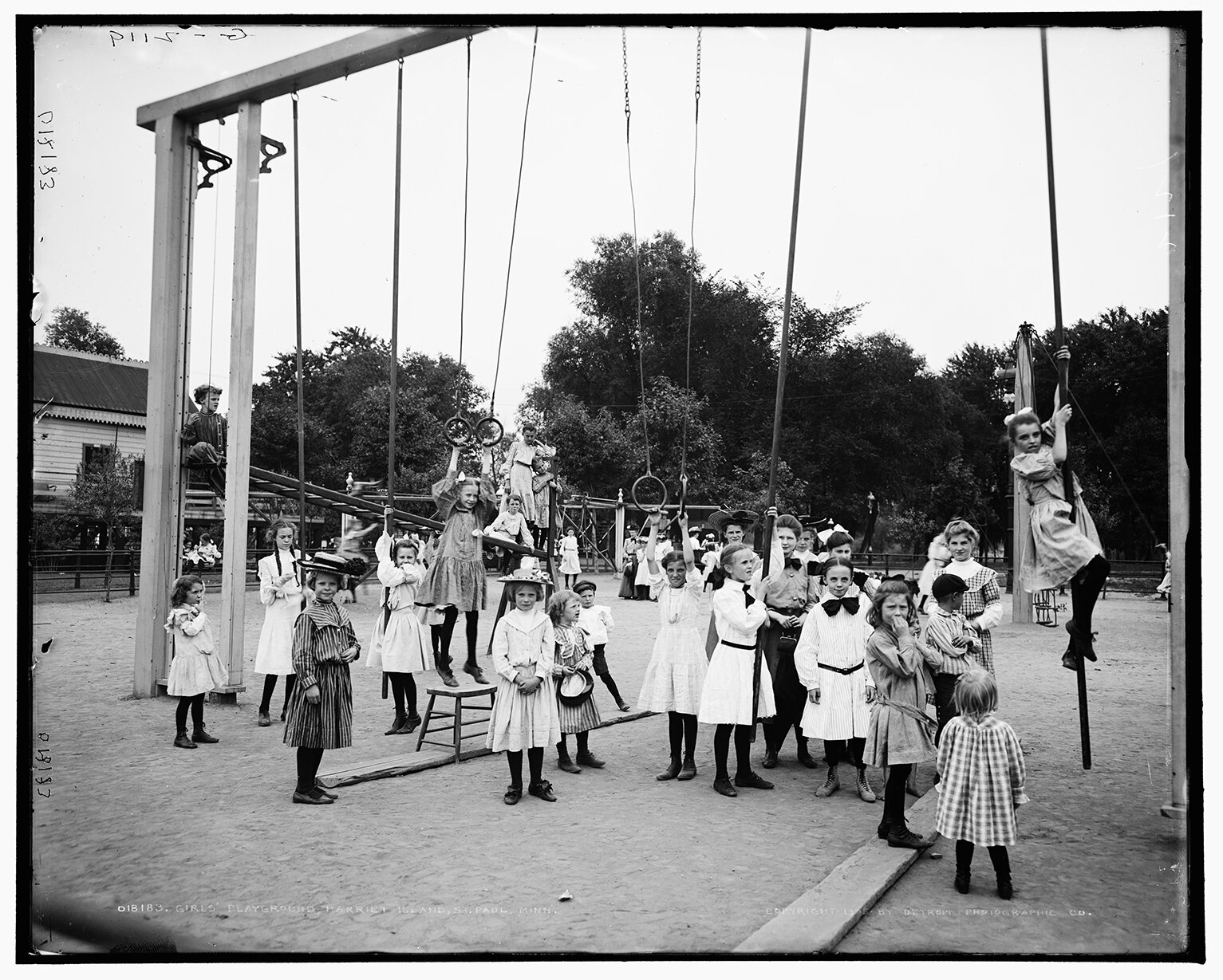
As the school year comes to a close, this year in our homes, I am missing the sounds and sight of kids running around the school yard—hence the choice of this week’s vintage photo: Girls on playground, Harriet Island, St. Paul, Minnesota, 1905. Photograph courtesy Detroit Publishing Co., Library of Congress Prints and Photographs Division Washington, D.C.
Actionable Tips
FROM A DISTANCE
California-based personal historian Rachael Rifkin writes about how to interview family members while social distancing, via Family Tree magazine.
HONORING THE DECEASED
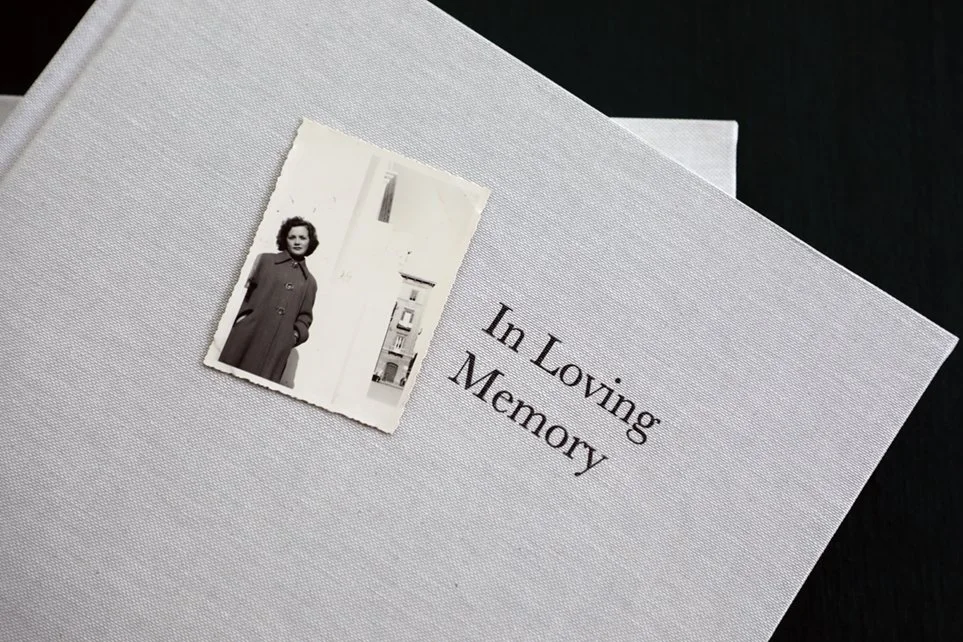
After helping many individuals gather memories and express their love for a family member who has passed away, I have gathered my top eight tips for creating your own tribute book in honor of a lost loved one.
‘EVENTUALLY’ IS HERE
“I’ve spent years collecting intimate interviews. Take it from me: A conversation about life’s big questions is the very definition of time well spent.” StoryCorps founder Dave Issay expresses what all us personal historians know: Now is (always) the time to ask your loved ones about their lives.
On Screens Now
THE ASIAN AMERICAN STORY
The PBS documentary series Asian Americans, which weaves the stories and images of real people…into the tapestry of history, “deserves attention for bringing under-appreciated history to life through the stories of Americans whose ancestral roots reach across the Pacific Ocean to the 48 countries of Asia,” says this review.
DIGITAL MUSEUM EXHIBIT
“Beyond Statistics: Living in a Pandemic” traces the stories of five former residents of The Tenement Museum’s buildings who lived with, and ultimately died from, contagious disease during three different eras. The digital exhibit uses visual storytelling, including an interactive timeline, to engage and add to the narratives.
REWIND
From PBS Independent Lens: “Made up of home video footage that reveals a long-kept secret, Sasha Joseph Neulinger’s Rewind is a brave and wrenching look at his childhood and his journey to reconcile his past. By probing the gap between image and reality, the film depicts both how little and how much a camera can capture.” Read a review here, and stream the documentary here. Trailer:
Writing Memoir & Life Stories
ARE YOU A DIY MEMOIRIST?
“You don’t need to have won the Nobel prize or invented sliced bread for your life to be worth recording,” writes Philadelpia–based personal historian Clemence Scouten. Here she helps you decide: Should you write your memoirs yourself or hire a service?
VIRTUAL MEMOIR WORKSHOPS, FROM A MASTER
Beth Kephart, award-winning memoirist and author of one of my favorite craft books, Handling the Truth, has announced that her Juncture Workshop Series will be going virtual. The monthly classes, which begin in June 2020, will offer “memoir writers and truth seekers original insights into craft and best-of literature, guided tours of the self, a chance to get percolating questions answered, and manuscript critiques.”
NO PLOTTING—FOR NOW
“The heart of your memoir—what it’s really about, and what will guide its shape—is best found by letting yourself suss out the emotional hot spots in memory and record the details before you define a story line,” Lisa Dale Norton writes in this piece about why it can be hampering to write a memoir outline too soon in your process.
First Person Reads & Short Biographical Writing
FROM HER PERSONAL REPERTOIRE
“When we have the ‘pandemic blues,’ it helps to reminisce about a tough time and how we got through,” writes Wisconsin–based personal historian Sarah White. A random comment on a trip long ago became her touchstone for resilience: “Cobblestones” tells the story of that moment.
THE TRANSFORMATION ARTIST
As part of their “Remarkable Lives” series of autobiographical posts, NYC’s Remarkable Life Memoirs turns the spotlight on a budding entrepreneur who tells her story of taking something disposable and transforming it into something beautiful, right in the middle of a pandemic hotspot.
RESILIENT ROOTS
“I remember my mother interviewing Nama for [her] history on her porch when I was about eight years old. I was mesmerized with Nama’s storytelling and the amazing life she had. But I never saw the depth of what she went through until recently.” Genealogist Janet Hovorka reads her great-grandmother’s personal history anew, with adult eyes.
“HISTORY FOUND YOU”
A graduation speech for the 2020 college grads who aren’t able to experience the milestone with all the pomp and circumstance it deserves, with reflections on the past, the present, and the bright future of this tested generation.
THE STONE COLLECTOR
Meet the stone collector of Iceland’s eastern coast: A. Kendra Greene gathers the history of a life. This lyrical read of an unexpected slice of life drew me in slowly, and made me want for more.
...and a Few More Links
Alcove: a virtual reality platform focused on family connection
How the thinnest paper in the world is used in historical conservation
What historians will see when they look back on the Covid-19 pandemic of 2020
Want to share a family immigration story with the Ellis Island Foundation?
“Diary of Our DNA”: How her mother’s photo albums evolved into a family history book
Chatbooks is giving a year of free photo books to babies born during the Covid-19 pandemic.
Moving photo portfolio: A day in the life of a Covid-19 I.C.U nurse
The “fabulous, forgotten life” of Vita Sackville-West
Short Takes

8 tips for creating your own tribute book in honor of a lost loved one
Writing a tribute book is a meaningful way to create a lasting legacy for a lost loved one. These expert tips from a personal historian will help.

Writing and designing a tribute book is a meaningful way to create a lasting legacy for a lost loved one.
After helping many individuals gather memories and express their love for a family member who has passed away, I have gathered my top eight tips for creating a tribute book on your own.
Remember: This is a labor of love. It may take some time, and you may get frustrated when you embark upon a part of the project with which you have no experience. That’s okay. Always think back to your why. Why you have decided to create this tribute book will motivate you to keep going, as I hope, too, will the advice that follows.
Top tips for gathering memories of a lost loved one:
Top tips for editing and designing a tribute book:
Click on any of the numbered items to go straight to that tip, or continue scrolling to read the whole story.
Gathering memories & tributes for your book

1 - It’s okay to be funny.
If your loved one was a vibrant and funny person in life, it stands to reason that tributes about them after their death should be infused with humor. It’s okay to step outside your grief and remember them with a smile, even a laugh. Happy memories provide comfort and help us heal, and will be a balm to the soul when you pull out this tribute book to visit with your lost loved one someday in the future.
2 - Be specific.
Be as specific as possible in your remembrances. This is the key to creating a moving tribute that holds meaning and calls the spirit of your loved one forth. Be heartfelt and open-hearted, and talk about distinct experiences you shared with the deceased. “That time Marc walked three miles to get Mom a cookie…” says so much more than “Marc was thoughtful”; “Deborah donned her Giants fan gear and ordered pizza from Sinapi’s every single Sunday” demonstrates her love of sports more than saying “Deborah was a Giants fan.” If everyone writes "Maria was a lovely person," it's not nearly as personal as saying WHY or sharing a story that illustrates the point!
3 - Be smart about gathering tributes from other people.
Chances are you won’t be the only person writing a tribute to your loved one who has passed away. Go ahead and ask family members, friends, work colleagues, and others to contribute to your tribute book. Ask for something concrete: “200-500 words about why you loved the person,” for example, or “please tell a story about a time they made you feel special.” Give contributors a deadline (even if you don’t need the book completed by a celebration of life or other event, choose a due date or you won’t get responses at all). Remember, too, that for some people, talking is easier than writing: If you think that may be the case for key family members, consider asking them to record their reminiscences, or record a conversation with them to capture their tributes, which you can type up later for the book.
4 - Include something in the deceased’s own words.
You don’t need to replicate full pages from their journal, but if you come across one or two things they have written that resonate, include them. Perhaps it’s a poem or a quote from a diary, a special letter to a family member, or even a handwritten recipe for that one comfort dish they always made. Hearing their voice come through in the pages of your tribute book will help keep their spirit alive.
Editing & designing your tribute book

1 - List relationships explicitly.
While it seems obvious to you as you’re creating a tribute book that the person you are honoring was your mother, someone else’s sister, friend, colleague…well, it won’t be so obvious in a few years’ time, and certainly not in a few decades. Make your tribute a lasting contribution to your family history archive. By providing full names and relationships to the person being honored, you ensure that the next generation may understand the bigger picture and get to know your deceased loved one more intimately.
2 - Include pictures—but not too many.
Will you include photos of the person being honored only? I recommend also including pictures of the people offering tributes. Alongside an individual’s quotes, include a photo of them with the deceased whenever possible. Include a curated selection of photos of the person you are honoring from different stages of their life—from childhood through old age—so you show their personality and experiences but do not overwhelm a reader. You want the photos to add to the stories within your tribute book, not distract from them.
3 - Consider transcribing handwritten notes.
While I love the idea of including handwritten tributes in your book, you run the risk of people not reading them if they don’t appear immediately legible. A design can get messy, too, if a book has page after page of scanned handwritten missives. Consider including portions of a note—such as a handwritten quote here and there—as design elements alongside typeset transcripts of everyone’s tributes. You can always save handwritten stories tied with a lovely ribbon or inside a special box; they’re destined to become a unique family heirloom all their own.
4 - Choose book materials wisely.
Whether you decide to use a digital on-demand printer to produce your book or go a more DIY scrapbooking route, plan for your tribute book to last. Use archival paper and acid-free adhesives in a scrapbook or hand-bound album; and save digital copies of your computer-designed book in multiple locations (an external hard drive or cloud backup, for instance). You and your family have worked hard to memorialize this special person who has passed away, so do what you can to ensure their legacy lives on.
Related resources
If you’d like to create a book but would rather have professional guidance along the way, consider our personal historian services: Explore our tribute book packages.
Contact Dawn to learn how we could work together on a tribute book or other heirloom book project.

FREE:
Questions to Help You Honor Them
This printable list of 35 questions to ask to prompt memories of your lost loved one is a helpful tool, especially to have on hand when gathering with family.



Life Story Links: May 5, 2020
A plethora of stories about storytelling in the age of Covid; musings on what we pass on to our kin; plus video and biography links worth your time.
“Nothing can match the treasure of common memories…”
—Antoine de Saint-Exupéry

What We Pass On
THREADS OF TIME
“Necessity prompted me to pull out my fabric and sewing machine to create cloth face masks for our family, but Mom, gone 20 years now, was right here with me as I stitched, and remembered lessons she taught me,” Marjorie Turner Hollman writes in this reflection on her family’s sewing traditions.
AN INHERITANCE OF VALUES
It’s Leave A Legacy Month in Canada, and Scott Simpson of Heirloom Videos by Cygnals encourages everyone, wealthy or not, to leave a legacy beyond financial gifts: “What gets recorded gets remembered.”
STORYTELLING SCHOOL
The Moth has created a weekly educational blog with family-friendly stories and activities for children of all ages: Engage the hearts and minds of the young people in your lives through storytelling.
The Covid Diaries
LIVES INTERRUPTED
A window pane. A hospital ID. Unfolded laundry. When a history professor in California challenged his students to choose an artifact to represent their experiences during this pandemic, some of their responses moved him to tears.
A CASE FOR CORONAVIRUS JOURNALING
We are experiencing “a period that historians will debate for decades, even centuries to come. Our chance to control some of that narrative is in our hands.” And when it's safe again, “we will want to be able to look back at how far we have come and celebrate one another—together, knowing the story of our experience will live on.”
“REMEMBER WHEN…”
Memory researchers say these months will eventually become a blur for those of us isolating at home. A look into how memory works, and which memories may prove more lasting.
A VALUABLE INTERGENERATIONAL RESOURCE
Let us remind ourselves of the many positive roles that our grandparents typically play: as kin-keepers, caregivers, storytellers, and moving reservoirs of social histories. Of grandparents, memories, and the pandemic.
PRESS PAUSE
I can feel overwhelmed by all the ways I “should” be spending my newfound time at home. It’s okay, though, to get lost in our memories or stare out a window.
PRESERVING THEIR ‘PIECE OF THE EARTH’S DIRT’
The recent stay-at-home directive has led personal historian Pat Pihl to think about the role that home plays in developing our character. Here she shares one client’s reflections on 50+ years “at the farm” and the impact it has on three generations.
The Writers of Our Lives
THE ACCIDENTAL BIOGRAPHER
“She was an unknown writer with no experience in biographies when she wrote to the elusive Samuel Beckett. To her surprise, he wrote back.” This obituary for award-winning biographer Deirdre Bair entices me to read her work. Here, she is remembered as a friend.
THE MEMOIR IN ESSAYS
“An author’s ability to forgive that earlier version of herself is especially prevalent in the memoir-in-essays, perhaps because of the extended time period covered as a writer composes essays across years or even decades.” LitHub offers up a reading list of recent autobiographical essay collections.
ART AND OBJECT
“I believe that work like mine...can be inspiring to anyone who’s ever felt undervalued or unheard, or anyone who’s inherited material related to someone interesting but unknown,” Eve Kahn says. Her biography of American Impressionist Mary Rogers Williams used a trove of personal letters to recreate a life.
In Video
“DEAR DIARY…”
Hat-tip to personal historian Michelle Sullivan for sharing this video, which she so aptly captions “Kent State: a child’s perspective...or, the importance of encouraging journaling by children.” It’s a fine example of a personal history in the guise of a public radio news report.
“THE MAN WITH A BEAUTIFUL SMILE”
“New York’s elderly population need extra special care. Their stories should also be celebrated,” editors at Untapped New York say as they introduce this documentary project about an almost 100-year-old New Yorker and Holocaust survivor, George Sachs.
...and a Few More Links
Have you heard of The Mass Observation Archive?
How looking back at our old photos boosts mood and relaxes the mind
Amid the pandemic, a family learns their neighbors are their long-lost relatives.
Short Takes

Let’s be kind to ourselves
I can feel overwhelmed by all the ways I “should” be spending my newfound time at home. It’s okay, though, to get lost in a good book or stare out a window.

My news and social media feeds are filled with articles on how to maximize my time at home. How to make the most of home-schooling. How to revive old hobbies, finish abandoned projects, take part in viral video challenges and bake bread and educate myself more and more and more. Zoom calls and Google Hangouts and radical self care (huh?).
I’m feeling a sense of overwhelm. There are days I ride the waves of productivity and move forward with ease, and others where I walk around the house unfocused and feeling a sense of unidentified dread.
Can you relate?
These are strange times, indeed, and there is no precedent in our lives for how things “should” be, how we “should” feel.
Press pause
I just wanted to say: Let’s be gentle with ourselves.
Let’s allow for days where not “enough” gets done.
Let’s allow for days when, rather than organizing our photo archives (a project on my list, for example), we browse our old photos and get lost in the memories they stir.
Let’s skip the journaling for a day to escape into the pages of a long-favorite novel.
Let’s take time to honor our feelings, and to allow ourselves to just be—no judgment, no expectations.
Personally, I will continue to jot down ideas on my own to-do list, and professionally, to offer up family history activities and memoir writing tips on this site, just in case you’re ready for them.
Just remember: It’s okay for some items to remain on our to-do lists indefinitely, and to bookmark activities for later.
I’m here as a personal historian to listen to your stories when you feel ready to share, to move forward with a legacy project that’s been on your mind for ages, and to offer wisdom for your DIY projects, too. And I’m here as a fellow human navigating this new normal with vulnerability and good intentions—let’s do our best, together.
❤️❤️❤️

Life Story Links: April 21, 2020
Hybrid memoir, journalistic memoir, and writing about estranged family members; plus timely storytelling and oral history resources and Mother's Day ideas.
“We’re all products of our context in time and place.”
—Linda Joy Myers

Front line workers were heroes during the flu epidemic of 1918, as they are now during the novel coronavirus pandemic. Photograph: St. Louis Red Cross Motor Corps on duty during influenza epidemic (1918). Original from Library of Congress; digitally enhanced by Rawpixel.
Writing Our Lives
HYBRID MEMOIR, EXAMINED
In her essay “What Are the Boundaries of a Memoir?” Beth Kephart uses new books by Mark Doty and Paul Lisicky to look at “the hybrid memoir—these books that spring from the wells of the curious self, that dissolve the borders between the writer and the world, that operate somewhere between the lyric braid and the collage.”
THE MISSING
“It’s not my uncle’s absence that haunts me—after all, I never knew him. It’s that no one—not my grandparents, my parents, or any of my mother’s cousins we visited with over the years—told me stories about him, or about losing him.” Joanna Hershon on those missing from the figurative family tree.
ON WRITING ABOUT FAMILY
In a thoughtful conversation that talks about excavating family history and approaching memoir as a journalist, Sopan Deb describes his work as “a portrait of a broken immigrant family and my attempt to put it back together the best I can.”
Timely Resources
DEDICATED PASSENGER SEARCH SESSIONS
With a $30 donation to the Statue of Liberty-Ellis Island Foundation, a researcher from their American Family Immigration History Center will uncover your family’s connection to Ellis Island in a personalized 30-minute research session. Successful searches will receive a free digital copy of the ship manifest displaying your ancestor’s arrival in America and, when the Foundation’s office reopens, a free copy on archival paper by mail.
CORONAVIRUS JOURNALING
The New York Times offers up tips for starting your very own coronavirus diary, while North Carolina–based The Cheerful Word delivers this free download with 100 writing prompts for these extraordinary times.
FOOD MEMORIES FOREVER
With so many of us spending more time in our kitchens these days, why not take time to write down the recipes that mean something to us—along with the stories behind them? Check out this free printable for a personalized recipe book from The Storied Recipe; and my custom set of food memory cards (I mailed a few cards to each family member with a handwritten note asking them to record their favorites).
Ah, Stories!
UNEXPECTED SOULMATES
I always tell my clients that longer doesn’t mean better when it comes to storytelling, and I think this three-minute animated tale of love nurtured from afar is proof of that concept:
Mother’s Day Tributes
HONORING MOMS
Now more than ever, the gifts of listening and connection are meaningful things we can give to those we love. Here, I offer up four ideas that fit the bill for Mother’s Day giving.
WORLD MOTHER LIVE 2020
The World Mother Storytelling Project is a far-reaching global initiative that teaches us to listen to and tell our mothers’ stories. Murray Nossel, co-creator of the Narativ listening and storytelling method, will host the free event, which will be live-streamed from Town Hall in NYC on May 10, 4-6pm. Apply here to be an event storyteller.
...and a Few More Links
“What to do when your parents give you junk from your past.”
Free download: 56 Essential Family History Questions to Ask Your Parents and Grandparents
Passenger search tips and tricks from the Ellis Island Database (video)

Life Story Links: April 7, 2020
Lots of advice for preserving personal history during the coronavirus pandemic, plus recommended videos & tips for capturing family stories and writing memoir.
“One voice has the power to forge connections and create a better, more empathetic world.”
—Dr. William Lynn Weaver, StoryCorps participant

In this time of sheltering-in-place and extreme social distancing, maintaining connections by good old-fashioned telephone calls is one way to go. Photograph of American Telephone & Telegraph Exhibit at New York’s World Fair, 1939, courtesy Manuscripts and Archives Division, The New York Public Library Digital Collections.
In the Time of Covid-19
THE QUARANTINE DIARIES
“What makes history is people who write some stuff or keep some pictures,” Mr. Herron said. “This is how we communicate across centuries.”
PERSONAL HISTORY QUESTIONS
I created this guide, 56 Essential Questions to Ask Your Parents Before It’s Too Late, in hopes that more people will use their housebound time to forge meaningful connections with their older loved ones.
ACTIVITIES FOR ALL AGES
Family Search has compiled myriad in-home and online family history activities for families to do together “designed to bridge the distance between loved ones.”
ASKING QUESTIONS
This pandemic is the time to preserve your family’s stories, writes Ellie Kahn, a personal historian in the Los Angeles area. And Arizona–based Olive Lowe of Life Stories by Liv offers four easy steps to use Google Voice to record those story-sharing conversations.
‘RAPID RESPONSE COLLECTING’
“As a historian, you’re always thinking about what’s missing, of what you want to know more about. I think what people will want to know about this crazy time is what everyday life was like, what it was like to live through.” Museums scramble to document the pandemic, even as it unfolds.
FROM AN ARCHIVIST’S PERSPECTIVE
Hat-tip to New York–based archivist Margot Note for highlighting the following articles in her always informative newsletter:
“Write it Down”: Historian Suggests Keeping a Record of Life During Pandemic
Presentation: Archiving COVID-19: A Guide
Consider joining Margot’s Facebook community for news of upcoming webinars (she recently hosted the popular “Close Together/Far Apart: Creating Family Archives While Social Distancing,” for example).
Ah, Memories
IN PICTURES
“Photo albums make me think of family: the big, bulky leather-bound behemoths that Mum whips out at Christmas. They’re time portals I can peer through to see my dad looking like Morrissey in the ’80s,” Meg Watson writes. “Making one for myself was a totally new, and surprisingly emotional, experience.”
ADOPTION JOURNEY BOOK
For adoptive parents interested in preserving memories of their journey, here is a road map for what to save, how to record memories, and when to begin compiling everything into a book.
HOME & AWAY
In her new memoir, Always Home, Fanny Singer writes about her “uniquely delicious childhood” as daughter of food icon Alice Waters. Now she ponders the future of her mother’s restaurant, Chez Panisse, and “what can make us feel grounded and sane…at a time so pregnant with precarity.”
Watch List
TIME TO LEARN
The free video archive of 2020 RootsTech sessions includes discussions about copyright, DNA, genealogy research techniques, and tackling difficult chapters of our family history.
THE WRITER’S LIFE
“I had no idea when I taped this…class that it would be released during a time where we’re living in a great deal of isolation and searching for ways to grow, witness, help, find peace within the chaos,” memoirist Dani Shapiro says. Watch “Writing for Inner Calm: A Mindset, Methods, and Daily Exercises for All” with a two-month Skillshare trial.
STREAMING TREASURES
The Library of Congress “has an extraordinary trove of online offerings—more than 7,000 videos—that includes hundreds of old (and really old) movies,” writes Manohla Dargis, among them this lyrical slice of life in 1948 New York City, “In the Street.”
A few other videos that might be of interest:
Survivors Testimony Films Series from Yad Vashem
And a 29-second advertisement with a message from Shaquille’s mom Lucille to “Preserve What’s Priceless”:

History Made Personal
REMEMBERING OUR SOLDIERS
A 41-year-old bricklayer from the Netherlands turned his childhood passion for World War II history into an act of remembrance lovingly tending the graves of Allied soldiers.
SALVAGING A MUSEUM’S ARTIFACTS
On Jan. 23, a fire gutted the upper floors of 70 Mulberry Street in Manhattan, where the Museum of Chinese in America’s collection was housed. Now, as workers sift through what survived, families are celebrating hundreds of boxes of heirlooms that were unloaded from the building’s scorched interior.
...and a Few More Links
Nick Flynn on making collages from found ephemera as “an atlas of my journey”
Invisible life lessons from war in a peacetime house
Review: The Memory Book: A Grief Journal for Children and Families
Rawpixel has curated a collection of vintage images of the Spanish Flu and historical medical images.
Short Takes

56 essential questions to ask your parents to capture their personal history
Don’t wait until it’s too late—have meaningful conversations with your parents about their past with questions designed to spark memories and make story sharing easy.
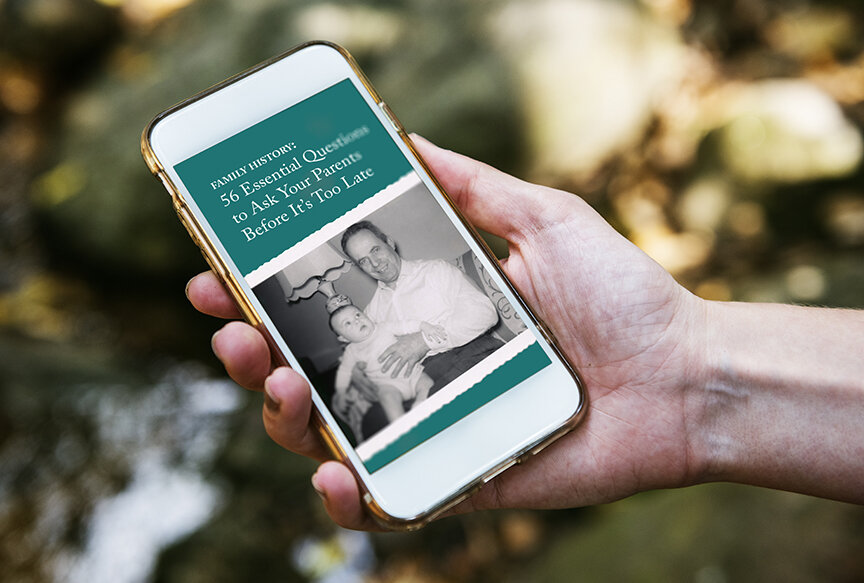
If you’re reading this, congratulations—you’re on your way to a most enjoyable and important journey! Who are you interviewing? A parent? Grandparent? Beloved aunt or uncle? Whomever it is, clearly their stories matter to you, and I am thrilled to be able to help you capture them through an oral history interview.
Print out this guide or use it as inspiration to develop your own list of topics and questions for your loved ones. I’ve got three key tips at the bottom of this post to help ensure that you capture these important family stories successfully, and I am always here as a resource to help guide you on your journey. Whether I can one day help you turn your stories into an heirloom book or help you get the ball rolling on a DIY project, my message to you is this:
Start now. Don’t wait. I can recount too many tales of people telling me “I wish I had asked my father…” that it saddens me deeply. It is my mission to convey a sense of urgency to everyone. Perhaps you have a little extra time on your hands right now… Please, ask your parents and grandparents the questions that matter now, before it’s too late.
Family history interview questions
Childhood & Family Life
Describe the home you grew up in.
What were you like as a child?
Do you have memories of what your parents said you were like as a baby?
What was a typical day like in your family when you were little?
How does your family tend to show their love for one another—through physical affection including hugs and kisses, gift giving, reaffirming through saying “I love you” or some other phrase, etc.?
What would you say makes your family unique from other families?
What did you do when you were bored as a child?
If you had to create a family motto, what would it be?
How did you feel about school, and what type of student were you?
Did you have a best friend, and if so, how did that relationship play out over the course of your life?
When you were little, what did you answer to the question: “What do you want to be when you grow up?”
What were you like as a teenager?
Food Memories
What meals would be in your family’s cookbook—the foods that make you feel nostalgic for your childhood or for home?
What are your oldest recipes and where did they come from?
What smells transport you to this day right back to your childhood?
Who are/were the best cooks in the family? Tell me about them.
What family dishes would you miss the most if you never tasted them again?
If cooking and food were an integral part of your subject’s life, explore 20 more food-themed questions here.
Life Transitions & Milestones
Tell me about your experience…
…deciding where to go to college
…pursuing your career
…getting married
…getting drafted into the war
…serving in the military
…becoming a mother/father/grandparent
…falling in love for the first time
Tell me about your first job.
Did anyone ever throw you a surprise party?
How did you feel on your wedding day? What memories of that day stand out for you?
What can you tell me about the first time you experienced loss? Who died? Did you go to the funeral? How old were you? How did it effect your outlook on life?
Decisions & Lessons
What is the best decision you ever made?
What is a memorable time you have failed, and how did you recover from that experience?
What lessons(s) do you most recall learning from your parents? Grandparents?
Did you have a favorite teacher in grade school, or another role model who had a major impact on your life?
Can you share about any hardships (in history, such as the Depression or a war, or in their personal life, such as a divorce or unemployment) that you experienced in your life, and how you survived/thrived/coped?
Tell me about a significant time you said “no.”
Do you have any regrets? (Encourage elaboration here; sometimes a prolonged silence is the best invitation to speak.)
Traditions
What holiday did you most look forward to while you were growing up?
What were some of the traditions your family observed related to that holiday?
Do you have any family traditions that have been passed down for generations in your family?
Does religion hold a strong place in your family? (If “yes,” there are a variety of follow-up questions to ask to pursue this thread!)
What is the most memorable gift you have ever received? Given?
Are there any specific family heirlooms you inherited? Why do they hold meaning for you?
How are/were birthdays celebrated throughout your life?
In what ways have you/your family kept your culture alive (through language. foods, cultural traditions, for example)?
Fun & Games
What songs have held special meaning to you over the years?
Who was the trickster in your family?
Do you have any funny stories from your past?
What’s your favorite family story to recount around the dinner table?
Did you play sports growing up, and if so, what were those experiences like?
What was the main form of entertainment in your family when you were a kid (board games, listening to the radio, playing music/singing, reading books, putting on shows, etc.)?
Describe what family vacations were like, and if there were any destinations that you traveled to often?
Tell me about a time you were incredibly embarrassed.
Big-Picture Questions
What values would you like to pass down to the younger generations of your family?
How did you learn resilience?
What would you tell your 20-year-old self?
What would you like your legacy to be?
Are there any questions you wish you had asked your own parents?
3 keys to capturing the best stories
Ask open-ended questions.
Sometimes simply planting the seed of a memory yields the most thoughtful and meaningful stories. “Yes” or “no” questions do not promote conversation, so avoid them in favor of questions that help set the scene (“remember when…”) or probe your subject’s personal history in unique ways (“imagine if ________ hadn’t happened…” or “what about _______ do you wish you remembered better?”).
Consider this a conversation more than an interview.
Listen generously, ask follow-up questions, and let your interview subject go off on tangents that yield interesting stories and prompt unexpected memories. Your goal should be to get the most meaningful stories from your loved one, and if that means waiting another day to discuss what you thought today’s topic was, then so be it!
Ensure successful preservation.
Use more than one way of recording your interview. If you are using a voice recorder, use two. Ensure your subject feels comfortable, that the environment is quiet, and that the recording device is close enough to capture their voice. Find more specific tips (including equipment recommendations and even more family history–themed questions) in this guide from the Smithsonian Center for Folklife and Cultural Heritage.
More free resources
Visit my Resources Toolkit to for more free downloads, including lists of questions to spark Thanksgiving and Christmas story sharing; a guide on how to use family photos as prompts for writing life stories; plus more tips for writing about your life in short vignettes.
Get inspired to preserve your family stories






Dawn Roode’s curated roundup for the week of Sept. 23, 2026, is overflowing with recent reads on memoir, life story writing, and family history preservation.