
Memories Matter
Featured blog Posts

READ THE LATEST POSTS

What to save for your adoption journey book
If you would like to document your family stories in an adoption journey book, here is a road map for what to save, how to record memories, and when to begin.
It’s been a while since I worked on an adoption journey book, but I have recently gotten a few inquiries about them and thought I would share some helpful tips on how to best preserve your memories of this transformational time in your life.

Including images in your adoption journey book of your child’s everyday moments during the early years (think eating, bath time, reading a book) will help to bring those experiences to life in the most amazing way.
What is an adoption journey book?
While a life book is your child’s story, an adoption journey heirloom book is your story—you as an adoptive parent, and you as a member of your growing family.
Your adoption journey book might include:
memories of the first meeting, the long journey home, first weeks together, first bonding experience...the memories that you don't want to fade
a visual timeline of the adoption process
photographs through the years
maps of your child’s birthplace and where you physically traveled
handwritten notes from your journal, especially during the early days as a new parent
typed or handwritten letter with dreams for the future
thoughts on what it means to be a parent—and a family
memorabilia such as your ticket to your child’s birthplace, or the email alerting you to your approval as adoptive parents
insights and feelings—the inner story of your adoption journey
There are so many paths to parenthood. Your journey, though, is the one that matters to you and your family. An adoption journey heirloom book is a beautiful means of honoring your family’s unique story and of preserving the memories and emotions for your children—and, just maybe, for the next generation.
How to keep track of your adoption journey
Did reading the above list give you palpitations? Angst at realizing you have no idea where you would dig up all that info, or guilt at not having kept a journal? If you are eager to create an adoption journey book but unsure how to access your memories, I can help you.
But if you’re thinking about this earlier in the process, first, I congratulate you; and second, I offer you a road map for keeping track of your journey so documenting it in a book later will be an even smoother process. I generally recommend undertaking making an adoption journey book around the first or second anniversary of your adoption (also called a “Gotcha Day” or “Homecoming Day”).
Some ideas for what to save:
1 - Keep an accordion file of things to help you fill in a timeline of your adoption process:
all adoption paperwork (including email correspondence, postponements, requests for new forms, etc.)
airline boarding passes
postcards from the locations you travel through
ticket stubs or restaurant menus
2 - Save photos of:
your travels, in the airport, at the adoption locale
first family photo
milestones for your child(ren), including new foods, first American travel destination, first friends, etc.
any photos showing you in the country of origin for your adopted child
photographs of special, everyday moments (parents feeding a baby, reading to your children, hugs)
images that show your child’s personality (active kid running, a funny child laughing).
Ideally, you will have a mix of photographs that will help you recall this special time in your family’s life, including both the monumental (the day of adoption) and the everyday (bath time).
Consider keeping a journal.
While a journal will of course help you preserve memories for an adoption journey book down the road, writing about your feelings will also have an immediate benefit: Journaling has been shown to have a positive impact on physical well-being and to be a helpful stress management tool.
A few topics to consider journaling about:
forging bonds in the early stages of adoption
how you choose to share details about your child’s origins
ways you intend to incorporate your child’s culture into his/her life (traditional foods, holidays, language)
moments of grace
moments of struggle
Adoption is a lifelong journey.
Adoption is a lifelong journey. And while an adoption journey book such as I am recommending typically focuses on the process of adoption and the first year of settling in and becoming a new family, you always have the option to delve into your stories later in the journey, too.
I focus on these early months because, for one, they are so emotional and life-changing; and two, because they are often the most difficult to remember in detail in later years—when you will undoubtedly want to share them with your child(ren) as they mature.
For those of you who are in the midst of your adoption journey or who have already made an heirloom book, what other things might you suggest?
Additional reading:


Life Story Links: March 17, 2020
This week's curated reading list includes a number of moving first-person reads, notes on the process and craft of personal history, plus keepsakes and photos.
“Sing your song. Dance your dance. Tell your tale.”
—Frank McCourt, Angela’s Ashes

Vintage St. Patrick’s Day postcard
Process & Craft
PEOPLE TALK
Editor Lisa Dale Norton on how to handle dialogue in your memoir writing (is it okay to invent what you haven’t recorded?).
“CHUNKING IT OUT”
There’s a lot of organization and structural editing that goes into crafting a narrative from a series of interview transcripts and a box of photos; I love Lauren Befus’s analogy of “piecing together a large puzzle” of our clients’ lives.”
TRIBAL & PERSONAL HISTORY, CONVERGED
“I don’t know how people write about real people,” Louise Erdrich said. “If you can’t find a direct quote of them saying what you want them to say, how do you put words in their mouth?” Her latest book, The Night Watchman, is a blend of truth and fiction, real people and real events plus a good dose of the imaginary.
FREE LEARNING OPPORTUNITY
Preservationist Margot Note teaches how to organize and preserve your family and personal legacy during a free webinar on Sunday, March 22 at 1pm.
Voices
THE EROS OF ESTRANGEMENT
In this adapted excerpt from Slouching Towards Los Angeles: Living and Writing by Joan Didion’s Light, Joshua Wolf Shenk explores specificity of place; dislocation and alienation; and what we do and don’t reveal in memoiristic writing.
ORIGIN STORY
FamilyScrybe contributor Taneya Y. Koonce’s musings on how interviewing her grandmothers and learning their stories helped shape her identity.
ANTHOLOGY: “WHY WE WRITE”
“The real reason that we're writing is to create opportunities for conversation and empathy and understanding and to have that present in the pages of this book,” says Randy Brown, a military veteran who gathered 61 authors to make a case for writing about war.
“A MEMOIR AND A RECKONING”
“This, I understood finally, was history: not the ordered narrative of books but an affliction that spread from parent to child, sister to brother, husband to wife.” Alex Halberstadt on writing a family memoir when your grandfather was Stalin’s bodyguard.
More Life Stories?
NO REGRETS?
A recent Wall Street Journal article reports that a growing number of adult children are interested in hearing more of their parents' stories. My thoughts on the so-called trend, and what we can do to ensure that such interest abides.
CHILDHOOD INFLUENCES
Who were your heroes when you were growing up? How did they make a difference in your life? Personal historian Carol McLaren of Arizona–based Unique Life Stories shares recollections of her childhood inspiration, Helen Keller.
The Stuff of the Past
PRECIOUS FAMILY RECIPES
The Internet keeps countless recipes in neat, tidy digital files, so handwritten notecards are quickly becoming cherished keepsakes. The folks at Martha Stewart have advice for how to best preserve them (and there are a lot more factors to consider than I imagined).
PHOTOS TAKEN, PHOTOS NOT TAKEN
“I don’t have the answers...around when to put the camera away and when to keep on clicking. But I do believe we owe it to ourselves to authentically examine how photography fits into our own lives—paying mind to when it enriches and when it detracts from our now.”
ADIEUX
Deanna Dikeman’s portrait series doubles as a family album, compressing nearly three decades of her parents’ goodbyes into a deft and affecting chronology.
THE WHISPER OF FAMILY GHOSTS
“I think about the material things—letters, pictures, tablecloths—that connect children to the houses they left behind. Pieces of paper, bolts of fabric, woven together in a chain and stretching across diasporas.” Hannah S. Pressman on the import-export business of our memories.
...and a Few More Links
StoryCorps is pulling some of the more heartwarming stories from their archive to uplift during difficult times.
Combing through thousands of digital images, these photo organizers help to “tell your life story.”
The eclectic museum safeguarding Selma's long and intricate past
Short Takes
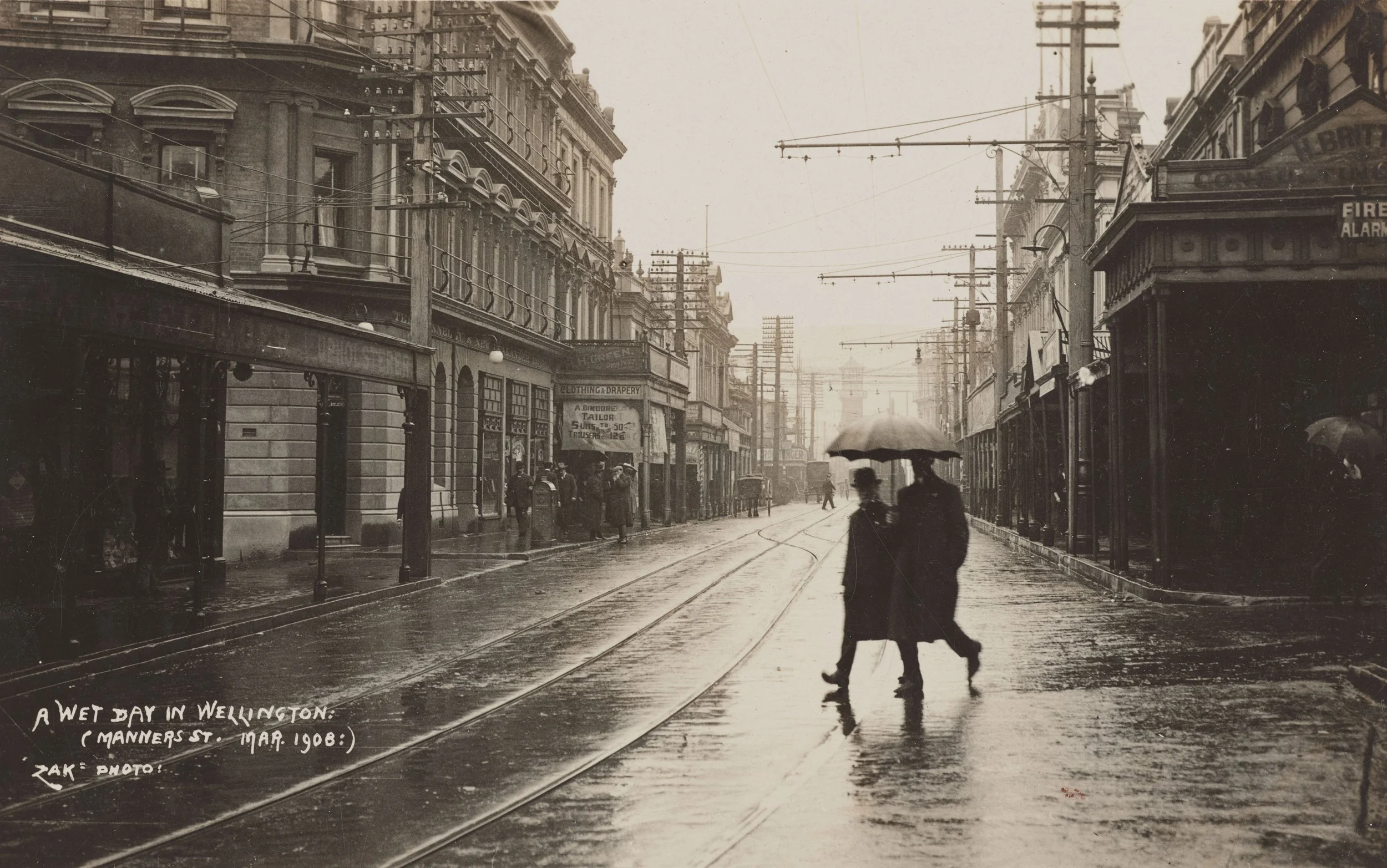

“I wish I knew”
The Wall Street Journal reports that a growing number of adult children are interested in hearing more of their parents' stories. Are you among them?
A recent article in The Wall Street Journal, “The Questions You Wish You Had Asked Your Parents,” cites a growing interest in people wanting to know more of their family stories.
The uptick in awareness of story preservation is attributed to the rise in home DNA kits, the popularity of family history via sites such as Ancestry, and the younger generation’s comfort level with documenting every aspect of their lives: “Younger people are more transparent and used to telling the story of their own lives, often online for many to see, and expect it from others,” writes Clare Ansberry.

This recent article in The Wall Street Journal indicates that more and more families are realizing the value of preserving their stories.
All of this is no doubt accurate, and I do find millennials in particular curious about their parents’ lives before parenthood and even nostalgic about their own childhoods.
But I would argue that this interest in our collective family history is nothing new—at least, not when talking about family history in terms of stories.
While finding distant DNA cousins is indeed new, wanting to know more about our parents’ lives is not. Unfortunately, all too often people don’t recognize that desire until it’s too late.
I’ve written before about how it may seem like your grown kids don’t care about learning about your life—but that in fact, they merely don’t care to pay attention just yet. And that’s the key here: We either need to get the younger generations to realize the urgency in capturing their elders’ stories, or convince the older generations that not only do their stories matter, but that they will be treasured by their family when they are gone.
Is story preservation a new trend?
The message of that WSJ article is that, apparently, both of these things are happening—changes are afoot that are opening our eyes to the need—and value and desire—for documenting our family stories.
I hope this is the case. I know personal historians such as myself and those quoted in the article are making every effort to spread the word and stress the importance of preserving our legacies.
I’m not convinced, though, that enough people are on board.
I hope that more and more people begin to see the value in asking their parents about their lives before parenthood.
I hope that more and more people realize that now is the time to begin asking—not later, not when it’s more convenient or they’re less busy.
I hope that more and more family elders acknowledge that their lives have been interesting, that the paths they have taken hold lessons for the next generation, and that their stories matter.
Most of all, I hope that you FEEL the urgency and take the first step toward preserving your family’s stories for posterity.
Avoid having to say, “I wish I knew.”
If you’re a DIY’er, consider writing about your life or interviewing your family members.
If you would like to explore how working with a personal historian can make the process easier and yield a more professional product, please reach out to chat.
What I know: I still hear from far too many people about the regrets they have: not asking their parents about their lives until it is too late; until dementia has crept in, or their parents have passed.
It is my mission to help people have no regrets. Won’t you join me in this mission?

Life Story Links: March 3, 2020
A trove of family history finds, compelling reasons to preserve your life stories, and recommended first person reads that bring our ancestors' voices to life.
“To acknowledge our ancestors means we are aware that we did not make ourselves…We remember them because it is an easy thing to forget: that we are not the first to suffer, rebel, fight, love, and die.”
—Alice Walker

In honor of today’s Super Tuesday designation: Two women preparing a women’s suffrage poster for a parade in the nation’s capital in 1914, represented on a vintage postcard. Photo courtesy Library of Congress Prints and Photographs Division, Washington D.C.
Why Preserve Our Stories?
“I WISH I KNEW”
“As significant as parents are in life, their adult children often don’t know what shaped them and what they were like before they became mom and dad.” There is a growing interest, though, in understanding our parents’ lives, and capturing their stories for the next generation.
MEETING LONG LOST FAMILY
“It may be just a few iPhone videos, but it’s treasure to me. And it’s a start,” writes adoptee Jon de la Luz of the oral history recordings he took of his biological mother’s only living sibling, 87-year-old tia Maria Antonia, whom he only recently learned of and met.
Grief & Remembrance
A DEEPER PURPOSE
“The point of all this is to make a difficult thing like dying or loving someone who is dying less difficult. In that sense, creating a When I Die file is an act of love,” and the authors of A Beginner’s Guide to the End: Practical Advice for Living Life and Facing Death here offer some concrete tips for how to do so.
THE GIFT OF MEMORIES
During the grieving process, “all attention is on trying to understand the loss, remembering your loved one, and figuring out how to move forward. All other sounds are now muffled in the background, things that seems to matter before often seem frivolous.” Noelle Rollins on ways to remember our lost loved ones and honor this sacred time.
THE BIG GAME
“For emotionally stunted straight men in the suburbs, sports are one of the few arenas in which one has the freedom to get hysterical. You can yell, you can cry, you can throw a remote across the room, and all will be forgiven as manly, heteronormative devotion.” Chris Ames writes with a sharp, fresh voice about the intersection of father time, basketball, family, and loss—a most magnetic read.
Family History Finds
DISCOVERING HER FAMILY HISTORY
As part of a monthly resolution challenge to learn more about her family's past, journalist Kelsey Hurwitz gathered wisdom from genealogy gurus, and in the process found a stronger sense of self.
#NOTATROOTSTECH, TOO?
RootsTech 2020 ended a few days ago, but if you missed the big family history conference, you can still benefit from many of the presentations. Here I highlighted sessions, available on video, of interest to life storytellers of all kinds.
VAST RESOURCES REPOSITORY
For the first time in its 174-year history, the Smithsonian Institution has released 2.8 million high-resolution images from across its collections onto an open access online platform for patrons to peruse and download free of charge.
A MULTIGENERATIONAL CONNECTION
Taneya Y. Koonce had a broad notion of why her family saved bits and pieces about a pastor her family was close to, but would descendants wonder what the items were doing in the family archive?
Ancestors’ Voices
ARTIFACTS LEAD TO PERSONAL DISCOVERY
In 2017, 13 drivers’ licenses that had been confiscated from Jews during Kristallnacht were discovered in a government office of a small German town. Last month, one of the descendants recounted how the high schoolers got in touch with her, and how she traveled to Germany to unveil a lost chapter of her family history.
FROM FARM BOY TO FEARSOME WARRIOR
February 19, 2020, marked the 75th anniversary of the start of the Battle of Iwo Jima. The last surviving Medal of Honor winner (out of 27 sailors and Marines so honored) recalled his story.
LOVE LETTERS
When Helene Stapinski reads a stash of love letters from her young father to her mother, she discovers a man she never knew: “Now that I knew him better, I missed and grieved for him even more. I wanted him here to draw him out and laugh with. And cry with. I dried my eyes and read on.”
THE TAPESTRY OF AMERICAN IMMIGRATION
The Tenement Museum’s “How to Be an American” podcast returns for a second season, with eight new episodes and stories from the history of stickball in New York City to historic trash to an “out of this world” immigrant success story. Listen to a preview here:
...and a Few More Links
She calls her numerous journals her “mind turned inside out.”
Should there be a code of ethics for archivists?
The Augusta Chronicle shines a light on preserving family history through biographies.
Technology uncovers forgotten graves in Maryland.
Short Takes
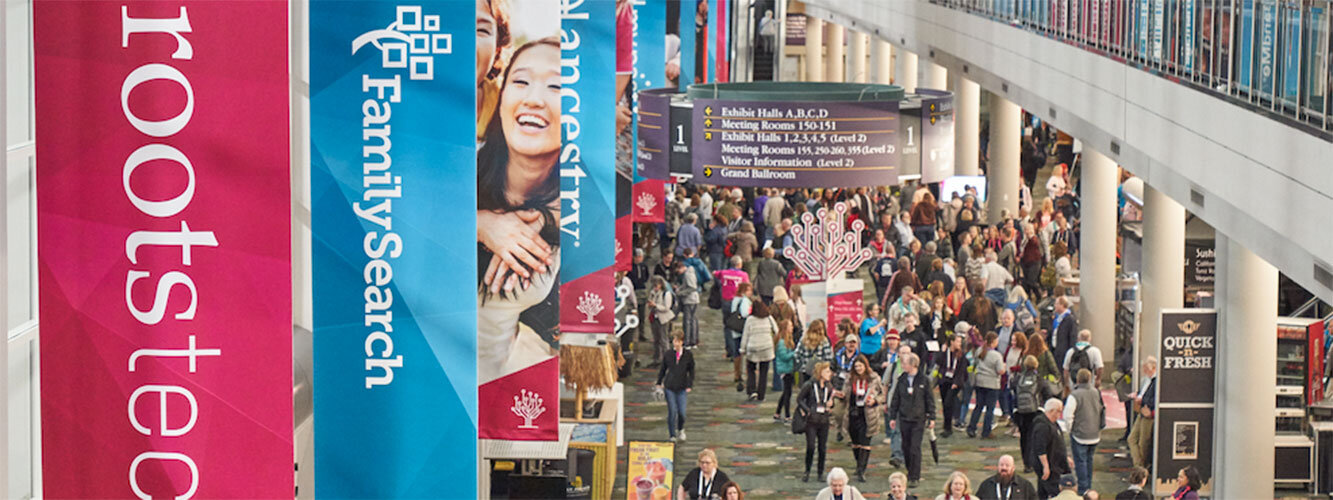
Experience the ultimate family history conference virtually
Watch recorded sessions from RootsTech 2020, the premier genealogy conference, from home: recommendations for family history storytelling videos and more.
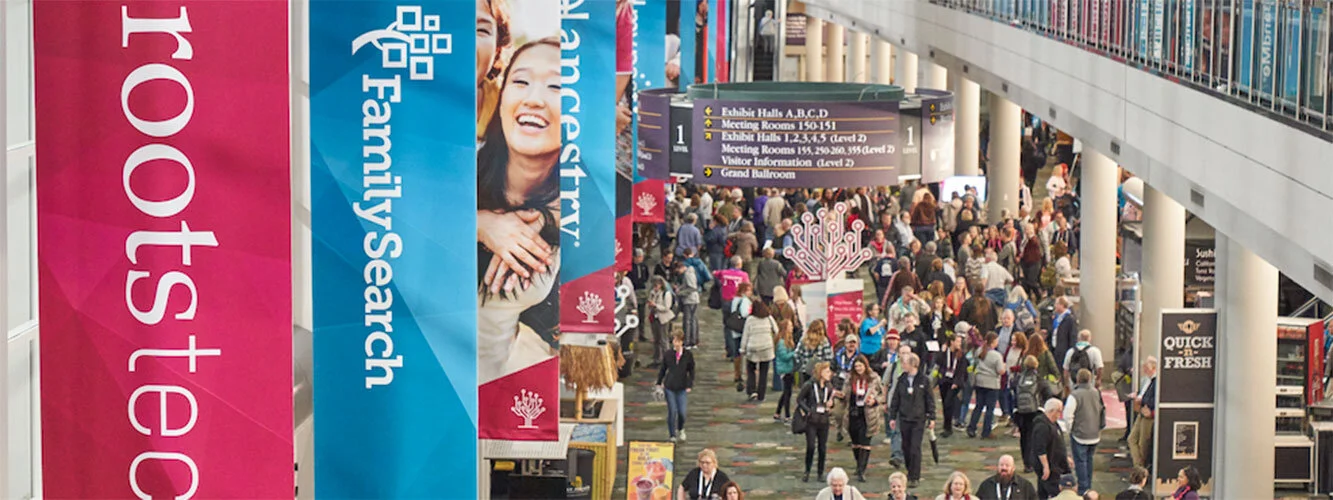
RootsTech is the premier family history conference in the world, drawing more than 30,000 people to Salt Lake City, Utah, annually.
This year marks the genealogy conference’s tenth anniversary, and it continues to draw photo organizers, storytellers, and family historians. The shared goal: To help us discover and celebrate our stories.
“Discover the story of you” virtually
If, like me, you can’t make it to Salt Lake City February 26-29, there are a few ways to benefit from RootsTech from the comfort of your home.
This year’s Virtual Pass includes 30 sessions, up from 18 last year, and many of them will appeal to personal historians and aspiring life story writers.
The virtual pass costs $129 and gives you access to the 30 sessions on demand, so you can watch them on your computer, tablet, or smart phone any time (and more than once, should you wish). Expect them to be available 15–20 days following the end of the conference.
A few highlights for storytellers and family history writers:
Oral History for Beginners: Interviewing Is Key
Presenters: Rachel Trotter, Rhonda Lauritzen
The gist: Asking the right questions is the best way to get started telling your own story or that of someone you love, but sometimes it can be the biggest stumbling block. This class will go over the basics of interviewing. Easy and practical tips will also be shared on the best recording and transcription methods. Presenters will role-play practical application of the interview process and what to do if things don’t go as planned.
Report for Duty: Find Stories of Veteran Ancestors
Presenters: Lindsay Fulton, David Lambert, Melanie McComb
The gist: Finding the stories of the veterans in your family is a way to connect with and honor their memory and military service. In this session NEHGS experts will provide you with the tools, tips, and strategies for learning about your ancestors who served in the Civil War, World War I, and World War II.
Gathering the Life Stories of Living Generations
Presenters: Deborah Abbott, Sunny Morton, Jay Newton-Small
The gist: Capturing the memories of living loved ones is a unique opportunity. It’s not genealogy research and it’s not your personal history; it’s what lies between. There’s a delicate balance between truth-discovering and managing family relationships. This session will offer different perspectives on how to capture these life histories and also different ways you can share them.
Engaging the Family in Telling Your Family Story
Presenters: Nicole Dyer, Jana Greenhalgh, Olivia Jewell
The gist: Presenters (three busy moms with a passion for genealogy) explore modern tools that will make it fun to engage family members of all ages in the process of gathering and telling your family story in creative ways.
Other classes included in the Virtual Pass subscription focus on:
DNA testing;
genealogical records challenges;
family history best practices, tips, and tools;
and specific heritage research, including for families descended from Germany, France, Scandinavia, Africa, England, and Ireland.
Browse the full list of Virtual Pass class offerings here on the RootsTech website.
Dip into the video archives
Many past sessions are available to watch free of charge, as well, including some keynotes and educational sessions. Bookmark the RootsTech video archive page so you can listen in at your convenience, or explore a few sessions I recommended last year if you are interested in family history storytelling.
You can also explore videos by topic, such as family heirlooms, technology, and genealogy.
I am not affiliated with RootsTech in any way. This roundup is intended as a recommendation based on my own insights and experiences for likeminded family history storytellers.

Life Story Links: February 18, 2020
Vivian Gornick's book recommendations and Dani Shapiro's podcast; finding meaning in our—and our parents'—memories; capturing stories in words and pictures.
“History isn’t about dates and places and wars. It’s about the people who fill the spaces between them.”
—Jodi Picoult

Vintage valentine courtesy the Miriam and Ira D. Wallach Division of Art, Prints and Photographs: Picture Collection, The New York Public Library. “Love’s message.” New York Public Library Digital Collections.
Looking Back, Finding Meaning
“THE LAST CONVERSATION”
In the latest installment of The New Yorker Documentary series, Robert Kornberg examines his parents’ partnership through the lens of its ending. “The film, which animates the couple’s life through a stream of archival photos and videos, crescendoes to the moment when Robert visits Sarah [who has Alzheimer’s] to deliver the news of Isidore’s death.”

The difficult questions of dementia: How does a son tell his mother, who has been diagnosed with Alzheimer’s, about the death of her own husband? Listen to his recounting of the experience in the 10-minute short documentary “The Last Conversation.” Photograph courtesy “The Last Documentary,” The New Yorker Documentary series.
THE GIRL SHE ONCE WAS
“Without an archive, where is my evidence? What can I point to and declare: Those first twenty years of my life mattered?” Patricia Fancher writes. “I want someone to tell a story of an outspoken little girl, willing to take risks. But I’ve lost those memories and I have no family to tell me those stories.”
MY BIRTHDAY WISH
On the occasion of my fiftieth birthday, I decided to use social media for some story sharing—well, to ask for stories for my birthday, that is. Spoiler alert: The gifts I received in response were more touching and more generous than I ever could have anticipated (thank you!).
Collecting Stories
TRANSFORMATIVE STORYTELLING
Since 2012 students at Colby College in Maine have been visiting a retirement home to write residents’ biographies as part of the volunteer-based Legacy Storytellers. The intergenerational relationships that ensue are worth even more than the resulting books.
“COURTSHIP, MARRIAGE...AND MURDER”
A last minute offer of a cache of family letters, when finishing up a family memoir, led Massachusetts–based personal historian Marjorie Turner Hollman on the path of learning about an unsolved murder in her family.
PORTRAITS OF LIFE
“Each interview has been a journey in its own right and I listened to each individual’s life story as I photographed them. It was like taking a ride on the ‘train of life,’ trading significant and sentimental moments from their past,” says photographer Giuseppe Della Maria, creator of coffee table book Portraits of Tuscan Centenarians.
Recent Recommendations
READING LIST
These five books that made a difference in Vivian Gornick’s writing life will likely make a difference in yours, as well, with lessons including how to write a personal essay and how to find an organizing principle for a short biography.
FAMILY SECRETS
Season three of Dani Shapiro’s “Family Secrets” podcast launched this month. The show, derived from her wildly popular memoir of the same name (which I highly recommend), is worth a listen for a variety of reasons, from Shapiro's soothing voice to her warmly pointed interviewing style, from the intriguing stories to her well-chosen guests who, of late, are often memoir writers themselves (secrets, it would seem, make for fertile fodder).
...and a Few More Links
StoryCorps stories to celebrate Black History Month
Can a presidential memoir (even a ghostwritten one) give an honest picture?
Preserving family recipes is an act of love.
Short Takes

A gift to myself on my 50th birthday
As I turn 50, I have one wish: For those who knew my mother to share with me stories of her life, and for those who didn't, to share a remembrance with loved ones.

A look back at birthdays past…
I am turning 50 tomorrow. I don’t feel any of the pangs of “ugh” or “oh no!” that some of my friends have told me about upon hitting the half-century mark. On the contrary, I feel at peace and quite content to have reached this milestone, and excited about what’s to come in the decades ahead.
I don’t want much in the way of physical gifts (a box of chocolates would be nice ; ). One day recently, though, when I was on the massage table (where some of my most productive thinking happens!) I did hit upon something I truly want: to feel a connection to my mom.
Of course, I do feel incredibly connected to my mother, who has now been deceased for more than 10 years and who I think about with love every day. But I am missing her more viscerally than usual; I feel the hollow within so deeply, and crave…her glance, her hug, her presence.
My birthday wish: stories of mom
So I decided to ask for this on my birthday:
For anyone who knew my mother, could you please take a few minutes to share a remembrance of her with me? It could be a tiny moment or a big one, a faint glimmer of a memory or one you hold dear… Honestly, hearing stories of her through your eyes is a gift unlike any other, and one for which I would be most grateful.
For those who did not know my mom, please take the time to share memories of a lost friend or family member with another loved one! I have goosebumps thinking of the unanticipated joy you may bring to another, and the generous act of sharing your story will be rewarding for you, as well—I promise.
Whether the person you are remembering passed away a day ago or 50 years hence, the remembrance will be welcomed as a gift. It is my sincere belief that stories heal, that memories shared feed our souls, and that the legacies of those we have loved and lost are written upon our hearts.
With love and gratitude,
xo, Dawn

…and more recent ; ) I am grateful for my blessings on the eve of turning 50, and reflective on the past.
“It is my sincere belief that stories heal, that memories shared feed our souls, and that the legacies of those we have loved and lost are written upon our hearts.”

Life Story Links: February 4, 2020
A wealth of good reading on topics including Holocaust remembrance, telling our own stories, and bearing witness to the stories of others.
“Tell your story. Take the data of your life and turn it into real people doing real things and you will move mountains. You will change the world.”
—Dave Lieber

Camp buddies, Christmas Seals Camp, Haverstraw, New York, January 1, 1943. Photograph by Gordon Parks, courtesy Library of Congress.
Bearing Witness to Stories of Others
THE FINE ART OF LISTENING
“Good listeners ask good questions. One of the most valuable lessons I’ve learned as a journalist is that anyone can be interesting if you ask the right questions.” Kate Murphy, author of You’re Not Listening: What You’re Missing and Why It Matters, on how to talk less and listen more.
CREATING A NARRATIVE IDENTITY
“When the future is running out, can we make more of the past? I often struggle with my role as a caregiver for patients at the end of life. I know the most healing things I can offer aren’t the things I usually do,” writes Dhruv Khullar, M.D., M.P.P. in this thoughtful piece. What are those healing things? “To sit. To listen. To explore what it’s all meant.”
FULL CIRCLE
A son’s photographic journey through Alzheimer’s with his dad results in a grant with which he plans to create a book. What’s up next inspires me just as much: “He has begun making appointments with his mother, who is living in his childhood home, to photograph her…. She plays Mahjong, goes to the grocery store, keeps busy. She is full of life. And he wants to be there with her, documenting it.”
FIGHTING FOR THE ANONYMOUS
“It hurt like hell to hold her story. It hurts like hell to tell it. It would hurt a thousand times worse than hell if I hadn’t stopped to hear it. We are to blame when we do not memorialize the living,” writes Beth Kephart in this “memoirist’s chant.”
Telling Our Own Stories
SEALED WITH LOVE
“A different human wrote to the 24-year-old me than the one who wrote to the 44-year-old, but there are aspects of her in these later ages,” writes Ann Napolitano, a novelist who writes to her future self every ten years. “One of the lessons in these letters is that our lives have chapters—I just happen to have an envelope to mark each of mine.”
NO EXCUSES
For anyone intimidated by the idea of writing their life story, here are four specific tactics to write their way in, one memory at a time, and finally get that memoir started.
PICTURES HOLD STORIES
“Photos will spark your memory much better...if a small number of them are curated into an album. This more manageable collection of photos will increase the chances you’ll engage with them on a meaningful basis later on.”
Voices of the Holocaust
January 27, 2020, was International Holocaust Remembrance Day, and many media outlets helped to remember and honor the six million Jewish victims and millions of other victims of the Holocaust. A handful follow.
NEVER FORGET
Edith Fox sometimes told friends she wanted the words “Holocaust Survivor” on her tombstone. But she didn’t want to talk about what she had endured. It was simply too painful. Until her health recently began to fail and she decided, at age 90, that she didn’t want her story to die with her.
“LETTER FROM AN UNKNOWN WOMAN”
In an excerpt from A Bookshop in Berlin: The Rediscovered Memoir of One Woman’s Harrowing Escape from the Nazis, Patrick Modiano introduces us to the sweeping journey of Françoise Frenkel's No Place to Lay One’s Head, which Modiano opines belongs in the company of literary giants.
FACES, LIVES
Survivors: Faces of Life After the Holocaust is a photo portfolio by Martin Schoeller, who “felt that it was his professional and personal responsibility to not only reflect on and learn from the Holocaust, but to help memorialize it” with these unflinching portraits of survivors.
IN THEIR OWN WORDS
Echoes of Memory is an ongoing collection of survivor reflections and testimonies from the United States Holocaust Memorial Museum. The remembrances are varied and poignant, well worth reading—and sharing.
...and a Few More Links
Renovated museum celebrates New Orleans' Italian history; Sicilian visitors can also learn about their own personal history.
Using cutting edge technology to recover an audio treasure
Maia Fischler of Life Writer Personal Histories in Oregon celebrates a recent autobiography completion.
Residents of a senior living community in Minnesota have released their third book of personal histories, Distinctly I Remember: More Stories We Love to Tell.
Tips on archival preservation of your papers and mementos
How Phillip Lim learned to cook by following his nose back to the fragrant dishes of his childhood.
Helping young kids create a grandparent journal
Short Takes
Dawn Roode’s curated roundup for the week of Sept. 23, 2026, is overflowing with recent reads on memoir, life story writing, and family history preservation.