
Memories Matter
Featured blog Posts

READ THE LATEST POSTS

Don’t call it a memoir. Just write your life.
Sometimes the idea of telling our "life story" is overwhelming. If we think of memoir as a series of smaller life narratives, though, the way in becomes clear.

Blogger and memoir writer Jerry Waxler says, “Vast numbers of people are aspiring to become storytellers, turning this into a boom time for the story arts.” Waxler teaches workshops where, he says, “people come with such longing to try to turn life into story.” That’s why people come to me, as well.
Telling stories
Why write your life?
Far from being narcissistic, “memoir is about handing over your life to someone and saying, This is what I went through, this is who I am, and maybe you can learn something from it,” says Jeanette Walls, author of The Glass Castle.
“It’s honestly sharing what you think, feel, and have gone through. If you can do that effectively, then somebody gets the wisdom and benefit of your experience without having to live it.”
This insight could as easily apply to a different type of writing about your life.
Writing a memoir not only sounds intimidating, but it also can seem lofty, maybe a little out of reach. Telling stories, though—that’s something accessible, more easily accomplished. And if done right, those disparate stories can have an equally profound effect on your family members and loved ones.
For that’s who I encourage you to share your story with: your children, and their children after them. Imagine the gift you’ll be giving when you share stories that make them laugh, cry, and know the reach of love.
Short stories, bound together by narrative thread
As a journalist, I am all too aware of the appeal of bite-size information (I have watched long-form journalism fall by the wayside as the media landscape has evolved over the years). We’ve become accustomed to sharing thoughts in 140 characters or less, and captioning our filtered Instagram photos for the greatest #impact.
But while I recommend sharing your stories in mini-narratives (and sometimes even list form), I don’t do so because of this trend toward brevity.
I suggest this form because
I think it engages people most readily and provides just the right amount of detail to both inform and tug at the heartstrings;
it falls within the range of most people’s writing ability; and
it is do-able (the worst-case scenario in creating a family narrative is to never do it, whether because the task is too daunting or it’s taking so long you never finish!).
And when you work with a qualified editor to help you find the narrative thread that binds your stories together—to add context, uncover meaning, and invite reader engagement—that once seemingly unreachable goal of writing a “memoir” is suddenly within reach!
Where to begin?
Consider…
writing in a daily journal,
setting aside two hours per week to devote to your life story writing,
or finding a likeminded partner with whom to exchange your writings (both to give you a reader and to provide a form of accountability).
If you would like to preserve your stories but you know you will never sit down to write them yourself, reach out to see how we can work together; often a personal historian is the answer for an aspiring memoirist who hasn’t yet taken the first step.
A while back I wrote about easy ways to find your way into life story writing, so if you’re ready to start, read this first!
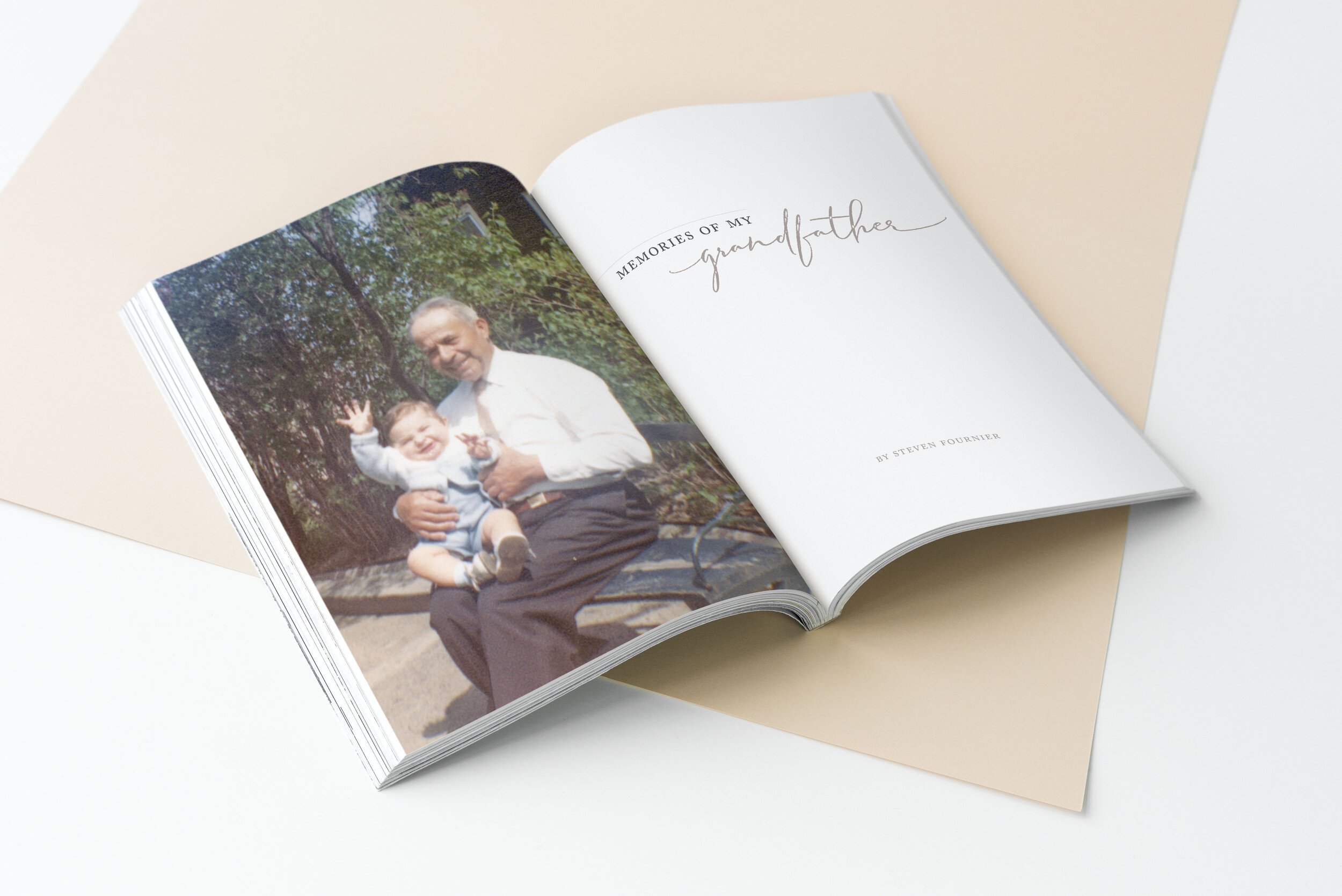
How to plan a life story book in 3 simple steps






“Stories through the vessel of cherished food memories”
Meet the story- and food-loving host behind the inspiring podcast The Storied Recipe, then click on a few of my favorite episodes for a taste of her interviews.

On The Storied Recipe podcast host Becky Hadeed, pictured, invites guests to share their stories through the vessel of cherished food memories.
Podcast recommendation: The Storied Recipe
If you look at the Instagram feed for The Storied Recipe you’ll be excused for thinking that the founder is simply a food photographer. Becky Hadeed is, of course, a photographer who turns her lens (rather gloriously) to food, but she is so much more, and at the heart of all she does is a bone-deep respect for story.
On The Storied Recipe podcast, Becky begins each episode with a few words describing her mission: Giving a platform for her guests to “share their stories through the vessel of cherished food memories,” thereby inviting us all to “honor those that have loved us through their cooking.”
And there’s the attraction for me, as you can imagine! I have written often about the power of smells and tastes to conjure memories, to transport us back to our childhood kitchens. If someone is a reluctant storyteller, it’s often their food memories that get them going.
Becky’s conversations with her podcast guests are fairly wide-ranging, but they somehow always circle back to food stories and a cherished recipe (which Becky cooks herself and photographs in her garage studio).
It’s not surprising, either, that my favorite episodes highlight stories from “everyday people” who happen to light up with the telling of their food memories. Whereas we would expect a chef or a cookbook author to be inspired by the foods of their past, it’s the regular folks talking about their family members and the tastes of their childhood that are often most inspiring.
The person behind the podcast
Becky posits that her love of story came before food, but it’s a close call.
“I always say that reading was my first love, because when I used to go to the library or open a new book (and I opened hundreds every year, as a child), I got the same feeling of happy butterflies that I got when I saw a crush! Reading gave me comfort and insight and a way to occupy my mind.”
She says she’s always seen “individual stories as the best way to make sense of history and the world.” As with so many of us, that belief likely started with tales told by her grandparents, who resided next door to Becky when she was growing up, as well as her great-grandmother, who lived to 103. Becky loved hearing stories of their lives and asking them for more—and more!—detail. “So this idea that personal story is the best way to learn about culture and heritage and history was just...it was so obvious to me.”
Becky is a naturally curious soul who still seems surprised when someone expresses gratitude for her openness. People have often told her how “they found themselves sharing things with me that they never shared with anyone else,” she says.
Listen to a few of her podcast episodes and you’ll see why: Becky is what I call a generous listener. Her questions spring from a well of both genuine curiosity and openhearted respect. In today’s world (as I know all too well from my own experience as a personal historian), giving someone our full attention and asking questions that convey real, engaged interest—well, it’s all too rare.
And because Becky’s love for food runs parallel to her love for story—and because her photography began to shine a light on food—it was only natural that her podcast allow guests to tell their stories through the lens of food. She says she feels those same butterflies that she gets while reading when she is in the kitchen, “when I figure out how to put together all the random things I have in my fridge, when I see the light falling on the carrots I'm chopping, or when I see a new recipe I want to try.”
The gift of cherished food memories
“What I really want to do is to take meaningful photographs of food for people that celebrate the relationships in their lives,” Becky says.
That means more often than not the foods Becky cooks and photographs are humble fare that remind a guest of mom, grandpa, the homeland, or childhood. Sure, there’s a complex recipe here and a vaulted dish there, but there are also basic tea cakes and beloved street food.
Becky’s own go-to food memory is like that. It bestows comfort and a return to a simpler time—and, as Becky says, it “proves that it’s the story and the people that really matter.”
“My mom is an excellent cook—she’s really the best cook I know. But that special memory I go back to the very most came from my grandmother, who wasn't a cook at all. She always made me root beer floats. Just ice cream and root beer, that's it. I drank them through her silver (real silver) iced tea straws. They were delicious and made me happy.”
When Becky’s grandmother died, Becky inherited her silver (and uses it in her food photography still). “In fact, I'm drinking an iced coffee through one of those straws right this minute,” she tells me.
That straw holds stories for Becky, and continues to make her feel happy. And it’s the inherited cake pans, the passed-down recipes handwritten on index cards, and the familial food knowledge that Becky hopes to get her guests talking about—the little (often surprising) things that make them happy.
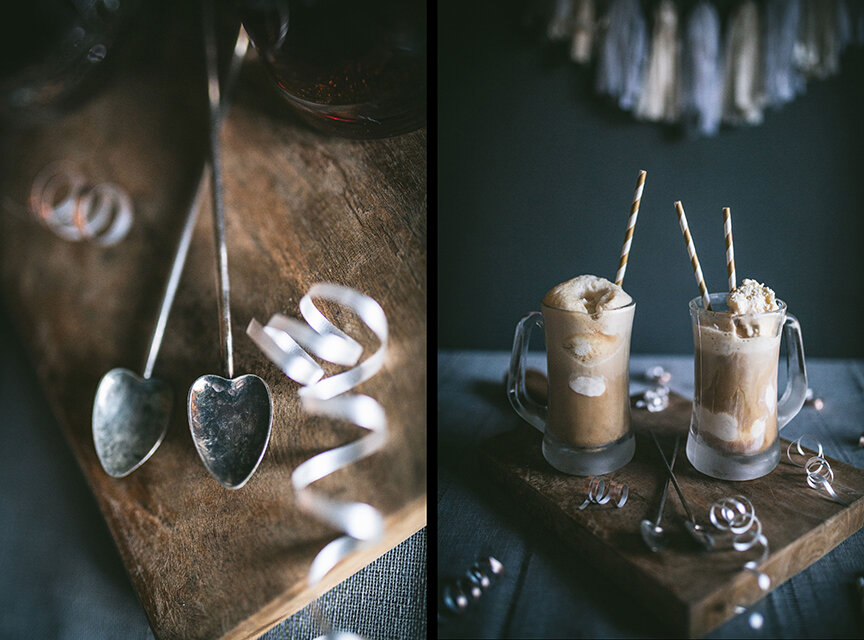
The silver spoons Becky inherited from her grandmother and a couple of root beer floats were the subject of some of Becky”s earliest food photography. “They were delicious and made me happy,” she says of the treats her grandmother made for her as a child.
Are you Becky’s dream guest?
If you’ve got a treasured food memory you’d like to share, consider applying to be a guest; you just might turn out to be on my next favorite episode.
“The beauty is in the mundane,” Becky says. “It’s the everyday people whose stories are not told over and over again that hold the real wisdom and beauty.”
“Time and time again, I've gotten on the phone with a regular person and we've talked for hours (!) about their grandmother or their father and I get off in tears, so in awe of this person's fortitude and love,” she says.
On the other end of the spectrum, if you know a chef or a high-profile foodie who tells captivating tales around the dinner table, why not turn them on to the podcast? Maybe they’ll want to share their untold food inspirations, too. (Rahul Mandel, wanna dish? Becky says she’d love to hear about Bangladesh and your mom and about so much more than your (fabulous) cakes!)
Favorite episodes, free download & related links
My favorite episodes of The Storied Recipe podcast:
“Food is very emotional.”
Selina Göldi on the soul of a place, how cooking in the French countryside helps her reconnect with the instinctual aspect of cooking, “the map of her childhood landscape” in Switzerland, and entertaining with her whole “heart and body and soul.” Oh, and a recipe for a German no-bake layered cake that her grandmother and mom prepared for celebrations.

“They would always forget to put something in.”
Becky speaks to her longtime friends Robert and Lisa amidst lots of laughter, musings on what exactly is pudding? (no real conclusions drawn), memories of stirring the Christmas pudding for good luck, and how much whiskey to pour in, give or take. (Sorry, this family recipe’s a secret.)

“I found my entire family in a Ukranian village.”
American-born Lydia on the power of calling herself “Piotr’s granddaughter,” discovering the foods of her childhood on a foreign table, and trading shots of homemade vodka with a dying woman. Oh, and a recipe for (a lot!) of varynyky (otherwise known as pierogis).

Seth Greenberg: Lessons from an Iconic NYC Bakery and Laura Clark: Thanksgiving in Italy are two more of my favorite episodes.

Freebie I know you’ll love:
The DIY Storied Recipe Book, which you can print at home, creates space for you to preserve your recipes and the stories behind them.

The Storied Recipe Instagram feed:

After a recent account hack, Becky lost thousands of followers, so the feed is still building; you’ll get a taste of her food photography as well as updates about new podcast episodes.
All food photographs by Becky Hadeed, courtesy The Storied Recipe.
Related reading:
Check out more podcast recommendations for life storytellers, creative entrepreneurs, oral historians, and anyone who loves a captivating first person story.
Read more posts with first-person food memories and tips for preserving your own.
Our A Taste of the Past recipe card set pairs nicely with a bottle of burgundy—a most thoughtful hostess gift or a little homespun comfort for yourself anytime.
What about YOUR Food Memories?
Care to preserve your own food memories—or a whole bunch of your life stories with a few luscious food memories thrown in? I’d be honored to interview you for a book of your own. Reach out to see how we can work together!

Life Story Links: August 11, 2020
On the craft of life story writing, commemorating lives lost, enticing memoir excerpts, digital preservation tips & more recommended reads for memory keepers.
“We have become a generation of unstorytellers…. We need to return to the campfire. And we can. It’s as simple as saying to someone, Tell me the story of your life. And when they’re finished, say, I’d like to tell you mine.”
—Bruce Feiler, Life Is in the Transitions

Postman, 1896. Photograph courtesy The Miriam and Ira D. Wallach Division of Art, Prints and Photographs: Photography Collection, The New York Public Library Digital Collections.
Saving Family Stories
A LITTLE MYSTERY
If you are unsure about an ancestor’s real life, don’t flesh out their story with conjecture and imagination, suggests Patricia Pihl, a personal historian based in Western New York. “Transparency will bring clarity to the picture of our lives, a true gift for future generations.”
(NON)TRADITIONS
Nashville–based family historian Taneya Y. Koonce wonders “I don’t have family traditions. Or do I?” Her take: “Recording facts and snippets about relationships and values for future generations can add as much to your family story as passing down the ways your family celebrates the holidays or other more conventionally considered traditions.”
Gone but Not Forgotten
LIFE CELEBRATIONS
As part of StoryCorps’ efforts to help people commemorate lives lost during the Covid-19 pandemic they have put together a two-page guide with genuinely helpful advice for setting up and recording a memorial conversation.
STORIES FROM POST-LOSS LIFE
“Before [my mom and grandmom] died I hadn’t even thought to attempt making a brisket or kugel or kasha and bowties, but afterward I felt this deep urgency to learn how to carry the tradition forward.” Rebecca Soffer talks to Allison Gilbert about keeping lost loved ones’ memories alive.
Inside the Issues: Recent Magazines & Books of Note
LIBRARY LOVE
The new issue of Broadside, the magazine of the Library of Virginia, includes an array of summery images from their digital collections, the intriguing ancestry of former football player Torrey Smith, a behind-the-scenes look at their Conservation Lab (with tips for preserving family papers), and a spotlight on a new book that finds the untold stories—“real-life human dramas”—within historical records.
IN A TIME OF WAR
Coby Blom-de Groot was 15 years old when her parents brought home a baby to shelter during the German occupation of Holland in 1943. She kept a diary about the child, including photographs and anecdotes, for her parents to read when they could be reunited. “That precious diary confirmed for me that Ria…was deeply loved,” her sister Sonja said. Read the whole issue of Yad Vashem Jerulsalem magazine, in which this story appears.
MEANING-MAKING THROUGH STORY
We’re in the midst of a collective “lifequake,” and author Bruce Feiler has help for how to navigate the uncertainties that come with all this change (hint: there might be some storytelling involved). Why you should read Life Is in the Transitions.
Recommended First-Person Reads
MARRIAGE STORY
“He was in New York, and I was in Seattle, but we had credit cards. We’d deal with the consequences later. The first time we kissed was in the kitchen of my apartment, against the closed door of the dishwasher in mid-cycle. Everything whirred.” Read an excerpt from The Fixed Stars: A Memoir by Molly Wizenberg
POETIC LICENSE
“Dad hadn’t been surprised when I’d told him I was interested in reading through his letters; he assumed everyone would be.” Read a brief yet enticing excerpt from Gretchen Cherington’s memoir of growing up with poet laureate Richard Eberhart as her father.
In Pictures
“WHO IS THAT?”
Bill Shapiro has shelf upon shelf of found photos sorted into archival boxes. “I love these pictures,” he writes. “I also hate them. They remind me of time going by. They remind me of what I had and what’s gone.” Read more about the strange lure of other people’s photos.
DIGITAL PRESERVATION
As an early supporter of Permanent.org I have uploaded photographs to their archive and am following their journey as a nonprofit dedicated to creating “a new paradigm for secure cloud storage.” I believe their mission is worthwhile—low-cost, long-term digital storage for anyone “leveraging the same funding models used by museums, libraries, and universities for centuries.” Read about how they reached their phase 1 fundraising goal; get started with a free gigbyte of storage; or add space as you need it ($10 per gig).
...and a Few More Links
In the latest issue of Creative Nonfiction: Lee Gutkind on memoir now
Why we reach for nostalgia in times of crisis.
A family historian’s process for making ancestor books
Milwaukee–based personal historian Mary Voell announces virtual guided autobiography classes beginning in September.
Milan Kundera will donate his archive to his hometown library, in Brno, Czech Republic.
Short Takes

Book recommendation: “Life Is in the Transitions,” by Bruce Feiler
Bruce Feiler's latest book, Life Is in the Transitions, offers up a helpful toolkit for dealing with life's curveballs through a lens of storytelling.

Bruce Feiler’s new book, Life Is in the Transitions: Mastering Change at Any Age, was released July 14, 2020 from Penguin Press.
If you are into family history at all, chances are you’ve heard of Bruce Feiler. He is one of the most-oft quoted experts on the power of storytelling in genealogy circles. After his article “The Stories that Bind Us” went viral in 2013, Feiler went on to author a book that dove deeper into the topic and headline the 2016 RootsTech conference.
Feiler calls himself a “lifestorian,” and his current book goes far in legitimizing that title.
This month he released Life Is in the Transitions, a book based not only on research from past psychological and university studies, but on a trove of data he collected himself over the course of three years when he roamed the country (all 50 states, in fact) interviewing people about their lives.
Not just any old meandering, curiosity-fueled interview, either, but what Feiler calls the “Life Story Interview,” based on narrative studies pioneer Dan McAdams’s template, modified for his purpose today: “My goal is to understand how we all live now—how we navigate the transitions, disruptions, and reinventions in our lives in a way that allows us to live with meaning, balance, and joy.”
Feiler includes the interview template in the final pages of the book, and this, to me, is one of the most valuable extras he provides.
For as someone who interviews people for a living—helping you discover and articulate your own stories, and ultimately guiding you to find the meaning within your experiences—the straightforward yet flexible form of the Life Story Interview provides me with another way to do just that. Also: It gives YOU the tools you need to have enlightening and meaningful conversations with family members (something that both Feiler and I hope you do!).
I read the book with two different agendas:
One, as Feiler hoped: to better understand how to weather the myriad transitions we face in our modern lives, not only philosophically, but practically—to discover a toolkit for handling the changes and coming out (often better for it) on the other side.
Two, as a personal historian: to find more proof, more relatable anecdotal and data-driven evidence, that crafting and sharing our own personal narratives can be healing, productive, and best of all, meaning-making.
And yes, I got this and more from my reading.
Why You Should Read this Book
1 - As a Tool for Your Own Discovery
Feiler’s premise is simple: We are no longer living in a straight line with predictable milestones shaping our lives. Rather, we are bombarded by changes (more often, and at varying times).
“We experience life as a complex swirl of celebrations, setbacks, triumphs, and rebirths across the full span of our years,” Feiler writes. And yet, all of our coping mechanisms are based on this outdated notion of life as a single forward trajectory.
Moreover, our expectations of life are based in this same idea. If we correct that—if we can instead expect the nonlinear life trajectory as normal, even inevitable—we’ll be much happier, Feiler posits. “Trained to expect that our lives will unfold in a predictable series of stately life chapters, we’re confused when those chapters come faster and faster, frequently out of order, often one on top of the other.”
A cursory reading of Life Is in the Transitions goes far in letting us know that we’re not alone in our nonlinear experience of life; a deeper reading provides myriad opportunities for self-reflection as well as strategic approaches for navigating all those curveballs life is sure to yet throw our way.
And considering we’re all in the midst of what Feiler refers to as a “lifequake” as we navigate the Covid-19 pandemic, what could be timelier?
2 - as a source for some inspirational human stories
It’s easy to get lost in the mini-narratives of people’s lives that Feiler includes throughout the book: they’re placed in certain chapters to illustrate certain tenets of Feiler’s newly proposed paradigm of life transitions; but they’re also simply enjoyable to read, relatable even as they tell of one-of-a-kind scenarios. None of the transitions that are described in these stories are straightforward or simple—but they are real and compelling, and in the end, quite inspirational.
3 - as motivation for talking to your family about their stories.
“We have become a generation of unstorytellers… We need to return to the campfire. And we can. It’s as simple as saying to someone, Tell me the story of your life. And when they’re finished, say, I’d like to tell you mine.”
I could not agree more, and with Bruce’s easy-to-follow Life Story Questions on hand, I hope you will too!

A Few of My Favorite Quotes from the Book
“Lives are made up of memories, but when those memories remain episodic and disconnected, their impact dissipates.”
“Storytelling allows us to take life events that are exceptional, unforeseen, or otherwise out of the ordinary and domesticate them into meaningful, manageable chapters in the ongoing arc of our lives. This act of integration is storytelling’s greatest gift. It conventionalizes the unconventional. It transforms the untellable into a tale.”
“Everybody has a story, and not always the story the listener or teller expects to hear. The sharing is what brings out the surprise.”
“Transitions are autobiographical occasions.”
“Stories stitch us to one another, knit generation to generation, embolden us to take risks to improve our lives when things seem most unhopeful.”
Note: This is an unsolicited review of a book I purchased at full price. I did not receive any compensation or free products in exchange, and any endorsements within this post are my own.
Affiliate disclosure: As an Amazon Associate, we may earn commissions from qualifying purchases from Amazon.com.
Related Reading
Listen to an interview with Bruce Feiler on dealing with life-altering transitions (NPR).
Read the Kirkus review: “An unusual self-help book, of particular use to those contemplating writing a memoir or otherwise revisiting their past.”




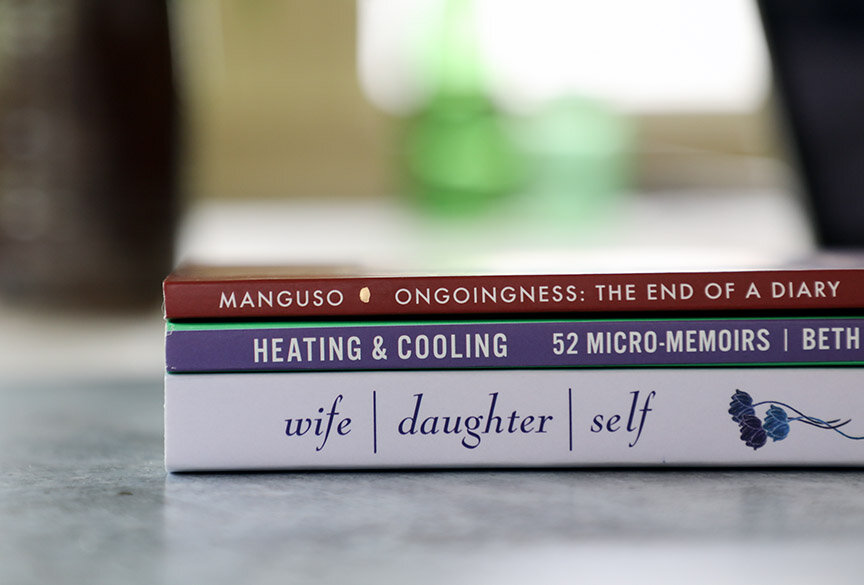
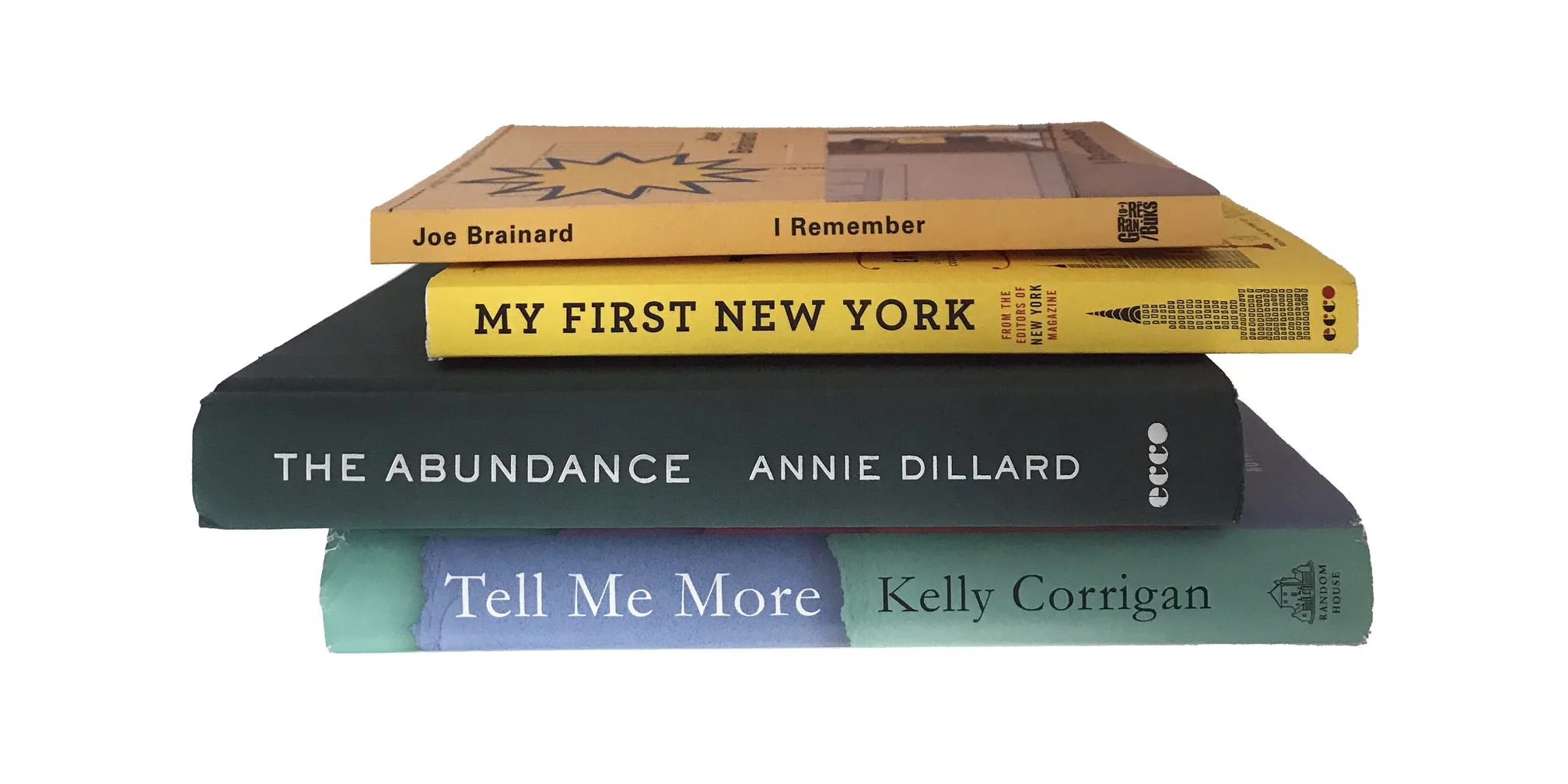


Have you read Life Is in the Transitions? I’d love to know what you think. Share one of your own favorite quotes, lessons, or insights in the comments, won’t you?

Life Story Links: July 28, 2020
Lots about memoir (writing and reading), free learning opportunities, the complexities of family history, and, of course, recommended first-person reads.
“I will always believe that storytelling matters, that glimpses of lives different than ours—whether they come through images or stories—have the potential to change us by opening the world to us and fostering compassion. We are so much better when we listen to each other.”
—Vikki Reich

With professional baseball’s opening day pushed back from March 26 to July 23, our national pastime is getting a late start this year due to Covid-19. This vintage photo celebrates the Negro National League Champions of 1935, the Pittsburgh Crawfords. Photograph courtesy Schomburg Center for Research in Black Culture, Photographs and Prints Division, The New York Public Library Digital Collections.
On Craft
THE BUILDING BLOCKS OF MEMOIR
“It was really rewarding when my 60-year-old Italian mother-in-law, who I adore, said she saw herself in parts of the book. We’re completely different, and yet, my narrative joined us.” Davon Loeb, author of the lyrical memoir The In-Betweens, addresses the idea of finding universality in individual stories and filling in the gaps of his memories without fictionalizing.
WHERE TO BEGIN?
It's important to focus your life story writing on themes that both hold real meaning for you and that you feel will resonate with your family. Last week I wrote about how to identify impactful themes for your memoir.
“THINK SPECIFIC, THINK SMALL”
“One of the most common concerns we hear from prospective clients is that first-person writing seems intimidating, maybe even overwhelming. And one of our most common responses is to break a project down into bite-size pieces,” Samantha Shubert of NYC–based Remarkable Life Memoirs advises.
Time-Sensitive Offerings
GRIEF IN THE SEASON OF COVID
The workshop series “Remembering Our Loved Ones During an Unprecedented Time” from author and grief expert Allison Gilbert continues tonight at 8pm ET with a session discussing ways to meaningfully organize your family photos; and on August 4 with a topic of clearing clutter while staying connected to heirlooms that hold stories.
LIKE HIDDEN CAPTIONS
Learn best practices for adding metadata to photos so your pictures are tagged with names, dates, and other identifying info that make it easier for you to find them when you need them (and so future generations will know who's in the pictures, too). This one-hour class is free for now ($49 value).
LIMITED FREE SHOWING
The Public Theater’s The Line, a documentary-style play, is available to watch free until August 4, 2020: Crafted from firsthand interviews with medical first responders during the COVID-19 pandemic, The Line stars Lorraine Toussaint, Alison Pill, John Ortiz and other actors who bring their stories to life. I highly recommend finding the time to view this original work by Jessica Blank and Erik Jensen which has been called “immediate and urgent” and “stinging with truth.”

Lorraine Toussaint in The Line, available to view free on The Public Theater’s YouTube channel through August 4. Actors speak directly to the camera using words captured from interviews with real-life first responders to powerful effect.
Family History Finds
A CAPTIVE AUDIENCE DURING COVID
The ranks of amateur genealogists have grown during the coronavirus pandemic, and they’re boring their sheltered relatives, reports the Wall Street Journal. “Genealogy is boring. But everyone loves a good story and family history is filled with very good stories.” Personal historians suggest focusing on the scandals you unearth to drum up interest.
WRITE IT OUT
You never know how recording your own story will impact others, but you can always know that your story is important—it matters!” This short blog from RootsTech offers up ideas for journaling during hard times.
PHOTO MEMORIES
Seeing her precious family photo, damaged in Hurricane Harvey, now fully restored and framed, one woman declared that maybe “I can be restored back to new,” too. Watch students working with Adobe’s “The Future Is Yours” program return lost memories to their owners in the moving video below. (While this recording is two years old now, I am sharing (a) because it’s refreshingly inspiring to see pre-pandemic hugs and (b) because you can volunteer for the ongoing program to help others.)
First Person Stories that Resonate
BLACK AND WHITE
“When I told my father I was going to marry Jake he said, ‘If you marry that man you will never set foot in this house again.’” Mixed-race couples from four generations in Britain tell their stories.
HISTORY REMEMBERED
Only about two percent of the men and women who served in the American armed forces from 1941 to 1945 are still alive. This piece gathers stories from participants in some of World War II’s most iconic moments, including from the only surviving witness of the German surrender signing.
In the Telling
WHOSE AUTHENTICITY?
“What I know for sure is that in order to create new ways of being, Native peoples must reclaim and revalidate the truth in our stories,” Taylor Hensel writes in this piece on indigenous ways of being and the idea of narrative as power.
THE IMMEDIACY OF THE MOMENT
“The velocity of my mother’s death and my distance from it all feel like a death in brackets. There is no touch, no contact, no final conversations, no holding the hand of the dying.” Jennifer Spitzer on losing her mother to Covid-19 and reading Virginia Woolf.
UNEXPECTED ENCOUNTER
“I was in Italy, having lunch with friends, and one of them brought out a volume of Borges stories—he happened to be reading them. I said, ‘Let me tell you about my travels with Borges through the highlands of Scotland,’” Jay Parini writes. His friend told him to write a book; Borges and Me: An Encounter comes out in August.
A POET TURNS HER HAND TO MEMOIR
“I took with me what I had cultivated all those years: mute avoidance of my past, silence and willed amnesia buried deep in me like a root.” Natasha Trethewey on the seven-year process of writing her mother's story in Memorial Drive: A Daughter’s Memoir.
...and a Few More Links
How to curate your family photo slideshows like a professional photo editor
Alex Trebek “has written a memoir of consummate caginess.”
Creative tributes in place of a traditional memorial service
Autobiographical writing prompt: the story of everyday things
We’re all field workers in the effort to document the (many) happenings of this year.
Local newspaper turns the spotlight on Massachusetts–based family history film company Second Avenue Video.
Maryland–based personal historian Pat McNees offers up an anti-racism reading list.
On learning to decipher her father’s past in Nazi Germany, and the nuances of family history
Short Takes

Jump around! Jump around!
You haven’t lived in a straight line, have you? Ditch your chronological storytelling and instead, jump around. Tips for developing impactful themes for your memoir.

Has the path of your life been one straight line? Yeah, didn’t think so—so why not jump around in time in your memoir for a more compelling read?
A straight line might be the shortest route between two points, but our lives meander and double-back. We haven’t lived in straight lines, so why should a story of our life make it appear so?
You might tell me about your life summarily—an outline quickly sketched. That’s “like the blueprint of a house waiting to be built, the most important details merely suggested by its basic lines,” writes Erica Bauermeister in one of my favorite novels.
What you might say in a single sentence—“we got married, had kids, and lived in that house until my wife died”—holds endless moments waiting to be explored: a lifetime in a string of 14 words.
But if you’re not going to tell your life chronologically—in a straight line—then where the heck do you begin?
Narrowing down themes for a life story book
Rarely do I think it’s a good idea to approach a life story book as a full chronological account of a life. That approach reminds me of history tomes about past presidents, for instance—books that go down like medicine, rather than enjoyable (and enlightening) reads.
Instead, approach your storytelling in smaller bites. One approach I often recommend is writing shorter vignettes and weaving them into a broader tapestry about your life. But even if you prefer a longer narrative in memoir form, it is important to focus on themes that both hold real meaning for you and that you feel will resonate with your family.
In order to narrow down those themes (one of the integral steps in plotting out your life story project), some initial brainstorming is in order.
Writing about one aspect of your life
If you know you want to hone in on a very specific chapter of your life for your book, here are two ways to approach that:
Broken up in chunks of time
A Slice of Life Portrait - remembering a day in the life or one pivotal year in your adolescence, for instance; while this time period is chosen for its thematic resonance, it fits neatly into a specific period of time.
A Discrete Time Period - the war years, your time spent in a certain home, your years in medical school, your months of being homeless, to name a few ideas
Broken up in themes
For example:
Strong Women in the Smythe Clan
Our Family’s Military History
The Annual Road Trips of Our Childhood
Irish Cooking in the O’Sullivan Homes
Four Generations of Stanford Grads
No idea where to start?
It’s more likely that there is not one chapter of your life that you know with certainty that you want to write about. If that describes you, you’re in for an exciting journey of discovery.
EXERCISE 1:
Brainstorm your memories.
Brew a cup of tea or pour some wine and get comfortable: It’s time to let your mind wander back in time to brainstorm—and by that I mean: write down your thoughts willy-nilly, with no concern for order or worth, no editing as you go.
Begin writing your memories via phrases—
that time Marcy broke her leg when we were hiking
the day I found out I didn’t get into Harvard
Nonna’s Sunday sauce
Johnny’s laugh
the Maple Street tree fort
I recommend setting a timer for 20 minutes for this exercise. It’s really about doing a brain dump and seeing what comes to mind first.
These memories may serve as writing or interview prompts later, but for now they are useful in looking for patterns. Did many of your memories fall within the context of lessons learned? Or take place at your childhood home? Did one influential person from your life come up again and again?
If you see repeated themes, those may be ones you want to explore for your book.
If you do not, then hold onto this page for use as memory prompts later, and move onto the next step.
EXERCISE 2:
Interview yourself about important chapters of your life.
Some questions to ask yourself:
What have been the major turning points in my life?
What are the most impactful decisions I have ever made?
Are there times of struggle that serve as examples of resilience, or that hold other lessons?
What are the most joyful times of my life?
What is my biggest personal success? Professional?
What has been my most memorable failure?
What have been the most challenging times of my life?
Is there anything about my career or vocation that is worth telling?
Who had the most impact on me growing up? As an adult? What did I learn from them?
What values do I most want to pass on to the next generation—and are there certain stories that exemplify those values?
What you want is to uncover moments of impact. Portions of your life that hold lessons. That shaped you. That are an integral part of your personal narrative.
You might be surprised by some of your answers. Be open and vulnerable when doing this exercise—allow yourself to remember painful times and regrets, not just happy times; even if these are not at the top of your conscious mind most days, the experiences shaped you and likely hold meaning.
This exercise is similar to one I conduct with my clients during pre-interviews. During this conversation we are exploring life themes and milestones, and determining what stories to explore more deeply, what memories to mine for lessons.
When working together, it would be my job—as someone distanced from your experiences and trained as an observant listener—to suggest possible approaches to your book. If that’s something you would like to explore, please drop me a line. I’d love to chat, and a quick (no pressure) 30-minute conversation usually does the trick.
If, on the other hand, you’d like to continue working on your life story book yourself, I recommend setting aside the pages from these two exercises for a couple of weeks. Then revisit them with a fresh perspective. That little bit of emotional distance can do wonders for helping you be more objective in narrowing down what topics to explore.
No matter what, I hope you give yourself the freedom to express yourself without filters during this exploratory period. It’s not the time to edit—or to judge. Be gentle with yourself, and be open-minded (and open-hearted). Your stories deserve to be told—you might as well be telling the right ones!
In a previous post I wrote about how to break down a life story book project into three broad steps.
Now that you’ve learned how to narrow down themes for your memoir project, find out about the remaining two steps:
Organize your family archive as a resource for sparking memories.





Life Story Links: July 14, 2020
This week's reading: Finding humanity and connection via story sharing; archiving your family papers; and a plethora of first-person narratives worth your time.
“Families are united more by mutual stories—of love and pain and adventure—than by biology. ‘Do you remember when …’ bonds people together far more than shared chromosomes…a family knows itself to be a family through its shared stories.”
—Daniel Taylor

Board games play a starring role in many of our Covid diaries. This vintage photo shows the Herbster youngsters in Elizabeth, New Jersey, circa 1941. Photograph courtesy United States Office for Emergency Management, courtesy Library of Congress.
Finding Humanity & Connection via Story Sharing
HERITAGE, NOT HATE
When his family gathered after a funeral to share stories, a young Andrew Taylor-Troutman made sure to stay within earshot. “Stories are some of the best prayers,” he writes in this column in which he argues for heritage, not hate: “As a white person, I have the ability to be selective about Southern history. I could focus only upon my personal history." Alas, he does not.
“CAN I ASK YOU A QUESTION, BUBBE?”
Last week I wrote about a free guide I created with my 10-year-old son at the beginning of the pandemic, reiterating that kids can—and should—connect with grandparents intentionally, even after a loosening on social distancing guidance allows them hugs (and the ability to take one another for granted likely sinks back in).
EMPOWERING KIDS
“One thing that we have learned from decades of research in The Family Narratives Lab at Emory University is that family stories provide a foundation for feeling emotionally safe and secure for children,” Robyn Fivush, Ph.D., writes in this piece on how family stories can help us cope during the Covid-19 crisis.
Behind-the-Scenes Glimpses
A DAY IN THE LIFE
Are you working from home, too? Join Samantha Shubert of New York–based Remarkable Life Memoirs as she strives to achieve work/life balance—complete with ghostwriting, Zoom meetings, and (of course) a lot of coffee.
SHOW & TALES
“It’s like Antiques Roadshow meets The Moth,” Martie McNabb says of her signature story sharing events, dubbed Show & Tales. See how she helps other legacy professionals, and how she continues to “be of service” during the pandemic with virtual live events.
FULL CIRCLE MOMENT
StoryCorps’ recent animated video short, “My Aunties” (watch it below) documents one man’s experience of the AIDS crisis. Peek behind the scenes as the illustrator shares a glimpse of how the subject’s story intersects with his own.
First Person Stories Worth Hearing
BEEF STROGANOFF
“I have a Carl Reiner story that I hold very dear to me. I figured I'd share it today, on the day of his passing, because I hope it will bring some other people some joy the way it does me,” Matthew Rosenberg wrote on Twitter. Read the full story thread here—if you’re anything like me, it’ll bring you some joy, too, just as Rosenberg intended.
A LIFE STOLEN
John Hardy was seven years old when he witnessed his uncle kill a prominent white plantation owner in self-defense in 1925 Louisiana. Decades later, as the last family member with firsthand knowledge, he was interviewed to memorialize his account. Read about this story of racial injustice and resilience here.
ODE TO THE DADS
Los Angeles–based oral historian Ellie Kahn collected a few of her favorite stories about fathers to celebrate Father’s Day for the Jewish Journal.
FAMILY MYTHOLOGY
“I will likely never know which parts of Africa my ancestors were taken from.... But some accident of history gave me a last name that's actually pretty uncommon—one that I could use to track down a small part of my family's history.” Read part one of Leah Donnella’s ancestry story here, then click below to listen in as she gets to the bottom of her grandfather’s mysterious origin story.
Passing on Family History
SILENCES DOWN THE LINE
“In 2000, the way people got bad news wasn’t so different than how they got it back in 1929 when my great-grandmother was confined to a hospital bed.” Rachel Beanland on some of her family’s secrets, and why hiding them isn’t necessarily a kindness.
YOUR FAMILY ARCHIVE
“It is hard to know what of your family’s ‘archives’ to digitize, what to hold onto, what to get rid of, or even how to get started doing any of these things,” Philadelphia–based personal historian Clémence Scouten writes in this “ultimate guide” to archiving your family collection.
...and a Few More Links
The Mandela effect: how groups of people can all remember the wrong thing
FamilyScrybe has released its second issue of articles by and for family history researchers.
A fun oral history of Truman Capote’s legendary Black and White Ball
The souvenirs of everyday life provide a head-start on your memoir.
Short Takes
Young and old, together at last
Even as families come together, many are still social distancing from family elders. Connect grandkids & grandparents with these cross-generational questions.
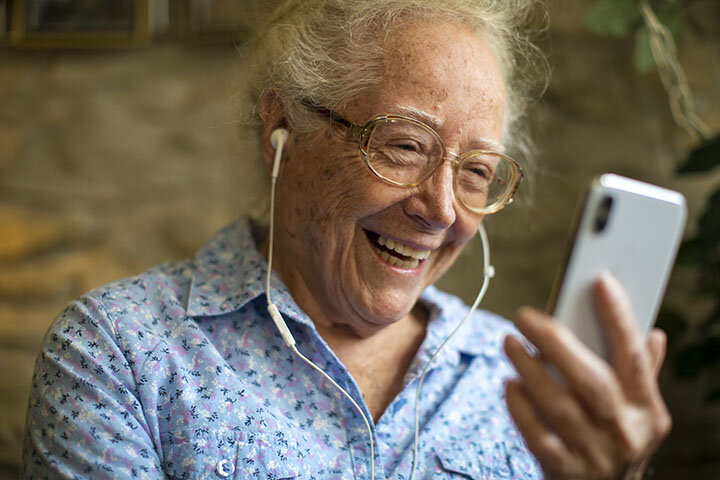
Whether separated by Covid or simply distant living arrangements, grandparents and their precious grandkids can still connect meaningfully using screens.
I’ve seen a lot of heart-swelling posts on Facebook this week showing grandkids hugging their Bubbes and Grans for the first time in months.
This whole social distancing thing has been hard on all of us, not least the generations bookending our own lives. So those hugs feel even more special and those laughs sound even more joyful when our kids and our parents are reunited after weeks on end of communicating exclusively over Zoom.
But the risk of Covid-19 persists, and many of us are continuing to take precautions (and even social distance) with older family members.
That doesn’t have to mean awkward FaceTime silences or quick escapes by the littlest in your family (even my 10-year-old has a tough time focusing on virtual conversations for more than a few minutes!).
Get them talking—really talking!
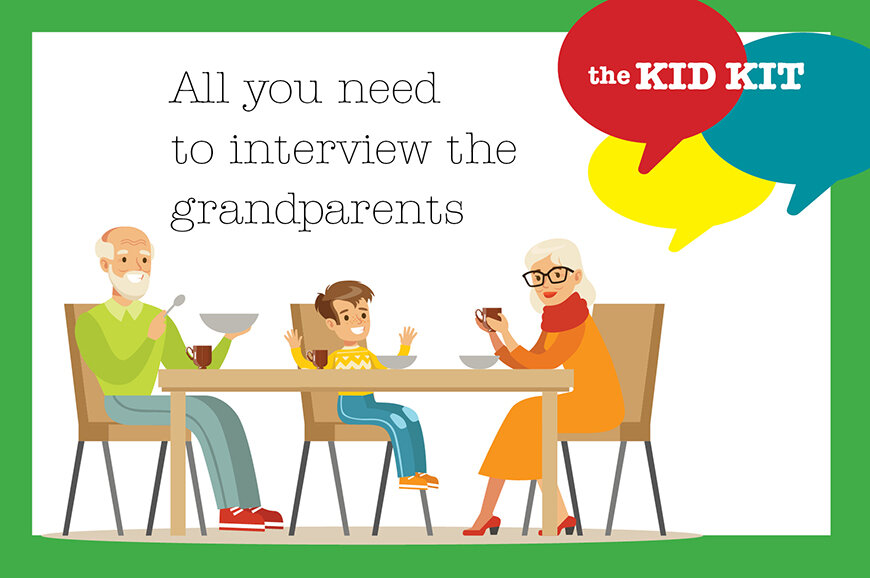
Early on in the pandemic, I worked with my son to create The Kid Kit: Everything You Need to Interview the Grandparents. We experimented with how to distribute it and whether it should become a new (paid) product before realizing: We want everyone to have this!
So we spread the word via bloggers and social media, and the response was overwhelming. I feel humbled and grateful that so many of you have downloaded this free resource, and even more psyched when you share success stories with me.
Have you gotten your Kid Kit yet? 5 reasons you should:
There are 45 family history questions that include light-hearted fare as well as thought-provoking conversation starters—something for every mood.
It includes three fun bonus activities that can easily be done “together apart.”
Bonus interview recording tips were added last-minute to make the guide even more useful during this historical time we are living through.
A fun graphic, historical timeline teaches the kids at the same time it provides more memory prompts for the grandparents.
There are even ideas for what to do post-interview, so you can be sure this valuable family history is preserved (and that the relationship between your kids and your parents continues to be nourished).
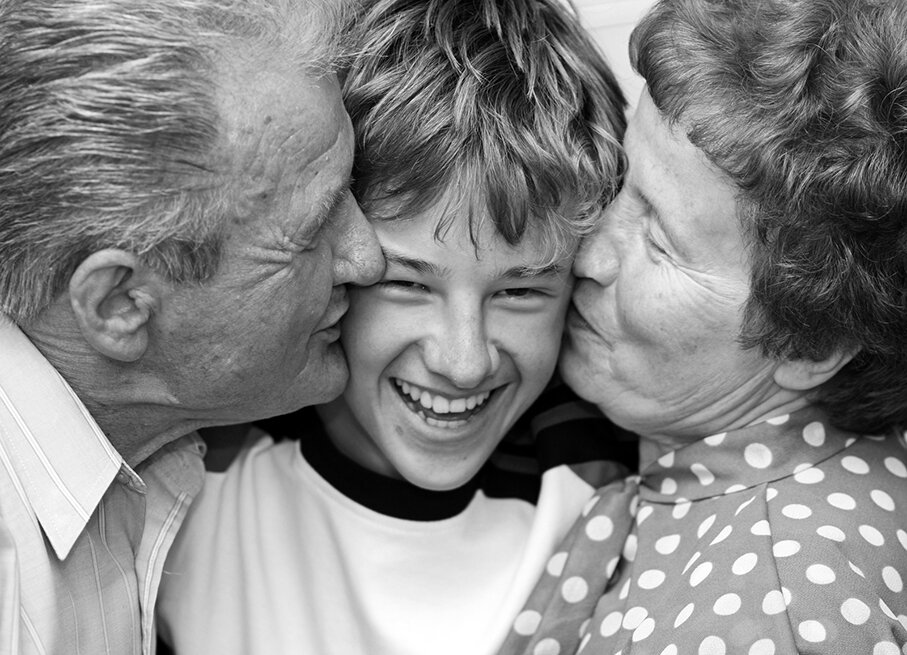
These questions can be used in person, too, you know.
While I am spreading the news now in the hopes that these questions will be a great way for kids to bond with their grandparents during the pandemic, OF COURSE everything in the kit can be completed in person, too.
Won't you please:
tell a friend about how easy it is to sign up
share your stories with me of how the interviews go (seriously, I live for this stuff!).
FREE RESOURCE: Questions, Activities & More
Get your kids talking—really talking—to your parents. They’ll get stories even YOU’VE never heard!




Dawn Roode’s curated roundup for the week of Sept. 23, 2026, is overflowing with recent reads on memoir, life story writing, and family history preservation.