
Memories Matter
Featured blog Posts

READ THE LATEST POSTS
Life Story Links: February 14, 2023
Insights from the diaries of two very different writers, new memoirs, and tips for writing your life stories in this week's curated roundup for memory-keepers.
“Love is listening.”
—Titus Kaphar
Vintage Valentine’s Day card
Personal stories, family history explored
WRITE THE WAY YOU TALK
“Any life story book passed down to the next generation is a gift—but it's an even better gift if it sounds like the real you.” Last week I wrote about how to write with your authentic voice and why it’s so powerful.
UNLOCKING THE PAST
“The power of understanding our own personal history, and then how that connects to a larger story of who we are, I think that gets to why [the Virginia Untold initiative] is so important.”
WHERE ARE THE WOMEN?
“Most women on the family trees of the wealthiest families are reduced to little more than vital statistics.” Here’s how to elevate female role models in your family story.
LISTEN IN
As part of a season nine initiative, the Finding Your Roots team has been holding free national conversation events online. The most recent one, below, centered on how important it is to speak with older generations, and work with younger generations, to record and preserve family history. Register for upcoming events and see archived talks here.
Notable memoirs, diaries & biographies
FROM HER ISOLATION JOURNALS
Suleika Jaouad on living in the layers of our memories, “cracking the spine of a new journal to fill with very nascent inklings for a new book,” and inspiring love.
A RETURN TO HIS ORIGINAL LANGUAGE
“A record of his abortive attempts to transfer to the page what he called ‘the tremendous world I have in my head,’ [Kafka’s diaries] contain much that is fragmentary and disjointed, stumbling and stuttering.”
MEDITATIONS ON LIVING
“There is value in reading death memoirs, if we can take them on their own terms,” Kristen Martin writes in this review of Your Hearts, Your Scars by Adina Talve-Goodman, stacking the title up against other notable memoirs by the dying.
“A SCRAPBOOK OF IMPERFECT PEOPLE LIVING IMPERFECT LIVES”
Pamela Anderson, a celebrity whose image was all about her looks, takes control of her own narrative in a memoir and documentary that are complementary, “curated artifacts of a life lived.”
A TREASURE
This interview with author Angie Cruz is a delight, so if you’d like to listen, rewind the below audio to the beginning. Otherwise, pop in at the 37:30 mark to hear co-host Kate Gibson talk briefly about ““the most meaningful book [she’s] read in the last year.”
Another episode of The Book Case that may interest you: “Anna Quindlen Wants You to Write” from last year.
...and a few more links
Viola Davis confronts two Americas in Finding Your Roots episode.
“Seung-hwan and Seon-bu,” a beautiful, short first-person piece by Elliott Pak
Appeals to save Trove, a major digital archive of Australian history
Up for auction: a collection of Princess Diana’s personal letters to two of her closest friends
In Pursuance of Meanings: a memoir masquerading as a monograph
Short takes


Write the way you talk—your family will thank you
Any life story book passed down to the next generation is a gift—but it's an even better gift if it sounds like the real you: Write with your authentic voice.

One reason that life story books that derive from personal history interviews are often so compelling is that they reveal the subject’s true voice.
Picture it: An interviewer and a subject settle in for some reminiscing. Perhaps the story sharing is stilted at first. Then a comfort level is established and a rhythm is found and stories flow—and the storyteller, free of pretenses, sounds just like they always do. Maybe a little more animated (it’s exciting sharing all those memories!) or a little more sentimental (again, those memories!!), but like them.
If that same individual sat down to write their stories, though, all too often their voice would get lost. Even the most seasoned writers can spend too much time focusing on making things sound “writerly” at the expense of sounding natural.
Reading work that is written with a disregard for one’s own voice can feel labored—but mostly, it can feel like we’re hearing from someone we’ve never met. Where is the Aunt Ida you know and love amidst all those flowery adjectives and semi-coloned sentences? What happened to Grandmom’s penchant for punctuating her thoughts with cuss words? How about the southern idioms that Pop usually wields—without them it’s as if he’s speaking a different language altogether.
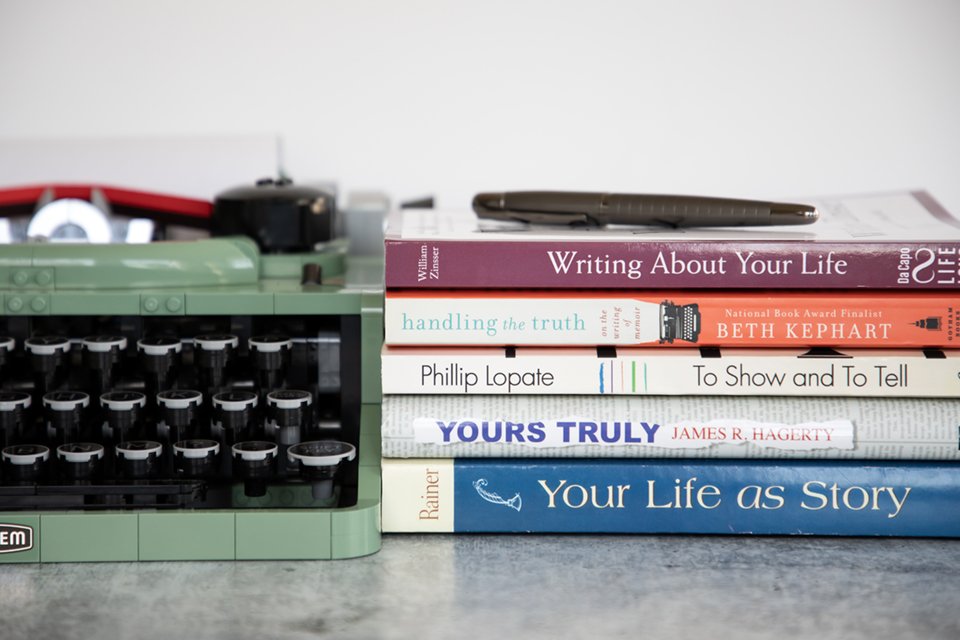
William Zinsser (who wrote my all-time favorite book about autobiographical writing, Writing About Your Life: A Journey into the Past) put it this way when describing a life story book his father left to him:
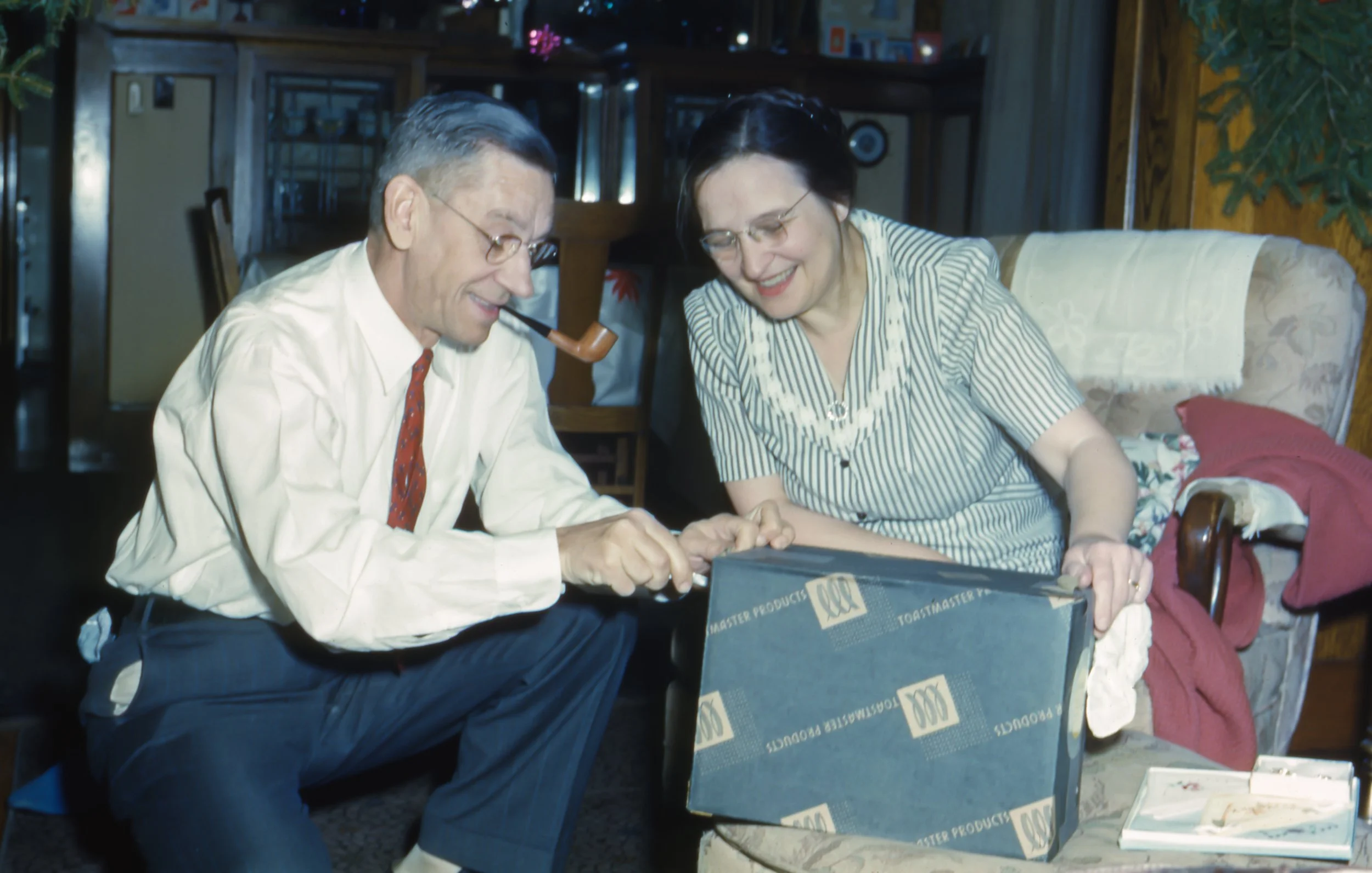
“Not being a writer, my father never worried about finding his ‘style.’ He just wrote the way he talked, and now, when I read his sentences, I hear his personality and his humor, his idioms and his usages, many of them an echo of his college years in the early 1900s. I also hear his honesty. He wasn’t sentimental about blood ties, and I smile at his terse appraisals of Uncle X, ‘a second-rater,’ or Cousin Y, who ‘never amounted to much.’”
He just wrote the way he talked.
When drafting your own life stories, write the way you talk, I implore you. Let your loved ones hear you when they read your memoir. Give them the gift not only of your memories, but of your voice, too.
3 ways to know your memoir voice is your authentic voice

Read a few paragraphs aloud without getting tripped up.
If you stumble over pronunciation or find the rhythm wonky (too many commas? too many long sentences?) then you’ve lost your voice. “If you’ve gone wrong, tried in print to be something you are not in life, the phrases feel like marbles in your mouth,” Anna Quindlen says in her book Write for Your Life. “But if you’ve gotten your own voice down on the page, you will read aloud and think: ‘Yep, that’s it. That’s me.’”
Leave your thesaurus in another room.
If you’re constantly looking up ‘better’ words, chances are they’re not words that would normally come out of your mouth. You’re not trying to impress your audience (most often, your family and descendants); you are trying to reveal yourself to them in new—honest—ways.

3 - Edit for clarity and impact only.
Don’t rewrite your sentences to make them sound overly polished or ornate. Don’t edit with an editor or teacher in mind, but with an audience of loved ones: Read your stories and ask yourself, Is this how I talk? Is my personality there? Is the STORY compelling/interesting/funny/engaging/memorable? Edit your work so the answers to those questions are, ‘yes!!’.
Oh, and the easiest hack to writing life stories that maintain your true voice? Speak your stories into a recorder, then transcribe (and lightly edit) them later.
If you write with an authentic voice, your readers will be captivated by you—your words, your stories, you.



















Life Story Links: January 31, 2023
This week's curated reading list has a host of recent articles of interest to family history lovers, memoir writers (and readers), and modern memory-keepers.
“We treasure the voices of our ancestors; we warm ourselves with the worn fragments that we have of the stories of their lives. We ourselves will be ancestors one day.”
—Pat Schneider
Vintage photo of children with a puppy in New York City circa mid-twentieth century. Photograph by Morris Huberland, courtesy of The Miriam and Ira D. Wallach Division of Art, Prints and Photographs: Photography Collection, The New York Public Library Digital Collections.
Memoirs of note
HER OWN PERSONAL ARCHIVE
Janet Malcolm “knew better than most that the only thing scarier than writing about oneself is letting someone else wrest control of the narrative.”
“THE HAUNTING OF PRINCE HARRY”
“The unlettered Prince [Harry] has gained in life what Hamlet achieved only in death: his own story shaped on his own terms, thanks to the intervention of a skillful Horatio,” aka ghostwriter, J. R. Moehringer.
On permanence and legacy
AMASSING DIGITAL MEMORIES
“My intentions to document my life are pure, but as a millennial mother, if I can’t get a grip on photo organization and the sheer volume of images I snap, will all my efforts be for naught?”
HISTORY, ERASED
“To see her legacy in tatters at my feet was…a reminder of how vulnerable elderly people are when it comes to relying on successive generations to treasure what they have to pass down.”
Writing our lives
WRITING FOR THEME
“When we are our stories’ protagonists, we must project our first-person experience on that larger canvas of universal experience to show...how it connects with readers’ experience or lives.”
PRODUCTIVE PROCRASTINATION?
While researching your memoir is an intensive—and necessary—endeavor, getting caught up in a never-ending web of research will only delay your writing: Ideas for continuing (and walking away from) your personal research.
VALUE OF SELF REFLECTION
“Even if no one ever reads or listens to what you preserve, you gain from thinking about what you’re doing with your life. It isn’t too late to improve the narrative.”
WHICH MEMOIR FORMAT?
Marjorie Turner Hollman, a Massachusetts–based personal historian, shares her wisdom about how defining why you are writing a memoir will help you determine your memoir’s structure.
THE CRAFT OF MEMOIR
Award-winning memoirist and writing teacher Beth Kephart joins Ronit Plank in conversation about what distinguishes a memoir in essays, the ethics of telling other people’s stories, and much more in this episode of the Let’s Talk Memoir podcast:
Holocaust remembrance
LAST CHANCE TESTIMONY INITIATIVE
The USC Shoah Foundation plans to interview several Holocaust survivors a week at its first-ever in-person ‘memory studio’ in Los Angeles.
IN 3-D
“When we talk about millions, that’s a statistic. When we talk about one person, that’s a story.” A Miami Holocaust survivor records holographic testimony for the planned Boston Holocaust Museum.
...and a few more links
StoryTerrace’s Rutger Bruining on why it’s important to document your family history
New narrative-driven video game offering hinges on memory-keeping theme
“If You Heard What I Heard”: True stories of Holocaust survivors as told by their grandchildren
Nikole Hannah-Jones on infusing her family’s personal story into The 1619 Project docuseries
Short takes

Why you should stop researching your memoir now
Research and fact-checking are integral parts of creating your memoir—but there's a good chance that it may be getting in the way of your actually writing it.
Ten more family tree hints just popped up on your Ancestry account.
Your sister called with news that she found another box of Nanna’s family photos in the basement.
That family history blogger you love just posted a great review of a life writing book that you NEED to read!
Stop! Seriously, every day will bring a new “reason” you shouldn’t start writing your memoir. It’s time to focus on the reasons that you should.
While researching your memoir is an intensive—and necessary—endeavor, getting caught up in a never-ending web of research will only delay your writing. So, how do you know when you’ve gathered enough research to finally put pen to paper?
3 signs your research is strong enough to begin your memoir:

You’ve got more than a file folder filled with research materials.
You’ve got a stack of papers delineating a lot of puzzle pieces: dates for key events on your life timeline, photos showing places and people involved in your stories, photocopies of pages from your journals, newspaper clippings providing historical context. And you’ve got an idea in your head for the path your memoir will take. That’s enough, I say, to begin putting your puzzle together. A crucial point is that you are writing toward truth. “At some point, we have to trust what we have and what we can make of what we have,” Beth Kephart writes in Handling the Truth. “We can be absolutely sure of just one thing in all of this: that our hearts are true throughout the making of our story.”

You feel compelled to begin telling your stories but wonder if you’ve got all the facts straight.
Unless you are questioning the essential bedrock of your story, it’s time to forget about the facts and focus on your truth. When you have finished a first draft of your memoir, then you can turn your attention to fact-checking historical information such as dates or place names. I suggest devising a system early on for earmarking facts that need to be checked later: It can be as simple as a question mark in the margin or using only a pink highlighter for facts to come back to. Don’t worry about these details while you are in the flow of writing—they will slow you down unnecessarily and hamper your creativity.

Your curiosity leads you down one research rabbit hole after another.
Let’s face it, researching can be fun. You unearth something interesting about an ancestor (oh, how I’d love to know more!); discover that your neighbor was embroiled in your family drama (ah, another interview opportunity!); learn that the street your grandfather grew up on was named for his hometown in Italy (how the heck did that come about?!). Many of these nuggets have potential to add wonderful details to your story, but do they all? Probably not. Don’t go down a research rabbit hole unless you expect to find something that, when stitched into your story, helps the reader rather than distracts them. “Sidestep or leap over those rabbit holes, work on, and you’ll complete your book,” memoirist Barbara Scoblic writes. “Go down the rabbit holes and you’ll wind up with an encyclopedia instead of a memoir.” Indeed.
3 fun—and fast—ideas for researching your memoir
Before you begin writing:
Find historical context through newspapers.
No matter what time in your life your memoir hones in on, adding color and texture specific to the era will enrich your writing. Head to the library and find the local newspaper from the day you were born, perhaps. Or read the major headlines from big city newspapers on various days within your time period—the Great Depression, the Vietnam War, the carefree mid-1960s. You may find a few telling details to include, or simply get inspired by the prevailing mood of the time. Allow yourself one or two days for this research, then move on.
Midway through your writing journey:
Revisit your journals.
If you have kept a diary throughout your life and used it as a reference when deciding what to mine for your memoir, chances are you went through it fairly closely in the planning stages. Maybe you took notes, captured full quotations to include in your narrative, even narrowed down your memoir’s time frame as a result of your journal keeping. Still, it can’t hurt to reread some pages when you’re in the midst of writing your memoir. The immediacy of journal writing—the perpetual present tense, the unknowing of what is to come—can startle us back into a state of emotion; it can spark ideas that didn’t seem relevant early on but that may prove to have great resonance now that your story is unfolding.
When you’re stuck:
Talk to someone.
You thought you’d remember every detail of the day your dad walked out, but the picture is getting murky. You can’t recall why your family left that spring break vacation in Florida early, but you know in your bones it was something big. Whatever notion you’re stuck on, asking a family member, friend, or other involved party what they recollect can be helpful. If you can’t come to a consensus about “what really happened,” either use language to reveal your ambivalence (“I remembered things differently from my sister…” or “I can only use my imagination to paint a complete picture of that day…”), or write a composite of the event that is faithful to the truth as you experienced it. “If you strive for emotional honesty and permit yourself the vulnerability it requires, your reader will in all likelihood forgive your factual alteration, omission, or embellishment of details,” Tristine Rainer writes in Your Life as Story—that is, if you write authentically and do not intentionally alter events to fit a new narrative.
Yes, research is a key component of crafting your life story. Accuracy is “a first-and-foremost objective of memoir,” Marion Roach Smith has written. Just remember, there are times when setting aside the task of researching is your best course of action. Write. Just write. You can always come back to the research later. If you don’t begin to get your stories onto the page, all that research will have been a mere hobby.

Life Story Links: January 17, 2023
This week's roundup leans heavy into memoirs—including a bunch from well-known writers and editors—but includes plenty of wisdom for everyday memory-keepers, too.
“So what if your story of a small, unremarkable life is read only by you, in some quiet corner, or by one or two people you love and trust to understand? If those are people who can learn from and value it, isn’t that a notable achievement, a valuable audience?”
—Anna Quindlen
Vintage portrait of Dr. and Mrs. Martin Luther King Jr., by Herman Miller, originally appeared in the World Telegram & Sun, 1964, courtesy of Library of Congress Prints and Photographs Division.
Going deep
CHANNELING SOMEONE ELSE’S VOICE
"Beyond doing the writing, a good ghostwriter also encourages subjects to go beyond what they might say on their own." A look at how ghostwriters craft books in someone else’s voice, without leaving fingerprints.
TO BE CONTINUED
There are a variety of reasons—including traumatic memories—when pausing a personal history interview is the best course of action. Last week I wrote about when it makes sense to honor the silence.
SILENCE—A BETTER OPTION?
Amidst the maelstrom of coverage of Prince Harry’s blockbuster memoir, Spare, this short op-ed by Patti Davis—daughter of Ronald Reagan and author of a book she says she wishes she hadn’t written—stands out.
This and that
PASSING ON INTANGIBLE ASSETS
An ethical will “can be a meaningful component of a comprehensive legacy plan.” Susan Turnbull, a personal legacy advisor in Massachusetts, writes about why estate planners should introduce their clients to such legacy letters.
DEAR READER…
In the latest blog for the Biographers Guild of Greater New York, Anna Brady Marcus offers up six ways to use letters in your memoir projects.
PHOTO ACCOUNTING
From how our photo taking was impacted during the pandemic to how many images the average smartphone user has on their device, these statistics, facts, and predictions around our picture-taking habits are a lot to take in.
The branches of our family trees
FAMILY LORE, NOW DOCUMENTED
On the season premiere of Finding Your Roots, actor Edward Norton learned that Pocahontas is his 12th great-grandmother. You can watch the full episode here.
STRANGER THAN FICTION
Ancestry released survey findings that half of Americans know more about families from their favorite TV shows than their own family tree—and 53% can’t name all four of their grandparents. Watch an episode of their entertaining YouTube series “2 Lies and a Leaf” featuring Modern Family’s Sarah Hyland:
Writers, editors, themselves
RECORDING IT ALL
Allen “Ginsberg’s auto poesy gives us his life not merely as a collection of facts, but as an imminent reality—there for you to judge, worship, reject, envy, study, or imitate as you will.” How the poet’s self-recording sessions informed his work.
“AN EXERCISE IN INTIMATE BIOGRAPHY”
Darryl Pinckney’s memoir of his writing teacher and friend Elizabeth Hardwick “braids together Pinckney’s memories of Hardwick and her circle of New York intellectuals with his own coming-of-age story.”
THE EDITOR WHO EDITED SALINGER
“Writing about this archive is like trying to push the whole career of Gus Lobrano into a day at the office. Have I even mentioned that he was descended from pirates in New Orleans?”
“STILL PICTURES: ON PHOTOGRAPHY AND MEMORY”
“The usually brazen journalist seems intimidated by her past; perhaps thinking it held the power to wound her.” In her new memoir, Janet Malcom “often dances right up to the line of major reckonings, but before she arrives, she shyly walks off the stage.”
KAFKA’S “TAGEBÜCHER”
A new English translation of Kafka’s diaries “illuminate a great deal about his world as a German-speaking Jewish writer in Prague...[but] they also go beyond our interest in the man and his time: On every page they reveal the writer at work.”
BETWEEN THE COVERS
Influential biographer Robert Caro and editor Robert Gottlieb have worked together for more than 50 years. Turn Every Page, a documenteray exploring their relationship, is “a great profile, filled with wit, affection and detailed stories.”
...and a few more links
Short takes

“To be continued…”: When breaking up a family history interview is wise
There are a variety of reasons—including traumatic memories—when pausing a personal history interview is the best course of action. Give in to the silence if...
There are many times when it’s good to hit the proverbial pause button during a personal history interview—you can always pick up the topic during another session.
I was in a meeting with fellow personal historians recently when we got on the topic of helping our clients discuss challenging times during their personal history interviews. There was so much wisdom in that (Zoom) room and one thing I jotted down was a simple phrase: “To be continued…”.
In this case, we were talking about a son wanting to hear about specific—difficult—times in his mom’s life: These were things she didn’t talk about with her family, but that certainly contributed to her identity and outlook on life. It’s understandable that he would want to learn more about his mother’s experiences. But—and this is a big “but”—when my fellow personal historian brought up this topic during an interview session, the person answering questions only went so far before getting quiet. Was it too awful to probe? Was the subject paralyzed by bad memories associated with the experiences? Did she even want to “go there”?
As trained personal historians, my colleagues and I are accustomed to giving people space—space to formulate answers, to think, to spend time exploring memories and being heard; it is a sacred space. Often moments of quiet during an interview will lead to meaningful and surprising stories. But sometimes, well, they won’t—sometimes, those extended silences may go nowhere. And that is 100-percent okay.
And sometimes, those silences are productive in another way: A seed has been planted via the question, and that seed needs time to germinate. Hence, that phrase I took note of: “To be continued…”.
Saying those words out loud either at the end of an interview or after a pregnant pause in the midst of an interview gives the subject time and space. The words are a recognition of the fact that, yes, we can continue this topic another time. That, yes, it’s okay to give it some breathing room. And that, no, we don’t need to finish this conversation right now.
Remember, though, that it’s not only a probe of traumatic experiences that may necessitate those words, “to be continued.” You may want to turn the conversation towards something lighter and more fruitful during a personal history interview in other circumstances, too. Here are a few instances where hitting the proverbial pause button on your interview (or at least on a topic that ends in a prolonged silence) can be beneficial:
Decide to resume discussion of a topic in a subsequent family history interview when:
the interview subject feels like exploring the current topic (whether involving trauma or otherwise) is too emotional, too difficult, or too uncomfortable
the interview subject would like to consult with a family member to check details on a sensitive memory or story
the interview subject is feeling tired
the interview subject has expressed that they would like to think about how to approach the topic
the topic being discussed could reveal things that negatively impact a loved one or other individual (in this case, be sure to reiterate that anything that comes up during the interview can be removed later, whether from an edited recording, a transcript, or a book).
One other thing worth noting: All of the above reasons for breaking up a personal history interview involve some form of challenge, but there’s another strong reason for resuming conversation again later—quite simply, because every time we tell a story, new aspects of our memories may come to the fore. So each new telling of a story may add texture, details, meaning. “No memory is ever alone,” Louis L’Amour wrote, “it’s at the end of a trail of memories, a dozen trails that each have their own associations.” So take one trail today, another tomorrow. Give your subject space. Let them know it’s more than okay for your conversation “to be continued…”.







Life Story Links: January 3, 2023
A curated roundup overflowing with recent pieces about memoir writing, personal history preservation, food heritage & family stories—which will you read first?
“Love is listening.”
—Titus Kaphar
Vintage photo of kids on a cold New York City day, created by Morris Huberland between 1940-1979, courtesy of The Miriam and Ira D. Wallach Division of Art, Prints and Photographs: Photography Collection, The New York Public Library Digital Collections.
Meditations on memoir
TURNING PERSONAL NARRATIVE INTO ART
Might we see memoir as a “collaborative inquiry, author and reader facing the same questions from inside their inevitably messy lives”?
NEW YORK MAG PICKS BEST MEMOIRS OF 2022
“Call it hybrid memoir, memoir-plus, researched memoir—the industry hasn’t quite decided—but the blending of personal history with careful analysis of the cultural forces and institutions that inform it has exploded the genre with possibility.”
SCARS TELL A STORY
“Let it play out on the page,” Patricia Charpentier, a Florida–based life writing coach, says of the prompt she discusses in this episode of her Life Writers Vlog: Write about a scar (physical or emotional).
Preserving personal stories
PERSONAL ACCOUNTING
Lamorna Ash’s 2022 diary ran to 52,000 words. “I’ve been toying with giving up my chronic chronicling, perhaps even deleting the evidence,” she writes, “but something always stops me.”
THE WAY YOU TELL YOUR LIFE STORY MATTERS
"Even if no one reads or listens to your tale, you haven’t wasted your time. Reviewing your life…might give you the inspiration to mend some of your ways. It isn’t too late to improve the narrative.”
LOST TO HISTORY, NO MORE
“Much of [animator Bessie Mae] Kelley's story and work was lost to the pages of her own journals and left undocumented—until now.”
Stories and substance
ANIMATED AGAIN
In rare home movies (now archived at the U.S. Holocaust Memorial Museum), Harry Roher’s camera captured what life was like for people in a small community in then Poland, now Ukraine, in 1936.
YOUR MEMORIES, THEIR CLOUD
“As I grappled with all the gigabytes, my concern morphed from losing it all to figuring out what was actually worth saving.” A critical look at storing digital photos and other artifacts of your memories in the cloud.
CARRYING THE DREAMS OF HER FAMILY MEMBERS
“By collecting the images and storing them together in that suitcase, Brooks had created a kind of narrative. It fell to her granddaughter to place it within the larger history of humanity.” Poet Robin Coste Lewis’s family album.
SACRED KEEPSAKES
“When we share a story about another, we invite them back into life.... We ‘remember’ them in this way. Transitional objects provide the opportunity to speak the loved ones’ name, to tell a bit of their story once more.”
THINGS THEY KEEP
In this special episode of Things That Matter with Martie McNabb, six guests from The Quietus House (hosts of a healing grief retreat in February) share things they hold dear that remind them of lost loved ones:
Cook up some memories
PRESERVING RECIPES
“The weakest ink, it turns out, is in fact better than the strongest memory, which is why many people who value recipe preservation view their written-down recipes as family heirlooms.”
FAMILY HISTORY THROUGH FOOD
When her parents wrote essays for their Chinese heritage cookbook, “some of the stories that we had heard were more vividly on display than what we had ever heard around the dinner table...[as] the medium required that we kind of render it in a lot more detail.”
...and a few more links
The New Yorker asked the daughter of artist George Booth to “bring him back to life for us.”
An interesting discussion about copyright and personal storytelling
From the Archives: Newspaper offers glimpse of life in San Diego 125 years ago.
Dani Shapiro in conversation about how writing fiction can reveal more about ourselves than writing memoir
Short takes

Life Story Links: December 13, 2022
We've got a wealth of thought-provoking stories about memory-keeping, family history preservation, and memoir in this final curated reading list of 2022.
“One is always at home in one’s past.”
—Vladimir Nabokov
Joyeux Noël! Vintage postcard of children with baby animals—illustration by Pauli Ebner, published by Max Munk—courtesy of The Miriam and Ira D. Wallach Division of Art, Prints and Photographs: Picture Collection, The New York Public Library Digital Collections.
The unexpected power of obituary writing
OVERLOOKED NO MORE
A teacher shares how he used a New York Times obituary series to show students that “history is a kind of kaleidoscope, made up of many people’s stories.”
AN EXERCISE IN LIVING
“Unlike writing an obituary for someone else, writing your own obituary gives you a chance to audit your own life. It’s helped me take note of what I want more of—and less of—in my day-to-day life.”
What to watch & what to read next
TEENAGERS TELL STORIES
I don’t know what I am more bolstered by—the power and grace of these winning 100-word personal narratives by teens, or that more than 12,000 (!!) of them wrote and submitted their mini memoir entries.
CHANGE AGENTS
From Doris Lessing’s frank memoirs of social change to less famous campaigners in decisive struggles, Sheila Rowbotham’s “top 10 dissenting life stories.”
ANIMATING ARCHIVES WITH RAW EMOTION
“In a short documentary about a troubled family relationship, Diana Cam Van Nguyen uses cuts, folds, and mixed media to bring old letters to life.” This 12-minute autobiographical, poetic film is wonderfully worth your time.
SHAPING HER HISTORY
“Understanding where we are from—who we are—is a task of nuance and nuisance,” Mary-Alice Daniel writes in this excerpt from her “memoir across three continents.”
TENDER TRIBUTE
Robert Downey Jr. turned the camera on his father, Robert Downey Sr., from 2019 until Sr.’s death in mid-2021 of complications from Parkinson’s disease. The black-and-white film is “a lively look” at the cult filmmaker. See a preview here:
Personal histories, written
END-OF-YEAR REFLECTIONS
“There's no better way to celebrate the rich, full life you've lived so far—and the big, bright future ahead—than telling your story.” Here, a few ideas from the Oprah team to get you started.
A FOCUS ON MEMORIES
I might not have time for the full-fledged memoir I want to write, but I can make time every day for this easy and significant journal exercise—and so can you: the low-pressure, high-yield memory-keeping exercise I’ve recently begun.
“WHERE I’M FROM”
“I love hearing people’s stories. But when you meet someone casually you can’t say, ‘Hi, nice to meet you. What was your childhood like?’ I liked the idea of having a container that could do this, one that we could share.” Alyson Shelton in conversation on story, connection, and an approachable writing prompt.
FOR THE FAMILY CHARTER
Charlie Carr, a family office advisor, shares his list of 10 things to leave your kids besides money—including some “items [that] are...aspirational—it’s not just who we are today, but who we want to be.”
Pictures of the past
FACES FROM THE ARCHIVES
“Because of the Holocaust, many of us have been robbed of the opportunity to see images of families that were in many cases wiped out.” Thanks to one man’s vision, the Numbers to Names organization is changing that.
THE EYES OF THE BEHOLDER
This photo exhibition that captures the ephemeral idea of home also explores the suggestion that family photos cam be akin to propaganda.
PHYSICAL HISTORY, ERASED
Her grandmother “knew that everything existed in a context, and she was determined to lay claim to her own story—of how the material things that surrounded her helped to soothe, nourish, and define her sense of family legacy, identity, and place in the world.”
“A LIFE, $12”
He bought a box of 8mm films in an antique store when he was a student, then squirreled them away. Two years later, he writes, “ I bought an old projector, loaded up that first reel, and started watching.” A journey of discovery ensued.
THINGS THAT MATTER
Matt Paxton’s tradition of telling stories prompted by Christmas ornaments helps keep his family history alive in a meaningful and fun way for his seven children. Listen in as he is a featured speaker in a recent episode of Martie McNabb’s Show & Tale podcast.
...and a few more links
Short takes