
Memories Matter
Featured blog Posts

READ THE LATEST POSTS

Before you gift someone our Write Your Life prompts (or, “Who this gift is NOT for?”)
Looking for a meaningful gift for your parents? An annual subscription to our Write Your Life memory and writing prompts may be just the thing—or, maybe not.
You want your loved one’s stories—how could that be perceived as anything but loving? (HOW you ask for them can make all the difference.)
I lovingly (and painstakingly) created Write Your Life over the course of a whole year:
I took notes on what was working—and what wasn’t—with my personal history and memoir clients.
I read, reread, and annotated books on the craft of life writing, on how to write memoir, and on how to write clearly.
I paid for and participated in multiple classes from other companies to explore what resonated and what didn’t (video delivery vs. email, for instance; lots of elevated writing guidance vs. more approachable tips, as another example).
I tested different approaches with a handful of volunteers, and really listened to (and incorporated) their feedback.
I tapped into more than 20 years of writing and editing experience to distill what would work best for novice and aspiring writers.
The decisions I made along the way helped me create a year-long subscription of open-ended memory and writing prompts accompanied by straightforward tips, inspiring examples, and just enough encouragement to keep participants going.
And while I did NOT design Write Your Life for people who call themselves writers, I DID design it for people who want to at least attempt to write.
The weekly prompts demand some commitment. That commitment can be enjoyable and fulfilling, without a doubt. But it can also be challenging for someone who really doesn’t have any interest in writing!
So before you click “BUY,” consider who it is you are buying for:
If it’s for YOU, ask yourself: Even if the prompts are inspiring (they will be 😉) and even if you can make the time (you can 👍🏼), “Will I write?”
If it’s as a GIFT for a loved one: Will they look at the prompts as a loving invitation to share their memories, or will they resent the ‘homework’ of needing to write? (If you’re unsure, maybe ask them first.)
Clearly I don’t want to discourage you from enrolling in Write Your Life. I created it with love and with the intent of helping people who couldn’t necessarily afford my personal history services. It’s my genuine hope that people enjoy it and find it fruitful!!
During my early market research, however, I read plenty of bad reviews and Reddit threads about gift recipients of Storyworth (the main player in the email-prompt-a-week space) not completing their subscriptions—in fact, many, many of them had barely answered more than a question or two even after a full year had passed. Here’s a sampling:


Over the years, too, I have had a number of clients who came to me after they felt they “failed” at Storyworth. (For what it’s worth, they didn’t FAIL—they were attempting to preserve their stories in a way that wasn’t serving them, that’s all; they all SUCCEEDED in sharing meaningful and fun stories during one-on-one personal history interviews, an approach many non-writers consider easy 🤗)
This is NOT a bash of Storyworth—in fact, their company is completely in line with my own mission and values, though we are aiming to serve parallel yet different audiences. Rather, it’s to show that writing is not for everyone—and gifting an expectation of writing to your parents, say, may come bound up with more guilt and pressure than you would ever intend.
With all that in mind, where do you fall?

YOU’RE READY!
If YOU want to write about your life—with thoughtful questions, helpful writing guidance, and plenty of low-pressure inspiration—and you’re ready to commit, click here to enroll in Write Your Life.

YOU WANT THEIR STORIES, but…
If you want to invite your parents’ stories, but you’re not sure if they’ll welcome all that WRITING (!), consider interviewing them yourself (it’s a rewarding experience!) or hiring me to interview them on your behalf. Schedule a free consultation to see how we might work together to preserve your family member’s stories.

YOU’RE CONSIDERING GIFTING
If you are THINKING of gifting Write Your Life to a loved one, but you’re still not sure if it’s a good idea, why not simply ask them what they think? Or, schedule a brief chat with me to weigh the pros and cons.

TEST THE WATERS?
If you really want to capture stories from your parent, grandparent, or other loved one, the best way is to ASK them about their life. Here is some related reading that may help you along, with no financial commitment at all:

Life Story Links: December 3, 2024
Maybe we’re leaning into sentiment during the holiday season, or maybe it’s just a good week: This roundup is bursting at the seam with stories worth your time.
“Many writers have spoken with me privately about the feeling that they cannot remember childhood. But if I ask specific, concrete questions—‘Where was the table in the kitchen where you ate as a child? Where was the window in your bedroom?’—pictures come to the mind of the writer who ‘cannot remember.’ A picture is an image, and a longtime remembered image is like a riddle. What astonishes me is how often, if we work carefully and patiently, the slightest childhood image will give up its secret..”
—Pat Schneider
Vintage postcard with an illustration entitled “December Twilight,” postmarked 1906; from the personal ephemera collection of Dawn Roode.
Picturing the past
STORIES OF BRAVE YOUNG MEN
A scrapbook packed with memories from WWI soldiers, including a poignant account of the 1914 Christmas truce (and a fragment of a white surrender flag), sold for thousands at auction. Around 90 wounded serviceman contributed to a nurse’s journal as part of their recuperation in hospital.
‘MARK YOUR PLACE IN HISTORY’
“You have to create images that speak.” Jamel Shabazz has long been one of my favorite photographers; while he is known as a street photographer, I would label him a photographer of humanity. “Love is the foundation of a lot of my work.” Here, a look behind the scenes, courtesy of the Museum of Modern Art:
On memoir
HOW TO BE A WRITER
“My problem was I thought you had to know what you were doing. Nonsense. You just have to start.” Memoirist Abigail Thomas on writing, plus a bonus side door prompt.
DETAILS IN FAMILY STORIES
“When writing a family story, too many flowery words can drag down a narrative. But stark facts alone won’t ignite your reader’s imagination. Rhonda Lauritzen on what’s the right amount of detail to ensure a compelling read.
PREPARE, ASK, LISTEN, PRESERVE
“Your curiosity represents the curiosity of others who may engage with the project later.” Whitney Myers on listening with intention and other tried-and-true methods for getting the best out of an interview subject.
INDUSTRY TRENDS
“Publishers are turning away from personal stories. Have readers stopped caring about each other’s lives?” Have memoirs become “almost impossible to sell”?
THE GIFT OF MEMORIES
My Write Your Life course delivers weekly memory and writing prompts via email—and just in time for holiday giving, I explore who this gift might be right (and wrong!) for. Is it you?
Manifestations of memory
MEMORIES ON A PLATE
“We prioritized narratives that emphasized intergenerational bonds, rituals, and culinary traditions,” say the editors of a new book that invites readers into 100 kitchens across India to sample food steeped in story.
HOLIDAY FOOD TRADITIONS
A new survey finds nearly half of Americans can’t make family-favorite holiday dish due to lost recipes. “Older family members in particular may hold the key to the secret ingredient from grandma’s sweet potato pie or, in my case, aunt Rhonda’s lemon meringue,” said genealogist Crista Cowan.
MORE THAN A FAMILY RECIPE
Fearless Fabulous You's Melanie Young says, “Making a family recipe and sharing a story about the person who used to prepare it can be an emotional glue that binds everyone together to recognize that person who is no longer seated at the table.”
EXPLORING YOUR ROOTS
Online tools are helping Americans travel abroad to discover their ancestry, seek out relatives, and obtain documentation for dual citizenship. Here are tips for planning a family heritage trip.
BEARING WITNESS IN SONG
“Guta uses songs to bring memories back, and she safely connects with her (often traumatic) past in this manner, in order to fulfill the imperative to remember those who have gone before us.” Filmmaker preserves songs from the Holocaust.
Telling tales
STORYTELLING CREATES UNITY
“I consider myself an itinerant storyteller,” Levar Burton said. “And the invitation is a storyteller’s stock and trade because he’s asking the audience if they want to hear his story.”
ON SELF-REFLECTION
Rachael Cerrotti has been exploring the stories we tell ourselves in her Along The Seam podcast. “But sometimes we need a break from our own narratives. Sometimes (often times?) our minds are not our best mirrors of self and we need the gift of someone else’s observations.”
SELF-PORTRAITS, NEW YORK CITY
E.B. White “was a master at finding the exact words for these small but unforgettable moments, but he always considered himself ‘a non-poet who occasionally breaks into song.’”
Journals and letters
‘THE MAKING OF SYLVIA PLATH’ EXCERPT
How Sylvia Plath found her literary voice by keeping a diary: “At an early age, Plath realized you could incorporate yourself in a medium.”
NO ORDINARY JOE
Joe Brainard’s “trove of letters leads him down from Mount Olympus on a staircase of his own words. Love, Joe reveals a man who had faults, as well as desires that could be pragmatic and unsurprisingly ambitious.”
Holiday memory-keeping
GIFT IDEAS FOR THE FAMILY HISTORIAN
Every year Family Tree magazine updates its holiday genealogy gift list—the editors say it goes “beyond DNA tests,” and it certainly does. I am honored to be included among the memory and preservation gift ideas.
PRICELESS PRESENTS
This list of “perfectly sentimental gifts for the ones who cherish memories more than things” is vastly different from the one above (my favorite recommendation just may be the heirloom trunk for safekeeping mementos).
‘DEAR MRS. DOYLE’
Not only is the audio story snippet below heartwarming and filled with gratitude just in time for Thanksgiving, but it also employs a striking graphic animation style to bring the story to life:
...and a few more links
Will heavily funded AI publisher Spines replace the role of publisher, as it promises?
Writers condemn startup Spines’s plans to publish 8,000 books next year using AI.
“Portrait of My Mother Studying for Her Citizenship Exam,” a poem by Eduardo Martínez-Leyva
Using storytelling as a tool for mentorship in schools and workplaces
50 interesting historical photos that might teach you something new, from Bored Panda
Short takes
“Write Your Life” delivers weekly memory & writing prompts via email
Learn about our Write Your Life course, providing memory prompts, writing guidance and a dose of inspiration to anyone who wants to preserve their stories now.

Last year, I spent weeks researching courses for writing about your life. I found nearly a hundred of them, and even paid to enroll in a few to see what they were like.
Originally I wanted to be able to offer suggestions to people who reached out asking my advice on life writing courses. Somewhere along the line, though, I got motivated to create something different.
Instead of a full-on memoir course, I wanted to teach how to write about your life in smaller narrative vignettes.
Instead of focusing on the nuts and bolts of writing—grammar, character, dialogue, etc.—I wanted to cut to the chase and get students writing their memories from the outset.
Instead of teaching writers who want to publish and sell their work, I would target regular folks who want to capture their stories for their loved ones—and for themselves.
Instead of providing run-of-the-mill family history writing prompts like Storyworth and their slew of copycat competitors (I offer such prompts for free!), I would create thoughtful, open-ended prompts accompanied by examples, tips, and inspiration—with real value added from my years of experience as a writer and editor.
And lastly, instead of charging hundreds of dollars for a course you might not even have the gumption to finish, I wanted to create something truly affordable and different.
I believe with all my heart that your story matters. Your mom’s and granddad’s and spouse’s stories matter. And each one of you—every one of us who is living our story—should be able to write about them.
What makes the Write Your Life courses different?
These courses are tailor made for you. They will help you write about your life, to get your stories down on paper, and to think beyond the often trite questions in those ready-made memory journals.
You’ll look forward to getting your weekly prompts, and you will actually complete your stories.
Introductory themes are CHILDHOOD MEMORIES and FOOD MEMORIES, with new themes starting every few weeks. Themes build upon one another or stand on their own, depending upon how much you want to write.
If you enroll in Write Your Life, you’ll get weekly memory prompts, writing tips, and inspired ideas that are:

encouraging
The memory prompts go above and beyond a simple directive. You’ll explore how memories resonate for YOU. Writing beyond first impressions allows you to go deeper, to discover more than you could first have imagined. Memory cues, sample explorations, and inspirational notes provide encouragement without worry (for things like “what if I can’t remember?” or “but, I am not a writer!”).
Your stories matter—and you CAN do this!
helpful
With concise, RELEVANT writing tips from a professional, you will feel supported on your journey of capturing your stories.
This is not a course to help writers polish and fine-tune their skills. It is a course for people who want to write but don’t normally consider themselves a writer—and the writing advice you receive will be helpful but not unwieldy. Our goal: To help you write stories that are engaging and enlightening—that will entertain your ancestors with anecdotes, sure, but that go further by delving into life lessons, values, and the journey to becoming you!


flexible
You choose what day of the week you would like to receive your weekly lessons. You choose which themes to explore in depth, and which to write shorter snippets about.
You may write in a journal or type on your computer.
And you have a whole week to ruminate on your memory prompts and write your stories. Enough time to let the details bubble up, to call a sibling or parent to talk about the past, or to search for an old family photo album with pictures to help jog your thoughts—but not so much time that you don’t get to it at all. Because next week, another memory prompt and writing exercise is coming!
affordable
At just $132 $99 for a WHOLE YEAR course, pretty much anyone can take advantage of this learning opportunity. There’s no recurring subscription fee or annual membership required (unlike other weekly family history Q&A prompts we know of). And since prompts are open-ended and you get a PRINTABLE page each week, you can invite a friend or family member to write along with you.
Why email? Because most of us have a phone or computer, and it’s a convenient delivery method. There’s no videos to watch or long book to read; our lessons get to the point quickly and clearly, and you get to writing all the more quickly, too.
Oh, yeah, and I don’t expect you to write while staring at a screen. Each week you’ll get a beautifully designed PDF page to print out and work from (and in the end, you’ll have a year’s worth to return to or share with others!).

Why wouldn’t you enroll?
Memory journals from your local bookstore are a nice idea, but frankly I have seen too many of them gifted and never filled out. I inherited two of them from my own mom, each with fewer than three questions filled out, some with only a few words. Disappointing, to say the least…
Subscriptions like Storyworth are great if you just need a nudge without any real writing guidance or support—and if you want a simple, “free” book at the end (though, from my experience, many people never finish the prompts, and therefore never get their book). THIS course—which I took over a year to develop and which incorporates years’ worth of my professional experience guiding life writers one-on-one—is designed to encourage you to finish…whether it’s within the initial year or later ✍🏼❤️
Consider enrolling in Write Your Life yourself, or, if you want your parents’ stories, consider gifting* them with these Write Your Life prompts—trust me, inviting your family elders to share their stories with you (and preserve them for the next generation) is one of the best gifts you could give them!

Before you gift: Writing isn’t for everyone!
Remember, this is a WRITING subscription. If you know your parent or family member loves to write (even if it’s just in a journal), this may be a wonderful option for them. If, on the other hand, they groan at having to write a short note, you might not want to “gift” them something that can feel like a burden. Consider asking them if they’d be interested first, or gift them a starter package of personal history interviews, where their stories will be RECEIVED by an engaged and generous listener…
Rather Talk about Your stories than write?
If writing still isn’t your thing but you want to preserve your stories, consider TELLING them in a personal history interview. Reach out to see how we can work together—it is my honor to listen to you (or a loved one) share stories, and preserve them in a book!
A Year of Memory & Writing Prompts
Explore our year-long “Write Your Life” email course

Life Story Links: November 19, 2024
Whew, this week’s curated roundup is chock-full of reads worthy of your time! There’s memoir, family history, craft, conversation, and much more—bookmark it.
“Stories are everywhere, and although you cannot touch them, you may see them like fireflies in your backyard; they fill the night with magic.”
—Tristine Rainer
Vintage postcard of Madison Square Garden in New York City, postmarked 1908; from the personal ephemera collection of Dawn Roode.
What we remember
BOOMERS, SENTIMENTAL COLLECTORS?
“In many case, it will fall to kids and grandkids to decide what to do with the old dance costumes, school art projects, and childhood memorabilia their parents insisted on keeping in the attic or basement.” Read on for an expert’s advice for how to navigate “boomer junk.”
VIRTUES OF FORGETTING
“Memory for humans has been so fleeting that when we then get tools to conserve, we overindulge in it. We go overboard because we haven’t learned how to temperate our appetite for memory.” A look at context-free nostalgia and the affect of digital ‘memories’ on our actual memory.
Memoirs & oral histories of note
LEGENDARY ORAL HISTORIAN
Studs Terkel “let his interviewees tell their own stories in their own voices, and through them he painted an honest and intimate history of the American people.” Here are excerpts from five of his most iconic books.
PERSONAL ARCHAEOLOGY
Augusto Monterroso’s “memoir, with its detours and vignettes, reads like a book of experimental essays, the unifying subject matter being Monterroso’s excavation of the people and events that helped him form an early idea of himself.”
A CANCER PATIENT TURNS TO MEMOIRS
“I found consolation in these [cancer] memoirs, identifying with the struggle to hang onto and forge a meaningful life. I have experienced an intensification of emotions...[and] a new relation to my body, in particular, a sensitivity to tune into it and listen.”
SETTING THE RECORD STRAIGHT
“I have suggested that if a life is worth writing down, it should also carry some meaning—something beyond the important tale of this is what happened to me. But what, I have been asked, do I mean by that word ‘meaning?’” Beth Kephart on the universal in memoir, and a life’s work.
Preservation, posterity & personal history
GRAVERS UNITE
“I decided to solve a longtime mystery about my family. It led me to a controversial pastime that consumes thousands—and has changed untold lives.” Tony Ho Tran on his weekends with the dead.
KEEPING MEMORIES ALIVE THROUGH BRUSHSTROKES
“I don’t want to forget my Lola. I feel like we live through our stories,” this artist says of his grandmother in a poignant portrait of an intergenerational relationship he captured in a glorious self-published book. “This is. my way of keeping her present.” Here they are:
‘THE GIRL IN THE GRASS’
“A woman whose family had to sell a [Pissarro] painting in the Holocaust and a museum have struck a deal. The museum will keep the work but will help to publish a book telling the family’s story.”
A LIBRARIAN’S LEGACY (AND THE FAMILY HISTORY SHE ERASED)
While Belle da Costa Greene “was very much a public figure in the forefront of New York high society, her personal history was shrouded in secrecy, the continuance of which she took an active role in ensuring.” Now the Morgan Library is honoring the dual life of its inaugural director with a new exhibition.
SACRED PLACES
“Her room just completely speaks of who she was.” How do you make a portrait of a child who isn't there? Photographer Lou Bopp photographed the still-intact bedrooms of kids who were killed in school shootings.
Family history & storytelling resources
TURKEY AND TALES
Last week I shared a roundup of some of the most helpful and popular stories on the Modern Heirloom Books site to help you preserve your family stories this Thanksgiving.
HONOR, SERVICE, AND SACRIFICE
A new Smithsonian guide covers “Veterans Day history, personal stories, military branches and awards, and intergenerational activities to honor the legacy of the country’s veterans.”
‘DAD, I WANT TO KNOW ABOUT THE WAR’
“My father would never talk about the past, not five years ago, not five minutes ago.... That’s not the way you survive in battle.” Becky Ellis in conversation with Crista Cowan about opening the door to her father’s wartime memories. Listen in below, or read the transcript here.
...and a few more links
New heritage preservation app Fireside launches to help families capture video memories.
Norman Maclean biography uncovers personal stories of beloved UChicago author.
Queen Elizabeth’s final diary entry was “as factual and practical as ever,” says her biographer.
Memories are not only in the brain: cells throughout your body store memory.
Norah Rami on tracing her history at an archival epistolary exhibition in India.
Read an excerpt from Letters by Oliver Sacks, edited by Kate Edgar (Alfred A. Knopf, 2024).
Short takes

Thanksgiving story sharing, made easy
A roundup of the most popular (and helpful!) posts from Modern Heirloom Books to help you prompt and preserve family stories this Thanksgiving season.
Thanksgiving is the American holiday perhaps most associated with family, food, (and football), and lively gatherings around the table make it a prime time for sharing—and capturing—fun family stories.
I’ve written a fair amount about how to maximize the holiday from a family history standpoint; here’s a roundup of some of the most helpful and popular stories on the site to help you preserve your family stories this Thanksgiving.

Family potluck: reminiscing & recipes
Family Potluck: Reminiscing and Recipes: “Collecting family recipes is one of those things that’s on many of our ‘I want to do someday’ lists but that can easily slip through the cracks. It always seems like there will be time. But instead of saying ‘next time,’ make it a priority—as well as an enjoyable endeavor!” Here, tips for easy things you can do to get your family involved in preserving your food heritage.

4 ways to give thanks through story sharing
4 Ways to Give Thanks Through Story Sharing: “Even for families who may not share stories regularly around the dinner table, Thanksgiving lends itself to some good old-fashioned reminiscence.” Here, four unexpected ideas for giving thanks and telling tales.

Thanksgiving family history questions
Thanksgiving Family History Questions: “Don’t wait until next year or when everyone is available or any other ‘better time’—trust me when I say: Now is always the right time!” Get your free guide, 55 Questions to Spark Thanksgiving Story Sharing.

Unique holiday host(ess) gift
Unique Holiday Host(ess) Gift: Preserve your family recipes and all the precious stories they call forth with this unique recipe card set that fits in standard recipe boxes. Cards capture how-to and ingredients as well as associated memories! Check out our A Taste of the Past recipe card gift set.

Your 10-step plan for making an heirloom-worthy family cookbook

38 Questions to prompt food memories
I am grateful to you—my personal history and tribute book clients, as well as the broader Modern Heirloom Books community of memory-keepers, memoirists, and family history buffs. I hope you find something of value among these pieces, and I wish you and yours a holiday season filled with delicious food, lots of love, and scrumptious stories 🧡🦃🍁

Life Story Links: November 5, 2024
A treasure trove of recent stories about memoir writing, legacy preservation, and personal and family history, curated by longtime biographer Dawn Roode.
“Fill your paper with the breathings of your heart.”
—Wordsworth
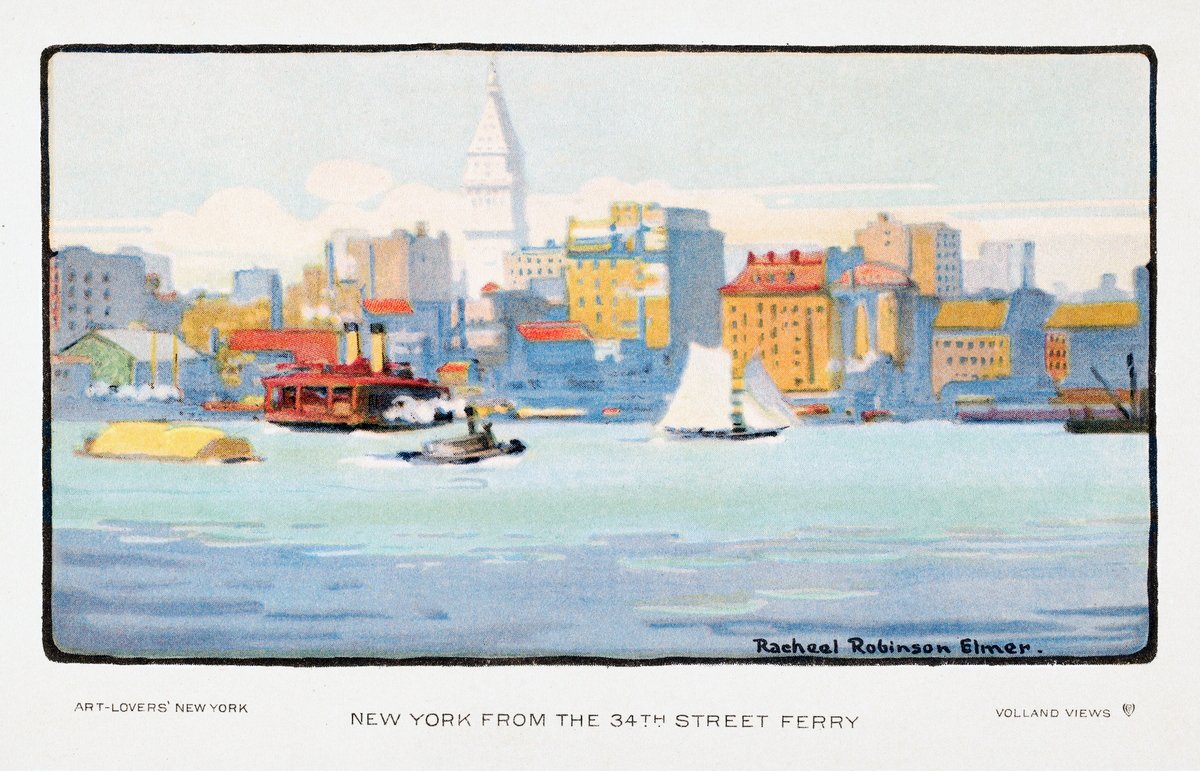
Vintage postcard with an illustration of the New York City riverfront, circa early 1900s; from the personal ephemera collection of Dawn Roode.
Where are the stories?
‘TELL ME MORE’
“By mastering the art of follow-up questions, you become a skilled facilitator, drawing out details, emotions, and lessons that make each story unique and deeply personal.” How to level-up your family history interviews.
SNIPPETS OF HIS BOYHOOD SLIPPED OUT
Though her father was always reluctant to tell stories from his youth in Russia, “little things would drop out...and I’d think, ‘Oh, that’s a good story.’ All the while I was compiling the evidence,” Sheila Baslaw says. The 92-year-old has released a children’s books highlighting one of those family stories.
SHARED FAMILY MEMORY
“I pointed to a picture and asked, ‘What was her name again?’ He closed the book and softly said, ‘I don’t remember. And now there’s no one I can ask.’” Jill Sarkozi on how to answer family history questions when family elders are gone.
Memories made physical
THE FAMILY PHOTO LIBRARY
“One risk of photographing your life is that you’ll create an illusory version of it, a selective visual record that reflects your wishes rather than reality.” Joshua Rothman on what you can learn from photographing your life.
THE REAL VALUE OF ALL THAT STUFF?
“As one of my first clients aptly put it, they hired me to ‘prevent the boxes that went unopened and unsorted from my grandparents' house into my dad's attic, from going unopened and unsorted into my attic.’” Clémence Scouten offers up concrete advice for what to do when personal memorabilia becomes part of an estate.
LEAN INTO YOUR SENTIMENTAL SIDE
“Your life and memories deserve to be preserved in beautiful ways.” Crafty influencer Martina Calvi is inspiring a resurgence in scrapbooking—the good, old-fashioned glue-and-paper kind.
A WINDOW TO HISTORY
In Ruth Hunduma’s short documentary The Medallion (watch it here), the story of Ethiopia’s Red Terror is told through a family artifact and a mother’s memories.
SYMBOLS OF THE STRUGGLE
“For some reason, we never once took a family portrait with all three generations in one frame. But we had the corkboard, testament to the things that mattered to us across eight decades.” How protest pins taught the author about her family history.
A VAULT OF CREATIVITY
“The Bob Dylan Archive had long been a subject of rumor and legend.... It was kind of hard to picture Mr. Don’t Look Back himself boxing up old notebooks for posterity. But if he didn’t, someone did.”
Of memoir and memoirists
GIRL MEETS WORLD
“You sometimes buy high heels but you never wear them, because who wants to be caught by shoes in which she can’t run away.” Read a beautiful excerpt from My Good Bright Wolf: A Memoir by Sarah Moss.
STAR STORIES
“Candid, intelligent books that reveal the humans under the headlines, the dark side of the spotlight, and the epic stories that the tabloids could never capture”: Oprah Daily rounds up the 25 best celebrity memoirs of all time.
ORIGIN STORY
“Over the years, I’ve often been asked about my upbringing, my time at Harvard, and co-founding the company. Those questions made me realize that people might be interested in my journey and the factors that influenced it.” Bill Gates’s memoir, Source Code, will be out in 2025. (Meanwhile, Gates disputes much of an author’s reporting in a new biography about him.)
‘LEFTOVER LOVE’
“Over the years she told me her stories and I told her my stories. Both of us recognizing and accepting the way they rhymed and the way they didn’t.” A story about intergenerational friendship.
‘MEMORIES OF DISTANT MOUNTAINS’
A peek inside the illustrated notebooks of memoirist and Nobel Prize winner Orhan Pamuk, arranged by the author not in chronological order, but emotional order.
...and a few more links
A review of Francine Prose’s memoir 1974: A Personal History
Podcast features personal accounts of Mississippians who lived through WWII.
“If a picture is worth a thousand words, what do a thousand pictures say?”
New app, Autobiographer, aims to preserve life stories through “adaptive conversation.”
A look at free speech and hate speech through a memoirist’s lens
In Washington, preserving the memories of veterans, one headstone at a time
The best sentimental gift ideas for 2024, according to Good Housekeeping
Short takes

How to ask good follow-up questions in a family history interview
Five easy ways to get the best stories from your family member just by responding thoughtfully to their answers (hint: it starts with really listening!).

Whether your family history interview is being recorded on a couch in the subject’s living room or virtually on an iPad screen, it’s important to show interest through verbal cues and follow-up questions.
You’ve decided you want to interview your parent or grandparent to capture some of their memories and add to the family history book you are creating. You’ve downloaded recommended family history questions, thematically curated the ones you want to ask, and gathered the equipment needed to ensure you record everything smoothly. You’re good to go.
But wait! Just one small thing I’d like to remind you of: Remember to be a good listener, and to ask effective follow-up questions during the interview.
Tips for effective follow-up questions
Whether you are interviewing your mother, who you obviously feel comfortable with, or a great-aunt you have just met and who you really know nothing about, think of your interview somewhat like a conversation (albeit a lopsided one 😉). Ask a question, then provide space for your partner to reply—a quiet moment for them to think, of course, and also eye contact and an open expression on your face that invites trust and conveys real interest.
Then, when they pause and are seemingly finished with their answer, don’t automatically jump to the next question on your page. Instead, follow your conversational instincts and ask a follow-up question.
Be specific.
Instead of “Can you elaborate?”, ask “What was your favorite part about that job?”
Use open-ended questions.
Encourage storytelling with prompts such as, “Tell me about a time when you felt…” or “How did you react when your brother…”
Seek clarification.
If something is unclear, ask for more details without interrupting the flow of the interview. If you have a question now, chances are a future listener (or reader) will, too.
Follow their emotions.
If your interview subject mentions a strong feeling, explore it further. “You mentioned feeling relieved. Can you tell me more about that?” or “How did your sadness shift over time?”
Be an active listener.
Pay attention to their responses and tailor your follow-ups accordingly. Trust me, you’ll get better at this the more experience you have under your belt!
The power of family history interviews lies in both the connections they foster and the richness of the stories captured. By mastering the art of follow-up questions, you become a skilled facilitator, drawing out details, emotions, and lessons that make each story unique and deeply personal.
Remember the magic of “tell me more.” It's a simple phrase that can unlock a world of memories. It’ll also almost guarantee that both interviewer and interviewee will want to engage in yet another story sharing session—helping you create a more complete (and compelling!) family history and weave a tapestry of experiences that will resonate for generations to come.

















Life Story Links: October 22, 2024
Covering a 3-week period (we took a week off!), Dawn Roode’s curated roundup for October 22, 2024, is especially rich—bookmark this one, fellow storytellers!
“Memories aren’t merely scenes; they’re microscopic moments: powder sticking to your fingers after scarfing a funnel cake; holding your right arm out of the passenger window to feel it bounce in the wind; the hilarious whine of middle-school voices singing along with Kurt Cobain or Eddie Vedder.”
—John Hendrickson
Vintage postcard featuring an illustration of a lighthouse near Effingham Yorks, postmarked 1907; from the personal ephemera collection of Dawn Roode.
One story at a time
AND THEN…?
“Whether you’re interviewing your parents about their childhood or gathering family history info from your grandparents, good follow-up questions are key.”
INTERGENERATIONAL BONDING THROUGH STORIES
“I wish I had learned more of [my grandfather’s] stories, but he died before I knew what to ask and how to listen,” Rachael Cerrotti writes in this reflection on Lois Lowry’s new book, Tree. Table. Book.”
“WHAT’S IT LIKE BEING YOU?”
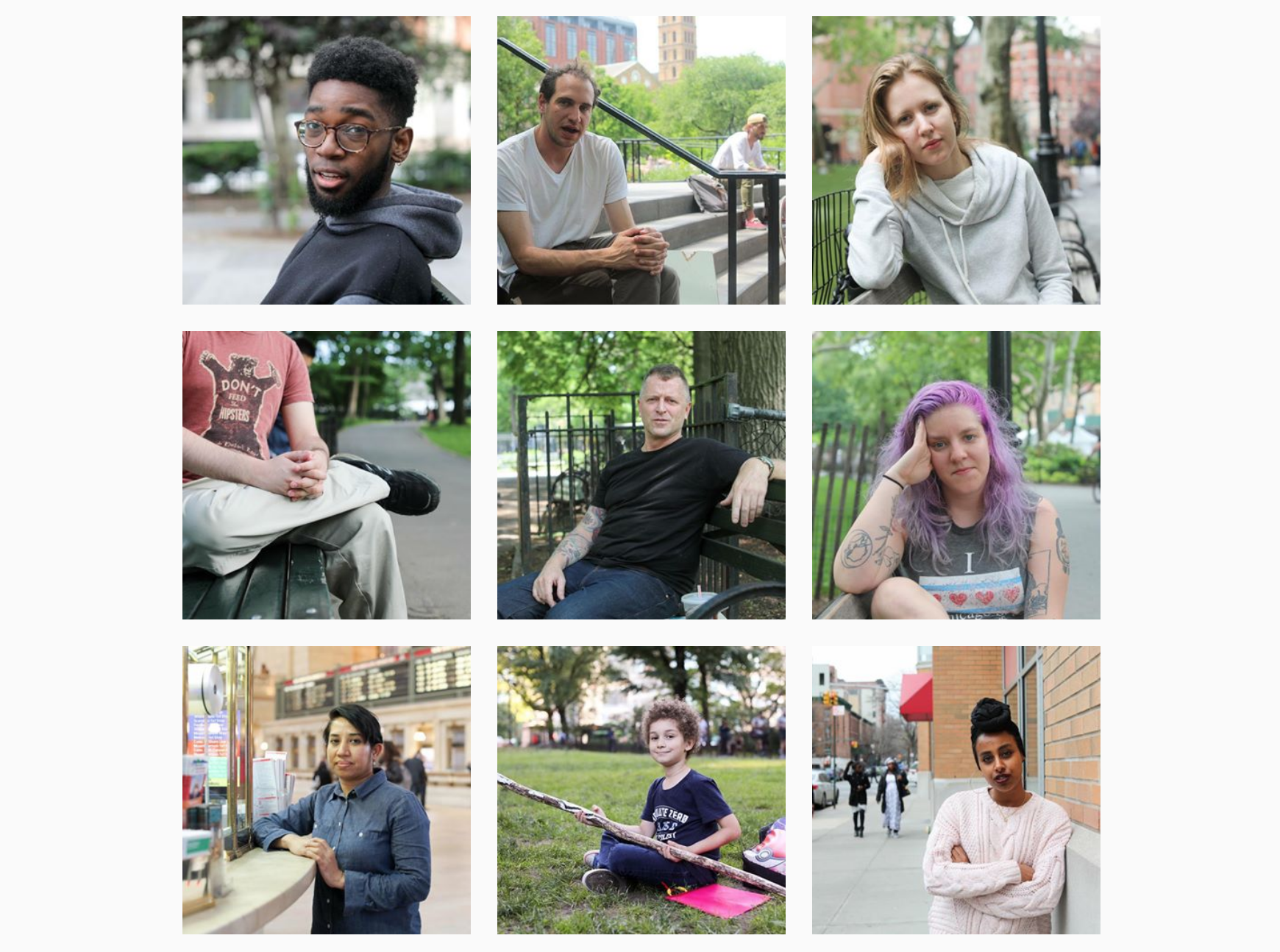
Brandon Doman founded The Strangers Project in 2009, and he’s collected (in person!) more than 85,000 handwritten individual stories. “I want to create a space for people to connect with the stories of the people they share their world with, and to connect with their own story. To put it simply, I do this because someone just might need it.” (Want to contribute or immerse yourself in stories? The project currently has a gallery-style exhibition at The Oculus in downtown NYC.)
A RICH LIFE
“I don’t want people to feel that their childhood needs to be their life story,” Ina Garten told a NYT reporter when discussing how the media has reported almost solely on one portion of her memoir. “You are not who your parents thought you were, or whatever bad thing that happened to you.”
OVERCOMING PROCRASTINATION
“The memories and narratives that form the core of a family’s identity can fade—or worse, be lost entirely—especially if a loved one begins to experience cognitive decline.” Jamie Yuenger, StoryKeep founder, on how procrastination is a thief when it comes to family legacy.
Craft and memoir
MESSY, VULNERABLE STORIES
“For those of us [book editors] who worked on memoir, the egg we carried was a little more fragile, the pieces we sometimes picked up, the shattered part of ourselves.” Betsy Lerner on the act of writing a confessional memoir as both a ray of hope and a cry for help.
A QUEST FOR ‘NARRATIVE COMPLETION’
When Kyo Maclear took a DNA test to learn more about her father’s ancestry, her long-held family narrative deflated. In this interview, we get a glimpse into the thematic layers of the memoir that resulted, Unearthing: A Story of Tangled Love and Family Secrets.
PAINTING ACCURATE SELF-PORTRAITS
“I mined my brain, every crevice, searching for parts of me that only I knew. Even though not all the information I obtained was used in my writing, once I brought my protagonist to life and set him aside from the crowd with oddities and quirks, I began my story.” Travis Harman on the craft of character in memoir.
“PATRIOT,” A POSTHUMOUS MEMOIR
“When you lose somebody who’s very close to you, you want everyone to remember him.” In the case of Aleksei Navalny’s, his wife has published his prison memoirs (in 22 languages) for a greater good, too: “to instill hope in the struggling Russian opposition movement, and to keep her husband present in the world.”
Pictures and stories
SNAPSHOTS OF INTIMACY
“A joint memoir by the Nobel winner [Annie Ernaux] and her former lover [Marc Marie] uses pictures taken during their time together to reflect on the transient nature of passion—and of life.”
FINDING THE UNIVERSAL IN THE PARTICULAR
In Juggling Life’s Threads, photographer Adam Lin creates a pictorial portrait of one man’s life (informed by a series of in-depth interviews that guided the photography), digging deep into his subject’s personal life, “where duty and passion intersect.”
Making history personal
SHAPING HISTORY
“History, as the word suggests, is always personal.... Every episode in human history is built on countless individual memories.” Lessons from Germany on keeping memories of historical wrongs alive.
GENEALOGICAL TRUTH-TELLING
“There’s something deeply moving about Bruno and Mire, descendant of the enslaver and descendant of the enslaved, working together to gain a clear-eyed view of their shared history.” A Hudson Valley Reckoning highlights not only the author’s family roots, but also the erasure of enslavement history in the North.
THE HOLOCAUST’S GRANDCHILDREN
“To be of the third generation [of Holocaust survivors]…is to have just the right proximity to the event—close enough to want to keep it in memory, not so close to want it in the present tense; close enough to think it is a part of them, not so close to think it cannot have different meanings for others.”
...and a few more links
Ideas to write a novel based on your life and family history.
Beth Kephart on the memoir responsible for her “memoir obsessed life”
To Coney, With Love collects memories of a beloved Ohio amusement park.
Keep your memories organized and safe with a photo storage box.
Lily Ebert, who kept Holocaust memory alive on TikTok, dies at 100.
Photographer recaptures childhood memories with his grandfather’s 70-year-old camera.
New research shows how brain records complex aspects of social memory.
Short takes
Learn about our Write Your Life course, providing memory prompts, writing guidance and a dose of inspiration to anyone who wants to preserve their stories now.