
Memories Matter
Featured blog Posts
READ THE LATEST POSTS

Thanksgiving story sharing, made easy
A roundup of the most popular (and helpful!) posts from Modern Heirloom Books to help you prompt and preserve family stories this Thanksgiving season.
Thanksgiving is the American holiday perhaps most associated with family, food, (and football), and lively gatherings around the table make it a prime time for sharing—and capturing—fun family stories.
I’ve written a fair amount about how to maximize the holiday from a family history standpoint; here’s a roundup of some of the most helpful and popular stories on the site to help you preserve your family stories this Thanksgiving.

Family potluck: reminiscing & recipes
Family Potluck: Reminiscing and Recipes: “Collecting family recipes is one of those things that’s on many of our ‘I want to do someday’ lists but that can easily slip through the cracks. It always seems like there will be time. But instead of saying ‘next time,’ make it a priority—as well as an enjoyable endeavor!” Here, tips for easy things you can do to get your family involved in preserving your food heritage.

4 ways to give thanks through story sharing
4 Ways to Give Thanks Through Story Sharing: “Even for families who may not share stories regularly around the dinner table, Thanksgiving lends itself to some good old-fashioned reminiscence.” Here, four unexpected ideas for giving thanks and telling tales.

Thanksgiving family history questions
Thanksgiving Family History Questions: “Don’t wait until next year or when everyone is available or any other ‘better time’—trust me when I say: Now is always the right time!” Get your free guide, 55 Questions to Spark Thanksgiving Story Sharing.

Unique holiday host(ess) gift
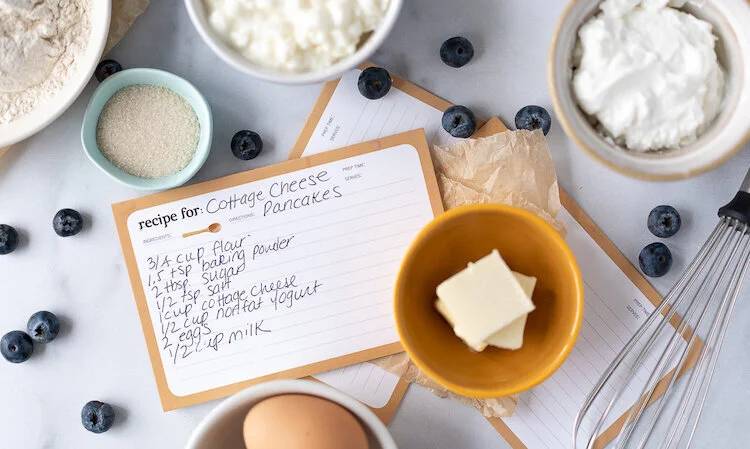
Unique Holiday Host(ess) Gift: Preserve your family recipes and all the precious stories they call forth with this unique recipe card set that fits in standard recipe boxes. Cards capture how-to and ingredients as well as associated memories! Check out our A Taste of the Past recipe card gift set.

Your 10-step plan for making an heirloom-worthy family cookbook

38 Questions to prompt food memories
I am grateful to you—my personal history and tribute book clients, as well as the broader Modern Heirloom Books community of memory-keepers, memoirists, and family history buffs. I hope you find something of value among these pieces, and I wish you and yours a holiday season filled with delicious food, lots of love, and scrumptious stories 🧡🦃🍁

How to ask good follow-up questions in a family history interview
Five easy ways to get the best stories from your family member just by responding thoughtfully to their answers (hint: it starts with really listening!).

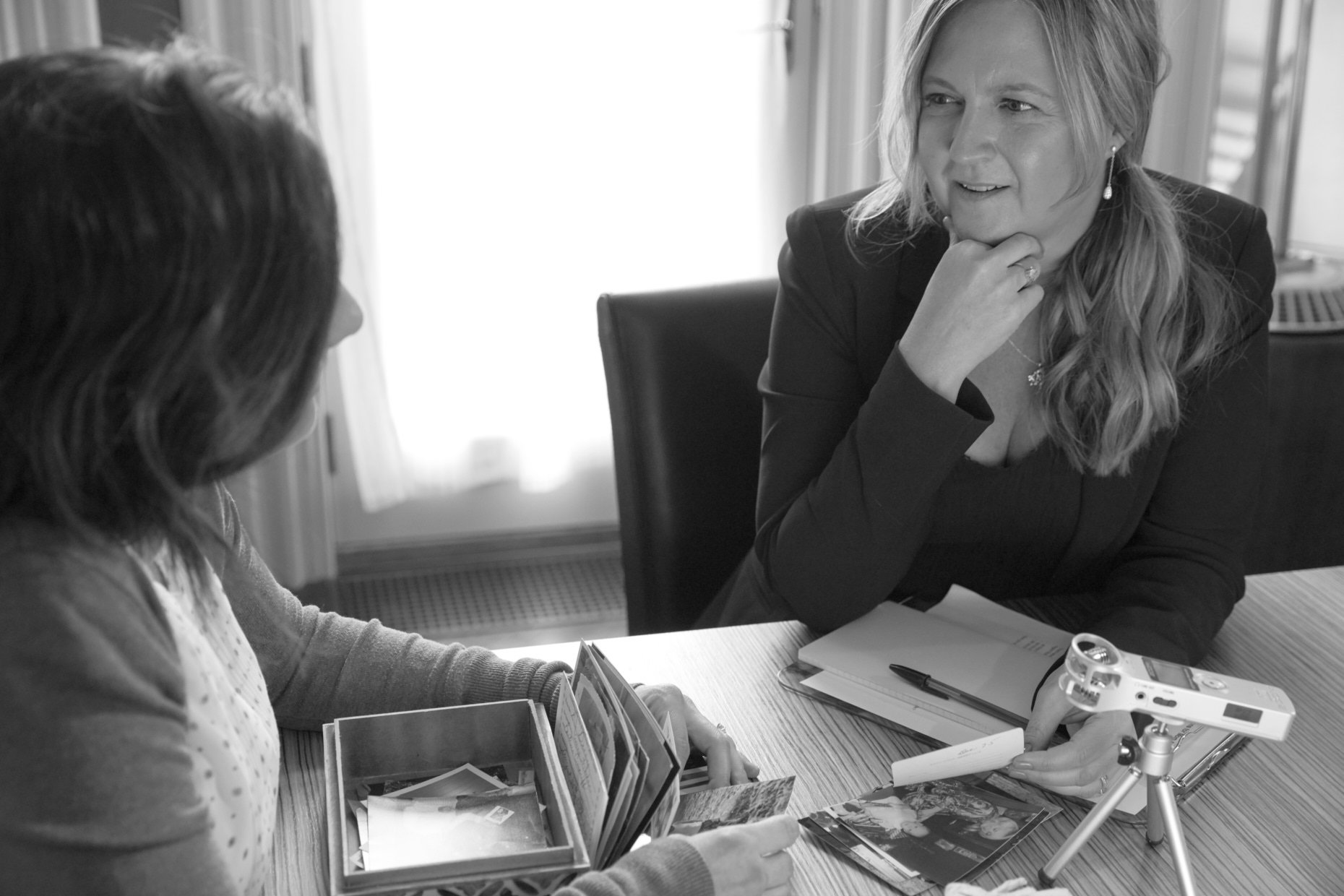
Whether your family history interview is being recorded on a couch in the subject’s living room or virtually on an iPad screen, it’s important to show interest through verbal cues and follow-up questions.
You’ve decided you want to interview your parent or grandparent to capture some of their memories and add to the family history book you are creating. You’ve downloaded recommended family history questions, thematically curated the ones you want to ask, and gathered the equipment needed to ensure you record everything smoothly. You’re good to go.
But wait! Just one small thing I’d like to remind you of: Remember to be a good listener, and to ask effective follow-up questions during the interview.
Tips for effective follow-up questions
Whether you are interviewing your mother, who you obviously feel comfortable with, or a great-aunt you have just met and who you really know nothing about, think of your interview somewhat like a conversation (albeit a lopsided one 😉). Ask a question, then provide space for your partner to reply—a quiet moment for them to think, of course, and also eye contact and an open expression on your face that invites trust and conveys real interest.
Then, when they pause and are seemingly finished with their answer, don’t automatically jump to the next question on your page. Instead, follow your conversational instincts and ask a follow-up question.
Be specific.
Instead of “Can you elaborate?”, ask “What was your favorite part about that job?”
Use open-ended questions.
Encourage storytelling with prompts such as, “Tell me about a time when you felt…” or “How did you react when your brother…”
Seek clarification.
If something is unclear, ask for more details without interrupting the flow of the interview. If you have a question now, chances are a future listener (or reader) will, too.
Follow their emotions.
If your interview subject mentions a strong feeling, explore it further. “You mentioned feeling relieved. Can you tell me more about that?” or “How did your sadness shift over time?”
Be an active listener.
Pay attention to their responses and tailor your follow-ups accordingly. Trust me, you’ll get better at this the more experience you have under your belt!
The power of family history interviews lies in both the connections they foster and the richness of the stories captured. By mastering the art of follow-up questions, you become a skilled facilitator, drawing out details, emotions, and lessons that make each story unique and deeply personal.
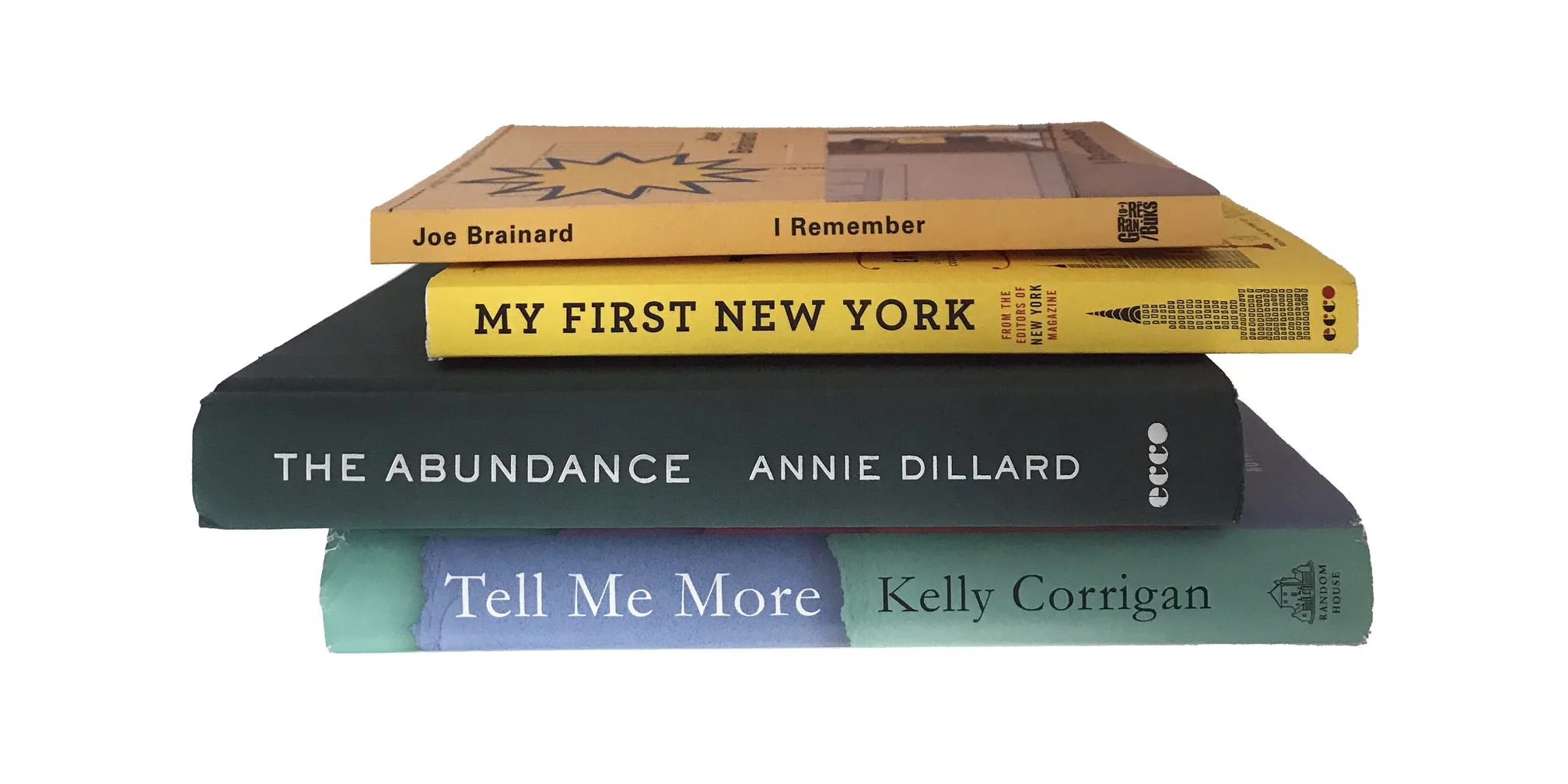
Remember the magic of “tell me more.” It's a simple phrase that can unlock a world of memories. It’ll also almost guarantee that both interviewer and interviewee will want to engage in yet another story sharing session—helping you create a more complete (and compelling!) family history and weave a tapestry of experiences that will resonate for generations to come.

















The power of a follow-up question
Whether you’re interviewing your parents about their childhood or gathering family history info from your grandparents, good follow-up questions are key.
Want a sign that your follow-up questions are working? If your interview subject is engaged—nodding, smiling, or showing other signs of acknowledgement in response to your questions—then chances are their story sharing will go deeper in the best possible way!
There are numerous options out there for memory-keeping journals or email-a-week life story prompts, and they make for sentimental gifts for our loved ones. And when the gift recipient is a motivated self-starter, these gifts can yield amazing stories that can be passed on for generations. More often than not, though, these gifts don’t get much beyond the ‘good idea’ stage
I’ve certainly written about this before, but today I wanted to hone in on one simple aspect of why I think these well-meaning gifts do not always ‘work’: There’s no one listening—and no one, therefore, to ask a follow-up question.
Recently I was conducting a personal history interview with a client named Madeleine. She offhandedly mentioned that her granddaughter had gifted her a popular prompt-a-week story gathering service, and that she had only answered about two questions so far. How long had she been getting the prompts?, I wondered. “I guess about a year and a half,” she replied.
Huh?! “Why?,” I asked her.
“The questions are silly or stupid,” she said bluntly.
I pushed her to share a few of the prompts if she could recall them. Some were indeed silly when considered in the context of the service’s goals of preserving family history, but some were, in my opinion, just poorly phrased, or in need of some probing beyond the initial ask.
One question Madeleine ridiculed was, “What do you like to do to relax?” This nonagenarian rolled her eyes as she repeated it. “Can you imagine—who cares how I relax?” she said.
But when I followed up that “silly” prompt with my own related questions based on my knowledge of Madeleine’s life—Were there things you could do to decompress during the years you were working three jobs? Were there hobbies you wish you had more time for over the course of your life? What replenishes your energy when you are feeling low?—she had story after story. And the more I heard, the more I asked, the more it became clear that there were lessons buried in her stories.
These were stories that would not have come out—in fact, that Madeleine probably would not have even recalled—had I not been present as a curious listener. She initially dismissed the prompt out of hand when it did not immediately resonate for her. But when my follow-up questions helped her see the prompt in a new way—in a way that directly related to her lived experiences—her memories flowed.
Sometimes, a simple “tell me more” or “how did that make you feel?” can unlock a treasure trove of details that elevate a story from good to great. Follow-up questions help an interview subject move beyond one-sentence answers and delve into the details that make a story come alive. They encourage the interviewee to paint a picture with words, describe emotions, and share sensory experiences.
Beyond that, follow-up questions show your subject that you are interested. That you care about what they are saying. That’s so much more powerful than a one-sentence question posed in an email…with no one there to listen to an answer.
Friendly reminder: Your personal story is part of a broader family history
While your memoir is telling your stories in your words, a family tree chart outlining your relationships has a real place in that book—here’s why.
This is a three-part series about choices I wish my clients hadn’t made during their personal history book projects. (For what it’s worth: in my first draft of this post, I referred to “mistakes” I wish my clients hadn’t made—and then I remembered, memoir is, by definition, a personal accounting of one’s life, and far be it for me to dictate a writer’s personal preferences.) That said, clients come to me not only for help finishing the projects they envision, but for my expertise in elevating their projects to be the best they can be. So, I thought sharing a few of these differences of opinion might be instructive for those waffling over similar decisions.
CHALLENGE 1: SHOULD I INCLUDE “THE HARD STUFF” FROM MY LIFE IN MY MEMOIR?
CHALLENGE 2: SHOULD I INCLUDE A FAMILY TREE IN MY LIFE STORY?
CHALLENGE 3: SHOULD I INCLUDE CAPTIONS IN MY MEMORIAL TRIBUTE BOOK?
Why include a family tree in a book focusing on just your stories? Well, because it will give your descendants an easy way to map the supporting “characters” in your stories—and because your personal history is one piece of a broader family history, too.
“We don’t need a family tree—it’s my story, and mine alone.”
I work on all types of legacy books with my clients—from heavily-researched family histories spanning multiple generations to short autobiographical sketches of just one person, from tribute books memorializing a loved one who has passed away to heritage cookbooks. One thing remains constant in all of these projects, though, and that’s how I view each of them as an heirloom to be passed on.
Recently I finished up a memoir with a client—let’s call him Tom. He came to me with some memories jotted down in a notebook and a vague idea of how he wanted to write about his life. I coached Tom over a two-year period, and when his final manuscript was being copyedited, he decided he wanted to print books for his family members. So our journey of photo gathering and book design began.
Tom’s stories spanned his school years to his days as a grandfather, and his many cousins played supporting roles throughout his book. He told vibrant and funny stories about his own grandfather, who lived next door to him when he was a child, and affectionate tales about his maternal uncle, in whose footsteps Tom followed in becoming a teacher.
So when I suggested we create a family tree to serve as a graphic cheat sheet for his readers, I was surprised when Tom said no. It wasn’t a matter of cost, and at first I couldn’t get to the bottom of why my client was so vehemently opposed to charting his family in this way.
Eventually Tom shared that he always felt overshadowed by his older sibling, and he wanted this book to be his, and his alone. He was already the star—it was his memoir, after all. I tried reassuring him that he would be at the root of the family tree, and that we’d be using it to show all those people who were related to him. But he held fast, and I got it.
Tom’s memoir is a wonderfully crafted narrative, a quilt of memories that are woven together to shed light on how his experiences shaped the person he became. He gained insights from writing about his life, he told me, and was grateful to have taken the time to find new perspective on some of his decisions.
The irony, to me, is that he printed enough copies to distribute to his children, his grandchildren, and his cousins, and that they will in turn pass them on to their own descendants—making Tom’s personal history one piece of a broader family history. Who knows, maybe one day one of them will piece together a family tree that will make following the family history (and, dare I say it, Tom’s memoir) easier to follow.













In conversation about “the gift of family stories”
Podcast host Melissa Ceria and personal historian Dawn Roode discuss the importance of family history preservation and finding solace in stories after loss.
Recently I was a featured guest on the podcast The Loss Encounters, hosted by Melissa Ceria.
Melissa is a French-American journalist and the founder of Studio Ceria, which has created and produced high-profile speaker series for Fortune 500 companies and cultural institutions such as the French Institute Alliance Française (FIAF) and NeueHouse in New York. She began her career as a writer and editor at major fashion magazines, including Harper’s Bazaar, where she and I worked together.
Melissa, as creator of The Loss Encounters, and I, as founder of Modern Heirloom Books, share a love and respect for the power of stories; we found our way to family stories, in particular, via somewhat parallel paths. When my mother died, I was bereft at the loss of our shared collective memory, and saddened to discover that the journals she had left behind were only sparsely written in. Melissa, on the other hand, was bequeathed a precious gift just ten days before her father, Lorenzo Weisman, passed—A Family Story, a book he wrote about their family’s history. It is an heirloom that continues to bring her solace all these years later. “It’s filled with stories, photos, poems, and letters that have brought us comfort and connection,” she says.
Our brief conversation, titled “The Gift of Family Stories,” was released as a bonus episode of The Loss Encounters in honor of Father’s Day earlier this month. It is, Melissa says, “dedicated to my dad, and invites all of us to cherish and preserve our own family stories.”
I share it with you here today in hopes that you, too, will be inspired to cherish and preserve your own family stories. Enjoy!
Transcript
(Edited slightly for clarity)

Melissa Ceria: On a warm September evening in 2012, my dad, Lorenzo Weisman, sat down at his dining room table and dedicated the book he'd written about our family to each of his grandchildren. He died ten days later on September 22nd, 2012. His book, titled A Family Story, is a beautiful account of my family's origins, our ancestors, the long life that my parents built together, and the families that joined ours through marriage. It's filled with stories and photos, poems, and letters. There's a lot of love in it. And I'm glad that my dad didn't varnish things. He just told our family's story by piecing together the mosaic of our lives. I think that writing it also allowed him to review his own remarkable journey, and to feel at peace by the time he died. No one could have guessed that A Family Story would also become our companion in grief. We leaf through it when we miss dad, when we need to hear his voice, or if we want to share family stories with our kids. It's been a huge gift for the grandchildren that never got to meet him. Through this, they know dad and we can all talk about him. A decade after his death, I've been thinking about the importance of sharing our stories with those we love. So I called up my friend Dawn Roode. Dawn is the founder of Modern Heirloom Books. As a personal historian, she helps people write their stories and preserves them in beautifully bound books that generations will cherish. Our conversation felt like the call to action. Collecting our memories is a gift for those we leave behind. Hi, Dawn. It's lovely to have you here.
Dawn Roode: Thrilled to be here. Thank you, Melissa.
Melissa Ceria: Tell me how you got started with this work.
Dawn Roode: I was a new mom, and my son had actually been born three months before my mother passed away. It was a very unexpected death. And so, you know, I was dealing with the supreme joys of motherhood and the lowest depths of grief at the same time. And it was a really challenging time for me. I ended up making a book in honor of my mom. Didn't start out that way. It started out me writing a lot of remembrances about her. I had this feverish sense that I was going to lose my memories of her, and it was so important for me to get them down. And as a writer and an editor, someone who came from that background, that was the natural way for me to do so, was to just write in a journal. But eventually, as I went through her photos, I wanted to make something that was more substantive, more permanent. I knew that my son would never know my mom, and that kind of broke my heart, and that was the inspiration for me to make the actual book. It was such a rewarding experience for me, and I thought I might be able to help other people do the same thing.
[00:03:21]
Melissa Ceria: When people start working with you, are they clear about what they want to communicate?
[00:03:25]
Dawn Roode: It runs the gamut. It's very interesting when someone comes to me and says, "I want to do my story," very often they have a good idea of what they want to share. Almost always, it ends up going in a new direction once the interviews start, because they surprise themselves with what a rich life they've led. "Oh, and I forgot about this." And so the mere act of telling the stories, of me being a curious and engaged listener and asking pointed questions, helps them go in new directions and discover meaning that they hadn't expected in their lives. Other times people come to me where it's the younger generation that wants to preserve their parents’ or their grandparents’ stories, and that's a very different dynamic, where the people come and say, "I don't have a story to tell." It wasn't their idea. They're like, "I have nothing to say. My life is pretty boring, pretty standard." So there's a whole little conversational thing that happens to get them to the right place. And those are even more wonderfully surprising, because at the end they say things like, "wow," I literally had a client say, "I lived a really amazing life so far, and I had no idea." And so that power of reflection, I think is just really transformative. And I look at myself as a guide for them. So I help them find the story and put them on the path to kind of make some narrative sense of it.
[00:04:43]
Melissa Ceria: What are the qualities that support the work that you do?
[00:04:46]
Dawn Roode: So certainly curiosity is one, but I think being a good listener is at the heart of everything that I do. I feel like I hold a sacred space for people. I try to be very generous of spirit with people. I think empathy is another. People are very hard on themselves and I want them to know any of their feelings are valid. The choices they've made are worth looking at with forgiveness, with gratitude.
[00:05:12]
Melissa Ceria: Do you think when we review our own lives, we can be very critical of ourselves? Or do you think we give ourselves more slack?
[00:05:20]
Dawn Roode: You know, it's really interesting. I find when people are writing about themselves, we can be much harder on ourselves. The dynamic when I'm interviewing someone, I can sense when that criticism is coming in, or the reluctance to kind of go in a certain direction because there may be shame or critical thought about a previous decision. What I try to do is empower them that "you came out the other side, and there's a lesson in there for your descendants or for yourself." So the power of two, of me being a listener, I think, helps people find that generosity of spirit for themselves.
[00:05:55]
Melissa Ceria: If somebody isn't prepared to write their own story, or they can't necessarily hire somebody to help them do that, what are some of the ways that we can gather these stories?
[00:06:04]
Dawn Roode: I say to people all the time, it doesn't have to be long. I think that's the biggest thing, is do something rather than nothing, and you can always change it. Four years later you can say, "Oh, you know that thing I have in the drawer? That is something I'm going to go rewrite it." But the fact that you're even thinking about it, I think is always a good start. And then it's just takes some kind of action to do it. And if you can't write, dictate—we have smartphones, so just dictate right into there. There's software that will automatically transcribe it now. And you can leave your voice. Just leave an audio recording if that's easier for you. It doesn't have to be monumental, I think is the message.
[00:06:40]
Melissa Ceria: Do you find that people that you work with, if they are nearing the end of their lives, have a greater sense of peace after they've communicated something to their loved ones?
[00:06:52]
Dawn Roode: I do. It's something palpable that I can feel as our interviews proceed, and as we're getting closer to having something to completion. There's a shift in the way that they are talking about their life. There's a shift and a certain calmness that comes with it. But beyond me sensing it, people have told me that. One client in particular comes to mind who just, he thanked me repeatedly for giving him the space to do this, but I wanted to thank him. I had such gratitude to him for being open about it, and what he was so grateful for was that "I have perspective. That I looked back on my life and realized it was wonderful." What more could you ask for? And what a wonderful thing to tell those that you're leaving behind. There's a great peace that comes from it, and also an empowerment to let go at a certain point when the time comes.
[00:07:46]
Melissa Ceria: Do you think it's in our nature to want to leave messages behind?
[00:07:49]
Dawn Roode: I do, and what I've tried to do through my work and and after losing my mom in particular, is to encourage people to be intentional about what we leave behind so that people aren't scrounging through the emails and their texts in search of something, but that we leave something specific. I think that that holds even greater meaning for both parties. For the person leaving it behind, it gives you a sense of peace that you've said certain things. And for the person receiving that, how wonderful to know that your loved one was thinking of you and that you can hold on to this.
[00:08:21]
Melissa Ceria: It’s not surprising that my dad’s book brings us solace. To Dawn’s point, he wrote it with intention, and the words that he gifted us were meant to offer comfort. I’m so grateful for his gift. This is Melissa Ceria. Thank you for listening.
To read or not to read? How to handle a deceased family member’s personal letters
Discovering a stack of handwritten letters can feel like winning the family history lottery—but is it always the right thing to read (or share) them?
I have created wonderful heirloom books filled with letters that help tell the story of a family. Sometimes, though, we may not feel so comfortable reading our deceased loved ones’ personal reflections. Before you include their letters in your book, reflect on how they’d feel about it—then, make an informed, thoughtful decision.
My parents divorced when I was a child, and I do not have a relationship with my father. But I was close to my mother until her death. She shared a great deal with me, and we spoke openly about our feelings. When I was sorting her estate I came upon things I was excited to find: letters from me that she had saved, a memory-keeping journal where a handful of questions were answered in her pristine penmanship (how I wish she had written more in those pages!), a scrapbook of her youth that she had made in her fifties. I reproduced some things, including favorite handwritten recipes and letters between us, in a tribute book I wrote in her honor about a year after she died. I did not, however, include any of the letters sent between her and her newlywed husband when he was stationed in Korea.
If my mother were alive and we had discovered those saved letters together, I have no doubt she would have shared details with me. She would have told me why she saved them even after a bitter divorce. She would have talked about young love and her dreams and she would have answered any questions I had.
But my mother was no longer here to answer questions or to provide context. At first I was excited to unearth that correspondence; then, as now, I would cherish anything that connected me to my mom. I opened the top letter and began reading. The letter was intimate. It wasn’t sexual, but it was clearly intended for my mother’s eyes only. I refolded the letter, put it back in its envelope, and chose not to read any further. It felt like an invasion of her privacy, and I wanted to respect that.
Was I bound by some moral code not to read my mother’s letters? I don’t think so. To me, it just felt wrong. So I followed my gut.
Indeed, most genealogists regard letters as valuable family artifacts to be mined for family history information and stories. As genealogist Denise May Lovesick writes in her piece “Ethics, Etiquette and Old Family Letters,” “to reject reading old letters on the basis of ‘personal privacy’ seems counter-productive.”
In an online exchange about the ethics of reading letters of a deceased person, questions arise: Can the dead be rights-holders, morally? Is it an invasion of privacy to read letters not intended for you? Does the deceased have a right to have their memory protected? As one contributor shares, “the damage caused to that person is zero (he's dead), while everybody will benefit from the historical knowledge.”
Is it always okay to read (and share) letters from our deceased family?
So while it may not be morally or ethically wrong to read your ancestors’ letters (I have created quite a few books of family correspondence that are treasured parts of those families’ legacies!), if you have reservations, consider these questions:
What is giving you pause?
You may be worried that the letters will reveal a side of your family member you knew nothing about; that may be the case, and you should prepare yourself for that inevitability should you decide to read them. Perhaps you feel like you would be invading their privacy; if you have conviction that if they were alive, they would not want you to read the letters, then it may be prudent to respect those wishes, surmised though they may be.
Are you reluctant to read the letters, to share them, or both?
Remember that there is a difference between you or another loved one reading your parents’ letters, versus digitizing and printing them for a wider audience. You cannot decide whether to share a personal correspondence until you read it, and then you will need to make an informed decision: Will reproducing the letters (in a family history book, for instance) provide insight or historical context without maligning the letter-writer? Then you may want to share them. Will reproducing the letters reveal sensitive information that might hurt someone else, living or deceased? Then you may want to reconsider.
How would you want someone to act if the letters were your own?
Imagine you have a stash of letters hidden in your closet—they are meaningful to you, but private. You have saved them, and hidden them, for reasons known only to you. If a family member were to discover them after you died, would you want them to read them? Such consideration may help you make a mindful decision.
There is no black-and-white answer to the question, Should I read my deceased loved one’s personal letters? It is not morally wrong to read them, nor is it necessarily an invasion of their privacy. But there may be good reasons your gut tells you not to read them—and if that is the case, I hope these reflections will help you come to an answer that is right for you.
If you have a collection of letters that you feel tells an important part of your family history and would like help building an heirloom book around them, please reach out to discuss how we could work together.











4 Unique family history finds from RootsTech 2024
From a conference hall filled with more than 150 family history vendors, I have hand-picked my favorites—here’s why you’ll love them, too.
This short video, shared on the main stage and online, inroduced the RootsTech 2024 theme, REMEMBER. Hit “play”—and have some tissues handy!
What a whirlwind the past three days have been! I am sitting in the Salt Lake City airport as snow and gusty winds threaten to delay my midnight flight back to New York. I’ve got a notebook brimming with genealogy research tips, a folder of syllabi on my laptop waiting to print, a heart expanded by meeting likeminded family historians and memory-keepers, and eight hours to kill before the redeye boards…so I thought I’d share a quick roundup of some of my favorite discoveries from my first in-person RootsTech.
For those not familiar, RootsTech is a (huge!) family history and technology conference held annually in Salt Lake City, Utah. I’ve participated virtually in the past, and written about some of my reflections on the blog, but being here in person leveled up the experience, to be sure.
Family history finds you’ll want to know about
Here are four finds from RootsTech 2024 that I think you may be interested in:
DISCOVER: Heritage Travel

Kindred Lands’ website offers up sample heritage travel itineraries. Where is your ancestral homeland—and have you been there yet?
I had been planning to take a trip to Prague as well as some small towns in the Czech Republic to explore my heritage—then Covid happened. I’m a bit of a perfectionist, so the thought of designing that vacation—and ensuring I got to see all the things that connected me to my family history AND had a great time—seemed daunting. Well, I will be calling the couple behind Kindred Lands when I am ready to make that trip again. Drawn in by the stunning design of the Scotland book they had on display (and which is for sale on their site—if you have roots in Scotland, I highly recommend buying it for some imaginative travel!), I chatted with them about the impetus for starting their heritage travel company: Their first trip, unsurprisingly, was to explore their own family origins—and now they craft custom trips for others who want to feel a connection to their ancestral homeland. Discover some sample itineraries and request a free custom quote to visit your region of choice at KindredLands.com.
DESIGN: Custom “Vintage” Travel Posters

Four prints for sale in Missy Ames’s Wanderlust–themed Etsy shop; she creates fully custom commissioned artwork, too (perfect, in my opinion, for taking your family history book to the next level).
An overall beautiful aesthetic is important to me when I am designing family history books, and there are occasions when original artwork is called for. Custom maps showcasing a family’s ancestral journey, for example, or an illustration of a beloved home that has been in the family for generations, have made their way into my heirloom books. I was thrilled to discover the graphic design work of Missy Ames while walking the RootsTech expo hall—the framed prints she had on display from her “Wanderlust” collection are reminiscent of vintage national parks posters and ads from the mid-twentieth century. Missy told me that she began her original place-themed posters when she was living abroad. “I wanted to remember the remarkable experiences I had and couldn’t always find artwork that fit what I was looking for, so I started to make my own.” She has an array of designs available for purchase at her Etsy shop, and she is also available for personal commissions (I asked!)—so if you’re working on a family history book and would like some retro-feeling illustrations to accompany your storytelling, consider reaching out to her. I know I will be.
BOOK: A Daughter’s Portrait of Love and Loss

The cover of Nancy Borowick’s book The Family Imprint, while stunning, does little to hint at the photographic splendor within. Click through some images on her site to see what’s within.
I learned a LOT during educational sessions at RootsTech, walking away with a strategic game plan for breaking down brick walls in my German genealogy and new knowledge that I am a Mayflower descendant, for example. What most inspired me throughout the weekend, though, were stories of family connection—and those stories were all around for anyone listening! Perhaps my favorite such stories came from internationally renowned photographer Nancy Borowick, whose keynote presentation you can watch below (please do!!). No spoilers here—suffice to say, Nancy photographed her parents throughout their respective cancer treatments and developed a fluency around talking about death while finding an outlet for her feelings. The vulnerable and glorious images she captured distill a time in her life she wanted to remember, and they also invite us into her family’s experience. “This was our story, but it was everyone’s,” Nancy said. “I grieved with every letter that came in, but I also felt a deep connection with each and every one.” I was thrilled to happen upon her book signing table on my way out of the stage area, and highly recommend getting one for your own coffee table—The Family Imprint is an exquisite piece of art that oozes with authentic emotion and the human spirit.

Watch Nancy Borowick’s moving presentation from RootsTech 2024. “I am my mother’s daughter, and I get to keep that forever,” she said.
SERVICE: Free Genealogy Advice
One of the country’s leading resources for family history research, the New England Historic Genealogical Society, offers free online chat times where you can ask one of their expert genealogists a question, from how to get started in genealogy to where to find a particular record, from clarifying border changes in a particular town to accessing an online database. Find the Ask a Genealogist online chat, including a schedule, at AmericanAncestors.org/chat.
In addition to the above shout-outs, I promise to share in a future post some helpful tips for researching your family history and telling your family stories—I learned a LOT, and I want to pass on some of that to you! What would you like to know?
Are you weighed down by the stuff of your family’s memories?
Boxes of old letters, family photos, and mementos from a generation ago can feel like a burden if they’re passed down without context. What to do with them.
That box of sentimental stuff handed down to you would mean a lot more if you knew the stories behind the stuff, wouldn’t it?
Passing along our stories to our children and their children is a valuable endeavor, and in my experience one almost always met with joy and gratitude (even if not immediately, on occasion).
People with whom I have worked to preserve their stories have told me their family members tell them they “love” their life story books, “cherish” them, are “in awe” of them. When sharing their books, my clients have been met with extended hugs, laughter, dancing (“my father shimmied around the kitchen with glee when I showed him what I wrote,” one individual told me), and even tears.
But often it’s not stories that are passed on, but boxes of things laden with sentiment—and without context, those boxes can take on undue weight.
In recent weeks I have met with one person who told me she had a large stack of letters written between her parents during World War II. She knew that they were written in German, and that her father was in a work camp at the time. She didn’t, however, know what was within those letters, as she has never taken the time to have them translated or to read them. And now, she told me, she wasn’t even sure where they were. “But they haunt me,” she said.
Another person I visited told me her mother had recorded a Holocaust testimony with the Shoah Foundation in the 1980s (well, she said “she told Steven Spielberg’s people about her Holocaust experience”). No one in the family knew how to access it. They did not have a copy. They did not know the name of the foundation. Even her mother did not recall what she may have said during that long-ago oral history interview. Certainly the weightiness of the subject matter may have given anyone pause, but to let such a personal history get lost would be a tragedy.
And yet another current client told me, near the end of her project, that an aunt had just randomly stopped by to drop off a scrapbook that had been lovingly crafted by my client’s grandmother. The aunt was moving to another house, found the scrapbook tucked away in a closet, and, knowing my client was interested in her family history, figured she would be a better custodian of the materials. She was fortunate—many people who feel burdened by their ancestors’ things don’t have a family member with such interest to hand them off to.
As I think about these things—about how we can feel burdened by our parents’ things, about how stories can so easily get lost—I feel a bit sad, yes, and also compelled to spread the word.
Do you have sentimental boxes of family mementos you don’t know what to do with?
First, think about who might be the best custodian of your family’s archive.
If there is an obvious family history buff in the family, see if they may want the items. If not, then ask around—you might be surprised to learn a teenager or distant cousin may have a greater interest than you’d expected. The sooner you can pass the items on to someone who will regard them with interest and respect, the better. (Are you this person? I’ve met numerous people who tell me they have no interest in sleuthing through these “old things,” only to be drawn in as I curiously pull photos or war medals out and show interest in what they reveal!)
Second, do what you can to restore context to the things.
Even if you don’t have the time or inclination to write a whole book, consider labeling photos with names, writing mini-histories of heirlooms, and at least telling your kids what you know of the contents of that old box in the basement. Spend an hour or two with a sibling or parent to record your memories of all that stuff—it can be as simple as capturing audio with your phone’s voice recorder. Spare your descendants the burden of passing down an archive of things they know should have meaning, but not why.
Third, let go of guilt.
Perhaps you were the recipient of such a box of “cherished” things that came to you without context or meaning. Sure, that watch may have belonged to one of your grandfathers, or it may have been a flea market find that he never wore but stashed in a box…but you hold onto it along with everything else because you feel you should. This is a rich topic that could warrant a few thousand words (heck, the comments alone on some articles covering this topic are worth a read!), but in my mind, as long as you move forward with intention, it’s okay to let go of things that hold no meaning for you.
Do you have a dusty box of so-called heirlooms, letters, or family photos that were passed down to you without context? What are you going to do with them?
Further reading on how to be a good custodian of your family history: