Memories Matter
Featured blog Posts


READ THE LATEST POSTS

Are you weighed down by the stuff of your family’s memories?
Boxes of old letters, family photos, and mementos from a generation ago can feel like a burden if they’re passed down without context. What to do with them.
That box of sentimental stuff handed down to you would mean a lot more if you knew the stories behind the stuff, wouldn’t it?
Passing along our stories to our children and their children is a valuable endeavor, and in my experience one almost always met with joy and gratitude (even if not immediately, on occasion).
People with whom I have worked to preserve their stories have told me their family members tell them they “love” their life story books, “cherish” them, are “in awe” of them. When sharing their books, my clients have been met with extended hugs, laughter, dancing (“my father shimmied around the kitchen with glee when I showed him what I wrote,” one individual told me), and even tears.
But often it’s not stories that are passed on, but boxes of things laden with sentiment—and without context, those boxes can take on undue weight.
In recent weeks I have met with one person who told me she had a large stack of letters written between her parents during World War II. She knew that they were written in German, and that her father was in a work camp at the time. She didn’t, however, know what was within those letters, as she has never taken the time to have them translated or to read them. And now, she told me, she wasn’t even sure where they were. “But they haunt me,” she said.
Another person I visited told me her mother had recorded a Holocaust testimony with the Shoah Foundation in the 1980s (well, she said “she told Steven Spielberg’s people about her Holocaust experience”). No one in the family knew how to access it. They did not have a copy. They did not know the name of the foundation. Even her mother did not recall what she may have said during that long-ago oral history interview. Certainly the weightiness of the subject matter may have given anyone pause, but to let such a personal history get lost would be a tragedy.
And yet another current client told me, near the end of her project, that an aunt had just randomly stopped by to drop off a scrapbook that had been lovingly crafted by my client’s grandmother. The aunt was moving to another house, found the scrapbook tucked away in a closet, and, knowing my client was interested in her family history, figured she would be a better custodian of the materials. She was fortunate—many people who feel burdened by their ancestors’ things don’t have a family member with such interest to hand them off to.
As I think about these things—about how we can feel burdened by our parents’ things, about how stories can so easily get lost—I feel a bit sad, yes, and also compelled to spread the word.
Do you have sentimental boxes of family mementos you don’t know what to do with?
First, think about who might be the best custodian of your family’s archive.
If there is an obvious family history buff in the family, see if they may want the items. If not, then ask around—you might be surprised to learn a teenager or distant cousin may have a greater interest than you’d expected. The sooner you can pass the items on to someone who will regard them with interest and respect, the better. (Are you this person? I’ve met numerous people who tell me they have no interest in sleuthing through these “old things,” only to be drawn in as I curiously pull photos or war medals out and show interest in what they reveal!)
Second, do what you can to restore context to the things.
Even if you don’t have the time or inclination to write a whole book, consider labeling photos with names, writing mini-histories of heirlooms, and at least telling your kids what you know of the contents of that old box in the basement. Spend an hour or two with a sibling or parent to record your memories of all that stuff—it can be as simple as capturing audio with your phone’s voice recorder. Spare your descendants the burden of passing down an archive of things they know should have meaning, but not why.
Third, let go of guilt.
Perhaps you were the recipient of such a box of “cherished” things that came to you without context or meaning. Sure, that watch may have belonged to one of your grandfathers, or it may have been a flea market find that he never wore but stashed in a box…but you hold onto it along with everything else because you feel you should. This is a rich topic that could warrant a few thousand words (heck, the comments alone on some articles covering this topic are worth a read!), but in my mind, as long as you move forward with intention, it’s okay to let go of things that hold no meaning for you.
Do you have a dusty box of so-called heirlooms, letters, or family photos that were passed down to you without context? What are you going to do with them?
Further reading on how to be a good custodian of your family history:













Life Story Links: March 19, 2024
Book design, interview techniques, and life writing tips are a few of the topics in this week’s curated roundup for family history fans and memory-keepers.
“We are our memory, we are that chimerical museum of shifting shapes, that pile of broken mirrors.”
—Jorge Luis Borges
Vintage poster with original artwork by Richard Halls produced circa 1936 by the Work Projects Administration; image courtesy of the Library of Congress Prints and Photographs Division, Digital Collection. The posters were designed to publicize exhibits, community activities, theatrical productions, and health and educational programs in seventeen states and the District of Columbia between 1936 to 1943.
Notes and tips on craft
WHO’S ASKING THE QUESTIONS NOW?
One of media’s most talented and prolific interviewers, David Marchese, has the tables turned as he becomes the interview subject: This piece is worth a read both for the nuggets of interviewing wisdom as well as the embedded links to some great interviews from the NYT archives.
GONE BUT NOT FORGOTTEN
Amidst my current work on four distinct custom tribute books honoring clients’ family members who have passed away, I also shared some tips for anyone who may want to create a memorial book on their own.
WHEN DESIGN IS BAKED INTO CONTENT
“Manuscripts live in authors’ minds and on their computers, but books exist out in the world. No one wants to read your Word doc no matter how beautifully written it is.” A book designer on “the intricacies of literary interior design.”
Family history now
‘GNARLY BRANCHES’ OF HER FAMILY TREE
“My only provenance stems from obsessively researching genealogy. I’m sure the tendency came from growing up with eleven living, blood-related grandparents (parents of parents of parents of parents).” Chris Hardy Thornton on using history as a method of filling in the gaps from what’s passed down.
THE JEWISH HOLIDAY TABLE
“As I asked her about each [dish], I learned of her family’s journey from Spain to the Ottoman Empire to Africa and finally to Israel. I knew immediately that I wanted to preserve her treasure trove of recipes and stories.”
CONNECTION, IDENTITY, WELL-BEING
“The documented effects of genealogical discoveries on emotional well-being, resilience, sense of identity and belonging are taking on new relevance in America’s mental health crisis.” Family history as a public health intervention?
FAMILY HISTORY CONFERENCE HIGHLIGHTS
While I haven’t yet had time to write about my participation at RootsTech 2024 (stay tuned!), Robyn Fivush, Ph.D., director of the Family Narratives Lab at Emory University, shared this thoughtful reflection, including how physical archives can help embody family stories, creating profound connections.
More memoir miscellany
MEMOIR MEMORANDUM
“Our favorites of the year are audacious and moving—they’ll demand your attention, entertain you, and show you new vistas.” The best memoirs of 2024, so far, according to Esquire.
ACCIDENTAL ICON
“Clothes have always helped me tell stories about myself; who I am, who I wish to be. They could be chapters of a memoir.” Read an excerpt from Lyn Slater’s memoir, How to Be Old.
WORTH A THROWBACK READ
In 1996, The New Yorker helped launch Frank McCourt’s writing career by publishing an excerpt from Angela’s Ashes, his (eventual) Pulitzer–winning bestseller. Three years later, the magazine featured the next chapter of McCourt’s story: In honor of St. Patrick’s Day weekend, check out this piece from the archives, “New in Town,” about the first days after his migration to America (I highly recommend clicking “play” to listen to McCourt read the excerpt!).
Short takes


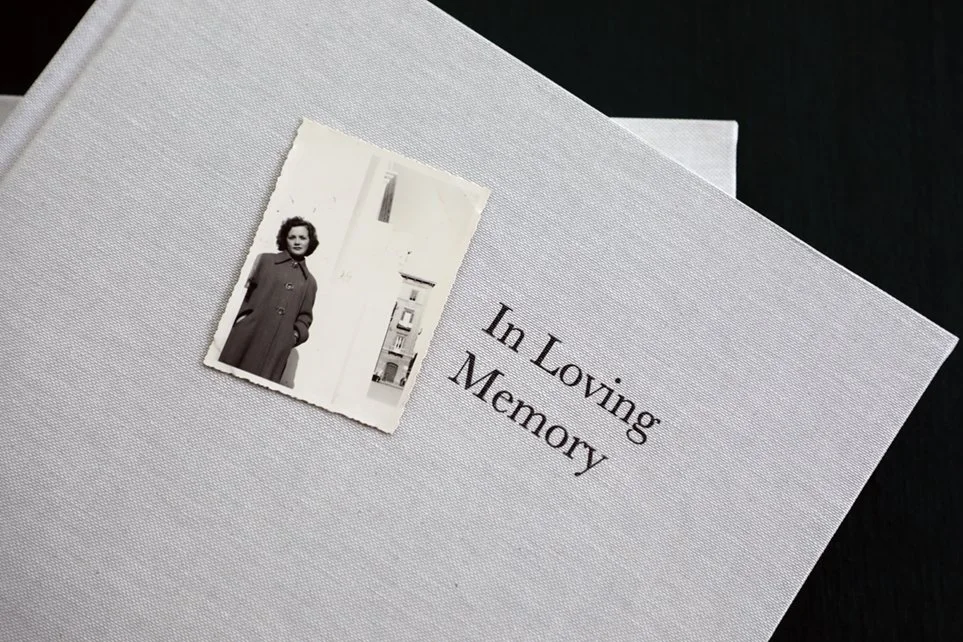
3 Tribute book ideas that honor lost loved ones
Go beyond a memorial slideshow and honor your lost loved one in a more permanent way. These three ideas for tribute memory books are easier than you think.

When someone we love dies, it can feel imperative to memorialize them in some way—to honor their memories, their accomplishments, and their stories, and to do so in a way that feels special. That helps preserve their legacy of love.
But the urgency, accompanied by feelings of grief, can also feel paralyzing. Where to begin? How to proceed?
Often we compile photographs into a slide show for a memorial service, or frame some favorite images for a celebration of life. Beyond that, though, I suggest preserving your loved one’s personal history into a more permanent heirloom—a book that you can leave on your coffee table so you can visit with them any time…
Easy ways to memorialize your lost loved one
Here are three tribute book themes to consider that honor your lost loved one and keep their memory alive beautifully:
1. Photo memory book
Don’t overcomplicate things: Choose your favorite images of your deceased family member (or friend) and design a timeless photo book to capture their spirit. Less is more, so follow these tips for curating a tightly edited collection:
Know that you are not dishonoring them by not including every photo you have of them. Quite the contrary, thoughtfully choosing pictures that capture their spirit is an act of celebration.
Choose photos from different periods of their life—ideally from the time they were a baby through present day. For older print photos, scan them at a high-resolution, and consider keeping the old-fashioned photo frames in tact for a vintage feel.
Highlight the most special photos by including them on full pages. Those can be balanced out by grids of smaller pictures or pages with a few thematically linked images.
The idea is to curate a book of photos that commemorate your loved one meaningfully—so you can remember them in years to come—but know this: The process of creating such a book can be healing and even joyful, too.
2. Collected tributes
A particularly fitting project as you near the one-year mark after your loved one’s passing: an heirloom book that gathers short tributes from those who knew them.
Invite family members, friends, and colleagues to write brief remembrances of the deceased and send you 1-3 photos of them with your loved one. Give them a deadline (even if you don’t need the book by a certain date, a deadline is just the prompt many people need to finish!), then compile everything into a narrative book.
My best advice for writing compelling tributes? Be specific (tell a story, include a quote), be funny (yes, that’s more than okay!), and speak from the heart.
And as far as designing the book? I suggest typesetting tributes in a program such as InDesign or Canva, then importing those words into your book publishing platform as images (be sure to place them at 100 percent so all text appears the same size on every page). If assembling the book is your big challenge, consider hiring a professional designer to prepare it for you—the results will be worth it, especially for a book that holds so much meaning.
3. Legacy list: Remembering _______ in 10 ________
Would you like to bring your loved one’s spirit to life beyond photos but feel intimidated by the notion of writing more than a few words? Consider creating a legacy list—a list of something that mattered to them and that embodies their values and personality.
Perhaps they were a fabulous cook, or the frequent host of family gatherings? Put together a book of their 12 favorite recipes accompanied by photos of them entertaining or in the kitchen.
Maybe they were a font of wisdom. Compile the 10 best lessons they passed on. And don’t worry—not every one has to be life-changing (things like “start saving your pennies young” and “never go to bed angry” hold great value!). Typeset each lesson on its own page, and flesh out your tribute book with photos of your loved one throughout their life (no need for the images to correspond to the lessons).
What if you can’t think of a theme for a legacy list that honors them appropriately? Simply choose ten words that describe your loved one. Like above, design each word on its own page followed by a few spreads of photos—in this case, matching the images to the words holds power (if they were “funny,” choose goofy shots or ones that show them and others laughing; if they were “ambitious,” pick images of them at graduation, at work, running a marathon, etc.).
No matter how you choose to celebrate your loved one after their passing, being intentional and keeping your project manageable are the best ways to get it done!
Related reading:





Life Story Links: March 5, 2024
From first person stories on loss to craft essays on life writing and memoir, this week’s roundup is a another thoughtful collection for personal historians.
“I want to explore what it means not to know, not to ever be able to know. Life is dead ends, conflict, dissonance, gaps, great clouds of confusion and misunderstanding. Do I tell a story, or do I tell you how it feels to have only the remains of one? The first is certainly a better story. But the second is better history. Which do I really want?.”
—Sallie Tisdale
Vintage poster with original artwork by Frank S. Nicholson produced some time between 1941-1943 by the Work Projects Administration; image courtesy of the Library of Congress Prints and Photographs Division, Digital Collection. The posters were designed to publicize exhibits, community activities, theatrical productions, and health and educational programs in seventeen states and the District of Columbia between 1936 to 1943.
Reflecting on loss
FIRST PERSON, BEAUTIFULLY
“What if I had told my father a real goodbye? What if I had told everyone the truth? What if I had let people see me cry?” Emily Ziff Griffin writes about missing her father’s funeral as a teenager.
WHAT THEY SAID
“My father remained in a coma after I arrived in Patna. And then he died. If my father had been conscious, I suspect he would have a lot to tell me.” Amitava Kumar on finding solace in the words of others.
Memoir miscellany
THE THOUGHT THAT COUNTS?
Last week I wrote about why I turned down an offer from a mainstream publisher to write a memory prompts journal—and what I recommend instead of a fill-in-the-blank life story book.
ON VOICE AND VISION
“I have spent a lot of time imagining my daughter someday reading the book, and a lot of emotional energy reminding myself that I can’t know what she will think of it.” Leslie Jamison, author of the new memoir Splinters, in conversation about her writing process.
Personal stories make history
NO BOX TO CHECK
“I never check the ‘white’ box. I understand why it exists, historically and logistically, but I have never identified as a white person.” Will the 2030 census reflect those who fall under a Middle Eastern and North African category differently?
LIVING HERITAGE
For decades, UNESCO has been on a quest to save the world’s intangible heritage—everything from Ukrainian borscht to Jamaican reggae. But what does it mean to “safeguard” living culture?
VOICES, STORIES, HISTORY
“One mother recalls a lost son’s parting words at Auschwitz: ‘Mom, you’ll see, we’ll meet again.’” U.S. Holocaust Memorial Museum gets trove of intimate stories of loss and survival.
...and a few more links
Short takes

Why I turned down an offer to publish a memory prompts journal
While a journal called “Memories from Mom” or “Grandma’s Life Story” may be brimming with good intentions, the fact is that most of them remain mostly blank.
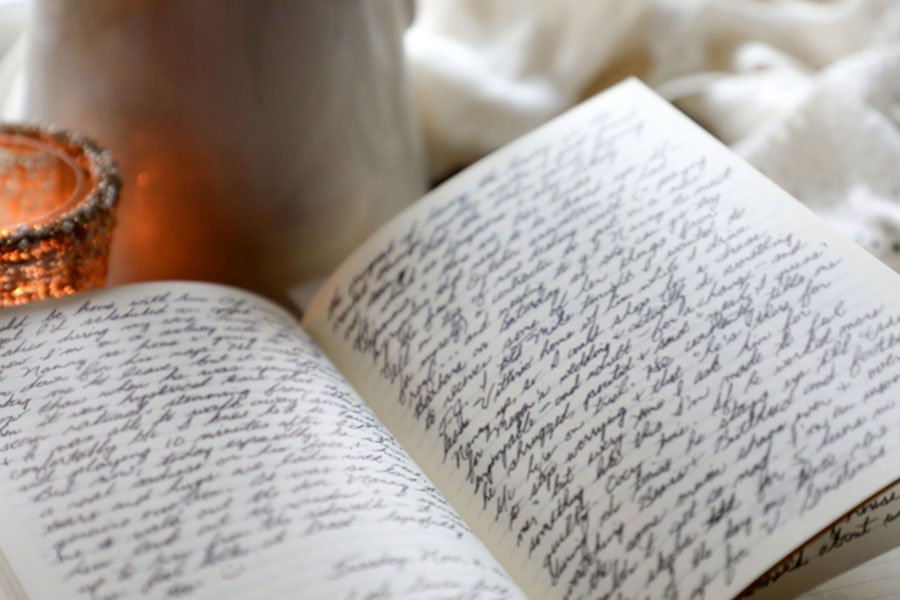
The memory prompt journal my mother left me had more blank pages than memories. While I cherish the few pages with her handwriting and thoughts, I long for more. This entry ends with a comma—an unfulfilled promise of more to come…
A couple of years ago I was approached by a mainstream publisher to discuss authoring a journal filled with guided memory prompts for a grandparent. You know the type of book I’m talking about, right? Often beautifully printed, and stocked in the gift section at major bookstores and card shops, these types of books make for amazing impulse purchases—what better gift than the gift of telling someone you care about them enough to want to hear (and preserve!) their stories, after all?
I got fairly far in the contract process before I decided not to pursue the offer. It would have made me some money, yes. And it would have helped brand me as an expert in the memory-keeping landscape, for sure. Some of my colleagues were impressed, and my family was in favor of it as another way to boost my small business.
So why did I decide not to publish that journal that seemed so in line with my mission and values as a personal historian? Well, because I don’t fundamentally believe that they work.
Over the years I have had numerous potential clients approach me about capturing their stories in a book only after they failed to do so in other ways. Some had been given a journal filled with prompts supposedly written just for them (as a grandparent, say, or as a mother)—but they did not find the questions enticing enough to want to write answers. Others had gifted such a journal to a loved one as a gift, only to realize that the recipient was not finding (or making) the time to sit down to write.
I myself was thrilled to find two such journals on my mother’s bookshelves when I was going through her belongings after her death. I put them aside with an overwhelming sense of gratitude and anticipation—only to feel utter disappointment to find she had scrawled a few sentences in each, but nothing more. The blank pages mocked my early excitement, and I felt cheated.
Why do these books not work? In my opinion, they are filled with good intentions but they don’t always inspire action.
Often, good intentions aren’t enough. The recipient needs to be intentional about setting aside time to write, and too often, we think, I’ll get to it later. Usually, later never comes.
It can feel intimidating to write in a book that looks so precious. Of course we want a journal we are gifting to a loved one to be beautiful; I have seen gorgeously crafted journals with gold embossing on the cover and cute flourishes on the corners of each page. But the more precious they seem, the more scary it can feel to tarnish those pretty pages with our scratchy handwriting (and what if, God forbid, we need to cross something out?!). I speak from experience when I admit to having a few artisan-crafted, leather-covered blank journals in my closet that have, well, remained blank…while the cheaper notebooks I bought at a big-box store are overflowing with my writing.
Many questions simply don’t resonate. While these professionally edited and published memory prompt journals are indeed written by people who consider what questions should resonate, there is simply no one-size-fits-all memoir-in-a-box. A current client of mine whose granddaughter had gifted her a popular prompt-a-week email service told me she hasn’t answered a question in three months: “Honestly, sometimes they’re just silly. ‘How do you relax or unwind?’ Really? I’m 95. This is not what I want to be writing about,” she said. Among the skipped-over questions in my mother’s fairly blank journal were:
“What scent or sound immediately takes you back to childhood.”
“Tell me about your most memorable trip by plane, train, or ship.”
“What summer games and activities did your family enjoy?”
These questions get my memories stirring, for sure—they are not inherently bad questions. Perhaps they simply didn’t resonate for my mom on the days she sat down to write, or perhaps she just never found the time to “keep at it.” Maybe she needed a listener—someone to receive her stories, to ask follow-up questions, to hold sacred space for her to share. All of these are valid reasons I have heard from clients who abandoned their memory journals despite their best early intentions.
What do I suggest instead of a memory-prompt journal?
How to write…
To ensure that your intentions to preserve your stories turn into a series of actions that DO preserve your stories, consider finding an accountability partner. That could amount to a friend or family member with whom you commit to write about your lives—perhaps you sit down together once a week to write, then share your stories out loud (hello, deepening connections!). Or you might find accountability in working with a memoir coach or personal historian who you pay to keep you on track—there are plenty of advantages to this arrangement beyond accountability. If you’d like to see how we could work together, please reach out.
Where to write…
I recommend buying an inexpensive blank journal to record your memories. If you’d like to pass on something that feels more substantial or beautiful, you can always edit your stories and add photos later, hiring a designer to polish and print everything or going the DIY route and making a scrapbook that showcases what you’ve written. This way you never have to feel guilty about skipping one or more pages, and you can cross out and rewrite to your heart’s content (no one writes a perfect sentence the first time, I assure you!!). If you prefer, you can also just open a new document on your computer and start typing (just remember to back it up occasionally so you don’t lose your writing!)
What to write about…
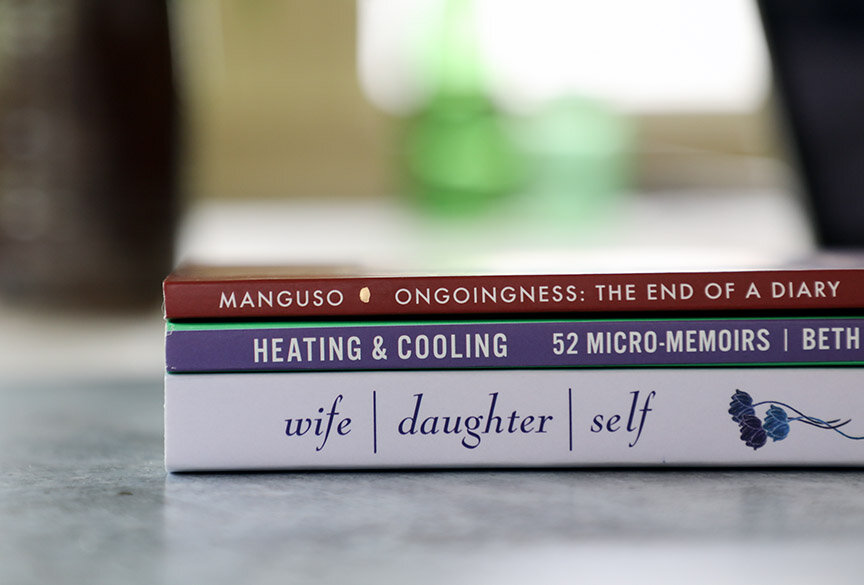
To ensure that you find questions that you want to respond to—that spark your memories and inspire your writing—look for open-ended questions (you can find a year’s worth of them in my Write Your Life annual subscription, for example, or discover evocative, literary prompts in Beth Kephart’s memoir writing workbook, which I reviewed here). Want to make your life as easy as possible when it comes to writing about your life? Use the same two-word prompt every day—I promise you’ll be surprised at what comes up for you!
Don’t get me wrong, if you have bought or are thinking about buying a memory prompt journal as a gift, you’re my kind of person! I just think there are better (more effective, more foolproof) ways to encourage story sharing. How about you?















Life Story Links: February 20, 2024
This week’s curated roundup has recent stories of interest to memoirists, family history lovers, life story writers, and memory-keepers of all kinds.
“Perhaps what I know about beautiful endings is that the arc of a story is only what we choose to focus the lens on—in real life the narrative goes on and on and on. An ending looks beautiful because we choose that specific moment to end it.”
—Jami Nakamura Lin
Vintage poster with original artwork by Edward T. Grigware produced some time between 1941-1943 by the Work Projects Administration; image courtesy of the Library of Congress Prints and Photographs Division, Digital Collection. The posters were designed to publicize exhibits, community activities, theatrical productions, and health and educational programs in seventeen states and the District of Columbia between 1936 to 1943.
Writing our lives: Process, support, and ideas
CAN YOU EXHAUST INEXHAUSTABLE MEMORY?
“In an epigraph of her own invention, [Annie Ernaux] says: ‘If I don’t write things down, they haven’t been carried to completion, they have only been lived.’” A thoughtful exploration of “writing toward the unachievable whole.”
LOOKING FOR A CRAFT BOOK?
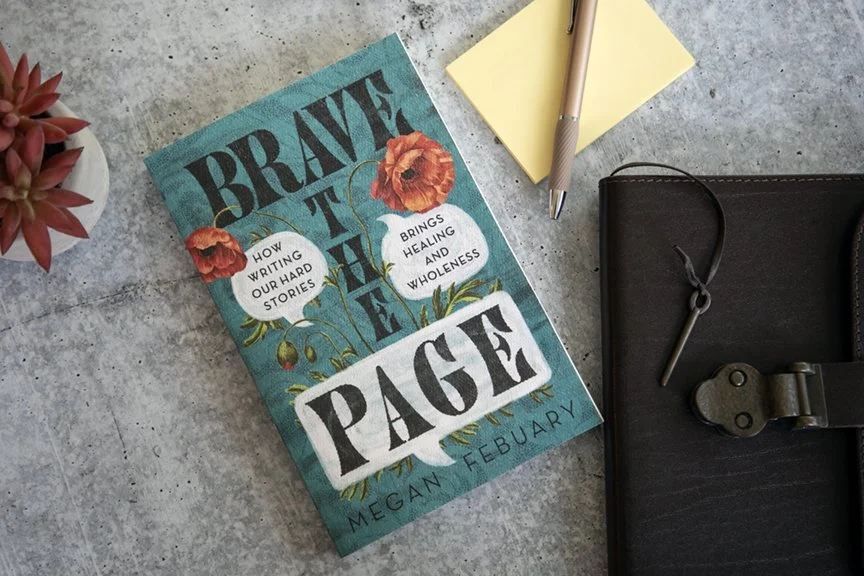
I distilled years’ worth of reading to share what I consider to be the five essential books about life writing—find mini reviews, recommendations of which book is right for whom, and author credentials.
THE MESS IS THE STORY
“So many ‘transformation’ stories fail to connect because they skip from chaos to revelation with barely a pause to acknowledge the blood, sweat and tears involved in the in-between.” Here, ideas for untangling the mess of life to make some narrative sense of it.
THE CHOICES SHE MADE
“Had the story evolved over the years and become part of the narrative of his life, one he genuinely believed was true because he had told it so many times?” How does one choose a narrative strategy? One biographer takes us through her process.
CALL FOR PITCHES
The folks at Narratively have announced a new collaboration with Creative Nonfiction magazine, and to kick off their partnership, they are seeking pitches for (paid) contributions to a special series, “The Art of Narrative Storytelling.”
GET READY FOR A MONTH OF WRITING!
The writing prompts in this video from Family Tree magazine are not your average family history questions—rather, they’re ideas for creatively bringing your genealogy to narrative life:
TRUTH AND SELF-DISCOVERY
Patricia Pihl, a personal historian based in western New York, looks at two memoirs that base their themes on discovering a formative belief is untrue, and how this shaped the authors’ identities.
Let’s hear from the writers themselves
A JOYCEAN LEGACY
“In April 2014, a lawyer friend asked if I might consider ghostwriting a memoir for a client he described as a difficult man.” Several candidates had already been rejected. “The client’s reputation didn’t so much precede him as ride out like a pillaging army.”
THE AGES HE’S BEEN
“I am happy that I’ve survived mentally and physically. I can look back at the obstacles I had to deal with and confront during my life and appreciate that I overcame them.” Alfred J. Lakritz, author of the memoir Adieu, responds to the Oldster questionnaire.
A MEMOIR OF TRANSITION
When Lucy Sante “began to transition in her 60s, she saw a lifetime of experiences in a new light.” A look at how her new memoir, I Heard Her Call My Name, is both more elliptical and more honest than her first, The Factory of Facts, written as Luc Sante.
...and a few more links
Navigating digital legacy: understanding and setting up legacy contacts
Leonardo’s ‘magic upscaler’ is an AI tool that can boost the resolution of any photo.
What if uncovering the stories of your ancestral past began the path toward ancestral healing?
109-year-old survivor of 1921 Tulsa Race Massacre writes memoir.
Short takes
“Which life writing book is best for me?”
While all five of these books add value to any memoirist or life writer’s library, I’ve identified which is best for you based on your goals and experience.
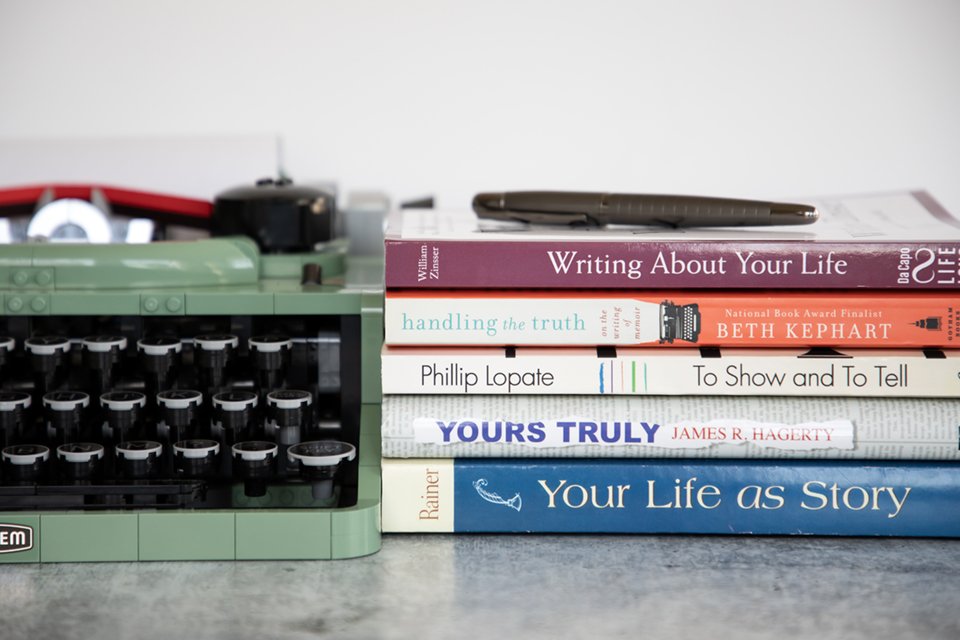
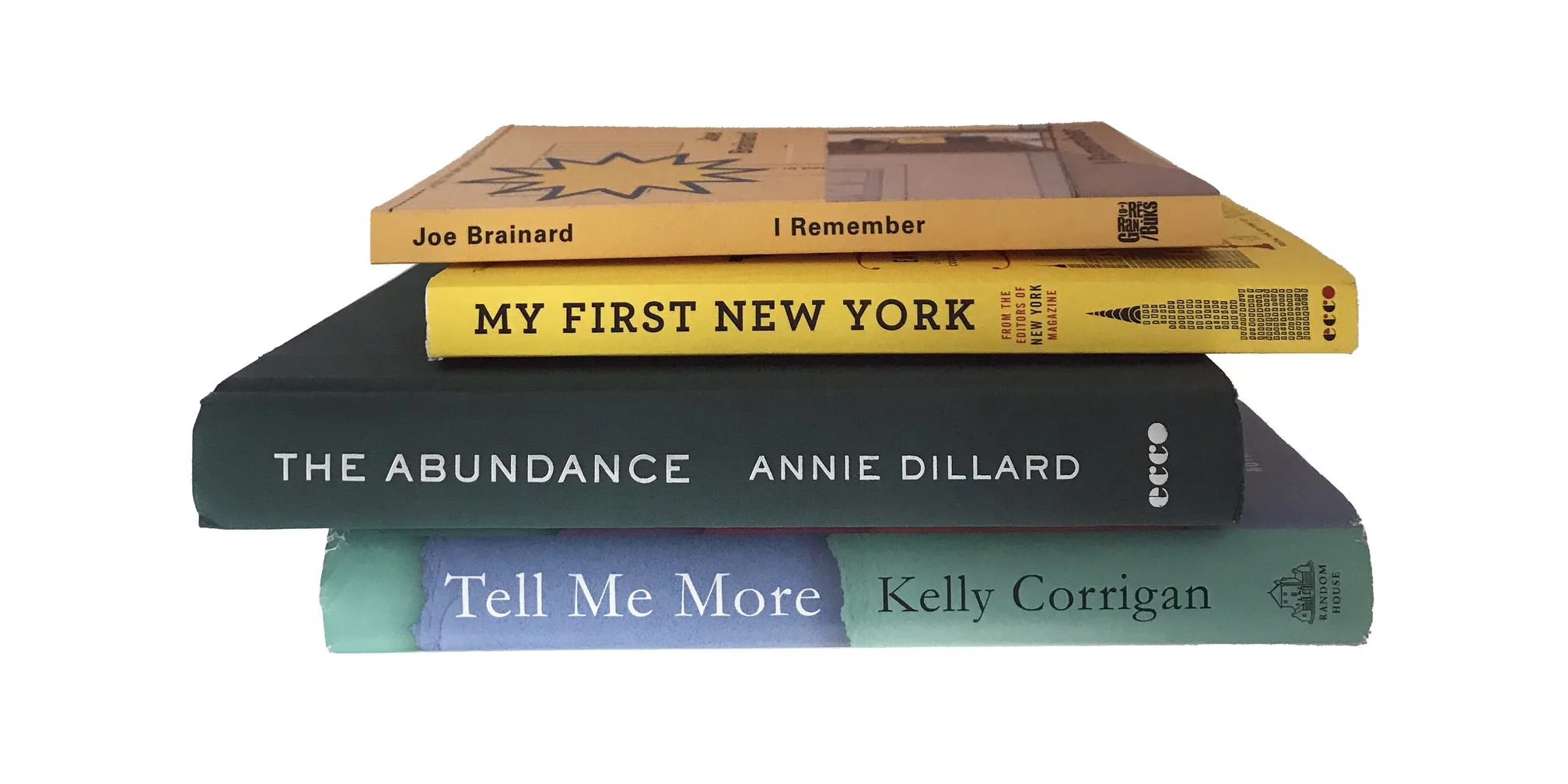
From the many, many craft books on my bookshelves, these are the five I consider essential for anyone endeavoring to write about their life.
If there’s a book out there about how to write memoir, autobiography, personal essays, or narrative nonfiction, I’ve probably read it. There are plenty that may be worth a read, but there are only a handful that I would consider essential for every life writer’s bookshelf.
Here I aim to classify my top five life-writing titles by who each one is best for. Click if you are…
a journalist or student aiming to up your personal essay game
anyone hungry for personal narrative guidance, including writers of every level
anyone who wants to make sure their story is told the way they want
And before we get to the heart of things below, I’ve written elsewhere about some books that are great choices for other scenarios, too; find those recommendations by clicking if…
“To Show and To Tell: The Craft of Literary Nonfiction” by Phillip Lopate

Best for:
Journalists and students aiming to up their personal essay game
in brief:
While the book jacket touts this title as a “nuts-and-bolts guide to writing literary nonfiction,” I would argue that it is more a collection of insightful lessons from this expert’s vast experience rather than a how-to guide. Widely regarded as one of the best personal essayists around, Phillip Lopate has here collected his ruminations and conclusions about the genre of personal narrative as a whole. If you’re in the mood for a well-informed, sometimes cheeky, always smart exploration of writing literary nonfiction, then this book’s for you. It’s an apt choice for anyone wanting to finesse their writing skills, to hone their craft, and to luxuriate in the history of the genre; if you’re in search of a book with more direct guidance, I recommend one of the last two entries on this list instead. [To Show and To Tell: The Craft of Literary Nonfiction, Free Press, 2013]
Author’s credentials:
Phillip Lopate directs the graduate nonfiction program at Columbia University. Among the 12 books he has written, three of them are personal essay collections.
“Handling the Truth: On the Writing of Memoir” by Beth Kephart

Best for:
Aspiring memoir writers
in brief:
“Teaching memoir is teaching vulnerability is teaching voice is teaching self,” Beth Kephart writes, a fair summation of her approach to teaching, in the classroom and in print. As I have written in a previous review, here the author “spends a good portion of the book on what she calls ‘not-yet-writing-memoir work’—preparatory ideas, tapping memories, conjuring beauty, exploring diversions, finding your story,” but she also delves into the nitty-gritty of getting words down on paper, of editing and honing and creating art from experience. Handling the Truth is a must-read for anyone at any stage in the memoir writing process. [Handling the Truth: On the Writing of Memoir, Gotham Books, 2013]
Author’s credentials:
Beth Kephart is the award-winning author of more than 30 books, including multiple memoirs. She is a longtime writing teacher—of creative nonfiction as a professor at the University of Pennsylvania, and as co-founder of Juncture Workshops.
Bonus:
If you relate more to the word “aspiring” than “memoirist,” you may want to check out Kephart’s companion workbook, Tell the Truth. Make It Matter (CreateSpace, 2017), in which prompts and exercises put you on the path to remembering and meaning-making.
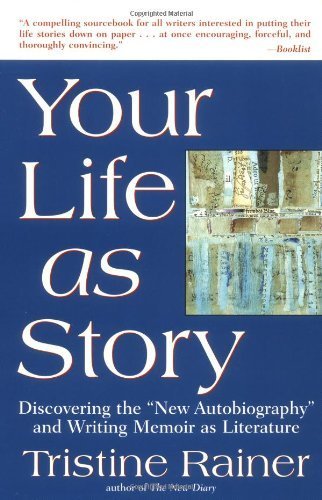
“Your Life as Story” by Tristine Rainer
Best for:
Anyone hungry for personal narrative guidance, including writers of every level
in brief:
When I first encountered this book years ago, it was a loaner from my local library. By its due date it had amassed a ridiculous number of yellow sticky notes hanging off the pages, each marking a passage I felt was revelatory or essential. Needless to say, I bought my own copy soon thereafter.
First published in 1997, this book’s subtitle and grounding premise—“discovering the ‘new autobiography’”—might seem off-putting. By now, I hope that we no longer need to define and justify memoir’s raison d’être, nor the assumption that it is “available to everyone.” That said, get past any reservations you may have about the book being dated, because it is chock-full of concrete writing advice, real inspiration, and helpful exercises. Rainer herself encourages readers to jump around, to use the table of contents and index to navigate the book to find what they are needing at that moment in their writing journey. As she says, “The purpose of this book is to give you the tools to see story in your life, and then, if you choose, to give it shape in writing so it can be shared.” So grab your highlighter and a blank journal and dig in! [Your Life as Story: Discovering the ‘New Autobiography’ and Writing Memoir as Literature, Tarcher/Putnam, 1998]
Author’s credentials:
Tristine Rainer’s first book, The New Diary, was written in 1977 and is still the bestselling book on journal writing, according to Amazon. She has taught writing at the university level for decades, and was a founder of the Center for Autobiographic Studies.
“Writing About Your Life: A Journey Into the Past” by William Zinsser

Best for:
Newbie life writers and family historians
in brief:
“My purpose in this book is to give you the permission and the tools” to write about your life, Zinsser puts forth in the introduction. His conversational, warm writing style is accessible and supportive. Readers learn about his writing choices—decisions he made about tone, language, structure, and all those fundamental elements of craft—as he takes them along on a wonderfully enjoyable ride of personal storytelling and instruction. He calls this a “double journey into memoir—yours and mine.” In addition to concrete tips for how to write your life story, Zinsser delivers hefty doses of confidence bolstering and inspiration by example. [Writing About Your Life: A Journey Into the Past, Marlowe, 2004]
Author’s credentials:
William Zinsser was a writer, editor, and teacher. His enduring classic, On Writing Well, grew out of a course he taught at Yale. Some of his other books include Inventing the Truth: The Art and Craft of Memoir and Extraordinary Lives: The Art and Craft of American Biography.
“Yours Truly: An Obituary Writer’s Guide to Telling Your Story” by James R. Hagerty

Best for:
Anyone who wants to make sure their story is told the way they want
in brief:
“When is the best time to get started? Before it’s too late. How about right now?” James Hagerty proffers in the introduction to this book. It’s advice I give often, as well, and the best part about his book Yours Truly is that he equips you with lots of straightforward writing advice and carefully selected first-person pieces as examples so you can hit the ground running. You may be surprised that a book with “obituary” in the subtitle is infused with humor, but make no mistake, this is a book about honoring life in all its weird and wonderful glory—not only a great read, but a model to write your own. [Yours Truly: An Obituary Writer’s Guide to Telling Your Story, Citadel Press, 2022]
Author’s credentials:
James R. Hagerty worked for more than four decades as a reporter and bureau chief at the Wall Street Journal and was for some time the paper’s only full-time obituary writer.
bonus
Check out this earlier post for a deeper dive, with five life writing (and life) lessons derived from Hagerty’s book.











Life Story Links: February 6, 2024
This week’s curated roundup is overflowing with informative podcasts, videos, and stories about memoir, life writing, legacy film, and how memory works.
“Sometimes it feels like each poem I write is a draft of The Poem I’m trying to write—that singular, golden, impossibly definitive poem. The one poem I’m trying to live. Or the one life I’m trying to write.”
—Maggie Smith
Vintage poster with original artwork by Richard Halls produced by the Work Projects Administration circa 1938; image courtesy of the Library of Congress Prints and Photographs Division, Digital Collection. The posters were designed to publicize exhibits, community activities, theatrical productions, and health and educational programs in seventeen states and the District of Columbia between 1936 to 1943.
On writing our lives
LIFE STORY INNOVATIONS & PRACTICE
The current issue of The International Journal of Reminiscence and Life Review contains a number of interesting papers, including a special section, “The Healing Power of Storytelling.” Two worth checking out:
KICKSTARTING YOUR WRITING LIFE
“It was such a loss for me, to know that I had the opportunity to ask questions and I didn’t,” Patricia Charpentier says in this video introduction to writing about your life.
IT’S ALL MATERIAL
“In a certain sense it goes to the heart of who we are as writers: why she is a novelist and I a memoirist. Now that I find interesting.” Vivian Gornick on Lore Segal.
CRAFTING A LOVING TRIBUTE
After a prospective client asked if I had a series of memory prompts specifically geared to help him write about his wife, I crafted these questions to help anyone honor their partner and tell the story of their relationship.
TOP GHOSTS DISH
Joel Stein sat down with six of the top ghostwriters in the celebrity memoir business to learn “about the curious craft of ghostwriting and the types of personalities drawn to help famous people tell their life stories.”
In search of the past
MISSING PERSONS
“The most representative thing about my family was not the small farm, the nightly saying of the Rosary, or the close community of neighbours … but the fact that most of its members lived elsewhere.” On a grandmother’s secrets and a search for broader truths.
ADOPTION, ACCESS, AND IDENTITY
“Late at night, in my childhood room, questions haunted me: Where did I come from? Why was I adopted? Who was my original family?” This writer says she could have gone to prison for what she did to find her birth parents.
TASTES OF THE PAST
Many “cultures live in the diaspora, in cracks and crevices of oral histories, of old folded scraps of paper, of recipes. I’ve found that food has the best clues.” Historians on bringing “dead recipes” back to life.
LOST STORIES
“I mean, you go to any antique shop and you are going to find family photographs… It’s amazing the stuff that families don’t want.” How once meaningful keepsakes end up in estate sales.
“AN INTRICATE MOSAIC”
“Holding a handwritten letter from a grandparent, reading their words, and feeling the texture of the paper can be a profoundly emotional experience. Personal archives bring the past into the present.” Margot Note on preserving history and memory in archives.
IDENTITIES BUILT ON SHIFTING SAND
“Our memories form the bedrock of who we are. Those recollections, in turn, are built on one very simple assumption: This happened. But things are not quite so simple.” A leading memory researcher explains how to make precious moments last.
For your listening pleasure
INSIGHTS FROM A TOP MEMOIRIST
In this wide-ranging discussion, award-winning author Dani Shapiro discusses striving towards the universal in memoir, writing a book without an outline, and how she had to slow down the rush of storytelling in her bestselling memoir Inheritance because she was living the tale as she was writing it:
A COUNTRY BOY AT HEART
Fans of Finding Your Roots will recognize Henry Louis Gates Jr.’s smarts and sense of humor, but I am willing to bet you haven’t heard his storytelling skills shine like they do in this interview with Dax Shepard:
LEGACY IN THE FACE OF DEATH
On this episode of Inside Photo Organizing podcast, professional photo manager Sharon Wunder talks about how her cancer diagnosis shifted her thinking about the idea of legacy, and about how she approaches preserving memories that are not accompanied by photos; I recommend starting at the 7:13 mark:
PROMPTING POWERFUL STORYTELLING
“This is not about ego, about being big and great, but rather, about being of service, and of understanding your place in the larger story. Trained interviewers draw people out of their shells and get people talking in story,” Jamie Yuenger, founder of StoryKeep, says in this video, which is part of a larger series called Legacy Lens:
...and a few more links
What does it take for a writer to achieve sentiment without sentimentality?
New demographic report sheds light on exactly how many Jewish Holocaust survivors are still living.
King Charles’s biographer on the moment Charles learned he was King.
Landscapes of Resistance trailer and review: “an enigmatic meditation on a life marked by Auschwitz”
Personal histories: a “trend of publishing them for a wider audience is catching on in India”
Short takes