
Memories Matter
Featured blog Posts


READ THE LATEST POSTS

I’m feeling stuck with my life story writing (can you relate?)
Sometimes a life writing project can become overwhelming—so much so that we stop writing at all. Get back on track with your memoir with this three-step reset.

When our memoir writing feels overwhelming and writer’s block sets in, sometimes a project reset is in order.
I spend my days helping people write their memoirs and craft their life stories into meaningful heirloom books to pass on—and yet, when it comes to writing my own personal stories, I have been completely stuck.
For a while I thought it was burnout, not having the energy to focus on my own stories because I was “storied out” from everyone else’s. But that’s not it.
Sometimes I think it’s my perfectionism creeping in—it has a habit of hindering my progress when I feel that something isn’t living up to my overly high standards (even though, as a longtime editor, I am fully aware that first drafts are meant to be anything but perfect!). But it’s not this, either, for I have done too little to even assess my storytelling as imperfect.
Could it really be that I am feeling overwhelmed by the task before me? How could that be when I work regularly to calm overwhelm and set priorities for my clients every single day? How could that be when I’ve written so much about how to approach your life story writing that I could gather it all into a book (hey, why haven’t I done that yet, either?!)?
Well, here’s the reason I haven’t been making progress with my own personal narrative: Despite knowing the steps—and despite having taken the first few of them—somewhere along the way I neglect my plan. I ignore the life timeline I’ve thoughtfully written; I start jotting notes in an entirely new notebook (separate from my previous writings, many on the same topics); and I keep going back to square one, thinking my newer ideas are more urgent than those I have already begun executing. I am tripping over myself constantly.
A project reset: 3 steps to getting my (and your) life writing back on track
I spent much of this morning procrastinating in the form of…
cleaning out my email inbox
scrubbing every surface in my office…and kitchen, and bedroom…
driving into town to run two errands that could totally have waited!
This is a routine familiar to every professional writer I know, but I feel no less guilty for knowing this.
The oft-repeated advice for escaping this avoidance routine? SIT IN THE CHAIR AND WRITE. That’s it. Just sit. And write.
But, to circle back to the first part of this blog post: I don’t know what to write. And so…a full project reset is in order.
If you, too, are feeling overwhelmed in the middle of your life writing endeavor, try this: Go back to square one and organize (or, perhaps, reorganize) everything:
Compile all your writing.
Gather all of your writing into one pile. Include journals (even the ones with a mere two paragraphs of personal writing within their pages); loose papers (even the notes scribbled on the back of bill envelopes); and printouts of writing you’ve done on your computer. If you’ve created a life timeline, have this on hand, as well.
Sift through your stories.
Set aside a block of time—likely between one and two hours—to review what you’ve got. Take notes about recurring themes you encounter in your writing, and about new ideas that come to mind during your reading. Are there glaring omissions? Blocks of writing that feel more complete than the rest?
Plan with intention.
Make a plan for diving back in to your memoir project with intention. Designate ONE place for your writing to happen (a single document on your computer, perhaps, or a preferred notebook for handwritten musings). Decide on a major theme for your project, and file any writing that does not adhere to this theme in a folder marked “future writing.” And finally, set some reasonable goals for yourself: Will you write a little every day, or for a chunk of time every Saturday, perhaps? Do you aim to have your stories compiled into a book (if so, you may want to start gathering photos as you go). Are there holes in your storytelling that may need further research—a conversation with mom or a sibling, maybe, or a trip to the library? If so, sketch out a plan for moving forward with all those elements.
Sometimes our storytelling gets muddled. There’s so much we want to say, we’re scattered in our approach, we start and stop so often that we lose our place. It’s all okay. So I tell myself, and so I say to you! Hopefully, a reset is all we need. It’s what’s on my agenda for tomorrow, now that my home is squeaky clean and, fingers crossed, procrastination–proof…
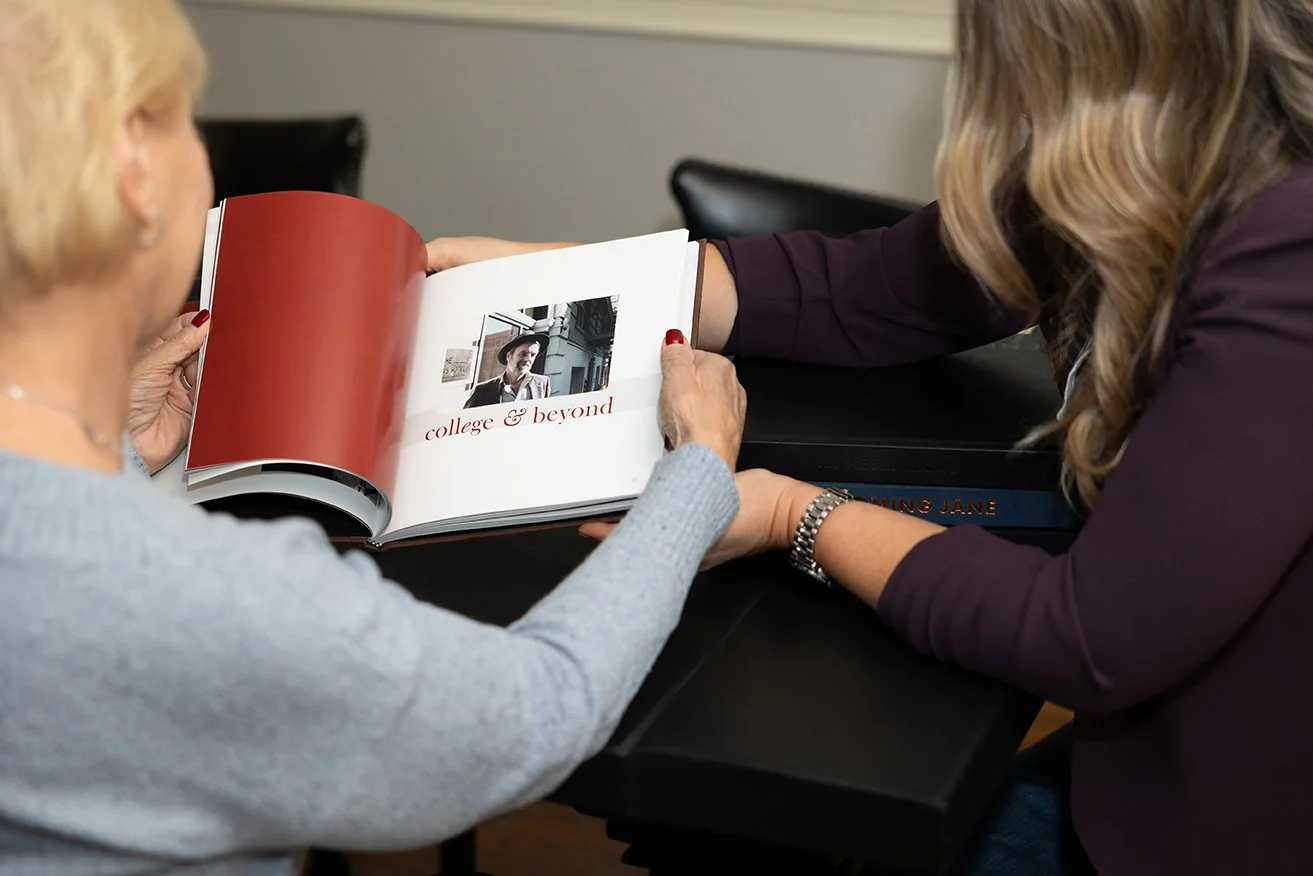
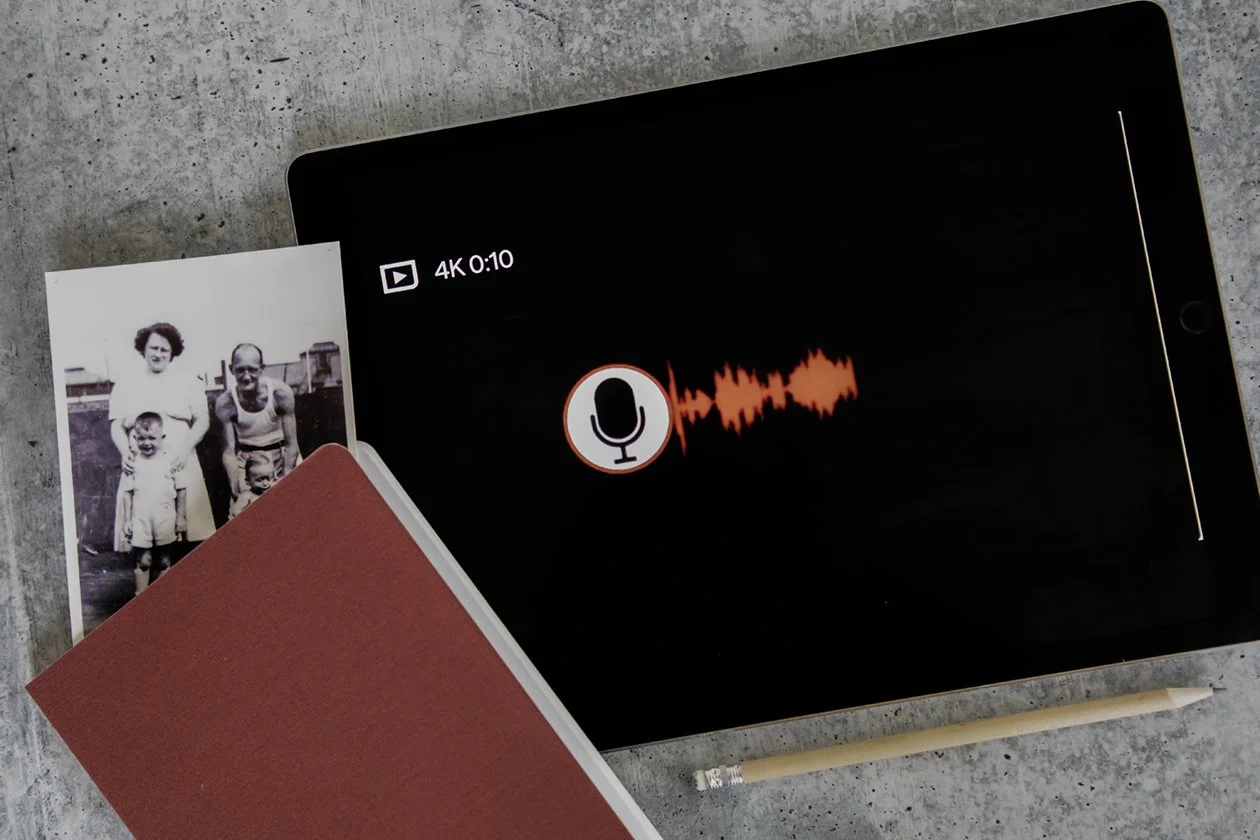
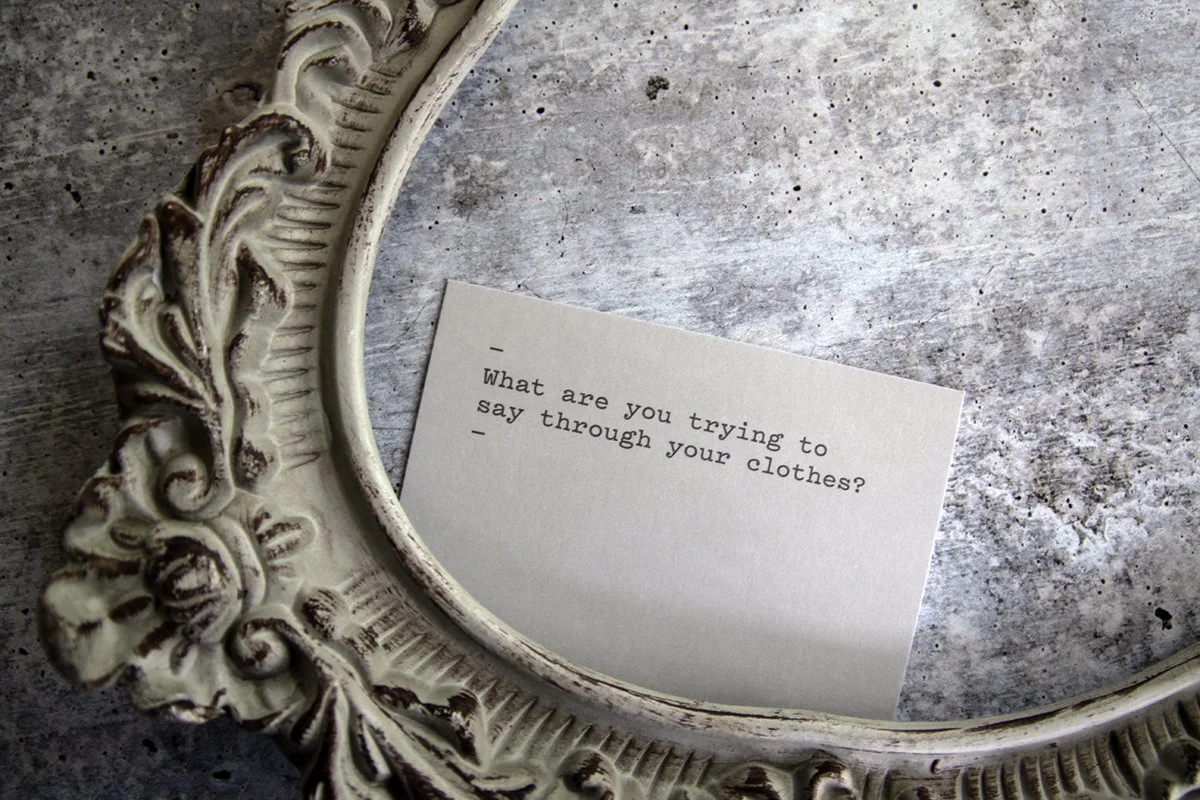
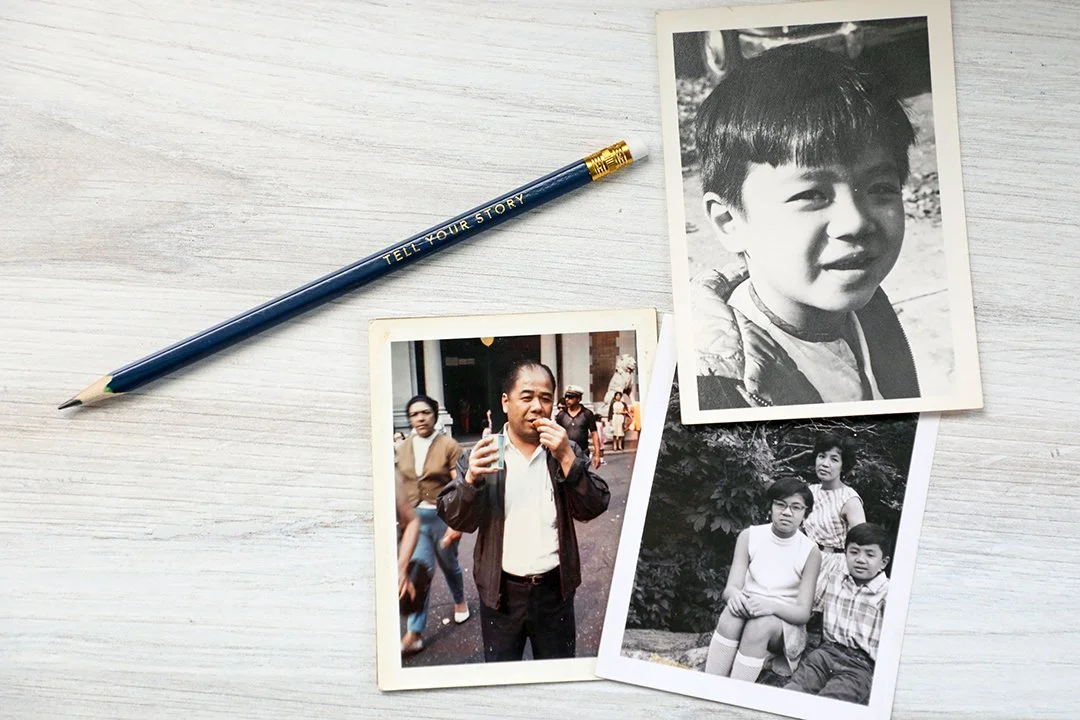















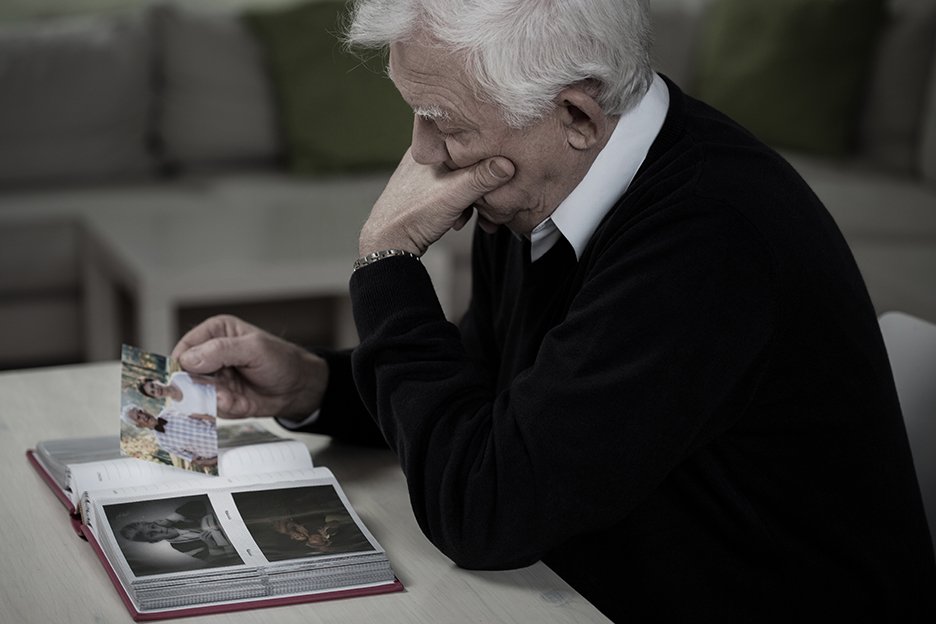
Americans regret not recording stories of their loved ones—don’t be one of them.
Recording loved ones' stories is important to most Americans, and yet not even half of us have done so. Here, resources to make memory-keeping easier.
A recent poll of more than 6,000 Americans showed that only one in three Americans has recorded or documented a conversation with a loved one in order to preserve their memory of them.
Nearly half of those polled say they regret not doing so with someone who has died.
These stats sadden me, a devoted storyteller whose mission is to help as many people as possible preserve their own memories—and those of loved ones—for the next generations. While it saddens me, though, it doesn’t surprise me.
Why am I not surprised?
Why am I not surprised that so few people have taken the initiative to record stories from their loved ones? Well, first of all, it’s easy (so easy!) to take for granted that those we love will always be there. We don’t want to think about a time when they won’t—and preserving their stories for the future seems to somehow bring that notion to the fore.
Moreover, for many people recording stories seems like a daunting task: Won’t it take too long? What questions would I ask? How would I record the conversations? What would I do with them afterwards?
For some, telling their own stories seems vain (it’s not). Still others think they have no stories to tell—or that no one would care to hear them (again, not likely; I haven’t met a person yet who didn’t have some amazing stories inside them—and everyone underestimates how their stories will be received by loved ones).
So, no, I am not surprised that 59 percent of Americans have not recorded conversations with a loved one. But I do see change on the horizon.
Rays of hope
“Maybe it’s the younger generation’s familiarity with technology...that makes this task more approachable—obvious, even.”
I see a glimmer of hope amidst these poll results, too: Younger respondents were by far the most likely to have said “yes, I have recorded a conversation of a loved one in order to preserve my memory of them.” While only about a quarter of folks aged 45-65 have recorded a loved one’s stories, 44 percent of those 18-to-29 have, and 42 percent of those 30-44. Not quite double the older participants, but almost!
Maybe it’s the younger generation’s familiarity with technology and their engrained habit of recording so many things in their daily lives, that makes this task more approachable—obvious, even.
Or perhaps it’s millennials’ well-documented love of nostalgia.
Whatever the reason, the trend is on the upswing: More younger members in American families are recording conversations with loved ones!
Resources for recording your own family stories
Are your ready to hop on the memory-keeping bandwagon and record a conversation with a loved one? Let’s work together to bring these numbers up—to make story preservation an everyday thing that, dare we day, a majority of Americans not only strive to do, but really DO!
A wonderful thing that will happen along the way if we indeed begin to record our personal histories? We’ll all have fewer regrets.
In order to help with your DIY story gathering, here are some time-tested resources that I offer to you for free—please don’t download them unless you plan to put them to use 😉
FREE E-BOOK DOWNLOADS
HELPFUL ARTICLES FOR RECORDING YOUR LOVED ONE’S STORIES












On the ever-changing nature of our stories: In conversation with Rachael Cerrotti
Our memories are anything but fixed—and when stories are passed down to a new generation, their malleability, their meaning, and their impact change, too.
“It’s the best part of storytelling for me, that it’s never going to stay the same.”
—Rachael Cerrotti
Memoirist and host of the podcast “We Share the Same Sky,” Rachael Cerrotti
Rachael Cerrotti knew her grandmother Hana’s story when she was growing up. Hana, or Mutti, as she was called by her loved ones, was a Holocaust survivor. She visited schools to share her testimony with young students. She spoke with Rachael about her past.
But stories have chapters, and they are received differently by different people at different times in their lives. Stories can be told one way to a group of students, and another to a young, devoted granddaughter. Those same stories may take on an entirely new mien when handwritten in a private journal, captured in the moment with no distance for reflection.
What is Hana Dubová’s story, then?
Well, of course, there isn’t just one.
Rachael—a granddaughter, photojournalist, podcast host, and author—has explored her grandmother’s story faithfully. During her college years, cognizant of the fact that Hana was getting older, Rachael began getting together regularly with her grandmother, recording their conversations along the way. After Hana passed away in 2010, Rachael says she spent the first half of her twenties on her bedroom floor in Boston, going through Hana’s diaries and the rich archive she left behind. She would eventually retrace her grandmother’s footsteps, traveling through Europe and getting to know, intimately, those who knew Hana and her story. As Stephen D. Smith, executive director of the USC Shoah Foundation, writes in the foreword to Rachael’s book, We Share the Same Sky, “She made her grandmother’s homes and hiding places her homes, her places to hide.”
I have recommended We Share the Same Sky in a formal review and gifted the book to friends; I have extolled the podcast—a must-listen for anyone who values stories and family; and recently I was fortunate enough to chat with Rachael about the (inevitable, frustrating, and beautiful) flexibility of memory.
The same stories may hold different meaning for us at different times in our life.
“The story has grown up as I have grown up,” Rachael writes in the preface to We Share the Same Sky.
While Rachael gradually reveals Hana’s story to us, she also weaves in her own perspective and life changes, making for a poignant and powerful meditation on the meaning of inherited trauma and the elasticity of memory. She writes to her grandmother: “Your diaries and letters are the literature of your past, and each tells a slightly different story. I read and reread your stories as if they were fables, modern-day fairy tales that are constantly changing meaning. Every time I open to a familiar page, I read the words in a new way.” And isn’t that the nature of all family stories?
Often I talk about the enduring value of our stories: When we hear stories from family members about their experiences, we usually ruminate longest over the ones that feel the most familiar to us. Rachael echoes this during our conversation, admitting that if she is one day blessed with being a mother and a grandmother, she will most certainly see her grandmother’s stories in a new light again with each milestone.
When Rachael revisited her grandmother’s testimony after her husband’s death, she found new meaning, new depth there: “It was guidance and it was permission and it was warmth, and the words just carried everything within it,” she said.
“I think we're all drawn to stories that impact us in some ways and that feel relevant,” she said.
“We all kind of hold onto the stories that we need to hear, and I think a lot of us dig into our past trying to reckon with something or to try to understand ourselves better,” Rachael said. “Realizing that our memories are malleable gives us some ownership over them, different than just being resigned to them.”
Beyond fact-checking: Our narratives hold truths, even when they are contradictory.
While We Share the Same Sky is based on Rachel’s own experiences and research during her immersive travels as well as her grandmother’s personal writing, she did not turn to libraries or historical records to fact-check her grandmother’s stories (except for instances when an occasional age or date did not cohere).

“What I was always drawn to was the stories we tell ourselves and the stories we tell our kin, and those have nothing to do with the archives,” she told me.
In the book, she writes: “There are cracks in all our memories; sometimes they are exposed by our own inconsistencies, sometimes they are challenged by other people’s perspectives, and sometimes they change with time.”
Indeed, have you ever reread an old diary entry only to wonder, Did I really write that? Or even, Did I really feel that? Has the way you have told a single important story—say, coming out of the closet as a teen, or emigrating to a new country—changed over time? With time comes perspective, and with perspective comes a new way of regarding our experiences. Each telling of our stories reveals new truths.
“Stories do not have to be stuck in time,” Rachael said. “There are so many versions of stories that can all contradict each other and still all be truthful.”
Our ancestors’ stories become our stories.
One of the things that drew me to Rachael’s body of work, I told her, was how she deftly wove Hana’s story into the fabric of her own. Stephen Smith recognized this, too, writing: “What Rachael seemed to know is that her jumbled identity was not a godforsaken hand-me-down but a tapestry of individual stitches that needed to be understood to appreciate the whole. As you read this book, you will see each of those colorful stitches painfully embroidered into her life one by one.”
“Originally this was a story of people that had passed away,” Rachael told me. “This was a story of history. And then getting to meet all these people and having them meet my curiosity where it was at—that was this invitation to keep coming back.”
“These relationships don’t stop because you’ve stopped writing the story,” she said. “The story doesn’t end because you send it in to the publisher. That’s that chapter, and that’s okay.”
Hana’s life has informed and shaped her granddaughter’s. And Rachael has honored Hana’s legacy by revealing the nuances and truths in her diaries, and by encountering—and re-integrating—her stories again and again. In the epilogue, she writes directly to Mutti:
“I have completely lost myself in your story, creating for myself an experience out of each of your retellings. What started as a simple family history project has become this web of community. When I pull a thread in one part of the world, the story in another place changes. Your memories have become my landmarks, the symbols of my own past.”
Each of us is writing our own narrative, transitioning from one chapter to the next, weaving our ancestors’ stories into our own. I hope you will read We Share the Same Sky with this in mind, and—as Rachel hopes, as well—inspire conversation and story sharing between not just grandmothers and granddaughters, but among generations of your own family.
Discover Rachael Cerrotti’s work
Listen to her podcast of the same name.
Follow her on Instagram for updates on her life, upcoming appearances, and future endeavors.
And perhaps most exciting, Rachael is launching a new podcast this week, called The Memory Generation, subtitled “Conversations about our memories.”



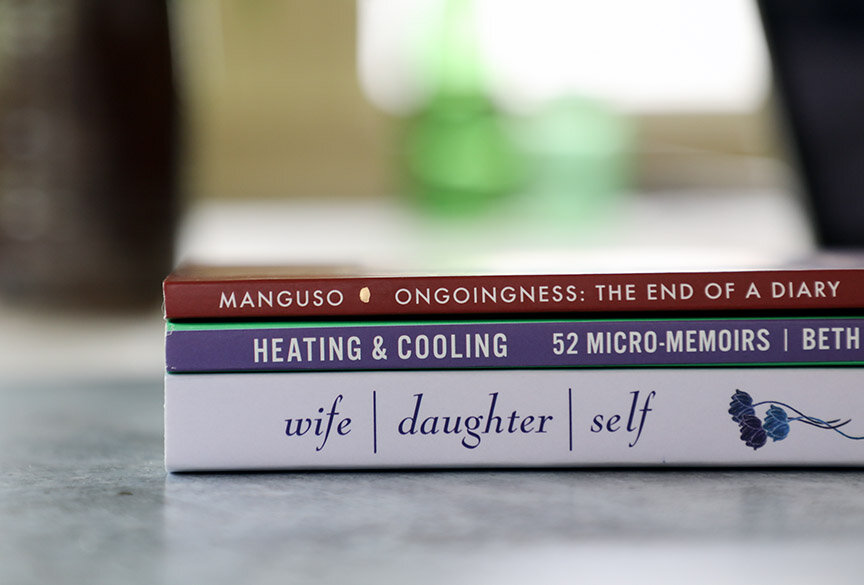







Affiliate disclosure: As an Amazon Associate, we may earn commissions from qualifying purchases from Amazon.com.
What’s it like to create an heirloom book together? Let some folks with experience tell you...
Ever wonder what it might be like to work together on your OWN heirloom book project? Listen to past clients' feedback—and words of thanks!—to get inspired.
When I’m not interviewing clients or working directly with families to curate their photos and mementos, I can usually be found at my computer editing and designing your heirloom books.
I get goosebumps when I open a letter or an email from a grateful client. It’s rare that they just say “thanks” and leave it at that. Many wax poetic about the experience and their awe upon receiving the finished book. They almost always express surprise at just how much they actually enjoyed the process of making their book (I try to convey that to prospective clients, but it’s hard to put into words—and why should they trust me, after all, who is trying to sell them a product…?).
Well, let me say that sales is not my thing. I founded Modern Heirloom Books to help people preserve their stories, and sure, it is my livelihood, but it’s my passion first and foremost. So if we’re not a good fit, or you don’t want to move forward, or simply can’t afford to—well, I am not going to give you the hard sell. I may feel bad, I may wish we could have worked together, but it’s got to be a good fit (and timing is so important!).
When I do work with someone, we form a bond—honestly, it’s inevitable. Once trust is established and the stories begin flowing, the bond is initiated. When editing and deeper questions ensue, the bond deepens. And by the end of the process, when a book is almost finished and the excitement is palpable, the bond is even more firmly cemented. How blessed I feel to have a “job” that provides such a sense of connection and meaning.
I’ve been told that I don’t share testimonials from my clients enough. Maybe it’s due partly to a humble nature, perhaps it’s a discomfort with being bold…but I am taking a page from some special fellow creative entrepreneurs and sharing some of the gratitude that’s come my way. It is my hope that you’ll feel comfortable with me, and gain an understanding of what it’s like to work together.
Thank you to ALL of my clients—for trusting me with your stories, and for sharing the love once your project has been completed!
xoxo,
Dawn
Testimonials from past clients: What it’s like to make a Modern Heirloom Book
creating heirlooms to treasure forever
Here’s one I received recently that warmed my heart:
Dear Dawn,
I have just looked through your book again, as I have many times before. As always, I am amazed and gratified by your presentation, layout, and descriptions. THANK YOU SO VERY MUCH. It is all I could have hoped for—even more! From the Table of Contents through the final comment—I loved it all! (All!!)
I started a list of things I wanted to mention to you but it became so lengthy, I had to give it up!
It is a book to treasure—which I do—and I will always be grateful for the beautiful job you have done. IT IS PERFECT!!
I plan to have a splurge and send a copy to all of my family and friends! Once again, I can’t thank you enough!
Fondly,
Judy D.
a process that involves collaboration & care
Here’s a snippet of a review, speaking especially to the twists and turns a project can take:
Throughout the process, Dawn was a joy to work with. She listened carefully. She was diligent in working up drafts and gathering feedback. She was unfailingly patient. She brought her own ideas and didn’t hesitate to make suggestions. She even went above and beyond to supplement our research and to deal with administrative hassles with printers due to our last-minute requirements. She delivered on time and within budget.
In every interaction, Dawn conveyed that she cared as much about the book as we did.
Dawn is a special bookmaker. If you are looking for someone to create that special story or tribute to someone you care deeply about, look no further.
—Jenny P.
…and another about vision and collaboration:
We didn’t even really know what we wanted in the beginning and Dawn produced an amazing result. It is a pleasure working through the creative process with her.
—Amy H.
…plus one about process:
Dawn was always ready to make the changes that were inevitable when putting a book together, with good cheer. She is quite well organized and intuitively understood order, placement, emphasis vs. less. I was extremely happy with Dawn’s finished product and wholeheartedly recommend her.
—Gahl B.
…and one about writing, editing, and curating:
Dawn is a therapist, a storyteller, a magician, and an artist with words—how she took what we said and wove it into a story. It truly blew us away!
The process of sorting through 27 years of pictures and mementos was joyfully reflective, but what brought it all together was Dawn’s vision.
—Susan M.
…ah, and then there are the interviews!
Dawn is a warm and engaging person who makes it easy to open up during interviews—even for me, a pretty reserved girl!
—Samantha D.
finished products that awe & inspire
Dawn is a consummate interviewer, a terrific storyteller, and understands how to combine the graphic elements. She took the cream and really brought it to the top.
—Vern O.
My book was simply stunning! And Dawn was a joy to collaborate with.
—Lily R.
words that hold meaning—and bring joy, comfort
We all hope we can pass something of value on to family and friends. The tribute book did just that for Ann. She was ecstatic and we all had to fight back tears watching her flip through the book. She shows it off to whoever comes in the house.
—Terry C.
I still tear up when I look at this book, almost a year later. It is my most cherished possession.
—Maria C.
Thank you, Dawn, for sharing your gifts with us, and for becoming a part of our family story.
—Joe M.
The book was like a bear hug from my dad. I can’t wait to share it with my future children some day!
—Kayla V.
Would you like to see firsthand what it’s like to work together to bring your dream book to life? Reach out if your’e interested in sharing your own memories in a life story book; or honoring a loved one through stories in a tribute book. I can’t wait to hear from you!
**Because privacy of my clients is of utmost concern, I have not disclosed last names for these testimonials.

3 lessons I re-learned during the pandemic
This ongoing pandemic has challenged some long-held beliefs—including that personal history interviews must be done in person (nay!). Wisdom from adversity...
We are living through history as this pandemic continues to ebb and flow and wreak havoc on what we consider normal. Some of my long-held beliefs have been challenged, particularly around my personal history work.
I am a hugger.
I’ve been elated when at the close of a book project a client reaches in for a hug—usually, they pull back, considering the potential impropriety of hugging someone they are paying for a project, before realizing that I quickly leaned in to accept that hug, propriety be damned.
The kind of work I do with my clients is personal, often intimate. We develop a mutual trust and affinity during the interview process. A hug often seems like a natural development, especially at such a celebratory moment as finishing a book.
During this pandemic, though, hugs have been in short supply beyond my immediate family. I made an exception over the summer of 2020 to hug a friend who had lost her husband, and another when I was tackled by my young, adorable, equally hug-addicted niece when I was delivering Christmas presents to her home. Those exceptions fortified me, even if they were a calculated risk.
With more people getting vaccinated, we have perhaps restored our comfort level for hugs and mask-less gatherings, but news of variants and Covid continuing to spread in pockets of our country has me wondering if (when?) we may be going back to social distancing.
Two years ago, like at the beginning of this pandemic, I would have been worried for both my business and our collective well-being. Now, though, I know we can not only survive, but thrive—if we are careful, and if we tap into this wisdom:
1 - Human connection transcends technology.
Before Covid, I thought doing in-person interviews was essential. Since then I have realized that people want to connect in any form, and with everyone getting more comfortable with technology, remote interviews CAN indeed work.
I learned that as an interviewer, I simply need to be more intentional about setting the stage for trust—maybe a little more chitchat at the outset to establish my subject's comfort level before diving right into deep questions, for example. That's something that happens naturally during in-person interviews—when I enter someone's home, and during setup of my recorders and other equipment. On Zoom or FaceTime, though, that easing-in period may take a bit longer, an effort that's well worth it for promoting real, intimate exchange during the interview.
Any parent knows that there's a reason talking to your kid (especially your tween or teenager) in a car can be a smart approach: When no eye contact is needed, someone may feel more free to share difficult things—and feel less judged. This carries forth during phone interviews or even video chats, where even though we can see one another direct eye contact is almost impossible. It's amazing what we can feel comfortable enough to share with our interviewer, essentially a stranger, when not looking directly into each other's eyes.
2 - Sometimes it takes tragedy to make us realize what's really important.
We all think we want to get meaningful gifts for our loved ones’ birthdays, but somehow we default to the cool new thing we saw at the store (random), or the thing that's easy and quick to ship from Amazon (lazy), or maybe the gift card to the place we know they frequent (unoriginal). During the pandemic, people FELT what it was like to be kept from our loved ones; we began to take our relationships a little less for granted—and dug deep to come up with gifts that really expressed our love.
Before I had my business I always encouraged experiential gifts: Please, take my son to the zoo! Please, arrange an escape room outing for me and you together! And while I still think shared experiences make incredible gifts, I also root for legacy books of one kind or another—these combine an experience (yes, getting interviewed about your life is an AMAZING experience!) with a cherished heirloom. Our most popular offering during the past year and a half has been a celebratory tribute book for milestone birthdays—a book filled with heartfelt stories about the subject, a book that never fails to bring an exclamation of, “This is the best thing I've ever gotten!” I hope beyond measure that this trend toward expressive gift giving continues long after social distancing ends.
3 - No matter what, I will always want hugs.
Yep, I re-learned during this time that I will forever be a hugger. I also saw anew how some of my family members were glad to not have to hug their greetings—and I have been respecting their wish for distance ever since, waving from across the room or patting them on the back as a form of hello. It's all about paying attention, really—a great approach to life that helps us live in the moment, catalog memories for future writing or recollection, and better honor those in our lives. That's a pandemic lesson I am grateful for.
What have you learned during this strangest of times?




Let’s be kind to ourselves
I can feel overwhelmed by all the ways I “should” be spending my newfound time at home. It’s okay, though, to get lost in a good book or stare out a window.

My news and social media feeds are filled with articles on how to maximize my time at home. How to make the most of home-schooling. How to revive old hobbies, finish abandoned projects, take part in viral video challenges and bake bread and educate myself more and more and more. Zoom calls and Google Hangouts and radical self care (huh?).
I’m feeling a sense of overwhelm. There are days I ride the waves of productivity and move forward with ease, and others where I walk around the house unfocused and feeling a sense of unidentified dread.
Can you relate?
These are strange times, indeed, and there is no precedent in our lives for how things “should” be, how we “should” feel.
Press pause
I just wanted to say: Let’s be gentle with ourselves.
Let’s allow for days where not “enough” gets done.
Let’s allow for days when, rather than organizing our photo archives (a project on my list, for example), we browse our old photos and get lost in the memories they stir.
Let’s skip the journaling for a day to escape into the pages of a long-favorite novel.
Let’s take time to honor our feelings, and to allow ourselves to just be—no judgment, no expectations.
Personally, I will continue to jot down ideas on my own to-do list, and professionally, to offer up family history activities and memoir writing tips on this site, just in case you’re ready for them.
Just remember: It’s okay for some items to remain on our to-do lists indefinitely, and to bookmark activities for later.
I’m here as a personal historian to listen to your stories when you feel ready to share, to move forward with a legacy project that’s been on your mind for ages, and to offer wisdom for your DIY projects, too. And I’m here as a fellow human navigating this new normal with vulnerability and good intentions—let’s do our best, together.
❤️❤️❤️

A gift to myself on my 50th birthday
As I turn 50, I have one wish: For those who knew my mother to share with me stories of her life, and for those who didn't, to share a remembrance with loved ones.

A look back at birthdays past…
I am turning 50 tomorrow. I don’t feel any of the pangs of “ugh” or “oh no!” that some of my friends have told me about upon hitting the half-century mark. On the contrary, I feel at peace and quite content to have reached this milestone, and excited about what’s to come in the decades ahead.
I don’t want much in the way of physical gifts (a box of chocolates would be nice ; ). One day recently, though, when I was on the massage table (where some of my most productive thinking happens!) I did hit upon something I truly want: to feel a connection to my mom.
Of course, I do feel incredibly connected to my mother, who has now been deceased for more than 10 years and who I think about with love every day. But I am missing her more viscerally than usual; I feel the hollow within so deeply, and crave…her glance, her hug, her presence.
My birthday wish: stories of mom
So I decided to ask for this on my birthday:
For anyone who knew my mother, could you please take a few minutes to share a remembrance of her with me? It could be a tiny moment or a big one, a faint glimmer of a memory or one you hold dear… Honestly, hearing stories of her through your eyes is a gift unlike any other, and one for which I would be most grateful.
For those who did not know my mom, please take the time to share memories of a lost friend or family member with another loved one! I have goosebumps thinking of the unanticipated joy you may bring to another, and the generous act of sharing your story will be rewarding for you, as well—I promise.
Whether the person you are remembering passed away a day ago or 50 years hence, the remembrance will be welcomed as a gift. It is my sincere belief that stories heal, that memories shared feed our souls, and that the legacies of those we have loved and lost are written upon our hearts.
With love and gratitude,
xo, Dawn

…and more recent ; ) I am grateful for my blessings on the eve of turning 50, and reflective on the past.
“It is my sincere belief that stories heal, that memories shared feed our souls, and that the legacies of those we have loved and lost are written upon our hearts.”

Are my memories of my mother gone?
As the tenth anniversary of losing my mom approaches, I have been caught up in thoughts of the past—but where are those vivid memories that once flooded me?

Me and my mom in the front yard of our Putnam Lake, New York, home, June 1971
Lately I have been having a recurring dream. It’s not a good dream, and it haunts me throughout my days. Have I lost all memories of my mother?, I wonder. I awake not knowing, searching, afraid. Of course I haven’t lost them all…but my fears are real, grounded in my reality that I have no one in my life to talk to regularly—deeply—about this most special person in my life.
Usually I share advice-driven stories on this blog. I decided, instead, to share some recent writing I did about my mom, and my experience of grief, here. Why? Because I think personal stories connect us. Because I think the grieving process, while unique to each of us, is also universal in many ways.
And because too often I hear the words, “What stories do I have to tell that matter?”
And while everyone—truly, everyone—has stories to tell, sometimes it’s the stories we can’t tell that may resonate; the ones we have to search for, feel rather than see, that come forth. Just because I am not relating specific details of memories of my mother in this passage, it was worthwhile for me to write—cathartic, yes, but helpful too on my path to remembering yet more, and honoring my experience as it is being lived, right now.
Soon I will share a post about ways to access and trigger our memories in an effort to write meaningful memoir. But for now, as the tenth anniversary of my mother’s death approaches, I offer up this most personal (and brief) piece as an example of what may result when we focus on our experience of, well, not remembering.
Losing Her, Again
It is not reconstructed memory or exaggerated legacy to say that there are no superlatives great enough to convey my love for my mother. She was my role model, best friend, hero, and champion. My daily phone call. My witness.
Lately, I can’t remember her.
I want movie reels.
I want to see my mom lunging toward me for a hug, leaning back into a belly laugh that could go on for minutes. Pulling groceries out of the trunk of her brown Mazda, closing her eyes as I drive across a bridge. Smelling daisies in the kitchen, back-to-school shopping at Petrie’s five-and-ten. Playing kickball in the front yard in Brewster, making quiche in my galley kitchen in Brooklyn. I want to see Lillian Roode, here. Somewhere.
If my memories are silent films, that’s okay. Hearing her voice would bring me to tears, joyful tears; but seeing her in motion—well, maybe I could touch her, if I just reached far enough.
After she passed away I was feverish with intent.
I wrote her eulogy over the course of a fews hours in the middle of the night, between sessions breastfeeding my three-month-old son, in a nondescript motel room lit only by the glow of my laptop. I was hungry for stories of her—stories I had not yet heard that would shine a light on her soul, stories I had heard so many times they had become lore. The new kept her alive, the old brought comfort amidst the knowledge that she was, indeed, not alive.
At her wake, I listened to all that friends and families offered up, though I heard very little; I was present that day in body, not spirit.
Months later I would surrender to my insomnia and reach for the ornate journal I never wrote in for fear my musings would not live up to the grandeur of the leather-bound book, and I would write and write and write, hardly pausing for breath: bulleted lists in barely legible handwriting enumerating every single little memory I had of her. I wanted them all. When I would pause to think and memories did not wash over me immediately, I felt unworthy. Of my grief, of my happiness, of her belief in me.
Some nights I wrote the same memories I had scratched out the previous evening. No matter; I was desperate to not forget. My neat, deliberate script turned into sprawl as I raced to recover my dreams, convinced as I was that they held secrets of her in the beyond, glimpses of the memories I couldn’t access on demand.
Where did they go, my memories?
I have no one in my life who shares my familial grief, no one who knew my mother for the length of time that I have and who misses her the way I do. No one in my life with whom to reminisce, swap stories, or get lost in laughter.
I want to cry.
I want to occasionally swim in my grief. To allow myself to fill that hole inside me with buoyant water and float amidst my memories. To invite another in to see my mother’s reflection alongside me, to recognize her in me, and to find her somewhere in the void.
If not occasionally, perhaps once.
But.
The hole is there. The memories, the tears, are not.
Where did they go?
Learn about our Write Your Life course, providing memory prompts, writing guidance and a dose of inspiration to anyone who wants to preserve their stories now.