Memories Matter
Featured blog Posts
READ THE LATEST POSTS
How to turn an oral history into a compelling story
Four steps to help you turn spoken stories into engaging written narratives—so once the family history interview is done, you can create a lasting legacy.
Once you’ve interviewed your family member(s), you’ve got the most important step under your belt—congrats! But why not take the NEXT step and turn those spoken stories into something more permanent and engaging: an edited narrative that will hold meaning for generations?
So many people land on my website in search of family history interview questions (are you one of those folks?). And while ASKING the questions—and recording them—is literally the best first step (even if you never do anything else with the recordings, you have them!)…it’s always my hope that you’ll go a few steps further and hone those interviews into compelling narratives.
This process involves capturing the storyteller's voice, structuring the narrative effectively, enriching it with context, and editing with care. Each step is crucial in preserving the authenticity and emotional depth of the original accounts, ensuring your stories will be read (happily!) for generations.
If you’d like to conduct the personal history interviews then hand them over for professional editing, please reach out to schedule a phone call to see how we might work together. If you’d like to give it a go yourself, here are some concrete steps—as well as further reading on each topic—to help you turn raw conversation into engaging stories.
4 steps to turn your family history interview into great stories
Step 1: Conduct thoughtful and open-ended interviews.
A compelling narrative starts with a strong foundation: the interview. Whether you’re sitting down with a loved one in person or recording a conversation remotely, the key is to create an atmosphere of trust and openness.
Start with broad, open-ended questions. Instead of asking, “Did you like school?” try, “What was a typical school day like for you?”
Encourage storytelling. Prompt with, “Can you describe that moment in detail?” or “What did it feel like when that happened?”
Follow the unexpected. Some of the most powerful stories emerge when we let conversations flow naturally rather than sticking rigidly to a script.
Record (with permission). This allows you to focus on listening rather than scrambling to take notes.
PRO TIP: Small details often unlock the most vivid memories. Ask about sounds, smells, and emotions to deepen the storytelling experience.
Further Reading: "Best questions to open your family history interview"
Step 2: Preserve the storyteller’s voice.
One of the most powerful aspects of oral storytelling is the subject’s voice. When converting spoken words into written text, aim to retain the unique rhythm, expressions, and personality of the speaker.
Transcribe with care. Capture natural speech patterns, but remove filler words like “um” and “you know” for readability.
Enliven the story with dialogue. If a story includes conversations, write them as scenes rather than summaries. Direct quotes help maintain authenticity.
Use first-person narration when possible. This makes the story feel personal and immersive.
For example, instead of writing: “My grandfather worked in the shipyards during the war. He remembers it was hard work.”
Try: “The shipyards were cold in the winter, blistering in the summer. I’d come home with hands so sore I could barely hold my fork at dinner. But we had a job to do, and we did it.”
Further Reading: “Write the way you talk—your family will thank you”
Step 3: Make the structure easy to navigate—and impactful.
Oral storytelling is often nonlinear—memories surface out of order, details emerge in layers. But written narratives benefit from clear organization.
Consider what structure best serves the story and resonates with the intended audience. This could be:
Chronological: Ideal for life stories or historical accounts.
Thematic: If certain themes (resilience, migration, perseverance) emerge strongly, organize the story around them.
Vignette-style: A collection of short, evocative moments can sometimes be more powerful than a strict timeline.
PRO TIP: When shaping the narrative, think like a reader: What details create tension, curiosity, or emotional connection? What order makes the story most engaging?
Further Reading: “How to create a life timeline for your memoir writing project”
Step 4: Enrich the story with context and details.
While spoken stories often assume shared understanding, the written version benefits from additional historical context. Future-proof your family history book by doing the following:
Add historical and cultural details. If a relative mentions a significant event, include a brief explanation for future readers. The COVID-19 pandemic is fresh in our minds, for instance, but won’t be immediately known by the next generation.
Describe places and settings. What did their childhood home look like? What was the makeup of the neighborhood where they were raised? Were their schools integrated, religious?
Clearly identify people. Use names rather than just “he” or “she,” and clarify relationships whenever possible to avoid confusion.
Further Reading: “How to edit your family history so it will make sense 20 years from now”
By transforming oral histories into written narratives, you’re creating something lasting—something that can be held, reread, and passed down through generations. It’s a labor of love, but also an act of preservation, ensuring that the voices of the past continue to speak to the future.

Story-sharing is a great tech-free connector: How a few phone conversations can help grandparents connect with their grandchildren—and plain-old feel good.
Finishing a family history book can feel like saying goodbye. Learn why it’s so hard to end—and how completing the story can become its own act of love.
Discover the 6 best resources to add context to family history. Historical archives, newspapers, photos, and podcasts bring your ancestors’ stories to life.
I hope these quotes from my commonplace book remind you why family history and stories of our ancestors matter—and why now is always the best time to delve in.
Four steps to help you turn spoken stories into engaging written narratives—so once the family history interview is done, you can create a lasting legacy.
Cataloguing your family heirlooms in a book is a great way to pass down their stories. Here are some tips for capturing incredible images of them, too.
The holiday’s meaning often gets lost amidst long weekends and cookouts, but we’ve got easy ways to remember loved ones who died in service.
There’s way more to family history than clicking on digital hints and scouring online genealogy sites. Here, three ideas for tracking family history clues IRL.
You’ve decided to do SOMETHING with all that family history stuff you’ve gathered—but somehow your project keeps growing. Here’s how to cross the finish line.
“I wish I knew why Mom moved to New York when she was just 16.” “I wish Papa told me how he makes his Sunday sauce.” Don’t wish for stories; ask for them.
Learn about our Write Your Life course, providing memory prompts, writing guidance and a dose of inspiration to anyone who wants to preserve their stories now.
A roundup of the most popular (and helpful!) posts from Modern Heirloom Books to help you prompt and preserve family stories this Thanksgiving season.
Five easy ways to get the best stories from your family member just by responding thoughtfully to their answers (hint: it starts with really listening!).
Whether you’re interviewing your parents about their childhood or gathering family history info from your grandparents, good follow-up questions are key.
While your memoir is telling your stories in your words, a family tree chart outlining your relationships has a real place in that book—here’s why.
Podcast host Melissa Ceria and personal historian Dawn Roode discuss the importance of family history preservation and finding solace in stories after loss.
Discovering a stack of handwritten letters can feel like winning the family history lottery—but is it always the right thing to read (or share) them?
From a conference hall filled with more than 150 family history vendors, I have hand-picked my favorites—here’s why you’ll love them, too.
Boxes of old letters, family photos, and mementos from a generation ago can feel like a burden if they’re passed down without context. What to do with them.
Wondering if 52 weeks of memory prompts will help YOU write about your life at last? Here, answers to the most commonly asked questions about Write Your Life.
Every week you’ll get themed prompts to stir your memories, tips to write your stories with ease, and more! A unique gift for your loved one (or yourself)!
Want to organize your family history archive? This cheap, convenient solution is a great way to record your stories until you’re ready to move them into a book.
No interest in family history? What if I told you there would be no research involved, no libraries, no family trees—just spoken stories? From mom, from dad?
Ready to edit your family history or life story book? Follow these three tips from a personal historian to ensure everything is clear for your descendants.
Whether your family heirloom collection consists of generations’ worth of antiques or a handful of sentimental items, catalog them for the next generation.
Family reunions are optimal occasions for gathering family history—and if you go in with a plan, you’ll be able to preserve stories AND have a great time!
Don’t let all those memory-keeping ideas swirling around your head overwhelm you. Instead, take some time to hone in on which stories to tell first—here's how.
There are a variety of reasons—including traumatic memories—when pausing a personal history interview is the best course of action. Give in to the silence if...
Your legacy is more than the assets you leave behind—much more. Here, three ways to leave a personal legacy that has a positive impact on your loved ones.
Beyond family photos: Consider adding vintage maps, family tree charts, and professionally shot images of special heirlooms to your family history book.
Discover inspiring writing prompts for memoir and family storytelling—from sensory to introspective, short to timed. Find the one that sparks you.
Learn how keeping a notebook can nurture memoir and legacy writing—each blank page a new possibility for memory and meaning.
Words from seasoned memoirists remind us that writing about our lives isn’t just an act of preservation—it’s an act of connection, reflection, and courage.
Stay inspired with 52 weekly writing prompts for journaling and family history. Capture memories, dreams, and stories big and small. Bonus: Downloadable guide!
Go beyond labels with this powerful memoir prompt: introduce yourself without name, job, or age. Includes writing tips and a free downloadable worksheet.
The three most common excuses I hear for not writing about your life “yet,” and how—and why—to overcome them. It’s not too soon for your memoir, I promise.
Discover how (and why) bending certain grammar rules in memoir and life story writing can enhance voice, rhythm, and authenticity in your storytelling.
Even the most seasoned writer sometimes feels hopeless when they sit down to write and nothing comes. Here, 7 helpful resources for budding memoirists.
Four steps to help you turn spoken stories into engaging written narratives—so once the family history interview is done, you can create a lasting legacy.
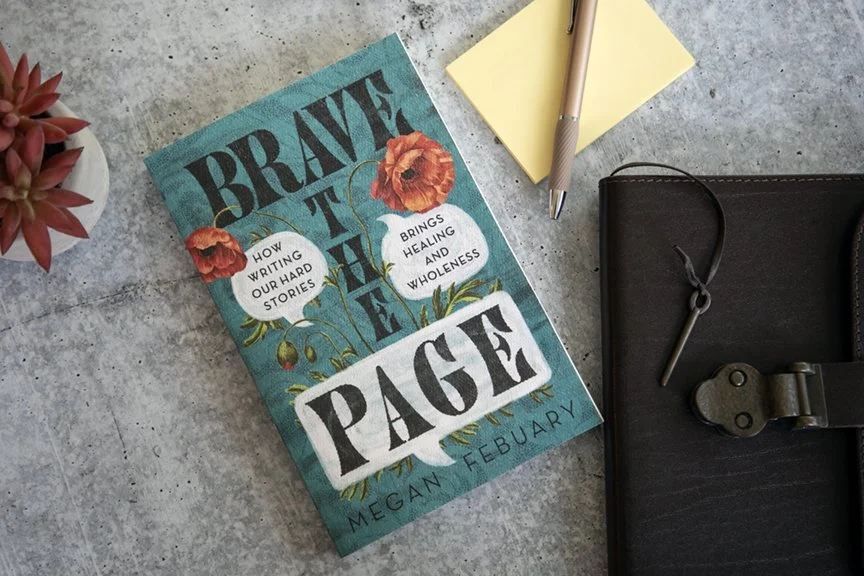
Brave the Page by trauma-informed writing coach Megan Febuary shares how to probe memories, write about your hard experiences, and find healing.
You start out with excitement and fervor—blank pages are feverishly filled with stories about your life. But what can you do when your memoir momentum wanes?
By holding as your goal the idea of ‘writing your memoir,’ you are focused too soon on the end goal. Instead, think about writing towards your memoir.
Are you nervous about undertaking a life story project? Working with a personal historian or memoir coach can help alleviate many of the most common fears.
Is there ever really a ‘right’ time to start writing your memoir? There’s not, in my opinion, but here are two questions to ask yourself to help you decide.
Writer’s block can happen to the best of us. This simple idea—keeping a notebook of self-generated writing prompts—will keep your memoir ideas flowing.
Looking for a meaningful gift for your parents? An annual subscription to our Write Your Life memory and writing prompts may be just the thing—or, maybe not.
Learn about our Write Your Life course, providing memory prompts, writing guidance and a dose of inspiration to anyone who wants to preserve their stories now.
Here’s one time I gave in to my client’s preferences that still haunts me: Why we did not identify people in any of the photos in their family history book.
While your memoir is telling your stories in your words, a family tree chart outlining your relationships has a real place in that book—here’s why.
The first draft of your life story is likely to include some stuff you decide to cut later—but should none of your challenges make it into your final book?
Good writing prompts will rid you of blank-page anxiety—and you can easily write your own! Here, 5 steps to drafting a library of personalized memoir prompts.
While a journal called “Memories from Mom” or “Grandma’s Life Story” may be brimming with good intentions, the fact is that most of them remain mostly blank.
While all five of these books add value to any memoirist or life writer’s library, I’ve identified which is best for you based on your goals and experience.
A love letter (or book!) overflowing with memories makes a thoughtful anniversary gift. Here, 14 writing prompts to help you honor—and surprise—your partner.
Wondering if 52 weeks of memory prompts will help YOU write about your life at last? Here, answers to the most commonly asked questions about Write Your Life.
Every week you’ll get themed prompts to stir your memories, tips to write your stories with ease, and more! A unique gift for your loved one (or yourself)!
Sometimes all it takes to get unstuck with your personal writing is paying attention. Here are some easy (fun) ways to come up with journal writing prompts.
Ready to edit your family history or life story book? Follow these three tips from a personal historian to ensure everything is clear for your descendants.
This new book by Ruta Sepetys, You: The Story, is a great tool for those who want to use their own life experiences to inform their fiction writing.
Have you ever thought about what will happen to your diaries—who will read them, how you may one day use them? Join me as I consider this profound question.
A new book to help you write the hard stories
Brave the Page by trauma-informed writing coach Megan Febuary shares how to probe memories, write about your hard experiences, and find healing.
While many of my clients come to me wanting to undertake personal history interviews to capture their stories, others endeavor to write their stories themselves—with a little help. In those instances, I act as a memoir coach, meeting them at whatever stage they are currently at by providing guidance, support, and editing. When their stories delve into traumatic experiences from their past, we inevitably have to slow things down and focus as much on self-care as on the writing. That often comes as a surprise to them.
Writing hard stories is…well, hard. But as Megan Febuary puts forth in her new book, Brave the Page (Baker Books, June 2025), doing so may also bring healing and wholeness.
Inside “Brave the Page”
In Brave the Page, Febuary shares more than once that “story healing,” as she calls it, has nothing to do with being a writer—rather, “it is about paying attention to the stories within and digging into the deep questions that our stories ask of us.” Sound scary? It can—and perhaps, should—be: Going deep and writing about trauma will inevitably make one feel some of that trauma again; as the title of her book suggests, you’ll need to be brave.
What Febuary offers up in this book is a whole lot of support. That support takes the form of:
inspiring personal stories
research-driven approaches to self-care and trauma-focused writing
gentle encouragement (including a mantra at the beginning of each chapter)
and plenty of guidance (the writing prompts are generative and clear, and will certainly get your pen moving across the page).
There are moments in the book where, if you haven’t been in therapy, you may feel thrown by some of the psychology jargon (attachment styles, inner child healing, trauma responses)—but don’t be put off by this. In every instance that the author describes the rationale behind her approach to story healing, she (a) footnotes her references if you’d like to dig further; and (b) perhaps more importantly, describes how these concepts have played out in her own life and writing. There is an autobiographical bent to the book that lays the foundation for all the guidance and writing prompts that follow.
Are you ready to write about your trauma?
Febuary is deeply knowledgable about writing about trauma. She has journaled since her youth and braved the page quite literally when she began putting words to her shame around a childhood diagnosis of scleroderma, and later to abuse she suffered as a girl and sexual violence as an adult. She earned her master’s degree at a school that specialized in narrative-focused trauma care, and she “researched the body as storyteller, learning how it becomes the gatekeeper for the stories too tender to address until we are emotionally available for them.”
Brave the Page, I hope, will help you know when you are emotionally available for your own hard stories, as well as how to support yourself and heal while doing so. It will teach you how to be a “compassionate witness to your life” and to feel safe while doing the tender work of probing your memories.
Do you feel like you need permission to write about your challenges? Permission to put words to your feelings of shame? Permission to claim your story as your own? Permission to go slow—to unbury memories that have been long hidden, but at your own pace? You’ll find all that permission and more here.
Your story is not finished. It is ever-evolving, and writing about it, Febuary describes, is a “spiritual progression.”
And you must keep at it, even when it feels hard. “This work of using our voices,” she writes, “is a muscle we must train, and it becomes stronger each time we do it.”
Megan Febuary and I are in agreement: Writing through your trauma will be hard—but it will also be transformational. I recommend picking up a copy of her book to be your companion on your personal story healing journey. And she hopes that your copy will be well-loved and visibly used: “May [it] be dog-eared and highlighted, may its pages be torn out and posted as reminders, and may its edges be filled with your own brave reflections.” Mine is.
So, go forth and find your voice…and be gentle with yourself on the way ❤️
P.S. If something about this post stirred you, but you don’t feel quite ready to “brave the page,” I implore you to buy the book anyway. In my opinion, YOU are exactly who this book is for. Let it sit on your bedside table for a year if you must. Once you dip into it, those stirrings will become stronger, and so will your resolve to give voice to your memories and to put pen to paper. Let Megan Febuary plant the seeds; you will sow them when you are ready.
Note: This is an unsolicited review of a book I purchased at full price. I did not receive any compensation or free products in exchange, and any endorsements within this post are my own.
Discover inspiring writing prompts for memoir and family storytelling—from sensory to introspective, short to timed. Find the one that sparks you.
Learn how keeping a notebook can nurture memoir and legacy writing—each blank page a new possibility for memory and meaning.
Words from seasoned memoirists remind us that writing about our lives isn’t just an act of preservation—it’s an act of connection, reflection, and courage.
Stay inspired with 52 weekly writing prompts for journaling and family history. Capture memories, dreams, and stories big and small. Bonus: Downloadable guide!
Go beyond labels with this powerful memoir prompt: introduce yourself without name, job, or age. Includes writing tips and a free downloadable worksheet.
The three most common excuses I hear for not writing about your life “yet,” and how—and why—to overcome them. It’s not too soon for your memoir, I promise.
Discover how (and why) bending certain grammar rules in memoir and life story writing can enhance voice, rhythm, and authenticity in your storytelling.
Even the most seasoned writer sometimes feels hopeless when they sit down to write and nothing comes. Here, 7 helpful resources for budding memoirists.
Four steps to help you turn spoken stories into engaging written narratives—so once the family history interview is done, you can create a lasting legacy.
Brave the Page by trauma-informed writing coach Megan Febuary shares how to probe memories, write about your hard experiences, and find healing.
You start out with excitement and fervor—blank pages are feverishly filled with stories about your life. But what can you do when your memoir momentum wanes?
By holding as your goal the idea of ‘writing your memoir,’ you are focused too soon on the end goal. Instead, think about writing towards your memoir.
Are you nervous about undertaking a life story project? Working with a personal historian or memoir coach can help alleviate many of the most common fears.
Is there ever really a ‘right’ time to start writing your memoir? There’s not, in my opinion, but here are two questions to ask yourself to help you decide.
Writer’s block can happen to the best of us. This simple idea—keeping a notebook of self-generated writing prompts—will keep your memoir ideas flowing.
Looking for a meaningful gift for your parents? An annual subscription to our Write Your Life memory and writing prompts may be just the thing—or, maybe not.
Learn about our Write Your Life course, providing memory prompts, writing guidance and a dose of inspiration to anyone who wants to preserve their stories now.
Here’s one time I gave in to my client’s preferences that still haunts me: Why we did not identify people in any of the photos in their family history book.
While your memoir is telling your stories in your words, a family tree chart outlining your relationships has a real place in that book—here’s why.
The first draft of your life story is likely to include some stuff you decide to cut later—but should none of your challenges make it into your final book?
Good writing prompts will rid you of blank-page anxiety—and you can easily write your own! Here, 5 steps to drafting a library of personalized memoir prompts.
While a journal called “Memories from Mom” or “Grandma’s Life Story” may be brimming with good intentions, the fact is that most of them remain mostly blank.
While all five of these books add value to any memoirist or life writer’s library, I’ve identified which is best for you based on your goals and experience.
A love letter (or book!) overflowing with memories makes a thoughtful anniversary gift. Here, 14 writing prompts to help you honor—and surprise—your partner.
Wondering if 52 weeks of memory prompts will help YOU write about your life at last? Here, answers to the most commonly asked questions about Write Your Life.
Every week you’ll get themed prompts to stir your memories, tips to write your stories with ease, and more! A unique gift for your loved one (or yourself)!
Sometimes all it takes to get unstuck with your personal writing is paying attention. Here are some easy (fun) ways to come up with journal writing prompts.
Ready to edit your family history or life story book? Follow these three tips from a personal historian to ensure everything is clear for your descendants.
This new book by Ruta Sepetys, You: The Story, is a great tool for those who want to use their own life experiences to inform their fiction writing.
Have you ever thought about what will happen to your diaries—who will read them, how you may one day use them? Join me as I consider this profound question.
Brave the Page by trauma-informed writing coach Megan Febuary shares how to probe memories, write about your hard experiences, and find healing.
Looking for a meaningful gift for your parents? An annual subscription to our Write Your Life memory and writing prompts may be just the thing—or, maybe not.
What better way to scope out if a personal historian is a good fit for you than to hear about others’ experiences, in their own words? I am humbled and proud.
Shana Novak photographed 100 personal keepsakes and shares the heartfelt stories behind each in her beautiful new coffee table book, “The Heirloomist.”
While all five of these books add value to any memoirist or life writer’s library, I’ve identified which is best for you based on your goals and experience.
These three titles—two hybrid cookbooks and one genealogical look at preserving food memories—dish up lots of inspiration for making your own family cookbook.
This new book by Ruta Sepetys, You: The Story, is a great tool for those who want to use their own life experiences to inform their fiction writing.
Ethical wills—also called legacy letters—are great ways to pass on values and life lessons to your descendants. These two books will help you create your own.
“Survivors: Faces of the Holocaust” will be on display in New York City until the summer of 2023—here’s why you should see the exhibit's powerful photographs.
This small yet dense self-published book comprises nine essays in which writer Sara Mansfield Taber aims to answer “the questions that plague the memoirist.”
Favorite food memoirs that deliciously incorporate recipes and sense memories—fine examples of how you, too, can weave a personal narrative inspired by food.
Here are my top picks for RootsTech 2022 sessions teaching about family storytelling and photo legacy. They’re all free, and you've got a year to watch!
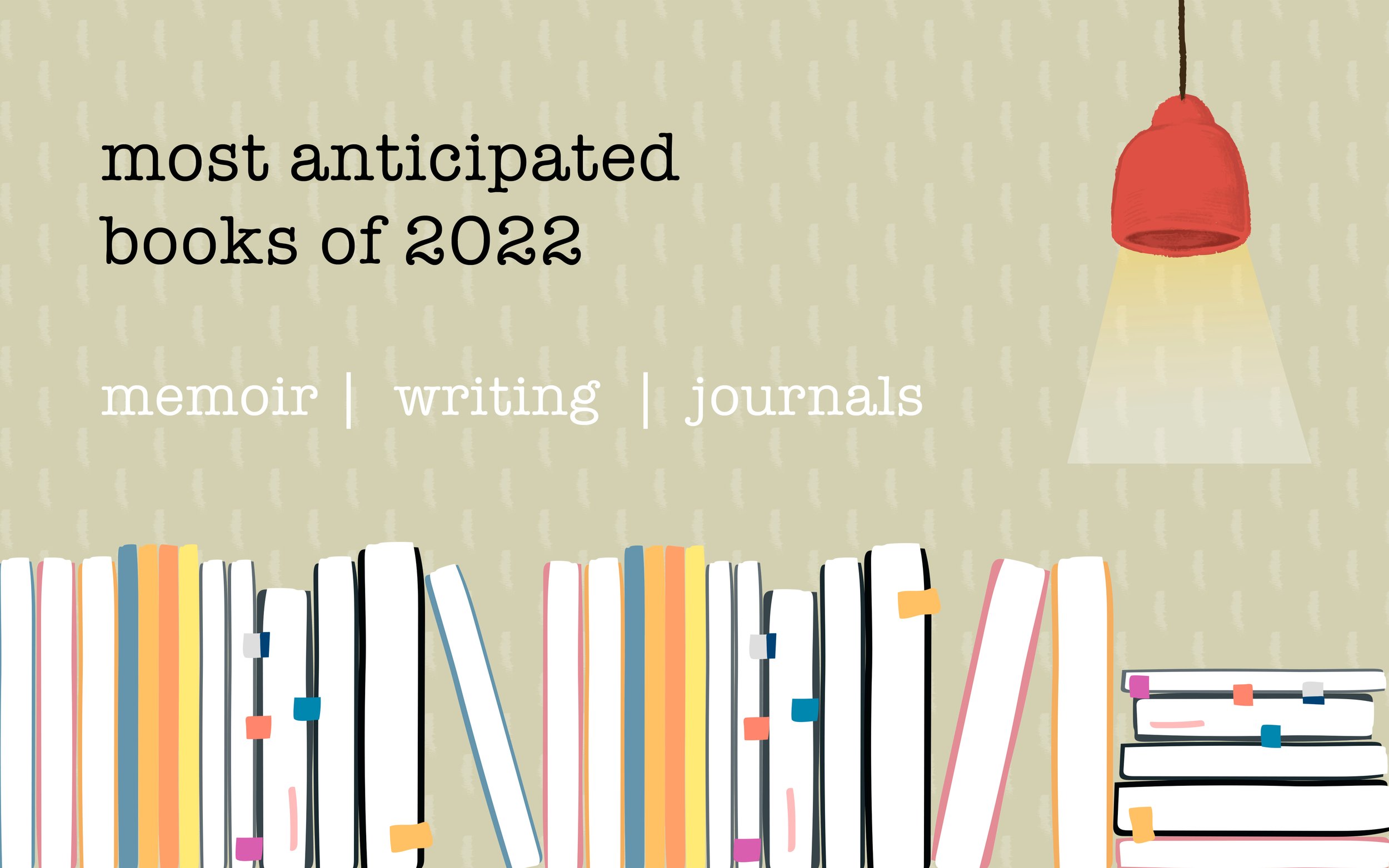
Personal historian Dawn Roode of Modern Heirloom Books lists her most anticipated books of 2022 for fans of memoir and the craft of writing. Mark your faves!
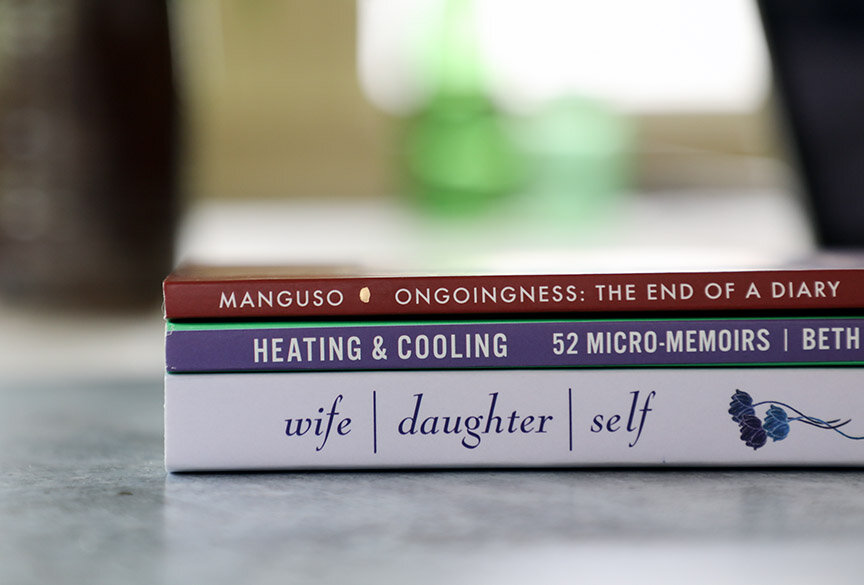
Memoirs by Sarah Manguso, Beth Ann Fennelly, and Beth Kephart each weave together short narratives to create evocative, textured self-portraits of the writers.
Ever wonder what it might be like to work together on your OWN heirloom book project? Listen to past clients' feedback—and words of thanks!—to get inspired.
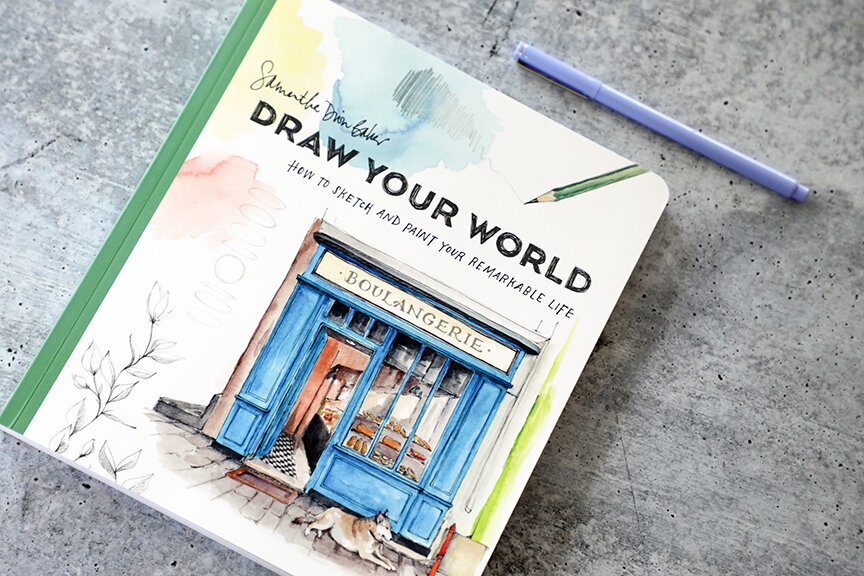
If writing about your life isn't for you, how about drawing it? Ideas for using a sketch journal to capture your memories, plus the book that will inspire you.
Introducing the two-word writing prompt guaranteed to keep your memories and your pen flowing, plus the book by Joe Brainard that inspired it: “I remember...”.
Meet the story- and food-loving host behind the inspiring podcast The Storied Recipe, then click on a few of my favorite episodes for a taste of her interviews.
Bruce Feiler's latest book, Life Is in the Transitions, offers up a helpful toolkit for dealing with life's curveballs through a lens of storytelling.
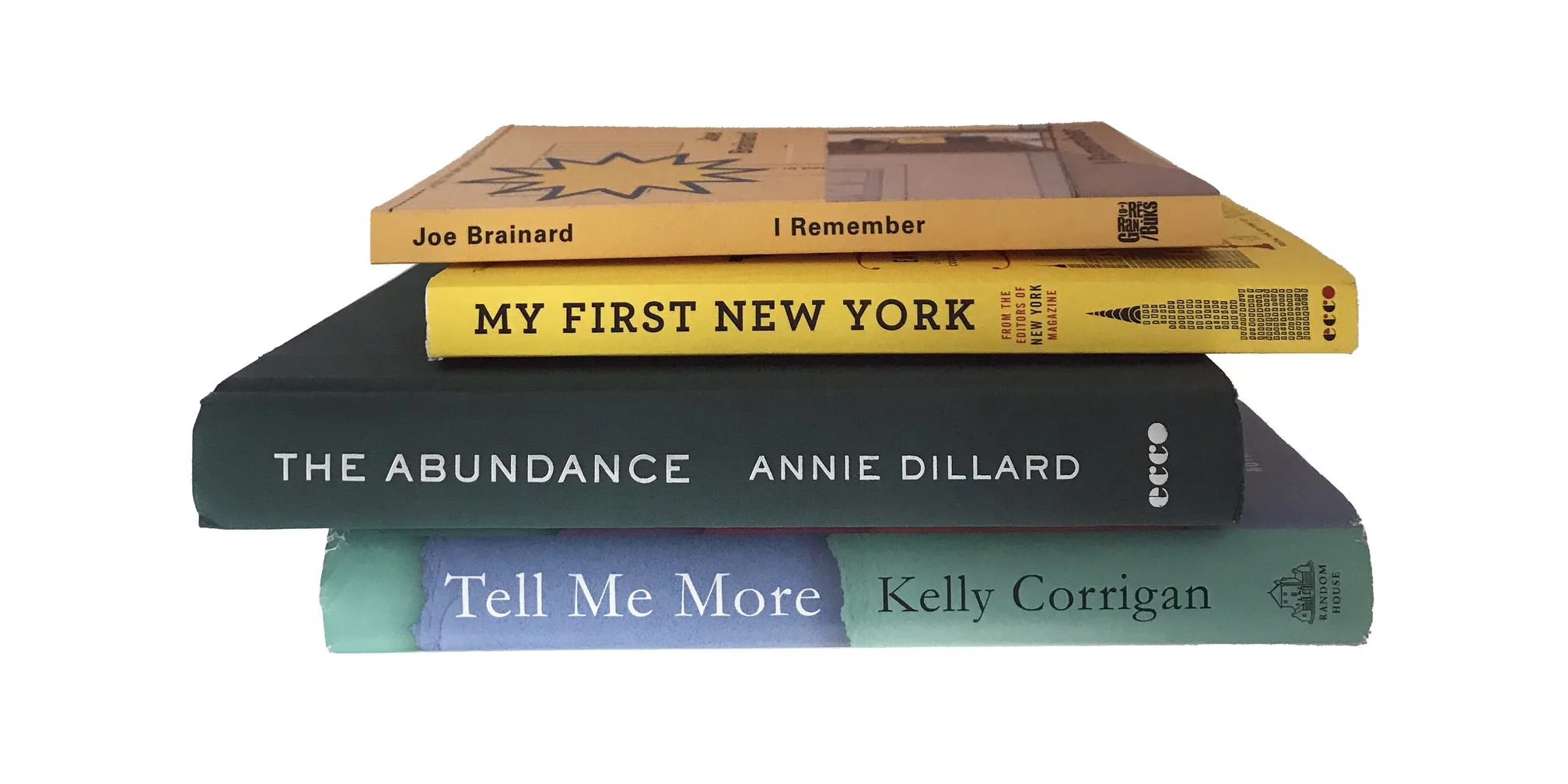
Memoir reading suggestions to inspire your own vignette-style life story writing, from Annie Dillard and Kelly Corrigan to Robert Fulghum and Sandra Cisneros.
Each of these powerful podcasts comes in at under an hour: Listening recommendations on memoir, narrative structure, family secrets, writing prompts, and more.
RootsTech 2019 offers opportunities for accessing the family history conference from home. Highlights, and how to get the most from your virtual experience.
Watch the 2012 film Stories We Tell as much for the dramatic exploration of one family's narrative as for the questions it raises about the malleability of truth.
In his 1996 documentary Nobody’s Business, Alan Berliner interviews his father about family history. The result is a poignant study of the nature of memory.
Podcast recommendations for life storytellers, creative entrepreneurs, oral historians, and anyone who loves a captivating first person story.
Humans of New York creator reveals his insights on why people open up—and it’s not the questions. How being 100 percent present invites honest storytelling.
Under One Roof at NYC’s Tenement Museum is a must-see exhibit: First person testimony (and authentic furnishings) bring 3 families’ immigrant experiences to life.
In Tell the Truth, Beth Kephart offers up a wonderfully original series of memoir-writing prompts that encourage self-reflection & striving toward the universal.
While there are lots of lists of family history questions on the web, here are 3 places to find unexpected questions that lead to meaningful life story writing.
The new Google PhotoScan app allows users to digitally capture their old family photos with ease—and without glare. While the app isn't ideal for scanning high-resolution images for use in print, it has enormous value in quickly and effectively scanning those precious boxes of old family photos you—and your extended family members—have lying around your homes. See why it's a recommended download.
“The messy middle”: Pushing through the toughest part of memoir writing
You start out with excitement and fervor—blank pages are feverishly filled with stories about your life. But what can you do when your memoir momentum wanes?
“The page is indifferent to us—no, worse. The page turns from us like a wounded lover. We will have to win it over, coax it out of hiding. Promise to do better next time. Apologize for our disregard. And then, we settle into the pattern that we know. Three pages. Two hours. A thousand words. We have wandered and now we are back.”
—Dani Shapiro, Still Writing
Every memoir begins with passion. You start off energized, eager to tell the story that’s been living inside you for so long. Words flow effortlessly as you sketch out the opening scenes, capture vivid memories, and feel your project beginning to take shape.
And then—somewhere in the middle—the energy fades. The structure starts feeling unwieldy, doubt creeps in, and the momentum you once had seems like a distant memory. The excitement that fueled your early writing sessions is replaced by a gnawing sense of obligation, or worse, dread (the prospect of writer’s block is dreadful, to be sure).
If you’ve found yourself in this “messy middle,” you’re not alone. Nearly every memoirist hits a point where pushing forward feels overwhelming. But the good news? There are ways to get past it. Here are three strategies to help you regain focus and finish what you started.
Go back to your original “why.”
When you began this project, something deep inside compelled you to start. Maybe you wanted to preserve family history, honor a loved one, or make sense of your own past. Whatever it was, reconnect with that original spark.
Go back to your early notes or journal entries. Re-read passages where your enthusiasm was strong. Remind yourself why this story matters—not just to you, but to the people who will one day read it. Your “why” is what will carry you through the hard parts.Find an Accountability Partner.
Writing is solitary work, but finishing a book doesn’t have to be. If your motivation is waning, find an accountability partner—someone who will check in on your progress, encourage you, and keep you from abandoning your project.
This could be a fellow writer, a trusted friend, or even a writing group. Set clear goals together, whether it’s a weekly word count or a deadline for finishing a section. You might even want to read just a sentence or two to a family member to get their take (and find some respite in connecting). Just knowing that someone else is expecting you to show up can be the push you need to keep going.Accept Imperfection and Keep Moving.
Perfectionism is one of the biggest culprits behind stalled writing projects. You might feel like your structure isn’t working, or your writing isn’t good enough, or that you need to go back and fix everything before moving forward. But getting stuck in endless revisions is a surefire way to stay stuck in the middle.
Instead, give yourself permission to write poorly. Drafts are meant to be messy. The important thing is to keep moving forward. Every single word brings you closer to the finish line.
Don’t be discouraged by this inevitable “messy middle”—embrace it, and push through. As memoirist Dani Shapiro says in the opening quote to this piece, you have wandered…but WILL find your way back.
Discover inspiring writing prompts for memoir and family storytelling—from sensory to introspective, short to timed. Find the one that sparks you.
Learn how keeping a notebook can nurture memoir and legacy writing—each blank page a new possibility for memory and meaning.
Words from seasoned memoirists remind us that writing about our lives isn’t just an act of preservation—it’s an act of connection, reflection, and courage.
Stay inspired with 52 weekly writing prompts for journaling and family history. Capture memories, dreams, and stories big and small. Bonus: Downloadable guide!
Go beyond labels with this powerful memoir prompt: introduce yourself without name, job, or age. Includes writing tips and a free downloadable worksheet.
The three most common excuses I hear for not writing about your life “yet,” and how—and why—to overcome them. It’s not too soon for your memoir, I promise.
Discover how (and why) bending certain grammar rules in memoir and life story writing can enhance voice, rhythm, and authenticity in your storytelling.
Even the most seasoned writer sometimes feels hopeless when they sit down to write and nothing comes. Here, 7 helpful resources for budding memoirists.
Four steps to help you turn spoken stories into engaging written narratives—so once the family history interview is done, you can create a lasting legacy.
Brave the Page by trauma-informed writing coach Megan Febuary shares how to probe memories, write about your hard experiences, and find healing.
You start out with excitement and fervor—blank pages are feverishly filled with stories about your life. But what can you do when your memoir momentum wanes?
By holding as your goal the idea of ‘writing your memoir,’ you are focused too soon on the end goal. Instead, think about writing towards your memoir.
Are you nervous about undertaking a life story project? Working with a personal historian or memoir coach can help alleviate many of the most common fears.
Is there ever really a ‘right’ time to start writing your memoir? There’s not, in my opinion, but here are two questions to ask yourself to help you decide.
Writer’s block can happen to the best of us. This simple idea—keeping a notebook of self-generated writing prompts—will keep your memoir ideas flowing.
Looking for a meaningful gift for your parents? An annual subscription to our Write Your Life memory and writing prompts may be just the thing—or, maybe not.
Learn about our Write Your Life course, providing memory prompts, writing guidance and a dose of inspiration to anyone who wants to preserve their stories now.
Here’s one time I gave in to my client’s preferences that still haunts me: Why we did not identify people in any of the photos in their family history book.
While your memoir is telling your stories in your words, a family tree chart outlining your relationships has a real place in that book—here’s why.
The first draft of your life story is likely to include some stuff you decide to cut later—but should none of your challenges make it into your final book?
Good writing prompts will rid you of blank-page anxiety—and you can easily write your own! Here, 5 steps to drafting a library of personalized memoir prompts.
While a journal called “Memories from Mom” or “Grandma’s Life Story” may be brimming with good intentions, the fact is that most of them remain mostly blank.
While all five of these books add value to any memoirist or life writer’s library, I’ve identified which is best for you based on your goals and experience.
A love letter (or book!) overflowing with memories makes a thoughtful anniversary gift. Here, 14 writing prompts to help you honor—and surprise—your partner.
Wondering if 52 weeks of memory prompts will help YOU write about your life at last? Here, answers to the most commonly asked questions about Write Your Life.
Every week you’ll get themed prompts to stir your memories, tips to write your stories with ease, and more! A unique gift for your loved one (or yourself)!
Sometimes all it takes to get unstuck with your personal writing is paying attention. Here are some easy (fun) ways to come up with journal writing prompts.
Ready to edit your family history or life story book? Follow these three tips from a personal historian to ensure everything is clear for your descendants.
This new book by Ruta Sepetys, You: The Story, is a great tool for those who want to use their own life experiences to inform their fiction writing.
Have you ever thought about what will happen to your diaries—who will read them, how you may one day use them? Join me as I consider this profound question.
Putting the pieces together (aka memoir ‘making’)
By holding as your goal the idea of ‘writing your memoir,’ you are focused too soon on the end goal. Instead, think about writing towards your memoir.
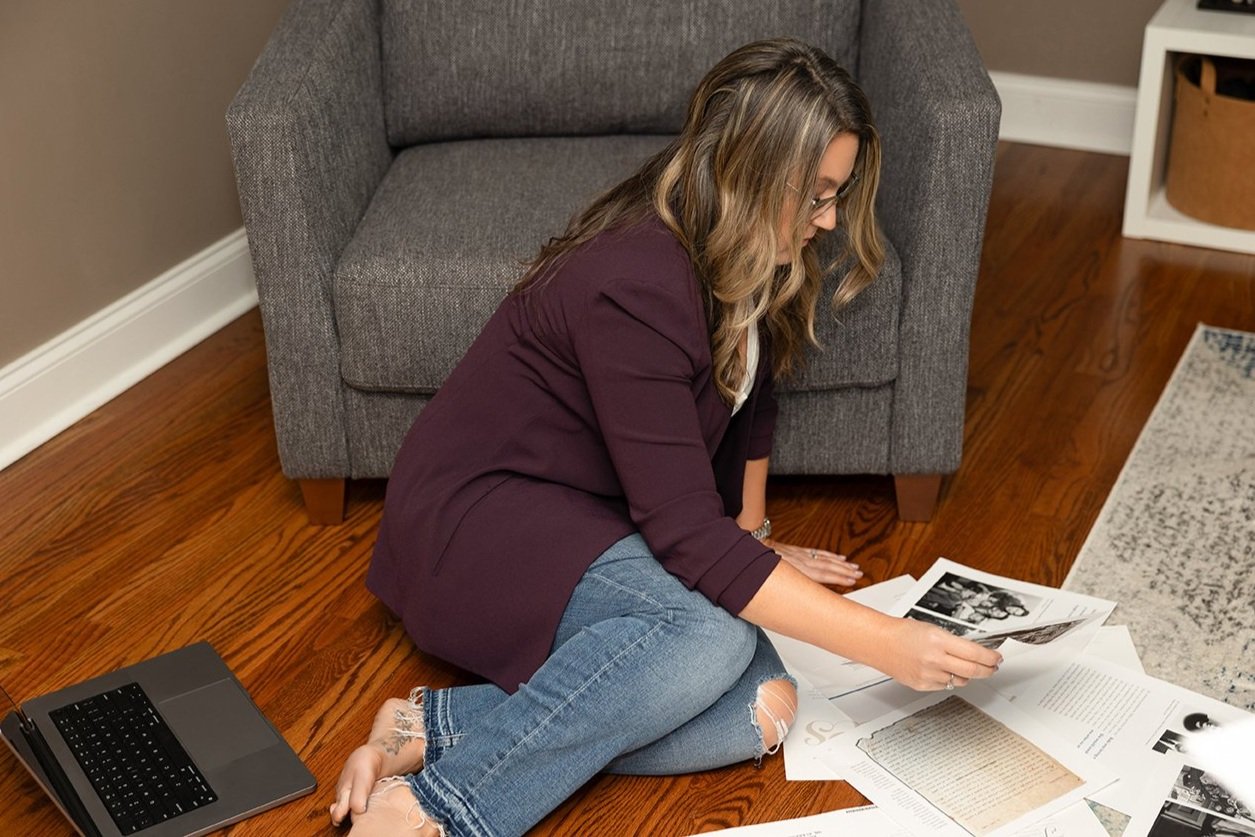
During the design phase of a personal history book, I often spread pages out all over my office floor to evaluate the book’s flow. Similarly, in the early stages of a memoir—when writings may consist of disjointed stories and short reflections without any narrative arc—I will spread pages out on the floor to look for patterns. Sure, you can do this on a computer, but I find this old-school approach much more efficient (and satisfying)!
It’s a rare individual who decides to write a memoir and knows out of the starting gate the path their writing will take. No, it’s much more common to decide to write a memoir…then to wander—to wander amidst memories, to wander on the page, even to wander in one’s commitment to the endeavor as a whole.
When coaching my memoir clients, it can often be helpful to talk about ‘making’ a memoir rather than ‘writing’ a memoir. It’s a small semantic shift, but an effective one. Why?
Well, whether we call it imposter syndrome or insecurity, many of us (me included) may find ourselves staring down a blank page and letting our imagination get the best of us—and who doesn’t have thoughts in those moments such as,
Why is this so easy for everyone else?
I read ______’s memoir, and it was powerful and clear—they certainly weren’t all over the place like me!
Where the hell is this writing GOING?!
But ______’s memoir—hell, every memoir written by a human—was in its early stages all over the place. Disjointed. Lacking a theme or narrative arc.
Every memoirist has wondered where the hell their writing is going.
How to gain clarity on your memoir’s theme
By holding as your goal the idea of ‘writing your memoir,’ you are focused too soon on the end goal, in my opinion. In reality, you are writing towards your memoir. So: Write, then write some more; read, analyze, tweak; then write some more. Then, as you begin to uncover patterns, you can MAKE something of what you have written.
As William Zinsser recommends in this brilliant piece (I recommend reading the whole thing if you have time), begin writing by following the memories as they come to you. Keep writing—short vignettes, slivers of memory, feelings from your childhood, favorite stories you’ve told a thousand times…
“Then, one day, take all your entries out of their folder and spread them on the floor…. Read them through and see what they tell you and what patterns emerge. They will tell you what your memoir is about and what it’s not about. They will tell you what’s primary and what’s secondary, what’s interesting and what’s not, what’s emotional, what’s important, what’s funny, what’s unusual, what’s worth pursing and expanding. You’ll begin to glimpse your story’s narrative shape and the road you want to take…. Then all you have to do is put the pieces together.”
Admittedly, “putting the pieces together’ may not be as simple as it sounds—but it is straightforward and fun, like putting a puzzle together: the puzzle of your life. Not your whole life, of course (a memoir isn’t an expansive tome covering every autobiographical tick on the timeline of your life), but the aspect of your life that has revealed itself in this exercise as holding meaning.
So, begin writing towards your memoir. One day in the future, I promise, you’ll be able to make it out of the raw materials you’ve penned.
Discover inspiring writing prompts for memoir and family storytelling—from sensory to introspective, short to timed. Find the one that sparks you.
Learn how keeping a notebook can nurture memoir and legacy writing—each blank page a new possibility for memory and meaning.
Words from seasoned memoirists remind us that writing about our lives isn’t just an act of preservation—it’s an act of connection, reflection, and courage.
Stay inspired with 52 weekly writing prompts for journaling and family history. Capture memories, dreams, and stories big and small. Bonus: Downloadable guide!
Go beyond labels with this powerful memoir prompt: introduce yourself without name, job, or age. Includes writing tips and a free downloadable worksheet.
The three most common excuses I hear for not writing about your life “yet,” and how—and why—to overcome them. It’s not too soon for your memoir, I promise.
Discover how (and why) bending certain grammar rules in memoir and life story writing can enhance voice, rhythm, and authenticity in your storytelling.
Even the most seasoned writer sometimes feels hopeless when they sit down to write and nothing comes. Here, 7 helpful resources for budding memoirists.
Four steps to help you turn spoken stories into engaging written narratives—so once the family history interview is done, you can create a lasting legacy.
Brave the Page by trauma-informed writing coach Megan Febuary shares how to probe memories, write about your hard experiences, and find healing.
You start out with excitement and fervor—blank pages are feverishly filled with stories about your life. But what can you do when your memoir momentum wanes?
By holding as your goal the idea of ‘writing your memoir,’ you are focused too soon on the end goal. Instead, think about writing towards your memoir.
Are you nervous about undertaking a life story project? Working with a personal historian or memoir coach can help alleviate many of the most common fears.
Is there ever really a ‘right’ time to start writing your memoir? There’s not, in my opinion, but here are two questions to ask yourself to help you decide.
Writer’s block can happen to the best of us. This simple idea—keeping a notebook of self-generated writing prompts—will keep your memoir ideas flowing.
Looking for a meaningful gift for your parents? An annual subscription to our Write Your Life memory and writing prompts may be just the thing—or, maybe not.
Learn about our Write Your Life course, providing memory prompts, writing guidance and a dose of inspiration to anyone who wants to preserve their stories now.
Here’s one time I gave in to my client’s preferences that still haunts me: Why we did not identify people in any of the photos in their family history book.
While your memoir is telling your stories in your words, a family tree chart outlining your relationships has a real place in that book—here’s why.
The first draft of your life story is likely to include some stuff you decide to cut later—but should none of your challenges make it into your final book?
Good writing prompts will rid you of blank-page anxiety—and you can easily write your own! Here, 5 steps to drafting a library of personalized memoir prompts.
While a journal called “Memories from Mom” or “Grandma’s Life Story” may be brimming with good intentions, the fact is that most of them remain mostly blank.
While all five of these books add value to any memoirist or life writer’s library, I’ve identified which is best for you based on your goals and experience.
A love letter (or book!) overflowing with memories makes a thoughtful anniversary gift. Here, 14 writing prompts to help you honor—and surprise—your partner.
Wondering if 52 weeks of memory prompts will help YOU write about your life at last? Here, answers to the most commonly asked questions about Write Your Life.
Every week you’ll get themed prompts to stir your memories, tips to write your stories with ease, and more! A unique gift for your loved one (or yourself)!
Sometimes all it takes to get unstuck with your personal writing is paying attention. Here are some easy (fun) ways to come up with journal writing prompts.
Ready to edit your family history or life story book? Follow these three tips from a personal historian to ensure everything is clear for your descendants.
This new book by Ruta Sepetys, You: The Story, is a great tool for those who want to use their own life experiences to inform their fiction writing.
Have you ever thought about what will happen to your diaries—who will read them, how you may one day use them? Join me as I consider this profound question.
“I’m scared.”
Are you nervous about undertaking a life story project? Working with a personal historian or memoir coach can help alleviate many of the most common fears.
Before I had even met with a particular prospective client, he told me has was scared.
He had filled out a form expressing interest in writing his life story. I replied to him within 24 hours, but did not hear back from him until about three months later. At that time, I urged him to set up a free phone consultation, so I could learn more about the project he envisioned. He scheduled that for a week later, then did not answer the phone when I called.
Then he emailed me: “I’m scared.”
That’s it—two words, but two words that hold so much weight.
Have you ever felt nervous about undertaking a life review project? Whether it’s a reflective memoir, an extensive family history, or just a few short stories encapsulating your favorite memories, starting any personal legacy journey can feel daunting.
Working with a personal historian or memoir coach can help alleviate many of the most common fears.
A few fears that my personal history clients have told me about over the years:
Fear that their family members won’t be interested in their life story.
This is one I hear ALL the time. And you know what? It’s often the case…for now. Your family members are living their lives, and likely taking for granted that you—their parent or grandparent—will always be there. But your stories are the gift they don’t yet know they want. Writing them now—even if it’s for them to appreciate later—is giving them an unequivocal gift.
Fear that they won’t remember enough to write a memoir.
Memories can be elusive. Especially for folks who don’t often share their stories around the dinner table or in a journal, accessing those memories might seem like an impossible task. But we professional personal historians and memoir coaches have plenty of tools and prompts at our disposal to help! Consider using this straightforward and EASY prompt that is guaranteed to yield surprising memories; use your senses to help you travel back in time; or consider picking up a journal designed especially to stir memories, like this one from Beth Kephart.
Fear that they will have a hard time managing their emotions when writing about traumatic life experiences.
It’s a common refrain that writing about hard times can be cathartic. It can, but as Lisa Cooper Ellison writes in this post, catharsis is just the beginning. Writing about trauma is generally only worthwhile—and valuable, even healing—when we can make some meaning out of it. “Writing well requires an open heart,” Ellison says. “That means you must relive a small portion of the incident as you write about it.” In other words, you will relive some trauma if you write about it—but while there’s no way around that, there are ways to cope with it. Limiting writing sessions that cover traumatic experiences to a half hour or so may help; allowing yourself to write from a distanced perspective will, too. Some people swear by writing groups or trustworthy readers to offer them support when writing about difficult experiences; and others find walking this path with a therapist is necessary. Make sure to include self-care as part of your writing ritual, and be gentle on yourself—if it feels too hard today, wait until tomorrow. Though it likely is a scary endeavor, writing into our trauma can be life-transforming for many. (And remember: You can do all of this just for YOU…write in a private journal, either as a first step, or as the thing itself; no one else need ever read your words.)
Fear about being vulnerable.
Exposing our emotions is scary. Remember that you are in control of what makes it into the final draft of your memoir, so if something feels too exposed, you can always cut it. But also remember that it’s our vulnerability, often, that proves most powerful for our readers. “Revealing oneself is an act of radical generosity: letting oneself be seen allows others to do the same,” Robin MacArthur writes. “And this vulnerability creates connection.”
Are you scared of taking the first step in preserving your life story for the next generation? Set up a free 20- to 30-minute consultation to see if working together can help settle those fears—and get you on the path to preservation.
Have you ever thought that your most valuable assets are intangible? Your legacy is more than the financial security you leave behind—it’s your life’s story.
The three most common excuses I hear for not writing about your life “yet,” and how—and why—to overcome them. It’s not too soon for your memoir, I promise.
My biased opinion: Working with a professional biographer can be one of the most meaningful investments you’ll ever make. Here are a few reasons why.
Are you nervous about undertaking a life story project? Working with a personal historian or memoir coach can help alleviate many of the most common fears.
“I wish I knew why Mom moved to New York when she was just 16.” “I wish Papa told me how he makes his Sunday sauce.” Don’t wish for stories; ask for them.
Walking down memory lane can be fun, but writing about your life has big benefits beyond that, including making meaning out of your lived experience.
It’s important to me to stress some sense of urgency about writing about your life—but I don’t think you’ll have regrets if you don’t write about it ALL.
Boxes of old letters, family photos, and mementos from a generation ago can feel like a burden if they’re passed down without context. What to do with them.
You may think you are writing about your life for your family—to honor your ancestors, to give a gift to your descendants. But the truth is deeper. You’ll see.
When Mother’s Day is hard due to feelings of loss, allowing ourselves to linger in our memories may help (and, yes, hurt). A tribute made in grief, and love.
After we record your personal history interviews, I craft your story and photos into an heirloom coffee table book—not a video, not an audio file. Here’s why.
If writing your memoir means enough to you to put it on a bucket list, please read this—I’ll help you easily move it from future project to present-day endeavor.
Your legacy is more than the assets you leave behind—much more. Here, three ways to leave a personal legacy that has a positive impact on your loved ones.
Ignore those naysayers who warn that you must be passed middle age to begin writing your life stories: Start your memoir now, no matter how old you are.
It’s a common but wrong assumption—that telling one's own stories is “narcissistic” or “self-centered.” Truly, preserving your legacy is an act of generosity.
Recording loved ones' stories is important to most Americans, and yet not even half of us have done so. Here, resources to make memory-keeping easier.
Our memories are anything but fixed—and when stories are passed down to a new generation, their malleability, their meaning, and their impact change, too.
Family stories have enduring value. Some you share now may not be relevant enough for your kids to care. But one day they will see themselves in your stories.
Ever wonder what it might be like to work together on your OWN heirloom book project? Listen to past clients' feedback—and words of thanks!—to get inspired.
Writing about your life can be hard—but it’s still worth the effort. (Oh, and you’re wrong that your family members don’t care about your personal history).
Understanding the basics of how our brains encode memory can help us both remember the things we want in the future & retrieve precious memories from our past.
Dear Tim Ferriss: Have you interviewed your parents yet? It is with a healthy dose of humility & a shot-in-the-dark effort that I say to you: Do it now—please.
Is your life too boring to tell people about? Do you think it's self-centered to write a memoir? Or that your kids don't care about your stories? Think again.
It seems obvious: We should ask our parents about their lives—lessons, loves, adventures, ancestors. Then why do so many of us wait too long and then have regrets?
Did you know that listening to and sharing stories can help us live longer, happier lives? Discover three impactful ways to bring storytelling into your life.
I hope you'll take comfort in these personal stories of vulnerability and loss during the holidays. (Sharing memories about loved ones is always a good thing.)
Preserve your parents’ (and grandparents’) stories meaningfully for the next generation with these three ideas that make the process simple and enjoyable.
Sometimes the idea of telling our "life story" is overwhelming. If we think of memoir as a series of smaller life narratives, though, the way in becomes clear.
The Wall Street Journal reports that a growing number of adult children are interested in hearing more of their parents' stories. Are you among them?
A brave group of Jews secretly chronicled their daily existence in the Warsaw Ghetto during the Holocaust. Only one who knew where the archive was buried survived.
Discover inspiring writing prompts for memoir and family storytelling—from sensory to introspective, short to timed. Find the one that sparks you.
Learn how keeping a notebook can nurture memoir and legacy writing—each blank page a new possibility for memory and meaning.
Words from seasoned memoirists remind us that writing about our lives isn’t just an act of preservation—it’s an act of connection, reflection, and courage.
Stay inspired with 52 weekly writing prompts for journaling and family history. Capture memories, dreams, and stories big and small. Bonus: Downloadable guide!
Go beyond labels with this powerful memoir prompt: introduce yourself without name, job, or age. Includes writing tips and a free downloadable worksheet.
The three most common excuses I hear for not writing about your life “yet,” and how—and why—to overcome them. It’s not too soon for your memoir, I promise.
Discover how (and why) bending certain grammar rules in memoir and life story writing can enhance voice, rhythm, and authenticity in your storytelling.
Even the most seasoned writer sometimes feels hopeless when they sit down to write and nothing comes. Here, 7 helpful resources for budding memoirists.
Four steps to help you turn spoken stories into engaging written narratives—so once the family history interview is done, you can create a lasting legacy.
Brave the Page by trauma-informed writing coach Megan Febuary shares how to probe memories, write about your hard experiences, and find healing.
You start out with excitement and fervor—blank pages are feverishly filled with stories about your life. But what can you do when your memoir momentum wanes?
By holding as your goal the idea of ‘writing your memoir,’ you are focused too soon on the end goal. Instead, think about writing towards your memoir.
Are you nervous about undertaking a life story project? Working with a personal historian or memoir coach can help alleviate many of the most common fears.
Is there ever really a ‘right’ time to start writing your memoir? There’s not, in my opinion, but here are two questions to ask yourself to help you decide.
Writer’s block can happen to the best of us. This simple idea—keeping a notebook of self-generated writing prompts—will keep your memoir ideas flowing.
Looking for a meaningful gift for your parents? An annual subscription to our Write Your Life memory and writing prompts may be just the thing—or, maybe not.
Learn about our Write Your Life course, providing memory prompts, writing guidance and a dose of inspiration to anyone who wants to preserve their stories now.
Here’s one time I gave in to my client’s preferences that still haunts me: Why we did not identify people in any of the photos in their family history book.
While your memoir is telling your stories in your words, a family tree chart outlining your relationships has a real place in that book—here’s why.
The first draft of your life story is likely to include some stuff you decide to cut later—but should none of your challenges make it into your final book?
Good writing prompts will rid you of blank-page anxiety—and you can easily write your own! Here, 5 steps to drafting a library of personalized memoir prompts.
While a journal called “Memories from Mom” or “Grandma’s Life Story” may be brimming with good intentions, the fact is that most of them remain mostly blank.
While all five of these books add value to any memoirist or life writer’s library, I’ve identified which is best for you based on your goals and experience.
A love letter (or book!) overflowing with memories makes a thoughtful anniversary gift. Here, 14 writing prompts to help you honor—and surprise—your partner.
Wondering if 52 weeks of memory prompts will help YOU write about your life at last? Here, answers to the most commonly asked questions about Write Your Life.
Every week you’ll get themed prompts to stir your memories, tips to write your stories with ease, and more! A unique gift for your loved one (or yourself)!
Sometimes all it takes to get unstuck with your personal writing is paying attention. Here are some easy (fun) ways to come up with journal writing prompts.
Ready to edit your family history or life story book? Follow these three tips from a personal historian to ensure everything is clear for your descendants.
This new book by Ruta Sepetys, You: The Story, is a great tool for those who want to use their own life experiences to inform their fiction writing.
Have you ever thought about what will happen to your diaries—who will read them, how you may one day use them? Join me as I consider this profound question.
Why you need emotional distance when writing memoir
Is there ever really a ‘right’ time to start writing your memoir? There’s not, in my opinion, but here are two questions to ask yourself to help you decide.
Have you ever wondered if enough time has passed for you to begin writing about your life?
“When is the right time to start writing my memoir?”
“Am I too young to write my life story?”
Questions such as these miss the mark. There isn’t a ‘right time’ or a ‘best age’ to right your memoir. Rather, I suggest considering how much emotional distance you have from the chapter of your life you want to write about.
I have worked with people who are writing about their lives from a vantage point where they have a LOT of perspective—an 80-year-old capturing his young adult experiences, for instance. And I have coached memoirists who are writing about fresh trauma—a 30-year-old exploring how she ‘found herself’ amidst the dissolution of her marriage less than a year before, for example. Is one of these situations better than the other?
There’s almost certainly a happy medium: writing about your life when enough time has passed that you have significant insights and perspective, but when not so much time has passed that the experiences no longer seem relevant or retrievable in your memory. But how do you know when it’s that time?
2 questions to ask yourself to determine if now is the right time to write about your life
Do I have enough emotional distance to be able to write about my life with clarity and insight?
“I had to step away from my own emotions, from my embarrassment and fear and pain, far enough to get a clear view,” Scott Nadelson writes as he suggests a method many memoirists use: Pretend you are writing about someone else. “If I’d stayed too close,” he continues, “obeying the instinct toward self-protection, then I would have risked nothing, and nothing would have been at stake for a reader.”
If you’ve ever read an entry from one of your old diaries, you know the emotions of which Nadelson speaks (I certainly do!). If you can’t elucidate your experiences without self-judgment or embarrassment, you might not be ready to write about them.Do I have access to the memories that will be the building blocks of my narrative?
“The meaning of our experiences is constantly changing as we grow,” Megan Stielstra has said. So of course when you choose to write about a life experience will color how you do so.
It may feel like you haven’t fully synthesized your feelings about a chapter of your life—and like you, therefore, should wait to write about it. Just make sure you aren’t waiting too long. You want to have full access to your memories, and in particular to the emotions that accompanied your actions, else there will be no immediacy to drive your storytelling, no detail to animate your words.
Know this: There is no right or wrong time to begin your memoir. If it seems like it may be too soon—because your feelings are too raw, or your perspective clouded—it just may be that you will work some heavy stuff out DURING your writing. That can be a powerful thing both for you and your readers.
One of my favorite memoirists, Dani Shapiro, writes thoughtfully about this balancing act in her essay “A Memoir Is Not a Status Update”:
“I’ve been doing this work long enough to know that our feelings—that vast range of fear, joy, grief, sorrow, rage, you name it—are incoherent in the immediacy of the moment. It is only with distance that we are able to turn our powers of observation on ourselves, thus fashioning stories in which we are characters.”
So let some time pass. Sit with your feelings. Let them simmer. Write about them—as sloppily and urgently as you want—in a journal. Turn to writing about them with intention when it feels like enough time has passed. (“But how will I know?”, you still wonder…and all I can say is, you just will; trust your gut—and know that if it is too soon, that’s why they call it a first draft 😉)
Further reading on emotional distance in memoir
If the topic of emotional distance in memoir interests you, here are a few other essays I recommend on the topic:
“Dani Shapiro on the Disequilibrium of a Life-Changing Moment”
“And so I was, I think, rushing the writing because…the pieces of myself were sort of strewn all around me and I was impatient to begin to put them together again.… But there was an urgency, I think, that would have benefited from slowing down a little bit. Not a lot. Again, not, you know, write this from the distance of your rocking chair someday, but from a place of that little bit of clarity of distance.”“9 Tips for Dealing with the Emotions When Writing a Memoir,” by M. Shannon Hernandez
“Raw emotions usually emerge first, and sometimes we can leave them as is—and at other times we need to wrap them in love and understanding and softened tones, so that we don’t offend our audiences.”“Not Too Close: Emotional Distance In Creative Nonfiction,” by Connor Byrne
“The first sign that a piece is too distant is an almost analytical tone, for example, “this happened because of this; I should have done this; this has had x effects on my life.” The writer has moved far enough away from the emotional reaction to what they’re writing about that they turn to an opposite strategy: looking at everything rationally, which often sacrifices a feeling of the piece being ‘genuine.’”“The Hard Art of Seeing Your Own Writing Through Rose-Colored Glasses,” by Mira Pitacin
“I wrote my memoir nearly in real time, and writing about my own loss in the wake of the events did two things: exorcised the demon out of me, and let the reader know what it really felt like to experience these things in the moment, not seven plus years later, with a wiser, less stinging outlook that comes with time and perspective.”
Discover inspiring writing prompts for memoir and family storytelling—from sensory to introspective, short to timed. Find the one that sparks you.
Learn how keeping a notebook can nurture memoir and legacy writing—each blank page a new possibility for memory and meaning.
Words from seasoned memoirists remind us that writing about our lives isn’t just an act of preservation—it’s an act of connection, reflection, and courage.
Stay inspired with 52 weekly writing prompts for journaling and family history. Capture memories, dreams, and stories big and small. Bonus: Downloadable guide!
Go beyond labels with this powerful memoir prompt: introduce yourself without name, job, or age. Includes writing tips and a free downloadable worksheet.
The three most common excuses I hear for not writing about your life “yet,” and how—and why—to overcome them. It’s not too soon for your memoir, I promise.
Discover how (and why) bending certain grammar rules in memoir and life story writing can enhance voice, rhythm, and authenticity in your storytelling.
Even the most seasoned writer sometimes feels hopeless when they sit down to write and nothing comes. Here, 7 helpful resources for budding memoirists.
Four steps to help you turn spoken stories into engaging written narratives—so once the family history interview is done, you can create a lasting legacy.
Brave the Page by trauma-informed writing coach Megan Febuary shares how to probe memories, write about your hard experiences, and find healing.
You start out with excitement and fervor—blank pages are feverishly filled with stories about your life. But what can you do when your memoir momentum wanes?
By holding as your goal the idea of ‘writing your memoir,’ you are focused too soon on the end goal. Instead, think about writing towards your memoir.
Are you nervous about undertaking a life story project? Working with a personal historian or memoir coach can help alleviate many of the most common fears.
Is there ever really a ‘right’ time to start writing your memoir? There’s not, in my opinion, but here are two questions to ask yourself to help you decide.
Writer’s block can happen to the best of us. This simple idea—keeping a notebook of self-generated writing prompts—will keep your memoir ideas flowing.
Looking for a meaningful gift for your parents? An annual subscription to our Write Your Life memory and writing prompts may be just the thing—or, maybe not.
Learn about our Write Your Life course, providing memory prompts, writing guidance and a dose of inspiration to anyone who wants to preserve their stories now.
Here’s one time I gave in to my client’s preferences that still haunts me: Why we did not identify people in any of the photos in their family history book.
While your memoir is telling your stories in your words, a family tree chart outlining your relationships has a real place in that book—here’s why.
The first draft of your life story is likely to include some stuff you decide to cut later—but should none of your challenges make it into your final book?
Good writing prompts will rid you of blank-page anxiety—and you can easily write your own! Here, 5 steps to drafting a library of personalized memoir prompts.
While a journal called “Memories from Mom” or “Grandma’s Life Story” may be brimming with good intentions, the fact is that most of them remain mostly blank.
While all five of these books add value to any memoirist or life writer’s library, I’ve identified which is best for you based on your goals and experience.
A love letter (or book!) overflowing with memories makes a thoughtful anniversary gift. Here, 14 writing prompts to help you honor—and surprise—your partner.
Wondering if 52 weeks of memory prompts will help YOU write about your life at last? Here, answers to the most commonly asked questions about Write Your Life.
Every week you’ll get themed prompts to stir your memories, tips to write your stories with ease, and more! A unique gift for your loved one (or yourself)!
Sometimes all it takes to get unstuck with your personal writing is paying attention. Here are some easy (fun) ways to come up with journal writing prompts.
Ready to edit your family history or life story book? Follow these three tips from a personal historian to ensure everything is clear for your descendants.
This new book by Ruta Sepetys, You: The Story, is a great tool for those who want to use their own life experiences to inform their fiction writing.
Have you ever thought about what will happen to your diaries—who will read them, how you may one day use them? Join me as I consider this profound question.
Do you keep a writing ideas notebook?
Writer’s block can happen to the best of us. This simple idea—keeping a notebook of self-generated writing prompts—will keep your memoir ideas flowing.
So you finally find a stretch of uninterrupted time to write…and when you sit down, you draw a blank. Has that ever happened to you? This simple idea—keeping a notebook of self-generated writing prompts—will keep your ideas flowing.
I share a lot of writing prompts on the blog and in my annual course, and I’ve even written about how you can generate your own writing prompts. But I understand how—somehow!!—it never seems like a writing prompt is at the ready when you need it, right?
There’s an incredibly simple solution: Keep an ideas notebook. Don’t be fussy! Jot down a note the moment an idea bubbles to the surface on whatever you have handy—a napkin, a Post-it, the back of a receipt—then tape or staple these into your notebook. (Pick up a cheap lined notebook kids use for school so it doesn’t feel too precious to approach in this haphazard way!)
What kind of ideas am I talking about, you’re wondering? Anything that may jumpstart your memories or get your pen moving. Here are some real-world examples from my own life:
As I run errands, I hear a song from my childhood on the car radio. I am flooded with memories and emotions. At a stop light, I snap a picture of the song name on the dashboard with my phone. That alone will be prompt enough to get me writing when I’m in the mood.
Watching a movie with my family, a character’s reaction or words give me a strong sense of deja vu. Why? With no time to consider it, I text myself a short phrase to remind me of this feeling. Maybe one day it will be worth writing about (maybe I’ll even rewatch the movie to bring me back emotionally).
I wake up from a dream and in that half-awake state I reach for the notebook I leave on my night stand to scribble a few words so I don’t forget. (Never—not once, and I’ve tried many, many times—have I merely told myself in that moment to remember the dream….and then actually remembered it later.) Dreams can provoke some surprising writing!
Here’s a common scenario for me: Listening to a podcast, I hear something that resonates and feels like it was drawn from my own life. I grab a piece of paper and jot down the time stamp and episode name. Nothing else is needed, but a word or two about the theme of the conversation may be helpful. When I’m staring down a blank page, I can listen in to that select part of the conversation to get my creative juices stirring again.
Other things you might find yourself taping into that ideas notebook? Fortune cookie slips. Magazine articles. Quotes from friends. Random handwritten memories. People you want to call (trust me, sometimes the best way into a story of your own is to ask someone else for their version). A letter from a friend. A page from a datebook.
You get the idea, yes?
For me, the messier this ideas notebook is, the more inviting I find it! So what if pieces of paper stick out the sides, or if the notebook bulges unevenly?! That just means there are treasures awaiting—self-made prompts you know will move you, because you felt the stirrings already.

How about this one?
If your kid’s half-used, spiral-bound notebook isn’t up to par (it’s what I used all last year, haha!), check out this one I’ve designed just for you.
Good writing prompts will rid you of blank-page anxiety—and you can easily write your own! Here, 5 steps to drafting a library of personalized memoir prompts.
By limiting oneself in word count and time allotted for writing, undertaking any life story project becomes both more urgent and more relaxed. Ready, set, write!
While there are lots of lists of family history questions on the web, here are 3 places to find unexpected questions that lead to meaningful life story writing.
Before you gift someone our Write Your Life prompts (or, “Who this gift is NOT for?”)
Looking for a meaningful gift for your parents? An annual subscription to our Write Your Life memory and writing prompts may be just the thing—or, maybe not.
You want your loved one’s stories—how could that be perceived as anything but loving? (HOW you ask for them can make all the difference.)
I lovingly (and painstakingly) created Write Your Life over the course of a whole year:
I took notes on what was working—and what wasn’t—with my personal history and memoir clients.
I read, reread, and annotated books on the craft of life writing, on how to write memoir, and on how to write clearly.
I paid for and participated in multiple classes from other companies to explore what resonated and what didn’t (video delivery vs. email, for instance; lots of elevated writing guidance vs. more approachable tips, as another example).
I tested different approaches with a handful of volunteers, and really listened to (and incorporated) their feedback.
I tapped into more than 20 years of writing and editing experience to distill what would work best for novice and aspiring writers.
The decisions I made along the way helped me create a year-long subscription of open-ended memory and writing prompts accompanied by straightforward tips, inspiring examples, and just enough encouragement to keep participants going.
And while I did NOT design Write Your Life for people who call themselves writers, I DID design it for people who want to at least attempt to write.
The weekly prompts demand some commitment. That commitment can be enjoyable and fulfilling, without a doubt. But it can also be challenging for someone who really doesn’t have any interest in writing!
So before you click “BUY,” consider who it is you are buying for:
If it’s for YOU, ask yourself: Even if the prompts are inspiring (they will be 😉) and even if you can make the time (you can 👍🏼), “Will I write?”
If it’s as a GIFT for a loved one: Will they look at the prompts as a loving invitation to share their memories, or will they resent the ‘homework’ of needing to write? (If you’re unsure, maybe ask them first.)
Clearly I don’t want to discourage you from enrolling in Write Your Life. I created it with love and with the intent of helping people who couldn’t necessarily afford my personal history services. It’s my genuine hope that people enjoy it and find it fruitful!!
During my early market research, however, I read plenty of bad reviews and Reddit threads about gift recipients of Storyworth (the main player in the email-prompt-a-week space) not completing their subscriptions—in fact, many, many of them had barely answered more than a question or two even after a full year had passed. Here’s a sampling:
Over the years, too, I have had a number of clients who came to me after they felt they “failed” at Storyworth. (For what it’s worth, they didn’t FAIL—they were attempting to preserve their stories in a way that wasn’t serving them, that’s all; they all SUCCEEDED in sharing meaningful and fun stories during one-on-one personal history interviews, an approach many non-writers consider easy 🤗)
This is NOT a bash of Storyworth—in fact, their company is completely in line with my own mission and values, though we are aiming to serve parallel yet different audiences. Rather, it’s to show that writing is not for everyone—and gifting an expectation of writing to your parents, say, may come bound up with more guilt and pressure than you would ever intend.
With all that in mind, where do you fall?
YOU’RE READY!
If YOU want to write about your life—with thoughtful questions, helpful writing guidance, and plenty of low-pressure inspiration—and you’re ready to commit, click here to enroll in Write Your Life.
YOU WANT THEIR STORIES, but…
If you want to invite your parents’ stories, but you’re not sure if they’ll welcome all that WRITING (!), consider interviewing them yourself (it’s a rewarding experience!) or hiring me to interview them on your behalf. Schedule a free consultation to see how we might work together to preserve your family member’s stories.
YOU’RE CONSIDERING GIFTING
If you are THINKING of gifting Write Your Life to a loved one, but you’re still not sure if it’s a good idea, why not simply ask them what they think? Or, schedule a brief chat with me to weigh the pros and cons.
TEST THE WATERS?
If you really want to capture stories from your parent, grandparent, or other loved one, the best way is to ASK them about their life. Here is some related reading that may help you along, with no financial commitment at all: