Memories Matter
Featured blog Posts


READ THE LATEST POSTS
Wait, your photo book has no captions?
A family photo book without captions is nice—but one with captions is an heirloom. A primer on what type of captions to include and how to design them cleanly.
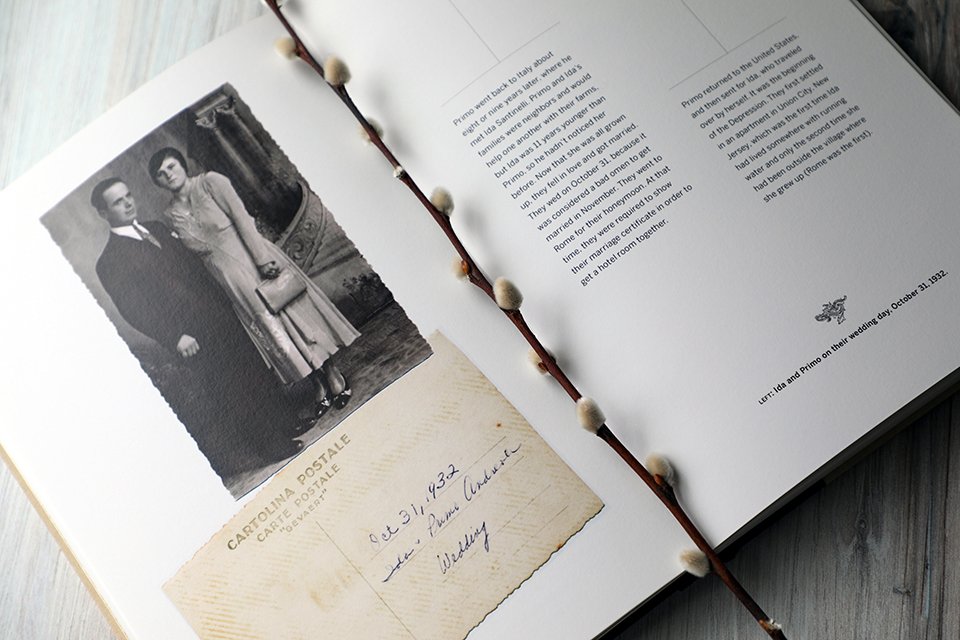
Whether your photo book includes current snaps for a family yearbook or older images for a family history retrospective like this one, it’s important to include some captions. Design with ample white space and classic typefaces for an engaging and modern feel.
If you do an annual photo book, you’re way ahead of most people in the memory-keeping game—so big props to you! I am a vocal proponent of printing your photos rather than letting them languish amidst a ton of digital clutter on your phone, and getting them into a printed book is a wonderful way to preserve memories for your kids and yourself.
It’s what you’re creating your memory books for, isn’t it? To be able to look back one day and recall the moments big and small from your family’s life? To create a record of your experiences, and celebrate the milestones? To revisit travels and everyday occasions one day in the future?
Well, imagine this: It’s ten years hence, and your daughter is about to graduate from high school. You sit down together and pull out a family photo book from her childhood. What was that teacher’s name? How about that friend she was inseparable from for a whole year? Where was that awesome waterfall you climbed all day to see?
Or this: It’s 30 years from now and your son has recently become a new dad. He’s curious about what his father was like, and if he himself had as much hair as his newborn. You dig out one of your earliest family albums (hopefully you’ve made an extra copy for your son to have, too 😉) and you start reminiscing. But which baby is that in the stroller? Was that photo of your toddler son walking from when he was 10 months or over a year old?
All those details that are so fresh and obvious to you now while you are putting your photo book together won’t be so obvious down the road. Chances are you’ll forget a lot of the nitty-gritty things like places, dates, and ages—and there’s no chance that your kids (or their kids!!) will know if they’re not written down.
Ugh, you’re thinking—what a royal pain in the @$%. I have to write everything down?
No, you don’t have to write everything down. But some things? Sure. Consider doing so a gift to your kids. Adding some captions to your photo book ups the value from a “nice” album to an “invaluable” family heirloom.
The two types of captions every photo book needs
The purely informational caption
You don’t need to type names and dates for every photo—not only would that be time-consuming, it’d be rather boring.
Consider creating sections for every month in your annual family photo book, and titling each section accordingly; you can include specific dates when photos represent milestones such as weddings, Bat Mitzvahs, or graduations (and if you scan a ticket or program that includes the date, you’re covered!).
As far as names go, always include names of new babies when they are first pictured, of close friends or schoolmates alongside your kids, and of family elders who aren’t part of your immediate clan.
Type out locations when you think it might be interesting—perhaps you’d like to revisit that hotel in Hawaii, or take that hike again with the grandkids one day. You can use lots of discretion here, but consider when making your decisions about what to include: If I were looking at my parents’ photo books, would I be curious about this?
The storytelling caption
As a personal historian, you might guess that these are my favorite types of captions, and you’d be right. Rather than get intimidated by the idea of telling a story, consider these ideas:
Choose one photo or series of photos from each month of your family yearbook to elaborate on. If your son’s soccer team made it to the finals and lost by one goal, tell us about it in a sentence or two (include the details of what happened, as well as how he was feeling—proud? disappointed?). If you have a cluster of pictures of family members lounging around the house, talk about it—believe it or not, looking back on everyday moments such as this can feel even more special years from now!
Another option: Have each family member write a few sentences about their favorite memories from the year. It can be off-the-cuff and more emotional (certainly there were plenty of emotions during the early parts of quarantining in 2019, for example); or you can let each person choose one or two photos to spark stories. You might scan their handwritten notes to include as caption-like images, or type out their responses for more traditional captions.
Keep a running list in the Notes app on your phone of memorable quotes from your kids and others throughout the year. You can then incorporate these into your family photo book near appropriate images—voila, ready-made captions that preserve your family voices.
If you want to go even deeper with your storytelling, download my free guide, “How to Use Photographs as Prompts for Writing Life Stories”; and if you’d like to see an example of how you can say a LOT in just 200 words, check out the extended caption in this post.
How to keep your photo book design modern and clean, even with captions
I can think of two main reasons someone might forego including captions altogether: (1) it will be too time-consuming (to which I say: your efforts will be rewarded!); and (2) it will make my layout look too busy (to which I say: read the tips below!).
For some guidance on designing clean, clutter-free book layouts, I enlisted the help of Ontario–based graphic designer Mei Mei Wood, whose aesthetic, like ours at Modern Heirloom Books, is one of timeless elegance.
Here are her top tips for creating a photo book that looks clean and modern, even with the addition of text:
Use one classic font family that has a variety of weights and italics.
“This allows you to style typography in different ways throughout a piece of work, while staying consistent and keeping things simple,” Mei Mei says. Choosing classic typefaces—such as Baskerville or BentonSans (see examples at bottom of page)—also ensures that your book will feel timeless.
Embrace white space.
Oh, Mei Mei, you are singing my tune!! “I can't say this enough: Don't fill your pages with elements. Leave breathing room for your eyes.” Amen.
Always pare back.
“Less is more,” Mei Mei says. “One of the greatest tips I've heard: When you've written something, cut it in half. Then half that again. When you think you can't possibly cut it down any further, reduce it by half again. That's how you figure out what the message truly is.” Such editing can be challenging, though, so I recommend giving yourself a few days between writing your captions and then cutting them down—that distance will help give you perspective and allow you to recognize anything extraneous in your text. “I know this is extremely difficult with ancestry-based memory-keeping projects because the instinct is to preserve as much as possible. But it really is about revisiting work multiple times over a period of days and paring back to what’s essential,” she says.
Incorporate pull quotes.
Again, Mei Mei zeroes in on an easy design approach that pros use that most people don’t think of: “Highlight an important line or two in the layout. It's so visually impactful and can shine a light on what's important.” Pull quotes—short snippets of text that are designed in a larger type size—work well with large blocks of text or alongside a handwritten letter or journal entry.

An example of a serif font family with various weights

An example of a sans serif font family with various weights

A graphic pull quote can accompany an enlarged photo such as this, or can go alongside a block of text or handwritten letter to create visual interest and an emotional touchpoint for someone just flipping through your photo book.















Life Story Links: March 1, 2022
This week's curated roundup is again overflowing with quality pieces on telling family stories, finding family history, and preserving a meaningful legacy.
“We all read memoirs—all books, in fact—to discover pieces of ourselves on the page, to feel less alone. To comfort a stranger, rather than to flaunt oneself: this is the memoirist’s highest hope.”
—Sara Mansfield Taber
Vintage photograph of women playing cards and drinking Coca Cola in 1941 by Arthur Siegel. Courtesy of the Library of Congress Prints and Photographs Division Digital Collection (transferred from the United States Office of War Information, Overseas Picture Division, Washington).
Finding Family History Stories
TRACING HER FAMILY’S TRUTH
To tackle the narrative gaps in her family history, Daniella Weiss Ashkenazy, author of Playing Detective with Family Lore, “had to switch hats—from a daughter and granddaughter taking a nostalgic and often amusing trip down memory lane, to a journalist seeking a more complex truth.”
WHY IT’S WORTH SAVING
“This book made me feel, for the first time, a real connection to her side of our family,” Barry Rueger writes. “Because I was able to understand my grandmother as a living, breathing person, I was able to understand where I came from, and why I am the person I am today.”
ARTIFACTS REVEAL A PERSONAL HISTORY
While preparing a house in Arkansas for restoration, a husband and wife team discovered a scrapbook brimming with stories, including an unexpected WWII romance—and what they shared about it went viral on TikTok.
WALKING IN HIS FOOTSTEPS
After developing an interest in genealogy, attorney Todd Wachtel learned that his great-grandfather practiced the same type of law he has been practicing for more than two decades. Coincidence?
WHAT’S IN THE BOX?
A discovery of Holocaust-era photos—picked up for five dollars by a student in 1989 and rediscovered during a burst of pandemic cleaning—helps a Jewish family connect with its past:
Connecting Through Narrative
MAP AND CONNECT
“Disabled forbears often remain in the shadows, viewed with shame, not pride. Without ancestry, family history or lineage. Inconceivable.” Jennifer Natalya Fink on giving context—and lineage—to our disabled ancestors.
MORE STORIES WE TELL
“This idea of a dialogue between the past and the present was hugely important. I think that only happens with the difficult stories.” Sarah Polley on her first book, a collection of essays not intended as a memoir, but one that will likely be received as one.
THE ANALOG ANSWER TO DIGITAL DESPAIR
“How can our kids, the next generation of our families, make meaning in their lives? We can show them the way, but do we even know how in our modern, digital world?” Jill Sarkozi, founder of Safekeeping Stories in Westchester, New York, on the benefits of journaling and letter-writing.
MEMOIR AS MIRROR
“I became the detective of my own life,” Sherry Turkle writes in this piece about how writing a memoir helped her see her mother in a new light. If after reading this you are intrigued and wish to hear more of Turkle’s story, listen to this episode of the Family Secrets podcast:
Making History Personal
PERSONAL PAGES
Diving into a rare diary: “Mary Virginia Montgomery’s written words may not be as legible as they were when she first wrote them in 1872, but they are giving William & Mary students insight into what her life was like in the days after her emancipation.”
NEW WAYS OF EVALUATING OLD TRUTHS
“I’ve often wondered how we might all actively seek out information about the people and stories that have already been scrubbed from official records,” Hannah Giorgis writes in this piece designating eight recent books that reevaluate American history.
BURIED TREASURE
“These were the things that were most important to them, their money and these images”—photographs that were long buried under the sea and are now being published.
First Person Writing You’ll Love
COMING HOME
“To walk the streets was to see some version of my younger self at every corner. It was to be haunted by this younger self’s discordant admixture of naïveté, sadness, and hope.” Meghan Daum on returning to Los Angeles after a temporary-feeling yet longish stint in New York City.
DRAFTS OF A PREVIOUS SELF
“[While] occasionally, when moving house or city, I’ve thrown away some of these letters, lest they are found and embarrass me, I continue to write them, basking in their private glories, born of the need to express myself but not always be heard.” Anandi Mishra on the pleasures of handwriting letters you’ll never send.
...and a Few More Links
Short Takes


14 Best RootsTech sessions for family storytellers in 2022
Here are my top picks for RootsTech 2022 sessions teaching about family storytelling and photo legacy. They’re all free, and you've got a year to watch!
Why waste time browsing through hundreds of session descriptions? If you’re interested in learning about preserving and sharing family stories and photos at RootsTech 2022, then look no further and bookmark this page—I’ve curated the best options for family story keepers below.
Again this year, RootsTech, the largest family history conference in the world, will be held virtually—and free of charge. That means there is a wealth of stuff you can access for free! But trust me when I say diving into the menu of seminars and finding exactly what you want can be challenging.
There are 22 family history topics covered in the RootsTech array of class sessions and keynotes in 2022, from technology to travel, from historical records to DNA. While of course all kinds of genealogy topics may be of interest to you, I am honing in on the best that’s on offer on the topic of storytelling.
Of the hundreds (!!) of results that RootsTech dishes out on the storytelling track, here are my favorites—and those I think you may most benefit from.
Bookmark this page and come back to those that interest you when you have time—for while the conference officially runs from March 3-5, most of the content will be available on the website for a full year.
RootsTech 2022 sessions on family storytelling and sharing

Telling Your Stories & Making Connections
1 - Workshop: Start Telling Your Own and Family Stories
“Writing about your memories doesn't have to be an arduous task. In this workshop, we'll complete fun brainstorming exercises to develop family story ideas. Because stories beget stories, we'll also have opportunities to exchange ideas.” Sounds like a session that will be both informative and participatory—that’s my kind of class.
Presenter: Laura Hedgecock is president GeneaBloggers and author of Memories of Me: A Complete Guide to Telling and Sharing the Stories of Your Life.
2 - Stories for Your Family History: How to Tell a Good Family Story
“Learn family storytelling tips that will help others enjoy your stories as much as you do,” describes the course description. Remember: Your own personal narrative is part of your ongoing family history, so it’s important to document your stories for the next generation—hopefully this session will get you started!
Presenter: Sunny J. Morton, author of Story of My Life: A Workbook for Preserving Your Legacy.
3 - Easy Family History Video Stories
If you’re like me and the idea of shooting and editing a video intimidates you, then this course looks like it’s for us. The description promises to cover a storyboarding technique to help with planning as well as simple tools for combining photos, audio, video clips, and music. “This class will use a case study of creating a video story from an inherited World War I wallet. It was created with post cards, voice narration, and other memorabilia.”
Presenter: Rhonda Gaye Lauritzen is a professional biographer and founder of Evalogue.Life.
4 - Create a Family History WordPress Blog
“Blogging is a great way to share family history, family stories, photographs, documents, and more. This short video teaches you how to set up a WordPress blog, how to invite family members to join, how to upload content, and how to make the site private,” reads the session description. Salina will also provide examples of other family history sites for inspiration.
Presenter: Rhonda Chadwick is author of Secrets from the Stacks and teaches family historians and genealogists how to create a family archive for long-term preservation.
Sharing Difficult Stories
5 - Researching and Writing About Skeletons in the Family History Closet
“We all have them: ancestor stories that tend to be hushed up: illegitimate children, desertion, abuse, mental illness, etc. How do we discover the facts and what do we do when our family history research uncovers something unexpected? Recording these kinds of details can be difficult. We’ll explore ways to tell our ancestor’s story with integrity and kindness.”
Presenter: Diana Elder is a professional genealogist, author of Research Like a Pro: A Genealogist’s Guide, cohost of the Research Like a Pro Genealogy Podcast.
6 - Handling Sensitive Subjects in Family Storytelling and Autobiography
“Writing life stories containing adversity can heal and inspire, but we must navigate the danger zones carefully. These include handling different versions of the truth, unreliable memories, abuse, difficult family history, and unflattering details. Learn how to process your story in a safe environment versus when to share with others. This class will provide practical guidance so you will know how to approach sticky questions. Guidance includes: empathy, a mindset of grappling, self-care, and a focus on transformation. These tools can turn the hardest topics in your personal story or family history into lessons of growth. If you approach writing your memoir, life story, autobiography, or family history with care, your words can be a source of strength and healing. The reward is greater insight and stories that will inspire others.”
Presenter: Rhonda Gaye Lauritzen is a professional biographer and founder of Evalogue.Life.
7 - How to Handle Sensitive Topics in Family History
“This presentation examines the ways in which we present our family stories and considers those ancestors whose lives we may deliberately or unintentionally be misrepresenting and why. It discusses why it is important to present a rounded portrait of our families, the good, the bad, the ugly and the marginalized. The potential impact of telling unbalanced stories on current family members will be considered. There will also be suggestions for handling difficult material in a sensitive manner.” The syllabus includes notations on slavery, disability, mental illness, prostitution, and criminals.
Presenter: Janet Few is a community and family historian and lecturer.
Evaluating Family Stories
8 - Is Your Family Folklore Fact or Fiction?
“This presentation helps people understand, it is okay to find out if their family folklore is true.”Using two personal case studies, Pratt shows how to search for clues, where to find information, and how to discreetly share your findings with family.
Presenter: Virginia M. Pratt currently works as a Wiki content project coordinator for FamilySearch.
RootsTech 2022 Sessions on Your Family Photo Legacy

managing your photo archive
9 - Best Foot Forward: Preserving Ancestors' Photos
“Tracking down our ancestors’ photos, documents, and stories can be a treasure hunt with huge rewards,” reads the description for this two-part course from presenters Maureen Taylor and Nancy Lora Desmond. “The images and details we create during our lifetime will be equally impactful to generations down the road.”
In part one, they focus on what materials to digitize, how to properly handle physical artifacts such as photos and documents, options and tips for digitizing materials, smart ways to name files, and how/where to store the materials to ensure long-term preservation. Part two delves into options and tips for storing digitized files, best practices for structuring folders, how to tag details as portable metadata, and why that matters.
This session is suitable for anyone who wants to tackle a DIY family album project or sort and preserve their photo library for the next generation; syllabus indicates course is geared toward beginners.
Presenters: Maureen Taylor, a.k.a. The Photo Detective, is a family historian who focuses on photographs, digital albums, and photo restoration platforms. Nancy Desmond is chief memory officer and co-founder of MemoryWeb, a photo organizing site that makes capturing metadata easy for family historians.
RootsTech Sessions 2022 introducing you to apps and technologies to help preserve your family history stories

10 - Food Heritage
Want to preserve your family’s food stories? Learn about Fareloom, an app designed to help you engage, gather, share, and preserving your own recipes, food stories, and traditions.
11 - Oral History Markers
Want to add audio stories to your family photo books? Check out Audiostickers—their QR codes connect to cloud storage for capturing your oral stories.
12 - Hard Drives
Do you store your digital photos, genealogy documents, and other family history files on an external hard drive? Tech guru Andy Klein describes failure rates of hard drives and introduces cloud storage as an option.
13 - Family Heirlooms
Interested in preserving the stories behind your favorite keepsakes and family heirlooms? Check out GenerationStory, a free app designed especially for archiving such stories.
14 - Family Newsletter
Ever considered creating a family newsletter? Get inspired by presenter Kylie Zhong, who talks about her daughters’ experience interviewing relatives and sharing their stories in a monthly newsletter.
15 - Photographing Journals
ShotBox, a mini portable lightbox photo studio, offers up a tutorial on photographing journals and other bound materials such as books and photo albums.
Honorable mentions
While I have chosen to highlight the sessions above—for their in-depth content and quality presenters—there were a number of shorter or duplicative sessions that may still be of interesest that I wanted to put forth. So here are honorable mentions in many of the family history categories we’ve already covered (who knows, perhaps you’ll find sessions in here that are treasures to you!):
Storytelling
Let Me Tell You a Story: Helping Children Make Connections by presenter Susan H. Porter.
Write Your Family Stories (in 30 Minutes or Less) by presenter Brenda Hudson, a journal facilitator and author of Story by Story: 15 Projects to Write Your Family Legacy
How to Draw Closer to Our Ancestors by presenter Cameron Briggs.
Using Family Stories, Pictures and Keepsakes to Connect Us to Our Ancestors by presenter H. Wallace Goddard.
Documenting an Ancestor by presenter Seema Kenney, an experienced software instructor and a professional genealogist.
Roots for Kids: Sharing Family Stories by presenter Susan Provost Beller, a teacher and author of history books for children.
Creative Journaling for Busy Parents by presenter Kandis Lake, a mom of three and a hobbyist family historian.
Preserve your Legacy in a Simple Word Document Memory Book by presenter Rhonda Chadwick, author of Secrets from the Stacks.
Capturing the Stories of our Families and Communities: A Youth Project by presenter Byron Holdiman, a genealogy librarian and teacher.
Evaluating Family Stories
Why Your Story Matters by presenter Devin Ashby, a global outreach manager for FamilySearch.
Photo Legacy
From a Box in the Closet to a Treasured Family Heirloom (two-parts) by presenter Sara Cochran, a full-time professional genealogist with over twenty-five years of research experience.
Organizing Your Photo Legacy by presenter Cathi Nelson, founder of the professional organization The Photo Managers.
Liven Up Ancestors’ Histories with a Variety of Photos to Engage All Generations by presenter Jean Naisbitt
Organized to Capture Stories: Photos as Triggers for Family Storytelling by presenters from Ponga, photo organization software often used to capture research, crowdsource stories, and curate family legacies.
Family Photographs and a Sense of Belonging by presenter Janet Few, a family and community historian and lecturer.
Remember, RootsTech 2022 is free and virtual—all you need to do is register to gain access to all the great sessions above and many more in so many additional genealogy categories. Happy learning!









Storytelling hack: Talk, don’t write.
Do you want to write your memoir but don't consider yourself a writer? Don't worry, there's another—easier—way to preserve them. Speak your life stories aloud.
Telling your stories out loud and recording them is a great option if you want to preserve your personal history but don’t feel comfortable writing.
Have you thought about writing your life story—but then refrained because you don’t think you’re a good enough writer?
I’ve got three important things to say to you:
You are good enough.
Sure, you may want to take a virtual writing course or hire a memoir coach to help you improve your writing, or read one of these valuable books with life writing guidance. But know this: You don’t have to. You don’t need to strive to write a bestseller; rather, focus on reflecting back on your experiences, finding the lessons, the love, the joy, and the hardships, and sharing them with those you love. Whatever you write will be more than good enough—for you (you do know that writing your memoir is beneficial for YOU, right?), and for any family members you would like to leave your stories to. So write on—please!
Don’t change your voice.
Your memoir should sound like you: the way you talk, the way you weave a tale. It should reflect your values and your experiences. “There’s power in allowing yourself to be known and heard, in owning your unique story, in using your authentic voice,” Michelle Obama has written. “And there’s grace in being willing to know and hear others.” So don’t focus on sounding writerly or clever, and don’t edit out those colloquial phrases you say often. Focus instead on being authentic and truthful, and allowing yourself to be vulnerable as you tell your stories.
Drop your pen and pick up a recorder.
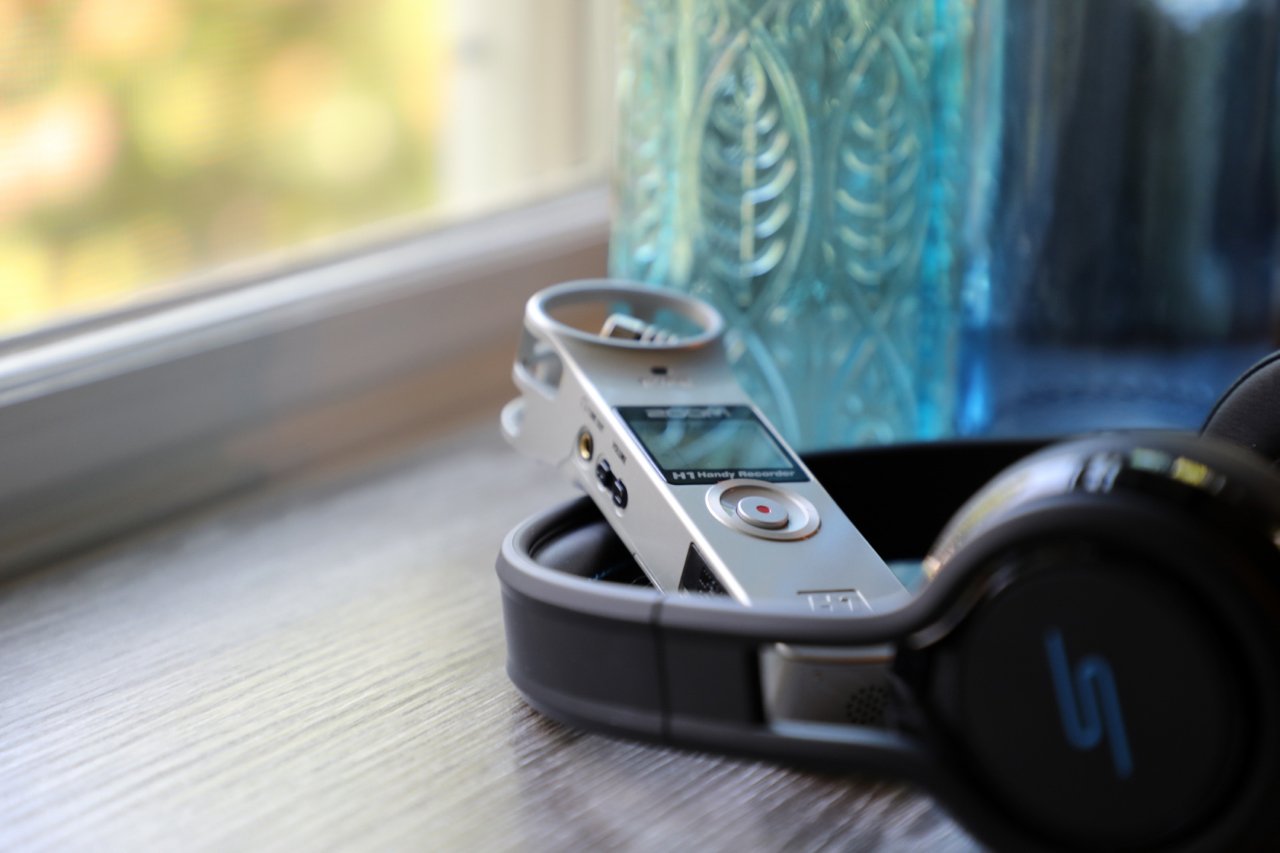
The blank page before you is just a vehicle. If you are paralyzed by the thought of writing your life stories, drop your pen (or step away from your keyboard) and instead begin recording your stories out loud. All you need is the voice recorder app on your smart phone or a digital recorder, a quiet space, and some time. I recommend either brainstorming a list of memories or creating a life timeline beforehand, so you can reference these and feel inspired to tell your tales. Then hit “record” and start talking. Maybe do this once a week, or every morning (setting some kind of regular schedule will help you finish one day!). Down the road you can transcribe these oral histories and maybe edit them into something more cohesive and inspiring. But for now all you need to do is (a) get started and (b) keep talking!
“Story is the umbilical cord that connects us to the past, present, and future. Family,” Terry Tempest Williams says. “Story is a relationship between the teller and the listener, a responsibility…. Story is an affirmation of our ties to one another.”
Your story, moreover, is a gift.
I’m sure you’ve heard the expression “done is better than perfect,” and oh how applicable that is here! Whether you write your stories or speak into a recorder, the end result will be a gift to your family. One day in the future, one of your descendants will read your words and be grateful you took the time to preserve them. How powerful is that?











Life Story Links: February 14, 2022
This week's curated reading list for memory-keepers, family historians, and memoirists includes first-person stories, preservation tips, and recent reviews.
“Revealing oneself is an act of radical generosity: Letting oneself be seen allows others to do the same. And this vulnerability creates connection; this connection creates community.”
—Robin MacArthur
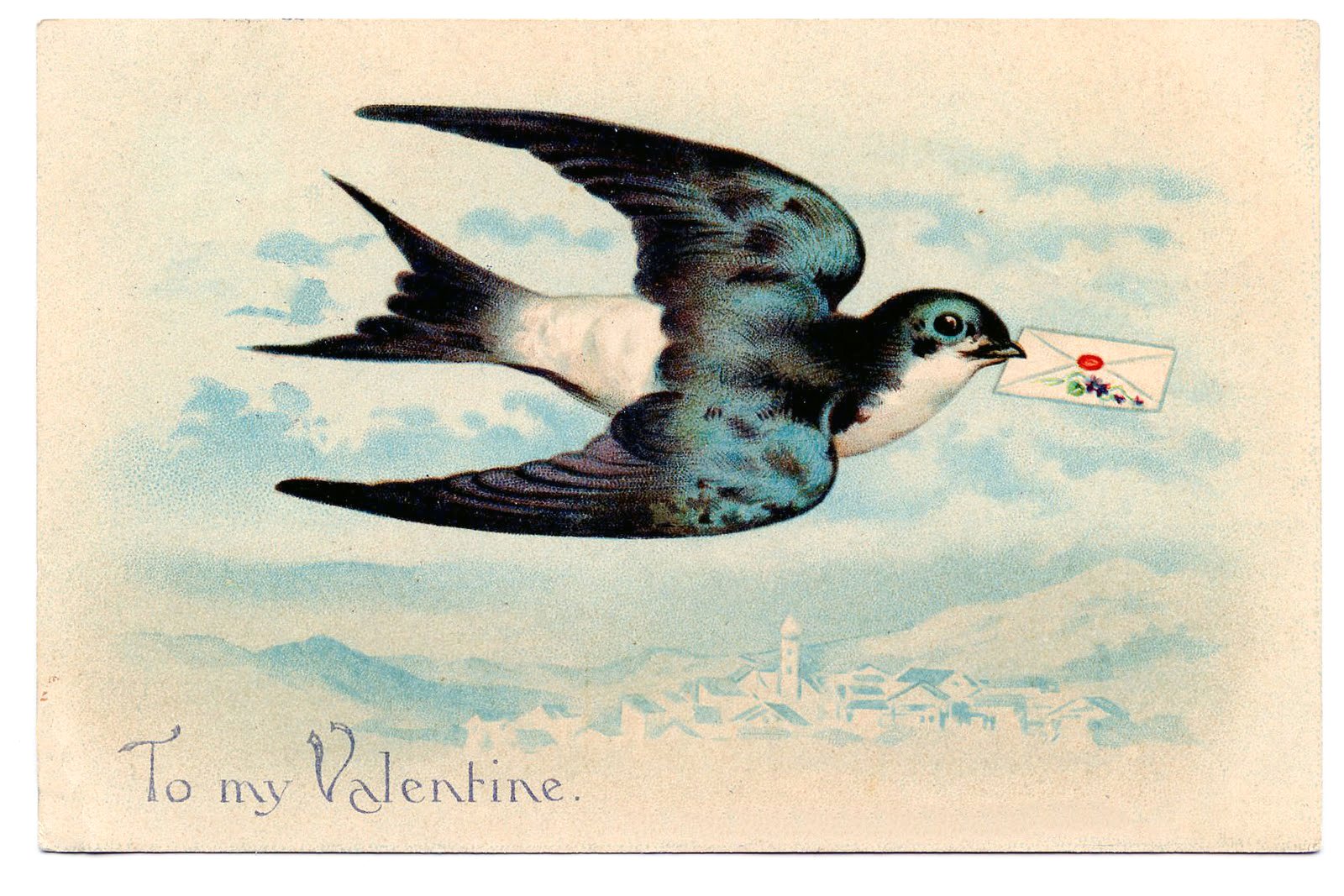
Vintage Valentine’s Day postcard depicting a swallow carrying a love note.
Stories Hold Power
CONNECTING PAST AND FUTURE
“The revelations about my father shook my sense of my own life’s trajectory to its foundations. I felt drawn into a reconsideration of where I came from and how I got to where I am now.” William Damon on learning about the father he never knew, plus the undeniable value of life review.
RELEVANCE CORRELATES TO MEANING
“When we hear stories from family members about their experiences, we usually ruminate longest over the ones that feel the most familiar to us.” Family stories have enduring value. Some you share now may not be relevant enough for your kids to care. But one day they will see themselves in your stories.
In the News
HISTORY UNDERFOOT
Before NYC’s Central Park came to be, Seneca Village was home to the largest number of African American property owners in New York before the Civil War. History of those who lived there is currently being researched and uncovered. “All we can do is honor the past,” says one descendant. “Nothing covered can ever get healed.”
BIOGRAPHICAL ESSAYS TO INSPIRE
Timed to The New Yorker’s ninety-seventh anniversary, the magazine has curated an eclectic selection of profiles from their archive, including a 1929 portrait of Edith Wharton, a 2007 profile of innovative artist Kara Walker, and a 1996 exploration of Anatole Broyard’s choice to deny his true identity. This one’s worth bookmarking and coming back to frequently.
AFRICATOWN DOCUMENTARY
Ahmir "Questlove" Thompson discovered during a 2017 episode of PBS's Finding Your Roots that his ancestors were among those smuggled into the U.S. on the Clotilda in 1860. He has since produced a film, now screening at Sundance, called Descendant, that tells the story of descendants of the last known slave ship to America.
Experts with Memory-Keeping Tips
READY, SET, ACTION!
“There’s a lot to keep track of when filming a loved one, but each step adds an important layer toward creating a memory that ensures your loved one looks good, sounds good, and feels comfortable telling their incredible stories.” Tips from Austin–based Sacred Stories for capturing your family stories on film.
PRESERVATION TIPS
“I started asking questions during our monthly family Zoom calls and it opened Pandora’s box.” African American museum experts and family historians offer their best advice for preserving memories for future generations.
FROM PRINT TO PIXELS
Mali Bain, a custom publisher located in British Columbia, has put together a thorough list of options for digitizing family photos, with notes on how to choose which is right for your own project.
In Their Own Voice
BIRTHDAY TELEGRAMS, POEMS, PHOTOS
A major collection of James Joyce documents and books has been donated to the University of Reading. “Together with a lot of the personal items and the letters that he wrote to [his son] Stephen, it really shows Joyce as a family man, not just this literary giant. A lot of these items show him at his most human.”
LISTENING TO MLK
As part of the Saving Stories series, Doug Boyd, director of the Louie B. Nunn Center for Oral History in the UK Libraries, highlights an extraordinary 1964 interview between Kentucky author Robert Penn Warren and Martin Luther King, Jr. at the height of his influence.
WORDS FROM A GRIEVING FATHER
“I’ve got to write and tell somebody about some stuff and, like I long ago told Larry, you’re the best backboard I know. So indulge me a little; I am but hurt.” After his son died in a tragic accident, Ken Kesey wrote this letter recounting the last day of his child’s life.
Reflecting Back: Words on Paper
THE CONTEMPORARY AMERICAN ESSAY
“Perhaps nothing has so shaped the contemporary practice of essay writing as the rise of the personal essay.” Jackson Arn on “why personal essays have moved from the corner of the party to the center,” for better or for worse.
WORLD OF THE BOOK 2022
Not all stories live in books, of course, but books were indeed the first means of recording our histories, and the State Library of Victoria in Australia has launched an exhibition tracing the book’s journey through space and time. Browse the digital exhibit, and watch below as a senior librarian discusses how the evolution of the book has revolutionized the way we take in information and ideas:
From Whence Stories Emerge
YOUR SENTIMENTAL STUFF
“Letting go of an item can feel like letting go of a memory, and the tension between wanting to own fewer things and wanting to hold onto memories can be paralyzing.” Cat Saunders on how to declutter sentimental items.
IN PICTURES
“The family album is almost a kind of folk art. It was a way to make order: to understand ourselves, our families and our communities.” Filmmaker Thomas Allen Harris on discovering shared humanity through family photos.
“FOOD HAS ALWAYS BEEN ITS OWN KIND OF MEMORY”
“Food is sustenance, culture, environment, economics and politics. Food will always be at the heart of people’s stories.” Charmaine Wilkerson, author of the novel Black Cake, on the unbreakable connection between our stories and the things we eat.
THE LETTERS PROJECT
After her mother died, Eleanor Reissa made a discovery at the back of her mother’s lingerie drawer: 56 letters handwritten in German by her father in 1949—only four years after Auschwitz—to her mother, also a refugee, already living in the U.S. Thirty years later, with her father’s letters as her guide, Reissa went on a journey into the past. Here she is in conversation about the memoir that resulted:
...and a Few More Links
A new free online archive offers an unprecedented look into Marcel Duchamp’s life and work.
Do we need to “radically rethink the Library of Congress classification” system?
Read an excerpt from The Grieving Brain by Mary-Frances O’Connor
Auschwitz survivor Mel Mermelstein, who fought Holocaust deniers, dies.
“That night was unquestionably the worst I’ve experienced during my 100 years on this earth.”
Vintage Valentines: Collecting love letters from our culture’s past
Memoirist Juanita E. Mantz on writing about home
Tips for capturing the emotions of your subjects through photography
A new biography of V.C. Andrews, author of the 1979 bestseller Flowers in the Attic
How an ancient piece of jewelry changed our concept of Viking history
Short Takes

Today: “I don’t care.” Tomorrow: “That was life-changing.”
Family stories have enduring value. Some you share now may not be relevant enough for your kids to care. But one day they will see themselves in your stories.
Your granddaughter is too young to really listen to or understand some of your stories right now—but one day she may need to hear them, to be nourished by the lessons and comforted by your shared experiences.
“I never knew any of this stuff about you, Mom,” the daughter of one of my clients said after reading her life story book.
From a family member of another client: “When I lost my job this year during the pandemic, I had a niggling sensation that my grandmother had gone through something similar. Then I remembered: I read about her experience in her book.”
“When we hear stories from family members about their experiences, we usually ruminate longest over the ones that feel the most familiar to us.”
When we hear stories from family members about their experiences, we usually ruminate longest over the ones that feel the most familiar to us.
If I am engaged to be married, perhaps I linger over my mom’s retelling of how she and my dad met. If I’ve just had a child myself, I’ll undoubtedly read with great interest the tales of their experiences parenting me and my siblings.
Some stories will feel foreign upon first reading. Your grandmother describing life in Brooklyn during the Depression; your grandfather recalling what if felt like to return from the Great War and no longer have a purpose. Even your parent losing a job when they least expected it—that is, until that story becomes relevant to your own experience, too.
Family stories have enduring value
Life transitions are some of the strongest fodder for memoir and personal history specifically because they bring about change—and change stirs all kinds of feelings and fears.
Transitions are the plot twists in our lives. And when they are unexpected, and they are happening to us right now, we feel unmoored.
But imagine if we had access to a story about the time our dad went through something almost exactly the same. He, too, felt unmoored. He, too, had no way of knowing how this transition in his life would play out.
Then 30 years later, he reflected about that time—his experiences, his feelings, the lessons he may have learned—and his stories made their way into a book. A book that now sits on a bookshelf in your living room.
While you may have flipped through that book a dozen times before, you want to reread it now. You crave remembering how his story turned out. It has a newfound relevance for you, and as such, it means so much more to encounter it at this time in your life.
“Transitions are the plot twists in our lives. And when they are unexpected, and they are happening to us right now, we feel unmoored.”
“In former times, knowledge was passed down from father to son and from grandparents to grandchildren,” Gianluigi Quentin has written. “Today, the focus is so concentrated on the future that there is a disregard for many of the important lessons of the past. This is why it is important that we elders write our memoirs—so that younger generations can learn from our experiences.”
Indeed, this is also why some stories will matter more in 10 years than they seem to right now: because our loved ones encounter them when they need them.
The stories of our modern lives—of transitions and ups and downs—“should tell us that the best way to respond to a period of personal upheaval—the close of one story, the end of one dream—is to push through the darkness, paddle through the torrents, persevere through the woods,” Bruce Feiler writes. “And to know: We’re not alone.”
What better way to let your descendants know they are not alone than to preserve your stories for them to learn from?











Life Story Links: February 1, 2022
Stories about journaling, memoir writing, and preserving individual accounts of WWII—they're all in this week's curated reading list for personal historians.
“There is not one big cosmic meaning for all, there is only the meaning we each give to our life, an individual meaning, an individual plot, like an individual novel, a book for each person.”
—Anaïs Nin
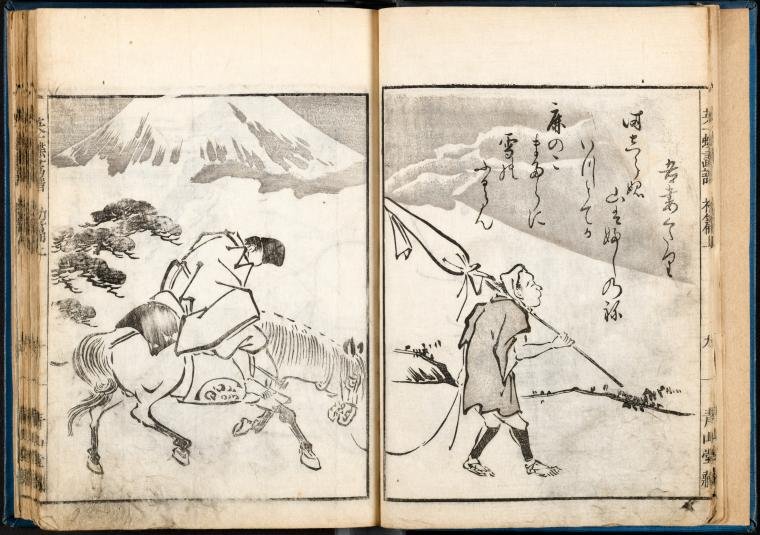
"Narihira’s journey east," a 1770 book illustration, courtesy of Spencer Collection, The New York Public Library Digital Collections.
Writing Our Lives
GETTING TO THE FINISH LINE
For anyone stuck in the middle of a life story project—or hesitating to even begin because finishing seems like a pipe dream—setting a deadline can be a game-changer.
DAILY DIARY
Martha McPhee carries a journal with her, she says, “because it helps me track the uncharted territory of the present moment. In this act of gathering—scrawls about things noticed on the way to a store, the playbill for my son’s brief acting career, glue-sticked to the page—I’m forced to slow down and tend to the parts that evoke a whole. Sometimes they plant the seed for an idea that I might write about later on.”
THE AUDACITY OF BEING SEEN
“Revealing oneself is an act of radical generosity: Letting oneself be seen allows others to do so the same. And this vulnerability creates connection; this connection creates community.” Robin MacArthur on the courage to write.
Memories Flow from Varied Places
MUSIC THAT MEANT THE MOST TO HIM
“When BBC correspondent Dan Johnson posted on Twitter shortly before Christmas that he had finished editing a project capturing the voice of his late father Graeme, he was surprised by the reaction. It made him consider the importance of preserving the memories of loved ones.”
BOOKS THAT LINED HER SHELVES
Books from the home library shelves of Ruth Bader Ginsburg, artifacts that reflect aspects of her life from student to U.S. Supreme Court justice, are up for auction, including her annotated edition of the 1957–58 Harvard Law Review (how I would love to see that marginalia) to a signed copy of Toni Morrison’s Beloved.
DIARY DISCOVERIES
Sally MacNamara has found universal feelings that span generations in the thousands of diaries she has read. Listen in as she shares words from a few handpicked favorites (they’re truly moving) and talks of how her great-grandmother’s handwritten journal helped her navigate grief after her husband’s death.
If you enjoyed Sally’s TedX Talk, you may also be interested in checking out her podcast Diary Discoveries.
War Stories
WWII GENERATION PASSING ON
“The kids and grandkids of the greatest generation have stories to tell. It's up to us to tell them to our kids and for our kids to tell them to theirs. Haul out the family archives. The pictures and the Purple Hearts and the letters from the war front. And the home front.”
VOICES OF THE HOLOCAUST
Timed to International Holocaust Remembrance Day, January 27, 2022, The National WWII Museum in New Orleans has curated a collection of some of their most notable programs on the Holocaust, including numerous first person testimonies.
MORE FROM THE NATIONAL WWII MUSEUM
Browse the museum’s compelling digital collections of photographs and oral histories that tell stories of the war through the people who were there. The entries marked “Curator’s Choice,” like this one about a soldier’s letter home, are among my favorites.
...and a Few More Links
Julia Cameron on the enduring power of The Artist’s Way and morning pages
Emma Knight finds comfort in the diaries of Virginia Woolf.
The many meanings of family estrangement for female immigrants
Short Takes
The simple reason your life story project never gets finished
Got a life story writing project that you've wanted to do for a long time that's just not getting done? How setting a deadline may be the key to completion.
Setting a deadline for your life story writing project will help you get it done rather than languishing on your to do list.
You’ve thought about getting your stories down on paper for years. You’ve made a list of pivotal moments throughout your life that you’d like to write about. Maybe you’ve gone through your photo collection and set aside some favorite pictures to use as part of your storytelling. Perhaps you’ve even written the first few chapters.
And yet, that journal you bought especially for this life story project sits neglected on your nightstand. Why?
“I seem to have lost my passion for it.”
“I don’t always know what to write about on any given day, so I end up staring at a blank page before abandoning it for Netflix.”
“I thought I’d have the time, but I really don’t.”
“It seems like too big an undertaking—I can’t imagine ever finishing.”
You know what these are, don’t you? They’re not real reasons—not legitimate ones that should stop you from completing your family history or legacy project, anyway. They’re symptoms of the real problem.
So, what’s the real problem? You don’t have a deadline (or a plan).
Don’t believe me that setting a deadline will spur you into action and get you on the road to completion? Research backs me up (as does two decades of personal experience as a managing editor at monthly magazines!).
How to set a realistic deadline for your life story project
Having a deadline forces you to think about the steps it will take to complete your goal. So, to meet that goal:
Make a broad-strokes plan.
Define your finished project—is it a book with photos, a journal covering a specific time period, or an oral history that delves into pivotal moments in your life? Be specific, so you know exactly what you are working towards.
Set mini-goals.
If you know you want to write only about your years in the military, for example, create a list of steps to get you there (make a timeline; denote key themes and stories you want to cover; gather photos and other mementos to use as memory prompts; write one story per week).
Create a schedule that works for you.
Maybe it’s writing one story per week, like in the example above. Or maybe it’s more aggressive: Write for one hour every morning. Don’t be so liberal that your project promises to take all year. As Tim Ferriss describes in his bestselling book The 4-Hour Workweek, “If I give you a week to complete the same task, it's six days of making a mountain out of a molehill. If I give you two months, God forbid, it becomes a mental monster. The end product of the shorter deadline is almost inevitably of equal or higher quality due to greater focus.”
Understand your lifestyle and your ideal work times (are you energetic after your morning cup of coffee, or wonderfully reflective and calm enough to write on Sundays after church, for instance?) and designate the best times for YOU to devote to this project. By being thoughtful about when you’ll be most productive—and eager—to tackle your life stories, you are setting yourself up for success.
Use the info gathered above to write down a schedule.
This may seem like a lot of work just to come up with a deadline for your life story book, but you’re not going for any deadline, but a reasonable, achievable one. So, if you jotted down that you want to write about 12 pivotal moments from your life, and you’ve decided to write on Sunday mornings, block out 12 weeks’ worth of Sundays to write. What date does that bring you to? WRITE THIS DOWN on a calendar or create a bulleted list of target dates and tasks to complete. Writing it down helps it become real for you—and gives you a way to hold yourself accountable.
How to finish your life story book by your deadline
Without having a task master checking in on you periodically, it can still be challenging to finish the life story project you started, even with a deadline. Keep these things in mind to help you stay on track:
Consider asking a friend or family member to help hold you accountable.
Tell someone you love and trust about your life story project—and ask them to follow up with occasional check-ins. Declaring your goal out loud holds great power on its own; adding someone else into the mix, well, adds a little external pressure, too!
Let go of perfectionism.
“Make meeting the big deadline—not achieving perfection—the ultimate goal. Voilà. You’re making no guarantees of quality, but perhaps your work can be improved later,” Phyllis Korkki writes in this piece in the New York Times celebrating the power of deadlines.
And remember: You don’t have to do everything you want as part of this one project! Maybe your FIRST project—complete with plan and deadline—is to get your stories down. Then, when you’ve got the satisfaction of completing that project (congratulations!!), you set another goal—with corresponding plan and deadline—to edit those into a book.
Don’t let one slip-up derail your whole project.
Did you skip an entire week of writing? Did you ignore your project while caring for a sick child or vacationing in Mexico? Life happens. And you deserve a break. Consider scheduling vacation breaks into your plan. But when they happen out of the blue, don’t get too down on yourself. Adjust your deadlines accordingly and get back to it!
Make sure to WRITE DOWN (or adjust in your digital calendar) the new dates you’re due to complete your project so you continue to have an accurate date to work towards (there’s nothing worse than keeping the original dates in your schedule and constantly feeling like you’ve let yourself down—forget that!!).
Seek help for those aspects of the project you hate or feel overly challenged by.
If you don’t like writing, record your memories orally; you can always pay someone to transcribe the audio recording later.
If you can’t recall as much as you expected, enlist a family member to sit down to reminisce with you; take notes during your conversation for later reference.
And if you get your stories down but have no idea how to progress to a printed heirloom book, consider reaching out to me or another personal historian to get you to the next step—it’s what we do!
By the way: It takes incredible commitment and vision to even begin writing down your life stories—so kudos to you for taking steps to not only start, but to finish your personal legacy project!!