
Memories Matter
Featured blog Posts
READ THE LATEST POSTS

Life Story Links: November 5, 2024
A treasure trove of recent stories about memoir writing, legacy preservation, and personal and family history, curated by longtime biographer Dawn Roode.
“Fill your paper with the breathings of your heart.”
—Wordsworth
Vintage postcard with an illustration of the New York City riverfront, circa early 1900s; from the personal ephemera collection of Dawn Roode.
Where are the stories?
‘TELL ME MORE’
“By mastering the art of follow-up questions, you become a skilled facilitator, drawing out details, emotions, and lessons that make each story unique and deeply personal.” How to level-up your family history interviews.
SNIPPETS OF HIS BOYHOOD SLIPPED OUT
Though her father was always reluctant to tell stories from his youth in Russia, “little things would drop out...and I’d think, ‘Oh, that’s a good story.’ All the while I was compiling the evidence,” Sheila Baslaw says. The 92-year-old has released a children’s books highlighting one of those family stories.
SHARED FAMILY MEMORY
“I pointed to a picture and asked, ‘What was her name again?’ He closed the book and softly said, ‘I don’t remember. And now there’s no one I can ask.’” Jill Sarkozi on how to answer family history questions when family elders are gone.
Memories made physical
THE FAMILY PHOTO LIBRARY
“One risk of photographing your life is that you’ll create an illusory version of it, a selective visual record that reflects your wishes rather than reality.” Joshua Rothman on what you can learn from photographing your life.
THE REAL VALUE OF ALL THAT STUFF?
“As one of my first clients aptly put it, they hired me to ‘prevent the boxes that went unopened and unsorted from my grandparents' house into my dad's attic, from going unopened and unsorted into my attic.’” Clémence Scouten offers up concrete advice for what to do when personal memorabilia becomes part of an estate.
LEAN INTO YOUR SENTIMENTAL SIDE
“Your life and memories deserve to be preserved in beautiful ways.” Crafty influencer Martina Calvi is inspiring a resurgence in scrapbooking—the good, old-fashioned glue-and-paper kind.
A WINDOW TO HISTORY
In Ruth Hunduma’s short documentary The Medallion (watch it here), the story of Ethiopia’s Red Terror is told through a family artifact and a mother’s memories.
SYMBOLS OF THE STRUGGLE
“For some reason, we never once took a family portrait with all three generations in one frame. But we had the corkboard, testament to the things that mattered to us across eight decades.” How protest pins taught the author about her family history.
A VAULT OF CREATIVITY
“The Bob Dylan Archive had long been a subject of rumor and legend.... It was kind of hard to picture Mr. Don’t Look Back himself boxing up old notebooks for posterity. But if he didn’t, someone did.”
Of memoir and memoirists
GIRL MEETS WORLD
“You sometimes buy high heels but you never wear them, because who wants to be caught by shoes in which she can’t run away.” Read a beautiful excerpt from My Good Bright Wolf: A Memoir by Sarah Moss.
STAR STORIES
“Candid, intelligent books that reveal the humans under the headlines, the dark side of the spotlight, and the epic stories that the tabloids could never capture”: Oprah Daily rounds up the 25 best celebrity memoirs of all time.
ORIGIN STORY
“Over the years, I’ve often been asked about my upbringing, my time at Harvard, and co-founding the company. Those questions made me realize that people might be interested in my journey and the factors that influenced it.” Bill Gates’s memoir, Source Code, will be out in 2025. (Meanwhile, Gates disputes much of an author’s reporting in a new biography about him.)
‘LEFTOVER LOVE’
“Over the years she told me her stories and I told her my stories. Both of us recognizing and accepting the way they rhymed and the way they didn’t.” A story about intergenerational friendship.
‘MEMORIES OF DISTANT MOUNTAINS’
A peek inside the illustrated notebooks of memoirist and Nobel Prize winner Orhan Pamuk, arranged by the author not in chronological order, but emotional order.
...and a few more links
A review of Francine Prose’s memoir 1974: A Personal History
Podcast features personal accounts of Mississippians who lived through WWII.
“If a picture is worth a thousand words, what do a thousand pictures say?”
New app, Autobiographer, aims to preserve life stories through “adaptive conversation.”
A look at free speech and hate speech through a memoirist’s lens
In Washington, preserving the memories of veterans, one headstone at a time
The best sentimental gift ideas for 2024, according to Good Housekeeping
Short takes

How to ask good follow-up questions in a family history interview
Five easy ways to get the best stories from your family member just by responding thoughtfully to their answers (hint: it starts with really listening!).

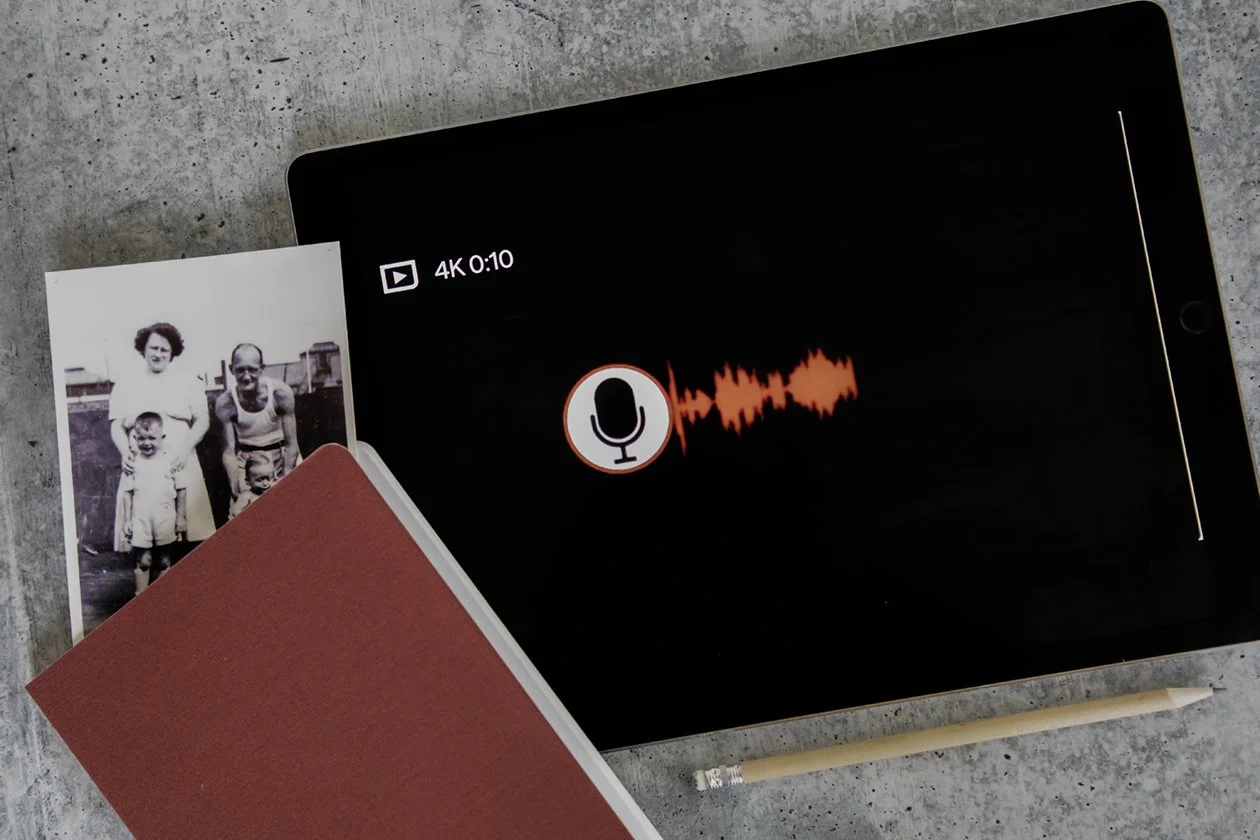
Whether your family history interview is being recorded on a couch in the subject’s living room or virtually on an iPad screen, it’s important to show interest through verbal cues and follow-up questions.
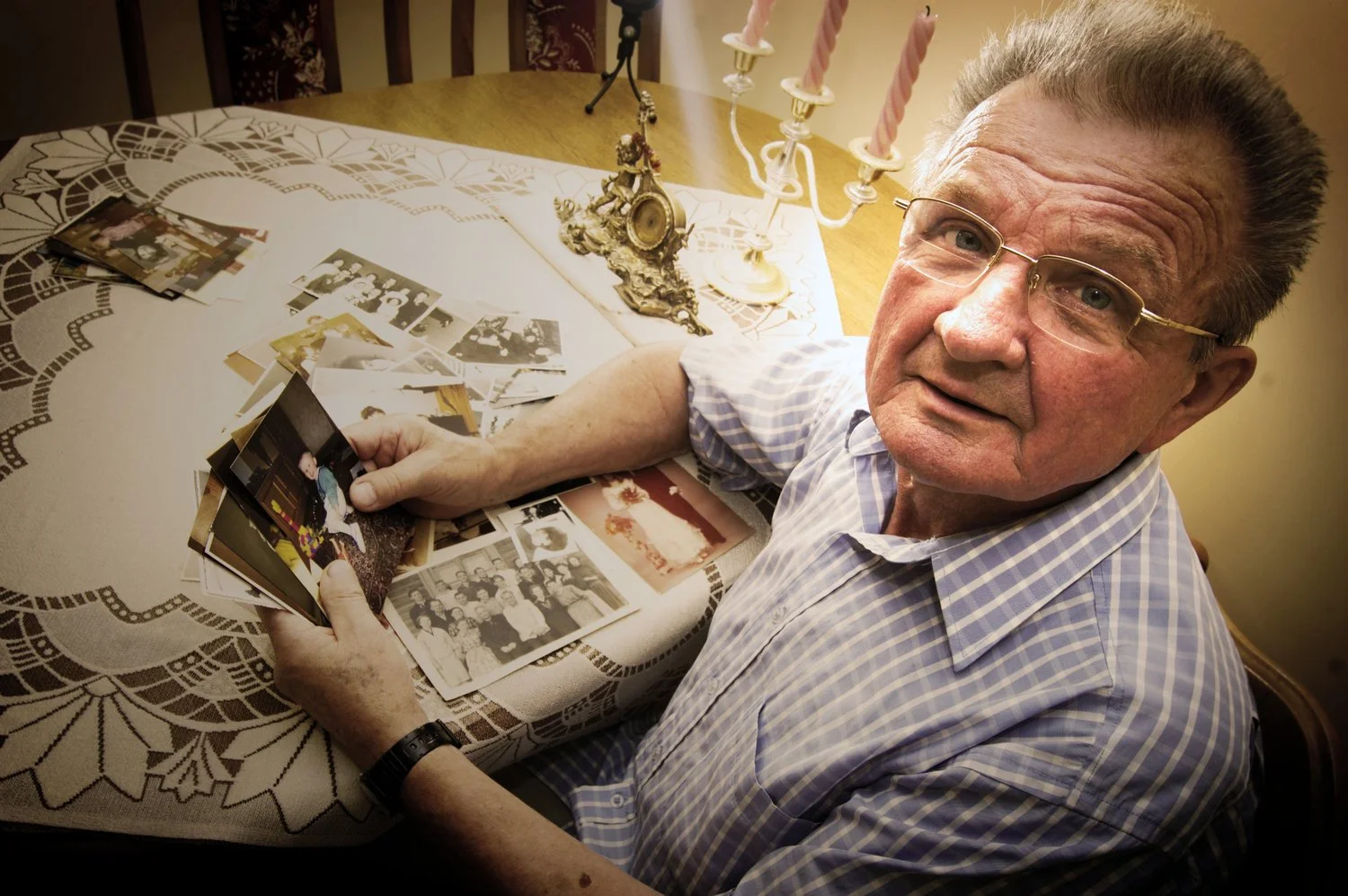
You’ve decided you want to interview your parent or grandparent to capture some of their memories and add to the family history book you are creating. You’ve downloaded recommended family history questions, thematically curated the ones you want to ask, and gathered the equipment needed to ensure you record everything smoothly. You’re good to go.
But wait! Just one small thing I’d like to remind you of: Remember to be a good listener, and to ask effective follow-up questions during the interview.
Tips for effective follow-up questions
Whether you are interviewing your mother, who you obviously feel comfortable with, or a great-aunt you have just met and who you really know nothing about, think of your interview somewhat like a conversation (albeit a lopsided one 😉). Ask a question, then provide space for your partner to reply—a quiet moment for them to think, of course, and also eye contact and an open expression on your face that invites trust and conveys real interest.
Then, when they pause and are seemingly finished with their answer, don’t automatically jump to the next question on your page. Instead, follow your conversational instincts and ask a follow-up question.
Be specific.
Instead of “Can you elaborate?”, ask “What was your favorite part about that job?”
Use open-ended questions.
Encourage storytelling with prompts such as, “Tell me about a time when you felt…” or “How did you react when your brother…”
Seek clarification.
If something is unclear, ask for more details without interrupting the flow of the interview. If you have a question now, chances are a future listener (or reader) will, too.
Follow their emotions.
If your interview subject mentions a strong feeling, explore it further. “You mentioned feeling relieved. Can you tell me more about that?” or “How did your sadness shift over time?”
Be an active listener.
Pay attention to their responses and tailor your follow-ups accordingly. Trust me, you’ll get better at this the more experience you have under your belt!
The power of family history interviews lies in both the connections they foster and the richness of the stories captured. By mastering the art of follow-up questions, you become a skilled facilitator, drawing out details, emotions, and lessons that make each story unique and deeply personal.
Remember the magic of “tell me more.” It's a simple phrase that can unlock a world of memories. It’ll also almost guarantee that both interviewer and interviewee will want to engage in yet another story sharing session—helping you create a more complete (and compelling!) family history and weave a tapestry of experiences that will resonate for generations to come.


















Life Story Links: October 22, 2024
Covering a 3-week period (we took a week off!), Dawn Roode’s curated roundup for October 22, 2024, is especially rich—bookmark this one, fellow storytellers!
“Memories aren’t merely scenes; they’re microscopic moments: powder sticking to your fingers after scarfing a funnel cake; holding your right arm out of the passenger window to feel it bounce in the wind; the hilarious whine of middle-school voices singing along with Kurt Cobain or Eddie Vedder.”
—John Hendrickson
Vintage postcard featuring an illustration of a lighthouse near Effingham Yorks, postmarked 1907; from the personal ephemera collection of Dawn Roode.
One story at a time
AND THEN…?
“Whether you’re interviewing your parents about their childhood or gathering family history info from your grandparents, good follow-up questions are key.”
INTERGENERATIONAL BONDING THROUGH STORIES
“I wish I had learned more of [my grandfather’s] stories, but he died before I knew what to ask and how to listen,” Rachael Cerrotti writes in this reflection on Lois Lowry’s new book, Tree. Table. Book.”
“WHAT’S IT LIKE BEING YOU?”
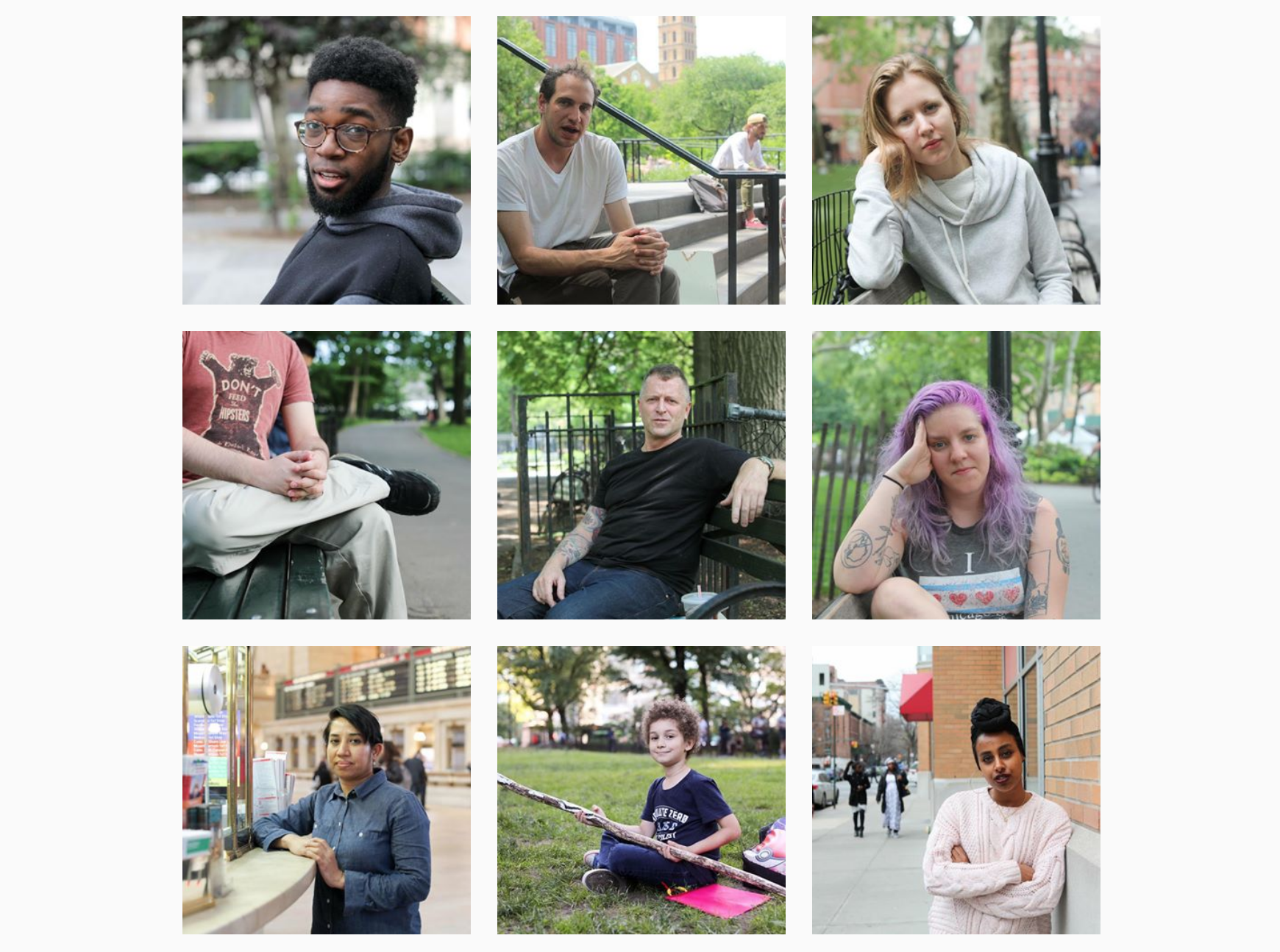
Brandon Doman founded The Strangers Project in 2009, and he’s collected (in person!) more than 85,000 handwritten individual stories. “I want to create a space for people to connect with the stories of the people they share their world with, and to connect with their own story. To put it simply, I do this because someone just might need it.” (Want to contribute or immerse yourself in stories? The project currently has a gallery-style exhibition at The Oculus in downtown NYC.)
A RICH LIFE
“I don’t want people to feel that their childhood needs to be their life story,” Ina Garten told a NYT reporter when discussing how the media has reported almost solely on one portion of her memoir. “You are not who your parents thought you were, or whatever bad thing that happened to you.”
OVERCOMING PROCRASTINATION
“The memories and narratives that form the core of a family’s identity can fade—or worse, be lost entirely—especially if a loved one begins to experience cognitive decline.” Jamie Yuenger, StoryKeep founder, on how procrastination is a thief when it comes to family legacy.
Craft and memoir
MESSY, VULNERABLE STORIES
“For those of us [book editors] who worked on memoir, the egg we carried was a little more fragile, the pieces we sometimes picked up, the shattered part of ourselves.” Betsy Lerner on the act of writing a confessional memoir as both a ray of hope and a cry for help.
A QUEST FOR ‘NARRATIVE COMPLETION’
When Kyo Maclear took a DNA test to learn more about her father’s ancestry, her long-held family narrative deflated. In this interview, we get a glimpse into the thematic layers of the memoir that resulted, Unearthing: A Story of Tangled Love and Family Secrets.
PAINTING ACCURATE SELF-PORTRAITS
“I mined my brain, every crevice, searching for parts of me that only I knew. Even though not all the information I obtained was used in my writing, once I brought my protagonist to life and set him aside from the crowd with oddities and quirks, I began my story.” Travis Harman on the craft of character in memoir.
“PATRIOT,” A POSTHUMOUS MEMOIR
“When you lose somebody who’s very close to you, you want everyone to remember him.” In the case of Aleksei Navalny’s, his wife has published his prison memoirs (in 22 languages) for a greater good, too: “to instill hope in the struggling Russian opposition movement, and to keep her husband present in the world.”
Pictures and stories
SNAPSHOTS OF INTIMACY
“A joint memoir by the Nobel winner [Annie Ernaux] and her former lover [Marc Marie] uses pictures taken during their time together to reflect on the transient nature of passion—and of life.”
FINDING THE UNIVERSAL IN THE PARTICULAR
In Juggling Life’s Threads, photographer Adam Lin creates a pictorial portrait of one man’s life (informed by a series of in-depth interviews that guided the photography), digging deep into his subject’s personal life, “where duty and passion intersect.”
Making history personal
SHAPING HISTORY
“History, as the word suggests, is always personal.... Every episode in human history is built on countless individual memories.” Lessons from Germany on keeping memories of historical wrongs alive.
GENEALOGICAL TRUTH-TELLING
“There’s something deeply moving about Bruno and Mire, descendant of the enslaver and descendant of the enslaved, working together to gain a clear-eyed view of their shared history.” A Hudson Valley Reckoning highlights not only the author’s family roots, but also the erasure of enslavement history in the North.
THE HOLOCAUST’S GRANDCHILDREN
“To be of the third generation [of Holocaust survivors]…is to have just the right proximity to the event—close enough to want to keep it in memory, not so close to want it in the present tense; close enough to think it is a part of them, not so close to think it cannot have different meanings for others.”
...and a few more links
Ideas to write a novel based on your life and family history.
Beth Kephart on the memoir responsible for her “memoir obsessed life”
To Coney, With Love collects memories of a beloved Ohio amusement park.
Keep your memories organized and safe with a photo storage box.
Lily Ebert, who kept Holocaust memory alive on TikTok, dies at 100.
Photographer recaptures childhood memories with his grandfather’s 70-year-old camera.
New research shows how brain records complex aspects of social memory.
Short takes
The power of a follow-up question
Whether you’re interviewing your parents about their childhood or gathering family history info from your grandparents, good follow-up questions are key.
Want a sign that your follow-up questions are working? If your interview subject is engaged—nodding, smiling, or showing other signs of acknowledgement in response to your questions—then chances are their story sharing will go deeper in the best possible way!
There are numerous options out there for memory-keeping journals or email-a-week life story prompts, and they make for sentimental gifts for our loved ones. And when the gift recipient is a motivated self-starter, these gifts can yield amazing stories that can be passed on for generations. More often than not, though, these gifts don’t get much beyond the ‘good idea’ stage
I’ve certainly written about this before, but today I wanted to hone in on one simple aspect of why I think these well-meaning gifts do not always ‘work’: There’s no one listening—and no one, therefore, to ask a follow-up question.
Recently I was conducting a personal history interview with a client named Madeleine. She offhandedly mentioned that her granddaughter had gifted her a popular prompt-a-week story gathering service, and that she had only answered about two questions so far. How long had she been getting the prompts?, I wondered. “I guess about a year and a half,” she replied.
Huh?! “Why?,” I asked her.
“The questions are silly or stupid,” she said bluntly.
I pushed her to share a few of the prompts if she could recall them. Some were indeed silly when considered in the context of the service’s goals of preserving family history, but some were, in my opinion, just poorly phrased, or in need of some probing beyond the initial ask.
One question Madeleine ridiculed was, “What do you like to do to relax?” This nonagenarian rolled her eyes as she repeated it. “Can you imagine—who cares how I relax?” she said.
But when I followed up that “silly” prompt with my own related questions based on my knowledge of Madeleine’s life—Were there things you could do to decompress during the years you were working three jobs? Were there hobbies you wish you had more time for over the course of your life? What replenishes your energy when you are feeling low?—she had story after story. And the more I heard, the more I asked, the more it became clear that there were lessons buried in her stories.
These were stories that would not have come out—in fact, that Madeleine probably would not have even recalled—had I not been present as a curious listener. She initially dismissed the prompt out of hand when it did not immediately resonate for her. But when my follow-up questions helped her see the prompt in a new way—in a way that directly related to her lived experiences—her memories flowed.
Sometimes, a simple “tell me more” or “how did that make you feel?” can unlock a treasure trove of details that elevate a story from good to great. Follow-up questions help an interview subject move beyond one-sentence answers and delve into the details that make a story come alive. They encourage the interviewee to paint a picture with words, describe emotions, and share sensory experiences.
Beyond that, follow-up questions show your subject that you are interested. That you care about what they are saying. That’s so much more powerful than a one-sentence question posed in an email…with no one there to listen to an answer.

Life Story Links: October 1, 2024
Dawn’s curated roundup for the week of October 1, 2024, includes an array of stories of interest to personal historians, family history lovers, and memoirists.
“Memory arrives in fragments. Truth erupts; it finds us.”
—Beth Kephart
Vintage postcard depicting an illustration of the lake in Prospect Park, Brooklyn, postmarked 1909, Vicksburg, Mississippi; from the personal ephemera collection of Dawn Roode.
Personal history miscellany
WORDS FROM BEYOND
Sarah Leavitt says that years after her partner died, a final voice memo her partner left—called “for my beautiful companion”—helped her heal. “I lost my breath: That was the day before Donimo died. How was this happening?”
WHAT WOULD YOU DECIDE?
I recently published a brief 3-part series about choices I wish my clients hadn’t made, in hopes that sharing a few of these differences of opinion might be instructive for those waffling over similar decisions. In part three, a look at the importance (or not?) of photo captions.
OUT WITH THE OLD, IN WITH THE NEW
A new study explores “how mental clutter—the stuff we can't seem to forget—affects our memory as we get older.” Two Boston University professors break down the science and explain how age impacts working memory.
IMMIGRANT LANGUAGE INHERITANCE
“Why is it...that some families manage to successfully pass their heritage language onto the next generation while other families struggle to do so?”
ONE-WORD TITLE: ‘DIARY’
“As the Nazis performed executions deep in the Lithuanian woods, one local man took detailed, dispassionate notes. He was unwittingly creating one of the most unusual documents in history.”
COLLECTIVE MEMORY
“Zoomed out, the Internet Archive is one of the most important historical-preservation organizations in the world. The Wayback Machine has assumed a default position as a safety valve against digital oblivion.” Why this digital library is in danger.
World food heritage
STORIES FROM INDIAN KITCHENS
In these cookbooks, Indian food “becomes a portal to memories, emotions, and nostalgia. These authors delve deep into their culinary roots, preserving not just recipes, but the stories and heritage that surround them.”
EGYPT’S FOOD LEGACY
In this episode of The Storied Recipe, Dr. Mennat-Allah Al Dorry discusses the role of food in daily life for ancient Egyptians, why food traditions are disappearing for today’s Egyptians, and her own deep commitment to unearthing Egypt’s ancient food heritage and preserving today’s:
...and a few more links
Short takes

“We all know who’s in the pictures”—a poor excuse for skipping captions
Here’s one time I gave in to my client’s preferences that still haunts me: Why we did not identify people in any of the photos in their family history book.
This is a three-part series about choices I wish my clients hadn’t made during their personal history book projects. (For what it’s worth: in my first draft of this post, I referred to “mistakes” I wish my clients hadn’t made—and then I remembered, memoir is, by definition, a personal accounting of one’s life, and far be it for me to dictate a writer’s personal preferences.) That said, clients come to me not only for help finishing the projects they envision, but for my expertise in elevating their projects to be the best they can be. So, I thought sharing a few of these differences of opinion might be instructive for those waffling over similar decisions.
Challenge 1: Should I include “the hard stuff” from my life in my memoir?
Challenge 2: Should I include a family tree in my life story?
Challenge 3: Should I include captions in my memorial tribute book?
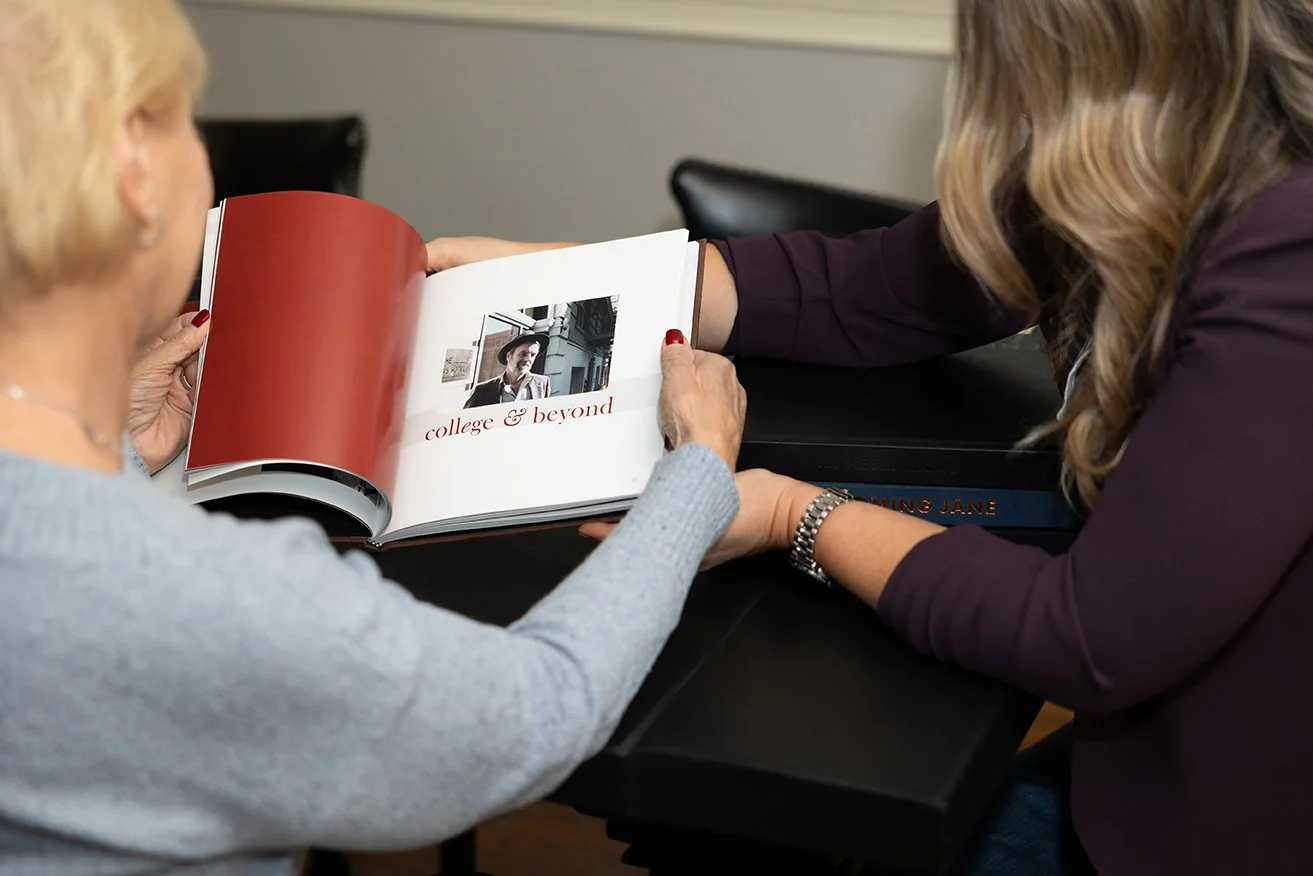
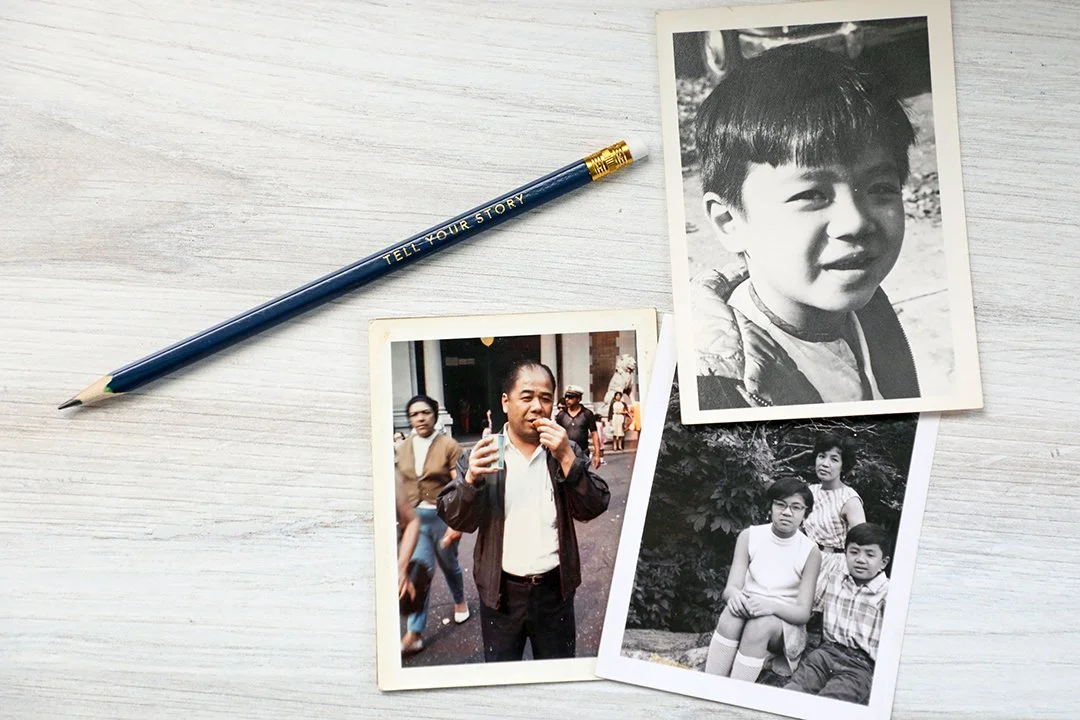
If you’ve ever discovered a box of old family photos and wished you knew who was in them, perhaps you’ll understand my disappointment with one client’s decision not to include captions in her tribute book. This spread is from another client’s heirloom book—see how unobtrusive a caption can be?
“Please stop asking me about captions.”
First, let’s sketch out the type of book I was working on: My client—let’s call her Maria—came to me wanting to create a memorial tribute book honoring her mother, who had recently died. I interviewed Maria and her sister to capture their memories of their mom.
The stories they shared included anecdotes about their four other siblings, their father, and a smattering of aunts and uncles who lived in the small village where her mother lived all her life. Maria and her sister had moved out of the country where they were born decades before, and their own young kids knew their grandparents only from the annual trips the family would take—and didn’t really know the rest of the extended family at all.
Maria’s intentions with creating this tribute book were twofold: She wanted a book the family could pull out and read from on the anniversary of their mother’s death, a tradition they hoped to begin on that first-year anniversary; and they wanted an heirloom they could pass to their children so they could remember the grandmother they lost too soon. “I want my kids and their kids to know my Mami,” she told me.
In the earliest manuscript phase, I asked Maria to identify all the people she mentioned in her stories—to create a list of names and how they were related to her mother. I intended to use this both within the text and in captions for clarity. Each time she submitted corrections to the manuscript, it seemed like she forgot to answer this one query from me, so I would ask again. And again. Finally she told me, “I don’t think any of that is necessary.”
Hmm, okay. I decided to wait and ask for details in the layout phase.
The book was written, edited, and designed, and a first-draft proof was sent to Maria along with questions from me as the editor. My comments included things such as:
[PAGE 8, CAPTION: There are 24 people in this beautiful wedding photo. I think we should identify them, from left to right, so the next generation knows who is in the photo and how they are related. Please provide names in order of appearance in the photo.]
Maria’s response was firm: “We don’t need that, because we all know who the people in the picture are.”
So, I would again begin to probe:
Me: “Who are you ultimately creating this book for?”
Maria: “My son and daughter, and my sister’s children. And, God-willing, their children.”
Me: “Do you think they will know who these people are?”
Maria: “No, but I can always tell them if they are curious.”
Me: “But why not make it foolproof? Why not document their names, so generations from now there will never be questions about their family history?”
Maria: “I REALLY don’t want to.”
We had a few circular conversations like this, before I finally gave in.
Maria’s book is a gorgeous, heartfelt tribute to her mother. I have no doubt she and her siblings will read from the book on the anniversary of her mother’s death and feel closer to her. And I know from our conversations that the process of creating the book—of sharing her memories, and giving herself space to sit with them intentionally—was healing for Maria; she told me so numerous times.
But I can’t help but regret that, as I imagine it, one day her grown grandkids will flip through the book and wonder, Who is that next to our great-grandmother?











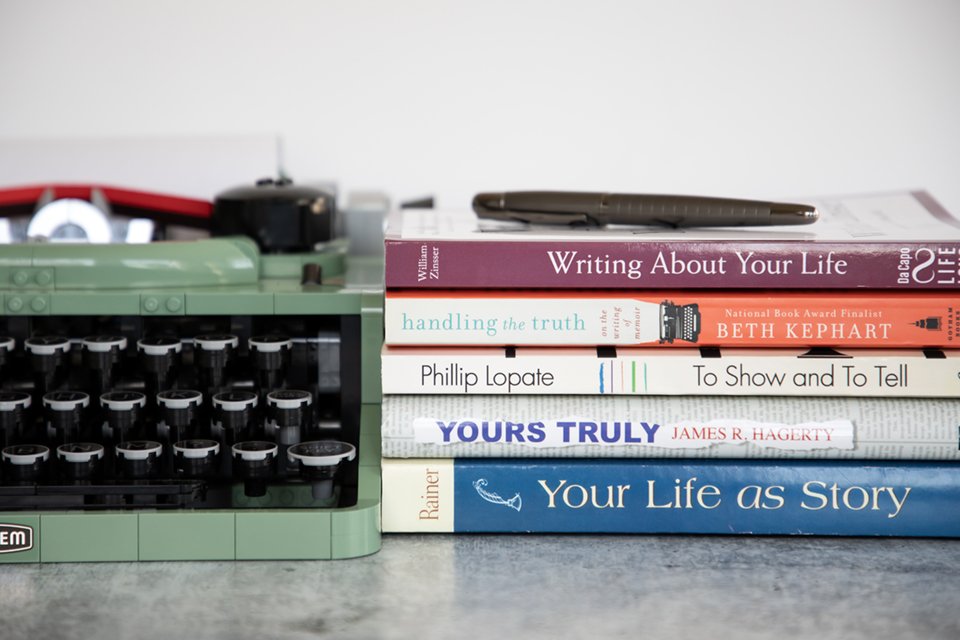


Life Story Links: September 17, 2024
Modern Heirloom Books’ Dawn Roode curates a bimonthly roundup of stories of interest to memoirists, personal and family historians, and memory-keepers.
“Telling is how we cement details, preserve continuity, stay sane. We say ourselves into being every day, or else.”
—J. R. Moehringer
Vintage postcard with an illustration of a romantic couple in a small boat on a spring day, postmarked 1906; from the personal ephemera collection of Dawn Roode..
History made personal
BABYLONIAN RECIPE TABLETS
“Even though these people are talking to us from 4,000 years ago, there’s a continuity of civilization in this region that’s connected to living culture and the communities that are there today.” What researchers learned from the world’s oldest cookbook.
BRINGING WAR TESTIMONIES TO LIFE
A Japanese software company is using AI to “capture people’s real emotions and likenesses to pass on the history of the war and the experiences of A-bomb survivors”:
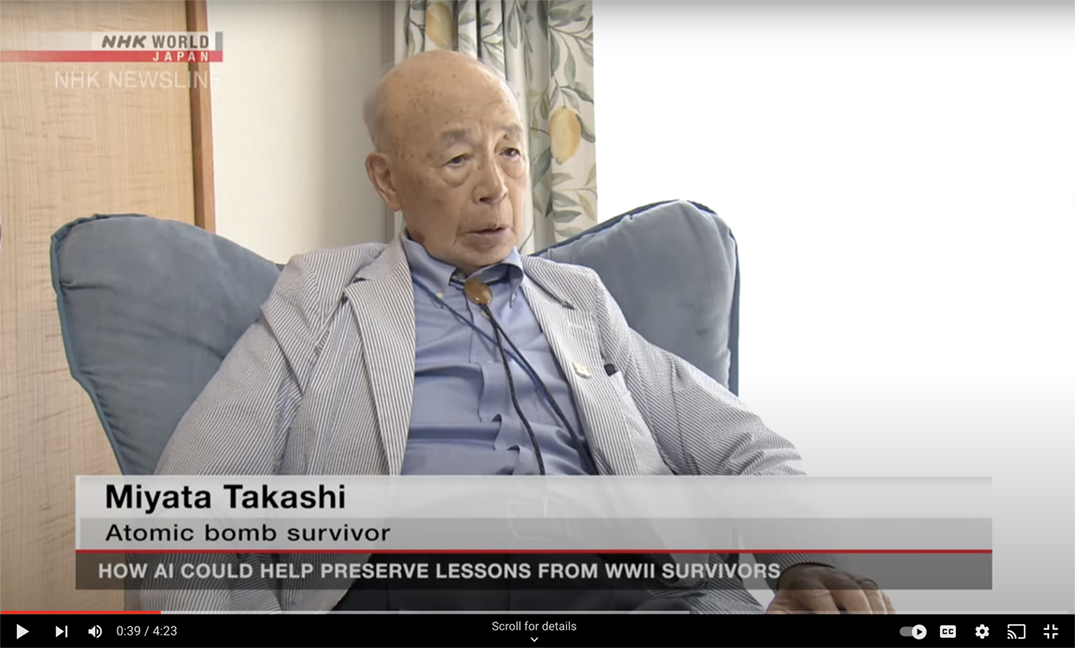
Click to watch a news report about how the new technology is being implemented with survivors who share their stories through oral history interviews.
Visuals help enliven written stories
WHEN IT COMES TO DESIGN…
Your life story book is yours, of course, but it’s one piece of a broader family history, too. Adding this one thing will give your descendants an easy way to map the supporting “characters” in your stories.
WHAT A PICTURE’S WORTH
As a professional book designer, Susan Hood has used her skills to preserve her family’s history in a variety of ways using little or no original text. Here she shares some ideas for telling your life story through images.
A RICHLY VISUAL STORY
Of his graphic novel The Mythmakers: The Remarkable Fellowship of C.S. Lewis and J.R.R. Tolkien, John Hendrix says, “I am really using a dual biography as an avatar for telling a deeper story about the origins of fairy tales, the meaning of myth in the history of the human story.”
FROM MESS TO ORGANIZED ARCHIVE
Avoid overwhelm when preserving research materials: These five easy steps from Family Tree magazine will guide you through a manageable, organized digitization plan.
VOICES FROM THE PAST
Storycorps curated some stories in honor of back-to-school season, including this one they animated below, as well as a collection of history-themed short interviews appropriate for classrooms.
More on memoir & life writing
GETTING PAST GO
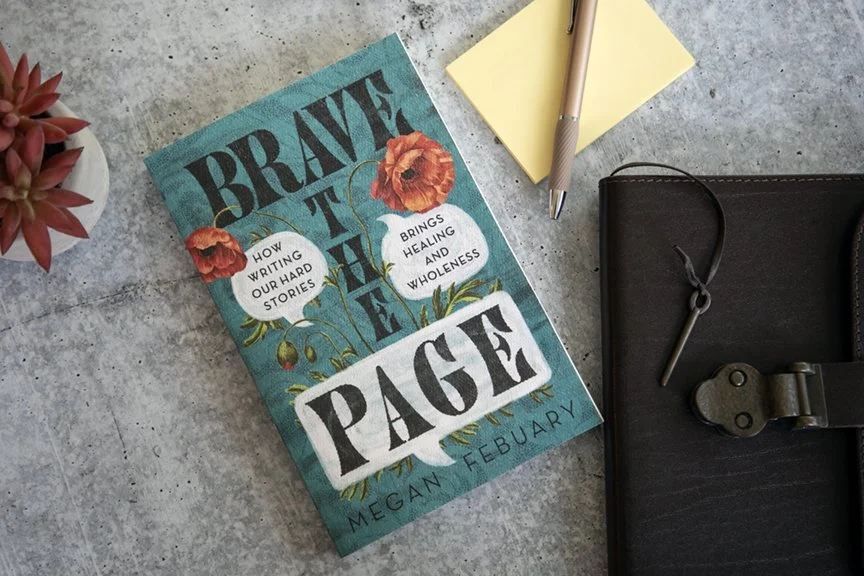
“The fear that I won’t find an ending often prevents me from beginning,” Megan Febuary tells a reader who calls themself “Stuck Before I Start.” Here Febuary offers up some tactics and writing exercises to get unblocked.
CONTEMPLATING ANY KIND OF DIY LEGACY BOOK?
“I realized I was the missing link between the past and the future. My connection to her story will help future family members see their connection.” Lisa L. Duncan turned her godmother’s poetry collection into a legacy book, then crafted a thorough and helpful blog post outlining decisions she made along the way.
QUESTIONS, ANSWERS…NOW WHAT?
Inspired by questions from class participants, Rachel Trotter of Utah–based Evalogue Life shares ideas with what to do with personal history recordings once your interviews are complete.
LOOKING BACK ON AN IMMIGRANT CHILDHOOD
“Every memoir has an unseen twin—a book that, if it were written, would chronicle the people, places, and books that made the pages of the memoir possible.”
Short takes
Friendly reminder: Your personal story is part of a broader family history
While your memoir is telling your stories in your words, a family tree chart outlining your relationships has a real place in that book—here’s why.
This is a three-part series about choices I wish my clients hadn’t made during their personal history book projects. (For what it’s worth: in my first draft of this post, I referred to “mistakes” I wish my clients hadn’t made—and then I remembered, memoir is, by definition, a personal accounting of one’s life, and far be it for me to dictate a writer’s personal preferences.) That said, clients come to me not only for help finishing the projects they envision, but for my expertise in elevating their projects to be the best they can be. So, I thought sharing a few of these differences of opinion might be instructive for those waffling over similar decisions.
CHALLENGE 1: SHOULD I INCLUDE “THE HARD STUFF” FROM MY LIFE IN MY MEMOIR?
CHALLENGE 2: SHOULD I INCLUDE A FAMILY TREE IN MY LIFE STORY?
CHALLENGE 3: SHOULD I INCLUDE CAPTIONS IN MY MEMORIAL TRIBUTE BOOK?
Why include a family tree in a book focusing on just your stories? Well, because it will give your descendants an easy way to map the supporting “characters” in your stories—and because your personal history is one piece of a broader family history, too.
“We don’t need a family tree—it’s my story, and mine alone.”
I work on all types of legacy books with my clients—from heavily-researched family histories spanning multiple generations to short autobiographical sketches of just one person, from tribute books memorializing a loved one who has passed away to heritage cookbooks. One thing remains constant in all of these projects, though, and that’s how I view each of them as an heirloom to be passed on.
Recently I finished up a memoir with a client—let’s call him Tom. He came to me with some memories jotted down in a notebook and a vague idea of how he wanted to write about his life. I coached Tom over a two-year period, and when his final manuscript was being copyedited, he decided he wanted to print books for his family members. So our journey of photo gathering and book design began.
Tom’s stories spanned his school years to his days as a grandfather, and his many cousins played supporting roles throughout his book. He told vibrant and funny stories about his own grandfather, who lived next door to him when he was a child, and affectionate tales about his maternal uncle, in whose footsteps Tom followed in becoming a teacher.
So when I suggested we create a family tree to serve as a graphic cheat sheet for his readers, I was surprised when Tom said no. It wasn’t a matter of cost, and at first I couldn’t get to the bottom of why my client was so vehemently opposed to charting his family in this way.
Eventually Tom shared that he always felt overshadowed by his older sibling, and he wanted this book to be his, and his alone. He was already the star—it was his memoir, after all. I tried reassuring him that he would be at the root of the family tree, and that we’d be using it to show all those people who were related to him. But he held fast, and I got it.
Tom’s memoir is a wonderfully crafted narrative, a quilt of memories that are woven together to shed light on how his experiences shaped the person he became. He gained insights from writing about his life, he told me, and was grateful to have taken the time to find new perspective on some of his decisions.
The irony, to me, is that he printed enough copies to distribute to his children, his grandchildren, and his cousins, and that they will in turn pass them on to their own descendants—making Tom’s personal history one piece of a broader family history. Who knows, maybe one day one of them will piece together a family tree that will make following the family history (and, dare I say it, Tom’s memoir) easier to follow.
Dawn Roode’s curated roundup for the week of Sept. 23, 2026, is overflowing with recent reads on memoir, life story writing, and family history preservation.