
Memories Matter
Featured blog Posts

READ THE LATEST POSTS

Life Story Links: September 3, 2024
This week’s curated roundup includes insightful interviews with personal historians, new memoirs of note, legacy preservation tips & more memory-keeping ideas.
“A family history is not complete until it considers the time and place in which each individual lived. Our ancestors were affected by the events around them, just as people are now; their relationship to their environment is an important part of the family’s story.”
—Carmen J. Finley
Vintage postcard from a German American Novelty Art Series depicting an illustration of a sailboat, postmarked 1907; from the personal ephemera collection of Dawn Roode.
Interviewers get interviewed!
CREATING LEGACIES
New York–based personal biographer Alan Bergman was profiled in the Scarsdale Insider (as it happens, by one of my former Parenting magazine colleagues 😉).
PERSONAL HISTORIANS IN THE SPOTLIGHT
It’s good for the personal history industry as a whole when one (or in this case, two) of us has a spotlight shone on their business. In this episode of Smart Money, Julie McDonald Zander and Gloria Nussbaum, personal historians based in the Northwest United States, spread the good word. Two of my favorite quotes: “It’s amazing what people will tell you when you ask a question and then shut up and listen.” AND: “We need someone to receive the story.”
Miscellaneous memoir & memory-keeping
FROM DAILY RITUALS TO HISTORIC MOMENTS
“10,000 days, 10,000 photos, 10,000 stories, 10,000 memories,” Michael Deering says of his photo collection. He has taken a photo a day for 27 years, and he’s still at it.
TO CUT OR NOT TO CUT?
“The first draft of your life story is likely to include some stuff you decide to cut later—but should none of your challenges make it into your final book?” Last week I wrote about a time a client and I disagreed on final edits.
THE POWER OF PURPOSEFUL REFLECTION
“Life review arose in the 1960s to help people at the end of their lives articulate and make peace with their legacies. But new research suggests that the process of reflecting on previous experiences has value for people at all ages.”
LEGACIES OF TRAUMA…AND HEALING
Research suggests that engaging with your family history “can boost mental health and act as a powerful tool in helping heal generational trauma.”
INTERCONNECTION OF PHOTOS AND FILM
For people who “can’t decide whether to start with organizing their vast collection of images or focus on recording the rich stories behind those memories,” Texas–based video biographer Whitney Myers has some sage advice.
FOR YOUR MEMOIR TBR PILE
“I feel rich knowing I have all of those memoirs to try out,” Patricia Charpentier says in this video review of the podcast Let’s Talk Memoir, hosted by Ronit Plank:
...and a few more links
How to convert a live photo into a video clip in iOS: a step-by-step guide
When designing books, Claire Huss is unafraid of bold crops and unexpected color combinations
Samantha Dion Baker shares some of her favorite books for creative inspiration
Rejecting denial and embracing sorrow: on writing the story of a husband’s suicide
Using generative AI to perform life reviews at any stage of life
Short takes

What to cut from your memoir—when an editor and writer disagree
The first draft of your life story is likely to include some stuff you decide to cut later—but should none of your challenges make it into your final book?
This is a three-part series about choices I wish my clients hadn’t made during their personal history book projects. (For what it’s worth: in my first draft of this post, I referred to “mistakes” I wish my clients hadn’t made—and then I remembered, memoir is, by definition, a personal accounting of one’s life, and far be it for me to dictate a writer’s personal preferences.) That said, clients come to me not only for help finishing the projects they envision, but for my expertise in elevating their projects to be the best they can be. So, I thought sharing a few of these differences of opinion might be instructive for those waffling over similar decisions.
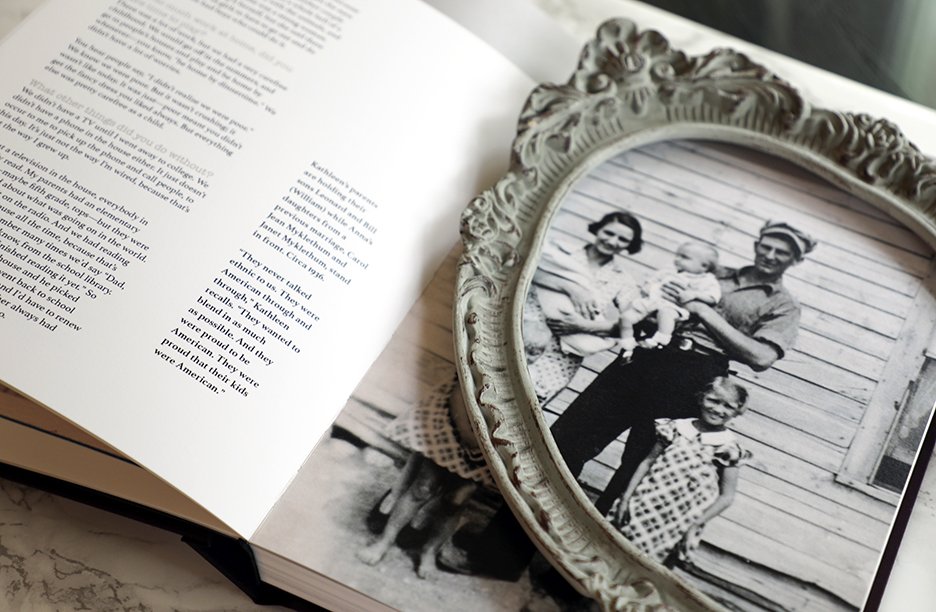
Challenge 1: Should I include “the hard stuff” from my life in my memoir?
Challenge 2: Should I include a family tree in my life story?
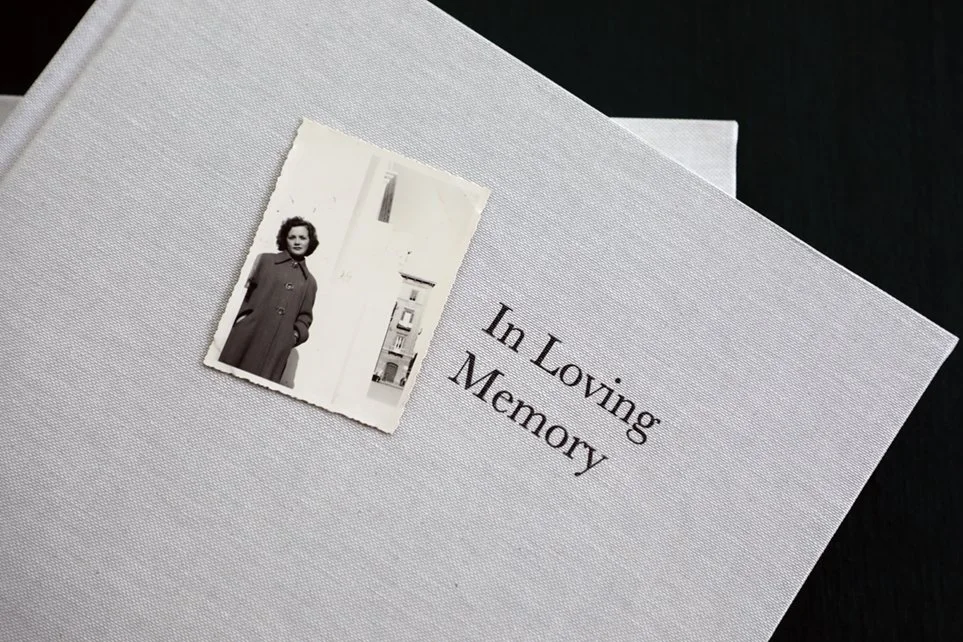
Challenge 3: Should I include captions in my memorial tribute book?
Always remember that what ultimately makes it into print in your memoir is 100-percent YOUR decision—so while I (and other personal historians or editors) may encourage you not to skip over your challenges, you are the one who gets to make that call.
“Let’s cut all ‘the hard stuff.’”
I conducted a series of in-depth, thoughtful interviews in which my client—let’s call him John—allowed himself to be vulnerable. He was a vivid storyteller and was comfortable going deep, talking about personal failures in addition to successes. He told of paths not taken that he now regretted; of teenage exploits that were, shall we say, less than innocent; and of a red-hot temper that caused him some problems in his twenties. Through our probing conversations, John spoke of lessons learned through his experiences, and of newfound meaning he was able to make from revisiting his earlier years. “This has been a profoundly rewarding experience,” John told me.
Then, when it came time to review the final manuscript of his life story, he made a decision I did not agree with: He wanted to cut all “the hard stuff” from his book.
Let me say that we had taken great pains to write these stories in a way that made them both compelling and, if not exactly didactic, at least revelatory. We wove in lessons learned, and nuggets of “John’s wisdom” throughout. He was at first “all in,” as was his wife, who had been an early reader. And then, he wasn’t.
When I asked him why he did not want to include stories of his challenges, he said that his descendants would think less of him. There was one granddaughter in particular, then a mere toddler, who he fervently “did not want to disappoint.” Arguments from me and his wife that those were the very stories that showed his humanity, that provided lessons for the next generation, that felt universal…well, all those arguments fell on deaf ears. “I would not want to know these things about my own grandfather,” he said plainly.
Because I am here to help my clients create the books they want—to help them define their legacies in the way they see fit—of course I ultimately followed his lead. His book was overflowing with funny anecdotes and light-hearted memories from his youth, for sure. It will undoubtedly be a treasure to his grandchildren.
But I did feel it was a lost opportunity to have passed down a book not also overflowing with wisdom; it was a Hallmark version of his life.
I find solace in the fact that his personal history interviews, while not fully reflected in his book, did help him ascribe new meaning to his life. (As I tell many people, the time spent allowing introspection in the interview phase is as much a gift to oneself as the book will be to one’s family; Mark Yaconelli calls this “feeling the grace of one’s own life.”)
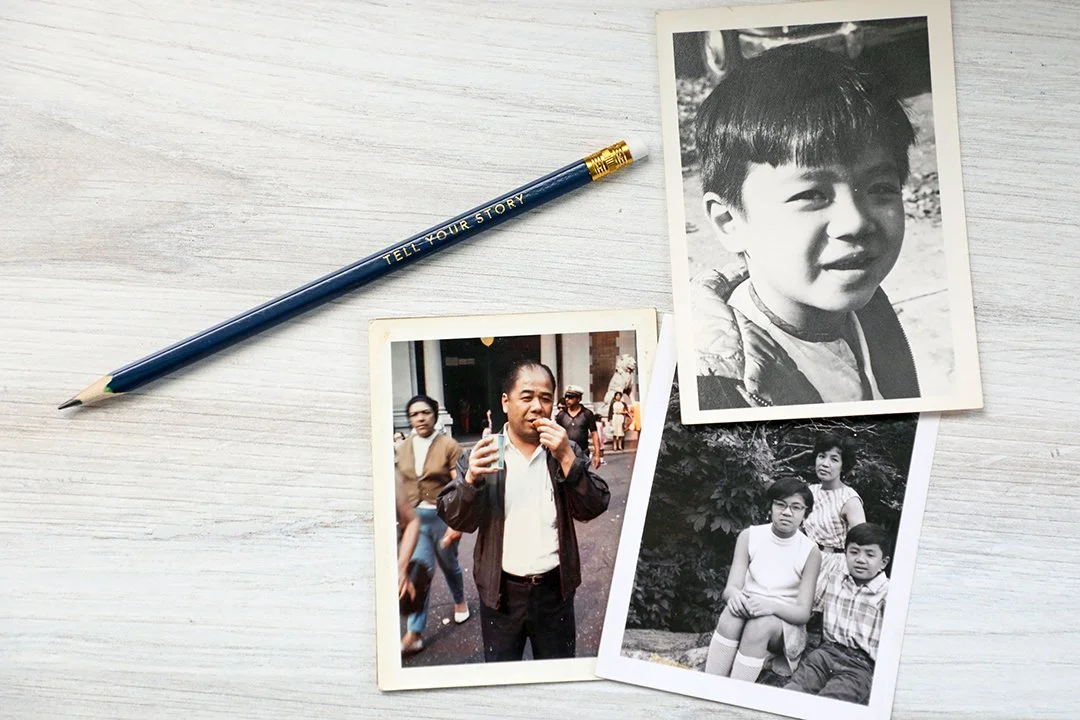
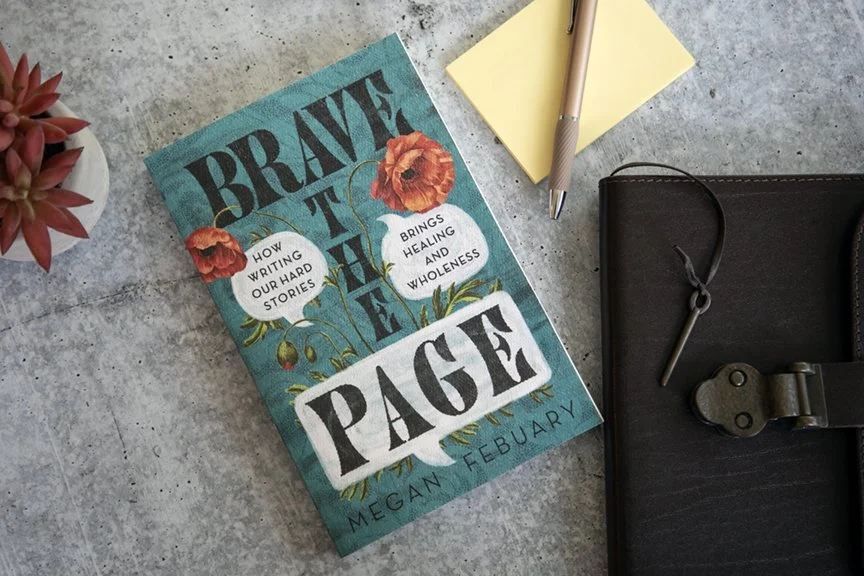
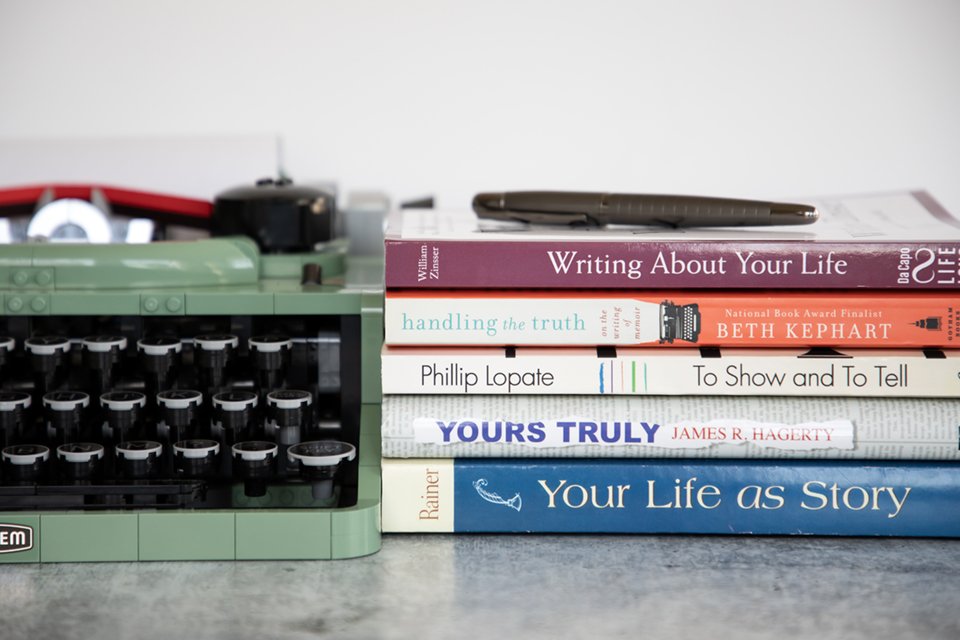
If you are ever on the fence about including tough times—anything from small failures to serious trauma—consider these words from Tristine Rainer (from her book Your Life As Story):
“Yours may be the words that relieve another’s isolation, that open a door to understanding, that influence the course of another’s path. If you write an autobiography for a great-great-grandniece not yet born, perhaps she will find it in her mother’s drawer, and she will be altered, perhaps even saved, through the wisdom you have sent her.”
And if you are ever reluctant to “go deep” in your writing, ALWAYS remember that it is your prerogative, and your prerogative alone, what to keep and what to cut. You are always your final editor.

























Life Story Links: August 20, 2024
A shorter-than-usual roundup of stories (summer break?) with a few gems about memoir, personal history branding, preservation, and the craft of life writing.
“There’s something about a quiet morning with my notepad and pen that opens doors and windows to the ways of my heart.”
—Joanna Gaines
Vintage postcard of Ellis Island, New York, postmarked 1913, from the personal ephemera collection of Dawn Roode.
Miscellaneous stories for family historians, memoirists, and memory-keepers
FAMILY HISTORY STORYTELLING
In a recent episode of the Family Tree Magazine Podcast, Utah–based personal biographer Rhonda Lauritzen offers tips for writing your ancestors in an engaging way, including developing them as characters in your family stories.
REMEMBRANCE AND LOSS
Fifty years ago, the Central Intelligence Agency unveiled a memorial to CIA members killed in service to the country. Today, the memorial has become hallowed ground. “Every star is a life.”
A LITERARY SELF-PORTRAIT
“I really hope that even if my experience isn’t exactly like somebody else’s, that they can see aspects of themself in it,” Anna Marie Tendler says of her new memoir, Men Have Called Her Crazy. “In a sea of mental health memoirs, this stands out,” reads the starred review in Publishers Weekly.
PLEASED TO MEET YOU
A few years ago I had an Aha! Moment: If someone is going to share their stories via interviews, they darn well want to know who they’ll be sitting across from, right? Last week I wrote about how my business branding evolved to include, well…me.
SENIOR STORIES
“I’ve been doing personal writing for so long that I need to remember how brave it is for someone in their 70s or 80s or 90s to take a memoir writing class.” Kate Walter on helping older writers find their voices. (If you like to discover random life writing prompts, there are a few good ones here, too!)
Short takes

Hello, it’s me—the person behind the brand
Modern Heirloom Books is a business, of course, but it’s a business defined by one person’s mission, expertise, and passion—and I’m pleased to meet you!
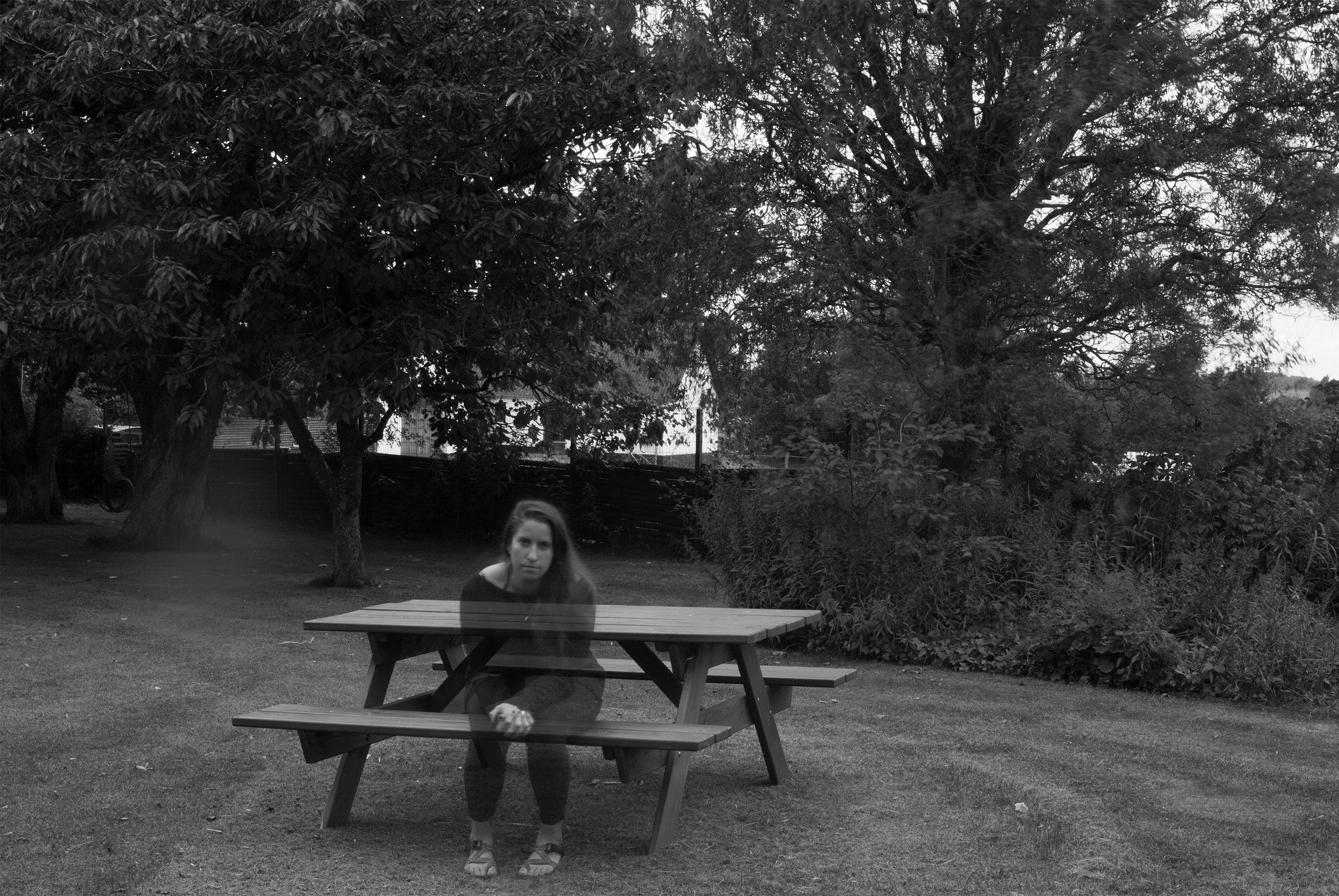
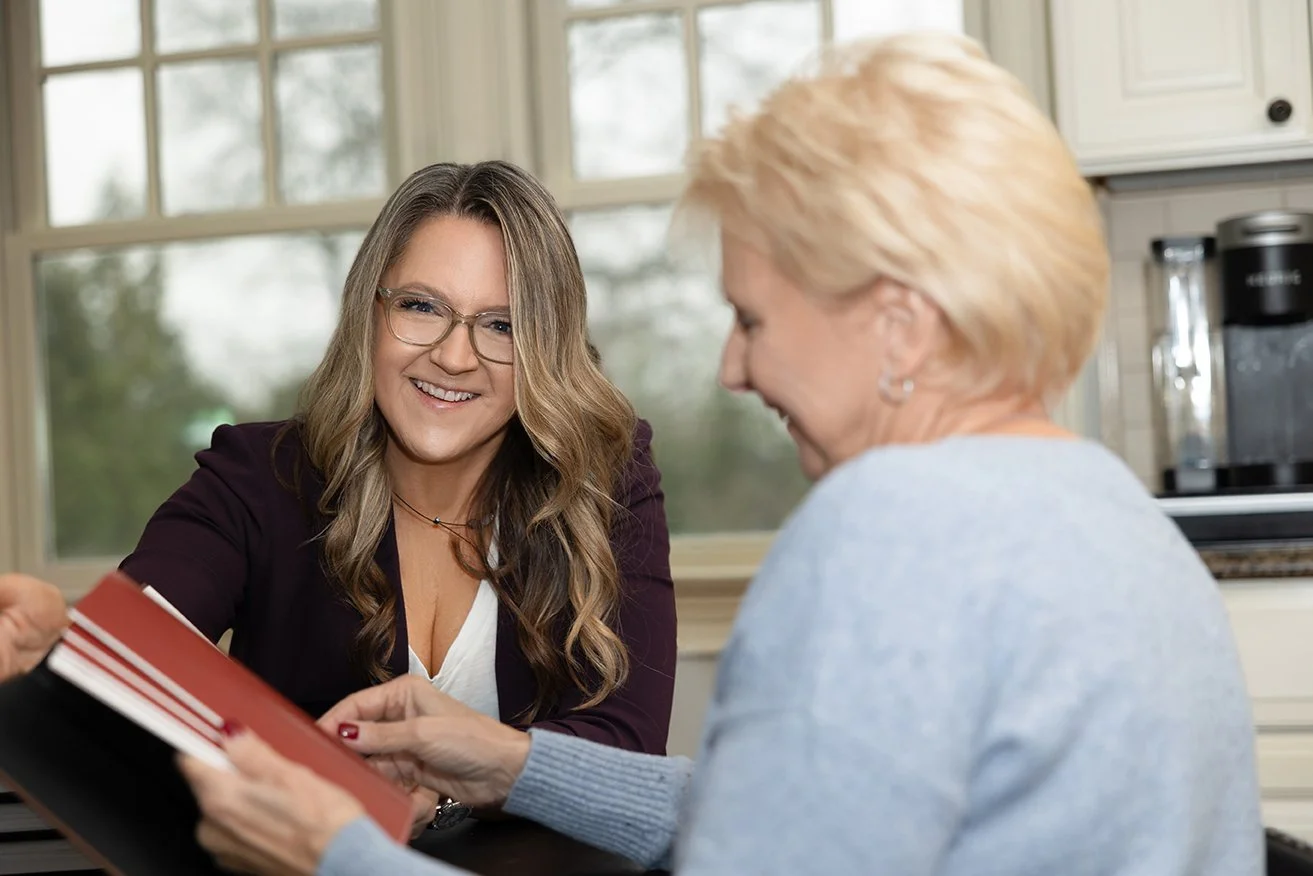
While I much prefer candid shots (and, truth be told, being the one TAKING the pictures!), I will occasionally pose for a behind-the-scenes shot like this…so you remember that there is indeed a human being behind my brand.
When I first launched Modern Heirloom Books more than a decade ago, I was reluctant to put my photo anywhere in my branding. I wanted to seem like a “real” company. Despite decades working at a high level in magazine journalism, in this then-new entrepreneurial venture I faced my share of imposter syndrome—and truth be told, maybe I was trying to seem “bigger” than I was.
Who would want to hire a single individual to create their family history book?, my thinking went. They’ll expect a whole team. What if they think I look too young? What if I look too old? What if, by seeing my white face, they jump to the conclusion that I might not be the right person to capture their (fill-in-the-blank) stories?
I was a one-person operation then (still am, though now I rely on a bevy of freelancers when appropriate to allow me to serve more people), but you wouldn’t have known this from looking at my website.
Then, somewhere along the line (maybe as my confidence increased and I had more business under my belt), my thinking shifted.
The aha moment: If someone is going to share their stories via interviews, they darn well want to know who they’ll be sitting across from, right?
This industry that I’m in of capturing people’s stories, preserving their memories and their family history, creating printed legacies…well, it’s come to be known as “personal history.” And “personal” it is.
It makes sense that my business should have a personal feel, as well.

So a few years in I added my name to the company—now it’s Modern Heirloom Books by Dawn Roode. Then I began adding my pictures here and there; despite my discomfort with being photographed, I can now be seen in my element (usually at a computer or wielding an audio recorder) on my website and across my social media.
And the best part? People who reach out to me are reaching out to ME. So many clients call because they read a post about my own journey with grief that resonated with them, or they understand from following me that I will be a compassionate listener. Maybe they’ve delved deep into my experience and like the fact that my approach to writing and editing life stories is contemporary, informed by that lifestyle magazine experience I mentioned earlier. Or maybe they don’t notice these personal details at all.
Whatever the case, they know there’s a person behind the business. And that matters to me. And from what my clients have told me, it matters a great deal to them, too.
Would you like to see if we might be a good fit to work together? Whatever type of life story preservation project you have in mind, remember that all my projects are fully custom—so let’s chat, and see how we can best capture your stories for the next generation. I look forward to meeting YOU 💕













Life Story Links: August 6, 2024
Dawn Roode’s curated news roundup for the week of August 6, 2024, includes stories on the art of being a personal historian, plus recent memoirs of note.
“I believe everyone has stories in them. Little snippets of truth and hope. Lessons and ideas. Happiness and gratitude tied up in the day-to-day mundane magic of life.”
—Laura Stroud
Vintage postcard of a scene at le Château de Saint-Florent-sur-Cher, sent by a U.S. Army medic stationed in France during World War I to his family in Arkansas; courtesy of the soldier’s family.
When past and present collide
WHAT CONSTITUTES AN ANCESTOR?
“I keep the family tree, and I’m flummoxed about whom to include.” The New York Times magazine’s Ethicist columnist weighs in on genealogy, record-keeping, and notions of relation.
INHERITING ‘UNWANTED FAMILY SECRETS’
“In your family,” Lori Gottlieb writes in response to a “Dear Therapist” letter, “the clumsily handled revelation of these secrets has left you feeling burdened (‘Why me?’), confused about what having this family history ‘means’ for you, and uncertain about what to do with this knowledge going forward.” Read how she breaks it all down.
AMERICAN LIVES IN FIRST PERSON
“The Schlesinger Library is home to more than 3,000 volumes of personal diaries. One former curator is on a mission to read—and describe—as many as she can.”
ON LOVE AND DEATH IN NONFICTION WRITING
“In writing—an essay or a eulogy—the lost are alive to us for as long as we wrestle with what to put in.... In handling these incongruous details—which never themselves add up to a life—the departed are, for a moment, as mysterious to us as they once were.”
Personal historians weigh in on working with clients
“WHAT WAS IT LIKE?”
I believe one of the best ways to see if a personal historian is a good fit is to talk to them, get a sense of their vibe, experience, and aesthetic. Second best? Read reviews from others who have worked with them (or in this case, me).
CROSSING THE FINISH LINE
“I’ve been trying to figure out for several decades why some people simply cannot seem to finish writing their memoirs.” Ali de Groot of Modern Memoirs Publishing offers guidance on how anyone can get over hurdles and bring their life story to completion.
From memoir to autobiographical poetry
STORIES THROUGH POETRY
“Elina Katrin’s debut poetry chapbook If My House Has a Voice renders the (un)belonging of immigration, the fluidity of the cross-cultural self, and the sensory core of memories in a vulnerable, mesh-like voice woven from three languages.”
STORIES THROUGH VISUAL ART
“There are no pictures. Everything burned up. There was no floor plan, no drawings or photos of the inside of it.... The only thing that remained was Ann’s memory of it.” An artist helped this Holocaust survivor turn her memories into a painting:
STORIES THROUGH (THEIR OWN) WORDS
Newly released memoirs worth consideration include All That Glitters from art world insider Orlando Whitfield;
Too Good to Fact-Check by former celeb–magazine editor Jeremy Murphy; and The Art of Power by the first woman U.S. House Speaker, Nancy Pelosi.
STORIES THROUGH (A BIOGRAPHER’S) WORDS
Newly released biographies getting some attention (for better or worse) include Christopher Isherwood Inside Out by Katherine Bucknell and Catherine, the Princess of Wales: A Biography of the Future Queen by Robert Jobson.
Short takes
All five-star reviews for Modern Heirloom Books!
What better way to scope out if a personal historian is a good fit for you than to hear about others’ experiences, in their own words? I am humbled and proud.
The clients with whom I work are incredibly private, and I respect their privacy to the utmost. It’s one of the reasons that so many of them aren’t keen on sharing a public review online. Without exception they are willing to send me their testimonials via email, and I have posted many of them on my site and on social media over the years.
But recently I’ve had a flurry of folks who were in fact willing to share their reviews online. I am always humbled by their kind words, their heartfelt appreciation, and their unmitigated joy at seeing their stories beautifully bound in heirloom books, at last. And I am beyond proud of the work I do to help my clients preserve their legacies in this way.
So here, let’s celebrate some of those “jobs well done”—and hopefully give you a taste of what working together could be like.
Some 5-Star reviews on Google

“Working with Dawn to create our family heirloom book was an extraordinary experience from start to finish. Her approach is meticulous and thoughtful. Dawn's dedication to perfection was evident as she conducted thorough research and carefully curated our family history materials and photos. What truly stood out was Dawn's compassionate and collaborative nature. Thanks to Dawn's expertise and unwavering support, the final result is a cherished masterpiece that beautifully preserves our family's legacy. We are immensely grateful for Dawn's outstanding work and wholeheartedly recommend her to anyone seeking to embark on a similar journey.” —Shannon P.
“Don’t hesitate....work with Dawn to write your stories. I had already begun writing my life stories and had gathered photos and then I was stuck. I contacted Dawn and she helped me put it altogether and moved me forward. My family and I love the results!” —Jane M.
“Preserving my father’s legacy and the wonderful memories of family events was something I wanted to do after my dad’s passing, but knew I needed professional help. I envisioned writings from my siblings eulogizing my father and memorializing my parents’ lives, their struggles, celebrations and accomplishments. A book filled with pictures and stories that would relate to the grandkids and great grandkids as they grew up. Fortunately, I got this and more! A beautiful bookl honoring my 95-year-old father’s life. Dawn Roode of Modern Heirloom Books was the angel that worked with me and members of my family who gathered the stories and pictures and gave the bookl the personal tone that captured my father’s essence. Every page is laid out purposely. Not just a collection of writings and pictures but a story about a successful man. An immigrant who achieved the American dream. Thank you, Dawn!” —Ligia F.
“I found Dawn and Modern Heirloom Books through a Google search after a sudden loss of my mentor and supervisor that I loved and admired greatly. I was looking for a tangible way to let my mentor’s family know just how much she meant to her work family and I wanted to present the book to her family at the celebration of life event that was scheduled a few weeks after she passed. I reached out to Dawn with my aggressive timeline and Dawn responded quickly with the details of how we could bring the ideas to life. She compiled tributes from 56 of my colleagues to create a beautifully curated, high quality book that was completed on time. The finished product was so beautiful and well done, I still cry every time I read the PDF. Dawn is a gift and I couldn’t recommend her business highly enough.” —Min P.
“Dawn Roode is an absolute gem. My sister and I wholeheartedly recommend her and her work…. Dawn brought tremendous creativity to her work…. Throughout the process, Dawn was a joy to work with. She listened carefully. She was diligent in working up drafts and gathering feedback. She was unfailingly patient. She brought her own ideas and didn’t hesitate to make suggestions. She even went above and beyond to deal with administrative hassles with printers due to our last-minute requirement changes. She delivered on time and within budget. In every interaction, Dawn conveyed that she cared as much about the book as we did. If you are looking for someone to create that special story or tribute to someone you care deeply about, look no further.” —Jenny P.
“Dawn helped me to create a tribute book for my mom. The process was emotional and painful but she made it a lot easier - from managing the layout of the book and the color palette to sourcing the printer and even finding a way to rush the production of the books. Modern Heirloom is not the cheapest option but what it created is truly beautiful. The book is something I'll keep forever and I could see how much it resonated with my extended family.” —Rich G.
“Dawn at Modern Heirloom Books is a joy to work with. She created a book of our mother’s nativity collection. We didn’t even really know what we wanted in the beginning and she produced an amazing result. It is a pleasure working through the creative process with her. Thank you! Thank you! Thank you!” —Amy H.
“Dawn was always ready to make the changes that were inevitable when putting a book together, with good cheer. She is quite well organized and intuitively understood order, placement, emphasis vs less. I was extremely happy with Dawn’s finished product and wholeheartedly recommend her.” —Gahl B.
“Dawn’s creativity, warmth, and professionalism helped turn an old stack of yellowed letters from my recently deceased father into the most beautiful book of memories. Her patience with me through this process was so appreciated, as was her genuine care for the product she produced. I highly recommend working with Dawn.” —Kristen C.
Plus a couple via email…
What follows are just a couple of examples of clients who chose not to leave their review on a public platform such as Google or Facebook—something I wholeheartedly respect. I am grateful they were comfortable with me sharing these in other ways, as I do feel it’s the words of those I have worked with who can best convey what that experience is like 💗

This one is from my client Patty, who created family history heirloom books for her grown children as well as her young grandchildren, a way to preserve their family’s legacy for generations.

This one was forwarded to me by my client Jane, who had “loaned” her book to a good friend. I worked with Jane as her memoir coach, then edited and designed the resulting heirloom book.

Life Story Links: July 23, 2024
Personal historian Dawn Roode shares her curated roundup of stories for the week of July 23, 2024: on memoir, family history, biography & memory preservation.
“The reason I write memoir is to be able to see the experience itself…. Writing is a way to organize your life, give it a frame, give it a structure, so that you can really see what it was that happened.”
—Sue William Silverman
Vintage photograph of boy leaning on a fire hydrant in New York City by Morris Huberland, taken in the mid-twentieth century, courtesy the Miriam and Ira D. Wallach Division of Art, Prints and Photographs: Photography Collection, The New York Public Library Digital Collection.
A mosaic of pieces on memoir, personal history, and preservation
HISTORY VAULT
“‘We are absorbed in thinking about our ancestors,’ [Frederic Harrison] wrote. ‘Why do we not give a thought to our descendants?’ Accordingly, he posed his fix: to ‘prepare a Pompeii’ for future researchers to unearth.”
TRANSFORMATIVE POWER OF SELF-REFLECTION
“Every person I have guided on a life writing journey has discovered profound benefits for themselves. Even without a single other individual having read their words, those words have changed them.”
SHIFTING PERSPECTIVES
“A memoir needs to be anchored by facts, yet each of our individual stories can be seen from unlimited perspectives with slight shifts.” Mira Ptacin on the hard art of seeing one’s own writing through rose-colored glasses.
FOR YOUR TBR LIST?
“Stars may or may not be like us, but there is one thing they all seem to have in common: they love writing about their lives.” Time magazine names the 36 best celebrity memoirs.
ON CREATIVE DECISIONS IN BIOGRAPHY
“I just think that when you’re writing a biography, you have a duty to the chronology. The chronology is almost fundamental to the whole enterprise, in my view.” Ryan Cropp speaks with podcast host Gabriella Kelly Davies:
WISDOM FROM SEASONED WRITERS
“In my conversations with my family members and knowing their history and their struggle, I remember that I'm somebody and [they’re] somebody. And that's a very powerful thing.” Author Min Jin Lee talks to fellow writers experienced in family memoir generally, and the migrant journey specifically, about how to talk to parents about their personal history. Listen in:
Short takes

No readers, no matter—your life story benefits YOU
Walking down memory lane can be fun, but writing about your life has big benefits beyond that, including making meaning out of your lived experience.
“A story is a map and we the mapmakers plotting the landscapes of our lives,” Mark Yaconelli writes in Between the Listening and the Telling.
Most people who approach me wanting to explore their personal history are motivated by a desire to create a legacy and pass something of value on to the next generation. Whether it’s a full family history or short vignettes from their own life they hope to capture, they’re usually thinking about an audience of their kids and grandkids, or a broader circle of friends and family—the point is, they’re aware of an audience, even if it’s small.
Without exception, though, every person I have guided on a life writing journey has discovered profound benefits for themselves. Even without a single other individual having read their words, those words have changed them.
There are myriad ways writing about one’s life is good, of course. But for now I want to share just two biggies.
2 profound benefits of writing about your life
RECOGNIZING AGENCY
I don’t mean to get all jargony on you when I say you will recognize the agency you have—I guess what I really want to say is that you are the writer of your own life: You make the decisions, pull the strings, choose the paths…but often we forget that simple fact. We (and I readily include myself in this collective ‘we’) can get caught up in the things that happen to us. “I lost my job.” “I can’t get pregnant.” “My father died.”
Yes, things happen—and despite the conventional wisdom, not always for a reason. But one thing that becomes abundantly clear when writing about your experiences is that how we choose to respond is what defines us.
You will see that you are an active participant in your life—you are not just a storyteller, but a story creator.
In fact, this insight is the foundation of narrative therapy. “With this perspective, individuals feel more empowered to make changes in their thought patterns and behavior and ‘rewrite’ their life story for a future that reflects who they really are, what they are capable of, and what their purpose is, separate from their problems” (Psychology Today).
I bet you never imagined that writing about your life will empower you to rewrite your next chapters…but it will.
INFORMING IDENTITY
From beginning to end, life writing is an exploration that leads to meaning-making. The memoirist asks themselves questions such as: Which experiences are worth telling? Why did I behave a certain way? How is that part of my life a story?
Those questions may at first seem like mere steps toward completing your personal writing, but in truth they are foundational to understanding one’s own identity, as Phillip Lopate explains in this quote from To Show and To Tell:
“In attempting any autobiographical prose, the writer knows what has happened—that is the great relief, one is given the story to begin with—but not necessarily what to make of it…. Writing is one way of self-making.”
Through your writing, you will begin to understand the value in your experiences, to see them as pieces of a bigger puzzle rather than as isolated events. As the best memoirs mine individual experiences to get at a universal truth, so too will your writing bring your own world view into sharper focus.
The memories that come to the surface, and the stories you write about them, will be gifts to your family; the insights you discover along the way will be gifts to yourself.
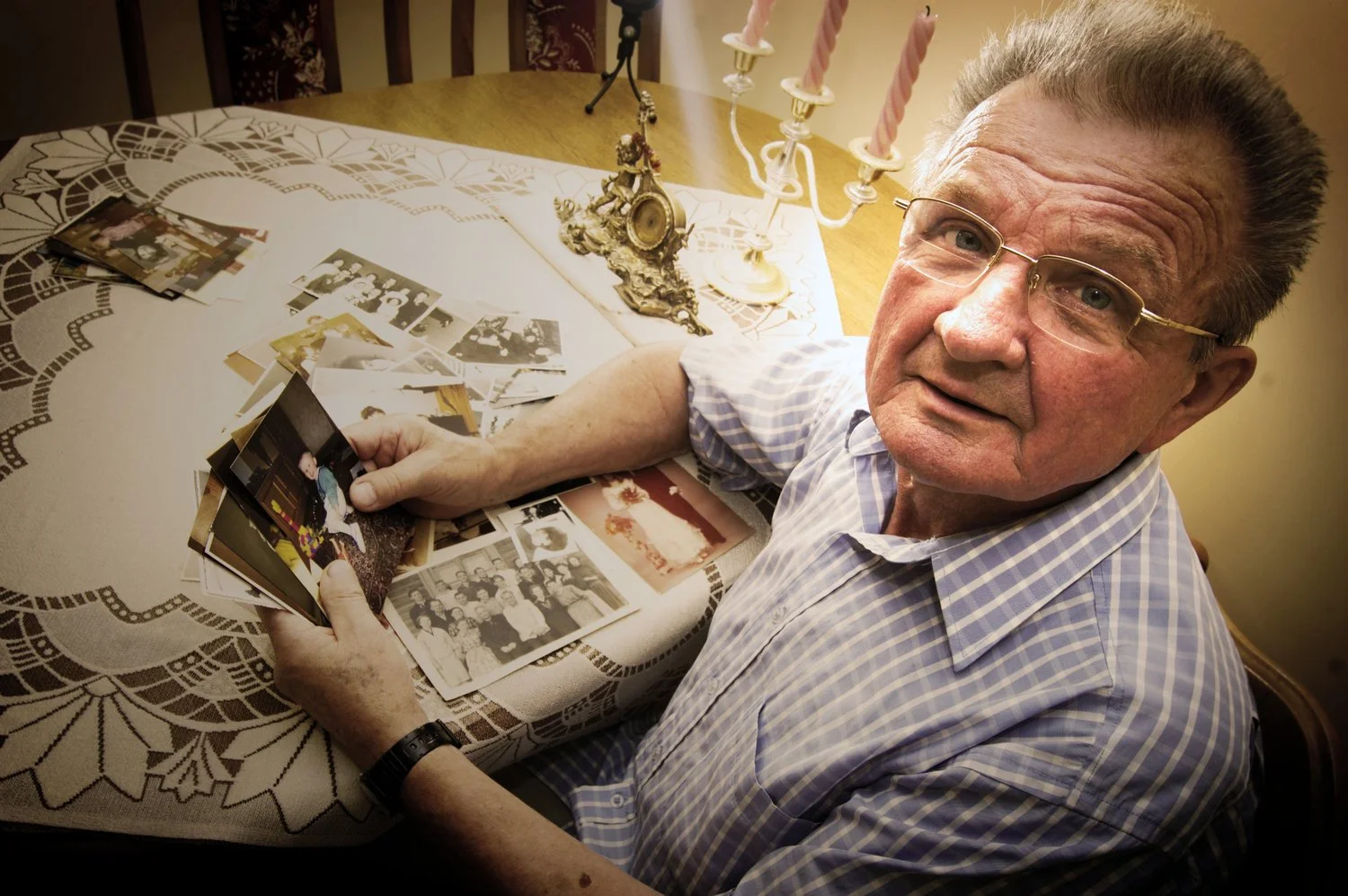








Dawn Roode’s curated roundup for the week of Sept. 23, 2026, is overflowing with recent reads on memoir, life story writing, and family history preservation.