
Memories Matter
Featured blog Posts

READ THE LATEST POSTS
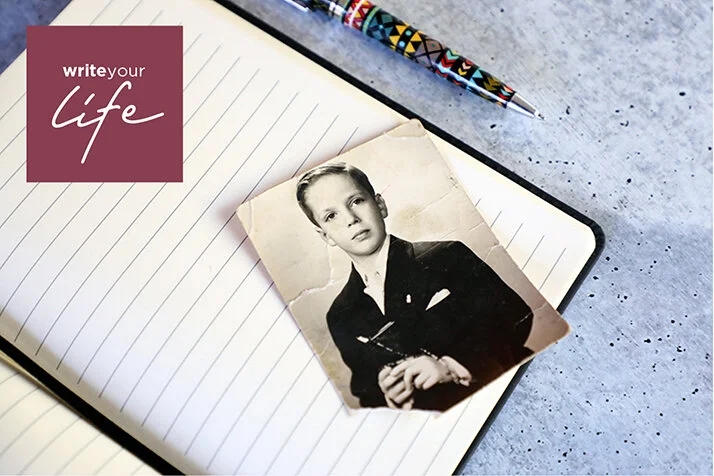
“Write Your Life” delivers weekly memory & writing prompts via email
Learn about our Write Your Life course, providing memory prompts, writing guidance and a dose of inspiration to anyone who wants to preserve their stories now.

Last year, I spent weeks researching courses for writing about your life. I found nearly a hundred of them, and even paid to enroll in a few to see what they were like.
Originally I wanted to be able to offer suggestions to people who reached out asking my advice on life writing courses. Somewhere along the line, though, I got motivated to create something different.
Instead of a full-on memoir course, I wanted to teach how to write about your life in smaller narrative vignettes.
Instead of focusing on the nuts and bolts of writing—grammar, character, dialogue, etc.—I wanted to cut to the chase and get students writing their memories from the outset.
Instead of teaching writers who want to publish and sell their work, I would target regular folks who want to capture their stories for their loved ones—and for themselves.
Instead of providing run-of-the-mill family history writing prompts like Storyworth and their slew of copycat competitors (I offer such prompts for free!), I would create thoughtful, open-ended prompts accompanied by examples, tips, and inspiration—with real value added from my years of experience as a writer and editor.
And lastly, instead of charging hundreds of dollars for a course you might not even have the gumption to finish, I wanted to create something truly affordable and different.
I believe with all my heart that your story matters. Your mom’s and granddad’s and spouse’s stories matter. And each one of you—every one of us who is living our story—should be able to write about them.
What makes the Write Your Life courses different?
These courses are tailor made for you. They will help you write about your life, to get your stories down on paper, and to think beyond the often trite questions in those ready-made memory journals.
You’ll look forward to getting your weekly prompts, and you will actually complete your stories.
Introductory themes are CHILDHOOD MEMORIES and FOOD MEMORIES, with new themes starting every few weeks. Themes build upon one another or stand on their own, depending upon how much you want to write.
If you enroll in Write Your Life, you’ll get weekly memory prompts, writing tips, and inspired ideas that are:

encouraging
The memory prompts go above and beyond a simple directive. You’ll explore how memories resonate for YOU. Writing beyond first impressions allows you to go deeper, to discover more than you could first have imagined. Memory cues, sample explorations, and inspirational notes provide encouragement without worry (for things like “what if I can’t remember?” or “but, I am not a writer!”).
Your stories matter—and you CAN do this!
helpful
With concise, RELEVANT writing tips from a professional, you will feel supported on your journey of capturing your stories.
This is not a course to help writers polish and fine-tune their skills. It is a course for people who want to write but don’t normally consider themselves a writer—and the writing advice you receive will be helpful but not unwieldy. Our goal: To help you write stories that are engaging and enlightening—that will entertain your ancestors with anecdotes, sure, but that go further by delving into life lessons, values, and the journey to becoming you!


flexible
You choose what day of the week you would like to receive your weekly lessons. You choose which themes to explore in depth, and which to write shorter snippets about.
You may write in a journal or type on your computer.
And you have a whole week to ruminate on your memory prompts and write your stories. Enough time to let the details bubble up, to call a sibling or parent to talk about the past, or to search for an old family photo album with pictures to help jog your thoughts—but not so much time that you don’t get to it at all. Because next week, another memory prompt and writing exercise is coming!
affordable
At just $132 $99 for a WHOLE YEAR course, pretty much anyone can take advantage of this learning opportunity. There’s no recurring subscription fee or annual membership required (unlike other weekly family history Q&A prompts we know of). And since prompts are open-ended and you get a PRINTABLE page each week, you can invite a friend or family member to write along with you.
Why email? Because most of us have a phone or computer, and it’s a convenient delivery method. There’s no videos to watch or long book to read; our lessons get to the point quickly and clearly, and you get to writing all the more quickly, too.
Oh, yeah, and I don’t expect you to write while staring at a screen. Each week you’ll get a beautifully designed PDF page to print out and work from (and in the end, you’ll have a year’s worth to return to or share with others!).

Why wouldn’t you enroll?
Memory journals from your local bookstore are a nice idea, but frankly I have seen too many of them gifted and never filled out. I inherited two of them from my own mom, each with fewer than three questions filled out, some with only a few words. Disappointing, to say the least…
Subscriptions like Storyworth are great if you just need a nudge without any real writing guidance or support—and if you want a simple, “free” book at the end (though, from my experience, many people never finish the prompts, and therefore never get their book). THIS course—which I took over a year to develop and which incorporates years’ worth of my professional experience guiding life writers one-on-one—is designed to encourage you to finish…whether it’s within the initial year or later ✍🏼❤️
Consider enrolling in Write Your Life yourself, or, if you want your parents’ stories, consider gifting* them with these Write Your Life prompts—trust me, inviting your family elders to share their stories with you (and preserve them for the next generation) is one of the best gifts you could give them!

Before you gift: Writing isn’t for everyone!
Remember, this is a WRITING subscription. If you know your parent or family member loves to write (even if it’s just in a journal), this may be a wonderful option for them. If, on the other hand, they groan at having to write a short note, you might not want to “gift” them something that can feel like a burden. Consider asking them if they’d be interested first, or gift them a starter package of personal history interviews, where their stories will be RECEIVED by an engaged and generous listener…
Rather Talk about Your stories than write?
If writing still isn’t your thing but you want to preserve your stories, consider TELLING them in a personal history interview. Reach out to see how we can work together—it is my honor to listen to you (or a loved one) share stories, and preserve them in a book!
A Year of Memory & Writing Prompts
Explore our year-long “Write Your Life” email course

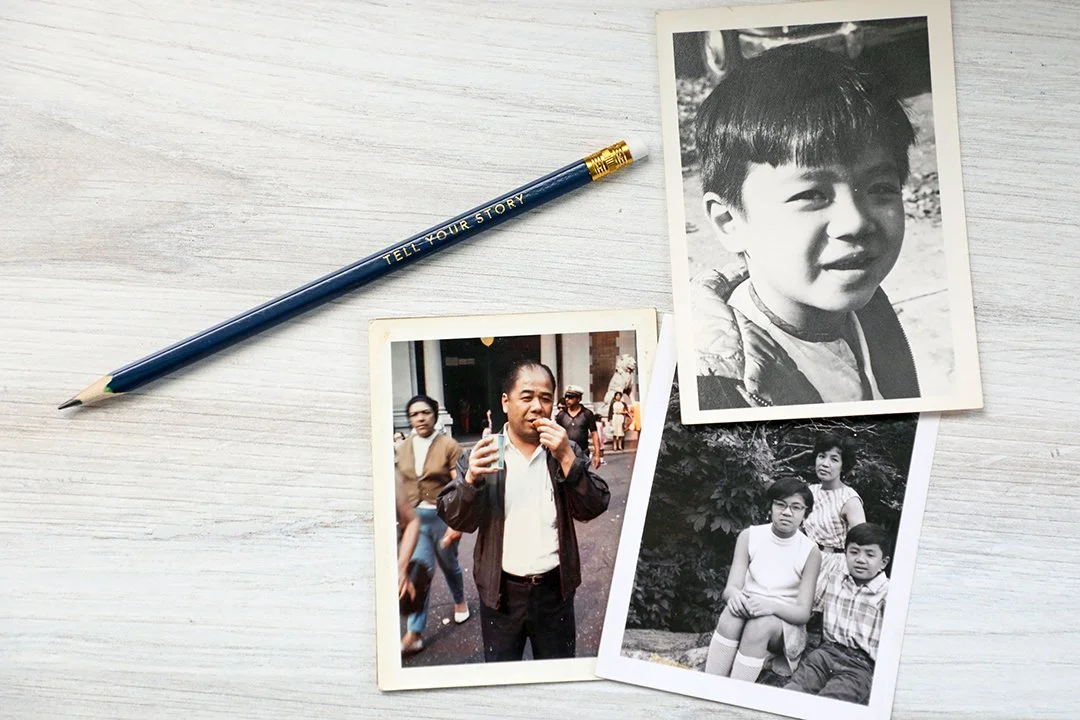
“We all know who’s in the pictures”—a poor excuse for skipping captions
Here’s one time I gave in to my client’s preferences that still haunts me: Why we did not identify people in any of the photos in their family history book.
This is a three-part series about choices I wish my clients hadn’t made during their personal history book projects. (For what it’s worth: in my first draft of this post, I referred to “mistakes” I wish my clients hadn’t made—and then I remembered, memoir is, by definition, a personal accounting of one’s life, and far be it for me to dictate a writer’s personal preferences.) That said, clients come to me not only for help finishing the projects they envision, but for my expertise in elevating their projects to be the best they can be. So, I thought sharing a few of these differences of opinion might be instructive for those waffling over similar decisions.
Challenge 1: Should I include “the hard stuff” from my life in my memoir?
Challenge 2: Should I include a family tree in my life story?
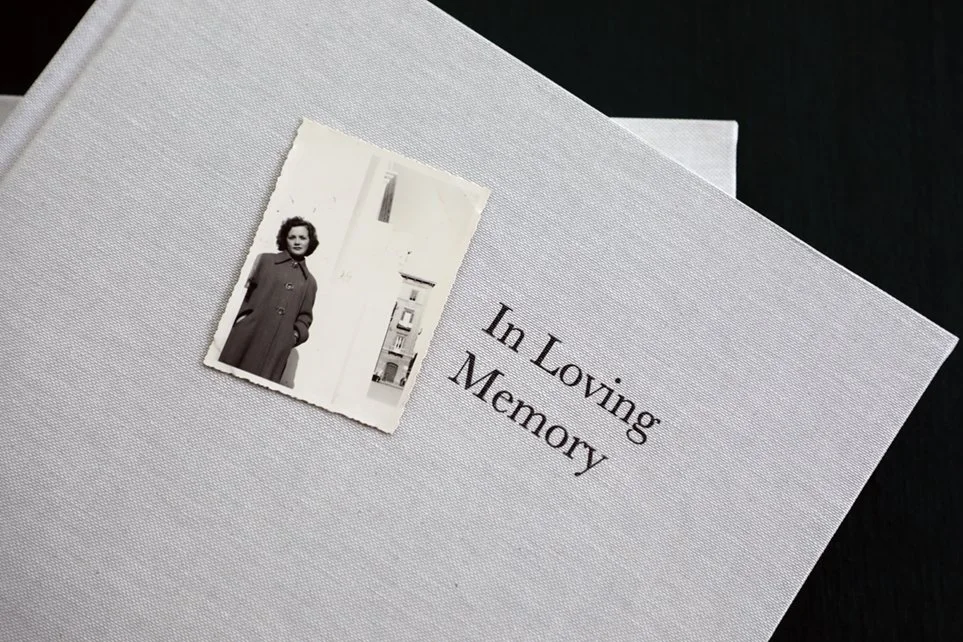
Challenge 3: Should I include captions in my memorial tribute book?
If you’ve ever discovered a box of old family photos and wished you knew who was in them, perhaps you’ll understand my disappointment with one client’s decision not to include captions in her tribute book. This spread is from another client’s heirloom book—see how unobtrusive a caption can be?
“Please stop asking me about captions.”
First, let’s sketch out the type of book I was working on: My client—let’s call her Maria—came to me wanting to create a memorial tribute book honoring her mother, who had recently died. I interviewed Maria and her sister to capture their memories of their mom.
The stories they shared included anecdotes about their four other siblings, their father, and a smattering of aunts and uncles who lived in the small village where her mother lived all her life. Maria and her sister had moved out of the country where they were born decades before, and their own young kids knew their grandparents only from the annual trips the family would take—and didn’t really know the rest of the extended family at all.
Maria’s intentions with creating this tribute book were twofold: She wanted a book the family could pull out and read from on the anniversary of their mother’s death, a tradition they hoped to begin on that first-year anniversary; and they wanted an heirloom they could pass to their children so they could remember the grandmother they lost too soon. “I want my kids and their kids to know my Mami,” she told me.
In the earliest manuscript phase, I asked Maria to identify all the people she mentioned in her stories—to create a list of names and how they were related to her mother. I intended to use this both within the text and in captions for clarity. Each time she submitted corrections to the manuscript, it seemed like she forgot to answer this one query from me, so I would ask again. And again. Finally she told me, “I don’t think any of that is necessary.”
Hmm, okay. I decided to wait and ask for details in the layout phase.
The book was written, edited, and designed, and a first-draft proof was sent to Maria along with questions from me as the editor. My comments included things such as:
[PAGE 8, CAPTION: There are 24 people in this beautiful wedding photo. I think we should identify them, from left to right, so the next generation knows who is in the photo and how they are related. Please provide names in order of appearance in the photo.]
Maria’s response was firm: “We don’t need that, because we all know who the people in the picture are.”
So, I would again begin to probe:
Me: “Who are you ultimately creating this book for?”
Maria: “My son and daughter, and my sister’s children. And, God-willing, their children.”
Me: “Do you think they will know who these people are?”
Maria: “No, but I can always tell them if they are curious.”
Me: “But why not make it foolproof? Why not document their names, so generations from now there will never be questions about their family history?”
Maria: “I REALLY don’t want to.”
We had a few circular conversations like this, before I finally gave in.
Maria’s book is a gorgeous, heartfelt tribute to her mother. I have no doubt she and her siblings will read from the book on the anniversary of her mother’s death and feel closer to her. And I know from our conversations that the process of creating the book—of sharing her memories, and giving herself space to sit with them intentionally—was healing for Maria; she told me so numerous times.
But I can’t help but regret that, as I imagine it, one day her grown grandkids will flip through the book and wonder, Who is that next to our great-grandmother?

























Friendly reminder: Your personal story is part of a broader family history
While your memoir is telling your stories in your words, a family tree chart outlining your relationships has a real place in that book—here’s why.
This is a three-part series about choices I wish my clients hadn’t made during their personal history book projects. (For what it’s worth: in my first draft of this post, I referred to “mistakes” I wish my clients hadn’t made—and then I remembered, memoir is, by definition, a personal accounting of one’s life, and far be it for me to dictate a writer’s personal preferences.) That said, clients come to me not only for help finishing the projects they envision, but for my expertise in elevating their projects to be the best they can be. So, I thought sharing a few of these differences of opinion might be instructive for those waffling over similar decisions.
CHALLENGE 1: SHOULD I INCLUDE “THE HARD STUFF” FROM MY LIFE IN MY MEMOIR?
CHALLENGE 2: SHOULD I INCLUDE A FAMILY TREE IN MY LIFE STORY?
CHALLENGE 3: SHOULD I INCLUDE CAPTIONS IN MY MEMORIAL TRIBUTE BOOK?
Why include a family tree in a book focusing on just your stories? Well, because it will give your descendants an easy way to map the supporting “characters” in your stories—and because your personal history is one piece of a broader family history, too.
“We don’t need a family tree—it’s my story, and mine alone.”
I work on all types of legacy books with my clients—from heavily-researched family histories spanning multiple generations to short autobiographical sketches of just one person, from tribute books memorializing a loved one who has passed away to heritage cookbooks. One thing remains constant in all of these projects, though, and that’s how I view each of them as an heirloom to be passed on.
Recently I finished up a memoir with a client—let’s call him Tom. He came to me with some memories jotted down in a notebook and a vague idea of how he wanted to write about his life. I coached Tom over a two-year period, and when his final manuscript was being copyedited, he decided he wanted to print books for his family members. So our journey of photo gathering and book design began.
Tom’s stories spanned his school years to his days as a grandfather, and his many cousins played supporting roles throughout his book. He told vibrant and funny stories about his own grandfather, who lived next door to him when he was a child, and affectionate tales about his maternal uncle, in whose footsteps Tom followed in becoming a teacher.
So when I suggested we create a family tree to serve as a graphic cheat sheet for his readers, I was surprised when Tom said no. It wasn’t a matter of cost, and at first I couldn’t get to the bottom of why my client was so vehemently opposed to charting his family in this way.
Eventually Tom shared that he always felt overshadowed by his older sibling, and he wanted this book to be his, and his alone. He was already the star—it was his memoir, after all. I tried reassuring him that he would be at the root of the family tree, and that we’d be using it to show all those people who were related to him. But he held fast, and I got it.
Tom’s memoir is a wonderfully crafted narrative, a quilt of memories that are woven together to shed light on how his experiences shaped the person he became. He gained insights from writing about his life, he told me, and was grateful to have taken the time to find new perspective on some of his decisions.
The irony, to me, is that he printed enough copies to distribute to his children, his grandchildren, and his cousins, and that they will in turn pass them on to their own descendants—making Tom’s personal history one piece of a broader family history. Who knows, maybe one day one of them will piece together a family tree that will make following the family history (and, dare I say it, Tom’s memoir) easier to follow.
What to cut from your memoir—when an editor and writer disagree
The first draft of your life story is likely to include some stuff you decide to cut later—but should none of your challenges make it into your final book?
This is a three-part series about choices I wish my clients hadn’t made during their personal history book projects. (For what it’s worth: in my first draft of this post, I referred to “mistakes” I wish my clients hadn’t made—and then I remembered, memoir is, by definition, a personal accounting of one’s life, and far be it for me to dictate a writer’s personal preferences.) That said, clients come to me not only for help finishing the projects they envision, but for my expertise in elevating their projects to be the best they can be. So, I thought sharing a few of these differences of opinion might be instructive for those waffling over similar decisions.
Challenge 1: Should I include “the hard stuff” from my life in my memoir?
Challenge 2: Should I include a family tree in my life story?
Challenge 3: Should I include captions in my memorial tribute book?
Always remember that what ultimately makes it into print in your memoir is 100-percent YOUR decision—so while I (and other personal historians or editors) may encourage you not to skip over your challenges, you are the one who gets to make that call.
“Let’s cut all ‘the hard stuff.’”
I conducted a series of in-depth, thoughtful interviews in which my client—let’s call him John—allowed himself to be vulnerable. He was a vivid storyteller and was comfortable going deep, talking about personal failures in addition to successes. He told of paths not taken that he now regretted; of teenage exploits that were, shall we say, less than innocent; and of a red-hot temper that caused him some problems in his twenties. Through our probing conversations, John spoke of lessons learned through his experiences, and of newfound meaning he was able to make from revisiting his earlier years. “This has been a profoundly rewarding experience,” John told me.
Then, when it came time to review the final manuscript of his life story, he made a decision I did not agree with: He wanted to cut all “the hard stuff” from his book.
Let me say that we had taken great pains to write these stories in a way that made them both compelling and, if not exactly didactic, at least revelatory. We wove in lessons learned, and nuggets of “John’s wisdom” throughout. He was at first “all in,” as was his wife, who had been an early reader. And then, he wasn’t.
When I asked him why he did not want to include stories of his challenges, he said that his descendants would think less of him. There was one granddaughter in particular, then a mere toddler, who he fervently “did not want to disappoint.” Arguments from me and his wife that those were the very stories that showed his humanity, that provided lessons for the next generation, that felt universal…well, all those arguments fell on deaf ears. “I would not want to know these things about my own grandfather,” he said plainly.
Because I am here to help my clients create the books they want—to help them define their legacies in the way they see fit—of course I ultimately followed his lead. His book was overflowing with funny anecdotes and light-hearted memories from his youth, for sure. It will undoubtedly be a treasure to his grandchildren.
But I did feel it was a lost opportunity to have passed down a book not also overflowing with wisdom; it was a Hallmark version of his life.
I find solace in the fact that his personal history interviews, while not fully reflected in his book, did help him ascribe new meaning to his life. (As I tell many people, the time spent allowing introspection in the interview phase is as much a gift to oneself as the book will be to one’s family; Mark Yaconelli calls this “feeling the grace of one’s own life.”)
If you are ever on the fence about including tough times—anything from small failures to serious trauma—consider these words from Tristine Rainer (from her book Your Life As Story):
“Yours may be the words that relieve another’s isolation, that open a door to understanding, that influence the course of another’s path. If you write an autobiography for a great-great-grandniece not yet born, perhaps she will find it in her mother’s drawer, and she will be altered, perhaps even saved, through the wisdom you have sent her.”
And if you are ever reluctant to “go deep” in your writing, ALWAYS remember that it is your prerogative, and your prerogative alone, what to keep and what to cut. You are always your final editor.












How to create your own life writing prompts
Good writing prompts will rid you of blank-page anxiety—and you can easily write your own! Here, 5 steps to drafting a library of personalized memoir prompts.
Taking some time to intentionally create a list of writing prompts that are personalized to your own experience will save you time (and headaches!) later.
Every writer starts with a blank page. Some are just more intimidated by that sea of paper white (or the blinking cursor on your computer screen) than others. Perhaps the best writing advice, proffered so often I am not sure who to attribute it to, is to simply start—even if that means dragging your pen across the page in squiggles until a word forms in your head.
But good writing prompts are a prescription for blank-page anxiety.
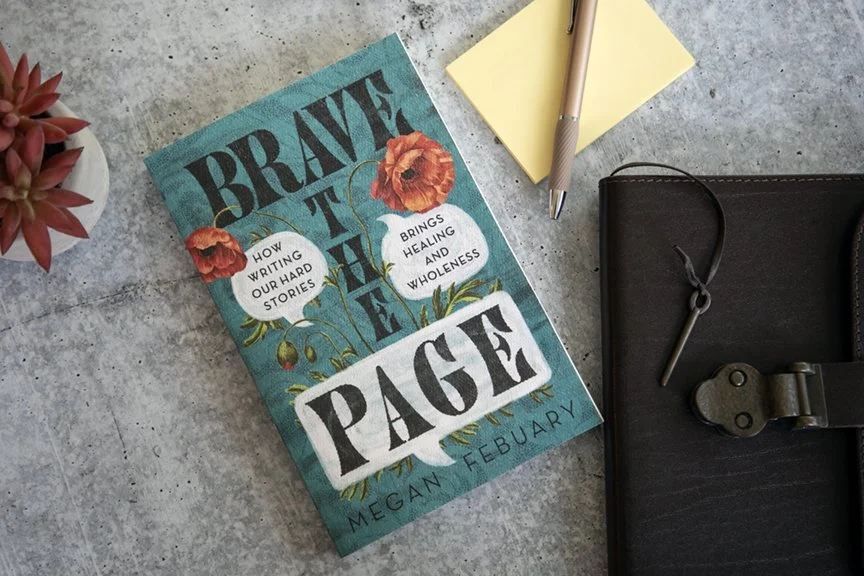
There are plenty of places to find good writing prompts, from writing groups (a great place to find supportive community around your writing) to craft books (this workbook from Beth Kephart is one of my faves), from email subscriptions (I offer a full-year of prompts called Write Your Life) to blog posts (here is an example from Jericho Writers, and here is an old reliable on my blog).
You can create your own memory prompts, too. It’s easy, as long as you set aside some time to be thoughtful and jot them down.
5 steps to drafting your own library of life writing prompts
Brainstorm
Ever since my seventh grade English class where I learned about brainstorming, it’s been the most powerful tool in my workplace arsenal. (I say “workplace,” but truly, brainstorming has been helpful in every area of my life—and I swear I learned not just to write in this teacher’s class, but to really think—so thanks, Mr. Lorusso!). Grab a piece of paper or open up a blank document on your computer, set a timer for five minutes, and write down every single thing you think may be fodder for future writing about your life. Do not edit yourself, and try to write continually—no pauses. This is not the time for filtering yourself. Be creative, get sloppy, and surprise yourself.
Wait a week.
Trust me, the emotional and cognitive distance will be helpful.
It’s time to curate.
Give your brainstorming document a read. Do you spot any themes? Any nuggets that surprise or delight you in their specificity or their mere presence? Your goal is to extract phrases and themes that will prompt writing down the road. Create a list of bullet points, and if possible, nest them under subheadings designating various themes. These don’t need to be overly fleshed out, just specific enough for them to spark YOUR memory and get you thinking.
Assess the writing prompts that you generated.
Did you fill a page or more with ideas for future writing? If so, I recommend you break them down into priorities, and create a basic plan for tackling them. (Another fun option that works for people who like things a little more loosy-goosy, like me: Skip this step and simply keep your curated list of prompts on hand—then, when you sit down to write, you can begin writing in response to whichever one stirs your memories at the moment!)
If the results of your brainstorming session were less than impressive, you may want to give it a go another time after taking a walk in nature (it really helps!). Or tap into these other ways to generate life writing prompts for yourself:
Go through your family photo archive to select pictures that jog your memories. Here’s some advice on how to best use those family photos as writing prompts.
Perhaps you need more structure than a freewheeling brainstorm session provides: Try this life timeline exercise to come up with memory prompts.
And if you prefer simple, straightforward questions to respond to in your writing, check out this free guide with essential family history questions. There are enough questions to keep you busy for a long time!




Why I turned down an offer to publish a memory prompts journal
While a journal called “Memories from Mom” or “Grandma’s Life Story” may be brimming with good intentions, the fact is that most of them remain mostly blank.
The memory prompt journal my mother left me had more blank pages than memories. While I cherish the few pages with her handwriting and thoughts, I long for more. This entry ends with a comma—an unfulfilled promise of more to come…
A couple of years ago I was approached by a mainstream publisher to discuss authoring a journal filled with guided memory prompts for a grandparent. You know the type of book I’m talking about, right? Often beautifully printed, and stocked in the gift section at major bookstores and card shops, these types of books make for amazing impulse purchases—what better gift than the gift of telling someone you care about them enough to want to hear (and preserve!) their stories, after all?
I got fairly far in the contract process before I decided not to pursue the offer. It would have made me some money, yes. And it would have helped brand me as an expert in the memory-keeping landscape, for sure. Some of my colleagues were impressed, and my family was in favor of it as another way to boost my small business.
So why did I decide not to publish that journal that seemed so in line with my mission and values as a personal historian? Well, because I don’t fundamentally believe that they work.
Over the years I have had numerous potential clients approach me about capturing their stories in a book only after they failed to do so in other ways. Some had been given a journal filled with prompts supposedly written just for them (as a grandparent, say, or as a mother)—but they did not find the questions enticing enough to want to write answers. Others had gifted such a journal to a loved one as a gift, only to realize that the recipient was not finding (or making) the time to sit down to write.
I myself was thrilled to find two such journals on my mother’s bookshelves when I was going through her belongings after her death. I put them aside with an overwhelming sense of gratitude and anticipation—only to feel utter disappointment to find she had scrawled a few sentences in each, but nothing more. The blank pages mocked my early excitement, and I felt cheated.
Why do these books not work? In my opinion, they are filled with good intentions but they don’t always inspire action.
Often, good intentions aren’t enough. The recipient needs to be intentional about setting aside time to write, and too often, we think, I’ll get to it later. Usually, later never comes.
It can feel intimidating to write in a book that looks so precious. Of course we want a journal we are gifting to a loved one to be beautiful; I have seen gorgeously crafted journals with gold embossing on the cover and cute flourishes on the corners of each page. But the more precious they seem, the more scary it can feel to tarnish those pretty pages with our scratchy handwriting (and what if, God forbid, we need to cross something out?!). I speak from experience when I admit to having a few artisan-crafted, leather-covered blank journals in my closet that have, well, remained blank…while the cheaper notebooks I bought at a big-box store are overflowing with my writing.
Many questions simply don’t resonate. While these professionally edited and published memory prompt journals are indeed written by people who consider what questions should resonate, there is simply no one-size-fits-all memoir-in-a-box. A current client of mine whose granddaughter had gifted her a popular prompt-a-week email service told me she hasn’t answered a question in three months: “Honestly, sometimes they’re just silly. ‘How do you relax or unwind?’ Really? I’m 95. This is not what I want to be writing about,” she said. Among the skipped-over questions in my mother’s fairly blank journal were:
“What scent or sound immediately takes you back to childhood.”
“Tell me about your most memorable trip by plane, train, or ship.”
“What summer games and activities did your family enjoy?”
These questions get my memories stirring, for sure—they are not inherently bad questions. Perhaps they simply didn’t resonate for my mom on the days she sat down to write, or perhaps she just never found the time to “keep at it.” Maybe she needed a listener—someone to receive her stories, to ask follow-up questions, to hold sacred space for her to share. All of these are valid reasons I have heard from clients who abandoned their memory journals despite their best early intentions.
What do I suggest instead of a memory-prompt journal?
How to write…
To ensure that your intentions to preserve your stories turn into a series of actions that DO preserve your stories, consider finding an accountability partner. That could amount to a friend or family member with whom you commit to write about your lives—perhaps you sit down together once a week to write, then share your stories out loud (hello, deepening connections!). Or you might find accountability in working with a memoir coach or personal historian who you pay to keep you on track—there are plenty of advantages to this arrangement beyond accountability. If you’d like to see how we could work together, please reach out.
Where to write…
I recommend buying an inexpensive blank journal to record your memories. If you’d like to pass on something that feels more substantial or beautiful, you can always edit your stories and add photos later, hiring a designer to polish and print everything or going the DIY route and making a scrapbook that showcases what you’ve written. This way you never have to feel guilty about skipping one or more pages, and you can cross out and rewrite to your heart’s content (no one writes a perfect sentence the first time, I assure you!!). If you prefer, you can also just open a new document on your computer and start typing (just remember to back it up occasionally so you don’t lose your writing!)
What to write about…
To ensure that you find questions that you want to respond to—that spark your memories and inspire your writing—look for open-ended questions (you can find a year’s worth of them in my Write Your Life annual subscription, for example, or discover evocative, literary prompts in Beth Kephart’s memoir writing workbook, which I reviewed here). Want to make your life as easy as possible when it comes to writing about your life? Use the same two-word prompt every day—I promise you’ll be surprised at what comes up for you!
Don’t get me wrong, if you have bought or are thinking about buying a memory prompt journal as a gift, you’re my kind of person! I just think there are better (more effective, more foolproof) ways to encourage story sharing. How about you?
“Which life writing book is best for me?”
While all five of these books add value to any memoirist or life writer’s library, I’ve identified which is best for you based on your goals and experience.
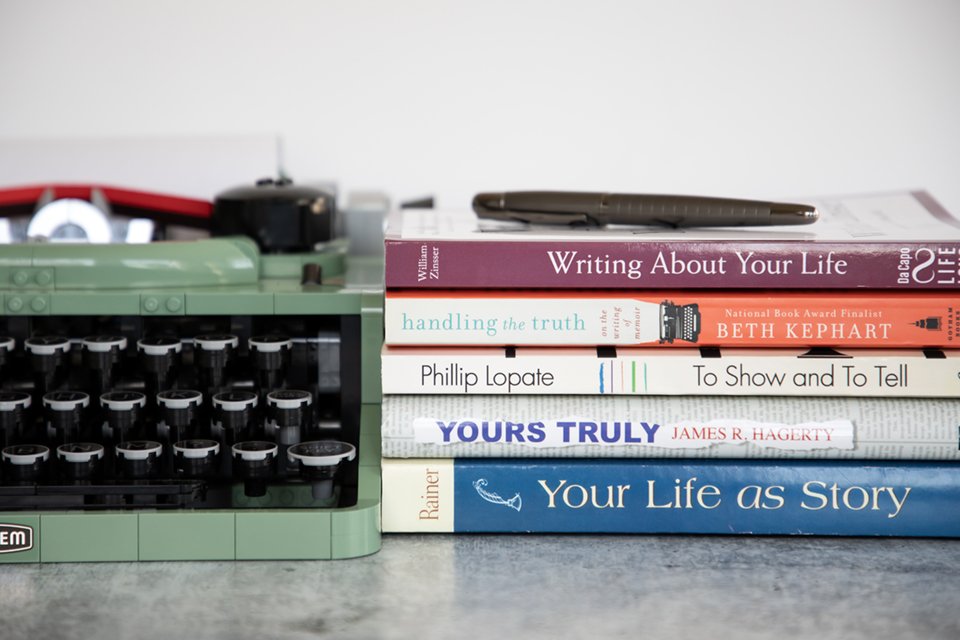
From the many, many craft books on my bookshelves, these are the five I consider essential for anyone endeavoring to write about their life.
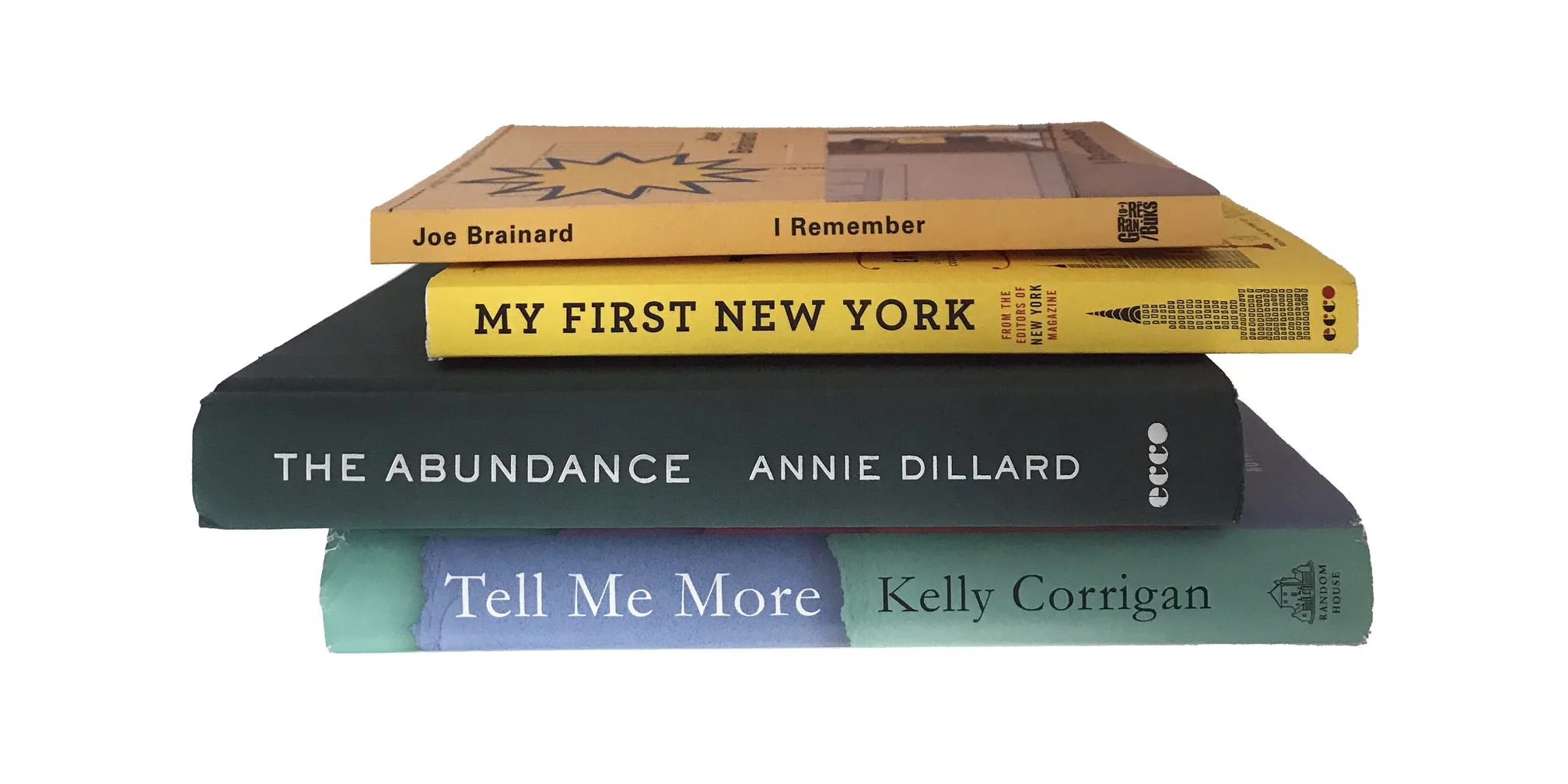
If there’s a book out there about how to write memoir, autobiography, personal essays, or narrative nonfiction, I’ve probably read it. There are plenty that may be worth a read, but there are only a handful that I would consider essential for every life writer’s bookshelf.
Here I aim to classify my top five life-writing titles by who each one is best for. Click if you are…
a journalist or student aiming to up your personal essay game
anyone hungry for personal narrative guidance, including writers of every level
anyone who wants to make sure their story is told the way they want
And before we get to the heart of things below, I’ve written elsewhere about some books that are great choices for other scenarios, too; find those recommendations by clicking if…
“To Show and To Tell: The Craft of Literary Nonfiction” by Phillip Lopate

Best for:
Journalists and students aiming to up their personal essay game
in brief:
While the book jacket touts this title as a “nuts-and-bolts guide to writing literary nonfiction,” I would argue that it is more a collection of insightful lessons from this expert’s vast experience rather than a how-to guide. Widely regarded as one of the best personal essayists around, Phillip Lopate has here collected his ruminations and conclusions about the genre of personal narrative as a whole. If you’re in the mood for a well-informed, sometimes cheeky, always smart exploration of writing literary nonfiction, then this book’s for you. It’s an apt choice for anyone wanting to finesse their writing skills, to hone their craft, and to luxuriate in the history of the genre; if you’re in search of a book with more direct guidance, I recommend one of the last two entries on this list instead. [To Show and To Tell: The Craft of Literary Nonfiction, Free Press, 2013]
Author’s credentials:
Phillip Lopate directs the graduate nonfiction program at Columbia University. Among the 12 books he has written, three of them are personal essay collections.
“Handling the Truth: On the Writing of Memoir” by Beth Kephart

Best for:
Aspiring memoir writers
in brief:
“Teaching memoir is teaching vulnerability is teaching voice is teaching self,” Beth Kephart writes, a fair summation of her approach to teaching, in the classroom and in print. As I have written in a previous review, here the author “spends a good portion of the book on what she calls ‘not-yet-writing-memoir work’—preparatory ideas, tapping memories, conjuring beauty, exploring diversions, finding your story,” but she also delves into the nitty-gritty of getting words down on paper, of editing and honing and creating art from experience. Handling the Truth is a must-read for anyone at any stage in the memoir writing process. [Handling the Truth: On the Writing of Memoir, Gotham Books, 2013]
Author’s credentials:
Beth Kephart is the award-winning author of more than 30 books, including multiple memoirs. She is a longtime writing teacher—of creative nonfiction as a professor at the University of Pennsylvania, and as co-founder of Juncture Workshops.
Bonus:
If you relate more to the word “aspiring” than “memoirist,” you may want to check out Kephart’s companion workbook, Tell the Truth. Make It Matter (CreateSpace, 2017), in which prompts and exercises put you on the path to remembering and meaning-making.
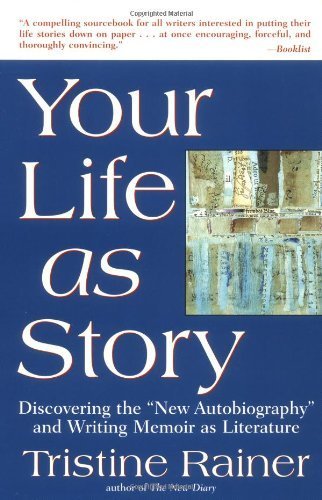
“Your Life as Story” by Tristine Rainer
Best for:
Anyone hungry for personal narrative guidance, including writers of every level
in brief:
When I first encountered this book years ago, it was a loaner from my local library. By its due date it had amassed a ridiculous number of yellow sticky notes hanging off the pages, each marking a passage I felt was revelatory or essential. Needless to say, I bought my own copy soon thereafter.
First published in 1997, this book’s subtitle and grounding premise—“discovering the ‘new autobiography’”—might seem off-putting. By now, I hope that we no longer need to define and justify memoir’s raison d’être, nor the assumption that it is “available to everyone.” That said, get past any reservations you may have about the book being dated, because it is chock-full of concrete writing advice, real inspiration, and helpful exercises. Rainer herself encourages readers to jump around, to use the table of contents and index to navigate the book to find what they are needing at that moment in their writing journey. As she says, “The purpose of this book is to give you the tools to see story in your life, and then, if you choose, to give it shape in writing so it can be shared.” So grab your highlighter and a blank journal and dig in! [Your Life as Story: Discovering the ‘New Autobiography’ and Writing Memoir as Literature, Tarcher/Putnam, 1998]
Author’s credentials:
Tristine Rainer’s first book, The New Diary, was written in 1977 and is still the bestselling book on journal writing, according to Amazon. She has taught writing at the university level for decades, and was a founder of the Center for Autobiographic Studies.
“Writing About Your Life: A Journey Into the Past” by William Zinsser

Best for:
Newbie life writers and family historians
in brief:
“My purpose in this book is to give you the permission and the tools” to write about your life, Zinsser puts forth in the introduction. His conversational, warm writing style is accessible and supportive. Readers learn about his writing choices—decisions he made about tone, language, structure, and all those fundamental elements of craft—as he takes them along on a wonderfully enjoyable ride of personal storytelling and instruction. He calls this a “double journey into memoir—yours and mine.” In addition to concrete tips for how to write your life story, Zinsser delivers hefty doses of confidence bolstering and inspiration by example. [Writing About Your Life: A Journey Into the Past, Marlowe, 2004]
Author’s credentials:
William Zinsser was a writer, editor, and teacher. His enduring classic, On Writing Well, grew out of a course he taught at Yale. Some of his other books include Inventing the Truth: The Art and Craft of Memoir and Extraordinary Lives: The Art and Craft of American Biography.
“Yours Truly: An Obituary Writer’s Guide to Telling Your Story” by James R. Hagerty

Best for:
Anyone who wants to make sure their story is told the way they want
in brief:
“When is the best time to get started? Before it’s too late. How about right now?” James Hagerty proffers in the introduction to this book. It’s advice I give often, as well, and the best part about his book Yours Truly is that he equips you with lots of straightforward writing advice and carefully selected first-person pieces as examples so you can hit the ground running. You may be surprised that a book with “obituary” in the subtitle is infused with humor, but make no mistake, this is a book about honoring life in all its weird and wonderful glory—not only a great read, but a model to write your own. [Yours Truly: An Obituary Writer’s Guide to Telling Your Story, Citadel Press, 2022]
Author’s credentials:
James R. Hagerty worked for more than four decades as a reporter and bureau chief at the Wall Street Journal and was for some time the paper’s only full-time obituary writer.
bonus
Check out this earlier post for a deeper dive, with five life writing (and life) lessons derived from Hagerty’s book.










How to write a loving tribute to your spouse or partner
A love letter (or book!) overflowing with memories makes a thoughtful anniversary gift. Here, 14 writing prompts to help you honor—and surprise—your partner.
Whether you want to write a personal love letter for Valentine’s Day or an extended tribute to your spouse for a milestone anniversary, the writing prompts below will give you ideas for sharing your love on the page.
Read through the list of prompts and mark the ones that resonate the most—then start there with your writing. Some of the prompts may yield long stories while others might only spark a phrase or sentence; that’s okay. Our relationships are as unique as our signatures—honor what makes yours special!
One tip before you begin: Don’t put pressure on yourself to sound like anything other than you. Think of your writing as an extended letter to the one you love and let your voice come through.
14 thematic memory prompts to help write about your love
THE SETUP
How, when, and where did you meet? Tell the story of your first meeting, your courtship, and your favorite memories from the early days of your relationship.
CUTE QUIRKS
Share some of your partner’s quirks that make them them. Does she twist her hair around her finger when deep in thought? Does he put post-it notes all over the house to remind him of mundane things? Hone in on their character traits that are unique and lovable and…specific.
ADVENTURES OF A LIFETIME
Take this prompt in any direction you wish: Perhaps your biggest (ongoing?!) adventure has been parenthood—write about that. What other adventures have you been on together? Think travel destinations, new skills you endeavored to learn together, and passions you’ve developed over the years.
SAYINGS & PET NAMES
Do you have a special way of saying “I love you”? What about terms of endearment for one another? If there’s a fun story here, then of course tell it; otherwise simply weave your sayings and pet names throughout your writing.
HEARTH & HOME
How do you define home? Is it a more ephemeral notion of being together, or have you built spaces to live that embody your family philosophy? Describe the first place you lived together, the most challenging place you called home, and the home where you find yourselves now.
LOVING LIST
This one’s fun and invites creativity and playfulness: Write a list of “50 Things I Love About You” that includes everything you can think of, from seemingly obvious-yet-true things such as the color of their hair or the feel of them in bed beside you to more personal-and-unexpected things like “the way you set out a mug and a Splenda packet for me when you make coffee in the morning,” “the way you croon country music in the car,” or “the fact that you’re still trying to convert me to someone who will be on time.” The more specific here, the better!
MISHAPS & MISDEMEANORS
Write about “that time” you made a wrong turn and ended up weekending in a different town than you expected, or accidentally missing a birthday—little things that may have gone wrong that you weathered together (and maybe even ended up enjoying).
INSIDE JOKES
Do you and your partner glance across a crowded room and know exactly what the other is thinking? Are there inside jokes that you’ve shared for years? Write about your secret language of laughter and, well, just knowing what the other may need.
ROLE REVERSAL
How are you two different? Write about how you at times complement one another and at other times clash. Try to find the humor or the life lessons in your differences. Find the stories and also some underlying wisdom.
OFFER GRATITUDE
What are you most thankful for in your relationship? Think about your partner’s qualities that you appreciate, but also ways you mesh and make your way through the world together. Like with each of these memory prompts, try to hone in on some specific details or moments that come to mind when you think about gratitude.
GOING DEEP
Aim to write the most epic love letter, including thoughtful reflections such as:
times you missed your partner or wished they were near
ways your spouse has changed you or impacted your outlook on life
why you consider your partnership a successful one
your favorite romantic gestures from your years together
how you have manifested being there for one another “through good times and bad, through sickness and health.”
FROM THE ARCHIVE
Did you save early handwritten letters your partner sent you? How about everyday notes or even emails? Unearth these and consider including one or quotes from a few in your tribute.
BONUS REVEAL
You’ve been writing about your beloved all this time, but remember that sometimes the real gift is sharing a bit of YOURSELF. Consider telling them something they may not know about you yet. It could be a silly anecdote from your childhood or a deep-seated fear you’ve held for decades. No matter what you decide to share, allow yourself to be vulnerable.
BUCKET LIST
Perhaps you’ve been married for 25 years and you’re celebrating a host of favorite memories in this book. For this prompt, turn your attention to the memories you’d yet like to make. What’s still on your to-do list? What dreams do you hold for your future together?
Remember that your efforts to create something meaningful for the person you love is gift enough—this really is one occasion where “it’s the thought that counts.” So have fun with this, be thoughtful as you write, and you’re sure to craft a gift that your partner will cherish!
And if you need help packaging your extended love letter into an heirloom book, please reach out to see how we can work together.
