Memories Matter
Featured blog Posts
READ THE LATEST POSTS
What do you wish you had asked them?
“I wish I knew why Mom moved to New York when she was just 16.” “I wish Papa told me how he makes his Sunday sauce.” Don’t wish for stories; ask for them.
Do you wish you had asked your parent certain questions before they passed away? Are your parents still living, but you know you haven’t asked them for all the stories you hope to one day hear (and pass on to your kids)?
“I wish I had asked my father about his time in the Army during the war.”
“I wish I had asked Gran about what Mom was like as a teenager.”
“I wish I had asked Mommy why she never remarried after my father left.”
“I wish I asked what the heck the ‘secret ingredient’ is in Nonno’s Sunday sauce.”
Whether it’s a seemingly small thing like how to get a favorite family recipe just right or a big thing such as why a loved one left home at the age of 16, we all have questions we wish we had asked.
I hear these laments regularly from prospective clients and from friends, from those I am coaching on their own memoirs to those who are honoring a deceased family member in a tribute book. It’s an unfortunate universal truth: We think we have unlimited time with those we love—time to do the things we want together, to share our appreciation for them, to ask them questions (about any and everything, but especially about themselves).
If there are two things I could impart to you right now—lessons learned from these repeated regrets—they would be:
1 - Ask your parents questions now.
If your parents or grandparents are still living, start asking them more meaningful questions than “How are you?” or “Do you want to meet for dinner?” Instead…
Encourage them to write about their life by telling them how much you really DO want to hear their stories!
Or just start having some intentional, thoughtful conversations and hit “record” on your smartphone. (Need inspiration? I am currently listening to Laura Dern and her mother, Diane Ladd, have these exact type of conversations in the audio book of Honey, Baby, Mine: A Mother and Daughter Talk Life, Death, Love (and Banana Pudding) [Grand Central Publishing, April 2024]).
2 - Answer questions your own kids haven’t asked yet.
Be proactive. I guarantee your children will one day wonder about you. Not you, their parent, but you, the individual. Think about the questions you wished you had asked your now-gone family elder, and find a way to answer some of them. It could be by…
writing in a journal devoted just to this purpose that you will one day pass on to them;
creating a weekly writing practice to preserve your life stories;
working with a personal historian like me to interview you to capture those “answers” (let’s chat!);
simply having CONVERSATIONS over the phone or over dinner where you intentionally share memories and allow them “in” to your world in a deeper way (this is ideally done with adult children, but you can begin sharing your memories and life lessons in age-appropriate ways throughout their young lives!);
preparing an ethical will (also known as a legacy letter), an opportunity to share your values in a way that takes much less time than writing a whole life story book, to be sure, but that may hold as much value to your descendants.
It’s natural to take our loved ones for granted. But I urge you to step off that easy path and take a turn towards intentionality: Ask questions. Answer questions. Sidestep regrets 💕

Finishing a family history book can feel like saying goodbye. Learn why it’s so hard to end—and how completing the story can become its own act of love.
Discover the 6 best resources to add context to family history. Historical archives, newspapers, photos, and podcasts bring your ancestors’ stories to life.
I hope these quotes from my commonplace book remind you why family history and stories of our ancestors matter—and why now is always the best time to delve in.
Four steps to help you turn spoken stories into engaging written narratives—so once the family history interview is done, you can create a lasting legacy.
Cataloguing your family heirlooms in a book is a great way to pass down their stories. Here are some tips for capturing incredible images of them, too.
The holiday’s meaning often gets lost amidst long weekends and cookouts, but we’ve got easy ways to remember loved ones who died in service.
There’s way more to family history than clicking on digital hints and scouring online genealogy sites. Here, three ideas for tracking family history clues IRL.
You’ve decided to do SOMETHING with all that family history stuff you’ve gathered—but somehow your project keeps growing. Here’s how to cross the finish line.
“I wish I knew why Mom moved to New York when she was just 16.” “I wish Papa told me how he makes his Sunday sauce.” Don’t wish for stories; ask for them.
Learn about our Write Your Life course, providing memory prompts, writing guidance and a dose of inspiration to anyone who wants to preserve their stories now.
A roundup of the most popular (and helpful!) posts from Modern Heirloom Books to help you prompt and preserve family stories this Thanksgiving season.
Five easy ways to get the best stories from your family member just by responding thoughtfully to their answers (hint: it starts with really listening!).
Whether you’re interviewing your parents about their childhood or gathering family history info from your grandparents, good follow-up questions are key.
While your memoir is telling your stories in your words, a family tree chart outlining your relationships has a real place in that book—here’s why.
Podcast host Melissa Ceria and personal historian Dawn Roode discuss the importance of family history preservation and finding solace in stories after loss.
Discovering a stack of handwritten letters can feel like winning the family history lottery—but is it always the right thing to read (or share) them?
From a conference hall filled with more than 150 family history vendors, I have hand-picked my favorites—here’s why you’ll love them, too.
Boxes of old letters, family photos, and mementos from a generation ago can feel like a burden if they’re passed down without context. What to do with them.
Wondering if 52 weeks of memory prompts will help YOU write about your life at last? Here, answers to the most commonly asked questions about Write Your Life.
Every week you’ll get themed prompts to stir your memories, tips to write your stories with ease, and more! A unique gift for your loved one (or yourself)!
Want to organize your family history archive? This cheap, convenient solution is a great way to record your stories until you’re ready to move them into a book.
No interest in family history? What if I told you there would be no research involved, no libraries, no family trees—just spoken stories? From mom, from dad?
Ready to edit your family history or life story book? Follow these three tips from a personal historian to ensure everything is clear for your descendants.
Whether your family heirloom collection consists of generations’ worth of antiques or a handful of sentimental items, catalog them for the next generation.
Family reunions are optimal occasions for gathering family history—and if you go in with a plan, you’ll be able to preserve stories AND have a great time!
Don’t let all those memory-keeping ideas swirling around your head overwhelm you. Instead, take some time to hone in on which stories to tell first—here's how.
There are a variety of reasons—including traumatic memories—when pausing a personal history interview is the best course of action. Give in to the silence if...
Your legacy is more than the assets you leave behind—much more. Here, three ways to leave a personal legacy that has a positive impact on your loved ones.
Beyond family photos: Consider adding vintage maps, family tree charts, and professionally shot images of special heirlooms to your family history book.
Our memories are anything but fixed—and when stories are passed down to a new generation, their malleability, their meaning, and their impact change, too.
Have you ever thought that your most valuable assets are intangible? Your legacy is more than the financial security you leave behind—it’s your life’s story.
The three most common excuses I hear for not writing about your life “yet,” and how—and why—to overcome them. It’s not too soon for your memoir, I promise.
My biased opinion: Working with a professional biographer can be one of the most meaningful investments you’ll ever make. Here are a few reasons why.
Are you nervous about undertaking a life story project? Working with a personal historian or memoir coach can help alleviate many of the most common fears.
“I wish I knew why Mom moved to New York when she was just 16.” “I wish Papa told me how he makes his Sunday sauce.” Don’t wish for stories; ask for them.
Walking down memory lane can be fun, but writing about your life has big benefits beyond that, including making meaning out of your lived experience.
It’s important to me to stress some sense of urgency about writing about your life—but I don’t think you’ll have regrets if you don’t write about it ALL.
Boxes of old letters, family photos, and mementos from a generation ago can feel like a burden if they’re passed down without context. What to do with them.
You may think you are writing about your life for your family—to honor your ancestors, to give a gift to your descendants. But the truth is deeper. You’ll see.
When Mother’s Day is hard due to feelings of loss, allowing ourselves to linger in our memories may help (and, yes, hurt). A tribute made in grief, and love.
After we record your personal history interviews, I craft your story and photos into an heirloom coffee table book—not a video, not an audio file. Here’s why.
If writing your memoir means enough to you to put it on a bucket list, please read this—I’ll help you easily move it from future project to present-day endeavor.
Your legacy is more than the assets you leave behind—much more. Here, three ways to leave a personal legacy that has a positive impact on your loved ones.
Ignore those naysayers who warn that you must be passed middle age to begin writing your life stories: Start your memoir now, no matter how old you are.
It’s a common but wrong assumption—that telling one's own stories is “narcissistic” or “self-centered.” Truly, preserving your legacy is an act of generosity.
Recording loved ones' stories is important to most Americans, and yet not even half of us have done so. Here, resources to make memory-keeping easier.
Our memories are anything but fixed—and when stories are passed down to a new generation, their malleability, their meaning, and their impact change, too.
Family stories have enduring value. Some you share now may not be relevant enough for your kids to care. But one day they will see themselves in your stories.
Ever wonder what it might be like to work together on your OWN heirloom book project? Listen to past clients' feedback—and words of thanks!—to get inspired.
Writing about your life can be hard—but it’s still worth the effort. (Oh, and you’re wrong that your family members don’t care about your personal history).
Understanding the basics of how our brains encode memory can help us both remember the things we want in the future & retrieve precious memories from our past.
Dear Tim Ferriss: Have you interviewed your parents yet? It is with a healthy dose of humility & a shot-in-the-dark effort that I say to you: Do it now—please.
Is your life too boring to tell people about? Do you think it's self-centered to write a memoir? Or that your kids don't care about your stories? Think again.
It seems obvious: We should ask our parents about their lives—lessons, loves, adventures, ancestors. Then why do so many of us wait too long and then have regrets?
Did you know that listening to and sharing stories can help us live longer, happier lives? Discover three impactful ways to bring storytelling into your life.
I hope you'll take comfort in these personal stories of vulnerability and loss during the holidays. (Sharing memories about loved ones is always a good thing.)
Preserve your parents’ (and grandparents’) stories meaningfully for the next generation with these three ideas that make the process simple and enjoyable.
Sometimes the idea of telling our "life story" is overwhelming. If we think of memoir as a series of smaller life narratives, though, the way in becomes clear.
The Wall Street Journal reports that a growing number of adult children are interested in hearing more of their parents' stories. Are you among them?
A brave group of Jews secretly chronicled their daily existence in the Warsaw Ghetto during the Holocaust. Only one who knew where the archive was buried survived.
“Write Your Life” delivers weekly memory & writing prompts via email
Learn about our Write Your Life course, providing memory prompts, writing guidance and a dose of inspiration to anyone who wants to preserve their stories now.
Last year, I spent weeks researching courses for writing about your life. I found nearly a hundred of them, and even paid to enroll in a few to see what they were like.
Originally I wanted to be able to offer suggestions to people who reached out asking my advice on life writing courses. Somewhere along the line, though, I got motivated to create something different.
Instead of a full-on memoir course, I wanted to teach how to write about your life in smaller narrative vignettes.
Instead of focusing on the nuts and bolts of writing—grammar, character, dialogue, etc.—I wanted to cut to the chase and get students writing their memories from the outset.
Instead of teaching writers who want to publish and sell their work, I would target regular folks who want to capture their stories for their loved ones—and for themselves.
Instead of providing run-of-the-mill family history writing prompts like Storyworth and their slew of copycat competitors (I offer such prompts for free!), I would create thoughtful, open-ended prompts accompanied by examples, tips, and inspiration—with real value added from my years of experience as a writer and editor.
And lastly, instead of charging hundreds of dollars for a course you might not even have the gumption to finish, I wanted to create something truly affordable and different.
I believe with all my heart that your story matters. Your mom’s and granddad’s and spouse’s stories matter. And each one of you—every one of us who is living our story—should be able to write about them.
What makes the Write Your Life courses different?
These courses are tailor made for you. They will help you write about your life, to get your stories down on paper, and to think beyond the often trite questions in those ready-made memory journals.
You’ll look forward to getting your weekly prompts, and you will actually complete your stories.
Introductory themes are CHILDHOOD MEMORIES and FOOD MEMORIES, with new themes starting every few weeks. Themes build upon one another or stand on their own, depending upon how much you want to write.
If you enroll in Write Your Life, you’ll get weekly memory prompts, writing tips, and inspired ideas that are:
encouraging
The memory prompts go above and beyond a simple directive. You’ll explore how memories resonate for YOU. Writing beyond first impressions allows you to go deeper, to discover more than you could first have imagined. Memory cues, sample explorations, and inspirational notes provide encouragement without worry (for things like “what if I can’t remember?” or “but, I am not a writer!”).
Your stories matter—and you CAN do this!
helpful
With concise, RELEVANT writing tips from a professional, you will feel supported on your journey of capturing your stories.
This is not a course to help writers polish and fine-tune their skills. It is a course for people who want to write but don’t normally consider themselves a writer—and the writing advice you receive will be helpful but not unwieldy. Our goal: To help you write stories that are engaging and enlightening—that will entertain your ancestors with anecdotes, sure, but that go further by delving into life lessons, values, and the journey to becoming you!
flexible
You choose what day of the week you would like to receive your weekly lessons. You choose which themes to explore in depth, and which to write shorter snippets about.
You may write in a journal or type on your computer.
And you have a whole week to ruminate on your memory prompts and write your stories. Enough time to let the details bubble up, to call a sibling or parent to talk about the past, or to search for an old family photo album with pictures to help jog your thoughts—but not so much time that you don’t get to it at all. Because next week, another memory prompt and writing exercise is coming!
affordable
At just $132 $99 for a WHOLE YEAR course, pretty much anyone can take advantage of this learning opportunity. There’s no recurring subscription fee or annual membership required (unlike other weekly family history Q&A prompts we know of). And since prompts are open-ended and you get a PRINTABLE page each week, you can invite a friend or family member to write along with you.
Why email? Because most of us have a phone or computer, and it’s a convenient delivery method. There’s no videos to watch or long book to read; our lessons get to the point quickly and clearly, and you get to writing all the more quickly, too.
Oh, yeah, and I don’t expect you to write while staring at a screen. Each week you’ll get a beautifully designed PDF page to print out and work from (and in the end, you’ll have a year’s worth to return to or share with others!).
Why wouldn’t you enroll?
Memory journals from your local bookstore are a nice idea, but frankly I have seen too many of them gifted and never filled out. I inherited two of them from my own mom, each with fewer than three questions filled out, some with only a few words. Disappointing, to say the least…
Subscriptions like Storyworth are great if you just need a nudge without any real writing guidance or support—and if you want a simple, “free” book at the end (though, from my experience, many people never finish the prompts, and therefore never get their book). THIS course—which I took over a year to develop and which incorporates years’ worth of my professional experience guiding life writers one-on-one—is designed to encourage you to finish…whether it’s within the initial year or later ✍🏼❤️
Consider enrolling in Write Your Life yourself, or, if you want your parents’ stories, consider gifting* them with these Write Your Life prompts—trust me, inviting your family elders to share their stories with you (and preserve them for the next generation) is one of the best gifts you could give them!
Before you gift: Writing isn’t for everyone!
Remember, this is a WRITING subscription. If you know your parent or family member loves to write (even if it’s just in a journal), this may be a wonderful option for them. If, on the other hand, they groan at having to write a short note, you might not want to “gift” them something that can feel like a burden. Consider asking them if they’d be interested first, or gift them a starter package of personal history interviews, where their stories will be RECEIVED by an engaged and generous listener…
Rather Talk about Your stories than write?
If writing still isn’t your thing but you want to preserve your stories, consider TELLING them in a personal history interview. Reach out to see how we can work together—it is my honor to listen to you (or a loved one) share stories, and preserve them in a book!
A Year of Memory & Writing Prompts
Explore our year-long “Write Your Life” email course
Thanksgiving story sharing, made easy
A roundup of the most popular (and helpful!) posts from Modern Heirloom Books to help you prompt and preserve family stories this Thanksgiving season.
Thanksgiving is the American holiday perhaps most associated with family, food, (and football), and lively gatherings around the table make it a prime time for sharing—and capturing—fun family stories.
I’ve written a fair amount about how to maximize the holiday from a family history standpoint; here’s a roundup of some of the most helpful and popular stories on the site to help you preserve your family stories this Thanksgiving.
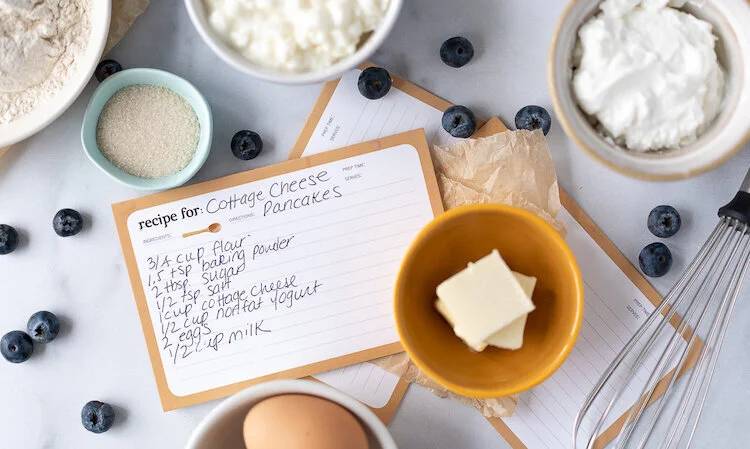
Family Potluck: Reminiscing and Recipes: “Collecting family recipes is one of those things that’s on many of our ‘I want to do someday’ lists but that can easily slip through the cracks. It always seems like there will be time. But instead of saying ‘next time,’ make it a priority—as well as an enjoyable endeavor!” Here, tips for easy things you can do to get your family involved in preserving your food heritage.
4 Ways to Give Thanks Through Story Sharing: “Even for families who may not share stories regularly around the dinner table, Thanksgiving lends itself to some good old-fashioned reminiscence.” Here, four unexpected ideas for giving thanks and telling tales.
Thanksgiving Family History Questions: “Don’t wait until next year or when everyone is available or any other ‘better time’—trust me when I say: Now is always the right time!” Get your free guide, 55 Questions to Spark Thanksgiving Story Sharing.
Unique Holiday Host(ess) Gift: Preserve your family recipes and all the precious stories they call forth with this unique recipe card set that fits in standard recipe boxes. Cards capture how-to and ingredients as well as associated memories! Check out our A Taste of the Past recipe card gift set.
I am grateful to you—my personal history and tribute book clients, as well as the broader Modern Heirloom Books community of memory-keepers, memoirists, and family history buffs. I hope you find something of value among these pieces, and I wish you and yours a holiday season filled with delicious food, lots of love, and scrumptious stories 🧡🦃🍁
How to ask good follow-up questions in a family history interview
Five easy ways to get the best stories from your family member just by responding thoughtfully to their answers (hint: it starts with really listening!).
Whether your family history interview is being recorded on a couch in the subject’s living room or virtually on an iPad screen, it’s important to show interest through verbal cues and follow-up questions.
You’ve decided you want to interview your parent or grandparent to capture some of their memories and add to the family history book you are creating. You’ve downloaded recommended family history questions, thematically curated the ones you want to ask, and gathered the equipment needed to ensure you record everything smoothly. You’re good to go.
But wait! Just one small thing I’d like to remind you of: Remember to be a good listener, and to ask effective follow-up questions during the interview.
Tips for effective follow-up questions
Whether you are interviewing your mother, who you obviously feel comfortable with, or a great-aunt you have just met and who you really know nothing about, think of your interview somewhat like a conversation (albeit a lopsided one 😉). Ask a question, then provide space for your partner to reply—a quiet moment for them to think, of course, and also eye contact and an open expression on your face that invites trust and conveys real interest.
Then, when they pause and are seemingly finished with their answer, don’t automatically jump to the next question on your page. Instead, follow your conversational instincts and ask a follow-up question.
Be specific.
Instead of “Can you elaborate?”, ask “What was your favorite part about that job?”
Use open-ended questions.
Encourage storytelling with prompts such as, “Tell me about a time when you felt…” or “How did you react when your brother…”
Seek clarification.
If something is unclear, ask for more details without interrupting the flow of the interview. If you have a question now, chances are a future listener (or reader) will, too.
Follow their emotions.
If your interview subject mentions a strong feeling, explore it further. “You mentioned feeling relieved. Can you tell me more about that?” or “How did your sadness shift over time?”
Be an active listener.
Pay attention to their responses and tailor your follow-ups accordingly. Trust me, you’ll get better at this the more experience you have under your belt!
The power of family history interviews lies in both the connections they foster and the richness of the stories captured. By mastering the art of follow-up questions, you become a skilled facilitator, drawing out details, emotions, and lessons that make each story unique and deeply personal.
Remember the magic of “tell me more.” It's a simple phrase that can unlock a world of memories. It’ll also almost guarantee that both interviewer and interviewee will want to engage in yet another story sharing session—helping you create a more complete (and compelling!) family history and weave a tapestry of experiences that will resonate for generations to come.
We are a world of talkers, but what we need is to listen, and to be listened to. Find inspiration from author Kate Murphy and personal historian Dawn Roode.
As AI gets better and more accessible, will there still be a need for in-person story sharing services offered by personal biographers and historians? Yes!
Five easy ways to get the best stories from your family member just by responding thoughtfully to their answers (hint: it starts with really listening!).
Whether you’re interviewing your parents about their childhood or gathering family history info from your grandparents, good follow-up questions are key.
There are a variety of reasons—including traumatic memories—when pausing a personal history interview is the best course of action. Give in to the silence if...
Planning to conduct a personal history interview with a family member? Here are three effective first questions that guarantee their stories will flow freely.
Did you ever notice how joyful and empowering it can be to listen to someone else's stories? Magic happens when two people connect over story sharing.
How to have meaningful conversation with your loved one on hospice, including the best life review questions & 4 things we all should say when someone is dying.
Imagine New Years resolutions you actually want to keep—we've got two that are not only easy to stick to, but that will make you and your loved ones happier.
While the Christmas season can be difficult for those of us missing a loved one, remembering them—out loud, with others who knew them—is a balm to the soul.
Preoccupied with the idea of "the loneliness epidemic," I have been immersing myself in media that prompts genuine connection, including books and podcasts.
Ever tried to talk about your childhood with your grown kids only to be met with a lack of interest? They might not care now, but they will one day—I promise.
Why it's sometimes easier to talk about our life experiences with a stranger, and how to get a reluctant storyteller to genuinely open up about his or her past.
Thoughts from the 2018 International Reminiscence & Life Review Conference including research challenges, anecdotal evidence, and autobiographical memory.
Conducting family interviews is a great way to gather the stories of family elders and preserve family history for the next generation. Here are a few tips.
An introduction to narrative medicine through a recent NYC talk from physician and writer Haider Warraich, MD: “The Search for Beauty at the End of Life.”
Podcast recommendations for life storytellers, creative entrepreneurs, oral historians, and anyone who loves a captivating first person story.
Humans of New York creator reveals his insights on why people open up—and it’s not the questions. How being 100 percent present invites honest storytelling.
Meet Josh: He plans to write his biography someday. Yet he has told his adult kids none of his life stories. How about you—are you waiting for “someday,” too?
Finishing a family history book can feel like saying goodbye. Learn why it’s so hard to end—and how completing the story can become its own act of love.
Discover the 6 best resources to add context to family history. Historical archives, newspapers, photos, and podcasts bring your ancestors’ stories to life.
I hope these quotes from my commonplace book remind you why family history and stories of our ancestors matter—and why now is always the best time to delve in.
Four steps to help you turn spoken stories into engaging written narratives—so once the family history interview is done, you can create a lasting legacy.
Cataloguing your family heirlooms in a book is a great way to pass down their stories. Here are some tips for capturing incredible images of them, too.
The holiday’s meaning often gets lost amidst long weekends and cookouts, but we’ve got easy ways to remember loved ones who died in service.
There’s way more to family history than clicking on digital hints and scouring online genealogy sites. Here, three ideas for tracking family history clues IRL.
You’ve decided to do SOMETHING with all that family history stuff you’ve gathered—but somehow your project keeps growing. Here’s how to cross the finish line.
“I wish I knew why Mom moved to New York when she was just 16.” “I wish Papa told me how he makes his Sunday sauce.” Don’t wish for stories; ask for them.
Learn about our Write Your Life course, providing memory prompts, writing guidance and a dose of inspiration to anyone who wants to preserve their stories now.
A roundup of the most popular (and helpful!) posts from Modern Heirloom Books to help you prompt and preserve family stories this Thanksgiving season.
Five easy ways to get the best stories from your family member just by responding thoughtfully to their answers (hint: it starts with really listening!).
Whether you’re interviewing your parents about their childhood or gathering family history info from your grandparents, good follow-up questions are key.
While your memoir is telling your stories in your words, a family tree chart outlining your relationships has a real place in that book—here’s why.
Podcast host Melissa Ceria and personal historian Dawn Roode discuss the importance of family history preservation and finding solace in stories after loss.
Discovering a stack of handwritten letters can feel like winning the family history lottery—but is it always the right thing to read (or share) them?
From a conference hall filled with more than 150 family history vendors, I have hand-picked my favorites—here’s why you’ll love them, too.
Boxes of old letters, family photos, and mementos from a generation ago can feel like a burden if they’re passed down without context. What to do with them.
Wondering if 52 weeks of memory prompts will help YOU write about your life at last? Here, answers to the most commonly asked questions about Write Your Life.
Every week you’ll get themed prompts to stir your memories, tips to write your stories with ease, and more! A unique gift for your loved one (or yourself)!
Want to organize your family history archive? This cheap, convenient solution is a great way to record your stories until you’re ready to move them into a book.
No interest in family history? What if I told you there would be no research involved, no libraries, no family trees—just spoken stories? From mom, from dad?
Ready to edit your family history or life story book? Follow these three tips from a personal historian to ensure everything is clear for your descendants.
Whether your family heirloom collection consists of generations’ worth of antiques or a handful of sentimental items, catalog them for the next generation.
Family reunions are optimal occasions for gathering family history—and if you go in with a plan, you’ll be able to preserve stories AND have a great time!
Don’t let all those memory-keeping ideas swirling around your head overwhelm you. Instead, take some time to hone in on which stories to tell first—here's how.
There are a variety of reasons—including traumatic memories—when pausing a personal history interview is the best course of action. Give in to the silence if...
Your legacy is more than the assets you leave behind—much more. Here, three ways to leave a personal legacy that has a positive impact on your loved ones.
Beyond family photos: Consider adding vintage maps, family tree charts, and professionally shot images of special heirlooms to your family history book.
Our memories are anything but fixed—and when stories are passed down to a new generation, their malleability, their meaning, and their impact change, too.
The power of a follow-up question
Whether you’re interviewing your parents about their childhood or gathering family history info from your grandparents, good follow-up questions are key.
Want a sign that your follow-up questions are working? If your interview subject is engaged—nodding, smiling, or showing other signs of acknowledgement in response to your questions—then chances are their story sharing will go deeper in the best possible way!
There are numerous options out there for memory-keeping journals or email-a-week life story prompts, and they make for sentimental gifts for our loved ones. And when the gift recipient is a motivated self-starter, these gifts can yield amazing stories that can be passed on for generations. More often than not, though, these gifts don’t get much beyond the ‘good idea’ stage
I’ve certainly written about this before, but today I wanted to hone in on one simple aspect of why I think these well-meaning gifts do not always ‘work’: There’s no one listening—and no one, therefore, to ask a follow-up question.
Recently I was conducting a personal history interview with a client named Madeleine. She offhandedly mentioned that her granddaughter had gifted her a popular prompt-a-week story gathering service, and that she had only answered about two questions so far. How long had she been getting the prompts?, I wondered. “I guess about a year and a half,” she replied.
Huh?! “Why?,” I asked her.
“The questions are silly or stupid,” she said bluntly.
I pushed her to share a few of the prompts if she could recall them. Some were indeed silly when considered in the context of the service’s goals of preserving family history, but some were, in my opinion, just poorly phrased, or in need of some probing beyond the initial ask.
One question Madeleine ridiculed was, “What do you like to do to relax?” This nonagenarian rolled her eyes as she repeated it. “Can you imagine—who cares how I relax?” she said.
But when I followed up that “silly” prompt with my own related questions based on my knowledge of Madeleine’s life—Were there things you could do to decompress during the years you were working three jobs? Were there hobbies you wish you had more time for over the course of your life? What replenishes your energy when you are feeling low?—she had story after story. And the more I heard, the more I asked, the more it became clear that there were lessons buried in her stories.
These were stories that would not have come out—in fact, that Madeleine probably would not have even recalled—had I not been present as a curious listener. She initially dismissed the prompt out of hand when it did not immediately resonate for her. But when my follow-up questions helped her see the prompt in a new way—in a way that directly related to her lived experiences—her memories flowed.
Sometimes, a simple “tell me more” or “how did that make you feel?” can unlock a treasure trove of details that elevate a story from good to great. Follow-up questions help an interview subject move beyond one-sentence answers and delve into the details that make a story come alive. They encourage the interviewee to paint a picture with words, describe emotions, and share sensory experiences.
Beyond that, follow-up questions show your subject that you are interested. That you care about what they are saying. That’s so much more powerful than a one-sentence question posed in an email…with no one there to listen to an answer.
We are a world of talkers, but what we need is to listen, and to be listened to. Find inspiration from author Kate Murphy and personal historian Dawn Roode.
As AI gets better and more accessible, will there still be a need for in-person story sharing services offered by personal biographers and historians? Yes!
Five easy ways to get the best stories from your family member just by responding thoughtfully to their answers (hint: it starts with really listening!).
Whether you’re interviewing your parents about their childhood or gathering family history info from your grandparents, good follow-up questions are key.
There are a variety of reasons—including traumatic memories—when pausing a personal history interview is the best course of action. Give in to the silence if...
Planning to conduct a personal history interview with a family member? Here are three effective first questions that guarantee their stories will flow freely.
Did you ever notice how joyful and empowering it can be to listen to someone else's stories? Magic happens when two people connect over story sharing.
How to have meaningful conversation with your loved one on hospice, including the best life review questions & 4 things we all should say when someone is dying.
Imagine New Years resolutions you actually want to keep—we've got two that are not only easy to stick to, but that will make you and your loved ones happier.
While the Christmas season can be difficult for those of us missing a loved one, remembering them—out loud, with others who knew them—is a balm to the soul.
Preoccupied with the idea of "the loneliness epidemic," I have been immersing myself in media that prompts genuine connection, including books and podcasts.
Ever tried to talk about your childhood with your grown kids only to be met with a lack of interest? They might not care now, but they will one day—I promise.
Why it's sometimes easier to talk about our life experiences with a stranger, and how to get a reluctant storyteller to genuinely open up about his or her past.
Thoughts from the 2018 International Reminiscence & Life Review Conference including research challenges, anecdotal evidence, and autobiographical memory.
Conducting family interviews is a great way to gather the stories of family elders and preserve family history for the next generation. Here are a few tips.
An introduction to narrative medicine through a recent NYC talk from physician and writer Haider Warraich, MD: “The Search for Beauty at the End of Life.”
Podcast recommendations for life storytellers, creative entrepreneurs, oral historians, and anyone who loves a captivating first person story.
Humans of New York creator reveals his insights on why people open up—and it’s not the questions. How being 100 percent present invites honest storytelling.
Meet Josh: He plans to write his biography someday. Yet he has told his adult kids none of his life stories. How about you—are you waiting for “someday,” too?
Friendly reminder: Your personal story is part of a broader family history
While your memoir is telling your stories in your words, a family tree chart outlining your relationships has a real place in that book—here’s why.
This is a three-part series about choices I wish my clients hadn’t made during their personal history book projects. (For what it’s worth: in my first draft of this post, I referred to “mistakes” I wish my clients hadn’t made—and then I remembered, memoir is, by definition, a personal accounting of one’s life, and far be it for me to dictate a writer’s personal preferences.) That said, clients come to me not only for help finishing the projects they envision, but for my expertise in elevating their projects to be the best they can be. So, I thought sharing a few of these differences of opinion might be instructive for those waffling over similar decisions.
CHALLENGE 1: SHOULD I INCLUDE “THE HARD STUFF” FROM MY LIFE IN MY MEMOIR?
CHALLENGE 2: SHOULD I INCLUDE A FAMILY TREE IN MY LIFE STORY?
CHALLENGE 3: SHOULD I INCLUDE CAPTIONS IN MY MEMORIAL TRIBUTE BOOK?
Why include a family tree in a book focusing on just your stories? Well, because it will give your descendants an easy way to map the supporting “characters” in your stories—and because your personal history is one piece of a broader family history, too.
“We don’t need a family tree—it’s my story, and mine alone.”
I work on all types of legacy books with my clients—from heavily-researched family histories spanning multiple generations to short autobiographical sketches of just one person, from tribute books memorializing a loved one who has passed away to heritage cookbooks. One thing remains constant in all of these projects, though, and that’s how I view each of them as an heirloom to be passed on.
Recently I finished up a memoir with a client—let’s call him Tom. He came to me with some memories jotted down in a notebook and a vague idea of how he wanted to write about his life. I coached Tom over a two-year period, and when his final manuscript was being copyedited, he decided he wanted to print books for his family members. So our journey of photo gathering and book design began.
Tom’s stories spanned his school years to his days as a grandfather, and his many cousins played supporting roles throughout his book. He told vibrant and funny stories about his own grandfather, who lived next door to him when he was a child, and affectionate tales about his maternal uncle, in whose footsteps Tom followed in becoming a teacher.
So when I suggested we create a family tree to serve as a graphic cheat sheet for his readers, I was surprised when Tom said no. It wasn’t a matter of cost, and at first I couldn’t get to the bottom of why my client was so vehemently opposed to charting his family in this way.
Eventually Tom shared that he always felt overshadowed by his older sibling, and he wanted this book to be his, and his alone. He was already the star—it was his memoir, after all. I tried reassuring him that he would be at the root of the family tree, and that we’d be using it to show all those people who were related to him. But he held fast, and I got it.
Tom’s memoir is a wonderfully crafted narrative, a quilt of memories that are woven together to shed light on how his experiences shaped the person he became. He gained insights from writing about his life, he told me, and was grateful to have taken the time to find new perspective on some of his decisions.
The irony, to me, is that he printed enough copies to distribute to his children, his grandchildren, and his cousins, and that they will in turn pass them on to their own descendants—making Tom’s personal history one piece of a broader family history. Who knows, maybe one day one of them will piece together a family tree that will make following the family history (and, dare I say it, Tom’s memoir) easier to follow.
Learn how keeping a notebook can nurture memoir and legacy writing—each blank page a new possibility for memory and meaning.
Words from seasoned memoirists remind us that writing about our lives isn’t just an act of preservation—it’s an act of connection, reflection, and courage.
Stay inspired with 52 weekly writing prompts for journaling and family history. Capture memories, dreams, and stories big and small. Bonus: Downloadable guide!
Go beyond labels with this powerful memoir prompt: introduce yourself without name, job, or age. Includes writing tips and a free downloadable worksheet.
The three most common excuses I hear for not writing about your life “yet,” and how—and why—to overcome them. It’s not too soon for your memoir, I promise.
Discover how (and why) bending certain grammar rules in memoir and life story writing can enhance voice, rhythm, and authenticity in your storytelling.
Even the most seasoned writer sometimes feels hopeless when they sit down to write and nothing comes. Here, 7 helpful resources for budding memoirists.
Four steps to help you turn spoken stories into engaging written narratives—so once the family history interview is done, you can create a lasting legacy.
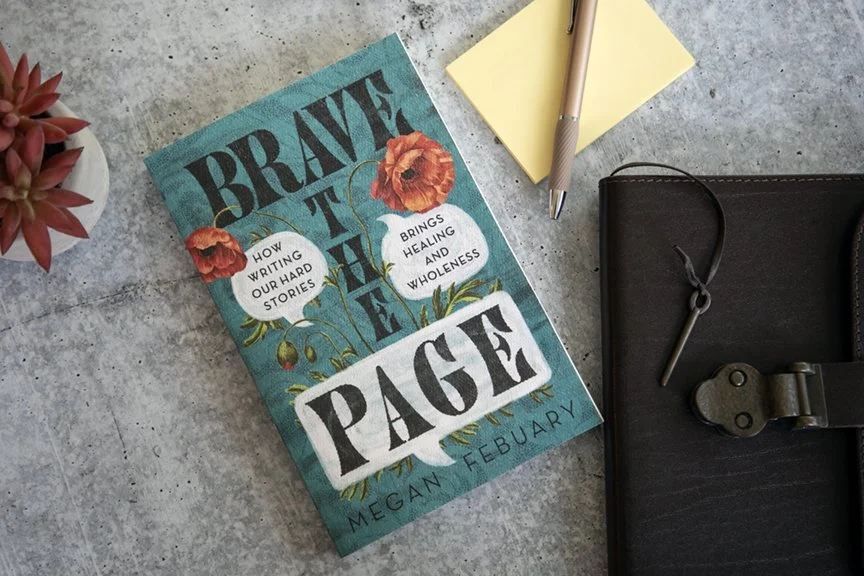
Brave the Page by trauma-informed writing coach Megan Febuary shares how to probe memories, write about your hard experiences, and find healing.
You start out with excitement and fervor—blank pages are feverishly filled with stories about your life. But what can you do when your memoir momentum wanes?
By holding as your goal the idea of ‘writing your memoir,’ you are focused too soon on the end goal. Instead, think about writing towards your memoir.
Are you nervous about undertaking a life story project? Working with a personal historian or memoir coach can help alleviate many of the most common fears.
Is there ever really a ‘right’ time to start writing your memoir? There’s not, in my opinion, but here are two questions to ask yourself to help you decide.
Writer’s block can happen to the best of us. This simple idea—keeping a notebook of self-generated writing prompts—will keep your memoir ideas flowing.
Looking for a meaningful gift for your parents? An annual subscription to our Write Your Life memory and writing prompts may be just the thing—or, maybe not.
Learn about our Write Your Life course, providing memory prompts, writing guidance and a dose of inspiration to anyone who wants to preserve their stories now.
Here’s one time I gave in to my client’s preferences that still haunts me: Why we did not identify people in any of the photos in their family history book.
While your memoir is telling your stories in your words, a family tree chart outlining your relationships has a real place in that book—here’s why.
The first draft of your life story is likely to include some stuff you decide to cut later—but should none of your challenges make it into your final book?
Good writing prompts will rid you of blank-page anxiety—and you can easily write your own! Here, 5 steps to drafting a library of personalized memoir prompts.
While a journal called “Memories from Mom” or “Grandma’s Life Story” may be brimming with good intentions, the fact is that most of them remain mostly blank.
While all five of these books add value to any memoirist or life writer’s library, I’ve identified which is best for you based on your goals and experience.
A love letter (or book!) overflowing with memories makes a thoughtful anniversary gift. Here, 14 writing prompts to help you honor—and surprise—your partner.
Wondering if 52 weeks of memory prompts will help YOU write about your life at last? Here, answers to the most commonly asked questions about Write Your Life.
Every week you’ll get themed prompts to stir your memories, tips to write your stories with ease, and more! A unique gift for your loved one (or yourself)!
Sometimes all it takes to get unstuck with your personal writing is paying attention. Here are some easy (fun) ways to come up with journal writing prompts.
Ready to edit your family history or life story book? Follow these three tips from a personal historian to ensure everything is clear for your descendants.
This new book by Ruta Sepetys, You: The Story, is a great tool for those who want to use their own life experiences to inform their fiction writing.
Have you ever thought about what will happen to your diaries—who will read them, how you may one day use them? Join me as I consider this profound question.
Photos that have no captions will leave readers of your heirloom book guessing. Make sure to write captions that either tell a story or provide vital details.
Finishing a family history book can feel like saying goodbye. Learn why it’s so hard to end—and how completing the story can become its own act of love.
Discover the 6 best resources to add context to family history. Historical archives, newspapers, photos, and podcasts bring your ancestors’ stories to life.
I hope these quotes from my commonplace book remind you why family history and stories of our ancestors matter—and why now is always the best time to delve in.
Four steps to help you turn spoken stories into engaging written narratives—so once the family history interview is done, you can create a lasting legacy.
Cataloguing your family heirlooms in a book is a great way to pass down their stories. Here are some tips for capturing incredible images of them, too.
The holiday’s meaning often gets lost amidst long weekends and cookouts, but we’ve got easy ways to remember loved ones who died in service.
There’s way more to family history than clicking on digital hints and scouring online genealogy sites. Here, three ideas for tracking family history clues IRL.
You’ve decided to do SOMETHING with all that family history stuff you’ve gathered—but somehow your project keeps growing. Here’s how to cross the finish line.
“I wish I knew why Mom moved to New York when she was just 16.” “I wish Papa told me how he makes his Sunday sauce.” Don’t wish for stories; ask for them.
Learn about our Write Your Life course, providing memory prompts, writing guidance and a dose of inspiration to anyone who wants to preserve their stories now.
A roundup of the most popular (and helpful!) posts from Modern Heirloom Books to help you prompt and preserve family stories this Thanksgiving season.
Five easy ways to get the best stories from your family member just by responding thoughtfully to their answers (hint: it starts with really listening!).
Whether you’re interviewing your parents about their childhood or gathering family history info from your grandparents, good follow-up questions are key.
While your memoir is telling your stories in your words, a family tree chart outlining your relationships has a real place in that book—here’s why.
Podcast host Melissa Ceria and personal historian Dawn Roode discuss the importance of family history preservation and finding solace in stories after loss.
Discovering a stack of handwritten letters can feel like winning the family history lottery—but is it always the right thing to read (or share) them?
From a conference hall filled with more than 150 family history vendors, I have hand-picked my favorites—here’s why you’ll love them, too.
Boxes of old letters, family photos, and mementos from a generation ago can feel like a burden if they’re passed down without context. What to do with them.
Wondering if 52 weeks of memory prompts will help YOU write about your life at last? Here, answers to the most commonly asked questions about Write Your Life.
Every week you’ll get themed prompts to stir your memories, tips to write your stories with ease, and more! A unique gift for your loved one (or yourself)!
Want to organize your family history archive? This cheap, convenient solution is a great way to record your stories until you’re ready to move them into a book.
No interest in family history? What if I told you there would be no research involved, no libraries, no family trees—just spoken stories? From mom, from dad?
Ready to edit your family history or life story book? Follow these three tips from a personal historian to ensure everything is clear for your descendants.
Whether your family heirloom collection consists of generations’ worth of antiques or a handful of sentimental items, catalog them for the next generation.
Family reunions are optimal occasions for gathering family history—and if you go in with a plan, you’ll be able to preserve stories AND have a great time!
Don’t let all those memory-keeping ideas swirling around your head overwhelm you. Instead, take some time to hone in on which stories to tell first—here's how.
There are a variety of reasons—including traumatic memories—when pausing a personal history interview is the best course of action. Give in to the silence if...
Your legacy is more than the assets you leave behind—much more. Here, three ways to leave a personal legacy that has a positive impact on your loved ones.
Beyond family photos: Consider adding vintage maps, family tree charts, and professionally shot images of special heirlooms to your family history book.
Our memories are anything but fixed—and when stories are passed down to a new generation, their malleability, their meaning, and their impact change, too.
In conversation about “the gift of family stories”
Podcast host Melissa Ceria and personal historian Dawn Roode discuss the importance of family history preservation and finding solace in stories after loss.
Recently I was a featured guest on the podcast The Loss Encounters, hosted by Melissa Ceria.
Melissa is a French-American journalist and the founder of Studio Ceria, which has created and produced high-profile speaker series for Fortune 500 companies and cultural institutions such as the French Institute Alliance Française (FIAF) and NeueHouse in New York. She began her career as a writer and editor at major fashion magazines, including Harper’s Bazaar, where she and I worked together.
Melissa, as creator of The Loss Encounters, and I, as founder of Modern Heirloom Books, share a love and respect for the power of stories; we found our way to family stories, in particular, via somewhat parallel paths. When my mother died, I was bereft at the loss of our shared collective memory, and saddened to discover that the journals she had left behind were only sparsely written in. Melissa, on the other hand, was bequeathed a precious gift just ten days before her father, Lorenzo Weisman, passed—A Family Story, a book he wrote about their family’s history. It is an heirloom that continues to bring her solace all these years later. “It’s filled with stories, photos, poems, and letters that have brought us comfort and connection,” she says.
Our brief conversation, titled “The Gift of Family Stories,” was released as a bonus episode of The Loss Encounters in honor of Father’s Day earlier this month. It is, Melissa says, “dedicated to my dad, and invites all of us to cherish and preserve our own family stories.”
I share it with you here today in hopes that you, too, will be inspired to cherish and preserve your own family stories. Enjoy!
Transcript
(Edited slightly for clarity)
Melissa Ceria: On a warm September evening in 2012, my dad, Lorenzo Weisman, sat down at his dining room table and dedicated the book he'd written about our family to each of his grandchildren. He died ten days later on September 22nd, 2012. His book, titled A Family Story, is a beautiful account of my family's origins, our ancestors, the long life that my parents built together, and the families that joined ours through marriage. It's filled with stories and photos, poems, and letters. There's a lot of love in it. And I'm glad that my dad didn't varnish things. He just told our family's story by piecing together the mosaic of our lives. I think that writing it also allowed him to review his own remarkable journey, and to feel at peace by the time he died. No one could have guessed that A Family Story would also become our companion in grief. We leaf through it when we miss dad, when we need to hear his voice, or if we want to share family stories with our kids. It's been a huge gift for the grandchildren that never got to meet him. Through this, they know dad and we can all talk about him. A decade after his death, I've been thinking about the importance of sharing our stories with those we love. So I called up my friend Dawn Roode. Dawn is the founder of Modern Heirloom Books. As a personal historian, she helps people write their stories and preserves them in beautifully bound books that generations will cherish. Our conversation felt like the call to action. Collecting our memories is a gift for those we leave behind. Hi, Dawn. It's lovely to have you here.
Dawn Roode: Thrilled to be here. Thank you, Melissa.
Melissa Ceria: Tell me how you got started with this work.
Dawn Roode: I was a new mom, and my son had actually been born three months before my mother passed away. It was a very unexpected death. And so, you know, I was dealing with the supreme joys of motherhood and the lowest depths of grief at the same time. And it was a really challenging time for me. I ended up making a book in honor of my mom. Didn't start out that way. It started out me writing a lot of remembrances about her. I had this feverish sense that I was going to lose my memories of her, and it was so important for me to get them down. And as a writer and an editor, someone who came from that background, that was the natural way for me to do so, was to just write in a journal. But eventually, as I went through her photos, I wanted to make something that was more substantive, more permanent. I knew that my son would never know my mom, and that kind of broke my heart, and that was the inspiration for me to make the actual book. It was such a rewarding experience for me, and I thought I might be able to help other people do the same thing.
[00:03:21]
Melissa Ceria: When people start working with you, are they clear about what they want to communicate?
[00:03:25]
Dawn Roode: It runs the gamut. It's very interesting when someone comes to me and says, "I want to do my story," very often they have a good idea of what they want to share. Almost always, it ends up going in a new direction once the interviews start, because they surprise themselves with what a rich life they've led. "Oh, and I forgot about this." And so the mere act of telling the stories, of me being a curious and engaged listener and asking pointed questions, helps them go in new directions and discover meaning that they hadn't expected in their lives. Other times people come to me where it's the younger generation that wants to preserve their parents’ or their grandparents’ stories, and that's a very different dynamic, where the people come and say, "I don't have a story to tell." It wasn't their idea. They're like, "I have nothing to say. My life is pretty boring, pretty standard." So there's a whole little conversational thing that happens to get them to the right place. And those are even more wonderfully surprising, because at the end they say things like, "wow," I literally had a client say, "I lived a really amazing life so far, and I had no idea." And so that power of reflection, I think is just really transformative. And I look at myself as a guide for them. So I help them find the story and put them on the path to kind of make some narrative sense of it.
[00:04:43]
Melissa Ceria: What are the qualities that support the work that you do?
[00:04:46]
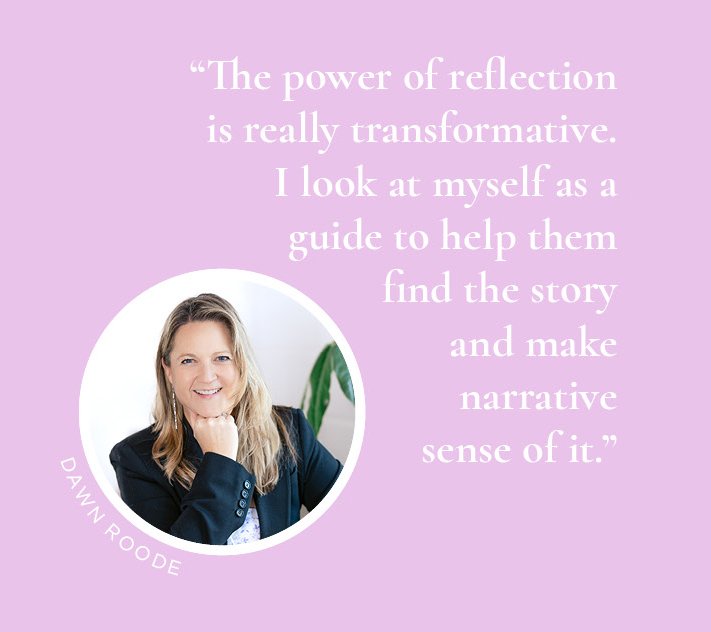
Dawn Roode: So certainly curiosity is one, but I think being a good listener is at the heart of everything that I do. I feel like I hold a sacred space for people. I try to be very generous of spirit with people. I think empathy is another. People are very hard on themselves and I want them to know any of their feelings are valid. The choices they've made are worth looking at with forgiveness, with gratitude.
[00:05:12]
Melissa Ceria: Do you think when we review our own lives, we can be very critical of ourselves? Or do you think we give ourselves more slack?
[00:05:20]
Dawn Roode: You know, it's really interesting. I find when people are writing about themselves, we can be much harder on ourselves. The dynamic when I'm interviewing someone, I can sense when that criticism is coming in, or the reluctance to kind of go in a certain direction because there may be shame or critical thought about a previous decision. What I try to do is empower them that "you came out the other side, and there's a lesson in there for your descendants or for yourself." So the power of two, of me being a listener, I think, helps people find that generosity of spirit for themselves.
[00:05:55]
Melissa Ceria: If somebody isn't prepared to write their own story, or they can't necessarily hire somebody to help them do that, what are some of the ways that we can gather these stories?
[00:06:04]
Dawn Roode: I say to people all the time, it doesn't have to be long. I think that's the biggest thing, is do something rather than nothing, and you can always change it. Four years later you can say, "Oh, you know that thing I have in the drawer? That is something I'm going to go rewrite it." But the fact that you're even thinking about it, I think is always a good start. And then it's just takes some kind of action to do it. And if you can't write, dictate—we have smartphones, so just dictate right into there. There's software that will automatically transcribe it now. And you can leave your voice. Just leave an audio recording if that's easier for you. It doesn't have to be monumental, I think is the message.
[00:06:40]
Melissa Ceria: Do you find that people that you work with, if they are nearing the end of their lives, have a greater sense of peace after they've communicated something to their loved ones?
[00:06:52]
Dawn Roode: I do. It's something palpable that I can feel as our interviews proceed, and as we're getting closer to having something to completion. There's a shift in the way that they are talking about their life. There's a shift and a certain calmness that comes with it. But beyond me sensing it, people have told me that. One client in particular comes to mind who just, he thanked me repeatedly for giving him the space to do this, but I wanted to thank him. I had such gratitude to him for being open about it, and what he was so grateful for was that "I have perspective. That I looked back on my life and realized it was wonderful." What more could you ask for? And what a wonderful thing to tell those that you're leaving behind. There's a great peace that comes from it, and also an empowerment to let go at a certain point when the time comes.
[00:07:46]
Melissa Ceria: Do you think it's in our nature to want to leave messages behind?
[00:07:49]
Dawn Roode: I do, and what I've tried to do through my work and and after losing my mom in particular, is to encourage people to be intentional about what we leave behind so that people aren't scrounging through the emails and their texts in search of something, but that we leave something specific. I think that that holds even greater meaning for both parties. For the person leaving it behind, it gives you a sense of peace that you've said certain things. And for the person receiving that, how wonderful to know that your loved one was thinking of you and that you can hold on to this.
[00:08:21]
Melissa Ceria: It’s not surprising that my dad’s book brings us solace. To Dawn’s point, he wrote it with intention, and the words that he gifted us were meant to offer comfort. I’m so grateful for his gift. This is Melissa Ceria. Thank you for listening.
Learn how keeping a notebook can nurture memoir and legacy writing—each blank page a new possibility for memory and meaning.
Words from seasoned memoirists remind us that writing about our lives isn’t just an act of preservation—it’s an act of connection, reflection, and courage.
Stay inspired with 52 weekly writing prompts for journaling and family history. Capture memories, dreams, and stories big and small. Bonus: Downloadable guide!
Go beyond labels with this powerful memoir prompt: introduce yourself without name, job, or age. Includes writing tips and a free downloadable worksheet.
The three most common excuses I hear for not writing about your life “yet,” and how—and why—to overcome them. It’s not too soon for your memoir, I promise.
Discover how (and why) bending certain grammar rules in memoir and life story writing can enhance voice, rhythm, and authenticity in your storytelling.
Even the most seasoned writer sometimes feels hopeless when they sit down to write and nothing comes. Here, 7 helpful resources for budding memoirists.
Four steps to help you turn spoken stories into engaging written narratives—so once the family history interview is done, you can create a lasting legacy.
Brave the Page by trauma-informed writing coach Megan Febuary shares how to probe memories, write about your hard experiences, and find healing.
You start out with excitement and fervor—blank pages are feverishly filled with stories about your life. But what can you do when your memoir momentum wanes?
By holding as your goal the idea of ‘writing your memoir,’ you are focused too soon on the end goal. Instead, think about writing towards your memoir.
Are you nervous about undertaking a life story project? Working with a personal historian or memoir coach can help alleviate many of the most common fears.
Is there ever really a ‘right’ time to start writing your memoir? There’s not, in my opinion, but here are two questions to ask yourself to help you decide.
Writer’s block can happen to the best of us. This simple idea—keeping a notebook of self-generated writing prompts—will keep your memoir ideas flowing.
Looking for a meaningful gift for your parents? An annual subscription to our Write Your Life memory and writing prompts may be just the thing—or, maybe not.
Learn about our Write Your Life course, providing memory prompts, writing guidance and a dose of inspiration to anyone who wants to preserve their stories now.
Here’s one time I gave in to my client’s preferences that still haunts me: Why we did not identify people in any of the photos in their family history book.
While your memoir is telling your stories in your words, a family tree chart outlining your relationships has a real place in that book—here’s why.
The first draft of your life story is likely to include some stuff you decide to cut later—but should none of your challenges make it into your final book?
Good writing prompts will rid you of blank-page anxiety—and you can easily write your own! Here, 5 steps to drafting a library of personalized memoir prompts.
While a journal called “Memories from Mom” or “Grandma’s Life Story” may be brimming with good intentions, the fact is that most of them remain mostly blank.
While all five of these books add value to any memoirist or life writer’s library, I’ve identified which is best for you based on your goals and experience.
A love letter (or book!) overflowing with memories makes a thoughtful anniversary gift. Here, 14 writing prompts to help you honor—and surprise—your partner.
Wondering if 52 weeks of memory prompts will help YOU write about your life at last? Here, answers to the most commonly asked questions about Write Your Life.
Every week you’ll get themed prompts to stir your memories, tips to write your stories with ease, and more! A unique gift for your loved one (or yourself)!
Sometimes all it takes to get unstuck with your personal writing is paying attention. Here are some easy (fun) ways to come up with journal writing prompts.
Ready to edit your family history or life story book? Follow these three tips from a personal historian to ensure everything is clear for your descendants.
This new book by Ruta Sepetys, You: The Story, is a great tool for those who want to use their own life experiences to inform their fiction writing.
Have you ever thought about what will happen to your diaries—who will read them, how you may one day use them? Join me as I consider this profound question.
Photos that have no captions will leave readers of your heirloom book guessing. Make sure to write captions that either tell a story or provide vital details.
Finishing a family history book can feel like saying goodbye. Learn why it’s so hard to end—and how completing the story can become its own act of love.
Discover the 6 best resources to add context to family history. Historical archives, newspapers, photos, and podcasts bring your ancestors’ stories to life.
I hope these quotes from my commonplace book remind you why family history and stories of our ancestors matter—and why now is always the best time to delve in.
Four steps to help you turn spoken stories into engaging written narratives—so once the family history interview is done, you can create a lasting legacy.
Cataloguing your family heirlooms in a book is a great way to pass down their stories. Here are some tips for capturing incredible images of them, too.
The holiday’s meaning often gets lost amidst long weekends and cookouts, but we’ve got easy ways to remember loved ones who died in service.
There’s way more to family history than clicking on digital hints and scouring online genealogy sites. Here, three ideas for tracking family history clues IRL.
You’ve decided to do SOMETHING with all that family history stuff you’ve gathered—but somehow your project keeps growing. Here’s how to cross the finish line.
“I wish I knew why Mom moved to New York when she was just 16.” “I wish Papa told me how he makes his Sunday sauce.” Don’t wish for stories; ask for them.
Learn about our Write Your Life course, providing memory prompts, writing guidance and a dose of inspiration to anyone who wants to preserve their stories now.
A roundup of the most popular (and helpful!) posts from Modern Heirloom Books to help you prompt and preserve family stories this Thanksgiving season.
Five easy ways to get the best stories from your family member just by responding thoughtfully to their answers (hint: it starts with really listening!).
Whether you’re interviewing your parents about their childhood or gathering family history info from your grandparents, good follow-up questions are key.
While your memoir is telling your stories in your words, a family tree chart outlining your relationships has a real place in that book—here’s why.
Podcast host Melissa Ceria and personal historian Dawn Roode discuss the importance of family history preservation and finding solace in stories after loss.
Discovering a stack of handwritten letters can feel like winning the family history lottery—but is it always the right thing to read (or share) them?
From a conference hall filled with more than 150 family history vendors, I have hand-picked my favorites—here’s why you’ll love them, too.
Boxes of old letters, family photos, and mementos from a generation ago can feel like a burden if they’re passed down without context. What to do with them.
Wondering if 52 weeks of memory prompts will help YOU write about your life at last? Here, answers to the most commonly asked questions about Write Your Life.
Every week you’ll get themed prompts to stir your memories, tips to write your stories with ease, and more! A unique gift for your loved one (or yourself)!
Want to organize your family history archive? This cheap, convenient solution is a great way to record your stories until you’re ready to move them into a book.
No interest in family history? What if I told you there would be no research involved, no libraries, no family trees—just spoken stories? From mom, from dad?
Ready to edit your family history or life story book? Follow these three tips from a personal historian to ensure everything is clear for your descendants.
Whether your family heirloom collection consists of generations’ worth of antiques or a handful of sentimental items, catalog them for the next generation.
Family reunions are optimal occasions for gathering family history—and if you go in with a plan, you’ll be able to preserve stories AND have a great time!
Don’t let all those memory-keeping ideas swirling around your head overwhelm you. Instead, take some time to hone in on which stories to tell first—here's how.
There are a variety of reasons—including traumatic memories—when pausing a personal history interview is the best course of action. Give in to the silence if...
Your legacy is more than the assets you leave behind—much more. Here, three ways to leave a personal legacy that has a positive impact on your loved ones.
Beyond family photos: Consider adding vintage maps, family tree charts, and professionally shot images of special heirlooms to your family history book.
Our memories are anything but fixed—and when stories are passed down to a new generation, their malleability, their meaning, and their impact change, too.
To read or not to read? How to handle a deceased family member’s personal letters
Discovering a stack of handwritten letters can feel like winning the family history lottery—but is it always the right thing to read (or share) them?
I have created wonderful heirloom books filled with letters that help tell the story of a family. Sometimes, though, we may not feel so comfortable reading our deceased loved ones’ personal reflections. Before you include their letters in your book, reflect on how they’d feel about it—then, make an informed, thoughtful decision.
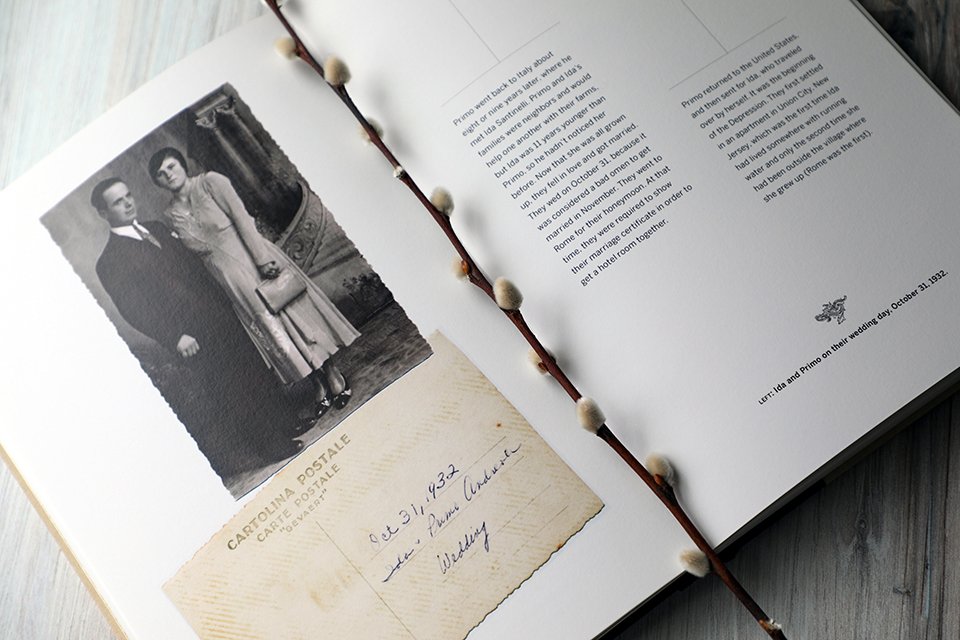
My parents divorced when I was a child, and I do not have a relationship with my father. But I was close to my mother until her death. She shared a great deal with me, and we spoke openly about our feelings. When I was sorting her estate I came upon things I was excited to find: letters from me that she had saved, a memory-keeping journal where a handful of questions were answered in her pristine penmanship (how I wish she had written more in those pages!), a scrapbook of her youth that she had made in her fifties. I reproduced some things, including favorite handwritten recipes and letters between us, in a tribute book I wrote in her honor about a year after she died. I did not, however, include any of the letters sent between her and her newlywed husband when he was stationed in Korea.
If my mother were alive and we had discovered those saved letters together, I have no doubt she would have shared details with me. She would have told me why she saved them even after a bitter divorce. She would have talked about young love and her dreams and she would have answered any questions I had.
But my mother was no longer here to answer questions or to provide context. At first I was excited to unearth that correspondence; then, as now, I would cherish anything that connected me to my mom. I opened the top letter and began reading. The letter was intimate. It wasn’t sexual, but it was clearly intended for my mother’s eyes only. I refolded the letter, put it back in its envelope, and chose not to read any further. It felt like an invasion of her privacy, and I wanted to respect that.
Was I bound by some moral code not to read my mother’s letters? I don’t think so. To me, it just felt wrong. So I followed my gut.
Indeed, most genealogists regard letters as valuable family artifacts to be mined for family history information and stories. As genealogist Denise May Lovesick writes in her piece “Ethics, Etiquette and Old Family Letters,” “to reject reading old letters on the basis of ‘personal privacy’ seems counter-productive.”
In an online exchange about the ethics of reading letters of a deceased person, questions arise: Can the dead be rights-holders, morally? Is it an invasion of privacy to read letters not intended for you? Does the deceased have a right to have their memory protected? As one contributor shares, “the damage caused to that person is zero (he's dead), while everybody will benefit from the historical knowledge.”
Is it always okay to read (and share) letters from our deceased family?
So while it may not be morally or ethically wrong to read your ancestors’ letters (I have created quite a few books of family correspondence that are treasured parts of those families’ legacies!), if you have reservations, consider these questions:
What is giving you pause?
You may be worried that the letters will reveal a side of your family member you knew nothing about; that may be the case, and you should prepare yourself for that inevitability should you decide to read them. Perhaps you feel like you would be invading their privacy; if you have conviction that if they were alive, they would not want you to read the letters, then it may be prudent to respect those wishes, surmised though they may be.
Are you reluctant to read the letters, to share them, or both?
Remember that there is a difference between you or another loved one reading your parents’ letters, versus digitizing and printing them for a wider audience. You cannot decide whether to share a personal correspondence until you read it, and then you will need to make an informed decision: Will reproducing the letters (in a family history book, for instance) provide insight or historical context without maligning the letter-writer? Then you may want to share them. Will reproducing the letters reveal sensitive information that might hurt someone else, living or deceased? Then you may want to reconsider.
How would you want someone to act if the letters were your own?
Imagine you have a stash of letters hidden in your closet—they are meaningful to you, but private. You have saved them, and hidden them, for reasons known only to you. If a family member were to discover them after you died, would you want them to read them? Such consideration may help you make a mindful decision.
There is no black-and-white answer to the question, Should I read my deceased loved one’s personal letters? It is not morally wrong to read them, nor is it necessarily an invasion of their privacy. But there may be good reasons your gut tells you not to read them—and if that is the case, I hope these reflections will help you come to an answer that is right for you.
If you have a collection of letters that you feel tells an important part of your family history and would like help building an heirloom book around them, please reach out to discuss how we could work together.
Finishing a family history book can feel like saying goodbye. Learn why it’s so hard to end—and how completing the story can become its own act of love.
Discover the 6 best resources to add context to family history. Historical archives, newspapers, photos, and podcasts bring your ancestors’ stories to life.
I hope these quotes from my commonplace book remind you why family history and stories of our ancestors matter—and why now is always the best time to delve in.
Four steps to help you turn spoken stories into engaging written narratives—so once the family history interview is done, you can create a lasting legacy.
Cataloguing your family heirlooms in a book is a great way to pass down their stories. Here are some tips for capturing incredible images of them, too.
The holiday’s meaning often gets lost amidst long weekends and cookouts, but we’ve got easy ways to remember loved ones who died in service.
There’s way more to family history than clicking on digital hints and scouring online genealogy sites. Here, three ideas for tracking family history clues IRL.
You’ve decided to do SOMETHING with all that family history stuff you’ve gathered—but somehow your project keeps growing. Here’s how to cross the finish line.
“I wish I knew why Mom moved to New York when she was just 16.” “I wish Papa told me how he makes his Sunday sauce.” Don’t wish for stories; ask for them.
Learn about our Write Your Life course, providing memory prompts, writing guidance and a dose of inspiration to anyone who wants to preserve their stories now.
A roundup of the most popular (and helpful!) posts from Modern Heirloom Books to help you prompt and preserve family stories this Thanksgiving season.
Five easy ways to get the best stories from your family member just by responding thoughtfully to their answers (hint: it starts with really listening!).
Whether you’re interviewing your parents about their childhood or gathering family history info from your grandparents, good follow-up questions are key.
While your memoir is telling your stories in your words, a family tree chart outlining your relationships has a real place in that book—here’s why.
Podcast host Melissa Ceria and personal historian Dawn Roode discuss the importance of family history preservation and finding solace in stories after loss.
Discovering a stack of handwritten letters can feel like winning the family history lottery—but is it always the right thing to read (or share) them?
From a conference hall filled with more than 150 family history vendors, I have hand-picked my favorites—here’s why you’ll love them, too.
Boxes of old letters, family photos, and mementos from a generation ago can feel like a burden if they’re passed down without context. What to do with them.
Wondering if 52 weeks of memory prompts will help YOU write about your life at last? Here, answers to the most commonly asked questions about Write Your Life.
Every week you’ll get themed prompts to stir your memories, tips to write your stories with ease, and more! A unique gift for your loved one (or yourself)!
Want to organize your family history archive? This cheap, convenient solution is a great way to record your stories until you’re ready to move them into a book.
No interest in family history? What if I told you there would be no research involved, no libraries, no family trees—just spoken stories? From mom, from dad?
Ready to edit your family history or life story book? Follow these three tips from a personal historian to ensure everything is clear for your descendants.
Whether your family heirloom collection consists of generations’ worth of antiques or a handful of sentimental items, catalog them for the next generation.
Family reunions are optimal occasions for gathering family history—and if you go in with a plan, you’ll be able to preserve stories AND have a great time!
Don’t let all those memory-keeping ideas swirling around your head overwhelm you. Instead, take some time to hone in on which stories to tell first—here's how.
There are a variety of reasons—including traumatic memories—when pausing a personal history interview is the best course of action. Give in to the silence if...
Your legacy is more than the assets you leave behind—much more. Here, three ways to leave a personal legacy that has a positive impact on your loved ones.
Beyond family photos: Consider adding vintage maps, family tree charts, and professionally shot images of special heirlooms to your family history book.
Our memories are anything but fixed—and when stories are passed down to a new generation, their malleability, their meaning, and their impact change, too.
A book that captures your legacy should be designed with longevity in mind, so it remains engaging and accessible for generations. It should be beautiful, too.
Go beyond a memorial slideshow and honor your lost loved one in a more permanent way. These three ideas for tribute memory books are easier than you think.
A love letter (or book!) overflowing with memories makes a thoughtful anniversary gift. Here, 14 writing prompts to help you honor—and surprise—your partner.
You've just returned from a family trip and know you want to make a travel memory book—just not right now! Follow these easy steps so you'll be ready later.
Want to make creating a travel book easy when you return from your family vacation? Follow these steps for easier—and elevated—post-trip memory-keeping.
Whether your family heirloom collection consists of generations’ worth of antiques or a handful of sentimental items, catalog them for the next generation.
Here’s how to make a tribute book for their milestone birthday—your step-by-step guide to the most unique, thoughtful gift you can give someone you love!
After we record your personal history interviews, I craft your story and photos into an heirloom coffee table book—not a video, not an audio file. Here’s why.
From gathering recipes to editing, from design to printing, these steps will walk you through how to create a family cookbook to preserve your food heritage.
From life story books to a family history collection, from travel journals to heritage cookbooks, our founder lists 10 of her favorite heirloom book themes.
A family photo book without captions is nice—but one with captions is an heirloom. A primer on what type of captions to include and how to design them cleanly.
Give your loved ones a gift they will cherish for years to come—one that puts memories front and center. Here are 3 (doable!) ideas to inspire happy tears.
The best posts to help you with memory-keeping, including family history questions, memoir writing tips, family photo preservation ideas & heirloom book themes.
If you’ve wanted to create a surprise tribute book telling your loved one JUST how special they are but cost is a factor, consider asking contributors to chip in.
These 3 photo book themes make it easy to show someone how much they are loved! Perfect for surprise birthday and graduation gifts—or just because.
Knowing your family’s recipes are preserved for the next generation is reassuring. Adding stories and photos, too, brings your food heritage to life. Start here.
When you want to cap off a milestone birthday party with a most meaningful gift, consider an heirloom birthday tribute book oozing with love and memories.
Writing a tribute book is a meaningful way to create a lasting legacy for a lost loved one. These expert tips from a personal historian will help.
If you would like to document your family stories in an adoption journey book, here is a road map for what to save, how to record memories, and when to begin.
Our food memories—sneaking tastes of Nonna’s sauce from the pot, learning to grill ribs from Dad—are worth preserving. Ideas to easily capture stories & recipes.
Searching for a groom gift beyond the traditional watch or cufflinks? Surprise him with an heirloom book expressing your love and gratitude—meaningful, unique.
Memoir reading suggestions to inspire your own vignette-style life story writing, from Annie Dillard and Kelly Corrigan to Robert Fulghum and Sandra Cisneros.
In Part Two of our Life Story Vignettes Writing Prompts series, guidance on conducting a probing self interview as an entry point to your stories and memories.
In Part One of our Life Story Vignettes Writing Prompts series, we offer five specific exercises for writing about your memories by engaging all your senses.
Preserving the full story of your adoption journey may mean sharing some of the pain, too—but how much you include is a personal decision. We can guide you.
Do you want to preserve your family stories, but have no idea where to start? We’ve got six special life story book ideas to spark your imagination.
Modern Heirloom Books founder Dawn Roode on her journey from national magazines to bespoke life story books, plus the new signature product lines of books.
Sometimes it’s not a long narrative that most interestingly tells your story, it’s a simple list. How to use lists to add texture to your life story heirloom book.
No one will tell your life stories but you. Start with one, & go beyond sharing it: Do something with it! 5 ideas for preserving one chapter of your life story.
Nine reasons why preserving your family’s story in an Adoption Journey book is a worthwhile investment, including making it part of your Gotcha Day celebration.