
Memories Matter
Featured blog Posts

READ THE LATEST POSTS

3 great ways to capture stories at a family reunion
Family reunions are optimal occasions for gathering family history—and if you go in with a plan, you’ll be able to preserve stories AND have a great time!

What other occasion will you have access to so many branches of your family in one place? Family reunions are optimal times for gathering family history—and if you go in with a plan, you’ll be able to preserve stories AND have a great time!
Family reunions are a great way to create a sense of community and belonging, visit with distant relatives, make new friends and connections, and even to pass down family history and traditions. At your next big familial gathering, why not be intentional about collecting family stories with these ideas for making story preservation fun and easy:
Then, enjoy these tips for ensuring your stories are properly preserved (and shared!) PLUS some bonus ideas for even more family reunion family history activities!
1 - Set up a mobile story recording booth.
Okay, not a booth, necessarily, but an area dedicated to recording family members’ stories is fairly easy to create:
Choose somewhere as quiet as possible (a separate room if your reunion is at least partially indoors, or a picnic table set apart from the group under a shady tree, for example, if the reunion is outside).
Set up a recorder of some kind—it can be an audio recording app on your phone (I recommend using two just in case one has technical difficulties) or a camera atop a tripod set to record video (in which case I recommend having a designated person to mind the camera).
Create a sign-up sheet and encourage as many of your family elders, in particular, to pick a time slot and share some stories! You may wish to create this in advance of the reunion, or else invite people to sign up as they arrive.
Provide a list of a few questions or story prompts to give story sharers ideas of what to talk about, or choose a single theme for all storytellers to stick to (think “Growing up as a Smith,” “Childhood memories,” or “Family food memories”).
You may want to have storytellers share their stories with no audience (in other words, speaking directly to the recording device on their own)—a good option if you or another individual doesn’t want to be tied to this activity all day. However, I find that having an engaged listener helps a storyteller tremendously—so consider having pairs of family members enter your “booth” to swap stories with one another. A great option is to have younger family members interview family elders—a grandchild interviewing a grandparent, for instance, or a younger sibling interviewing their older sibling. You want an interesting dynamic, certainly, but most importantly you want to have a genuinely curious listener asking questions and prompting stories from their partner.
Lastly, create a set of directions—something as simple as:
At the beginning of your recording, introduce yourself: Say your name and spell it out completely.
Say who your parents are and the names of your children, if applicable.
Answer one or two of the following questions with a favorite memory or story from your life [then include a brief list of prompts or questions].
2 - Hire a professional personal historian to conduct short interviews with interested family members.
In this case, you may be following a process similar to that outlined above, but with a professional interviewer collecting oral histories. Going this route allows you to both feel assured your family history is getting recorded and also to relax and enjoy your reunion visiting with relatives.
Please reach out if this is something you are interested in—if you are in the greater New York–New Jersey region, I may be able to assist you; and if you are located elsewhere, I can likely refer you to a colleague I trust closer to your home.
3 - Get the family writing in advance with a fun reunion-day twist.
Invite family members to write one story from their life before the reunion but without putting their name on it. To make it easy and fun, give a few specific writing prompts that they can choose from, as well as a suggested word count. For example—
Write 300-750 words about:
A favorite story from your childhood that makes you smile or feel proud
A story about interacting with one of your parents or grandparents where you learned a lesson or understood something anew
A story about a time you felt loved and special
A story about a time you failed at something (it could be as small as doing poorly on a test or as big as losing a job or making a bad decision) and how you dealt with it
Do NOT sign your name or use names of your family members in your story (instead, say “my mother” or “my sister,” etc.).
To make this writing activity come to life during your family reunion: You, as the organizer of this family story-gathering activity, compile all the stories submitted by family members into a basic book (it can be as simple as a printed Google doc or photocopied pages of their handwritten accounts). Number each contribution clearly. Place this story book in a central location, and invite guests to guess who wrote each entry (you may want to pass out paper and ask them to cast their votes on it; or, if there aren’t too many stories, invite younger members of the family to read them aloud and have everyone yell out their guesses as to who the original author is).
Ensure the stories gathered at your family reunion are preserved.
Whichever approach you take to gathering stories from your extended family, it is critical that you do something to ensure those stories are preserved:
If they were recorded orally, have a plan for transcribing those oral histories (AI transcription services such as Otter.ai have made this easier than ever).
If they were written for the guessing game described above, designate one person to take notes as to the ACTUAL authors of each story, and create a new version of your simple book with all people properly identified in each story.
Make your final project accessible to everyone in the family. These stories are part of their legacy, and may in fact serve as an impetus for future life writing and genealogy research.
Consider adding photos and having your book professionally designed and printed so it becomes a tangible family heirloom that can be passed down to the next generation (and, dare I say, used as a prompt for telling MORE stories at your NEXT family reunion!).
A few more ideas for documenting family history at your family reunion
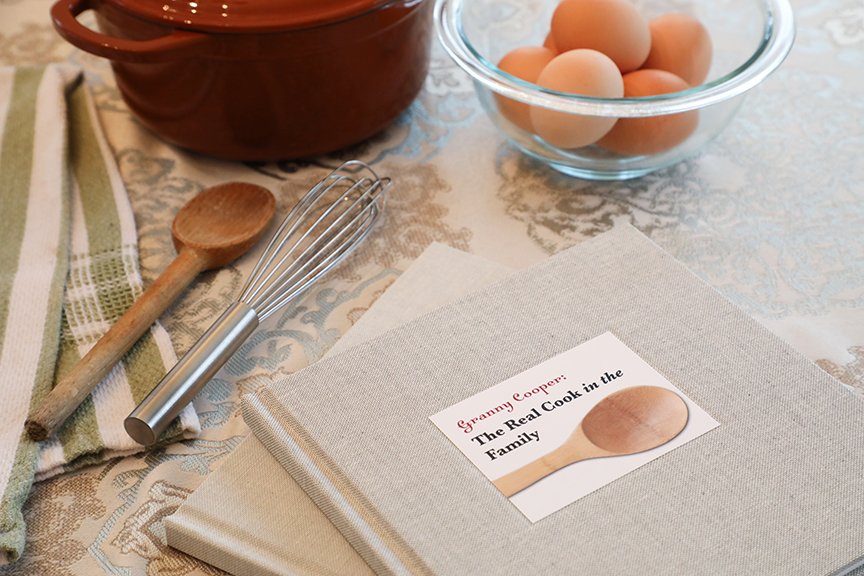
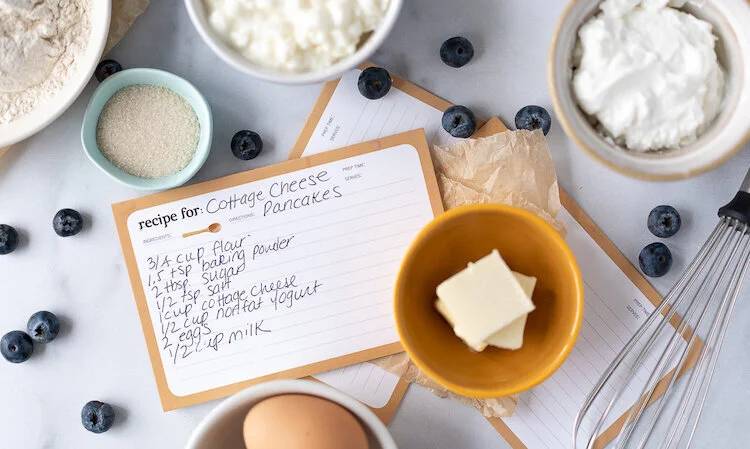
Ask everyone to share a family recipe (which you can compile into a book or distribute via a shared Google document).
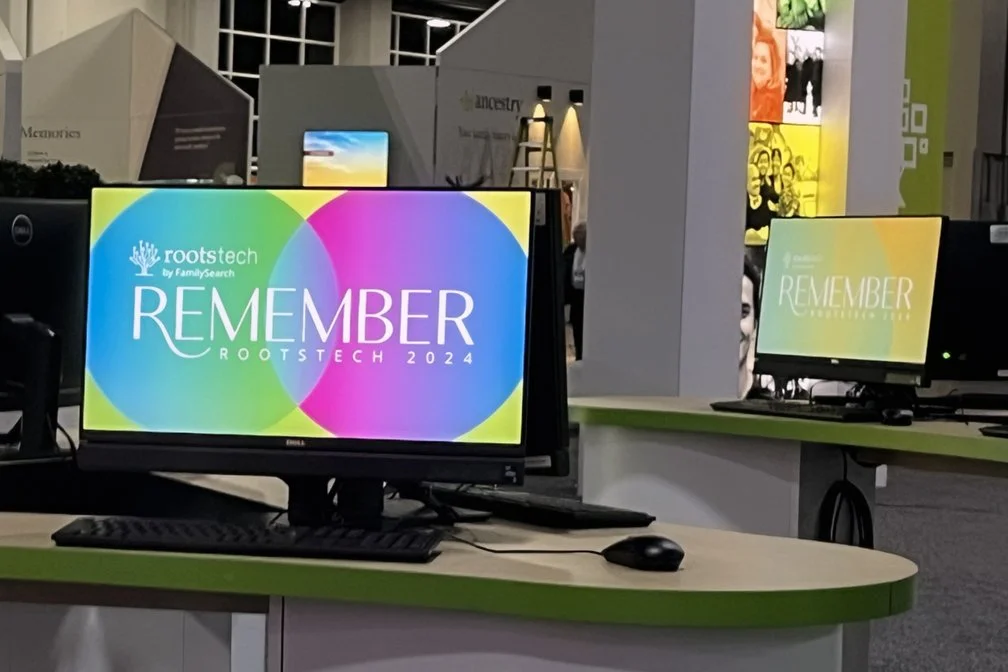
Set up a computer station with the de facto family historian’s Ancestry or Family Search account set up for viewing—and include a pad of paper where extended family members can answer genealogy questions or share memories.
Ask everyone to bring one (or a few) of the oldest family photos in their personal collection to be scanned by a family volunteer—all they need is a smart phone and an app such as Google Photo Scan or Photomyne; just be sure to clearly name the image files with the names of everyone in the photograph and any key details (date, location, etc.). Ideally, all of these photos will be made available to the group via software such as a shared Google Photos album or a service such as Forever or Permanent.org.
Create a shared digital space for everyone to upload photos they took during the reunion (family history in the making!).

Get your free guide of Essential Family History Questions
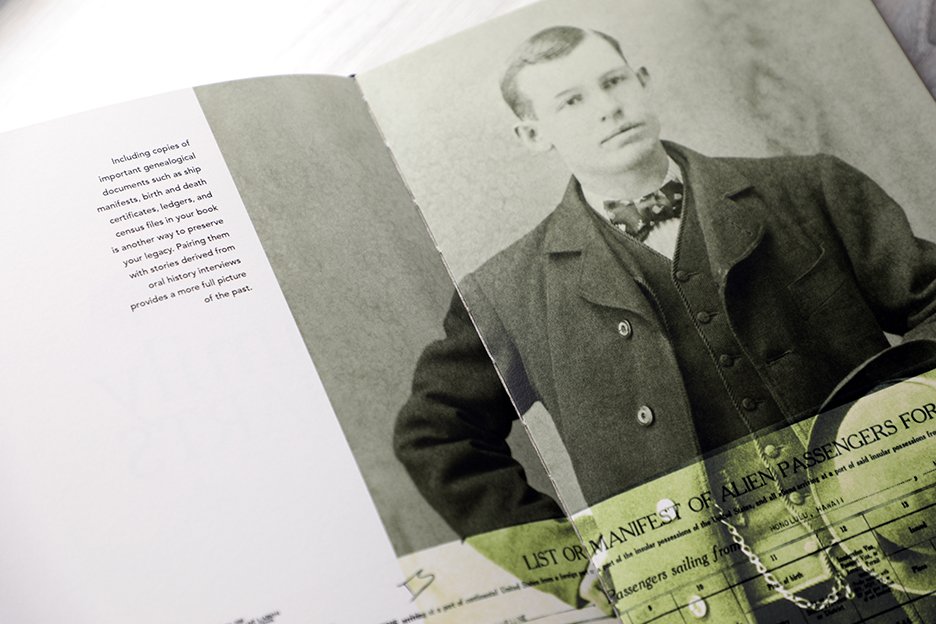
All the best family history interview questions to capture their (or your!) stories, in a beautiful printable guide
I hope that as you are having fun and strengthening bonds at your next family reunion that you will take some time to proactively record history in the form of memories and stories! Let me know if you have any questions or would like to hire a professional personal historian to guide the story sharing.













Life Story Links: May 23, 2023
This week’s curated roundup is all about memoir, memories, and myth—from how to write (and where to end) your memoir to which new autobiographical work to read.
“To speak incessantly about the wounds or triumphs of I and My Family can get pretty tiresome; the trick is to project one’s experience on the page in such an enhanced, objectified way that it acquires, or merges with, a larger significance.”
—Phillip Lopate
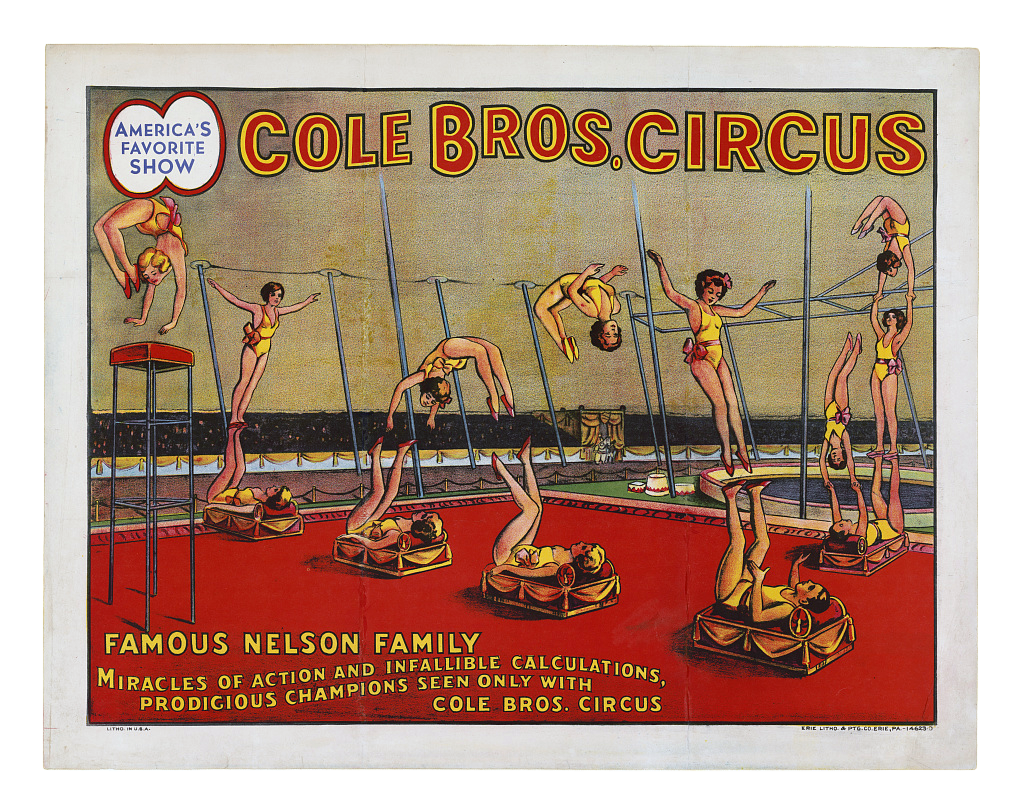
Vintage poster depicting an illustration by Arlington Gregg produced by the Work Projects Administration circa late 1930s; image courtesy of the Library of Congress Prints and Photographs Division, Digital Collection. The posters were designed to publicize exhibits, community activities, theatrical productions, and health and educational programs in seventeen states and the District of Columbia between 1936 to 1943.
Memories, memoir & myth
ON WRITING THE SELF
“If you write a memoir that ends where you thought it would, you’re probably doing something wrong,” Abigail Thomas says in this Q&A about her latest memoir, Still Life at Eighty.
DIPPING INTO THE PAST
Of her early work as a biographer, Anne Berest says, “Listening to the answers [of the people I was interviewing], I learned that every life is a novel for those who are curious enough to look into it.”
SECOND GENERATION SURVIVORS
Jill Sarkozi, a fellow member of The Biographers Guild of Greater New York, wrote this insightful, actionable post about how to preserve your parent’s story if they are a Holocaust survivor.
BUT WAS IT TRUE?
“When I started to rework these [family] stories in my writing, I called what I was doing fiction, but I wasn’t actively trying to make anything up, I was trying to uncover what the humor had kept hidden.” Luis Jaramillo on the unlikely discovery of an old family recipe.
STARS—THEY’RE JUST LIKE US!
“Creating a personal myth allows celebrities to create just that—a myth.” Landon Y. Jones traces the evolution of celebrity memoirs, from Charles Lindbergh to Will Smith.
PUTTING HERSELF IN PERSPECTIVE
“I’m old enough to feel deeply just how universal vulnerabilities tend to be—and to trust that my editors will save me from myself by cutting confessions that venture too far.” Susan Dominus on using first-person narration in her reporting.
ON BEDS AND MEMORIES
Tamzin Merivale recounts all the beds she can remember—including “the bed where [she] woke to the sound of a church choir in Slovenia, holding beauty and mourning together in [her] heart”—and in doing so, traces a life’s trajectory.
INHERITANCE & INTERGENERATIONAL HEALING
How memoirist Dionne Ford (read a review of her memoir here) found healing in the story of her enslaved ancestors and created “space to name and celebrate and mourn members of [her] family”:
REMEMBERING HIS MOTHER
In the new memoir Irma, Terry McDonnell “writes that what passes between a mother and a son is not defined by her love in the moment, but later by the echoes of her motherhood.”
THE FRAGILITY OF OUR DIGITAL “ARCHIVES”
On May 16, Google announced that starting in December 2023, it would delete personal accounts that haven’t been active in over two years. Photos, emails, and docs attached to inactive accounts will all be eradicated as part of the policy.
...and a few more links
New Yorker uses documentary photography to capture family life during the pandemic
nine people share the best life advice they ever got from their mom
Beth Kephart on designing the cover of her upcoming memoir, My Life in Paper: Adventures in Ephemera
an excerpt from A Renaissance of Our Own: A Memoir & Manifesto on Reimagining by Rachel E. Cargle
on succumbing to “ghostitis, that common illness of ghostwriters”
Short takes


Wish you were here, Mom
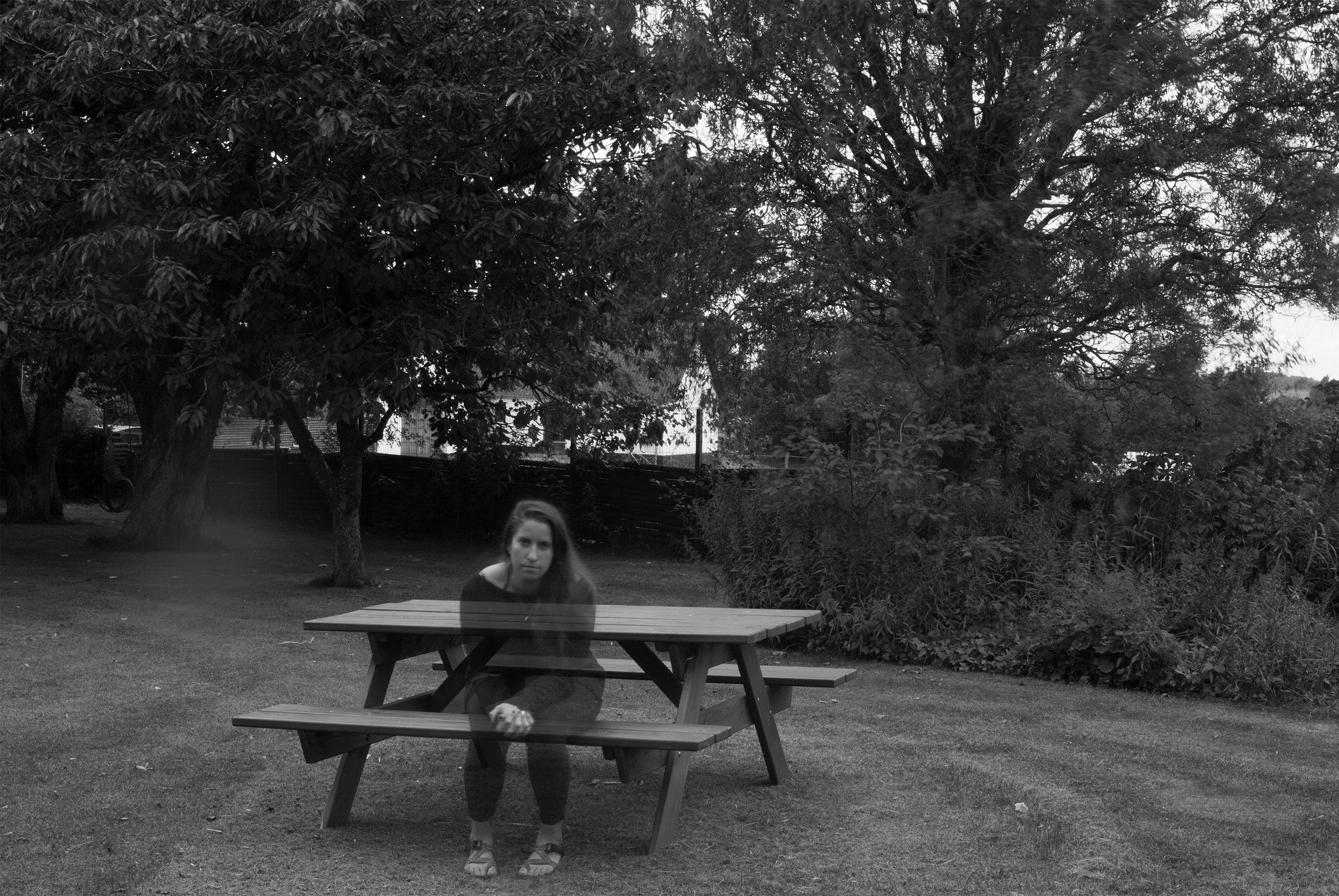
When Mother’s Day is hard due to feelings of loss, allowing ourselves to linger in our memories may help (and, yes, hurt). A tribute made in grief, and love.
When Mother’s Day approaches on the calendar, I get a little anxious. No, I’m not worried my husband and son will attempt to make me breakfast in bed (though I wouldn’t complain if they did); rather, I worry how I will balance the grief that simmers just under the surface at all times at having lost my own mother with the unadulterated joy and pride I feel in being a mother myself.
I know I am not alone in feeling my grief bubble to the surface on days such as this. At an event a couple of years ago I heard Henry Louis Gates, Jr., describe his grief at losing his mother as “still as raw and as fresh, almost, as it was when it happened”—in 1987. “If I let myself go there,” he said, “I can start crying in about two seconds. It’s like a stream flowing under this carpet—it’s right there, and I can tap into that grief at any moment.”
Ah, yes. Me, too.

When remembering lost loved ones hurts
I used to love browsing the Mother’s Day cards in the drug store, finding one (or two or three) that captured my heart for my mom—now, however, that aisle is a trigger for a feeling of aloneness. That hollow sense that descended upon me immediately after my mother died returns, and I momentarily feel like my skin is made of eggshell.
I don’t allow myself to linger in those moments (self protection, no doubt), but I have learned that if I allow them to prompt me to visit with my memories for a while, I am the better for it.
When friends or family lose someone they love, I always urge them, at some point, to let their memories provide comfort. To relish the stories they hear from others who knew their loved one. To keep their loved one’s spirit alive. On occasions such as Mother’s Day, I must remind myself anew of this advice.
A few years ago, on what would have been my mother’s 70th birthday, I shared an unusually long update on Facebook about what I was feeling. The responses both public and private from my circle of friends were overwhelmingly supportive, as close to a warm hug as I could get from social media.
Because a number of people expressed gratitude for my words that day—for recognizing my prolonged grief as their own, for glimpsing something universal in my very individual experience—I decided to share the post in this broader setting.
For all of us who have a conflicted relationship with Mother’s Day, know this:
Our mothers live on in our memories, as joyful and as painful as that may be.
Facebook reflections
From my March 16, 2017, Facebook post:
Today my mom would have been 70. It’s hard for me to fathom. And yet how easy it would be to let myself go there—to imagine that she’s been with us these past eight years, grandmother-ing [my son], supporting and guiding and loving me on weekend overnights and hours-long phone calls, making [my husband] chocolate cream pie.
I don’t let my mind go there, ever. I don’t usually imagine her in my kitchen browning oxtails for barley soup. Or sitting on the floor near our fireplace Christmas morning, relishing in her grandson’s joy over opening his piles of presents. I never think of her sipping tea in her bathrobe at my kitchen table, in my home she never ultimately saw. I especially never allow myself to feel her arms tightening around me in a meaningful hug.
My mind never goes there because my heart couldn’t take it. It would be overbearing, distracting.

There are moments that come unbidden, though, thoughts that my mind could not squash because they are made exclusively of feelings, that simply hollow me out some days: When instincts alone move my hand to hover over the phone to connect with her. When I realize anew she is gone (I had not forgotten, exactly, just not remembered, right then, that the worst had happened).
I would have guessed eight years ago that those times would have come when something sad or even a tiny bit bad had happened—when I needed her. But I would have been wrong.
Every time I have been so in the moment that I have *not remembered* that she is gone—every time—has been when I wanted to share my joy with her.
Those who knew her will recognize that, while she was one of the most supportive, least judgmental, and most generous souls to have crossed their paths (oh, the stories I could tell!), she was also gracious and grateful beyond measure—and sharing joy with her always multiplied one’s own joy.
I lost my mom when my only son was just three months old, and it was an unexpected blow to bear. And yet it happened in the midst of the most substantial, indescribable joy I had ever experienced: motherhood. I have been blessed with many great things in the years since, and I am forever grateful (a lesson learned well from her). If only I could share those joys with her. If only I could express my love for her, impossibly amplified since becoming a mom myself. If only I could imagine her as my friend walking this earthly path with me, still.
I don’t let my mind go there, not most days. But today, on what would have been her 70th birthday, I will. I am going to imagine, for just today, what it would have been like. xoxo
And on Mother’s Day, if you, too, have lost your mom, may you join me in “going there”—ruminating on our moms’ lives and love, visiting with their memory and spirit…
Related Reading
Holiday Grief: We may yearn for a lost loved one even more during the holidays, but know that shared memories are a balm to the soul, and that grief is another form of love.
Allison Gilbert shares a multitude of specific ways to keep lost loved ones’ memories alive—to actively remember them—in her book, Passed and Present.
Notes from a Funeral: Reflections from a funeral on remembrance and grief: sharing memories about lost loved ones to heal—and why we don't honor our families through story sharing now.
See how the first legacy book I ever created honored my mother—and eventually inspired Modern Heirloom Books.
NOTE:
The introduction to this post has been updated for timeliness on May 12, 2023. (Original post from May 9, 2017, included details about workshops and talks that have since passed.)

Life Story Links: May 9, 2023
The allure of journals as a place to experiment; interviews with memoirists Maggie Smith and Ava Chin; the oral stories and digital scraps that make a legacy.
“It is a captivation like no other—to hear about the adventures of those that have come before, those whose legacies are entwined with ours.”
—Joy Callaway
Vintage poster produced by the Work Projects Administration; image courtesy of the Library of Congress Prints and Photographs Division, Digital Collection. The posters were designed to publicize exhibits, community activities, theatrical productions, and health and educational programs in seventeen states and the District of Columbia between 1936 to 1943.
Writing our lives
“A NORMAL, TERRIFYING CHILDHOOD”
“I spent many nights in Cuba sitting on the porch with my family, listening to their stories, and likely learning from the way they told them. This book feels very much like the storytelling I experienced as a child.”
WORDS AND PICTURES
I write a lot about the big-picture aspects of preserving our personal histories, but last week I offered up some nitty-gritty advice about how to write the best captions for your memoir or life story book.
MINING THE DETAILS OF OUR LIVES
“So, which elements are more true, the ones penciled on notebook pages as a teen, or the ones whose impact set a course for my life, even if recalled inaccurately?” Amy White writes in this thoughtful piece about ways of remembering.
WORK, DIVORCE, WOMANHOOD
“I was angry at myself, and more than a little ashamed, that I allowed this to happen, and that I had unwittingly modeled to my children what women’s work was…. Caregiving.” Read an excerpt from Maggie Smith’s memoir, You Could Make This Place Beautiful, and read an interview with the author here.
FROM THE BACK CATALOG
Gregory Cowles is drawn to journals “for their conscious dance between private and public, for the freedom they grant writers to experiment with style and with self, and not least for their inherently fragmentary nature, each entry a new beginning.”
Honoring the past, one story at a time
HISTORIC SILHOUETTE PORTRAITS
“We just realized that [the digitized archive] will be of real interest to people who are descendants or who have relatives represented in this album, who have no other image of a great-great-grandfather, great-great-grandmother.”
FRAGILE YET ENDURING
“I really do believe that archives and collections are always telling us new stories,” a professor said of the exhibition Toni Morrison: Sites of Memory, at Princeton University through June 4, 2023.
POIGNANT GLIMPSES INTO THEIR LIVES
In this affecting piece NYT readers share “the digital scraps they found after a loved one passed away,” from a to-do list note (“remind Linda that I love her”) to a photo of the back of one dad’s head…each moving in its own way.
Form and function
BEFITTING THE OCCASION
Six staff at Shepherds, Sangorski & Sutcliffe, one of the oldest bookbinders in England, spent over 300 hours binding and finishing four bibles for His Majesty King Charles III’s Coronation.
AN EXPLORATION OF FORM
“How, I ask myself, do writers generate ghost narratives—a turn we didn’t see coming, an unexpected destination?” Leslie Jill Patterson explores the flash nonfiction ending that appears from nowhere.
THOUGHTS ON GHOSTWRITING
“That’s the mystic paradox of ghostwriting: You’re inherent and nowhere; vital and invisible. To borrow an image from William Gass, you’re the air in someone else’s trumpet.” J. R. Moehringer on collaborating on Prince Harry’s memoir, Spare.
...and a few more links
Short takes

The best photo captions do these things
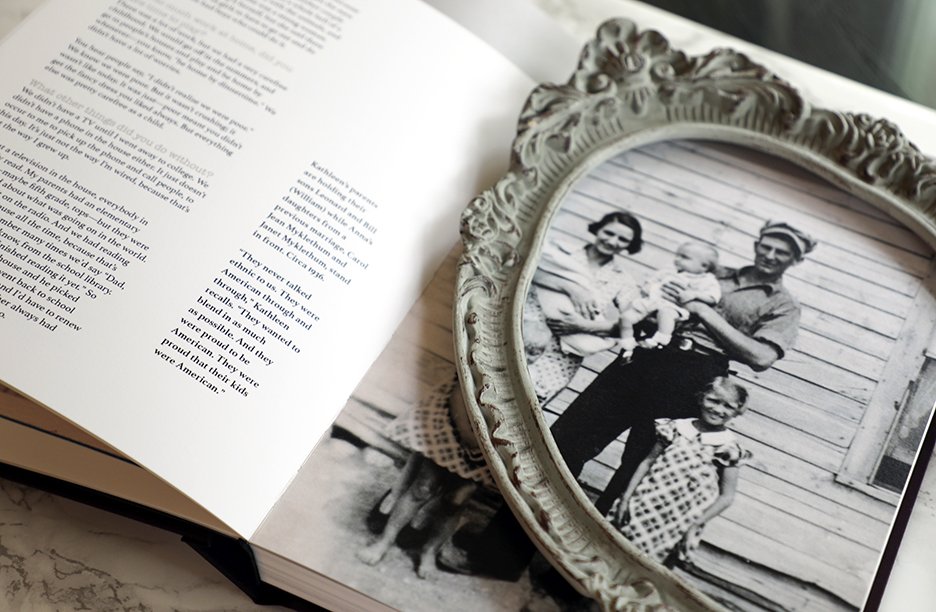
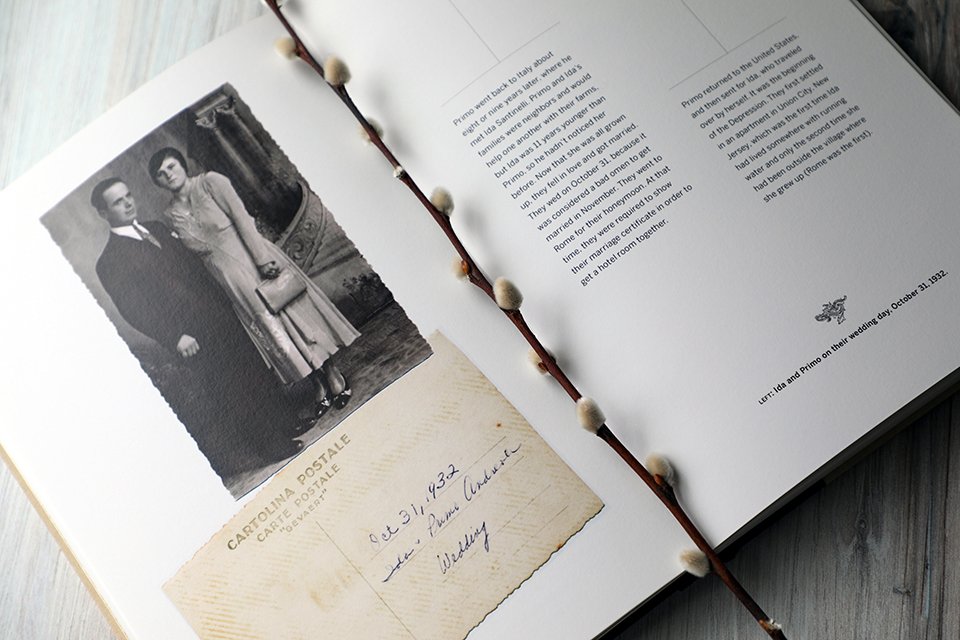
Photos that have no captions will leave readers of your heirloom book guessing. Make sure to write captions that either tell a story or provide vital details.
Every photo caption in your life story book should either tell a story or provide vital information.
Whether you are designing a family photo book with highlights from the past year or creating a long family history book with plenty of narrative text alongside a few select images, writing good captions is a key to success.
Why do I even need captions?, you may ask—especially when you already know who is pictured and you immediately recognize the scene. Who wants to state the obvious?
Well, consider this: You (and even your immediate family) are not the only ones who may be looking at this book. What if your cousins or a friend pages through it? What if—and hopefully this is the case—your kids’ kids one day read it?
And think about the effect of time: Just because you currently remember that Tom’s birthday party was held at the bowling alley two towns over, will you really remember that detail a few years from now (I can say with certainly I would not!).
Don’t worry, though, as I’ve got a little cheat sheet for you. Every caption should do one of these two things:
Every family photo caption should…
Tell a story…
Sure, you may have told a long story in the main text portion of your book that relates to a given photo, but you want to deliver value to the reader who is combing through the pages quickly, too. Admit it—sometimes you just want to page through a book and read the graphic type and look at some pictures! I guarantee your descendants will one day do this, too. So either add a new detail in the caption (how wonderful it is to get even more context or emotional punch through a caption!) or concisely reiterate what the photo is showing.
Sharing interesting info alongside the photos in your book entices new readers to go further and read the whole story. Strong captions also provide touchstones for someone who has already read the entire book, but wants to revisit the stories to reminisce and sit with their memories for a while.
…or give vital information
Indicate who is pictured in a photo with clear directionals—for example, “clockwise from top left” or “from left.”
Family photo books don’t need full names for immediate family members, but do consider using first and last names for your children’s classmates or your work colleagues, for example.
In more in-depth storytelling books such as a memoir, a legacy book, or a family history book, do use surnames to identify people the first time they are shown. And occasionally be specific about relationships, particularly as you get further back on your ancestral lines (“my paternal grandmother, Betty…”, for example, orients the reader so they don’t have to flip back to your text or a family tree to avoid confusion).
Include dates and locations for milestone events such as a bar mitzvah, a wedding, or a ship passage across the ocean. If you know an approximate date, you can say something like, “circa 1912” or “early spring, 2020.”
Ask yourself: If I encountered this photograph in a book, what would I want to know about it? That simple strategy will help guide your caption writing.
Photos that don’t need captions:
secondary shots from the same scene or location, when details are enumerated in a nearby caption
mood shots, such as the spring flowers blooming in your yard or the sunset on your camping trip
photos used graphically on section openers, as long as they appear again in the main text
images that are self-explanatory (so if it’s a location shot and there is a sign saying where it is, for instance)












Life Story Links: April 25, 2023
This week’s curated roundup for family historians and memory-keepers includes life writing lessons, memoir reviews, and thoughts on generational storytelling.
“When interviewing your elders, you’re the anthropologist who wants to understand the world from someone else’s point of view, and the key is getting details about ordinary life.”
—Elizabeth Keating, Ph.D.
Vintage Japanese print of Gotenyama cherry blossoms by Hiroshige Andō, circa 1846, courtesy of The Miriam and Ira D. Wallach Division of Art, Prints and Photographs: Print Collection, The New York Public Library Digital Collections.
Lessons in craft
KEEN SENSES
Last week I wrote about how smells (such as of Mom’s perfume or Grandpa’s grease-stained clothes) and sounds—especially music—can trigger long-buried memories helpful for writing memoir.
CLASS IS IN SESSION
This lesson from Storytelling School with The Moth focuses on the importance of conflict in storytelling, with a video story from Tig Notaro, suggested activities for your own compelling storytelling, as well as creative prompts.
ALL THE INGREDIENTS YOU NEED
Before you begin editing and designing your family cookbook, here are a few specific things you can do to elevate it from run-of-the-mill recipe guide to an essential family tool and heirloom.
DESIGN FORWARD
This limited-edition printed showpiece is an example of a unique way to treat family history (in this case, the entire British royal family!) through a graphic approach.
MEMOIRIST ABIGAIL THOMAS IN CONVERSATION
Memoir doesn’t consist of stacks of neat unalterable facts. Writing memoir is a fluid, messy process—there are rough patches, maybe a tsunami or two, and what you are writing might take you somewhere you hadn’t imagined.”
Writing our lives
DIARY AS MAP OF CREATIVE WORK
John Steinbeck had two requests for his diary: “that it wouldn’t be made public in his lifetime, and that it should be made available to his two sons so they could ‘look behind the myth and hearsay and flattery and slander a disappeared man becomes and to know to some extent what manner of man their father was.’”
THE SPIRIT OF AN ERA
“Unlike the inward-focused journal intime (a personal diary) the journal extime is outwardly focused, captures something of the times, of life as it is lived collectively, but of course, it also inevitably paints a portrait of the person who’s writing down the details of that outside world.” Annie Ernaux’s translator on the memoirist’s latest book.
LIVING & AGING JOYFULLY
“I could just hear his voice ringing through every page,” Rob Schwartz says of the manuscript he discovered years after his his father’s death, which he has now edited and released as The Wisdom of Morrie:
ONE FAMILY, THREE GENERATIONS
“Father and daughter never establish much of a connection, but the author begins to pull other threads of her family’s past and present. A lot of material comes loose” in the memoir Mott Street by Ava Chin.
The undeniable power of story
HIS HISTORY IN HIS WORDS
“Most of the time [my daughter] Debbie tells my story, because I have certain points where I start to cry, and I can’t go on,” Gerald Szames said. He finally told his own survival story 80 years after the Holocaust.
GENERATION STORYTELLING
In this recent podcast episode (listen below), StoryKeep’s Jamie Yuenger discusses the growing trend among multi-generational family offices and businesses to document their history professionally amidst a shifting media landscape:
PROBING KOREA’S HISTORY & ANCESTORS’ STORIES
“In memorializing, remembering, and holding onto pieces of stories which belong to parents and grandparents only a couple decades before, [Kyung-sook] Shin finds unity in the ‘things that went missing between her and her parents.’”
HEALING THROUGH NARRATIVE
“Storytelling can be a powerful skill to develop to help others understand their own narrative but also for you to better understand yourself.”
Always learning…
FREE PRESERVATION LECTURES
During Preservation Week, libraries across the U.S. hold events that highlight what we can do, individually and together, to care for our personal collections and to support broader public preservation efforts. This page from the Library of Congress compiles presentations from previous years in one place.
PASSWORDS, PHOTOS & MORE
From naming legacy contacts for online accounts (including those housing your precious photos) to safeguarding social media history, how to secure your digital life before you die.
...and a few more links
Steven Spielberg and Paul Thomas Anderson discuss film preservation as “the protection of memories.”
The U.K.’s Police Gazette: What it is and how to search it online
“The Making, Keeping, and Losing of Memory”: Ferrier Prize Lecture 2023 given by Professor Richard Morris
Broadway legend Chita Rivera dances through her life in a new memoir
Short takes

A fun way to spark childhood memories for your memoir
Smells (such as of Mom’s perfume or Grandpa’s grease-stained clothes) and sounds—especially music—can trigger long-buried memories helpful for writing memoir.
Music is one of the most immediate ways to tap into childhood memories—so listen to some nostalgic songs before sitting down to write your life stories.
Revisiting journals from our adolescence and poring through old family photos are tried-and-true ways to call forth memories to be mined during memoir writing. If you want to get a little more creative, though—and tap into your senses—try these two super-fun ways to travel back in time.
Using the senses to trigger deeply hidden memories

Surround yourself with smells from your childhood.
When I was reading Prince Harry’s blockbuster memoir, Spare (a wonderfully engaging read, perhaps because of his celebrated ghostwriter), I earmarked a page where Harry describes bringing “Mummy’s favorite perfume” to his therapist’s office in an ongoing effort to revive memories about her he had long regarded as “dead.”
“I read somewhere that smell is our oldest sense, and that fitted with what I experienced in that moment, images rising from what felt like the most primal part of my brain.” He goes on to describe quite a few “resurrected memories” of the late Princess Diana—painful memories that had been suppressed, but joyful ones, too: “The sound of her laughter that day, lost to me all these years, was back—it was back. Loud and clear as the traffic outside the therapist’s windows,” he writes. “I cried with joy to hear it.”
Smell is indeed our oldest sense, and it apparently has a direct pathway to the brain, putting us in touch not just with raw experiences but with the emotions tied to them.
Probably the most familiar experience of smells transporting us back to a sense memory is the scent of baking bread or chocolate chip cookies—or any comfort food we associate with a parent or grandparent. But like Harry’s reaching for his mom’s perfume, there are plenty of other smells we can seek out to spark memories of an earlier time in our life or of a lost loved one. Think childhood perfumes (Love’s Baby Soft, anyone?) or mom scents (Jean Naté? Pond’s Cold Cream? Noxzema?). Think dad smells (cigar smoke? musky cologne? car grease? sawdust?).
What did your school smell like? The hospital where you had an extended stay? How about your granddad’s Oldsmobile, that never seemed to shake that new car smell? Where does fresh-cut grass take you? The sulfurous scent of the marsh where you played with your siblings?
Thinking about—and naming—the scents of your past will help ground your autobiographical writing. Returning to those scents intentionally (like Harry did with his mom’s perfume) can go a step further and literally draw out those memories. Try it, and please, let me know how it goes! I am especially curious to hear just what smells evoke vivid memories for you.

Make a playlist of nostalgic songs.
My husband and son’s birthday gift to me this year was tickets to A Beautiful Noise - The Neil Diamond Musical on Broadway. For a little context: When I was a kid, Neil Diamond was part of the soundtrack of our home. My mom would turn the volume up loud enough to be heard over the vacuum cleaner when she was doing chores! While Simon and Garfunkel or Tom Petty might be playing on any given day, Neil Diamond was always—always!—in rotation.
I knew the words to every song (though I would never admit to that—I didn’t deem him cool enough…he was “mom” music). At some point as an adult I did go to a Neil Diamond concert with my mom, though even then I was ambivalent, singing along on the inside while my mom danced excitedly and sang loudly.
These days I mostly belt out “Sweet Caroline” with all the other revelers at wedding receptions and occasionally hear a hit on Sirius, glad to be reminded of my mom. So I was caught off guard with how fervently my emotions swelled up during the Broadway show. Hearing songs I hadn’t heard in years literally transported me to my childhood living room.
When I came home, I looked up Neil Diamond’s discography on Spotify and did a deeper dive. And I remembered even more. Silly songs from his first Hot August Nights album that I definitely haven’t heard since childhood—“Porcupine Pie” and “Gitchy Goomy”—created a sense that no time had passed. I felt like I felt as a seven-year-old girl; I giggled; I almost cried. I honestly don’t think I would have ever had access to the memories these songs called forth without them. It was a prime time to pick up a pen and start writing about that time in my life.
What songs would make your nostalgia playlist? Are there musical artists that your parents listened to on repeat? Are there songs that have the power to transport you back to your teen years?
Make a playlist of these songs and listen for a while before sitting down to work on your memoir. Even if the songs don’t spark specific episodic memories, they’re sure to put you in a certain mood that just may come through in your writing.
Related reading












Life Story Links: April 9, 2023
This week’s curated roundup includes conversation with memoirists of note, life writing book recommendations, and recent family history reads and tips.
“And trust me when I say—again—that no one wants to read the story of your whole life, not even your sweet, forbearing mother who thinks everything you do is fascinating.”
—Rachael Herron
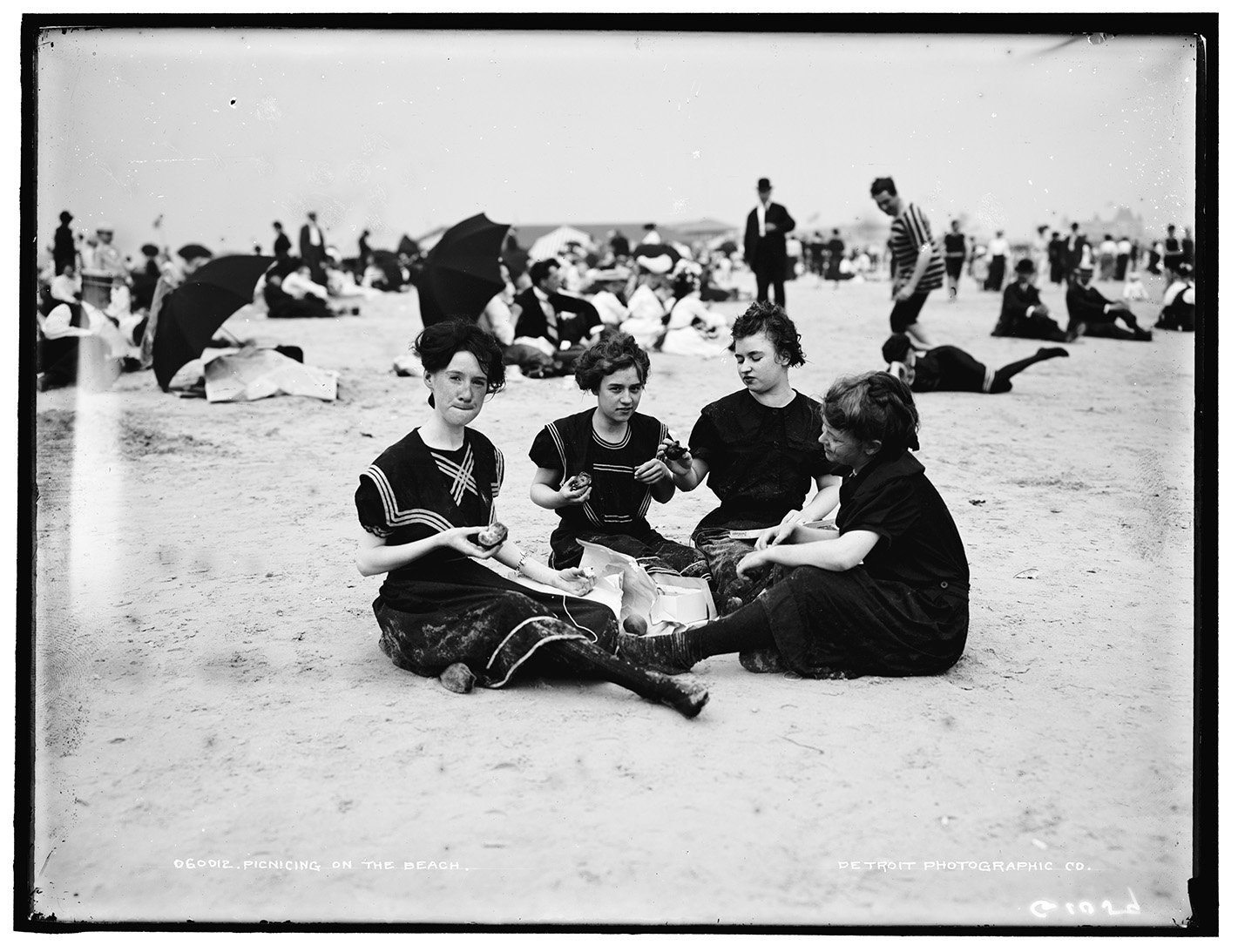
Vintage photo of women having a picnic on the beach in Coney Island, Brooklyn, New York, circa 1905. Photograph originally from the Detroit Publishing Company, courtesy of The Library of Congress Prints and Photographs Division Digital Collection.
Memoirs and more
AN HOUR WITH MASTER MEMOIRISTS
This delightful conversation between Beth Kephart and Abigail Thomas about her latest memoir, Still Life at Eighty, includes thoughts on juxtaposition, chronology, being an intuitive writer, getting unstuck, and how the body remembers.
STORIES OF PERSEVERANCE AND TRIUMPH
Three debut memoirists chart paths of chaos and survival: reviews of Deborah D.E.E.P. Mouton’s Black Chameleon, Laura Cathcart Robbins’s Stash, and Christine Barker’s Third Girl From the Left.
MAPPING HISTORY
“A lot of survivors want to tell their stories, and not everybody can write a book. Not everybody actually knows how to tell a story.” A look at an interactive mapping platform sharing stories of adoptees from the Sixties Scoop.
HIDING BEHIND PHOTOGRAPHY
“So much has to be added to still pictures, no matter how evocative, in order to tell a story,” Carl Rollyson writes in this thought-provoking review of Janet Malcolm’s “oblique” memoir, Still Pictures.
“OUR HOMES ON INDIGINEOUS LANDS”
Mali Bain’s new book uses family history to thoughtfully interrogate Canada’s settler past and ask: What stories are we passing on to our children?
A NEW DIMENSION
“Perhaps I am an invisible man lurking behind my father’s face, waiting to be born. And, eventually, to grow into my father’s face. Not exactly, but somewhat.” Viet Thanh Nguyen ruminates on the cover design of his new memoir.
Records of lives well lived
MEMORIES, ERASED
“I was the only historian of our short-lived universe and now it was lost for ever.” Our phones and computers have become hosts for our pasts. What happens when the backups fail?
NYC PHOTOG JAMEL SHABAZZ’S INSPIRATION
“When I would go to [my uncles’] homes, and my grandfather’s house, the first thing I would do was hit the photo album up, because it allowed me to time-travel and get a greater understanding of who they were.”
VINTAGE WEDDING ALBUM
Lest we think that only digital representations of our memories can get lost, I am sharing this heartwarming snippet of a lost wedding album being reunited with the family decades later—a scenario that plays out all too often:
Media recommendations
DEAR DIARY
Suleika Jaouad writes about how to develop a “sticky” journaling practice and shares some evergreen writing prompts to help you get in the flow.
FROM OBIT TO MINI-MEMOIR?
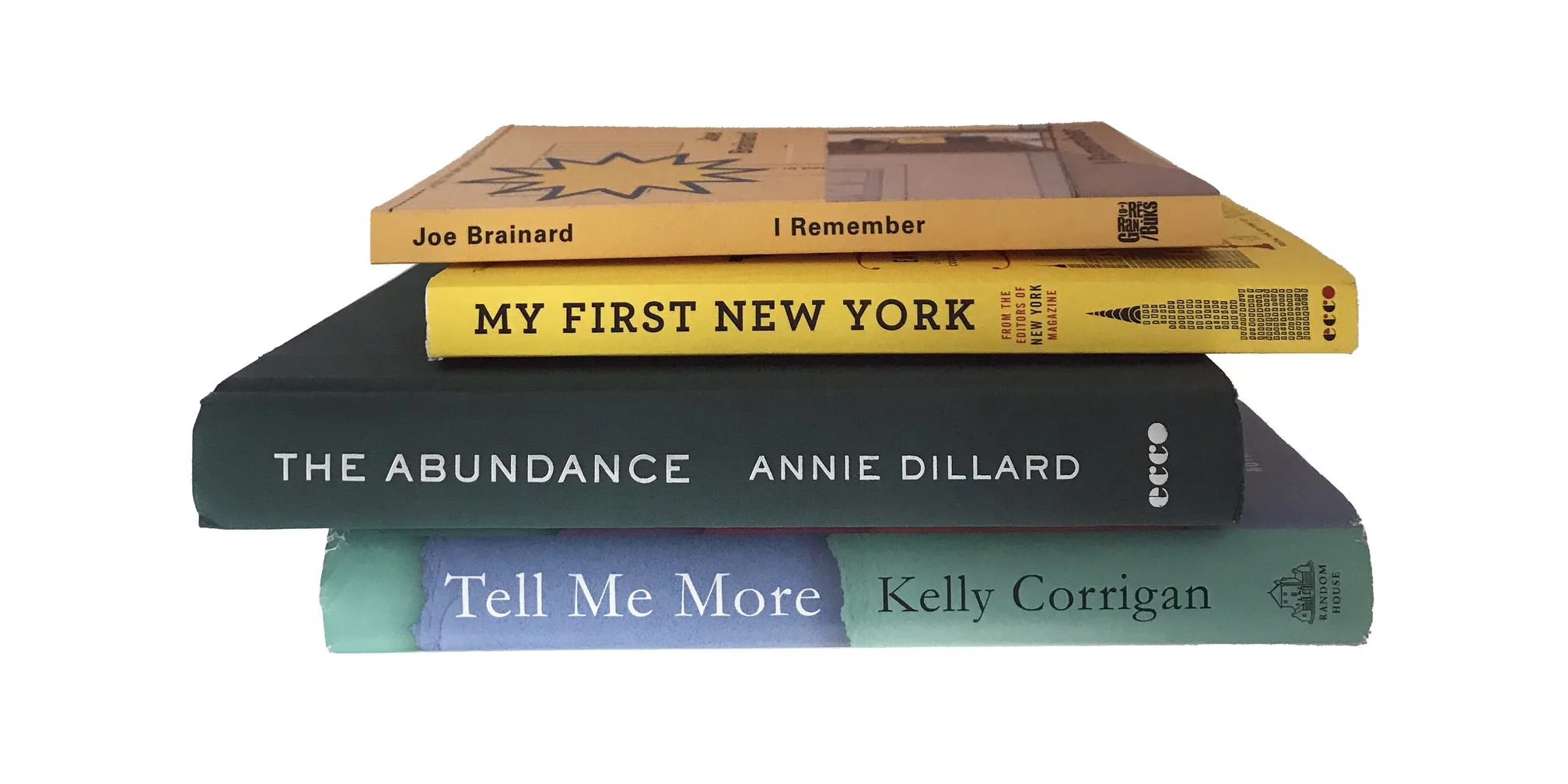
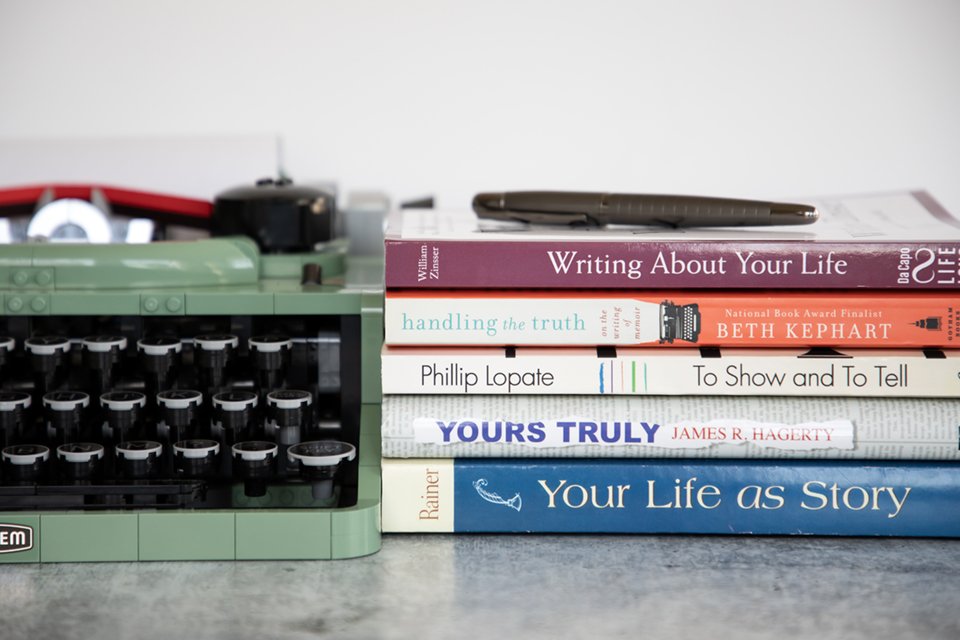
Last week I shared five life writing tips derived from the book Yours Truly: An Obituary Writer’s Guide to Telling Your Story by James R. Hagerty (which I recommend regardless of your writing level or experience).
EXPLORING INTERGENERATIONAL MEMORIES
In “The Memory Generation,” podcast host Rachael Cerrotti “sets an example of how the stories we inherit can initiate insightful conversations that help us not only reflect on the memories that define us but also build upon our capacity for empathy.”
Miscellaneous
THE LEGACY OF FOOD
“It happens gradually, the relinquishing of one’s past, and something that once felt so potent, one day simply stops being as important.” Finding memories of a distant home through milo toast in this excerpt from Rachel Heng’s The Great Reclamation (a novel that feels memoir-ish in the best possible way).
FOLLOWING THE CLUES
“Elvira and her brothers, Ricard and Ramón, were left at a train station in Barcelona aged two, four and five. As an adult, when Elvira decided to look for her parents, she discovered a family history wilder than anything she had imagined.” A mystery solved through childhood memories and DNA.
...and a few more links
Short takes